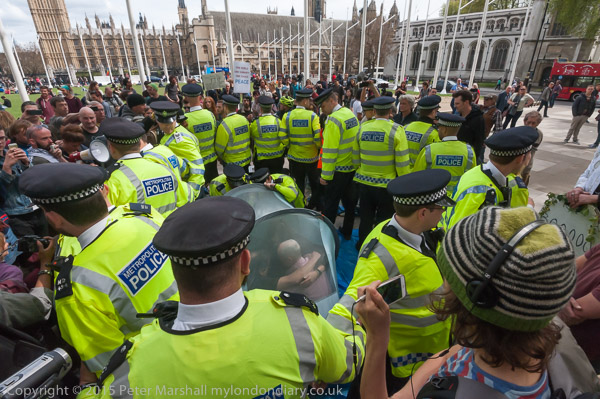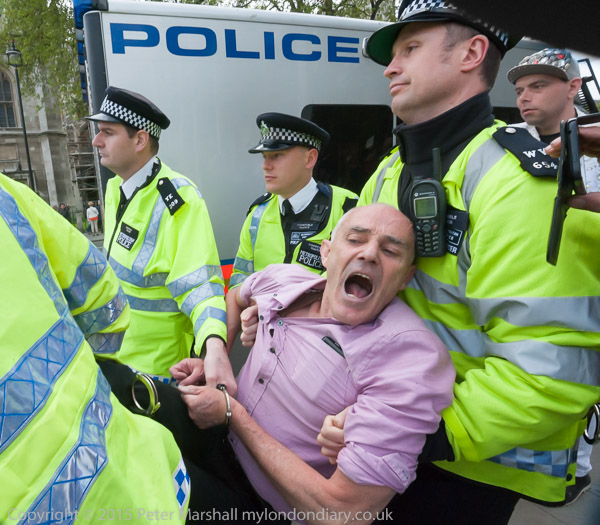
8th May

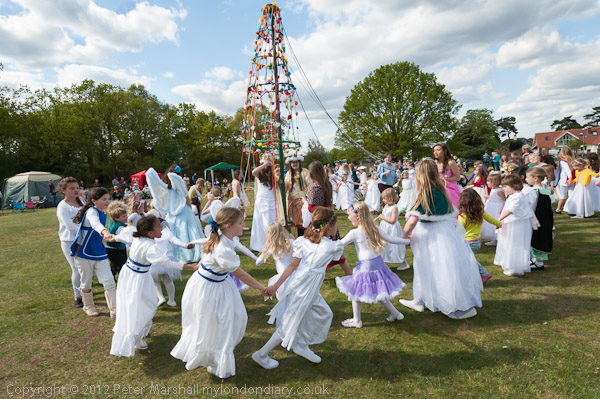
Maypole Dance, Hayes, 2012

I sat for some time wondering what to write about today. Perhaps the obvious choice would be to point out that this is the 76th anniversary of VE Day – and I did attend some events to mark the 60th anniversary back in 2005, both on Saturday May 7th in Ilford and May 8th in Bromley. Sixty years on from the event itself, this was probably the last occasion when a significant number of actual veterans were still around in their 80s and 90s and able to take part.
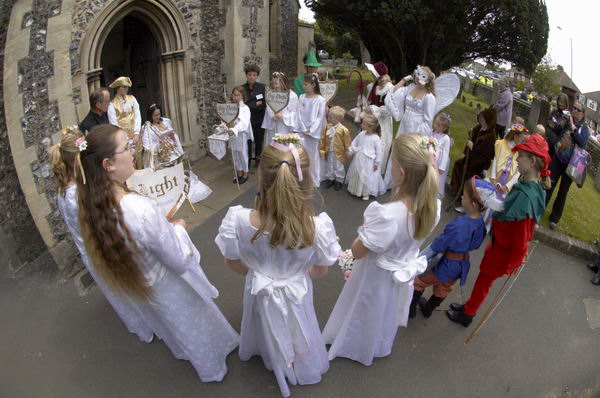
‘Little Sanctum’, Hayes, 2005

But looking at the pictures I found it too depressing – and things now have got even worse when with none left who actually fought in WW2 to provide some realism celebrations related to the war have grown more militaristic and jingoistic, more based more on the propaganda of films and TV series and the claim “two world wars and one world cup” than the reality of a fight against fascism – and where Little Englander views have defeated the vision of a united Europe, particularly in the Brexit campaign.
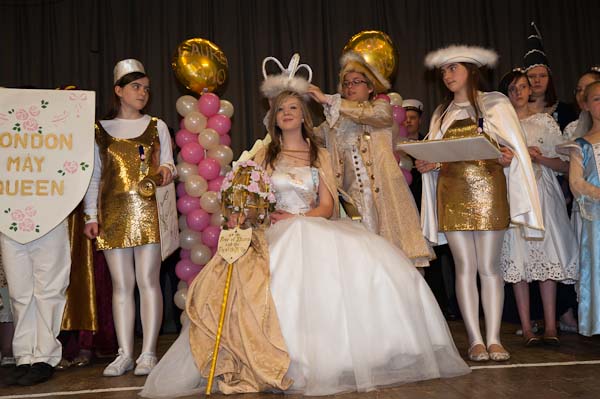
Hayes, 2010

I needed something to cheer me up a little, so instead some pictures from the London May Queen crowning which takes place around this time of year on the second Saturday in May, which in 2010 was May 8th. It was an unusual year in that the weather was terrible, with cold driving rain making the usual outdoor ceremonies on Hayes Common and the parade around the village impracticable, and the event took place with a smaller number taking part inside the crowded village hall. So I’ve added a couple of pictures from other years which show a more normal view of the day.
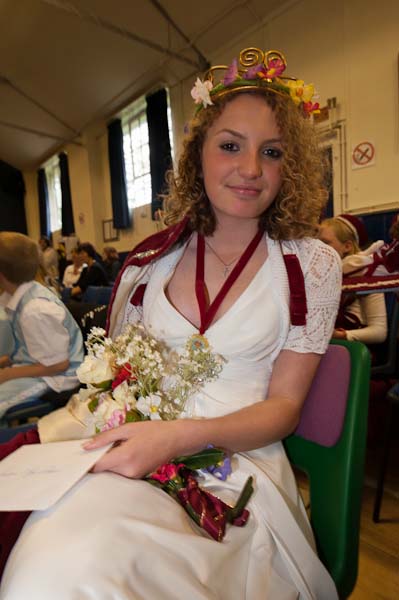
Hayes, 2010

I’ve written about the event – with help from some of those involved – in various posts on My London Diary, and also in the book, London May Queens, still available as a reasonably priced download or expensively in print from Blurb. Getting to know some of the organisers and taking an interest in the history of the event enabled me to overcome some of the now inevitable suspicions around a male photographer photographing young girls and I was there in 2008 by invitation of some of the mothers involved.
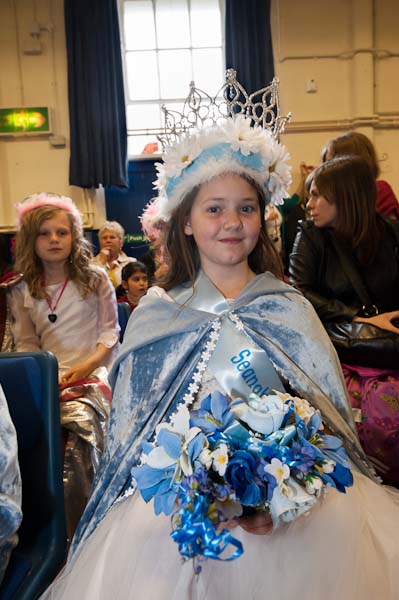
Hayes, 2010

May Queens have a long history, although the traditional May festivities were rather different and bacchanalian. Like many English traditions, this was revived in a bowdlerised form by the Victorians, largely as a festival for children and young people. The ‘Merrie England And London May Queen Festival’ came a little later, founded in 1913 by Joseph Deedy, a master at Dulwich School, and at its peak, I think in the 1930s, involved 120 ‘realms’ from different areas mainly around south London each with their own May Queen, with well over a thousand children coming together for the crowning of the London May Queen at Hayes.
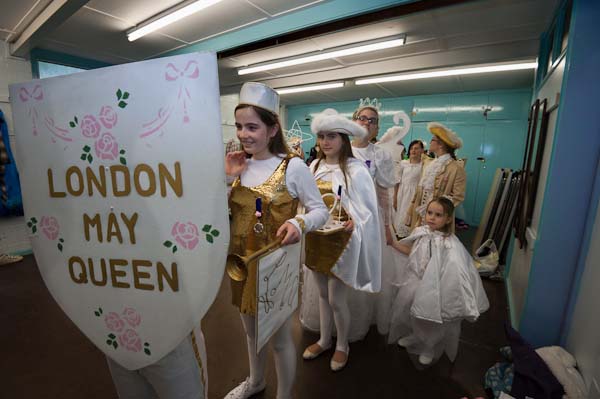
Hayes, 2010

Deedy wrote some rather quaint texts which are still used in the various stages of the ceremonies around Hayes, as well as setting the general principles and rules for the realms and the event. Girls work their way up through the organisation based on length of service, progressing though various roles, first in the local realms, and then in the London May Queen group. They can join from age three, and can remain involved until they are 18. Organisers see it as a way of encouraging social skills and developing self-confidence in the girls who take part. They often take part in local fetes, visits to care homes, and other activities as well as enjoying tea parties. The crowning of the London May Queen is the culmination of a series of events on previous Saturdays when the different realms crown their own Queens.
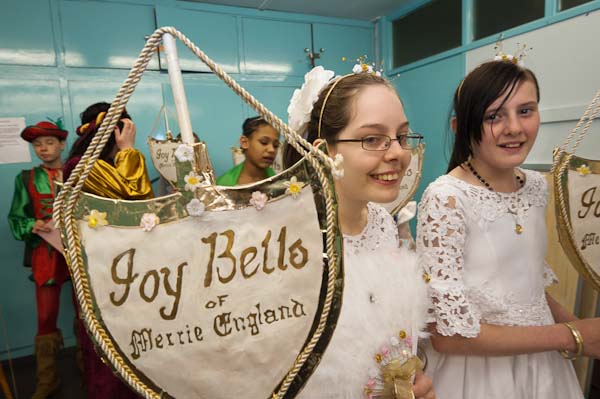
Hayes, 2010

Working inside the crowded hall in 2008 was difficult, but I was pleased to have the opportunity, and it provided some variety in my coverage of the event – as did the various crowning events in some of the local realms. Covid will doubtless have prevented the 2010 and 2021 events taking place but I hope it will resume for 2022. It’s a charming survival from an earlier age and one which invokes a community spirit which enriches local life.
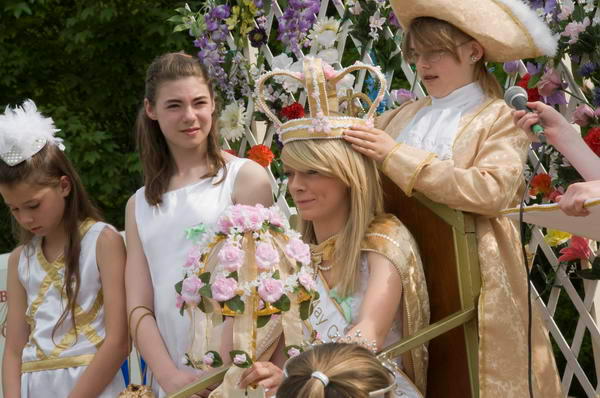
Hayes, 2008

There are too many posts on My London Diary featuring May Queen Events between 2005 and 2013 to list them all, but you can find them easily on the web site as they are all on the pages from April and May. Here are just a few of them.

London May Queen 2005
London May Queen 2008
Merrie England & London May Queen 2010
London Crowns 100th May Queen 2012
London’s 101st May Queen 2013
I posted even more pictures than usual from these events as I wanted to share them with those who had taken part and tried to include everyone in the pictures.


All photographs on this and my other sites, unless otherwise stated, are taken by and copyright of Peter Marshall, and are available for reproduction or can be bought as prints.


North Kensington

Pall Mall Deposit, Barlby Rd, North Kensington, Kensington & Chelsea, 1988 88-1f-54-positive_2400
Pall Mall Deposit, Barlby Rd, North Kensington, Kensington & Chelsea, 1988

There were several reasons I used to like going to this area of North Kensington to make photographs, one of which was that when people asked me where I had been I could tell them I’d been to the North Pole, which was just down past the end of Barlby Rd on North Pole Rd. Sadly the North Pole was bought by a property company in 2012 who turned the upper floors into flats and soon closed the pub which became a Tesco Express around 2015.

Pall Mall Deposit, Barlby Rd, North Kensington, Kensington & Chelsea, 1988 88-1f-53-positive_2400
Pall Mall Deposit, Barlby Rd, North Kensington, Kensington & Chelsea, 1988

The Pall Mall Deposit and Forwarding Co became a limited company in 1899, with premises just off Regent St, and built this large storage facility to the design of W G Hunt in 1911 (the often given date of 1901 is most probably a much-quoted typo.) Furniture storage was quite big business at the time as a large proportion of the more affluent lived in rented houses, often moving frequently. The building extends some way back from Barlby Road and has been a rather trendy centre for offices, studios etc, selling itself as close to Portobello Road.

Ladbroke Hall, Clement-Talbot Motor Works, Barlby Rd, North Kensington, Kensington & Chelsea, 1988 88-1f-52-positive_2400
Ladbroke Hall, Clement-Talbot Motor Works, Barlby Rd, North Kensington, Kensington & Chelsea, 1988

Barlby Road was also the location of the first purpose built English car factory, the Clement-Talbot Motor Works built from 1903-11, architect William T Walker. According to Cherry and Pevsner (London 3 : North West) this reinforced concrete building used the Hennebique system, but for the office building fronting the road this was well-disguised by “a festive Wrennaisance front”.

Kensal House, Ladbroke Grove, North Kensington, Kensington & Chelsea 88-1f-46-positive_2400
Kensal House, Ladbroke Grove, North Kensington, Kensington & Chelsea

North of the Great Western mainline, which bisects the area, is its greatest architectural gem, Kensal House, built in 1936 by Maxwell Fry leading a small group of like-minded architects. Even in the rather run-down state I photographed it, the ensemble is impressive. It’s and impressive modernist building and rather more functional than some, and the low cost flats included what were for the time some very up-to-date features.

Kensal House, Ladbroke Grove, North Kensington, Kensington & Chelsea 88-1f-45-positive_2400
Kensal House, Ladbroke Grove, North Kensington, Kensington & Chelsea

The site was developed by the Gas Light & Coke Company who owned the site and the adjoining gas works to provide housing for their employees – 54 three-bedroom and 14 two-bed flats- and virtually everything – down to the irons – was gas powered. Of course gas lighting was still very common – and in my youth there were still many older people who preferred its more gentle light. But as built there was no electricity in these gas company flats.

Kensal House, Ladbroke Grove, North Kensington, Kensington & Chelsea 88-1f-42-positive_2400
Kensal House, Ladbroke Grove, North Kensington, Kensington & Chelsea

As well as two large blocks of flats the site also contained a nursery, with a curved frontage that ran around the former site of a gas holder. One of those who worked with Fry on the designs was social reformer Elizabeth Denby who had also worked with him at the Peckham Health Centre.

Kensal House, Ladbroke Grove, North Kensington, Kensington & Chelsea 88-1f-34-positive_2400
Kensal House, Ladbroke Grove, North Kensington, Kensington & Chelsea

The gas works have gone, with Sainsbury’s and Argos in their place, but the railway remains. Some of these flats must have been great places for train spotters, but the Kings and Castles thundering past might have upset the sleep in those days of single glazing and poor sound insulation. And gas works did produce some fairly noxious odours and pollution, though if they provided your living that probably seemed less of a problem.

Kensal Green Basin, Grand Union Canal, Paddington Branch, North Kensington, Kensington & Chelsea, 1988 88-1f-35-positive_2400
Kensal Green Basin, Grand Union Canal, Paddington Branch, North Kensington, Kensington & Chelsea, 1988

You can still see Kensal Green Basin when you go to get your shopping at Sainsbury’s on Canal Way, though it is largely well hidden behing bushes around the car park and seems an missed opportunity – as do many of the planning decisions in this area. A large and ugly canalside building now straddles its entrance from the canal. Further along Canal Way there are still a couple of gas holders at the west end of the gas works site.

Exmoor St,North Kensington, Kensington & Chelsea, 1988 88-1f-26-positive_2400
Exmoor St,North Kensington, Kensington & Chelsea, 1988

Late Victorian Housing on Exmoor St with some nice detailing and later railings.

Hewer St,North Kensington, Kensington & Chelsea, 1988 88-1f-25-positive_2400
Hewer St,North Kensington, Kensington & Chelsea, 1988

At left is the Grade II listed St Charles’ Hospital in Exmoor St, built in 1881 as the St Marylebone Union Infirmary. Surprisingly it is still in medical use, providing mental health services and as a community health centre. Part of the building are rather more attractive than this view suggests. John Nodes and Sons Ltd provided a very handily based funeral service.

Barlby Rd, North Kensington, Kensington & Chelsea, 1988 88-1f-22-positive_2400
Barlby Rd, North Kensington, Kensington & Chelsea, 1988

Finally back to Barlby Rd, and a terrace of houses still present close to Ladbroke Grove. On the left you can still see one of the gas holders of the Kensington Gas Works, and to the right of the block the Great Western Mainline and one of the blocks of Kensal House.

As usual there are a few more pictures from my walks around the area in 1988 in the album, and clicking on any of the pictures here should take you to a larger version in the album from which you can move through it to see all those I have put online.


All photographs on this and my other sites, unless otherwise stated, are taken by and copyright of Peter Marshall, and are available for reproduction or can be bought as prints.


Occupy Gandhi – 4 May 2015

All pictures from Occupy Ghandi – Stop Fossil Fuel Criminals, 4 May 2015

Successive UK governments have legislated in various ways to restrict the right to protest, particularly concentrating on the area of Westminster close to the Houses of Parliament, and the current Police, Crime, Courts and Sentencing Bill amends the “Police Reform and Social Responsibility Act 2011 to expand the “controlled area” around Parliament where certain protest activities are prohibited” as well as creating a new prohibited activity of “obstructing access to the Parliamentary Estate”.

The 2011 Act (which was also amended by the Anti-Social behaviour, Crime and Policing Act 2014) replaced previous restrictions which had been brought in under SOCPA, the Serious Organised Crime and Police Act 2005 which the New Labour government had brought in as an attempt to stop the long-term protest in Parliament Square by Brian Haw who had set up his camp there on 2 June 2001 in protest against the effect of economic sanctions which were resulting in child deaths in Iraq.

Haw’s campaign widened into a more general protest against war and became the Parliament Square Peace Campaign, and he was joined by other long term protesters as well as receiving support from many others which enabled him to remain in the square. Various attempts to remove him legally failed and SOCPA was passed in an attempt to stop his protest. But poor drafting led to the eventual failure to achieve this, though Haw had to apply for permission which was granted subject to strict conditions – which he and his supporters failed to adhere to.

Police carried out a major raid in May 2006, removing most of the placards and other material and Haw was taken to court for breach of SOCPA. But after several hearings he was acquitted as the judge found the conditions lacked clarity and were not workable. He was assaulted on numerous occasions by police and by others believed to be working for the security services and arrested again on the day of the State Opening of Parliament for the Tory-LibDem coalition in 2010. But his protest was continued even after he left for cancer treatment in Berlin on New Years Day 2011, by his colleague Barbara Tucker who had joined him in 2005, and stayed in Parliament Square until 2013, despite being denied the use of tent, blankets and eventually even a chair and umbrella in 2012.

The whole grass area of Parliament Square was fenced off and the protest moved onto the pavement in 2011 after Boris Johnson gained a High Court injunction. Early in 2013 more protesters had arrived to support Tucker who had begun a hunger strike in December 2012. She left the square for urgent medical treatment and the Westminster Council removed the tents which supporters had brought there in March 2013, reopening the square for public use in May.

In October 2014, Occupy Democracy arrived to occupy Parliament Square “for 9 days in October, to broadcast and demand the solutions we already know exist, to inspire people to be the active citizens required to take back democracy from powerful economic interests.” They were met by police and private security ‘Heritage Wardens’ (outsourced by the GLA) and signs put up the previous day stating the grass was ‘closed for repair’, and there was considerable harassment with the police seizing anything they thought might be ‘camping equipment’ the occupied the square. The following day, much larger numbers of protesters turned up, including a number of MPs and some celebrities, and after trying hard to stop them, the police melted away and the camp was set up.

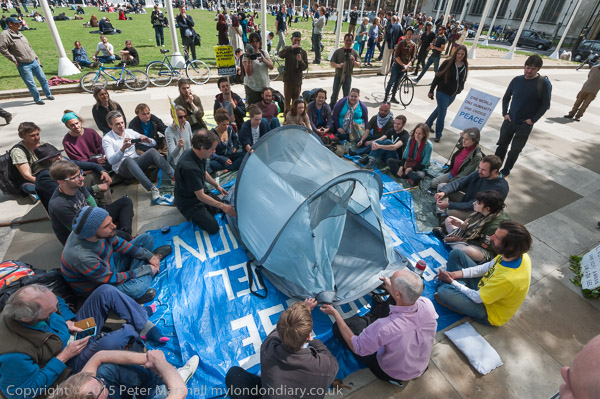
Over the following three days there were a number of arrests and police moved protesters off the main grass areas, but the various workshops and activities continued until the whole square was cleared. There had been a number of battles between police and protesters over large squares of blue plastic tarpaulin they had used to sit on the wet grass and mud, and the Democracy Camp had gained the name ‘Tarpaulin Revolution’ (#tarpaulinrevolution).

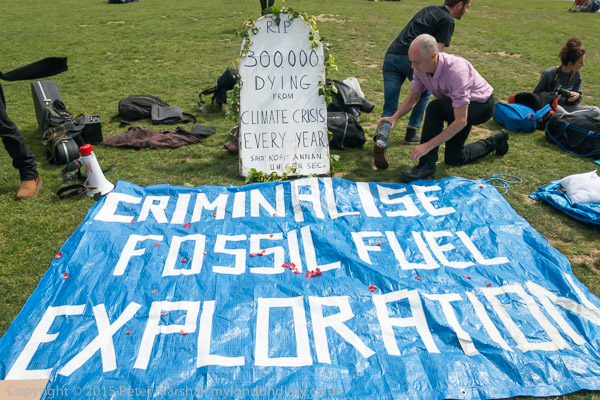
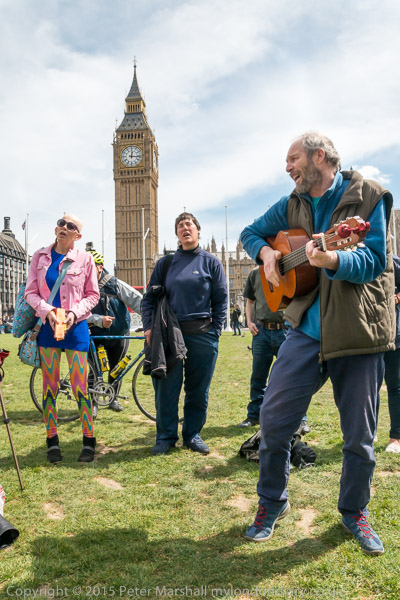
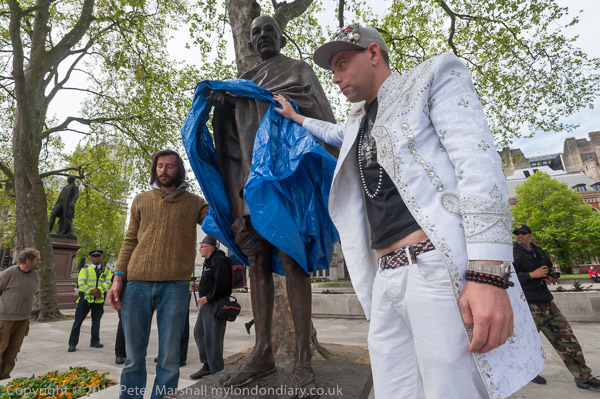
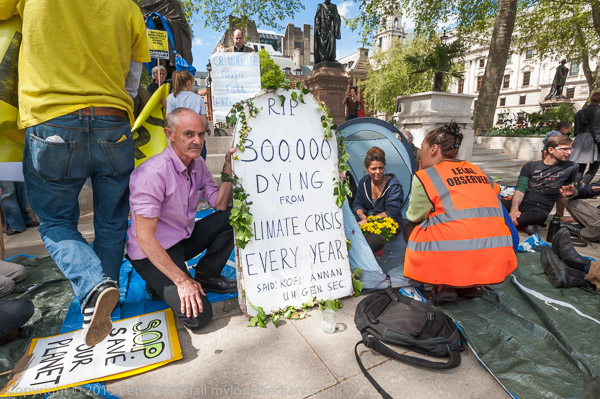
On May Day 2015, Occupy Democracy returned for a 10 day ‘Festival of Democracy’ in Parliament Square “building a movement for real democracy: free from corporate control, working for people and planet!” just a few days before the general election. On Monday 4 May there was a rally and meditation by Occupy Democracy at the statue of Gandhi, noted for his direct action civil disobedince, called for fossil fuel exploration and investment to be made a crime, and defied the ban on tarpaulin and tents in Parliament Square.

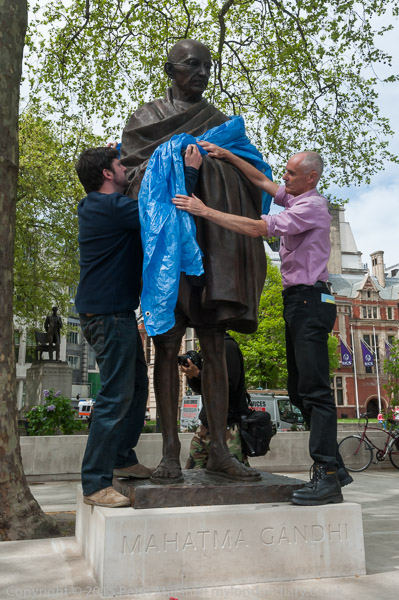
After short speeches there was a period of meditation, and the protesters wrapped a blue tarpaulin around the statue. Heritage wardens demanded its removal, and seized it when their request was ignored. Other protesters then stood with another blue tarpaulin, holding it around the statue but taking care not to touch it.

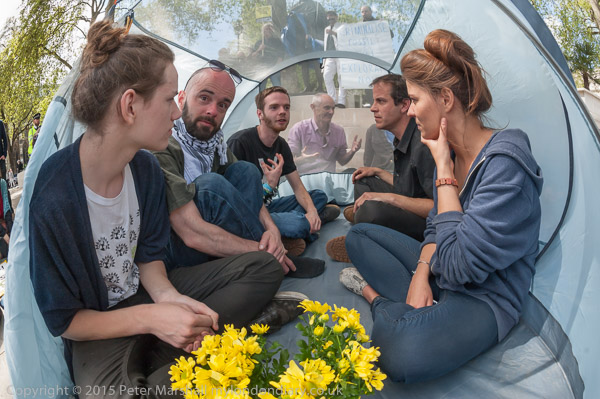
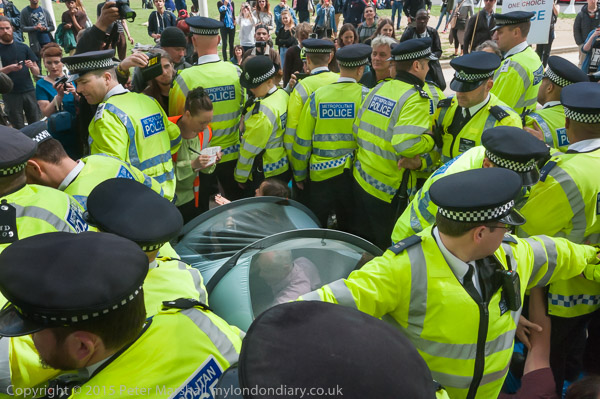
At the end of the mediation, Donnachadh McCarthy who had been leading it announced an act of civil disobedience and pulled a folding tent onto the tarpaulin on the pavement in front of him and erected it. Several people then came and sat inside it, and the protest continued. Police came and told them they were committing an offence and might be arrested if they failed to leave. Shortly after 20 police came and surrounded the tent and arrested those who refused to leave.

Occupy Gandhi – stop fossil fuel criminals
Occupy Festival of Democracy

A Mixed Day – May 3rd, 2014

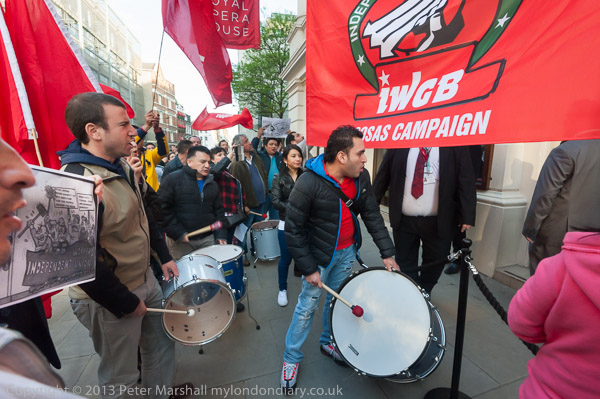
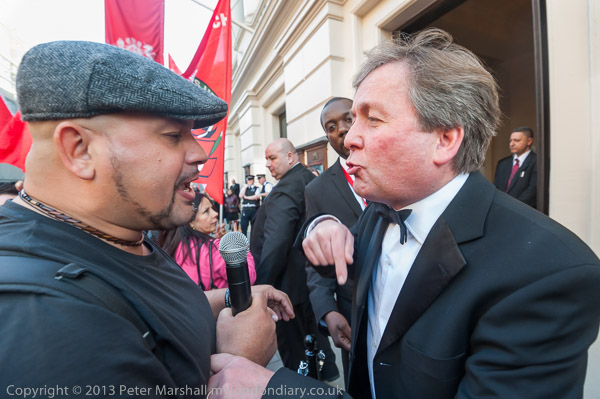
Saturday May 3rd 2014 provided me with quite a range of events to photograph around London, finishing with a protest against the abuse of staff employed by MITIE at the Royal Opera House. IWGB members including the workplace rep have been sacked or lost work, with others being brought in to take their places.

This protest was one of the “noisy” events that the Police, Crime, Sentencing and Courts Bill 2021 being pushed through parliament would criminalise, a very successful non-violent tactic used by smaller unions such as the IWGB (Independent Workers Union of Great Britain) to shame managements into talking with them. MITIE and the Royal Opera House had been refusing to talk with the union to which the majority of the cleaners belong, and instead recognise a large union with few members at the ROH which has come to an agreement with them which fails to address any of the workers grievances.

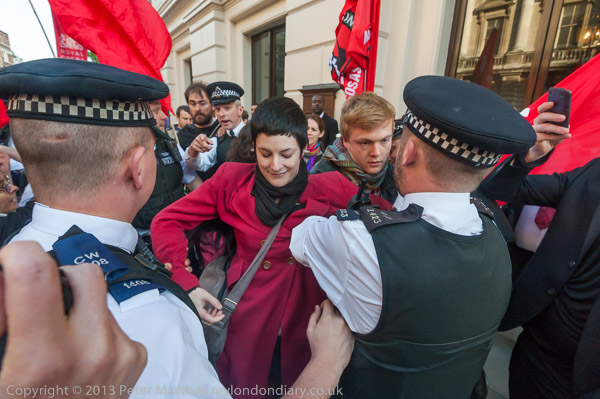
There were angry scenes with some of the opera goers who seemed to feel that the workers had no right to protest, and ROH security staff intervened when one man began assaulting union organiser Alberto Durango. When a large group of police arrived there was an ugly scene when they tried to grab one of the protesters, but she was pulled away by her colleagues, and the police then withdrew to form a line around the opera house. After an hour there were some short speeches, including one by another woman protester complaining that she and others had been assaulted by the police officer in charge, Inspector Rowe, and other officers.

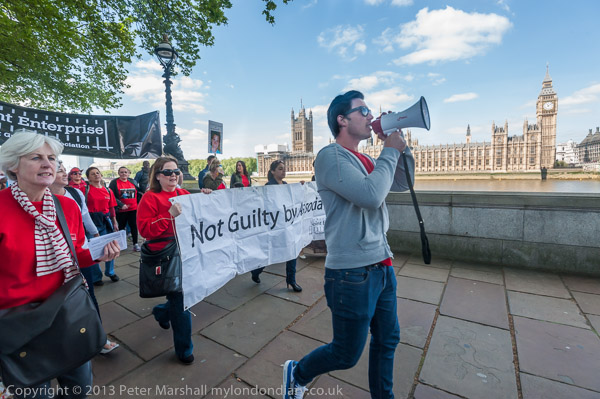
My first event had been to cover a march to Parliament by Families fighting to abolish the 300 year old law of ‘Joint Enterprise’ that has wrongfully imprisoned family members in a gross breach of human rights. Under this people are convicted of crimes they took no part in for having almost any connection with those who actually committed the criminal act – without any real evidence being required or given. Originally intended to enable doctors and seconds who attended duels to be arrested as well as the actual duellists, it is now disproportionately used against Afro-Caribbean young men following stabbings and other street violence. As well as its inherent injustice, the sentences can be extremely long, in some cases up to 30 years in jail. In 2015 police attempted to use it against a protester after they could find no evidence of her committing the ‘criminal damage’ she had been accused of, but the court sensibly refused to consider the charge.

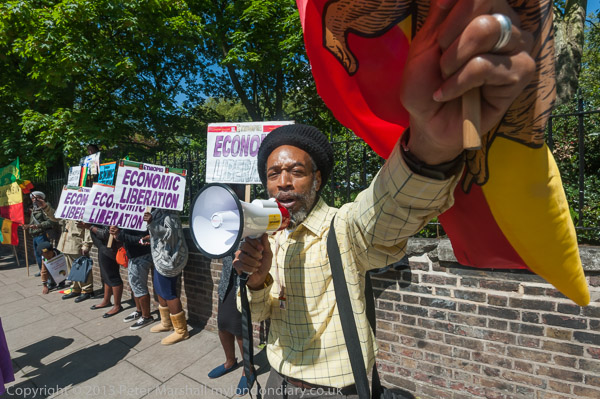
Next I went to the Ethiopian Embassy in Kensington, where Rastafarians from the Church of Haile Selassie I in Cricklewood were holding their annual protest calling for the restoration of the Dynasty of Emperor Haile Selassie 1st to bring about economic liberation of the country. Selassie died following an economic crisis which led to a coup in 1974 at the age of 83. Under his leadership Ethiopia, the only African country to defeat the European colonialists, was the first independent African state to become a member of the League of Nations and the UN.

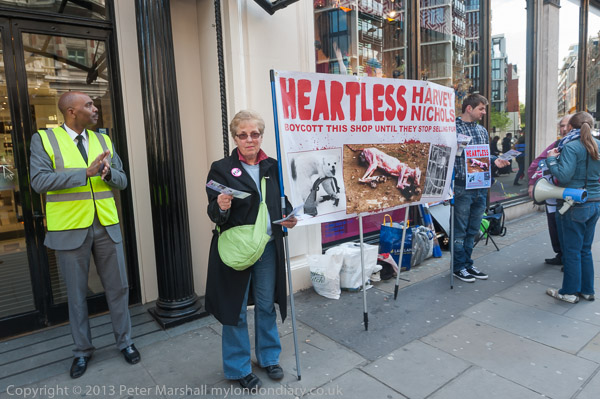
I stopped off on my way back to the centre of London at Knightsbridge to photograph the weekly vigil outside fashion store Harvey Nichols calling on shoppers to boycott them for selling animal fur products, which come almost entirely from farms with exceedingly cruel practices banned in the UK. It is hard to see why using fur from these farms is not also banned here.

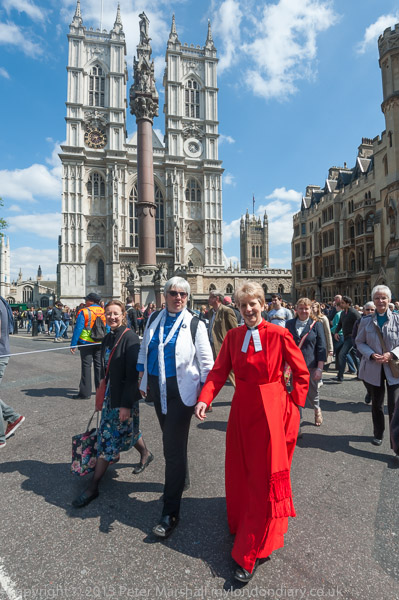
The largest event taking place was the celebration of the 20th anniversary of the first women to be ordained by the Church of England, and a thousand or more women priests went to a rally in Dean’s Yard before marching to St Paul’s Cathedral for a service.

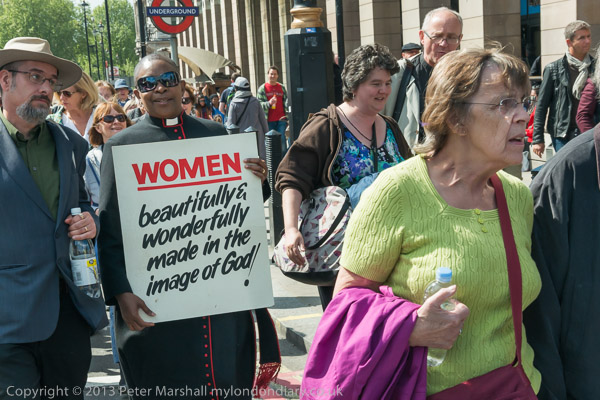
I was brought up in the Congregational tradition, and the Congregational Church had its first women minister in 1919, but it took the Church of England another 75 years before they caught up. They ordained their first women as priests in 1994, and women now make up a large proportion of the church. Among those on the march was the Rev Rose Hudson-Wilkin, the Jamaican-born vicar of Holy Trinity Church, Dalston and All Saints Church, Haggerston (and also finding time to be Speaker’s chaplain at the House of Commons, priest vicar at Westminster Abbey and chaplain to the Queen.) She marched with the same placard she carried when the church was making its decision to ordain women in 1994, with the message “Women – beautifully & wonderfully made in the image of God!” and became Britain’s first black female bishop in 2019.

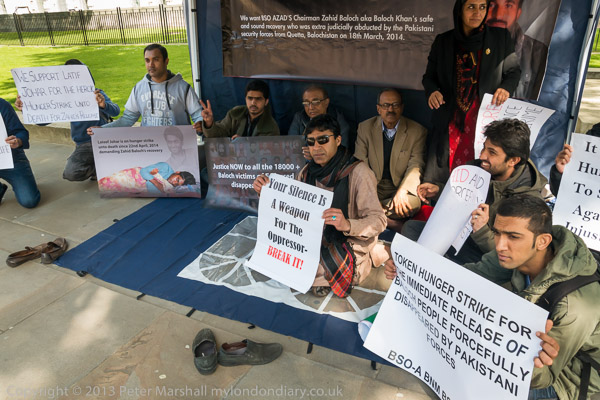
I left the women priests marching along Whitehall to photograph a protest opposite Downing St, where Balochs were staging a token hunger strike on Whitehall calling for the immediate release of all those forcefully disappeared by Pakistani forces. The action was in solidarity with the hunger strike by student activist Latif Johar of the Baloch Students Organisation-Azad (BSO-A) who began a hunger strike outside the Karachi Press Club on April 22 in protest at the disappearance by Pakistan security forces of the BSO-A chair Zahid Baloch in March.

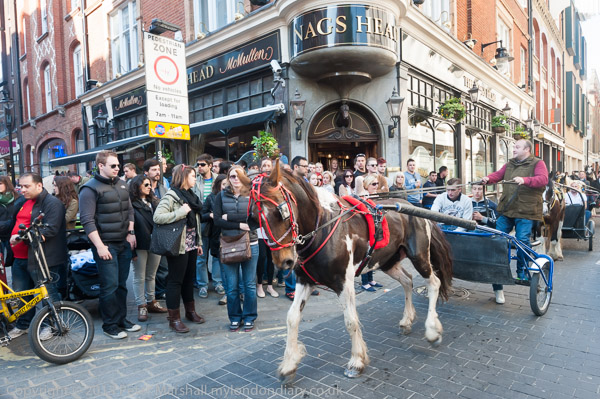
From Westminster I walked to Covent Garden where I was to meet the IWGB for their protest at the Royal Opera House, and sat and waited for them to arrive. To my surprise as I sat reading I heard the sound of hooves clattering on the road, and looked up to see half a dozen horse-drawn traps coming towards me up the street. They stopped briefly and appropriately at the Nags Head, where some of the drivers went in to refresh themselves, and I talked with those left holding the horses outside, and they told me the ride had started at Forest Gate and they had already visited Borough Market on their route around London.

More on all these events:
IWGB Cleaners at Royal Opera
Horse Traps at the Nag’s Head
Baloch Hunger Strike
20 years of Women Vicars
Anti-Fur Picket at Harvey Nichols
Restore the Ethiopian Monarchy
Joint Enterprise – NOT Guilty By Association


All photographs on this and my other sites, unless otherwise stated, are taken by and copyright of Peter Marshall, and are available for reproduction or can be bought as prints.


No to the Crook, the Toff, The Fascist or Cop

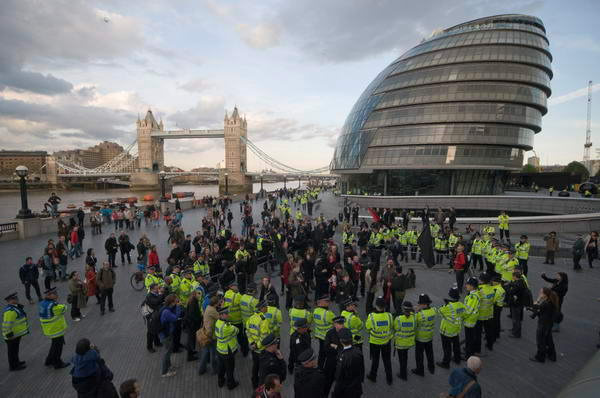
Protesters kettled outside City Hall as the Mayoral election results announced in 2008


London’s electors in a few days time will be faced with a rather bewildering array of candidates, with 20 names appearing on the ballot paper.

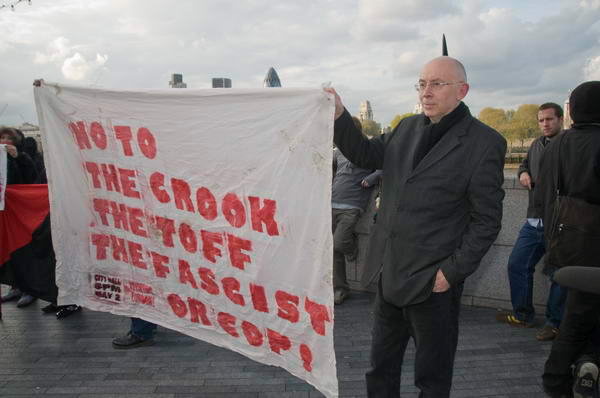
Ian Bone of Class War and banner ‘No to the Crook, the Toff, The Fascist or Cop’ 2008

Current mayor Sadiq Khan is hoping for re-election and his chances are probably good and he has enjoyed a good lead in opinion polls with a roughly 20-25% lead over his nearest rival, the Conservative Shaun Bailey. He could even get the 50% needed to win on the first preference votes and is likely to end up with over 60% when second preferences are included.

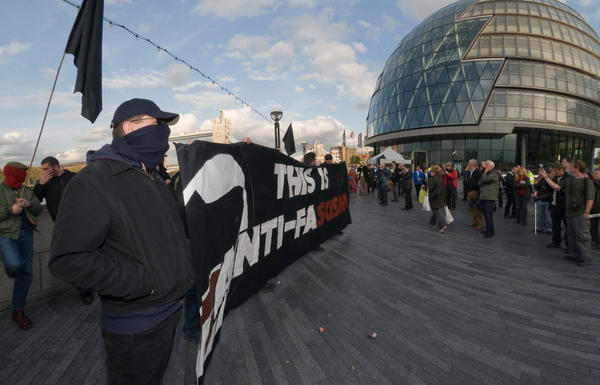
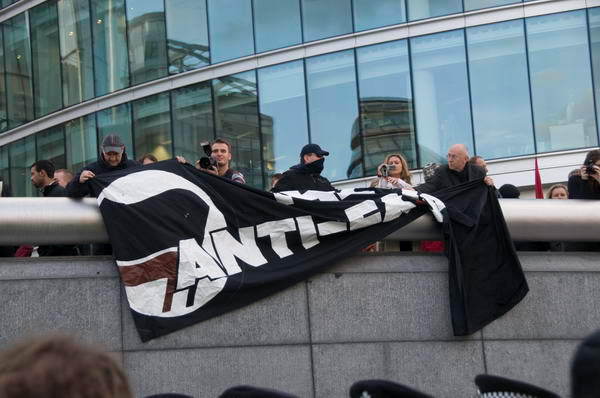
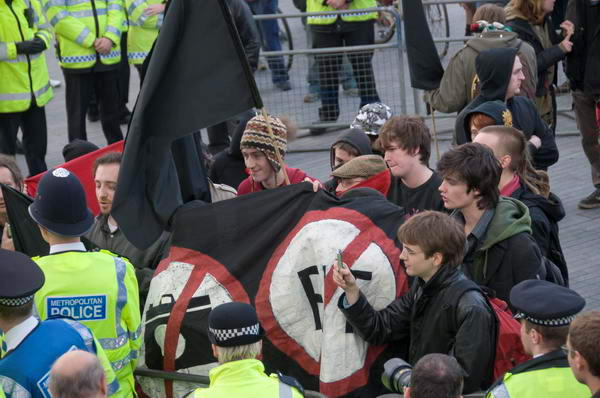
Anarchists raise the anti-fascist banner at City Hall 2008

Bailey, like Conservatives standing in the various elections around the country, is rather likely to pick up votes because of the success of the Covid vaccination rollout, a rather unfair consequence as it was Tory incompetence that really got us into the huge mess – with bodies piling up in mortuaries if not on the streets, and the NHS, which they have been doing their best to privatise out of existence over the years, which got ahead and got on with the jabs – and fortunately the government, having perhaps learnt a little from the test and trace debacle, let them get on with it rather than giving jobs to their mates.

It’s a slightly unusual voting system, with the second round of counting including only the two leading candidates. But it does mean that if you are a Khan supporter you could safely vote for any other candidate than Bailey as first preference, knowing that you second preference for Khan would count for him in the end.

Fitwatch hold their banner in front of the police photographer 2008

Opinion polls suggest that on this basis YouTuber Niko Omilana might come out third on the first preference votes, well above either the Green Party’s Sian Berry or Lib Dem Luisa Porritt, either of whom would clearly make rather better mayors than him.

Police TSG arrive to clear the area. 2008

The 15 other candidates seem unlikely to gain much benefit from the voting system and will almost certainly all lose their £10,000 deposit. They cover a wide range from various fringe parties, serious single-issue candidates to various more or less entertaining idiots such as Count Binface. Even at odds of 800 to 1 it isn’t worth betting on him.

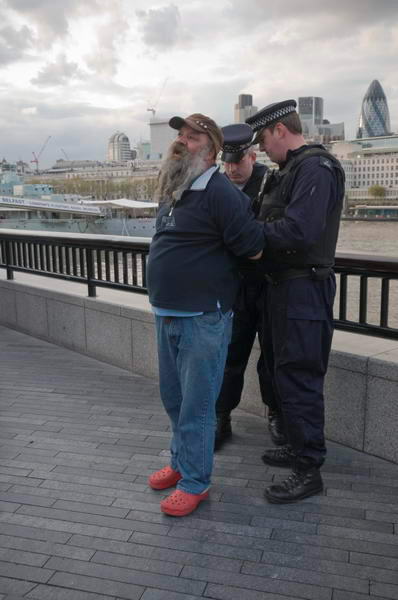
Police arrest a man who had been sitting quietly by the river

Back in 2008 there were fewer candidates, but it was sadder times as London was announcing the election of its worst mayor yet, though at least he did continue some of the previous incumbent’s policies, and some of the advisers he employed were competent. But the years Johnson was mayor were something of a disaster for Greater London – which he has gone on to repeat for the country as a whole.

Some of the protesters were surrounded and held for several hours

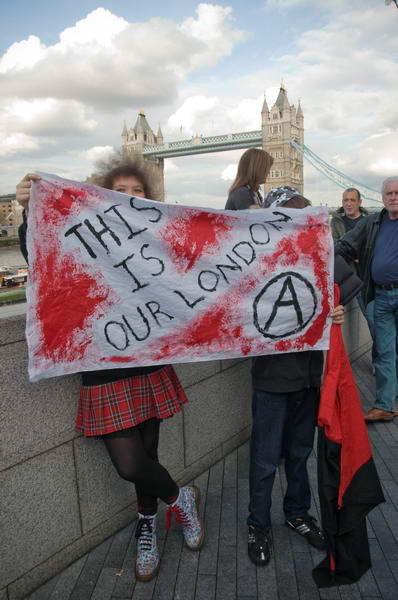
The ‘No to the Crook, the Toff, The Fascist or Cop’ protest by anarchists had its moments of farce, beginning with the police photographer taking an unusual interest in me as I sat reading a paperback. I just happened to be in the middle of John Updike’s ‘Terrorist’ at the time. Although I clearly watched him taking pictures, when I later made a freedom of information request about this an other occasions I’ve been photographed, the answer came back that there were no pictures of me.

Others had escaped as police moved in and showed the banner from a balcony before going to the pub

You can read more about what happened and see more pictures on My London Diary:
No to the Crook, the Toff, The Fascist or Cop


All photographs on this and my other sites, unless otherwise stated, are taken by and copyright of Peter Marshall, and are available for reproduction or can be bought as prints.


7 Days to save the NHS

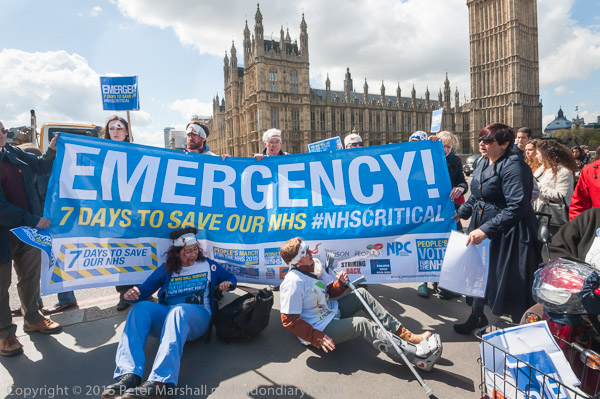
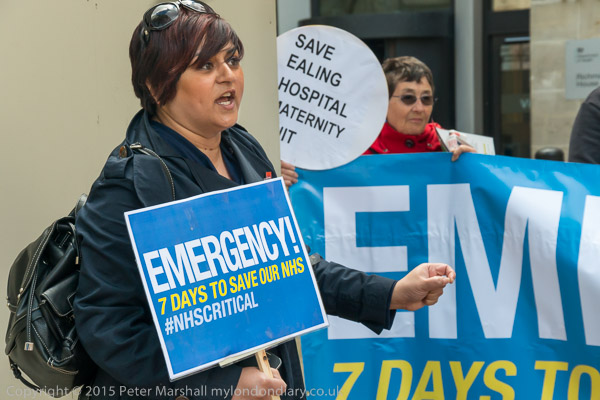
‘7 Days to Save our NHS’ on Westminster Bridge, 30th April 2015

Any remaining doubts about the Tory party’s intentions to privatise the NHS should have been eliminated by the recent appointment of Samantha Jones, the outgoing chief executive of Operose Health, as an “expert adviser for NHS transformation and social care“.

Openrose is the British subsidiary of giant US private healthcare firm Centene, and recently bought AT Medics, a GP led company that was ran many of London’s GP surgeries and other primary care services. Openrose was already running around 20 GP surgeries as well as various opthalmology services, a dermatology clinic in Kent and an urgent treatment centre in Birmingham.

Despite health secretary Matt Hancock’s claims that his proposed changes to the NHS would put an end to 30 years of NHS privatisation, the process is currently being accelerated, with these and other changes making it easier for US and other companies to take control of parts of the NHS.

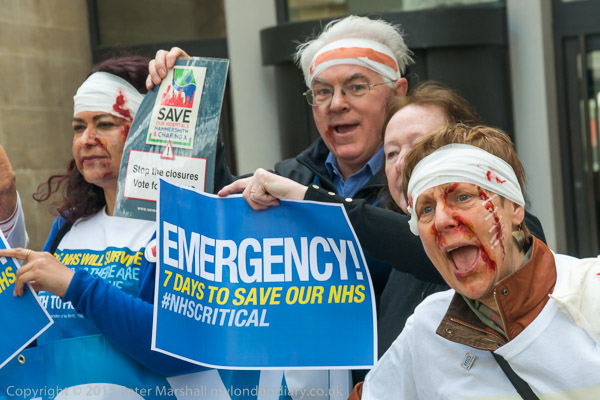
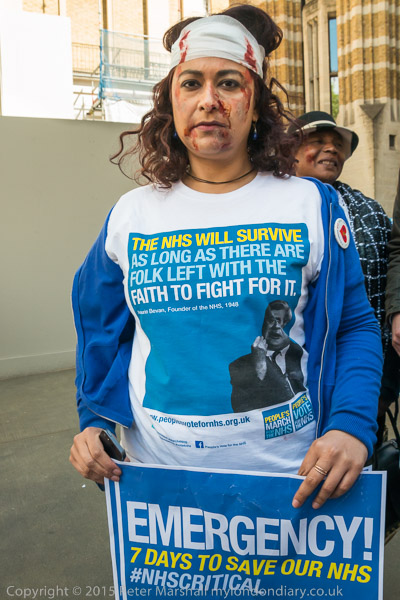
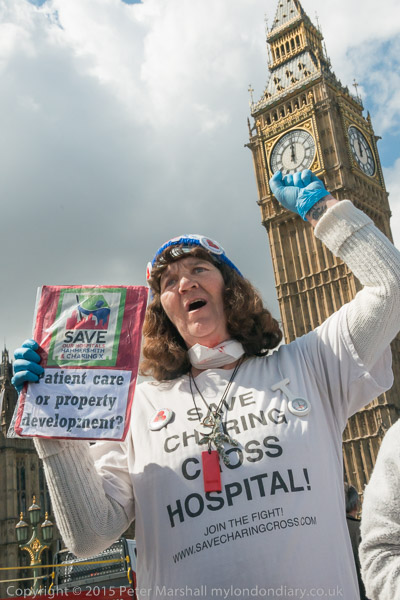
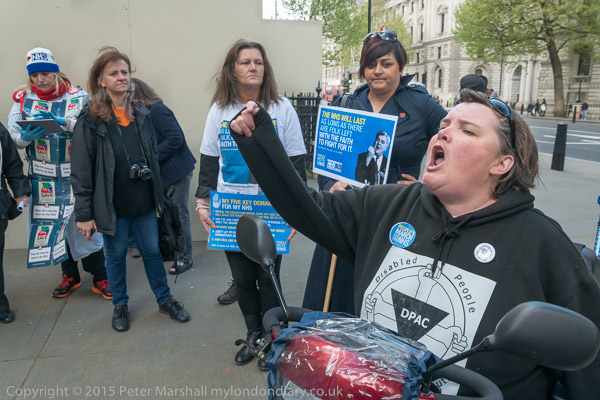
The launch of the ‘7 Days to Save our NHS’ Campaign’ on April 30th, 2015 came a week before the 2015 General Election, and urged people to use their vote on May 7th to save the NHS. It was one of many protests against the creeping privatisation of our health service that I’ve photographed, along with more protests over hospital closures and other attacks on the service which left it in a poor state at the start of the Covid pandemic.

Fortunately – and largely thanks to the dedicated work of NHS staff – it more or less coped, but at the price of far too many deaths in hospitals and care homes, with high levels of hospital-acquired infection due to a lack of proper protection – and we saw photographs of staff having to improvise with bin bags.

But although some of us could have used our vote to try to save the NHS, for many their was no such credible alternative. Both of our major parties have been guilty of privatising the NHS, with New Labour responsible for much of the present crisis in our healthcare system, particularly for saddling hospital trusts with crippling long-term debts through insanely thought out and poorly negotiated private finance initiative hospital building projects – which have forced programmes of hospital closures. The https://www.express.co.uk/news/uk/355999/Who-now-owns-the-NHS-and-can-they-cure-it Daily Express described these in 2012 as “a Klondike gold strike for investment firms” which will result in the taxpayer paying £301billion to receive facilities worth £57.4 billion.

And many MPs – mainly but not entirely Tory – are very much in on the gravy train that NHS privatisation is already providing, and very much rubbing their hands in anticipation of more. In 2015 the https://www.mirror.co.uk/news/politics/former-private-health-firm-chief-23838725 Daily Mirror published what they called a full list of MPs with links to private healthcare firms. Among the 70 on that list were the then prime minister David Cameron, Andrew Lansley, described as ‘Former Health Secretary & architect of privatisation’, former Home Secretary David Davis, and most of the leading Tories – including current secretary of state for health and social care Matt Hancock MP.

NHS banner on Westminster Bridge
‘7 Days to Save our NHS’ Campaign launch


All photographs on this and my other sites, unless otherwise stated, are taken by and copyright of Peter Marshall, and are available for reproduction or can be bought as prints.


Kensal Town & Notting Hill 1988

Emslie Horniman's Pleasance, Park, East Row, Kensal Town, Kensington & Chelsea, 1988  88-2c-34-positive_2400
Emslie Horniman’s Pleasance, Park, East Row, Kensal Town, Kensington & Chelsea, 1988

Who you might ask was Emslie Horniman? You may recall the name ‘Horniman’s Tea’, though the company, founded in 1826 in Newport, Isle of Wight by Emslie’s grandfather, the more prosaically named John. It was tea that made the family’s fortune, particularly after the company moved to London in 1852. The family were Quakers and determined not to cheat their customers were the first to sell tea in sealed packets, ensuring it was not contaminated with contrary materials used by many others to increase profits, and by the end of the Victorian era under Emslie’s father Frederick John Horniman they had become the largest tea company in the world.

Emslie Horniman's Pleasance, Park, Kensal Town, Kensington & Chelsea, 1988 88-2c-22-positive_2400
Emslie Horniman’s Pleasance, Park, Kensal Town, Kensington & Chelsea, 1988

It was the money from tea that enabled Frederick Horniman, an inveterate collector of curiousities, to set up the Horniman Museum in south London which opened in 1901 and was extended after his death by his son Emslie, also a collector. Born in 1863 Emslie had been educated by private tutors before attending the Slade School of Art and travelling around the world and became a Liberal party politician in London. From 1906-10 he was Liberal MP for Chelsea and in 1911 he planned and donated the park in Kensal Town, Emslie Horniman’s Pleasance, to the London County Council. He probably had little interest in the tea business, which was sold in 1918 to J Lyons & Co and is now owned by Jacobs Douwe Egberts; the brand is apparently still popular in Spain.

The walled garden shown in these two pictures was designed for Horniman by C.F.A. Voysey and Madeline Agar and is Grade II listed.

Ladbroke Grove area, Notting Hill, Kensington & Chelsea, 1988  88-2c-31-positive_2400
Ladbroke Grove area, Notting Hill, Kensington & Chelsea, 1988

Perhaps someone will remember where Rose’s Fresh Fruit and Vegetables were sold somewhere in Notting Hill. The house number, 222, should be a good clue, as relatively few streets aspire to such high numbers, but it doesn’t appear to match those I have looked at. The previous frame was taken on Ladbroke Grove, close to Barlby Rd, and the next on Southern Row.

88-2c-15-positive_2400
Sculpture, Portobello Rd, Notting Hill, Kensington & Chelsea, 1988

A mannequin holds a light fitting to illuminate a shop sign at the north end of Portobello Rd, close to Bonchurch Rd. I can’t read the sign because of the angle of the picture, but it later years at least it read ‘3 4 5’, the number (and name) of the shop below. Back in 2019 this figure was still on the wall, in a different pose and with its left arm and the sign missing.

Cobden Working Mens Club and Institute, Kensal Rd, Kensal Town, Kensington & Chelsea, 1988  88-2c-12-positive_2400
Cobden Working Mens Club and Institute, Kensal Rd, Kensal Town, Kensington & Chelsea, 1988

The Grade II listed Cobden Working Men’s Club and Institute at 170-172 Kensal Road was built in 1880, as a part of a Fabian initiative to educate the working classes and is the earliest known surviving purpose-built working men’s club and apparently retains many original features. These include an upper floor song room, probably where Bill Clinton played his saxophone as a student, and where Christmas parties were held for local children until the club closed at the end of the last century.

Architects for the building were Nathan Glossop Pennington and Thomas Edward Bridgen, and recently a ceremonial mallet awarded to Pennington on the opening of the building was presented back to Golborne Life by a woman from Texas who had bought it some years ago, possibly in the market on Portobello Rd.

Opinions seem to differ over whether the building was named after 19th-century radical politician Richard Cobden or a Fabian philanthropist, Lord William Cobden, who is said to have put up the money for the club. After it closed money was raised in 1995 to open it as a restaurant and night club; this closed in 2010 and the building was bought as a private residence by American businesswoman, model, actress, and television personality Caprice Bourret.

Bramley Rd, North Kensington, Kensington & Chelsea, 1988 88-2b-16-positive_2400
Bramley Rd, North Kensington, Kensington & Chelsea, 1988

Roseblades were brass or non-ferrous metal founders, incorporated in 1962 and struck off in 2004 several years after the company ceased operation. The firm was run by Ron Roseblade and his two sons John and Martin. Wilkinsons were also metal founders, but with a longer history, having been founded in 1793 as Philip Wilkinson and Sons and trading in Westminster, becoming just P Wilkinson & Sons in 1936.

The two companies became associated in 1972 when Wilkinsons moved out of Tottenham Mews and Tottenham Street to Stanmore – though the also appear to have had a part of this building. Roseblades also moved to works at 18 Minerva Road, Park Royal, Brent. The two companies made a number of memorials etc together “Four bronze servicemen on the War memorial outside Euston Station, the Wreath on the Cenotaph in Whitehall as well as the external lantern work at Victoria and Albert Museum”, some possibly with G W. Lunts of Birmingham.

Malton Rd,  North Kensington, Kensington & Chelsea, 1988 88-2b-12-positive_2400
Malton Rd, North Kensington, Kensington & Chelsea, 1988

Malton Road runs parallel to Westway, seen at the right of the picture, and is a service road for the businesses underneath the elevated roadway here between St Mark’s Road and Ladbroke Grove. The buildings at right are of the London Ambulance Service. At left of picture are the backs of the houses in Cambridge Gardens.

See larger versions by clicking on any of the above images, all of which are in my album 1988 London Photos.


All photographs on this and my other sites, unless otherwise stated, are taken by and copyright of Peter Marshall, and are available for reproduction or can be bought as prints.


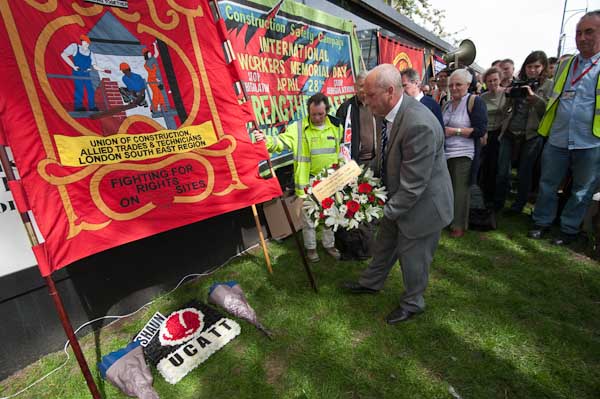
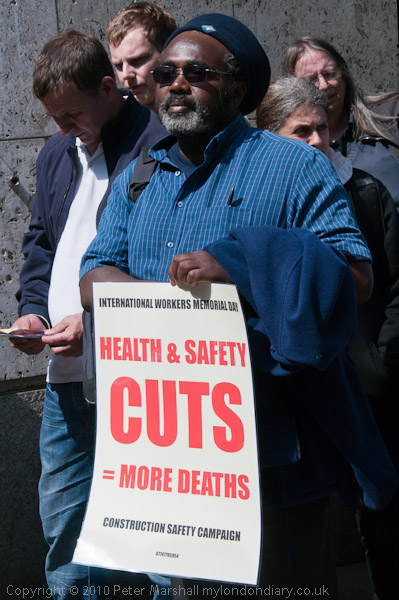
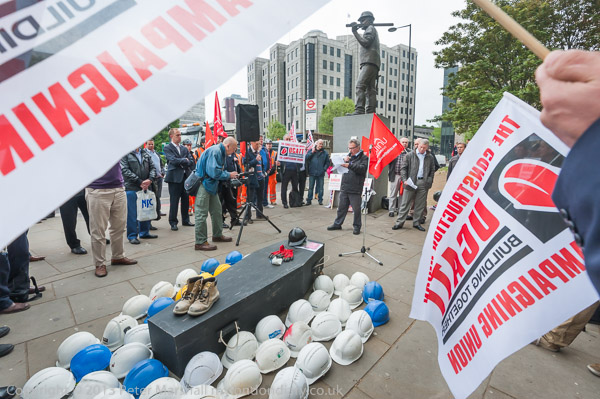
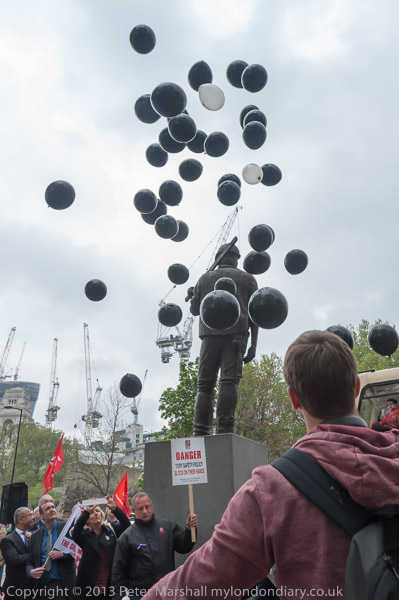
Workers’ Memorial Day

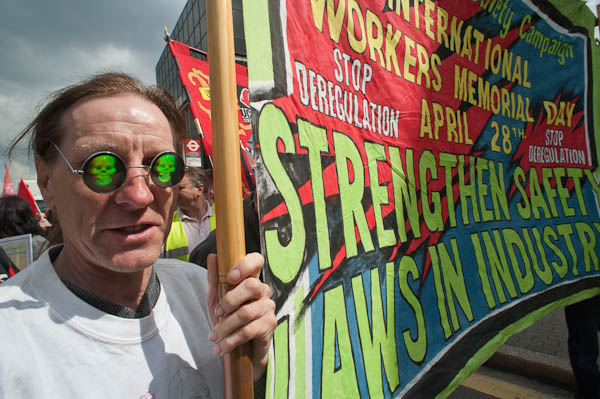
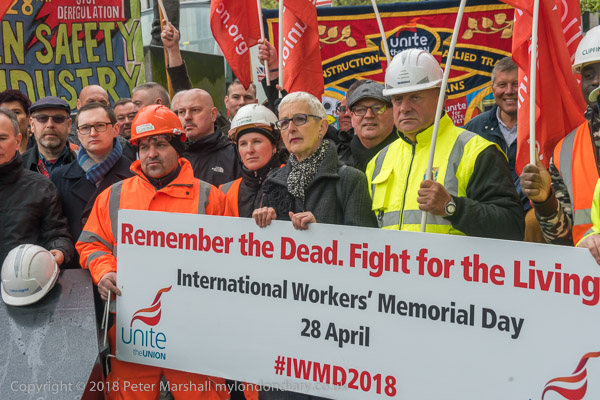
April 28th is International Workers’ Memorial Day

As the TUC points out:

Every year more people are killed at work than in wars. Most don’t die of mystery ailments, or in tragic “accidents”. They die because an employer decided their safety just wasn’t that important a priority. International Workers’ Memorial Day (IWMD) 28 April commemorates those workers.

https://www.tuc.org.uk/wmd

The day is commemorated around the world and is officially recognised by the UK Government. It is a day both to remember those we have lost and importantly to organise in their memory. The motto is ‘Remember the dead, fight for the living‘.

Each year the International Trades Union Congress sets a theme for the day and for 2021 this is:

Health and Safety is a fundamental workers’ right

There is a dedicated web site for the day set up by the ITUC and Hazards magazine which gives information about IWMD events in over 25 countries and an annual hashtag – this year #iwmd21. The ILO estimates that there 2.3 million people worldwide die each year because of their work – and there are 340 million workplace injuries.

Covid has brought the need for health and safety protection for workers to the fore – in 2020/21 there were around 8,000 recorded deaths of workers from Covid-19. This year the TUC has organised a national zoom meting and there is an online memorial wall, but there are also various local mainly virtual events.
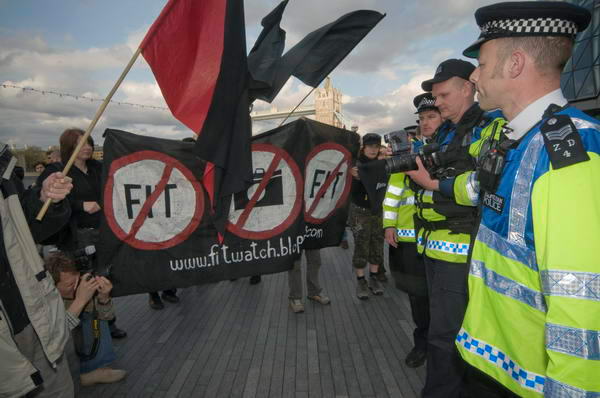
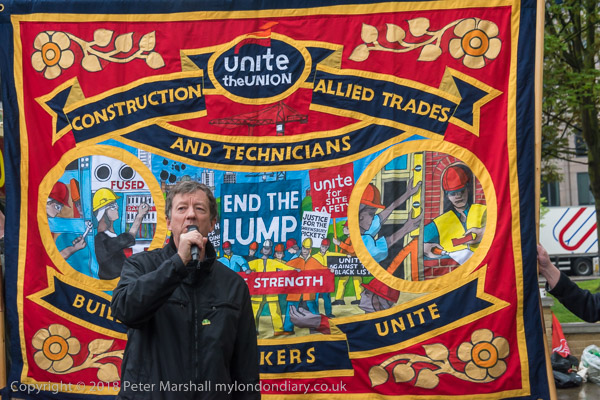
In most recent years before 2020 I managed to attend the main London event held at the statue of a building worker on Tower Hill, and occasionally to also cover other events around the capital.

An article by Annabelle Humphreys for Talint International lists the most dangerous jobs in the UK, based on information from the Health and Safety Executive. Fishing is the most dangerous of UK industries although the actual numbers of deaths is small. Seven fishermen lost their lives in 2018, but all were cases that were preventable. Waste and recycling also has a small workforce but a high level of ill-health and deaths. It’s hardly surprising also that oil and gas riggers have a high injury rate and that deep sea diving is also a dangerous occupation , though the numbers involved again are low.

What stands out is the construction industry, were 40 UK workers died in 2020 and around 81,000 suffered work-related ill health. Almost half the deaths were from falling from a height, while others died when trapped by things collapsing or overturning or by being hit by falling objects or struck by moving objects or vehicles or by electrocution.

But there are also high levels of deaths in other industries, particularly farming – often cited as the most dangerous of all – and manufacturing. And while Healthcare always has the highest sickness rate in the UK, Covid-19 will have greatly increased the number of deaths in this sector.

Unite Against Racism

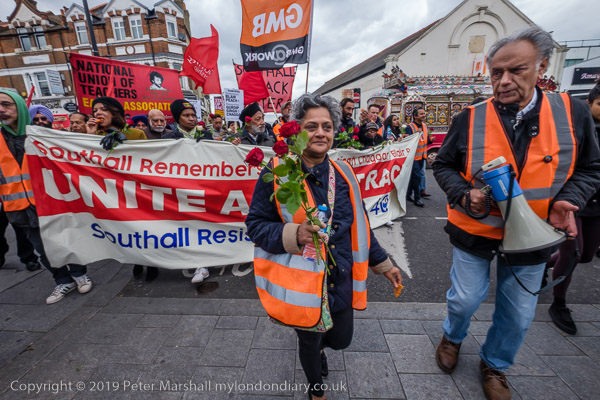
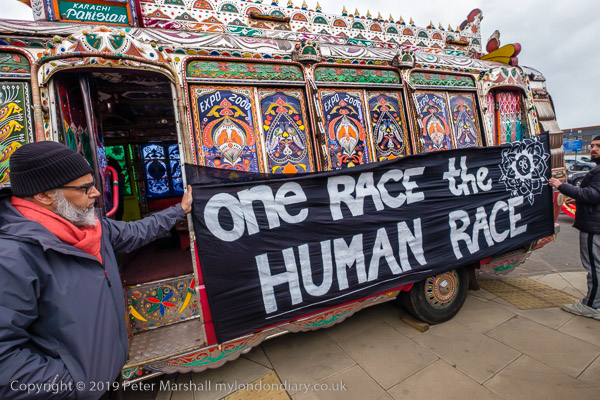
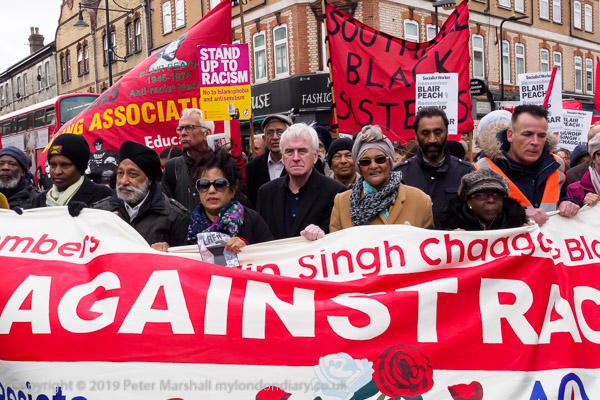
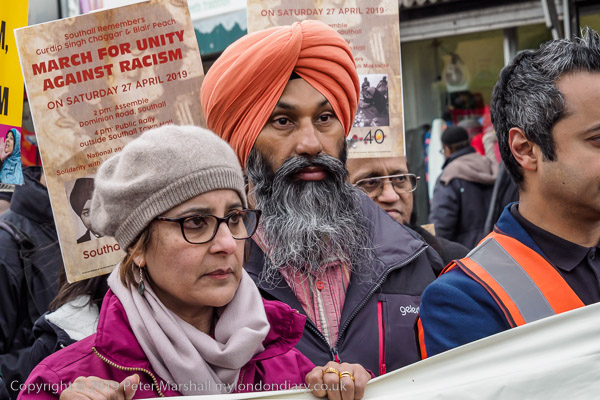
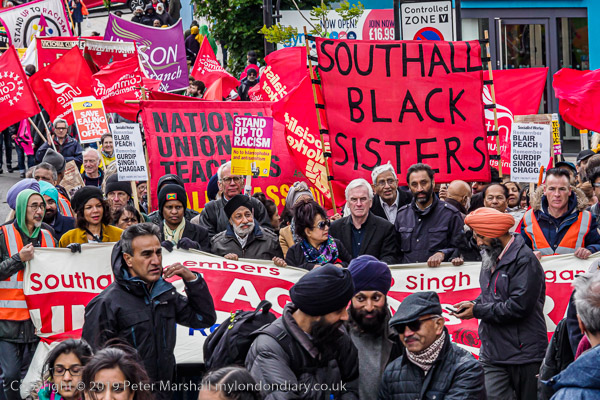
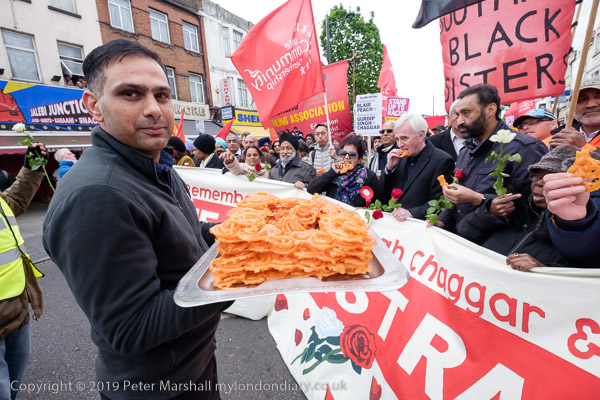
Two years ago today, 27 April 2019, I joined with a large crowd in Southall remembering the murders there of Gurdip Singh Chaggar and Blair Peach, calling for unity against racism.

The march took place on the Saturday after St George’s Day, and marked the 40th anniversary of Blair Peach’s murder by police officers. Several thousand police had packed the town to defend the National Front who were holding a meeting at Southall Town Hall. A large group of the local community and supporters from across London had come to oppose the meeting, and and police rioted and attacked what had been a determined but largely peaceful protest. Wikipedia has a long and well referenced article on the murder from which many of the facts below are taken, though speeches at the 2019 protest also included some eye-witness accounts. Peach was a member of my own union at the time, the NUT, which also made me very aware of the events and was prominent in the fight to see justice.
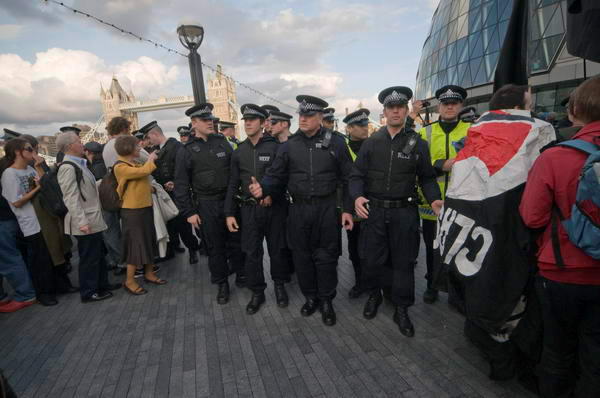
Blair Peach was in a group of friends who tried to escape the violent police attacks on Southall Broadway and make their way home down a side street, but unfortunately this led nowhere and the police Special Patrol Group drove up in several vans and began attacking the crowd there, who responded with bricks and bottles. Witnesses, including residents on the street say the police were hitting everybody and fourteen saw a police officer hitting Peach on the head.
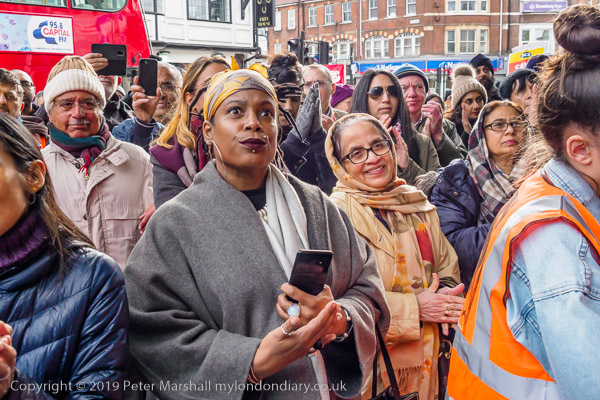
People obseve a minute of silence where Gurdip Singh Chaggar was killed

Forensic evidence found he had been hit with an illegal weapon, probably a lead-filled cosh or pipe, and searches of the lockers of the SPG unit involved found 26 illegal weapons. None of the witnesses were able to identify the police officer involved – perhaps because one officer had shaved off his moustache and another grew a beard and refused to take part in the identity parades. Many also had their uniforms dry-cleaned before the police investigation inspected them.

Although the police investigation had produced a great deal of evidence against the SPG, the DPP decided it was insufficient to justify a prosecution. The report was kept secret, though parts appeared in the press early in 1980, and the inquest was hampered as the legal team acting for the Peach family were not allowed access to it. The verdict of the inquest, ‘death by misadventure’ was widely considered – even by The Times – to have been inappropriate. The coroner afterwards wrote an article including his comments that some of the civilian witnesses had lied as they were “politically committed to the Socialist Workers Party” of which Peach was a member and that some Sikh witnesses “did not have experience of the English system” to enable them to give reliable evidence but was persuaded not to publish it.

At Ramgarhia Sabha Gurdwara


The fight to get justice over the murder continued, but none of the officers involved was ever brought to trial. Apparently all left the police force shortly after the investigaton. Peach’s family were awarded £75,000 compensation in a tacit admission of police guilt by the Metropolitan Police in 1988, but requests for a public inquiry were turned down by the Home Office. The SPG was disbanded in 1987, but replaced by a very similar Territorial Support Group. It was only following a member of the TSG killing newspaper vendor Ian Tomlinson as he was walking home past the G20 protests at Bank in 2009 that the report of the police investigation into Blair Peach’s death was finally made public.

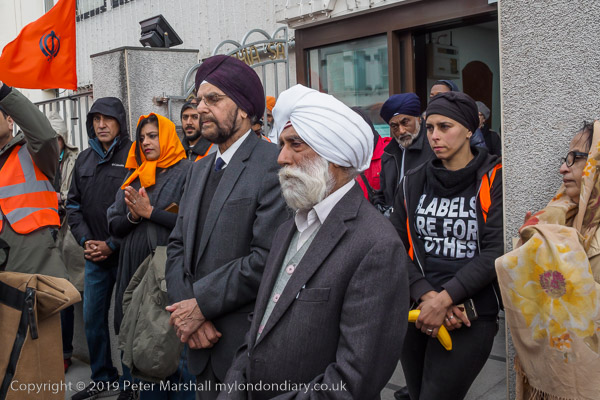
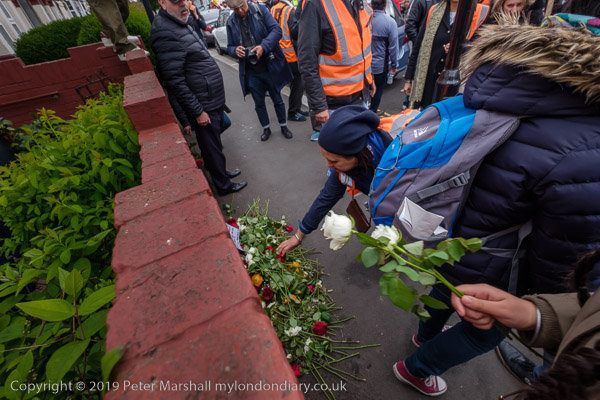
The 2019 march and rally in Southall convened close to where Gurdip Singh Chaggar, an 18 year old student, was murdered by racist skinheads in June 1976 as he left the Dominion Cinema and began, at the request of his family with a karate display. It paused for a minute of silence where his was killed before moving on to stop at the Ramgarhia Sabha Gurdwara which the Chaggar family attend, where prayers were said.

Flowers were handed out which were then laid at the street corner where Blair Peach was murdered before we moved on to a rally outside Southall Town Hall where the National Front held their meeting. Peach’s murder inspired the formation of both the anti-racist grassroots group The Monitoring Group, whose founder and director Suresh Grover introduced the event and of Southall Black Sisters, whose founder Pragna Patel who was one of the speakers, along with other community leaders and anti-racists.

Perhaps surprisingly absent was the local Labour MP, Virendra Sharma, who in 2019 lost a vote of no-cofidence by the local party apparently due to his low attendance at party meetings, slow responses to constituents and failure to campaign over local redevelopment issues. John McDonnell, Labour MP for a neighbouring constituency and then Shadow Chancellor was there from the start of the march and made a powerful speech.

More about the event and many more pictures: Southall rally for unity against racism

We Need Bees

Yesterday I walked down my garden and found our three apple trees in full blossom, a fine sight, though one I didn’t feel a need to photograph. I rather like the way it appears just for a few days each year then disappears. I stood there for a minute or so, breathing in the scene, then realised there was something wrong.

One of the things that I’ve enjoyed with our various lockdowns has been the silence with fewer flights from Heathrow. We’re off the flightpaths but only a couple of miles distant, and in usual times there is a virtually constant drone – along with the noise of the various motorways a mile or two distant. Road traffic is more or less back to normal but we still here the birds singing and other natural noises more clearly.

Standing by the trees I realised what was missing – there were no bees. For a couple of minutes, no bees. Then along came a solitary bumble-bee. Quite a large one, but that bee is going to have a problem pollinating all that blossom.

Most crops rely on insects to pollinate the flowers and without them there are no crops. Bees are not the only pollinating insects but I think they are the main ones, and the decline in bee colonies has a drastic effect on food production – including my own apple trees.

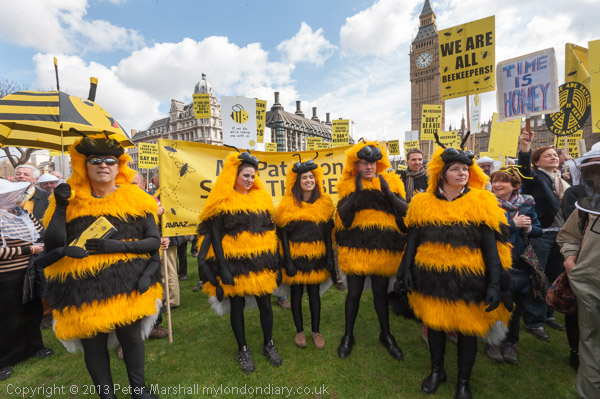
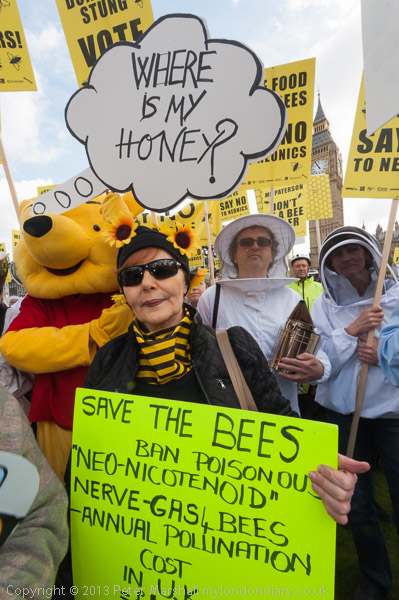
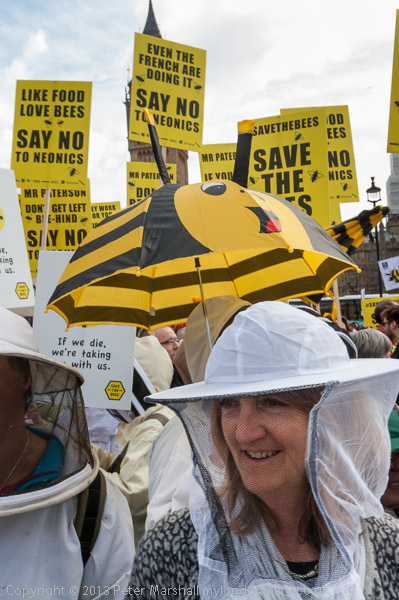
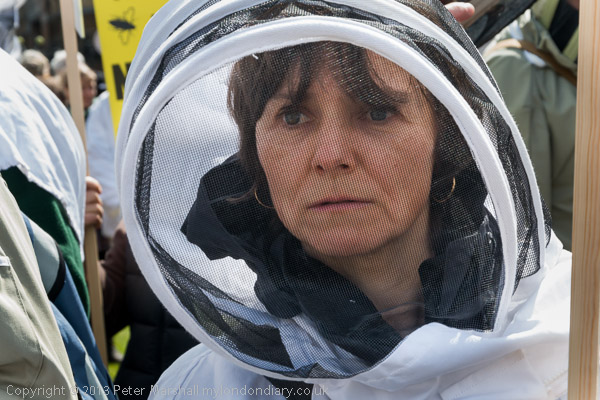
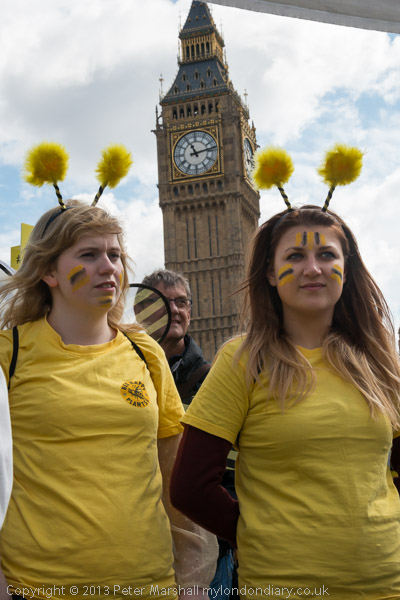
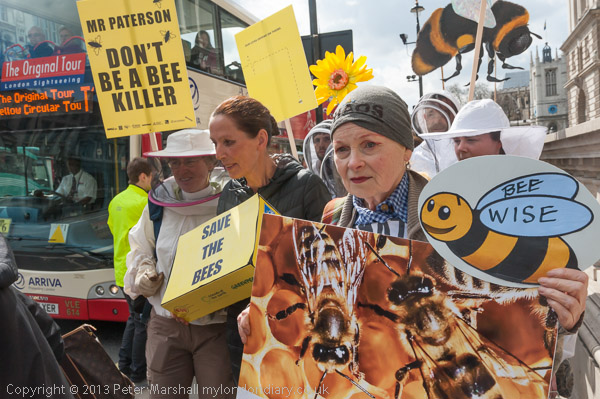
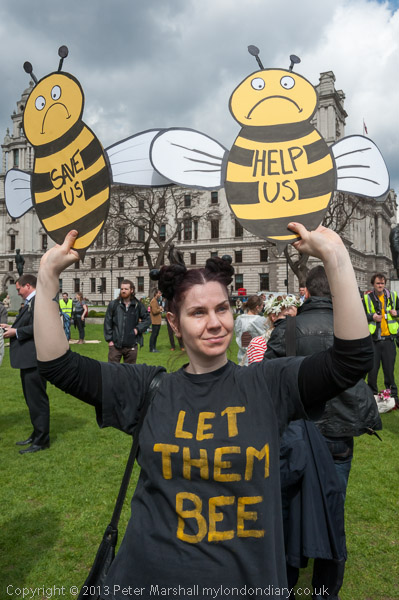
The beekeepers and environmentalists came to protest outside parliament to urge the UK to vote for a EU ban on bee-killing neo-nicotinoid pesticides which both kill bees directly and reduce their resistance to other factors. The EU later backed a ban on these pesticides with Michael Gove, then environment secretary stating that the risks of using them “to the bees and other pollinators which play such a key part in our £100bn food industry, is greater than previously understood.”

Katherine Hamnett and and Dame Vivienne Westwood with the ‘Save the Bees’ petition

However although the are generally now banned for outdoor use, the government early in 2021 authorised the use of one of these pesticides on the sugar beet crop to combat the threat of the virus yellows disease, though in the event the threat was found to be less than anticipated and the pesticide was not used.

Bee population in the UK seems to be continuing to decrease, though this year’s dearth in my back garden may be more a matter of the particular weather conditions and local habitat loss. Surveys of pollinating insects have shown a fairly consistent decline since the 1980s, with around a third having been lost since then, though the recent decrease in pesticide use may have reduced the rate of decline.

March of the Beekeepers