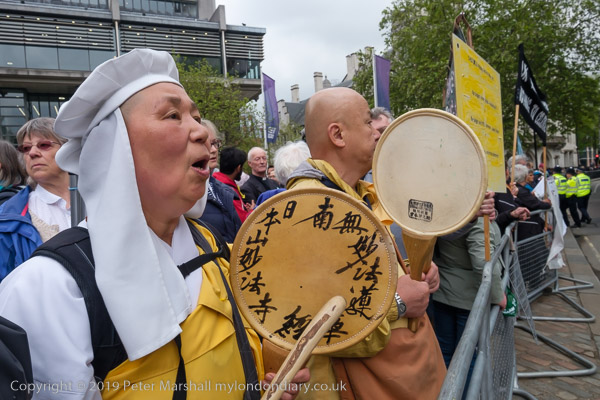
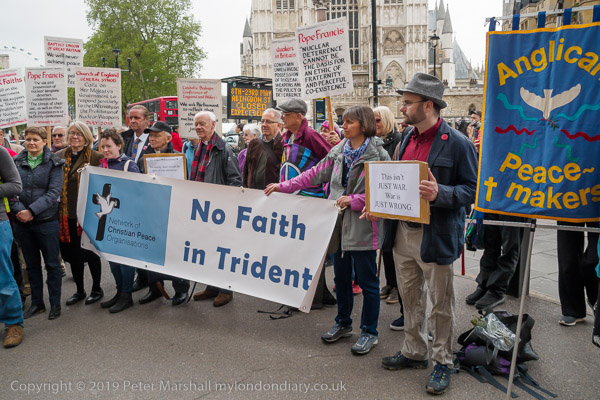
Guardian Lies on Venezuela

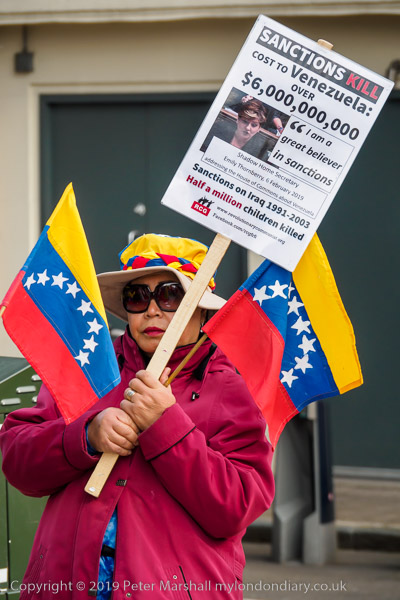
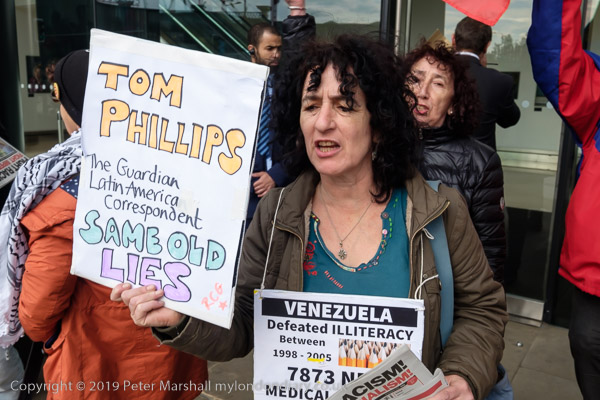
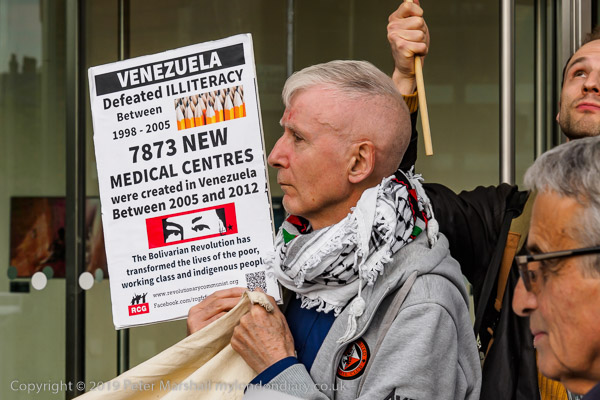
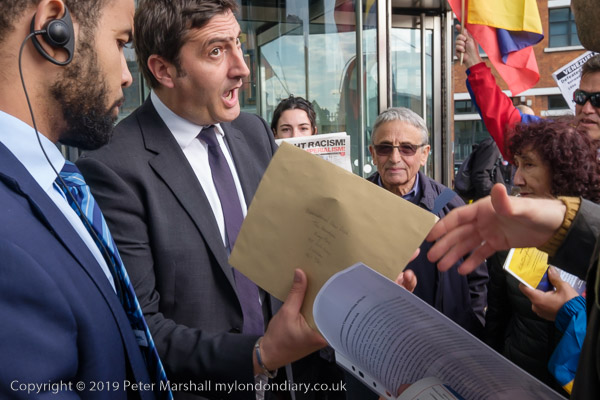
Back to looking back at my own work from a few months ago, and a protest outside the offices of The Guardian, a canal-side block on York Way to the north of Kings Cross, part of King’s Place. It’s a place I’ve visited a few time as in the ground floor entrance they have regular exhibitions of photographs, but on this occasion they were not letting people in to see them, with security staff at the door.

The protest was organised by the Revolutionary Communist Group, a name that might put some people off, but who I think are one of the friendliest and most sensible groups in left politics, and while I may not always agree with their views, they have been very active in campaigning on some of the our pressing social issues – including housing, universal credit and other benefits and disability, working together with other groups without trying to take things over. Often they are the people who bring a PA system to protests and make it available as an ‘open mike’ for others as well as them to speak.

They have a newspaper too, ‘Fight Racism, Fight Imperialism’ and it runs readable and well-researched articles on many subjects, and it includes much coverage of events in South America, informed by people who have lived and worked and have good contacts there.

Of course they view the situation from a particular political perspective, supporting the left-wing popular movements in the continent, and in the case of Venezuela, the government under President Nicolas Maduro. Of course not everything is rosy in the country which has suffered greatly from US sanctions, low oil prices and other economic pressures, but they are very aware of these pressures and the problems they have led to.

The stringences in Venezuela have particularly affected the middle-classes, while the Bolivarian revolution begun under Hugo Chavez meant great gains for the peasants and indigenous peoples, even though there has been deterioration in recent years.

The Guardians coverage of events in Venezuela have been almost entirely from the point of view of the middle classes who their correspendent clearly is at home with, and have largely ignored the popular support still enjoyed by Maduro. While the support of most of our press owned by billionaires as well as the establishment BBC for the US-backed efforts to mount a coup in the country against the democratically elected leadership is hardly surprising, many on the left are surprise that The Guardian should so one-sidedly support it.

The protesters held up posters listing some of the successes of the Venezuelan government under Chavez and Maduro with the Bolivarian revolution building socialism and transforming the lives of the poor which have led to the crippling US sanctions and the US-backed coup and called on The Guardian to stop publising lies and to report the facts and both sides of the argument in Venezuela rather than simply parrot the views of the US-backed opposition.

Towards the end of the protest a small deputation attempted to deliver a letter to The Guardian but were not allowed to enter the building. Instead the security man at the door accepted their letter and promised that it would be delivered.

More pictures at Guardian lies about Venezuela.


All photographs on this and my other sites, unless otherwise stated, are taken by and copyright of Peter Marshall, and are available for reproduction or can be bought as prints.

There are no adverts on this site and it receives no sponsorship, and I like to keep it that way. But it does take a considerable amount of my time and thought, and if you enjoy reading it, please share on social media.
And small donations via Paypal – perhaps the cost of a beer – would be appreciated.


Robert Frank: The Americans

The final part of my essay on Robert Frank, written 20 years ago and published on the web in 2000 looks at his iconic book ‘The Americans’ which changed photography after its publication in 1958/9.

The discussion of the pictures and their sequencing owes a great deal to other photographers, including two whose workshops I attended in the 1990s, Charles Harbutt and Leonard Freed and many others, but I think I added a little of my own. I’ve come across parts of it on various web sites since it was put on the web, and I’m told it was widely plagiarised in student essays, at least in the years following its publication.


The Americans

The Americans‘ was turned down by New York publishers, but Frank took it to Delpire in France. There, Robert Delpire only persuaded the company to publish in 1958 by threatening to leave the family firm if they didn’t. The French edition was not entirely successful as a book, including texts by a number of well-known writers which had the effect of making the photographs seem like illustrations rather than a coherent work in their own right. The following year it was published by the Grove Press in America, in a form that respected Frank’s vision and which has been followed with minor revisions in later editions. Sales were poor and the reviews were vituperative, but the book has been republished in many editions and has I think been continuously in print.

The Grove Press edition had an introduction by Jack Kerouac, who Frank had recently met: ‘That crazy feeling in America when the sun is hot on the streets and music comes out of the jukebox or from a nearby funeral, that’s what Robert Frank has captured in tremendous photographs taken as he traveled on the road around practically forty-eight states in an old used car (on Guggenheim Fellowship)…’ Kerouac continued for five pages, showing a clear knowledge of Frank’s work and an understanding of what he was trying to do, concluding with some short sentiments which have been often been quoted, among them ‘Anybody doesn’t like these pitchers dont like potry. See?’ and his description ‘Robert Frank, Swiss, unobtrusive, nice with that little camera that he raises and snaps with one hand he sucked a sad poem right out of America onto film, taking rank among the tragic poets of the world.’

The work starts with a picture of the front of a building, an American flag draped across its front and two windows, in each a person. Both are apparently female, though both are obscured. Taken during a parade at Hoboken, the bottom edge of the flag visually cuts off the head of the figure at the right, preventing us and her from seeing. On the next page, the City Fathers line up, probably for the same event, on a stand behind a rail with a flag pinned to it. Soberly dressed old men, hats and coats against the cold, the man at the back stands with eyes closed, apparently totally elsewhere in his thoughts as his lips pucker into a kiss.

Next on a balcony in Chicago, a demagogue raises both fists, arms outstretched, above a very bored looking sculptured head in a frieze below. Cut to a car park in a field in South Carolina, black men attending a black funeral, heads titled, hands to cheeks, lost in thought probably during an address. One man clearly has his eye on Frank, wondering what this white stranger is doing. Next to a rodeo in Detroit, a white man in a cowboy hat, in profile, smoking a cigar, hand also up to his face, behind him two women apparently subservient; we turn the page and a uniformed man is dragging a woman on his arm (probably his wife, though it almost looks like an arrest) along the street in Savannah. The uniform leads us to the doorway of a Navy Recruiting office, though which we see the flag on the wall and the end of a desk with two feet resting on it.

Already we begin to see some of the ways Frank is building a story, using montage – the recurring element of the flag, the orator followed by the listeners. A couple of other motifs have also been presented – the car and the American Dream, but have yet to reappear. Frank concentrates on the ordinary, the things you see on the road and along its edges, but he also deals with real issues, whether of race, as in the pictures of the black nurse with the white doll-like baby in Charleston, South Carolina or the trolley in New Orleans with whites at the front and blacks at the back, or spiritual emptiness in the ‘Merry Christmas’ signs at the fast food Ranch Market in Hollywood or the plastic crosses, ‘Remember your loved ones’ on sale for 69 cents. A petrol station forecourt, the pumps like figures in a religious procession, carrying a tall banner that says S A V E in heavy capitals. It takes a second look to see the lightly written G A S in the gaps.

Perhaps the two most famous of the pictures using the flag are from a Fourth of July celebration in New York, where the giant hanging flag is shown to be patched, torn and threadbare, and a of a man playing a tuba at a political rally, rendered anonymous, the bell of the instrument replacing his head, and growing out from this a pole with the flag spreading out. These pictures are used to start the second and third loose sections of Frank’s book – the first also starting with the flag.

We think back to the rodeo picture when we come to another vision of the Wild West, a bar in Gallup, New Mexico, taken from a low viewpoint, perhaps even shot appropriately from the hip. The picture is at an angle and slightly blurred, half obscured by the looming back of a man close to the camera. Across the bar a man stands alone and desperate, hands perhaps just in pockets or on his hips, but giving the suggestion of a gunfight that is ready to start. Later we see an immaculately dressed cowboy on the streets of New York, seated not on a horse but on the edge of a litter bin.

Another of the motifs, or in this case perhaps more of an icon, is the jukebox. It glows weirdly like an alien visitation in a New York bar, leers obscenely among apparently drugged kids in a Candy store. An ornate model dominates a wooden shack bar in Beaufort, South Carolina, with bare tables and chairs and a small black baby escaping from his mattress on the floor.

At Long Beach, California, Frank came across a car covered with a white cocoon in front of a low plain building with two palm trees. Here the car is clearly an altar, the trees forming the columns and roof tracings of a church dedicated to the Holy Motor Spirit; next we have the site of a car accident; a blanket covering some bodies at the edge of Route 66, four people in a line looking at the and a row of buildings back form the road; next a road in New Mexico stretching into the distance, its centre line absolutely vertical.

A woman needs on the banks of the Mississippi at dusk, her white robes contrasting with her black face; kneeling she holds a white cross. The next picture is captioned ‘St Francis, gas station and City Hall – Los Angeles, and St Francis is silhouetted in the foreground holding up a cross. Next come three crosses marking the site of a highway accident, lit by a shaft of sun from a cloudy sky. We get an assembly line at a car factory, followed by a political assembly line at a Chicago convention, a fine row of urinals and a black man cleaning the shoes of a white businessman in a men’s room…

I’m conscious of how much I’m not pointing out in these pictures; this is a book every photographer or anyone who wants to be a photographer should own. All eighty three of them are worth close study, although they work together to produce something much greater than their sum. Despite the mauling it received on publication – it showed a personal view of America and one that was distant and uncongenial to comfortable middle-class America who were, by and large, both the major cultural producers and consumers – and poor sales at the time, it has become a classic. It marked a new vision in photography, a shift in the paradigm, and, as often happens it took some getting used to. To modern eyes it is difficult to see how critics could fail to see the good points in Frank’s work – the irony, the capturing of the essence of the small towns on the road, and even the humour of some of his work. Students of photographic history will certainly also be amused by his deliberate introduction of references to other photographers, with at least one carefully taken ‘decisive moment’ and a couple of pictures that are pure FSA.

Of course the clearest stylistic reference is, as Tod Papageorge pointed out, in his ground-breaking ‘Walker Evans and Robert Frank – An essay on influence‘ to the work of his mentor, Walker Evans. The debt is at its strongest to Evans’s own work with a 35mm camera, particularly to his pictures of people on the streets, where there are many pictures which could well have been taken by Evans. As Papageorge points out, various aspects of the design of ‘The Americans’, not least its title, also clearly derive from Evan’s masterpiece, ‘American Photographs’.

Later Work

After ‘The Americans’, Frank turned most of his attention to film, although continuing to take some still pictures, despite stating later that in 1960 he decided to put his camera ‘in a closet‘. His first film in 1979 was the only film which allowed the beats to present themselves on screen, ‘Pull My Daisy’, starring poets Allen Ginsberg and Gregory Corso, artist Larry Rivers and musician David Amram. Kerouac contributed an act of his never completed play ‘The Beat Generation‘ as the screenplay and also appeared as a narrator. Better known is his controversial ‘Cocksucker Blues‘ about the Rolling Stones, though this was never commercially released, and probably more known about than actually viewed (there is a poor digital copy on YouTube.) Altogether he directed around twenty films, as well as acting in some, and being an editor and writer.

Frank’s photographic output was increasingly linked to the problems of his family, including the death of his daughter, Andrea, in a 1974 plane crash in Guatemala and his son Pablo’s mental illness. Increasingly his pictures were carefully constructed but also captioned with texts, often crudely scrawled or scratched on the images. There is a raw emotionalism and outpouring of grief that is sometimes hard to bear in such texts as ‘She was 21 years old and she lived in this house and I think of Andrea every day.

More recently he worked on a series of photographs of common tools and objects, referring back to the series produced by Walker Evans for ‘Fortune’ magazine when Frank was working as his assistant.


When I wrote this the only other widely available book of Frank’s photographs was The Lines of my Hand published in 1972 which included a range of his work but lacked the coherence of The Americans. In 2003 came London/Wales, and in 2008 a revised edition of The Americans with most images uncropped and some variants. In 2009 Looking In: Robert Frank’s The Americans, gave us scholarly essays with a great deal more information (and more pictures) about Frank and his work. From 2010 on Steidl published a series of half a dozen ‘Visual Diaries’ with photos from his early career together with the later more personal images. But despite all this, The Americans in its earlier editions stands out as the essential Robert Frank and the book that changed photography.
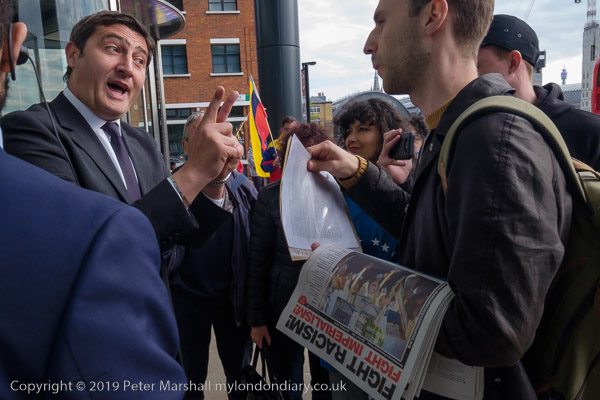
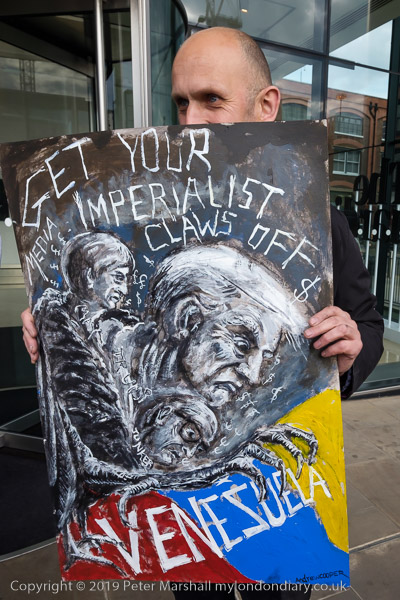
Frank continued (part 2)

Here is the second of three parts of my longish essay about Robert Frank, certainly the greatest influence on other photographers including myself in the years that followed publication of his book ‘The Americans’ in 1958/9. The final and I think most interesting part, in which I take a look at that book in some detail will follow shortly.


New York and Travel

As soon as he possibly could, in 1947, Frank left Switzerland and moved to New York. Art director Alexey Brodovitch encouraged Frank to photograph for Harper’s Bazaar and other fashion magazines. Frank soon found fashion restricting and also contributed to “Life”, “Look”, “Fortune”, “McCall’s”, and “The New York Times”.

Frank also began to travel, coming back to Europe in 1951, where he photographed in mining villages in Wales and in London, as well as photographing in South America for a book including work by Swiss photographer Werner Bischof and the French photographer Pierre Verger who devoted more than half of his life to the study, promotion, and practice of Afro-Brazilian culture.

In Wales he took a powerful if slightly predictable close view of a miner coming back from the pit, blackened by coal. It is a powerful portrait, the cheery face beneath a cloth cap heightened by contrast with the broader out of focus miner in the left of the frame. His picture of children playing on the slag heap, and of a miner at home scrubbing himself in a zinc bath while his wife sits at the table reading the newspaper are vibrant reminders of vanished times, and were surely informed by pictures from the 1930s of similar scenes taken by Bill Brandt.

In London too he was drawn to the stereotype, but rendered it in a personal and interesting fashion; men in bowlers and top hats stroll through the fog of city streets, carrying umbrellas. There are also some odd moments and places – a dog in a foggy street, an angel peering over a wall, mothers (or nannies) struggling with giant wrapped babies and prams in the park, bombsites and hearses.

Back in New York in 1953, Frank began to work with Edward Steichen in selecting work for an exhibition on ‘Post-War European Photographers’ at the Museum of Modern Art, and later on ‘The Family of Man’, although as Frank says, he did not share the ‘Captain’s’ sentimental vision behind this. Frank took Steichen to visit the studio of Jacob Tuggener among other photographers, and his work was included in the exhibition.

American Influences

Meanwhile, Frank had discovered another of the elements that was to influence him greatly, Walker Evan’s seminal book ‘American Photographs‘. Again this was a carefully and subtly sequenced work, with picture linking visually to picture and recurring themes. Evans possibly drew his ideas about sequencing more from literary than film sources. Frank took his work to show Evans, who was impressed; it was Evans who was the major support behind Frank when he successfully applied for a Guggenheim Grant to make a journey across America taking photographs.

A further influence on Frank was also largely literary (although at that time derided by the literary establishment.) This was the ‘beat generation’ – writers and poets such as Jack Kerouac, Allen Ginsberg and Lawrence Ferlinghetti.

Kerouac had written ‘On the Road‘, his second book, using a single long roll of paper in his typewriter so he could let his stream of thought flow out through its keys to paper without interruption, without pausing to think or editing. The book is based around a series of four largely pointless journeys by Kerouac (Sal Paradise), driving across America with or to visit his friend ‘Dean Moriaty’, whose wild behaviour and unreliability are legendary.

Written in 1950, Kerouac’s publisher turned it down, and it did not appear until 1957. Frank was probably not familiar with the detailed text, but certainly was aware of the movement and had met some of the principals including Ginsberg in the early fifties before his own road trip around America, and in his attitudes and view of America he echoed those of the beats.

On the Road

Frank’s journeys across America were however rather less frenetic than Kerouac’s and fuelled more by his experiences than drugs. Much of the the time he was accompanied by his wife and son who both appear in the final image of the finished book. Throughout 1955/6 he crossed America, driving a second-hand car given him by Peggy Guggenheim, shooting around 500 rolls of film, photographing on the streets and in post offices, Woolworth stores, cafés, small hotels, bus stations.

He started work early in the mornings and usually continued all day. He seldom talked to people and usually tried not to be noticed while he was photographing, though his subjects in some pictures are clearly reacting to his camera – and not always positively. After his travels he edited the roughly 18,000 images down to the 83 which appear in his book, on average around one from every six films.

The journeys were not without problems, particularly when he was arrested and held in jail for 3 days in Little Rock, Arkansas. A police officer saw a Ford with New York plates being driven by a badly dressed and dishevelled Frank; he stopped the car and spoke to him and discovered not only did he have a strongly foreign accent, but saw that there were several cameras and other boxes and bags in the car. Clearly this was a spy, and that he had a piece of paper with something about Guggenheim on it (another foreign name) made circumstances even more suspicious.

So Frank was arrested and left in jail for around seven hours before being subjected to a series of interrogations for another four hours. This was at the height of the cold war and McCarthyism, and the police were totally unable to understand what Frank was trying to do. Why was anyone photographing America other than to supply information to a foreign power? Every possible point in his papers and his attempted explanations was fuel to their paranoia –the name Brodovitch – one of his Guggenheim sponsors – was clearly Russian, one of his children was called Pablo – a foreign name, he had marked routes on his maps and so on.

Fortunately Frank was able to persuade them not to have any of his films developed locally as they had threatened to. When they asked him if he knew anyone in politics or the police or similar, he told them he knew Steichen, and that his wife’s uncle was a close friend of Mayor Wagner of New York.

What concerned Frank most after he had been released was that his fingerprints had been taken and sent to the FBI; he was worried that this might prejudice his application for American citizenship.


The final piece of this essay, first published on the web in 2000, will appear shortly and looks at the content of ‘The Americans’ and then concludes with a very brief section on his later work.

Robert Frank – the Early Years

My essay on Robert Frank started as my rather briefer teaching notes which I used with A Level and BTEC students in the 1980s and 90s which I later extended for publication in a photographer’s newsletter and then for a photography web site. Behind the first part of the essay was an attempt to show something of the sources of Frank’s inspiration in his photographic apprenticeship in Switzerland.

It amused me somewhat that many, particularly Americans seemed to treat Frank as an essentially American photographer, while to me it seemed to me that the strength of his vision came from the fact that he saw the country as a foreigner. Even though he had had longed to escape his native Switzerlandto find a new home in the States, his thinking was still from a European tradition – if one of which most Americans were unaware. So I began with an introduction about his early years and some of the influences on him.


Robert Frank was born in 1924 in Zurich, Switzerland; his parents were Jewish. He was part of a European generation most of whom fought in the Second World War, but Switzerland remained neutral; it was also a time when Jews across the border were being killed by the million. Although the German-speaking area of Switzerland was dominated by Nazis, freedom of speech and the freedom to create remained.

Frank learnt photography from a photographer who lived in the same block of flats as his family, Hermann Segesser. In 1942, at the age of 18, he was apprenticed to Hermann Eidenbenz and later worked for Michael Wolgensinger in Zurich. Wolgensinger (1913-90) had learnt photography from Johannes Meiner in Zurich before attending Hans Finsler’s classes at the Zurich School of Commercial Art and becoming Finsler’s assistant from 1935-7. Both taught Frank to use large format cameras and controlled lighting in the studio. Following this, Frank worked for a short time for a film company in Zurich, Gloria Films. Wolgensinger later also worked with experimental and commercial film – including ‘Metamorphose ‘ – and colour installations.

The young Frank was impressed by Paul Senn’s pictures of Spanish refugees, as well as by the resolutely Swiss pictures of Jacob Tuggener. Although Tuggener was right wing and conservative in his views, the ‘beatnik’ bohemian Frank admired both his work and his artistic intransigence. He compares Tuggener to the famous Swiss national hero, William Tell – Tuggener’s work was Switzerland seen totally without sentimentality. Frank was also impressed by the way he used his photographs in sequences – particularly in his book of factory photographs, ‘Fabrik‘, creating something like a film.

Montage was a term and technique developed particularly by the great early Russian film directors, Eisenstein – in ‘Strike’, ‘The General Line’ and ‘The Battleship Potemkin’ – and Pudovkin in ‘The End of St Petersburg’ and elsewhere. Pudovkin tried to analyse its use in his book ‘Film Technique’ where he states that montage is the foundation of film art. He set out five techniques of montage:

  • contrast – where for example the plight of a starving man is heightened by following it with a scene of a feast;
  • parallelism – which extends contrast by inter-cutting the scenes;
  • similarity – which makes use of similar content – as when Eisenstein cuts from strikers being shot to an ox being slaughtered in an abbatoir in the finale of ‘Strike’;
  • synchronism – which involves cutting between events happening at the same time – will the hero rescue the helpless female from the track before she is hit by the fast–approaching locomotive;
  • recurrent theme (Leitmotiv) – a recurring image or scene.

Although this schema was extended greatly by Timoshenko and usefully extended and clarified by Rudolf Arnheim in his ‘Film as Art‘ – still a useful resource for both the study of film and for photographers – it has the merit of simplicity.

Tuggener was not of course the first to sequence photographs with some care. One of the strengths of the great editors of the illustrated magazines of the 1920s and 30s such as Stefan Lorant was their skill in photographic layout. However in general this was largely a matter of linking photographs to a narrative line, often corresponding to a temporal sequence. Lorant also often worked with pairs of pictures as a contrast, often humorous, seen at its most obvious in the magazine ‘Liliput‘. Bill Brandt, the great British photographer of the 1930s-50s, was also adept at sequencing, for example in his book ‘A Night in London‘ (1938), where a temporal structure is used.

Tuggener’s approach in ‘Fabrik’ and other projects was more radical in its use of montage, making use in particular of contrast, similarity and leitmotiv. It represented a decisive move away from viewing the single photograph as the photographic work to seeing it in terms of the whole series of pictures.

By 1946, Frank was photographing on the streets of Zurich with a 35mm rangefinder camera, developing his own style. He was learning to use the camera in a fluid and intuitive manner, trying to capture his impressions spontaneously rather than to calculate and impose a composition on them.


More of my essay on Frank in a later post.

The Falling Man

Most if not all of us remember what we were doing when we heard about the tragic attack on the World Trade Center in New York on 9/11, the 11th of September 2001.

I was just getting my bicycle ready to leave college after a morning’s teaching – I was then working part-time and had finished for the day – when a distraught colleague rushed up to me to tell me the news. She had grown up in New York, and had just seen pictures on her computer showing a plane flying into one of the towers. We shared our horror at what was happening, and watched for short time together unable to beleive what was happening.

After a few minutes I left her and got on my bike and cycled home. I couldn’t eat lunch but began to search for more information on the web, finding both the pictures on the news channels and also a number of posts of mobile phone pictures and video taken by those close to the events, including some making their way out of the building. It was these pictures, with their rawness, often blurred and indistinct that really brought home the horror to me, and I sat and wrote an article linking to them and to some of the professional imagery.

I don’t know that it was a very good article, but I clearly saw the event not only as a terrible act of terrorism, but also as a clear indication of the power of ‘citizen journalism’, perhaps the first major world event where the story was told and illustrated most immediately and effectively by those caught up in the tragedy rather than profesional journalists. And it was a story that attracted around a million views in the next 24 hours or so.

Of course we soon saw a great deal of fine coverage from the professionals, particulalry of the later stages of the event, but these lacked the rawness and immediacy of those first acounts – which their technical shortcomings emphasized (as does the grain and shakiness of Capas D-Day pictures).

Esquire Magazine has published a long and very interesting feature about the photographs of people who fell from the burning towers, and in particular the ‘Falling Man’ captured in a series of images taken by photographer Richard Drew. Originally published on the front pages, it quickly became the subject of controversy, and disappeared from view except on some insalubrious web sites. As the feature reveals, it caused considerable distress among at least one family of a man who died and was apparently wrongly identified as the man in the picture.

The story by Tom Junod is an interesting one, which also raises many issues about the use of these and other photographs, and about what photographs can tell us about what they depict. He concludes that this image of one of the perhaps 200 men who jumped from the upper stories of the WTC rather than await the death that seemed inevitable is of the man who “became the Unknown Soldier in a war whose end we have not yet seen.

Regents Canal – Kings Cross

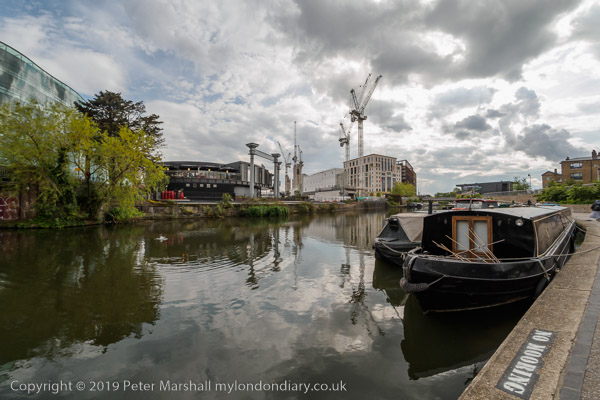
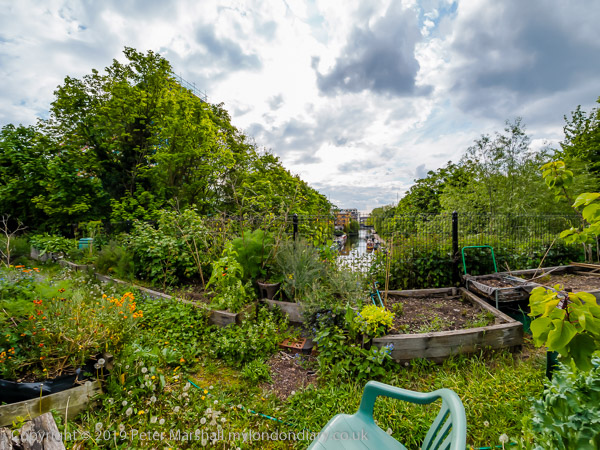
I had an hour or so to spare before a protest taking place outside The Guardian offices at Kings Place on York Way, the building at the left of the picture above and decided it was enough time to take some pictures along the canal, mainly to the east from York way to the mouth of the tunnel under Islington. The picture above is from where I walked down to the canal from York Way, and as you can see it was a good day for panoramic images like this, with plenty of interest in the sky. Skies do tend to take up a rather large part of such images, and either a dull overall grey or a clear blue can make them rather boring. The clouds in pictures like this also enliven the water with their reflections.

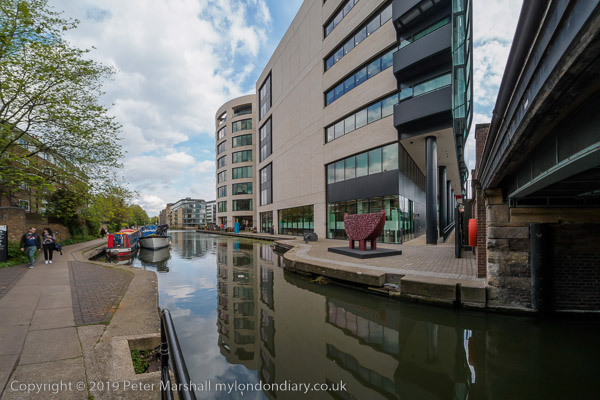
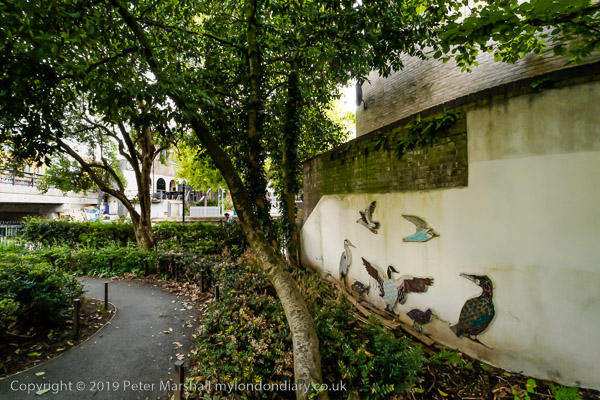
Walking under the York Way bridge I made an image showing the bridge and the building of Kings Place, with a waterside sculpture. There was little traffic on the canal and the water was a smooth mirror showing the buildings and the sky.

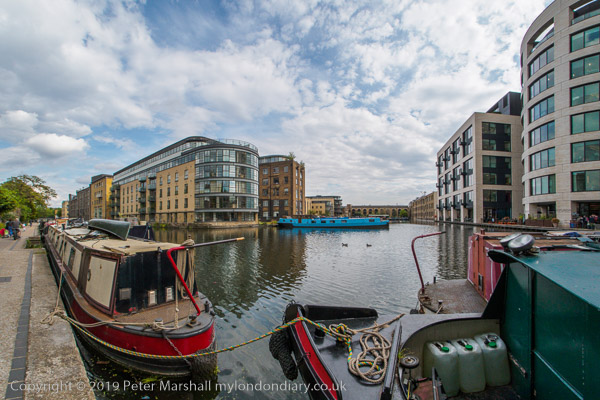
A few yards further on and I could see into the Battlebridge basin as well as the buildings alongside the canal and the moored narrow boats. When I first photographed here the buildings alongside the canal were industrial, but now they have largely been replaced by new flats. The canal here is more open and the water is rippled, making the reflections less clear.

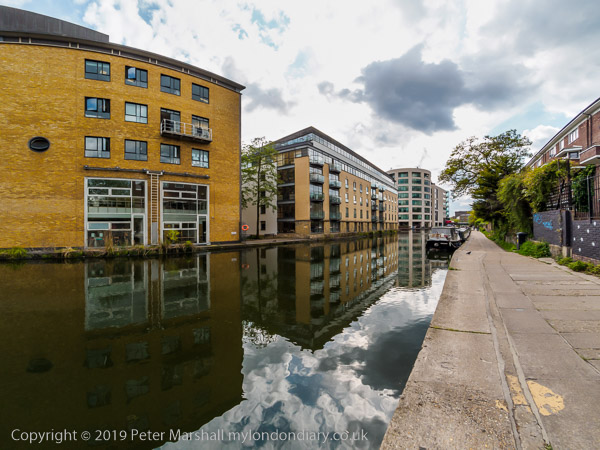
A little further east and the canal was more sheltered, again giving a smooth mirror surface and clear reflections. The cylindrical perspective needed to acheive the extreme angle of view obviously curves the roof line of the building at left which is well away from the centre of the image. Vertical line and those through the image centre are rendered straight, but other lines curve increasingly away from the centre . The canal bank at the bottom of the building is less obviously curved as it is closer to the centre.

This isn’t really a distortion but a simple effect of the projection needed to get such an extreme view onto a flat surface. It could be made less obvious by cropping from the top of the image.

A few minutes later I had reached the tunnel mouth and found that there was a small garden across the top of it, though it wasn’t really possible to get a good picture as I was unable to get inside.

I wandered around a little more on my way back to York Way, and had time also to make a few non-panoramic images.

You can see some of these as well as other panorams on My London Diary at Regent’s Canal – King’s Cross


All photographs on this and my other sites, unless otherwise stated, are taken by and copyright of Peter Marshall, and are available for reproduction or can be bought as prints.

There are no adverts on this site and it receives no sponsorship, and I like to keep it that way. But it does take a considerable amount of my time and thought, and if you enjoy reading it, please share on social media.
And small donations via Paypal – perhaps the cost of a beer – would be appreciated.


Drivers protest at Uber offices

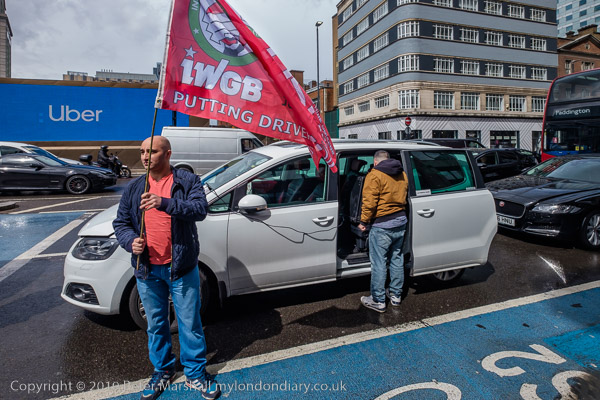
Uber drivers in London claim that on average they earn £5 an hour after taking into account their expenses, well below the national minimum wage and less than half the London Living Wage, the independently assessed minimum needed to live in London.

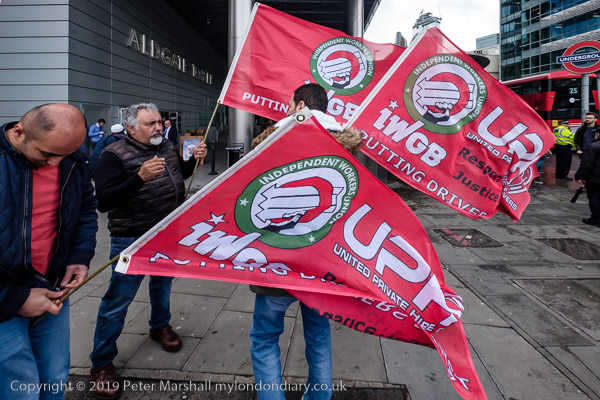
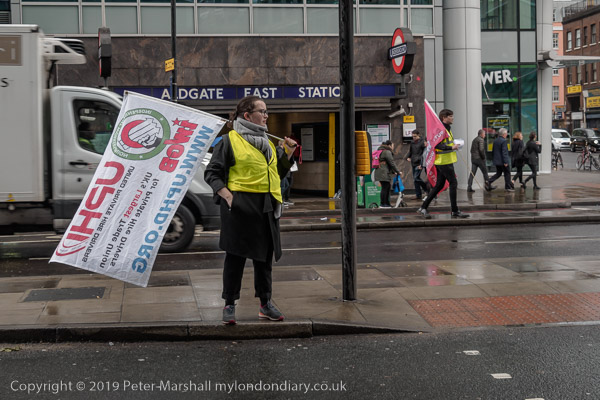
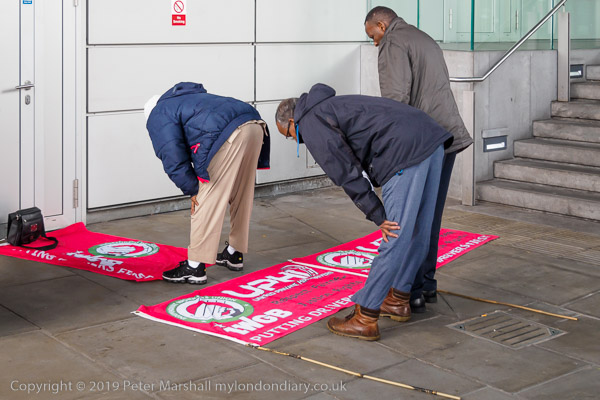
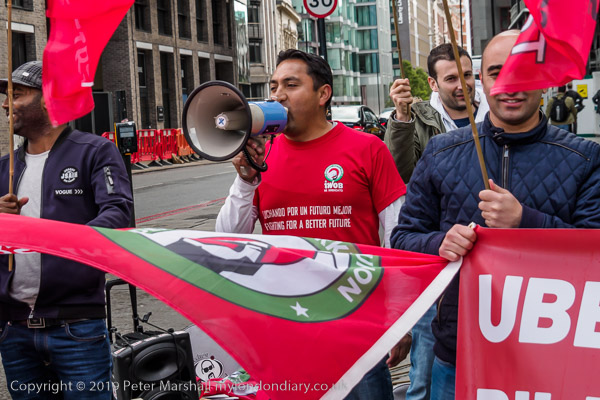
United Private Hire Drivers, a branch of the IWGB – Independent Workers Union of Great Britain – has been recruiting and organising private hire drivers including those working for Uber and organised a protest outside the Uber offices in Aldgate on the day before Uber’s Wall Street share flotation. The flotation at $45 per share meant a bonus of billions for Uber’s founders and for early investors including Amazon’s boss, Jeff Bezos and disgraced cyclist Lance Armstrong but absolutely nothing for the drivers.

Those who bought into the shares at the flotation may also have lost, unless they sold their shares at exactly the right time; the shares had lost around 7% at the end of the first day of trading and have only very briefly peaked above the opening price. In August they slumped down to around $32. Of course they may rise again – particularly if Uber ever manages to make money.

Despite cheating and exploiting its workers, avoiding tax and failing to properly recognise the status of the workers who drive for it, Uber has still never made a profit and may never do so. Of course it has done very nicely for the people at the top of the organisation – and those early investors.

In some respects, Uber certainly does point to the future of private hire, and highlights the antiquated and expensive nature of our London black cab system. And it provides a service many find very useful if not always entirely necessary, but at the expense of both its drivers and tax payers in general, cheated out of tax.

Better and cheaper true public transport services could do much to reduce the need and the desire for the service Uber offers, and there seems to be no inherent reason why a similar public service could not replace both Uber and black cabs and other hire services, although paying drivers decently and providing proer conditions of service as well as paying taxes would inevitably increase the cost to users.

The drivers say that fares need to be increased to £2 per mile and that the commission to Uber, currently 25%, needs to go down to 15%. They want an end to unfair dismissals for for Uber to respect the rights of drivers as workers which were confirmed by an Employment Tribunal ruling in 2016.

The protest involved drivers boycotting the Uber app from 7am to 4pm, and it was impossible to know how successful that had been. But there were rather fewer drivers than I expected outside the offices and blocking one lane of the busy road, though I left before the protest was over.


All photographs on this and my other sites, unless otherwise stated, are taken by and copyright of Peter Marshall, and are available for reproduction or can be bought as prints.

There are no adverts on this site and it receives no sponsorship, and I like to keep it that way. But it does take a considerable amount of my time and thought, and if you enjoy reading it, please share on social media.
And small donations via Paypal – perhaps the cost of a beer – would be appreciated.


Highgate to Stoke Newington

On the early May Bank Holiday – the one that should have been on May Day but isn’t – Linda and I walked another short section of the Capital Ring, from Highgate to Stoke Newington.

After a short walk along footpaths and roads, the route joins the former railway line which is now the Parkland Walk. Quite a lot of this is in a cutting, though there are some embankment sections, but except where the line has bridges over roads the view is often very limited by trees and bushes which have grown beside the former line.

A long bridge takes you across the East Coast main line and its suburban outliers and into Finsbury Park, where both cafe and toilets were very welcome.

Across the park you join the New River, supplying water to London since 1613, thanks in particular to the efforts of Sir Hugh Myddelton, though I expect he had quite a few others to dig it for him (and it wasn’t his idea in the first place.)

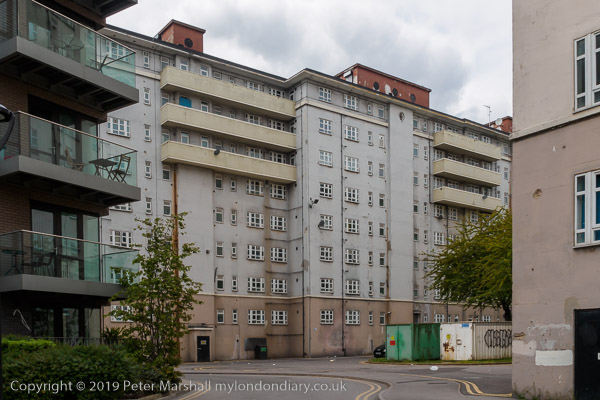
This goes along the edge of the Woodberry Down Estate, a large area bought by the LCC for housing in 1934, but only developed after the war as a ‘utopian estate of the future‘. Building began in 1949 and the 57 large blocks of flats were only completed in 1962. The estate included the country’s first purpose built comprehensive school and a medical estate opened by Nye Bevan, but unfortunately was allowed to deteriorate over the years, and beggining in 2009 became one of Europe’s biggest single-site estate regeneration projects.

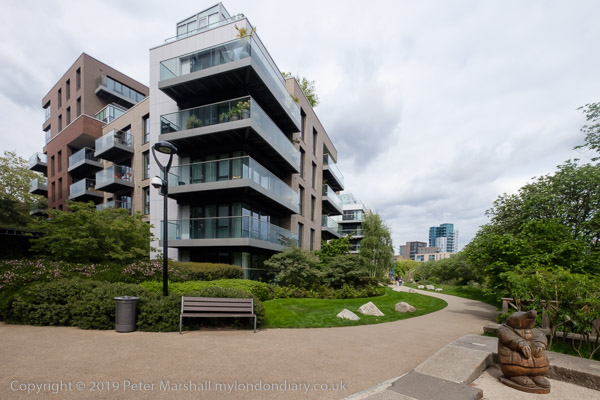
The controversial scheme by Berkeley Homes, Notting Hill Genesis and Hackney Council will involve a loss of around a fifth of social housing in the area estimated by the council at around 320 homes and has been described as ‘state-sponsored gentrification‘ with 3 bed flats selling for around £800,000 and many being bought up as investments by foreign investors rather than used as homes.

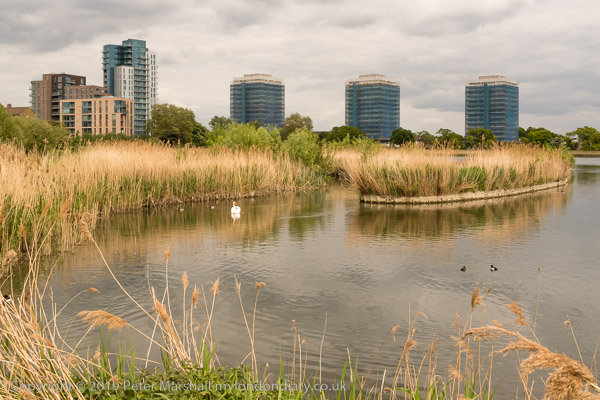
On the opposite side of the path, across the New River are large reservoirs of open water, part now a nature reserve with public access (and another tea room with toilets) and another used for sailing and other water sports. The remarkable Scottish Baronial castle built as offices for the water board is now a climbing centre.

From there it’s a short walk to Clissold Park (another cafe and toilets – this must be the best provided section of the Capital Ring) and Stoke Newington Church Street, often described as a ‘hipster hub‘. Next to the park are the two churches of St Mary, the older locked but with an atmospheric and overgrown churchyard and the Victorian built in 1858 to the design of Sir George Gilbert Scott,  open and well worth a visit.

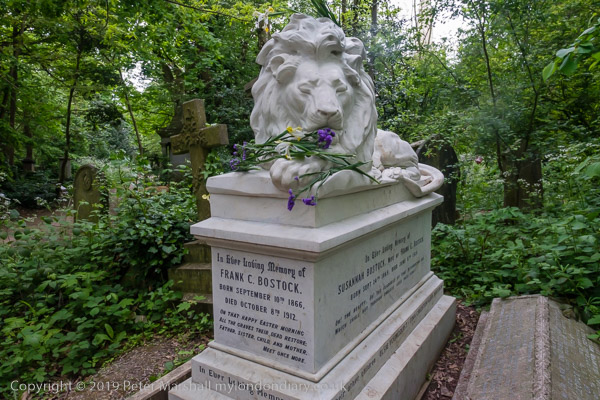
As a final climax we came to Abney Park Cemetery, one of London’s finest, set up in 1840 as a burial ground for non-conformists and the final resting place of around 200,000 Londoners, now a nature reserve. We looked up the train times from nearby Stoke Newington station and rather than rushing through to the station spent some time wandering around and finding a few of the better-known graves and some other interesting monuments.

In our rush from there the few hundred yards to the station I lost a little concentration and we went down to the wrong platform and caught a train going into London rather than out and had to re-plan our journey home. It turned out to be almost as fast.

More pictures from the walk at Highgate to Stoke Newington.


All photographs on this and my other sites, unless otherwise stated, are taken by and copyright of Peter Marshall, and are available for reproduction or can be bought as prints.

There are no adverts on this site and it receives no sponsorship, and I like to keep it that way. But it does take a considerable amount of my time and thought, and if you enjoy reading it, please share on social media.
And small donations via Paypal – perhaps the cost of a beer – would be appreciated.


British Museum’s Stolen Goods

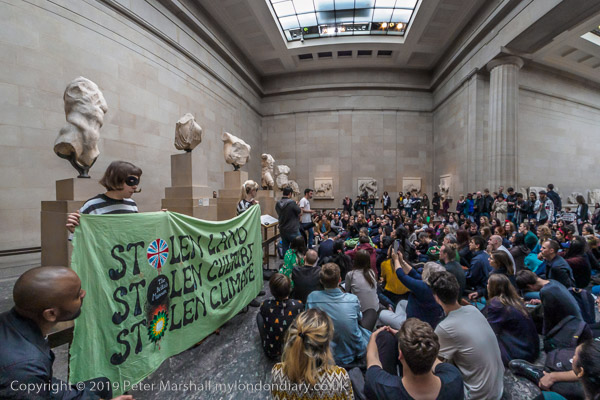
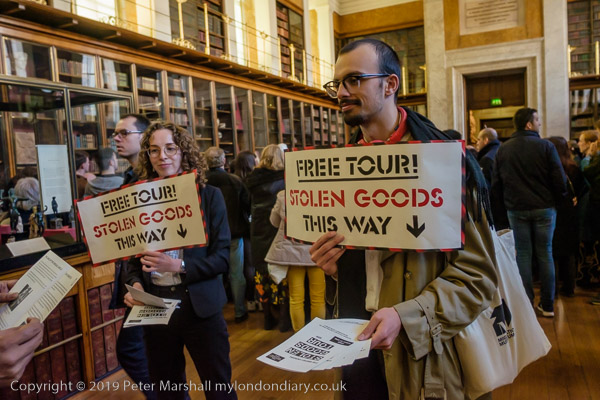
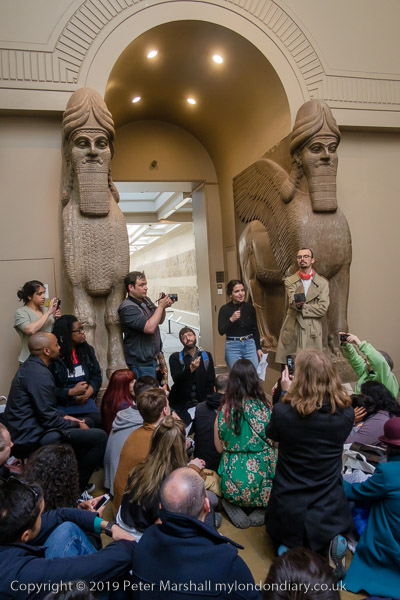
Stolen Land – Stolen Culture – Stolen Climate‘ was the message on the banner carried by two people dressed as cartoon criminals in masks and striped jumpers for the unofficial tour of the British Museum by campaigners ‘BP or Not BP?’ callling for stolen cultural objects to be be returned to their countries of origin.

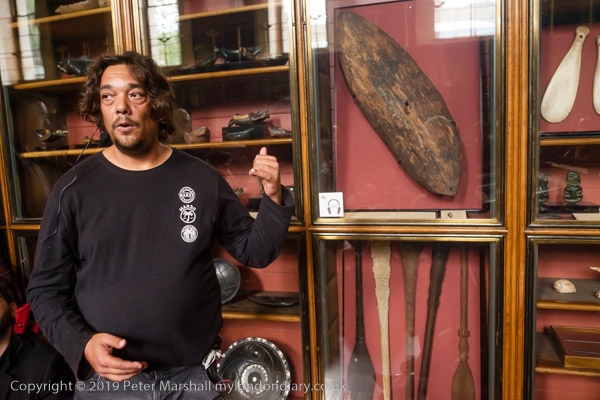
As in a previous tour by the campaigners, the event with indigenous Australian campaigner Rodney Kelly in front of the Gweagal shield, stolen from his ancestor by Captain Cook and his men when they arrived at Botany Bay, along with other shields and spears. His plea with the museum authorities that this shield be returned to its homeland to form the nucleus of a new museum there has so far fallen on deaf ears.

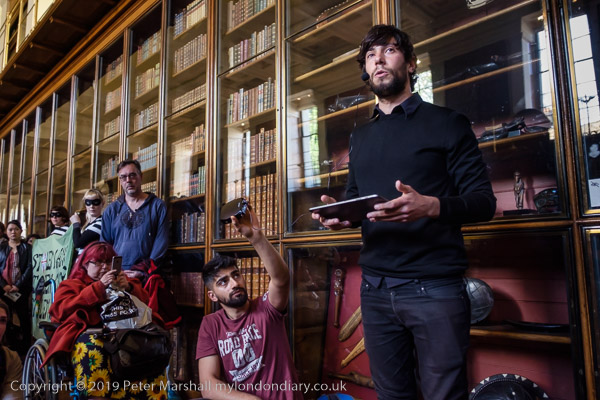
Danny Chivers of BP or Not BP? had introduced the event, explaining their campaign to end sponsorship of the British Museum and other cultural institutions by BP which they use to improve their image, with a great deal of positive publicity at relatively little cost. BP are one of the companies driving climate change and their operations in oil extraction around the world are highly polluting and dangerous to the environment as well as being accompanied by significant human rights abuses. Putting cash into exhibitions, concerts and opera performances helps to cover up their crimes.

After Kelly had spoken about his ancestors and their treatment and the failure of tbe British Museum to contemplate handing back the stolen objects, Samir Eskanda spoke about many objects which have been taken over the years from ‘biblical’ excavations in Palestine, but which are important to understanding the culture and history of Palestine and the Middle East and should be returned to museums there.

The crowd then moved on to the Assyrian galleries, where as well as the removal of cultural objects by excavations in the last century, the 2003 invasion of Iraq was accompanied by a huge amount of looting. Many of these looted objects have now been sold at auctions, particularly in the UK and US and are now in museum and private collections, despite objections from Iraq and Iraqi institutions.

Finally we all moved on to the gallery which contains the Parthenon (or Elgin) Marbles, bought from the Turkish occupiers of Athens by Lord Elgin, essentially looted items.

More pictures at British Museum Stolen Goods Tour.


All photographs on this and my other sites, unless otherwise stated, are taken by and copyright of Peter Marshall, and are available for reproduction or can be bought as prints.

There are no adverts on this site and it receives no sponsorship, and I like to keep it that way. But it does take a considerable amount of my time and thought, and if you enjoy reading it, please share on social media.
And small donations via Paypal – perhaps the cost of a beer – would be appreciated.


Anti-Christ at the Abbey

I can’t understand how anyone Christian could condone the service at Westminster Abbey to celebrate 50 years of continuous nuclear threat by British submarines armed with nuclear missiles.  It seemed obscene and blasphemous, a total negation of the teaching of Jesus as recorded in the Gospels.

I’ve never really been a pacifist, believing that sometimes in extreme circumstances it can be the lesser of evils to pick up weapons and fight. I think I would have been prepared to fight the Nazis in World War II, though the question didn’t arise, as Hitler gave up the struggle a week before I was born. And had I been in South Africa under apartheid I would have found it hard not to support the armed struggle, and if I could have been of any use to have taken a part in it. There are times when its vital to fight for justice.

But fortunately I’ve never been faced with difficult decisions like that, though I did turn down the offer of interesting research on explosives when I graduated. Our country has not been under existential threat since the defeat of Germany in 1945, and the wars in which we have engaged have seldom been just or even in any way sensible, fighting to hang on to our colonies or enlarge our commercial sphere of influence. Chasing weapons of mass destruction we knew did not exist.

Nuclear weapons in particular are pointless – and extremely dangerous. Weapons that would only be used when we were about to be anihilated whether or not we used them, unless they were used by accident – and we now know that such an accident was only averted when one Russian officer had the good sense to disobey his orders.

Nuclear weapons are also very expensive – and the vast sums to be spent on replacing Trident could be spent so much more usefully on so many other things – and end the cuts to vital services.

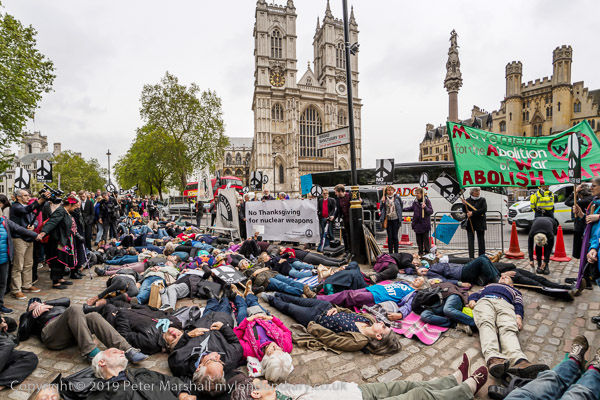
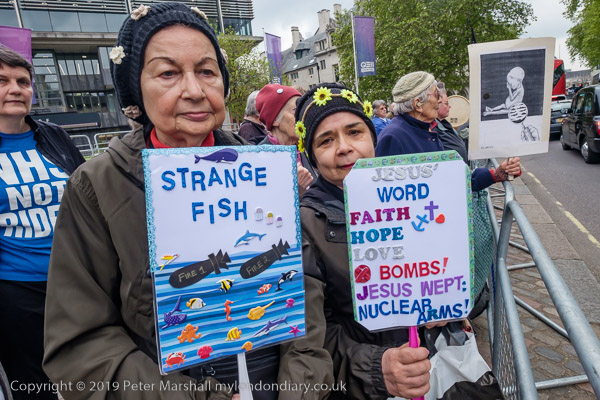
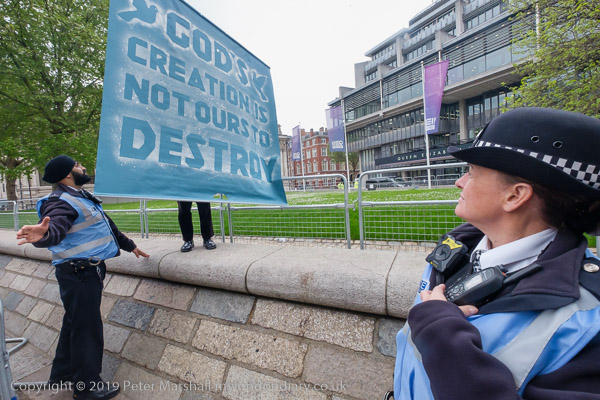
Rather confusingly there were two protest vigils taking place opposite Westminster Abbey while the service was taking place there, one by CND and the other by Christian CND. Both were on the opposite side of the road to the church, but separated by a few yards. Christian CND I think held a short service and vigil, while the main CND protest culminated in a die-in on the wide pavement – and I think some came from the Christian CND vigil to join them.

Police made it a little difficult to photograph this event, with photographers being moved from the road in front of the protest at various times, and both photographers and protesters were made to come down from a wall at the back of the pavement which gave a better view of the people entering the Abbey for the service. There was higher than usual security as a couple of royas were attending the service, though one CND protester did manage to walk inside the Abbey, though was fairly soon removed and brought back across the road.

More pictures: Die-In against Nuclear Weapons celebration.