Close all Slaughterhouses?

I have nothing against anyone who wishes to be vegan. Although I’m not myself vegan, I think it laudable that some people have chosen to live in this way. For all of us, cutting down the amount of meat we eat is a good thing, probably for ourselves and certainly for the planet. The same is true for diary products, though I think to a lesser extent.
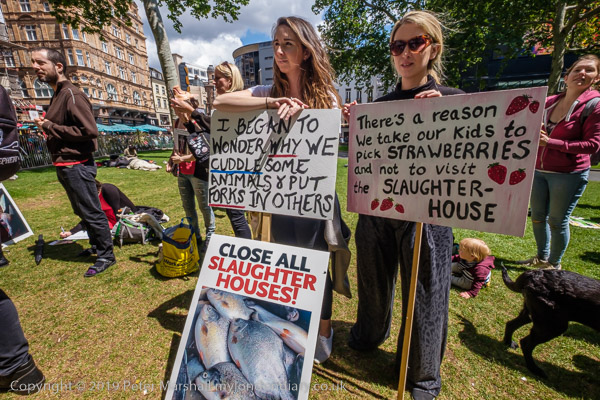
But I can’t agree that we should stop all animal farming and would hate to see the end this would mean to seeing animals grazing in fields, many of which would be unsuitable for growing crops. Grazing animals have an important role in keeping soil healthy, cutting down the need for chemical fertilisers and contributing to biodiversity.
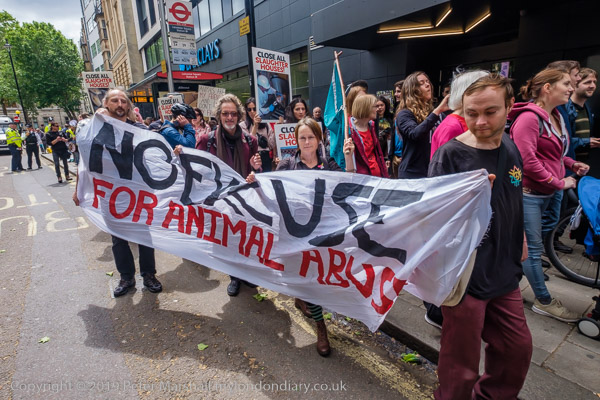
Back in the day successful farmers cared for the animals they farmed and it was in everyone’s interest to treat them well. I’d certainly call for the end to highly intensive farming that now produces meat more cheaply but with great cruelty, and we try to avoid buying meat produced through animal cruelty. But I think it wrong to suggest that all farming of animals is cruel.
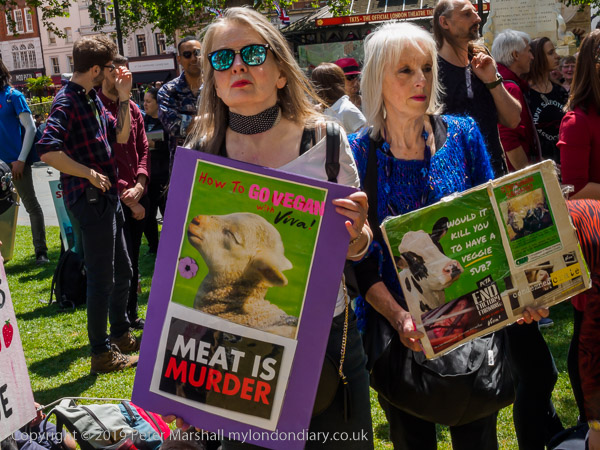
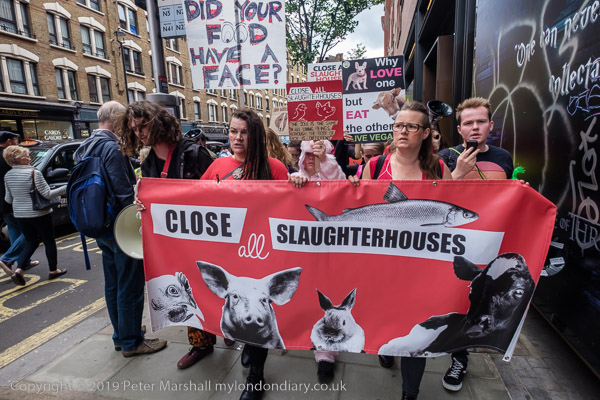
Much of the campaigning in the posters and speeches at events such as this is I think misleading, playing on emotional responses to pictures of cute animals. Much also seems to me to fail to understand the basics of the natural world, where many species do prey on other species; what we do in farming animals is a more organised and arguably less cruel extension of this. Foxes may look cuddly in photographs and videos of them playing, but put them among the chickens and you get a bloodbath, nature indeed red in tooth and claw (but of course we shouldn’t make a sport out of hunting foxes.)
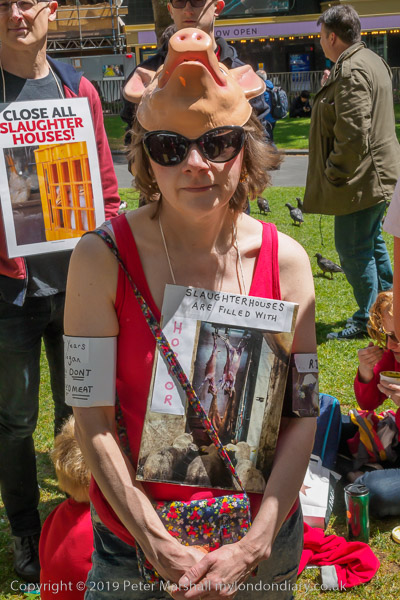
The premise of many protesters is that there is no such thing as humane slaughter, and this protest calls for the closure of all slaughterhouses. It unfortunately isn’t had to find examples of cruel practices and to make horrific videos showing them. It’s certainly good that such cruelty is exposed and that the laws that exist against such practices are used with full force to outlaw them – and where necessary that such laws are strengthened. We certainly should try to develop more humane ways to kill animals for food, which I think has been the aim of our previous legislation in the area, but I’d sure this could be improved.

I think all species are inherently “speciesist” and we should not feel any guilt about thinking there is something special about humanity. To suggest that cows or pigs or sheep are “just like us” is simply wrong; in many important ways they are simply not, though of course there is much we share.

Of course some of the claims made are simply wrong. Dairy cows have been extensively bred to produce many times the amount of milk their calves require. We can drink it or use it to make butter and cheese without “stealing it from the calves.” We take honey from the bees (something I’ve certainly done myself) but have to give them sugar to keep the colonies healthy so they will produce more honey for us in following years and so on. As I wrote back in June, “keeping animals and killing them for food or milking them can be done in a decent and humane way and one that has an important contribution to our environment.” Like everything in nature it needs balance.

More pictures at Close all Slaughterhouses.


All photographs on this and my other sites, unless otherwise stated, are taken by and copyright of Peter Marshall, and are available for reproduction or can be bought as prints.

There are no adverts on this site and it receives no sponsorship, and I like to keep it that way. But it does take a considerable amount of my time and thought, and if you enjoy reading it, please share on social media.
And small donations via Paypal – perhaps the cost of a beer – would be appreciated.
Trump protest – Whitehall rally

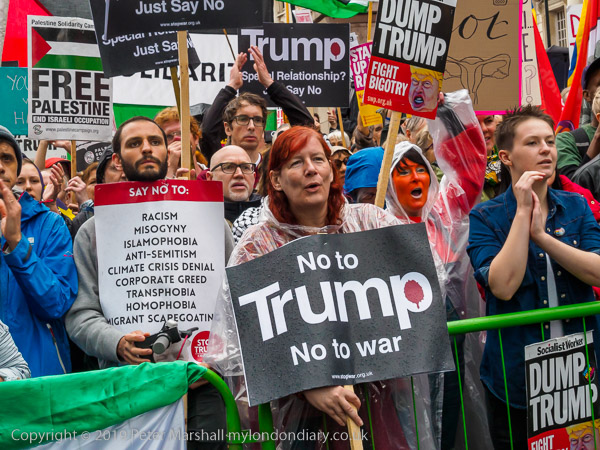
People had gathered in Trafalgar Square for the short march to a rally opposite Downing St where President Trump was meeting Prime Minister Theresa May.

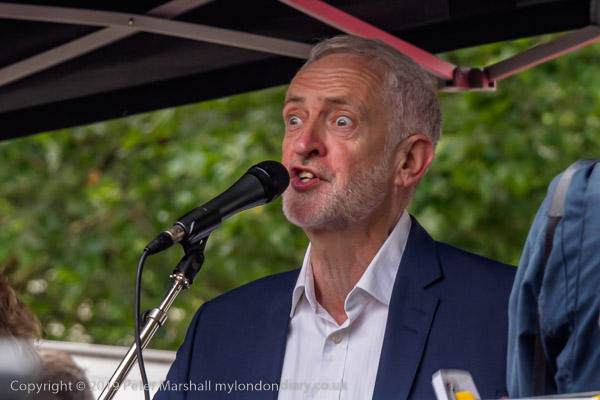
There were many speeches from Jeremy Corbyn, Caroline Lucas, Frances O’Grady, Diane Abbott and other leading politicians and activists sending a clear message that President Trump is not welcome here. Corbyn is often said to be a weak speaker, but his speech here was cogent and delivered powerfully to a huge reception.

After the speeches the march continued, going around past the Ministry of Defence to the Embankment and then on to Parliament Square. By the time it reached there I’d had enough. Standing in one place as I was listening to speeches is bad for my legs now, inflaming my varicose eczema and I needed to sit down and rest. I left to sit on a train on my way home after a few minutes.

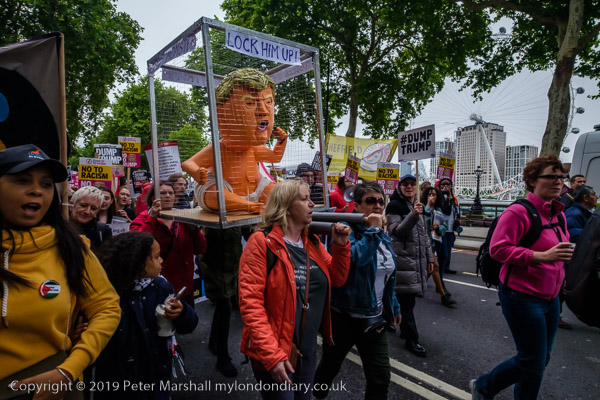
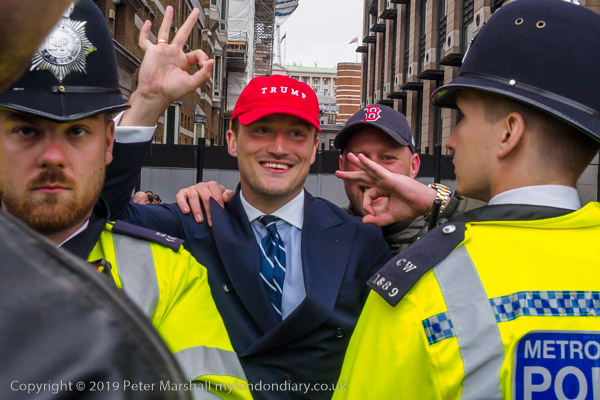
There were a handful of pro-Trump protesters who came and stood on the sidelines and shouted at the people marching past, some making the OK or Ring gesture adopted by white supremacists. Shortly after I left a woman – one of the Brexiteers who regularly make a nuisance of themselves outside Parliament – attacked the large baby Trump dirigible with a knife, puncturing it.

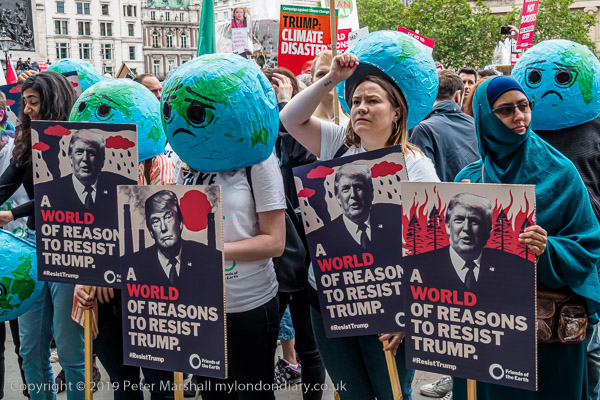
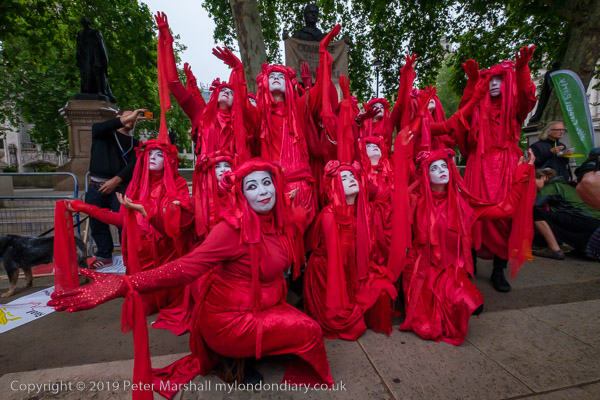
Extinction Rebellion’s ‘Red Brigade’ in blood-red robes also put in an appearance at Whitehall and in Parliament Square. Trump has taken the USA out of U.S. the 2015 Paris Agreement on climate change and is a leading climate change denier and promoter of fossil fuels.

Many more pictures, including most of the speakers at Thousands protest against Trump.


All photographs on this and my other sites, unless otherwise stated, are taken by and copyright of Peter Marshall, and are available for reproduction or can be bought as prints.

There are no adverts on this site and it receives no sponsorship, and I like to keep it that way. But it does take a considerable amount of my time and thought, and if you enjoy reading it, please share on social media.
And small donations via Paypal – perhaps the cost of a beer – would be appreciated.


Trump protest – Trafalgar Square

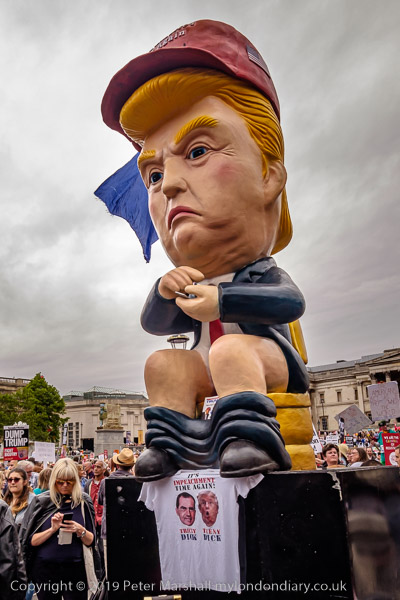
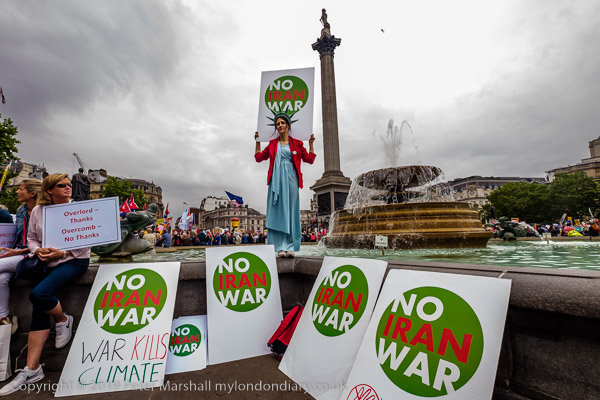
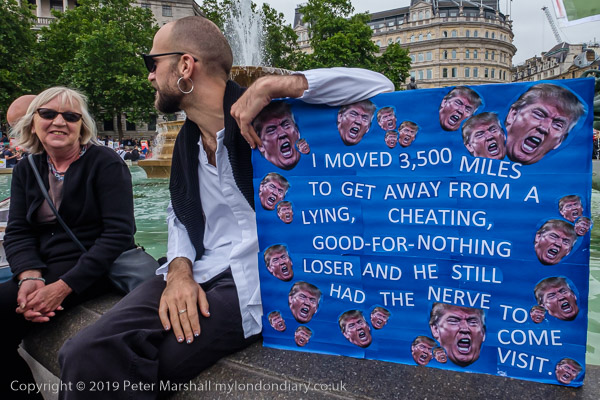
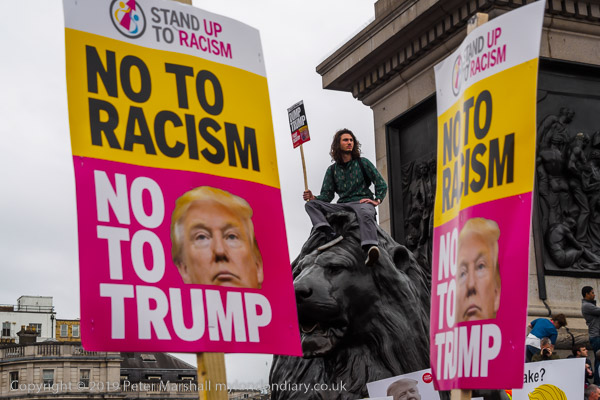
President Trump’s State Visit to the UK in June was apposed by a large section of the British people and thousands had come to Trafalgar Square to protest and state their opposition to his climate denial, racism, Islamophobia, misogyny and bigotry.

Many of us are appalled at both his policies and his behaviour in office, and his continual lies and dishonesty, denouncing true stories as fake news and making up and repeating lies, misusing his position to unfairly attack and smear opponents.

Corrupt to the core, that his business activities have not resulted in him being in jail rather than becoming wealthy and the president demonstrate that something is very wrong with the US legal and political system. Though given that another charlatan, Boris Johnson is now our prime minister our UK system is little better. Both are evidence of the failure of democracy.

Trump is totally ridiculous. It’s difficult to distinguish the real Trump from the satire, often less ridiculous than the real. But there was plenty of amusement among the placards and caricatures of the man on display. Though it isn’t really funny that this imbecile is now in charge of the most powerful nation on the planet, one that that tries to impose its will on countries around the world through both covert and open military methods.

People met in Trafalgar Square to march the few hundred yards to a rally that filled Whitehall – and which I’ll write about in a seperate post.

More pictures at Thousands protest against Trump .

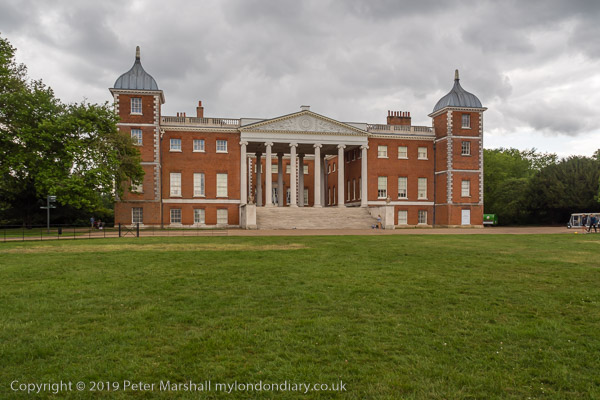
Osterley House

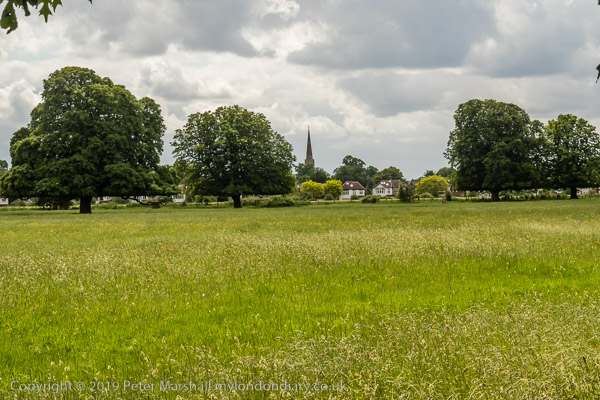
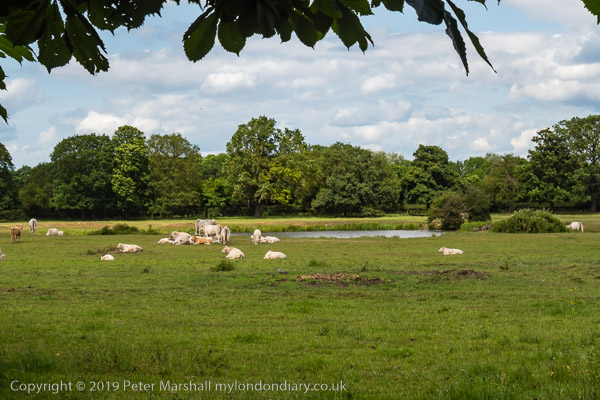
Osterley is a place few people seem to know about, though many pass through its station on the Picadilly Line between Central London and Heathrow or drive past it on the Great West Road. It’s place where few actually live, a handful of streets to the north of that road along with a huge estate of Osterley Park House and an even vaster area of Green Belt with sports areas and a golf club between Southall, Heston, Hanwell, Isleworth and Brentford, whose football club have a training site there. Now the M25 runs through the northern part, cutting it off even more.

I knew it from my early years, an easy bike ride from my home in a densely built up part of Hounslow, with a grand avenue of Sweet Chestnuts where you could rummage through the grass to pick up chestnuts to take home and roast in the oven. Doubtless in earlier years one might have been transported to Australia for such theft, but things were easier in the 1950s.

Later I ran through the ‘Hole in the Wall’ into the fields of Osterley Park on cross-country runs from my secondary school – at least until we learned to disappear into Jersey Gardens on the way there, hiding out enjoying a few fags until the mud-spattered runners came past on their way to the finish a few hundred yards away, coming in respectfully down the field.

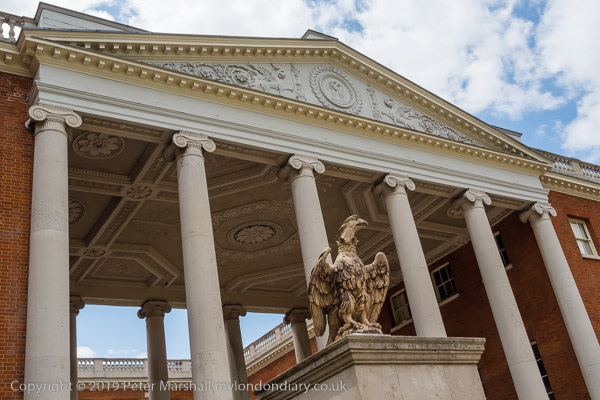
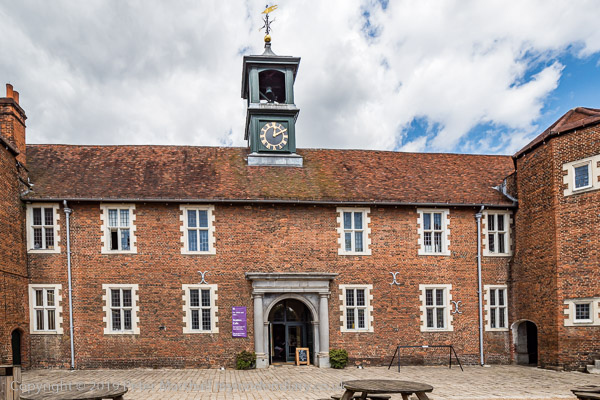
Osterley was a country house for two of the wealthiest of English Bankers, the first house built here for Sir Thomas Gresham in 1576.  Sir Francis Child acquired it after a mortgage default and his two grandsons had Robert Adam do a much more fashionable makeover in the 1760s. The stable block survived and now contains the shop and tea-room.

On the death of his brother the property as a whole passed to his younger brother Robert Child; when his only child, a daughter eloped with the Earl of Westmoreland the enraged father changed his will leaving the property in trust to his as yet unborn first granchild. She was born a couple of years later and went on to marry George Villiers, the 5th Earl of Jersey (later he got a royal licence to change his surname to Child Villiers) which explains why Osterley’s main road along which you approach the estate is Jersey Road.

The house was first opened to the public briefly by the 9th Earl in 1939, before becoming a Home Guard training establishment. After the war he moved to Jersey selling the furniture to the V&A and giving the house and park to the National Trust – who handed it over to the Ministry of Works and the V&A for restoration. There was some limited opening of the house to the public and I remember going there when quite young, but it was only in 1991 that it was handed back to the National Trust.

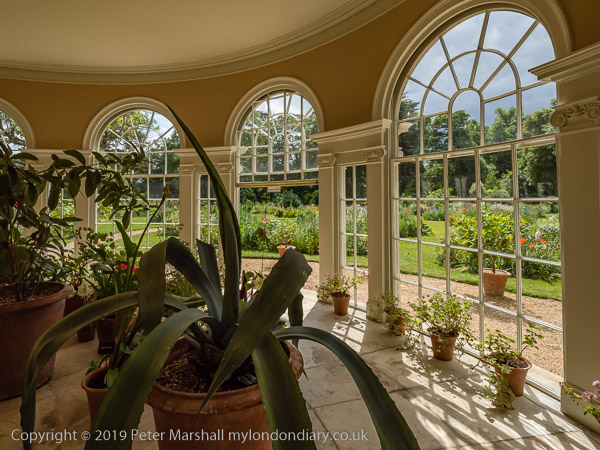
Our visit to Osterley was a short one, and I didn’t have time to go around the house but after a meal in the stables (not hay, but I don’t recommend it) did go into the gardens. Although the wider park is free to the public, there is a charge for the house and gardens, but free entry for members of the National Trust and the Art Fund.

More pictures at Osterley Park.
Images taken on National Trust property are copyright but not available for reproduction or sale.


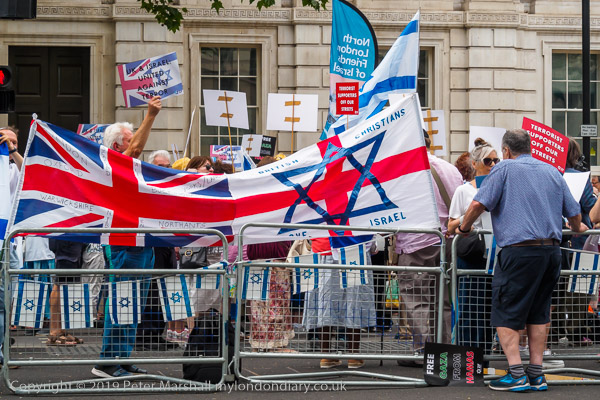
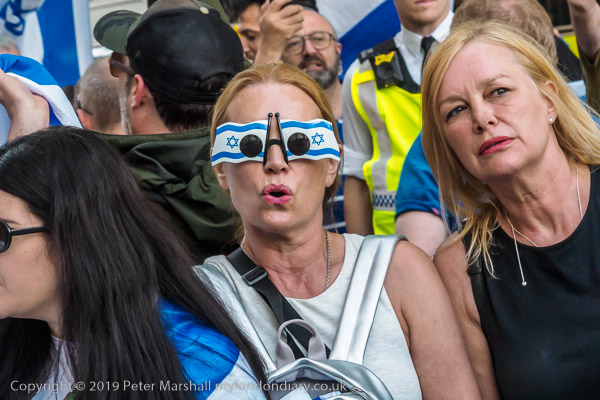
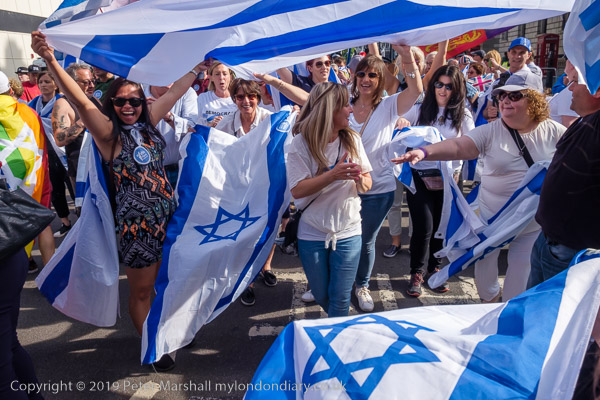
Zionists protest Al Quds March

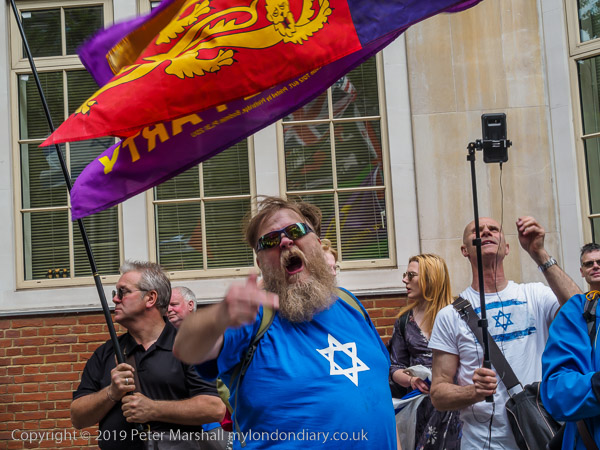
In yesterday’s post I ended by saying that I ended up feeling more welcome – and perhaps more comfortable – photographing the Zionists who had come to oppose the Al Quds Day march than the march itself.

This definitely was not because I agreed with their views, and it was extremely unusual. At other events I’ve been shouted at, sworn at, threatened, subjected to rude gestures and have been condemned on-line as an “anti-semitic photographer”. Something completely untrue – as are most of the accusations made against Labour Party members – including many Jews – of anti-semitism.

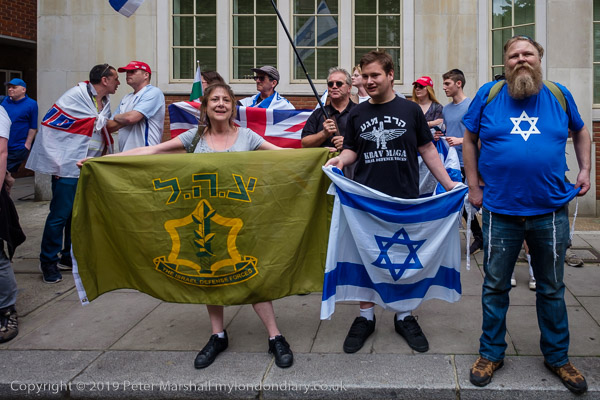
There are a small number – sometimes two and seldom in double figures – of people who occasionally turn up to try and disrupt protests calling for freedom and justice for Palestinians. Some were present on this occasion, but with a rather larger number of others, perhaps around 50 at a more official rally at Downing St and a few fewer who came to the meeting point of the Al Quds Day march outside the Home Office, and halted the march for a few minutes shortly after its start before police kept them moving slowly some distance in front of it.

Among this more militant group were several well-known members of extreme right organisations including Tommy Robinson’s personal bodyguard Danny Thomas, while the official rally, as well as being organised by the Board of Deputies and the Zionist Federation was supported by the far-Right Sussex Friends of Israel and the Israel Advocacy Movement, both organisations with members who have demonstrated to the EDL.

But they were in a good mood after what had been for them something of a success, managing to briefly halt the march, and bringing out larger numbers than before. There were quite a few photographers taking pictures and they were keen to have their protest recorded. I wondered whether I should give them any publicity, but in the end filed a few pictures and published some on My London Diary.


There are no adverts on this site and it receives no sponsorship, and I like to keep it that way. But it does take a considerable amount of my time and thought, and if you enjoy reading it, please share on social media.
And small donations via Paypal – perhaps the cost of a beer – would be appreciated.

All photographs on this and my other sites, unless otherwise stated, are taken by and copyright of Peter Marshall, and are available for reproduction or can be bought as prints.


Al Quds march

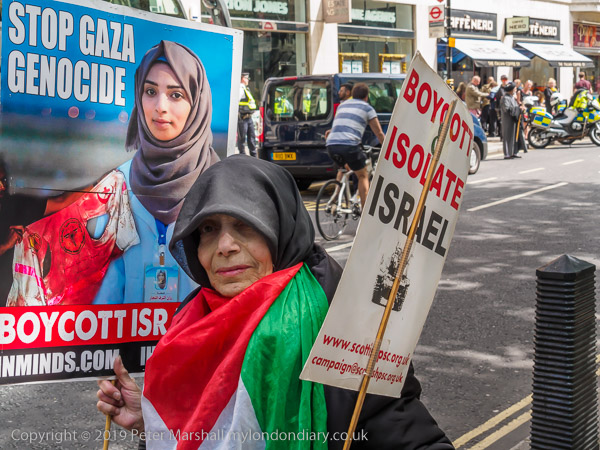
The Al Quds (Jerusalem) Day march is always a contentious event in London, and one that I often find difficult to photograph, and I had my problems this year.

Of course many of those who protest regularly for freedom for Palestine know me as I photograph many of their protests – as you can see on My London Diary.

Some of those who have organised the Al Quds day marches over the years also now recognise me and are friendly, but it is an event that does meet with a lot of opposition by some Zionist groups and where many of those attending are rather wary about being photographed. So I found myself several times being stopped by people asking who I was taking pictures for and some trying to prevent me photographing.

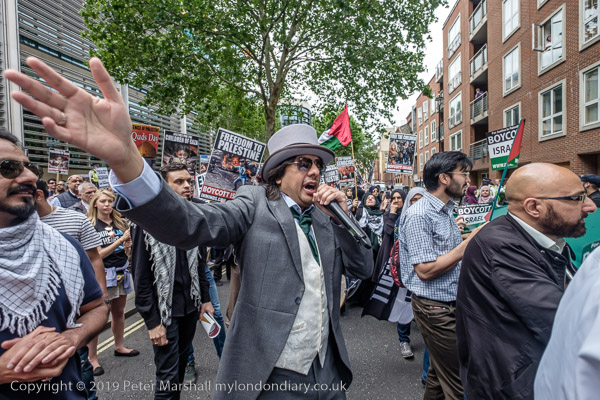
As regular readers will know, I like to take pictures close to those I’m photographing, though I don’t particularly like the kind of distortion you can see in the hand of the organiser above, taken with the lens on the Fuji set at 11mm – 16.5mm full-frame equivalent. I’ve long felt that the ideal photographic distance is one where you can reach out and touch the person you are photographing, as if you were talking with them, though sometimes a little greater distance is necessary.

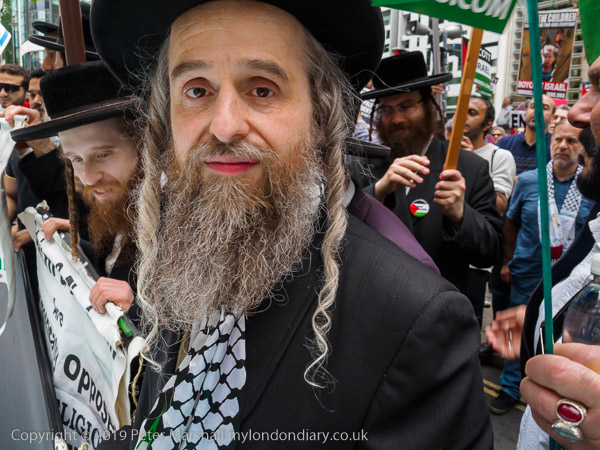
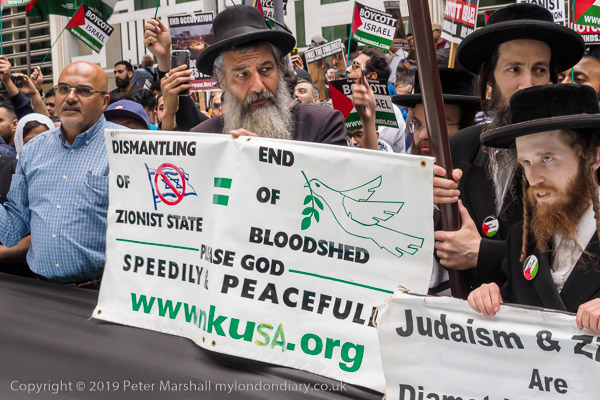
Of course there are times when you do have to stand further back. There was a giant Palestinian flag between me and the Neturei Karta ultra-orthodox Jews when I made the picture showing their recipe for a peaceful end to the bloodshed in Palestine. There the distance was a necessity.

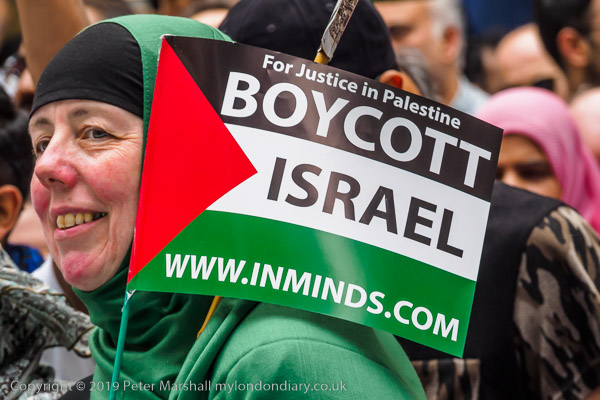
And there are pictures that need a longer focal length to isolate the subject, as in this picture, made with the remarkable 18-150mm on the Olympus E-M5MarkII at 135mm (270mm equivalent.) Long lenses certainly do have their photographic uses, and this one comes in an incredibly small and light package.

I’m not sure I will go to photograph this event next year, despite my support for the Palestinians and my hope that one day they will gain justice and be able to live in peace with their Jewish neighbours, to make good the neglected second part of the Balfour declaration that “nothing shall be done which may prejudice the civil and religious rights of existing non-Jewish communities in Palestine.”  I’ll continue to photograph other pro-Palestinian events in London, but this one was just too much aggravation. I ended up feeling more welcome photographing the Zionists opposing the event.

UVW Hotel Visit

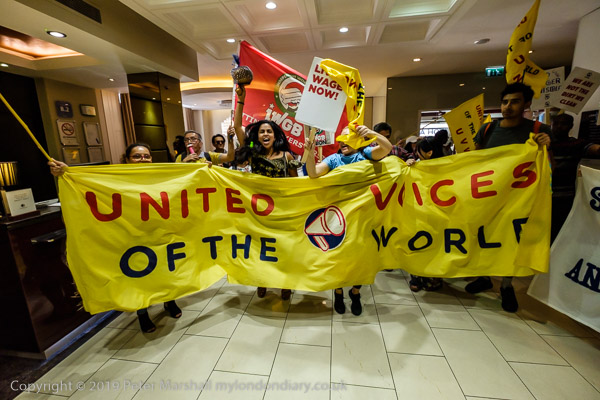
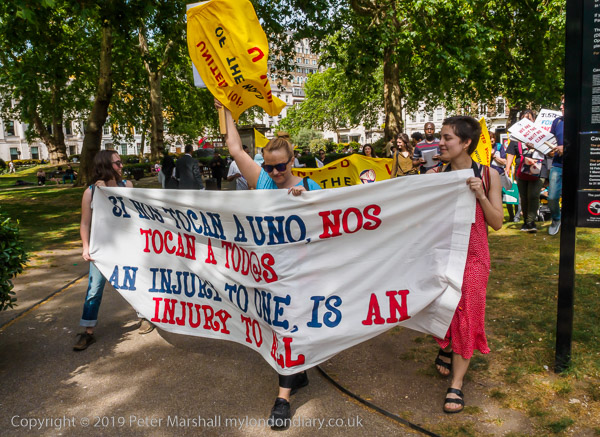
Hotels are big business particularly in London, and its a highly profitable business particularly because it relies on exploiting low paid workers. The United Voices of the World is not the only union that takes up their cause, but it does so more directly than the larger unions, who have not had great success in either organising among the low paid often migrant workers the sector relies on, or at representing them.

Part of the reason for the greater militancy shown by the UVW is the reluctance of managements to engage with the union. Many hotels are run by organisations that are essentially anti-union and often prepared to flout even the weak laws on unions which we have, and to employ contractors who fail to implement even the minimum legal standards for wages, terms and conditions to provide their services.

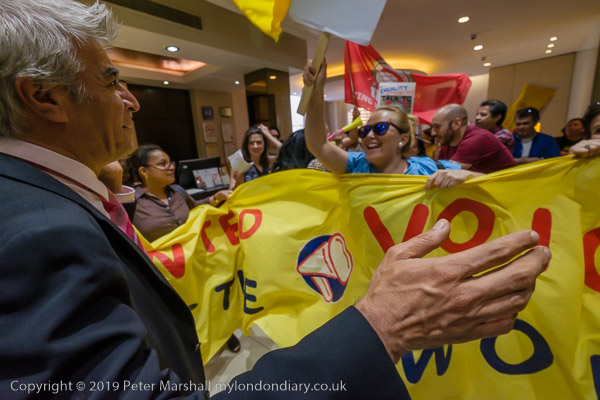
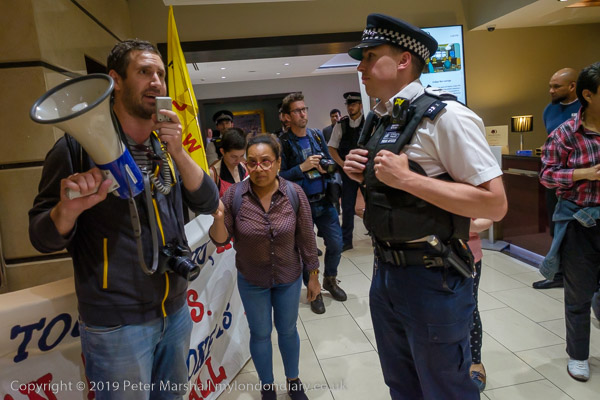
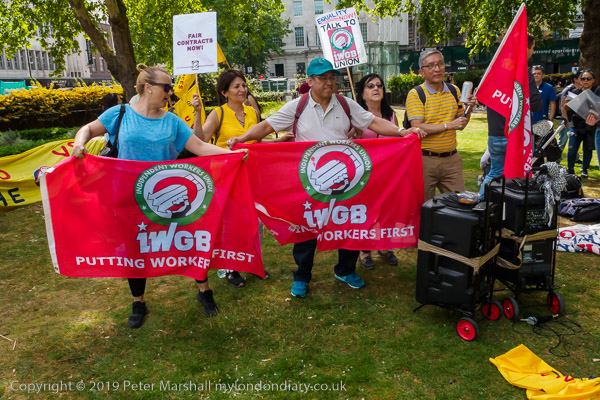
I can’t comment with any certainty on the details of the individual case that led UVW members and supporters (including some IWGB members) to protest in the foyer of the Hilton Doubletrees Hotel close to Marble Arch. The union claimed that one of their members who had worked there for six months had been paid illegally at less than the minimum wage and was owed a large amount by the cleaning contractor.

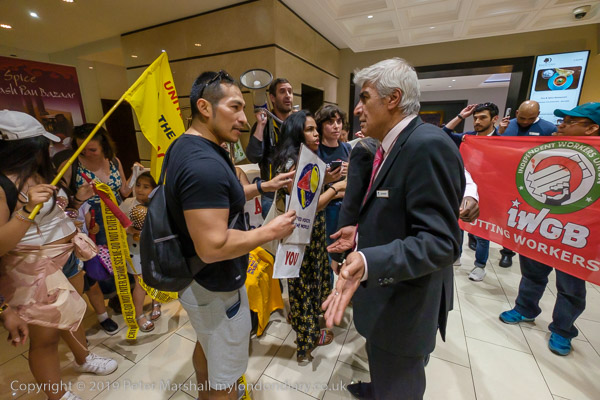
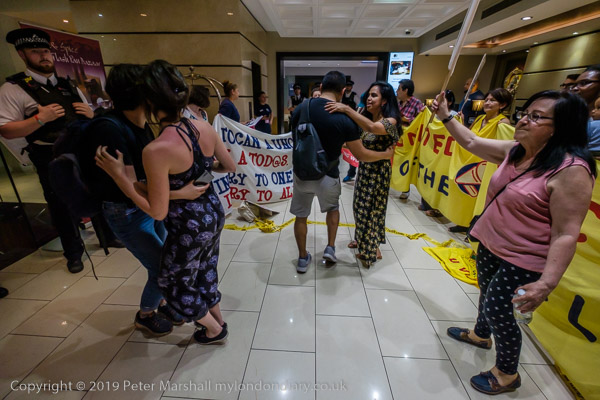
Having got no satisfaction by contacting the hotel management and the cleaning contractor, the UVW had decided that some more direct action was called for, and around twenty of them walked into the hotel foyer and began to make their demands along with a great deal of shouting as well as loud music and dancing, demanding to talk to the hotel manager and the manager of the contract cleaning firm. 

Police eventually arrived and I was impressed that the officers tried to get the two sides to talk about the dispute. Unlike on many other occasions they actually listened to what the union had to say rather than simply try to clear them out with threats of arrest. By the time I left the protesters were still in the foyer and waiting for a representative from the contracting firm on her way to meet with them.

I don’t know how the dispute was finally settled – or even if it has yet been or whether the union is now pursuing legal action – but this was a good example of how the UVW is prepared to support its members. There are employers who rely on exploiting individuals, particularly migrant workers who are often ignorant of their rights and sometimes have a limited command of English to argue for themselves. The UVW educates them and speaks for them in meetings with employers, at employment tribunals and, if necessary, on the street at workplaces and has a remarkable record of successes through solidarity.

More pictures at Cleaners at Hilton Doubletree Hotel .


All photographs on this and my other sites, unless otherwise stated, are taken by and copyright of Peter Marshall, and are available for reproduction or can be bought as prints.

There are no adverts on this site and it receives no sponsorship, and I like to keep it that way. But it does take a considerable amount of my time and thought, and if you enjoy reading it, please share on social media.
And small donations via Paypal – perhaps the cost of a beer – would be appreciated.


UVW celebrate victory

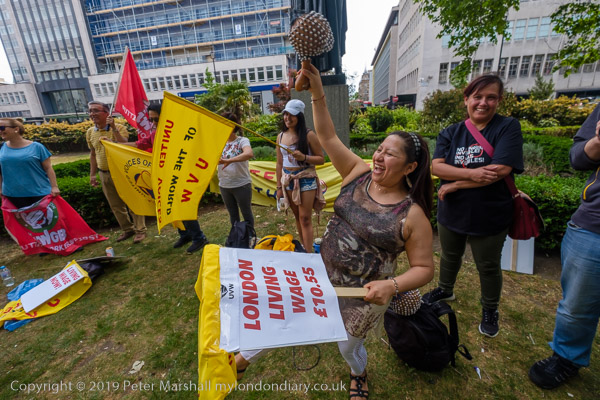
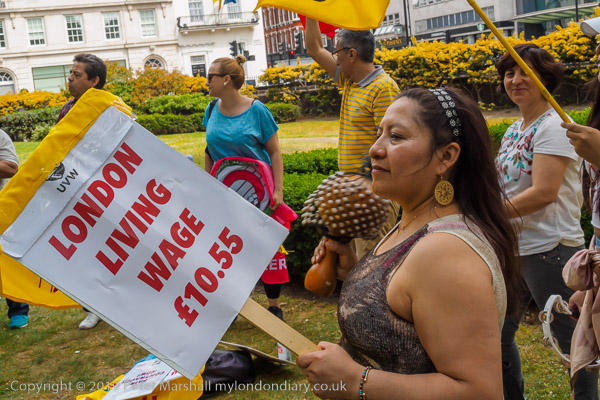
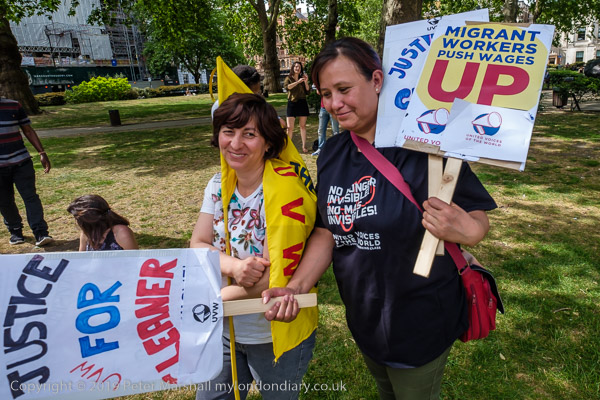
The United Voices of the World had been planning to protest in support of the cleaners at Chanel in the West End who had held a strike ballot, and were planning to strike for the London Living Wage, but instead were meeting to celebrate the successful negotiation of the deal with the employers.

£10.55 an hour is the minimum that is calculated to be needed for workers to live in London, rather than the minimum wage that the government dishonestly calls a living wage, and which many low-paid workers are still paid in London.

Migrant workers in small grass-roots unions like the UVW have gained a living wage for many of their members in London, managing to unionise workers where the large established unions have – with a few honourable local branch exceptions – largely failed. One of the reasons for failure is language, with many of our low-paid migrant workers being speakers of Spanish or other languages and often with a limited grasp of English.

Unions like the UVW work in both Spanish and English, and also put on classes in English (and sometimes other subjects) for their members, many of whom have qualifications and experience in the countries they come from which they are unable to gain employment from here.

The UVW is one of several such small unions active in London, including CAIWU and the IWGB, and members of one often support others on their picket lines and protests. There is often support too from branches of some of the major unions such as RMT and Unison and Unite Community and other groups including Class War.

There are a few more pictures at UVW celebrate LLW at Chanel .


All photographs on this and my other sites, unless otherwise stated, are taken by and copyright of Peter Marshall, and are available for reproduction or can be bought as prints.

There are no adverts on this site and it receives no sponsorship, and I like to keep it that way. But it does take a considerable amount of my time and thought, and if you enjoy reading it, please share on social media.
And small donations via Paypal – perhaps the cost of a beer – would be appreciated.


A River Full of Stories

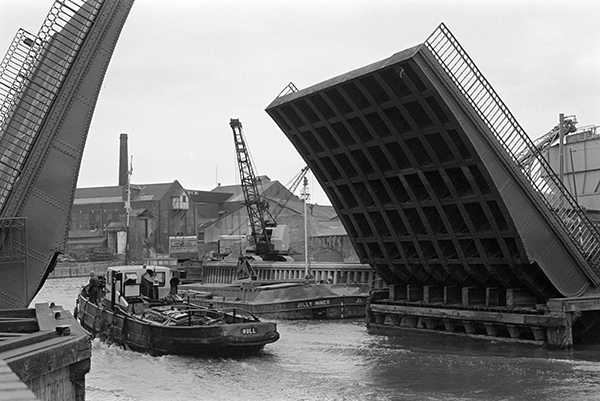
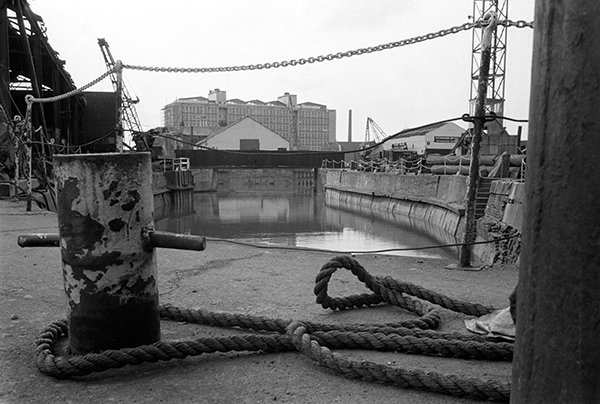
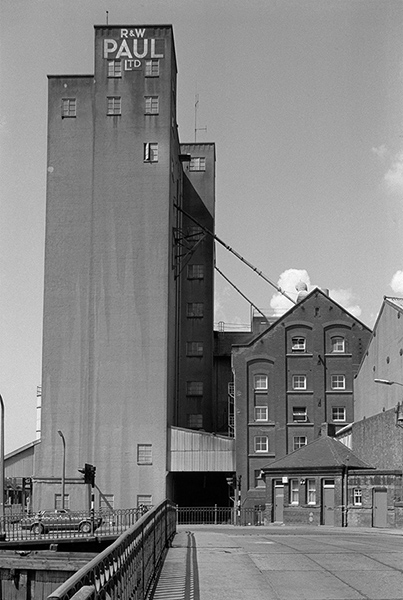
I’m pleased to have some of my pictures included in ‘A River Full of Stories‘ , a large hardback of around 200 pages recently published by Rich & Lou Duffy Howard in Hull. It’s an unusual title in several ways, and comes from their online project of the same name, a follow-up to their Open Bridges (which I wrote about here) which was a part of Hull’s 2017 year as UK City of Culture.

The book launch took place a little over a week ago, though I’m sorry I was unable to attend as I was at a weekend meeting elsewhere.

I have a small portfolio with 6 pages of my work, all reproduced well and to a good size on the roughly 10×11″ pages, as well as three other large reproductions in the main body of the book.

The book is packed with interesting photography, both historical and contemporary of Hull and its river, and the presentation is one only made possible by considerable sponsorship attracted to the project acheived by Rich and Lou Duffy-Howard who curated and edited it both online and in print.

You can of course read about it in the Hull Daily Mail (though I don’t get a mention) and there is an exhibition about both projects in the centre of Hull at the Hull Maritime Museum in Queen Victoria Square until the end of 2019.

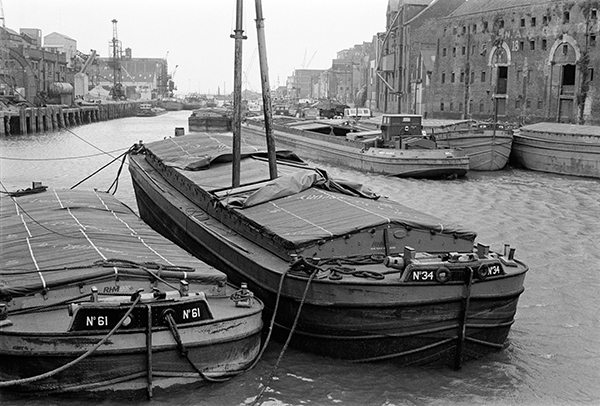
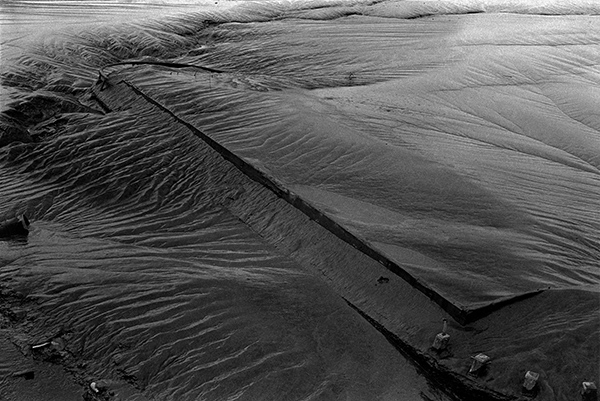
The book is unusual in that it is not for sale, but contributors were given a free copy along with every library in Hull and the East Riding. However you can still buy the Café Royal Book  The River Hull 1977–85 which has most of the pictures in it – if on a rather smaller scale and less expensively reproduced. My other Café Royal Book on Hull, The Streets of Hull 1979–85 is also still available. And you can see many more pictures on my Hull web site in the links below.


There are no adverts on this site and it receives no sponsorship, and I like to keep it that way. But it does take a considerable amount of my time and thought, and if you enjoy reading it, please share on social media.
And small donations via Paypal – perhaps the cost of a beer – would be appreciated.
All photographs on this and my other sites, unless otherwise stated, are taken by and copyright of Peter Marshall, and are available for reproduction or can be bought as prints.
Back to the Canal

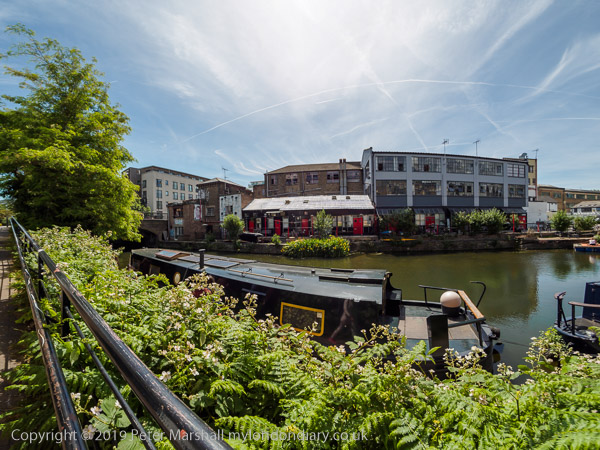
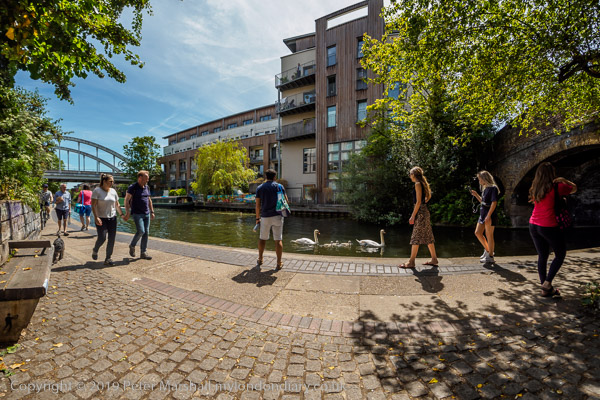
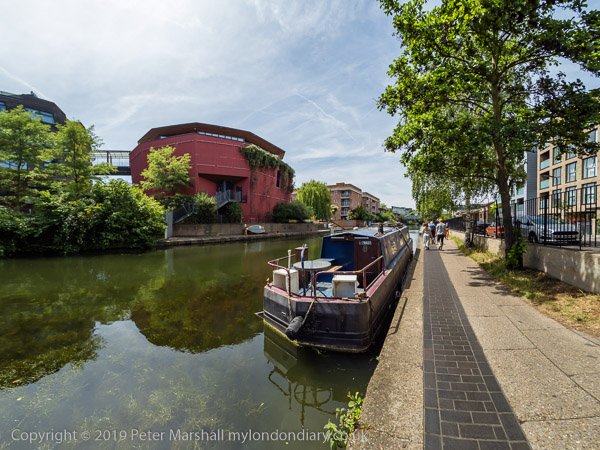
I hadn’t meant to take pictures of the Regent’s Canal on June 1st, but I found myself in Dalston with an hour or two to spare before I wanted to be in Cavendish Square. It was around lunchtime thought the canal towpath would be a pleasant place to sit down and eat my sandwiches in the sun.

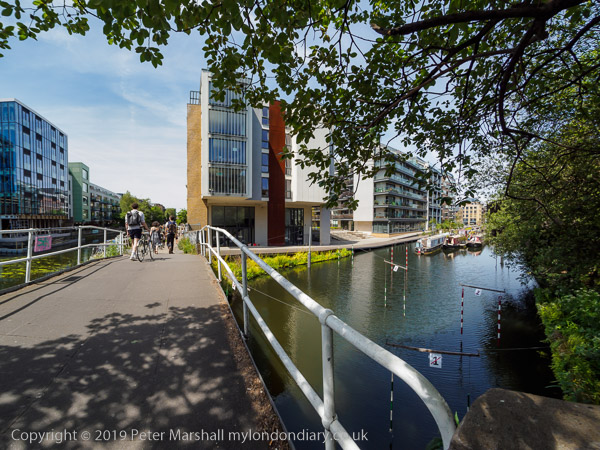
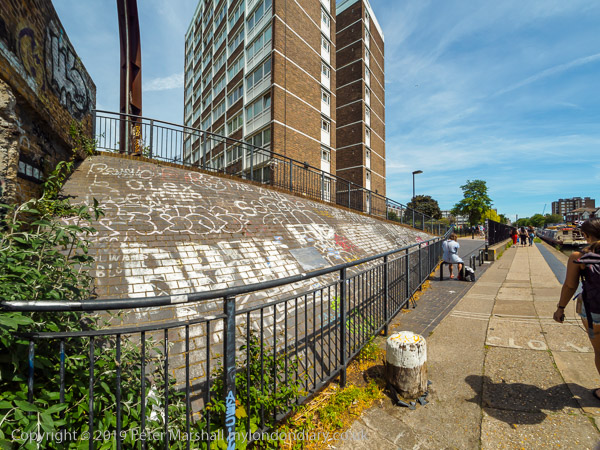
It was a Saturday and the towpath was quite busy with both walkers and cyclists and I walked around a little before finding a well placed unoccupied place to sit, taking a few pictures as I did so. Things have changed pretty drastically since I first walked and photographed along here almost 40 years ago.

I’d chosen a good place to sit too, with some shade, as the sun was rather hot, but also with an interesting view of the canal and of the people and boats passing, and I paused in my lunch several times to pick up my camera and make another exposure – there are six pictures on line all taken from within a few feet from my seat – including the one immediately above.

After finishing my lunch I still had time to walk a little further east along the towpath, rather hoping that I might chance across a convenient local pub for a quick drink, but I was out of luck in Haggerston and had to make do with water from the bottle in my bag.

The area north of the canal here always used to seem one of the more remote parts of London, one I saw from the train coming in from Dalston Junction to Broad Street, a largely elevated stretch of line with no stations (those at Haggerston and Shoreditch were closed in 1940. ) But now parts of that line have been reopened as part of the London Overground, and I was able to catch a train from the new Haggerston station to Highbury and Islington and the Victoria Line.

Most of these images would benefit from cropping to a more panoramic format, which I usually do. You can see more at Canal Panoramas.


All photographs on this and my other sites, unless otherwise stated, are taken by and copyright of Peter Marshall, and are available for reproduction or can be bought as prints.

There are no adverts on this site and it receives no sponsorship, and I like to keep it that way. But it does take a considerable amount of my time and thought, and if you enjoy reading it, please share on social media.
And small donations via Paypal – perhaps the cost of a beer – would be appreciated.