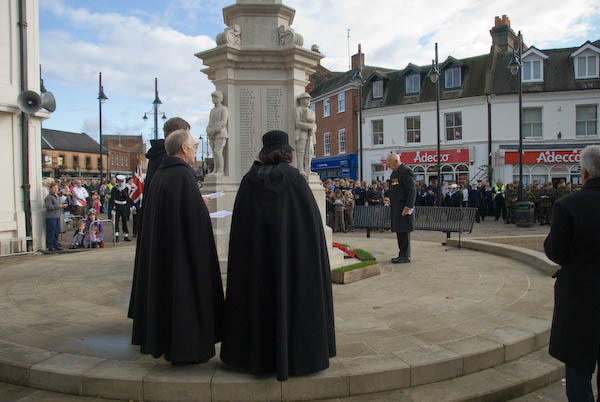
I have mixed feelings about Remembrance Day. Of course we should remember those who have died in wars, but the events which take place on Remembrance Sunday often seem to glorify war, and rejoice in military victory. Remembrance Day – or Armistice Day as we used to call it – is a day for more sombre observance and reflection, though it often passes most people by. Gone are the days when traffic across the nation stopped and cars pulled to the side of the road to observe the two-minute silence on the “eleventh hour of the eleventh day“.
My father served in the Great War, though he only joined up at the start of 1918. Before he had worked in a munitions factory, but had been laid off, and was called to a medical around his 18th birthday in December 2017. He was examined and the medical officer, after finding he was deaf in one ear asked him if he really wanted to join the army – and only passed him as fit when he said he did.
“I was given the number 119377 and the rank of 3rd Air Mechanic (called 3rd Ack Emma), and awarded the magnificent wage of one shilling plus one penny a day, seven days a week – the extra penny because I was designated Clerk.”
Fortunately for him it wasn’t until July 1918 that he arrived in France, and the airfields had to be a little back from the front line, and they only once came under fire. Dad was impressed by the many nationalities working together – more from his short life story he wrote in his 80s:
“Chinese coolies prepared our sites and probably erected buildings; and of course they dug the petrol holes out. There was every nationality represented amongst the troops and auxiliaries. It was amazing how varied an organisation the armies were. There were lots of horses, mules and bullocks pressed in to do the work. Then there were the Tommies and the Frenchies and all the other fighting men, all colours, marching backwards and forwards – Colonials, Indians, Africans; we had an Empire then!”
And this is his account of the Armistice:
“We were up near Courtrai when the armistice was announced – cwas it alled Bissingham or something like that? We stayed there until after Christmas and a lot of the old hands went home from there. I don’t remember doing much there. I think we had an inkling that it was coming, and I was crossing over to the flight sheds which were old “Jerry” ones when I met a civilian who shouted “La guerre fini ; tres bon, monsieur”; I replied “tres bon, m’sieur”. On Christmas Day we had a concert, and all of us who did not usually do guard duty were detailed to take a two hourly turn throughout the night. I went over to do my turn at the appointed hour. I saw no one there and came away when I thought the time was up.”
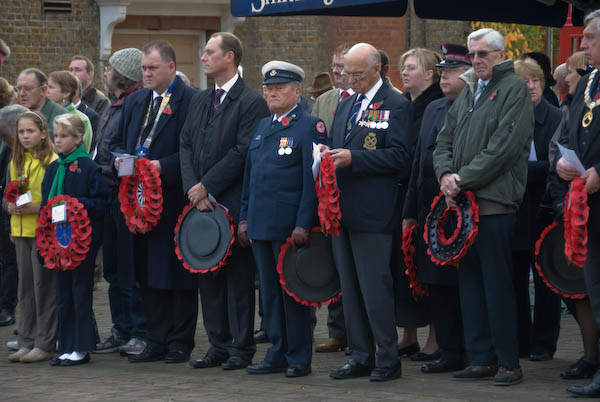
As one of the latest to join the war effort, Dad stayed on in what was now the Royal Air Force, becoming a part of the occupying British Army on the Rhine (BAOR) . It was only at the very end of 1919 that he was finally returned to England and demobbed early in 1920 – with back pay of £75 – equivalent to over £3000 allowing for inflation.
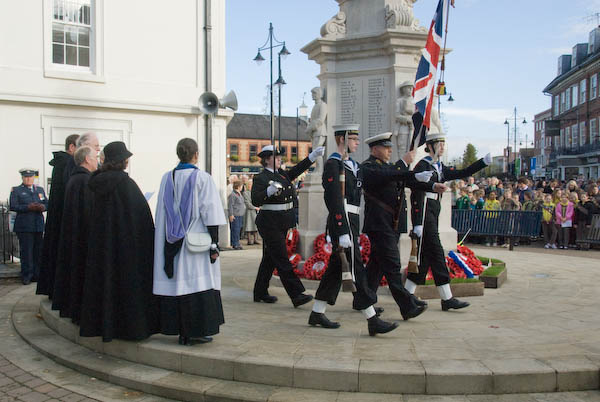
Of course Dad had a very easy though not entirely uneventful war compared to most, and he had made his choice to serve, although under conscription. But many of those who went – in this and the Second World War – had little choice. Dad did his bit back at home in the Second World War in various ways too, and a younger member of my wider family was killed in action. But like many I think his experiences of the war left him convinced of its futility, and although at home we observed Remembrance Day respectfully, there was none of the militarism that seems to be a part of the Remembrance Sunday parades which often seem to encourage the anti-German spirit of “Two World Wars and one World Cup”. That Great War was supposed to be the war that ended all wars, but sadly only led to more.
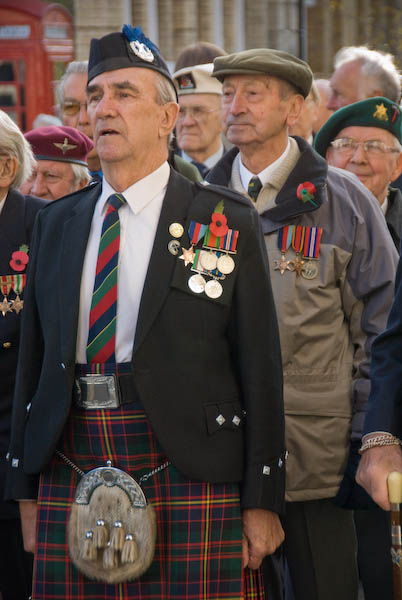
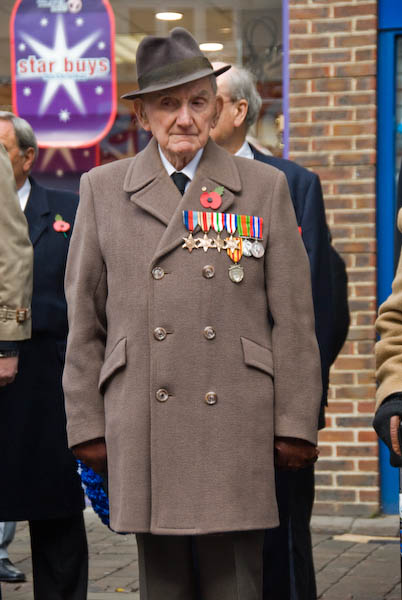
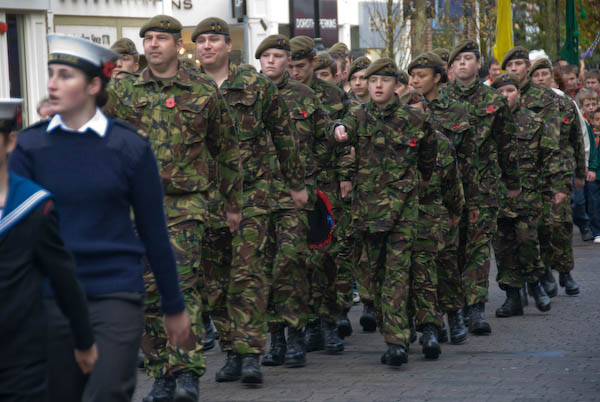
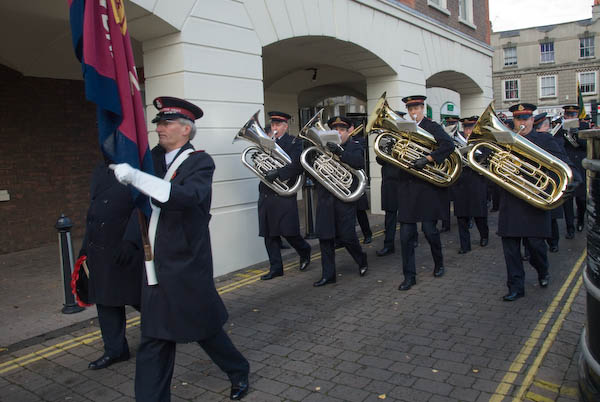
As a Wolf Cub, and later a Boy Scout I had to go and march with the troop and to stand in short trousers in the cutting November wind while bugles sounded and soldiers marched. As a photographer I’ve more recently photographed some of these events, though always with a little reluctance. In quite a few years I’ve been in Paris in November and back in 2013 I was in Germany, where they do not celebrate the armistice, but instead have a more inclusive national day of mourning to remember members of the armed forces of all nations and civilians who died in armed conflicts, and now include victims of violent oppression. As here there are church services and parades to lay flowers at war memorials but it seemed a much healthier event than those in this country.
Remembrance Sunday in Staines 2007