Spain & Pride – 2009

Spain & Pride: A few days ago I watched online what was apparently the first full UK showing of Basilio Martín Patino’s 1974 film ‘Caudillo‘, produced in secret in Spain while Franco was still in power.

It’s a powerful documentary on the Spanish Civil War of 1936-9 and the rise of Franco, not surprisingly rather ragged around the edges, with some poor sound and seriously deficient subtitles but with an incredible amount of contemporary footage from both sides of the war.

It made me aware again of the terrible failure of Britain along with the other non-fascist powers to support the Spanish government and of the bravery of many thousands of individuals on the left here and elsewhere defy their governments and go to fight for freedom. Until 31st July 2026 you can still watch the Sands Films presentation of Caudillo here. There are some short sections from the over two hour-long film on You Tube.

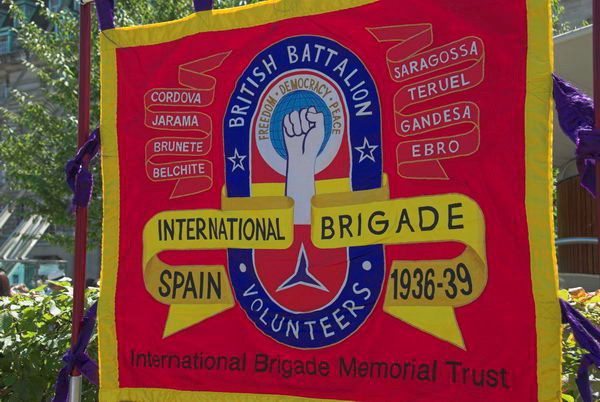
Back on 4th July 2009 I attended the annual International Brigade Commemoration at Jubilee Gardens in London, rushing away from Pride London to so.


International Brigade Commemoration

Jubilee Gardens
Spain & Pride - 2009
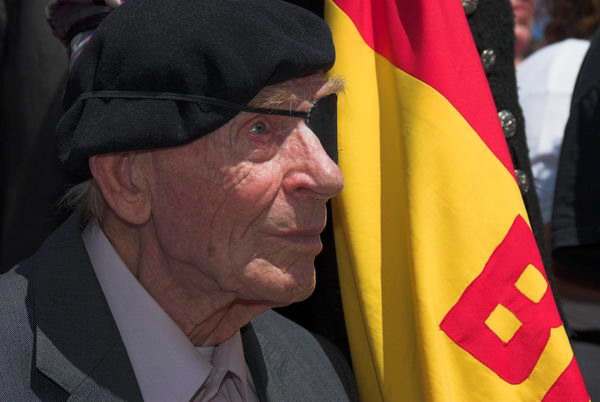
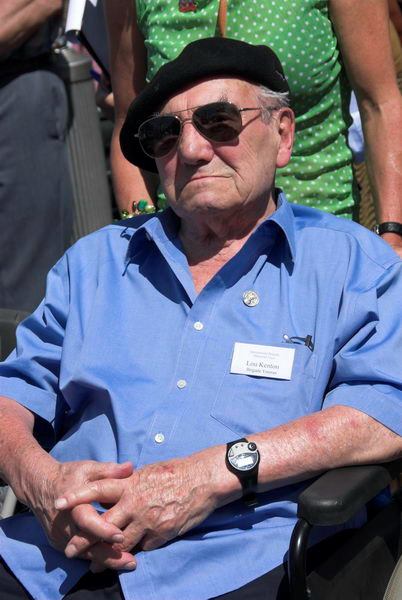
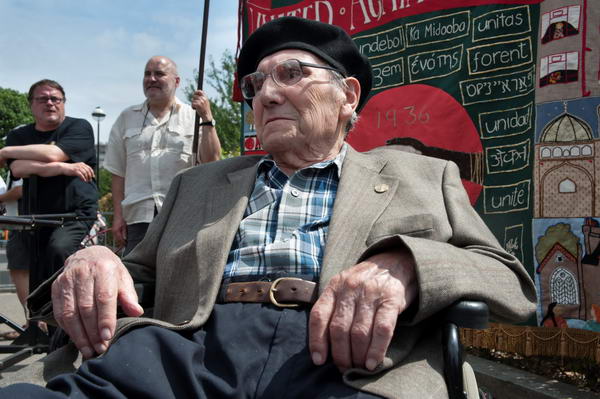
In 2009 there where are still a few alive who had gone to Spain – Lou Kenton, now 101, was an ambulance driver.

This month, July 2026, is the 100th anniversary of the start of the Spanish Civil War and this commemoration in 2009 was 70 years after it ended. As I commented, “Every year there are fewer and fewer of those who went to Spain to fight or work in the medical services, all now in their 90s or older. And every year a list of those who have died in the past year. “

Spain & Pride - 2009

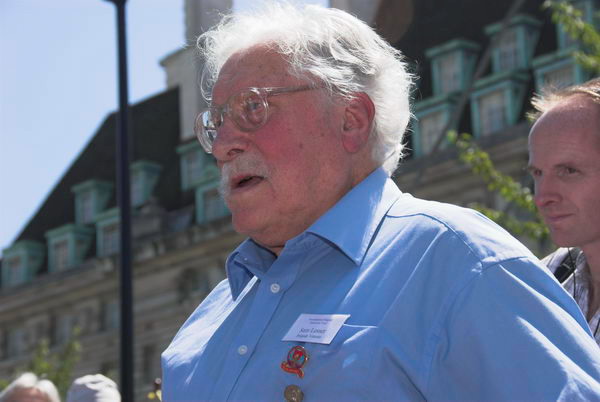
Sam Lesser remembers Jack Jones, one of the great men of the twentieth century who had died in the previous year.

Spain & Pride - 2009

Wreaths came from the Spanish Ambassador, the Catalonian representative and others

Spain & Pride - 2009

There were women who went as well as men. While our politicians stood to one side and let Germany and Italy join the fight against the elected government of Spain and much of the Spanish people, many ordinary working people supported the Republic, particularly the communists and anarchists. Over 40,000 went to fight, mainly in the International Brigades and a further 10,000 as civilians, mainly as nurses and other medical staff.

Spain & Pride - 2009

The only two nations to support the Republican cause were Mexico and the Soviet Union, with Stalin sending large amounts of weapons – though many promised failed to arrive and others were antiquated.

But it was Stalin and the communists his advisers controlled who scuppered the chances of a Republican victory by attacking, imprisoning and disbanding the other groups successfully opposing Franco’s forces, freeing the poor to take over the land. A real revolution was anathema to Stalin who feared it might give his peasants ideas.
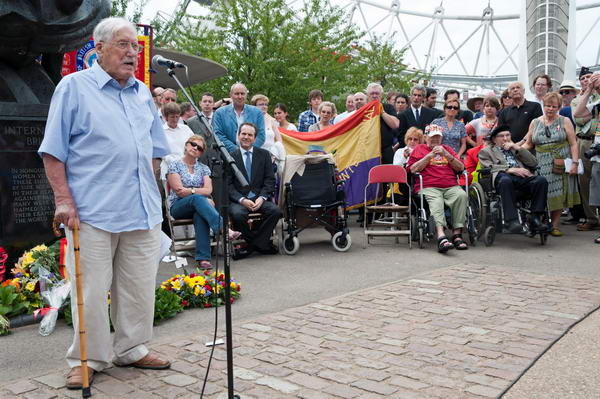
The consequence of losing the war were dire for the Spanish people (except the Catholic Church and the wealthy) with many years of repression and dictatorship – and for much of the world as it led to the Second World War.

More at International Brigade Commemoration.


Pride London 2009

Baker St to Trafalgar Square
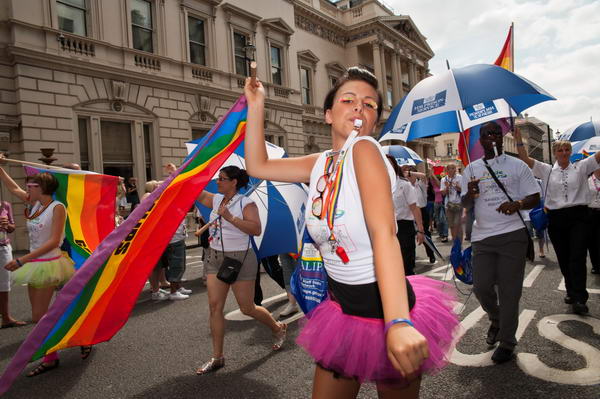
Spain & Pride - 2009
HM Prison Service: “Banged to Rights”

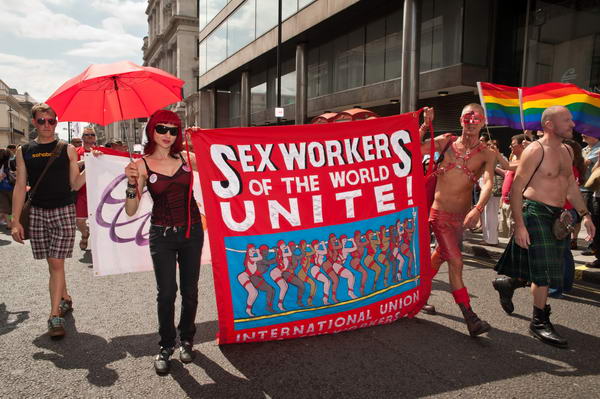
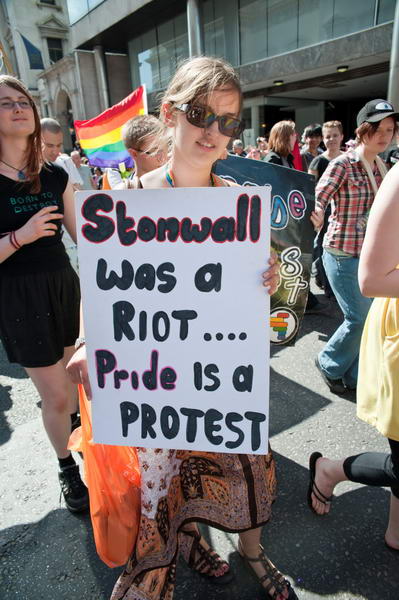
Earlier in the day I had photographed the 2009 Pride London March. I commented “Things have changed pretty dramatically over those 15 or more years [since I first attended], and Pride is largely a very different event, much more of a corporate than a personal or political one. Of course the LGBT community being what it is there is still plenty of room for the unusual, the eccentric,the flamboyant, the spectacle. And even, though perhaps rather more at the edges, the political.”
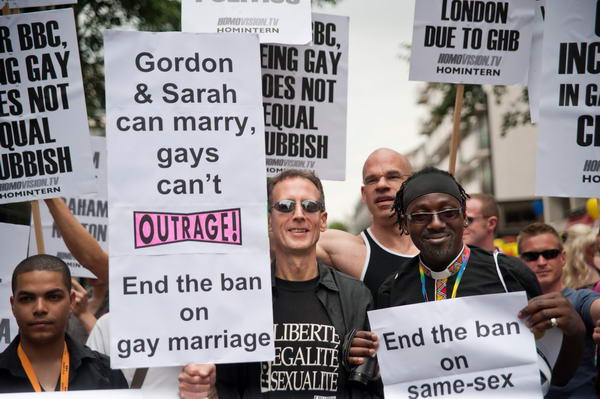
Outrage protest the ban on gay marriage – Sarah Brown was on the march

Here I’ll post a few of the more political, but I think the pictures on My London Diary cover the whole range described above.

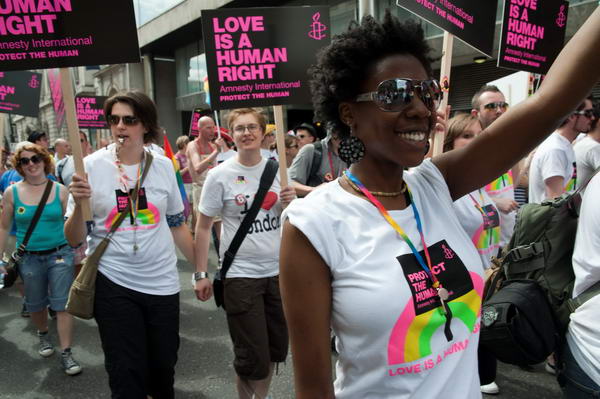
Stonewall
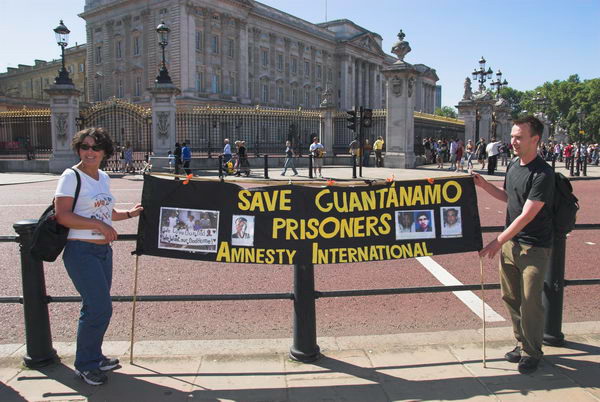
Amnesty International
International Union of Sex Workers

And there was the usual small group of Christian bigots who had come to share their carefully selected texts

The United Protestant Council “annual witness against New Sodom, parading its shame on the streets of London.”

Many more pictures on My London Diary: Pride London.


FlickrFacebookMy London DiaryHull PhotosLea ValleyParis
London’s Industrial HeritageLondon Photos

All photographs on this page are copyright © Peter Marshall.
Contact me to buy prints or licence to reproduce.
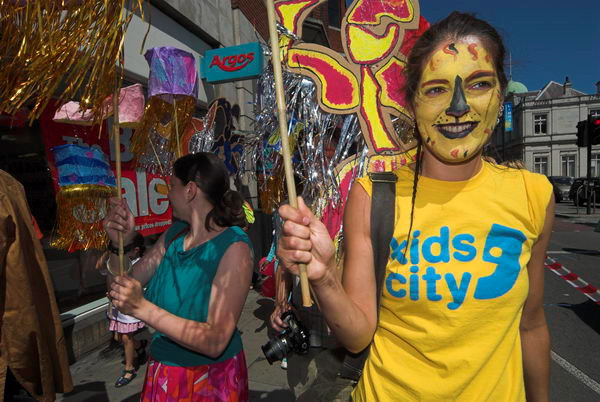
Streatham, Spain and Guantanamo – 2006

Streatham, Spain and Guantanamo: Three events in London on Saturday 15th July 2006, a festival, a commemoration and a protest.


Streatham Festival Children’s Parade – Streatham

Streatham, Spain and Guantanamo

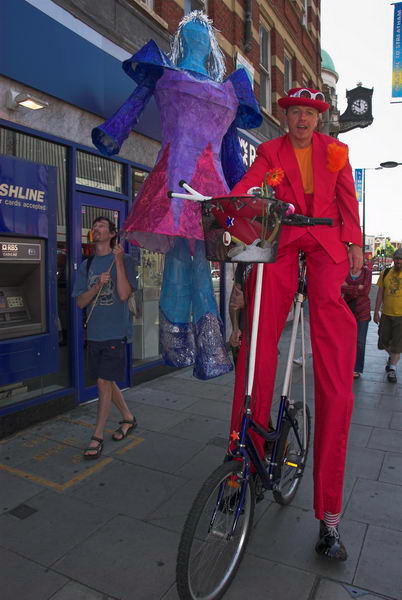
Streatham Festival held it’s first ever Children’s Parade, children working with artists from Arts Community Exchange and Kids’ City to create sculptures, banners and puppets for all to see.

Streatham, Spain and Guantanamo

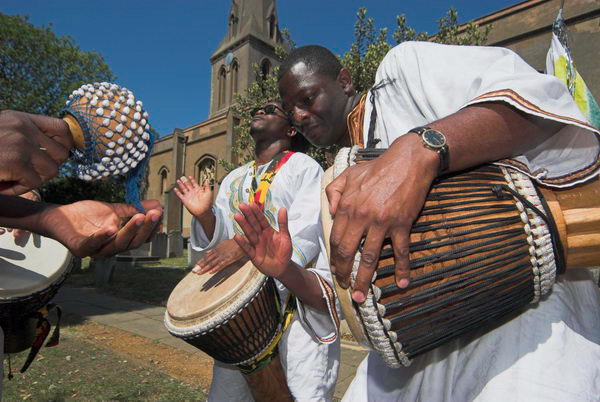
The parade was led by drummers Ancestral Hands and a cycling stilt-walker brought up the rear as it went along Streatham High Road to St Leonard’s Church.

Streatham, Spain and Guantanamo

One of my pictures from this parade was used in the remarkable The Streatham Sketchbook by Jiro Osuga and Mireille Galinou with photography by Torla Evans which was published in 2017 by Your London Publishing. Still available, this was described by Graham Gower of The Streatham Society as “superb and one the best books to be published on Streatham as a place – if not the best.”

more pictures


International Brigade Commemoration – Jubilee Gardens, Waterloo

Streatham, Spain and Guantanamo

I’ve attended and photographed a number of the annual commemorations of those who went to fight the fascists in Spain in 1936-9, but this 2006 event was the most memorable. Here’s what I wrote about it in 2006.

Jack Jones

Several hundred people attended the annual commemoration at the International Brigade Memorial in Jubilee Gardens London Organised by the International Brigade Memorial Trust on Saturday 15 July.

Bob Doyle

Between 1936 and 1939 over 35,000 men and women, from more than 50 countries, volunteered for the Republican forces. Of the 2,300 who came from Britain, Ireland and the Commonwealth, over 500 were killed.

Sam Lesser

Volunteers came largely from working class areas across the country. most were members of communist organisations or otherwise active in the trade unions and other socialist bodies, and their average age was 29.

Jack Edwards

Seventy years later there are relatively few still alive and active enough to attend the commemoration, but it was good to see seven there. They were Jack Jones who chaired the event, Sam Lesser who spoke and read, as well as Bob Doyle, Paddy Cochrane, Lou Kenton, Jack Edwards and a surprisingly spry Penny Feiwel. As usual there was a reading of the names of those known to have died since the previous year’s meeting.

Penny Feiwel

Rodney Bickerstaff’s address raised the problem of keeping alive the memory of those who responded to the call to help the Spanish republic, but attendances at this annual event seem to have increased over recent years.

Lou Kenton

There was certainly more media interest than on previous occasions, in part because of the attendance of the Spanish Ambassador and his wife, reflecting the increasing interest from Spain; he also gave a brief speech. As was pointed out, it would have been nice to have a representative of the UK government also present.

Paddy Cochrane

As usual, the event concluded with the singing of the ‘Internationale’.

More pictures on My London Diary

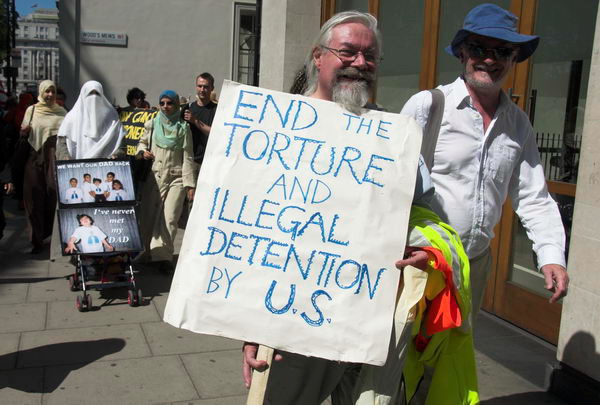
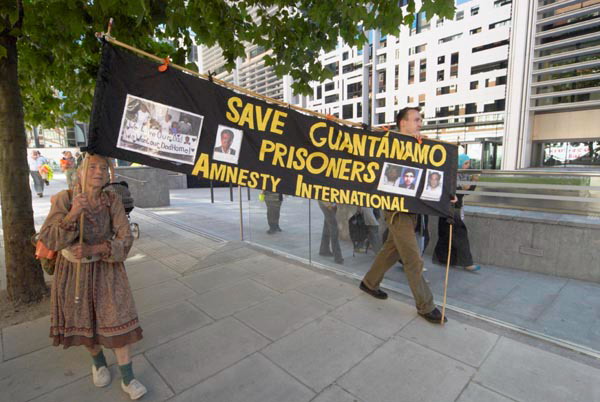
Shut Guantanamo now!

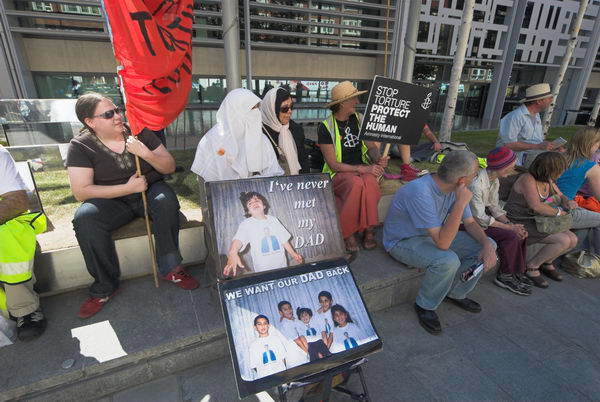
The National Guantanamo Coalition had called for a national demonstration in London to protest the deaths of three Guantanamo detainees earlier in the month.

A group of protesters, mainly from the ‘Save Omar Deghayes’ campaign, but also representing other organisations, walked across London from Marble Arch to the new Home Office building in Marsham Street to hand in the petition calling for an independent enquiry into the three recent deaths at Guantanamo. The petition also calls for the immediate sending of all detainees to countries where their basic human rights would not be abused, an immediate closure of Guantanamo and other prisons where those held were denied proper legal process and for proper access to detainees by family and medical personnel.

It was a long, hot and dusty trek across London, particularly tricky for those with pushchairs as we navigated the Hyde Park subways, and we were all glad to arrive (thanks to helpful directions from the police) at the Home Office. The front of the building was like an oasis, shade, green grass, water and trees.

The police did make us get off the grass and also made some effort to stop the display of placards and banners, but most of these remained visible. They had also attracted some attention from the crowds around Buckingham Palace as we passed by.

more pictures

FlickrFacebookMy London DiaryHull PhotosLea ValleyParis
London’s Industrial HeritageLondon Photos

All photographs on this page are copyright © Peter Marshall.
Contact me to buy prints or licence to reproduce.