Broadcasting House
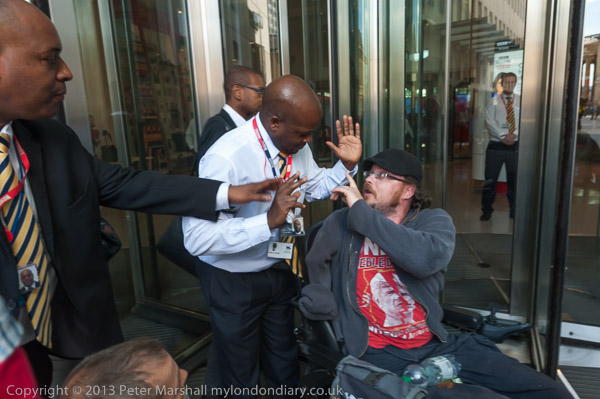
DPAC at BBC – Tell The Truth! Although the BBC has some excellent reporters and produces some great programmes, particularly on Radio 4 and in its World Service, in its coverage of the UK it too often acts as a government mouthpiece. In particular few if any protests get reported, and I would be fairly sure that this one on Monday 2nd September 2013 at Broadcasting House got no mention in the day’s news.
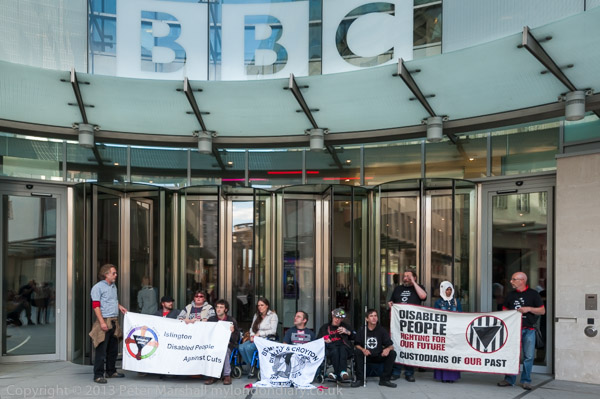
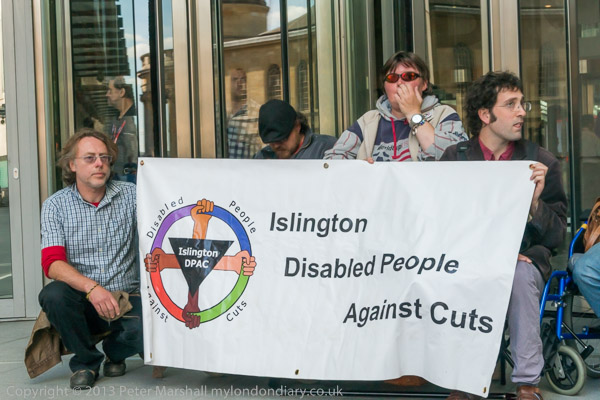
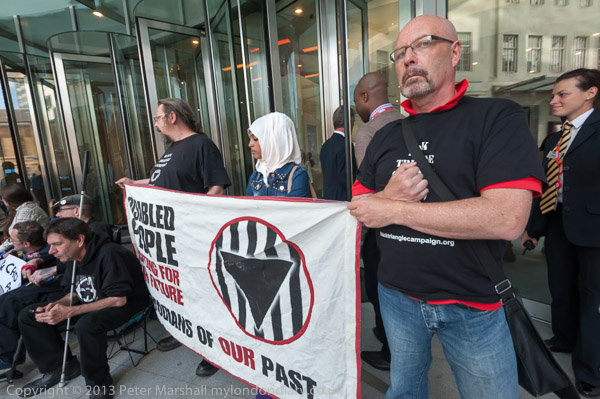
Disabled People Against Cuts (DPAC) and the Scottish Black Triangle campaign came to protest at the failure by the BBX to report truthfully the effects of government cuts – particularly hard on the disabled – blocking the main BBC entrance to Broadcasting House for an hour.
The BBC of course relies on the government to award the licence fee settlement and it also appoints the members of the trust which is responsible for its running. And many appointments of senior staff – from the Director General down are essentially made by the government, so it is perhaps unsurprising that the BBC as a whole fails to offer any radical perspective on UK affairs.
When the Tories came back into power – at first with the help of the Liberal Democrats to whom they threw a few minor carrots (including the 2011 rigged referendum on proportional representation) they instituted an austerity programme that in particular targeted the disabled.
They clearly thought that supporting the disabled was a waste of money and that they would be an easy target to reduce benefits. DPAC and others had shown them they were wrong, with a series of direct action protests – which the BBC largely failed to report, although some were covered by foreign media.
Disabled people had several advantages which aided their protests. Firstly they enjoyed a great deal of public support which meant in particular that police (who often also sympathised with their case) had to handle them with much more consideration and care than non-disabled protesters, particularly when the press were present. Batoning people in wheelchairs would not be good for the public image – and I never saw it happen.
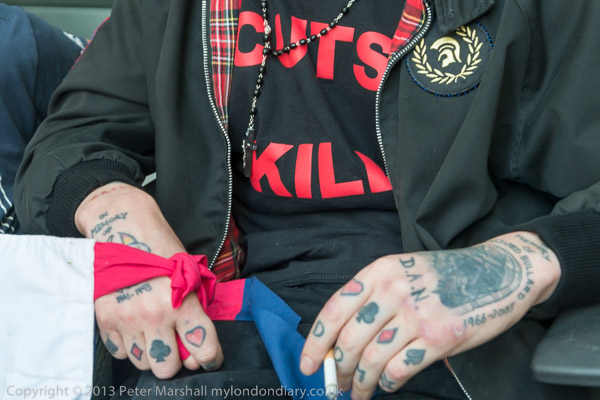
And secondly they presented practical problems for the police, particularly in making arrests of protesters in wheelchairs or on mobility scooters. Police cars and vans are not generally equipped to handle these safely. I can only remember one protest where the police had hired a suitable vehicle – and it only accommodated a single wheelchair.
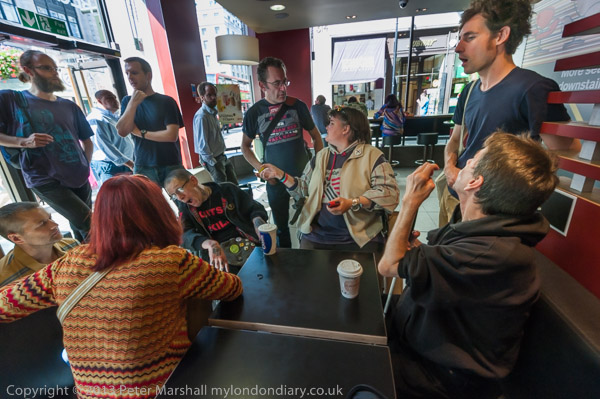
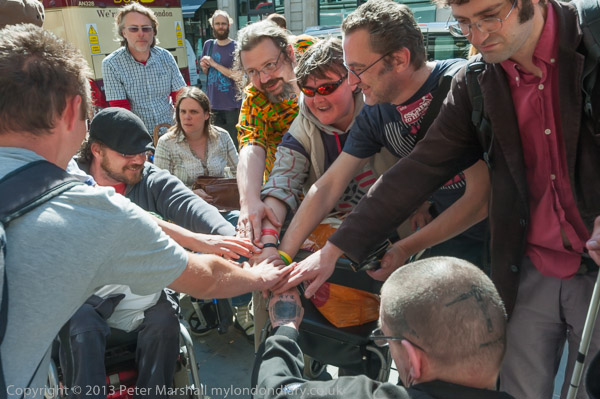
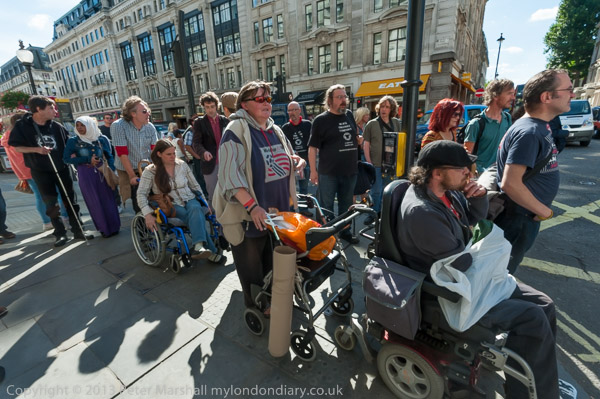
DPAC invited me to photograph this protest and I met them in a nearby cafe to discuss final plans before making their way with legal observers and a few photographers unnoticed to the main entrance of the BBC building.
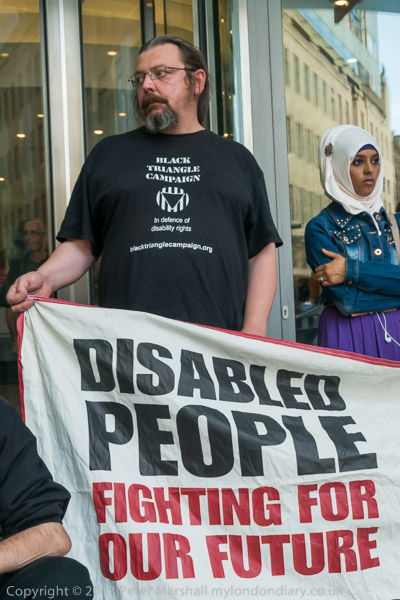
Here they spread across the doors and brought out their banners. BBC security failed to stop them but did manage to keep one door at the end free so people could still enter and leave the building.
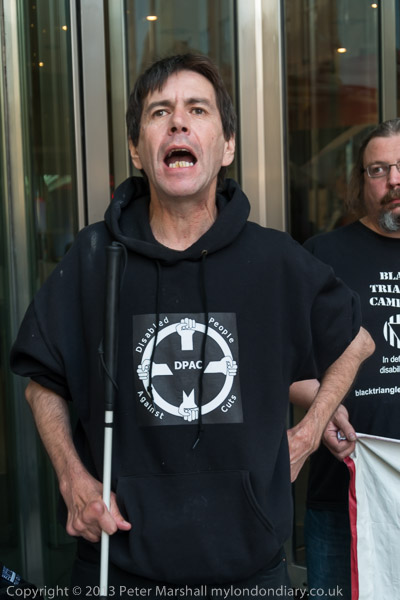
A number of the protesters then spoke in turn about the failure of the BBC to report the real hardship caused by ATOS assessments and the withdrawal of benefits, benefit cuts and caps and the bedroom tax. They were all fed up with the BBC repeating the lies and half-truths of government and asked why the real problems and numerous deaths from the austerity programme and the protests over these were not being properly reported.
The situation was dire for many poor and disabled people, with over 500,000 having to resort to food banks set up by churches and charities to fend off starvation.
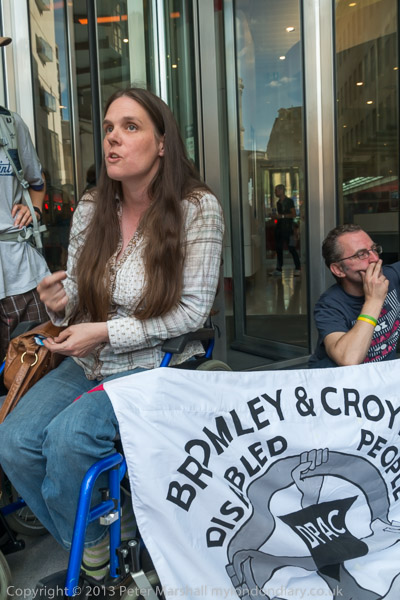
The protesters chanted ‘BBC, Tell the Truth’ and called for someone from the BBC to come and discuss the issue with them – but no one came. They made clear they were not asking for special treatment for the disabled but for the BBC to live up to the reputation it once had for impartial reporting.
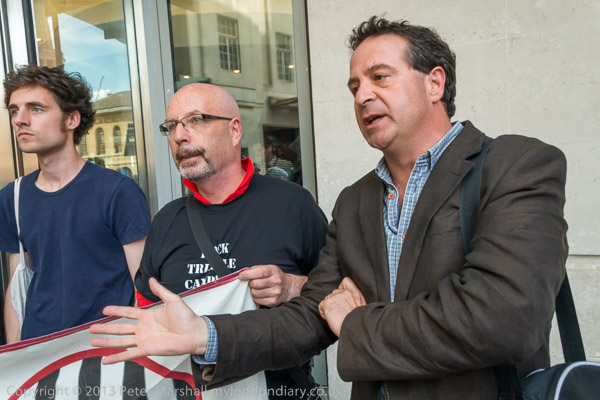
They were joined for some minutes by activist comedian Mark Thomas who had been at a meeting inside the BBC. He recognised some of the protesters, talked with them and gave a short speech in support.
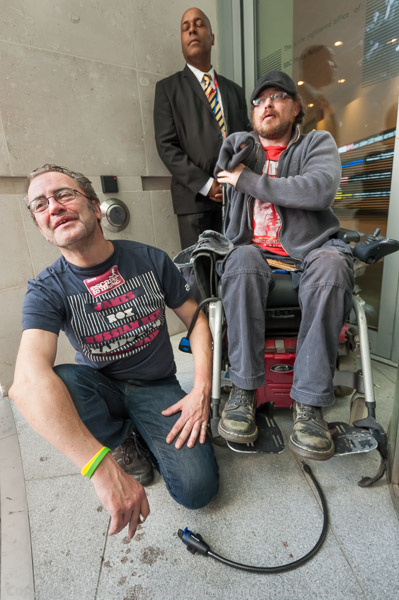
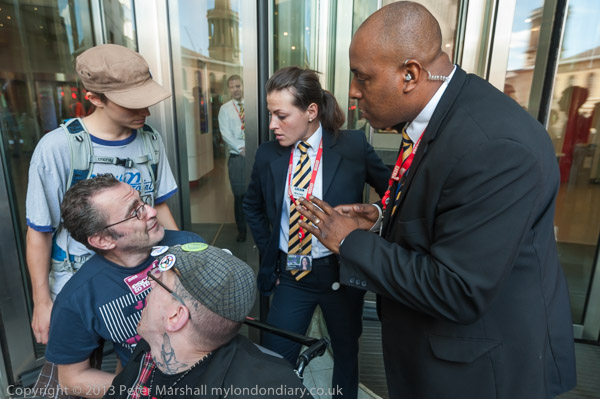
Shortly after two of the protesters in wheelchairs moved to lock themselves in front of the remaining open door closing it for the remainder of the protest. BBC security then called the police and two cars arrived.
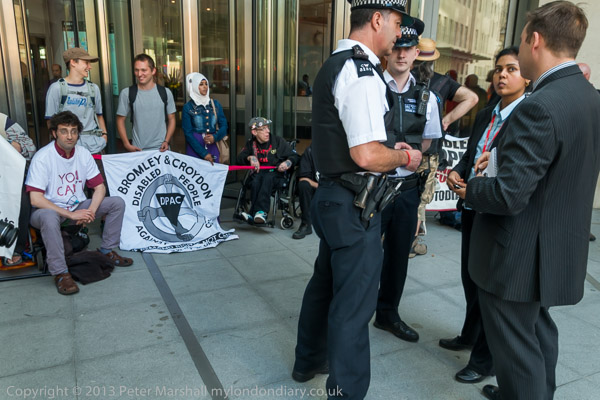
Police talked with security and then came and talked to the protesters. The told the police it was a one hour protest and they would then leave peacefully. Police stayed and watched until the end of the hour when the protesters got up and left.
Before they did so, a BBC cameraman arrived having been asked to film the protest – not for news but for possible use in the future. “I joked with him he might try and sell the footage to Sky or some other broadcaster who were rather more likely to use it.”
Many more pictures on My London Diary at DPAC at BBC – Tell The Truth.
Flickr – Facebook – My London Diary – Hull Photos – Lea Valley – Paris
London’s Industrial Heritage – London Photos
All photographs on this page are copyright © Peter Marshall.
Contact me to buy prints or licence to reproduce.