XR and Emma Thompson

I don’t go out of my way to photograph celebrities. Often another photographer will point out someone to me and they are people I’ve never heard of, and certainly wouldn’t recognise. One of the delights of not owning a television is that it keeps your mind clear of such clutter, though it has occasionally meant I’ve missed taking pictures that would have sold well.
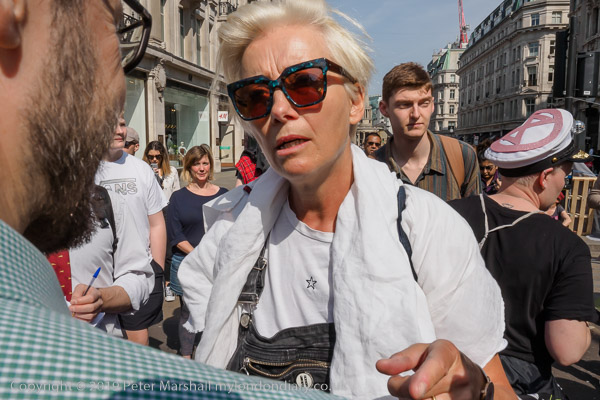
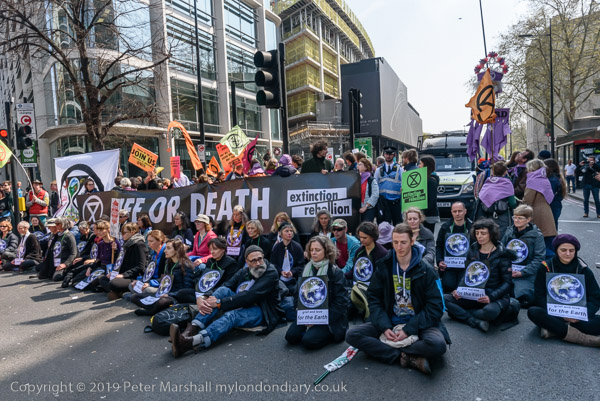
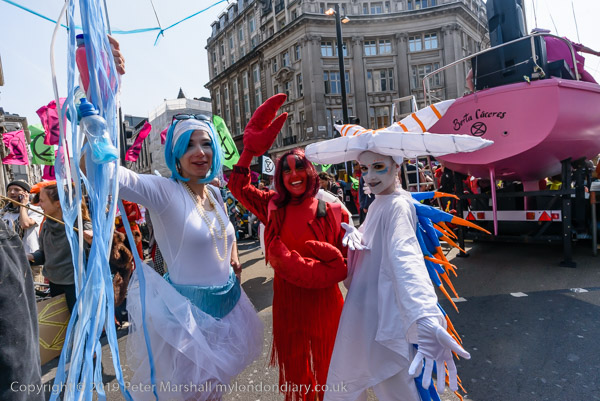
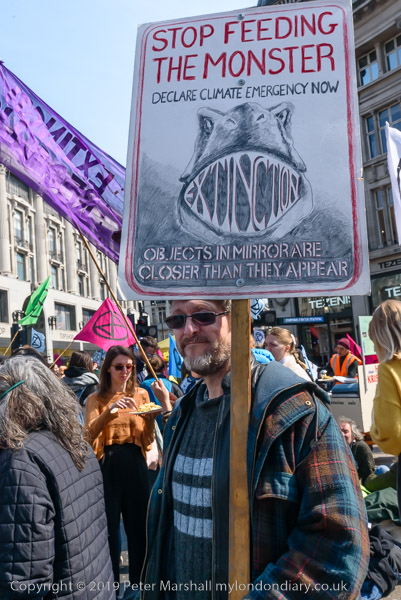
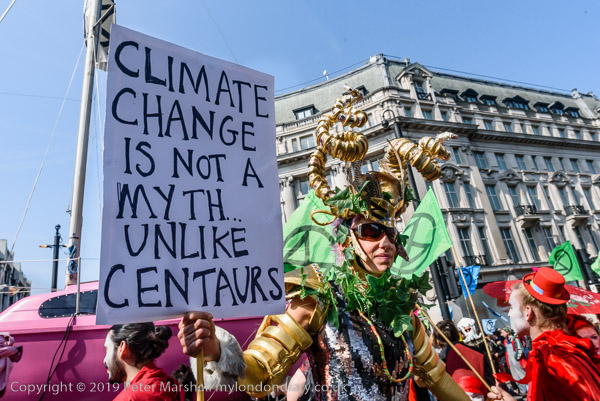
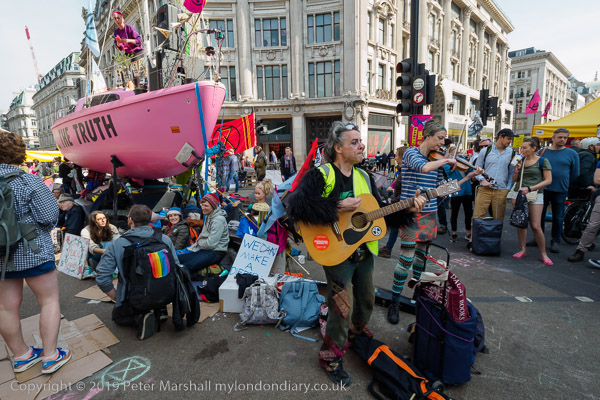
But of course I do have some idea of who Emma Thompson is and what she looks like, though I hadn’t known she would be arriving to speak at Oxford Circus before I got there on April 19th and a colleague shared this information. I’d gone to Oxford Circus simply to photograph the XR occupation of the area around the large pink yacht, the Berta Cáceres, and the other sites still blocked by the protests,
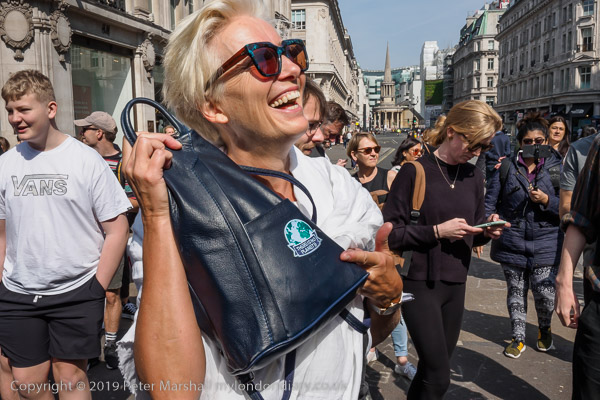
I saw her arrive before most of the other photographers and was able to take a few pictures before she was surrounded by a crowd of people with cameras, including one of her showing off her ‘There is no planet B’  bag.
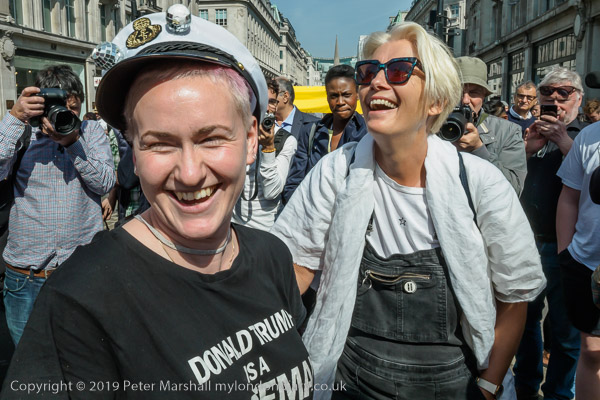
Soon other photographers realised she had arrived, but there wasn’t room for them where I was between her and the boat, so there was a ring of photographers all pointing there lenses at her back while I was taking her picture with a member of the crew. I realised she was going to have to wait and then climb up the ladder onto the boat after the singer currently performing came down and moved to where I thought I would be best placed for more pictures – a few of which you can see on My London Diary.
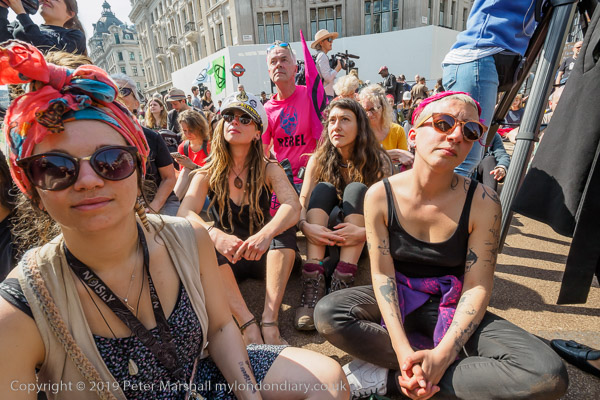
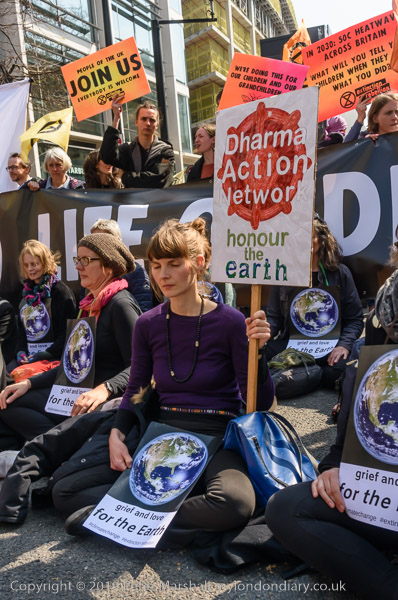
Of course I moved into the crowd in front of the boat as she spoke, to take more pictures of her, but mainly of the people listening. After she had spoken to the crowd, she did speak to a couple of TV crews from the back of the boat and I did take a few more pictures, but I was more interested in the pep[;e who were surrounding the Berta Cáceres, some locked on, to protect the boat from being moved.

I then made the mistake of leaving Oxford Circus to look at something happening elsewhere, but after a brief look I came back to find that police had moved in and began the long process of clearing the road junction. More about that in a later post.

More pictures at Emma Thompson speaks at XR


All photographs on this and my other sites, unless otherwise stated, are taken by and copyright of Peter Marshall, and are available for reproduction or can be bought as prints.

There are no adverts on this site and it receives no sponsorship, and I like to keep it that way. But it does take a considerable amount of my time and thought, and if you enjoy reading it, please share on social media.
And small donations via Paypal – perhaps the cost of a beer – would be appreciated.
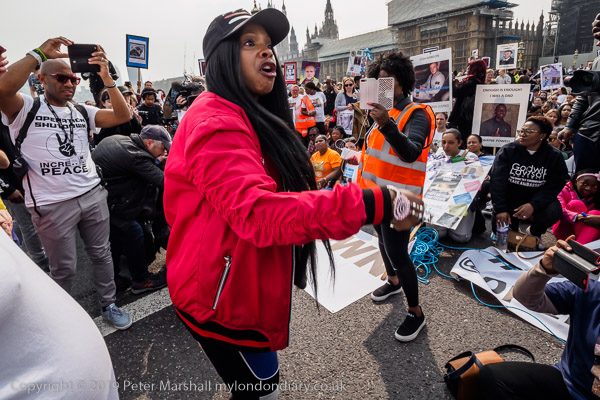
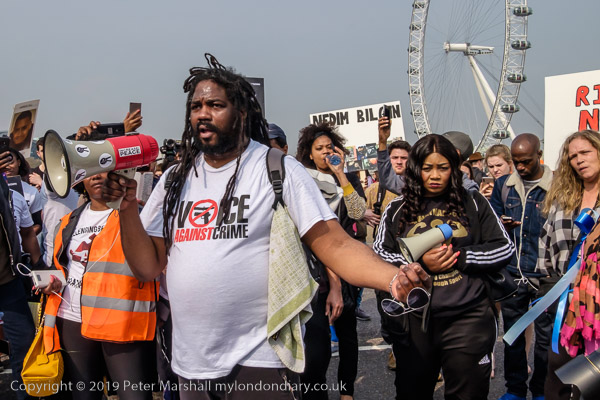
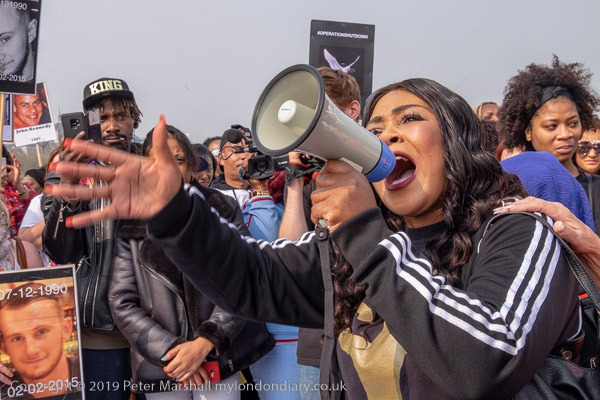
Shutdown Knife Crime

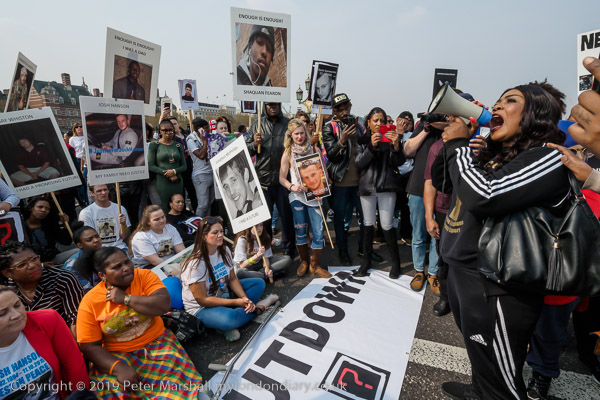
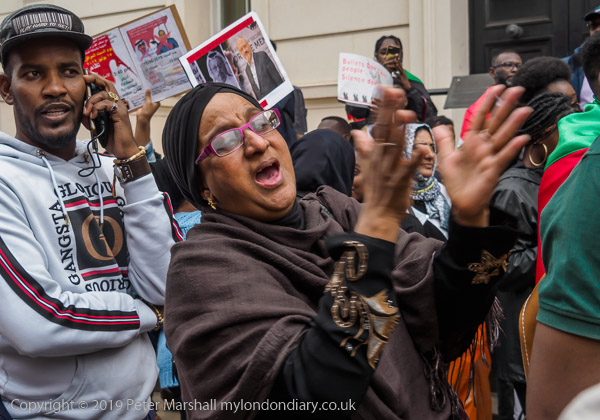
Operation Shutdown is a campaign to end the deaths from knife and gun crime on our streets, which have been rising over the last few years. Most of those in the campaign are people who have suffered the pain of losing a relative – brother, son, nephew, uncle – or friend to knife crime.

The great majority of the victims are young men, in their teens or twenties, and although many are black what they virtually all have in common is that they come from working class families mainly living in deprived areas.

Almost certainly the biggest driver behind the increase in deaths has been austerity, with the huge cuts this has forced councils to make in youth services and other vital support for families. Some of the violence on the streets is certainly gang-related, often concerned with drugs, but those killed are often people on the periphery or innocent bystanders.

It would be impossible not to empathise with the suffering of mothers, fathers and other relatives as they talk about their loss, but I don’t always feel that some of the measures they suggest would do anything to curb the growth of knife crime. I have very little faith in their idea that the government’s emergency committee COBRA considering the problem would have any real impact, and it could well worsen the situation.

Of course there are things that they call for that would help. Restoring the cuts in vital community services is an obvious need, and reversing the cuts in police numbers could help too, though perhaps only if this led to more sensitive and informed community policing.

We need also to look at ways to reduce the power and influence of gangs, which would almost certainly include an evidence-led reform of our laws about drugs, something which succesive governments have resisted.

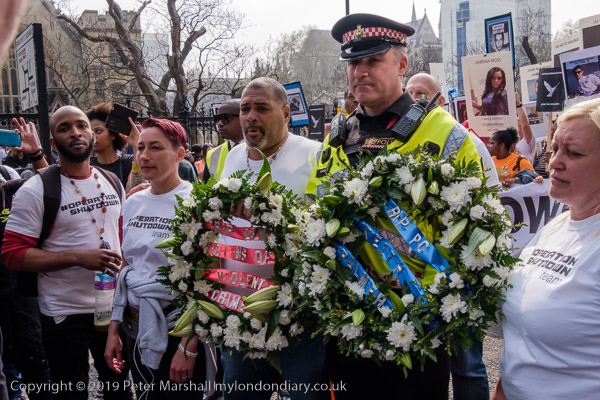
After a rally opposive Downing St, Operation Shutdown marched to Westminster Bridge, where they presented wreaths to a police officer and hold a silence in memory of PC Keith Palmer, killed outside Parliament by terrorists before going on to block the bridge and hold a further rally.

More at Knife crime Operation Shutdown


All photographs on this and my other sites, unless otherwise stated, are taken by and copyright of Peter Marshall, and are available for reproduction or can be bought as prints.

There are no adverts on this site and it receives no sponsorship, and I like to keep it that way. But it does take a considerable amount of my time and thought, and if you enjoy reading it, please share on social media.
And small donations via Paypal – perhaps the cost of a beer – would be appreciated.

End rewarding Drax for pollution

I’ve never felt bad about having a bonfire in the garden. We generate a lot of small branches from various shrubs and trees that have to be regularly cut back, and it’s material that mostly won’t compost. And although we have several large compost bins, we’ve found from experience that they don’t get hot enough to destroy a few really tough and troublesome weeds, So these often get put on the bonfire too, though we could pay for the council to collect them as garden waste.

All this carbon release is of short-term carbon, mostly this year’s carbon, and there is no net increase in atmospheric carbon dioxide caused by our gardening.

And of course the bonfire produces carbon dioxide, but firstly it is only a fraction of the carbon dioxide which has been turned into wood and leaf in our garden, with the rest remaining locked in as our bushes and trees grow bushier and taller, or being eaten (and thus released) as fruit and vegetables. More too gets back in to the atmosphere from the green waste that does go into our compost bins.

Of course there are other pollutants from our very occasional garden bonfires, including particulates and doubtless toxic chemicals. But I am fairly sure that the amounts of these are relatively small and will add little to those already in our air here from the nearby roads, motorways and Heathrow.

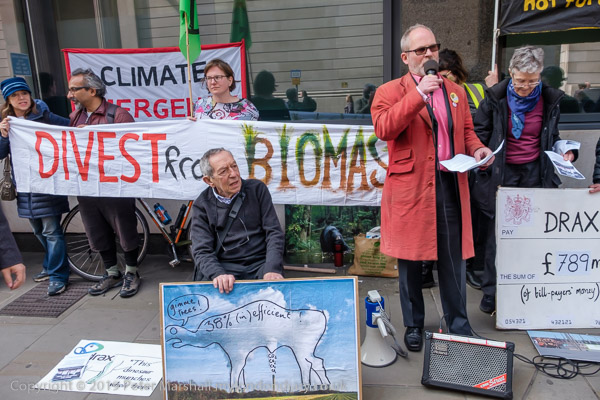
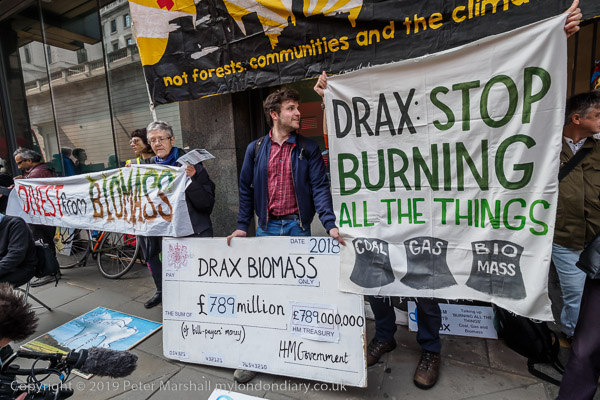
But burning wood to produce electricity at Drax is a quite different matter. One obvious difference is that of scale: Last year Drax burnt 7.2 million tonnes of wood pellets, equivalent to at least twice that amount of green wood, and more than the UK’s total annual wood production, and released 13.02 million tonnes of CO2 into the atmosphere (in addition to another  4.36 million tonnes from coal and other fossil fuels.)

The wood burnt at Drax is ‘old’, having grown over many years, and even with the most sustainable forest planting to replace it will take more than 50 years. The majority of it comes as pellets from the USA, mostly produced from hardwood from the clear-cutting of biodiverse forest ecosystems, and the major producer, Enviva has been subject to heavy criticism both for its destruction of these swamp and wetland forests, and for locating its highly polluting pellet plants in areas of social deprivation already exposed to high levels of industrial pollution.

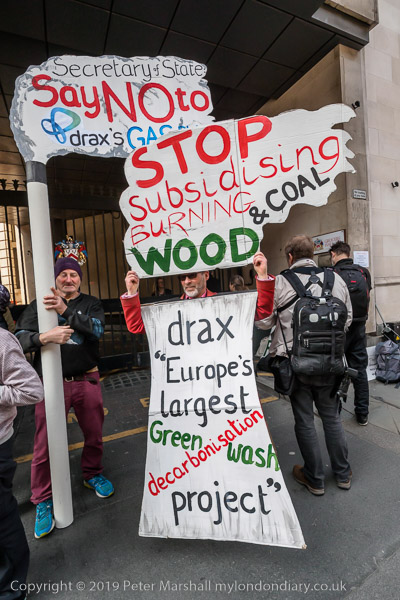
Drax’s carbon-producing wood burning is only financially viable because it gets huge subsidies. In 2018 these amounted to £789.2 million, This money comes from our energy bills which carry a surcharge, intended for promoting renewable electricity. It should not be used to promote highly polluting and essentially non-renewable wood burning. The subsidies are greater than the company’s annual profits and without them wood-burning would not be viable.

Drax also gets subsidies from the government for burning coal, though on a rather smaller scale, but also impossible to justify. For 2019/20 this is  £22 million, and similar subsidies are expected until 2025. It is also expected to be subsidised for burning gas, and wants to greatly expand its generation from gas.

These huge subsidies to Drax for its contribution to global warming come at at time when our government has slashed subsidies for truly renewable energy production from onshore wind and solar power as well as those for energy efficiency and conservation.

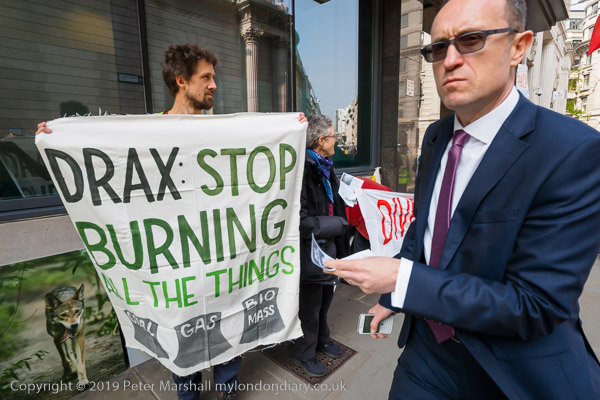
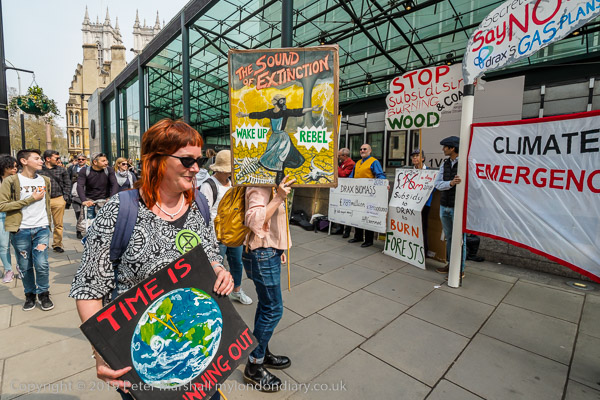
More about the protest outside Drax’s AGM in the City of London, and later outside the Dept for Business, Energy & Industrial Strategy (BEIS) demanding an end to environmental subsidies for massive pollution in two posts on My London Diary:
Drax wood burning must end
Drax Protest at BEIS


All photographs on this and my other sites, unless otherwise stated, are taken by and copyright of Peter Marshall, and are available for reproduction or can be bought as prints.

There are no adverts on this site and it receives no sponsorship, and I like to keep it that way. But it does take a considerable amount of my time and thought, and if you enjoy reading it, please share on social media.
And small donations via Paypal – perhaps the cost of a beer – would be appreciated.

Anniversaries

We celebrate many anniversaries, and forget others. Some are personal and others more universal, but you can be sure that any day of the year is being commorated somewhere by someone. This post will go online on August 8th, the 74th anniversary of the dropping of the second atomic bomb, at Nagasaki, two days after the more widely remembered bomb at Hiroshima.

On 6th August this year – as on many past years – I went to a Hiroshima Day commemoration in London, and of course photographed it. It will be a few weeks before I put the pictures on My London Diary, though they went to Alamy and Facebook on the day. The first time I put pictures on-line from one of these annual events was in 2004 but that was perhaps simply because it was the first I attended with a digital camera.

The Nikon D100 was primitive by today’s standards, producing small files, only 6.1Mp on its APS-C sensor, and with a small and rather dim optical viewfinder, but the images – still on line on My London Diary – disappoint largely because of the indifferent raw processing software – and possibly my lack of skill in its use, as you can see from the rather murky examples here.

Under favorable conditions the D100 was capable of producing excellent images – and one image from it of a very different occasion was on exhibition for some years as a 2.3 metre wide print, but it was a pig to use. But I really should hunt out those old RAW files, stored on CDs which are still readable (and possibly also on old hard disks which can also still be read) and make some new conversions.

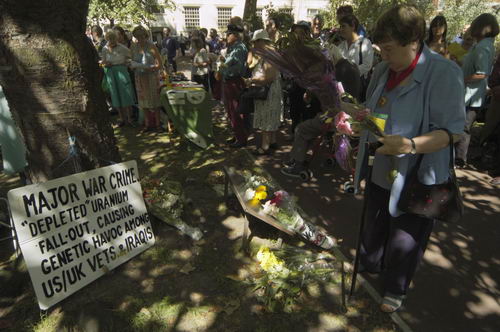
Of course the conditions in Tavistock Square are usually challenging. It almost always seems to be a sunny day, with the sun coming from the wrong direction for most photographs, and being filtered through the leaves of trees, one the Hiroshima Cherry Tree, grown from a seed from Hiroshima and planted in Tavistock Square in 1967 by the then Camden Mayor Millie Miller, whose son Bernard was one of the speakers this year. In his speech about many remarkable women involved in peace commemorations he did tell us who the other tree commemorated, but I’m afraid I’ve forgotten her name.

The association of the Mayors of Camden with the event continues, and almost every commemoration has been opened with a speech from the Mayor (or Deputy Mayor) who has then gone on to lay a wreath at the Hiroshima Cherry Tree. The only exceptions have been the fortunately rare Conservative mayors of the London borough who declined to take part, presumably not wanting to be in any way associated with peace.

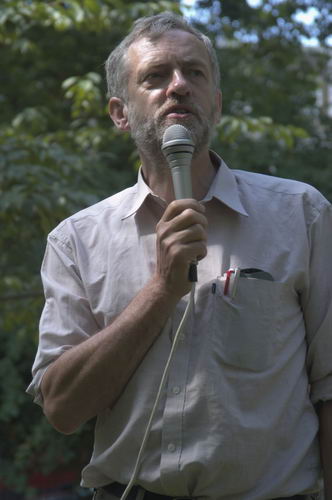
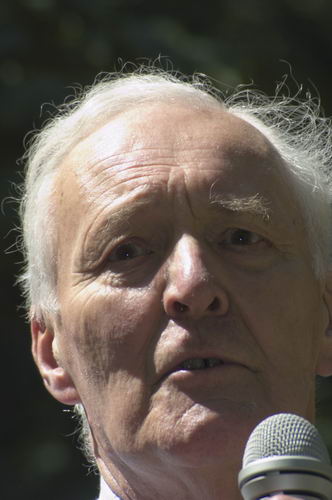
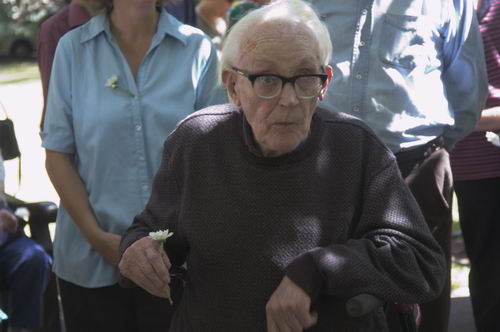
Hiroshima Day in Tavistock Square back in 2004 was something of a historic event in itself, compered by Jeremy Corbyn, with speakers including Tony Wedgewood Benn and with former Labour leader Michael Foot attending. Moredecai Vananu had been invited but was not allowed to leave Israel. 

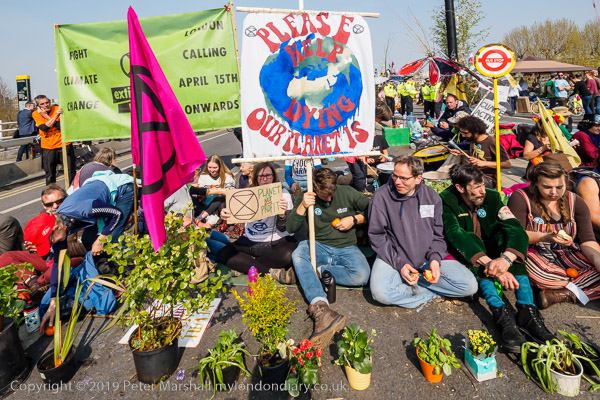
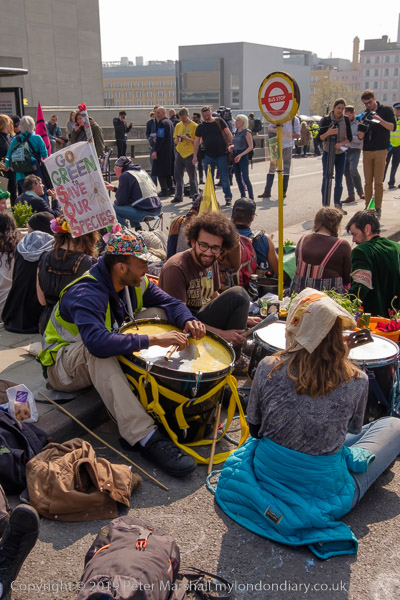
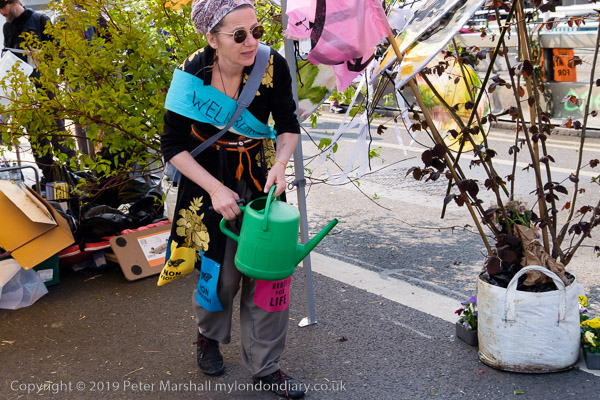
More from the XR Garden Bridge

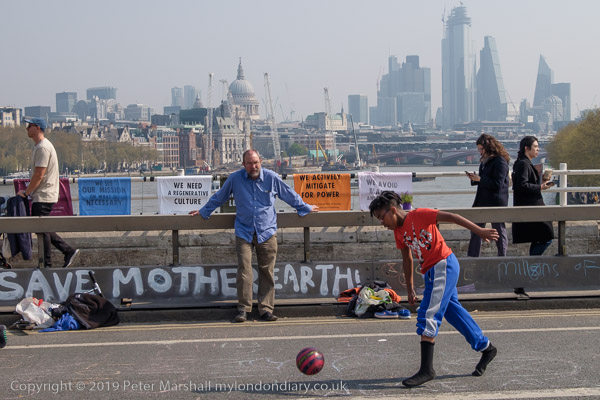
On my next visit to London two days after XR had occupied Waterloo Bridge to make it into a ‘garden bridge’ I found myself needing to cross the Thames to get to an event I wanted to photograph, and the obvious way to get there was to walk through the garden.

There had been reports of arrests by police trying to clear the bridge, but things were still happening there, and for the half hour or so I had given myself to cross it the police were simply standing and watching.

The protesters seemed well settled in, though there were still new people arriving, with an induction session taking place. People were drumming and others simply sitting and chatting around, with a small library being pushed around to offer books to those who wanted to read.

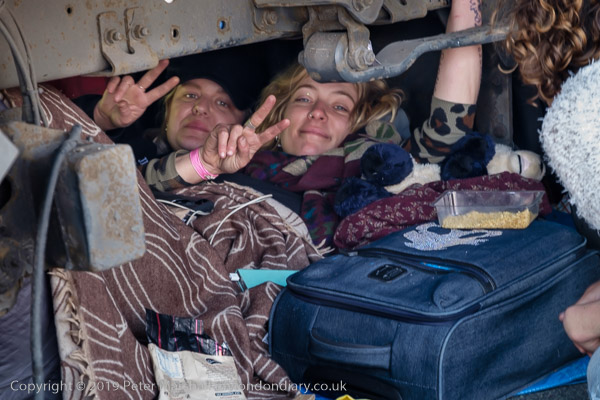
And there was singing, poetry and story-telling on the lorry that was there as a stage, though there were also people locked on underneath it to prevent it being moved, with others sitting on the roof, probably just to get a good view and so that they caught a little more of the breeze coming up the river, as it was a hot morning.

Some people were keeping busy keeping the site running and others were enjoying the sun and a rest. It seemed a very calm place and it was good to be away from traffic and fumes, and I was sorry I had to leave.


All photographs on this and my other sites, unless otherwise stated, are taken by and copyright of Peter Marshall, and are available for reproduction or can be bought as prints.

There are no adverts on this site and it receives no sponsorship, and I like to keep it that way. But it does take a considerable amount of my time and thought, and if you enjoy reading it, please share on social media.
And small donations via Paypal – perhaps the cost of a beer – would be appreciated.

Shell Out

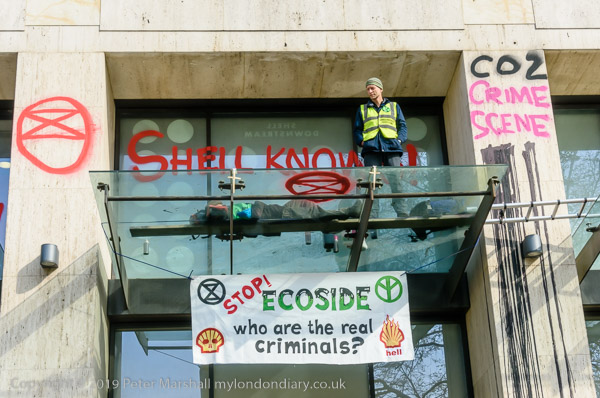
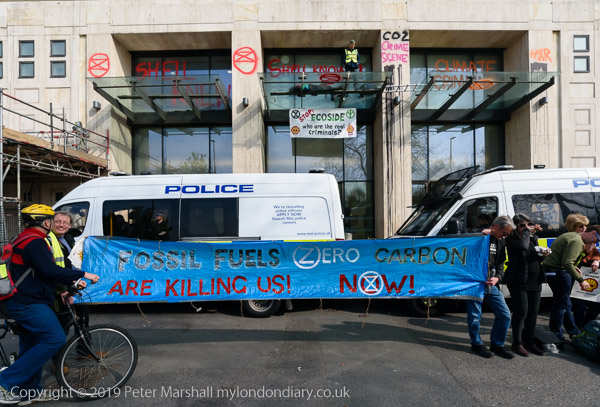
If we are to survive as a species we need to stop the climate destroyers, companies like Shell who are still pushing fossil fuels. So it wasn’t surprising that Extinction Rebellion had planned a protest at the Shell offices in London.

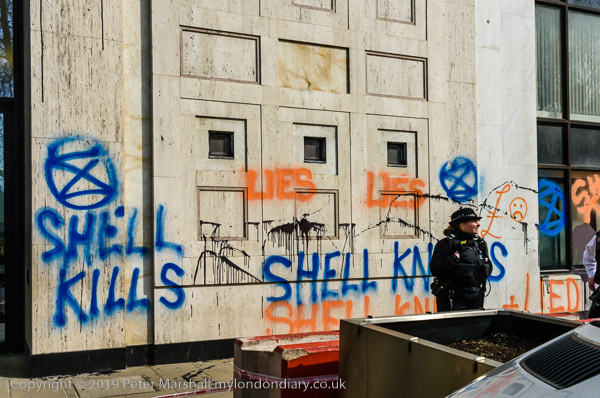
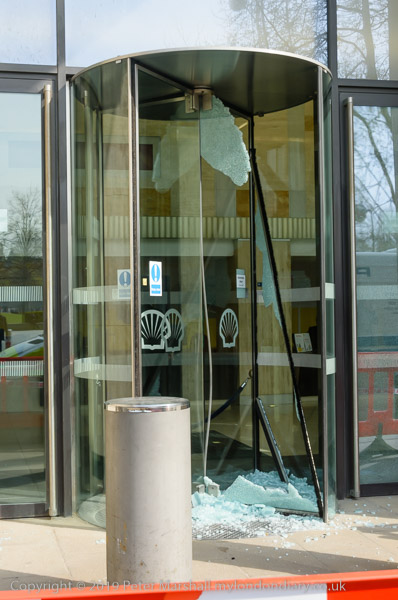
Also not surprising that as those taking part were intending to be arrested for taking illegal action and causing damage to the property that they didn’t advertise their protest beforehand. I only heard about it a short while after it happened, when a colleague who had been filming it told me what had happened and said it might still be worth a visit.

I do sometimes get advance information on illegal actions – and have at times been asked to cover them for the organisations taking them, but I usually pass up the opportunities. Sometimes it’s because they are taking place at inconvenient times, often early in the mornings. I’m afraid I don’t like getting up early and living a short journey outside London makes me reluctant to cover anything that starts before around 10.30am.

I also like to keep a certain distance between myself and groups of protesters. It’s a matter of objectivity and of editorial independence. I may support the aims of a protest, but as a photographer and a journalist I want to see and photograph it from my own viewpoint. So while I’m happy to cover events when I can, I don’t normally want to be a part of them.

Sometimes groups who approach me would be happy to pay for my services, though more often there isn’t any money involved. I’ve long been a supporter of trade unions and the idea that the labourer is worthy of his hire, and am opposed to my work being used without payment by anyone else who is making money out of it. I don’t actually need the money any more but there are plenty of younger photographers out there who struggle to make a living, and I’d rather any paid job went to one of them.

While I understand that many organisations want to improve the chances of hasing their protest or other event features in publications by providing free high-quality images, this is something I don’t like to support. If an event is newsworthy, then the media should be prepared to pay for decent pictures – otherwise no news photographers can make a living.

I have two simple rules when I’m asked for permission to use any of my images without payment:
Firstly – and this applies also when people approach me offering to pay – do I approve of the way they want to use the image. Some organisations get a straight refusal, though agencies with whom I place most images are less discerning.
Secondly if any organisation wants to use my work without payment my second question is to ask if the organisation has paid staff. If it can afford to pay workers it can also afford to pay photographers like me. It’s a simple test.

There are of course exceptions. One long-established is for the occasional exhibitions I take part in, where images are provided for free use in publicising and reviewing the show. And there is one or perhaps two magazines worldwide I would allow to use my work without payment in the unlikely event they would want to do so. And my work is made freely available to you all to view on my various web sites, particularly My London Diary, London Photographs, Hull Photos and the River Lea, links to which appear at the bottom of most posts on this site, a total of around 200,000 pictures and still growing.

As well as their general role in promoting climate disaster and ecocide, the protest at the London Shell HQ also highlighted their crimes against the people of the countries of the global south in which they operate, particularly in Nigeria where the company has been responsible for the killing of opponents to its activities, including Nigerian writer, television producer and environmental activist Ken Saro-Wiwa, executed by the military government there in 1995. 

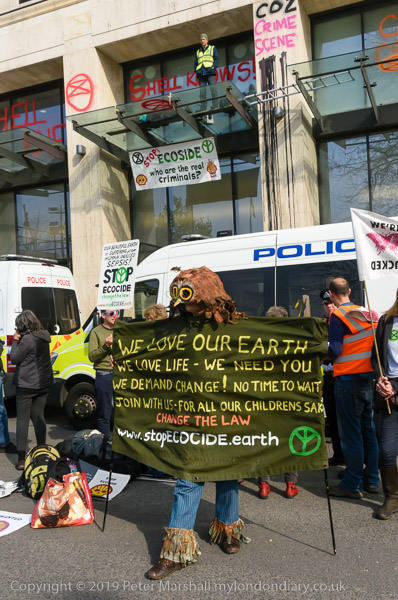
I arrived far too late to see the activists daubing slogans on the Shell building and deliberately causing criminal damage so that they would be able to demand a trial before a jury, enabling them to argue their justification for the action. But there were still two activists occupying the glass porch above the entrance, as well as a group of supporters protesting on the road outside.

You can see a few more pictures at Extinction Rebellion at Shell. I didn’t stay long as I’d missed the main action and little now seemed ot be happening – and I had another protest to visit on my way home.


All photographs on this and my other sites, unless otherwise stated, are taken by and copyright of Peter Marshall, and are available for reproduction or can be bought as prints.

There are no adverts on this site and it receives no sponsorship, and I like to keep it that way. But it does take a considerable amount of my time and thought, and if you enjoy reading it, please share on social media.
And small donations via Paypal – perhaps the cost of a beer – would be appreciated.

XR Funeral Procession

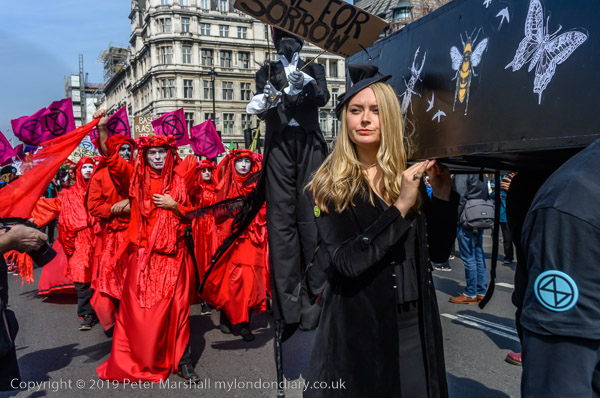
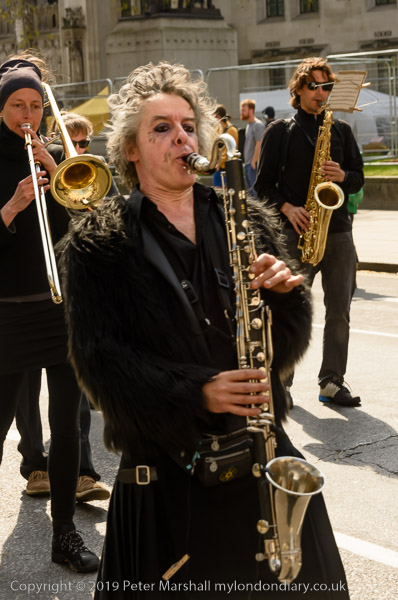
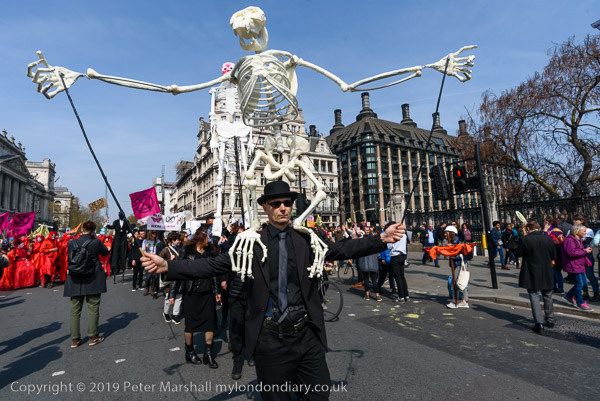
It was perhaps surprising that Extinction Rebellion’s occupation of Parliament Square acheived less publicity in the media than that of the other occupations in April, despite starting with arguably the most colourful (and most musical) of the events of the eleven days, a New Orleans style jazz funeral procession.

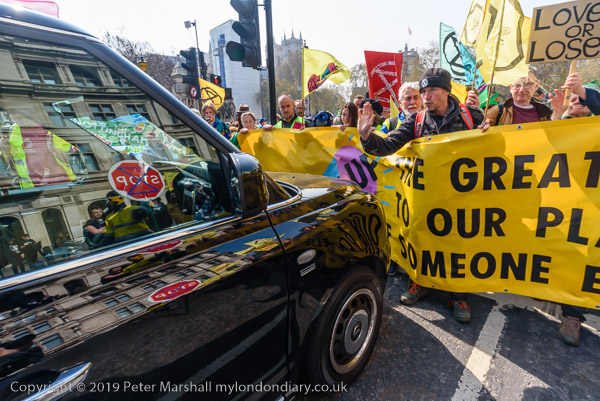
The roads around the square were blocked as I arrived to photograph the procession, much to the annoyance of at least one taxi driver, who made an ill-advised attempt to drive through the protesters before giving up and turning around. But this isn’t a major junction like those at Oxford Circus or Marble Arch, not really even a major route, and one which I’ve long thought should be pedestrianised and permanently closed to all but essential traffic to make London more pleasant for Londoners and tourists.

Again, the protest in Parliament Square didn’t have the kind of permanent focus provided by the Waterloo Garden Bridge, or the pink yacht of the sea at Oxford Circus. And it was hard to see what might have provided that, though a large guillotine might have been popular with some. But what Parliament Square did have was a spectacle, a funeral procession led by a small jazz group in front of the coffin, and behind it giant skeletons and a bright red-clad group apparently representing the blood of extinct species – and of those species including our own soon to become extinct.

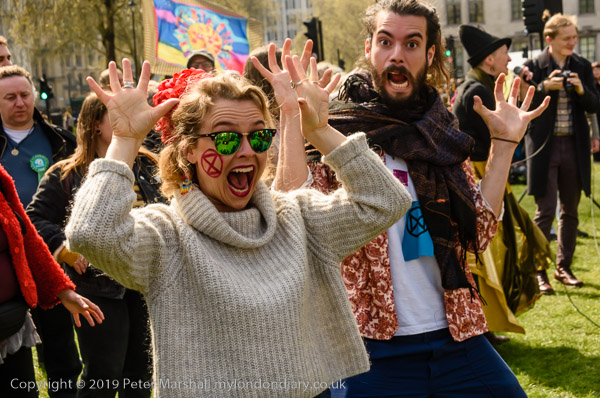
There were other mourners too, people with placards and some giant bees among them as the procession made several slow circuits of the square before moving onto the grass. They didn’t actually bury the coffin (or try to) but there followed a series of workshops and group discussions, and after a while I left to photograph another event that had been taking place at the same time.

The procession perhaps would have made better video that still pictures, both because of the nature of the event but particularly for the music.


More at Extinction Rebellion Funeral Procession

All photographs on this and my other sites, unless otherwise stated, are taken by and copyright of Peter Marshall, and are available for reproduction or can be bought as prints.

There are no adverts on this site and it receives no sponsorship, and I like to keep it that way. But it does take a considerable amount of my time and thought, and if you enjoy reading it, please share on social media.
And small donations via Paypal – perhaps the cost of a beer – would be appreciated.

XR Marble Arch

Extinction Rebellion’s largest site during their multiple occupation of London was in the area around Marble Arch. It’s were one of inner London’s busiest north-south routes, Park Lane on the east edge of Hyde Park, crosses the East-West route of Oxford St and the Bayswater Road, with Edgware Road, the A5 starting out its long journey well beyond Edgware to the far Northwest (and there is another similar arch where it ends in Holyhead.).

The Marble Arch itself is on the north edge of the traffic island in the centre of the large gyratory system here. It had been designed in 1827 by John Nash as a ceremonial entrance to Buckingham Palace, but in 1851 it was moved to its present position to serve as an entrance to Hyde Park at the time of the Great Exhibition.

Unfortunately the widening of Park Lane in 1960-64 led to it being cut off from Hyde Park, in isolation on a traffic island. No traffic passes through it now, although you can still walk through its arches. Until the late 1960s three rooms inside the arch were in use as a police station, but are now unused.

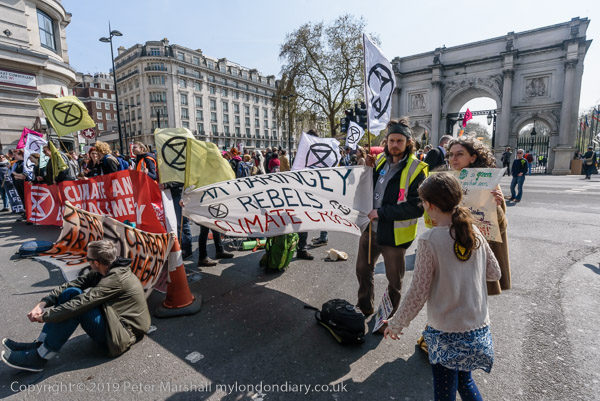
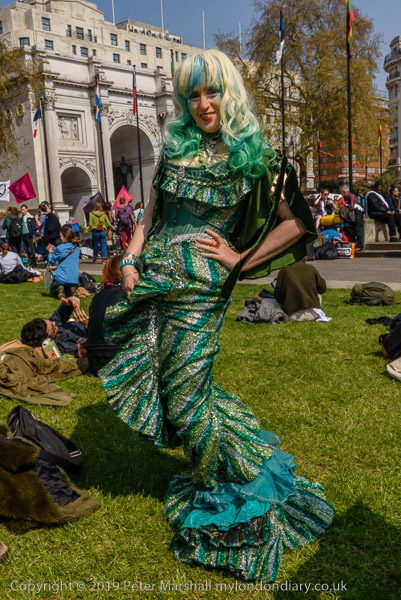
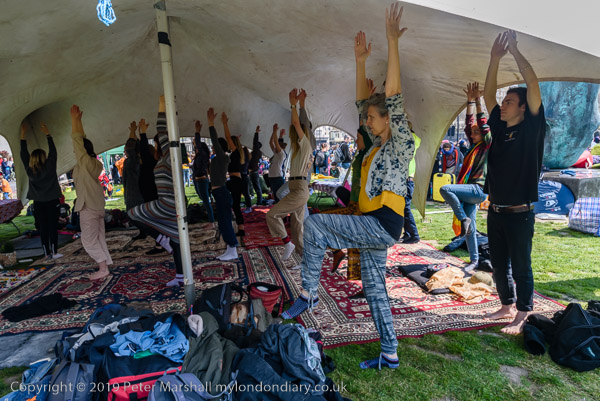
XR blocked traffic on all the roads leading to Marble Arch and tents filled most of the grassed area around, with the hard standing in front of the arch being used for stalls and performances, as well as a lorry equipped as a stage on Cumberland Gate. The area was occupied from the early hours of Monday 15th April. Police got the traffic moving again on Wednesday 24th, and XR finally left after a closing ceremony the following evening.

There wasn’t a great deal happening on either of the occasions I visited Marble Arch, but there were some major events on various of the evenings, with some well-known performers coming to perform and show their support. But I like to go home at night to a comfortable bed (and a good dinner) and left it to those staying in the camp to record.

More at Extinction Rebellion Marble Arch.


All photographs on this and my other sites, unless otherwise stated, are taken by and copyright of Peter Marshall, and are available for reproduction or can be bought as prints.

There are no adverts on this site and it receives no sponsorship, and I like to keep it that way. But it does take a considerable amount of my time and thought, and if you enjoy reading it, please share on social media.
And small donations via Paypal – perhaps the cost of a beer – would be appreciated.

June 2019 – My London Diary

June turned to be a very long month for me. The main event was the second anniversary of the Grenfell disaster, with another silent march, but there were also several other related events. And like many I’m feeling pretty fed up with how things are going politically, particularly over Brexit and despondent about the continuing failure of our politicians to take the climate and ecological catastrophe seriously.

June 2019

Algerians Protest for Freedom

Forest Gayte Pride celebrates Stonewall 50
Remember Cecil the magnificent lion
Global March For Whales

No Justice for Grenfell
Don’t Attack Iran
Viva! protest Coca-Cola Dairy Farm
End torture in Balochistan
Operation Shutdown against Knife Crime
Condoms Cut Carbon
SODEM Steve’s 50th Birthday

Time Is Now Walk of Witness
Against Hindu Fascism in India
Earls Court – Boris’s Biggest Blunder?
Students Friday Climate Strike
Against Farage and Turning Point UK
Extinction Rebellion Dinner of HOPE
City and Temple of Mithras
Free Algerian trade unionist Louisa Hanoune

Hands off Sudan march
‘We are the Love’ for Idlib
Grenfell Solidarity March
Staines, Heathrow, Bedfont
Grenfell Silent Walk – 2 Years on
Rally to end Live Animal Transport
Never Forget Never Forgive SOAS
London World Naked Bike Ride

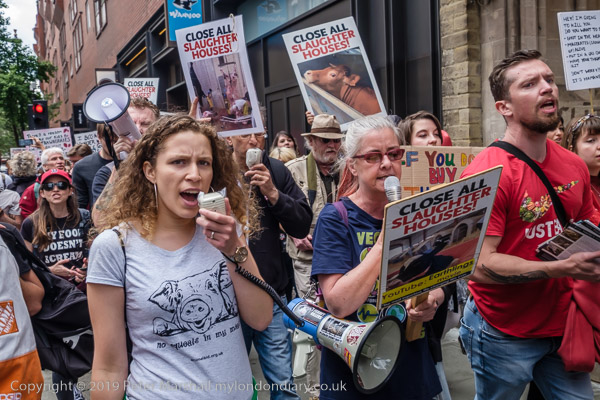
Close all Slaughterhouses
Sodem ‘Stop Brexit’ Protests continue
Parliament Debates Grenfell 2 Years On
Thousands protest against Trump
Osterley Park
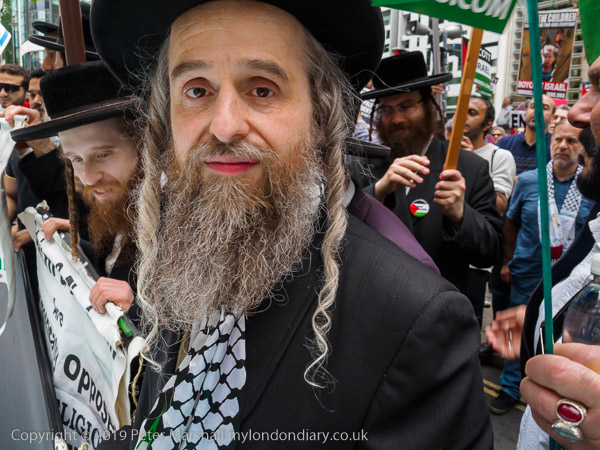
Zionists protest against Al Quds

Al Quds Day march
Cleaners at Hilton Doubletree Hotel
UVW celebrate LLW at Chanel
Canal Panoramas

London Images


All photographs on this and my other sites, unless otherwise stated, are taken by and copyright of Peter Marshall, and are available for reproduction or can be bought as prints.

There are no adverts on this site and it receives no sponsorship, and I like to keep it that way. But it does take a considerable amount of my time and thought, and if you enjoy reading it, please share on social media.
And small donations via Paypal – perhaps the cost of a beer – would be appreciated.
XR Sea of Protest

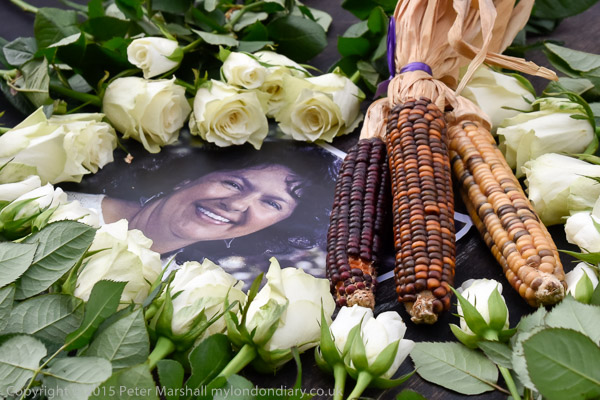
Back in November 2016 I attended a vigil outside the Honduran Embassy in London for  environmental activist and indigenous leader, Berta Cáceres, assassinated either by forces of the state or by groups encouraged by the state. Before her murder she had  death threats from the Honduran National Police and judicial harassment.
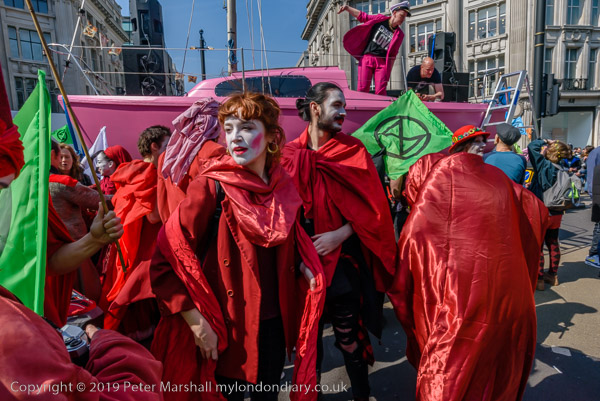
Very much to my surprise, Berta Cáceres returned to London this April in the shape of a large pink yacht named in her memory which Extinction Rebellion (XR) had brought to block Oxford Circus to traffic and create a “sea of protest“.

I arrived some hours after the yacht which was by then surrounded by protesters and with various activities taking place, including an induction course for new arrivals and some music. Getting ready to perform were a group of people dressed in red, representing I was told the blood of extinct species and those – like our own – threatened by the Earth’s sixth global extinction event, now getting into full swing thanks to the efforts of the fossil fuel industry and its supporters, particularly President Trump.

I didn’t stay long on this occasion, as other things were happening elsewhere across London. XR intended to keep the roads closed until the government takes necessary action on the global climate and ecological emergency, and this particular action continued from Monday until Friday, when I returned to photograph the police taking action to clear the junction.

More at: Extinction Rebellion Sea at Oxford Circus.


All photographs on this and my other sites, unless otherwise stated, are taken by and copyright of Peter Marshall, and are available for reproduction or can be bought as prints.

There are no adverts on this site and it receives no sponsorship, and I like to keep it that way. But it does take a considerable amount of my time and thought, and if you enjoy reading it, please share on social media.
And small donations via Paypal – perhaps the cost of a beer – would be appreciated.