Climate March 2005

Climate March 2005
Climate March 2005 – people meet at the start in Lincolns Inn Fields

Twenty years ago on Saturday 3 December 2005 the Campaign Against Climate Change organised a march calling for urgent action over climate change. Among groups supporting the march were the Green Party, Friends of the Earth and socialist organisations.
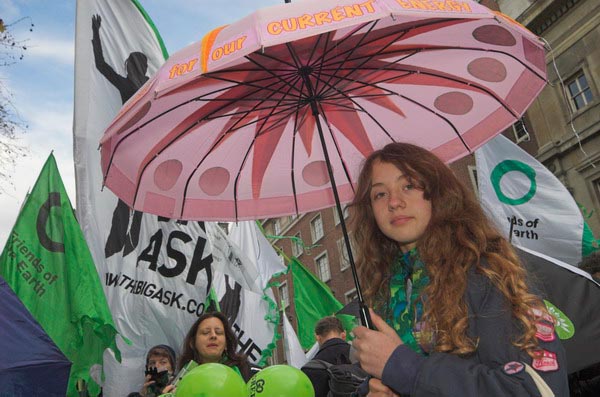
Climate March 2005
Umbrellas came in very useful later when it poured with rain

But in 2005 there was no interest from the major charities and mainstream organisations that have since supported some major London marches pointing out the dangers of climate change and global extinction, like most governments they had yet to wake up to the very real dangers facing the future of human life on our planet.
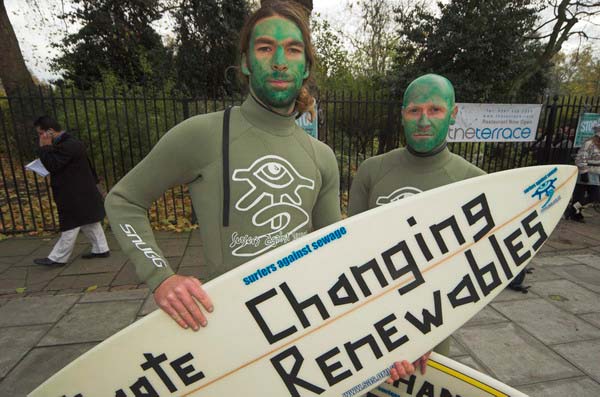
Climate March 2005
Surfers Against Sewage were supporting the march

The Campaign Against Climate Change was one of the first organisations in the UK to serilsly begin organising against global warming – and I remember photographing them back in 2002 pushing an attractive ‘Tiger’ on a bed from the Esso headquarters in Leatherhead to the US Embassy in Grosvenor Square, Westminster. US President George W Bush had put the interests of climate-denying US Oil and fossil fuel companies, notably Esso, above the survival of our species with with his rejection of the Kyoto protocol, agreed in 1997 but only due to come into force in 2005.
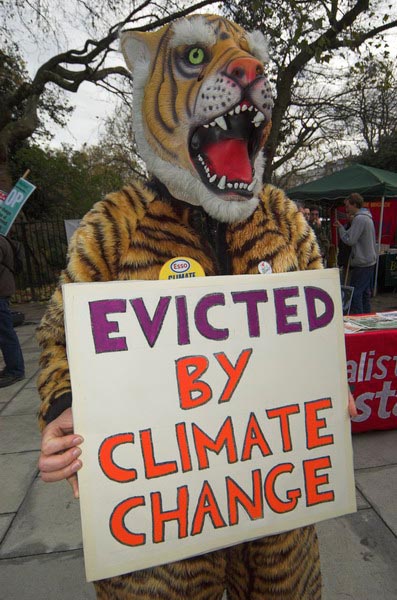
Climate March 2005
The Tiger’s message: ‘Esso presents’ ‘Evicted by Climate Change’

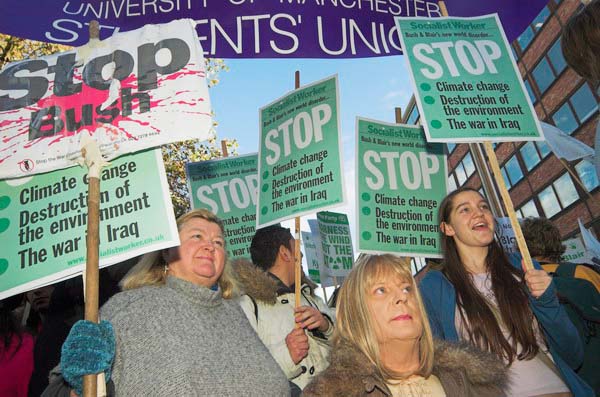
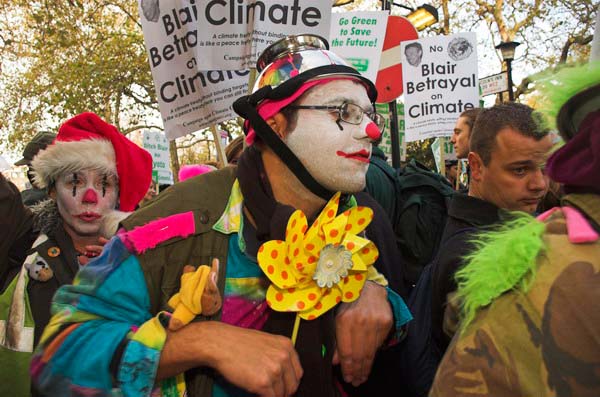
Back in 2005, we needed governments to act with urgency, but they failed us and the world. One of those failing then was Tony Blair, whose New Labour government had also betrayed us over the invasion of Iraq as well as over climate change. And now in 2025 we have another Labour government, now under Keir Starmer, pressing ahead with new climate-destroying road schemes, oil exploration and extra runways rather than facing up to the need to change our assumptions and way of life in ways that would reduce CO2 emissions and slow global warming.
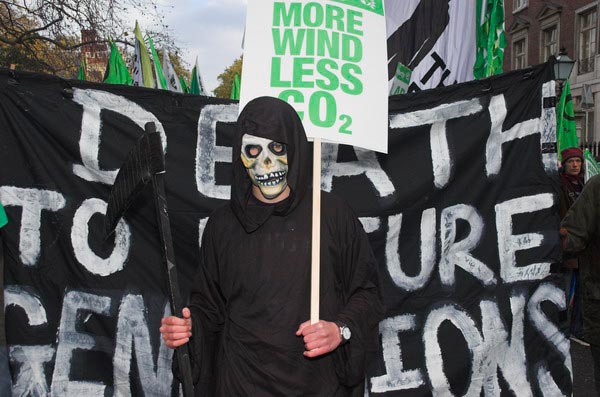
Climate March 2005
Death to Future Generations is the bleak prospect we face

Saturday 3rd December 2005 was an international day of climate protest but the march to the US Embassy in London achieved little media coverage – the billionaires who own and control most of our media have little interest in the subject (and probably large financial interests in fossil fuels and other drivers of climate change.) Even the BBC had been a hive of complacency, and have given a totally unwarranted level of coverage to those who continue to refuse the overwhelming scientific evidence. Though now they are perhaps beginning to realise that you cannot have ‘balance’ over scientific fact.
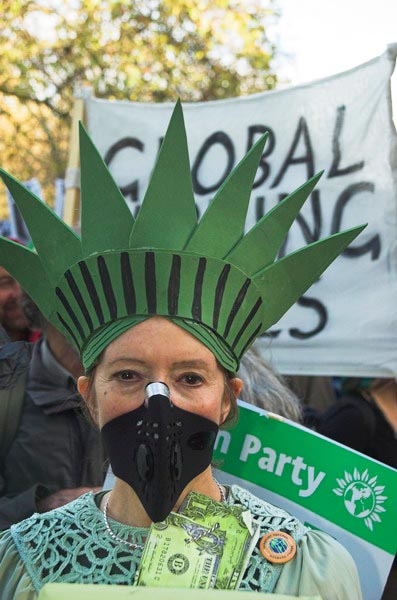
The ‘Statue of Taking Liberties’ was at the Front of the march to the US Embassy

Here – with minor corrections – is what I wrote about the march back in 2005 – and a few of the pictures I took at the event – you can see more on My London Diary at the link at the bottom of this page.


Kyoto was the first attempt to at least recognise the problem was global and take some concerted action, even if less than half-hearted. Thanks to George Bush and the oil companies he represents, the ineffectual has been made even more so.
Problems related to growth and pollution are inextricably linked with industry and trade. It is hard to see any possibility of their solution without the imposition of tariffs on the exports of countries that continue to pollute – such as the USA. It’s equally hard to envisage this happening while the USA is so dominant in the world bodies and conferences that set the rules on trade.

Rising Tide

There were around 10,000 of us on the streets of London on Saturday, and many more around the world in demonstrations elsewhere, all part of the International Day of Climate Protest, the march in London organised, as previous climate marches and protests, by the UK Campaign Against Climate Change.
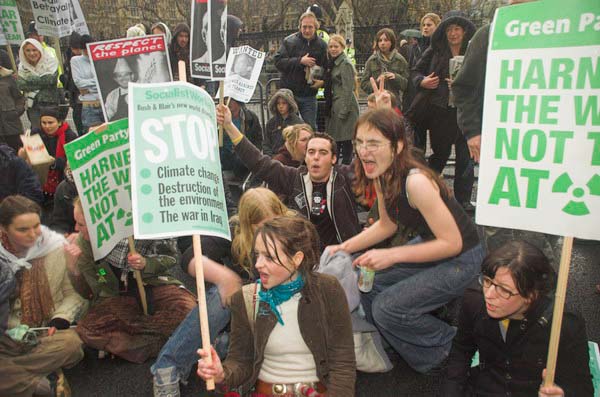
A sit down in pouring rain in Parliament Square is not a good idea

Here in London the climate smiled on us for an hour or so, then the rain came as the march entered Parliament Square. It was pouring rain rather than the police that persuaded the students who sat down in front of the Houses of Parliament that it was a good idea to get up and move on.
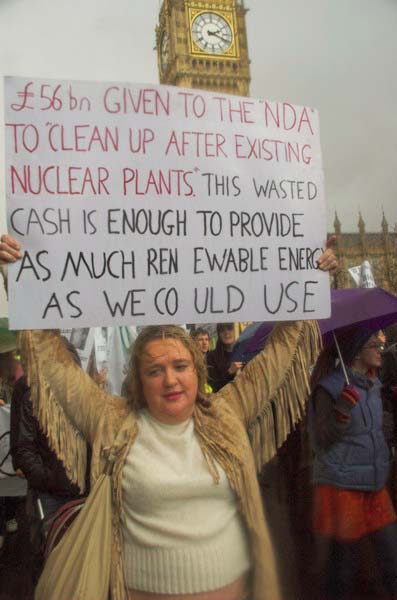
My camera also began to suffer, and I needed to move inside to dry it out. My injured knee was beginning to hurt too, so I decided it was time to take a rest and go home.

More pictures begin here on My London Diary.


FlickrFacebookMy London DiaryHull PhotosLea ValleyParis
London’s Industrial HeritageLondon Photos

All photographs on this page are copyright © Peter Marshall.
Contact me to buy prints or licence to reproduce.
Welfare State & Tar Sands Party – 2010

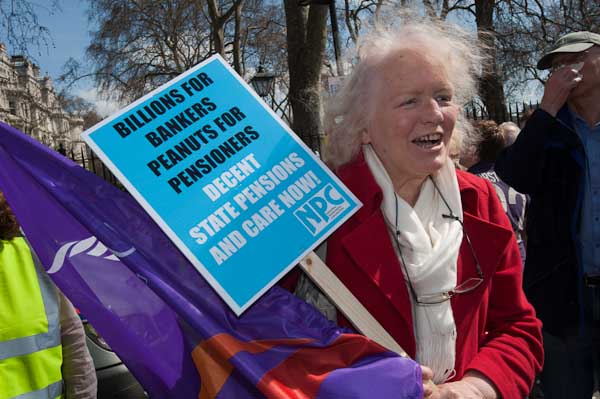
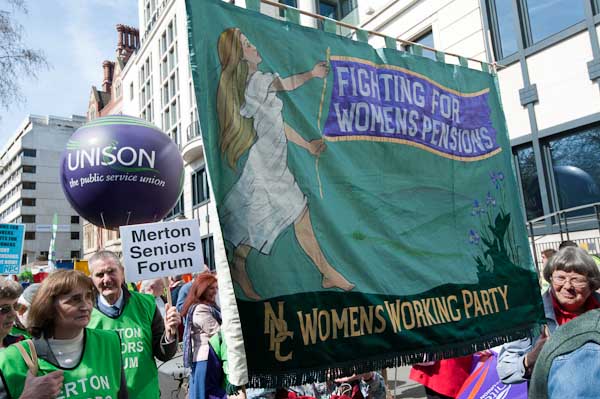
Welfare State & Tar Sands Party: On Saturday 10th of April 2010 pensioners led a march to defend the welfare state and oppose cuts in public services and later I went to a party at a BP garage in Shepherds Bush against the company’s plans to exploit Canadian tar sands.


Defend the Welfare State – Temple

Welfare State & Tar Sands Party - 2010

The National Pensioners’ Convention, which represents over a thousand local regional and national pensioner groups with a total of 1.5 million members had organised a march and rally in London to defend the public services they are particularly dependent on ahead of the 2010 general election. The march was supported by the TUC and all major unions.

Welfare State & Tar Sands Party - 2010

Age Concern has predicted that over 40% of votes in the next month’s election would be made by those over 60, and had identified five key issues which particularly impact pensioners. In particular they said that the basic state pension was seriously inadequate and the pension rise of only £2.40 was far too low. A quarter of all pensioners were living in poverty.

Welfare State & Tar Sands Party - 2010

But all three major parties were making plans for cuts in public expenditure and moving away from the consensus Britain had come to during and after the Second World War, the welfare state with pensions, a free NHS, free education and other public services. Over the years some of these provisions had been eroded (and in a few areas such as dental care, never fully implemented) but now they were increasingly under threat, whichever party wins the general election.

Welfare State & Tar Sands Party - 2010

Huge deficits had come from handouts to the bankers and the cost of wars in Iraq and Afghanistan, and the NHS had been hit particularly hard by the costs of privatisation under the huge debts from the Private Finance Initiative.

Cuts to local authorities who many pensioners rely on for social care and support services such as meals on wheels, as well as housing benefit, threaten the daily life of many and are leading to the closure of day centres and other provision.

It was pressure from protests such as this, as well as the presence of the Lib-Dems in the coalition with the Tories that was elected that led to the introduction of the “triple lock” on pensions in 2010. In 2020 the state pension was around 16% of average earnings and by 2025 it had risen to around 25%. But pensioners have been badly hit by cuts in care.

More at Defend the Welfare State.


Tar Sands Party at the Pumps – BP, Shepherd’s Bush Green

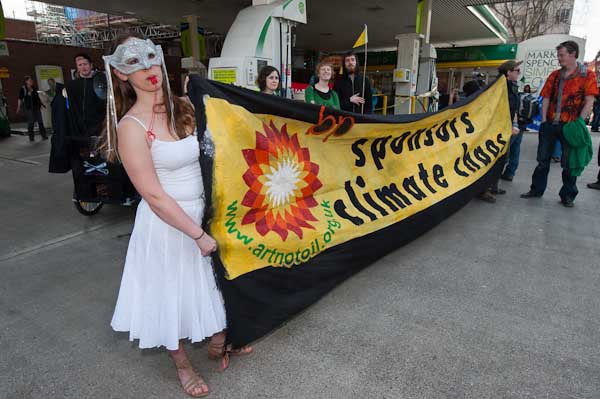
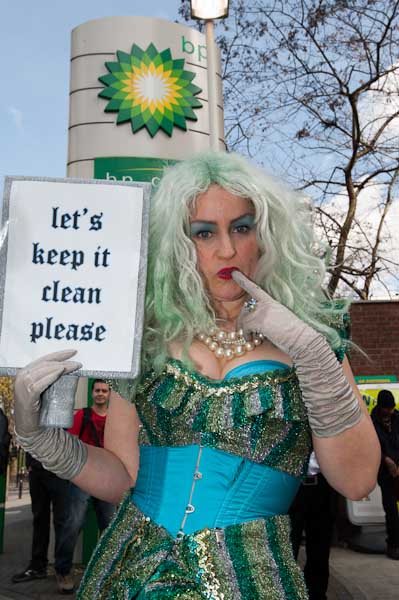
BP Sponsors Climate Chaos

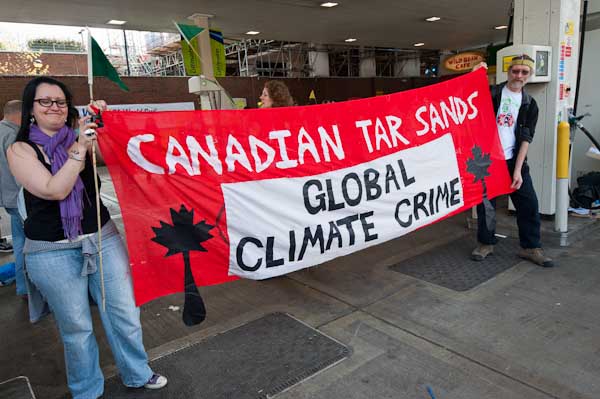
The UK Tar Sands Network, Rising Tide and the Camp for Climate Action had organised a ‘Party at the Pumps’ as a part of a ‘BP Fortnight of Shame’ trying to get BP shareholders to reverse the company’s decision to take part in the exploitation of the Canadian Tar Sands which environmental activists say is “the dirtiest and most desperate attempt yet to profit from – and prolong – humanity’s crippling addiction to oil.

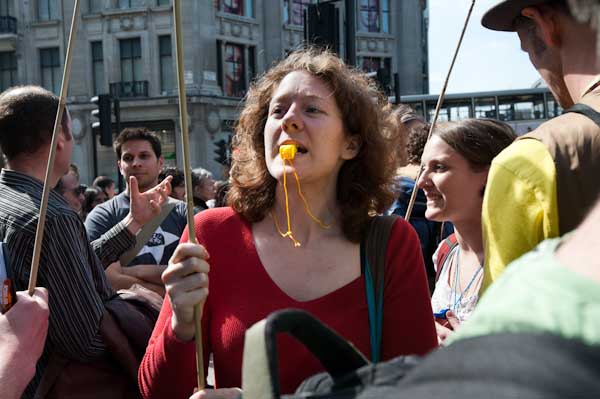
Whistles signal its time to follow the flags and get on the Central Line

Extracting usable crude oil from tar sands always results in between three to five times the amount of carbon dioxide production as normal oil wells. Deposits close to the surface are strip mined, destroying ancient forests and peat bogs to dig up around 75 metres depth of sand and oil with huge trucks and mechanical shovels.

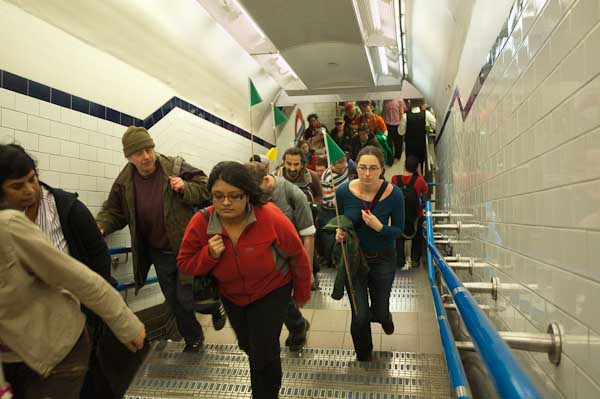
At the previous stop we were told to alight at Shepherds Bush

In Alberta four-fifths of tar sands are too deep to be mined in this way and are brought to the surface by the injection of high pressure steam – which uses around twice as much energy and pollutes twice as much highly toxic waste water which is already leaking into drinking water.

Indigenous people living in the area have very high cancer rates and their staple moose meat has been found with 300 times the acceptable level of heavy metals from the tar sand extraction.

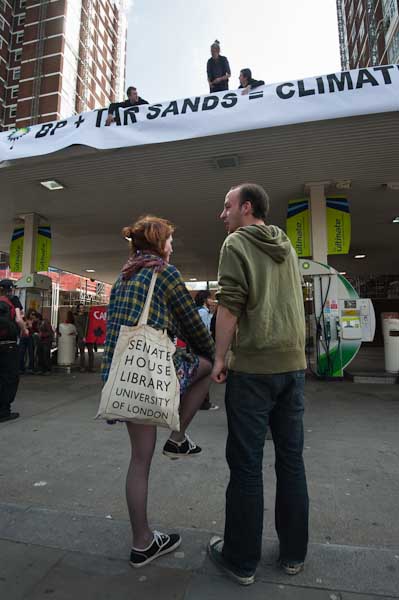
People on the canopy roof with a banner

BP only got involved in the Canadian tar sands in 2007, probably because they had cheaper sources of oil elsewhere. They signed up with Canadian company Husky Energy for a large-scale tar sands project they called the ‘Sunrise Project’ and for other tar sands projects. This was put on hold when oil prices crashed in 2008, but BP shareholders were expected to approve it going ahead at their meeting in April 15th.

Protesters were told to meet at Oxford Circus with a Travel Card and after an hour or so we all – including a few police – went down into the station following those with green and yellow (BP’s colours) flags, at least some of whom knew our destination and boarded a west-bound Central Line train.

At Shepherds Bush the message came to alight. We rushed behind those carrying the flags along the busy shopping street, across the green to the BP garage on the south side, which had already been occupied by a smaller advance group of demonstrators.

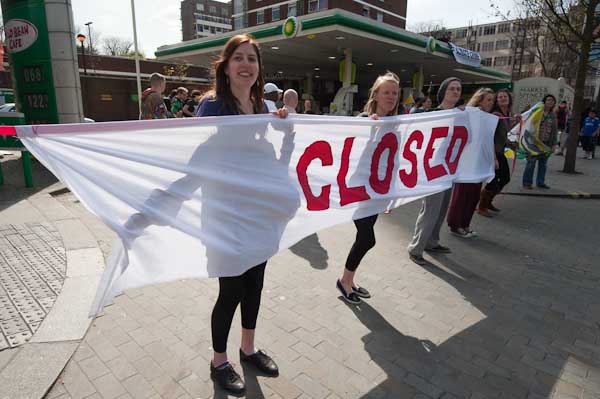
Some of them had got onto the roof from scaffolding on a neighbouring block of flats and were fixing a banner there, while others blocked the forecourt entrance with a large ‘CLOSED’ banner. The protesters occupied the area and put tapes and stickers around the petrol pumps and elsewhere with the messages ‘DANGER GLOBAL WARNING‘ and ‘BP TAR SANDS – BACK TO BLACK?’

The Rhythms of Resistance band had also arrived and was drumming loudly and there was also a bicycle trailer sound system and the protesters were dancing. A live band and a caller played for more dancing and the protesters sat on the pavement and talk, eat sandwiches and snacks and drink, while some handed out leaflets to the passers-by and explained why the protest was taking place.

When I left after a couple of hours the protest was continuing. Police and a man from BP had earlier asked them when they would be leaving and were told ‘sometime later in the day‘ and assured that they would cause no permanent damage and although the police were still watching the protest, filming and taking notes but not otherwise taking any action. I presume BP had asked them to avoid more publicity for the event by trying to force it to an end or make arrests.

More at Tar Sands Party at the Pumps.


FlickrFacebookMy London DiaryHull PhotosLea ValleyParis
London’s Industrial HeritageLondon Photos

All photographs on this page are copyright © Peter Marshall.
Contact me to buy prints or licence to reproduce.