Christian Aid Trade Justice March to the Treasury – 2006

London, Thursday 14 Sept, 2006
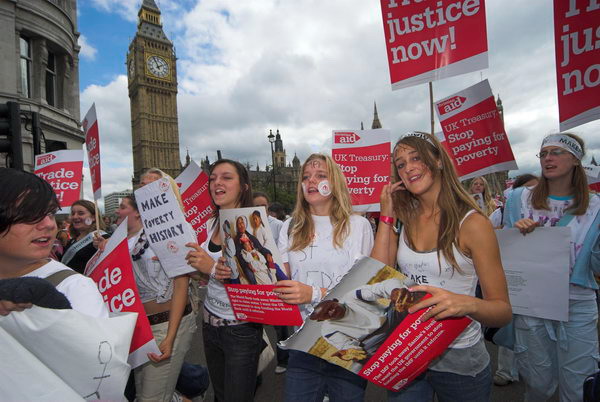
Christian Aid Trade Justice March to the Treasury - 2006

I like to bring back to life many of the posts I wrote in the first six or seven years of My London Diary not just because of their interest and that many of the issues are still very relevant 20 or more years later, but also because as the site developed it became harder and harder to locate things and to find both images and particularly the text I had written about them.

These problems with My London Diary were largely resolved with a redesign of the site for new posts in 2008 which kept pictures and text together and a search facility. I also moved away from the lower case only text which had seemed appropriate when the site began around 2000. Revisiting posts from back then on >Re:PHOTO allows me to reunite text and some of the pictures (with links to the rest) and also to correct the many typos and misspellings from them. So here with these minor corrections is what I wrote back in 2006.
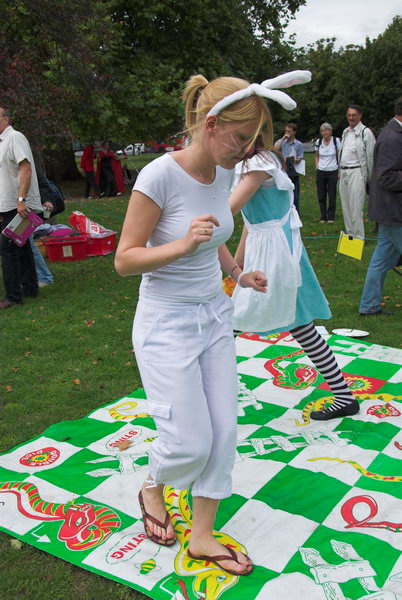

Christian Aid Trade Justice March to the Treasury - 2006
The White Rabbit, Alice and her friends were playing snakes and ladders

In Mary Harmsworth Park, waiting for the Christian Aid organised March On The Treasury to start I bumped – literally – into the Archbishop Of Canterbury. He looked even more distracted than usual. A couple of minutes later I returned to take his picture. Moving in his direction I took my eye off him for a second, and he vanished, leaving not even a cloud of smoke. Later we were told he had another appointment and so couldn’t stay.
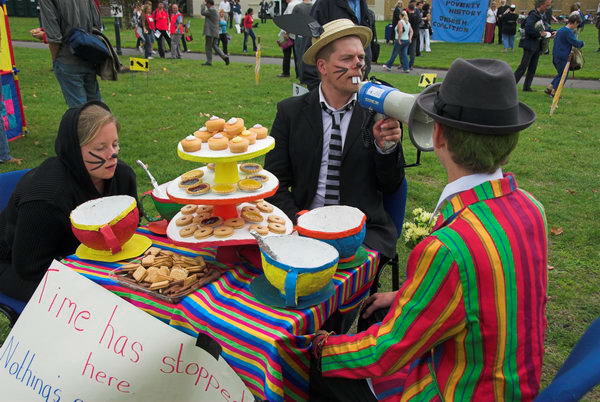
And the Mad Hatter was having his tea party

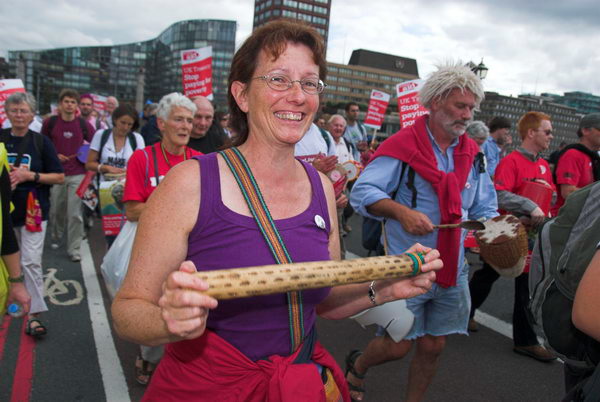
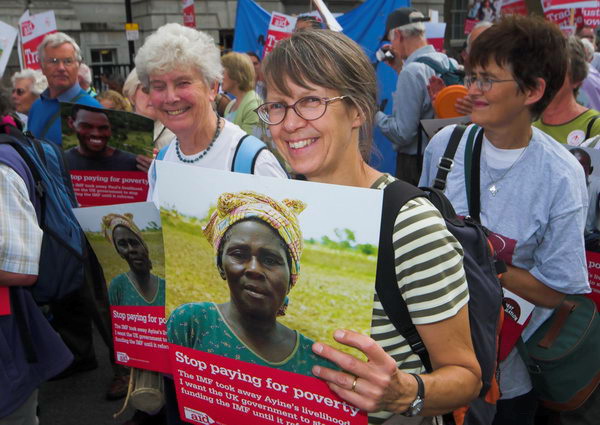
However there were plenty of other people to photograph, perhaps a couple of thousand in all. We were there to march on the Treasury, to demand that the government withhold funding from the International Monetary Fund, because of the unfair economic conditions they impose on countries that want loans. When the IMF insists on free trade in agricultural produce for example, cheap EU subsidised tomatoes from Italy can flood local markets and put the local tomato farmers out of business.
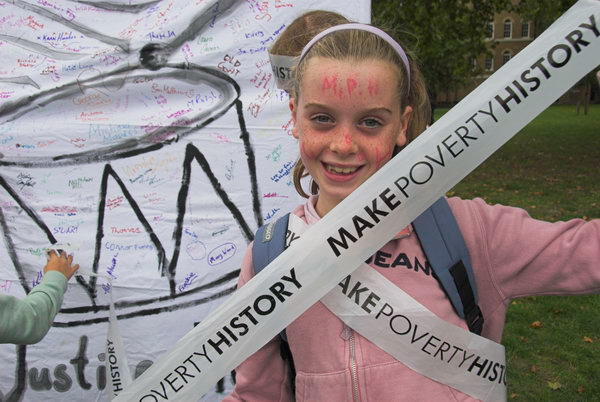
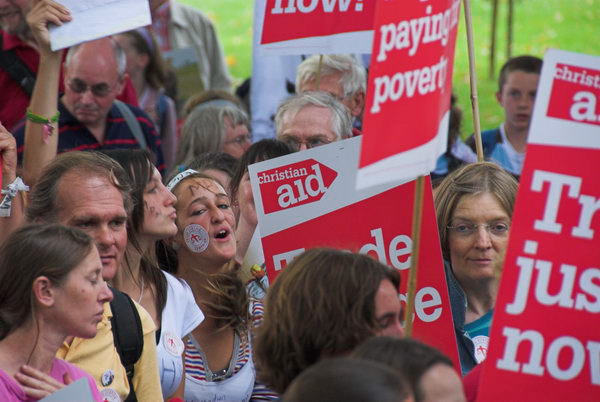
Christian Aid Trade Justice March to the Treasury - 2006

Daleep Mukarjee, Christian Aid’s Director was able to tell us (as most had heard on the radio earlier in the day), that Development minister Hilary Benn had announced that we were holding back £50 million for that reason. It would stretch belief to think that this announcement, coming on the day of this major demo, had no connection with the six-month campaign leading up to it. Of course it is only a first small step in what needs to be done.
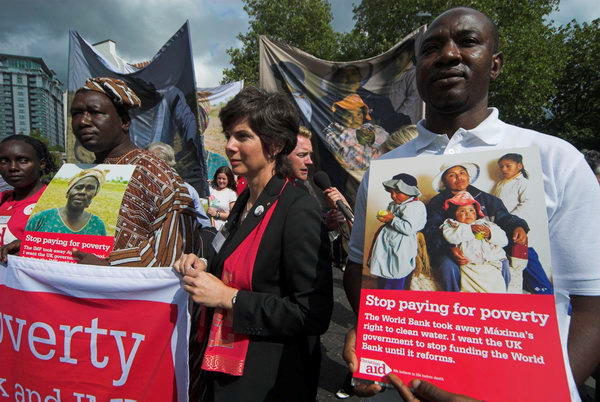
Christian Aid Trade Justice March to the Treasury - 2006

Among the other speakers was former Boyzoner Ronan Keating, (since going solo he has an impressive list of top ten singles and albums, though I’ve never knowingly heard any of them.) He gave a decent speech and spoke movingly about his trip to Ghana for Christian Aid.
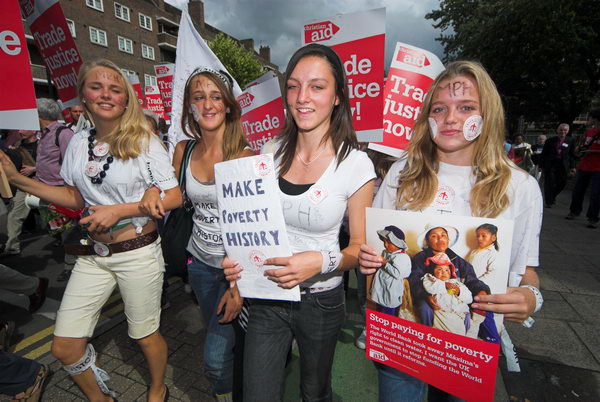
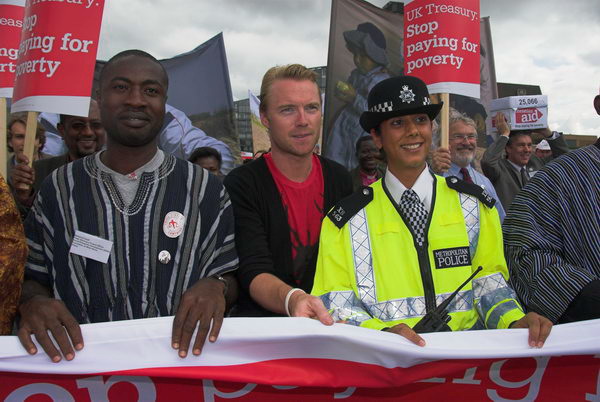
Christian Aid Trade Justice March to the Treasury - 2006
A police woman poses to have her picture taken with Ronan Keating

Then we were on the march, across Lambeth Bridge and up past the Houses Of Parliament to Whitehall, where the two thousand or so of us paused outside Downing Street while a small group went in to deliver an African drum and the Christian Aid petition to Gordon Brown’s door.
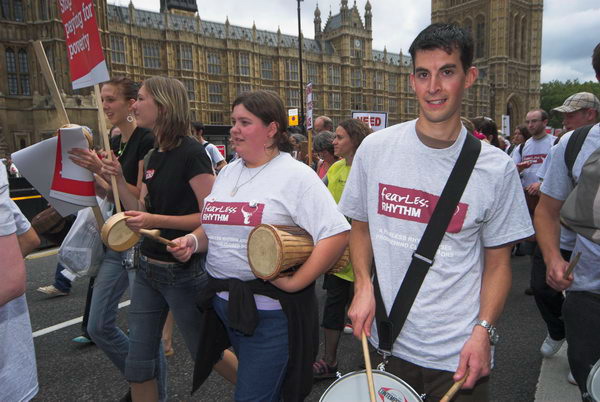
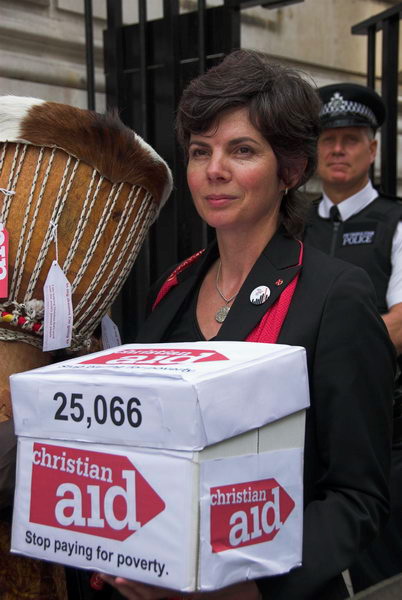
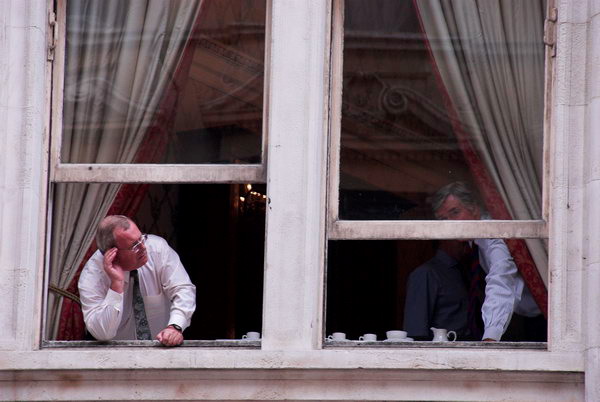
People in the Treasury were listening – But will more action follow?

The parade came to a halt outside the Treasury Offices in Whitehall Place, with more drumming and speeches. At least some of those inside took a little interest in what was going on, breaking off from their tea break to listen to the speeches.


Many more pictures beginning here on My London Diary.


Flickr – Facebook – My London Diary – Hull Photos – Lea Valley – Paris
London’s Industrial Heritage – London Photos

All photographs on this page are copyright © Peter Marshall.
Contact me to buy prints or licence to reproduce.
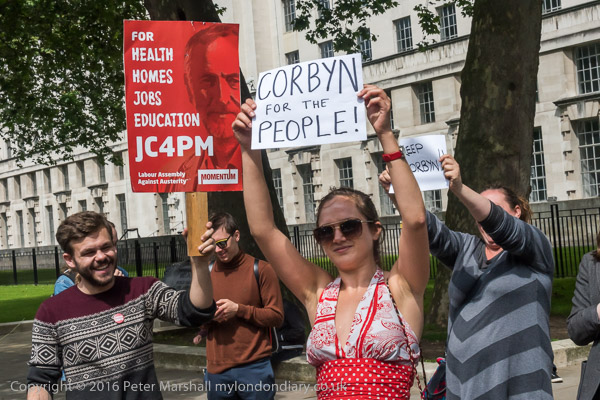
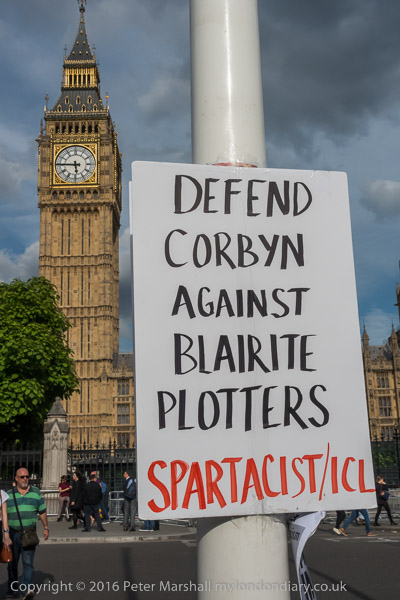
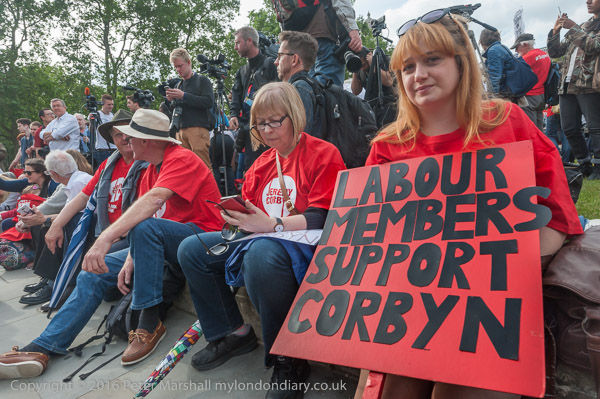
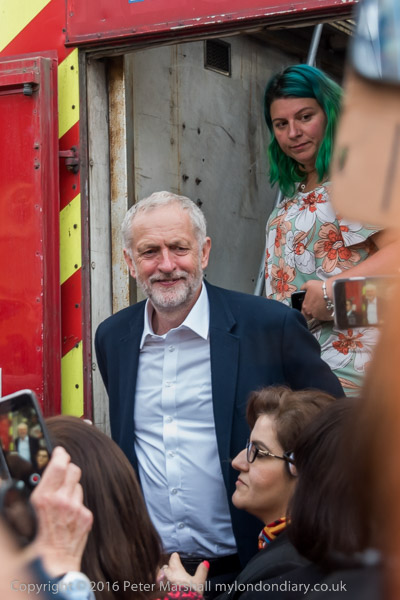
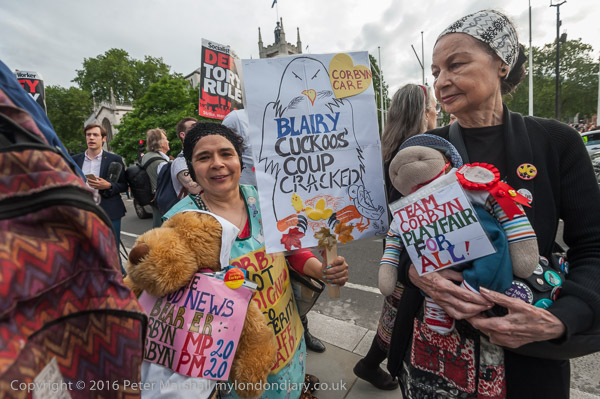
Keep Corbyn – June 2016

Emergency protest on the day of the coup

It’s probably never a good idea to say “I told you so”, but it was clear to many of us that that after Jeremy Corbyn became the leader of the Labour Party he represented the party’s only hope of winning a general election in the foreseeable future – and probably within my own lifetime.

And although he lost the 2017 election, it proved the case. It was an election the Labour Party could and should have won. They would have won had not many officials and MPs been actively sabotaging the campaign, diverting resources away from marginal constituencies and failing to give the party their full support. Some even went as far as seeming to celebrate the loss.

Ever since Corbyn won the leadership in September 2015 many officers and MPs had been fighting against him, some openly. Things came to a head in 2016 after the EU referendum when he was accused of only giving lukewarm support to the Remain campaign, though he had certainly spoken against leaving the EU at numerous large rallies. The issue was picked up as a pretext for a coup attempt that had long been in planning.

This began on 25th June when Hilary Benn contacted other shadow cabinet ministers telling them he had lost confidence in Corbyn and was sacked. On 26th June 11 other members of the shadow cabinet resigned with another eight leaving the following day.

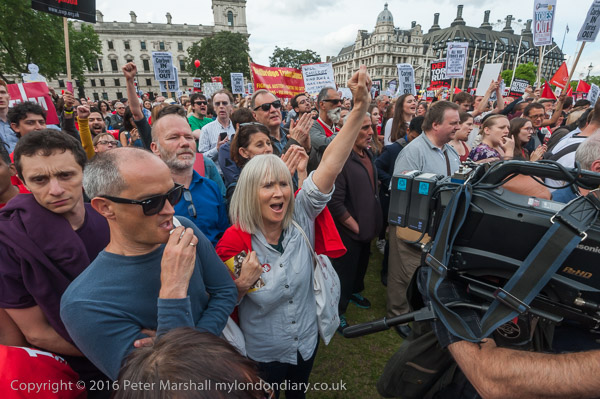
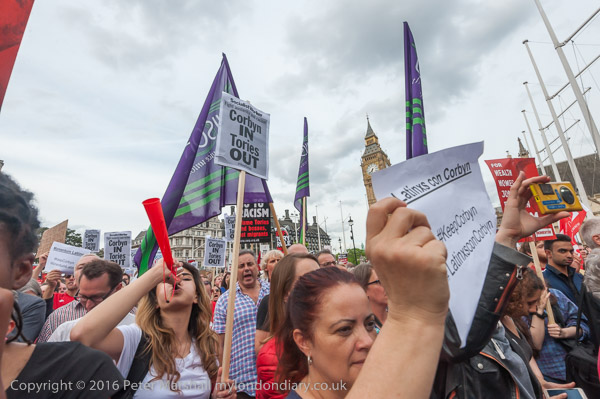
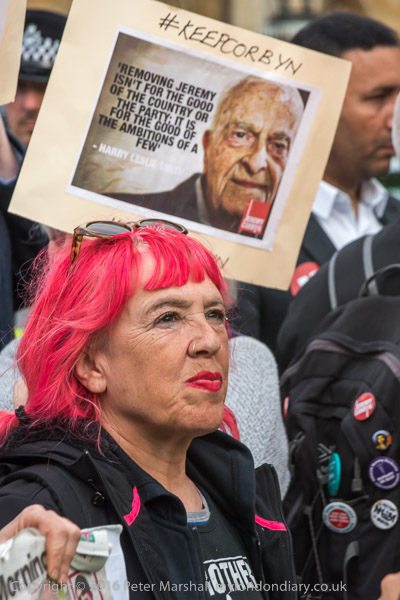
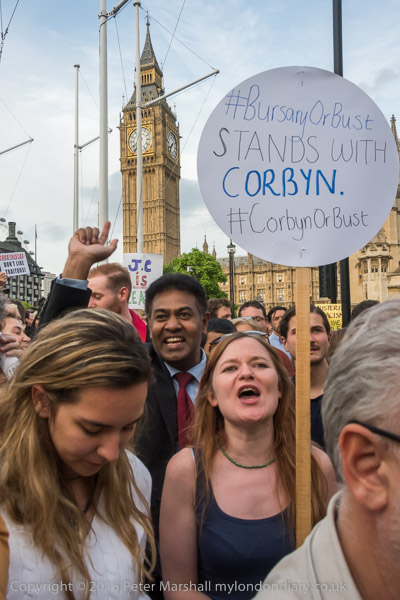
The emergency protest on the day the coup attempt began was small, but two days later more than ten thousand grass-roots Labour supporters filled Parliament Square in a rally organised by Momentum to vigorously oppose the coup. All except the top picture come from the rally on 17th June.

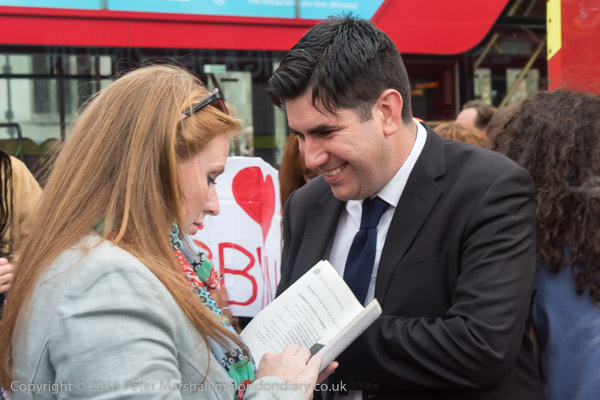
Angela Rayner and Richard Burgon both came to support Corbyn

Corbyn was able to form a new if rather smaller shadow cabinet with a number of joint portfolios, including 13 new members. But on the 28th June the 229 MPs in the Parliamentary Labour Party passed a motion of no confidence in him by 172 votes to 40.

It was hard to find anyone to stand against Corbyn, but finally on 11 July Angela Eagle launched a leadership challenge and was followed by Owen Smith. Opponents of Corbyn tried to get him left off the ballot, but a secret ballot of the Labour National Executive Committee confirmed by a small majority that the incumbent leader should automatically be listed, in line with party rules, and their decision was later confirmed by the High Court. Eagle dropped out as Smith got more nominations, though neither was particularly popular.

In the leadership ballot that followed, Corbyn confirmed his popularity. He was supported by 285 Constituency Labour Parties, with only 53 CLPs supporting Smith, and ended up with 61.8% of the vote to Smith’s 38.2%.

Jeremy Corbyn smiles after speaking at the rall

It should have been a clear message to MPs and party officials to get behind Corbyn and stop undermining his leadership. A united Labour Party could have fought the prejudices of our predominantly right-wing media including a BBC increasingly dominated by right-wing commentators and editors. Their continued opposition to him and some popular manifesto commitments threw away the chance of winning the next election – whenever it was called. Though it was only the weak and disunited state of Labour that convinced Theresa May to gamble on 2017; but even then had the party got fully behind the campaign we would have been saved the shameful Tory governments that have followed since then.

More on My London Diary:
Thousands rally to Keep Corbyn
Keep Corbyn – No Coup