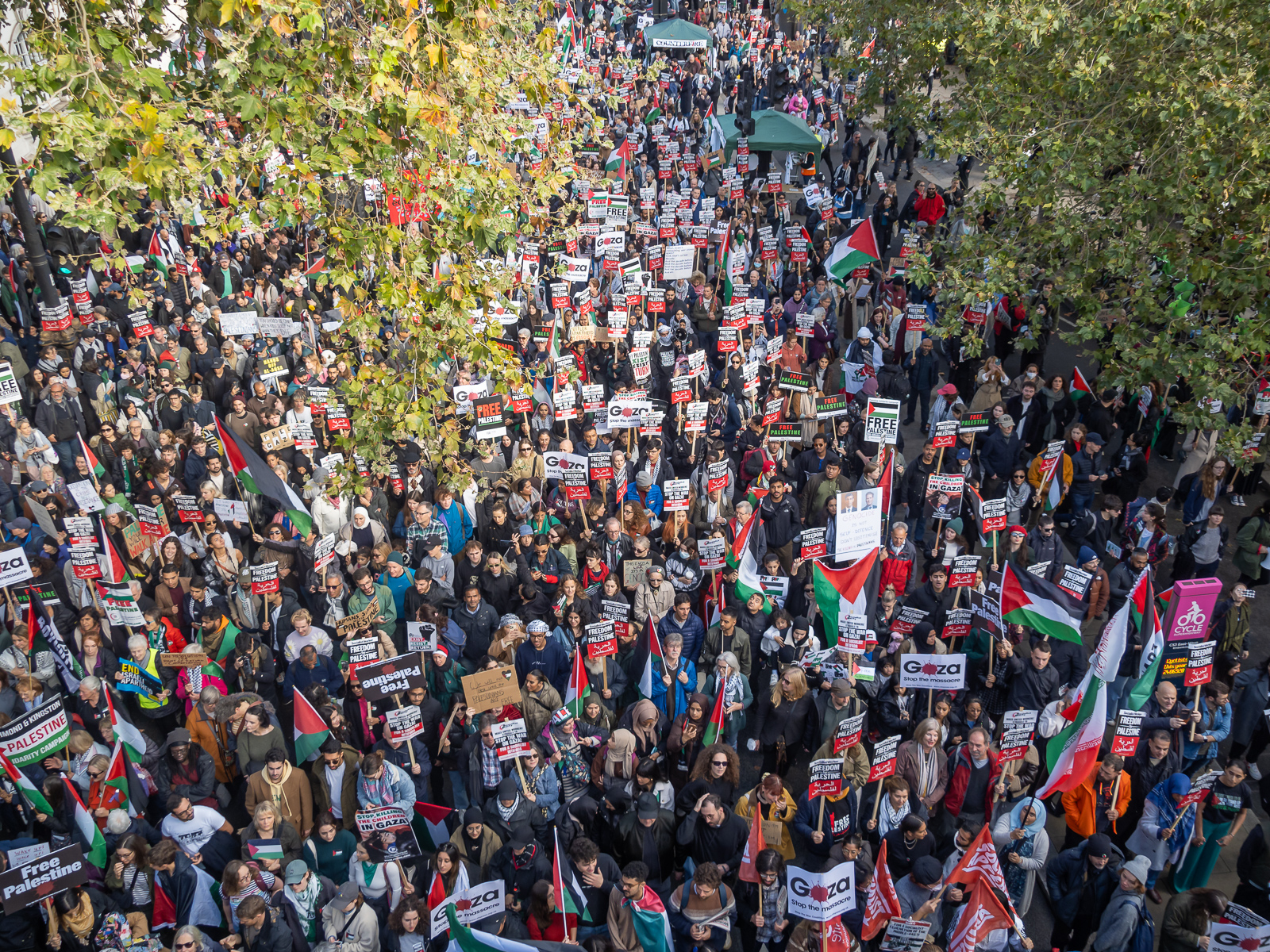
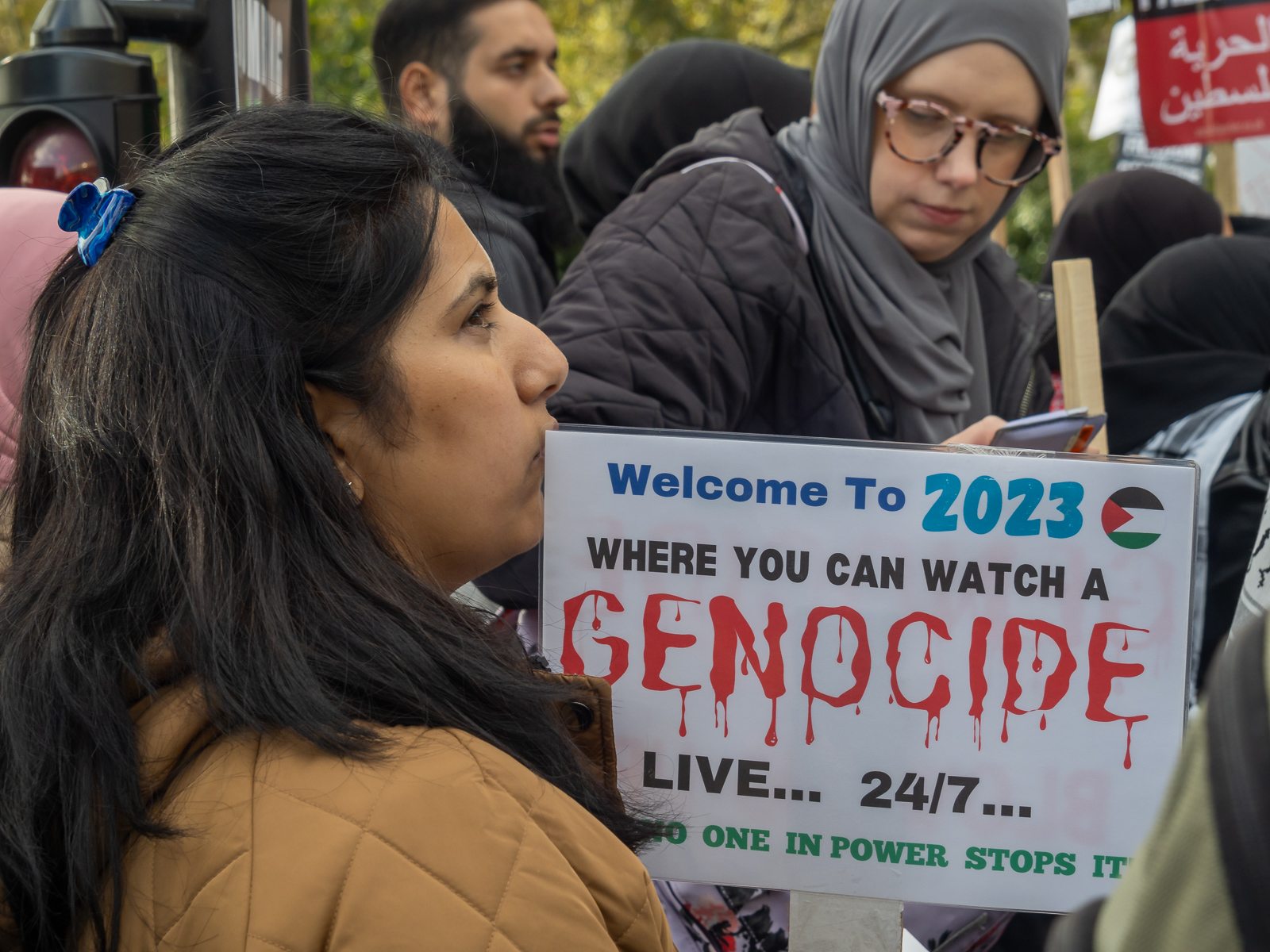
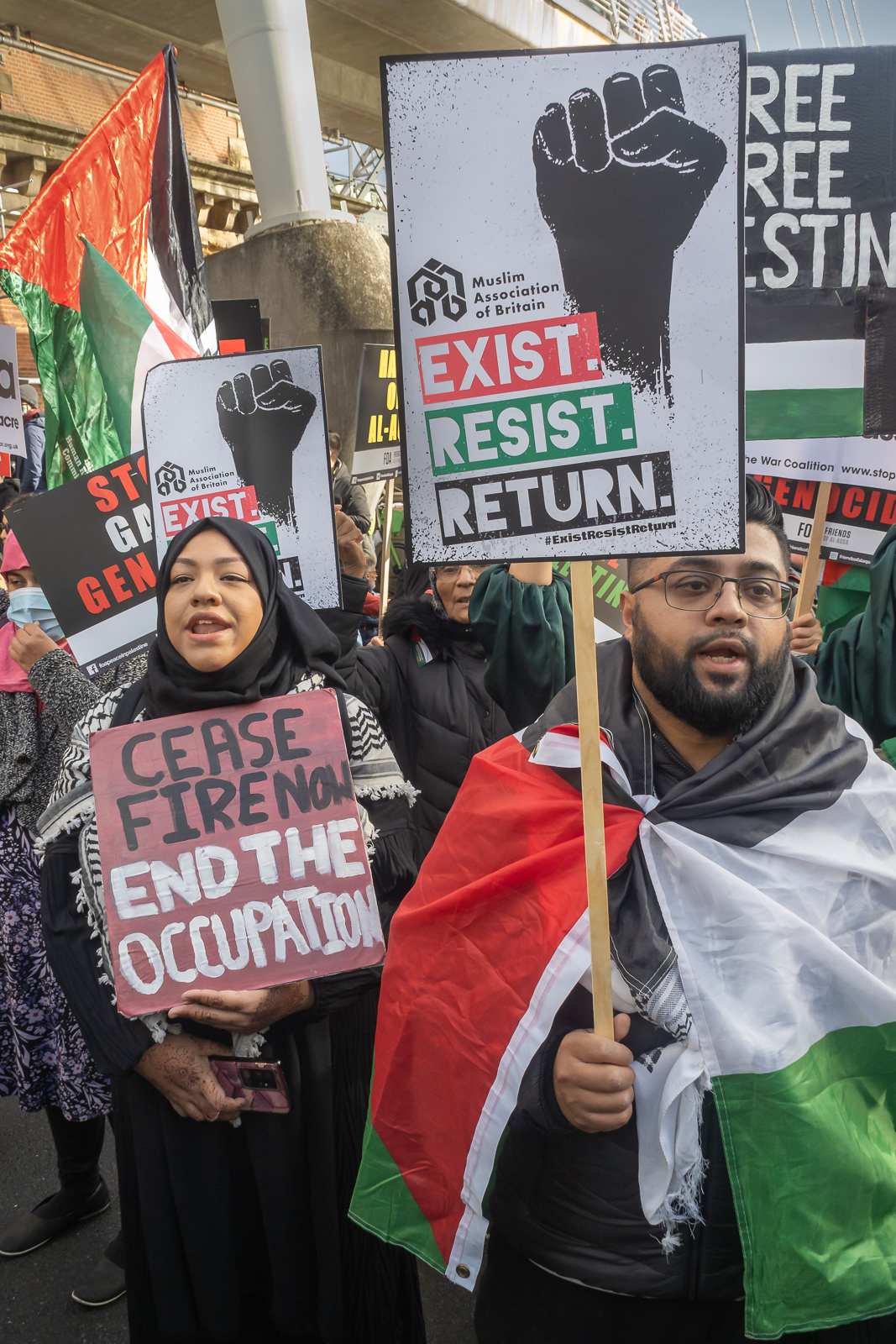
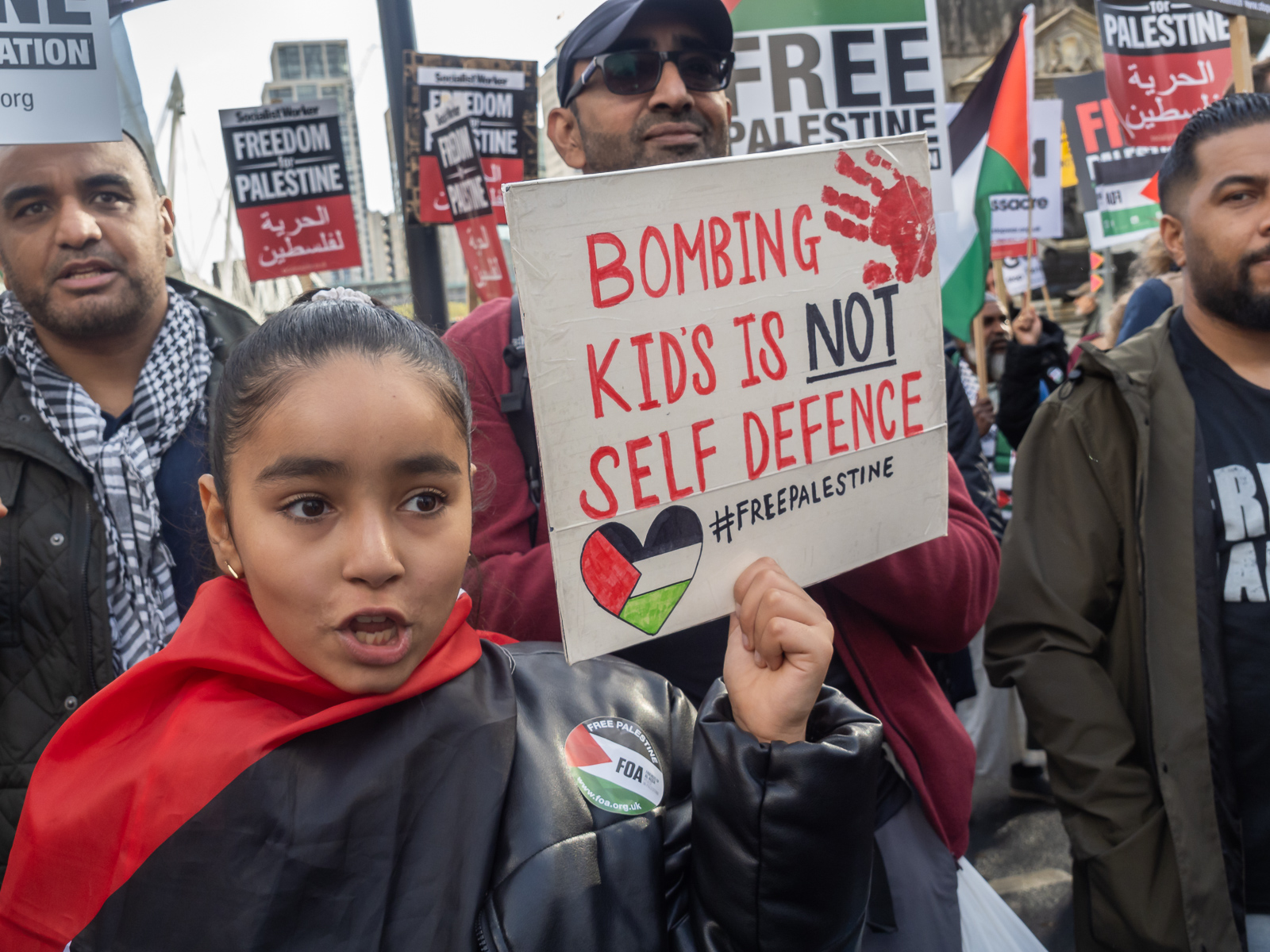
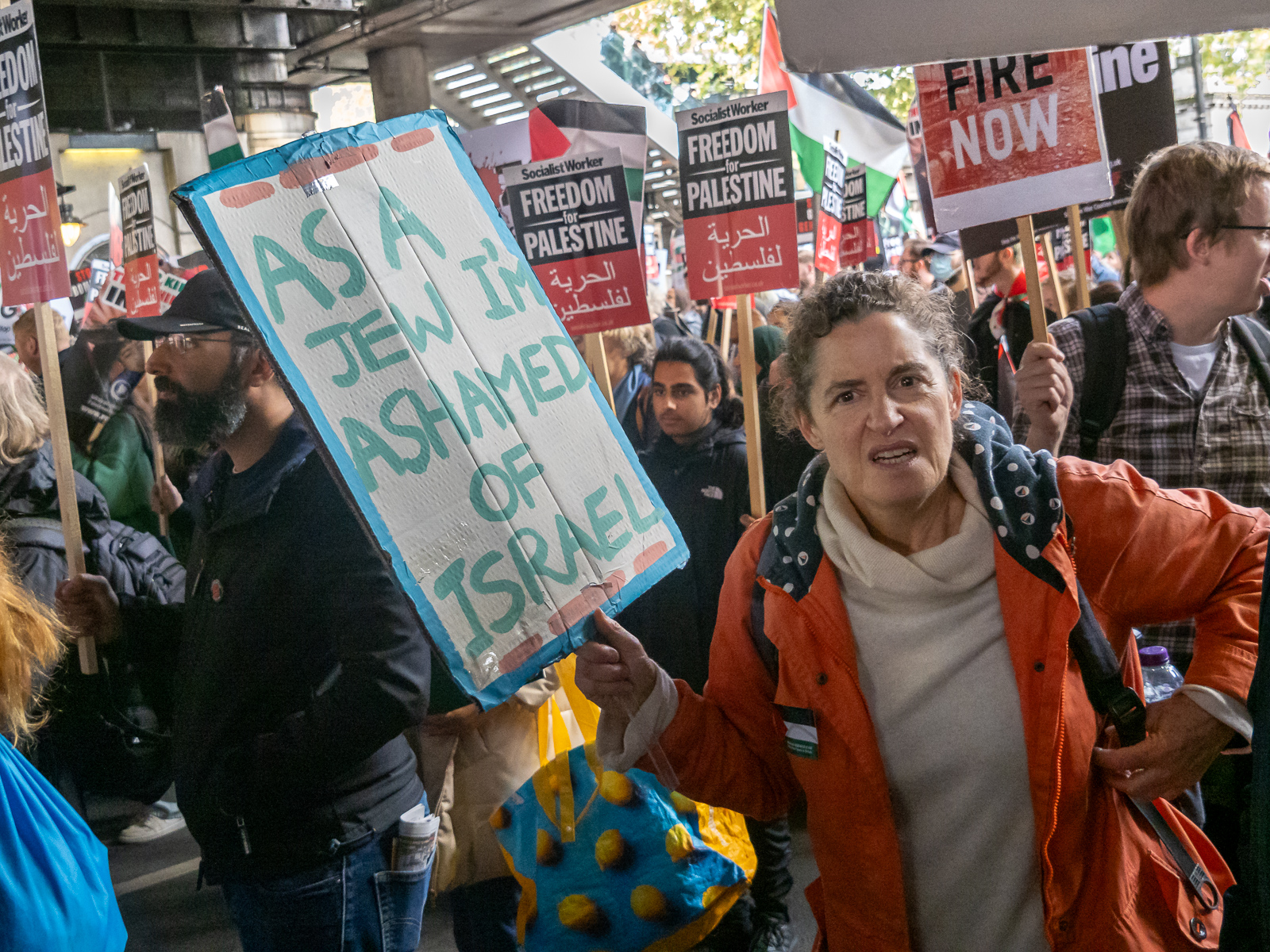
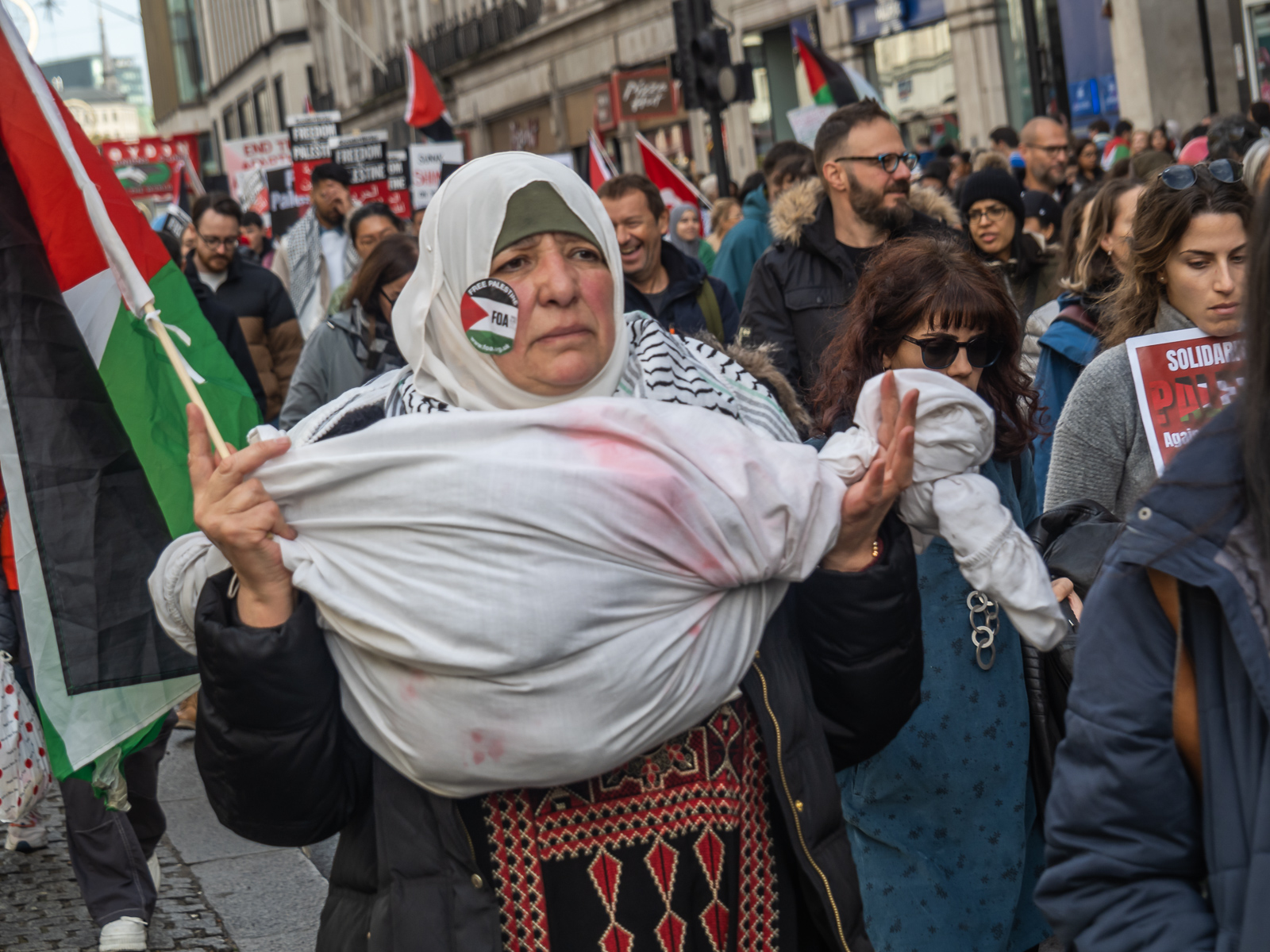
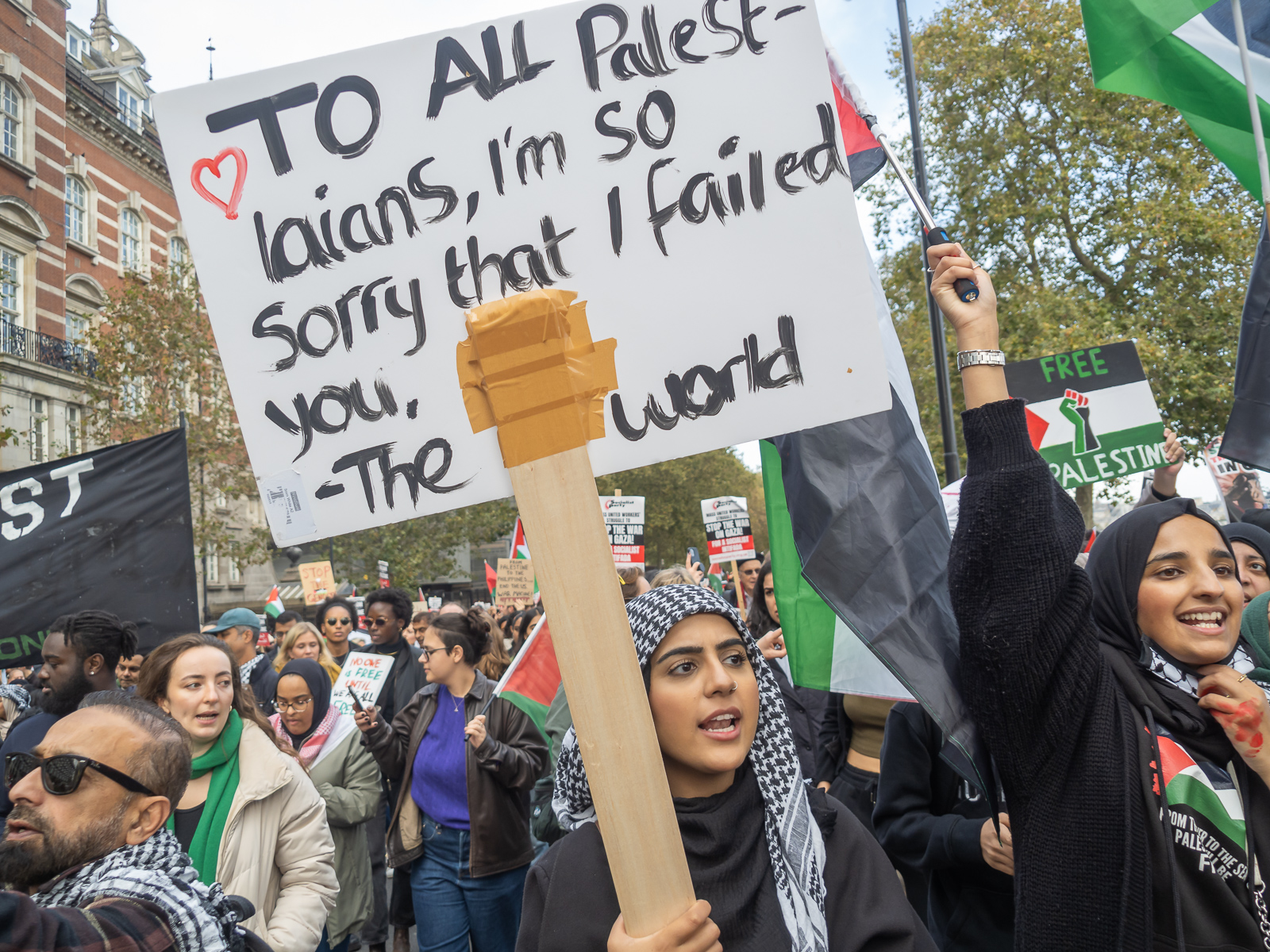
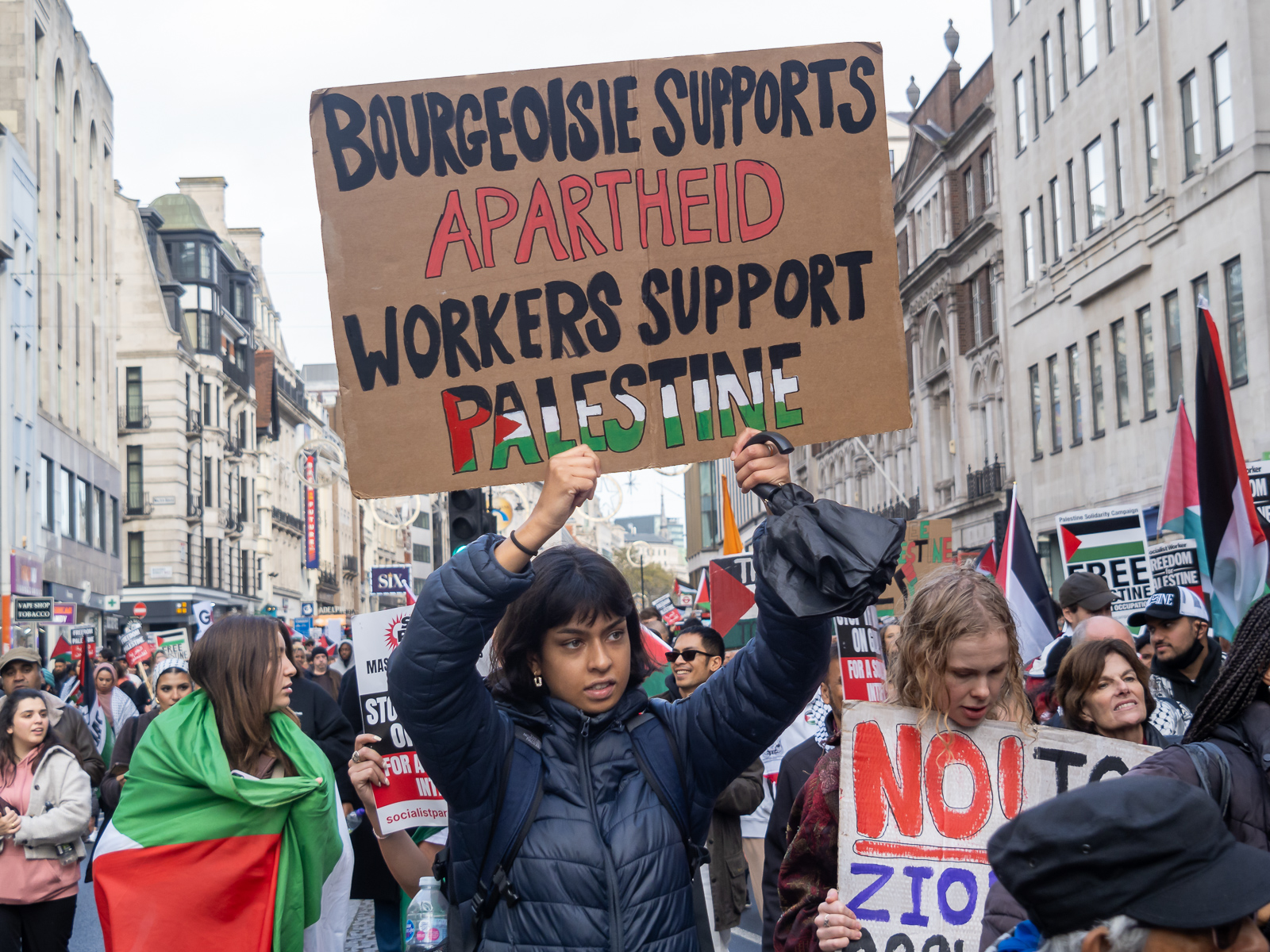
Free Palestine Coalition Demand A Ceasefire Now: Last Saturday, 6th January 2024, like many others I was watching on Twitter/X for the announcement by the Free Palestine Coalition of the starting point for their Gaza protest at 10am.
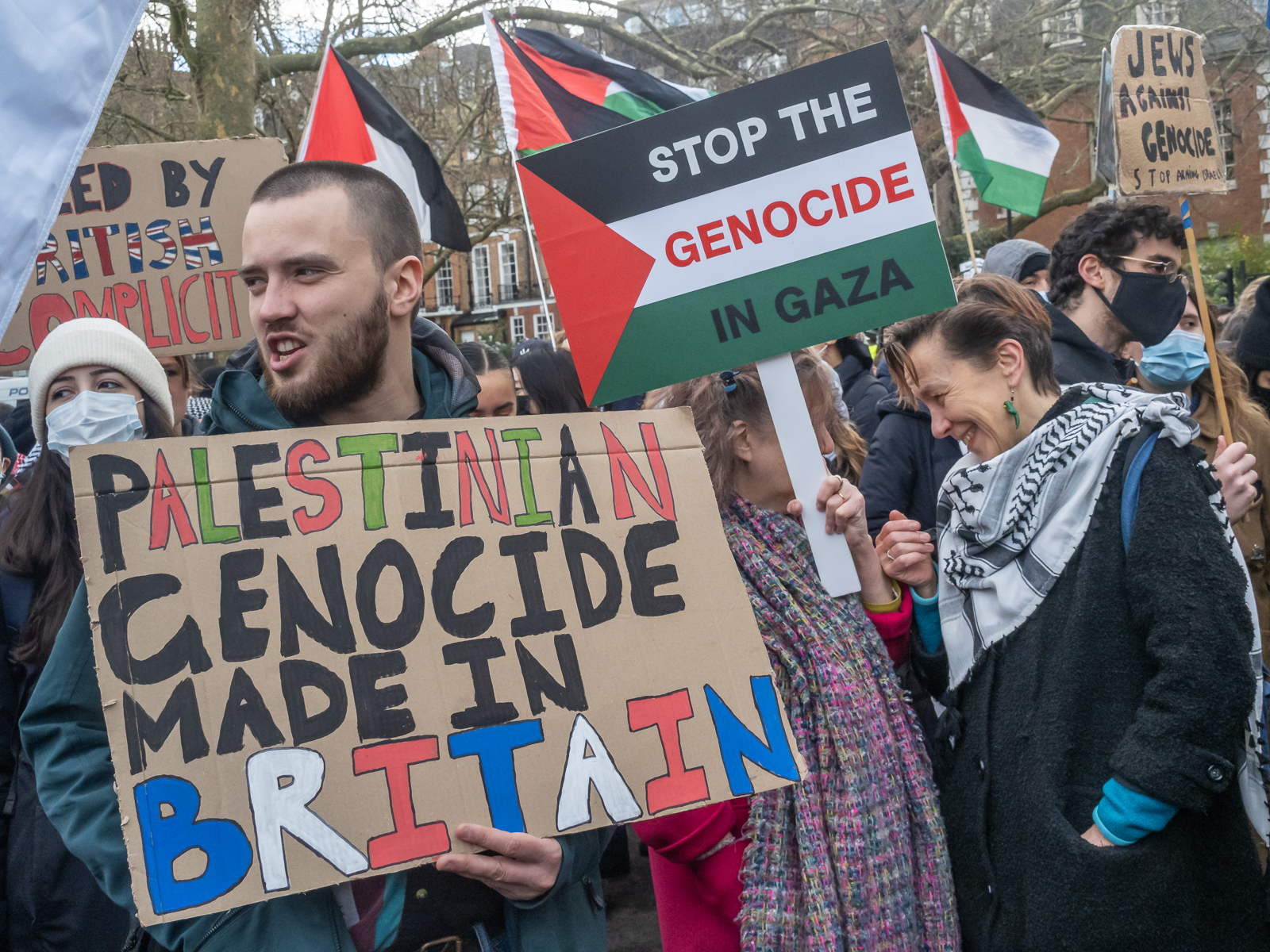
It was with some surprise that I read it was to be at the drinking fountain in St James’ Park, one of London’s Royal Parks, a feudal remnant with bylaws against almost everything, but at least it was easy to get to, and I had plenty of time to make it by the starting time of noon, and arrived around a quarter of an hour early.

The protest was organised and backed by Black Lives Matter UK, NMEE, Sisters Uncut, East and South East Asian Sisters, Copwatch Network, Health Workers For a Free Palestine, Queers For Palestine, London Campaign Against Police & State Violence, Palestinian Youth Movement and London Palestine Action.
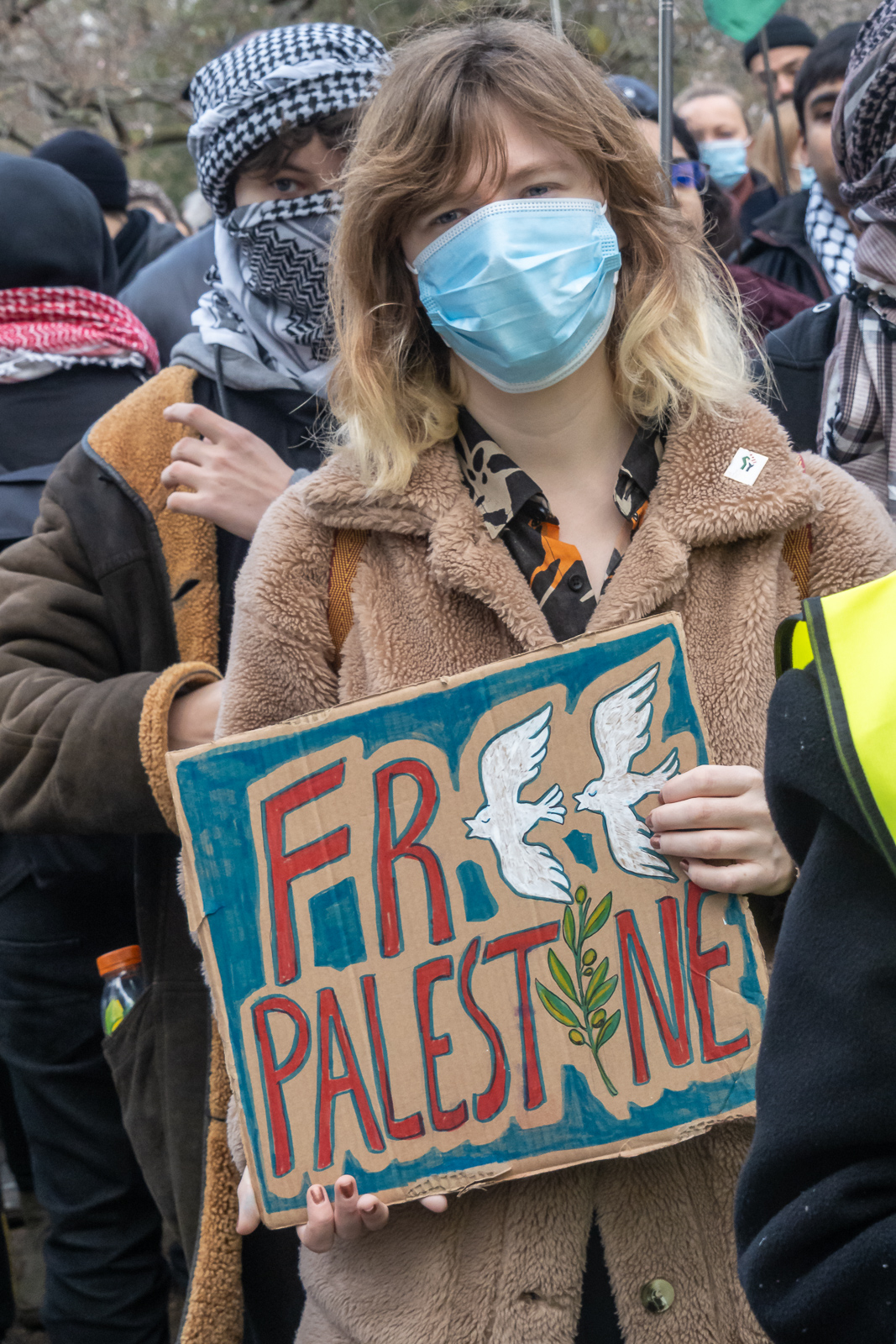
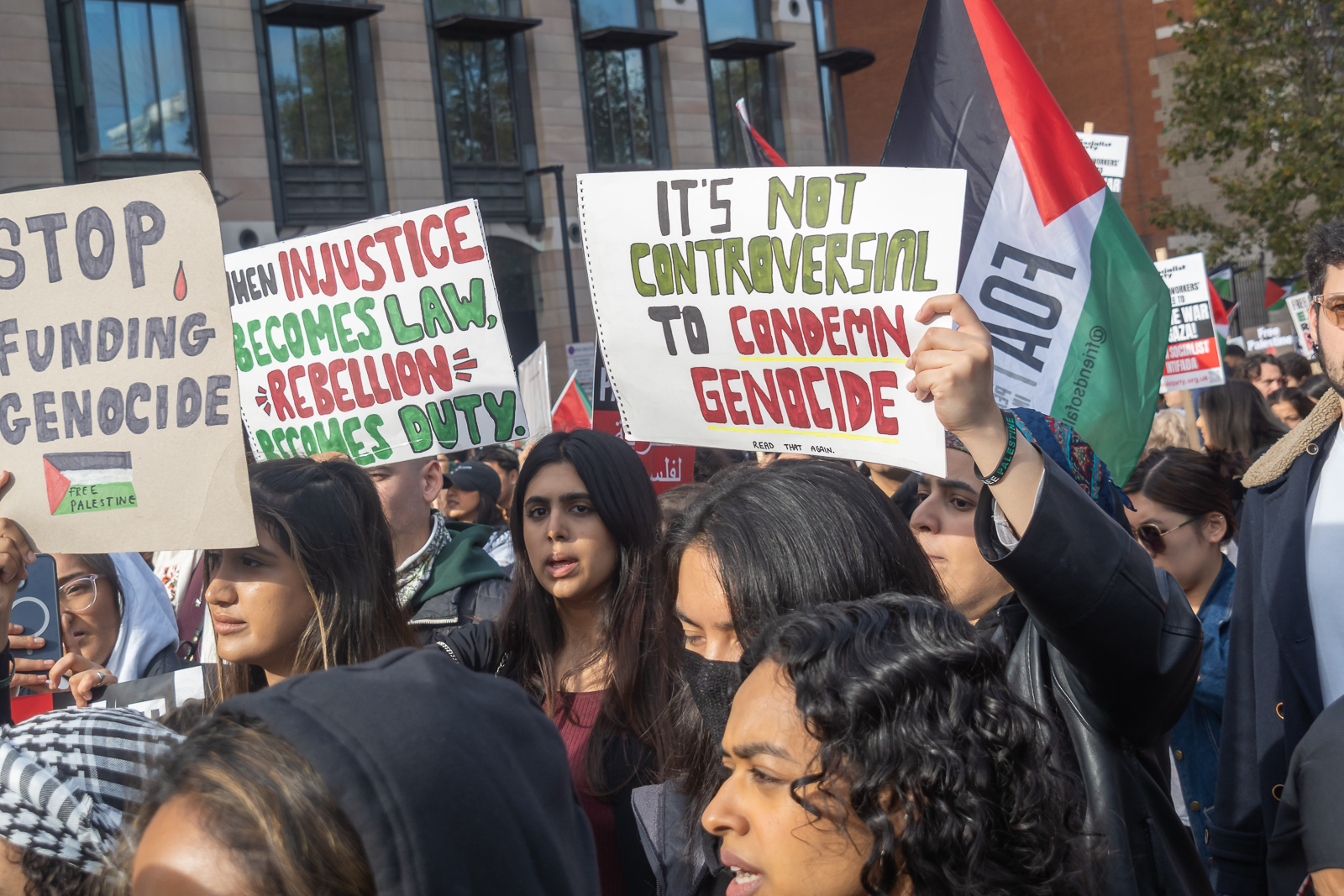
It made three clear demands; a full unconditional ceasefire NOW, the UK to stop arming Israel and an end to the Israeli Occupation of Gaza and Palestine. It had clearly been planned as a peaceful protest, although one that would cause some disruption to traffic in central London as many other events including other protests do.
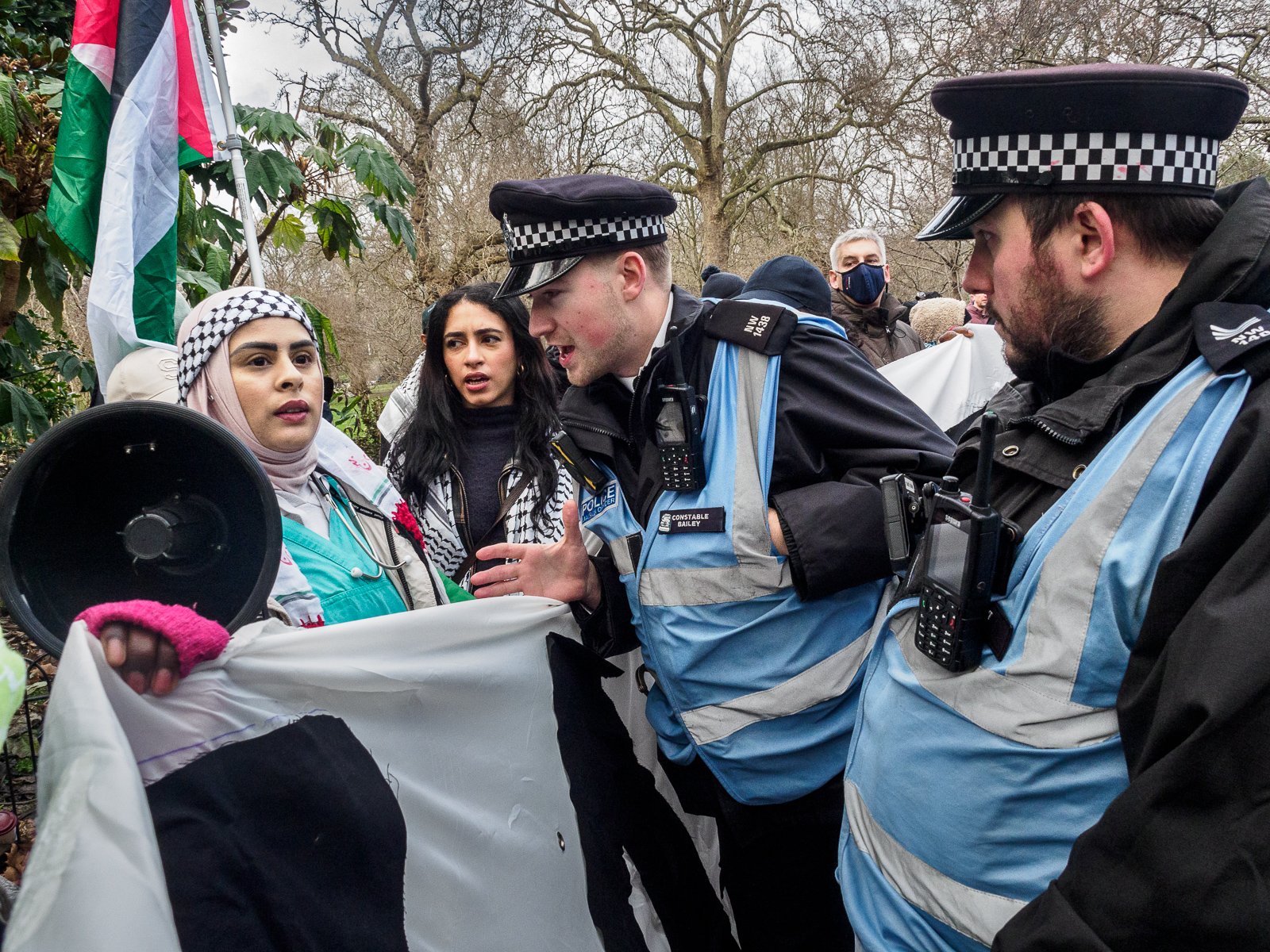
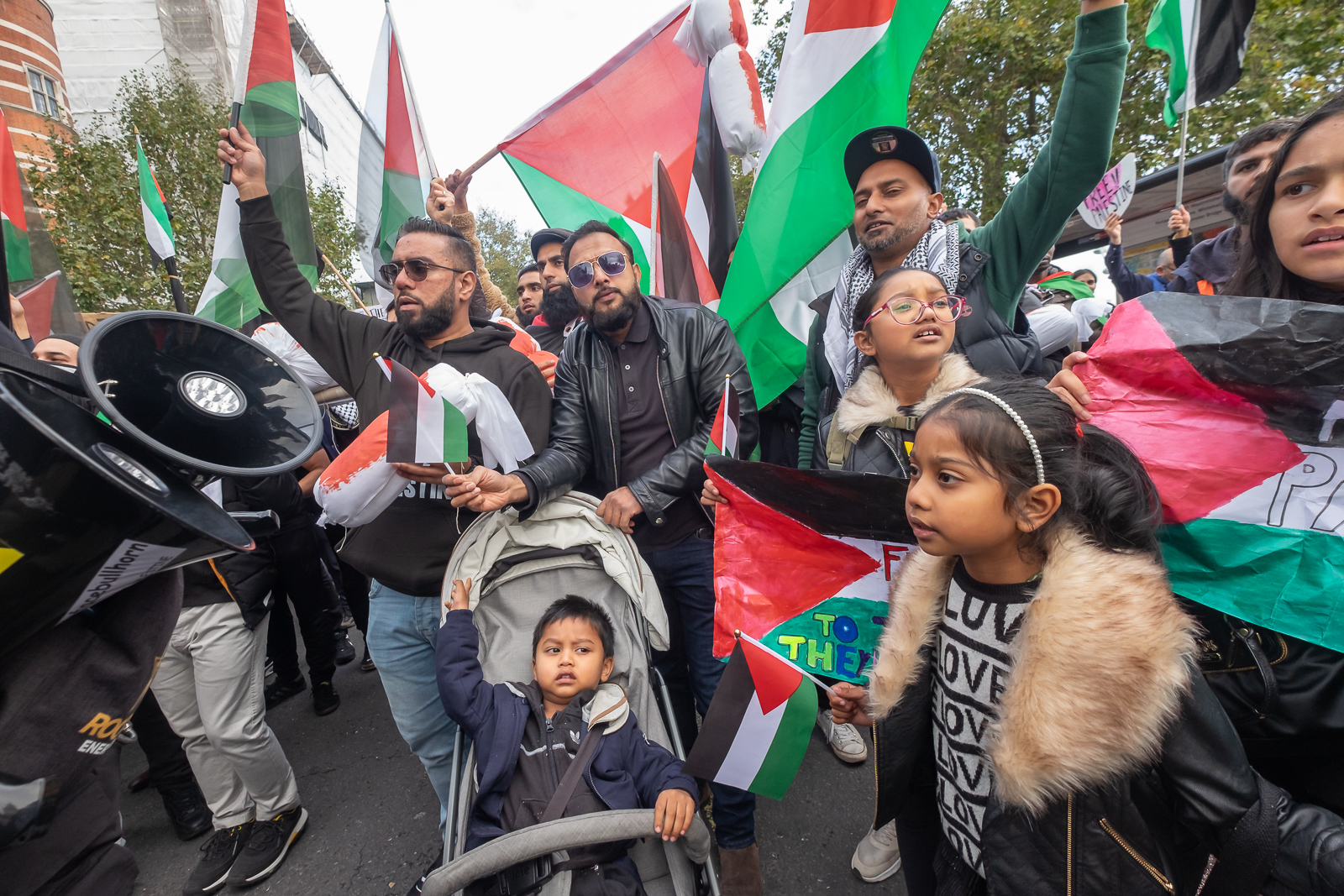
There was only a small group there when I arrived, but numbers grew rapidly by the time the rally began and continued to grow for some time, perhaps increasing to a couple of thousand by the end of the event. Shortly after the rally began police approached the speaker and told her that she could not use a megaphone as it was against the Park bylaws. After a short delay she continued without it, though now the crowd was so large many could not hear. A few minutes later a public address system arrived and the speakers began to use this. After another warning by police they wheeled this out onto the pavement of Birdcage Walk.
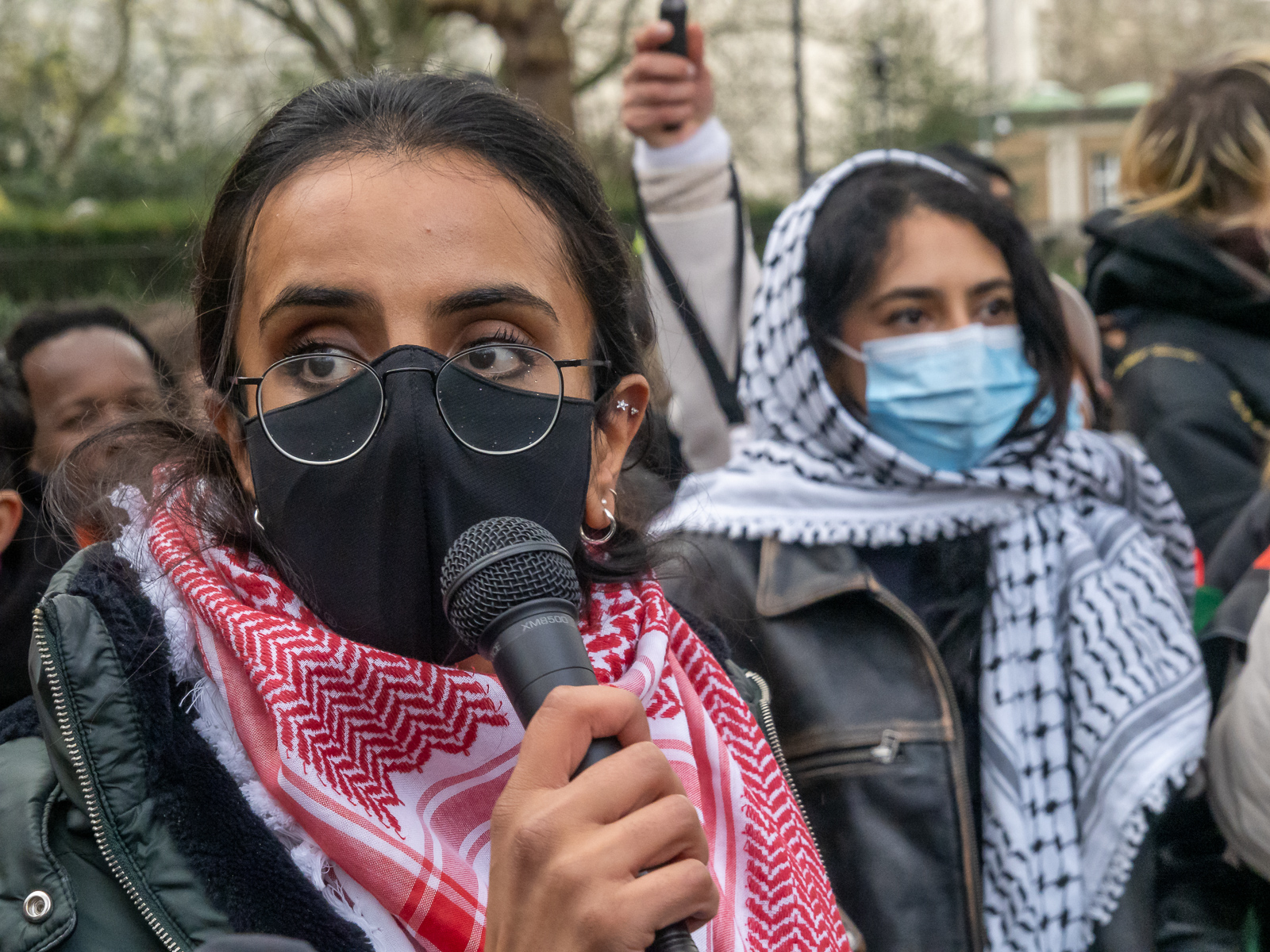
Here the speakers continued, with a particularly moving account by a doctor from Health Workers For a Free Palestine about the horrific conditions faced by her colleagues working in Gaza, where almost all hospitals have been bombed by Israeli forces and only three remain able to continue, facing terrible shortages which have meant amputations with no anaesthetics available and a total lack of medicines, clean dressings and antiseptics taking medical conditions back into the dark ages.
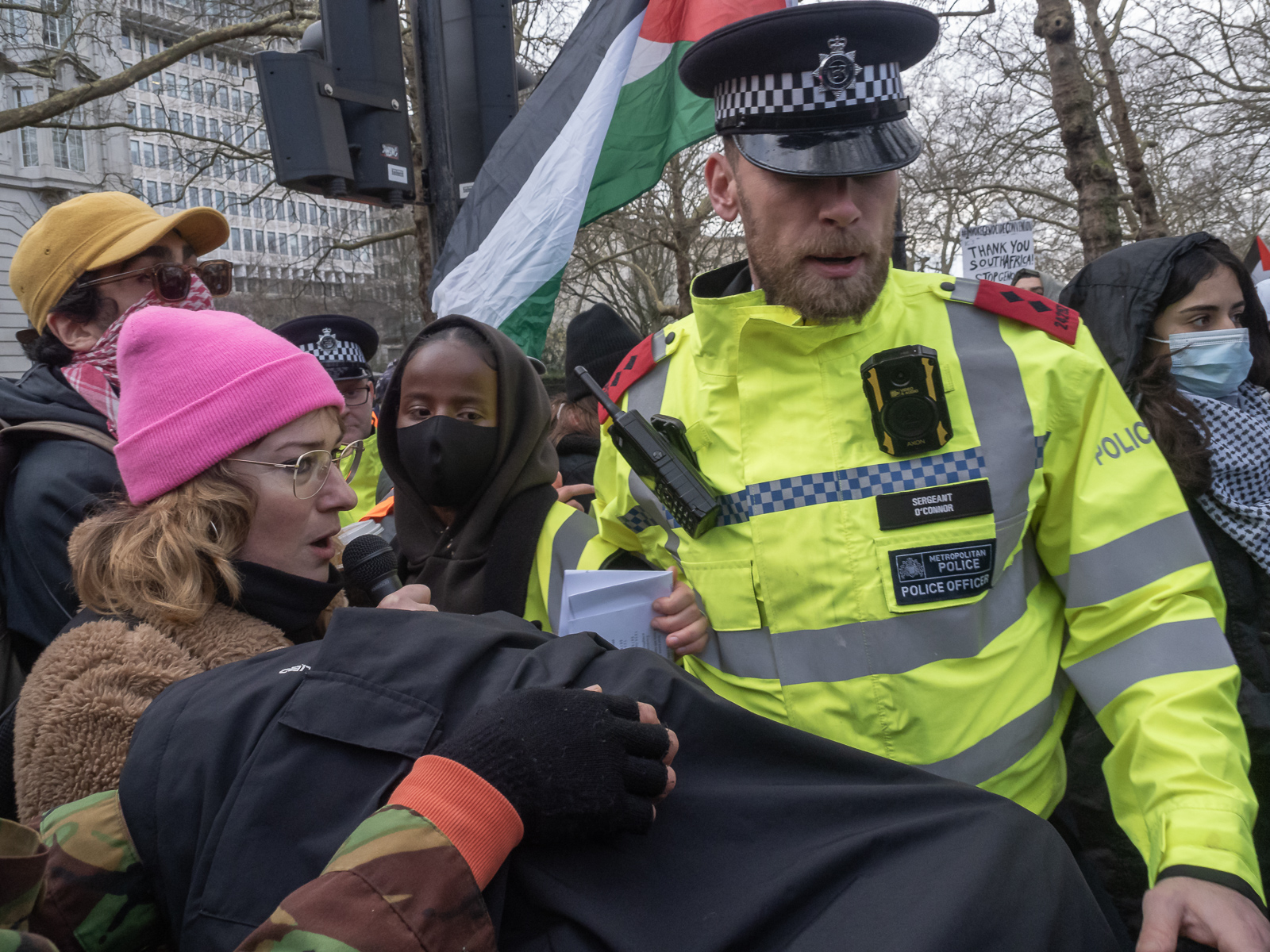
After the rally had continued for some minutes, a squad of police rushed in and seized the PA system from the pavement, forcefully pushing all those close out of their way. I was thrown aside and kicked in the shin hard enough to cause some bleeding and although not seriously injured certainly suffering from shock. I’m unsure about what happened for the next few minutes and it was almost ten minutes before I’d recovered enough to photograph seriously again.
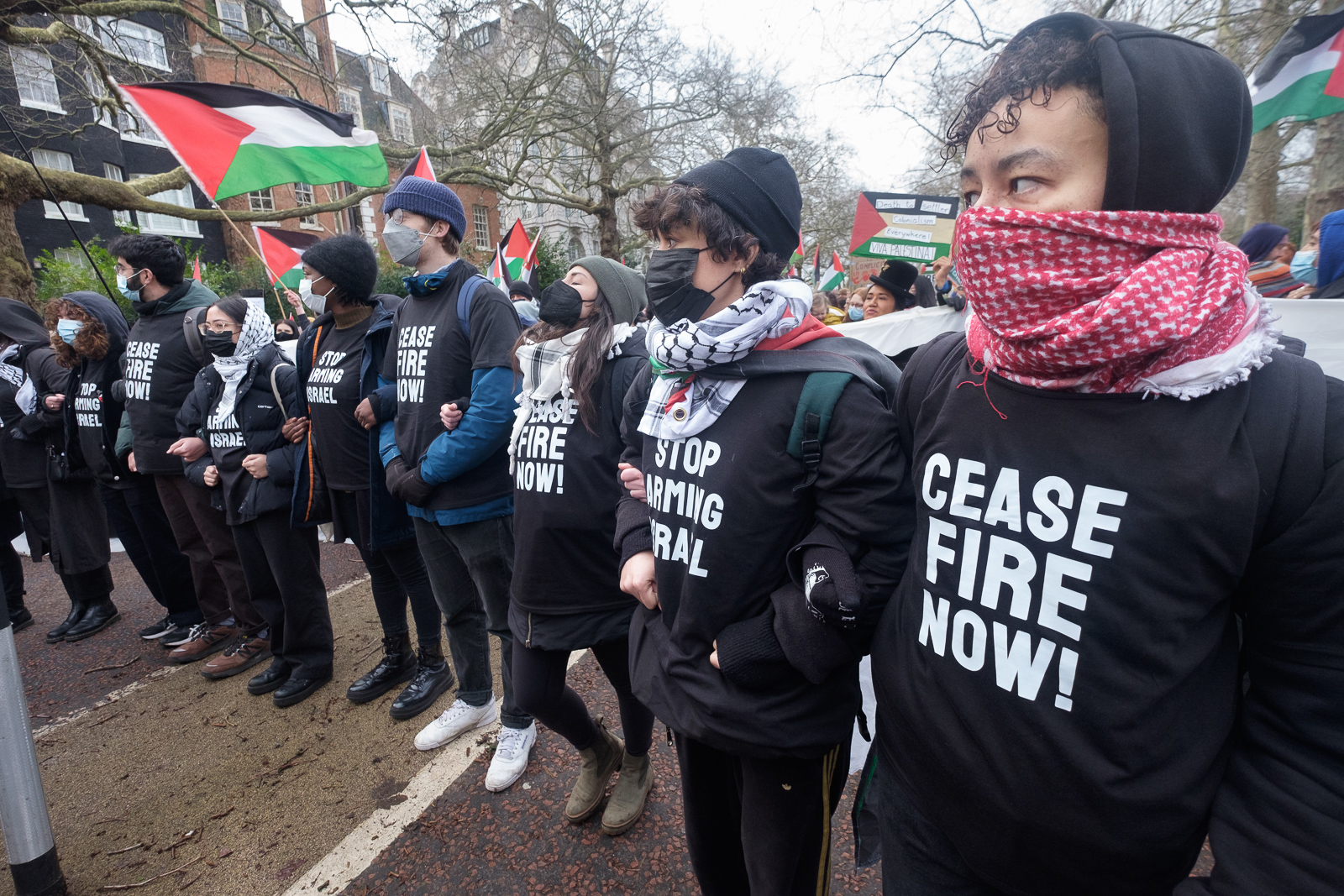
The police appeared to have been deliberately trying to provoke the protesters and had a very large presence for what was expected to be a relatively small protest. Eventually the organisers called on the protesters who had been shouting angrily at the police for some minutes to move off and the march slowly made its way towards Westminster Bridge.
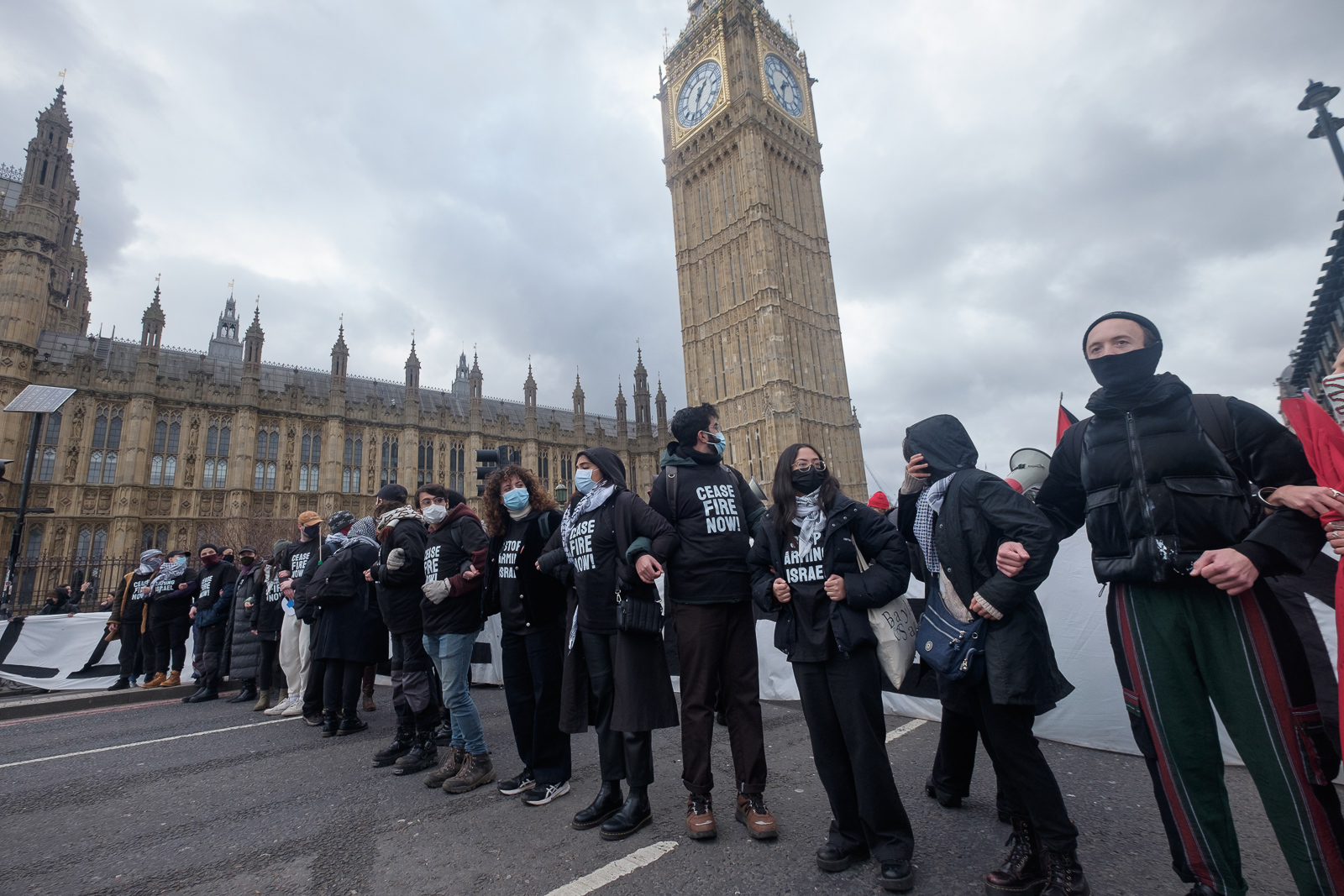
As the front of the march came to Bridge Street at the side of the Houses of Parliament there was a halt for photographs and when the march moved off a line of police across the road tried to stop them. But there were far too few officers to form a proper cordon, and I and around a couple of hundred protesters moved past and onto the start of Westminster Bridge before reinforcements arrived.
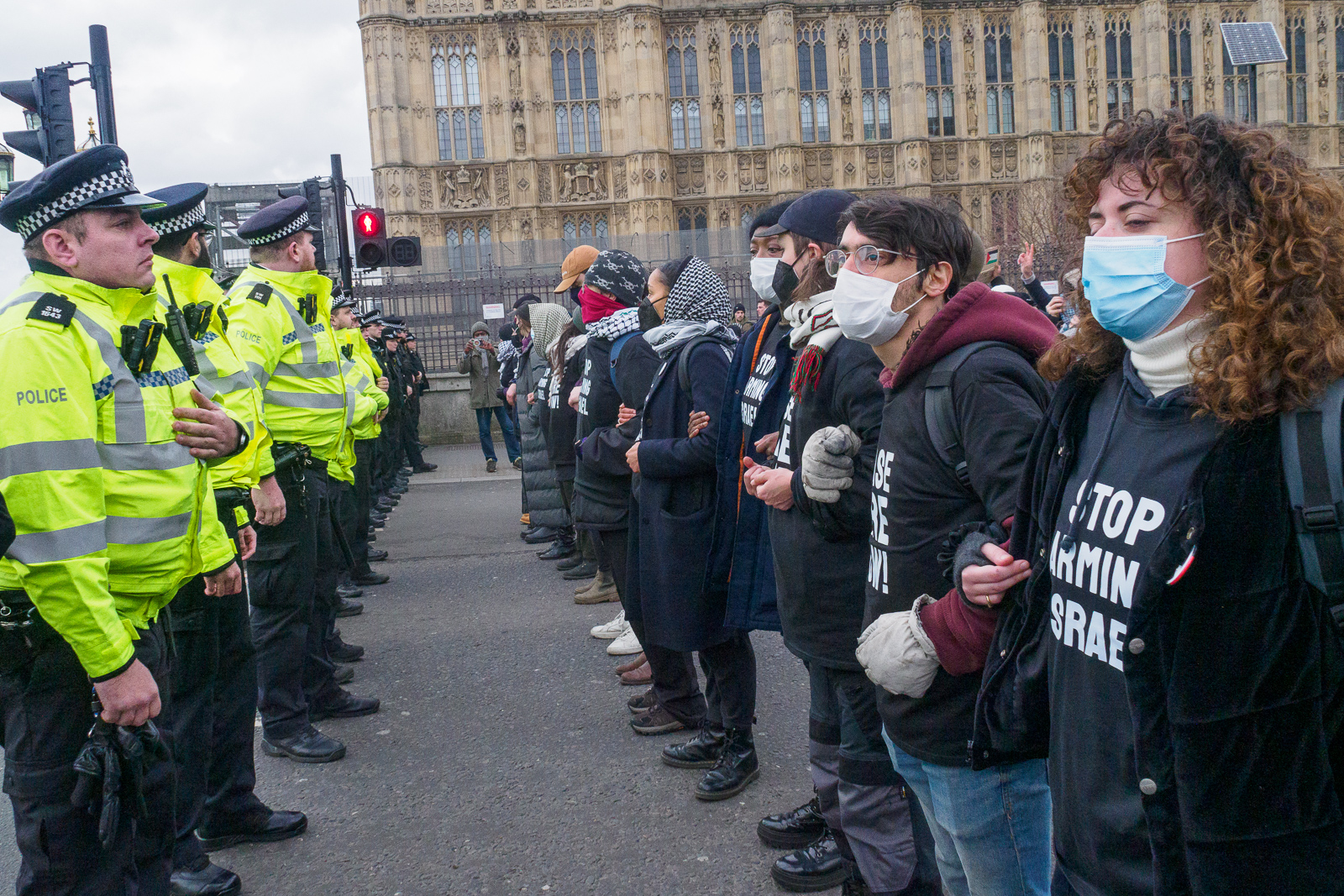
There were more police on the bridge and a line of police vans behind them, as well as more on the Embankment. Had the protesters been allowed to march onto the bridge and protest there the bridge would have been closed until the protest ended, but traffic could have continued to flow on both the Embankment and Bridge Street, which were still blocked when I left later. Protests continued on Westminster Bridge, though most of the protesters were still held on Bridge Street behind a police line. Around half an hour later police did decide to allow them to join the others, probably to make it easier for them to kettle the protest in one block rather than two.
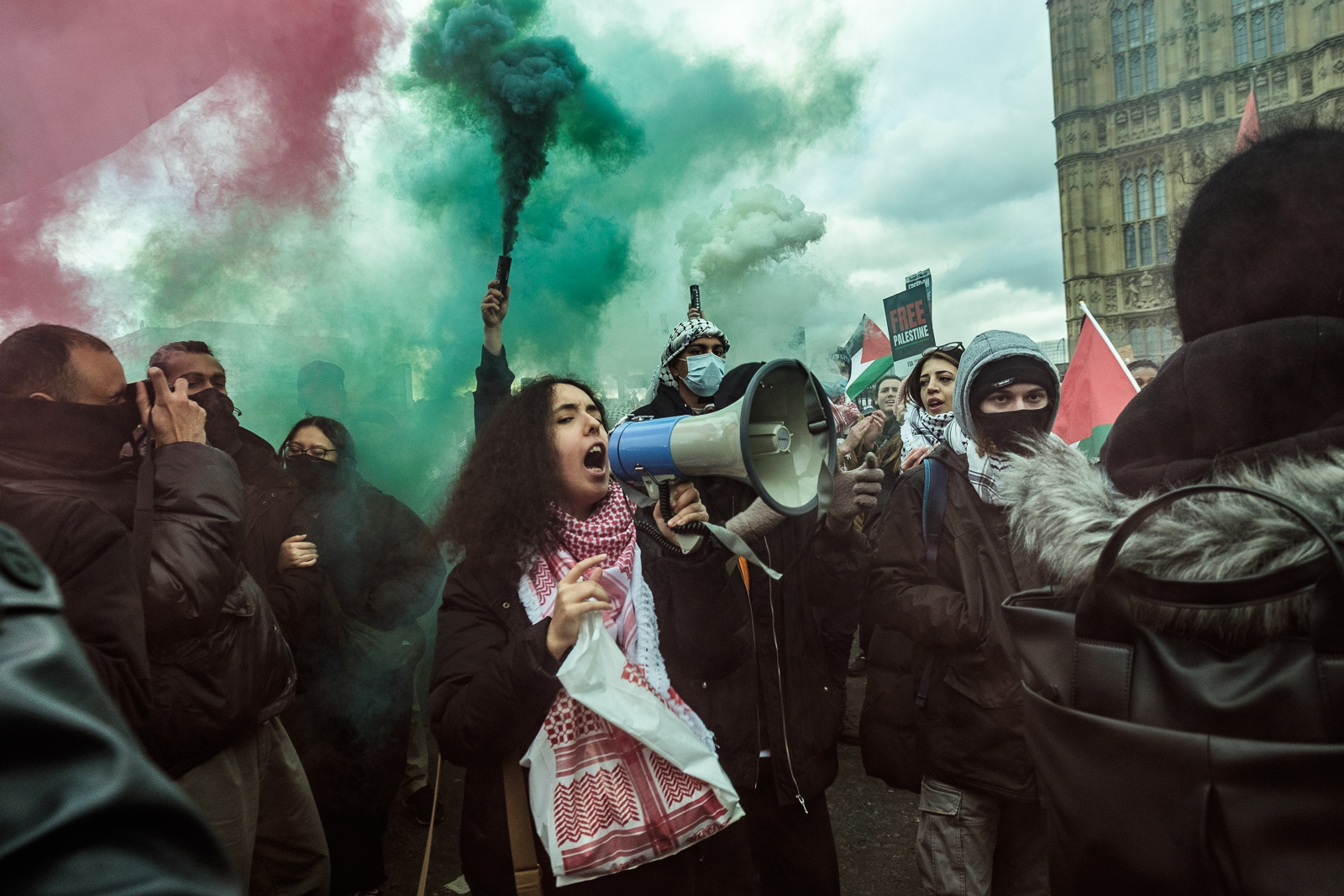
On the bridge there were some noisy protests which forced police liaison officers to withdraw from the crowd. Some of them complained to the event stewards about the leaflets which were being distributed to the many tourist also being blocked by the police from leaving towards Parliament Square, suggesting that those distributing them might be committing an offence. I read one carefully and could find nothing anti-Semitic, nothing which I had not heard or read in the mainstream press despite their failures in reporting.
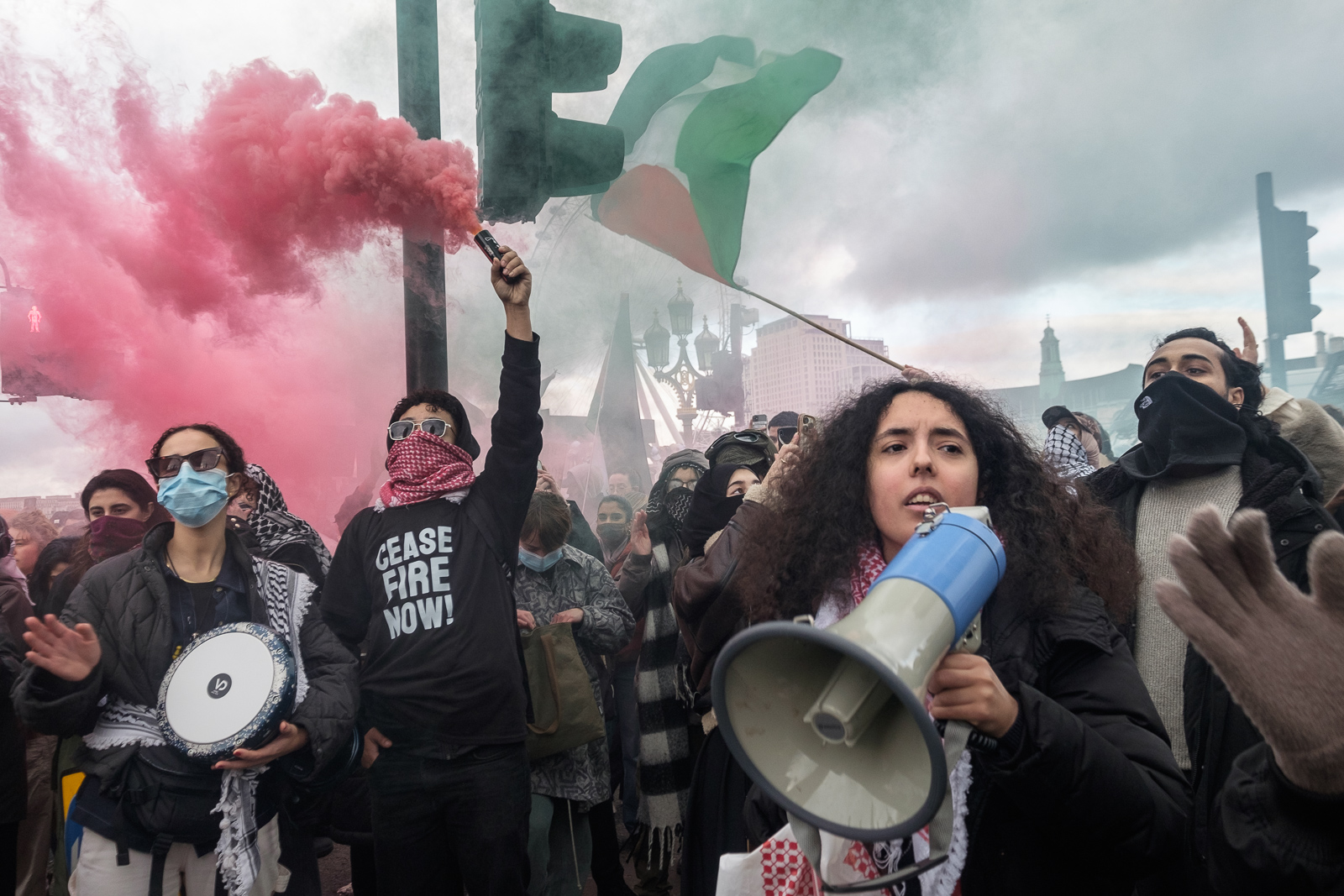
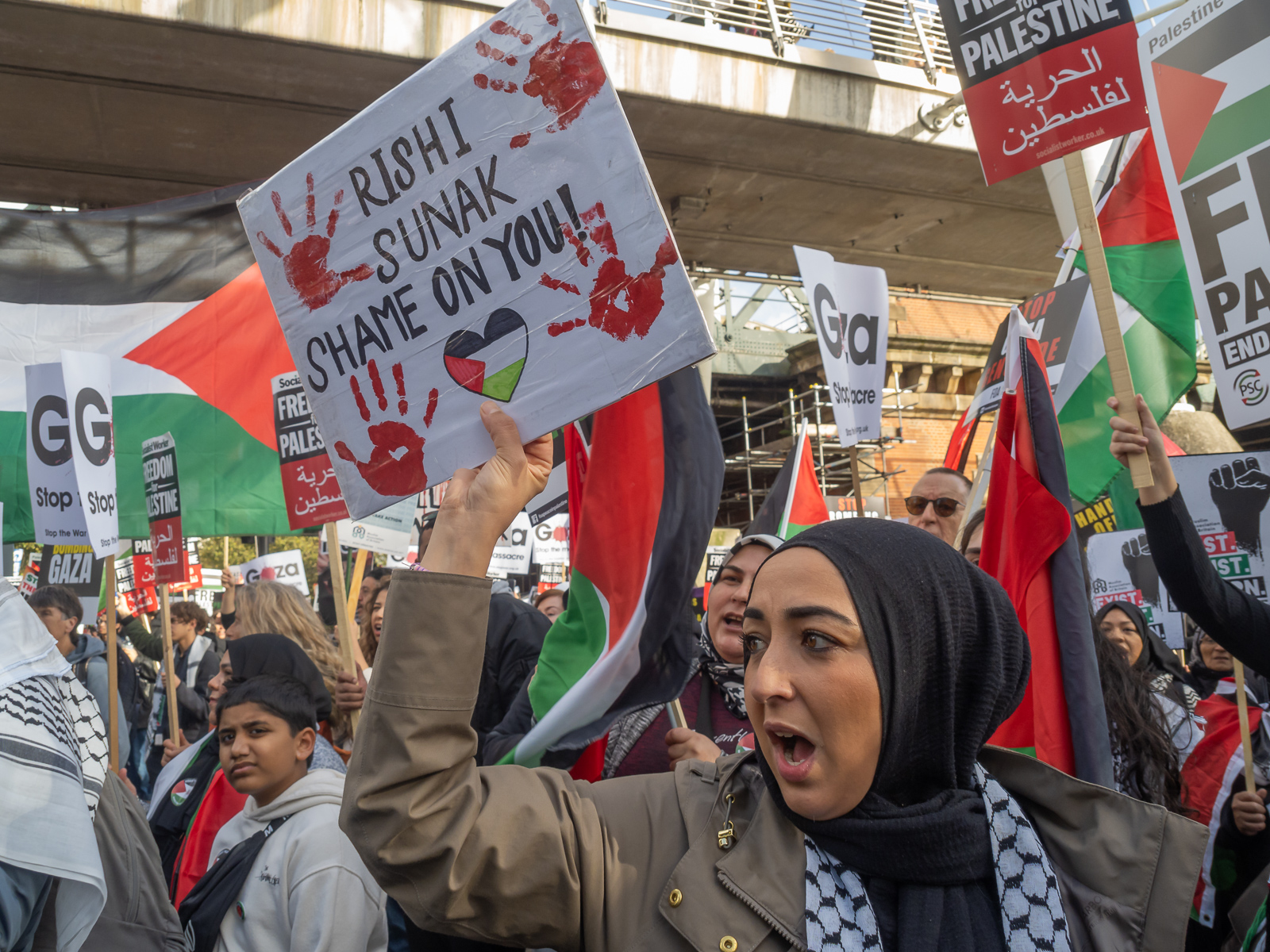
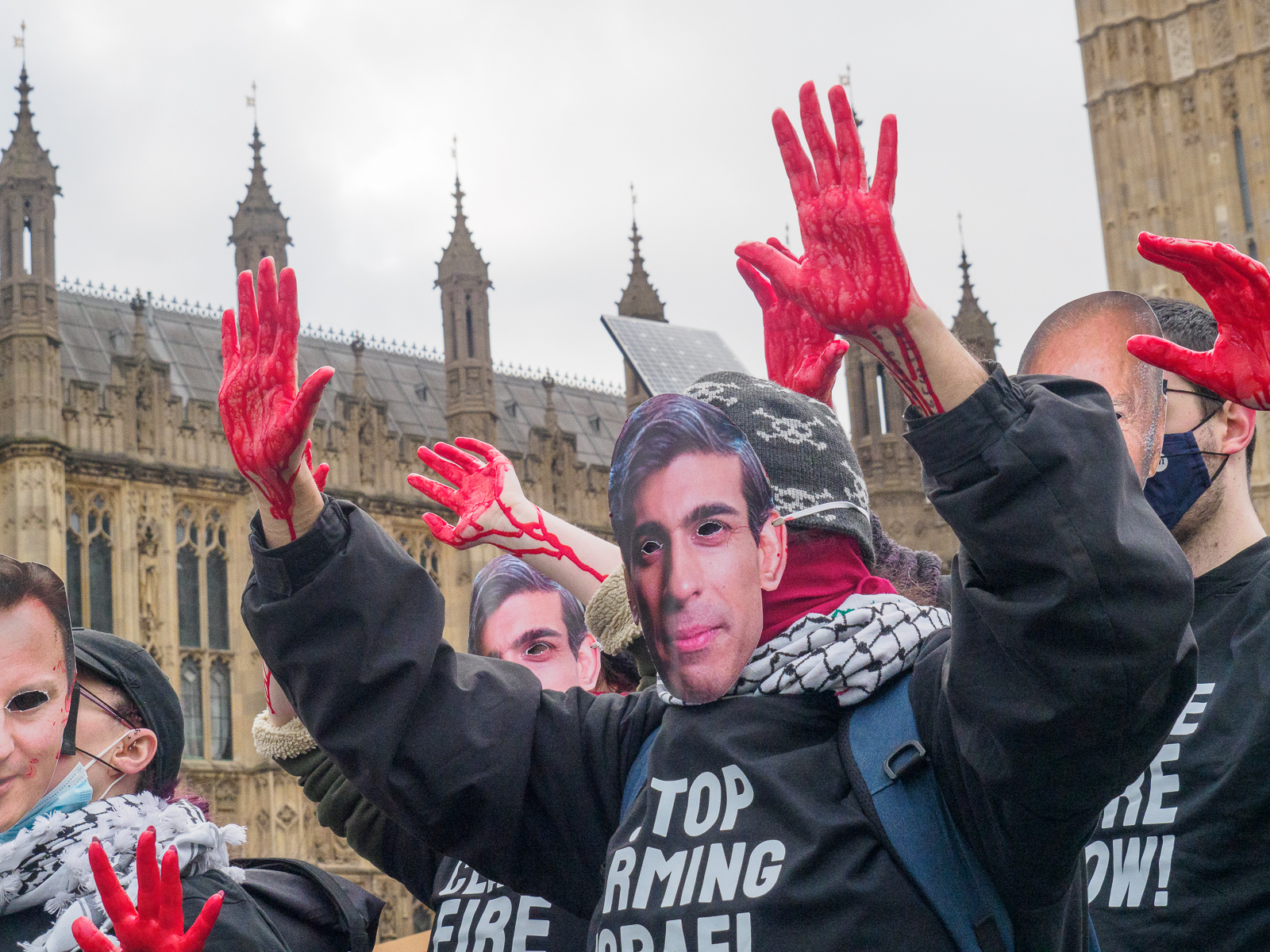
At one point people let off smoke flares in the red, green and white of the Palestinian flag. Later there was a period of silence for the victims in Palestine and those in Israel, and many sat or lay down on the roadway. A group in front of the police cordon wore masks showing Rishi Sunak, wearing tops with the messages ‘STOP ARMING ISRAEL’ ‘CEASEFIRE NOW!’holding up their hands red with fake blood which dripped down their arms.

I left as the police allowed the protesters to all join together, kettling both groups. I was tired and still a little shaken from the earlier assault by police and needed to sit down and rest on a seat on the Embankment. Eating my sandwiches for a late lunch and drinking some water helped too.
As I walked back to Waterloo the blue lights were still flashing on Westminster Bridge, and an hour later at 3.32 the Met posted “All protesters have now left the area around Westminster Bridge. Officers remain on-duty in central London and are ready to respond to any further demonstrations.” I felt their response to this one had been negative in the extreme and had made the situation worse than if they had stayed away completely. Their presence was a huge waste of public money and London really does not need police who behave as they did at this event.
The police had arrested a number of people on Westminster Bridge but later Black Lives Matter UK, one of the organisers, made the following post: “All arrestees have been released with no further action. Thanks to all who have supported the protests and taken time out to care for all those made vulnerable by the police.“
More pictures in my Facebook album Free Palestine Coalition Demand A Ceasefire Now!
Flickr – Facebook – My London Diary – Hull Photos – Lea Valley – Paris
London’s Industrial Heritage – London Photos
All photographs on this page are copyright © Peter Marshall.
Contact me to buy prints or licence to reproduce.