Stop Killing Londoners

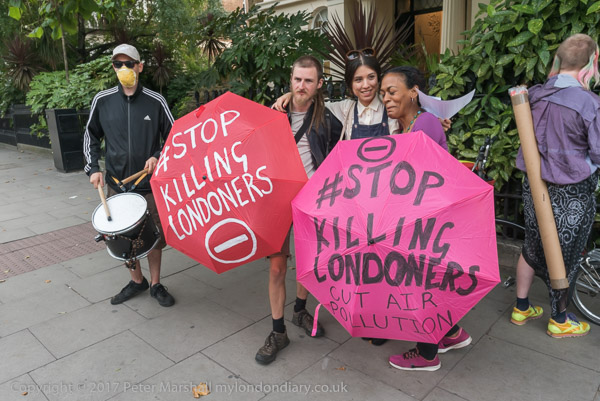
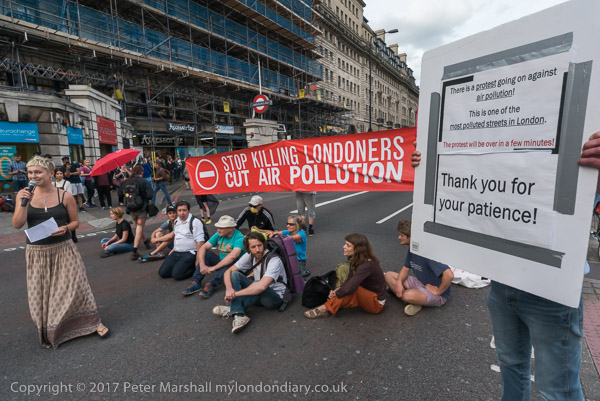
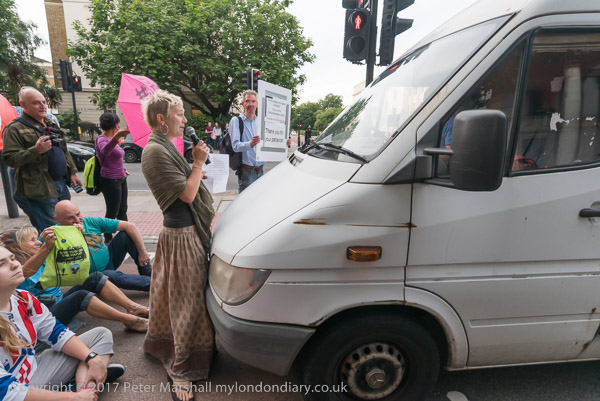
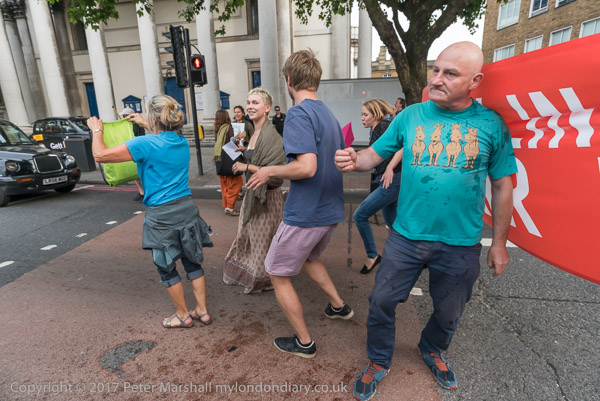
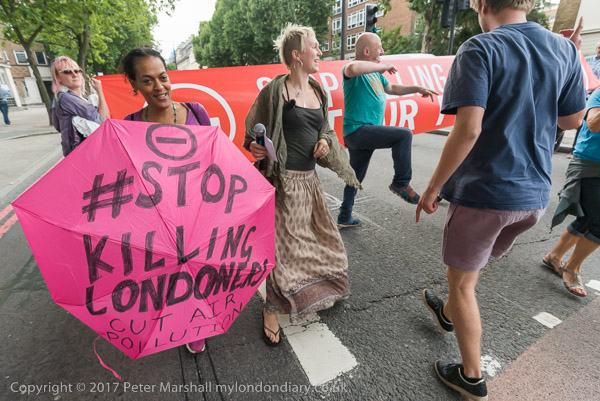
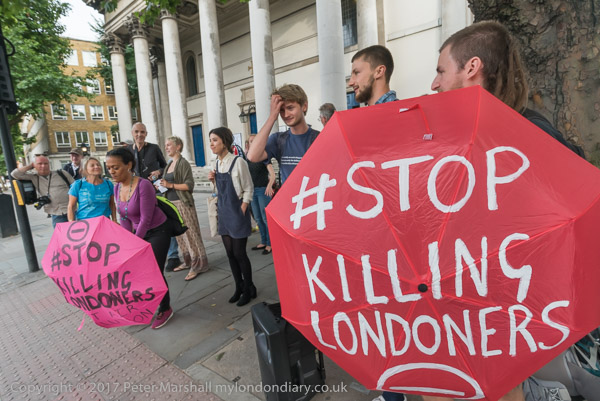
Stop Killing Londoners: In the rush hour on Friday 2nd August Rising Up environmental protesters in Stop Killing Londoners briefly blocked the busy Marylebone Road at Baker St in ‘Staying Alive’ road-block disco protest to raise awareness and call for urgent action over the high pollution levels from traffic on London streets which cause almost 10,000 premature deaths in the city each year.

Stop Killing Londoners

The recent court decision that the Mayor of London can go ahead with the ULEZ expansion planned for the end of August 2023 will be welcomed by many Londoners, despite the continuing protests against it over recent months. According to Transport for London (TFL), 9 out of 10 cars seen driving in outer London already meet the ULEZ emissions standards and so will not need to pay the daily charge.

Stop Killing Londoners

It is nothing like the blanket scheme many of the protesters allege. Almost all petrol vehicles under 16 years old or diesel vehicles under 6 years old already meet the emissions standards and will be exempt, as will motorcycles etc built since 2007, lorries, taxis, most vans, buses and coaches. There are various exemptions and grace periods for disabled and some other users, and all vehicles over 40 years old are also exempt.

Stop Killing Londoners

But of course it will cause hardship for some car users, particularly those on low incomes who live outside London but drive into it for work and who will not be eligible for the Mayor’s £110m scrappage scheme for “Londoners on certain low income or disability benefits, and eligible micro businesses (up to 10 employees), sole traders and charities with a registered address in London.” They would be helped if boroughs outside the London border would also offer scrappage schemes.

Stop Killing Londoners

Back in 2017, Stop Killing Londoners decided to protest to raise the profile of the damage that air pollution at illegal levels was doing to Londoners. Polluting road vehicles produce around half of that pollution, and it is a problem in outer areas of London as well as in the centre – and also in at least some areas of the fringe, including where I live.
The scientific evidence shows that air pollution in London causes thousands of early deaths each year, although there are some differences about the actual number. The studies quoted by Stop Killing Londoners suggest it was over 9,000 a year, though TfL quotes a figure roughly half that.
But as well as those who die, many others suffer from life-changing illnesses caused or exacerbated by the polluted air, including cancer, asthma and lung disease as well as dementia.

Most dangerous pollution is invisible – oxides of nitrogen and small particles in the air, though we can often smell it in London, and we see larger particles deposited on our roads. Since the ULEZ zone was introduced in central London nitrogen oxide levels have almost halved. But cutting dangerous particulates means reducing the number of vehicles on our streets, so we need to see further money going into making cycling safer and improving public transport.

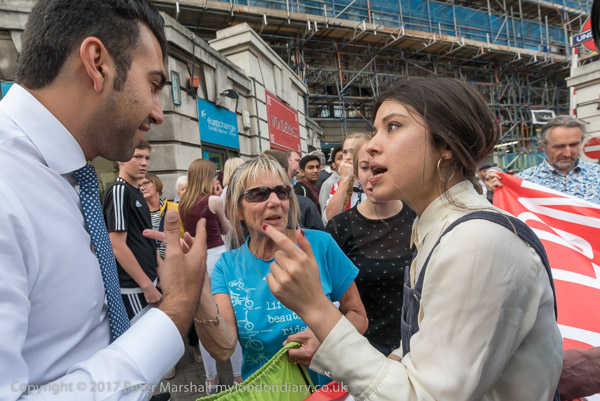
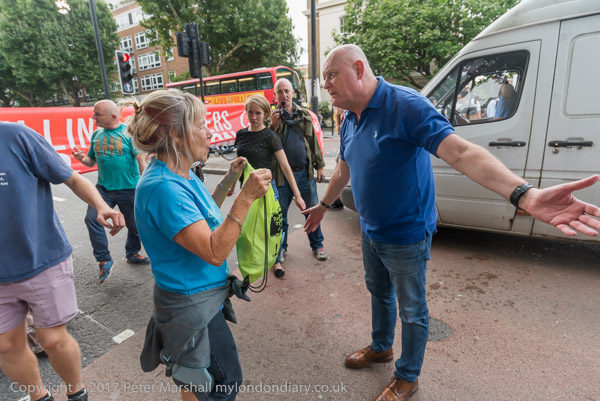
Like the ULEZ expansion, the protest wasn’t welcome with some drivers, although the protesters made clear with notices and on a megaphone why they needed to protest and that they would only hold up traffic for a few minutes – less than some delays caused by road works and their temporary lights. A few left their vehicles and came to argue, and a man in a white van tried to drive through them, only stopping when people sat on the bonnet of his van – when he threw water over them.

Stop Killing Londoners decided that TfL seemed to be doing very little in 2017 to cut pollution and intended their protests to push them into action. Even Boris Johnson as Mayor until 2016 had realised he had a legal obligation to do something about it and had begun plans for a ULEZ zone, but little happened until Sadiq Khan became mayor in 2016. And the ULEZ zone only came into effect in April 2019. Perhaps the series of protests may have accelerated its introduction as they did make news headlines.

Stop Killing Londoners road block


Save Legal Aid – 2013

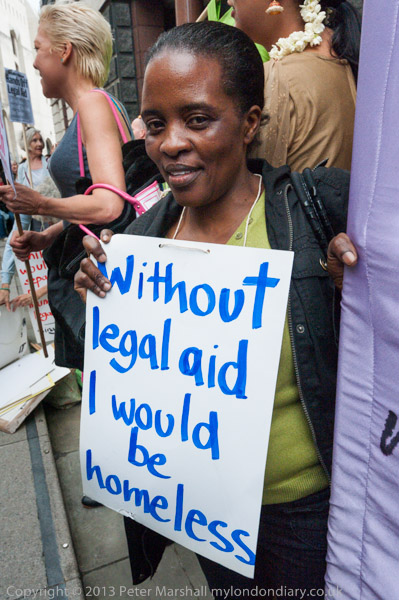
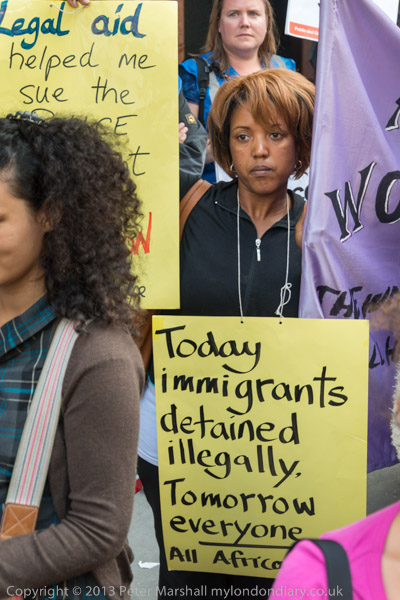
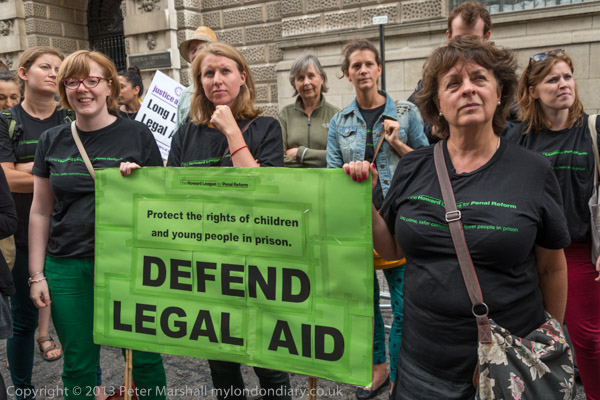
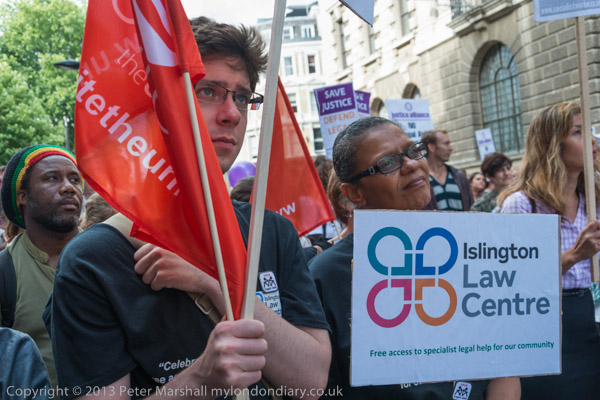
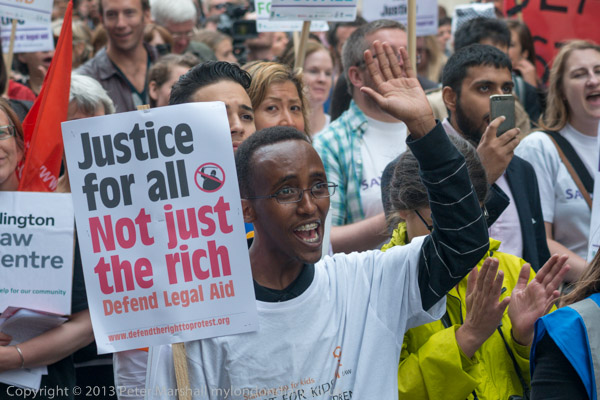
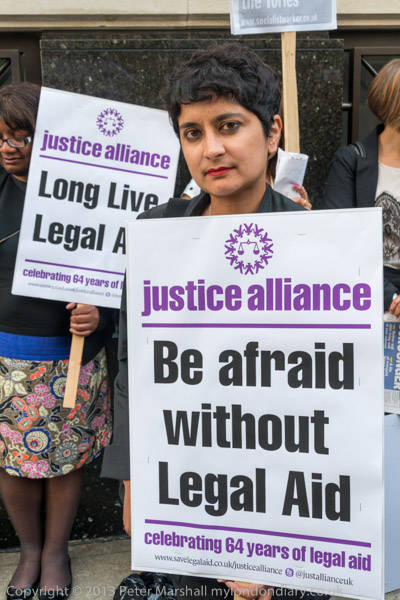
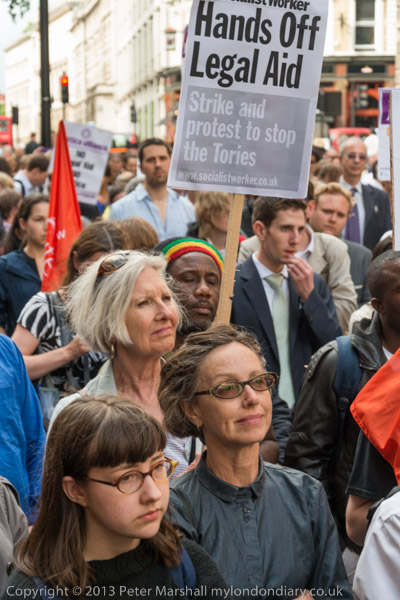
Save Legal Aid – 2013: On Tuesday 30th July 2013, ten years ago today, the Save Legal Aid Campaign held a rally outside the Old Bailey in protest against proposed cuts in legal aid which they say would severely damage the UK justice system, removing legal aid completely for many and providing a poor quality cut-price service for others.

Save Legal Aid - 2013
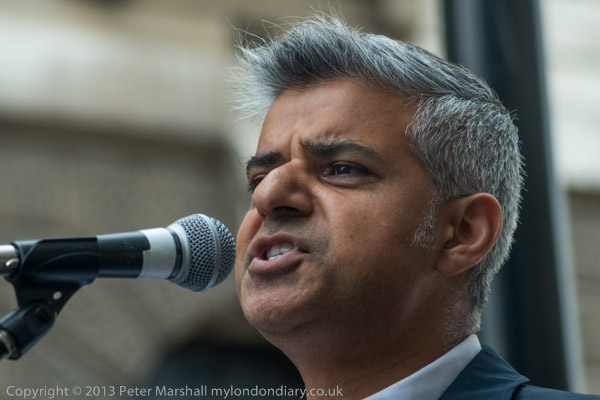
Labour shadow minister Sadiq Khan in fighting mood

The proposals would bring in compulsory tendering on price, with legal aid services being provided by the lowest bidder and remove any choice by defendants of who should represent them. They say this would replace all the current specialist solicitors by groups such as Tesco and Eddie Stobart employing less qualified and experienced people and providing an inferior service for those unable to pay – and so choose – their solicitors.

Save Legal Aid - 2013

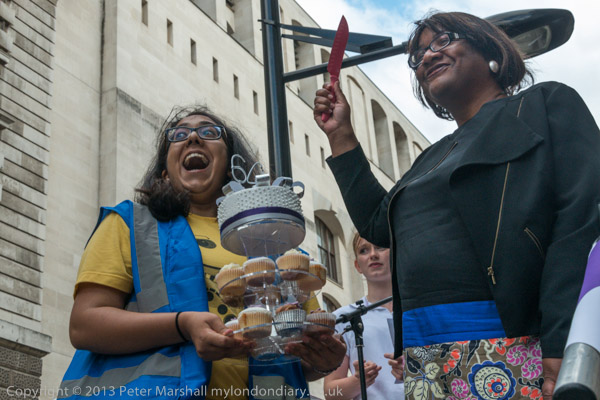
The rally also celebrated the successes of the UK’s legal aid system, which speakers said had been the envy of the world since it was brought in on 30th July 1949, exactly 64 years earlier, an event celebrated with the singing of ‘Happy Birthday’ and the cutting of a cake by MP Diane Abbott.

Save Legal Aid - 2013

For many of us those celebrations rang hollow. The legal aid system by 2013 was but a pale shadow of that brought in by the Legal Aid and Assistance Act on 30th July 1949. It was a skeleton that was being celebrated, although one that as several speakers who had benefited from it showed still had some effect. In the unlikely event we ever get a reforming Labour government it could perhaps still be revived, but more likely any future government will destroy it still more as New Labour did.

Legal cases in the UK are incredibly expensive in part because of the nature of our legal system which is an adversarial one, but also because of some traditional practices which render it less efficient and protect the interests of some of those who are a part of the system.

Save Legal Aid - 2013

Probably the only sound legal advice is to stay away from the law unless you are very rich. Although its often said that the same law governs both rich and poor, in practice that is not really the case, and in particular those in the middle of society get screwed.

Legal Aid was first introduced in the UK in 1949 when the welfare state was attempting to make justice fair for all. It could be claimed for almost all criminal or civil matters except libel and defamation and around 80% of the UK population were eligible for some support, with those more able to pay receiving support on a sliding scale depending on their income.

It wasn’t then a great cost to the economy as then only a small fraction of the population gad access the the legal advice that might have led them to take action in the courts. If you were poor you seldom came to court except when arrested – and most cases were dealt with by magistrates with legal aid seldom being involved.

In the 1970s Law Centres were set up in many of the poorer areas of the country, giving free advice and explaining and aiding their clients to take matters of social welfare, housing and criminality to the courts. And in 1973 a ‘Green Form Scheme’ was set up to allow those of low incomes to get legal advice from solicitors. Both led to increases in cases and a corresponding increase in the overall cost of legal aid.

The Commonwealth Immigrants Act 1962, the Commonwealth Immigrants Act 1968, the The Immigration Act 1971 and the the British Nationality Act 1981 each led to a predictable and dramatic increase in the number of cases requiring legal aid to resolve disputes.

Various actions were taken to reduce the cost to the country of legal aid, with eligibility being drastically reduced both by income limits and by reducing the areas of work for which it was available.

Shami Chakrabarti of Liberty

New Labour reformed the system when they came to power, but their reforms proved a disaster and they piled a second disaster on top by privatising the system. By the time the coalition government came to power there wasn’t really a great deal left, but their Legal Aid, Sentencing and Punishment of Offenders Act 2012 (LASPO) saw off most of what remained.

Since then, to get legal aid you have to have a disposable income of less than £733 a month and less than £8000 of disposable capital. Those receiving universal credit and some other benefits also qualify. There are different income and asset qualification levels for criminal proceedings in Crown Court cases.

As well as these tests legal aid is only available if your case passes a “merits” test as defined by The Civil Legal Aid (Merits Criteria) Regulations 2013. It has to be assessed by the Director as being in the public interest and having at least a 50% chance of success.

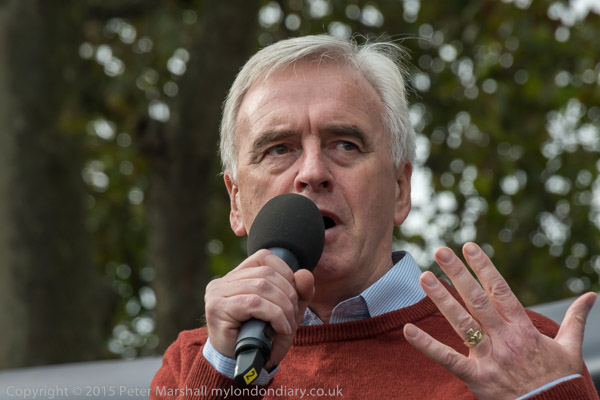
Speakers at the protest included Raphael Rowe, wrongly imprisoned as one of the M25 three, Anne Hall the mother of Daniel Roque Hall, a man suffering from a rare condition who would have died in prison without legal aid which got him released to receive care, and Sally, the mother of a rape victim who police failed, as well as Sadiq Khan MP Labour’s Shadow Justice Secretary, Ian Lawrence of NAPO, activist, poet, co-founder and co-chair of BARAC Zita Holbourne, Shauneen Lambe of Just for Kids Law and criminal defence solicitor and Justice Alliance member Matt Foot, but the loudest applause was for a rousing speech by Shami Chakrabarti of Liberty. You can see pictures of all of them and more about the protest on My London at Save Legal Aid.


People’s March For The NHS And More – 2014

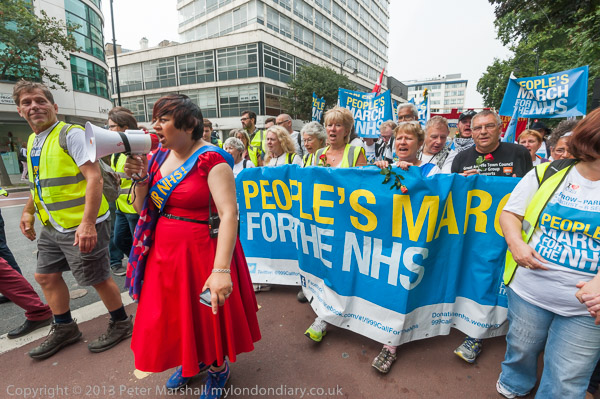
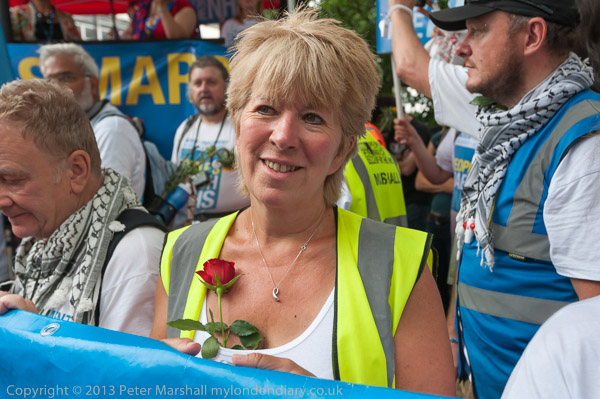
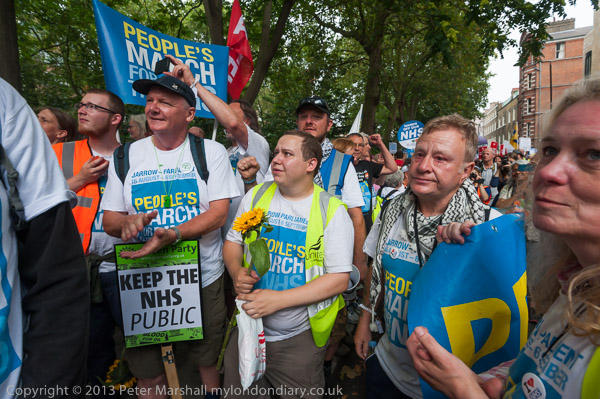
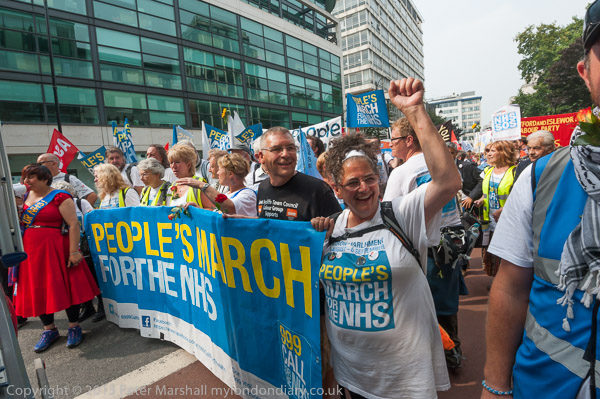
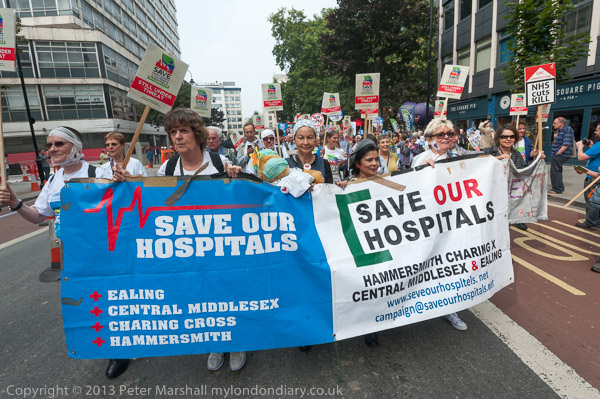
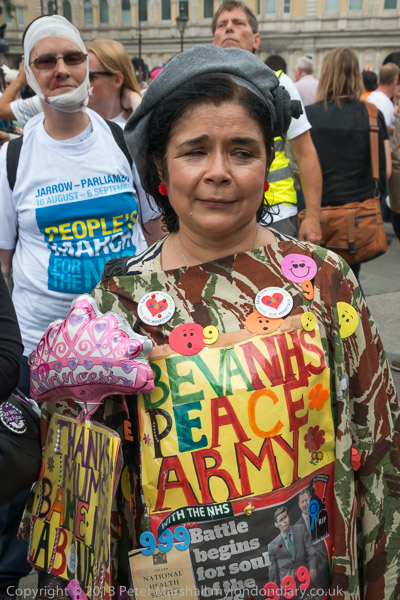
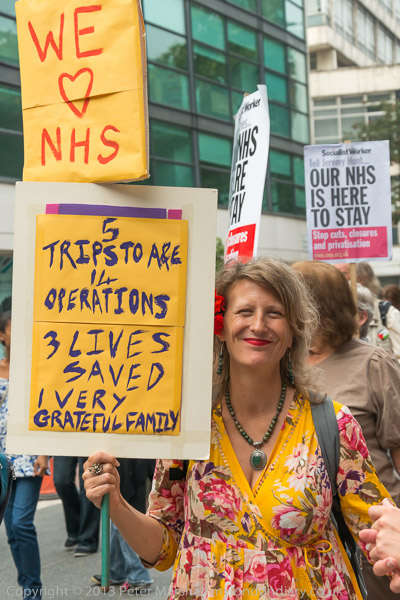
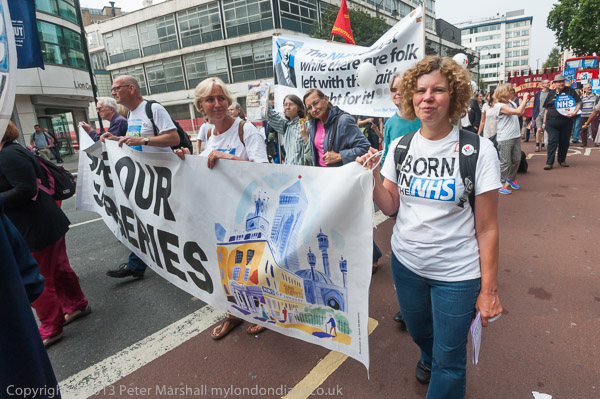
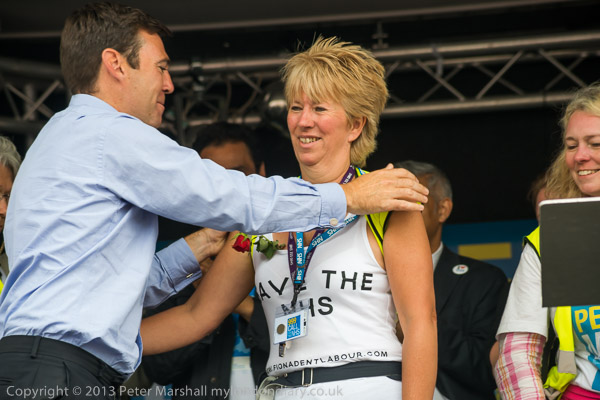
On Saturday 6th September I was in London mainly to cover the final stage of the People’s March for the NHS which had begun in mid August in Jarrow, but also photographed Mourning Mothers of Iran, people on a Rolling Picket against Israeli violence and a protest against children being taken for families by social workers and family courts.


People’s March from Jarrow for NHS

When the NHS was founded back in 1948 it was an integral part of the welfare state, a social welfare policy to provide free and universal benefits. It was opposed at its start by the Conservative Party, and met with opposition from some doctors and other medical professionals worried that it would cut their earnings from private practice.

Particularly because of the opposition from doctors, the initial scheme had to be fairly drastically changed, with compromises being made by Minister for Health Aneurin Bevan. And dentistry was never really properly and fully brought withing the system.

Since 1948 much has changed. We’ve seen a huge growth in private hospitals, partly driven by many employers providing private healthcare schemes as a perk for their better paid employees, but also by public funding being used to pay for NHS services provided by the private sector.

We’ve also seen the introduction of charges for NHS prescriptions and more recently the NHS has decided on a fairly wide range of common conditions for which it will no longer provide treatment or prescriptions, sending people to the chemist for both advice and over the counter medicines.

There have been huge advances in medical science too, and more of us are living to a greater age than ever before, making more demands on the NHS. Our NHS is costing more, though still the total spending on health in the UK is significantly less than in many other countries as an OECD chart on Wikipedia shows – less than Japan, Ireland, Australia, France, Canada, Belgium, Luxembourg, Denmark, Sweden, Austria, Netherlands, Germany, Norway and Switzerland – and well under half of that in the USA.

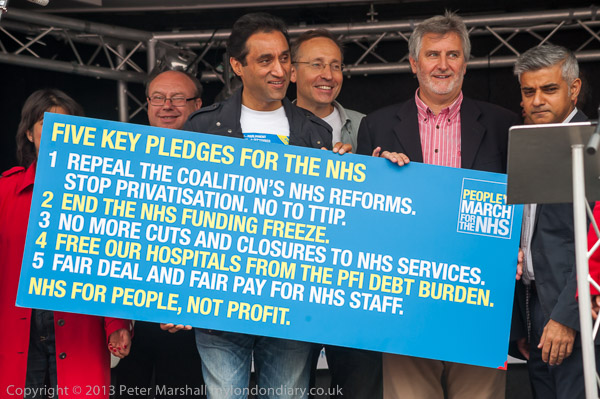
Yet for some years many leading Conservatives have advocated the UK moving to a system based on the US model. It would not make our health any better, but would make it much more expensive. And lead to huge profits for healthcare companies – many of them US-based – which are already beginning to take large bites of our own NHS spending. Involving private companies in providing NHS services has not generally led to better services – and in some cases has certainly made them worse, unsurprisingly as it diverts money to shareholders rather than using it for patients. Some services have become more difficult to access.

GP surgeries have always been private businesses, but when these were run by the doctors they provided more personal services than those run by some private companies where patients are unlikely to see a ‘family doctor’ and far more likely to see a locum – if they can still get an appointment. The NHS also spends over £6bn a year on agency and bank staff which would be unnecessary if we were training enough staff.

The need to put services out to tender is time-consuming and wastes NHS resources, one of several things which has produced a top-heavy management. And accepting low tenders often leads to poorly performing services such as cleaning, as I found when I was in my local hospital and found staff simply were not allowed time to do the job properly.

The Health and Social Care Act 2012 was the most extensive reorganisation of the NHS to that date and Lansley has been widely seen as getting things wrong, and it replaced the duty on the NHS to provide services with one to promote them, with delivery possibly by others, opening up the entire health service to privatisation.

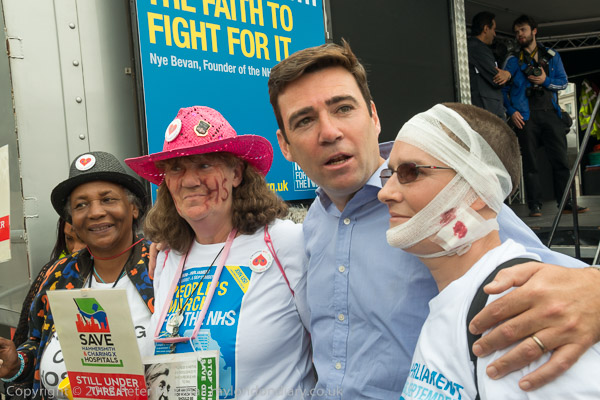
I walked with the marchers from a rally in Red Lion Square to Trafalgar Square where there was a final rally with speakers including Shadow Secretary of State for Health Andy Burnham and London Mayor Sadiq Kahn. In 1936 the Jarrow Crusade marchers in 1936 – who were shunned by the Labour Party but captured the hears of the British population – had been given a pound, along with a train ticket back to Jarrow, but failed to get any significant action from the government and Jarrow was left without jobs. Those marchers who had walked the whole 300 miles from Jarrow were presented with medals incorporating a pound coin.

People’s March from Jarrow for NHS


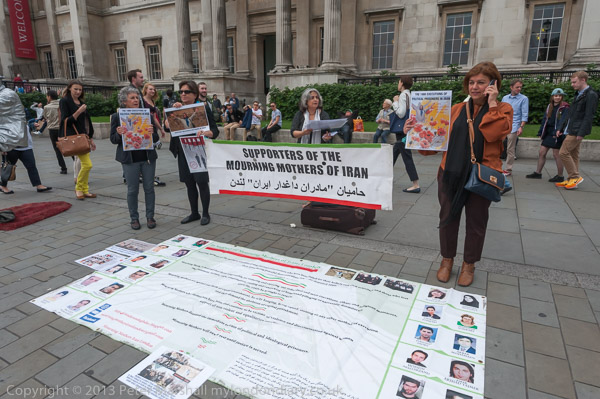
Mourning Mothers of Iran – Trafalgar Square

On the North Terrace of Trafalgar Square I found a group of mainly Iranian women standing in a silent vigil to support the Mourning Mothers of Iran.

Now renamed The Mothers of Laleh Park, these are women who hold vigils in the park in the centre of Tehran after their children were killed or imprisoned following a crackdown on members of the opposition after the 2009 Iranian election, and call for the release of political prisoners. Many of the women in Iran have been arrested for protesting and for talking to foreign journalists.

Mourning Mothers of Iran


Rolling Picket against Israeli violence – Downing St

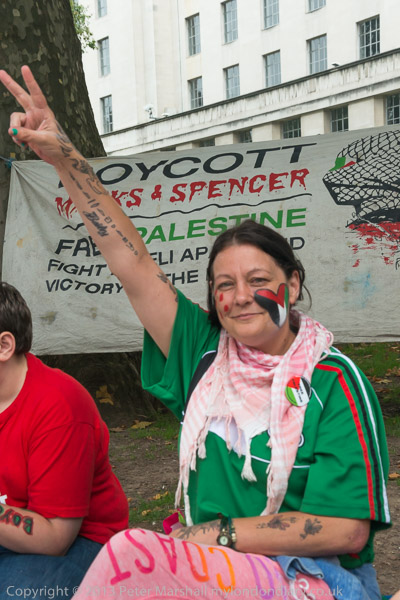
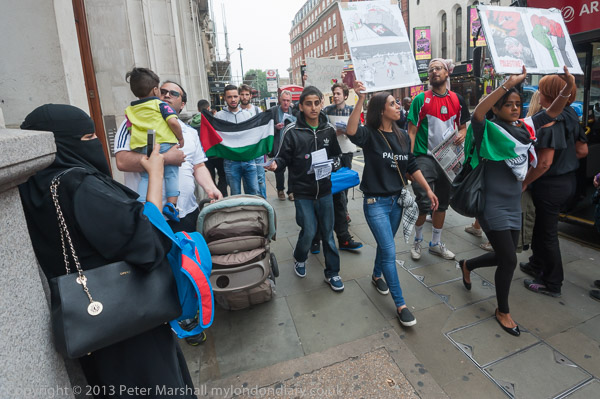
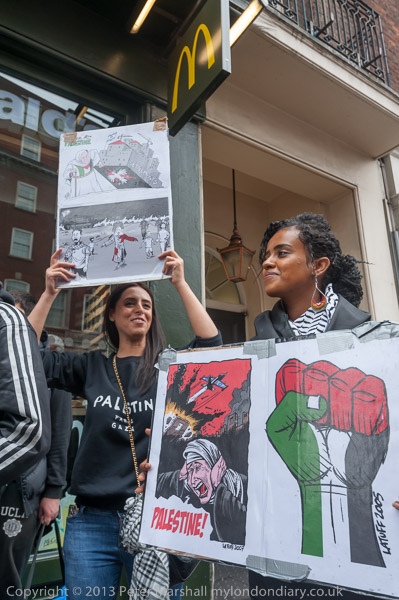
At Downing Street I photographed a group protesting against Israeli violence towards Palestinians and clalling for a boycott of Israeli good.

After a brief protest at Downing St they marched up Whitehall and protested outside McDonalds before going for another short protest outside the Tesco facing Trafalgar Square. Police intervened to move them away when they tried to block the doorway there. I left them on their way to make further protests outside shops supporting Israel on their way to Tony Blair’s house off the Edgware Rd.

Rolling Picket against Israeli violence


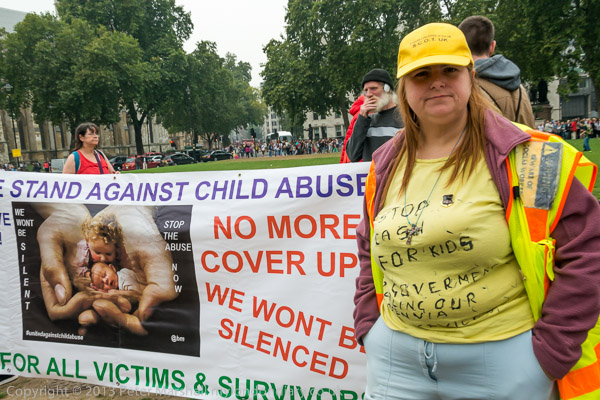
Stolen Children of the UK – Parliament Square

This group say that many children in the UK are removed from families by social workers and family courts for no good reason. They allege that there is systematic, systemic institutional abuse of around a thousand children a month being removed in this way and then abused by paedophile rings. Although there may be children wrongly taken from families there appears to be no firm evidence for such abuse.

These conspiracy theories are a world-wide phenomenon and in 2017 became the core belief of QAnon, the US extreme right wing conspiracy theory political movement.

Stolen Children of the UK


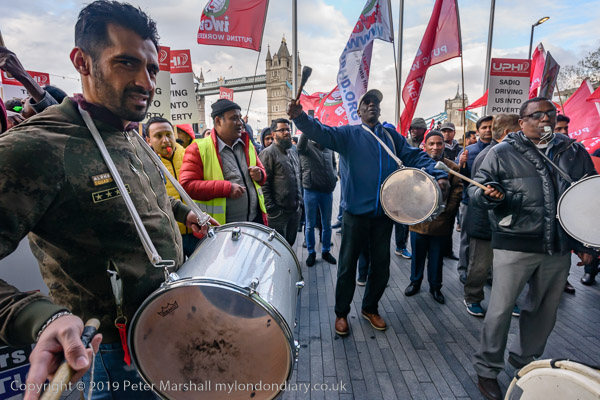
Unfair treatment of private hire drivers

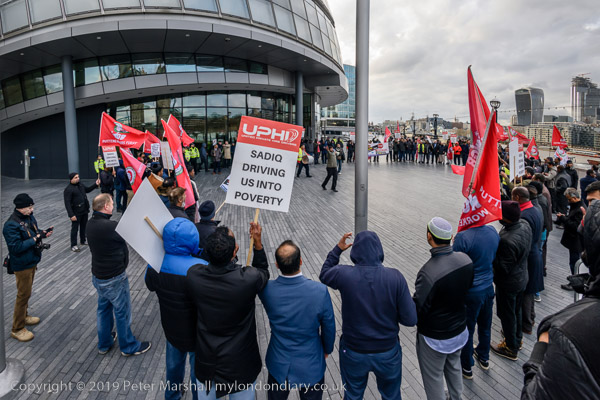
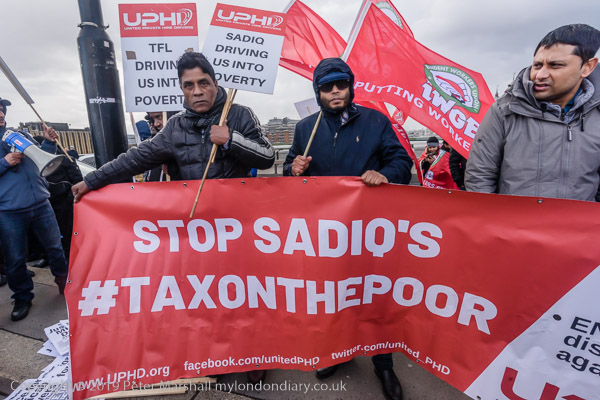
Rather than write something myself about the discrimination by Transport for London making private hire drivers pay the London congestion charge to accompany some of my pictures from the protest by them at the start of April, I’ve decided to quote some of the statement made last week about their High Court case which begins today:

The Independent Workers Union of Great Britain (IWGB) will be arguing at the High Court on 10 and 11 July that Mayor of London Sadiq Khan’s decision to introduce a congestion charge on minicabs discriminates against and breaches the human rights of a mainly BAME workforce.
The IWGB is seeking a judicial review of Khan’s decision to introduce the £11.50 charge on the grounds that it is a case of indirect discrimination under the Equality Act. The charge is being imposed on a workforce that is mainly BAME (94% of London’s 107,000 minicab drivers are BAME according to TFL), while black cab drivers, who are mostly white, continue to be exempt.

This policy is also in breach of a number of articles of the European Convention on Human Rights that cover discrimination, property rights, right to a family life and ability to carry out a profession.
The IWGB has assembled a legal team which includes renowned discrimination barristers Ben Collins QC,Nadia Motraghi and Tara O’Halloran of Old Square Chambers, and TMP Solicitors founding partner Jacqueline McGuigan.

The IWGB has proposed a number of alternatives to this policy, including a cap on the total number minicab driver licenses, a levy on minicab operators such as Uber and Viavan, and the enforcement of worker rights by Transport for London (TfL).

Discrimination also runs throughout London’s enforcement regime. The most recent figures released by TfL show minicabs are almost three times as likely to be stopped by enforcement officers as black cabs, despite the fact that TfL’s own statistics show that on average minicabs are more compliant than black cabs.

You can read the rest of this statement, including quotes from some of the drivers on the IWGB web site: London congestion charge discrimination claim to be heard at the High Court 10 & 11 July

More of my pictures from the April 4th protest at Private hire drivers protest congestion charge.


There are no adverts on this site and it receives no sponsorship, and I like to keep it that way. But it does take a considerable amount of my time and thought, and if you enjoy reading it, please share on social media.
And small donations via Paypal – perhaps the cost of a beer – would be appreciated.

All photographs on this and my other sites, unless otherwise stated, are taken by and copyright of Peter Marshall, and are available for reproduction or can be bought as prints.

To order prints or reproduce images