A Busy Saturday – August 15th 2015


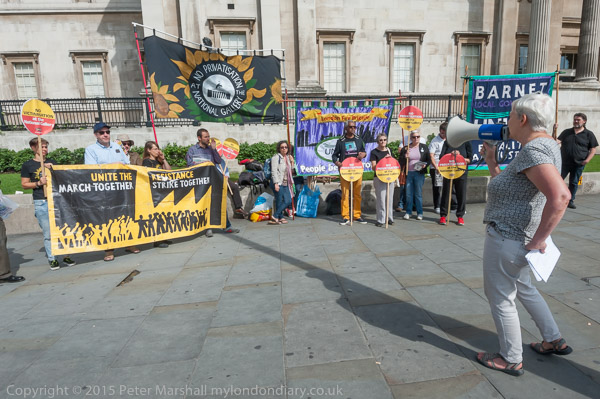
I began my working day rather later than the pickets outside the National Gallery, who held a short rally after picketing since the early morning on the 61st day of their strike against plans to outsource the jobs of 400 gallery assistants and the sacking of PCS union rep Candy Udwin for her union activities.
More at: National Gallery 61st day of Strike

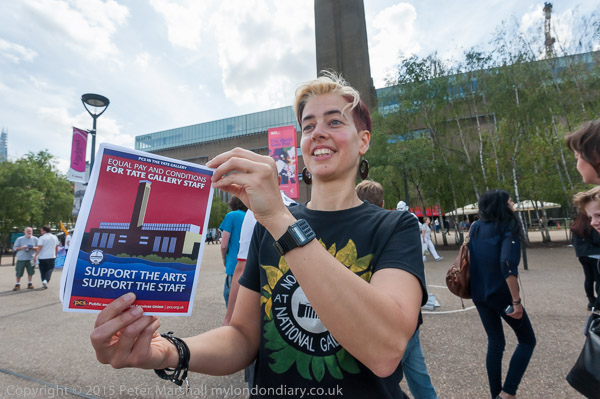
A related protest against the privatisation of visitor assistants was taking place a little later outside Tate Modern on Bankside, with workers giving out leaflets calling for equal pay and conditions for outsourced and in-house workers at both Tate Britain and Tate Modern in London. Privatised staff doing the exactly the same job have zero hours contracts with no guarantee of regular work, get £3 an hour less, and do not get the decent pensions, sick pay and holidays enjoyed by their colleagues.
More at: Equalitate at Tate Modern

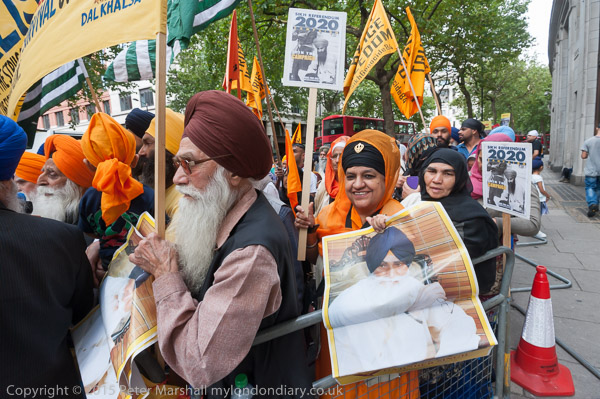
Back over the river to Aldwych and the Indian High Commission, where two protests were taking place on Indian Independence Day. Sikhs were supporting the call by hunger striker Bapu Surat Singh, now on hunger strike for over 200 days, calling for the release of Sikh political prisoners and other prisoners of all religions who have completed their jail terms but are still in prison.

Many of the Sikhs held posters of Gajinder Singh, a founding member Dal Khalsa which calls for an independent Sikh state, Khalistan, and they called for a referendum to be held in the Punjab and among the Sikh diaspora around the world on the setting up such as state.
More at: Sikhs call for release of political prisoners

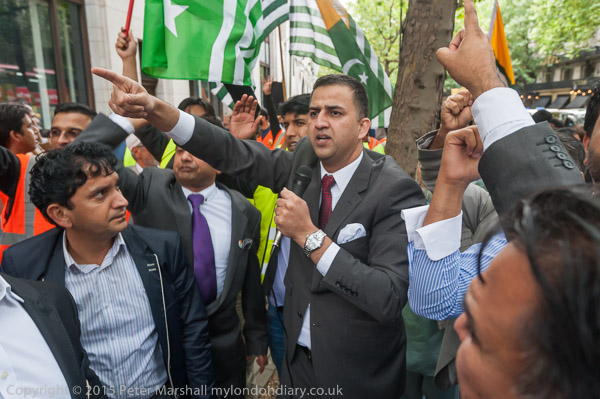
Also protesting outside the Indian High Commission were a crowd of Kashmiris calling for freedom. Kashmir is a disputed territory with parts occupied by India, Pakistan and China, and since 1987 the Indian occupation has turned their area into one of the most militarised places in the world, with around one Indian soldier for every 14 Kashmiris.

Over 100,0000 Kashmiris have been killed since the current uprising against Indian occupation began in 1987, and torture is used as a mean to get confessions and terrorise the civilians including women and children. In Kashmir Indian Independence day is observed as ‘Black Day’.
More at: Kashimiris Independence Day call for freedom

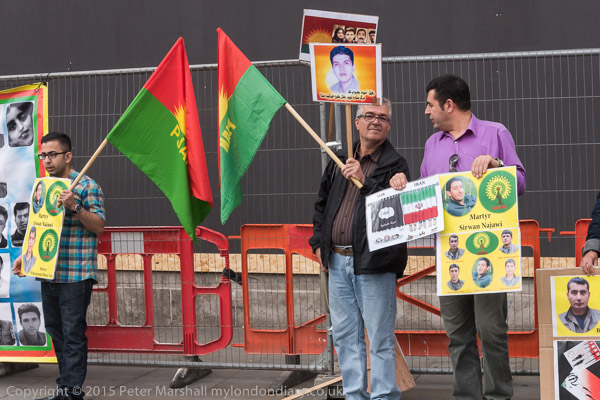
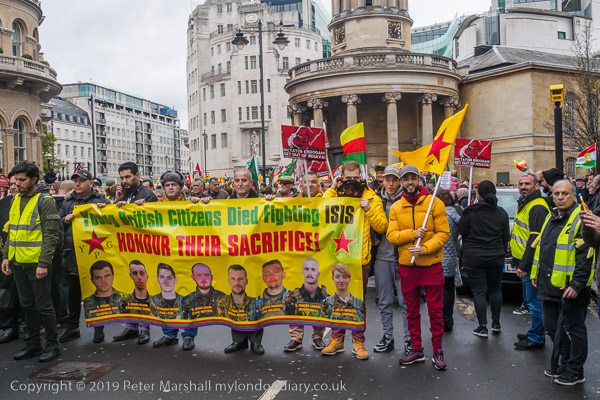
Back in Trafalgar Square Iranian Kurds from the Party of Free Life of Kurdistan (PJAK) remembered its fighters killed in the fight against Iran and ISIS for self-determination. Like the PKK, PJAK owes allegiance to Abdullah Öcalan and the ideals of the Rojava revolution.
More at: Kurdish PJAK remembers its martyrs

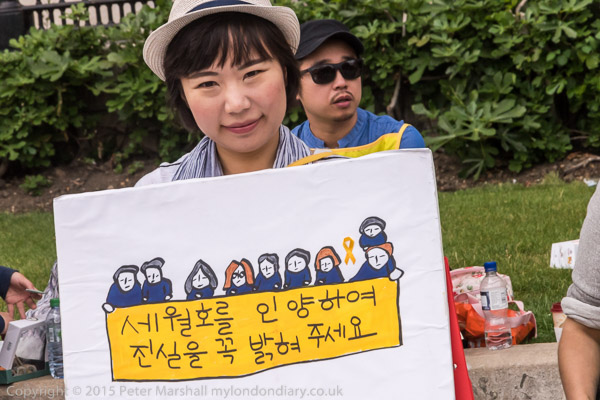
A few yards away, Koreans were holding their monthly silent protest for the victims of the Sewol ferry tragedy, mainly school children who obeyed the order to ‘Stay Put’ on the lower decks as the ship went down. They continue to demand that the Korean government raise the Sewol ferry for a thorough inquiry and punish those responsible as well as bringing in special anti-disaster regulations.
More at: 16th ‘Stay Put’ Sewol silent protest

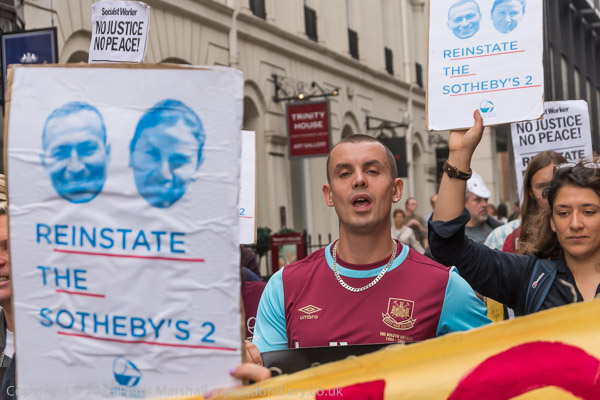
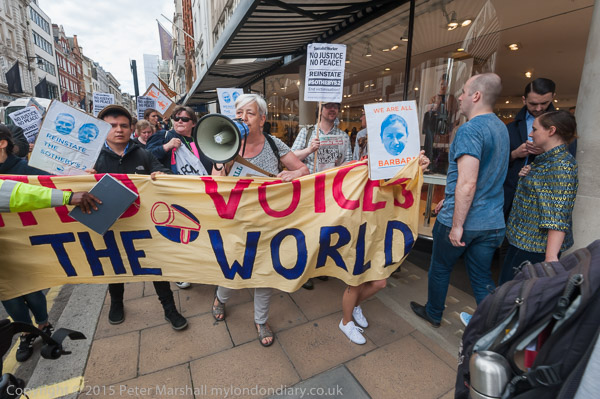
Finally I made my way to Oxford Circus to meet members of the United Voices of the World and supporters including those from SOAS Unison, the National Gallery strikers, Class War and others who were marching to protest outside Sotheby’s in Old Bond St. The UVW werecampaigning for proper sick pay, paid holidays and pensions for the cleaners who work there, and so far Sotheby’s response had been to sack two of the union members, Barbara and Percy.

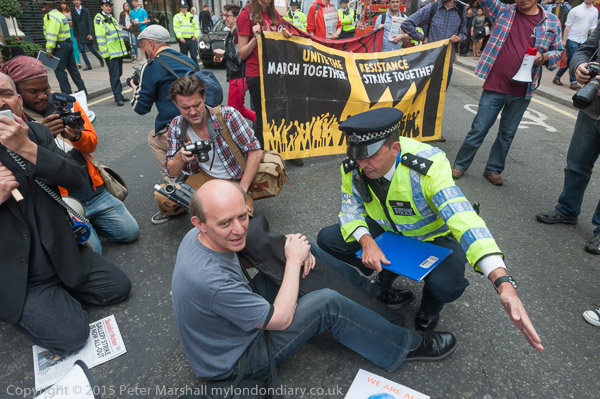
Police harassed the protesters as they arrived outside Sotheby’s, trying to move them off the road they were marching along and onto the pavement, and they responded by sitting down on the road and refusing the police orders to move. After some minutes they got up and marched around the block, past the rear entrance to Sotheby’s, with two union officials going into some of the shops on the way to hand out leaflets explaining the action. Police tried to stop these two going into the shops and some arguments developed.


The marchers returned to the street in front of Sotheby’s and held a short rally, again ignoring police who tried to move them off the road. Police then tried to stop them marching around the block again, holding some while others surged around and the marchers made another circuit, returning to Sotheby’s for a short final rally before marching back towards Oxford Circus.
More at: United Voices – Reinstate the Sotheby’s 2.

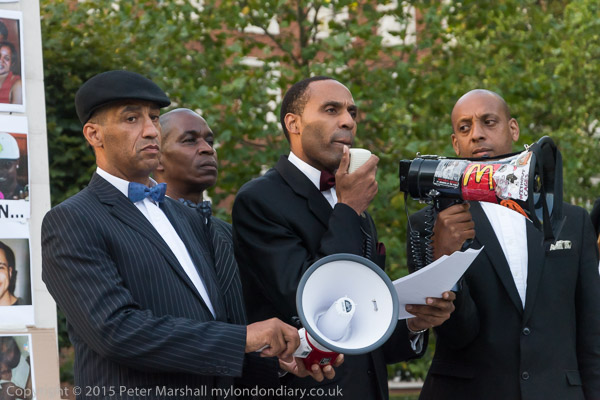
My day wasn’t quite over, and I moved to Grosvenor Square, where two young women, one black and one white, had organised a Black Lives Matter protest close to the US embassy in solidarity with events across the US against the collective and systemic unlawful arrests and killings of black people in America. The protest around the statue of Franklin Delano Roosevelt was supported by groups including BARAC (Black Activists Rising Against Cuts) and the Nation of Islam.

More at: BlackoutLDN solidarity with Black US victims.

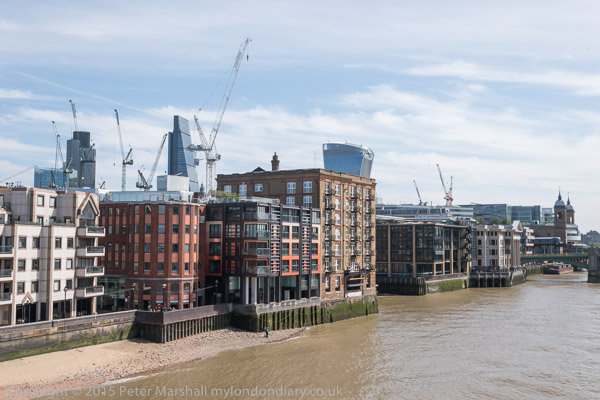
In all the travelling around central London on foot or by bus, I had time to take a few pictures between protests.
More at: London Views.


All photographs on this and my other sites, unless otherwise stated, are taken by and copyright of Peter Marshall, and are available for reproduction or can be bought as prints.


April Fools Day

The idea of a day – or rather a morning – for largely harmless pranks to be played on others on April 1st seems to have been fairly widespread around many countries, but the seems to be no real explanation of its origin, but it seems to date back as least into the middle ages. The choice of date is suggested by some to have marked the end of the week of celebrations for the New Year, which was traditionally celebrated across Europe on March 25 until the sixteenth century.

There have been some celebrated hoaxes over the years – and those of us who were around in 1957 still remember the spaghetti harvest on the BBC with its narration by Richard Dimbleby, which fooled much of the nation and amused the rest of us. But so many of today’s news stories and government pronouncements throughout the year now seem so bizarre and unbelievable that I now am disappointed when no-one comes on afterwards to shout ‘April Fool!’

On several occasions in recent years I’ve found myself covering protests outside our Atomic Weapons factory at Aldermaston on April 1st and it’s long seemed to me that our government’s policy on nuclear deterrence is at best a complete hoax – but so far no government has stood up to admit this.

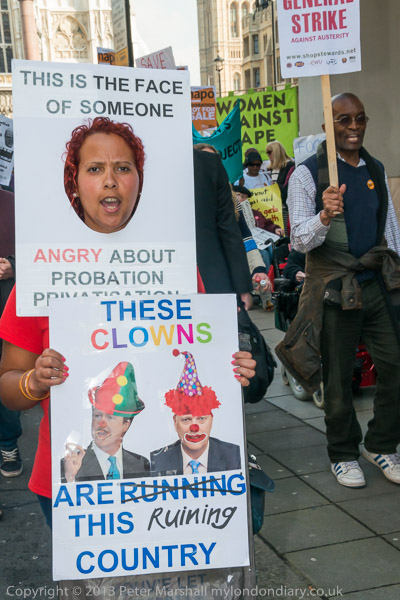
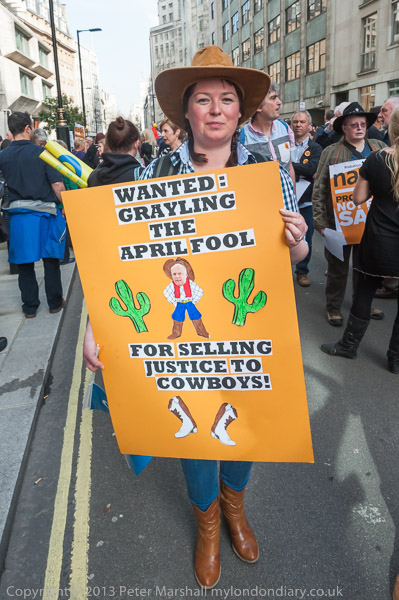
But I wrote about Aldermaston a few days ago, so today I’ll look elsewhere and to April 1st 2014, where I photographed three events in central London, one of which was by probation officers, naming then Justice Minister Chris Grayling whose birthday it was an ‘April Fool’, a judgement adequately confirmed by the failure of his reforms of probation and legal aid, and by his performance in later Government Ministries. Who can forget his no-deal Brexit ferry fiasco which resulted in us taxpayers forking out an extra £50 million on termination bonuses including to the firm with no ferries? ‘Failing Grayling’ is a truly well earned epithet.

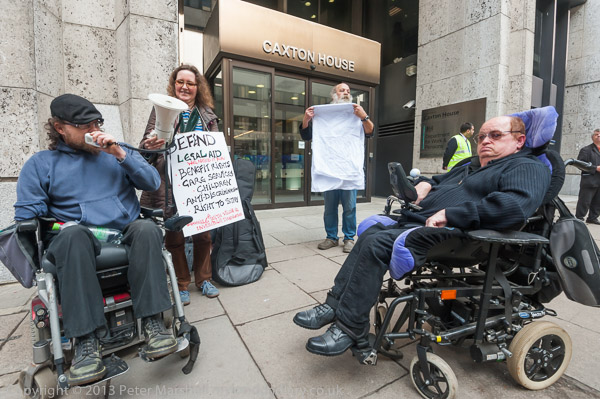
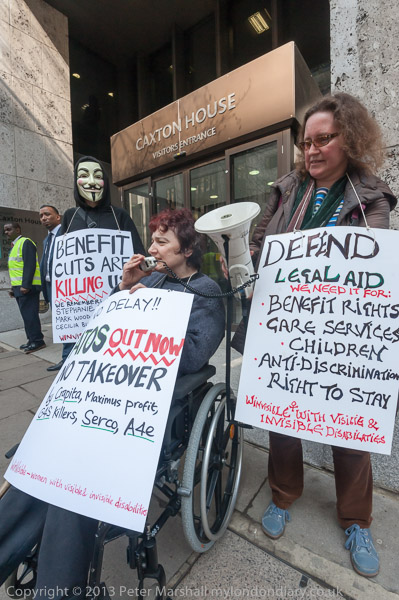
But the first event on that day was a picket by disablement activists at the Department of Work and Pensions HQ in Westminster, then run by Iain Duncan Smith, another Tory with a rather too consistent record of failure. Among the groups protesting were the Mental Health Resistance Network who successfully took the DWP to court over the discrimination against people with mental health conditions built in to the Work Capability Assessment (WCA). The DWP lost their appeal against the judgement but had defied the court in failing to address the issue.

Along with the MHRN were campaigners from DPAC and Winvisible and the picket was one of a number around the country demanding that assessments of work capability and personal independence payments be carried out by local GPs rather than the discredited tests by IT companies such as ATOS, which are inadequate by design and deliberately administered to disadvantage claimants, with trick questions and falsification of responses to meet targets set by the companies for the largely unsuitably qualified staff who administer them.

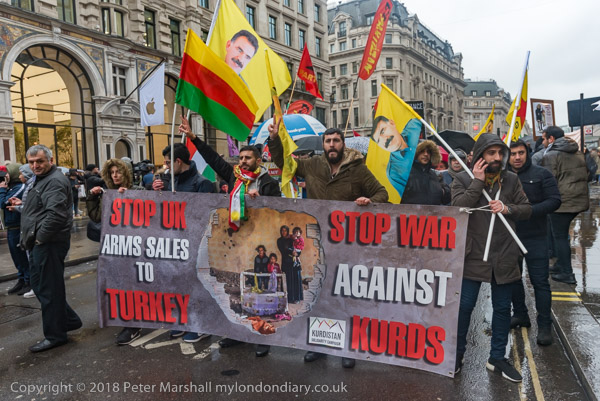
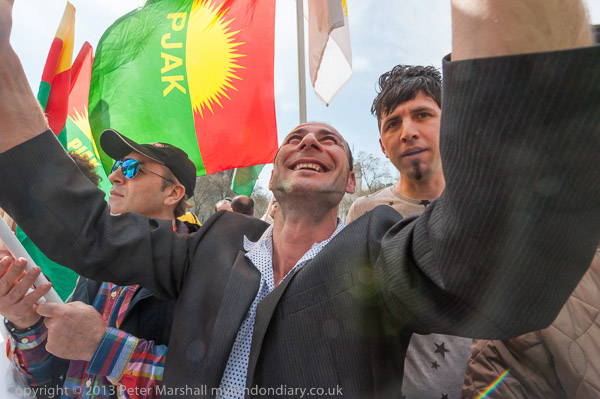
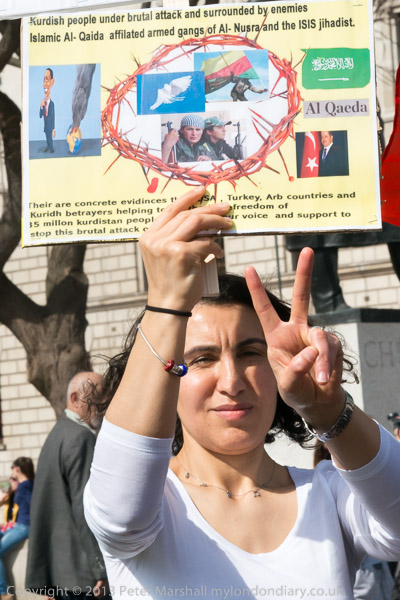
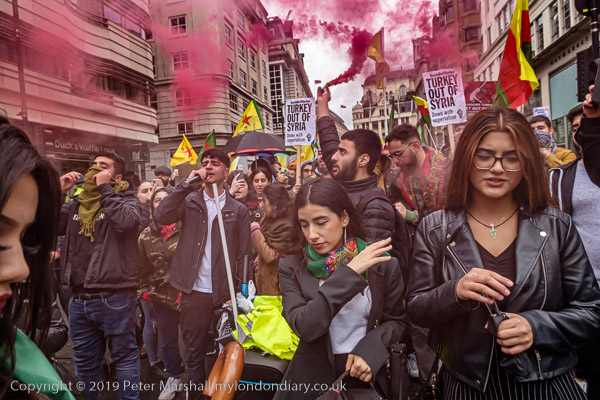
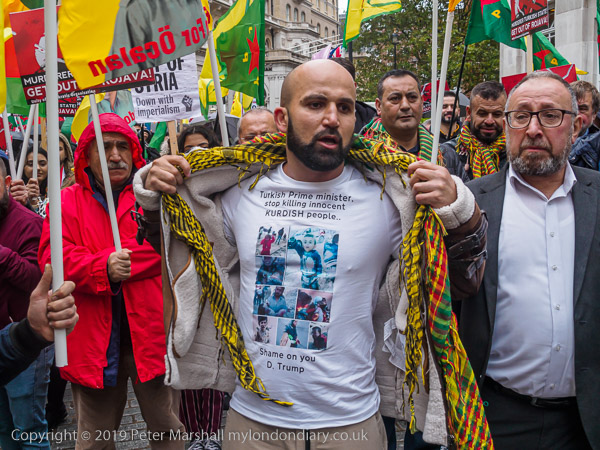
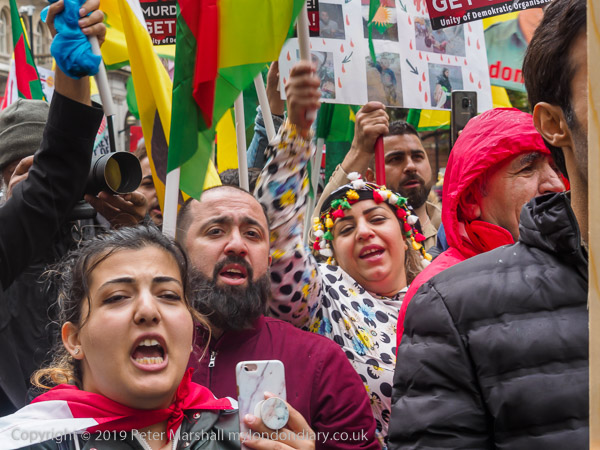
From the DWP in Caxton St it was a short walk to Parliament Square, where Kurds and Alevi were protesting against the attacks on the Kurdish areas in Northern Syria by forces supported by Turkey.

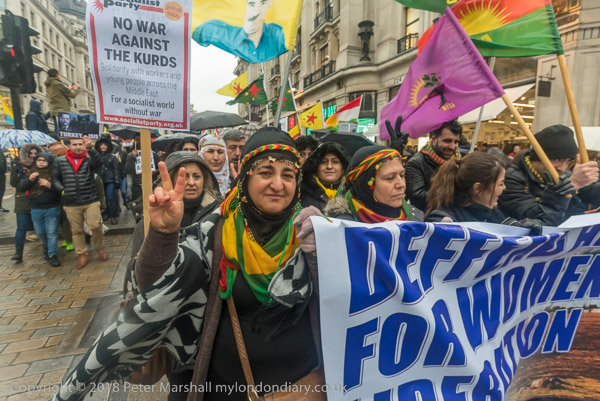
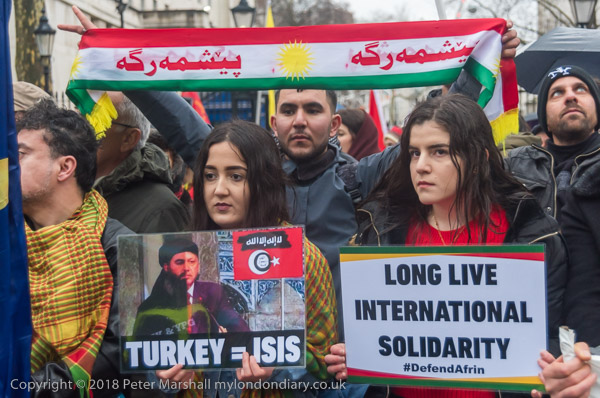
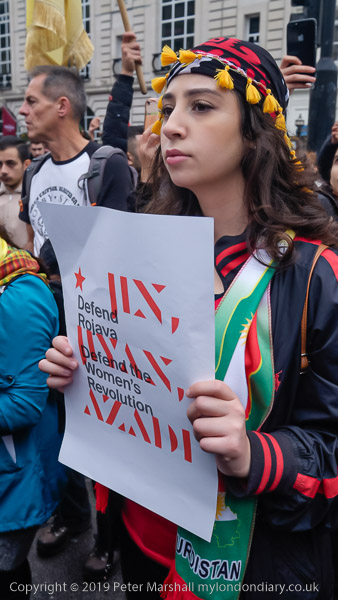
Kurds want justice and autonomy for northern Syria, where the area known as Rojava has a constitution that supports the rights of women and of all its population groups based on widespread community involvement. Many at the protest had flags for the PJAK (Party of Free Life of Kurdistan) which, like the Kurdistan Workers Party (PKK) calls for the release of Kurdish leader Abdullah Öcalan, held in a Turkish jail since 1999. The PKK was made a proscribed organisation in the UK in 2001 probably at the request of the Turkey, one of our NATO allies, who have a long record of discrimination and attempts to eliminate Kurdish culture and invaded and occupied Kurdish areas of Syria in 2016, implementing a policy of ethnic cleansing of the Kurds.

The largest of the protests on 1st April 2014 was by probation officers and lawyers from the London Criminal Courts Solicitors Association and other supporters of the Justice Alliance against the moves to privatise probation and cut legal aid.

Among the speakers at the event were two shadow ministers of justice and other MPs including Jeremy Corbyn, as well as Green Party Leader Natalie Bennett, trade unionists, and solicitors as well as several probabtion officers.

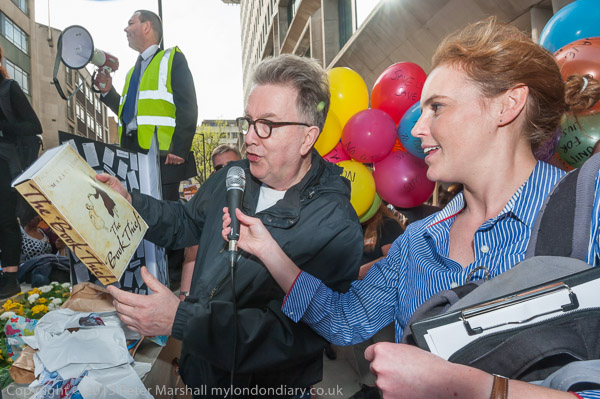
Following the rally in Parliament Square, the campaigners marched the short distance to the Ministry of Justice, where Tom Robinson led the singing of “the alternative ‘Happy Birthday’ and unwrapped a couple of presents for InJustice Minister Chris Grayling, a packet of Skittles (as bought by Travon Martin) and a copy of ‘The Book Thief’. Grayling had just announced that he was to stop books being sent to prisoners in UK jails.” A small group then delivered a birthday cake with a tombstone with the message ‘RIP Justice’ to the ministry.

More at:
Probation Officers Strike for Justice
Kurds protest at Rojava attacks
DWP & Atos Work Assessments

Rojava, Bolivia & Ecuador

One of the things that makes it hard to leave London is the diversity of the communities that have made their homes here, making this an exciting place. Throughout its history Britain’s population has been enriched by immigration and although immigrants have not always been made welcome they have made a very positive contribution to our society. Among them have been many religious and political refugees and asylum seekers, and many continue to support the causes in their home countries while in London.

While our media generally give little attention to protests – except for those rare occasions involving individual violent acts or anti-establishment acts such involving insults against national heroes such as the writing of graffiti on the plinth of the Churchill statue or attacking statues of slave traders, the protests by ethnic communities against events in their home countries are almost entirely dismissed as what one newsroom at least refers to as “tribal matters”.

Of course they are wrong, as well as being xenophobic. We live in a world that is increasingly interconnected and globalised, and Brexit, taking us out from under the wing of Europe will give even more importance to events happening around the rest of the world, including Rojava, Ecuador and Bolivia.

Rojava is important not just to those who live in this Kurdish-controlled part of Syria and to Kurds in general but the rest of us around the world. It was the Syrian Kurds who with US air support who were able to defeat ISIS but as a model of a democratic system dedicated to equality, the liberation of women and ecological justice that could serve to provide the system change we need to overcome climate disaster and to resolve the problems of the middle east and elsewhere.

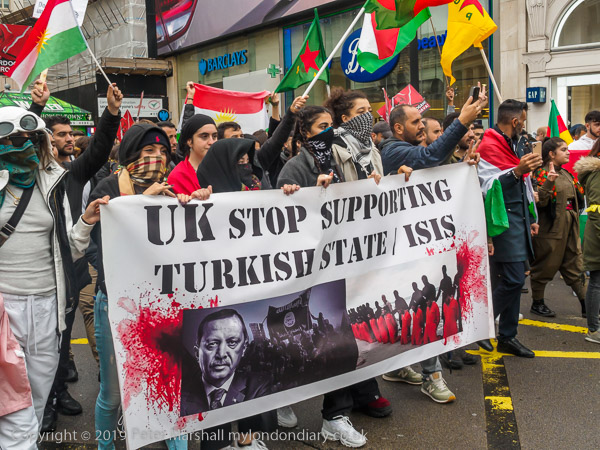
After ISIS were defeated, Trump brought US forces out of the area, leaving it open for Turkey to advance into Syria – with the aid of Islamist forces and the aim of destroying the Kurds. Through NATO we give Turkey support and doubtless supply arms while Russia, backing President Assad are happy to see Syrians who don’t support him exterminated. The Turks have huge superiority in weapons and seem very likely to acheive their aims, but are then likely to establish an Islamic state in the area rather than withdraw back to Turkish territory and we could well then see a war between Russia and NATO forces.

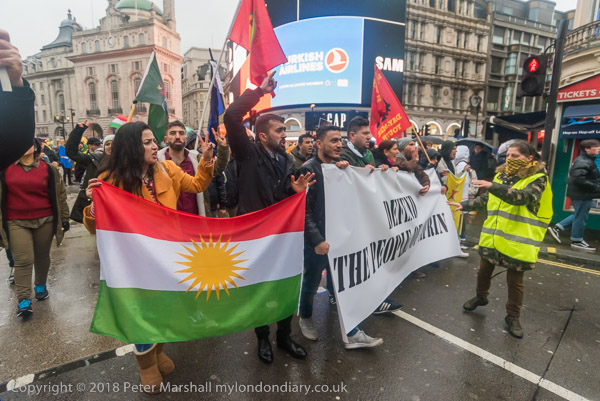
If you rely on the BBC for your news you will know probably know very little about what is going on in northern Syria and the protesters, mainly Kurds but with some support from the British left, gathered outside Broadcasting House a year ago today on Sunday October 13th 2019 to condemn the poor BBC coverage and hope to persuade them to do more. I met them there and marched with them as far as Trafalgar Square; they went on towards Parliament but I stopped to cover two other protests over events abroad.

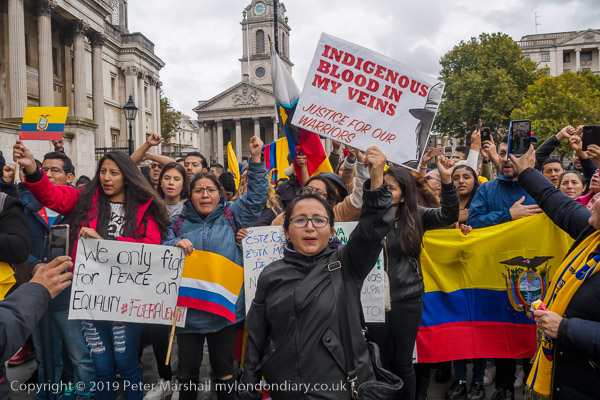
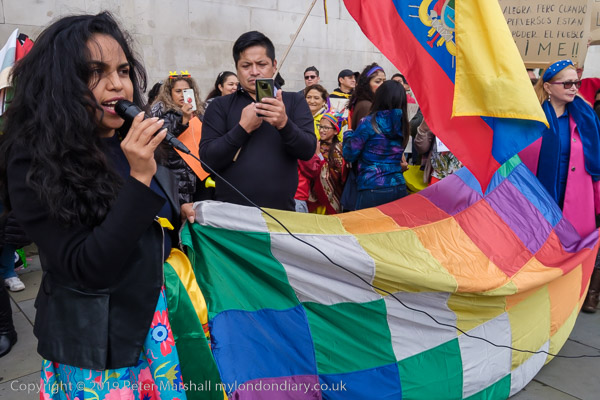
Ecuadorians living in the UK had come to call for the resignation of President Lenin Moreno who they say is their worst president ever. Many there were from indigenous groups who have been hardest hit by public service cuts, particularly the ending of fuel subsidies. Protests had been causing chaos in the capital Quito since these were announced two weeks earlier. The austerity measures had been demanded by the International Monetary Fund in order for the country to get a £3.4bn loan. After Brexit we could well see Britain having to meet similar IMF demands whose aim is to protect and promote international capital and corporations at the expense of the poor.

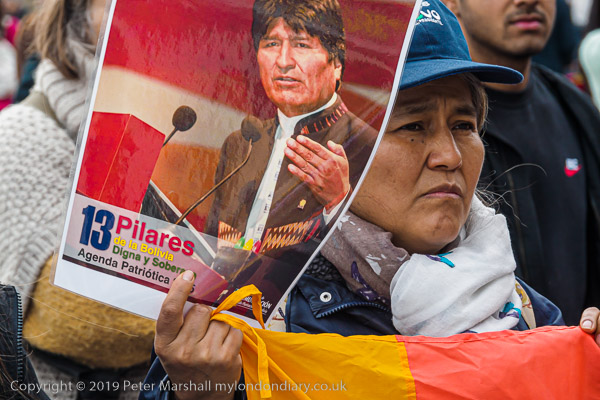
As the Ecuadorians left they were replace by Bolivians who held a lively rally with music and dancers in support of President Evo Morales, who was seeking a fourth term in elections a week later on 20 October.

Morales, the first Indigenous president, and his Movement for Socialism (MAS) greatly reduced poverty, cut the influence of the USA and multinational companies and made Bolivia a model of economic growth. Although popular among the poorer citizens, his policies had not endeared him to the wealthy or to the United States.

Although the election results made Morales a clear winner, with just enough votes to win on the first round, it was followed by violent insurrection amid claims of electoral fraud. Morales fled the country and resigned as President claiming there had been a coup after armed intruders broke into his home. He was offered political asylum first in Mexico and later moved from there to asylum in Argentina.

Although an Organization of American States investigation found there had been voting fraud, later studies by US political scientists and experts on Latin American politics concluded there was no statistical evidence of fraud. Despite being voted in by the Bolivian people, a warrant was issued in December for the arrest of Morales on charges of sedition and terrorism.

More about the three protests on My London Diary:

Rally supports Bolivia’s Evo Morales
Against Ecuadorian President Moreno
Solidarity with Rojava – Kurdish Syria


All photographs on this and my other sites, unless otherwise stated, are taken by and copyright of Peter Marshall, and are available for reproduction or can be bought as prints.


Solidarity with Rojava

While we may feel cooped up in isolation in the UK, and are mourning the deaths of several thousand from COVID-19, the situation for many around the world is far worse. Particularly at risk are the people of Rojava in North-East Syria, mainly Kurds, at risk both from Turkish invasion forces and from the virus.

Kurds are the largest minority community in Turkey as well as being widespread across the northern parts of Iran, Iraq and Syria. They were promised an independent state at the end of the First World War, but that promise was denied when the boundaries of modern Turkey were defined in 1923.

Since 1923 Turkey has attempted a programme to eliminate Kurdish culture and identity, at times with massive military campaigns as well as repressive legislation. The Kurds, around 20% of the population, have fought back the opposition led since the 1980s by the Kurdistan Workers’ Party or PKK led by Abdullah Öcalan who has been in jail in Turkey since 1999.

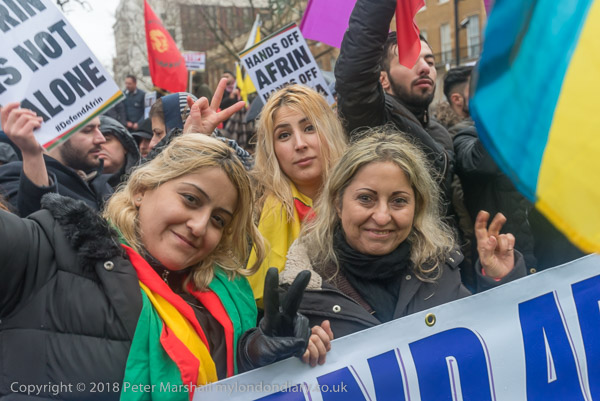
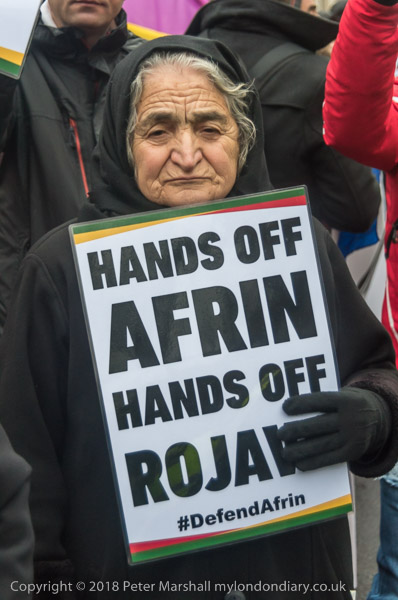
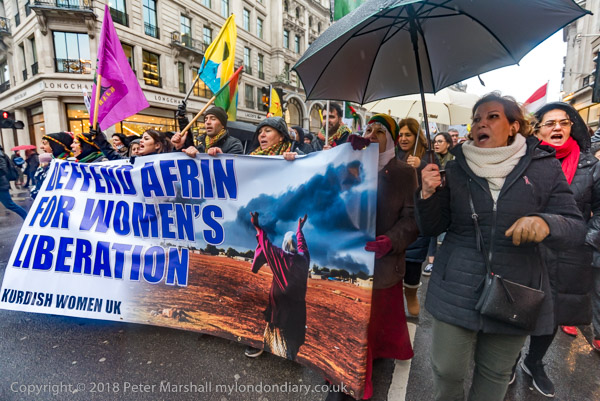
In recent years Turkey has been aggressively attacking Kurds outside Turkey and in early 2018 they invaded Afrin canton in northern Syria, part of the territory where Kurds with other minority ethnic groups had established a de-facto autonomous region of Rojava, with a constitution based on decentralisation, gender equality, direct democracy and guaranteeing ethnic minority rights and religious freedom.

Kurdish forces in the People’s Protection Units, the men of the YPG and the women of the YPJ, were the most effective force in fighting the ISIS in Syria, with the help of US air support. But Turkey is second only the the US in military strength in NATO, and has benefited greatly from NATO support and arms supply, and were able to take Afrin from these lightly armed Kurdish forces. Many Kurds were forced out of the area, which had been overwhelmingly Kurdish and they are now a relatively small minority.

President Trump’s announcement of a US withdrawal from Syria gave Turkey’s President Erdogan a green light to continue his country’s invasion of Rojava, and left the Kurds there no alternative but to call on the Syrian government for support, a move which in the longer term seems likely to end their autonomy.

Turkey is now using the coronavirus to threaten Kurds in Turkish prisons for political reasons – including many journalists, excluding them from its plans to release them with other prisoners because of the pandemic. They are also refusing to refer prisoners with COVID-19 symptoms for medical treatment.

For the 4 million inhabitants of North and East Syria, including 600,000 refugees the situation is also dire. The World Health Organisation refuses to support the area directly and little comes to them through the Assad regime. There are no WHO test kits or test machines and only 35 intensive care beds and 40 ventilators.

More pictures from October’s protest: Solidarity with Rojava – Kurdish Syria


All photographs on this and my other sites, unless otherwise stated, are taken by and copyright of Peter Marshall, and are available for reproduction or can be bought as prints.


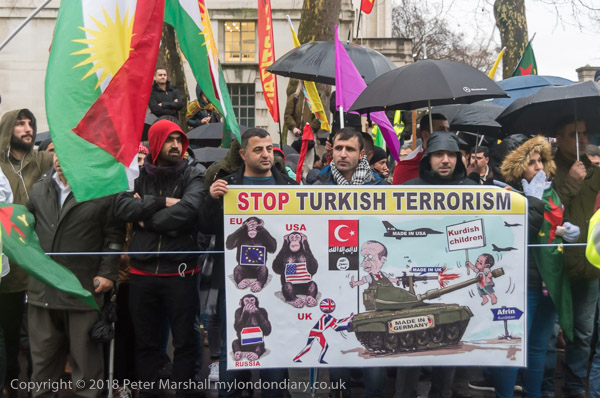
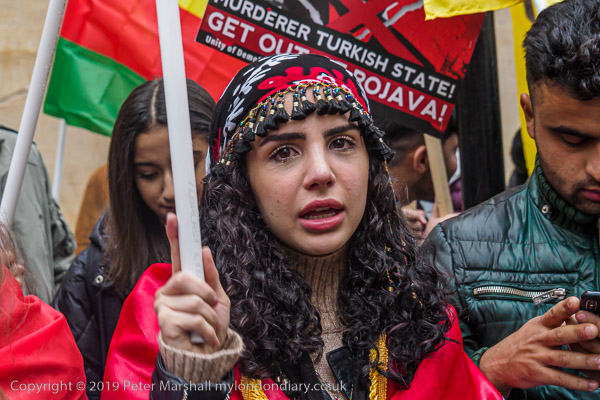
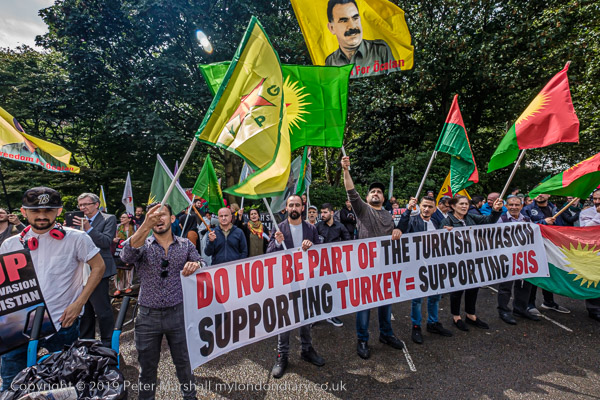
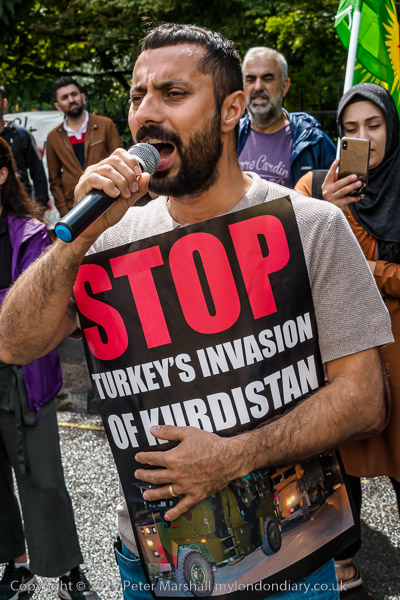
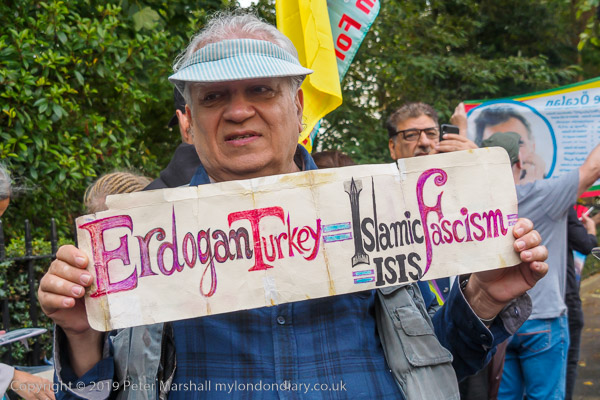
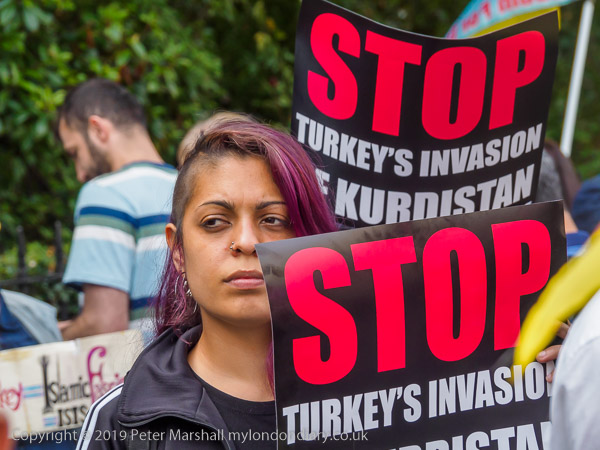
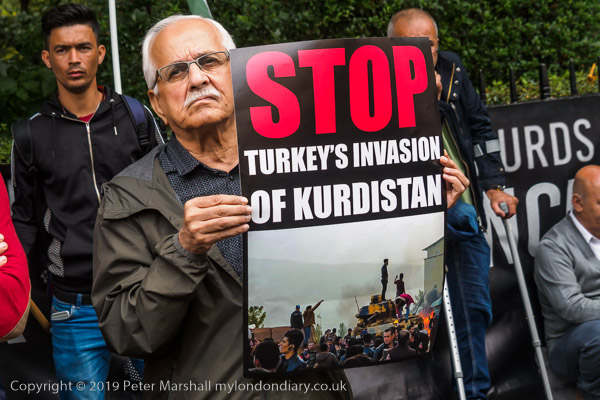
Kurds protest against Turkish invasion

Kurds have lived in the area around what is now southern and western Turkey and northern Syria and Iraq and north-western Iran at least since the time of Alexander the Great, and in more modern times were a part of the Ottoman Empire until the end of the First World War. At the end of the war their region was split between several countries, including Armenia and a rather smaller area called Kurdistan, but soon after this was occupied by Turkish forces under Kemal Atatürk  and by 1923 the whole area was incorporated into modern Turkey.

There were various uprisings by the Kurds against Turkish rule, and Turkey tried to eliminate Kurdish culture, banning the language and even the use of the terms  “Kurds”, “Kurdistan”, or “Kurdish”, re-christening the Kurds as “Mountain Turks”. Many Kurds were jailed.

In the 1980s and 90s there was a guerilla war led by the Kurdistan Workers’ Party (PKK) with the Turks destroying thousands of villages and killing over 20,000 Kurds. In 1999 Kurdish leader Abdullah Öcalan (“Apo”) was captured by the CIA in Nairobi and handed over to the Turks. He was tried in Turkey and sentenced to death, but this was later commuted to life imprisonment. He was held in solitary confinement in an island prison until 2009, when a few more PKK prisoners were moved with him to a new jail on the island, and he remains in prison, but still acts as a highly regarded leader of his people.

The protest at the Turkish embassy followed further threats by Turkish President Recep Tayyip Erdoğan to invade more Kurdish areas of Northern Syria, where the Kurdish state of Rojava has been set up with a  “democratic confederalism” constitution based on the ideas of Murray Bookchin which enshrines the values of environmentalism, self-defense, gender equality, and a pluralistic tolerance for religion, politics, and culture.

The call out for the protest states:

Through invasion, destruction & annihilation the fascist Turkish State, with its media, secret intelligence services and the Kurds he has pulled to his side is now trying to destroy the hard works of the Kurdish people in Northern Syria.

Its aim is to annihilate the Kurds and their existence. To protest this, the kurdish community and their friends will stand honourably against the atrocities being committed by the Turkish state and strengthen the struggle for freedom.

On this basis, Kurds and all the people who believe in democracy and peace are invited to protest against this fascist regime.

Stop Turkey’s Invasion of Kurdistan


All photographs on this and my other sites, unless otherwise stated, are taken by and copyright of Peter Marshall, and are available for reproduction or can be bought as prints.

There are no adverts on this site and it receives no sponsorship, and I like to keep it that way. But it does take a considerable amount of my time and thought, and if you enjoy reading it, please share on social media.
And small donations via Paypal – perhaps the cost of a beer – would be appreciated.