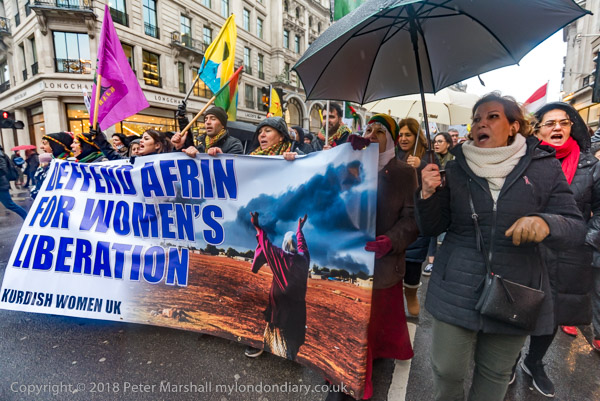
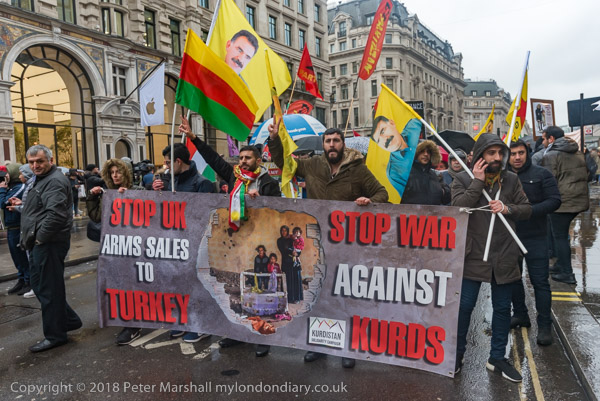
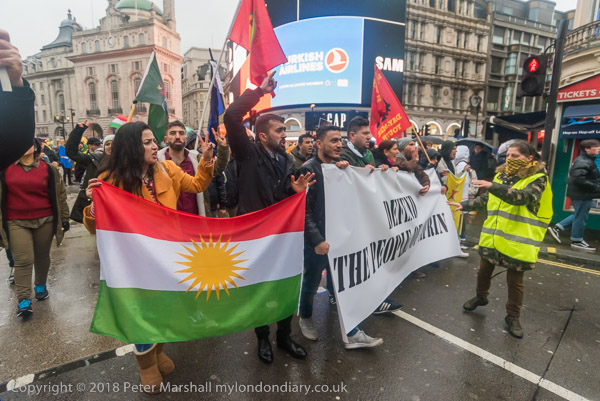
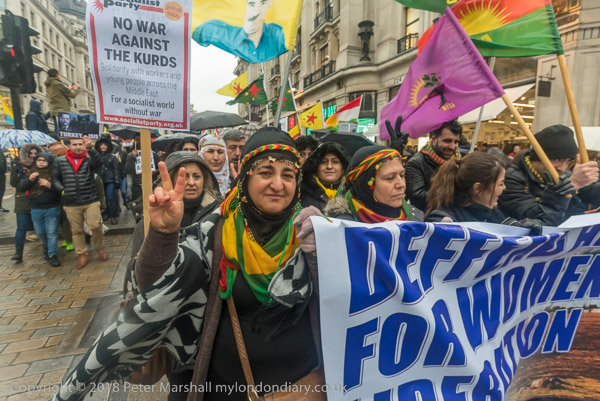
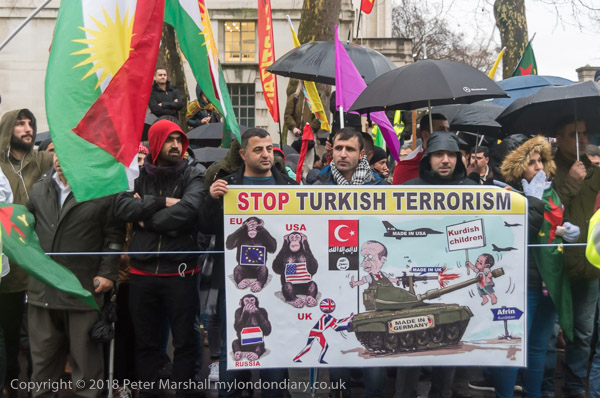
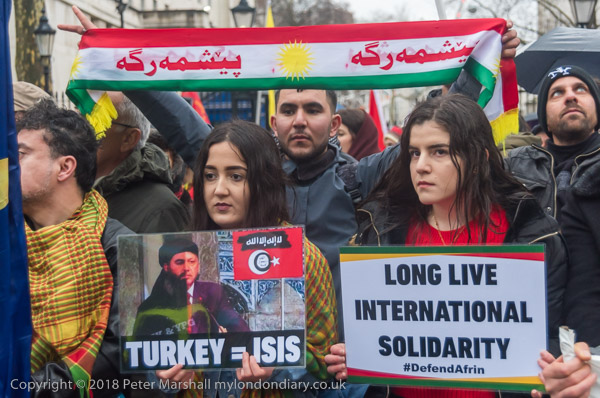
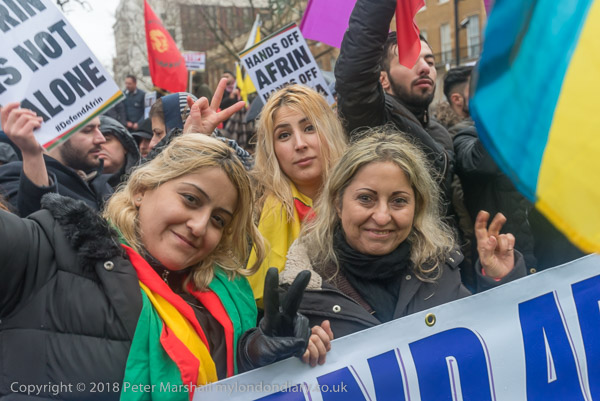
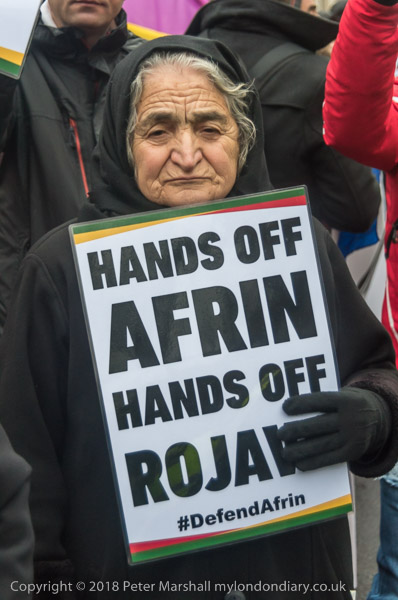
End the War on Rojava: Last Saturday, 25th January 2026, I photographed thousands of Kurds and supporters marching from the BBC towards Downing Street in an attempt to break the world’s silence as the Trump/USA supported Al Qaeda Islamist Syrian government forces destroy much of the autonomous mainly Kurdish region of Rojava.
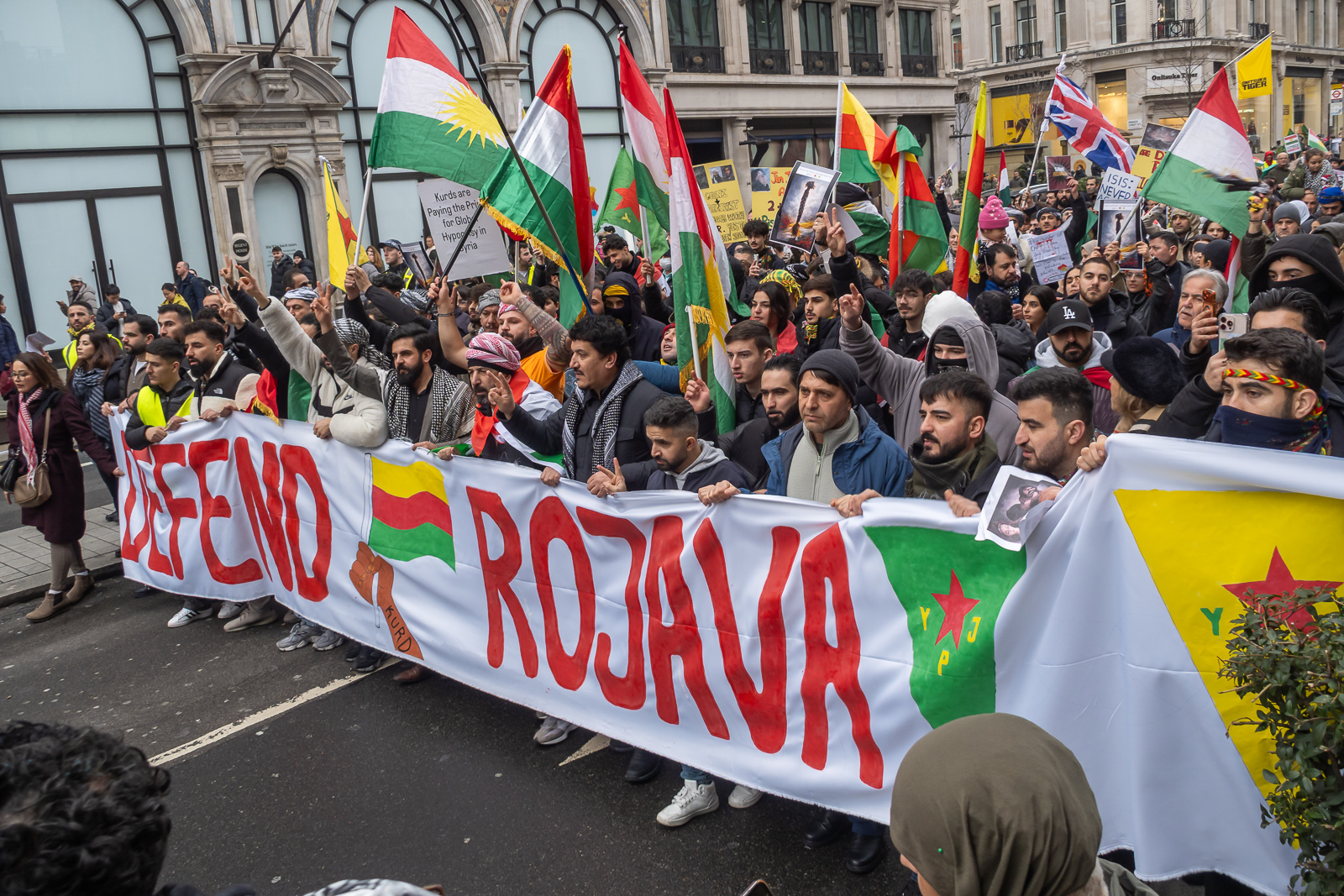
After the Syrian revolution began with mass protests against the brutal Assad regime in 2011, on July 19th 2012, three predominantly Kurdish-inhabited areas of north-east Syria declared their autonomy, becoming the democratic ‘Autonomous Administration of North and East Syria’ (AANES), better known as Rojava, although this later grew to include a third of Syrian territory and nearly a fifth of its population.
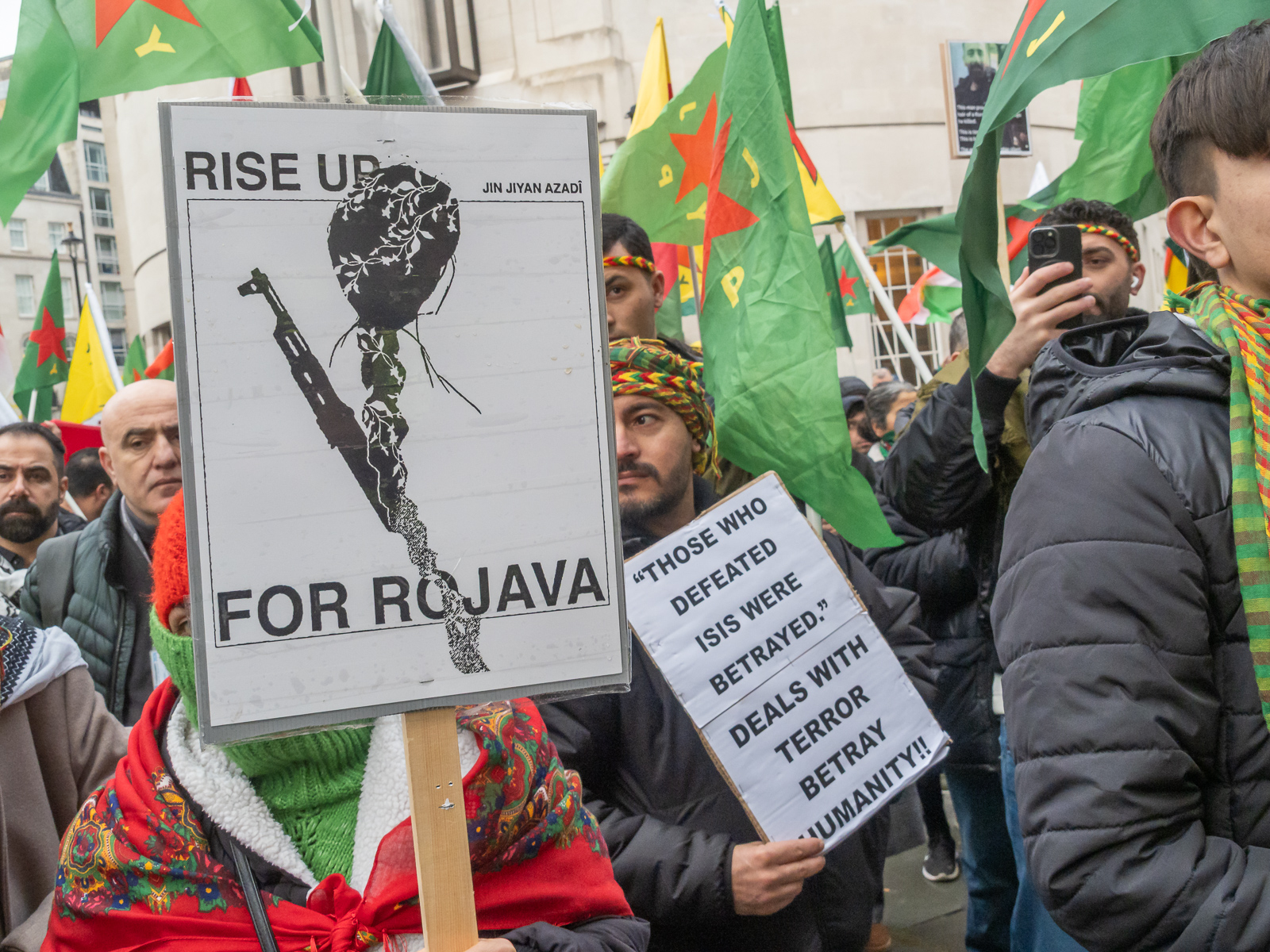
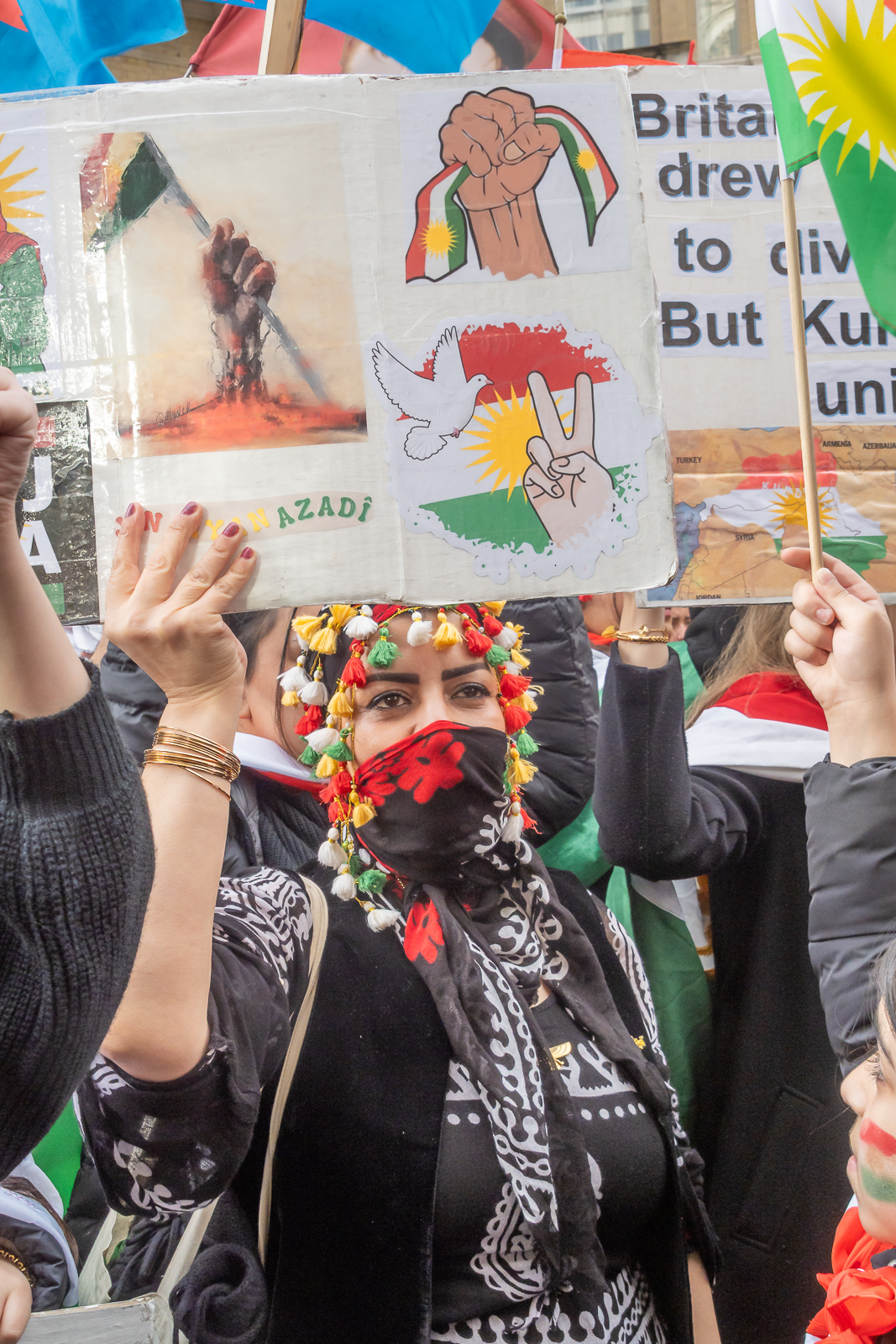
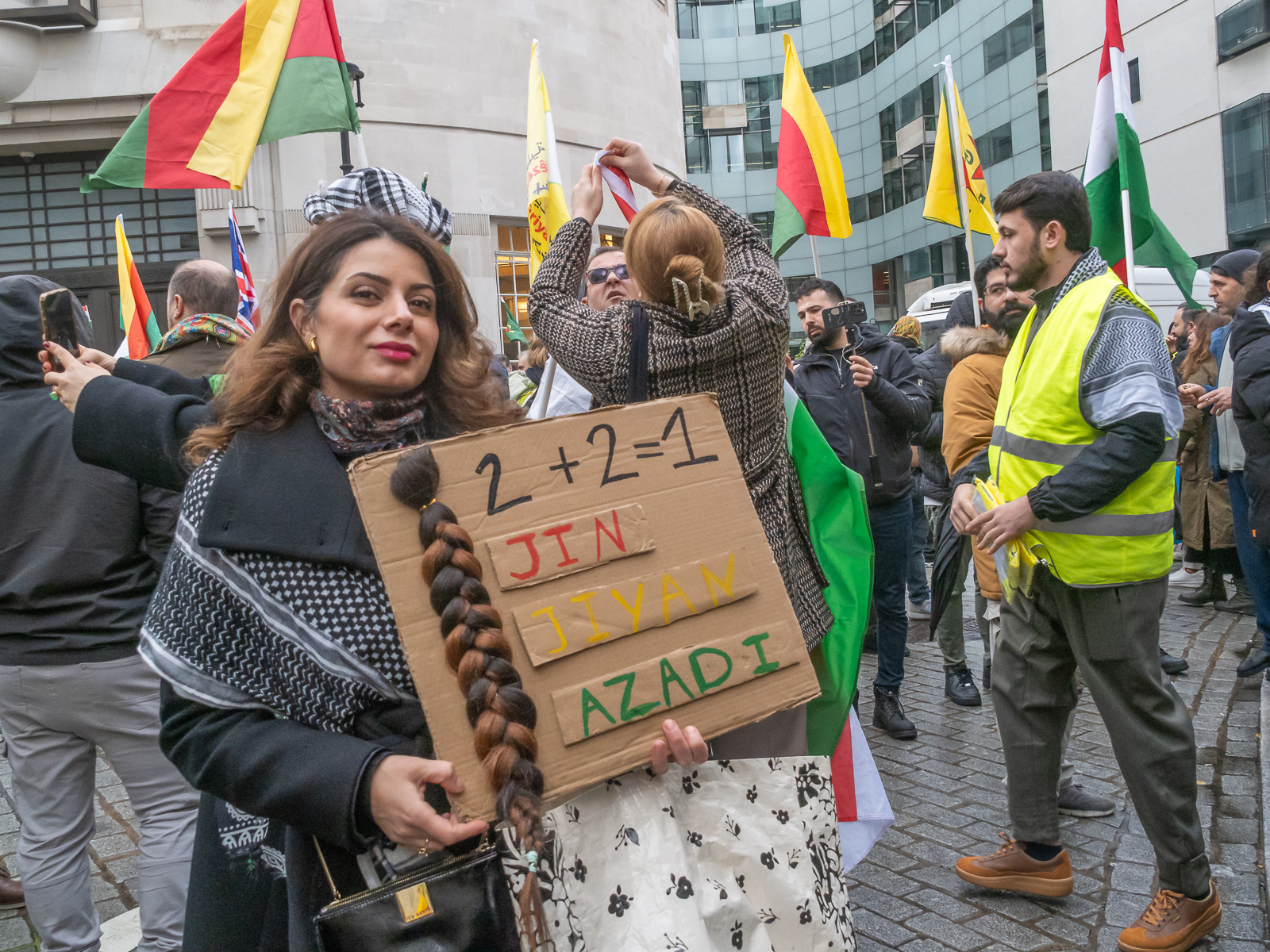
The area remained committed to the ideas of the Arab Spring and set up a democratic constitution with equality for all ethnic groups. It embodied the the slogan “Jin, Jiyan, Azadî” – “Women, Life, Freedom” and many of the banners and placards on the protest reflected this.
Turkey has for many decaades discriminated against its Kurdish communities, with a denial of Kurdish identity attempting to violently assimilate Kurds. In 1978 Kurds founde the Kurdistan Workers’ Party, PKK, which in 1984 began a militant insurgency against the Turkish state. Following pressure from NATO member Turkey, the New Labour government in 2001 proscribed this as a terrorist organisation, making support of it illegal in the UK.
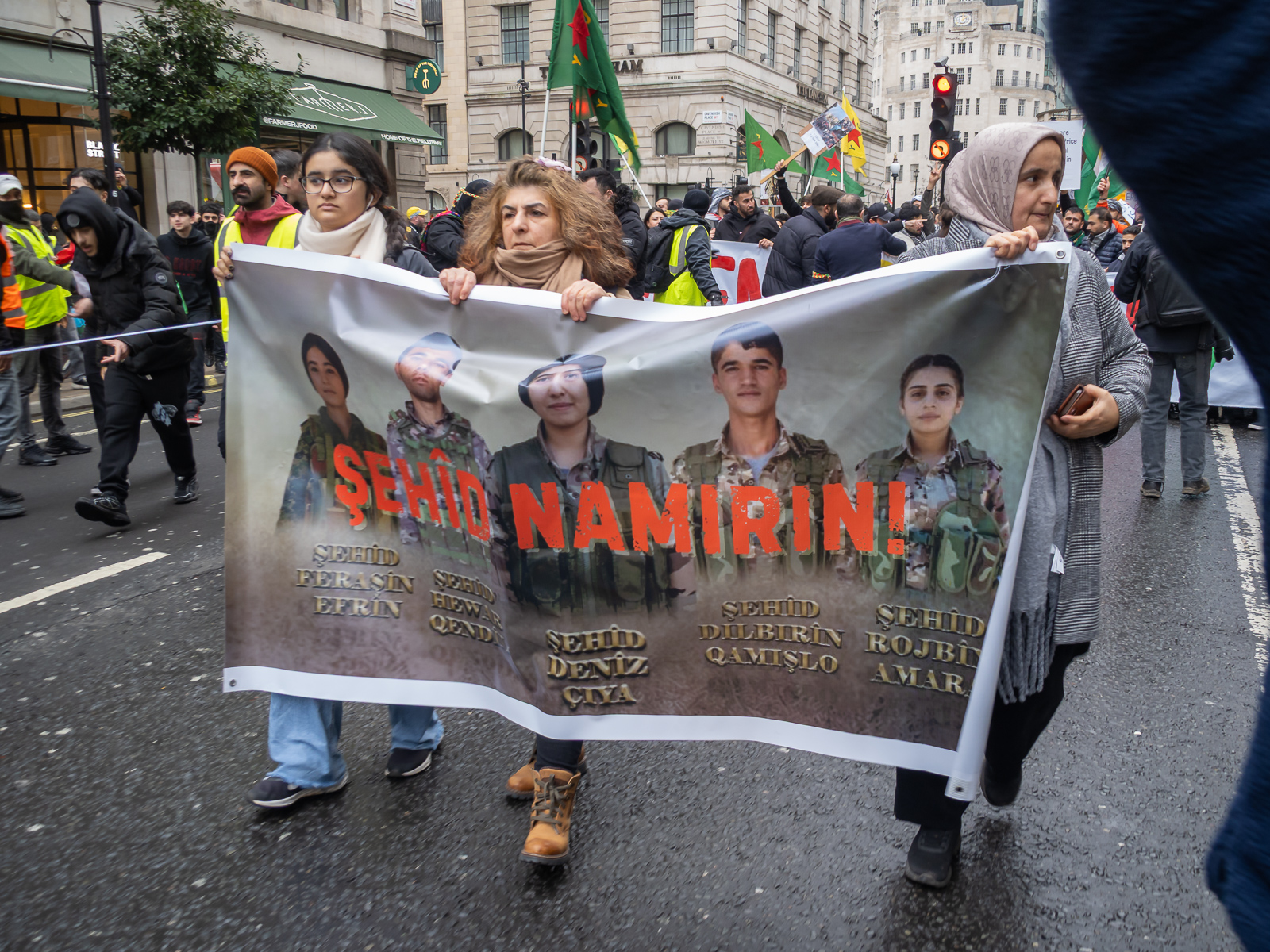
In a political show trial now taking place at the Old Bailey, six members of London’s Kurdish community are charged with being members of the banned PKK. The trail, largely unreported in the mass media, is a sign of Turkey’s increasing attempt to crush the Kurds and the UK’s further collaboration with its fellow NATO member and in line with an increasing use of terrorism charges to oppose political demonstrations – such as those by supporters of Palestine Action and others who oppose the actions of the Zionist state.
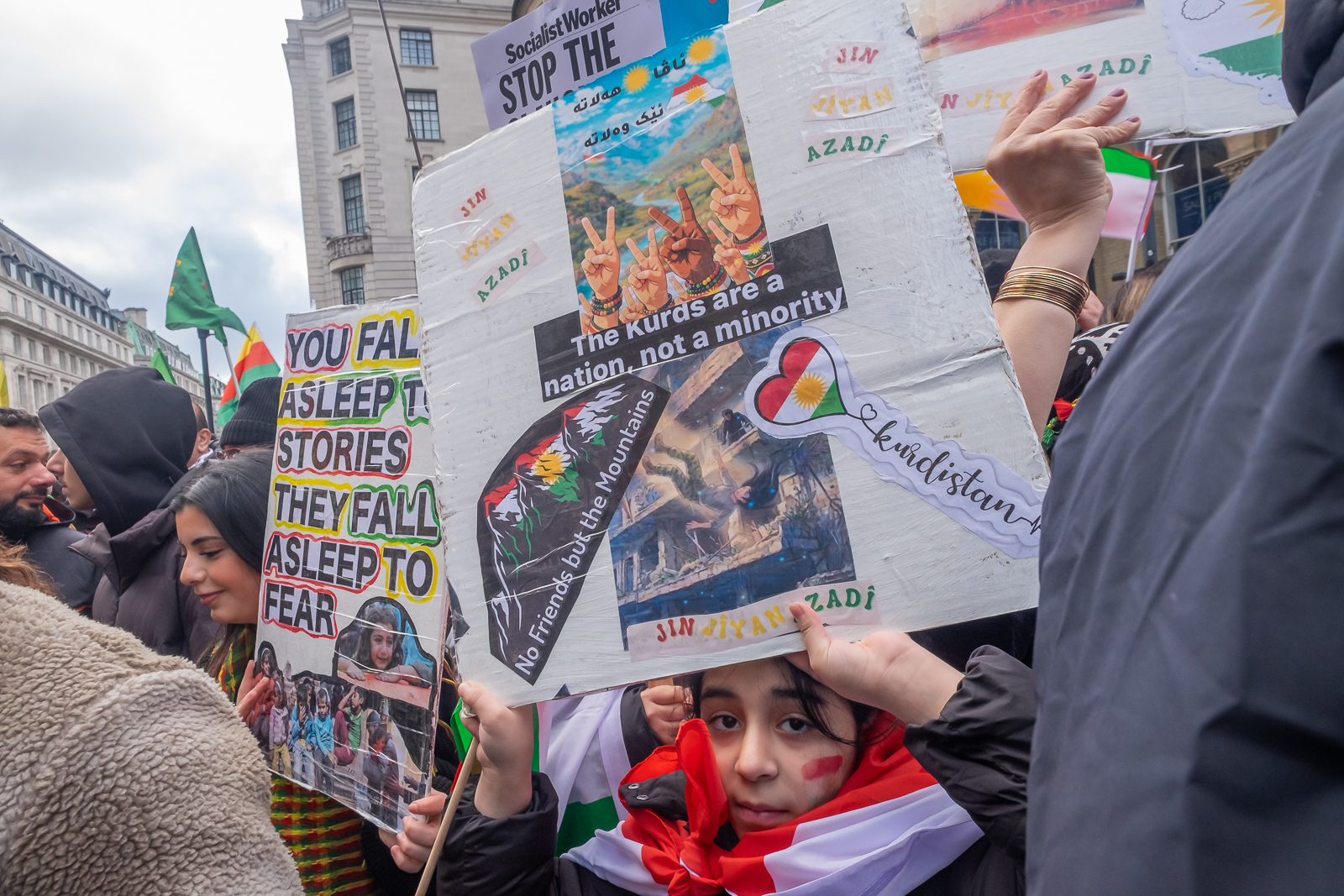
The PKK in 2025 announced an end to its military insurgency, ceremonially burnt some of its weapons and officially disbanded in an attempt by Kurds to make peace with Turkey. But the Turkish response has been to carry out military attacks in predominantly Kurdish areas of Syria and to persuade its NATO allies to take a harder line against the Kurds.
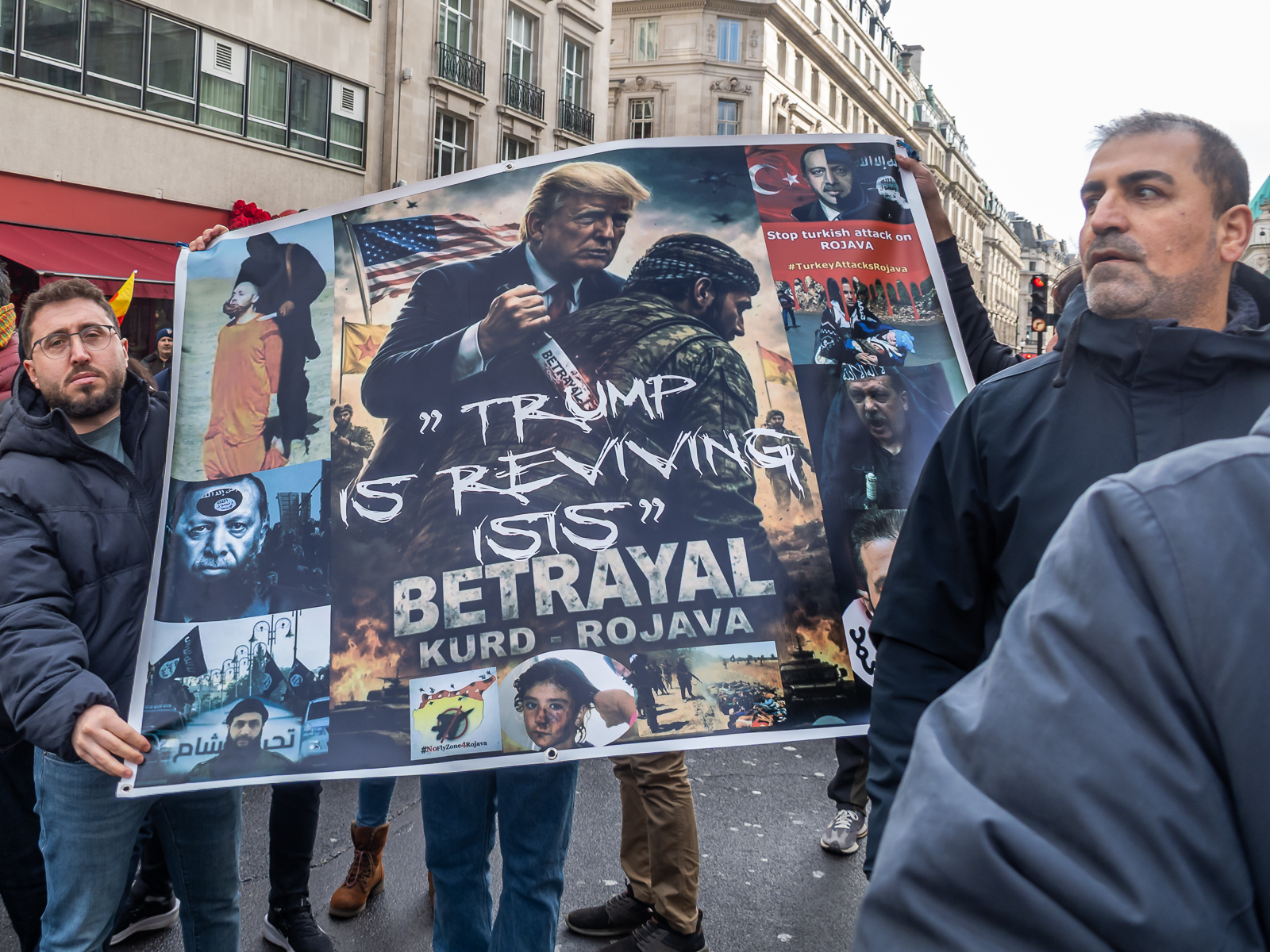
For some years the Kurds had been backed by USA air support in leading the fight on the ground against the Islamic state (ISIS) in Syria, largely ending their control of the area – and the UK had played a part in this too. But the situation changed after an Islamist group succeeded in overturning Assad and becoming the new government of Syria. And Trump and his advisers see Rojava as dangerously socialist if not communist – and would prefer any more conservative regime. The USA has a long record of support for dictators.
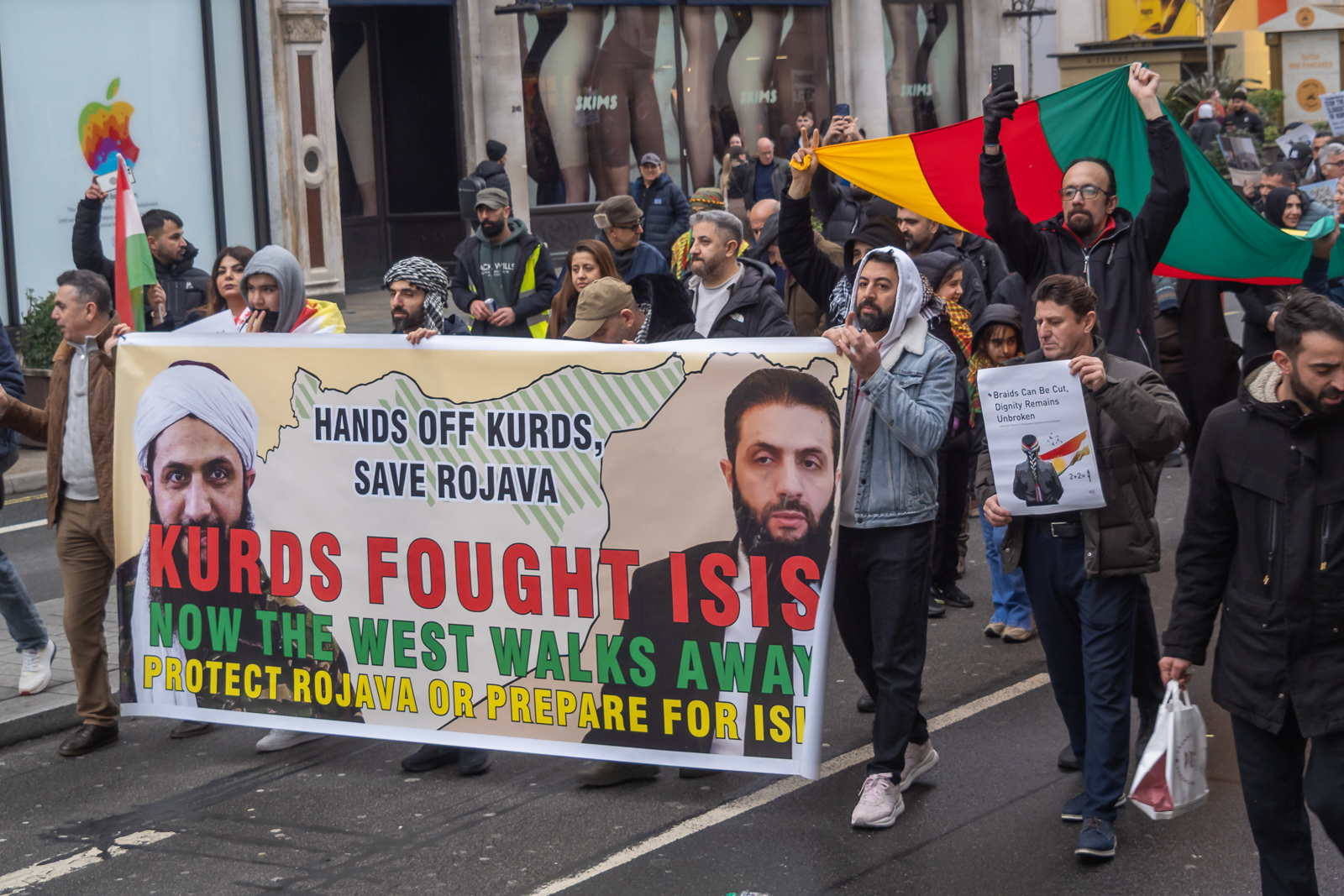
Since then the autonomous region has engaged with the government to come to agreement so that the advances in the area particularly in the relations between different ethnic groups and the hugely increased freedom for women can be retained. But it seems now that the government is attempting to put the clock back and impose its Islamist ideas across the country, and to fight – with the aid of Turkey -to do so.
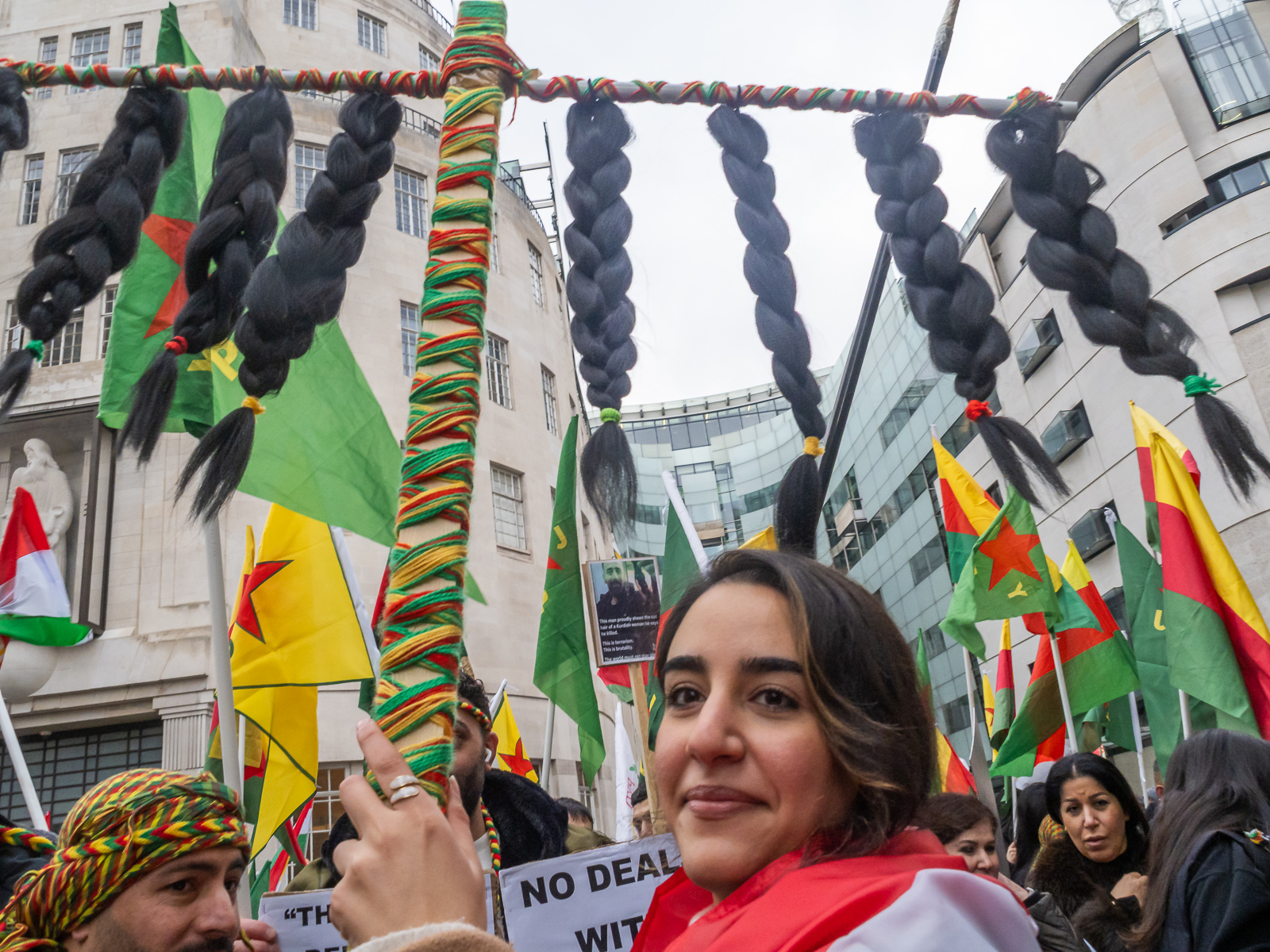
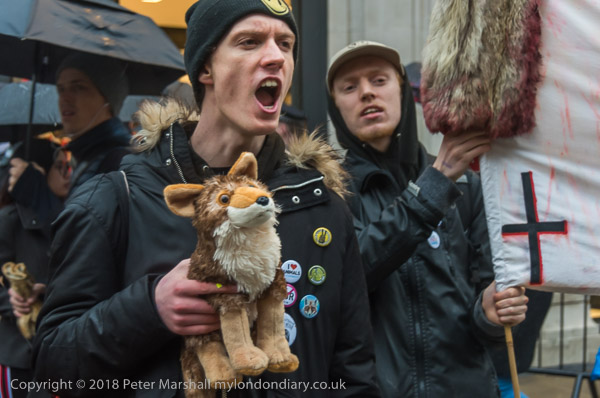
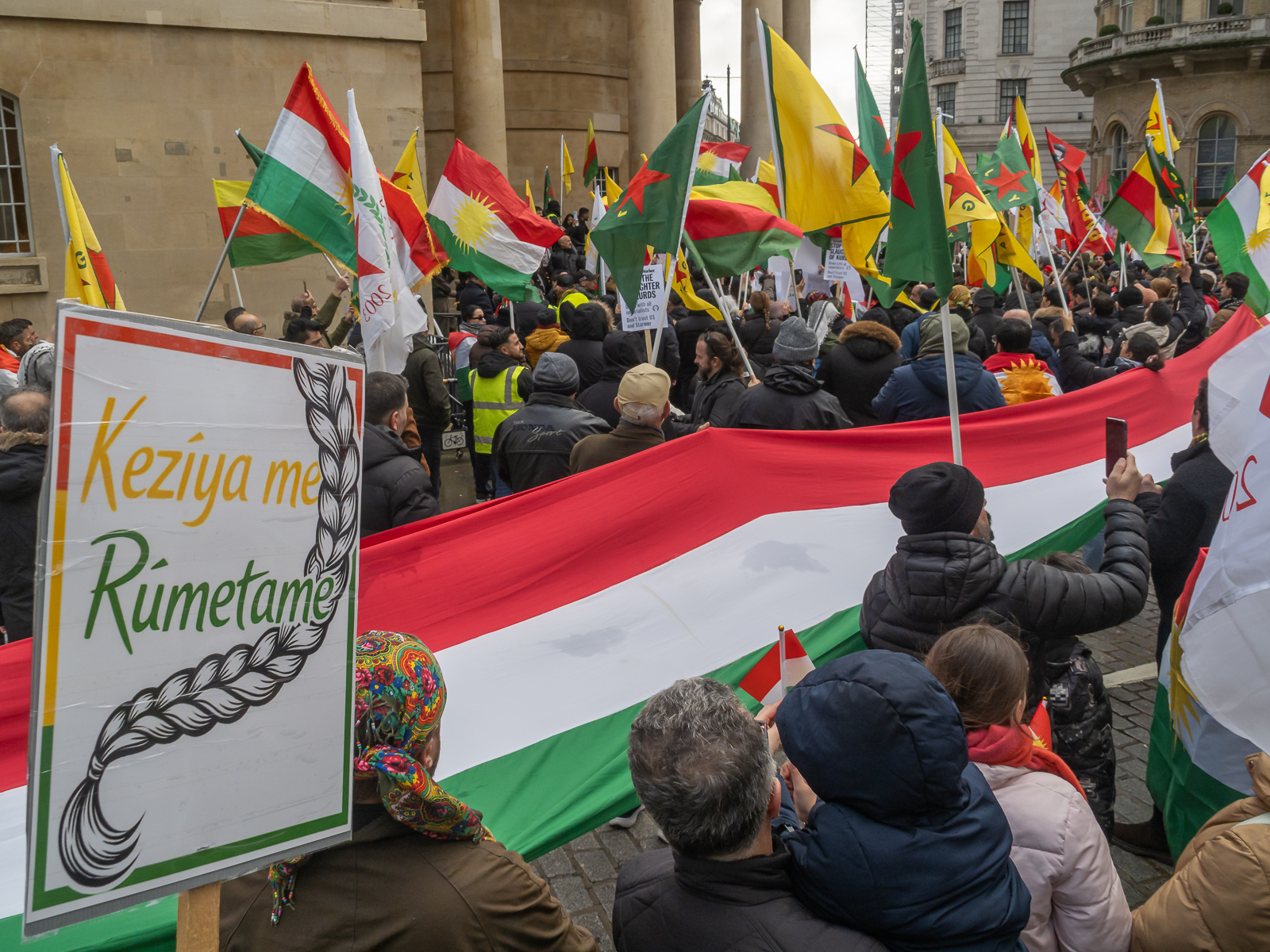
Following a video showing a Syrian soldier proudly holding the braid of a slain Kurdish woman fighter, Kurdish women began braiding their hair in solidarity as an unusual form of protest. In London some carried hair braids and posters with the message “keziya me rimetame” – Our hair is a crown.
Other posters carried the message “2 + 2 = 1” – After the end of the First World War in treaties largely determined by England and France, the Kurdish areas were split between four countries – Turkey, Syria, Iran and Iraq and they were denied their own country, Kurdistan which the slogan states is a single people and country.
Many more pictures in an album on Facebook and available for editorial use on Alamy.
Flickr – Facebook – My London Diary – Hull Photos – Lea Valley – Paris
London’s Industrial Heritage – London Photos
All photographs on this page are copyright © Peter Marshall.
Contact me to buy prints or licence to reproduce.