Labour Party Conference: I’ve almost completely avoided political party conferences, which I find intensely boring. Perhaps if I had been commissioned to cover them I would have done so but I think I’ve never really needed the money that much, and I don’t have one of those long heavy and often white lenses that seem to be de rigeur.
So, while I went to Brighton on 27th September 2009 for the Labour Party Conference it wasn’t to photograph the actual conference but for the protest taking place outside the conference centre, and I also photographed a few other things happening around its edges.
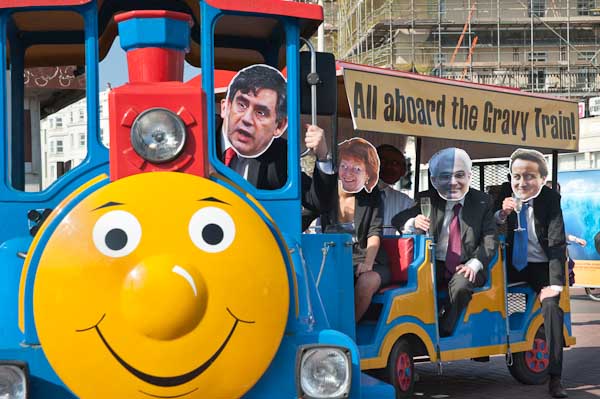
Gordon on the Gravy Train etc
Labour Party Conference, Brighton
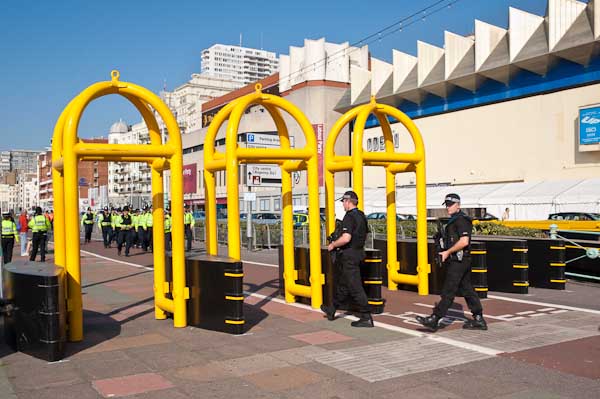
Sunday was a splendid day with a clear bright blue sky that contrasted with the mood inside Fortress Brighton, surrounded by armed police and anti-tank obstacles where the conference was taking place.
Labour in 2009 was in a state of political turmoil following the financial crash and had come in third place in the European elections in June behind the Tories and UKIP. Local elections had been disastrous with many seats lost and the Tories taking control of many authorities. Labour had been badly hit by the MPs expenses scandal and some Labour MPs were openly calling on Gordon Brown to resign.
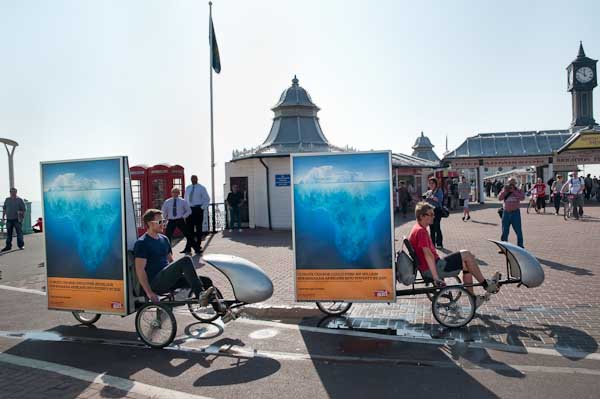
The ‘Westminster Gravy Train’ by the Vote for a Change campaign was offering free transport to conference delegates. They called for a break with the “voting system that has left parliament unaccountable and unrepresentative” and for a referendum on electoral reform. Unfortunately the change we got in 2010 was to a disastrous coalition between Tory and Lib-Dems with a brutal and damaging programme of cuts.
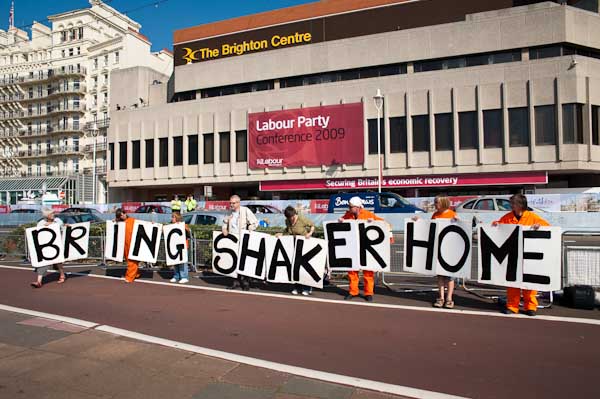
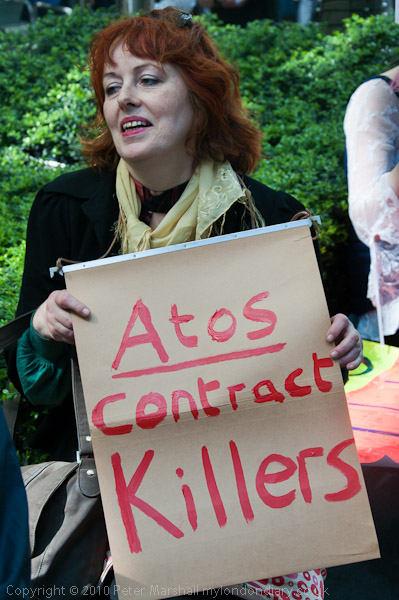
Others protesting outside the centre included the Shaker Aamer campaign calling for the release of this UK resident from the US illegal prison camp at Guantanamo Bay where he was still held despite having been cleared for release, people calling for a boycott of Israeli goods, a protest against the Kafkaesque anti-terrorist control orders which allowed the government to impose severe restrictions on people relying on secret evidence in violation of their human rights.
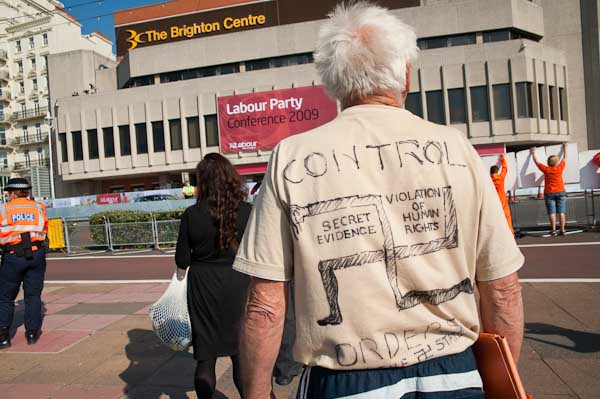
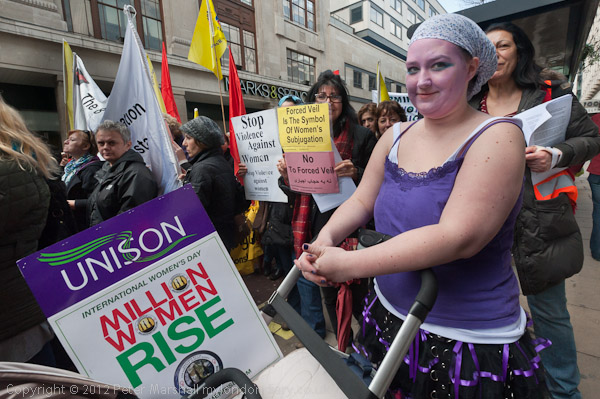
And there were other protests about climate change, housing and more, with many people han ding out leaflets to conference delegates as they made their way into the centre, as well as the main demonstration I had travelled to Brighton to cover.
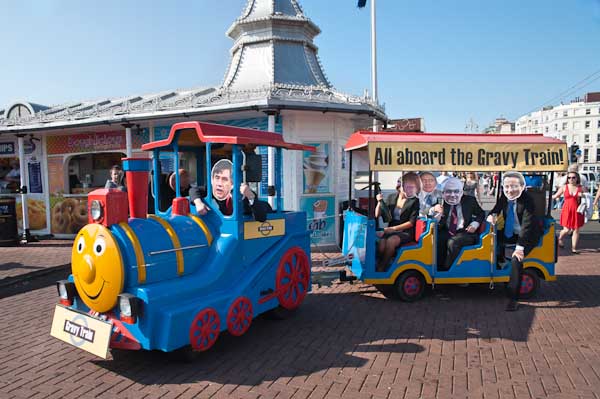
More on My London Diary at Gordon on the Gravy Train etc.
Jobs, Education, Peace Protest March & Rally
Labour Party Conference, Brighton

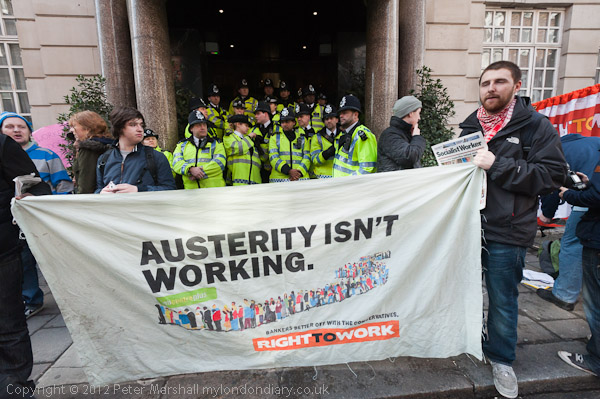
The protest had been called by trade unions and pressure groups – the UCU, NUJ, PCS, NUT, CWU and RMT, Right to Work, Stop the War and Unite Against Fascism – to demand a change in direction over proposals to cut public expenditure – and they had chartered a train to take people from London to the event, while others had come from around the country to join around two thousand on the seafront. I’d got up early to make my own way there by normal rail services.


For once there was some good news – a month-long strike at Tower Hamlets College had ended in talks at the arbitration service ACAS the previous day with agreement to avoid 25 compulsory redundancies.

But there was no such relief for the workers at wind power company Vestas Blades on the Isle of White who were at the front of the march, inexplicably abandoned by the government when the management decided to close this vital green industry down in the Isle of White and move production to the USA. As I commented then, “the government seems committed to gamble on the unlikely pipe-dream that the dirtiest of power-generation technologies – coal-fired power stations – can be tamed by 100% carbon capture and storage.”
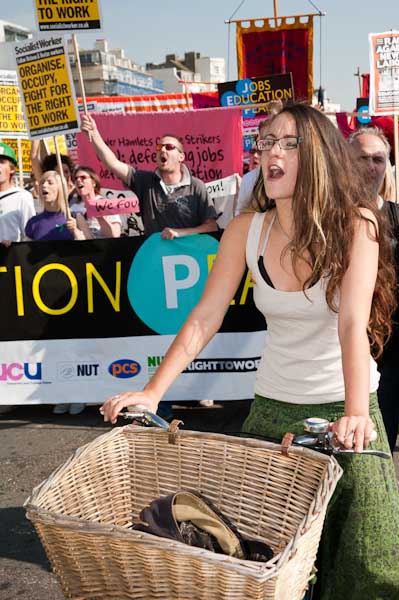
Before the march started there were short speeches, including from a woman from the campaign waged by cleaners and other low paid workers in London for a living wage, another from Youth Fight For Jobs and a final speech from Brighton and Hove District Trades Council welcoming us to Brighton.
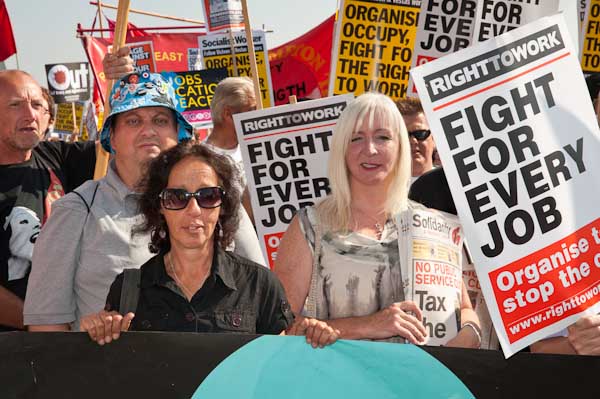
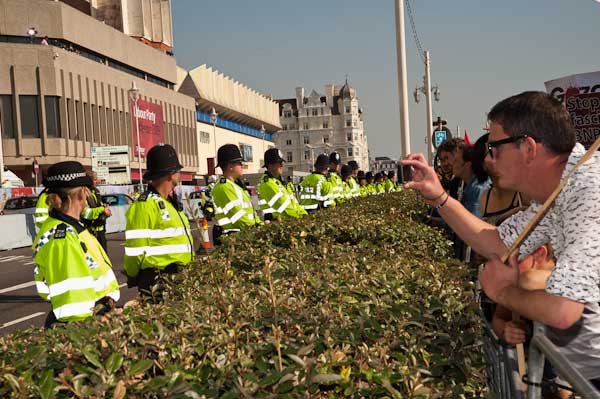
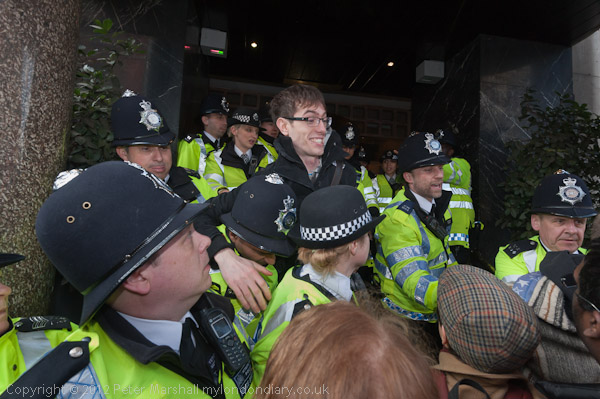
Despite this being a predictably peaceful event there was a very large police presence, not always helpful. They routed the march some distance away from the conference centre on the promenade rather than on the road outside and then for its return on the lower promenade more or less out of sight of the centre for the final rally.
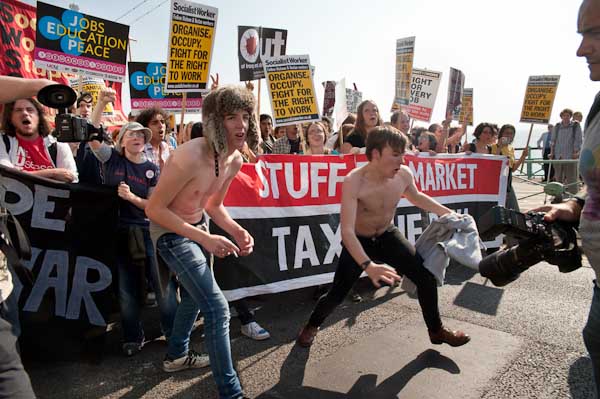
On the march was an autonomous group of mainly students with the banner ‘STUFF THE MARKET – TAX THE RICH’ who periodically halted to allow a gap to develop in front of them, working up their chanting to a crescendo before rushing forwards scattering the photographers and videographers in front of them.
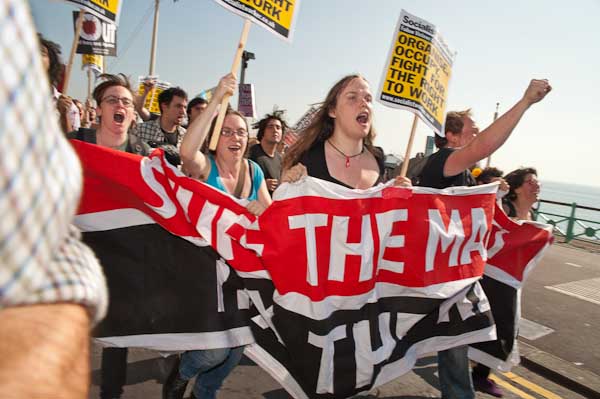
On My London Diary you can read a list of the speakers and an account of the final rally where many speakers expressed their dissatisfaction with the policies of New Labour which had abandoned its working class base. There are also many more pictures both from the march and the rally.
Jobs, Education, Peace March & Rally
Flickr – Facebook – My London Diary – Hull Photos – Lea Valley – Paris
London’s Industrial Heritage – London Photos
All photographs on this page are copyright © Peter Marshall.
Contact me to buy prints or licence to reproduce.