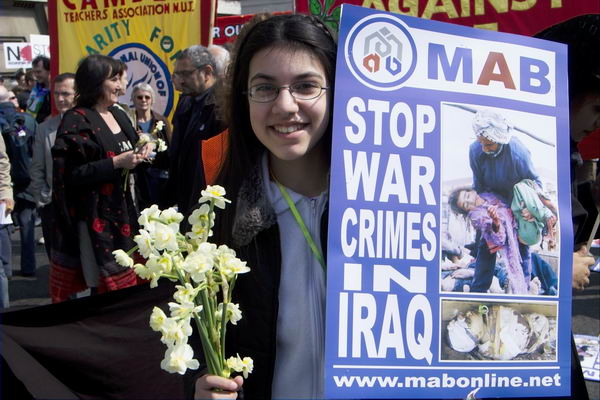
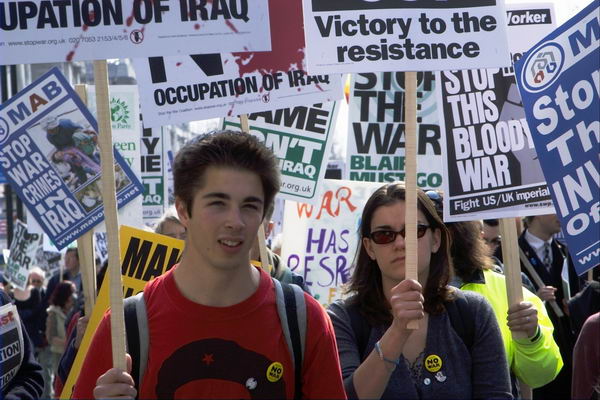
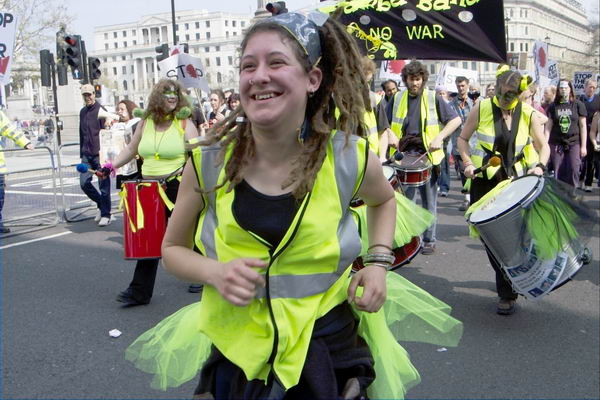
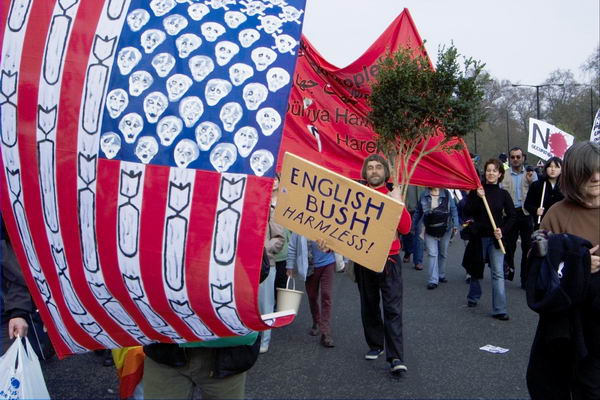
End Iraq Invasion: Saturday 12 April 2003 saw another protest (there had been one a week earlier) against the invasion of Iraq which had begun on 20th March 2003 with US troops supported by those from the UK, Australia and a few from Poland.
Before the invasion UN weapons inspectors had reported that they had found no evidence of ‘weapons of mass destruction’ in Iraq. But US and British politicians still insisted Iraq had these, but had just hidden them well. We now know that there were none. It was an invasion and war fought on known lies.
Almost certainly both the US and UK authorities at the time of invasion knew that there were no WMDs in Iraq, but the US had been planning and working up to the invasion for several years and were not going to let the facts get in the way of their war. The US had also carried out a long campaign to link Saddam Hussein and the 9/11 attacks although there was no evidence for this and later “assertions of operational links between Iraq and al-Qaeda have largely been discredited by the intelligence community.”
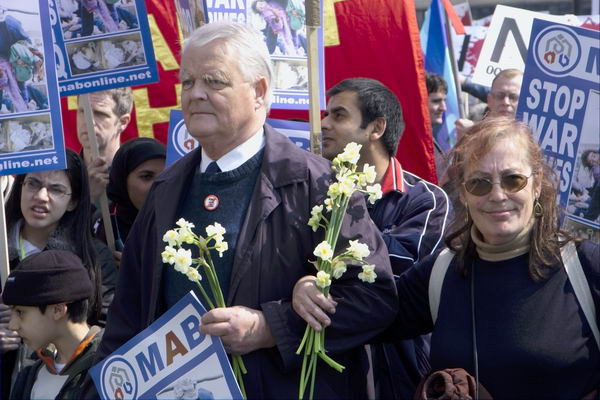
Bruce Kent
The British public were also clear we should not go to war, with the largest protest ever in London in February 2023 demanding we not not invade Iraq. This had followed a unprecedented long campaign across the country with many local groups out on the streets in protest.
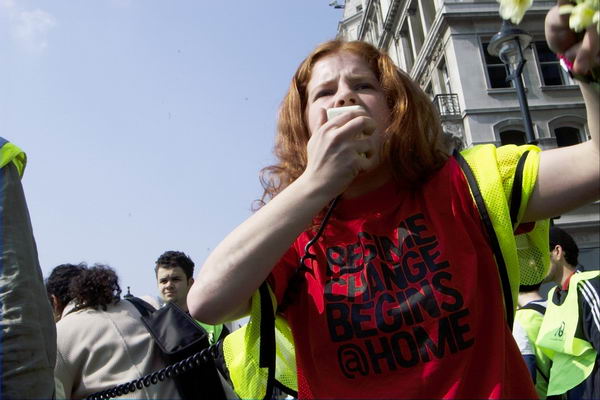
Regime Change Begins At Home – a call to get rid of warmonger Tony Blair
There were similar protests in other countries, with the largest of all in Rome where over three million took to the streets – roughly twice as many as in London.
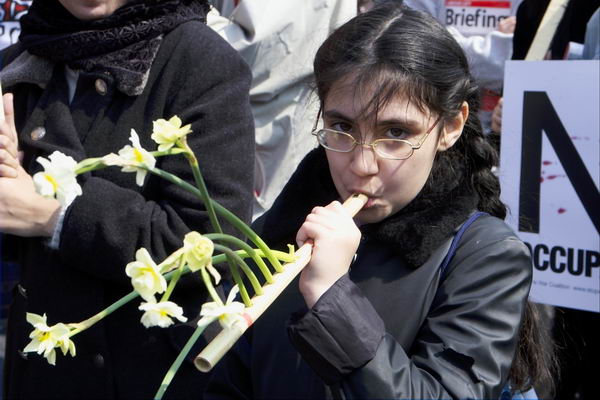
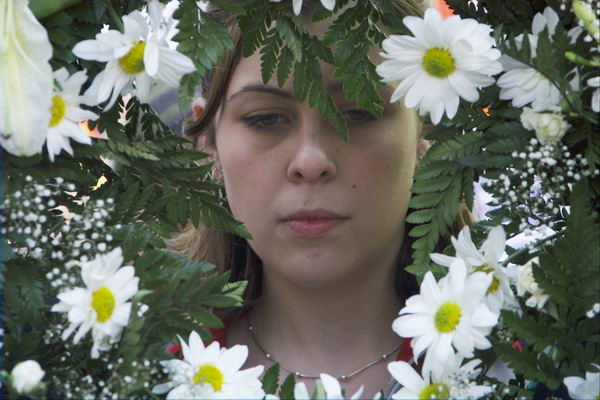
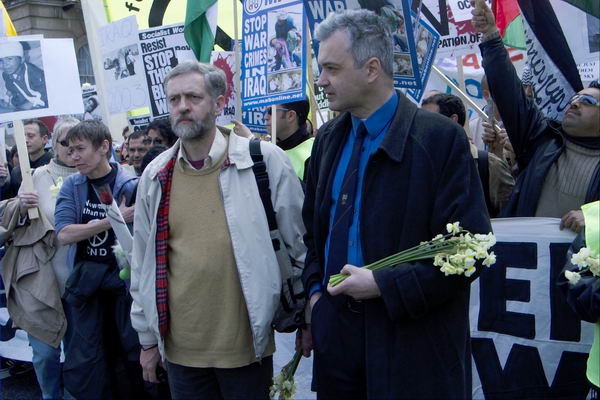
This was a protest with flowers for the dead
Many of our allies also came out against the invasion – including France, Germany, Canada and New Zealand, but Prime Minister Tony Blair was determined to support the invasion – using misleading claims and lies to persuade MPs to back it – including that infamous ‘dodgy dossier’.
The insurgency continued after the US pulled out of Iraq in 2011, eventually resulting in the rise of ISIS. Various studies and experts conclude that the invasion and occupation resulted in a huge rise in Islamic terrorism and the global Juhadist movement.
In 2004 “UN Secretary-General Kofi Annan called the invasion illegal under international law, as a breach of the UN Charter.” It was an event that showed the US’s contempt for a rules-based international order or at least their assertion that the rules did not apply to them, operating under the simpler principle that US might is US right.
Iraq Oil, Freedom, Rosary Crusade & Parliament Square: Saturday 11 October 2008 was another varied day, beginning with protests against the US grab of Iraq’s oil and tthe increasing control over our lives by governments and corporations. I then photographed a walk of public witness by Catholics in London before going to Parliament Square were I found a number of smaller protests.
100 Days to stop Bush & Cheney’s Iraq Oil Grab!
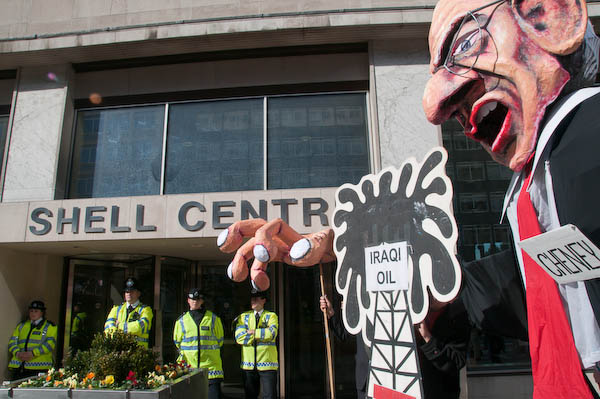
Shell Centre
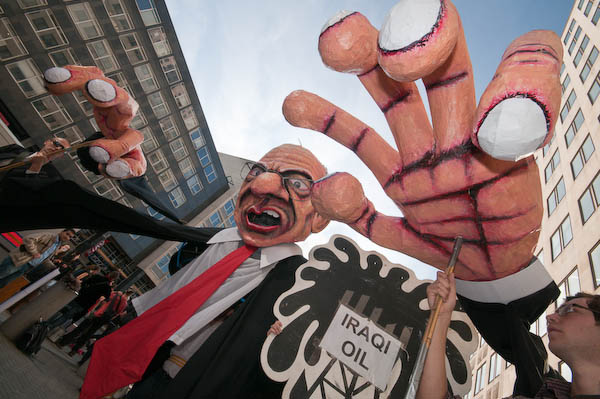
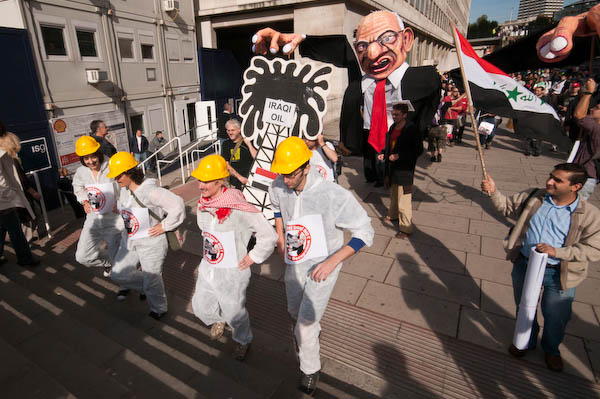
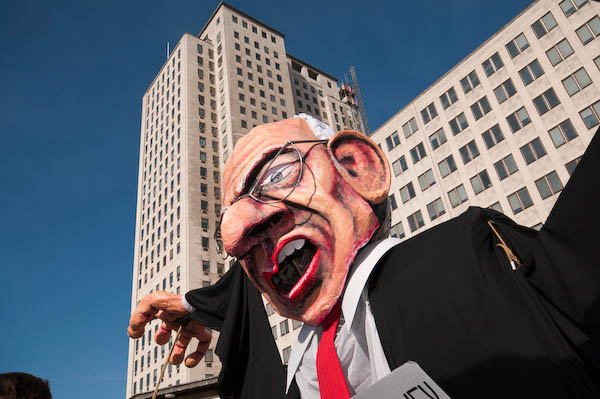
A giant Dick Cheney looms over Iraqi Oil outside the Shell Centre
In 1972 the Iraqi government took over Iraqi oil, nationalising the Iraq Petroleum Company which was jointly owned by the world’s largest oil companies, and it provided 95% of government revenue.
Many of us thought that the main reason behind the 2003 invasion of Iraq was to get the country to hand over most of the oil reserves to foreign companies, particularly Shell and BP.
In 2007 the US-backed Iraqi cabinet had approved a new oil law, strongly opposed by Iraqi trade unions and oil experts, but driven by expert consultants supplied by the UK and US who previously worked at a high level for companies like Shell and BP which would give the foreign oil companies control over oil production and in 2008 the Iraqi Oil Ministry began to announce contracts with former partners in the IPC, ExxonMobil, Shell, Total and BP as with Chevron and others.
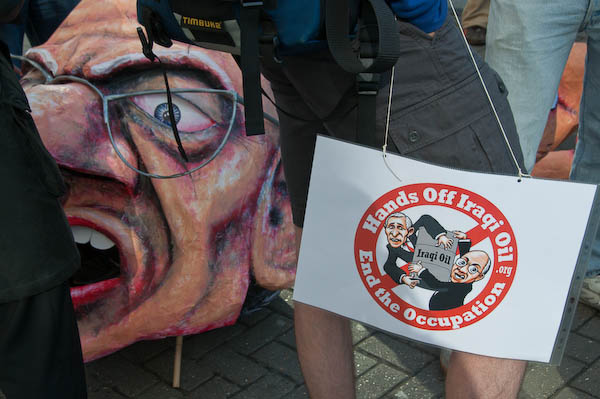
The protest came at the start of the final 100 days of President Bush’s administration in the US and was organised by ‘Hands of Iraqi Oil’, a coalition whose members include Corporate Watch, Iraq Occupation Focus, Jubilee Iraq, PLATFORM, Voices UK, and War on Want and supported by the Stop the War Coalition and others.
The samba band, brass band, ‘oil workers’ and others came to protest at the Shell Centre with a giant figure of US Vice-President Dick Cheney and a mock oil well as well as some with Iraqi flags.
I left them shortly after they set off to march first to protest outside BP’s headquarters in St James’s Square and then on to the US Embassy to go to New Scotland Yard.
Freedom not fear 2008 was an international protest in over 20 countries against excessive surveillance by governments and businesses, organised by a broad movement of campaigners and organisations.
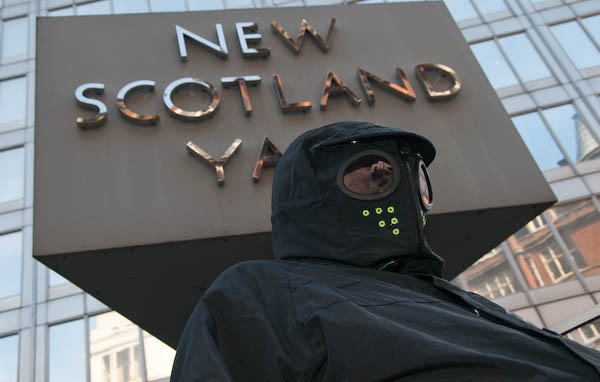
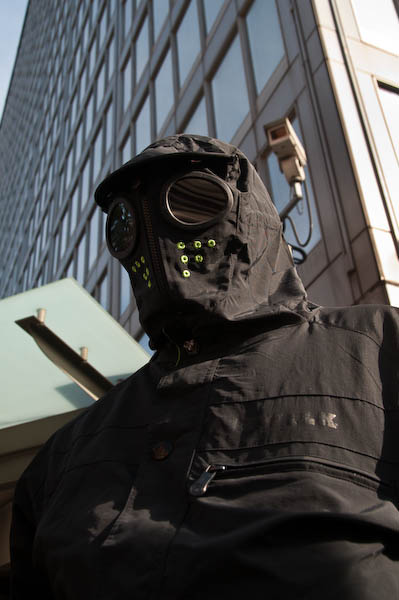
A camera behind this person dressed in a sinister black suit and hood
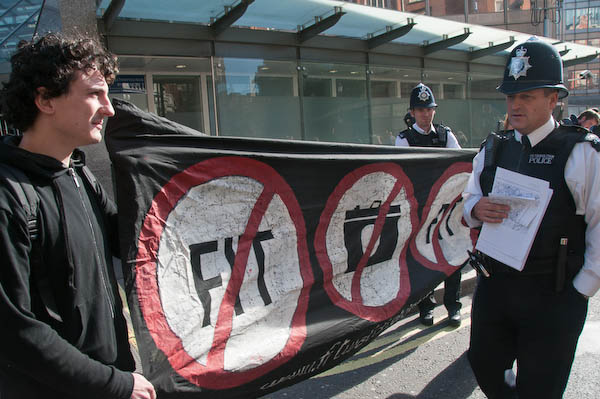
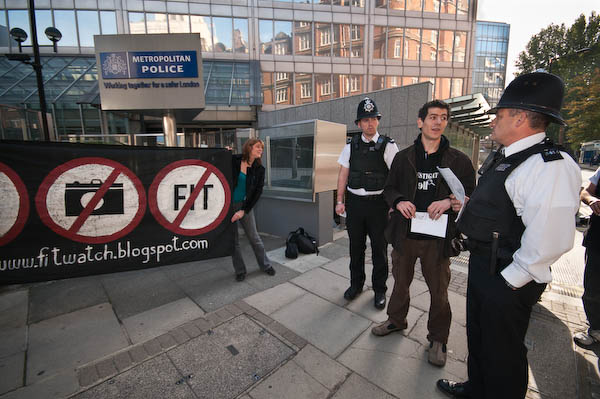
The main UK event was a protest outside the Metropolitan Police headquarters, New Scotland Yard, then still in Victoria Street, Westminster. The protest was against the restriction of the right to demonstrate under SOCPA, the intimidatory use of photography by police FIT squads, the proposed introduction of ID cards, the increasing centralisation of personal data held by government, including the DNA database held by police, the incredible growth in surveillance cameras, ‘terrorist’ legislation and other measures which have affected our individual freedom and human rights.
The protest was within the area where restrictions on protests were introduced by the Serious Organised Crime and Police Act 2005 (SOCPA) which required the protesters to have given written notice to the Commissioner of the Metropolitan Police six days in advance for the event. But of course they had not as a part of the protest.
Police tried hard to give protesters SOCPA notices telling them that the protest was illegal but few took them or any interest in them. Some of the officers joked with the protesters who included People in Common and FitWatch, but sensibly they did not attempt to break up the protest or make any arrests, or at least not in the three-quarters of an hour or so I was present.
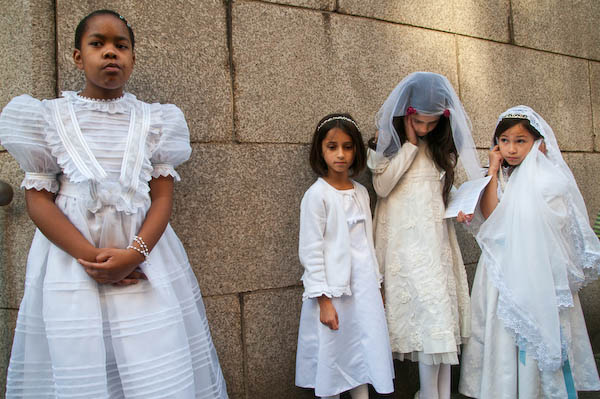
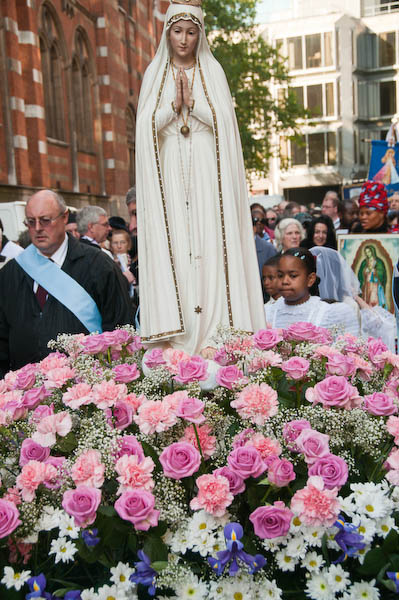
Young girls in white communion dress walked beside the statue of Our Lady of Fatima
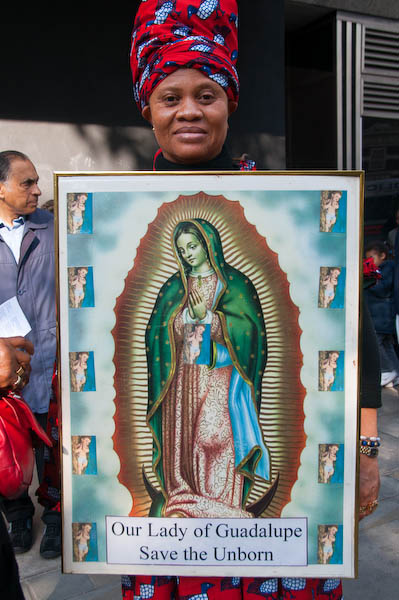
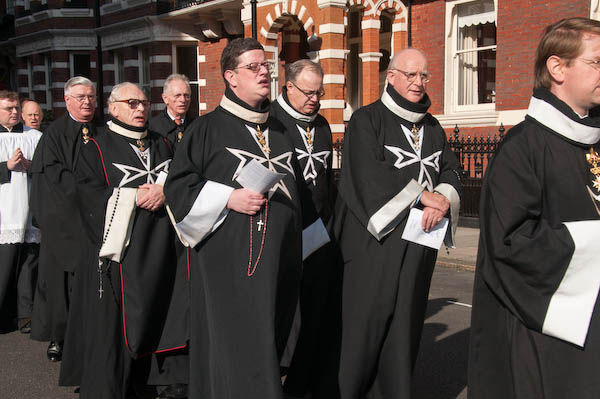
I walked the short distance along Victoria Street to Westminster Cathedral where people were gathering for the Rosary Crusade of Reparation. This began in Austria in 1947 as a campaign by a Franciscan priest to free the country from communist control, and is said to have played a part in the Russian decision to allow Austria its independence in 1955.
THe first annual procession with the statue of Our Lady of Fatima took place in 1948 in Vienna on the feast of the Name of Mary, Sept 12th. This feast was set up by Pope Innocent XI in 1683 after Turkish invaders surrounding Vienna were defeated by Christian armies who had prayed to the Blessed Virgin.
Families at the front of the large crowd in the procession
The procession in London takes place on the nearest Saturday to the final appearance of Our Lady at Fatima in October 1917, close to the end of the First World War, when those present saw the sun dancing around in the sky, and she promised peace and an end to war if men showed contrition for their sins and changed their lives.
This was the 25 annual procession in London and had as its special theme atonement for the Human Fertilisation and Embryology Bill then passing through Parliament.
I photographed the start of the procession which was making its way slowly to Brompton Oratory.
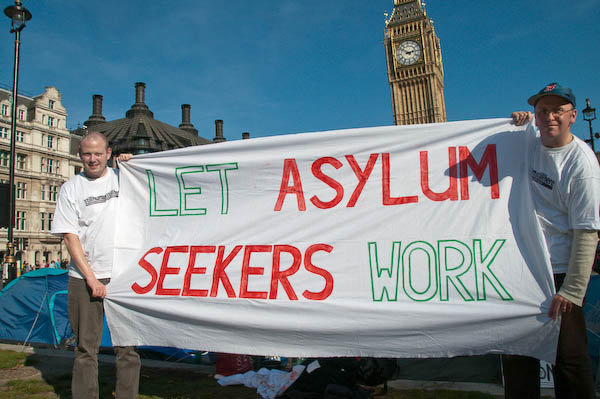
I’d gone to Parliament Square to look for a two-man protest by the two Bens from the ‘Still Human Still Here‘ campaign dedicated to highlighting the plight of tens of thousands of refused asylum seekers who are being forced into abject poverty in an attempt to drive them out of the country. The two men had spent two weeks in a tent in the square living on the emergency rations that the Red Cross will supply to these inhumanely treated asylum seekers.
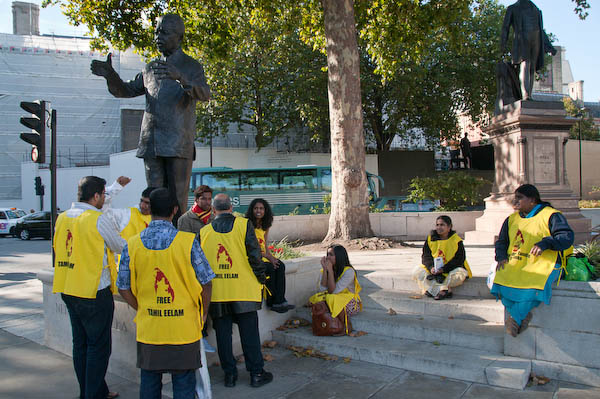
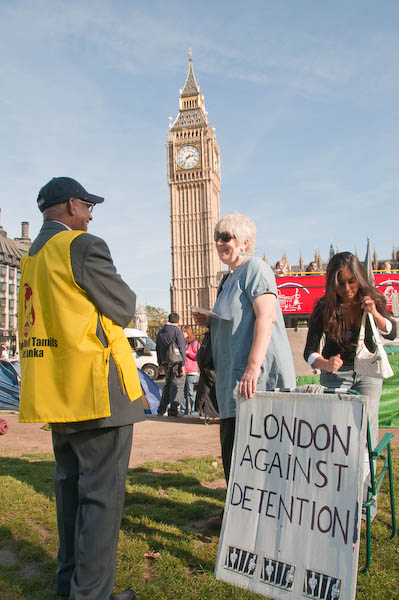
In the square I found a number of other protests taking place. Of course Brian Haw was there – as he had been for over 7 years – and I saw him being insulted by a man who smelled strongly of alcohol. There was a small group of Tamils who told me that they were part of a campaign giving out leaflets all over the centre of London about the ethnic cleansing taking place in Sri Lanka. Another small group, ‘London Against Detention’, was campaigning to close down Asylum detention centres.
In the corner close to the statue of Churchill was a man who told me he had been on hunger strike for two weeks in a protest to get his case properly investigated. He claimed to have been abused by police and social services following an incident in which as a seven year old child in Llanelli he was implicated in the death of a baby brother.
Finally I saw another group of people hurrying along the street opposite towards Whitehall carrying posters. I chased after them and found that they were Obama supporters hoping to persuade Americans they met to register and vote in the US election.