Cluster Bombs, Acton, Spain & Kilburn – 2004

Cluster Bombs, Acton, Spain & Kilburn: On Saturday 17th July 2004 I did rather a lot of travelling around London, beginning in Trafalgar Square with a shoe pyramid against cluster bombs, then going to Acton to look at a project London Arts Café had helped with (I think I was its treasurer at the time) which took me rather longer than expected so I didn’t stay long to make sure I was back on the South Bank for the Spanish Civil War commemoration. Then out to Kilburn for a festival in Grange Park.

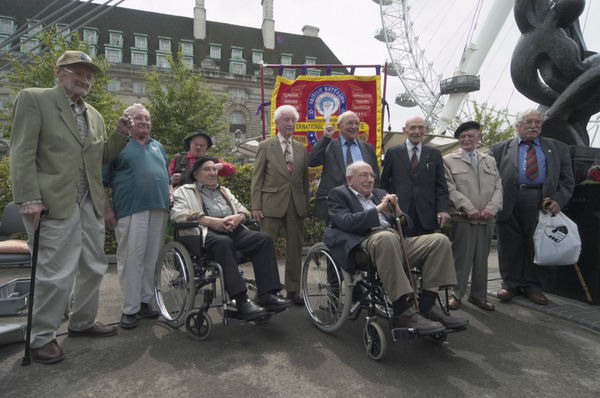
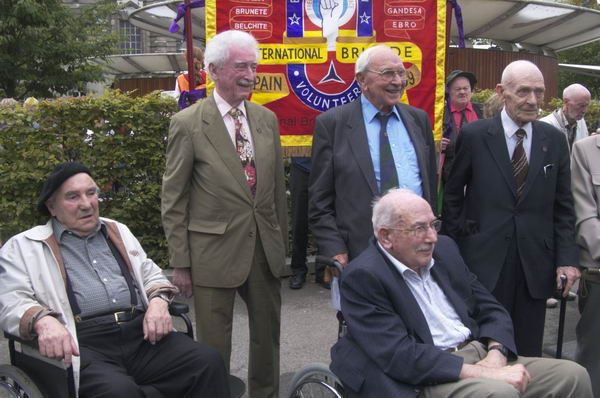
But I took few photographs except at the Spanish Civil War event, which was attended by at least nine of those who had gone to Spain as well as many from the families of those no longer living.

The rich and wealthy elites outside Spain feared the rebellion against the church, landowners and bosses by the peasants and working classes supporting the elected Spanish government against the fascist armies might give their those they were exploiting ideas,, Workers and intellectuals here and elsewhere saw clearly what was happening and many “went because their open eyes could see no other way.Over 30,000 volunteers went to fight in the International Brigades, including more than 2,500 from Britain, although our government tried to prevent them. Probably around five thousand of the volunteers died in Spain and many, many more were injured.

Here is what I wrote on My London Diary back then, with the usual corrections and a few pictures, with links to rather more still on My London Diary.


Handicap International

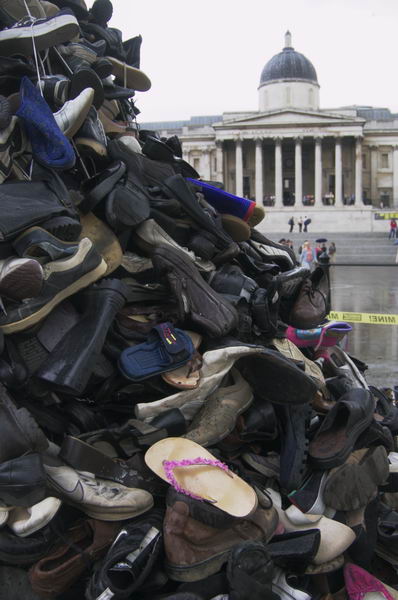
Pyramid of Shoes, Trafalgar Square
Cluster Bombs, Acton, Spain & Kilburn - 2004

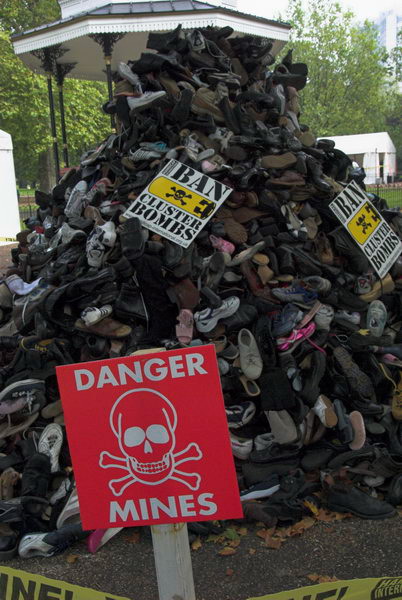
Saturday saw a repeat of last year’s shoe pyramid in Trafalgar Square, Handicap International campaigning against the use of cluster bombs, weapons that largely maim innocent women and children, which governments, including our own, are continuing to insist to use. So our taxes are now still killing and disabling innocent kids in Iraq from the invasion last year.

A few more pictures


Public Art in Acton

Cluster Bombs, Acton, Spain & Kilburn - 2004
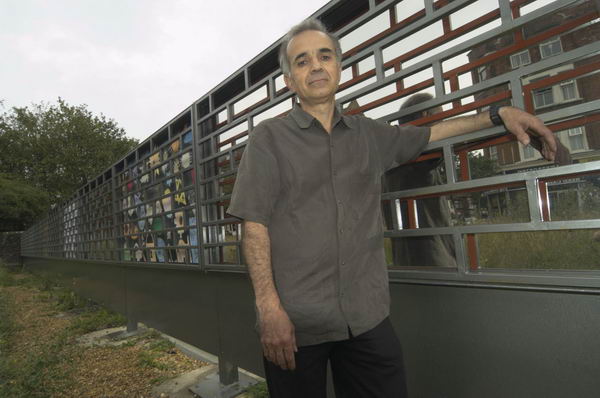
Artist Mamily Sheiban with his screen in Churchfield Road, Acton

In Acton it was carnival day, but I didn’t have time to watch. I did manage to go and see the screen which Mohamed (Mamily) Sheibani has designed to screen off the waste area at the rear of the Oaks Shopping Centre in Churchfield Road. This was a project carried out by Acton Action with the help of Acton Arts And Media, the London Arts Café, the Churchfield Road Community Association and the shopping centre. Not a big thing, but the kind of small local project that makes an impact – we just need a few thousand more like it in London.

A few more pictures


Spanish Civil War International Brigades Memorial Event

Jubilee Gardens, Waterloo,
Cluster Bombs, Acton, Spain & Kilburn - 2004
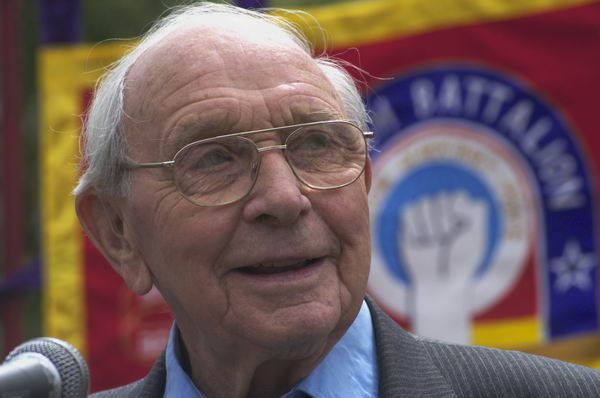
Moe Fishman, veteran of the Abraham Lincoln Brigade of Americans
who fought in the Spanish Civil war

The Spanish Civil War started in 1936, and while governments including ours made the wrong decisions [in part] based on incorrect intelligence, as over Iraq. The rights and wrongs of the matter were clear to most of those who took an interest, especially on the left.
Cluster Bombs, Acton, Spain & Kilburn - 2004
Spanish Civil War veteran Jack Jones speaks to the assembled crowd

2,600 British men had the courage to go and join the International Brigade in the fight against fascism, and today we were again paying tribute to them. There are still a few living, and those who turned up were remarkably fit and alert considering their age.
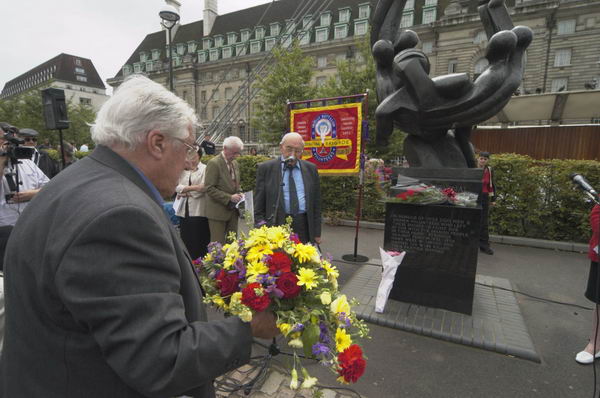
Cluster Bombs, Acton, Spain & Kilburn - 2004
Laying a wreath to honour dead comrades, both the over 500 who died in Spain and those who have died since

Veteran Jack Jones chaired the event, and Ana Perez from the Madrid Amigos spoke movingly.
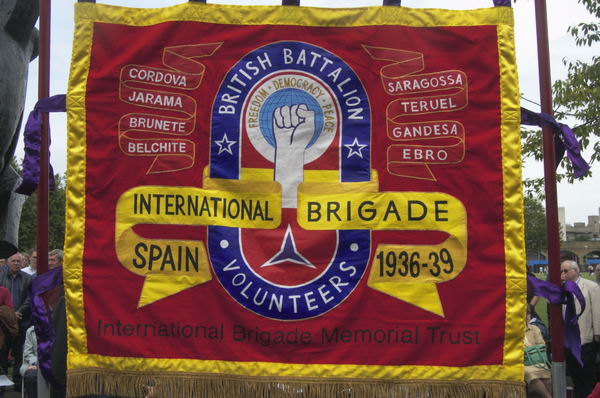
Cluster Bombs, Acton, Spain & Kilburn - 2004
A new banner to replace the original which was getting faded and worn.
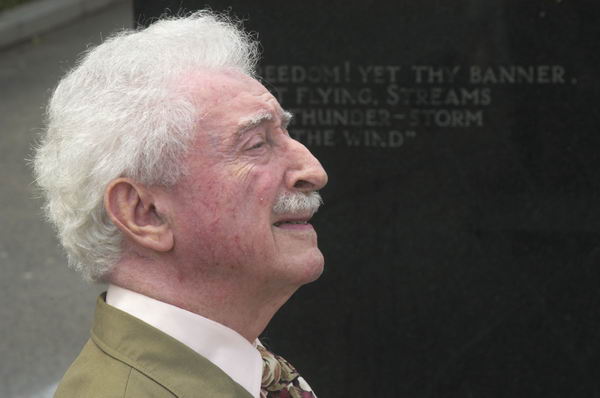
Moe Fishman in front of the memorial text
YET FREEDOM! YET THY BANNER
TORN, BUT FLYING, STREAMS
LIKE THE THUNDER-STORM
AGAINST THE WIND

Veteran Moe Fishman from Manhattan, still a peace activist, brought greetings from the peace movement in America and praise for the strength of the British people in demonstrating against the invasion of Iraq – a movement now carried from the streets to the ballot box.
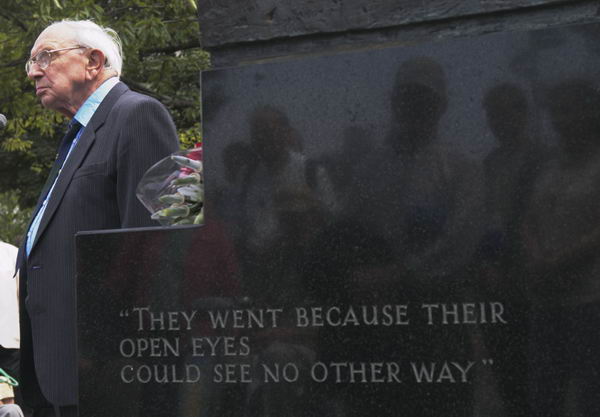
Jack Jones and the memorial: “TTHEY WENT BECAUSE THEIR OPEN EYES COULD SEE NO OTHER WAY”

More pictures


Kilburn Festival

Grange Park, Kilburn

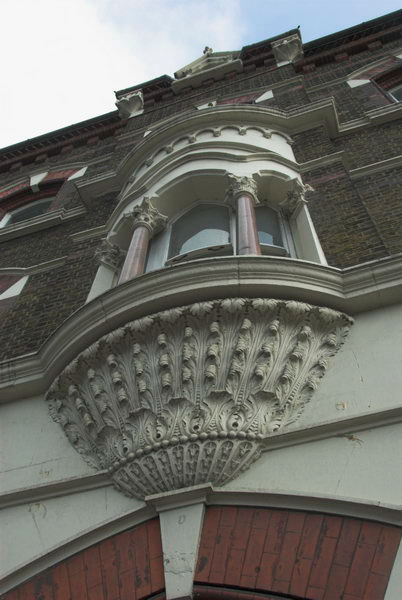
Kilburn State – now a bingo hall. Kilburn High Rd

Kilburn High Road is one of the more interesting high streets of London. Too poor to have been swamped by the chains, it retains its own character and wide range of shops of various types. Perhaps more a place to look and stroll (as I did) rather than photograph.

The Kilburn Mural project is to provide a mural at the tube station

They were having a festival in grange park, which included some of the artists who are to create a mural by the tube station demonstrating their skills and giving the local people a chance to influence the mural design.

A few more pictures.


FlickrFacebookMy London DiaryHull PhotosLea ValleyParis
London’s Industrial HeritageLondon Photos

All photographs on this page are copyright © Peter Marshall.
Contact me to buy prints or licence to reproduce.


Land Mines and the Lea Valley – 2006

Land Mines and the Lea Valley: Fortunately these were two entirely separate events on October 14th 2006. The landmines were in Hyde Park in a display by Handicap International and after visiting this I took a walk across the Lea Valley from Holloway to Tottenham and Walthamstow where I was going to collect a set of my pictures which had been on show at Walthamstow Pumphouse Museum. Here is a slightly edited version of what I wrote in 2006 with a few of the pictures from the day – and a link to many more from the walk on My London Diary


Ban Landmines and Cluster Bombs

Handicap International, Hyde Park

Land Mines and the Lea Valley - 2006

Saturday in Hyde Park there were land mines. Fortunately they were mainly carefully marked as well as having been made harmless. For many people around the world they are daily hazard, the deadly and maiming residues of war.

Just as dangerous, if not more so, are cluster bombs. These are produced by the sophisticated weapons industries of many countries including Britain and America, and also used by our armies and air forces, dropped from aircraft or fired as artillery.

Land Mines and the Lea Valley - 2006

Each cluster bomb contains from a dozen to several hundred lethal bomblets, which are distributed over a wide area, intended to kill infantry or guerillas, but entirely indiscriminate in their action. Between 5-30% fail to explode on impact, usually getting buried in soil; those dropped over 30 years ago in Vietnam are still killing and maiming people, especially children, there. Almost 2,000,000 were scattered over Iraq in 2003-4.

Land Mines and the Lea Valley - 2006

I went to Hyde Park to sign the petition organised by Nobel peace prize-winning charity Handicap International to aim for a world-wide ban on these weapons.

Handicap International now has urgent appeals for Gaza, Ukraine and Sudan and invites you to join them in campaigning to “Fully implement the treaties banning landmines and cluster munitions without delay and encourage non-signatory states to sign their petition.”


Tottenham to Walthamstow

Land Mines and the Lea Valley - 2006
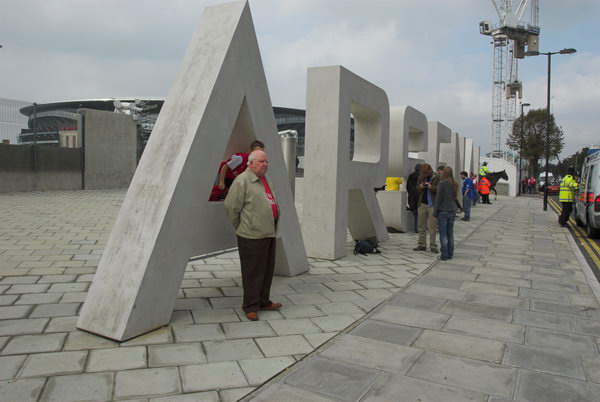
This stadium entrance had potential, but I couldn’t get myself into the right mood

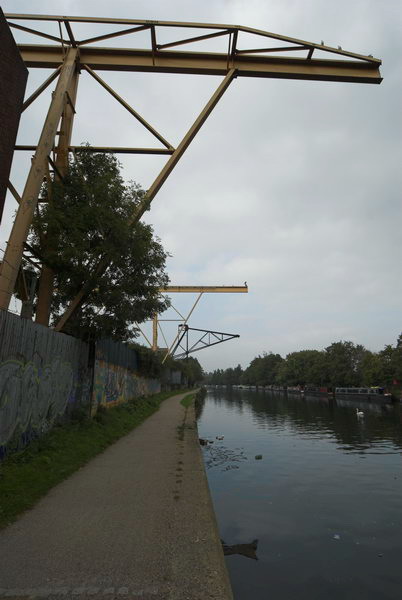
After my brief visit to Hyde Park, I was on my way to Walthamstow to collect some of my pictures of the Lea Valley that had been on show at the Pump House Museum, and as it was a nice day, decided to walk the last few miles across the Lea Valley and take a few more pictures.

Land Mines and the Lea Valley - 2006
South Tottenham

I began my walk in Holloway, going post the Emirates Stadium and then across South Tottenham.

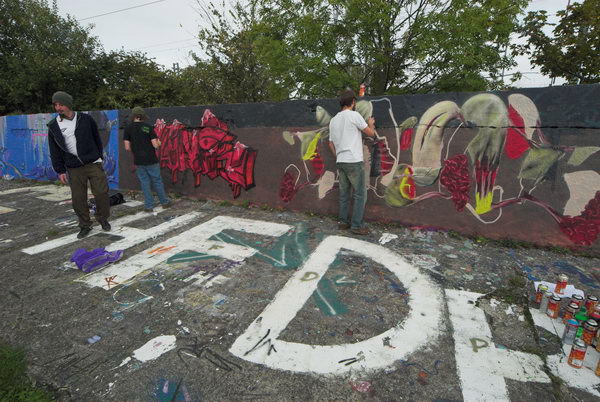
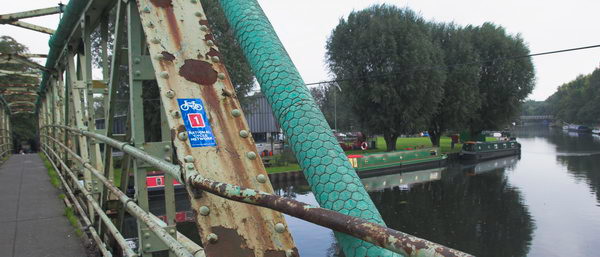
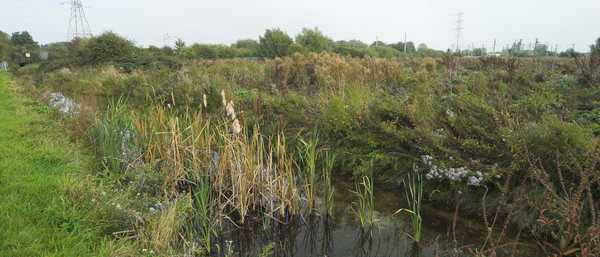
In King George V Park I found some graffiti artists at work, and took pictures of a few of the many murals, before heading down the Lea Navigation to Springfield and across to Walthamstow Marshes, a surprising area of open space so near to the centre of a major city.

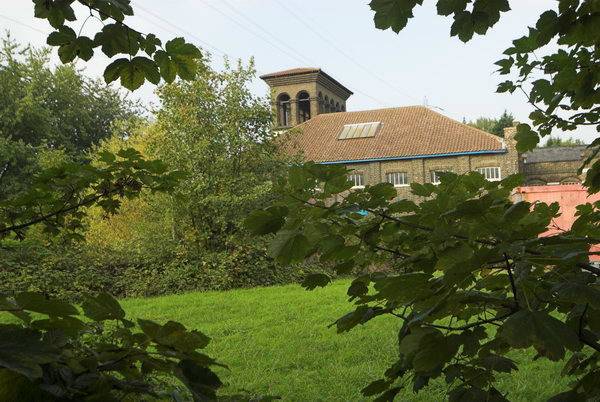
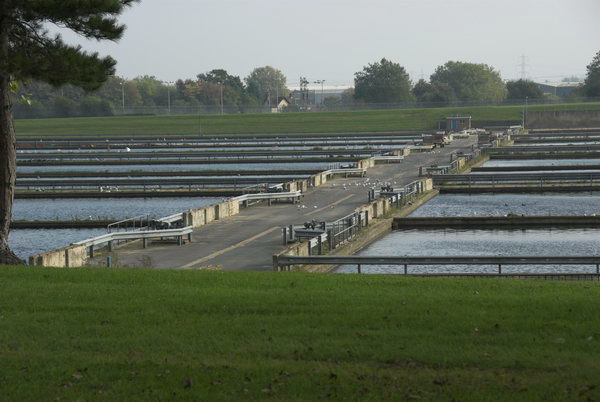
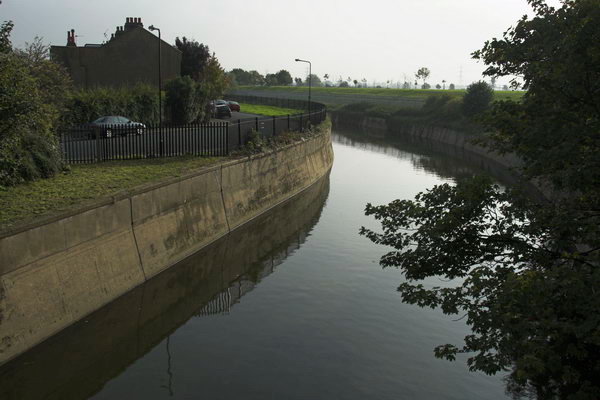
Then I made my way between reservoir and waterworks to the Lea Flood Relief Channel and St James’s Park, surrounded with remarkably brooding lime trees.

There are many more pictures from the walk on My London Diary, but surprisingly I don’t appear to have taken a picture of the Walthamstow Pumphouse Museum on this occasion. I think I had stopped to take so many pictures on the way that I was in rather a hurry to collect my pictures which had been on show for Open Heritage Day there and get home.

More pictures from the walk on My London Diary


FlickrFacebookMy London DiaryHull PhotosLea ValleyParis
London’s Industrial HeritageLondon Photos

All photographs on this page are copyright © Peter Marshall.
Contact me to buy prints or licence to reproduce.

Disarm DSEI – City of London 2009

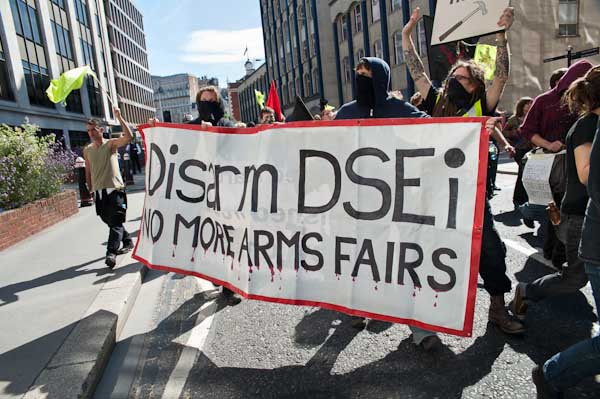
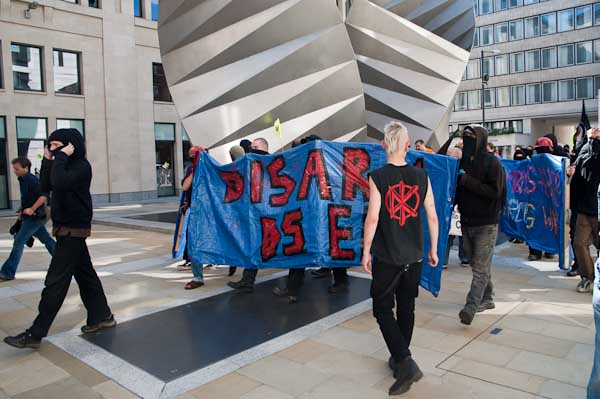
Disarm DSEI – City of London: on Tuesday 8th September 2009, the day that year’s DSEI Arms Fair opened at the Excel centre in East London, campaigners came to protest outside the city offices of companies heavily involved in the arms trade.

Disarm DSEI - City of London 2009

There were also protests outside the Excel Centre, but the protest in the City would be seen by many more people and was more likely to receive coverage in the media. Later in the day protesters from CAAT (Campaign Against the Arms Trade) also came into central London for a protest outside the government offices of UK Trade and Investment (UKTI) in Westminster. Their Defence and Security Organisation provides financial, political and logistical support for the arms fair, channelling our taxes to help private companies to profit from making the arms used to kill people.

Disarm DSEI - City of London 2009

The protest in the City of London was by Disarm DSEI, who had provided an excellently produced and well-researched ‘infopack’, 4 A4 pages with a map listing over 25 companies – including arms traders, law firms, institutional investors and banks with heavy involvement in the arms trade and which I quoted from extensively in my post on My London Diary. But Disarm DSEI stressed that the protest had no organisers but that those present would together decide on what it would do.

Disarm DSEI - City of London 2009

There were also people who had come prepared to speak at the stops the protest made about the activities of the companies, and after meeting outside the RBS in Aldgate (“the world’s leading creditor to the arms industry … over £44.6 billion in the last ten years including loans to producers of cluster bombs and depleted uranium munitions” we went on to Barclays “the largest investor in the global arms trade with £7.3 billion in shares.”

Disarm DSEI - City of London 2009

From there the protest moved on to Schroders and Lloyds TSB, the “principal banker to BAE Systems and QinetiQ” and who have made loans “to produces of of cluster bombs and depleted uranium munitions.”

Disarm DSEI - City of London 2009

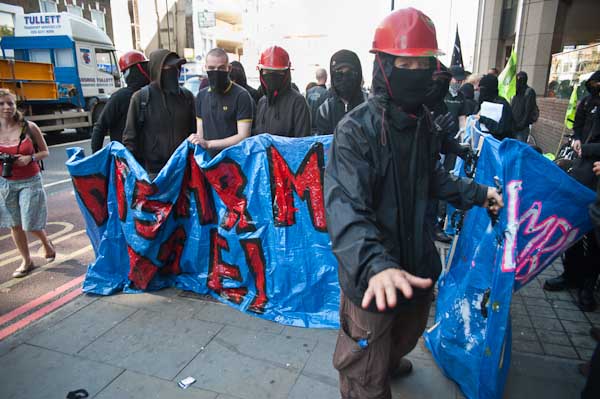
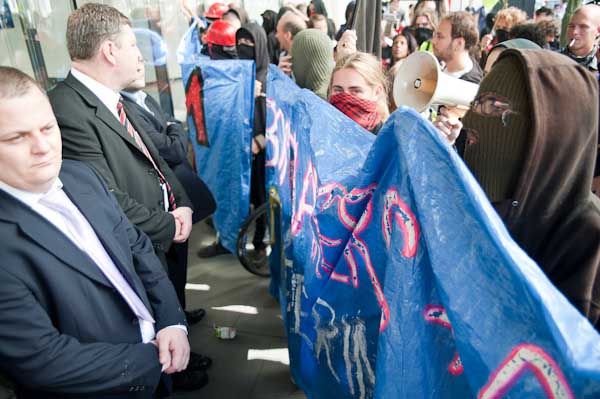
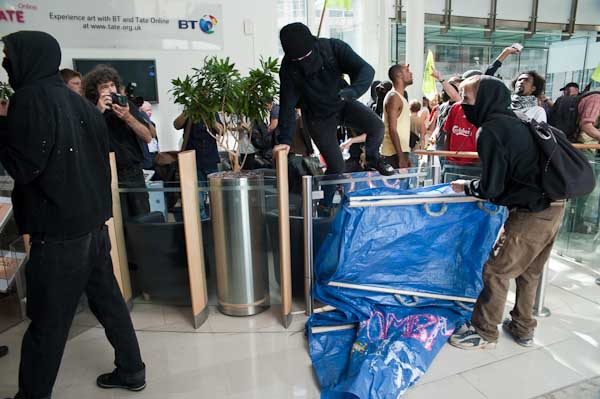
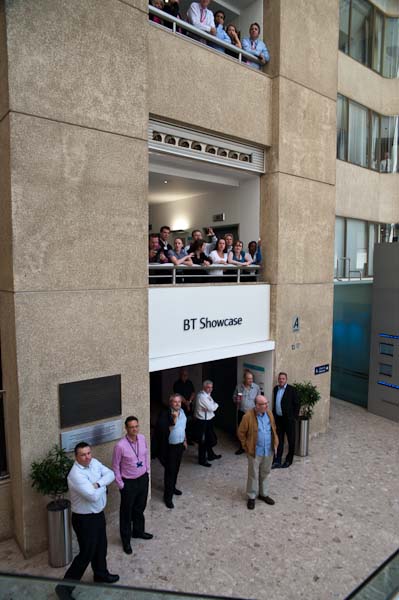
When we reached the BT offices, some protesters made a rush for the door and managed to push their way into the atrium, with others following them for a short protest inside – with staff and visitors to the building gathering on the balconies to watch.

Apart from a little possible damage to the door and from jumping over the security gates I saw little if any deliberate vandalism and no attempt to attack any of the people inside. “BT hold £59 million worth of shares in the international arms trade.” And after making their point, the protesters simply walked out.

Things got a little rougher at AXA Investments (“£2,259 million worth of shares in the UK arms trade and &6,207 million investment in the international arms industry”) where some smashed the glass with a reinforced banner, but the protest then moved away to the Stock Exchange (“where all the dirty dealing gets done“) – where after a short protest the banners were put away and the protest ended.

Police had not tried to stop the march and seemed to just stand back and watch, though there was a FIT team taking photographs. The ‘infopack’ had advised protesters to ‘mask up’ and many did as you can see in my photographs.

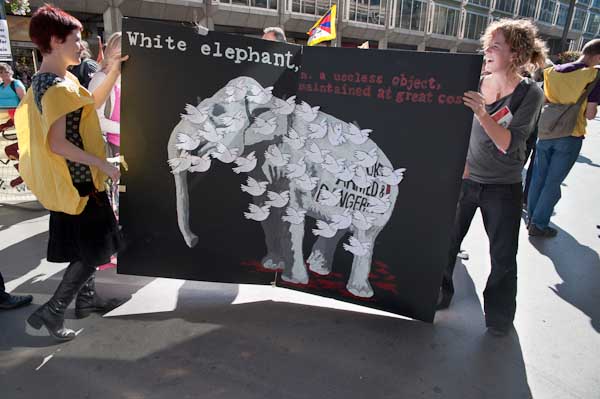
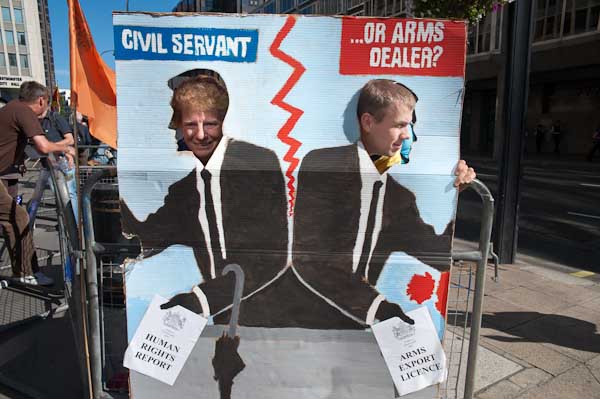
From there I took the tube to Westminster, where CAAT had brought a white elephant with doves on it along with a petition calling for an end to the support of the arms trade by the UKTI Defence and Security Organisation. Another banner had the message “Civil Servant … Or Arms Dealer” and accused the government of handing out arms export licences to repressive regimes – some of whom also sell arms as well as buy them at DSEI.

This year, 2025, the government made a highly publicised statement about not inviting the Israeli government delegation to the DSEI arms fair – but failed to mention that Israeli arms manufacturers will still be selling their weapons there, selling them as being “battle-tested” after their use in the long series of attacks on Gaza, killing Palestinians in the ongoing genocide.

Among those at protest outside the UKTI was peace activist Dan Viesnik on his 100 hour Famine for Victims of the Arms Trade at various government offices and other locations around the city.

More about these protests and many more pictures on My London Diary at Disarm DSEi and CAAT: Close UKTI DSO.


FlickrFacebookMy London DiaryHull PhotosLea ValleyParis
London’s Industrial HeritageLondon Photos

All photographs on this page are copyright © Peter Marshall.
Contact me to buy prints or licence to reproduce.