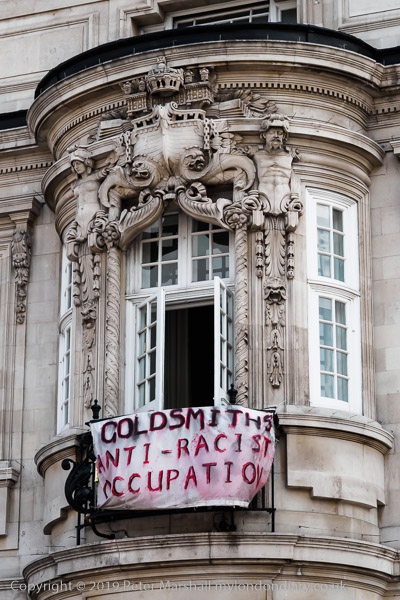
Goldsmiths Occupation

Goldsmiths, University of London was once a small college in New Cross, establishe in 1891 by the Worshipful Company of Goldsmiths as Goldsmiths’ Technical and Recreative Institute in a building built in 1844 for the Royal Naval School who had outgrown the site. It became a college of the University of London in 1904 as as Goldsmiths’ College, losing the apostrophe in 1933.

Goldsmiths College is still its official name, but it no longer uses the ‘College’, perhaps too much of a reminder of its past role largely in training teachers, although also offering other courses. Many well-known British artists studied there, perhaps benefitting greatly from a thriving south London art scene in the 1970s in Bermondsey and other areas of nearby Southwark.

Goldsmiths too has outgrown its old building, although it is still its main building, but has spread its campus across a much larger area, with both new buildings and incorporating older ones, the most prestigious and ornate of which is the former Deptford Town Hall on the New Cross Road.
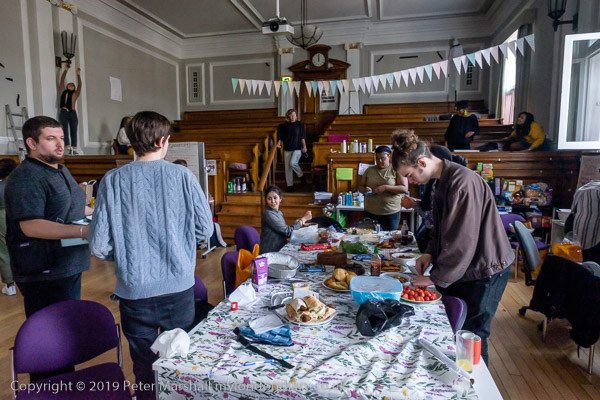
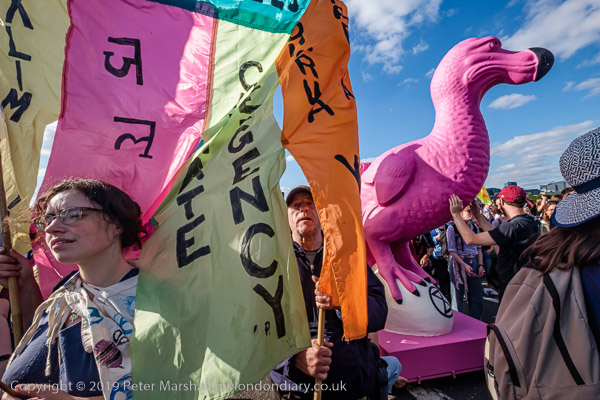
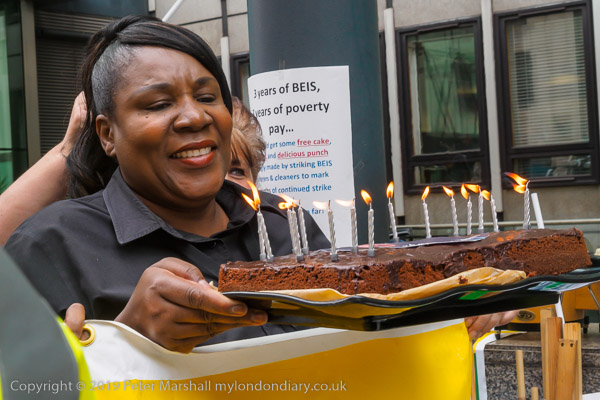
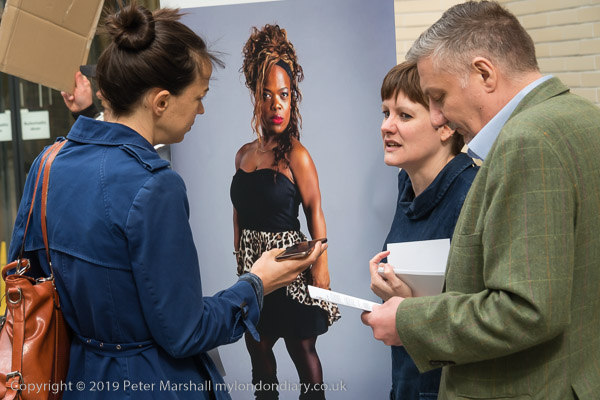
Over half the students at Goldsmiths are mature students, and around a fifth are overseas students as well as many BAME students from this country. That mix was evident when I visited Deptford Town Hall where students were preparing for a party to celebrate 50 days of occupation in the building – as it has also been on other visits to the campus. It feels more like a London university than most.

The Goldsmiths occupation was prompted after a candidate standing in student elections was racially abused and the university authorities failed to take action, but has longer and deeper causes. Students claim that the university fails to treat its BAME students and workers fairly, with higher dropout rates for them as well as lower academic results. I’d been at Goldsmiths a couple of months earlier, on St Valentines Day for a protest to launch the campaign by the IWGB union and students to directly employ its security officers and give them decent pay and conditions.
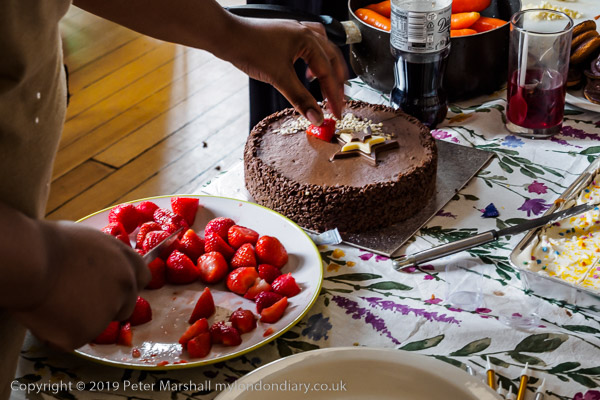
I was signed into the building by a student and given a conducted tour of the occupied areas, then watched and photographed the occupying students preparing for their party – and wished I could stay as the food looked delicious.
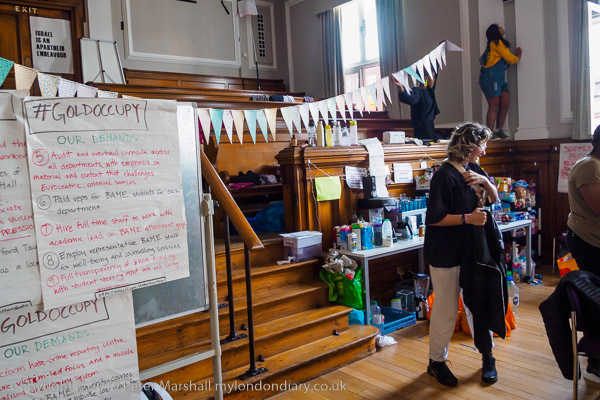
The students had a long list of demands, including that Goldsmiths develop a strategic plan to tackle the institutional racism – and bring workers on the campus into direct employment, several versions of which were written up in the occupation and on-line.
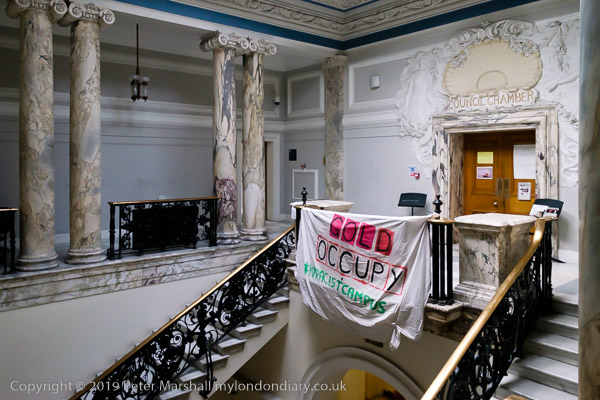
They also demand that Deptford Town Hall be made more available to the local community, as they say Goldsmiths have failed to live up to the promises they made about this. It really is a splendid building, and the interior even more so than the impressive facade, and it would be good to see it become a community asset rather than solely used for university purposes. It was after all built for the people, doubtless with money from taxpayers as well as from our exploitation of the Empire.

The occupation finally came to a successful end in July after 137 days when the Black, Minority Ethnic, Muslim, LGBTQ and disabled student-led occupation by Goldsmiths Anti-Racist Action obtained a legally binding dcument signed by the Senior Management Team to their demands including that they would not pursue further legal action against those who had carried out the occupation.

More pictures from my brief visit: 50 days anti-racist occupation at Goldsmiths.


All photographs on this and my other sites, unless otherwise stated, are taken by and copyright of Peter Marshall, and are available for reproduction or can be bought as prints.

There are no adverts on this site and it receives no sponsorship, and I like to keep it that way. But it does take a considerable amount of my time and thought, and if you enjoy reading it, please share on social media.
And small donations via Paypal – perhaps the cost of a beer – would be appreciated.
Anglo American

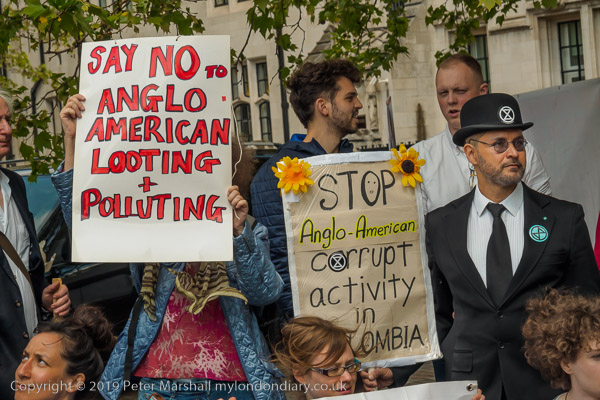
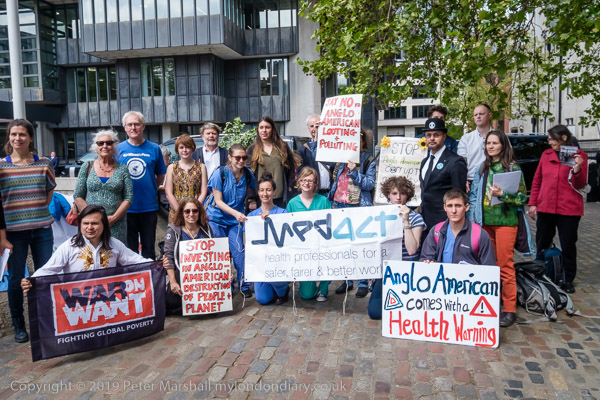
I’d gone to the QEII Centre in Westminster to photograph one protest outside the AGM of London-listed mining company Anglo American, and found that there were two taking place and sharing the space not entirely happily.

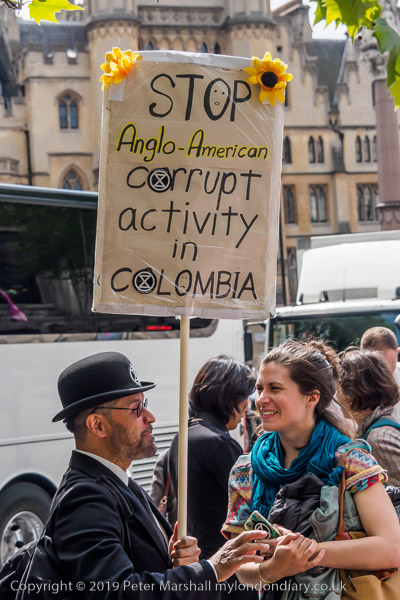
I’d known well in advance that the London Mining Network were going to be there and hold a vigil because of the “unimaginable damage to communities and the planet” caused by Anglo American “through its disregard for human rights, the environmental devastation caused by its projects, and its neo-colonial policies in Colombia, Brazil, Peru, Chile, South Africa and elsewhere.”

Protesting together with them were people representing groups in some of those countries, particularly Colombia, as well as Medact, health professionals for a safer, fairer & better world, many of whom volunteer to work abroad including in areas affected by the activities of Anglo American. And among the protesters were several who had bought a single share so as to be entitled to go into the AGM and question the activities of the company in the meeting.

But there is no booking system for protests – and for static protests there is even no requirement to inform the police, though this is necessary for marches to be legal. And another group had come and set up before them on the spot they had hoped to occupy.

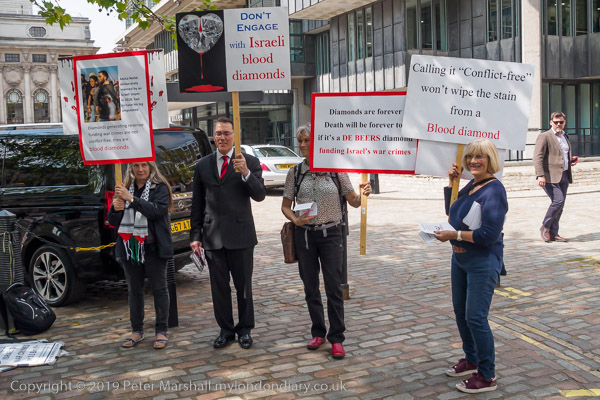
As it says in the search description for their web site, “Anglo American is a globally diversified mining business. Our portfolio spans diamonds (De Beers), platinum, copper, iron ore and manganese, metallurgical …” (the rest of their activities are masked by the character limit, so you can finish the sentence how you like.)

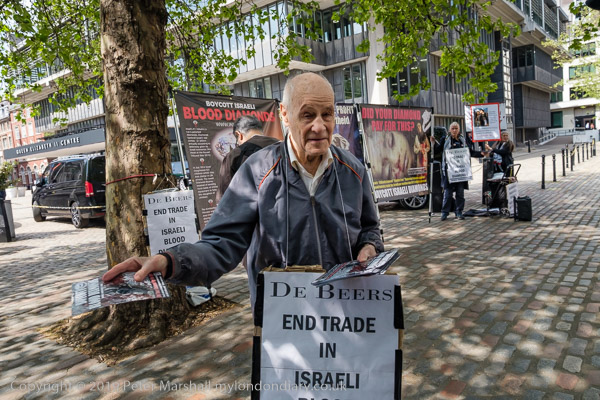
De Beers is the worlds leading diamond company. Inminds came to demand that they end their trade in Israeli blood diamonds, saying the Kimberley Process, meant to prevent the trade in diamonds that fund human rights violations is purposely neutered. De Beers supplies diamonds to Israel where they are cut and polished and produce around about $1 billion annually to bankroll the Israeli military and security industries and its horrendous human right abuses against Palestinians.

Inminds say that in 2015 Israel managed to block a proposal by the World Diamond Council that would have extended the definition of conflict diamonds “to include countries who flout human rights laws not just in mining areas but also in diamond trading centers“. 

The London Mining Network held their protest a few yards away, and not as they had intended at one of the entrances where shareholders might walk to the AGM. Although the two protests remained separate, some of those attending spent time supporting both. I’ve photographed both groups before and probably should have reported the two protests separately, but I hope the captions to my images filed made the position clear – as I think it is on My London Diary in Protests at Anglo-American mining AGM.


All photographs on this and my other sites, unless otherwise stated, are taken by and copyright of Peter Marshall, and are available for reproduction or can be bought as prints.

There are no adverts on this site and it receives no sponsorship, and I like to keep it that way. But it does take a considerable amount of my time and thought, and if you enjoy reading it, please share on social media.
And small donations via Paypal – perhaps the cost of a beer – would be appreciated.


July 2019 on My London Diary

Finally my pictures and comments for July 2019 are online. It should have been easy as I took the last week off with various family events, which even if they get photographed very seldom get shared publically on-line. But somehow I’m finding keeping up with things rather difficult, and for various reasons I think My London Diary is likely shortly to come to an end. But at least a few months more…

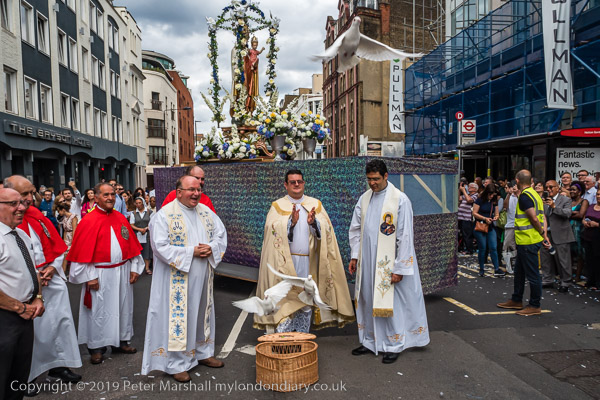
As usual in July I went to the annual Procession of Our Lady of Mount Carmel at St Peter’s Italian Church in Clerkenwell and managed to get all three doves leaving the basket in the same picture – always a challenge.

July 2019

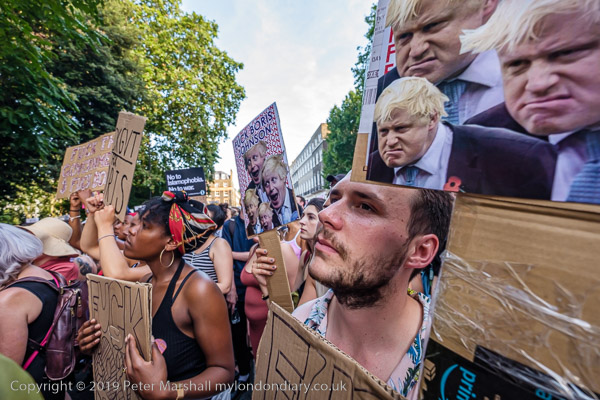
Boris J is not our Prime Minister
Our Lady of Mount Carmel
Sagra
No to Boris, Yes to Europe
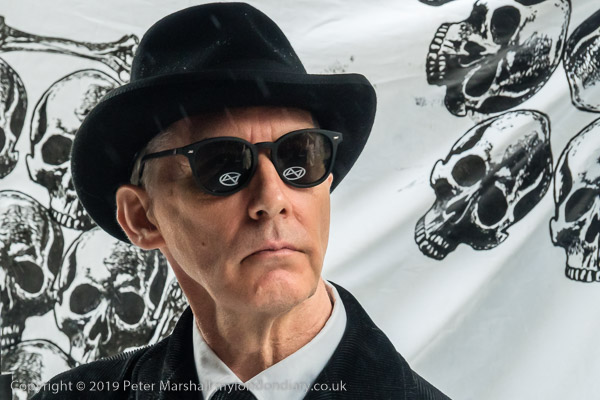
Requiem for a Dead Planet at Daily Mail

Students march for climate
XR London Tax rebellion
GLIAS 50th anniversary walk
St John’s Wood – Paddington Basin
Extinction Rebellion Waterloo

XR Summer Uprising procession
XR call for Ecocide Law

BEIS workers begin indefinite strike
East London Extinction Rebellion March
Vegan for Life Parade
Belgian Army Cenotaph Parade
IWGB welcome new Vice Chancellor
XR East London marches for clean air
IWGB demand living wage at LouLou’s
Bring Back unlawfully deported ‘PN’
London’s Sinister Arms Trade
Pride is a Protest
Give Me Five days
Protest French police attack on XR
XR Carmen’s Carbon Procession
End Inhuman Electroshock treatment

London Images

Carnival Time

Today is the first day of Carnival, but I’m almost resigned to not going. My legs really won’t take it any more and I’m only just getting over a few hours slow walking last Wednesday, though I was out taking pictures again yesterday. This year I got as far as planning my route, complicated by rail closures today on two lines that I would normally use, but I’m not going to make it. The nearest I’m likely to get is a can of Red Stripe.

It took me 25 years to get to Notting Hill Carnival for the first time in 1990, partly because for the first few years it was a relatively small and poorly publicised event but later because of the demonisation it suffered in our largely racist press.

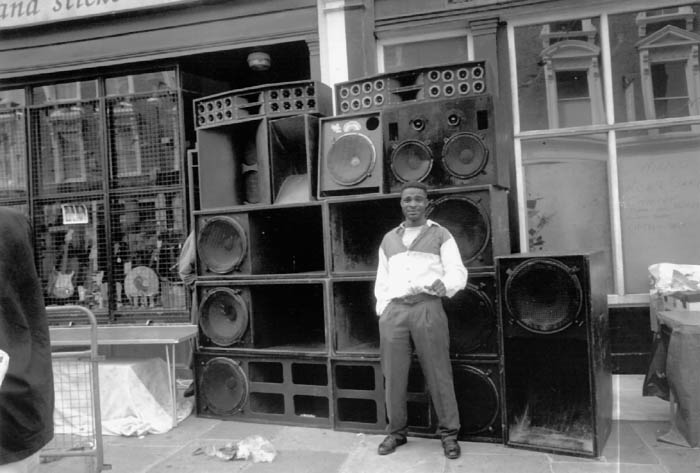
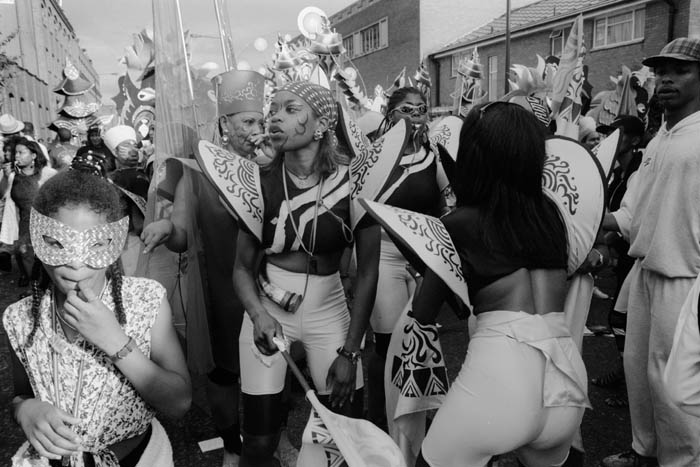
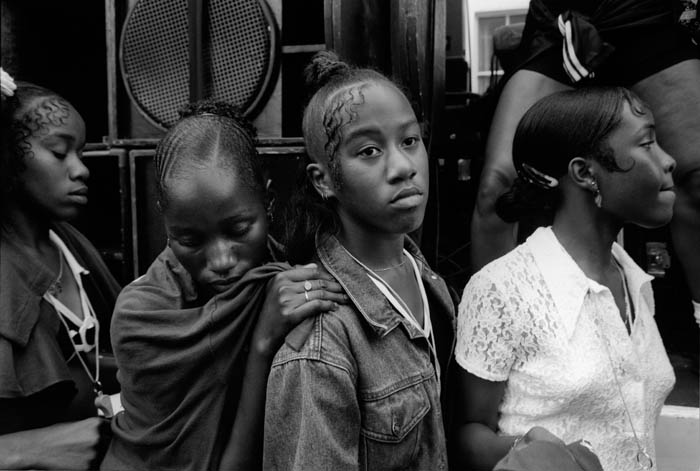
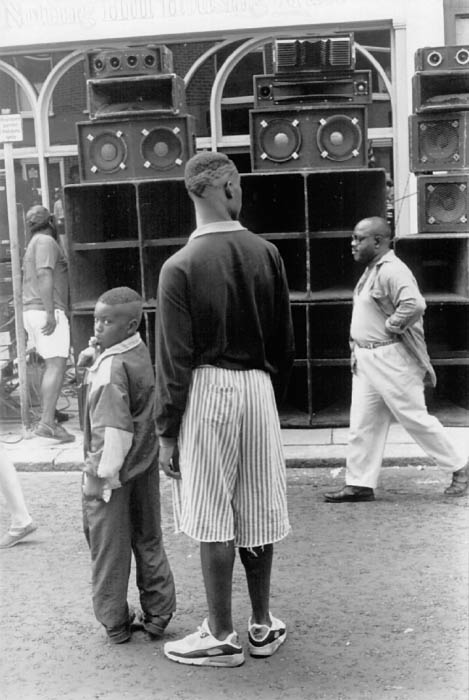
By 1990 I was becoming increasingly interested in documenting London as a multicultural city and knew I had to photograph carnival, so set out still with some trepidation and anxious warnings from friends. I loved the noise and the atmosphere and the colour, so of course I photographed it in black and white!

I continued to go back for the next 20 or so years, usually going for both days, and it became one of the highlights of my photographic year. I think there was perhaps a year or two when I was out of the country at August Bank holiday, and in 2005 I was suffering from a knee problem. I packed my photographic bag – always a small one for carnival – and dragged myself the 500 yards to the station, climbed up the bridge to get to the right platform and collapsed to the ground in pain. It was only then I realised that there was no way I was going to make it, rested for a few minutes and then hobbled my way slowly home.

I did allow myself to photograph in colour some years, but I found it a distraction and I think my best pictures are black and white. Some years too I took a panoramic camera too, loaded with colour film, and I felt its wide sweep enabled me to capture more of the atmosphere of the carnival procession. One of those images ended up being printed huge with a doorway people could walk through as an entrance to a museum exhibition; I was delighted to see it used but felt it didn’t improve the picture.

Rather to my surprise I find it’s 7 years since I last went to carnival, and on My London Diary I then wrote:

But either I’m getting too old for it, or perhaps carnival is changing, and this year I found it a little difficult. So I went on the Sunday, stayed around three hours and didn’t really want to return for the big day. So I didn’t.

But I am thinking about Notting Hill today, and about North Kensington in particular. Although I haven’t been to carnival I have made quite a few visits there over the past couple of years, and I’ve set an alarm and like carnival I will stop at 3pm for a period of silence to remember Grenfell.

You can see more pictures from several years at Carnival on My London Diary, but my favourite selection of the black and white work is a set of 20 pictures from the show English Carnival with three friends at the Juggler in Hoxton in 2008 from which the black and white images above come.


All photographs on this and my other sites, unless otherwise stated, are taken by and copyright of Peter Marshall, and are available for reproduction or can be bought as prints.

There are no adverts on this site and it receives no sponsorship, and I like to keep it that way. But it does take a considerable amount of my time and thought, and if you enjoy reading it, please share on social media.
And small donations via Paypal – perhaps the cost of a beer – would be appreciated.


Gurdip Singh Chaggar & Blair Peach

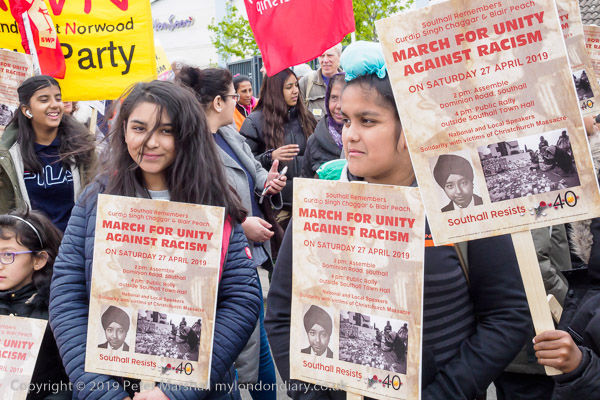
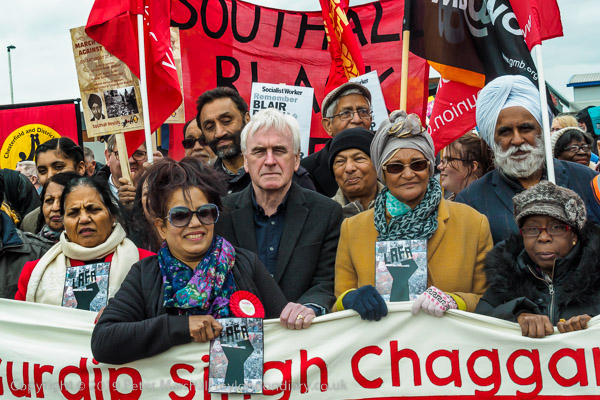
This wasn’t the first time I’d been to Southall for a rally remembering the murder there of Blair Peach by the police Special Patrol Group in 1979, though I don’t remember if Gurdip Singh Chaggar’s murder was also remembered at those earlier events.

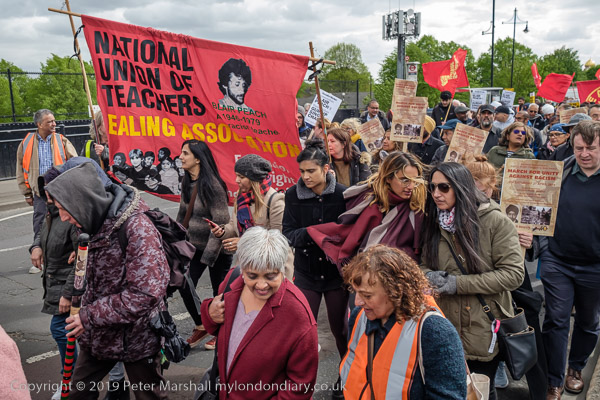
Blair Peach had come to the UK from New Zealand in 1969 and he was roughly my age. He was working as a teacher in the East End, and like me was an active member of the National Union of Teachers, though I didn’t come across him as I was working around 40 miles away and only involved at a local level.

I suspect we went to some of the same protests agains apartheid in South Africa and against racism, but I was not at the Anti-Nazi League demonstration in Southall on the day he was murdered, probably because although it was not far from where I was living, it was a week after Easter Monday and I was probably working and could not have arrived until it was due to finish.

The racist National Front had called a meeting in Southall Town Hall for 7.30pm, and because it was in the run-up to the forthcoming General Election on 3rd May in which the NF had a candidate (he got 1545 votes, 3.0% of the vote) Ealing Council were unable to refuse them the use of the hall, despite a petition from 10,000 local residents.

Several local groups as well as the Anti-Nazi League organised protests across the day, including the Indian Workers’ Association, outside whose offices Gurdip Singh Chaggar, coming home from the Dominion Cinema, had been set upon and murdered by skinheads in June 1976, and Peoples Unite, a largely Afro-Carribean group who along with others had been involved in disturbances which followed Chaggar’s murder.

Although there had been some reports of bricks and bottles being thrown, the real violence began when the police Special Patrol Group decided to raid a squat being used by People’s Unite as a first aid post. Two officers were reported as wounded and the SPG took out vengeance on all those in the house, and Clarence Baker was hit on the head by a police truncheon, fracturing his skull and putting him in a coma for five months.

Police had kept a cordon around the Town Hall, and escorted the fascists in. Once the meeting had begun they decided to clear the area, allowing protesters to move away westwards along Southall Broadway. Peach and a group of friends were leaving, going back to where they had parked, and turned off south down Beachcroft Road. Unfortunately for them, this road stops short, running into Orchard Rd and then going back towards the Broadway. As they approached Orchard Rd they were met by the SPG, who jumped out of their vans and were now rioting out of control and lashing out at everyone on the road. It’s unclear whether the baton wielded by the officer who killed Peach was standard police issue or as some report soemthing rather heavier. Conscious but in obvious difficulties he was taken into a nearby house and an ambulance called, but he died in hospital four hours later.

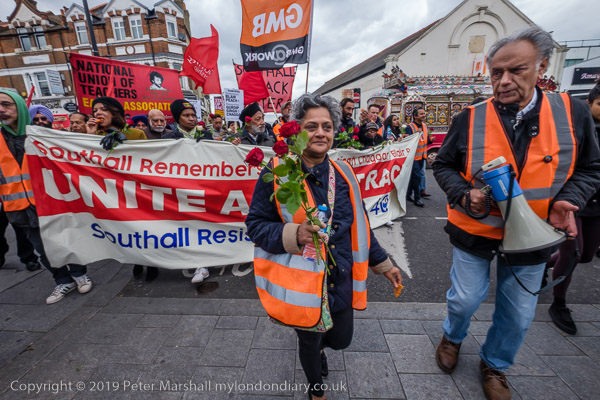
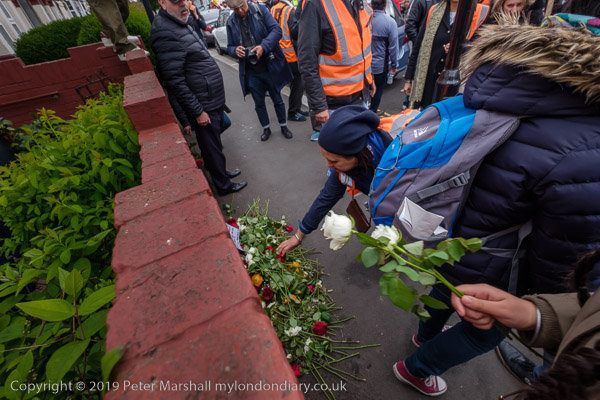
Today’s protest started close to where Gurdip Singh Chaggar was murdered and the march halted there for a minute’s silence before going on to stop outside the Gurdwara where he and his family worhsipped. Later it took Peach’s route from Broadway down Beechcroft Road and people laid flowers on the corner of Orchard Road where he received the fatal blow, before going on to a rally outside the Town Hall.

More about the protest at Southall rally for unity against racism.


All photographs on this and my other sites, unless otherwise stated, are taken by and copyright of Peter Marshall, and are available for reproduction or can be bought as prints.

There are no adverts on this site and it receives no sponsorship, and I like to keep it that way. But it does take a considerable amount of my time and thought, and if you enjoy reading it, please share on social media.
And small donations via Paypal – perhaps the cost of a beer – would be appreciated.

Facebook Shame

I’ve written recently about Facebook’s censorship of posts and many of my friends who are on Facebook (and more who I don’t know but are ‘Facebook Friends’) seem regularly to disappear for a few days or even permanently having been banned from FB. (Though most of those who have been permanently removed seem to reappear in a few days under a slightly different name.

Often their ‘offences’ seem to have been trivial or non-existent, sometimes just sharing a link to an article in the mainstream press seems to be enough to generate a ban. At times FB’s arbiters seem excessively prudish, objecting to the kind of language that is commonplace in many groups in our society, or in their obsessive fear of women’s nipples.

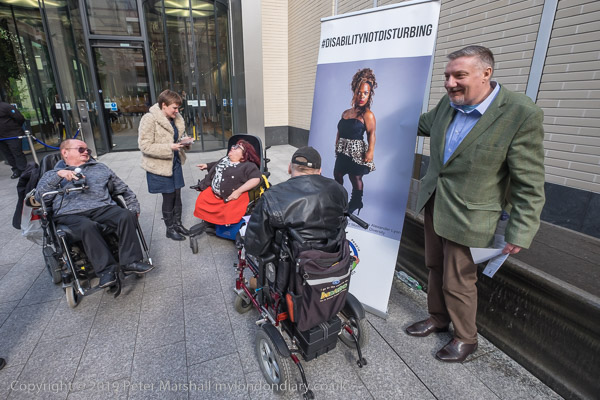
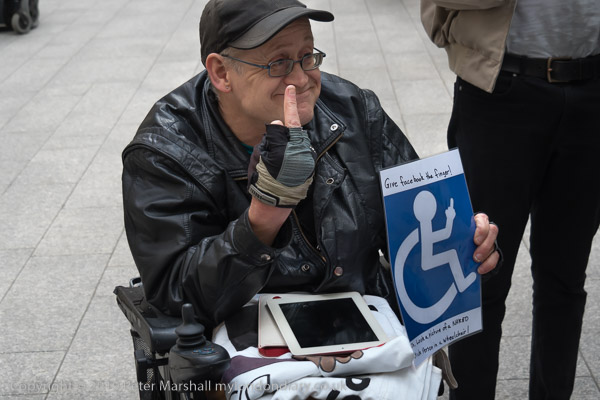
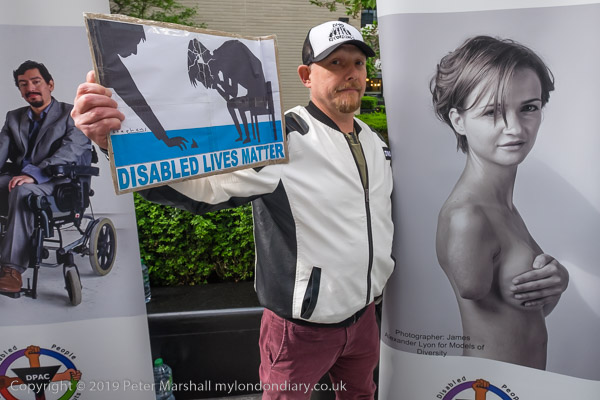
FB’s censorship reached a shameful new low a few months ago, when they blocked people recording ‘Likes‘ on the site of Access Ability who have a Facebook help line to empower people with disabilities. When this was queried on a phone call, the site was told the action had been taken by FB because “some people find it disturbing to see pictures of disabled people“.

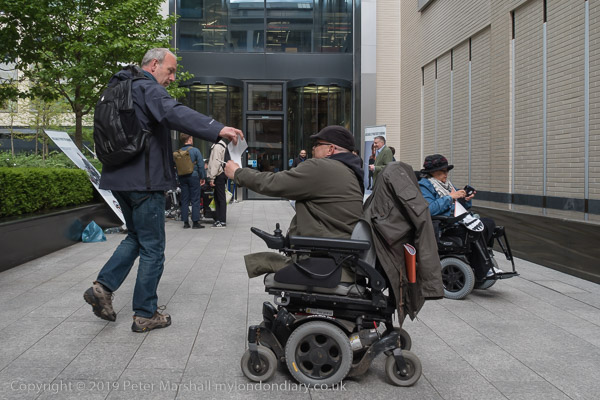
Together with a colleague I went to photograph a protest by disabled friends from DPAC (Disabled People Against Cuts) outside Facebook’s London HQ against this discriminatory treatment by Facebook of disability-related pages, and you can see my pictures of their protest. During the protest they played a recording of the phone call which the above quote came from, and there were other similarly disturbing statements.

But what you can’t see pictures of is a meeting which I think took place between the protesters and a manager from Facebook about the ban. FB were clearly so ashamed about their behaviour that they were unwilling for this to be recorded. Their security manager came out and told DPAC that a manager would only come out and talk with them if the meeting was not photographed, videoed or recorded in any way.

My colleague had already left, deciding he had enough pictures of the protest for his newspaper which had asked him to cover it. I decided not to prejudice the outcome of the event for the protesters and felt that reporting the prohibition was a more powerful admission of FB’s guilty shame than any photographs of the meeting could be and left.

More pictures at Disabled protest against Facebook


All photographs on this and my other sites, unless otherwise stated, are taken by and copyright of Peter Marshall, and are available for reproduction or can be bought as prints.

There are no adverts on this site and it receives no sponsorship, and I like to keep it that way. But it does take a considerable amount of my time and thought, and if you enjoy reading it, please share on social media.
And small donations via Paypal – perhaps the cost of a beer – would be appreciated.


Police clear Marble Arch roads

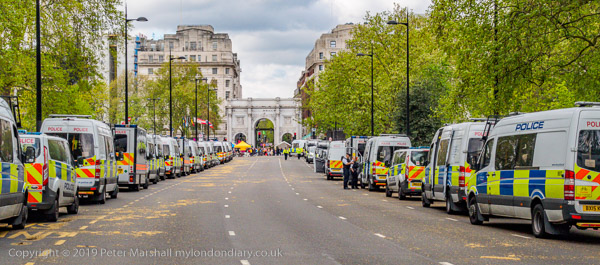
I lost count of the number of police vehicles that I saw as I walked along the centre of the northbound carriageway of Park Lane – and not all of them are in the picture. There were more in some of the other streets in the area too, and it was clear that this was an operation on a huge scale

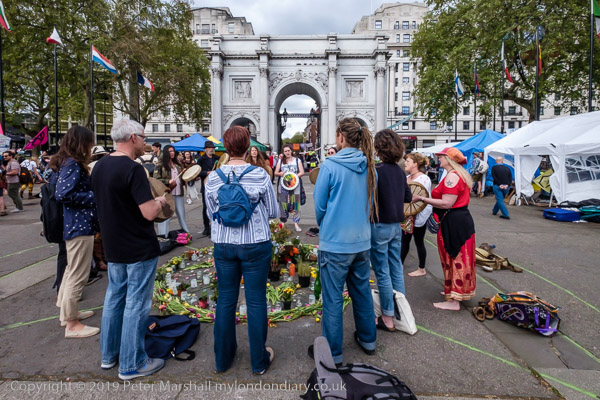
Marble Arch is a key junction in London, with the Bayswater road, Edgware Road, Oxford St and Park Lane all feeding in and taking out traffic from the gyratory system around the arch. The whole area had been closed off by Extinction Rebellion on the morning of 15th March and remained closed over a week later on the 24th. I imagine there was a great deal of political pressure on the Met to clear it.

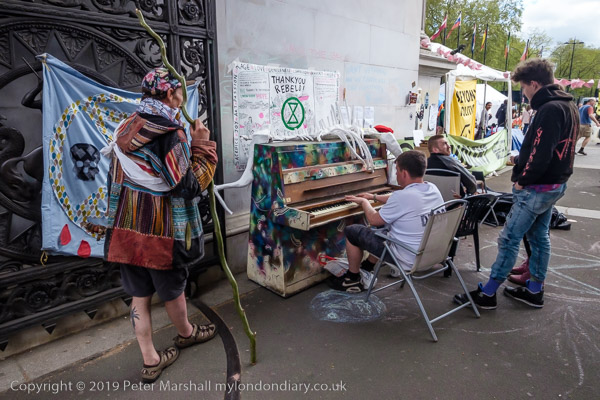
On the hard standing in front of the Arch, things seemed to be going on much as usual, though there were noticeably fewer tents and fewer people than when I visited the previous week.

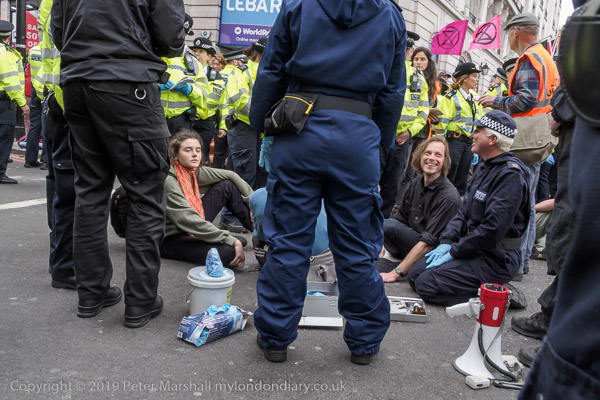
But there was a crowd around a ring of police who had surrounded the group blocking the entrance to the system from Oxford St and were clearly intending to arrest them. This appeared to be the last of the road blocks still in place, with a few people still locked together. Police were trying to get those outside the cordon to move away, and were beginning to threaten them and me with arrest, but I managed to take a few pictures working between police legs.

I walked around the area for a few more minutes taking pictures, then began to walk towards Belgrave Square where I hoped to photograph protesters calling on Turkey to recognise the Armenian Genocide. As I walked down Park Lane I passed the samba band and others coming to Marble Arch around 45 minutes after me.

A few more pictures at Extinction Rebellion at Marble Arch.


All photographs on this and my other sites, unless otherwise stated, are taken by and copyright of Peter Marshall, and are available for reproduction or can be bought as prints.

There are no adverts on this site and it receives no sponsorship, and I like to keep it that way. But it does take a considerable amount of my time and thought, and if you enjoy reading it, please share on social media.
And small donations via Paypal – perhaps the cost of a beer – would be appreciated.


XR continues

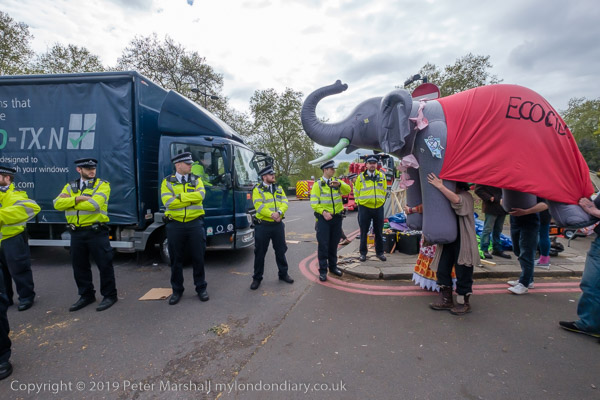
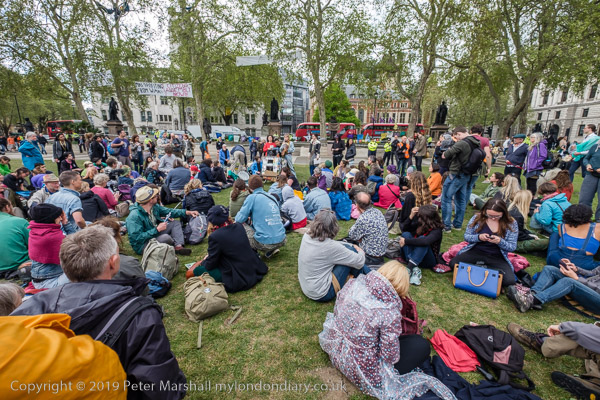
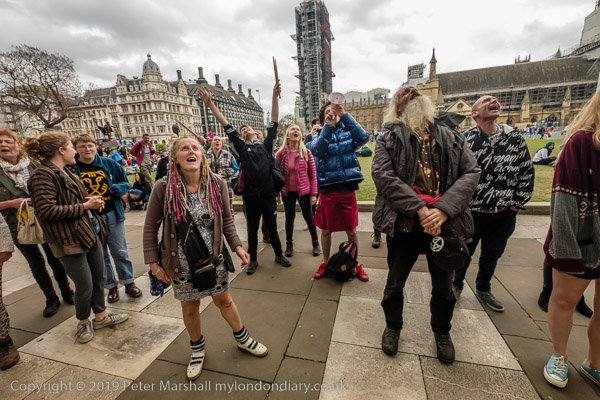
Nine days after they brought central London to a halt, Extinction Rebellion were still around, although the ‘Garden Bridge’ and Oxford Circus had been cleared and the traffic was now flowing around Parliament Square where I arrived to photograph them again.

Clearly the numbers here were considerably down on last week, with only a few hundred on their way to lobby their MPs, and a general meeting was taking place in the square as I got there.

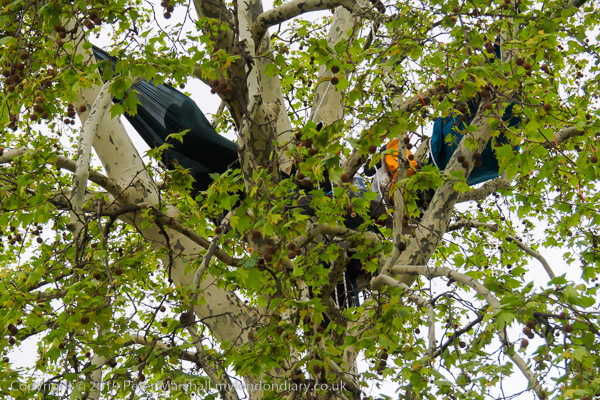
There wasn’t really a great deal to photograph, though I tried hard. There were a few people up in the trees in the corner of the square by the Supreme Court (I still think of it as Middlesex Guildhall) but these large London Planes have impressive leaf cover, and after a while I gave up trying to get a decent picture.

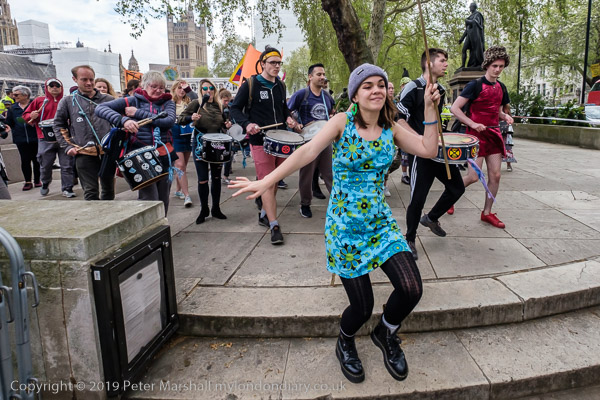
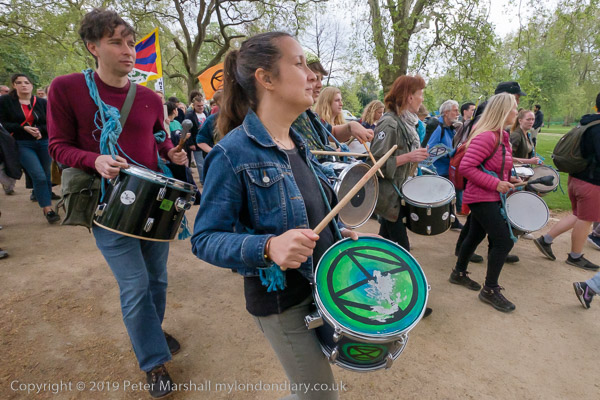
Then news came through that the police were beginning to clear the roads around the main Extinction Rebellion camp at Marble Arch, and a group prepared to get ready to march behind the samba band to support the rebels there, and I decided to go with them.

It took some time to get people organised to leave, and when they did, progress was slow. I walked with them until they were halfway up The Mall and then rushed away to get to Marble Arch. Normally I might have taken a bus, but bus services were still not moving up Park Lane as it was still blocked, so I hurried there on foot. The group led by the samba band only arrived after I had been taking pictures for some time and was leaving.

More at Extinction Rebellion in Parliament Square


All photographs on this and my other sites, unless otherwise stated, are taken by and copyright of Peter Marshall, and are available for reproduction or can be bought as prints.

There are no adverts on this site and it receives no sponsorship, and I like to keep it that way. But it does take a considerable amount of my time and thought, and if you enjoy reading it, please share on social media.
And small donations via Paypal – perhaps the cost of a beer – would be appreciated.


Assange

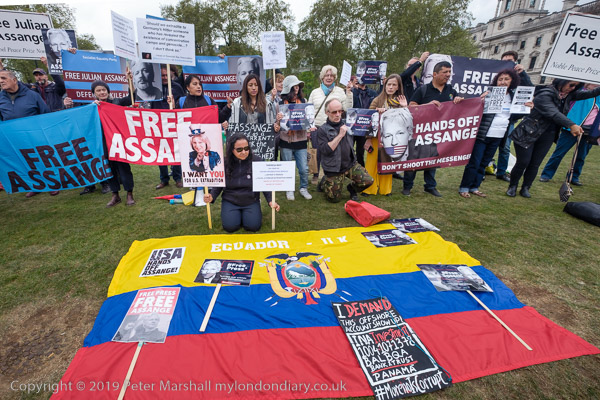
Wikileaks has released an enormous amount of information which has enabled us to see more clearly how the world really works, rather than how those in power would like us to think it works, revealing many deceptions and cover-ups. That many of those have revealed the crimes of the US military and other agencies is perhaps hardly surprising given that the US is the dominant country in the world, and certainly one that has engaged most in so many dubious military and other interventions around the world, particularly in the Middle East and Latin America.

So of course the US is out to get Wikileaks founder, Julian Assange, and would like to lock him away for life (or in some way bring it to a premature end) and it is only surprising that they have not yet manage to do so. Perhaps one day Wikileaks will publish evidence of their planning against him.

What is shameful has been the willingness of othe Sweden and the UK to collude with the US over this, with court cases that resulted in Assange jumping bail and taking refuge in the Ecuadorean Embassy in London – and then following a change of government to one more favourable to US interests (and the leaking not by Wikileaks and possibly by a US agency of material linking the Ecuadorean president with a corruption scandal) in his arrest there by UK police, and the treatment he has received in a British prison, serving 50 weeks for skipping bail and under threat of extradition to the US.

Wikipedia reports that in February 2016 the

” UN’s Working Group on Arbitrary Detention concluded that Assange had been subject to arbitrary detention by the UK and Swedish Governments since 7 December 2010, including his time in prison, on conditional bail and in the Ecuadorian embassy. According to the group, Assange should be allowed to walk free and be given compensation.”

The article also quotes Nils Melzer, UN special rapporteur on Torture and Other Cruel, Inhuman or Degrading Treatment or Punishment  who visited Assange in May 2019 and stated  “in addition to physical ailments, Mr Assange showed all symptoms typical for prolonged exposure to psychological torture, including extreme stress, chronic anxiety and intense psychological trauma” and later criticised Sweden, Ecuador, Britain and the US for their bias and abuse of their legal systems to “make an example of Mr Assange before the eyes of the world.” 

Here in the UK, apart from the normal right-wing bias of most of our press, there has also been a campaign against him because of the allegations of sexual misconduct made against him in Sweden, which have been widely misrepresented, including by some on the left who should know better.

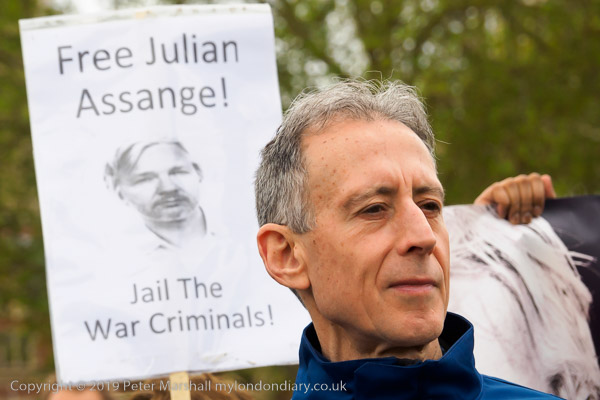
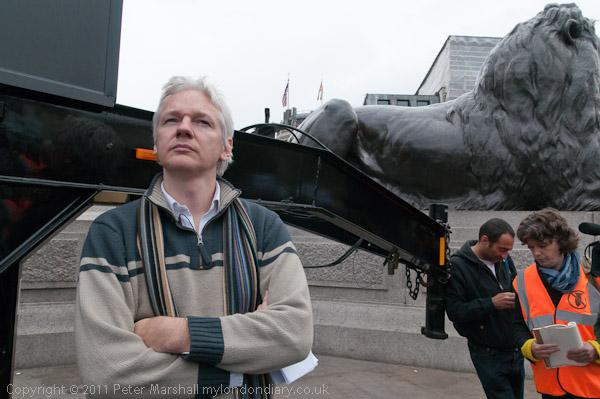
I’ve hardly met the man, exchanging just a few words with him before he spoke in Trafalgar Square, and I didn’t warm to him, but still admire much of the work that he and Wikileaks have done and feel he has been very badly treated by the British government and establishment manipulation of our judicial system. So I was pleased to be able to photograph this protest in Parliament Square. And yes, we should free Assange and either allow him to stay here or travel to a country of his own choosing.

Free Julian Assange


All photographs on this and my other sites, unless otherwise stated, are taken by and copyright of Peter Marshall, and are available for reproduction or can be bought as prints.

There are no adverts on this site and it receives no sponsorship, and I like to keep it that way. But it does take a considerable amount of my time and thought, and if you enjoy reading it, please share on social media.
And small donations via Paypal – perhaps the cost of a beer – would be appreciated.


Community Guidelines

Around ten days ago for the first time I got a notification from Facebook that one of my pictures had been reported as being against ‘community standards’ and had been taken off-line.

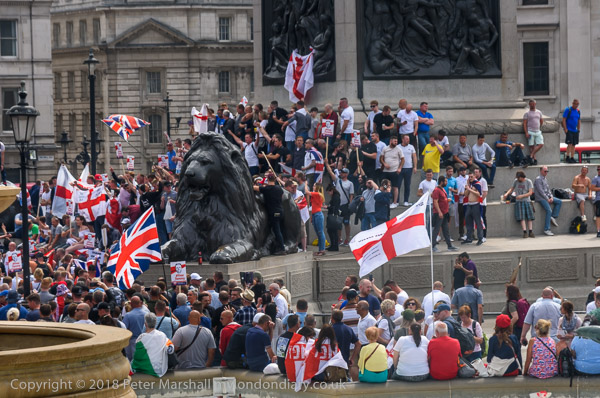
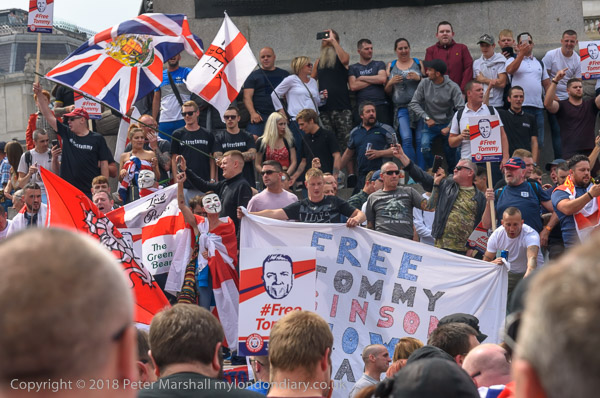
It was a picture in an album of pictures from the June 2018 ‘Free Tommy Robinson’ protest in London, I think this image.

Certainly one of the pictures from when the protesters were gathering in Trafalgar Square before marching down to a rally in Whitehall. This picture was taken from the North Terrace overlooking the square, after which I walked down and took a few more from the edge of the crowd, as well as a few closer pictures.

You can see more of my coverage of the event at Free Tommy Robinson on My London Diary. After the pictures in Trafalgar Square I photographed the protesters as they walked down Whitehall towards the stage for the rally, and was in the crowd close to Downing St when I was attacked by two men who tried to pull my camera out of my hands.

I struggled, pulling away and twisting and moving away through the dense crowd and they followed, one continuing to grab my camera and pull it away, and the other grabbing my other camera which was on a strap at my right side, and at my camera bag on my left shoulder. Fortunately the straps held and though the bag was pulled off my shoulder I had my arm through the strap and was able to drag it behind me along the ground, moving closer to the police at Downing St and the march stewards.

I think a few of the other protesters in the crowd were also telling the pair of thugs to stop, though none actually came to my help. But when they saw the police looking at them they let go of me and my cameras and rushed away. I was shaken but not injured, and the cameras were OK, and managed to take a few more pictures before I decided I really needed to move somewhere safer and recover.

I suspect that what had triggered the complaint to Facebook about the picture – I think the first of the set – was nothing in the picture, but that in the captions I had written about this attack on me. I’ve always tried to report accurately on protests, including those by right-wing groups, both in text and pictures, and this is anathema to many on the right. Some of whom are thugs on-line too.

Of course I requested a review of the removal – as the notification from Facebook had told me I could, and only 70 minutes later got a message thanking me for asking for review and informing me they had decided the image did not breach community standards and was back on line. Good to see the review system can work – but surely the system should look at complaints and see if there is any basis for them before taking action.

I mention this because I’ve just read a post by Jörg M Colberg on his Conscientious blog, Your Post Goes Against Our Community Guidelines: An Algorithmic Rewriting of History about the rather more serious censorship of his and other posts on Instagram, which is owned by Facebook. Like me he contested the removal of a picture he posted – one from the Abu Ghraib archives – and his post was also restored. In the post he points out the problems and dangers of internet censorship:
It doesn’t really matter whether it’s a government that’s censoring photographs or the algorithms of a US corporation — censorship is censorship, and these kinds of developments do not bode well for us.
and gives a number of pertinent links, including one to his own earlier post Your Post Has Been Deleted – Censorship on Instagram which is also well worth reading.

I think there should be some control over content on platforms such as Facebook and Instagram, to remove clearly illegal content. Things like hate speech, terrorist propaganda, threats of violence etc. It’s perhaps difficult to see how this could be applied in content that is shown in many different legislations, but that is a problem for those who profit from these platforms to resolve, and might involve serious changes in the services and their profitablity. But because it’s difficult doesn’t absolve them from their responsibilities, though it may demand different models.


All photographs on this and my other sites, unless otherwise stated, are taken by and copyright of Peter Marshall, and are available for reproduction or can be bought as prints.