Refugee Children, Dead Cyclists & A Squat

Refugee Children, Dead Cyclists & A Squat – 11th February 2017
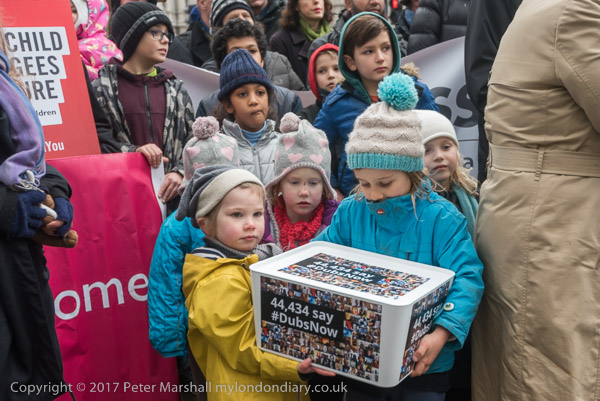
Dubs Now – Shame on May

Five years ago, on Saturday 11th February 2017, a crowd of supporters of Citizens UK and Safe Passage joined Lord Alf Dubs at Downing St to take a petition to Theresa May urging her to reverse the decision to stop offering legal sanctuary to unaccompanied refugee children.

The Tory government had been forced into an unusual humanitarian response when Parliment passed the Dubs amendment, and they were then given a list of over 800 eligible children – although there were known to be more whose details were not recorded. And because of Lord Dubs, around 300 have been allowed into the UK. But although twice that number remain in limbo, many in the Calais camps, Prime Minister Theresa May decided to end the scheme.
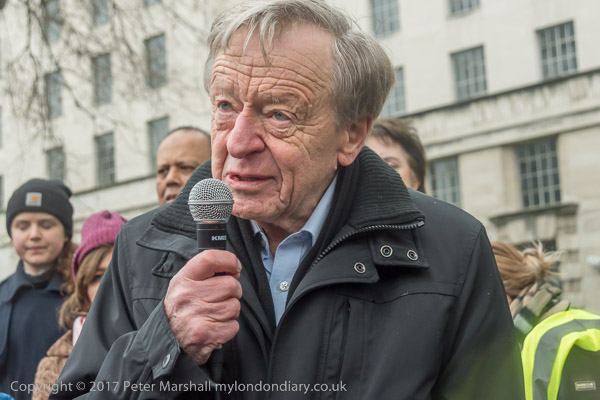
Lord Dubs speaks

Among those who spoke at the protest before an emergency petition with over 40,000 signatures was taken to Downing St were speakers from four London Labour councils who all said they had told the government they would take more children but their offers had not been taken up.
Dubs Now – Shame on May


Invest in Cycling – Stop Killing Cyclists

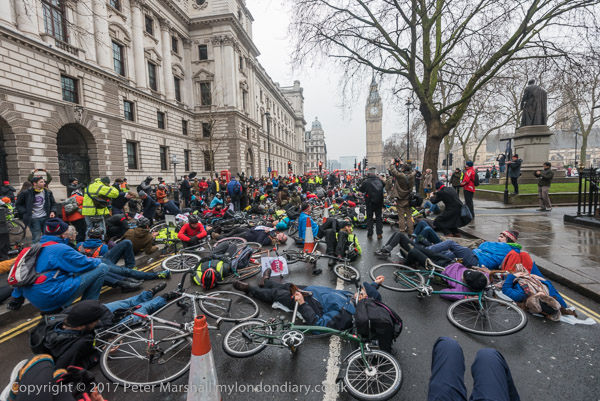
Cyclists and supporters met in Trafalgar Square to march to the Treasury on the edge of Parliament Square to call for a significant increase in spending on infrastructure for cyclists and pedestrians on our streets.
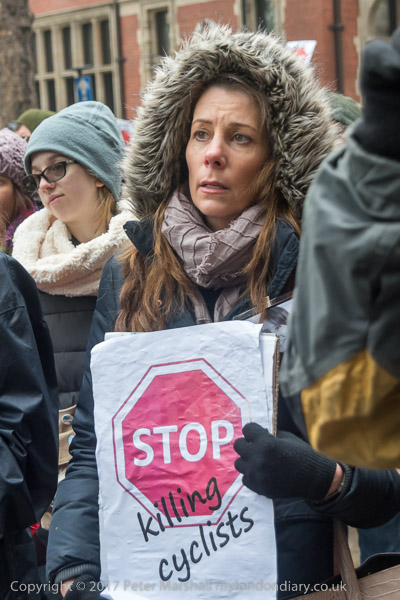
That week five people were killed on London streets as a result of careless or dangerous driving – accidents are rare, but such deaths are made much more likely by a road system engineered around the needs of car and other vehicle drivers and cutting their journey times through the city. Facilities for cyclists and pedestrians have long been treated as secondary and chronically underfunded.
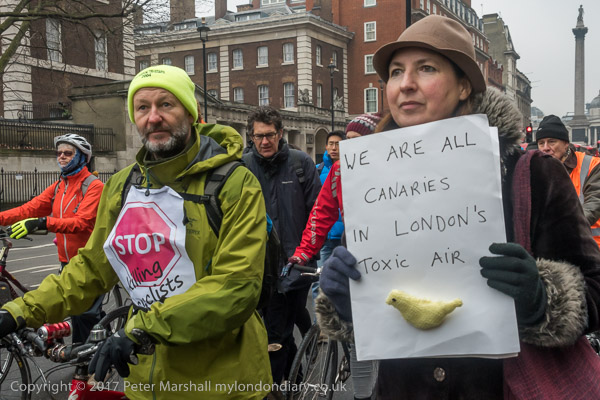
But these 5 killed, who were remembered in the protest and die-in are a small fraction of the numbers who die prematurely each week in London as a result of high and often illegal levels of air pollution – estimated at around 180 per week, as well as the much higher number of those whose lives are seriously affected by health problems – both figures including many who drive. Powerful lobbies for motorists and vehicle manufacturers have led to the domination of our cities by cars and lorries.
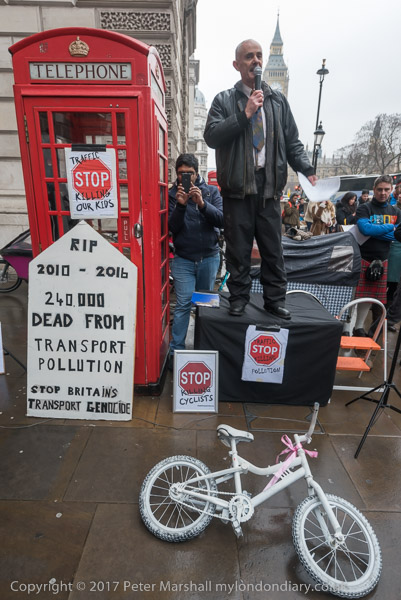
There are huge health benefits from cleaning the air by cutting down traffic and congestion, and also by encouraging healthy activities including walking and cycling. And the main factor discouraging people from taking to bikes for journeys to school, work and shopping etc is the danger from cars and lorries. Better public transport also helps, particularly in cutting pollution levels, and anything that cuts the use of petrol and diesel vehicles will reduce the major contribution this makes to global warming.

Invest in Cycling – Stop Killing Cyclists
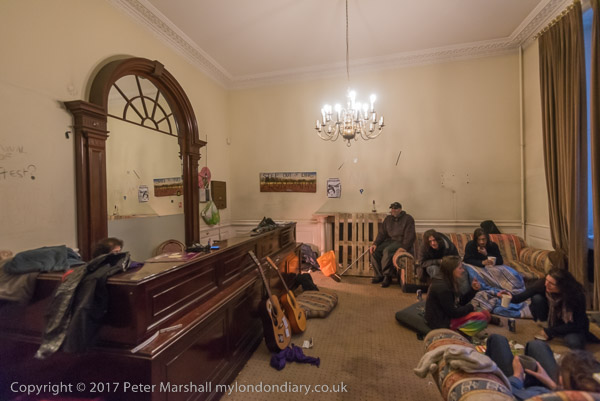

ANAL squat in Belgravia

My final event that day was a visit to 4 Grosvenor Gardens, a rather grand house short distance from Buckingham Palace (and more relevant to me, from Victoria Station.) Squatting collective the Autonomous Nation of Anarchist Libertarians (ANAL) had taken over this house on February 1st after having been evicted from the Belgrave Square house owned by Russian oligarch Andrey Goncharenko which they occupied for a week.
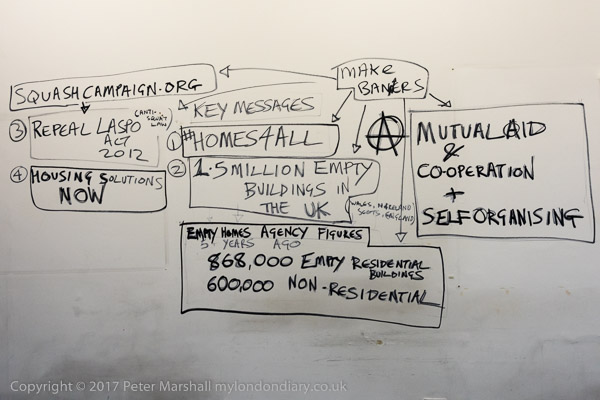
I’d meant to go there a week earlier, but a domestic emergency had called me away earlier in the day from a protest at the US Embassy before a programme of workshops and seminars in the seven-storey squat had begun. There was nothing special happening on the afternoon I visited (though some things were happening in the evening) but I was welcomed by the occupiers, several of whom recognised me, and they were happy for me to wander around the building and take photographs.
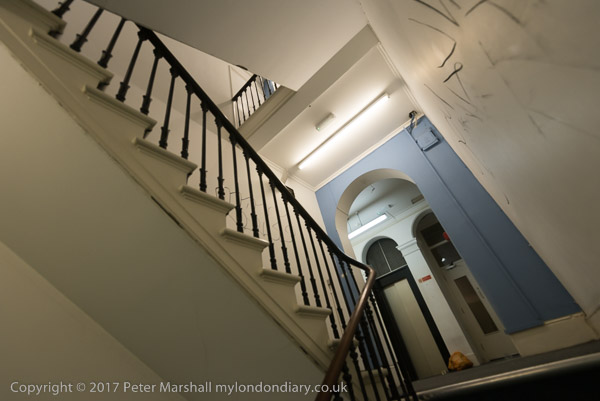
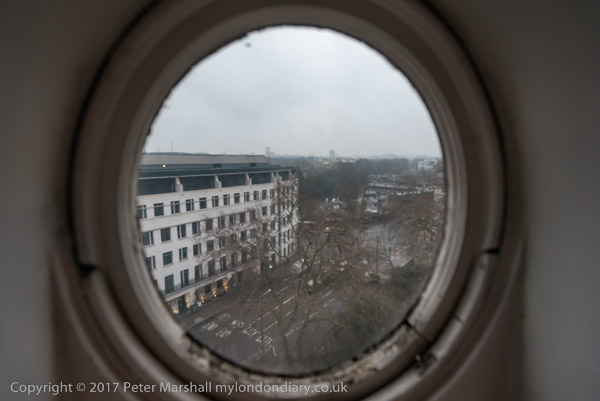
Apart from being careful to respect the privacy of some of the occupiers who were sleeping or resting in a couple of the rooms I was able to go everywhere from the basement to the top floor, but the door leading onto the roof was locked, probably to stop any possible access from there by bailiffs. Like many other houses and hotels in the area it has a view into the grounds of Buckingham Palace, but I had to make do with the view from a rather dusty window, or the less interesting view from lower down where windows could be opened.
Few squats have blue plaques – this one for soldier and archaeologist Lieutenant General Augustus Henry Lane Fox Pitt-Rivers, but more recently it has been in use for offices, business meetings and conferences. The squatters have tried hard to cause no serious damage and had last week turned out some people who had come to make a mess of the place.
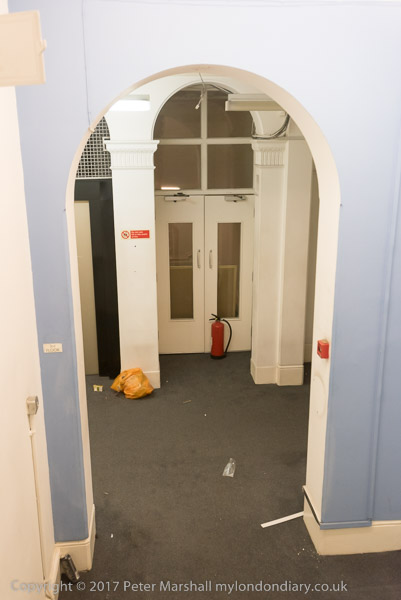
There are around 1.5 million empty buildings in the UK, many like this deliberately kept empty as investments, their value increasing year on year. The number is enough to enough to house the homeless many times over. ANAL say that properties like this should be used for short-term accommodation while they remain empty and they have opened it as a temporary homeless shelter for rough-sleepers.
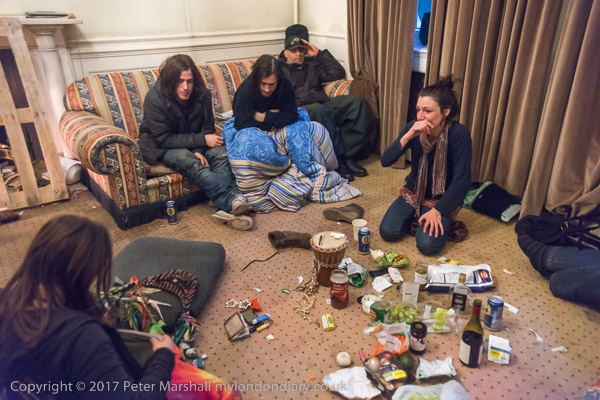
It remained in use for almost month, with the squat finally evicted at 8am on 27th February. As I ended my post, “There clearly does need to be some way to bring empty properties back into use, and councils should have much greater powers than at present to do so. Until that happens, squatting seems to be the only possible solution.”
ANAL squat in Belgravia


Deaf & Disabled March & a Harvest Festival

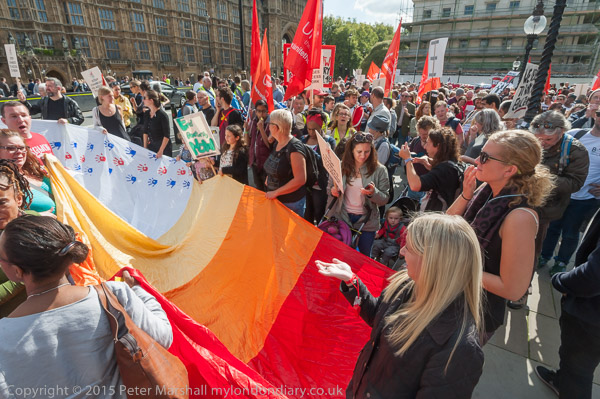
Saturday 26th September 2015 wasn’t one of my busiest Saturdays, but the two events I photographed were very different, and took place some distance apart. The first was in the centre of London, at Westminster and was a protest over the discrimination by the Tory government against disabled people.

It was clear from the start of the coalition government that came to power in 2010 that the Tories were out to target the disabled, and that they saw them and the benefits they were getting as a drain on our taxes they were keen to diminish. They declared that cuts in government spending were essential, blaming the previous New Labour government for the results of the world-wide banking crash which in reality was caused by the exploitation of an unstable system by greedy bankers and using this as an excuse for largely counter-productive austerity.

Looking at ways to make cuts, they picked on the disabled as they thought they would be an easy target and could bring large savings. But the disabled have turned out far more resilient than they expected, with groups like Disabled People Against Cuts turning out to be formidable opponents and getting considerable public support.

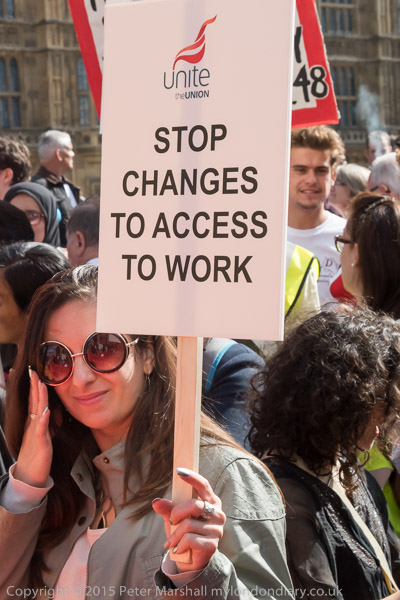
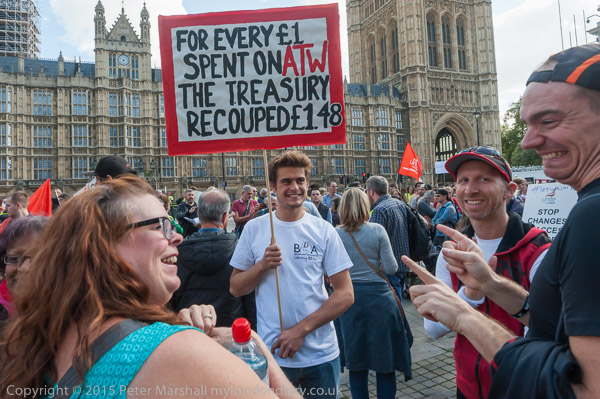
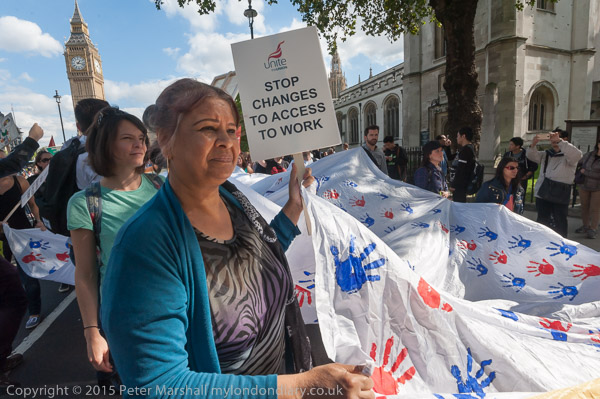
This particular protest was over the the cutting of the DWP’s Access to Work scheme which enables disabled people to work on an equal basis to non-disabled people. They want to work and have careers and to make a contribution to society, but cutting this essential support will prevent them doing so. And as the protesters pointed out, every £1 spent on Access to Work results in a return of £1.48.

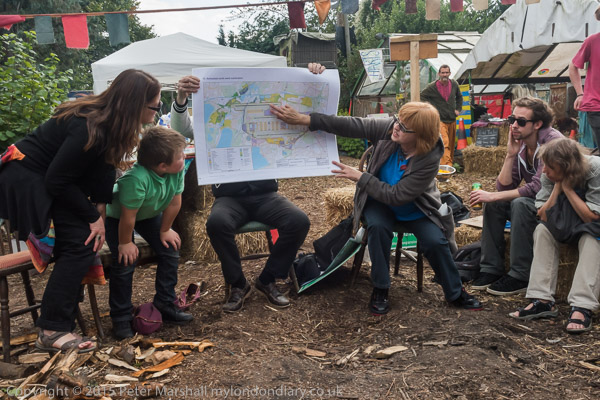
Local resident Christine Taylor of Stop Heathrow Expansion points at the Heathrow plan

A long tube journey, changing to go almost to the edge of London on the Piccadilly line and then catch a bus to Sipson took me to Grow Heathrow in Sipson. It was a reminder that although London once led the world with its Underground system, it has failed to keep up with the times and now so many other cities have more modern and faster systems. When I first went to Paris we used to laugh at the quaint Metro clattering slowly and noisily around under the city, but now Parisians used to the RER must enjoy at least a little smile at our creaking system – and perhaps gloat that some of their system is now financed by the profits from Londoners using RATP run buses. Germans too profit as DB Arriva run the Overground as well as buses as well as three rail franchises.

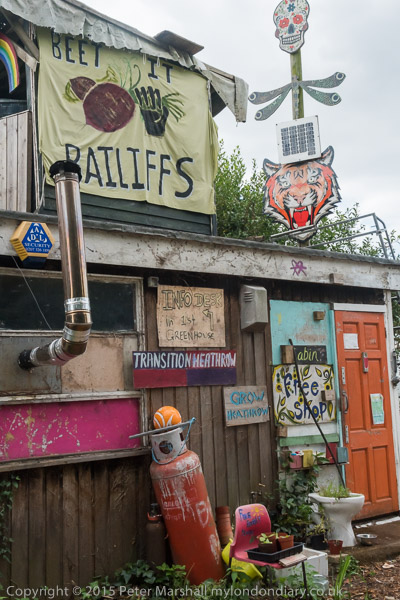
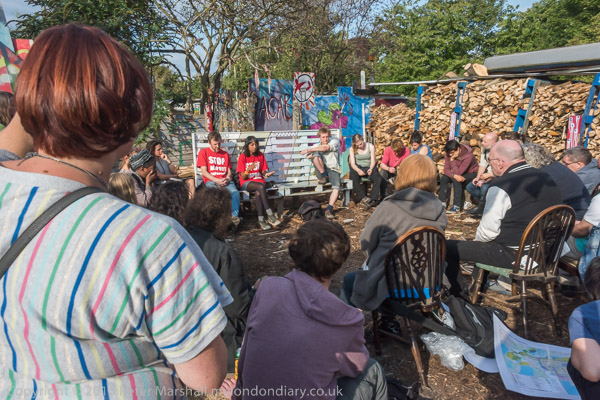
Grow Heathrow was celebrating another harvest at their occupied nursery site with ‘music, pumpkins and pizza’ as well as an open ‘No Third Runway!’ discussion. They had squatted the derelict site in 2010 and five years later were still resisiting eviction with their court case then adjourned until the following summer. Half the site was evicted in 2019 but the rest continued until the final eviction in March 2021.

I was late (thanks to that slow journey) for the start of the discussion on Heathrow, but got there in time to hear much of it and take pictures – and as a fairly local long-term resident to make a very small contribution to the debate led by John Stewart of HACAN and other campaigners including Christine Taylor of Stop Heathrow Expansion and Sheila Menon of Plane Stupid. I grew up under the flightpath a couple of miles from touchdown and have lived the last 47 years a similar distance from the airport. Established by deception it has long been clear the airport is in the wrong place, and now even clearer that we can’t continue expanding air transport if we want to avoid climate catastrophe.

It is hard to take the government’s environmental policies seriously when they continue to support the expansion of air travel and transport and plans for another runway at Heathrow. We should be looking urgently at ways to cut our dependence on air freight and reduce travel, as well as ways to reduce the carbon emissions involved in the lower amount that will continue. This is one of the government policies that seriously undermines its national and international credibility at the forthcoming COP26 climate talks.

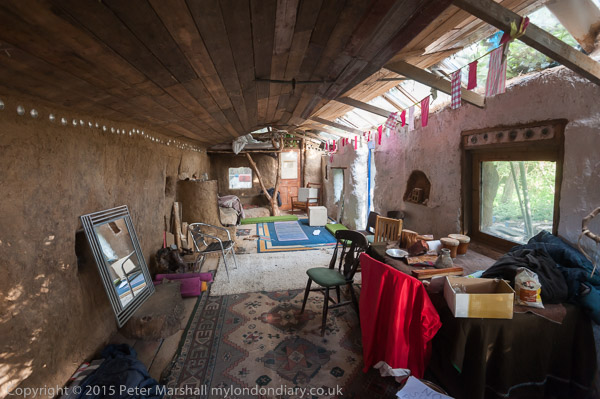
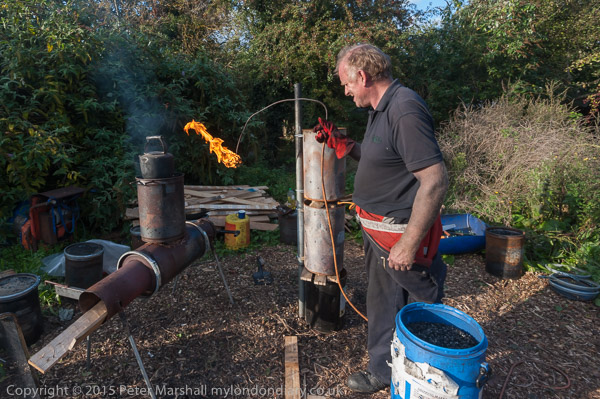
Grow Heathrow showed how people could live in different ways and evolve stronger communities and more democratic systems, although few would want to live as ‘off-grid’ in the rather spartan conditions of the residents here. But although we might not all want to make our own charcoal, nor go back to running vehicles on it, producing biochar is one of the few practical methods currently feasible of carbon capture and storage.

Grow Heathrow celebrates Harvest Festival
Deaf & Disabled Access to Work protest


All photographs on this and my other sites, unless otherwise stated, are taken by and copyright of Peter Marshall, and are available for reproduction or can be bought as prints.


2015: Grow Heathrow at Five

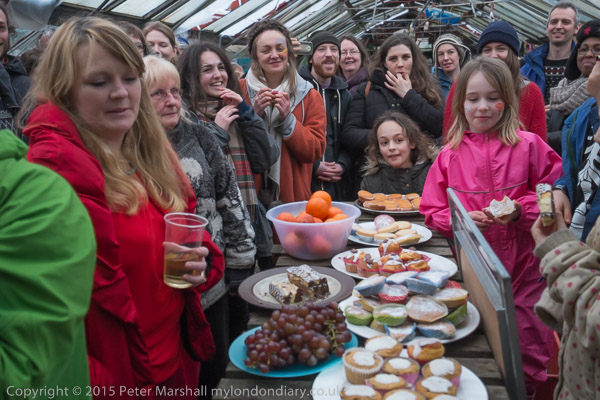
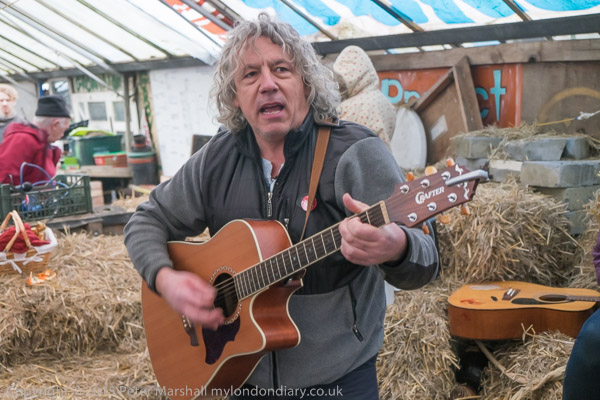
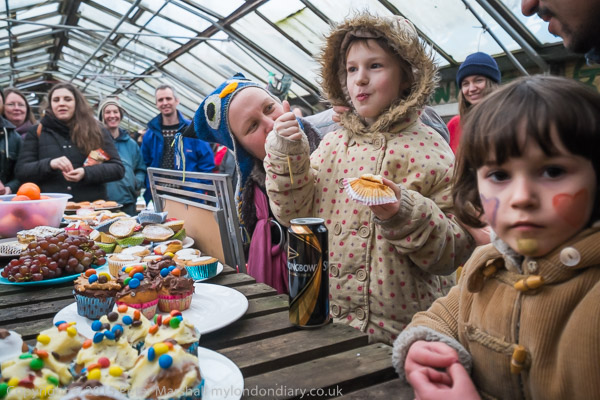
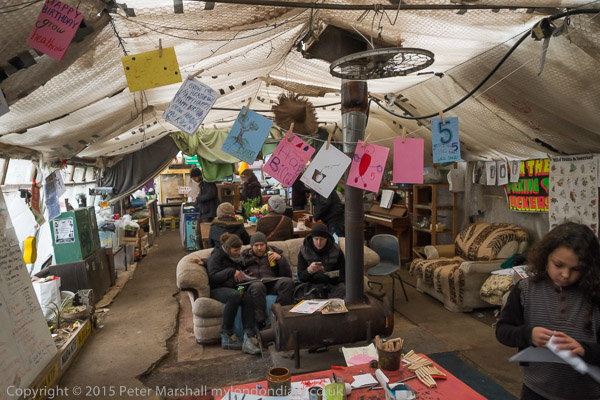
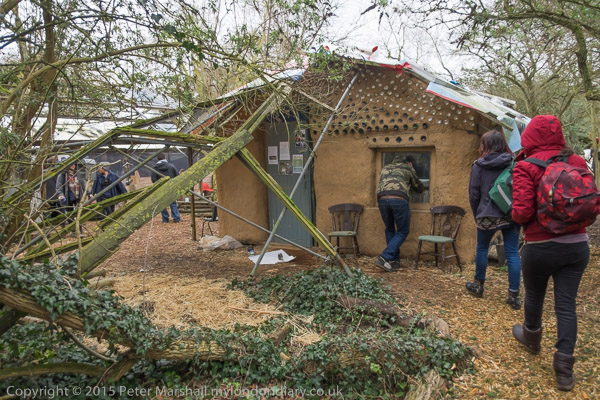
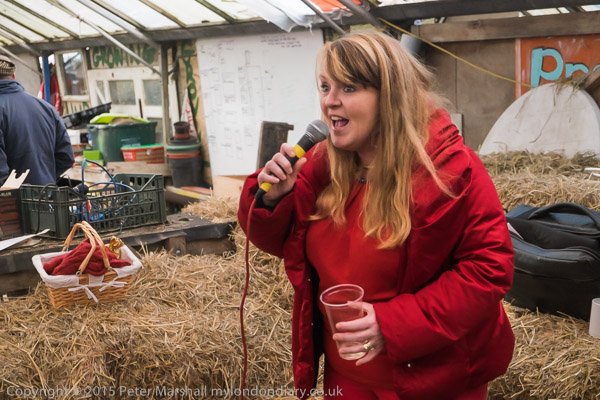
On 28th February 2015, Grow Heathrow, a non-hierarchical free community in an occupied derelict nursery at Sipson, just north of Heathrow Airport celebrated 5 years with open workshops and a party.

It had been set up as a symbol of community resistance to the economic, ecological and democratic crises and to oppose the increasing development of the aviation industry and Heathrow, at a time when local residents, myself included, were protesting against the building of a “third runway” to the north of the current airport.

Local protests had begun back in 2003, and by the time squatters occupied the long-abandoned market garden victory on the specific issue of the new runway seemed more or less assured. Transition Heathrow’s ‘Grow Heathrow’ had longer term and more far reaching goals, hoping to create more sustainable and resilient Heathrow villages after the dropping of the third runway and more widely to build long-term infrastructure and networks to deal with peak oil and the threat of climate change. On their site they set out to demonstrate how we could live differently, ‘off grid’ and with a different and cooperative lifestyle.

I wasn’t particularly closely involved with Grow Heathrow, though I visited the site a number of times for various events, as well as taking part in the local protests and events at the nearby Greenpeace ‘Airplot’, where I was one of the 91,000 of beneficial owners of a very small area of land. It’s an area I knew from my youth, when I often cycled through Sipson ,Harmondsworth, Longford, Horton and Colnbrook.

Grow Heathrow weathered a number of legal battles to stay in occupation, but were evicted from the front half of the site where most of these celebrations took place two years ago at the end of February 2019 after around 9 years of occupation and growth. I’ve not visited since the eviction but so far as I am aware there are still some residents on the back part of the site – which had a different owner, but visits have not been possible since the start of the pandemic.

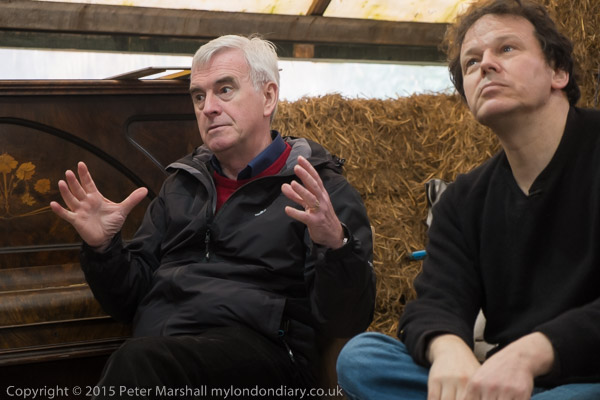
The project was an important one and brought together many people from different backgrounds, including local residents and international visitors, some who stayed for months and years. Among those who came to the 5th birthday party to join the celebrations and speak were local MP John McDonnell, Tristram Stuart, a pioneer of the radical food movement with his 2009 book on food waste, anthropology professor David Graeber and activist Ewa Jasiewicz.

Grow Heathrow was an inspiration to many, though some of us were unable to envisage its rather spartan lifestyle for ourselves there were lessons that could be learnt in particular from its involvement with the wider community. Heathrow expansion is back on the agenda today, though it is hard to believe it will go ahead given the growing realisation of the vital importance of the climate crisis. Aviation as we know it is incompatible with the kind of Green future our government now plays lip-service too – and will need putting into action for civilisation to survive.

Many more pictures at Grow Heathrow’s 5th Birthday.


All photographs on this and my other sites, unless otherwise stated, are taken by and copyright of Peter Marshall, and are available for reproduction or can be bought as prints.