Fukushima Nuclear Distaster Remembered

Fukushima Nuclear Distaster Remembered. Recent shelling of an administration building at a Ukrainian nuclear plant revived memories and fears of the nuclear disaster eleven years ago at the Fukushima Daiichi Nuclear Power Plant in Okuma, Fukushima, Japan. In those 11 years I’ve photographed various events in London, including this one on the 7th anniversary.

Remember Fukushima, 7th Anniversary
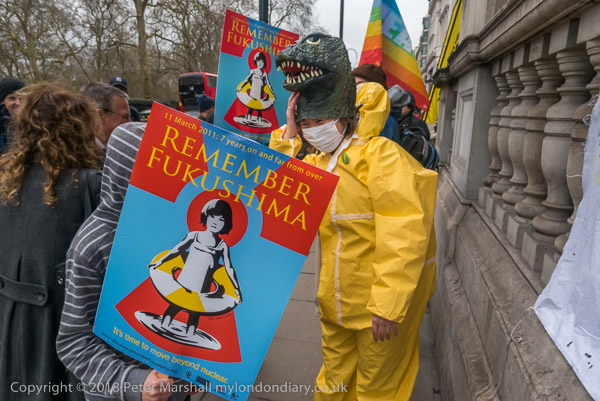
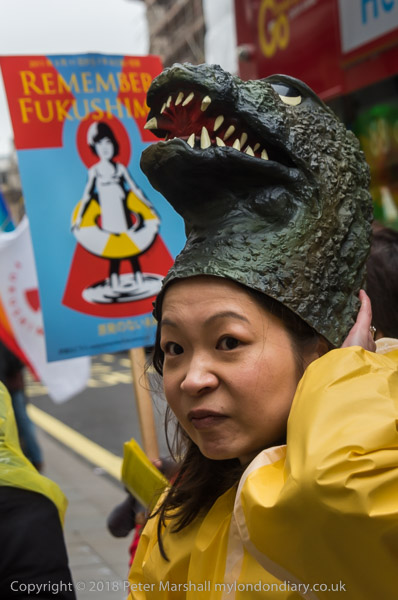
On Sunday 11th March 2018, Kick Nuclear (London) and Japanese Against Nuclear London supported by CND remembered the victims of the continuing Fukushima disaster and all victims of nuclear power and nuclear bombs.
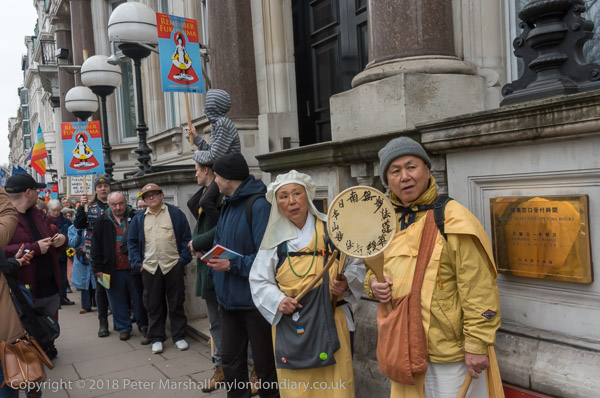
It wasn’t a huge protest, perhaps because after 7 years the media seem to have decided that Fukushima is no longer news, but radiation is still being released from the damaged nuclear plant and its effects will be felt for many years, with estimates of between 100-650 people expected to die from long term cancers caused by the immediate radioactivity leak and more from the continuing release of radiation.
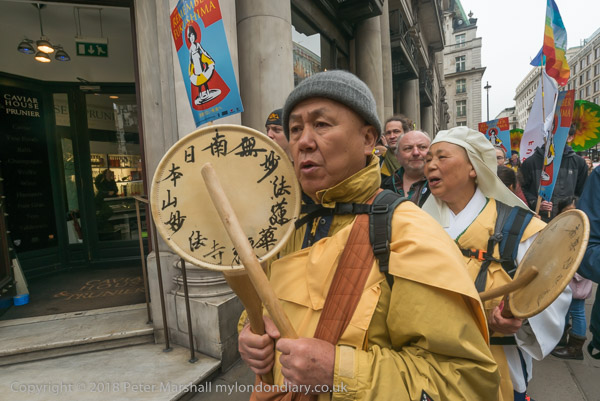
The marchers gathered outside the Japanese Embassy on Piccadilly, where there were still monthly protests over the disaster. There was a vigil there and outside the offices of the plant operators TEPCO in High Holborn on 28th January 2022 which I was unable to attend after it was found that the radiation level was far worse than had been thought, presenting a serious challenge to the continuing shutdown process and overall decommissioning of the site.
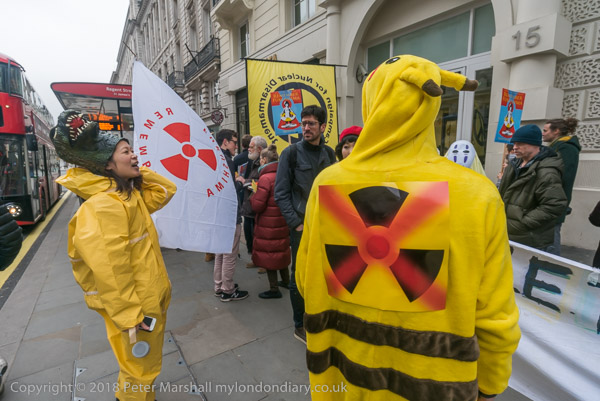
Outside Lockheed Martin’s offices

Nuclear power has never lived up to the early promises of plentiful low cost electricity and remains both expensive and dangerous. In the UK it was always linked to the production of military weapons, and we were fed lies about its potential. There are still no satisfactory solutions to the disposal of highly radioactive nuclear waste which requires safe storage into the next millennium – a toxic legacy to our future generations.
Fortunately the UK seldom experiences more than minor earthquakes and the control systems here are rather more sophisticated than those at Chernobyl. But the Windscale fire in October 1957 was one of the worst nuclear disasters in the world, sending radioactive fallout across the UK and Europe.
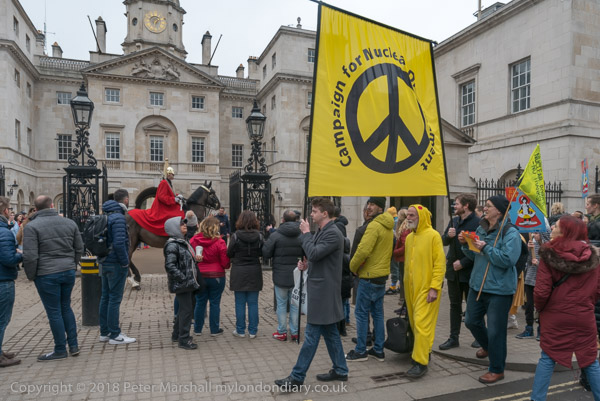
Protesters wait for a horse who doesn’t like yellow to be walked away

Later it was found that as well as large amounts of iodine-131 which causes thyroid cancer there were also significant amounts of the more dangerous polonium-210 (the deadly poison put in the tea of former Russian spy, Alexander Litvinenko, in London in 2006.) It later emerged that there had been earlier accidents at the the plant releasing significant amounts of strontium-90.
Reports of the Windscale accident were heavily censored by the fact that milk from farms over an area of 190 square miles close to this military nuclear plant meant it could not entirely be covered up this time.
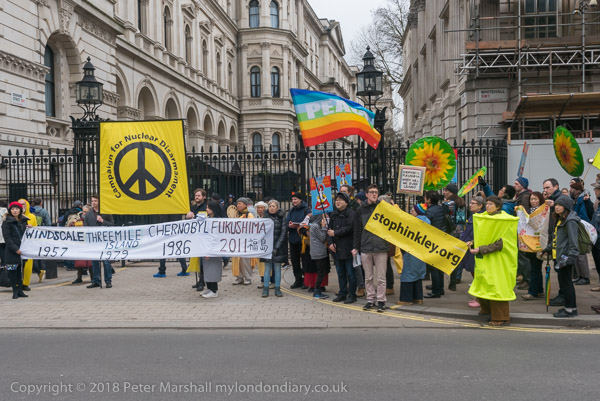
From the Japanese Embassy there was a procession along Piccadilly to Lower Regent St where it stopped for a brief protest outside the offices of Lockheed Martin, one of the companies making nuclear weapons, before stopping for a photograph in front of Downing St and going on the Old Palace Yard, opposite the Houses of Parliament where they held a rally.
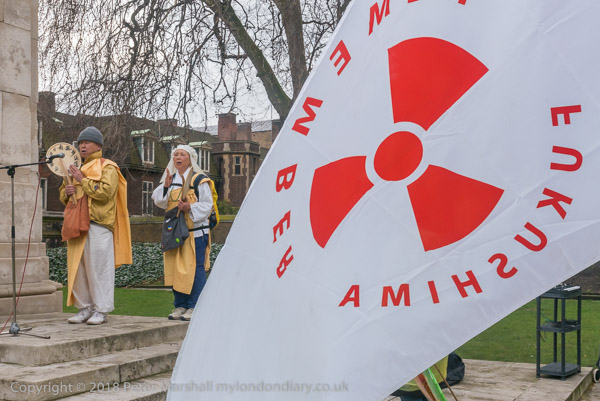
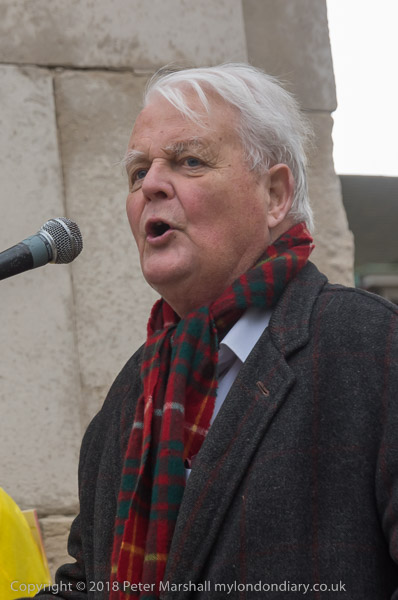
Speakers at the rally included Bruce Kent and Kate Hudson of CND and fashion designer Kate Hamnett. The speeches condemned the continuing nuclear power programme which has always been closely linked with the production of nuclear weapons and, never an economically viable method of power production, has now been rendered entirely obsolete by improved renewable energy sources. There were some musical performances and a poet read one of her poems about Fukushima. I had to leave before the rally concluded with a die-in.

More at: Remember Fukushima, 7th Anniversary

For Refugee Rights and Against Trident

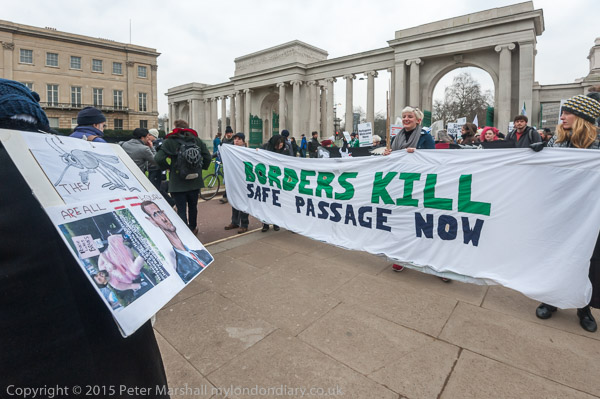
For Refugee Rights and Against Trident. I covered two marches in London on 27th February 2016, the first calling for safe passage for refugees seeking protection in Europe and following this a much larger march against government plans to waste £180 billion or more on replacing the UK’s Trident nuclear weapons.

European March for Refugee Rights

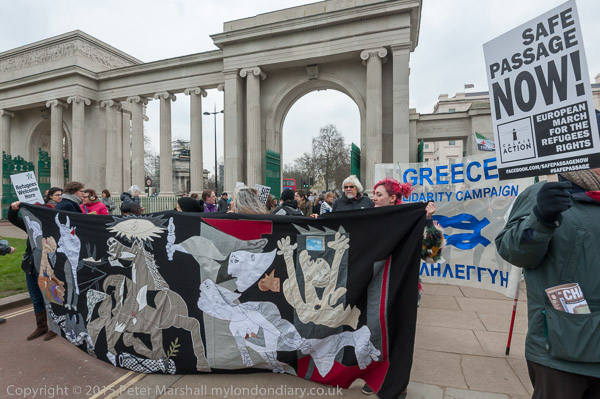
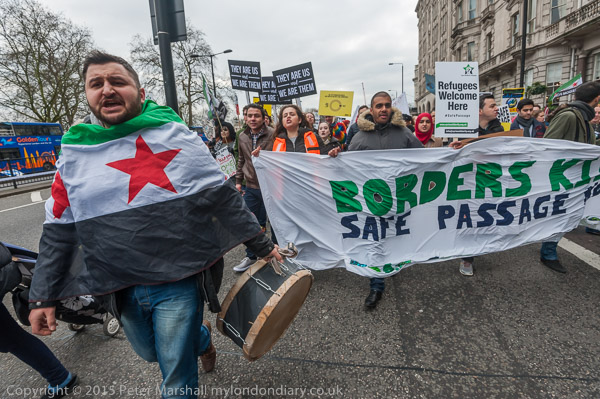
The European March for Refugee Rights was part of a day of protests in cities across Europe demanding action by governments to provide secure safe passage routes for all refugees and asylum seekers seeking protection in Europe. They want an end to deaths at borders and drownings and for refugees to be allowed to keep their possessions and be reunited with their families.

Among those taking part were people who had been to aid refugees in Lesvos and at the Calais camps and others who had volunteered with Medicins Sans Frontiers in Syria. The protest was supported by many groups including the Syria Solidarity Campaign, Solidarity with Refugees, London2Calais, Migrants’ Rights Network, SOAS Solidarity with Refugees & Displaced People Soc, Wonder Foundation, Calais Action, UK Action for Refugees, Refugee Aid Initiative, No Borders and the Greece Solidarity Campaign.

This was a short march taking place unusually inside Hyde Park, gathering at Hyde Park Corner and walking up to Speakers Corner where there was a rally. This made it possible for those taking part to join the Stop Trident Rally which was starting from Marble Arch, and going down Park Lane on its way to Trafalgar Square. Some of the marchers decided to form a block to march in front of the main Stop Trident banner and march on to Trafalgar Square.

Stop Trident march stewards tried briefly to stop them but then gave up and halted their march for around ten minutes to create a gap between the two groups.

European March for Refugee Rights


Stop Trident March

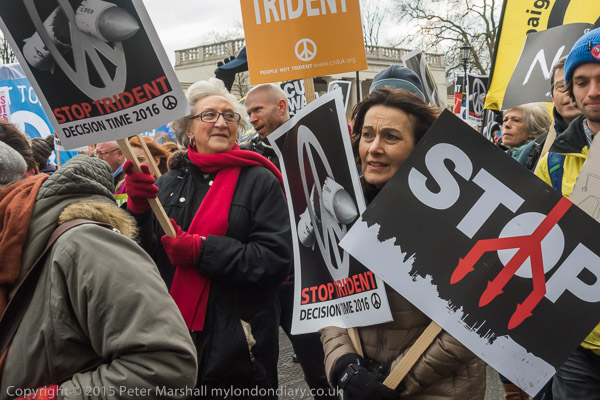
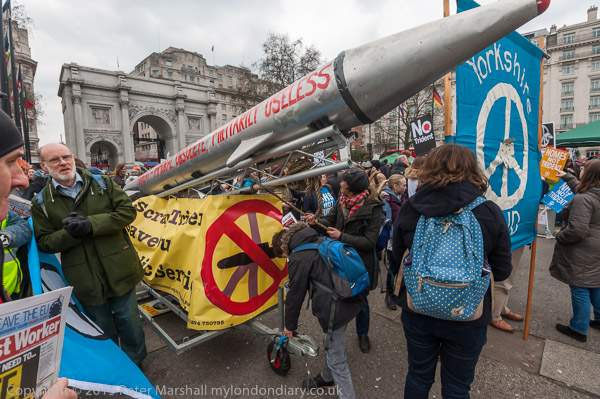
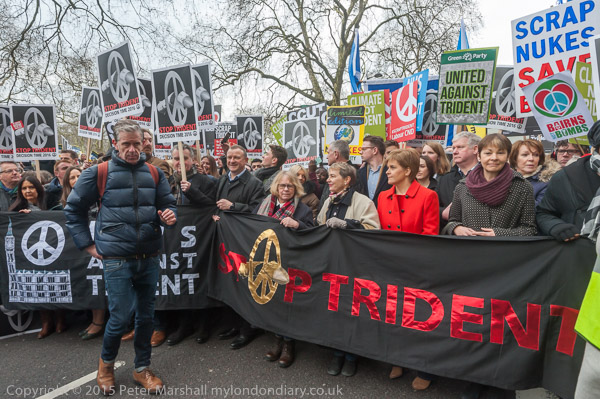
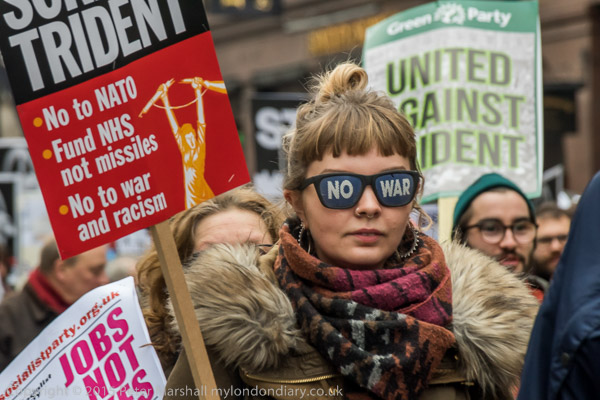
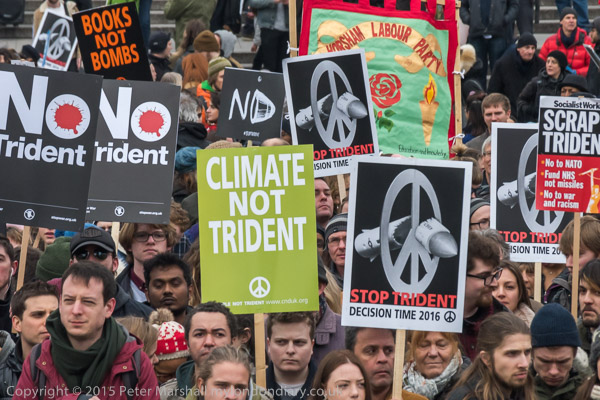
According to CND there were 60,000 people marching from Marble Arch to a mass rally in Trafalgar Square, and although their estimate may have been a little on the high side, this was definitely a very large protest, starting with a densely packed crowd on Park Lane. When the rally began in Trafalgar Square the tail of the march was still around half a mile away, and I think many gave up before reaching the rally as the streets leading to it became blocked.

Few people outside the military and arms manufacturers – probably the most powerful of all lobbies in the country can really believe the expenditure of £180 billion or more on replacing the UK’s Trident nuclear weapons is either necessary or cost-effective. The huge majority of nations in the world have no nuclear capability, and by December 2021, 59 states had ratified or acceded to the UN Treaty on the Prohibition of Nuclear Weapons (TPNW) which entered into force on 22 January 2021.

Lindsey German, Stop the War, Kate Hudson, CND General Secretary, Nicola Sturgeon, SNP First Minister, Scotland and Green Party MP Caroline Lucas hold the Stop Trident banner

A national survey by Survation at the start of 2021 for CND showed 59% of the public supported the UK government signing up to the TPNW, including 50% of Conservative voters and 68% of Labour voters. An even higher 77% supported a ‘total ban on all nuclear weapons globally’ with majority support from young and old, in all regions of the country, from Conservative as well as Labour voters, leavers and remainers. The government remains resolutely opposed to the treaty.

This widespread opposition to nuclear weapons isn’t largely a matter of their cost but on both moral and pragmatic grounds. As CND say, using nuclear weapons would cause catastrophic global damage; these weapons of mass destruction don’t keep us safe and divert resources from essential spending on services like the NHS, schools and housing and “it is clearer than ever that real security for Britain requires addressing the risks posed by the climate emergency and pandemics on a global scale.

Stop Trident March


Stop Trident Rally

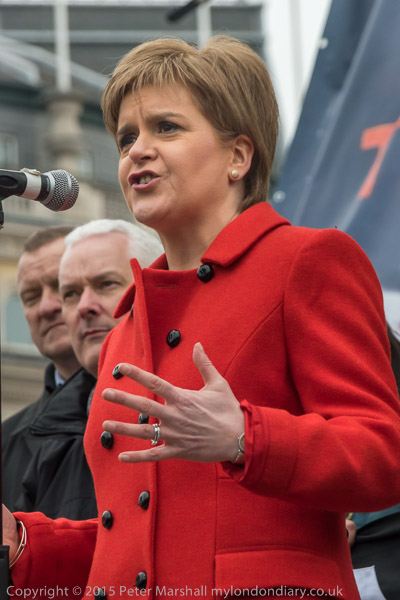
Trafalgar square was unusually packed for the long rally that followed the march, with people listening and applauding a long list of speakers, including Nicola Sturgeon, Caroline Lucas, Leanne Wood, Vanessa Redgrave, Bruce Kent, Christine Blower, Mark Serwotka and Tariq Ali, as well as many less well-known names. There were many marchers who found it impossible to get into the square.

Nicola Sturgeon First Minister Scotland

All the speakers opposed the spending of an estimated £180 billion or more on renewal of Trident which they dismissed as out of date, totally irrelevant to our defence and a complete waste of money which could be put to so much better use providing proper jobs and services.

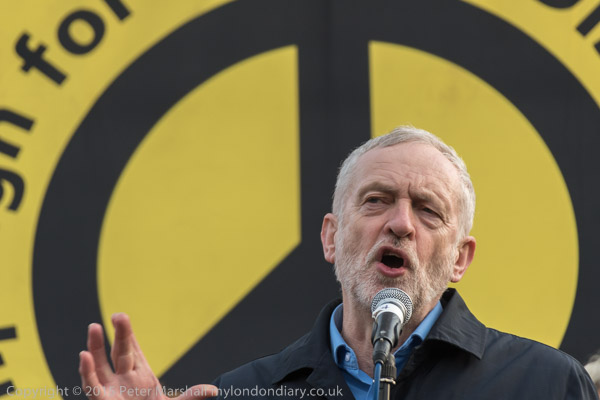
It was a long wait, around two hours standing in the cold for the final speech by Jeremy Corbyn who had earlier in the day been speaking in Sheffield and whose train had been a little delayed. He was greeted by a tremendous response from the crowd, and gave a rousing speech to end the protest on a high note. Despite the dismissive remarks from many political commentators on the media, Corbyn is one of the most powerful political speakers of current years.

Stop Trident Rally


Hiroshima Day – August 6th

2018

On 6th August 1945 a US B-29 bomber dropped a atomic bomb, code name ‘Little Boy’, from a height of 31,000 ft over the Japanese city of Hiroshima. It took almost 45 seconds to fall to a height of 1,900 feet where it detonated, by which time the bomber, Enola Gay was over 11 miles away.

2014

Hiroshima was a large city, a port with many industrial and military sites and a population of around 350,000. Because it had been selected as a target for a nuclear bomb it had not suffered the intensive conventional bombing of most other Japanese cities. The USA wanted to be able to see clearly the damage an atomic weapon could cause.

2019

Around 70,0000 people, 30% of the population were killed by the initial blast and firestorm which was caused, with around the same number badly injured. Around 70% of the city’s buildings were destroyed, an area of almost 5 square miles devastated. Those killed included over 90% of doctors and medical staff who were concentrated in the central area of the city.

2017

Two days later on August 8th the US decided to drop the second atomic bomb, one of a different design using plutonium rather than uranium, code-named ‘Fat Boy’. The intended target was Kokura, an ancient Japanese city with a huge arsenal, but dark clouds obscured the city, and the B-29 ‘Bockscar’ diverted to the city which was the secondary target, Nagasaki.

2016

The black clouds may have come from the the previous days US conventional fire-bombing of nearby Yahata, but workers at the steel works in Kokura had apparently decided to burn coal tar to try to make a smokescreen. Or it could just have been bad weather or some combination of all three than saved Kokura and condemned Nagasaki.

2009

There were clouds over Nagasaki too, but a patch of clear sky allowed the bomb to be dropped. The plutonium bomb was almost one and a half times more powerful than that which devastated Hiroshima but it exploded over a valley which slightly contained its effects. At least 35-40,000 were killed immediately, almost all of them civilians, including many foreign workers. Unlike in Hiroshima there was no firestorm as the area it was dropped on was less intensively developed.

2009

Although it was the US who dropped the bomb, the British government was deeply involved. Under the 1943 Quebec agreement between Roosevelt and Churchill which brought scientific development of atomic weapons by the two countries together, the consent of the UK was needed for these weapons to be used.

2011

Of course deaths continued after the explosions. Acute radiation syndrome killed many who survived the initial attack, mostly within 20-30 days. Radiation induced cancer and leukemia takes longer to emerge, reaching a peak around 6-8 years later. Radiation also causes miscarriages and birth defects.

2014

Around 650,000 people were recognised by the Japanese government as ‘hibakusah’, survivors affected by the bombs, and around 1% of these had illnesses attributed to their radiation exposure.

2015

Ceremonies in the two cities and around the world remember the bombings and call for the outlawing of nuclear weapons, a total of around 13,000 of which are now held by China, North Korea, France, India, Israel, Pakistan, Russia, the United Kingdom and the United States. The Treaty on the Prohibition of Nuclear Weapons (TPNW) was adopted by the UN in 2017 and entered into force on 22 January 2021. Countries voting for its adoption included two former nuclear states, South Africa and Kazakhstan, who gave up their weapons voluntarily and North Korea. So far 55 states have ratified or acceded to the treaty.

2016

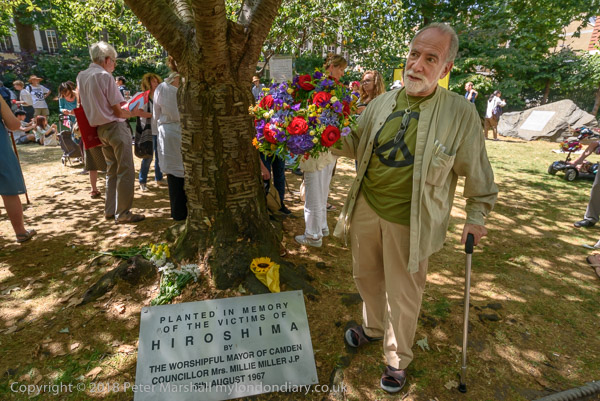
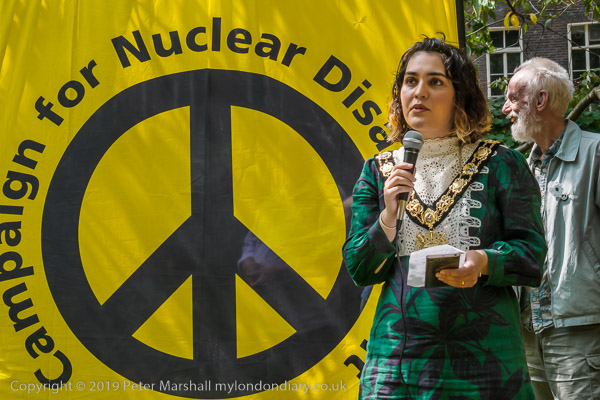
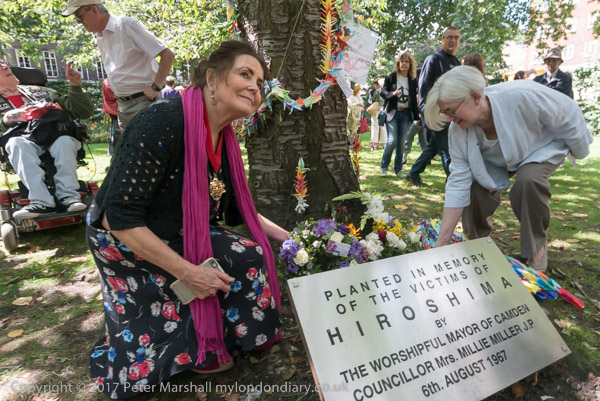
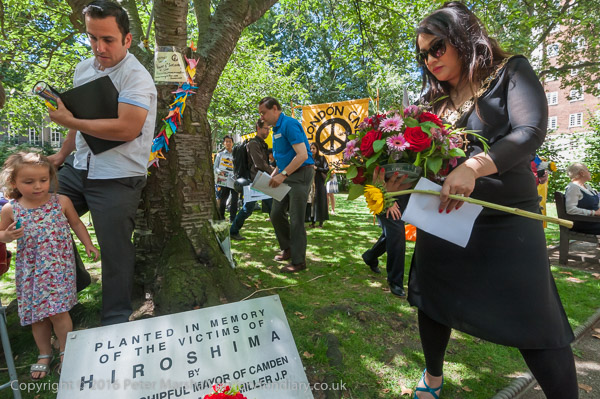
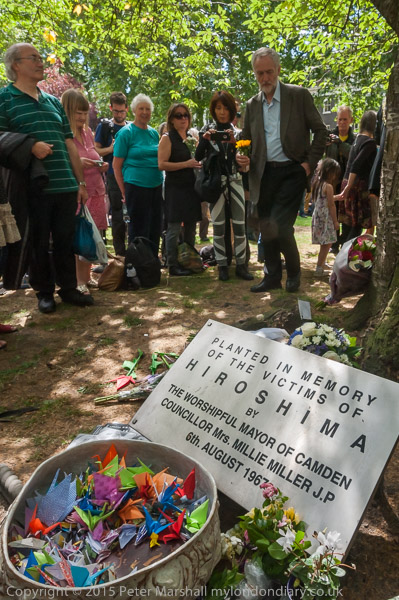
The pictures, taken in various years, come from the annual Hiroshima Day event held every 6th August in Tavistock Square in London organised by London CND. The square is in the London Borough of Camden and take place next to the Hiroshima cherry tree planted there in 1967 by the then Mayor of Camden.


All photographs on this and my other sites, unless otherwise stated, are taken by and copyright of Peter Marshall, and are available for reproduction or can be bought as prints.

All photographs on this and my other sites, unless otherwise stated, are taken by and copyright of Peter Marshall, and are available for reproduction or can be bought as prints.


No More Hiroshimas

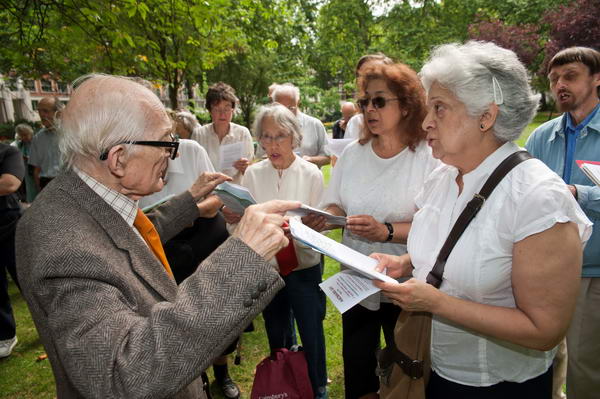
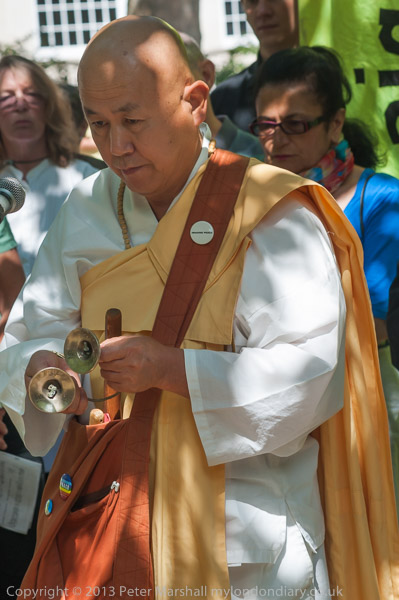
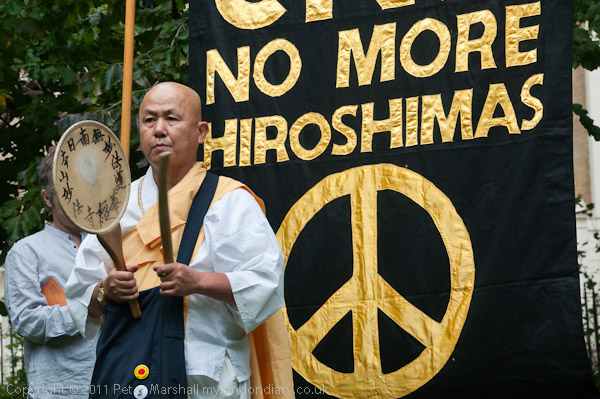
A prayer by Japanese monk Rev Nagase, from the Battersea Peace Pagoda, 2011

Most years if I am in London at the start of August I attend the London CND Hiroshima Day commemoration in Tavistock Square. This year, the 75th anniversary, I will be at the online event.

The US bombing of Hiroshima and Nagasaki was a war crime on a massive scale and lacked any real military justification. So far, despite a huge number of atomic weapons being manufactured and many billions spent on them and their delivery systems none have been used, though we now know that it was only the refusal of one Russian soldier to obey orders that saved us from nuclear annihilation.

The theory of nuclear deterrence never made sense, and over the years more countries have created their own nuclear weapons, mainly as a status symbol. US, UK, Russia, France, China, India, Pakistan, Israel and North Korea currently have them. South Africa is the only country which has given them up (several soviet republics handed them back to Russia when the USSR broke up) but around 190 countries including South Africa have now signed up the the nuclear Non-Proliferation Treaty, confirming they will not develop them.

The Treaty on the Prohibition of Nuclear Weapons opened for signature at United Nations headquarters in New York on 20 September 2017 having been passed with 122 countries in favour – but none of the nuclear states or other NATO members voted and the Netherlands was the sole vote against. So far only 40 states have ratified the treaty.

The London 75th Anniversary event is one of many around the world you can join in or view online. I’ve posted a few of my pictures from earlier years here, but there are many more on My London Diary – for 2004, 2009, 2011, 2013, 2014, 2015, 2016, 2017, 2018 and 2019.
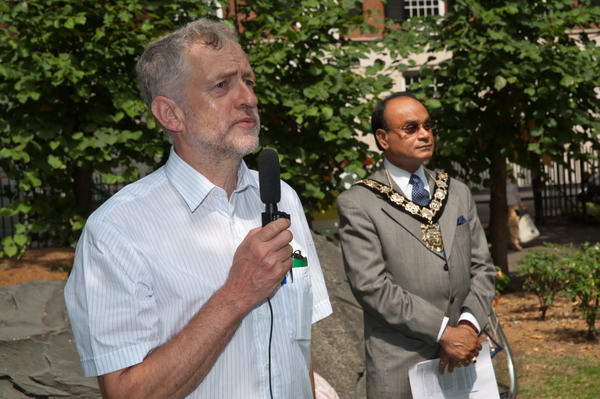
Jeremy Corbyn introduces the Mayor of Camden, Cllr Faruque Ansari, 2009
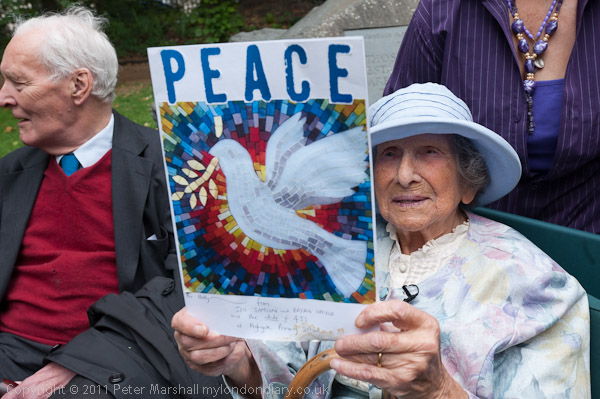
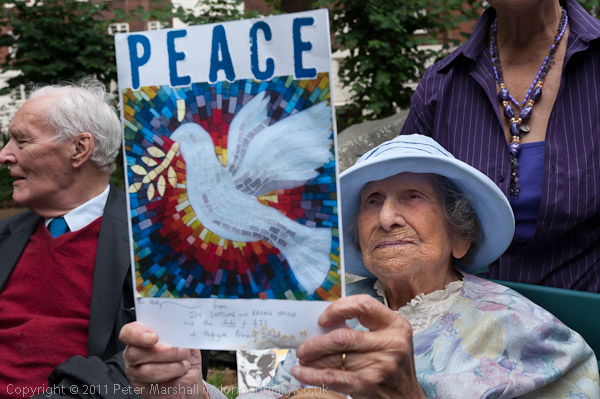
Hetty Bower, 105, holds up a Peace Card given her by a primary school class, 2011
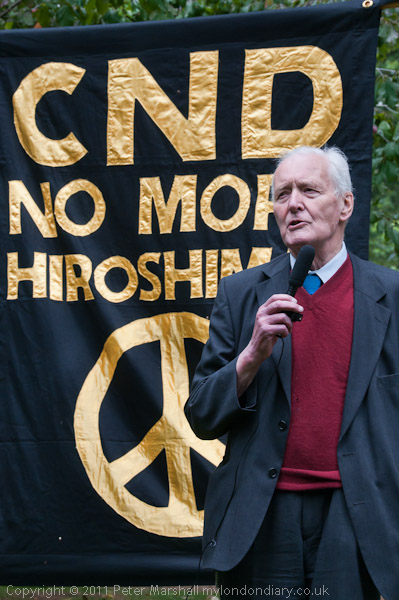
Tony Benn speaks, 2011
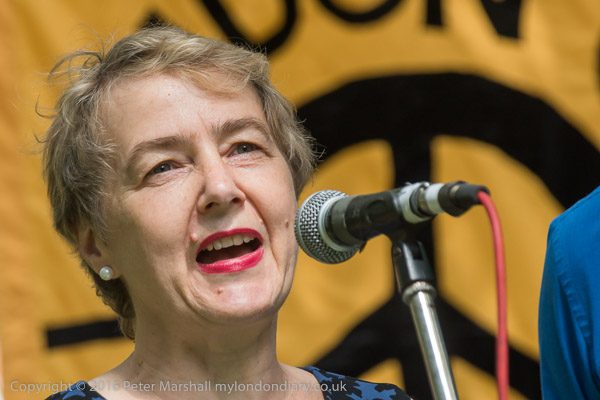
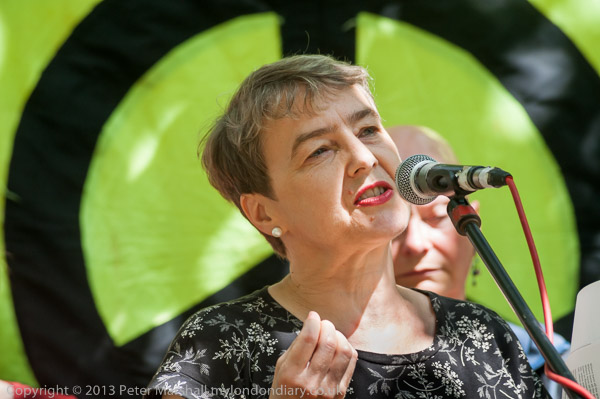
CND Chair Kate Hudson, 2014
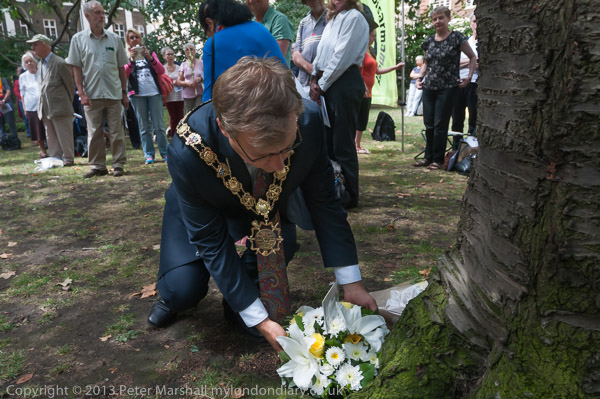
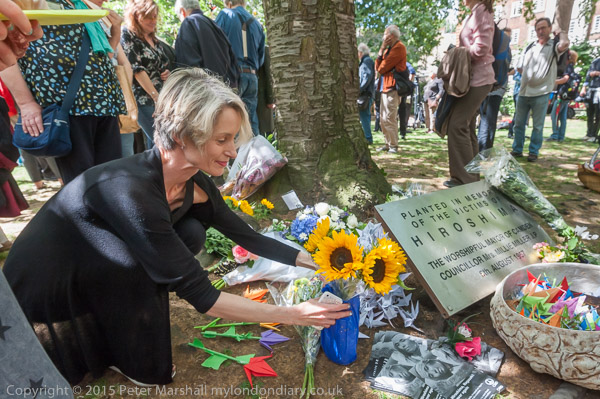
Flowers are laid at the Hiroshima Cherry Tree in Tavistock Square, 2015

All photographs on this and my other sites, unless otherwise stated, are taken by and copyright of Peter Marshall, and are available for reproduction or can be bought as prints.