ESOL, Libya & UCU: On the morning of Thursday 24th March 2011 hundreds of students and teachers portested against cuts to English lnaguage courses for speakers of other languages. Then at lunchtime Libyans came to Downing Street to thank David Cameron for air strikes against Gaddaffi’s forces in Libya. Finally in the afternoon I photographed a march to Parliament by University and college lecturers from the London region protesting over pensions, jobs and pay,
ESOL Day of Action
Old Palace Yard & Downing St

Several hundred ESOL (English for Speakers of Other Languages) students and tutors from colleges across London, including Lambeth, Hackney, Barnet, Tower Hamlets and Greenwich came to a rally opposite Parliament as a part of a nationwide day of protest against government cuts in these courses.
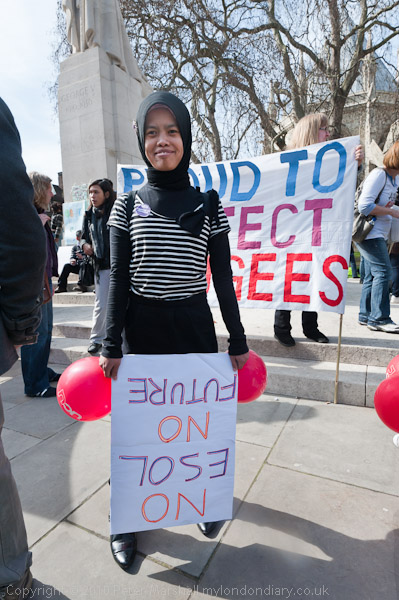
There were similar protests taking place in Birmingham, Brighton, Bristol, Halifax, Leeds, Newcastle, Nottingham, Rochdale, Sheffield and Warwickshire.
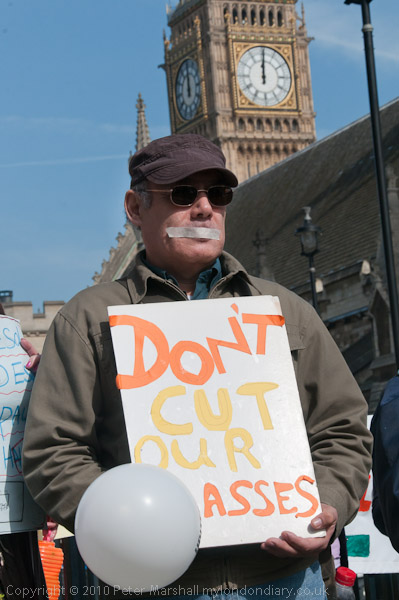
ESOL courses provide an essential service for “many asylum seekers and refugees. ESOL is essential for integrating refugees into the community here and enabling them to contribute fully to British society.”
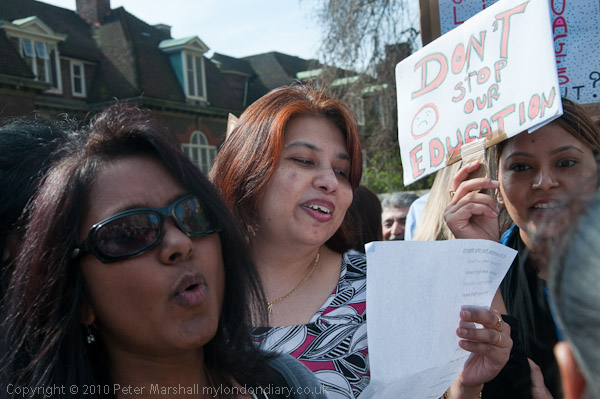
The cuts were expected to mean that around 70% of current students would be unable to complete their courses and roughly the same proportion of classes across the country would close. The closure would particularly impact women who were the majority of students.
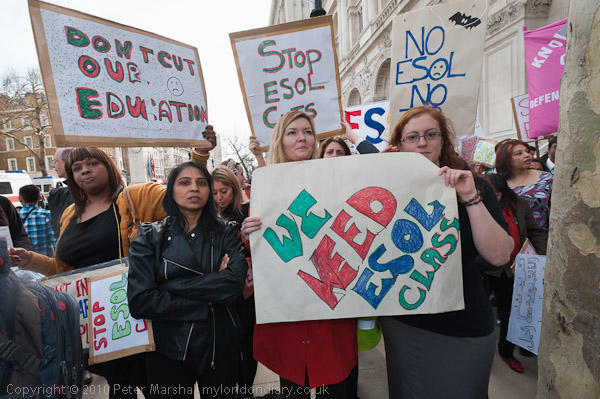
Cuts in ESOL funding have continued since 2011, making it now difficult or impossible for many recent migrants to access courses. Some Reform UK-led local authorities are now cutting these course completely.
More on My London Diary at ESOL Day of Action.
Libyans Congratulate Cameron Over No-Fly Zone
Downing St
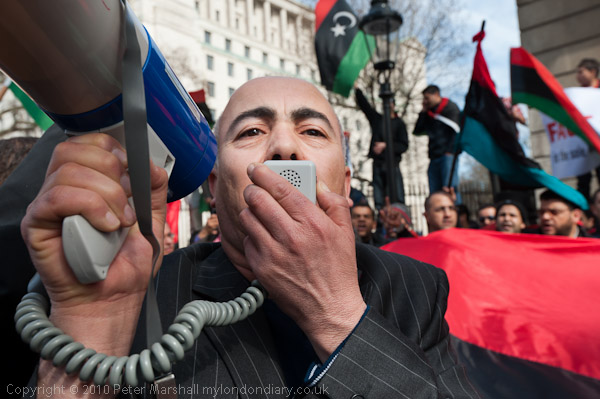
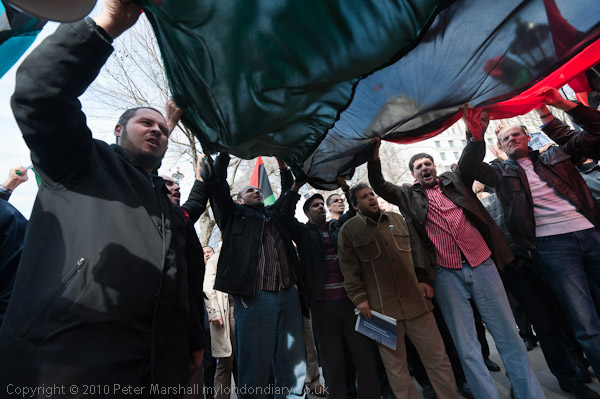
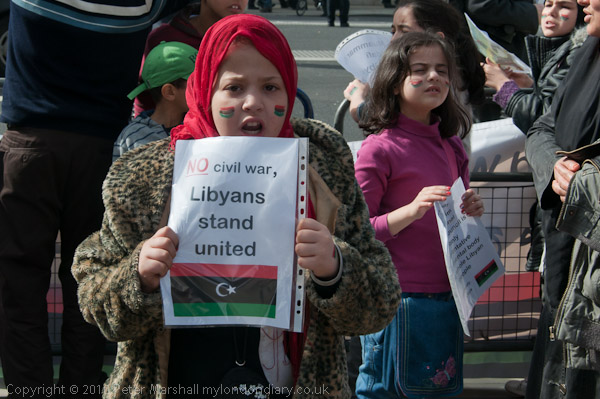
It was highly unusual for a protest to come to Downing Street to praise the Prime Minister for his actions, but around 500 Libyans were there to give thanks to David Cameron for the air strikes against Gadaffi’s forces and his leadership in establishing a ‘no-fly’ zone.
Gadaffi was of course a highly controversial figure in Libya. Supporters praised him for “combating homelessness, ensuring access to food and safe drinking water, and to dramatic improvements in education” and great improvements in medical care including a free and universal medical system. He had also done much to improve the status of women, though keeping the “sexes as “separate but equal”.’
But there was also a considerable downside, with the persecution of non-Arab Libyans, and human rights abuses. He alienated many by largely eliminating private businesses and imposed censorship. Under him Libya had no free press and no trade unions. And under him the system was highly corrupt and unemployment was high.
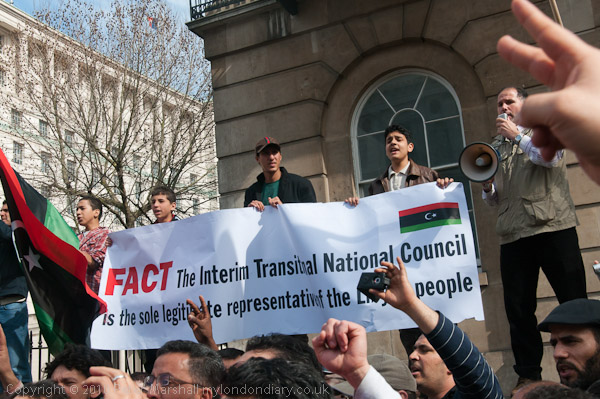
His brutal clampdown on protests inspired by the Arab Spring led to an uprising and the formation of the Benghazi-based National Transitional Council which this protest was supporting. Two weeks before this event France had recognised this as the “legitimate representative of the Libyan people” and Britain together with France was urging Europe to do so.
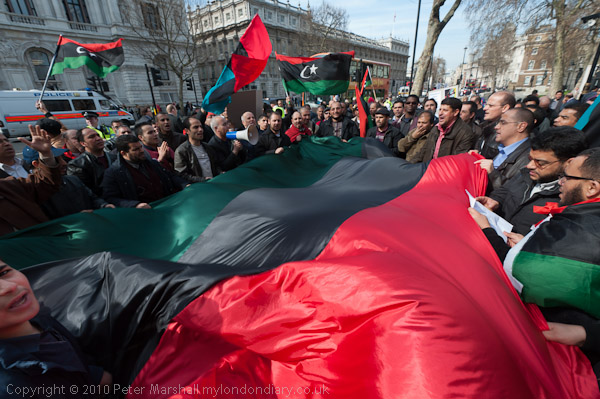
The UN had already suspended “Libya from the UN Human Rights Council, implementing sanctions and calling for an International Criminal Court (ICC) investigation into the killing of unarmed civilians” the previous month and had declared a “no-fly zone to protect the civilian population from aerial bombardment”.
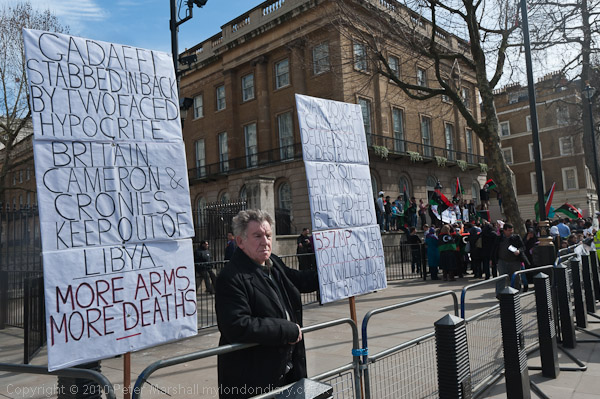
NATO went further and as well as enforcing this also carried out air strikes. Its actions are thought to have enabled the enabled the NTC – whose forces like Gadaffi’s also “disregarded the laws of war, committing human rights abuses, including arbitrary arrests, torture, extrajudicial executions, and revenge attacks” – to defeat Gadaffi.
More at Libyans Praise Cameron Over No-Fly Zone.
University And College Lecturers March
LSE to Parliament
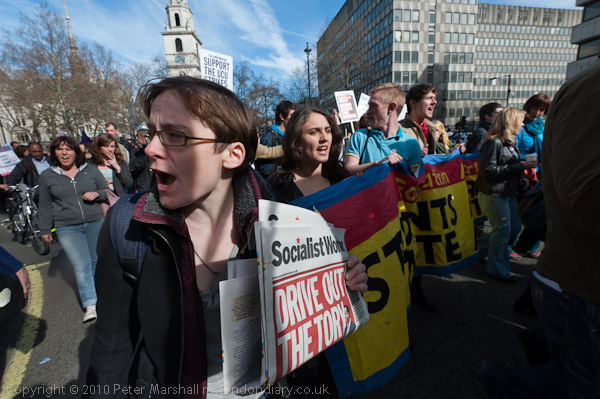
University and college lecturers had received derisive pay offers in 2010 and 2011 meaning a cut in real wages allowing for inflation of 8-10%, and those from colleges in and around London marched to Parliament to protest over pay, job cuts and pensions.
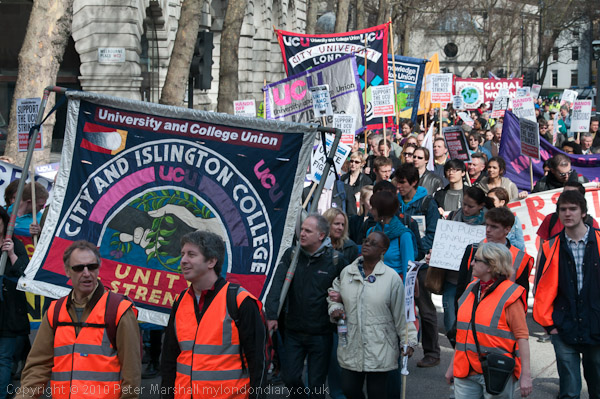
Government was threatening cuts of up to 40,000 jobs in higher education and lecturers were worried that there might be large increases in student course fees that would deter many students.

They were also angered by government claims that their pensions were ‘gold plated’ – they are actually much less generous than the government’s lies – and proposed changes to the system.

Statistics also show that lecturers are paid much less than those with similar qualifications working in private industry. And they criticise the perception encouraged by our billionaire-owned press that they enjoy lengthy holidays as college terms are short.
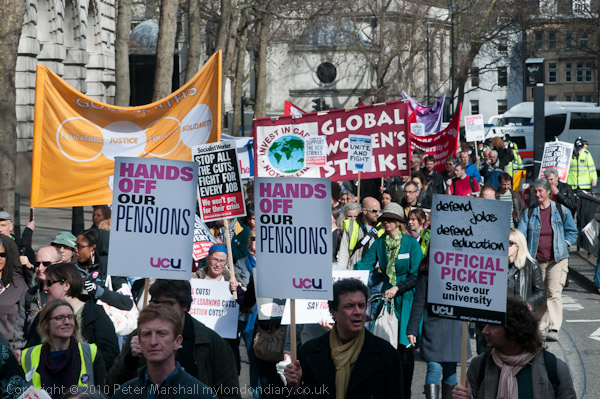
Lecturers around the country were taking part in a one-day strike and the march by UCU London Region was one of many events around the country.
More at University And College Lecturers March.
Flickr – Facebook – My London Diary – Hull Photos – Lea Valley – Paris
London’s Industrial Heritage – London Photos
All photographs on this page are copyright © Peter Marshall.
Contact me to buy prints or licence to reproduce.
