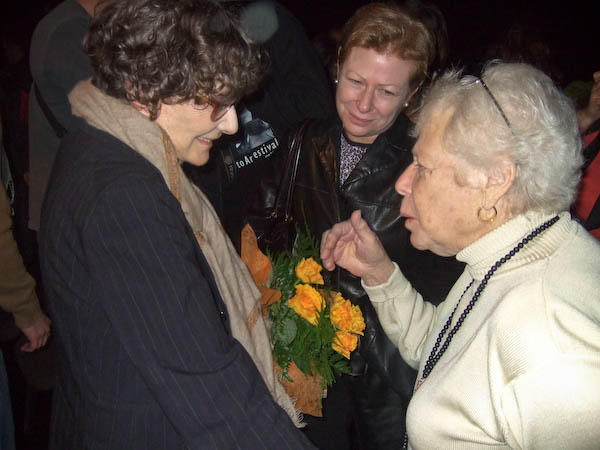
Less than 95 theses – Bielsko-Biala – 2005

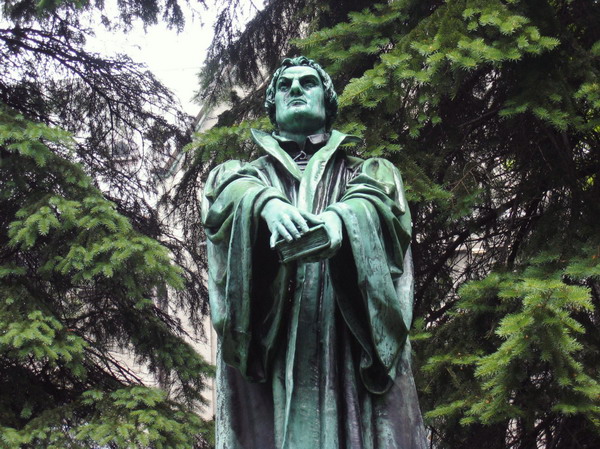
Less than 95 theses: In June 2005 I was in Poland for the first FotoArtFestival in Bielsko-Biala where I had been invited to show my work and also to give a couple of talks. While I was there I photographed Poland’s only statue of Martin Luther, and this inspired me to write my ‘Less than 95 theses‘ on photography with which I began one of my talks.
Less than 95 theses – Bielsko-Biala – 2005
Martin Luther, Bielsko-Biala

The pictures here all come from my few days in Bielsko-Biala and will include some of the other photographers who were there. You can read a little more about the festival in the previous post – and in online my FotoArtFestival Diary from 2005.


Madames et Messieurs

English owes its prominence not only to US (and earlier UK) global economic and political domination, but to its flexibility and adaptability, which we systematically abuse.

Translation is a valiant attempt at the often impossible. Language operates at various sublevels of denotation and connotation, through allusion. It depends on shared experiences and understandings that are often very different.

Fortunately, communication happens, and it often happens most strongly across the crevasses between our languages as we struggle for understanding. We understand not from the smooth inter-meshing of gears than transmits the everyday niceties, but from the strands that stick in our teeth or the grit that lodges and may grow into a pearl. Or simply give us sore feet.

Yesterday I met an Angel
Less than 95 theses – Bielsko-Biala – 2005

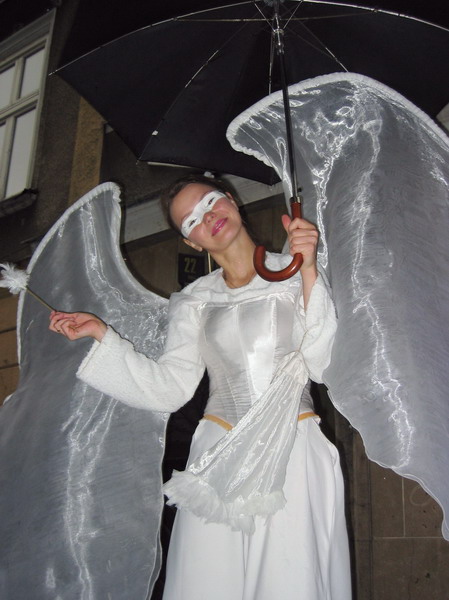
Yesterday I met an angel. Two angels to be precise, not on the head of a pin, but in Bielsko. Around 8 foot tall, dressed in white and the regulation pair of wings each, and she gave me a photograph and a feathered flower.
Less than 95 theses – Bielsko-Biala – 2005
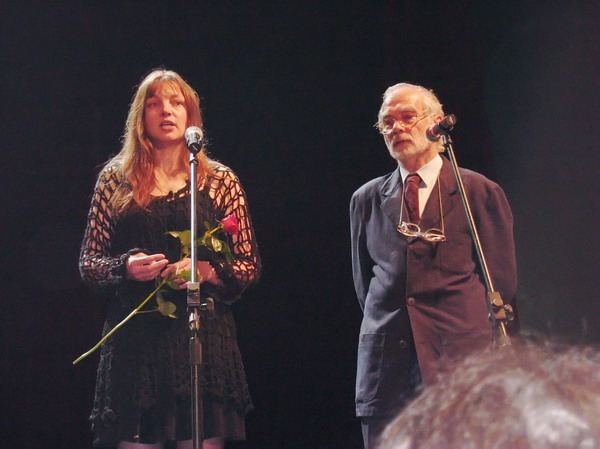
Inez and Andrzej Baturo at the opening ceremony at the Bielskie Centrum Kultury

But Bielsko is the city of angels, because I met another one on Thursday evening. Inez, I appreciate from the depths of my heart all you have done for the festival. To borrow the words of one of my great musical heroes, “We love you madly.

[I think the official Polish translation for that last paragraph was something like ‘Peter thanks Inez for all her work on the festival.”]

This Morning, Luther

This morning I went in search of Poland’s only statue of Martin Luther, in a small clump of trees in Plac Lutra.

This address begins for real with me nailing a few of my photographic theses to the door – fortunately rather fewer than his 95 – and saying ‘Here I stand, I can do no other‘ – at least until I’ve had a few more beers – ‘God help me, Amen.’

Less than 95 theses
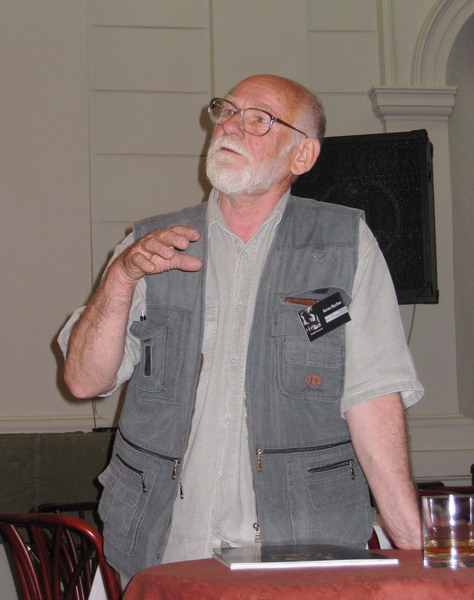
Less than 95 theses – Bielsko-Biala – 2005
Gunars Binde from Latvia

First, with apologies to Gunars Binde, a lovely man with fantastical pictures to match who told us we shouldn’t write about pictures. Bullshit! But then I would say that wouldn’t I (MRDA as we say in some English circles – ‘Mandy Rice-Davies applies.’)

Good writing about photography is as rare as hen’s teeth. The problem with most writing about photography is that it is not writing about photography, refusing to confront either process or product.

Good writing is a difficult feat and I stand with awe, marvelling at the skills of people such as John Szarkowski and Robert Adams. Just occasionally – and it’s most gratifying – I receive an email from a photographer that tells me I’ve made them realise new things about their work.
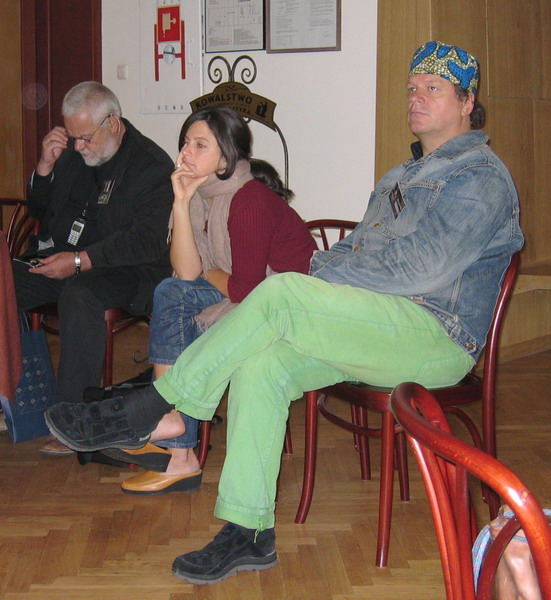
Less than 95 theses – Bielsko-Biala – 2005
Antanas Sutkus, Ami Vitale and Stefan Bremer

Its no coincidence that the Szarkowski and Adams are both photographers as well as writers. I’ve always considered that the people who know most about our medium are the people who do it. Those who have written most cogently have all had at least a reasonable proficiency at it and a firm grounding in its traditions.

Of course there are also plenty of good photographers who have not been able to articulate in any way about the medium, and some who have talked nonsense. But in so far as photography has attracted serious criticism rather than critical indifference, there are many to whom my response is simply that they have not paid their dues.
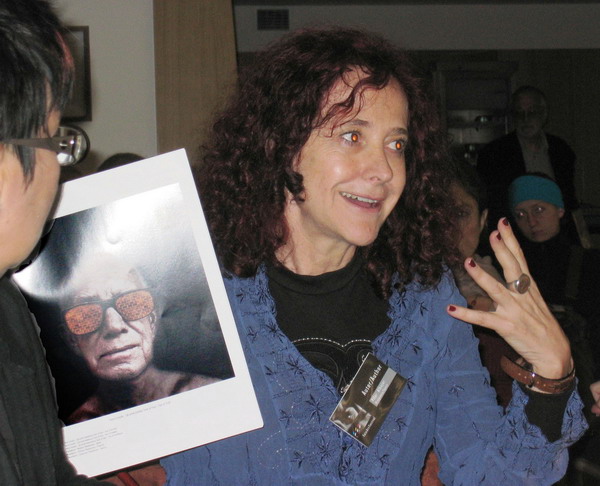
Less than 95 theses – Bielsko-Biala – 2005
Fears: Fear of Truth – Pilar Albajar from Spain

Visual language, some say, is universal. More bullshit. No two of us looking at a picture see the same picture. Yes, there will be some common perceptions that arise from our shared cultural and sub-cultural soup, but the way that we interpret the visual is critically dependent on our culture, our history.

For a trivial example, a triangle in England is simply a triangle, while in Poland it can signify and classify a toilet. Symbols such as the cross and swastika can also differ radically in meaning, for example between Hindu, Christian and Muslim.

Bullshit 3 is truth, or at least the idea that photojournalists and documentary photographers are on a mission to uncover it. Point of view is fundamental to photography. Literally and metaphorically.
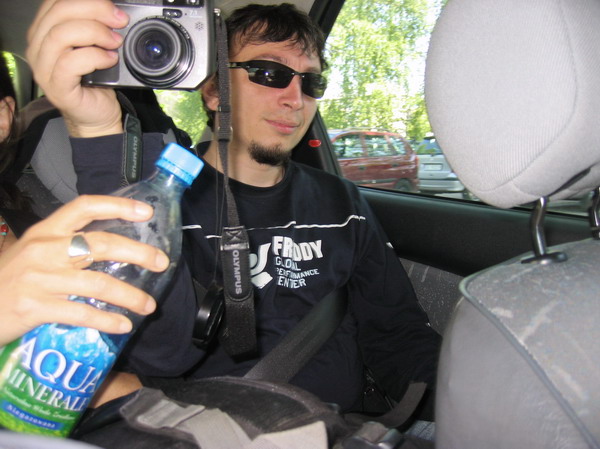
Bevis Fusha photographs me

Watching people photograph the proceedings earlier, photographers on the unfamiliar end of the lens, Bevis Fusha commented that digital cameras made it hard to tell amateur from professional, we all use the same equipment now.

But it isn’t the camera that matters. Working professionally (whether as amateur or pro) come down to point of view. Deciding what you want to say (metaphor) and getting in the right place to do it (literal.) Then of course there is knowing how to hold the camera – and a little luck.
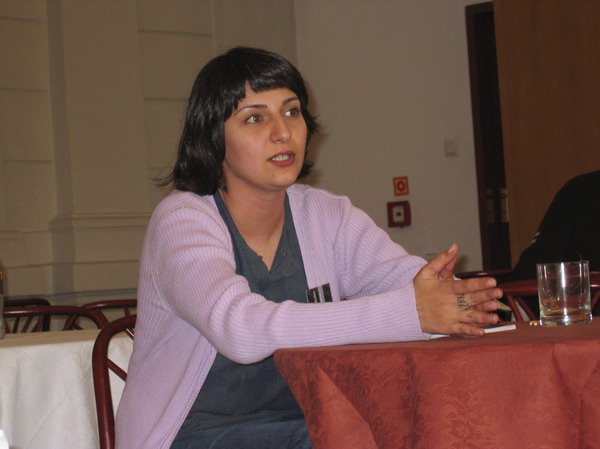
Shadi Ghadirian talks about the problems of being a photographer in Iran

Some months ago in one of those phone interviews where they work through a standard list of questions, a journo from and amateur photo mag came to “What is your favourite photo accessory?” I don’t think my answer, “Ten thousand miles of shoe leather” made it to print.
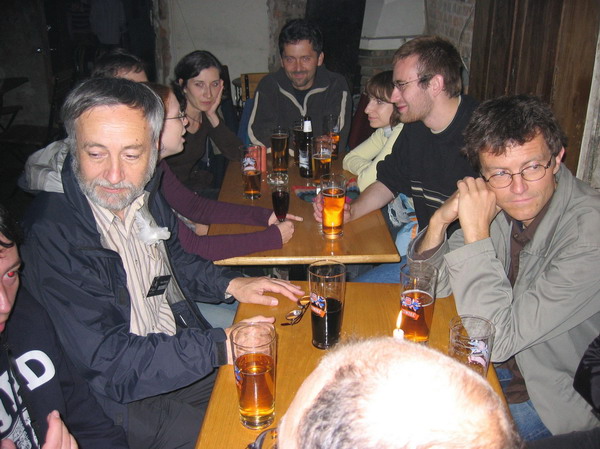
Another on my camera I didn’t take

Truth is seldom simple. Facts look different depending where you come from. Photographers lack – and really need to lack – the Divine guidance needed for certainty. At best we have a personal integrity, an open mind and an honest vision. And make pictures that reflect the complexities of the real world.
Photography is an iceberg. Nine-tenths is underwater, hidden from view. Occasionally parts of that great mass break away and float to the surface – as when the work of Mike Disfarmer was published by Julia Scully and others.

Its instructive to think what a history or overview of photography written in the 1920s or 1930s might have looked like. We can be fairly sure that some of those who would have featured most prominently, for example, William Mortensen, author of Pictorial Lighting, 1932, Projection Control, 1934, Monster & Madonnas: A Book of Methods, 1936, The Command to Look, 1937, The Model, 1937 and more, are among those now largely relegated to footnotes, while the photographer many of us would regard as the most important of the early years of the century, Eugene Atget, would not have got a mention.

There are many photographers who are not particularly well-known whose work is of interest, and often of rather more interest than some of those who have made the history books. Fame is about being in the right place at the right time and knowing the right people.
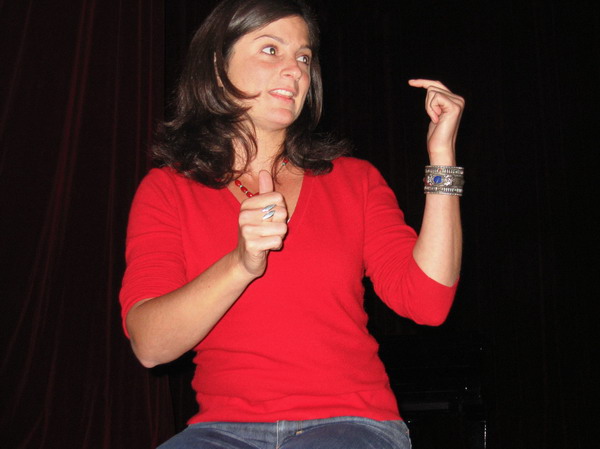
Ami Vitale

Photography is not an American medium, nor does it belong to Dusseldorf. Much of the most interesting things that are happening in photography now take place away from these centres. Despite the efforts of historians and authors – such as Naomi Rosenblum – we still have a very long way to go in discovering twentieth century photography outside of the United States of America. (I wonder how much space Polish photography gets in her latest ‘World History’, being promoted during this festival.)

I’m ashamed to have written virtually nothing on Polish photography to date. However In my features on the web site ‘About Photography’ [1999 until 2007 when I was sacked for writing about photography] I try to show a world view of photography, for example with the series of features on photography in Central and South America. Along with the work of many others these have helped shine a little light on photography in this vibrant and active region.
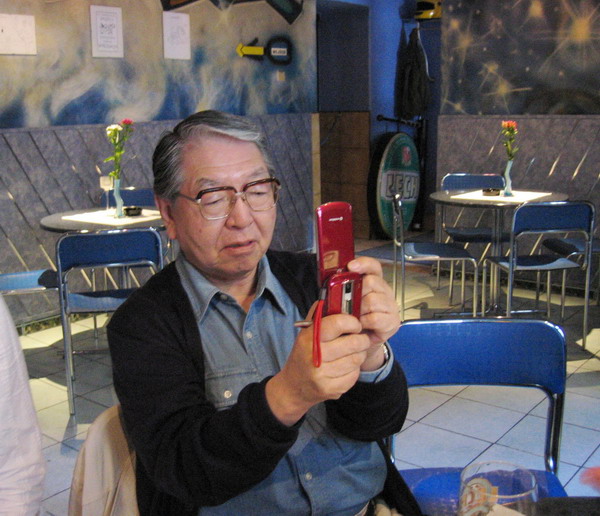
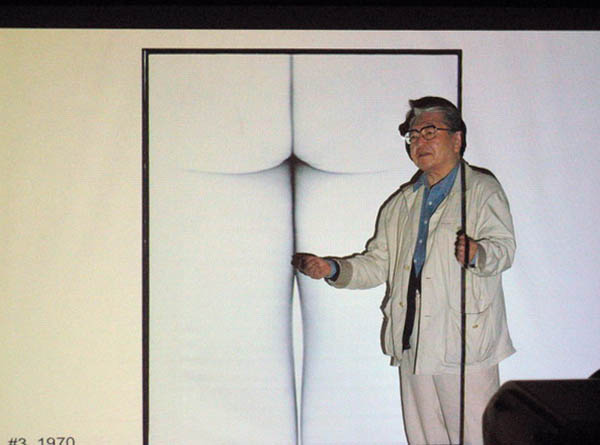
Eikoh Hosoe

In a very real sense there is no such thing as ‘a photographer’. We don’t exist in isolation. Our often fragile and fraught egos (often seen as evidence of artistic temperament) belie what we all know, that we are a part of a community. Our ideas, our pictures, build on the shoulders of others. Becoming a photographer is very much about connecting with this community. My talk is a very personal one, about some of the people – famous and relatively unknown – who have been important in my life and my photography.
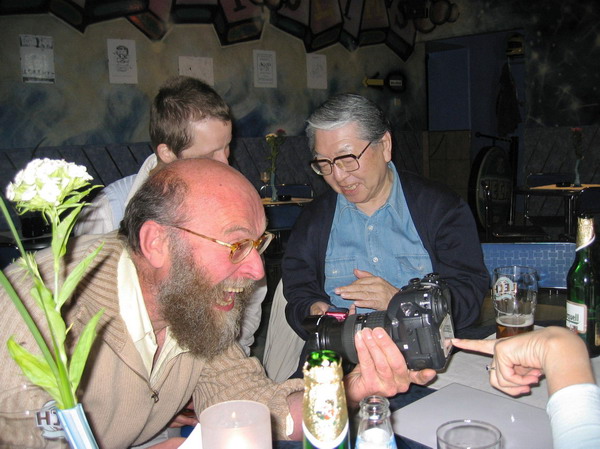
This event in Bielsko-Biala is a powerful manifestation of that community, and one that has transcended our different nationalities, languages and status. The friendship, the fellowship I’ve felt here has moved me to the very bowels of my heart. But this is a community which I think is now under threat in two respects.

Photography for the media is becoming more and more a corporate business rather than an artistic endeavour. Mega-image corporations aim to monopolise image supply, cutting supermarket-style deals with photographers and image buyers, dragging down prices below that needed to sustain an individual approach.

In the fine art world, artists become increasing synthetic, predicated by the demands of the market (for example for limited editions in our essentially infinitely replicable medium.)
I am very much a grass roots person, a believer in participation as the basis of building better lives and a better society. What really matters is the ordinary and the vernacular, although when we examine them closely we find that they are very particular. We can perhaps learn far more about the real history of photography by looking at those who have not made the history books.

More pictures at FotoArtFestival Diary 2005.


FlickrFacebookMy London DiaryHull PhotosLea ValleyParis
London’s Industrial HeritageLondon Photos

All photographs on this page are copyright © Peter Marshall.
Contact me to buy prints or licence to reproduce.
FotoArtFestival Diary – 2005

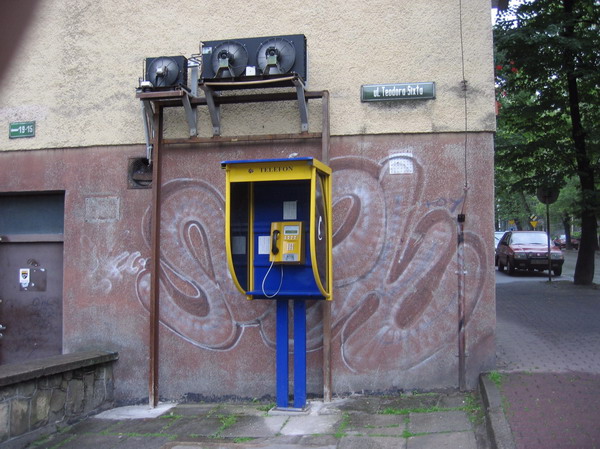
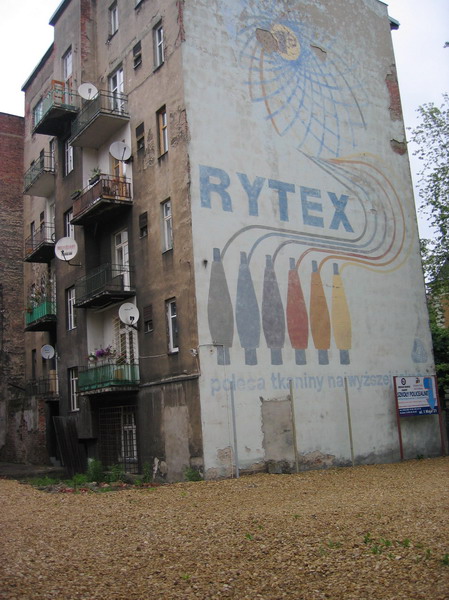
FotoArtFestival Diary: Back in June 2005 I was at the first FotoArtFestival taking place in Bielsko-Biala, Poland. This was an international festival with exhibitions featuring one photographer from each of 25 countries, including some of my post-industrial urban images from London. But the pictures in this post are some of the colour pictures I made during my visit to Poland on a compact digital camera.

FotoArtFestival Diary - 2005

I was also there to give a couple of talks. As well a presentation on my own work I also talked about the work of other photographers from the UK, including Raymond Moore, Tony Ray-Jones and some personal friends including the London-resident American John Benton-Harris, Paul Baldesare, Derek Ridgers and Mike Seaborne.

FotoArtFestival Diary - 2005

I hadn’t really anticipated the problem of translation, and although both festival organiser Inez and another translator did their best to translate my talks into Polish, it meant that the talks took more than twice as long with me having to wait between paragraphs for them to repeat my sentences in Polish.

The on-screen presentations which accompanied my talks consisted almost entirely of pictures. When I went back two years later I had prepared a presentation with key phrases and captions along with the pictures and a much shorter text for the translators. But for this occasion I had to edit my presentations on the hoof, leaving out or précising some whole sections to keep within the time allowed. But you can download the full versions (without images) online.

FotoArtFestival Diary - 2005

My talks, given in English but translated into Polish, must have gone down well, as I was invited back to speak again at the second FotoArtFestival. And John Benton-Harris was invited to show work at that, while the gallery in nearby Krakov (whose director was in my audience and who I had a long conversation with) put on a show of the work of Tony Ray-Jones.

FotoArtFestival Diary - 2005

After I returned home I published my FotoArtFestival Diary which is still on-line, with many of the pictures I took during my stay. I had a fantastic time there and it was particularly great to meet many other photographers there, including some of those whose work was also on show.

FotoArtFestival Diary - 2005

Here is an extract from that diary with more about the festival and the start of my ‘Thoughts from Bielsko‘ I wrote while there.

FotoArtFestival

The festival set out to invite the best photographers in various fields from around the world, and included some well-known names – such as Eikoh Hosoe, Ami Vitale, Boris Mikhajlov and Malick Sidibe, as well as many rising stars and a few of those no longer with us, Mario Giacomelli, Inge Morath and Robert Diament.

FotoArtFestival Diary - 2005

The 26 major shows represented work from 25 countries – just one photographer from each, with a group show of older Polish photo-reportage. It was truly an effort to be international, although concentrating on European countries, including Albania, Austria, Belgium, Czech Republic, Denmark, Finland, Germany, Holland, Hungary, Italy, Latvia, Lithuania, Poland, Russia, Slovakia, Spain, Sweden, Turkey, the Ukraine and of course the UK, as well Iran, Japan, Mali, South Africa and the USA. France and Switzerland were also represented, with a representative from Magnum and a presentation on the work of Werner Bischof.

Thoughts from Bielsko

Gatwick and Hell

I hate travelling, especially travelling by air. Endless waiting in arid lounges, surrounded by retail irrelevance, shops of pointless and unwanted items.

It’s an enforced spell of purgatory, with what must be the most infuriating announcements ever devised to punish the lost souls, “Please enjoy the facilities in the lounge” in an irritatingly banal false female voice. You realise Douglas Adams travelled this way.

Eventually we are allowed to go through the departure gate, for yet another spell of waiting until we can clamber into a bus to be driven across the apron to the waiting jet.

FotoArtFestival Diary - 2005

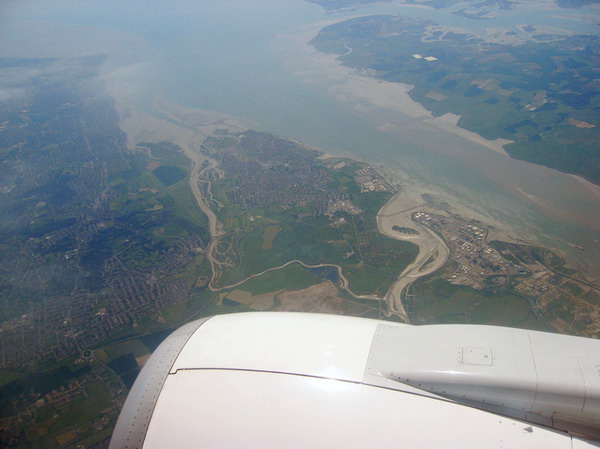
After take-off I try to see where we are heading. The first place I can definitely place is Canvey island on the Thames estuary where I was taking pictures a couple of months back.

Two hours later we are bumping down through the clouds and into Krakow airport. Fortunately this is so small it takes a relatively short time to collect my case and go through to meet the driver who is to drive me and another festival visitor, Marta Daho of Magnum, to Bielsko-Biala.

Life Imitates Art

     Life imitates Art,

     Art Imitates Nature.

     Nature abhors a vacuum,

     Hoovers suck.

     Life? Well, sometimes it happens.

     Always it happens, magic or shit.

     Bielsko was brimming with magic.

I Translate

     I translate

     It rans late


And everything did run late, due to the tremendous enthusiasm of the audience to the presentations by all the photographers who had come to talk about their work. In a later post here I’ll post part of an introduction to my talk which I wrote in my hotel room in Bielsko-Biala, as well as some more pictures including some of the other photographers taking part in the festival. And I even did a little translating although the remnants of my ‘O Level’ French wasn’t really up to it.


FlickrFacebookMy London DiaryHull PhotosLea ValleyParis
London’s Industrial HeritageLondon Photos

All photographs on this page are copyright © Peter Marshall.
Contact me to buy prints or licence to reproduce.

FotoArtFestival Diary 2007 – Poland

FotoArtFestival Diary 2007 – Poland: In 2007 I was invited to speak at the second FotoArtFestival in Bielsko-Biala, Poland and made a fairly lengthy illustrated diary of my visit. I’d been there two years earlier at the first festival there in 2005 and had enjoyed the event greatly, although it was not without a few problems, but it had been a great success.

FotoArtFestival Diary 2007

I’ve been reminded of this in recent days by several things. Firstly by seeing pictures from this years FotoArtFestival on Facebook, the 10th of these remarkable events still being organised by the wonderful Inez Baturo from 13-29th October 2023.

FotoArtFestival Diary 2007

Also on Facebook recently I’ve been seeing again and admiring many of the pictures by Misha Gordin, (1946-2020) who arrived in Krakov on the same flight with me. His conceptual images constructed in the darkroom are powerful and quite remarkable. I still can’t quite imagine how he produced some of them, though my diary says what he told me about his methods. You can read more about his pictures in a 2007 article by A D Coleman on his Photocritic International site, Misha Gordin: Reflex of Freedom.

FotoArtFestival Diary 2007

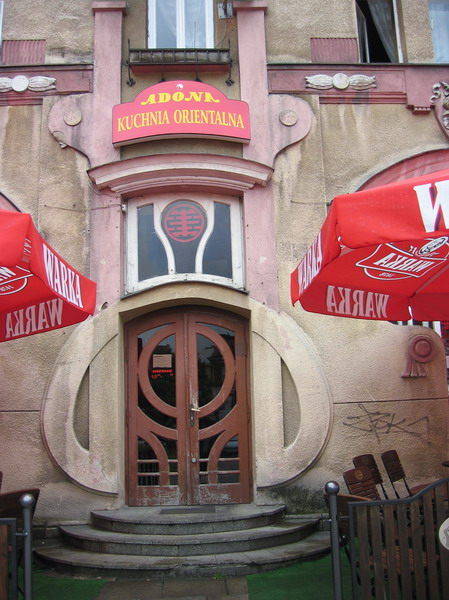
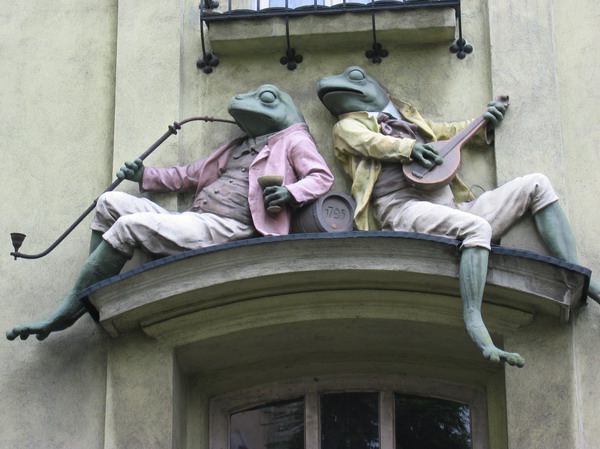
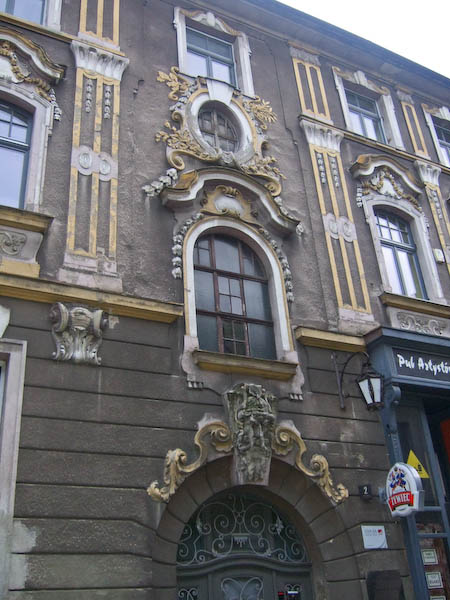
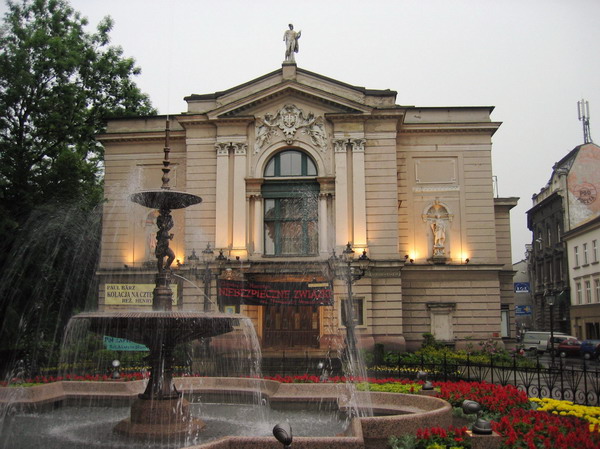
And on a quite different Facebook group, someone recently posted an image from Bielsko-Biala that jumped off the screen. It wasn’t one that I had taken, but of one of the most famous doorways in the city that I had also photographed. I posted as a comment a picture the had taken in 2005 – the top one on this post.

FotoArtFestival Diary 2007

I hadn’t gone there on either of my two visits to take photographs and in terms of photo gear on both occasions had travelled light, with just a pocketable digital camera, intending simply to create a diary of the event. In 2005 that was a 3.9MP Canon DIGITAL IXUS 400, but by 2007 I had upgraded to a 6.1MP Fuji FinePix F31fd. As you can see from the pictures in both my 2005 and 2007 diaries, both were pretty capable little cameras.

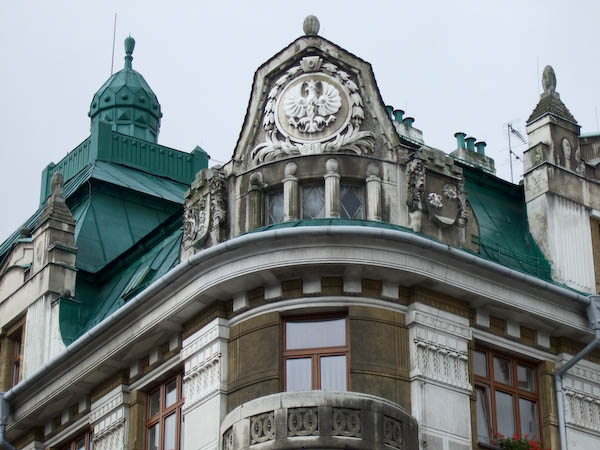
Bielsko-Biala is a city in southern Poland around 240 miles from Vienna which became an important centre for the textile industry in the 19th century when it was a part of the Austro-Hungarian Empire, and became home to many wealthy industrialists. Many had homes built in styles then popular in Vienna, particularly Art Nouveau and there are some fine examples in what is often called “Little Vienna”.

I rose early and walked around the centre of the city before the festival venues and events began taking pictures as well as walking with the others between events. My diary also has some brief reviews of some of the shows in the festival by Michal Macku (Czech Rep), Karol Kallay (Slovakia), Stasys Eidrigevicius (Lithuania/Poland), Aleksandras Macijauskas (Lithuania), Michael Kenna (UK), Walter Rosenblum (USA), Jose Luis Raota and Pedro Luis Raoto (Argentina), Franco Fontana (Italy), Judit M Horvath and Gyorgy Stalter (HUngary), Joan Fontcuberta (Spain), Misha Gordin (Latvia/USA), Lukas Maximilian Huller (Austria), Sarah Moon (France), Alex ten Napel (Holland), Mitra Tabrizian (Iran/UK) and Dalang Shao, Du Shao and Jiaye Shao(China) as well as accounts and pictures of some of the festival events. Most of those who were able to attend are in my pictures in my diary.

You can read all 16 pages of my FotoArtFestival Diary 2007 online – with many more pictures. I’ve made no real changes other than correcting the date at the top of each page. Probably many of the links in it will no longer work and those who reach the end will find will find that I still haven’t managed to put my talk from 2007 online. Copyright problems are probably insurmountable.


Naomi Rosenblum (1925-2021)

Naomi Rosenblum, the celebrated author of two landmark histories of photography, her World History of Photography (1984) and A History of Women Photographers (1994), died on February 19th, 2021.

Her work widened our knowledge of the history of photography and gave it a more international perspective as the ‘World Photography’ in the title indicates, and it was an inspiration to me later to try and write about the history and development of photography in countries around the world when I wrote online for ‘About Photography’.

Similarly her book on women photographers opened up a wider area for study, and was of particular interest to me as many of my better students were women. Of course there were women who had become well-known as photographers and who I had featured in my courses – Julia Margaret Cameron, Dorothea Lange, Berenice Abbott and others spring obviously to mind, but many others had been sadly sidelined from previous histories, often mere footnotes to the work of their male colleagues.

Together with her husband, Walter Rosenblum she did much to promote the work of Lewis Hine, and of the photographers of the New York Photo League, where Walter had met both Hine and Paul Strand and had become its President in 1941 before his war service. Naomi had also been involved with the Photo League, although she was not a photographer. As a designer she designed the cover of ‘Photo Notes‘, the influential magazine of the League (Edward Weston praised it as the most worthwhile magazine dealing with photography.)

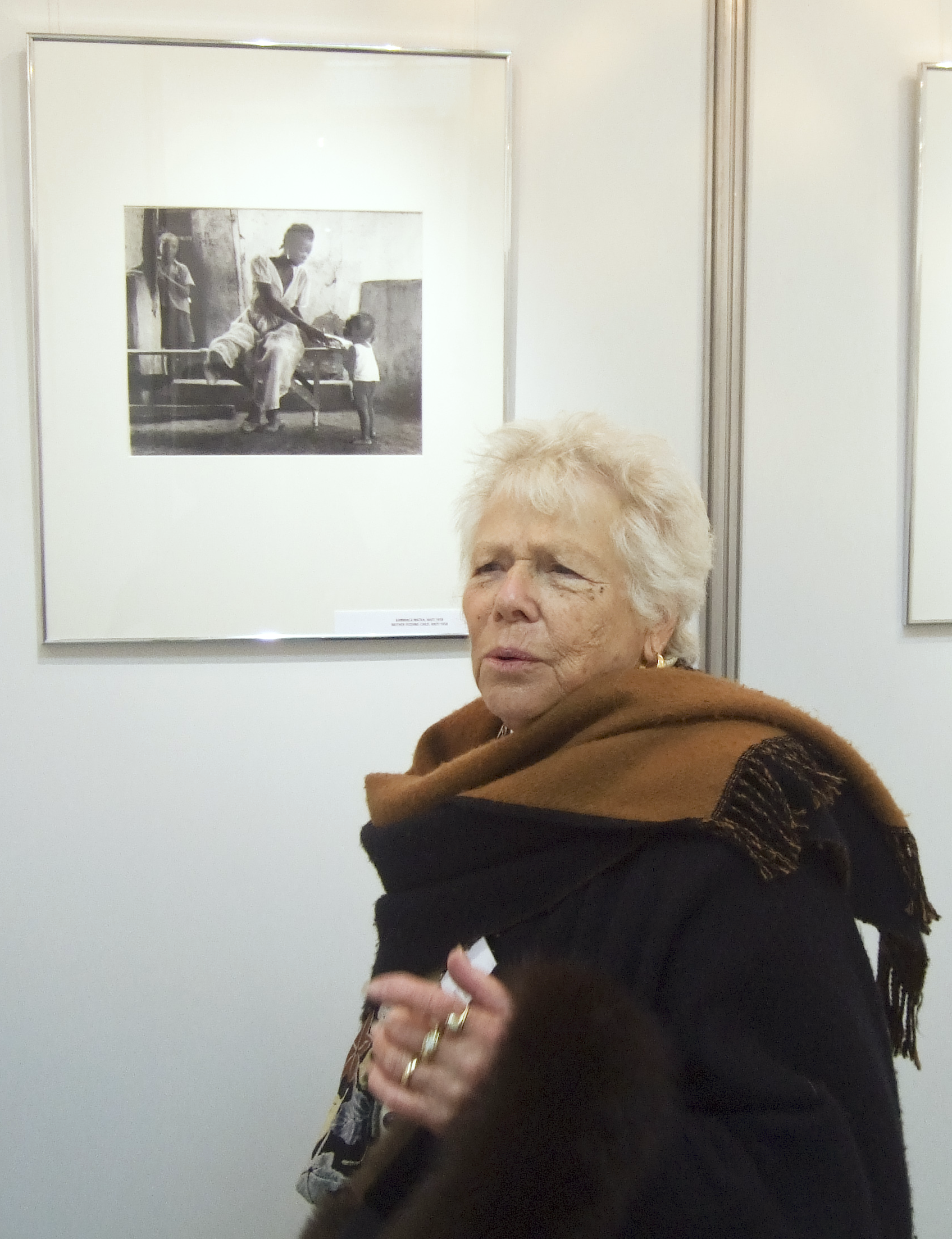
I’m sure there will be many detailed obituaries of Naomi Rosenblum appearing and I’ll not write one here. But I do have fond personal memories of meeting her back in 2007, in Bielsko-Biala, Poland. For me the most important exhibition at the FotoArtFestival there was the early work of her late husband, ‘Message from the Heart‘. Naomi was there to launch the Polish version of her ‘World Photography’ and also, like me, to give a lecture, and her daughter, film-maker Nina Rosenblum came to present her film about her father, Walter Rosenblum: In Search Of Pitt Street.

It was a great privilege for me to go with Naomi and Nina around the show of Walter’s work and to hear their stories about him and the pictures. We talked too at some of the meals and events, and in the lecture hall – where I listened to her lecture and they to mine. There was actually some overlap the two, hers on the New York Photo League but rather more wide-ranging and mine on street photography in London, and it was interesting for us to compare our slightly different thoughts and wildly different presentations.

There is just a little more about our meeting in the lengthy diary I put on line in 2007 about my experiences at the FotoArtFestival. It includes brief thoughts on many of the of the exhibitions and events as well as photographs of the festival and of my walks around Bielsko-Biala.


Sarah Moon – Orient Express

I’ve never travelled on the Orient Express, but years ago one of my late friends, Terry King, got what seemed to be a dream job, working on an advertising commission for the company.

He’d gone to their offices with his portfolio of gum bichromate prints and they had sat around them in awe in their kaftans (it was then a rather new age company.) I’ve described elsewhere how Terry, Randall Webb and myself had all started investigating the process but Terry had evolved his own methods of progressing with the process, using several large paper negatives printed in different tones and colours and with carefully controlled manual development at each stage to produce highly pictorial results.

So Terry got a free trip on the Orient Express to Venice, where he spent a few days taking pictures before returning to his London studio and working on the results, producing prints to take back to the company. He went in to show them the results and immediately sensed the company had changed management; in place of kaftans the executives were now all in smart business suits and ties. They didn’t appreciate his work and the project was abandoned.

Terry did make some fine prints of his work in Venice, and some of them will still be hanging on people’s walls around the country, with sales through an art dealer in Richmond. (I have one of his pictures of London on my wall – we did a swap – but not of Venice.) Until recently you could see some of them on his web site, but that is no longer on line. The only example I can find is on the Silverprint web site, a company which supplies fine photographic materials – including some of the chemicals and sundries that both Terry and I used. It is a picture from Venice and I think is possibly a cyanotype over a gum image, though it could possibly be simply a gum using two shades of blue.

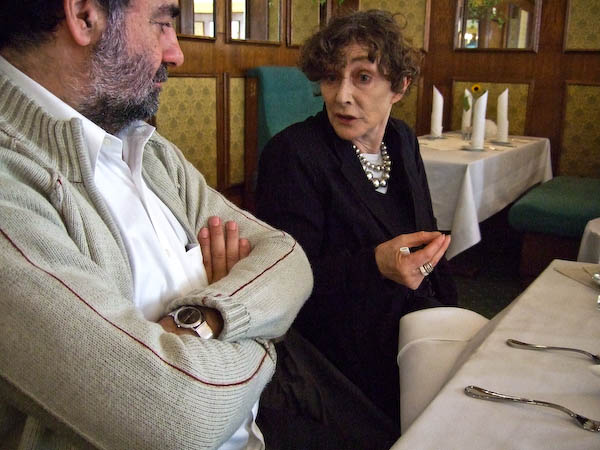
I have met Sarah Moon (above with photographer Joan Fontcuberta), though only fairly briefly when we were both speaking at the FotoArtFestival in Bielsko-Biala in 2007. We shared several meals at the event and had some long conversations and there are a few more pictures of her in my diary.

Sarah Moon with film-maker Nina Rosenblum and photo-historian Naomi Rosenblum

Which brings me – finally – to the reason for this post, Sarah Moon : Orient Express – Louis Vuitton Editions – which was featured on ‘The Eye of Photography‘. This is a book in their Fashion Eye collection, a series in which each “book evokes a city, a region or a country, seen through the eyes of a fashion photographer.”

LV is a French fashion house and luxury retail company founded in 1854 by Louis Vuitton, who introduced a range of luggage with flat-top trunks for travel, which meant they could be stacked, particularly on rail journeys – previously trunks had been made with rounded tops so that the rain would run off when they were carried on open waggons and carriages. The Orient Express which began in 1883 thus seems a very appropriate subject.

You can read about this book on the UK LV web site, which has the same selection of stills as ‘The Eye of Photography’. But if you scroll down the page there is also an over- rapid ‘page-through‘ video of the book, which gives a good idea of the size and layout of the work. And if you change the video to 1080px, make it full screen and stop the playback you can actually see and read the pages. Presumably you can buy it in their shops as well as on-line, but at £42 (including standard delivery) although it looks an intersting book I find it a little too expensive – like their luggage.