
There were some positive ideas behind the introduction of Universal Credit, a new social security payment system first announced by the then Work and Pensions Secretary, Iain Duncan Smith, in 2010, claiming it would make the social security system fairer to claimants and taxpayers. It aimed to simplify the system by replacing six existing benefits for working-age people who have a low household income: income-based Employment and Support Allowance, income-based Jobseeker’s Allowance, Income Support, Child Tax Credit, Working Tax Credit and Housing Benefit. It would also taper off gradually as people moved into employment, removing the ‘cliff edge’ of losing benefits when going back into work.

But both Duncan Smith and Welfare Reform Minister David Freud, had failed to grasp the complexity of the varied and often varying circumstances of those in low paid and often insecure employment, particularly those on zero hours contracts or other sporadic or seasonal work, or with fluid family arrangements. Nor did they make clear that the main driver behind their changes was to simply cut the cost of benefits. And it now seems likely it will end up being more expensive than the benefits it replaced.
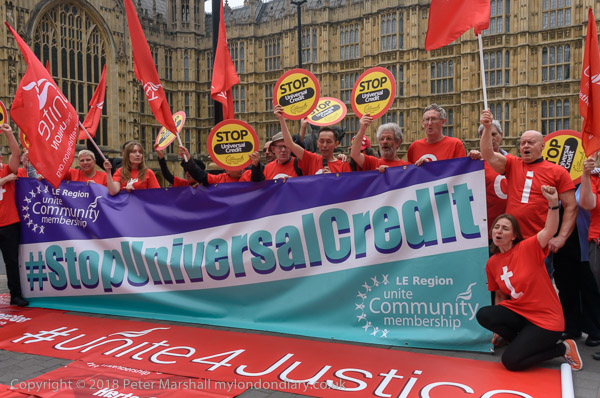
Following the Welfare Reform Act 2012, UC roll-out began to selected claimants at pilot job centres in 2013, and problems rapidly became apparent. There were entirely predictable problems with the IT system and the implementation costs were six times the initial forecast at £12 billion. The roll-out was intended to be more or less complete by 2017, but is now expected to take until 2024. Cuts were made to the initial system by George Osborne in 2015, making the transition to work less generous and removing some of the payments for child support, though these were partly restored in 2018 by Philip Hammond. And in 2020 there was a temporary £20 increase as a response to Covid.
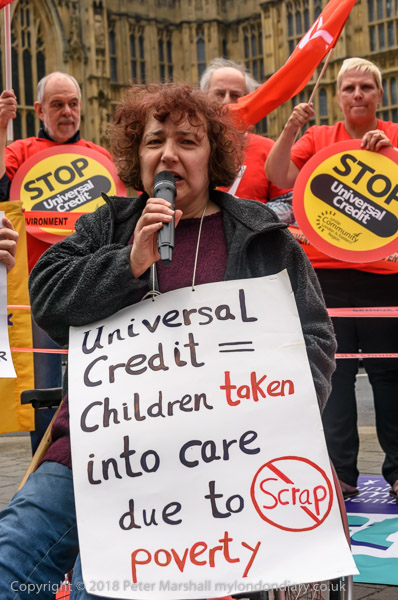
What is clear is that the introduction of UC has caused a great deal of hardship to claimants, some temporary, some permanent. It has led to many being unable to keep up rent payments with a great increase in evictions and homelessness. UC has been the main driver of the huge increase in the need for foodbanks. It has forced some women into prostitution and made some claimants turn to crime to keep alive – while some have starved to death.
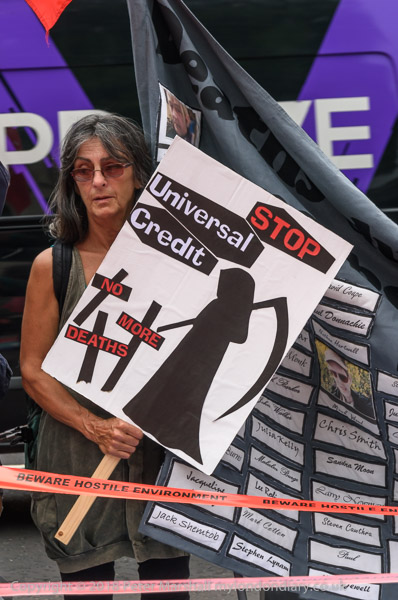
UC has had a particularly hard effect on families with children, particularly those with more than two children since 2017, and also on self-employed claimants and others with fluctuating incomes. Overall there have been both winners and losers, with around half losing out and a little over a third gaining compared to the replaced benefits.

One of the major problems for everyone has been the long wait before any UC is paid, partly because of the change from a weekly to a monthly benefit. Even where the process works smoothly, the delay between making the claim and receiving money is six weeks, and around a fifth of claimants have had to wait around 5 months or more. There are now emergency loans available – but these mean that when people do get their payments they are reduced to repay these advances. There are also many whose benefit has been cut or stopped for largely trivial reasons through a savage system of benefit sanctions imposed by job centres.

Many other problems have also been caused by UC – you can read a long list of criticisms in the Wikipedia article. As well as evictions and homelessness it has resulted in an increase in domestic violence and a steep rise in mental-health problems. And, as the National Audit Office reported, there is no evidence Universal Credit has met its aim of helping people into work and they say it is in many ways unwieldy and inefficient and is unlikely to provide value for money.
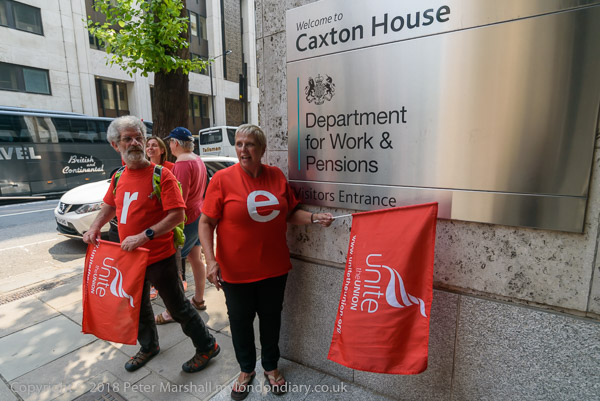
It is clear that UC is in need of a complete replacement, and that it’s monumental failure should have led to the resignation of Iain Duncan Smith in 2015 after the DWP admitted publishing fake testimonies of claimants enjoying their benefits cuts and statistics showed 2,380 people died in a 3-year period shortly after a work capability assessment declared them fit for work, but instead he was knighted in 2020. Under the present government we are unlikely to get more than very minor tinkering that will quite likely create more problems that it solves. One of the proposals under debate is that of a Universal Basic Income, along with targeted welfare payments (some of which are still in existence) to cover those with additional needs. Earlier this month the Welsh First Minister Mark Drakeford announced that this would be trialled in a pilot scheme in Wales.
Universal Credit rally & march
Universal Credit protest at Tate Modern