Rastafari, Vedanta & De Beers – 2014

Rastafari, Vedanta & De Beers: Pictures from protests I covered on Friday 1st August 2014.

August 1st is Emancipation Day, celebrating the effective date of the abolition of slavery across the British Empire in 1834, and 2014 also marked the centenary of the foundation of the Universal Negro Improvement Association and African Communities League (UNIA-ACL) by Marcus Garvey and Amy Ashwood Garvey in Jamaica in 1914.

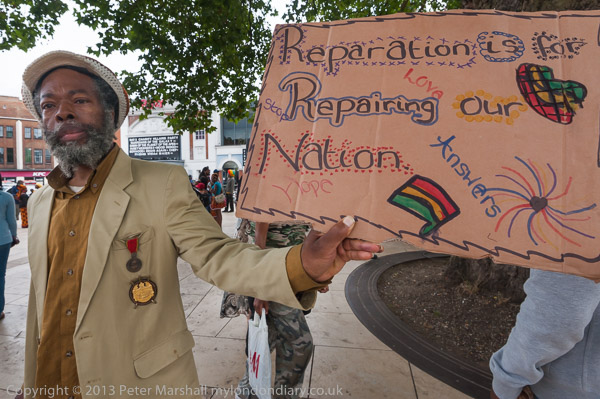
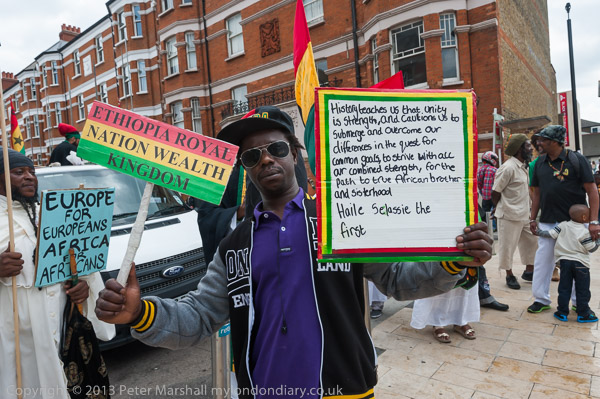
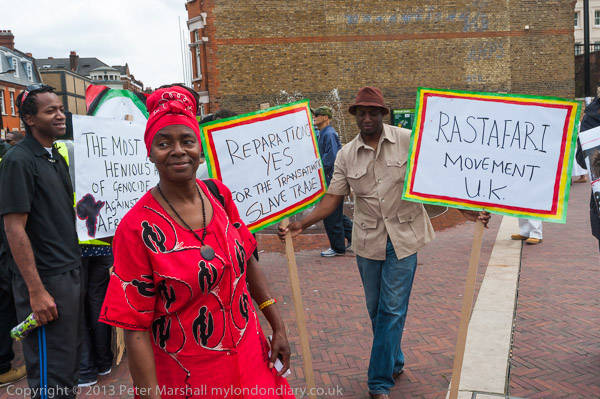
In Brixton I photographed a rally by Rastafaris preparing to march to Parliament to demand reparations for the slave trade. I left to go to Lincoln Inn’s Fields to a protest outside the AGM of mining group Vedanta, responsible for killings and environmental destruction in various countries around the world.

Finally in Piccadilly campaigners were outside De Beers asking people to boycott diamonds cut and polished in Israel which fund war crimes against Palestinians.


Rastafari Demand Reparations For Slave Trade

Windrush Square, Brixton
Rastafari, Vedanta & De Beers - 2014

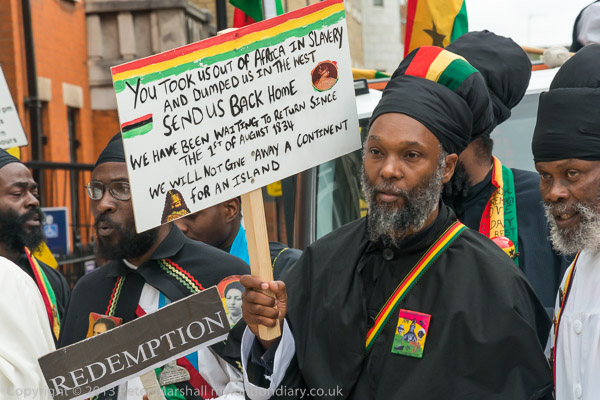
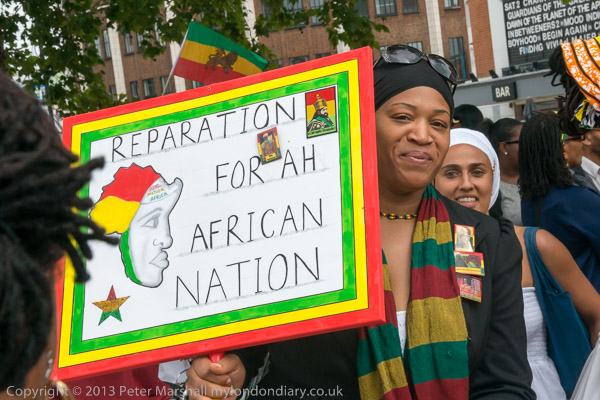
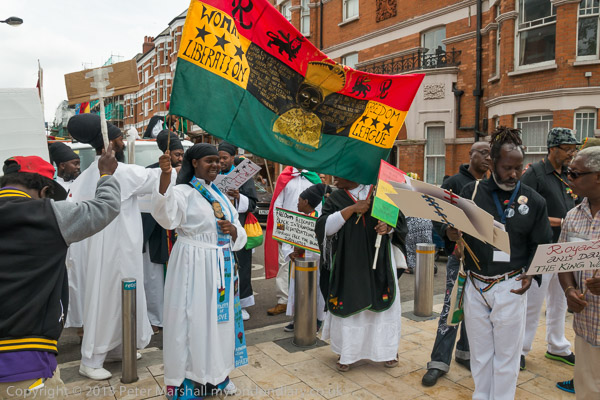
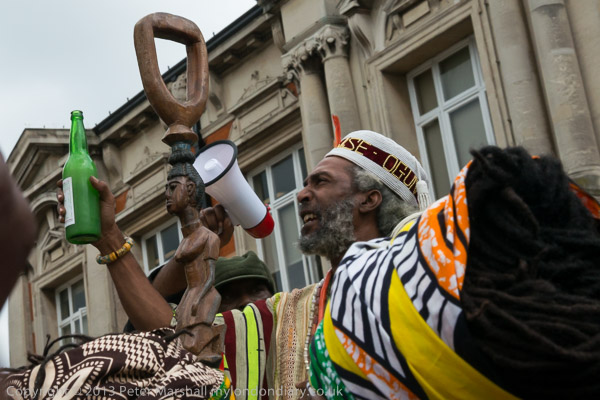
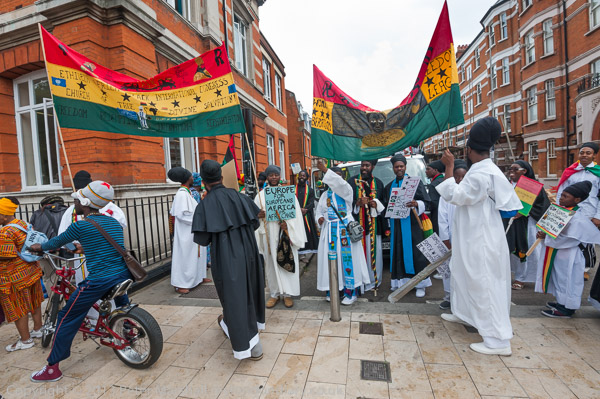
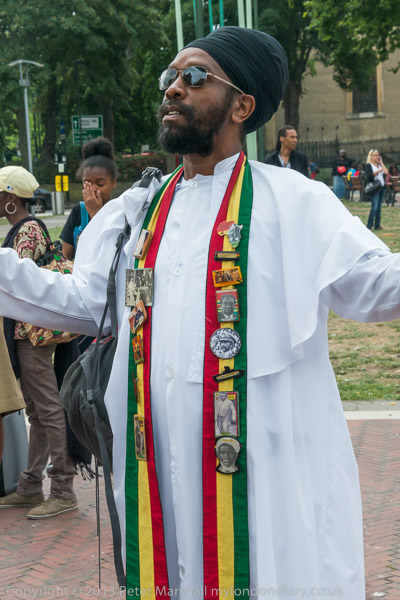
On the centenary of the foundation by Marcus Garvey of the Universal Negro Improvement Association, Rastafaris met at Brixton to march to Parliament demanding reparations for the descendants of those taken from Africa by the Atlantic Slave Trade.
Rastafari, Vedanta & De Beers - 2014

Demands for international reparations have been increasingly made in recent years, some for huge sums. As I wrote:

“In 2004, a group of Jamaican Rastafari movement groups argued that European countries, particularly Britain, should pay £72.5 billion to resettle 500,000 Jamaican Rastafarians in Africa, but the British government rejected their claim. Other claims have been lodged in 2007 by Guyana, in 2011 by Antigua and Barbuda.”
Rastafari, Vedanta & De Beers - 2014

No government has yet agreed to any financial reparations to the descendants of slaves or the countries affected. The British Government at the time of abolition paid out huge sums over many years to the owners of slaves – equivalent to 40% of the national budget – and this payment was only completed in 2015. Among those who have received payments were powerful British families, including current business and political elites in the United Kingdom.
Rastafari, Vedanta & De Beers - 2014

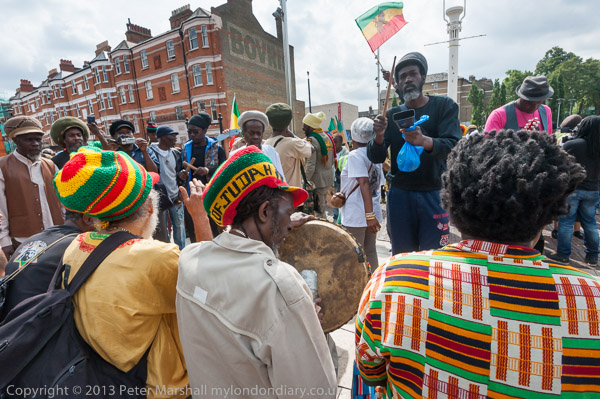
The event go off to a slow start with drumming and dances and then some speeches. It was still continuing when I left to go elsewhere and I missed the march which only began an hour and a half later.

More on My London Diary at Rastafari demand reparations for slave trade.


Vedanta Told ‘End Your Killing’

Lincoln Inn’s Fields
Rastafari, Vedanta & De Beers - 2014

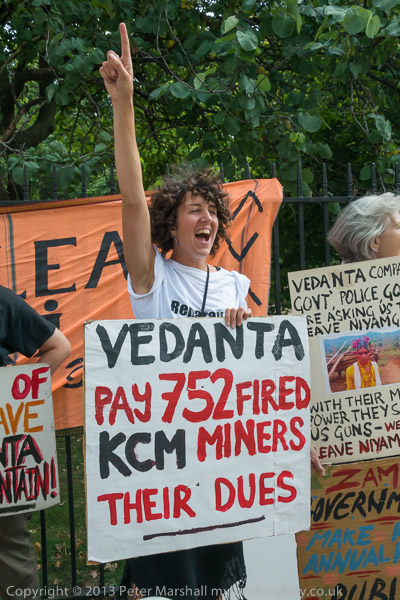
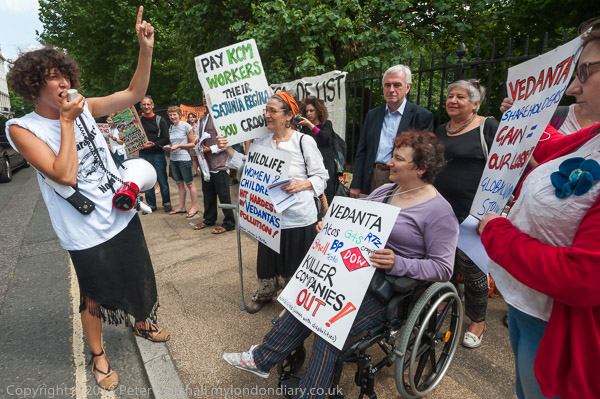
The protest on the opposite side of the road from the Vedanta AGM was organised by Foil Vedanta who say:

Vedanta Resources is a FTSE 250 British-Indian mining company guilty of thousands of deaths, environmental devastation, anti union action, corruption and disdain for life on earth. They have become one of the most hated and contentious companies in the world.”
Rastafari, Vedanta & De Beers - 2014
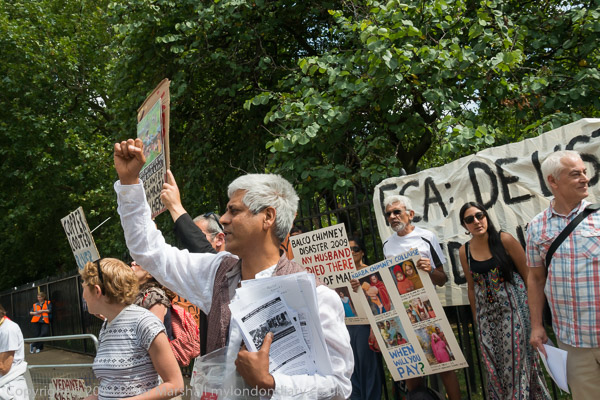
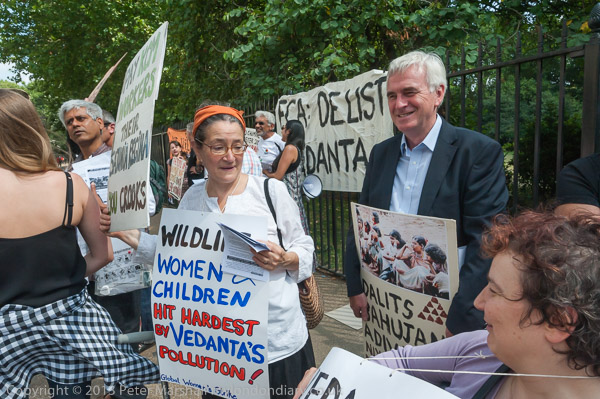
MP John McDonnell was among the protesters

A number of the protesters had bought shares in the company so that they could go into the AGM and ask questions while others continued the protest outside.
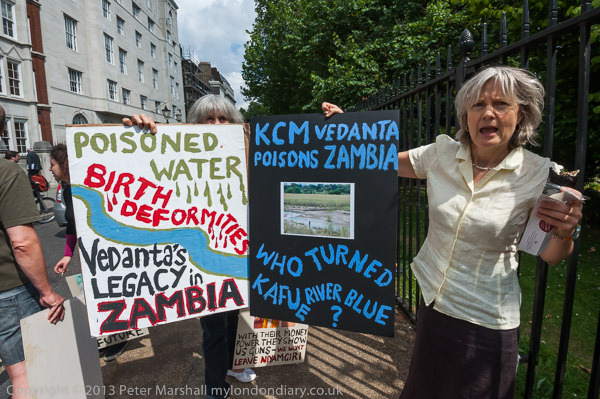
As well as protesting Foil Vedanta have also carried out a great deal of research into the activities of Vedanta and is subsidiary companies. These include Konkola Copper Mines (KCM) in Zambia which has poisoned thousands of people causing ongoing birth deformities in major pollution spills in 2006 and 2010. They had claimed to be unable to pay their fines or their tax bill while actually making around around $500 million/year.
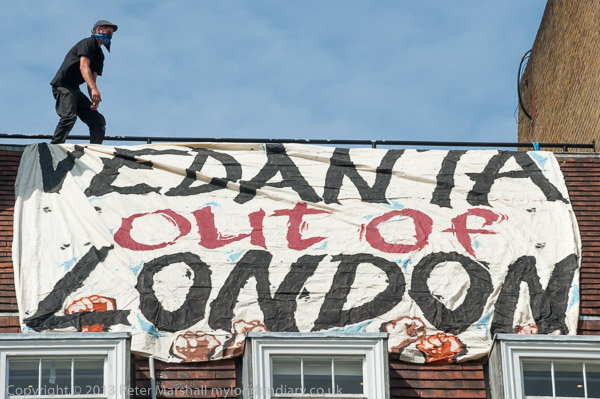
Protests against Vedanta here where the company is listed and on a much larger scale in India and elsewhere where they operate have so far stopped Vedanta from destroying the Niyamgiri mountain in Odisha, sacred to the indigenous Dongria Kondh. The protests in London led the company to decide to de-list in 2018. They have also attempted unsuccessfully to de-list from Indian stock exchanges.

More at Vedanta told ‘end your killing’.


Boycott Israeli Blood Diamonds

De Beers, Piccadilly
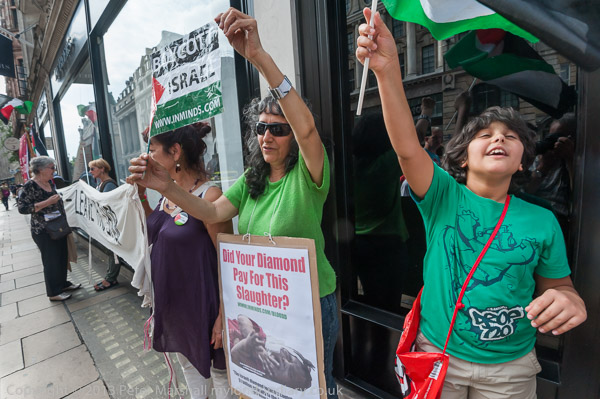
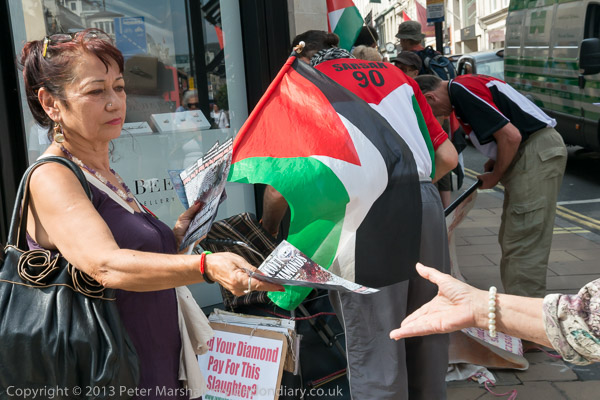
Protesters lined the front of the shop both here in Piccadilly and around the corner in Old Bond Street

Protesters at De Beers in Piccadilly asked people to boycott diamonds cut and polished in Israel which contribute around a billion dollars every year to the Israeli military and security industries and fund Israeli war crimes against Palestinians.

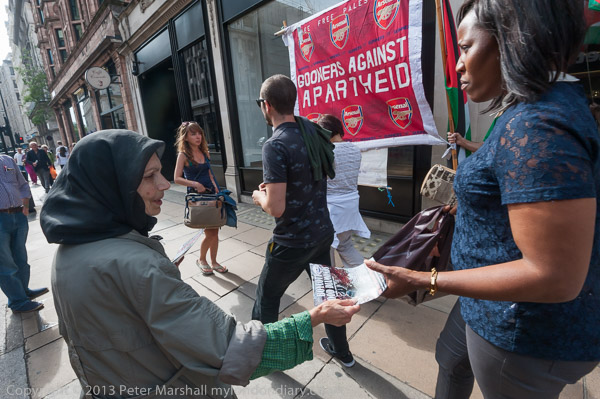
More pictures at Boycott Israeli Blood Diamonds.


FlickrFacebookMy London DiaryHull PhotosLea ValleyParis
London’s Industrial HeritageLondon Photos

All photographs on this page are copyright © Peter Marshall.
Contact me to buy prints or licence to reproduce.
Reparations for Slavery, Vedanta & Blood Diamonds

Reparations for Slavery, Vedanta & Blood Diamonds – the three protests I photographed in London on Friday 1st August 2014 were all related to world trade – the Atlantic Slave Trade and current devastation caused by mining industry and the diamond trade that funds Israeli war crimes against Palestinians.


Rastafari demand reparations for slave trade – Windrush Square, Brixton

Reparations for Slave Trade, Vedanta & Blood Diamonds

On August 1st 1834 the 1833 Abolition of Slavery Act came into force, ending slavery across the British Empire. But although the slave owners received compensation of £20 millions the freed slaves got none. They were not even freed, but converted to ‘apprentices’ who were expected to continue to work without wages for up to six years until 1838 and were unable to own land.

Reparations for Slave Trade, Vedanta & Blood Diamonds

The payment to the former slave owners was huge – around 40% of the National Budget of the UK, and the Treasury who took out a loan to enable them to pay it. British tax payers – including many descendants of former slaves – were still paying off the debt until 2015, as a rapidly deleted tweet from the UK Treasury confirmed in February 2018.

Reparations for Slave Trade, Vedanta & Blood Diamonds

The Act abolishing slavery was designed largely to ensure that Britain’s hugely profitable sugar industry based on slavery continued after emancipation, and Britain also continued to import cotton grown by slavery in the southern states of the USA as well as sugar from slave plantations in Brazil and Cuba.

August 1st became widely celebrated as ‘Emancipation Day’ and it was the date chosen by Marcus Garvey to found the Universal Negro Improvement Association (UNIA) in Jamaica in 1914, and for a meeting six years later in Madison Square Gardens in New York attended by 25,000 of UNIA’s claimed membership of 4 million.

Demands for reparations to be made to the descendants of slaves have so far been met by only token measures, such as the renaming of streets and buildings and official apologies, with some legislation requiring companies to provide information about their involvement in the trade and insurance of slaves.

But since the 1990s there has been a growing movement demanding financial reparations both for slavery, particularly following the First Pan-African Conference on Reparations convened by the Organisation of African Unity and the Nigerian government and held in Abuja, Nigeria in 1993.

In the UK the movement was led by Bernie Grant, MP for Tottenham until his death in 2000. Prime Minister Tony Blair in 2006 expressed “deep sorrow” for Britain’s role in the slave trade, saying it been “profoundly shameful”, though as Wikipedia notes this was criticised as lacking any measures of reparation. A further public apology for London’s role in the slave trade came from then London Mayor Ken Livingstone during the commemorations of the 200th anniversary of the passage of the 1807 Slave Trade Act.

A case was for compensation was brought against Lloyds of London in 2004, but failed. The same year a Jamaican Rastafari call for European countries, particularly the UK to support the resettlement of 500,000 Jamaican Rastafarians in Africa in a scheme costed at £72.5 billion was rejected. Other claims have been lodged by in 2007 by Guyana, in 2011 by Antigua and Barbuda and Barbados.

On 1st August 2014, the 100th anniversary of Garvey’s setting up of the UNIA. a large group of mainly people of African and Afro-Caribbean descent gathered in Windrush Square in Brixton for several hours of speeches, celebration, drumming and dancing before they were to march to Parliament to make their demand for reparations. The march has become an annual event in London, but I had to leave shortly before it began.

Rastafari demand reparations for slave trade


Vedanta told ‘end your killing’ – Lincoln Inn’s Fields

I joined the protest outside the building in Lincoln’s Inn Fields where the FTSE 250 British-Indian mining company Vedanta Resources was holding its AGM. Here and at other protests in Zambia and Odisha and Delhi in India.

Vedanta is a huge company which protesters say is “guilty of thousands of deaths, environmental devastation, anti union action, corruption and disdain for life on earth. They have become one of the most hated and contentious companies in the world.

Their activities, particularly their attempt to destroy the sacred Nyamgiri mountain in India for its aluminium ore, have led to protests around the world, and an Indian Supreme Court decision that, at least for the moment have halted the mining there.

Another setback for Vedanta was the research by activist group Foil Vedanta into their subsidiary Konkola Copper Mines in Zambia, accused of poisoning thousands and causing ongoing birth deformities by major pollution spills in 2006 and 2010. The research showed the company which was claiming it was making a loss and so unable to pay its fines and tax bill was actually making around $500 million a year.

Labour MP John McDonnell was among those who had become a shareholder to attend the AGM

Vedanta’s problems being made public resulted in a dramatic crash in its share price and the previous December it dropped out of the FTSE100. Billionaire owner Anil Agarwal responded by buying large numbers of the shares and was now said to own over two thirds of the company. But there were other shareholders going into the AGM, including a few activists who had bought a share to entitle them to attend and ask questions.

The activities of these activists, both inside and outside the AGM every year, were eventually were an important part in the decision four years later by Agarwal to make Vedanta a private company.

Vedanta told ‘end your killing’


Boycott Israeli Blood Diamonds – De Beers, Piccadilly

Finally I made my way to Piccadilly where pro-Palestinian campaigners were protesting in front of De Beers jewellery shop, calling on people to boycott diamonds cut and polished in Israel.

Although there are no diamonds mined in Israel, according to Wikipedia, almost a quarter of Israel’s total exports come from the sales of diamonds cut and polished in the country and they account for almost one eighth of the total world production.

Israel claims that all these diamonds are covered by the ‘Kimberley Process’ which aims to prevent diamonds mined in conflict areas and sold to finance war and insurgency coming to the market. But campaigners say that this defines blood diamonds too narrowly, enabling Israel’s diamond-cutting industry to avoid attention, and the “Boycott, Divestment and Sanctions (BDS) campaign, among others, has called for diamonds processed in Israel to be considered conflict diamonds.”

Boycott Israeli Blood Diamonds