Five years ago on Saturday 12th December I had another busy day travelling to events around London. I began at Stratford on the east of London, the opposite side of London to where I live, but now a relatively easy journey since the opening of the Jubilee line there at the end of 1999.
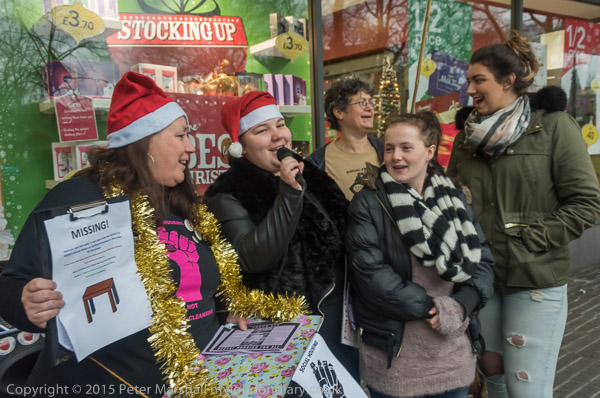
For the previous couple of years I’d been following the progress and protests of Focus E15, formed when Newham Council planned to close down a hostel for young mothers in Stratford and scatter them to private rented accommodation often hundreds of miles away. They stood their ground and got more local rehousing, but, appalled by the activities of the council and its Mayor Robin Wales, continued to take action over the failure of Newham Council to sensibly address the acute housing problem in the borough, which has around 5,000 people living in temporary accommodation and while 400 homes in the Carpenters Estate close to the centre of Stratford have been empty for up to ten years. They accuse the council of ‘social cleansing’, attempting to force those needing housing out of London.
Apart from various actions, including preventing evictions and embarrassing the Mayor by confronting him at public events Focus E15 had held a weekly Saturday street stall on the wide pavement at Stratford Broadway, handing out leaflets and advice to the public on housing issues.
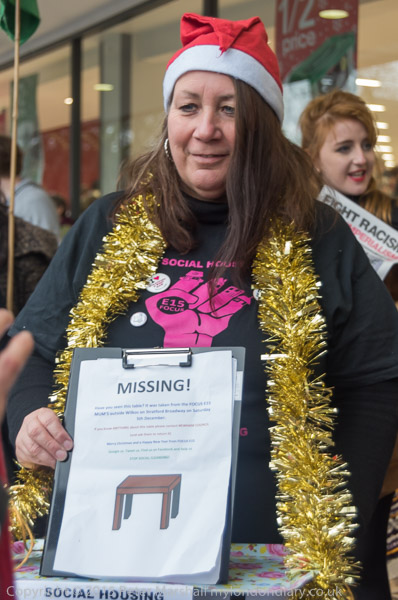
Although their weekly protest was legal, it clearly annoyed the council, and on Saturday 5th December Newham Law Enforcement officer John Oddie arrived, assisted by several police officers and confronted the campaigners and told them they were not allowed to protest there, and that unless they immediately packed up their stall, sound system, banners and other gear it would be seized. The group made clear that they would not move and following some argument, police seized a table and threw it in the back of their van.
It soon became clear that this action by police and the council officer had been illegal, and the council asked the protesters to come and collect the table. They replied asking the council to return it to them at the following week’s protest, and advertised this widely as a ‘Free the Focus E15 Table’ event, making considerable humorous mileage out of the council and police gaffe. The council didn’t turn up with the table, but there a number of other tables there, celebrating ‘Tablegate’ and although the local newspaper seemed to be boycotting the event (could they possibly attract considerable revenue from publishing official council notices) a BBC local news crew came along to film a few interviews.
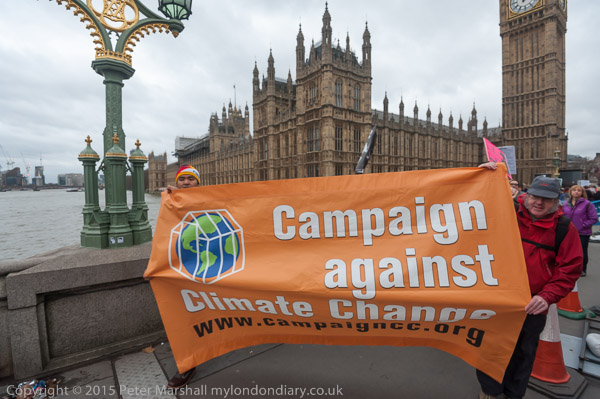
I couldn’t stay until the end but caught the tube back to central London where the Campaign against Climate Change were protesting against the inadequacy of the COP21 Paris deal, which sets the target temperature rise too high, has no way to enforce the measures needed and will allow the giant corporations to continue to prevent governments from carrying out effective green measures.
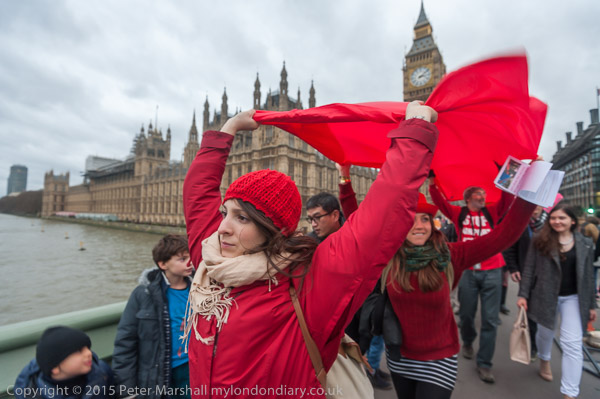
After a short rally in Old Palace Yard the protesters unrolled a 300m length of bright red fabric, carrying it above their heads across Westminster Bridge. It was a tricky to photograph but visually effective reminder of the need of governments to take urgent action to keep fossil fuels – including shale oil, with fracking now shown to be as dirty as coal – in the ground, or at least only to be extracted as chemical feedstock rather than fuel, and an increased urgency in the transition to renewable energy.
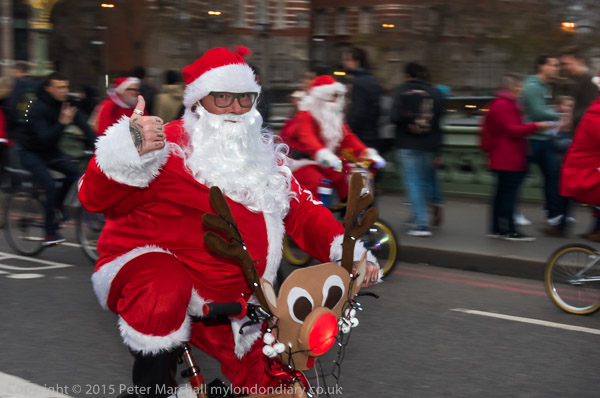
As I was photographing on Westminster Bridge, I was surprised to see a group of several hundred Santas on BMX bikes riding across on the opposite carriageway and rushed across to take a few pictures. I later found that this was an annual BMX Charity ride – which I went to photograph in 2019.
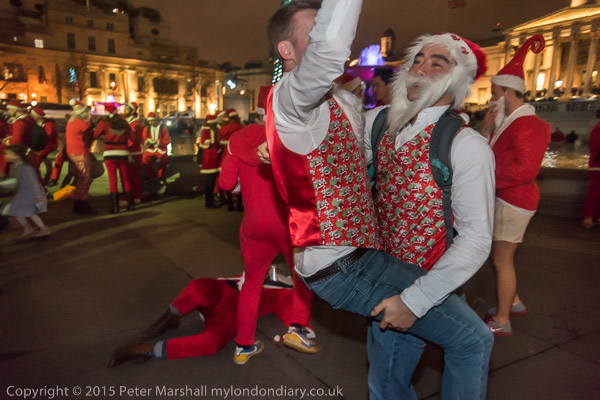
Later in the day I went to Trafalgar Square where a completely unconnected Santa-themed event was taking place, with Santas arriving at the end of the annual Santacon, a largely alcohol fuelled festive costume ramble through London.
Pictures from both Santa events are in Santas in London.
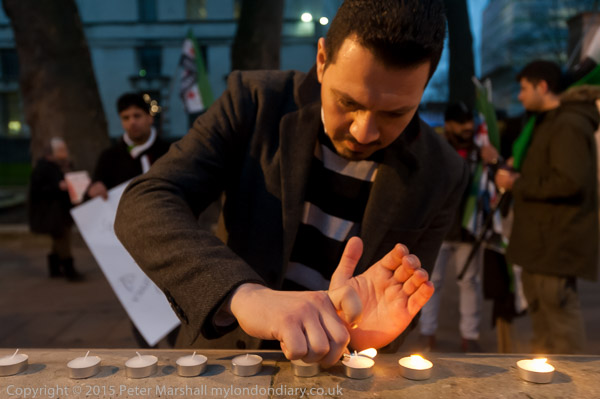
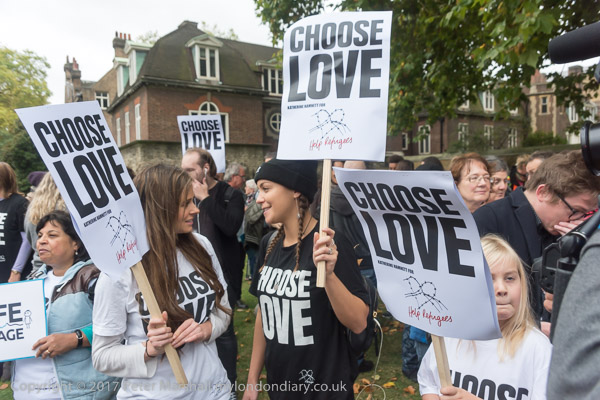
In late afternoon, solidarity campaigners and Syrian activists met for a vigil opposite Downing St vigil demanded justice for refugees, opening of EU borders to those fleeing war and terrorism and a much more generous response from the UK government.
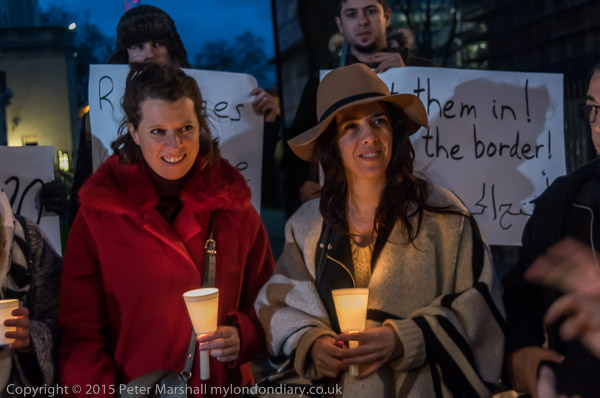
It was a candlelit vigil, but a gusty wind blew out the flames as soon as they were lit until someone went to buy plastic cups to act as windshields though these rather hid the actual flames.
The response of the British government to the refugee crisis, particularly from Syria, but also from elsewhere around the world is seen by many to be abysmal. Even after considerable pushing from the British people which forced David Cameron to increase numbers, the UK was only promising to take 20,000 in the next five years, while Canada will take more – 25,000 – in a single year.
Christmas Solidarity Vigil for Refugees
Santas in London
Climate Activists Red Line protest
Free the Focus E15 Table
All photographs on this and my other sites, unless otherwise stated, are taken by and copyright of Peter Marshall, and are available for reproduction or can be bought as prints.