More staged pictures

London’s stabbings and shootings have generated headlines in the UK media and earned London Mayor Sadiq Khan highly critical tweets from President Trump, as well as allowing Boris Johnson to make seriously incorrect claims about his own time as Mayor. Most of us feel that the current rise in London’s figures owes more to Tory cuts in social and youth services and police numbers than any actions taken by Khan, who has announced some sensible policies which may help in the longer term based on those that have had some success in Glasgow.

Of course any death on our streets is tragic, whether by knife, gun, car or lorry. And while there were 732 homicides recorded in England and Wales in the year to December 2018 (and another 59 in Scotland), the latest annual statistics for road deaths for Great Britain are almost two and half times this, at 1770.

It’s also worth reminding Trump, that while London’s murder rate is around 1.6 per 100,000, this is only half that of New York and that all of the 30 largest US cities had higher rates – with Baltimore, Detroit and Chicago topping the list at 55.8, 39.8 and 24.1 respectively. Figures like that – up to 50 times as many in London – put our crisis in perspective. London is still relatively a very safe city.

But even those huge figures for some US cities are dwarfed by those in San Pedro Sula, Honduras, listed as world’s most dangerous city (outside war zones) with an annual homicide rate of 187 per 100,000 people. And it was photographs from this city, by Swiss/Italian photographer Michele Crameri that got me thinking and writing today, with an article in Fstoppers, Award-Winning Photojournalist Accused of Faking Photos of Assassins.

Looking at the pictures it seems fairly obvious that they were staged for the photographer, but despite this, they are said to have “won 15 awards, including [Crameri] being recognized as a finalist by Lens Culture’s Visual Storytelling Awards 2019.”

When working in Honduras, Crameri worked with local journalist Orlin Castro as his fixer, and was introduced to a number of hit men working for the local gangs who acted out some scenes of threatening to kill people while the two men were present (with Castro playing one of the victims in one of them.) These were captioned as if these were actual events rather than play-acting.

A harrowing film n Youtube, shot for VICE, Crime Reporting in the Murder Capital: San Pedro Sula Nights, shows Orlin Castro at work as a night-time crime reporter, reporting on the killings in the war between the city’s two most notorious gangs. It’s hard at times to watch, and to read the English sub-titles as Castro talks about some of the stories he has covered. Reporting is a highly dangerous job in Honduras, as the notes on the video comment, with “the Honduran National Human Rights Committee, at least 47 journalists and media executives have been murdered between 2003 and 2014.” Had Crameri been photographing the real thing he might well have ended up as another number on this list.

Although it is difficult to look at Crameri’s pictures and not at least have a powerful suspicion that they were staged, the deception was only brought to light by two other photographers who had also worked with Orlin Castro as their fixer and who raised the issue with them. Castro says that Crameri promised him the pictures would only be for his personal archive and “that he specifically told Crameri not to publish the photograph of him being jokingly threatened with the gun.”

Of course there is nothing wrong with the pictures – though clearly the photographer should have respected Castro’s request, and it’s possible that publishing that image may have placed him in some danger. The others are pictures of hit men, and had the captions clearly stated that they were playing for the photographer rather than actually at work they would have still been a viable part of the project. But lying about them not only invalidates those images, it also puts into question the whole of the project – and indeed the photographer’s other work. If you mislead us about these, why should we believe what you say about your other pictures.

The most valuable thing that any photojournalist or documentary photographer has is his or her integrity. Without it the pictures are just pictures, no longer a witness to the world.
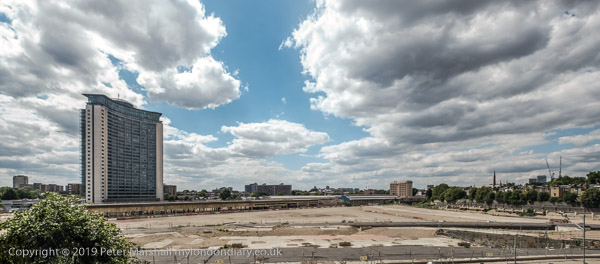
Boris’s Biggest Blunder?

Earl’s Court

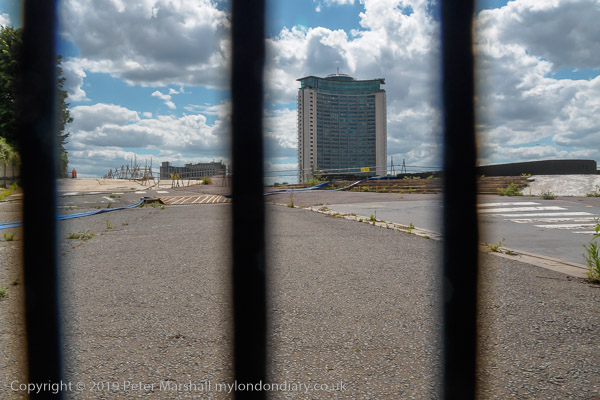
Probably the largest desert in London – thanks to Boris!

Boris Johnson’s time as Mayor was in many ways a disaster for London, but while the media obsess about his sexual peccadilloes and to a lesser extent his racist comments, little is said about his more important failures, which may have enriched some of his city friends but whose consequences will remain to impoverish Londoners for many years after he has left office. One of these, and probably the biggest, is the stalled £12 billion Earls Court redevelopment, which makes even the £53 million Garden Bridge Fiasco fade into insignificance.

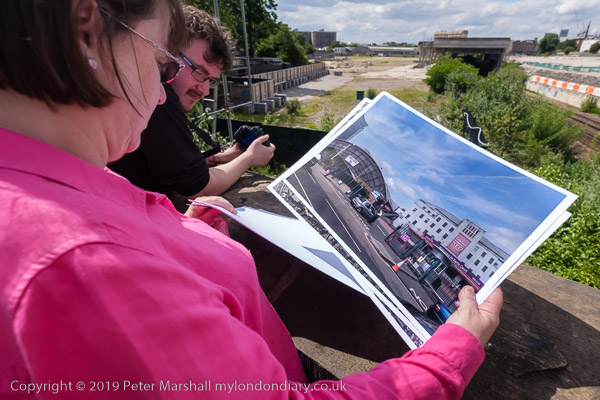
The vacant site where one of London’s iconic 1930s building once stood

It’s wrong of course to call it a blunder. It was a deliberate scheme for the enrichment of a few, undoubtedly including friends and financial supporters of the Conservative Party at the expense of London and Londoners, aiming to provide a huge high-rise development of investment properties largely for sale to foreign investors, a huge empty triangle in what was once a thriving part of London, contributing greatly to the local area and more widely, housing several thousand people who would lose their homes and removing jobs from the area.

Along with Boris, and Transport for London, then a part of his fiefdom, the villains in this £12 billion scheme are developers CAPCO, (Capital & Counties Properties) whose development proposals bear no relation to the considerable history, needs of the area and its locality and the contribution it would pay to the local economy, simply wiping the whole area clean and imposing a solution based on maximising profit to the developers. As soon as they acquired the site in 2008 they applied to English Heritage for a Certificate of Immunity from Listing for the 1930s Earls Court Exhibition Centre, granted despite its iconic status – and the fact that some aspects of it were apparently already listed.
We look at the site of Earls Court 2, with a photograph before demolition

The site falls into two London Boroughs, Kensington and Chelsea and Hammersmith and Fulham, both when the project began under Conservative control. Hammersmith and Fulham council agreed to sell off the two council estates which cover a large part of the area to Capco in 2012. Since Labour took over in H & F in 2014 they have set up an inquiry into the decision to sell and have called for Capco to return the two housing estates. In February 2019 the Mayor of London, Sadiq Khan, stated that he wanted the two estates to be transferred back to the council by Capco unconditionally after they demanded unacceptable planning permission in return for their release.
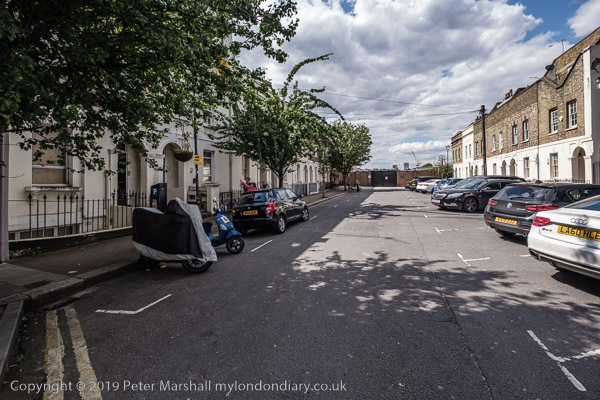
Empress Place would make a fine entrance to a new estate – but Capco will knock it down

There are two large office blocks on the site, both visible in the top picture. The tower at left has already been sold and is now occupied by the Metropolitan Police. The smaller block, at right, belongs to TfL and is a part of their site which also includes extensive workshops; it seems that they have so far failed to find suitable alternative sites for these essential facilities.

Thanks to determined opposition from local people the scheme has so far failed to materialise, and the West Kensington and Gibbs Green estates are still there, along with the TfL workshops, but the demolition of the two exhibition centres has created the largest desert in London. The cleared area, left as dusty bare cleared rubble is a local eyesore and pollution source, with wind carrying dust into local homes and businesses, creating thick and possibly dangerous grime.

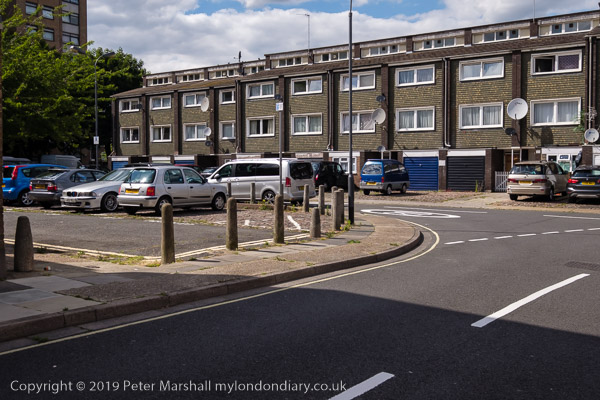
West Kensington, a well built and much loved estate that Capco would demolish

Opposition to the demolition of the exhibition centres is led by the Earl’s Court Area Action Group, one of whose members took me and other journalists on a tour of the area last week. They now demand the demolished area be developed with a replacement venue for the demolished iconic Earls Court Exhibition Centre as a large green space for exhibitions, sports and cultural events, along with “low rise, high density, exemplary green housing with a wide range of housing options including social housing, green space, community and social infrastructure, reflecting the demographic and unique characteristics of Earl’s Court.”

The residents of West Ken & Gibbs Green estates have been campaigning against the demolition of their homes since 2009, and as a part of their campaign for ‘The People’s Estates’ commissioned Architects for Social Housing (ASH) who in 2016 produced ‘the People’s Plan’ for improvements and new homes on the estates without demolition. They want the estates to be transferred to community ownership.

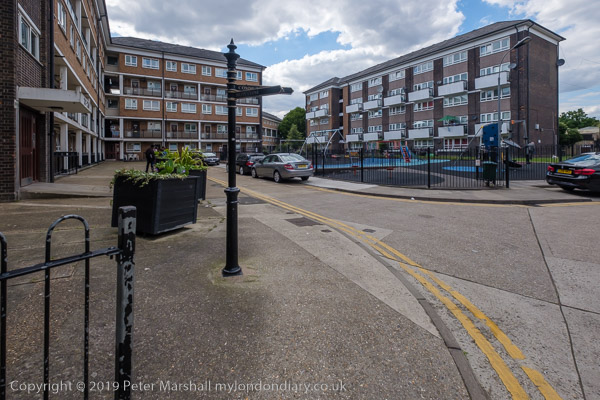
Gibbs Green estate also well built, loved and in good conditions and under threat of demolition by Capco

Earl’s Court Area Action Group
WKGGCH – West Ken & Gibbs Green Community Homes
ASH – Architects for Social Housing


There are no adverts on this site and it receives no sponsorship, and I like to keep it that way. But it does take a considerable amount of my time and thought, and if you enjoy reading it, please share on social media.
And small donations via Paypal – perhaps the cost of a beer – would be appreciated.

All photographs on this and my other sites, unless otherwise stated, are taken by and copyright of Peter Marshall, and are available for reproduction or can be bought as prints.

To order prints or reproduce images


Blood of Our Children

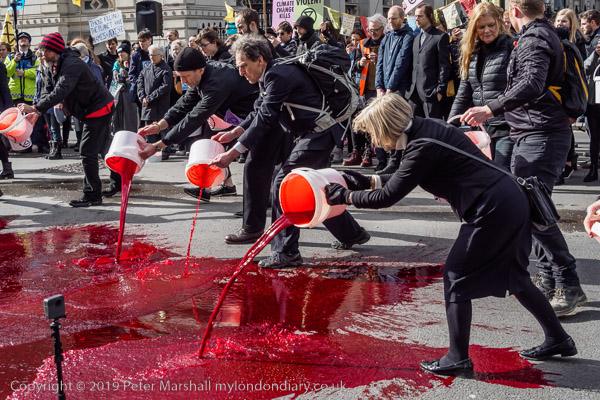
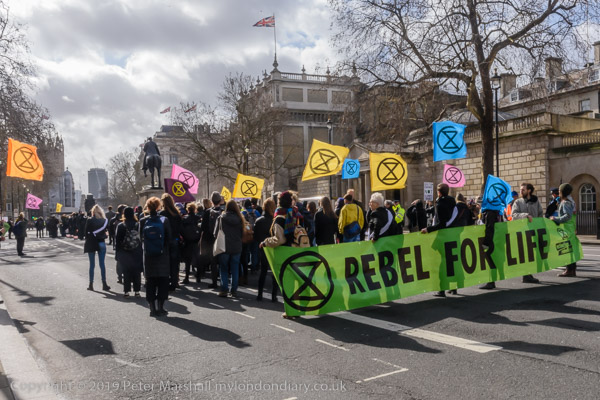
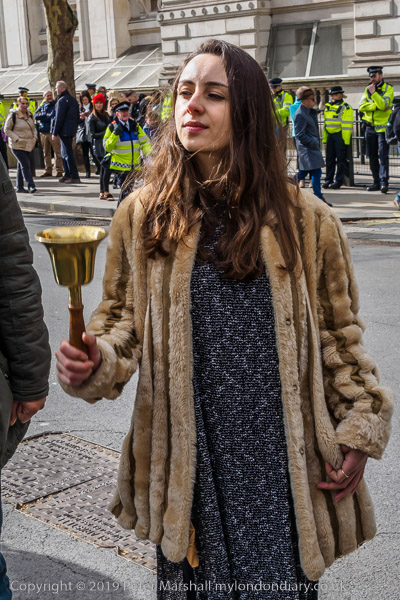
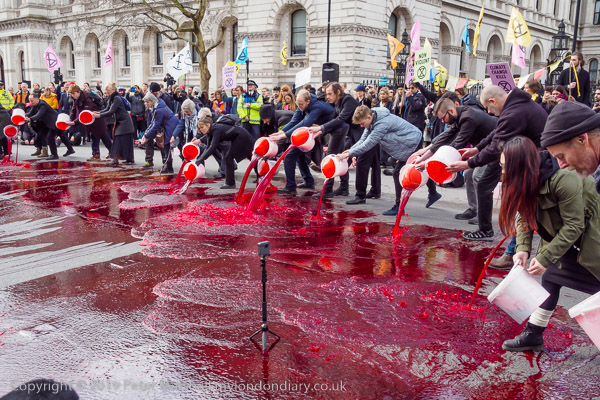
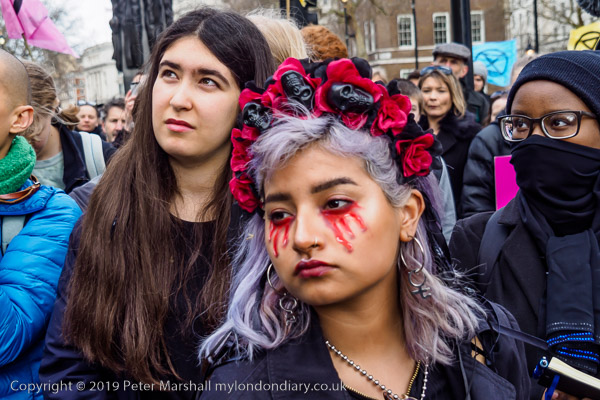
Extinction Rebellion had hoped that police would make arrests when they poured fake blood onto Whitehall, but the police just watched (and doubtless videod and photographed) the event. It was after all doing no real damage and the next shower of rain would wash the street clean if it had not already been hosed down.

It did seem a remarkably sensible approach by the police, though one that will have infuriated some of our politicians, with many on the right feeling the police are being too soft on protesters. But we enjoy a right to protest and it is something that the police often tell us they protect and facilitate, though sometimes I rather feel with a codicil “so long as you do it in a way that nobody much notices” with protest areas being designated at some distance from where protesters want to protest.

Many events in London disrupt traffic, including the many wreath-laying ceremonies just a few yards down Whitehall, as well as major events such as the Trooping of the Colour and the State Opening of Parliament, Royal weddings and the like. Many sporting events also have a major impact, with the London Marathon virtually shutting down the city for a day.

I’ve long thought and suggested that much of central London be pedestrianised and that all through routes should be removed. There have been a few minor improvements to areas such as Trafalgar Square, where traffic no longer flows beside the National Gallery, but I think the city could be much improved by more dramatic restrictions on traffic.

Whitehall could be restricted to emergency vehicles, pedestrians, buses and bikes, along with Westminster Bridge and an end put to though traffic in Parliament Square, which could then benefit from some much-neede landscaping – which could also provide adequiate security without t he current ugly tank traps.

Visually I found the pouring of blood just a little disappointing, one of those ideas that sounds good on paper but didn’t quite deliver in practice, at least for still photographers. It was perhaps too spread out and we were kept too far away and as always there were too many people taking photographs and finding various sometimes ingenious ways to get in the way. I’ve not seen any really interesting still pictures from it, though it looks better on some videos.

It was perhaps an event designed with video in mind, and I’ve sometimes thought I should go back to my roots and work (I did my first serious visual work as a student behind TV cameras, video cameras and a tiny bit of film) with video rather than persist with still photography. But I find making still images much more interesting and challenging.

More about the protest: Blood of Our Children – XR


There are no adverts on this site and it receives no sponsorship, and I like to keep it that way. But it does take a considerable amount of my time and thought, and if you enjoy reading it, please share on social media.
And small donations via Paypal – perhaps the cost of a beer – would be appreciated.

All photographs on this and my other sites, unless otherwise stated, are taken by and copyright of Peter Marshall, and are available for reproduction or can be bought as prints.

To order prints or reproduce images


Camden Canal

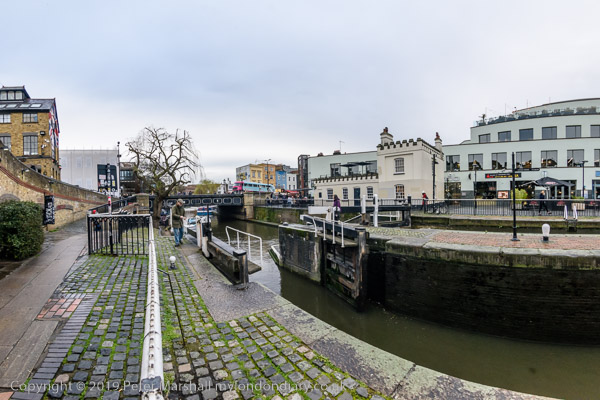
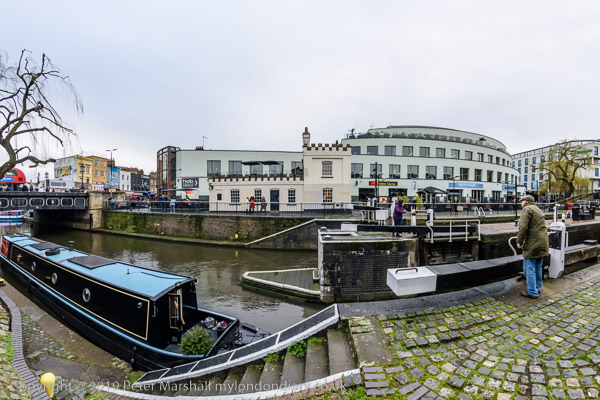
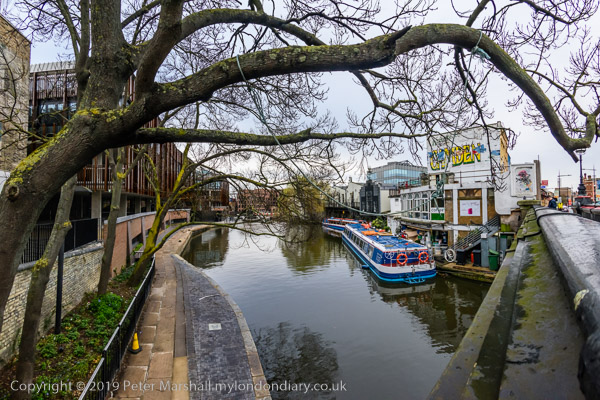
I thought I had plenty of time to go to Camden and take some ictures along the canal towpath between two events – I think after my late lunch there were at least a couple of hours to spare. But I had reckoned without London’s traffic, and by the time my bus from Aldwych reached Camden High St, things were beginning to look a little tight.

Traffic in central London often comes to near standstill, and I could have walked there in the same time, but I can no longer walk the long distances I used to, or at least not without getting exhausted. If you want to get anywhere during the working day, apart from walking, the only reliable methods are now either cycling or using the Underground. It wasn’t feasible to bring my bike to cover the two protests, and I was saving pennies (or rather a couple of pounds) by taking the bus.

By the time I got to the canal there was very little time, and the weather had changed, with a little light rain, which does tend to get more people into their cars, so I knew my journey on to the next event would also be slow.

I’d replanned in my mind a shorter walk than anticipated while sitting on the bus, and set out only to find the canal towpath I’d intended to use had been closed for a few weeks because of building work taking place. So this was not my most successful journey. I took a few pictures, and then left, just missing a bus and finding the services were disrupted by the traffic. I did make the next event more or less on time.

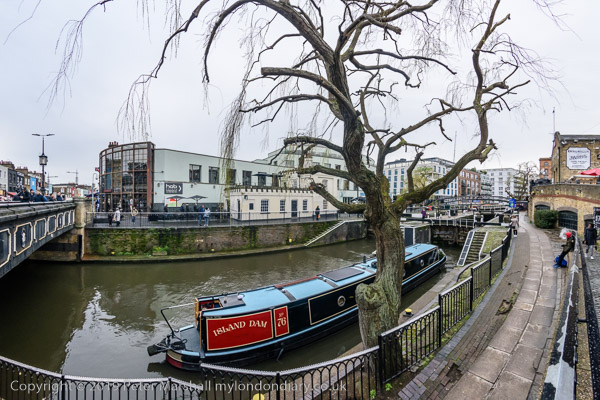
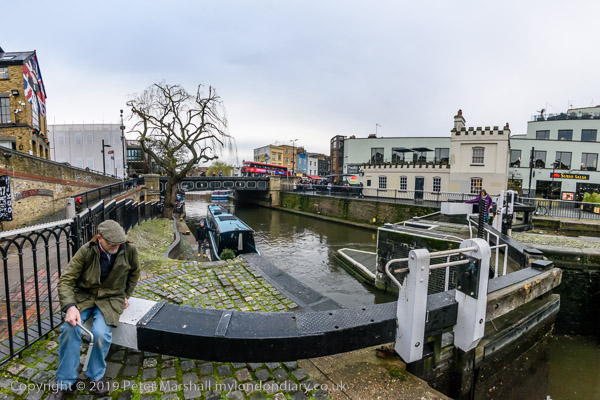
The pictures here – with a few slight variations – were all that I managed to make of the canal.


There are no adverts on this site and it receives no sponsorship, and I like to keep it that way. But it does take a considerable amount of my time and thought, and if you enjoy reading it, please share on social media.
And small donations via Paypal – perhaps the cost of a beer – would be appreciated.

All photographs on this and my other sites, unless otherwise stated, are taken by and copyright of Peter Marshall, and are available for reproduction or can be bought as prints.

To order prints or reproduce images


Women’s Strike Assembly

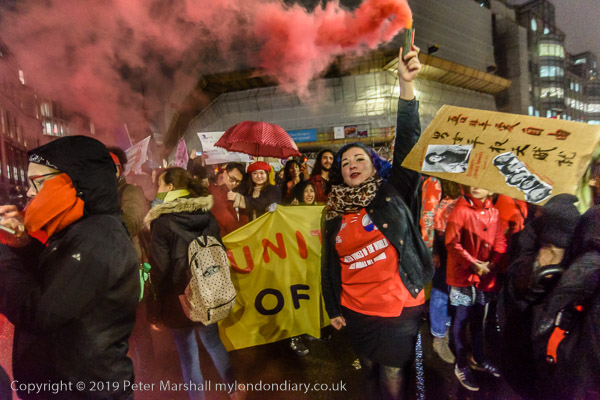
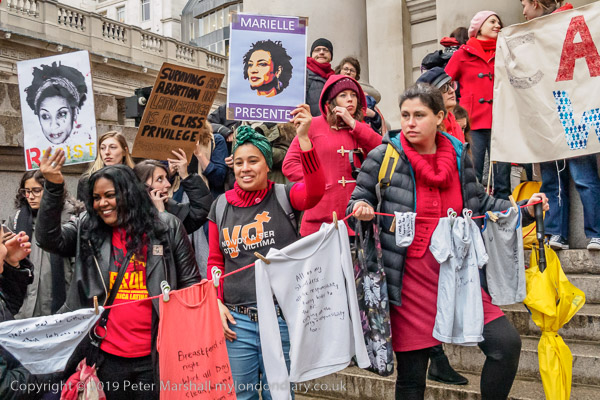
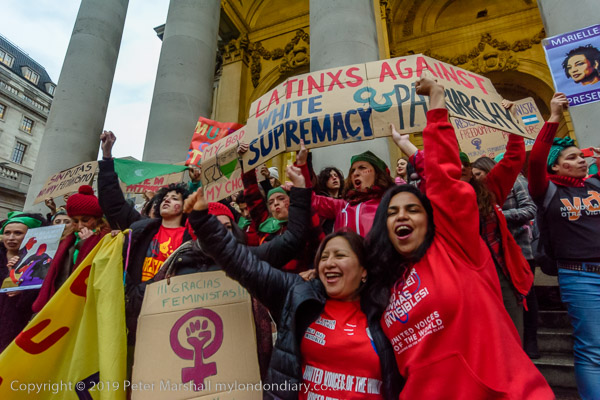
The Women’s Strike Assembly unites a range of feminists (of all genders) and is a part of an international women’s movement which has led protests on the streets in many countries, from “Argentina to Poland, from Ireland to Kurdistan” as well as in London, with women “making connections, building alliances and taking action against our current conditions of womanhood.” It “rejects the decades of economic inequality, criminalization and policing, racial and sexual violence, and endless global war and terrorism.

On the evening of International Women’s Day, the met in front of the Bank fo England to make the point that “it is our labour that keeps the world turning and profits flowing.

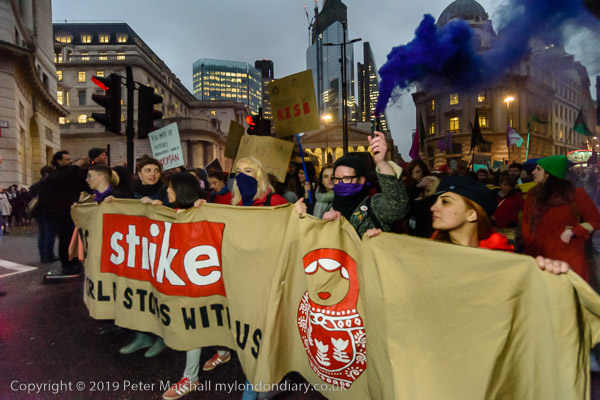
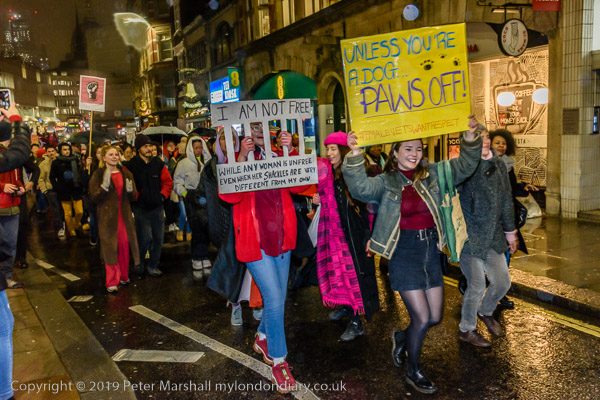
They had called for a “tidal wave of red feminist energy and righteous rage” at the end of the Women’s Strike day. After speeches they marched towards Soho, where sex workers were taking part in an evening strike in Leicester Square.

My own energy was by this time becoming rather low, having been out taking pictures since the morning, and, inspiring though the event was, my spirits and cameras were rather dampened by the rain, which turned from light to heavy as the march began.

I was also having problems with the light and exposures, and my Nikon SB800 flash was in one of its moods. When it works I think the Nikon flash system is the best there is, and it always works when I test it back at home, either inside or outside in my back yard. But something about the dark streets or perhaps the rain often seems to upset its delicate nature, and the exposures were wildly fluctuating, often washing out the image completely.

I was cold, wet, tired, hungry and fed up by the time the march reached Aldwych, and rushed ahead to catch a bus before they were held up by the march, missing the events in Soho, where some of my friends made some interesting exposures. I’d done all I could and had to accept there are limits to what I can cover.

Women’s Strike Red Feminist March


There are no adverts on this site and it receives no sponsorship, and I like to keep it that way. But it does take a considerable amount of my time and thought, and if you enjoy reading it, please share on social media.
And small donations via Paypal – perhaps the cost of a beer – would be appreciated.

All photographs on this and my other sites, unless otherwise stated, are taken by and copyright of Peter Marshall, and are available for reproduction or can be bought as prints.

To order prints or reproduce images


Global Women’s Strike

International Women’s Day began as a socialist festival in New York in 1909 and was adopted more widely by the socialist movement in the following years. In 1914 it moved from the last day of February to May 8th and has since been celebrated on that date.

Largely observed by communists in the early years, it was taken up more generally by feminists in the 1960s and 70s but remained a day of radical protests, calling for equal rights, equal pay and for women’s control of their own bodies in areas such as abortion, sexual preferences and consent.

In 1975 the UN celebrated the day as part of a year dedicated to women’s rights and two years later declared it as  UN Day for women’s rights and world peace. Although this gave it a much wider audience, it also extended the celebrations to include many less radical events and organisations, including some that seem to be more media beanfeasts than any real part of the fight for women. As Wikipedia comments:

In the twenty–first century, in the West, the day was increasingly sponsored by major corporations and used to promote feel–good messages, rather than radical social reforms.[30] In 2009, the British marketing firm, Aurora Ventures, set up a “International Women’s Day” website with corporate sponsorship.[31][32] The website began to promote hashtags as themes for the day, which became used internationally.[33] The day was commemorated by business breakfasts and social media communications that were reminiscent of Mother’s Day greetings.

https://en.wikipedia.org/wiki/International_Women%27s_Day

One organisation that has certainly kept its radical edge is Global Women’s Strike, who I first met on a protest march on International Women’s Day  back in 2002, protesting at the offices of the World Bank, the Defence Ministry and elsewhere.

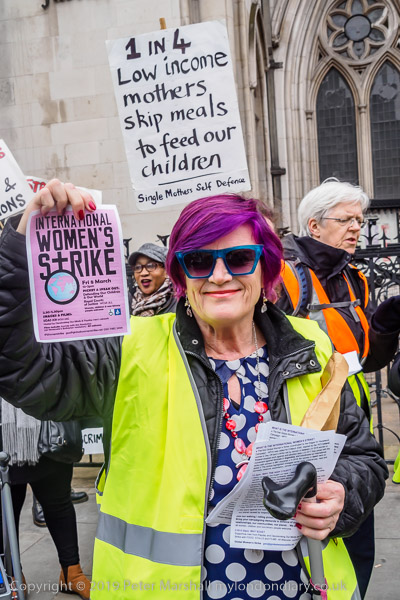
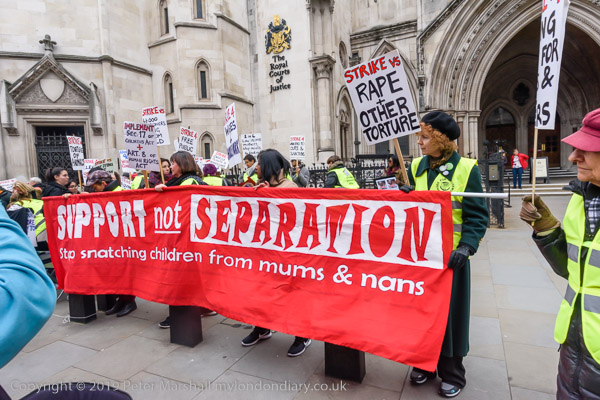
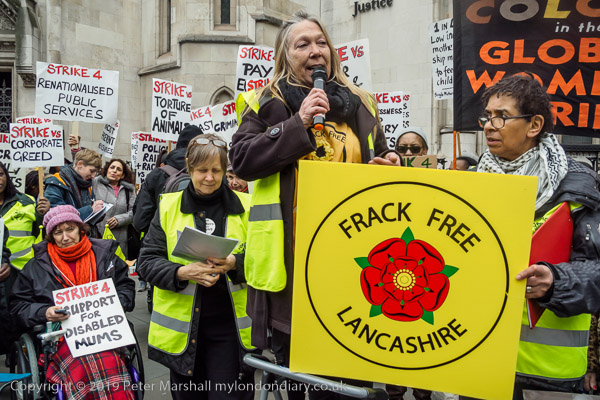
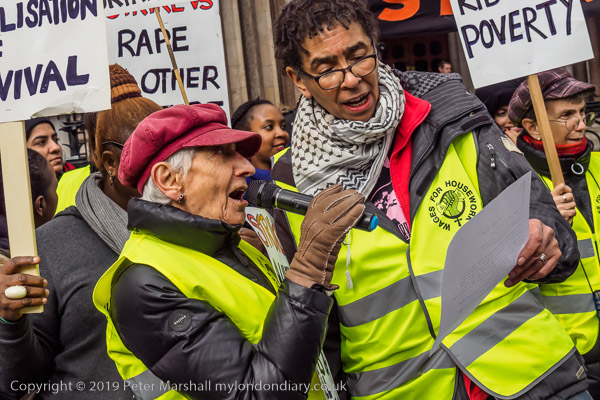
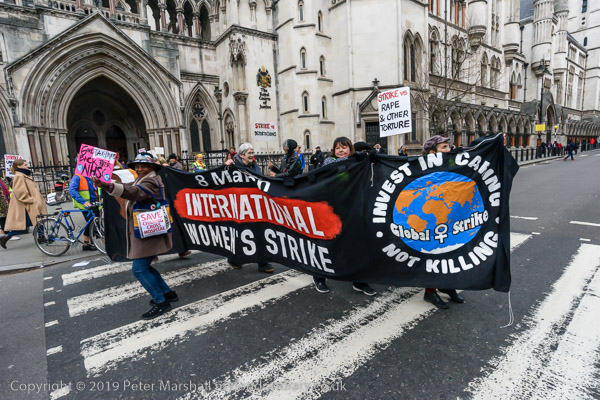
This year they were at Royal Courts of Justice, outside the High Court to protest against destitution, detention, deportation, benefit cuts, sexism, racism and other discrimination, criminalisation, pollution and in particular the state use of Family Courts to take children from their mothers. And alongside them were others, including anti-fracking Nana from Nanshire Tina Louise Rothery, DPAC’s Paula Peters, a speaker from the English Collective of Prostitutes and two speakers from Extinction Rebellion.

It was a lively protest, and ended with a short road block on the pedestrian crossing in front of the courts. Many of those present were going on to meetings in the afternoon and another women’s protest in the evening which I was also intending to photograph.

More pictures at Global Women’s Strike.


There are no adverts on this site and it receives no sponsorship, and I like to keep it that way. But it does take a considerable amount of my time and thought, and if you enjoy reading it, please share on social media.
And small donations via Paypal – perhaps the cost of a beer – would be appreciated.

All photographs on this and my other sites, unless otherwise stated, are taken by and copyright of Peter Marshall, and are available for reproduction or can be bought as prints.

To order prints or reproduce images


Neuran

It’s a little hard to write about image quality in a blog post, because the quality of reproduction, particularly if like me you restrict yourself to posting 400×600 pixel images is hardly great. And although I use images that size, if you simply view them on the blog post you will be seeing them at only 300×450 pixels if they are in landscape format.

Apart from size, there is also a matter of jpeg compression. To allow pages to load at a reasonable speed I post jpegs with a reasonable amount of compression, and the JPEG algorithms introduce their own artifacts, the quality of the image getting worse as compression increases.

There are now better ways than JPEG to compress images, but JPEG has two big advantages. Firstly that it is a set of methods that anyone can use free of charge, and secondly that it has been pretty universally adopted, which almost any software capable of displaying images can read. So until we get another non-proprietary method which becomes universally adopted we are stuck with it.

Neuran are a company which has developed some very smart software that is supposed to address some of the problems of JPEGs (its also an Anticonvulsant drug, but that’s something quite different) using Deep Neural Networks trained on thousands of real images to enable it to reduce jpeg artifacts and also to scale up images without quality loss.

There have been other methods that have been developed, particularly for scaling up images that have made sometimes extravagant claims in the past, and back in the old days I reviewed some of them, but ended up finding the methods already provided by software such as Photoshop and QImage generally worked as well.

But the examples on the Neuran web site and Neuran’s Instagram feed make it look promising (though their Youtube video lacks any real content) and so I decided to give it a free try – and to sign up for its mailing list to get news of when it launches on Kickstarter. And I took advantage of the web site to get one of my small jpegs enlarged.

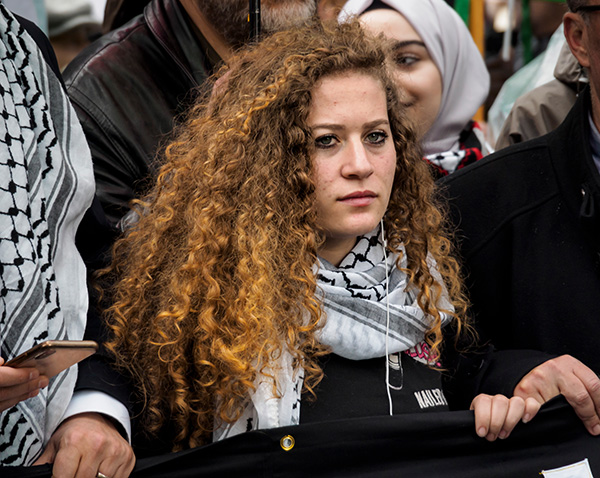
The original web image:

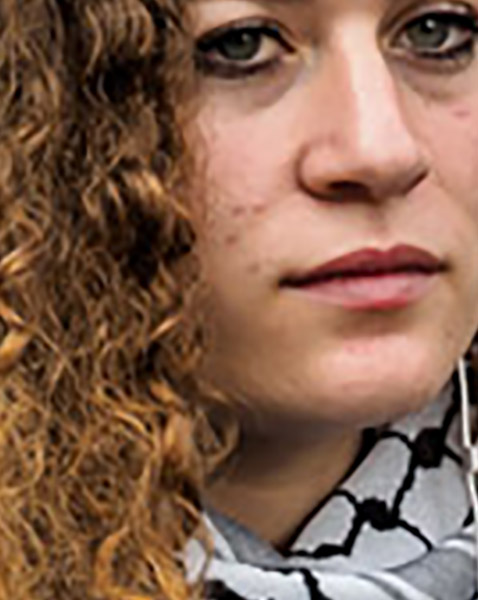
Here’s a detail, enlarged in Photoshop

And a similar detail from the Neuran enlarged version

The effect is fairly remarkable, particularly for her hair. Comparing the two the out of focus background is little changed but those parts of subject that are in focus are much sharper.

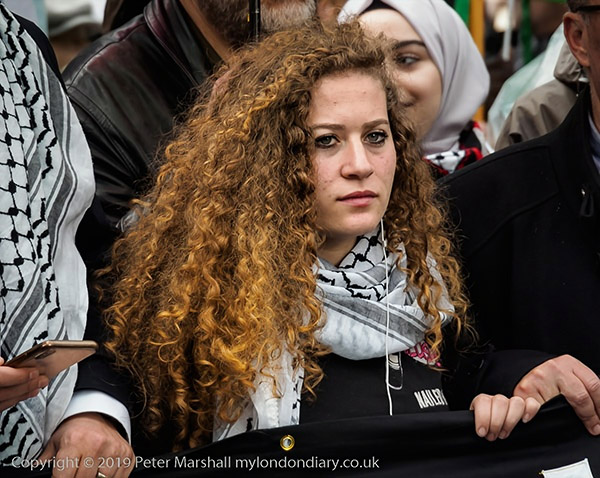
The whole enlarged file is too large to post here, and the 1:1 detail shows the effect better, but I also reduced the whole enlarged image back to the original I sent to Neuran in Photoshop.

As you can see, both Ahed Tamimi‘s eyes and hair are considerably sharper now. The picture (almost all the four thirds frame) was taken with an Olympus 14-150mm lens at 150mm (300mm equivalent) and at 1/250s wide open, and at the extreme end the lens is not quite as sharp as it might be.

Rather than take my word for it, you can log on to their web site and upload your own image to try Neuran’s processing – and the result will be e-mailed back to you.

Of course, most of my images are large and sufficiently detailed not to need the Neuran treatment, and the software will be of more use to those working on camera phones, but I can see occasions when it could be of great use, and I look forward to seeing more about it on Kickstarter.


There are no adverts on this site and it receives no sponsorship, and I like to keep it that way. But it does take a considerable amount of my time and thought, and if you enjoy reading it, please share on social media.
And small donations via Paypal – perhaps the cost of a beer – would be appreciated.

All photographs on this and my other sites, unless otherwise stated, are taken by and copyright of Peter Marshall, and are available for reproduction or can be bought as prints.

To order prints or reproduce images


Solidarity with hunger strikers

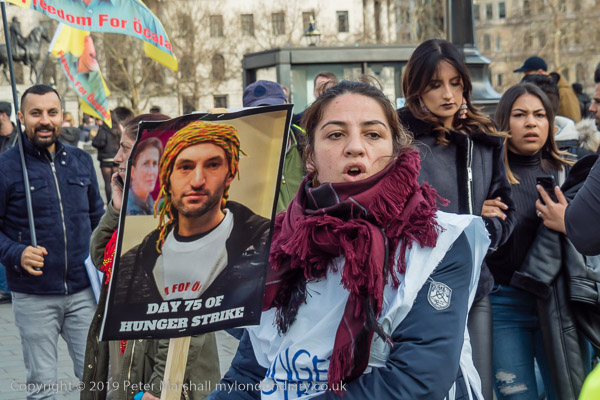
The political situation in Turkey seems to be getting even worse, with more and more opponents of President Erdogan being arrested and jailed, including members of the HDP (Peoples’ Democratic Party) and the Free Women’s Congress, as well as many journalists, socialists and LGBTI+ campaigners.

Many of those jailed are Kurds, and the Turkish Army has also killed thousands of them since the the peace process broke down in 2015. Many Kurds have been involved in the fight against ISIS (Da’esh) in Syria; Turkey, having invaded and occupied Afrin with the aid of Islamist fighters now threatens other Kurdish areas in Syria.

A few weeks after I took these pictures, there were local elections in Turkey, and a surprise defeat for Erdogan’s candidate in the  Istanbul mayoral election. His response was to refuse to accept the democratic vote and declare the election invalid – with a re-run later this month.

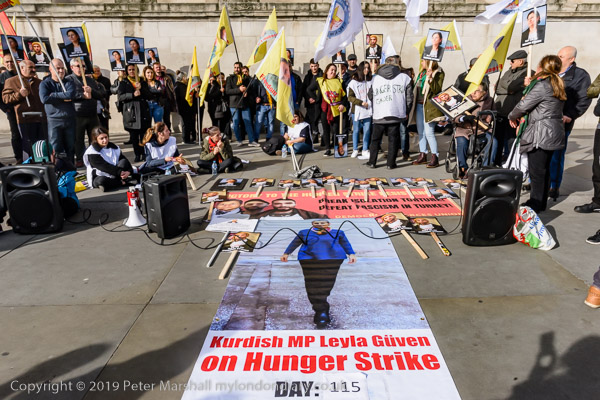
I’ve photographed many Kurdish protests in London over the past 20 years, beginning with a protest in Whitehall against the illegal arrest of Kurdish leader Abudullah Öcalan in 1999. He has been in a Turkish island prison, mainly in solitary confinement since then, but demands for his release continue unabated.

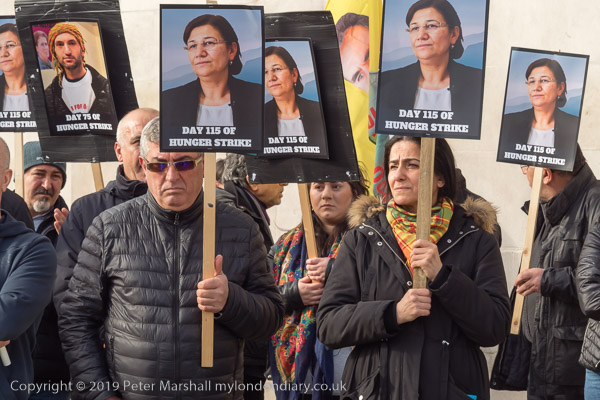
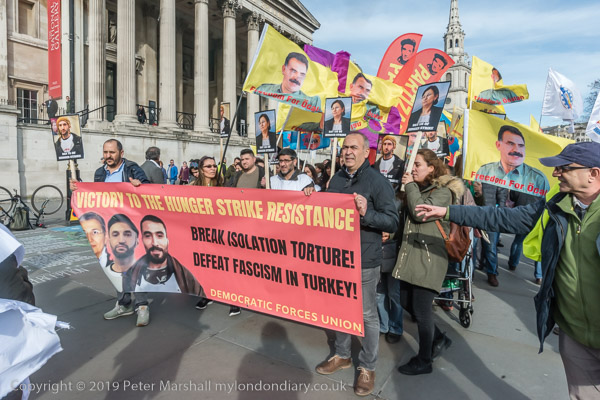
On 7th November 2018 HDP MP Leyla Güven, then a prisoned in a Turkish jail, began a hunger strike calling for an end to the isolation of Öcalan . Many others, both prisoners in Turkish jails and outside, joined in her protest, which she continued after being released from prison pending her trial. The hunger strikes ended on 26th May after they acheived their aim and the isolation of Öcalan was ended.

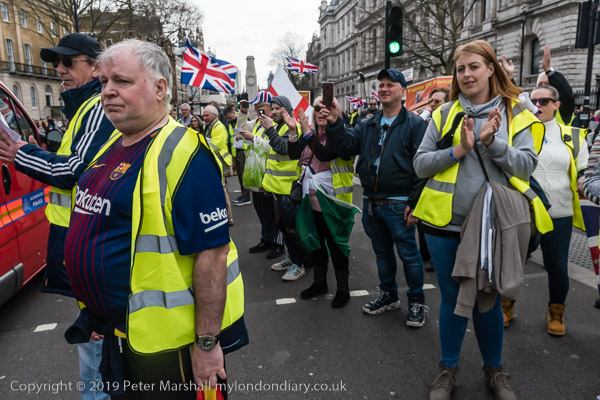
After the protest in Trafalgar Square, the Kurds marched down to protest opposite Downing St, where the group of right-wing Brexiteers were also protesting. Rather to my surprise they greeted the Kurds with loud applause, I think, recognising them as fighting for their rights against authority, but perhaps unaware of their very different political views.

More at:
Rally supports Kurdish hunger strikers
Yellow Vests applaud Kurdish protesters


There are no adverts on this site and it receives no sponsorship, and I like to keep it that way. But it does take a considerable amount of my time and thought, and if you enjoy reading it, please share on social media.
And small donations via Paypal – perhaps the cost of a beer – would be appreciated.

All photographs on this and my other sites, unless otherwise stated, are taken by and copyright of Peter Marshall, and are available for reproduction or can be bought as prints.

To order prints or reproduce images

My London Diary – May 2019

May always starts with a busy day on May Day, and there were plenty of things happening later in the month, but I’m trying hard to cut down on what I do, partly because I often get rather tired.

Stoke Newington to Hackney Wick
City and Spitalfields walk

Youth Strike for Climate
Canary Wharf
City Churches Christian Aid Walk
Brexiteers support Trump
10 Years since Mullivaikkal massacre

Wood Green Universal Credit protest
Veterans demand end of NI prosecutions
Bethnal Green Canal Walk
XR tell Hackney stop killing insects

Tamil Genocide Hunger Strike
XR International Mothers’ Day March
Anti-Abortion ‘March for Life UK’
March for Choice defends women’s rights

National Demonstration for Palestine
Guardian lies about Venezuela
Regent’s Canal – King’s Cross
Drivers shut down Uber
Highgate to Stoke Newington
British Museum Stolen Goods Tour

Yellow jackets continue protests
Algerians press for regime change
Camden
Fridays For Future climate protest
Die-In against Nuclear Weapons celebration
Wapping and the Thames
London May Day Banners
London May Day

London Images


There are no adverts on this site and it receives no sponsorship, and I like to keep it that way. But it does take a considerable amount of my time and thought, and if you enjoy reading it, please share on social media.
And small donations via Paypal – perhaps the cost of a beer – would be appreciated.

All photographs on this and my other sites, unless otherwise stated, are taken by and copyright of Peter Marshall, and are available for reproduction or can be bought as prints.

To order prints or reproduce images


Doing what you want

I’ve long been an advocate of doing what you want in photography and I’ve seldom done anything else.

So the title of Stuart Freedman‘s latest blog post, The importance of doing what you want, struck a chord. He’s always an interesting writer as well as an interesting photographer and I recommend this article to you all.

You can also follow his work on Twitter and Instagram. Stuart isn’t a prolific blogger – too busy as a photographer and his previous post was in April 2018 – but his posts on Umbra Sumus are always worth reading and superbly illustrated.

If you had a classical education (I didn’t though I did pass O Level Latin) you will know the line from Horace, “Pulvis et umbra sumus” ‘We are but dust and shadows’. And set high on the south-facing wall of the Jamme Masjid Mosque at the corner of Brick Lane and Fournier St is a sundial with the text ‘Umbra Sumus’ and the date 1743 a thumbnail of which appears at the top right of the blog.

As you probably already know, Brick Lane mosque was built as l’Eglise Neuve, a Protestant Church for Huguenots in 1742, was sold in 1809 to the London Society for Promoting Christianity Among the Jews, who moved to Palestine Place in Bethnal Green in 1809 a few years later and passed it on to Methodists. From 1897 to 1976 it was the Spitalfields Great Synagogue, (Machzikey Hadath or Machzikei Hadass) .