Deforestation in Tasmania & a Walk in Bethnal Green : Australians were protesting outside Australia House against plans for a wood pulp mill to use wood from Tasmania’s ancient forest which had become an election issue there. I left them to go to a guided walk around Bethnal Green led by a friend and author of a new book on the area for which I had provided sixteen photographs. The walk was among the last events arranged by the much missed London Arts Café which ceased activities at the end of 2007, though the web site is still online as a record of some of its life. Here with some small alterations is my 2007 account of the day with a few of the pictures I took.
No Pulp Mill – Save Tasmania’s Wild Forests
Australian High Commission, Strand
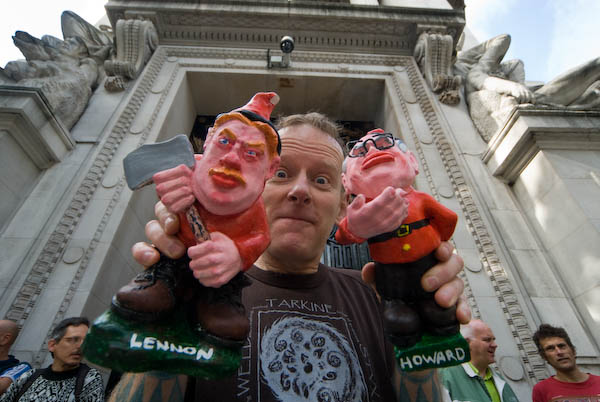
The cutting down of ancient ‘old growth’ forests is a major political issue in Australia, and no more so than in Tasmania. With national elections announced for Australia on November 24th 2007, logging could play an important part.
Supported by liberal party (Conservative) Prime Minister John Howard and Tasmanian Premier Paul Lennon, a new pulp mill will speed the loss of the old forests, destroying valuable habitats and threatening extinction for unique species such as the Tasmanian Wedge Tailed Eagle.

Cutting down the forest will also remove a valuable sink that removes carbon dioxide from the atmosphere (and of course produces oxygen), and pulp processing in the new plant will emit 10 million tons of CO2 a year, as well as discharging 64,000 tons of toxic effluent into the ocean each day.

Ironically, part of the pressure for the cutting down of forests comes from the growing business of carbon offsetting. Much of the land currently occupied by the forests will, after the existing ancient forest is cleared, be replanted with trees that will be used to produce an income in carbon offset schemes.
more pictures – no pulp mill – save tasmania’s wild forests
The Romance of Bethnal Green
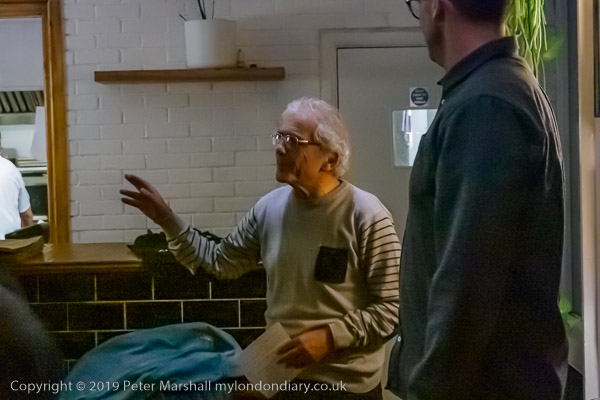
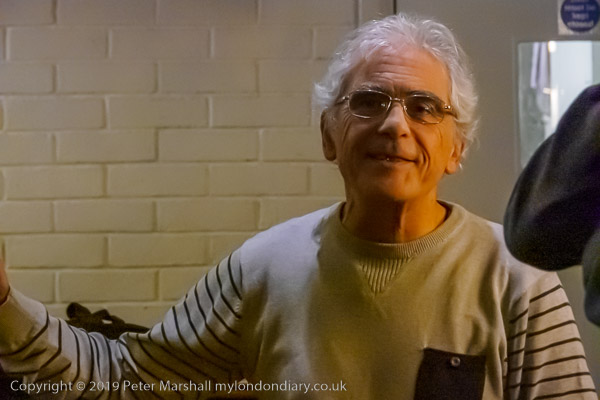
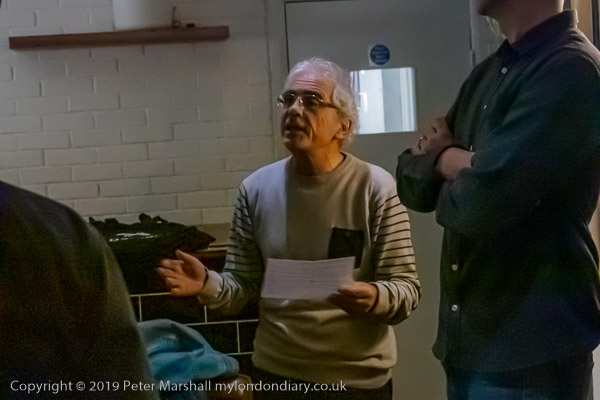
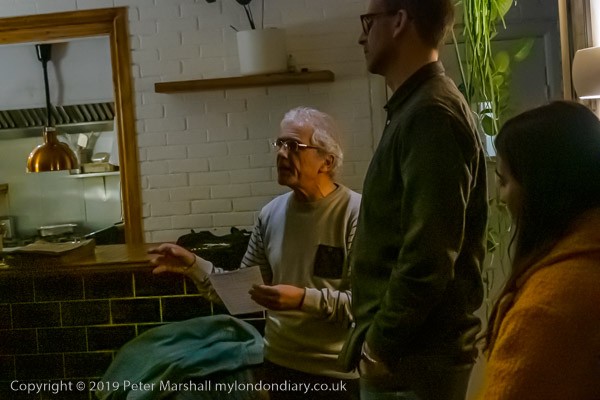
We had a fine day for our book-related walk around Bethnal Green and a good audience. Our meeting point was the Museum of Childhood, which features in two of my sixteen pictures in the book ‘The Romance of Bethnal Green‘ (ISBN 9781901992748), Cathy Ross, 2007). Our tour took in a number of art shows open in 2007 as well as the buildings in the area.
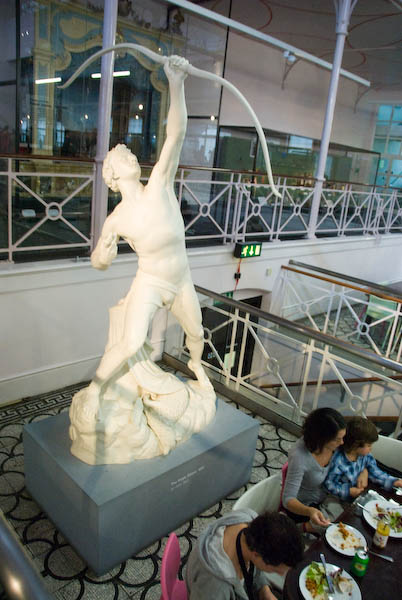
One of my pictures in the book shows the sculpture which was in the space at the front of the museum for many years, and I was surprised to find it now inside, at the rear of the café area, its bronze given a white coating (perhaps so the ice-cream won’t show), and another features some of the panels on the outside of the building about agriculture.
[The museum has since been revamped as Young V&A and was the Art Fund Museum of the Year 2024.]
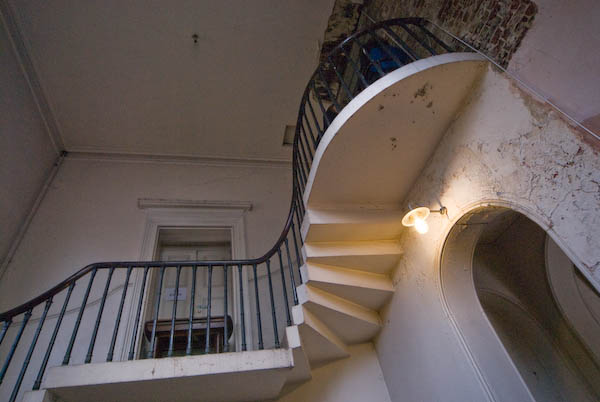
Just down the road we stopped at St John’s Church, its frontage and tower still clearly the work of Sir John Soane, although the rest of the church was remodelled after a fire in the 1870s. Jane Prophet’s ‘heart’ then on show in the organ loft brought back too many memories of my own surgery for comfort, and I quickly left.
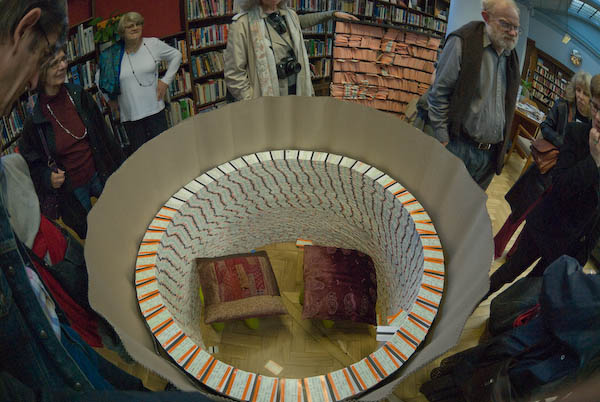
We went across the Roman Road and into the library where Foster Spragge is building a cylinder of thousands of used rail tickets. Unfortunately she was at lunch when we were there, and the cylinder was protected by a roll of corrugated paper, though this perhaps improved the photograph.
Down Roman Road we went into IAP Fine Art to look at the work of Maggi Hambling and Chris Gollon, who has been commissioned to produce Stations Of The Cross for St Johns and also a work on Henley for the 2012 Olympics.
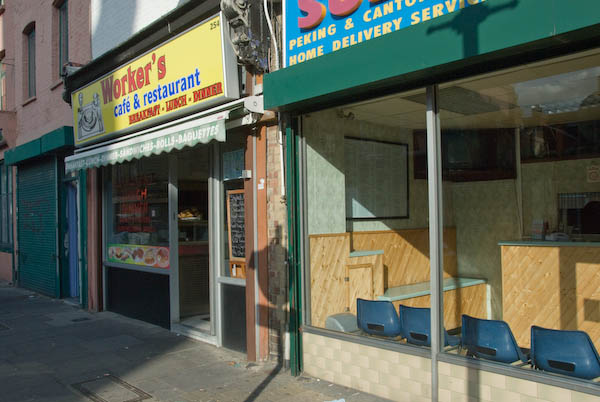
Opposite the former site of Camerawork I talked a little about photography, the Half Moon Photography Workshop, and the work of Jo Spence and Paul Trevor, as well as the decline of Camerwork magazine into the quagmire of theory.
[Camerawork merged in the early 2000s with cinema workshop Four Corners a few doors down the street and after a rebuilding project reopened in 2007 and continues to hold shows continuing the social documentary and community spirit of HMPW.]
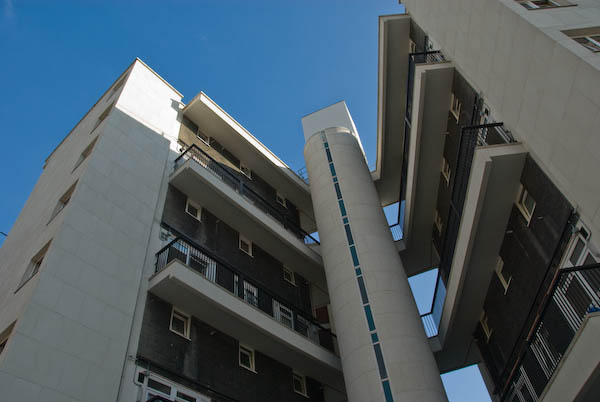
Around the corner the Usk Street Estate is a real architectural gem by Denys Lasdun from 1952, looking more modern than many recent developments thanks to a recent refurbishment. Work on the Grade II Listed Sulkin and Trevelyan tower blocks cost £2.8m. These are buildings that perhaps deserve to be better known, certainly some of the more interesting of their era, and perhaps more radical than his later Keeling house (1959) a mile or so away.
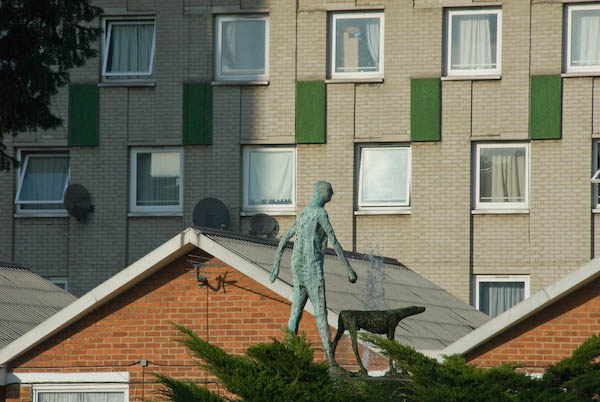
I also find Usk Street rather more interesting than the Cranbrook Estate across the road, by Skinner Bailey & Lubetkin (1965) which proves that sticking bilious green rectangles on ugly blocks still leaves them as ugly blocks. At least it provided a refuge for Elizabeth Frink’s Blind Beggar of Bethnal Green when vandalism forced his move from his intended home in the market square.
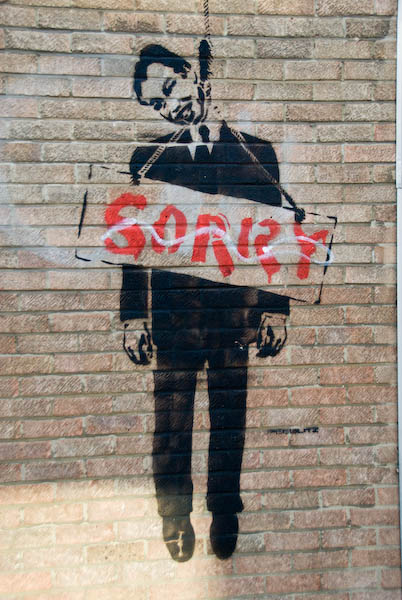
We took the bus back along Bethnal Green Road to the top of brick lane and walked up to admire Arnold Circus, before visiting Nomoregrey in Redchurch Steet to look at Jock Mcfadyen’s work there – I particularly liked his images of the wide open spaces further east – such as Dagenham, River Road and Showcase Cinema, reminding me of my visits to these areas.
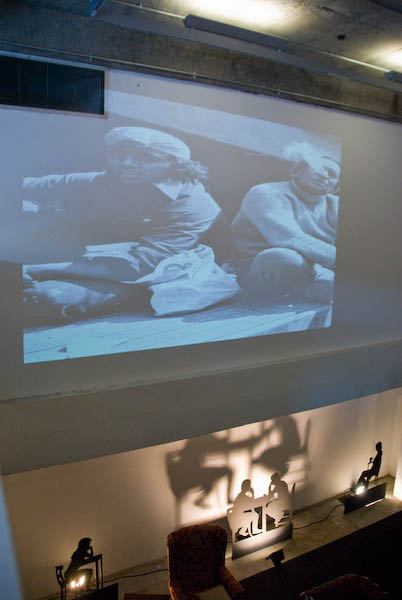
Finally I went to view a projection of photographs by Paul Trevor at Rich Mix, and as I wrote found his fine images were getting rather lost by a poor display – which we later got them to improve.
I first met Paul Trevor many years ago and have long admired his work. He is living evidence to the almost total lack of interest by major British galleries and museums to most British photography. He is a truly inspired photographer who has lived and worked in the east end for years, creating a fantastic stock of images from the area.
More on My London Diary at the romance of bethnal green.
Flickr – Facebook – My London Diary – Hull Photos – Lea Valley – Paris
London’s Industrial Heritage – London Photos
All photographs on this page are copyright © Peter Marshall.
Contact me to buy prints or licence to reproduce.