Custody Deaths, CCTV, Torture & Halloween – 2010

Custody Deaths, CCTV, Torture & Halloween: I came to London on Saturday 30 Oct 2010 mainly to photograph the annual UFFC protest calling for justice over deaths in custody. After this I went to a march against the government’s obsession with surveillance and border control, went to a protest against torture in Malaysia and finally on a day when London was invaded by zombies went to the start of the Halloween Dance of the Dead.


United Friends & Families March
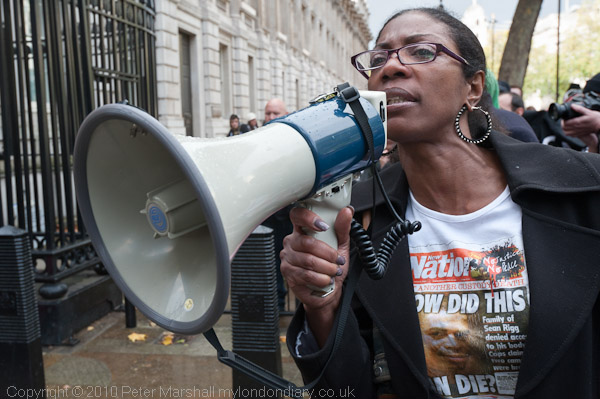
Marcia Rigg, sister of Sean Rigg, killed by police in Brixton, tries to deliver a letter at Downing St

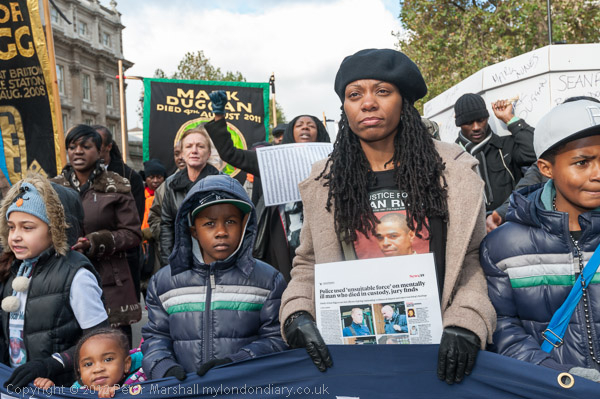
The Annual United Friends and Families procession calling for justice for those who have died in suspicious circumstances in police custody, prisons and secure mental institutions made its way slowly down Whitehall before a noisy rally opposite Downing Street. The first procession was in 1999 and it had taken place every year since then.
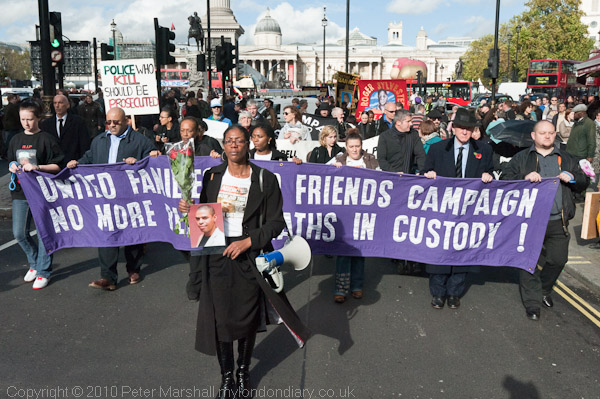
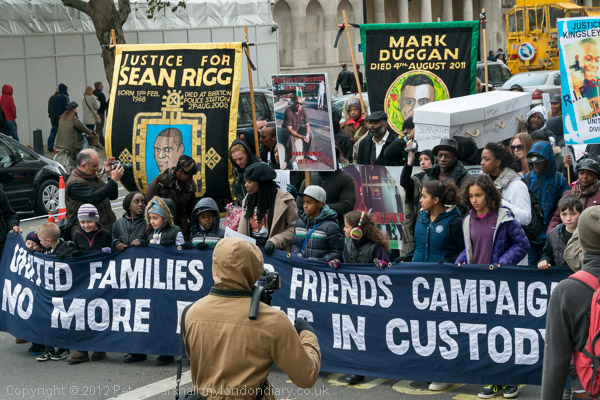
The United Families and Friends Campaign banner ‘No More Black Deaths In Custody!’

This year, 2026, people will be gathering at noon tomorrow on Saturday 31st November at the south side of Trafalgar Square – and everyone concerned with justice is invited to join the event.
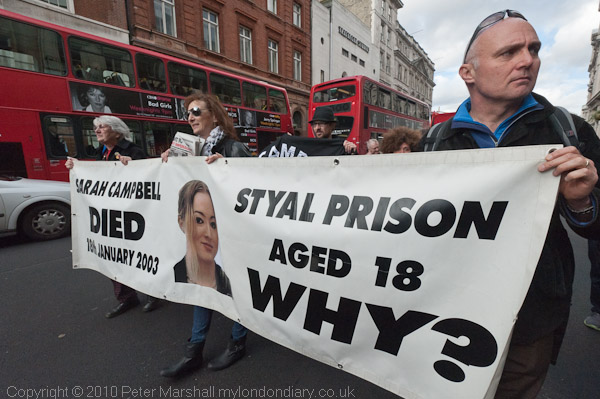
Sarah Campbell died because the prison staff didn’t care. Her mother Pauline killed herself on Sarah’s grave

Around two hundred people die each year in suspicious circumstances at the hands of police, and in prisons and secure mental institutions. Sometimes the deaths are a result of a lack of care, but others are caused by excessive force and brutality.

Jason McPherson died when assaulted after arrest in Notting Hill Police station in 2007

The response of police and other authorities seems almost always to be one of trying to cover things up, sometimes to blame the victims but almost always to prevent proper and timely investigation. Proper statements are seldom taken from those involved and in some cases police have instead investigated the families of victims.

Ricky Bishop’s mother. He died in Brixton Police Station in 2001

Investigations into police misconduct are carried out now by the Independent Office for Police Conduct which replaced the totally discredited IPCC, dominated by former police and apparently dedicated to defending them whatever the facts of the case. So far it does not appear to have made a great difference.

Police at Downing Street refused to take the letter the families tried to deliver there for Prime Minister David Cameron, and no one from No10 was prepared to come out and take it. It seemed a deliberate and unnecessary snub. Earlier police had objected to the rally taking place on one lane of the southbound carriageway opposite Downing Street but when the families refused to move it had been allowed to go ahead.
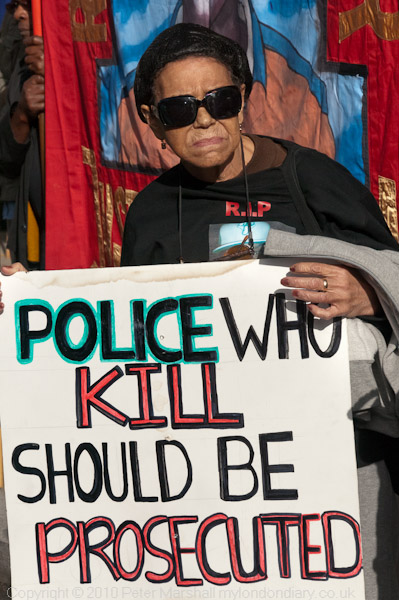
On My London Diary I give a few brief resumes of the cases of a few whose family members where taking part in the even and who spoke at the rally about the deaths of Sarah Campbell, Leon Patterson, Roger Sylvester, Ricky Bishop, Jason McPherson, Azelle Rodney and Sean Rigg.

The noisy protest was still continuing when I left. More at United Friends & Families March.


Life Is Too Short To Be Controlled
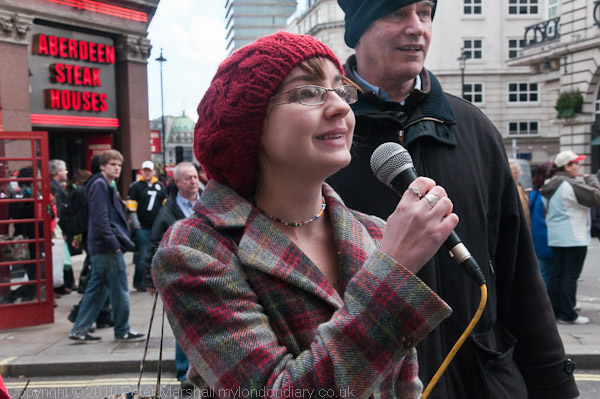
Juliet speaks at Piccadilly Circus – the main CCTV control centre for the City of Westminster is below these streets

Life is Too Short to be Controlled was the second part of an event organised by London No Borders in protest at the government’s obsession with surveillance and border control.

The protesters met at Piccadilly Circus where the Westminster Council CCTV HQ, which controls many of London’s 10,000 CCTV cameras is under the pavement. From there our movements can be followed on almost every street in the capital.
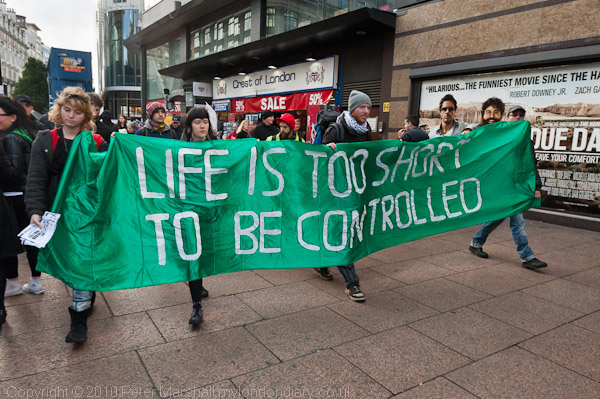
The cameras allow the authorities to track us with the intent of controlling crime and in particular terrorism but they can also be used to enable control of peaceful protest. The protesters say that despite the widespread use of CCTV, it has has not been possible to show a link between crimes being solved and the use of CCTV.

The march was to end at the St Pancras International Eurostar Terminal which has an actual border of the UK, complete with detention facilities then run by the UK Border Agency.

Speeches before the march pointed out that “until relatively recently the free movement of people was seen as normal and beneficial – in the same way as we now see the free movement of goods around the world. Now border controls result in injustice for asylum seekers and other migrants who want to come here and work and contribute to our society.”

Calais Migrants Welcome Here

Our immigration rules are explicitly racist and No Borders say that anyone should be able to move and live where they want. They say there are no “illegal immigrants”; people are not illegal but some do not have the particular documents that give them the right to live here.

Some passing zombies joined in the protest for a minute or two

The start of the march was delayed as the bike-powered sound system arrived late and I left to briefly photograph another protest before the marchers reached St Pancras. By the time I returned they had been escorted out after briefly occupying the border area, and one person had been arrested.

Life Is Too Short


Stop Torture in Malaysia

Belgrave Square
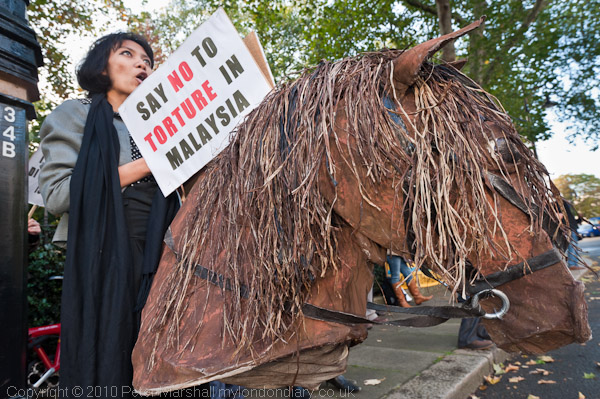
Protesters opposite the Malaysian Embassy in Belgrave Square

2010 was the 50th anniversary of the Malaysian Internal Security Act, under which more than 10,000 people have been detained without trial. It allows arbitrary detention for up to 2 years without charge and for for people to be held incommunicado for up to 60 days – during which they are often tortured, mistreated and placed under severe psychological stress while being denied access to legal process.

In June 2010 the UN Working Group on Arbitrary Detention visited Malaysia and concluded that the ISA should be repealed and torture in detention ended immediately.

Stop Torture in Malaysia


Halloween In London & Dance of the Dead

Waiting for the start of the parade of the dead from Hoxton Square

During the afternoon I met and photographed several groups of zombies wandering around the streets near Piccadilly Circus with bloody faces, open wounds and torn clothing – and a few briefly joined the No Borders Protest.
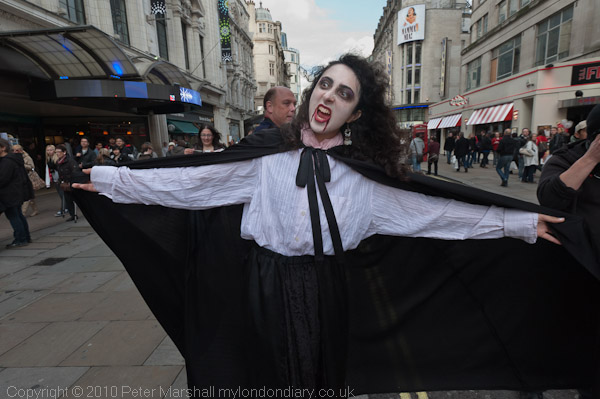
Later after it had got dark I went to Hoxton Square where a street parade, the Halloween Dance of the Dead, was gathering to walk to a Halloween Party at a Gillett Square in Dalston.

This was apparently the fifth year that StrangeWorks Theatre collective had organised the parade which included the Corpse de Ballet and other groups.

Corpse de Ballet

Eventually a samba band, led by a giant skeleton came along from Coronet Street and led the large group of revellers, many carrying bottles, around Hoxton Square and then on to Old Street where I left them going further north. By now I was tired and exhausted and needed to go home rather than party.

Halloween In London


Flickr – Facebook – My London Diary – Hull Photos – Lea Valley – Paris
London’s Industrial Heritage – London Photos

All photographs on this page are copyright © Peter Marshall.
Contact me to buy prints or licence to reproduce.
Immigration Deaths and US Truth & Justice – 2012

Immigration Deaths and US Truth & Justice After a protest at Harmondsworth Detention Centre following the death of a detainee I travelled into central London to cover a protest at the US Embassy in Grosvenor Square on the eve of US Elections.


Noisy Demo after 17th Immigration Death – Harmondsworth Detention Centre

Immigration Deaths and US Truth & Justice

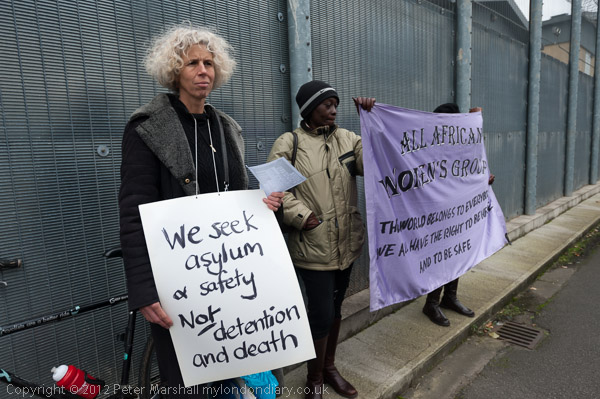
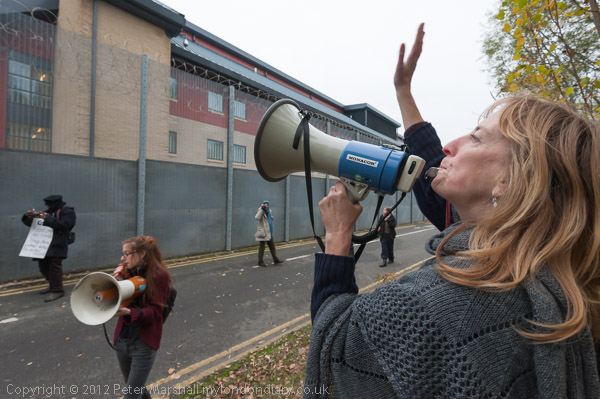
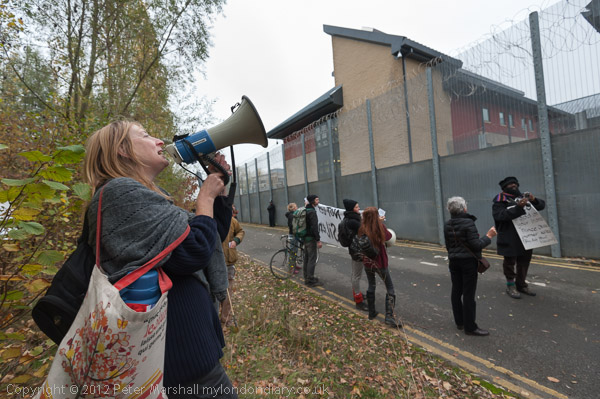
Campaigners from the All African Women’s Group and others demonstrated noisily at the Harmondsworth Immigration Detention Centre as the Prisons and Probation Ombudsman paid a visit following the death a week ago of Prince Kwabena Fosu, a Ghanian who died after ‘restraint’ by GEO Group staff.

Immigration Deaths and US Truth & Justice

Statements from other Ghanian detainees at the site alleged that Fusu had sustained massive blows from one officer who has later asked to change his “blood stained clothes so that no one would notice what happened” and that the officer concerned is now on leave “in order to pervert the course of justice“. There appears to have been no proper police investigation of his death.

Immigration Deaths and US Truth & Justice

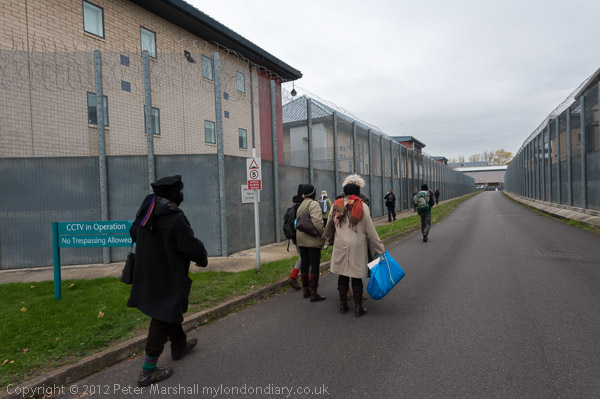
The protesters walked down the private road leading to a BT facility which runs between the Harmondsworth and Colnbrook Detention Centres just north of Heathrow airport, ignoring a sign stating “No Tresspassers Allowed‘ with a banner ‘We will NOT let this death be Silenced‘ and made their presence obvious to the men imprisoned inside with a megaphone and some loud shouting.

Immigration Deaths and US Truth & Justice

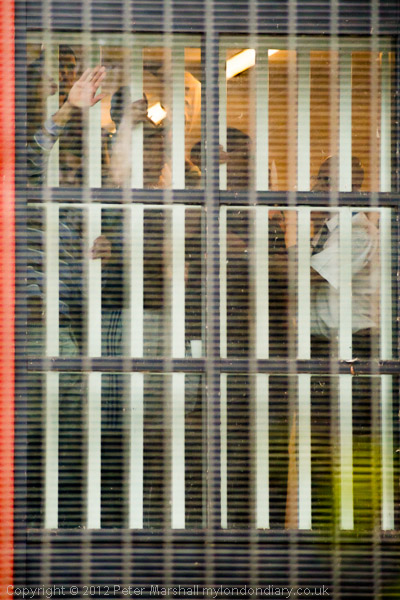
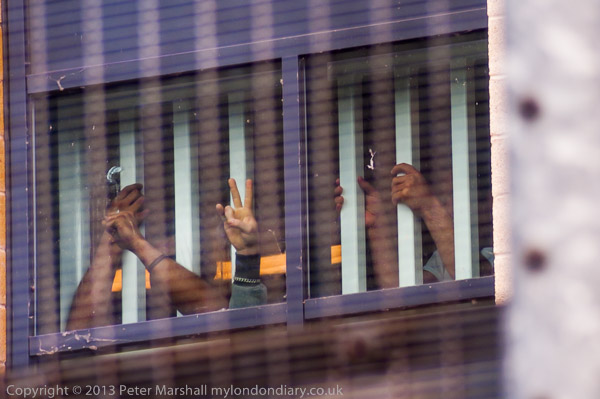
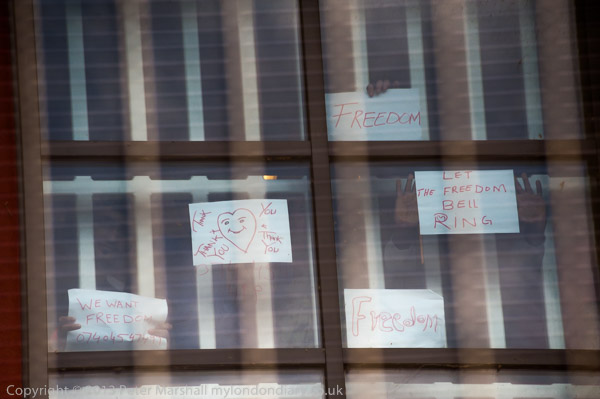
The detention centres are surrounded by 20ft high stout metal fences, the lower half with metal sheeting and the top 10ft of a heavy metal gauze. Through this those on the upper floors of the centre could see the protest and we could see rather shadowy shapes watching us below, and could hear some shouting and people banging on the bars of the window as guards tried to stop them.

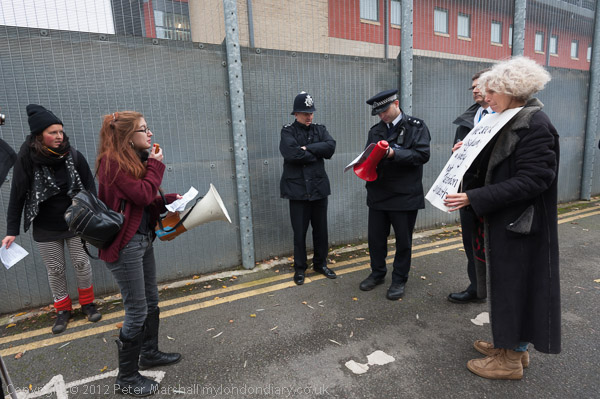
I walked with the protesters around the Harmondsworth site, watched by police and G4S security staff. When some protesters began kicking and stamping on the metal fence to make a noise, police and G4S security came to tell them they must stop and leave the site.

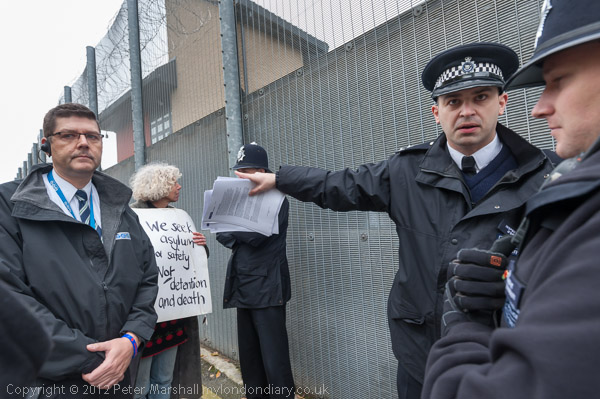
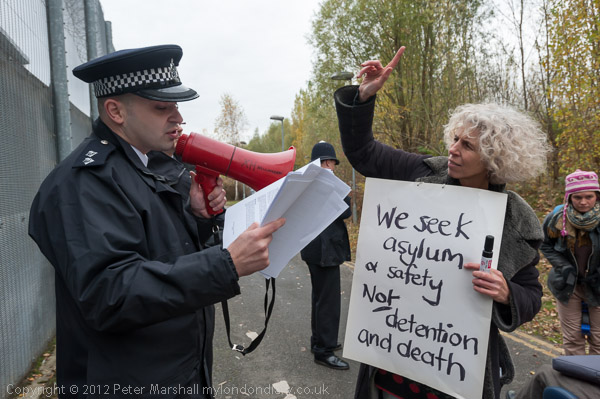
The police officer in charge read a notice charging the protesters with aggravated trespass and warning them that unless they left the site now they would be arrested, and that they were banned from returning withing 3 months. The protesters decided to leave rather than be arrested, and very slowly left the site.

As so often in cases involving custody deaths, the inquest was long delayed and only concluded around seven and a half years after Fusu’s death. It concluded that his death had been contributed to by neglect and multiple serious failures by the Home Office, GEO who were running the detention centre when he died, Primecare who were responsible for healthcare services, doctors and everyone else involved.

Deborah Coles, Director of INQUEST, said: “It is unconscionable that someone entrusted to the care of the state can die in this way. The jury have delivered a damning indictment of all of those responsible. Prince was failed at every level, by individuals and agencies who owed him a duty of care. He was treated in dehumanising way and as a discipline problem rather than as a seriously unwell man in need of compassion and medical care.

“His death comes as a direct result of the UK’s hostile immigration policies. This reinforced a toxic culture of indifference and neglect, where professionals who came into contact with Prince were simply unable to see the human being before them.”

No criminal charges have been taken against any of the companies or individuals involved in Fusu’s death. The CPS took years to decline to bring any charges of corporate manslaughter. After deciding to bring lesser charges under the Health & Safety Act 1974, they then reversed that decision.

More pictures at Noisy Demo after Immigration Death.


Truth, Justice and the American way? – US Embassy, Grosvenor Square

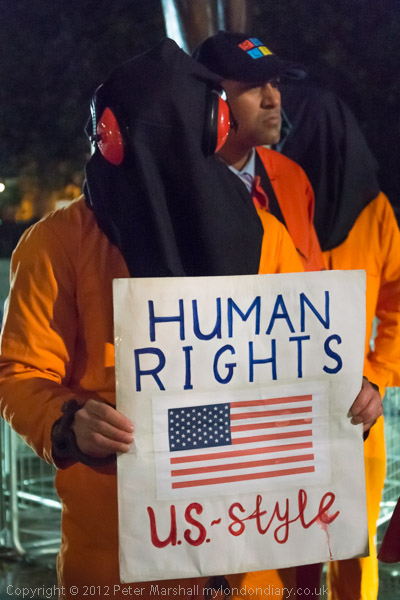
On US Election night the London Guantánamo Campaign hosted a protest outside the US Embassy at which various organisations raised human rights concerns about prisoners in the USA.

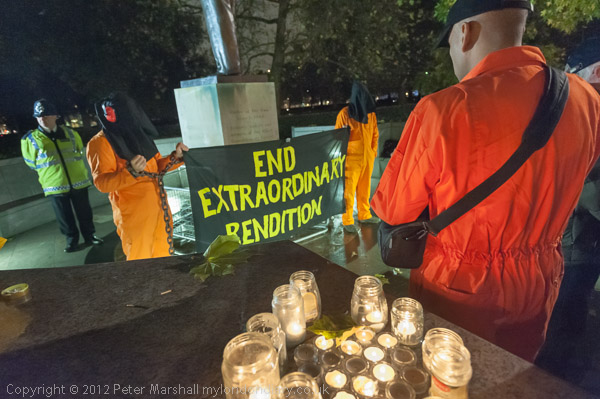
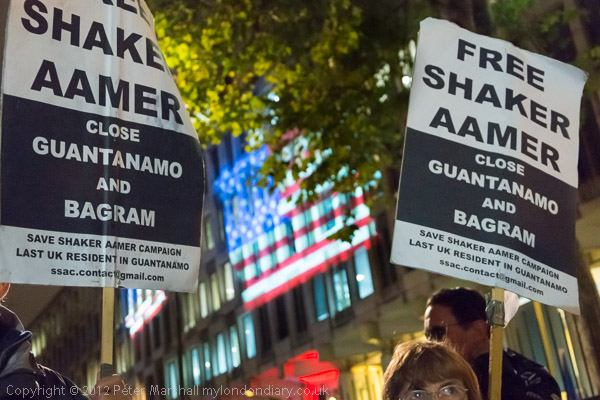
Among the other organisations with speakers at the event were Stop the War, tne Green Party, Save Shaker Aamer Campaign, Free Talha Campaign, Cageprisoners and more and there were also some performers between the speeches. And thre was a silence with candles being lit to remember the many who have been killed.

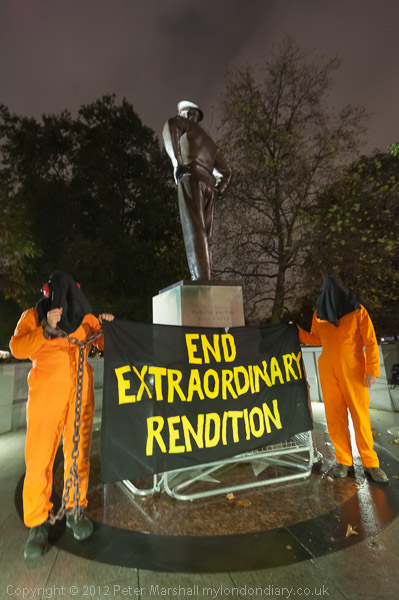
The protesters gathered around the statue of former president Eisenhower to one side of the Embassy frontage, which was being lit up for election eve with a laser projections of the stars and stripes.

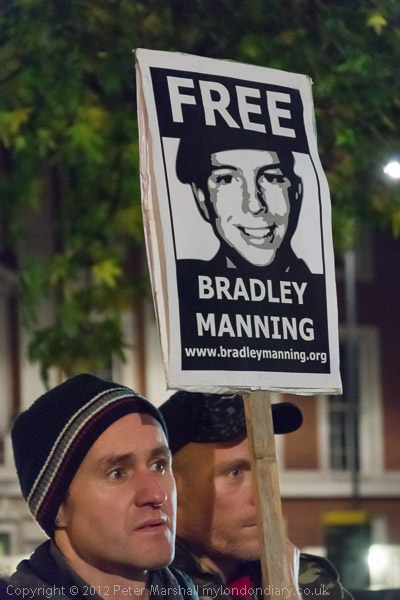
The speakers highlighted shameful human rights abuses being carried out by the USA, particularly at Guantanamo, and called for whoever was elected President to close the prison camp and end the unlawful practice of extraordinary rendition. There were also those calling for the release of Bradley (later Chelsea) Manning, the whistle-blower jailed for releasing details of US war crimes.

Aisha Maniar, organiser for the London Guantánamo Campaign, said: “Four years ago, a new American president, Barack Obama, promised the world a change it could believe in. One change he put his name to in writing was the closure of Guantánamo Bay and the end of military tribunals there. That has not materialised; the American administration has added drone attacks to its repertoire of extralegal activity, expanded the scope of arbitrary detention without charge or trial, and over 160 prisoners remain at Guantánamo Bay after almost 11 years, including British resident Shaker Aamer.”

More at Truth, Justice and the American way?


UFFC Annual Rally & Procession

Next Saturday, 30th September 2021, I hope to be photographing this years United Families and Friends Campaign annual remembrance procession. Meeting from noon in Trafalgar Square, at 1pm they will march in silent procession along Whitehall, followed by a noisy protest outside Downing Street.

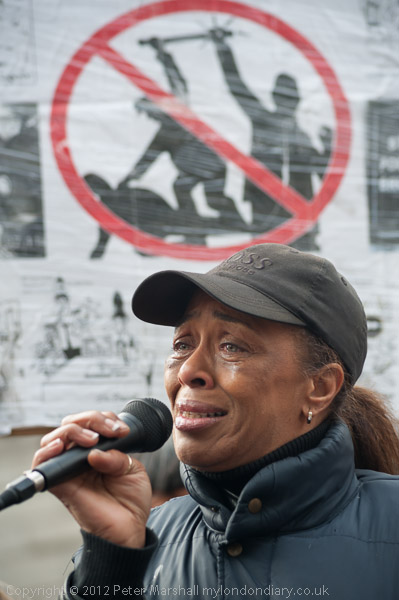
Janet Alder, the sister of Christopher, killed by police in Hull in 1998

“The United Families and Friends Campaign (UFFC) mission is to work collaboratively as a network of independent campaigns to address common issues and concerns related to deaths and abuse in police, penal, mental health and immigration detention; and to organise events and activities that promote awareness and support for affected families across the UK. “

Marcia RIgg, whose brother Sean was killed in Brixton Police station in 2008

This procession has taken place on the last Saturday of October every year since 1999 to “to remember loved ones who have died in custody” and the UFFC invite all to “Come and support the families of those who have died at the hands of police, prison and secure medical units in the United Kingdom.”

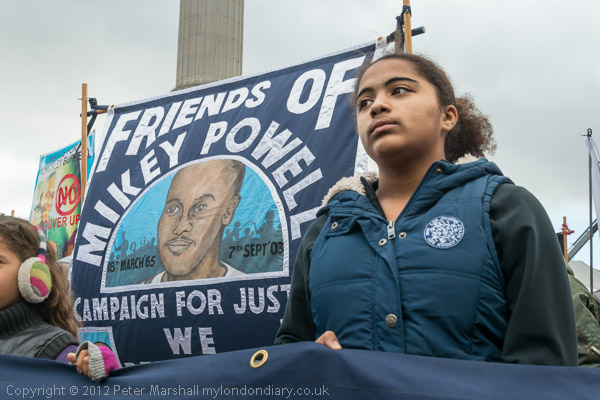
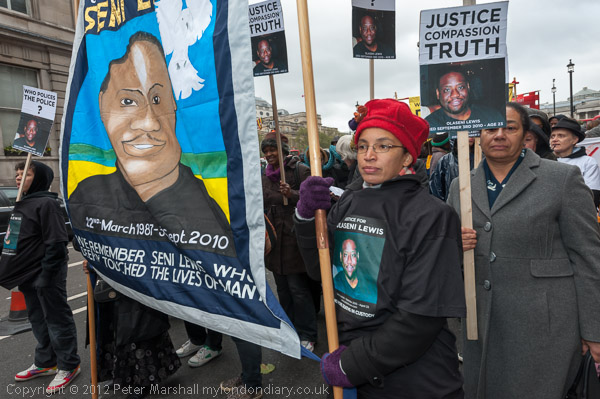
Among the victims are Christopher Alder, Ibrahim Sey, Joy Gardner, Roger Sylvester, Seni Lewis, Adrian McDonald, Darren Cumberbatch, Rashan Charles, Sean Rigg, Jack Susianta, Sheku Bayoh, Mikey Powell, Paul Coker and Cameron Whelan, and many others whose families are among those involved in organising the event.

Seni Lewis, killed in 2010

The invitation to attend states “The UFFC annual procession is supported by: Black Lives Matter UK, 4WardEverUK, Migrant Media, INQUEST, UNISON, RMT, FBU, UNITE, Tottenham Rights, Sisters Uncut, London Campaign Against Police & State Violence, LARAG, Newham Monitoring Project (NMP), Pan African Society Community Forum, Institute of Race Relations, Edge Fund, National Union of Students and DTRTP.”

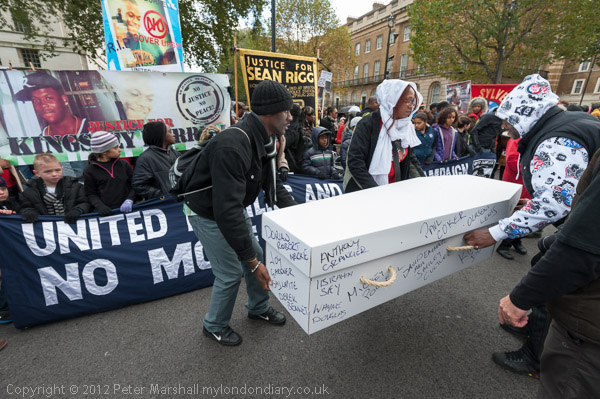
I’ve photographed this event, and been deeply moved by it, most years since I first heard about it in 2003. The pictures with this post are all from nine years ago in 2012 when the protest was on 27th October.

The procession ends with a rally opposite Downing St where family members speak

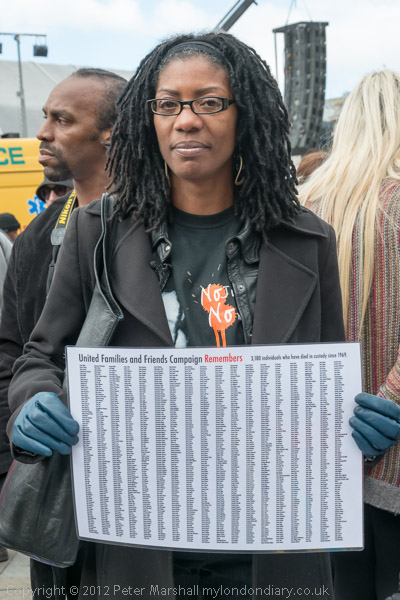
That year as in all years there were new names to add to the list of 3,180 known custody deaths since 1969, chosen as the date when David Oluwale was killed – and two officers convicted of several assault charges. Since then many of those over three thousand have died in situations where foul play seems obvious, but a Full Fact investigation has found only one single police or prison officer has been convicted of murder or manslaughter or assault related to a death in custody – Sergeant Alwyn Sawyer, convicted in 1986 for the manslaughter of Henry Foley. A few other police officers have been prosecuted but the cases against them have collapsed or they have been found not guilty.

Stephanie Lightfoot-Bennet whose twin Leon Patterson was beaten to death by Manchester Police in 1992

Clearly police and others have difficult jobs, but there needs to be transparency and an intention, still sadly lacking, to get at the truth. The immediate response of the police is still normally to deliberately mislead about the circumstances and to cover up on behalf of the officers involved. It has taken years of dogged and dedicated action by family members, often having to do work the police should have done, overcoming obstacles put in their way for a few families to get to the truth about how their family members died – and sometimes to get inquest verdicts which reflect this. But still not to get justice.

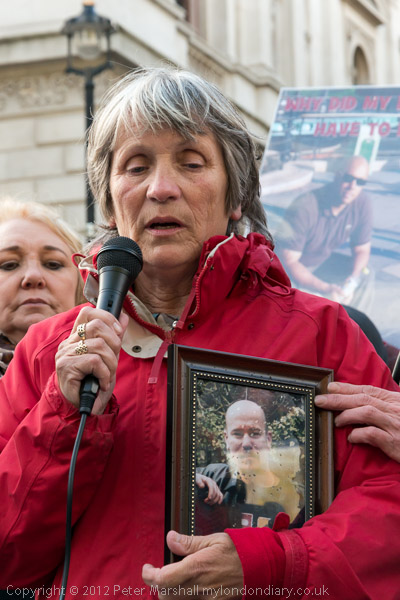
Jan Butler holding a photograph of her son Lloyd, who died in a police cell

As the invitation to the event ends “We look forward to seeing you – No Justice No Peace“. No Justice No Peace is a sentiment that will fill Whitehall on Saturday, echoing from the offices which line the street, but which as in previous years will sadly fall on the deaf ears of our establishment.

More from 2012 at No More Police Killings, Time For Justice.


Immigration Detention – a National Shame

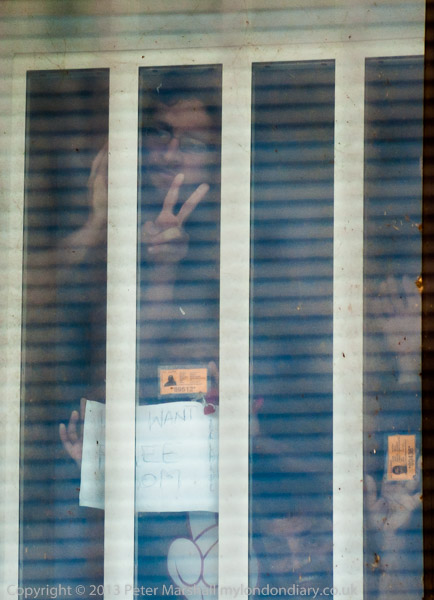
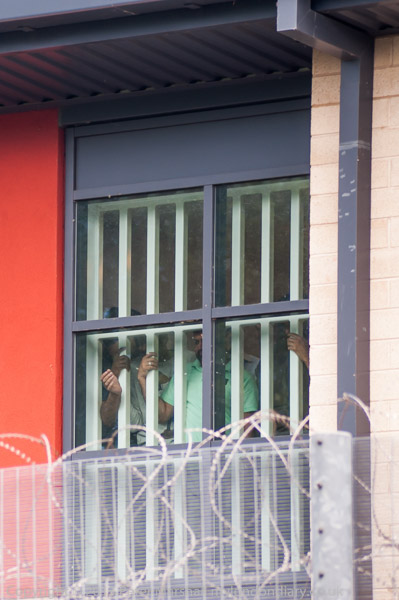
Detainees seen through the wire fence, Harmondsworth Detention Centre, Sat 7 Jun 2014

Recently the Home Office under Priti Patel got its knuckles rapped in court, when the High Court ruled it broke the law by housing cross-channel migrants in the run-down Napier barracks in Folkestone, Kent. Public Health England had earlier warned that the barracks were unsuitable for accommodation for asylum seekers during the Covid pandemic, and with 380 detained in poorly sectioned off rooms of 12-14 with shared bathrooms and toilets the spread of infection was clearly inevitable, with around 200 people catching Covid-19.

The Immigration and Asylum Act 1999 requires the Home Office to provide “support” for asylum seekers who are unable to support themselves, including if needed accommodation, but this must be adequate for their needs. Clearly in this case they were not, and the situation was worsened by employing a private contractor to run the barracks, who in turn outsourced much of the work required.

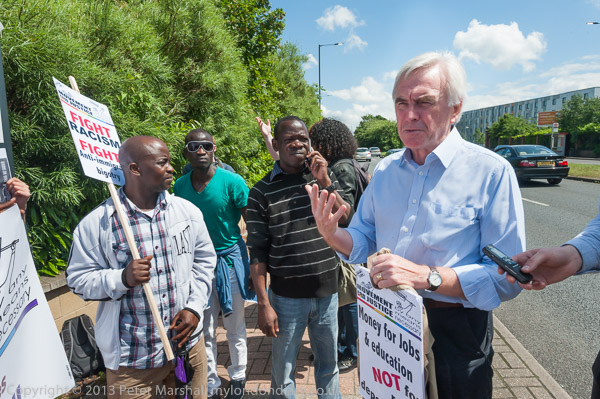
John McDonnell MP speaking

Many of those sent to the barracks were clearly unsuitable to be housed there because of pre-existing mental health issues arising from trafficking and/or torture before their arrival in the UK – and the Home Office’s own assessment criteria should have prevented them being sent to the barracks.

The whole judgement is complex and lengthy but reading the evidence it examines leaves the impression of a total lack of concern for human rights and common humanity in the operation of our asylum system, and one which is evident across the whole range of how we deal with migrants and asylum. In 2020 over 23,000 people were held in detention centres in the UK, around a third held for more than a month; but it is indefinite detention with no limit to the time they may be held and for some their stay has lasted around three years. Over half of those detained have claimed asylum.

Of those detained in 2019, just over a third were deported, some illegally. A small number – just over 300 in the year ending 2019 – received compensation, averaging £26,000, after proving their detention was illegal. (figures from https://migrationobservatory.ox.ac.uk/resources/briefings/immigration-detention-in-the-uk/ The Migration Observatory.)

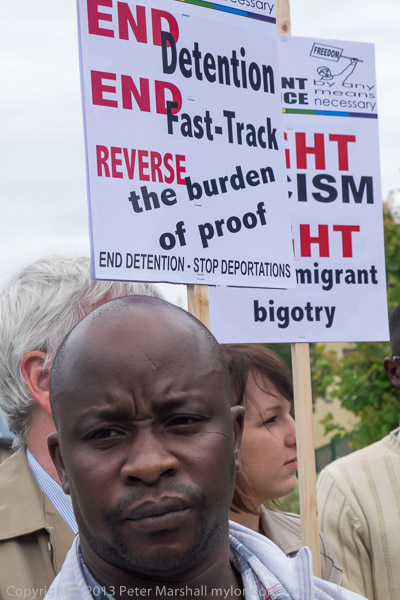
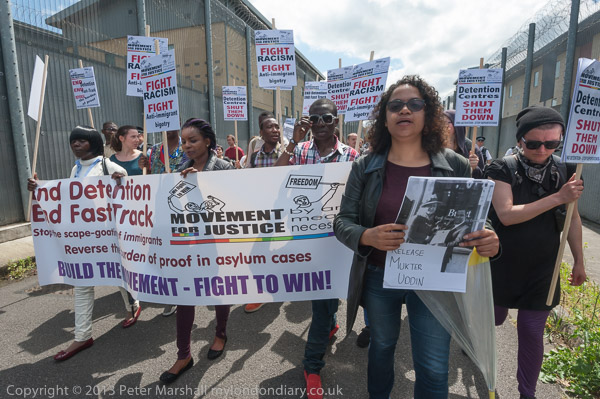
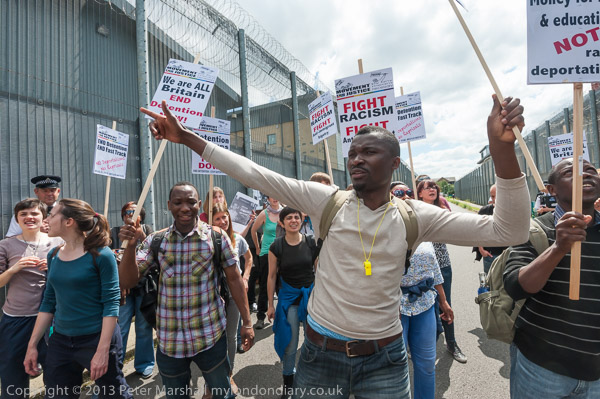
On Saturday 7th June 2014 I went to the neighbouring detention centres (a polite name for these immigration prisons) of Harmondsworth and Colnbrook, just across the A4 Bath Road north of Heathrow Airport, along with campaigners organised by Movement for Justice, who had come to protest with prisoners inside the immigration prison against the unjust ‘Fast Track System’ and mistreatment of detainees by private security firms.

The were joined outside the prisons by local MP John McDonnell who has a long record of supporting asylum seekers, who told us that when he first became MP for the area in 1997 the immigration detention centre was only a small building housing a dozen or so detainees. Now these two large blocks house several thousands – and their are other large immigration prisons across the country.

After the rally on the pavement outside, the protesters – who included many former detainees – marched onto the site and began to make a circuit on the roadway which goes around the Harmondsworth centre, most of which is enclosed behind tall fences. The stopped at places on the way where they knew that those inside the prison would be able to see and hear them, making a lot of noise chanting and shouting as well as with whistles and other noise-makers.

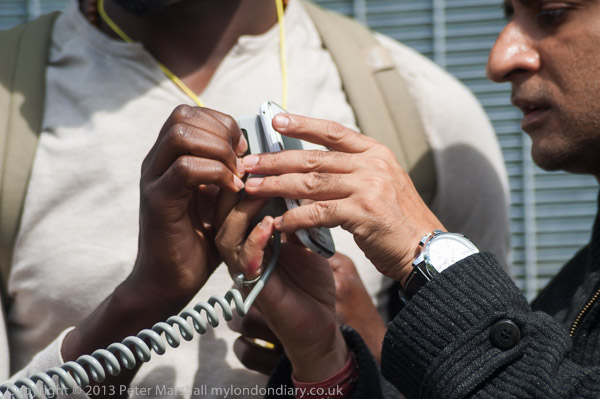
Detainees are allowed to have mobile phones and the protesters were able to contact a number of those inside, some of whom were able to speak by holding the phone they were calling to a microphone of the protesters’ megaphone. Many inside feel they are forgotten and all had complaints about the way they were treated by the detention centre staff and the poor conditions.

At later events here that I photographed, police prevented the protesters marching around the 20ft fences that surround it, limiting them to an area in front of the administration block. Clearly the tall fences mean there was no security risk, but the sight and sound of the protest was important in raising the morale of those held in the centres – and something those private contractors running the jails wished to avoid in future.

More pictures at Support Detainees in Harmondsworth