Yarl’s Wood 2016

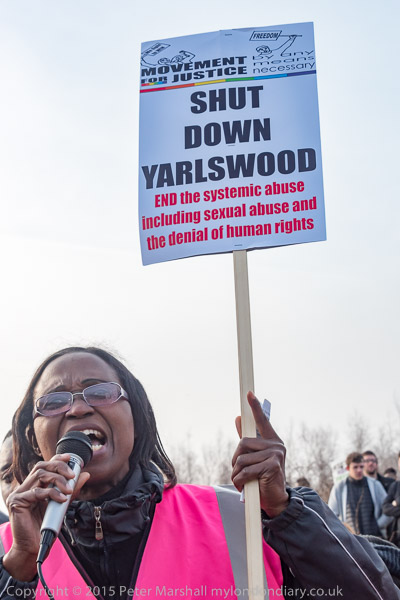
Since it opened in 2001, Yarl’s Wood, then the largest immigration detention centre in Europe has been an active demonstration of the racist nature of the UK and its attitudes to those seeking asylum here. Yarl’s Wood was used to house refugee women and a few families and soon gained a reputation for hostile mismanagement, which led to a number of incidents including a serious fire which burnt down the building in 2002.

Things were not improved by handing the contract for running the centre to Serco in 2007 and there were a number of hunger strikes by groups of detainees over the following years, complaining about lack of medical treatment and other mistreatment including well corroborated allegations of sexual assaults by staff, many of whom were male on the women in the centre, many of whom had left their countries to seek asylum because of violence and often rape.

The first damning official report into allegations of racism, abuse and violence at the centre came in 2003, and over the years there was a steady procession of them, and in 2015 the chief inspector of prisons described Yarl’s Wood as a “place of national concern” , calling for decisive action to ensure women were only detained there as “a last resort”. In fact detention was both routine and open ended. Four out of five women held there were eventually released, and allowed to remain in the UK, and in 2018 only one in 7 of those released was deported. But the average time they were held in what is essentially a prison was over three months, and in one case a woman was only released after detention for a couple of days less than three years.

Covid brought about a huge drop in the number of women being detained, their release demonstrating that detention was always unnecessary. While at the start of 2020 there had been over 120 women detained, by August there were fewer than 20. The Home Office had been using detention both as a punishment for people coming to seek asylum and as a way to dissuade those considering coming to the UK.

The Home Office announced that Yarl’s Wood was not to close but would instead be used as a short-term holding facility for men arriving in the UK by boat. It is also now again in use – though without any official announcement – for the indefinite imprisonment of around ten women asylum seekers.

The latest development came on the heels of public scandal over the use of former military barracks in poor conditions to house men seeking asylum. The Home Office announced that they were to house around 200 of them in temporary prison-style accommodation to be erected at Yarl’s Wood, using emergency powers to construct this without planning permission. After considerably outcry from campaigners including MPs and religious leaders and legal challenges the Home Office dropped the plans, saying they had sufficient capacity elsewhere.

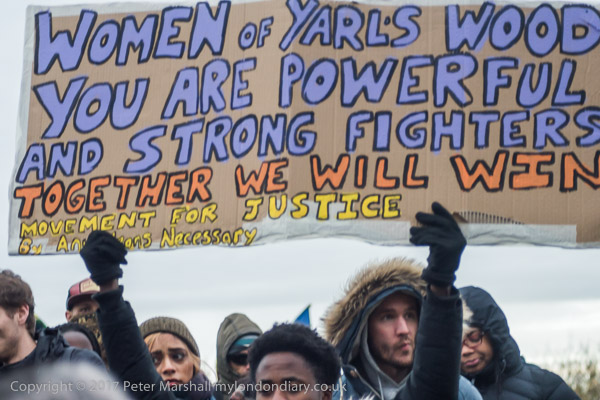
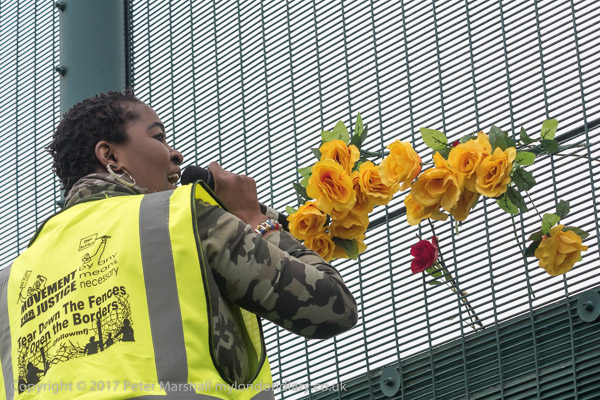
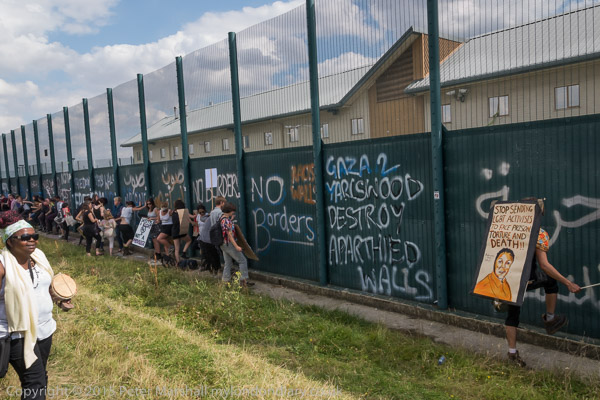
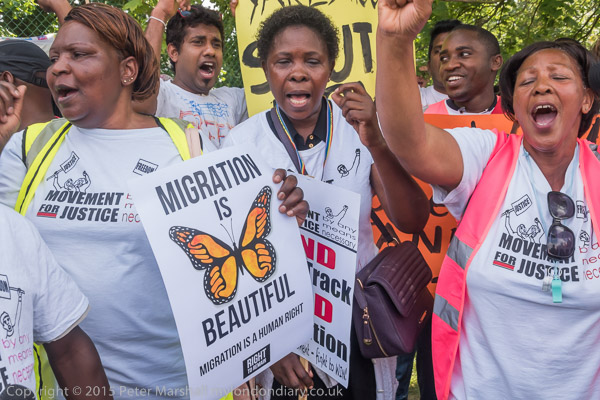
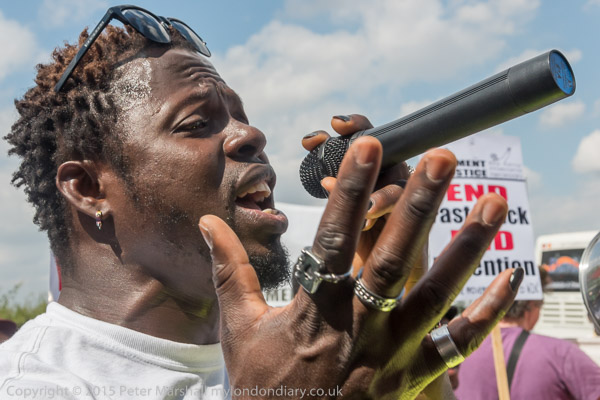
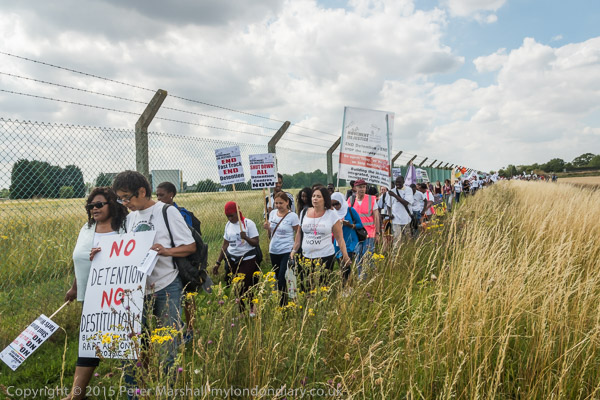
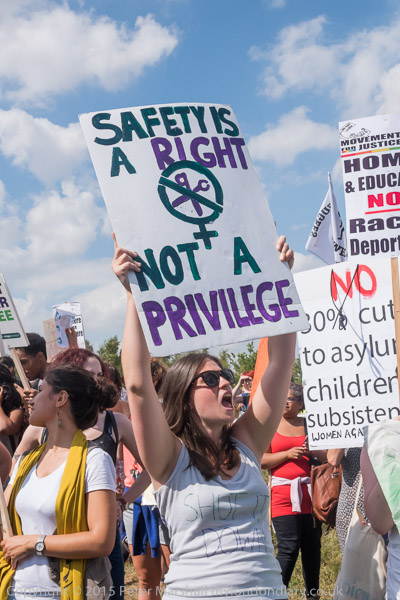
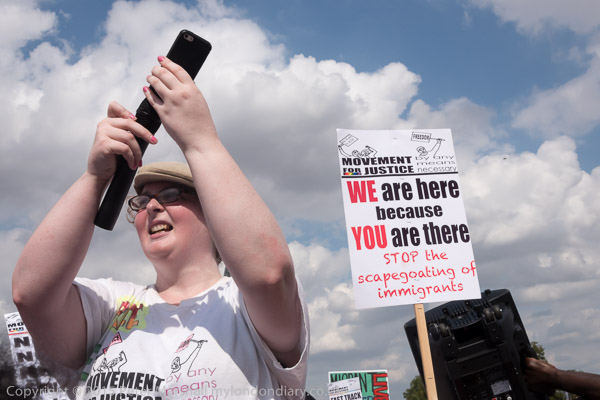
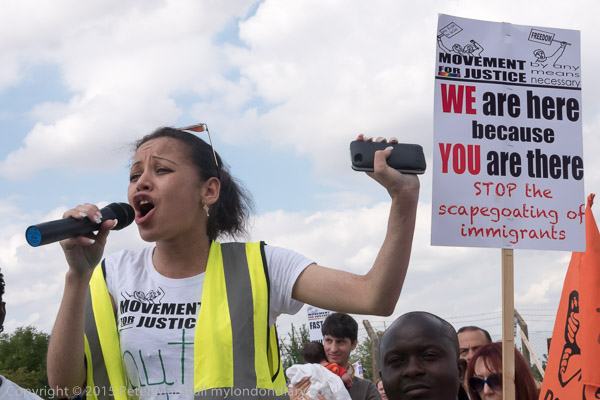
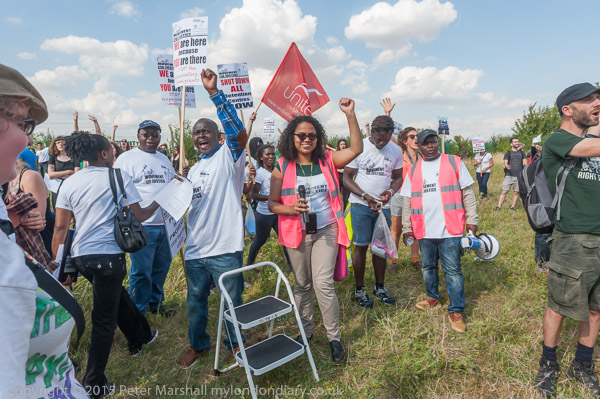
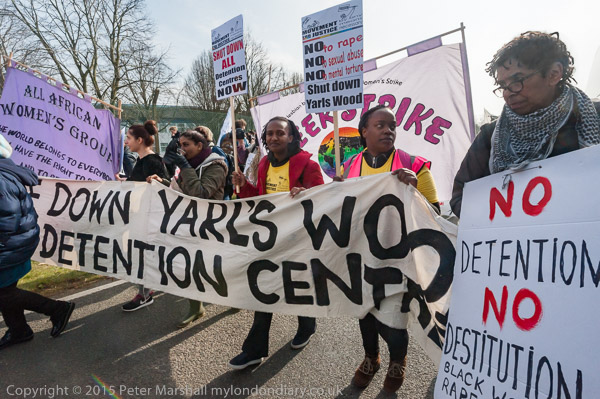
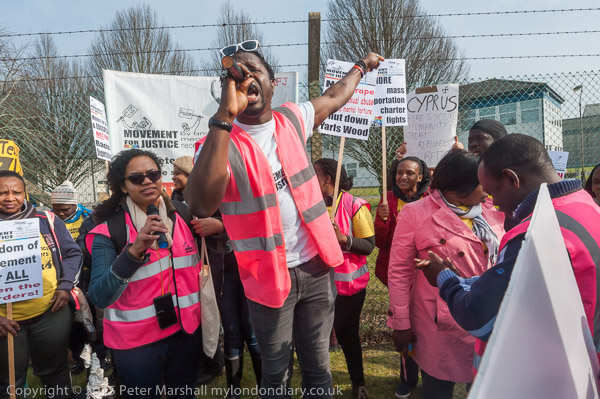
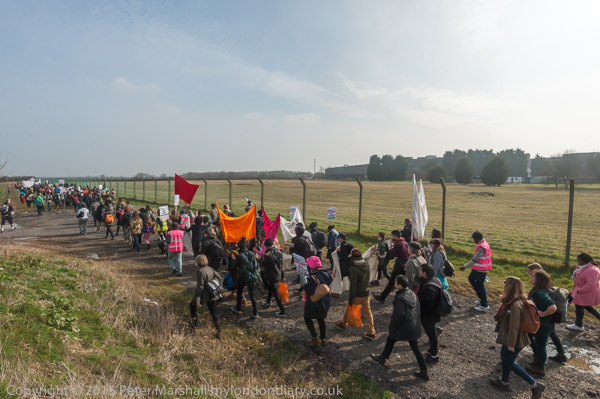
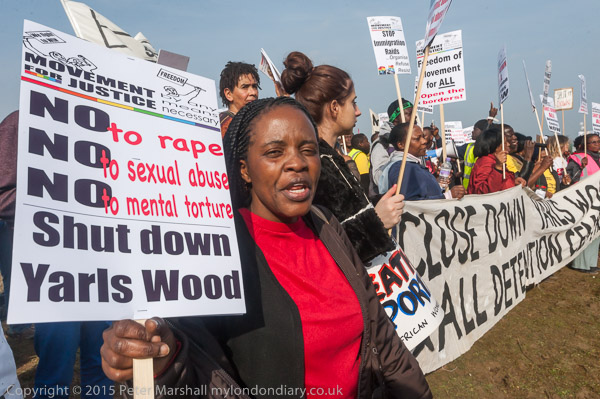
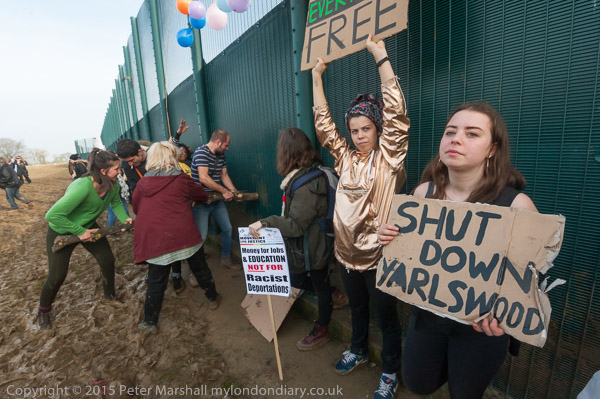
The protest outside the immigration prison on Saturday 12 March 2018 was organised by Movement for Justice which has been one of the leading campaigns against immigration detention, mobilising many of those who have previously been held in Yarl’s Wood and the other detention centres. Getting over a thousand protesters to the remote location around 5 miles north of Bedford involved hiring coaches from cities across the country as well as a shuttle service from Bedford Station which I made use of – and whose local driver got lost on the way there. Reaching the field next to the centre then involved walking over a mile along the road and a public footpath that runs past it.
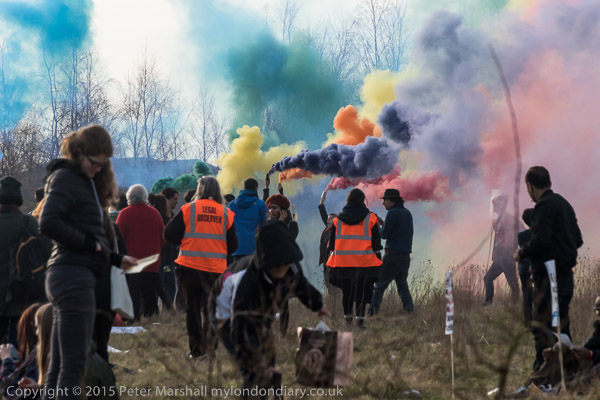
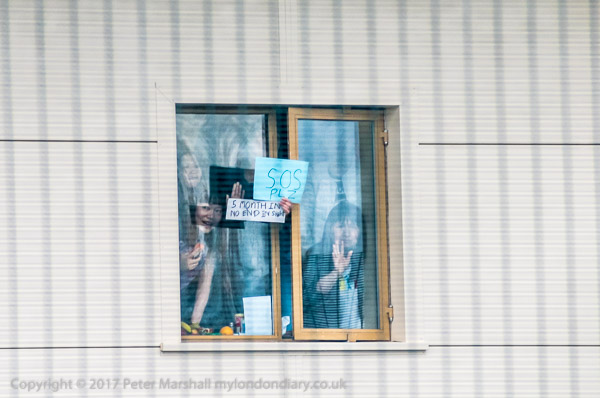
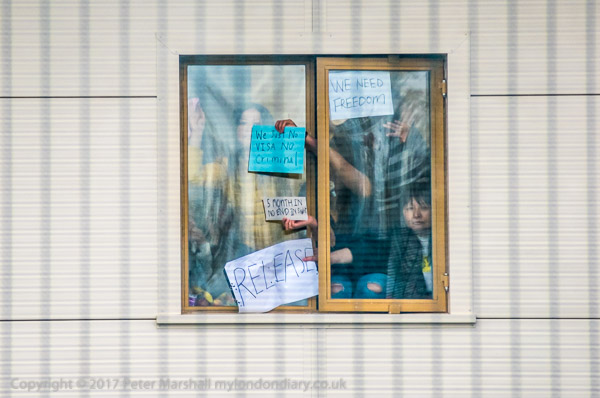
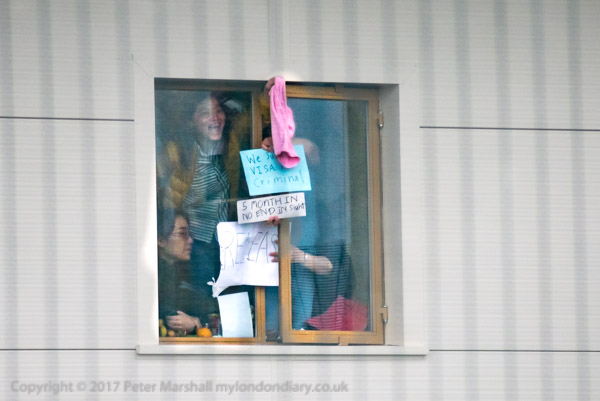
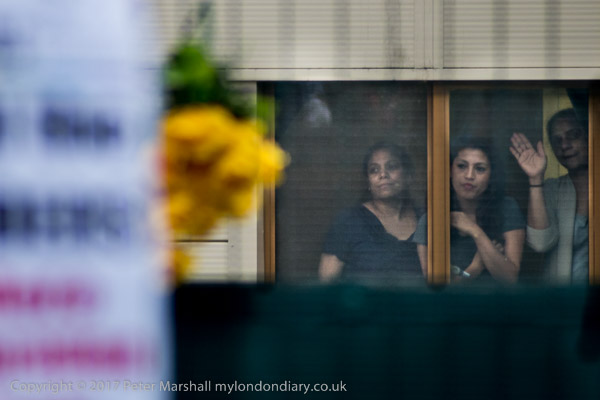
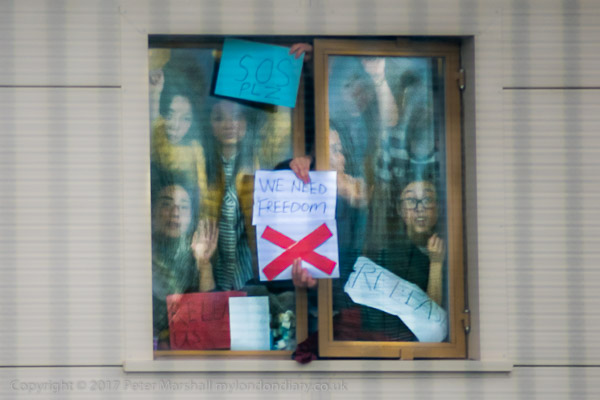
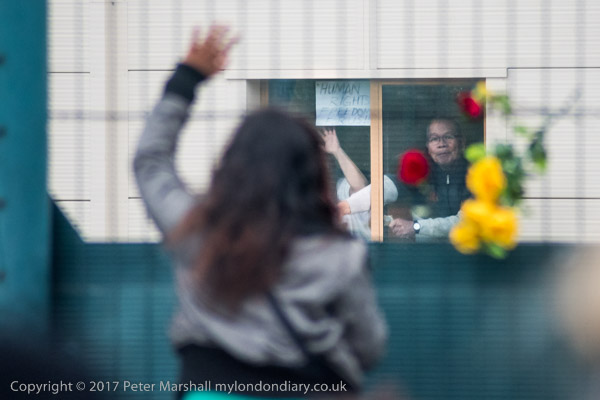
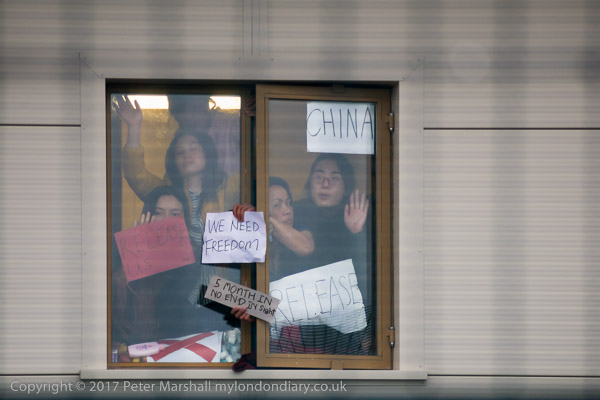
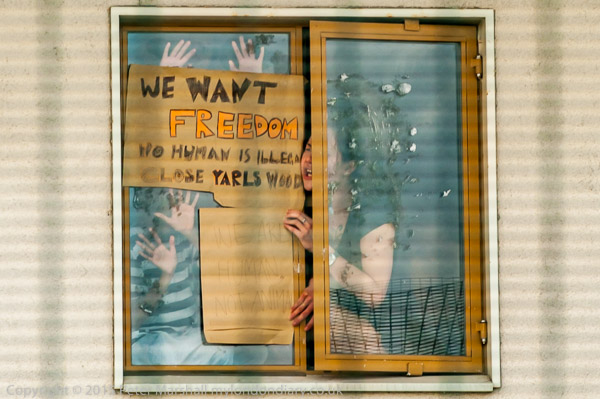
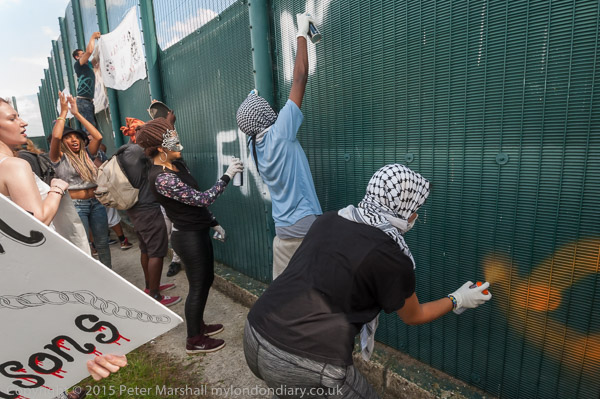
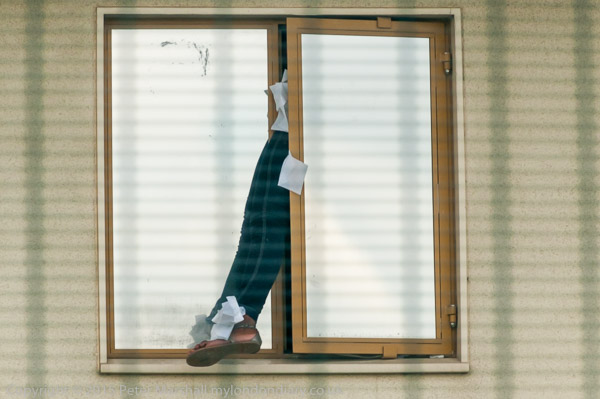
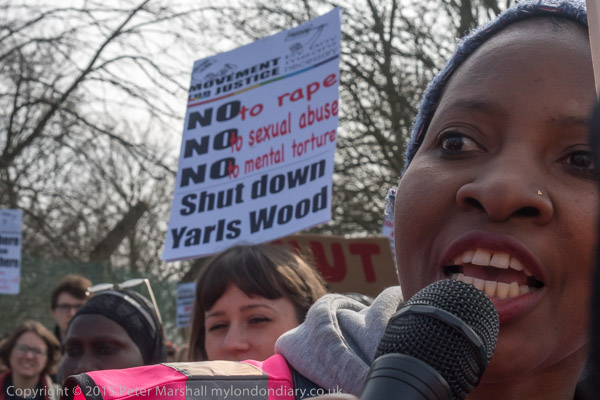
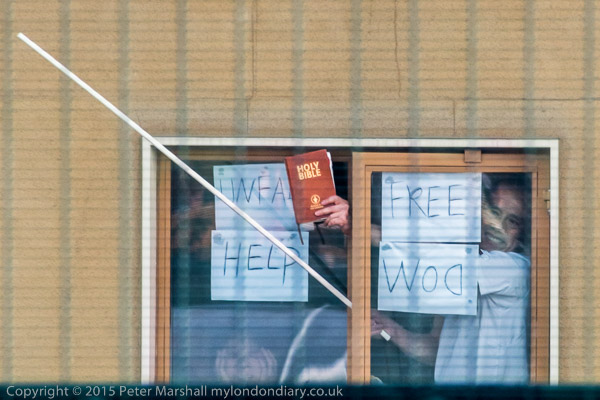
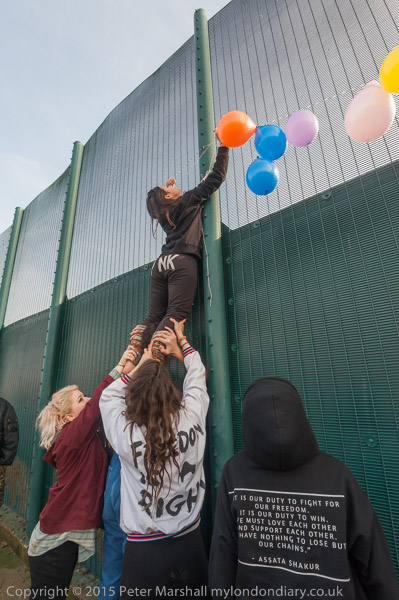
Surrounding Yarls Wood is a 20ft high fence – this is a serious prison. The first 10ft is solid metal but above that is another 10ft of wire mesh, though which, from a small hillock we could see the upper floors of one of the prison blocks. Detainees have limited freedom of movement within the centre, and some were able to come to the windows facing the field we were in and shout and wave and display hand-written messages, including some phone numbers through which a few could talk, their words relayed by a public address system MfJ had carried to the protest. A number of former asylum seekers also spoke at the protest, along with some of the organisers.

Those who have been held in this and other centres speak of feeling they are locked away and forgotten and protests such as these give them hope. MfJ and other groups also try to keep in contact with those inside and offer advice, and there are others who go into the centre weekly as visitors, ‘befrienders’ who offer emotional and practical support to a detainee.

Detaining people cuts them off from friends and communities and makes it much harder for them to make their cases for asylum – and also considerably slows the official processes involved in examining their claims. There are a very few cases where detention could possibly be justified on grounds of national security, but these apart no need to lock up the vast majority who have been held in these immigration prisons.

More on My London Diary: Shut Down Yarl’s Wood


All photographs on this and my other sites, unless otherwise stated, are taken by and copyright of Peter Marshall, and are available for reproduction or can be bought as prints.


Trailblazers of Light

Around a year ago I read an article by the remarkable photojournalist Yunghi KimGaslighting in Photojournalism‘ in which she rightly took umbrage at a statement on NationalGeographic.com by photographer Daniella Zalcman, “For a very long time, we’ve been predominantly looking at the world through the experience and vision of male photographers“.

It was, she rightly said “a sexist and ageist quote“, which ignored the great contribution made by many women in the past in order to boost the achievements of NatGeo’s current crop of women photojournalists.

As some readers will know, I used to write for an online photography web site, and before that to teach photography to mainly young students, the majority of whom were female. I had a number of principles that underlie the articles that I wrote about photographers and the work that I showed students and among them were that I wanted to show the contribution that had been made to photography by women through the whole history of our medium and over many fields. Another was to show that not all photographers were American or even British or European – something that was probably a major factor in my contract eventually being terminated.

I tried hard to find women who would qualify for my list of notable photographers, but men still outnumbered them by around 5 to 1, at least in part because of the lack of published material (and particularly published material on the web) by or about them. But there were some truly great women photographers on that list and I think I wrote rather more about many of them than about most of the men.

Yunghi Kim has gone on from her critical article first to produce a list ‘The Silent Generation‘ of women photojournalists, and then to work with her team to produce a remarkable web site – Trailblazers of Light, highlighting the many, many women photojournalists of the film era, decades before the advent of digital cameras and photography.

Also referred to as the, “The Silent Generation,” it refers to a time when a few courageous women first entered the photojournalism work force and simply did the work without fanfare but with steely determination. They worked side by side with men on a daily basis at newspapers, magazines, wire services, and photo agencies. They reported from foreign war zones, the streets of our towns and cities across America, and everywhere in between.

https://trailblazersoflight.com/women-of-the-film-era

It isn’t an exhaustive list and will doubtless grow in time. As the site says, “Most of the names here are American photojournalists or those who worked for American-based publications, photo agencies and news wires. There are some international photojournalists listed as well.”

Currently the site lists 517 photojournalists and 249 picture editors, and the site gives a short history of the contribution of women to photojournalism in the USA, beginning with “Frances Benjamin Johnston, who worked for Acme News Service. She was born in 1864 and had a career which lasted over 50 years” and continuing to the digital age.

It’s a remarkable history, only a fairly small part of which was familiar to me, and although there are plenty of names among the 517 that are familiar to me, there are rather more I’d not before heard of. Clicking on their names in the list of Photojournalists generally links to an article on a web site with some more details or an article about them. The site also has a historical timeline and some oral histories.

It’s looks a hugely valuable resource for students and educators, though I’ve only had a short time to investigate it. It would be good to see a similar resource to cover other areas of photography worldwide.


Rape Crisis in South Africa

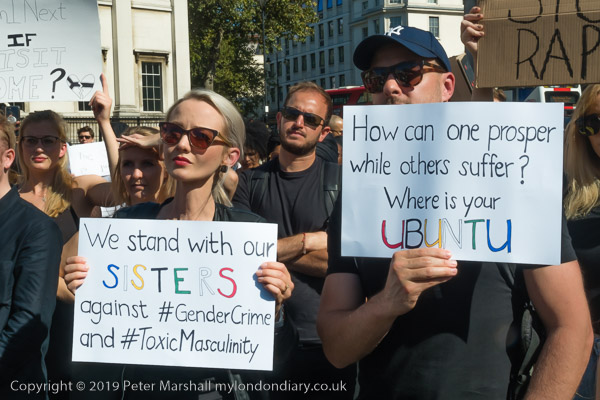
Protesters met in Trafalgar Square to protest following the rape and murder of Uyinene Mrwetyana one of many such crimes against women in South Africa. The protest was in solidarity with those in the country which are calling on the government there to declare a state of emergency against gender-based violence, and to protest against gender-based violence across the world.
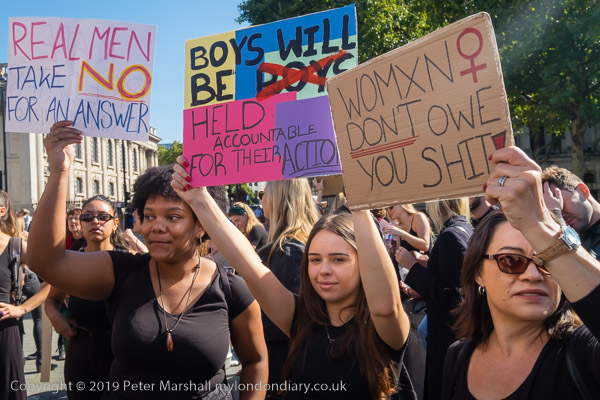
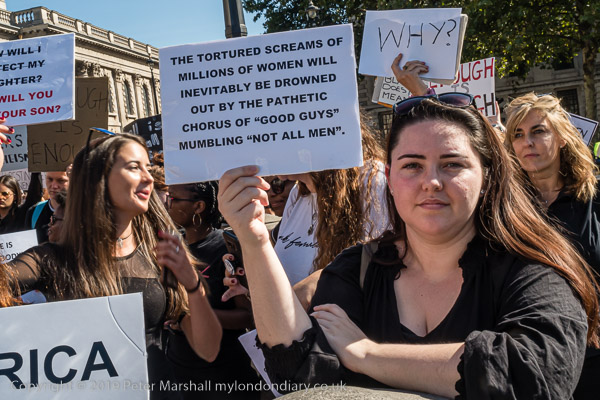
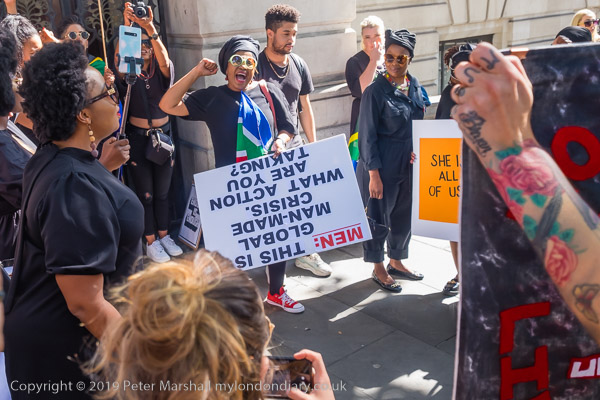
Protesters had been asked to dress in black and the vast majority had done so. Most of those protesting were women and the vast majority of gender-based crimes are against women. One woman held up a poster with the message ‘The Tortured Screams Of Millions Of Women Will Inevitably Be Drowned Out By the Pathetic Chorus Of “Good Guys” Mumbling “Not All Men.”‘
Another, rather more positively asked ‘Men: This Is Global Man-Made Crisis, What Action Are You Taking?’ though I was rather sorry that she was holding it upside-down when I took the picture showing her.

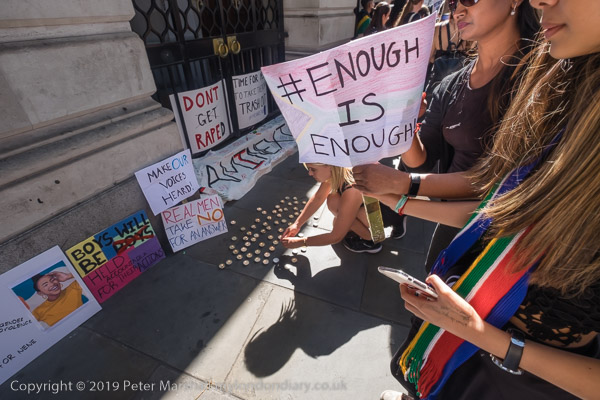
After the rally in Trafalgar Square, the protesters moved to South Africa House where they lit candles and put many of their posters against the wall of the closed High Commission.

The building and the crowd of protesters around provided some shade which just about made the flames visible in the middle of a bright sunny day.

More at Criminal Abuse of Women in South Africa.


All photographs on this and my other sites, unless otherwise stated, are taken by and copyright of Peter Marshall, and are available for reproduction or can be bought as prints.

There are no adverts on this site and it receives no sponsorship, and I like to keep it that way. But it does take a considerable amount of my time and thought, and if you enjoy reading it, please share on social media.
And small donations via Paypal – perhaps the cost of a beer – would be appreciated.


Million Women March

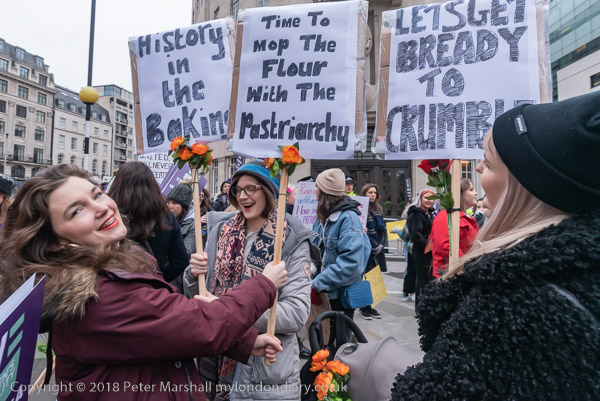
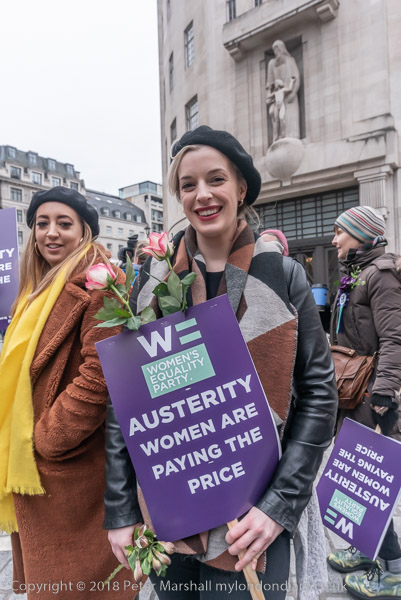
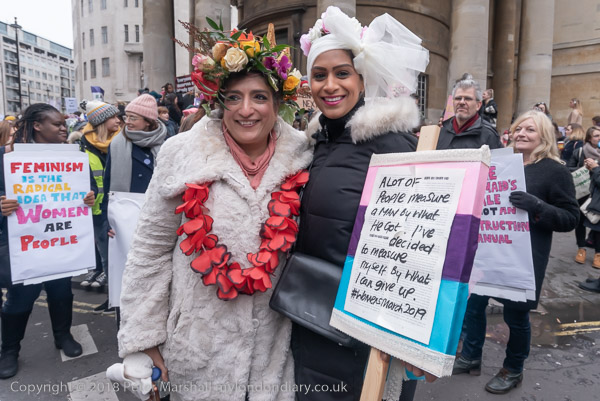
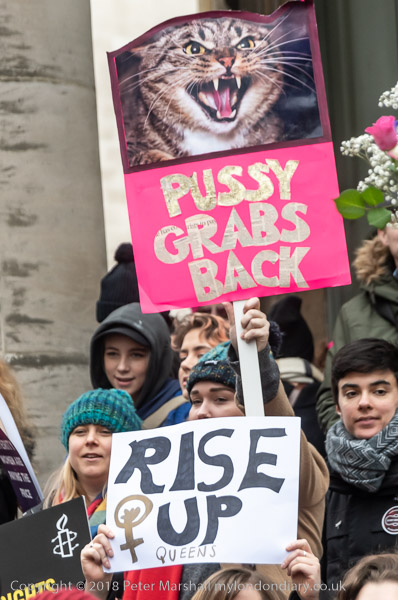
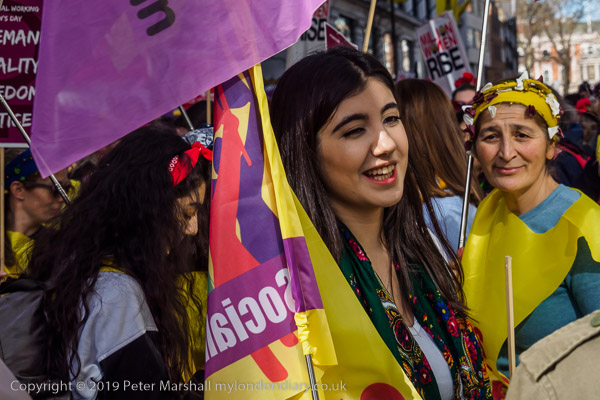
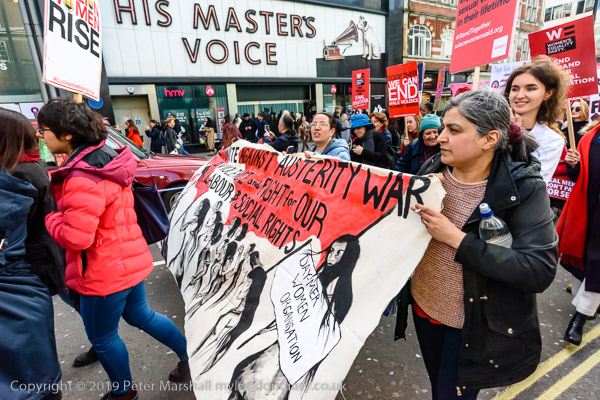
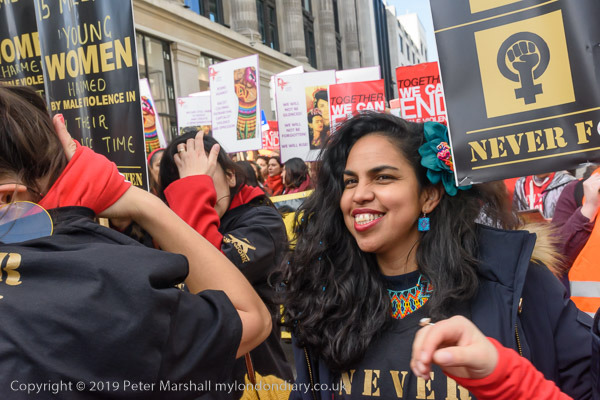
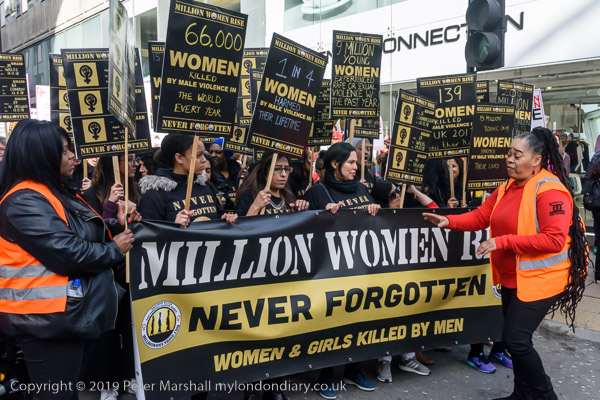
I photographed the first of these all-woman Million Women Rise marches in London in 2008, and have covered the event in most or all years since, always on a Saturday close to International Women’s Day. It’s an event that is supported over a hundred human rights and women’s groups around the country and is “led and organised by a majority of black women” and also includes many from other minority ethnic communities.

It’s an organisation that welcomes support from men in various ways, but on the day of the march asks them to “come and stand on the pavement and cheer us on.” And I do, though most of the time I’m too busy taking pictures to actually cheer.

Their web site has a list of ten demands, beginning with:

To acknowledge the continued discrimination faced by all women, the additional discrimination faced by Black women and women from other minority groups, and reflect this in all public policy in the UK and internationally

Million Women Rise web site- http://www.millionwomenrise.com/demands.html

I took pictures in the side road where the march gathered, where the marchers spill over onto the pavement and I could mix a little with the marchers before the march began, but for the march itself I stayed on the side as requested.

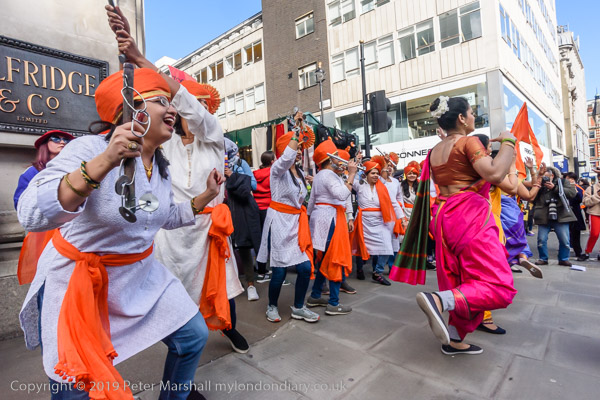
One slightly different aspect of this years march was the Pan Indian Dance Group who danced their way along Oxford St at the rear of the march – and I think went on to dance at the rally in Trafalgar Square, but by then I had left the event.

More pictures: Million Women March against male violence


There are no adverts on this site and it receives no sponsorship, and I like to keep it that way. But it does take a considerable amount of my time and thought, and if you enjoy reading it, please share on social media.
And small donations via Paypal – perhaps the cost of a beer – would be appreciated.

All photographs on this and my other sites, unless otherwise stated, are taken by and copyright of Peter Marshall, and are available for reproduction or can be bought as prints.

To order prints or reproduce images