British Journal revisited

Back in the old days, the British Journal of Photography was the main trade weekly paper of UK photography professionals including photographers, keeping them up to date with the news in the industry, and also widening their view with reviews of photography books and shows and listings of exhibitions. It also published a year book which was mainly a good collection of recent work by British photographers along with a technical section at the end with developer recipes etc. I had a few pictures in what turned out to be the last issue, the BJP Annual 1988, though I don’t think I can be blamed for its demise.

With news increasingly breaking on the web the audience for a weekly trade paper diminished and so too presumably did sales. Perhaps too the problem was partly editorial, as throughout the time I was a subscriber as well as publishing much worth reading it also gave space (and paid by the word) to some of the most turgid prose ever written in some of its reviews, probably far too boring for even the editor to have read to the end before publishing.

BJP changed direction and relaunched as a monthly, moving more into covering the art world and since I already subscribed to several overseas magazines that seemed to be doing a rather better job of that I let my subscription lapse. Occasionally I’d look at its web site to see what it was doing, but there was seldom a great deal of interest for me.

But in the last week or so there have been several articles which have attracted my attention and which have been well-illustrated online. The first of these was about the show Illuminating India: Photography 1857-2017 which is showing at the Science Museum until 31st March 2018 and since entry is free I’ll certainly go in and look at if I have some spare time and am around South Kensington.

Back in 2003 I wrote a series of long articles on the early years of photography in India for the web, none of which are unfortunately still available (though parts live on, pirated on other web sites.) I began with ‘Photography in India: The Early Years‘, including the work of British photographers such as John Murray, then ‘India – The Late 1850s‘ looking at the work of Felice Beato and Robert and Harriet Tytler, going on to ‘Linnaeus Tripe‘, ‘Samuel Bourne: Search for the Sublime‘, then ‘Indian Photographs‘, a consideration of whether there was a specifically Indian way of photographing in the earlier years. Perhaps the best of the articles was on the ‘Prince of Indian Photographers’, court photographer to the Nizam of Hyderabad Lala Deen Dayal, and the last in that short series was on the Irish photographers ‘Burke & Baker‘.

Indian photography was certainly one of the many areas I would have returned to had I kept my job on the web, but probably the main reason I was sacked was for writing too much about such things, which were thought not to be of much interest to US readers and US advertisers – though it was exactly in line with what I was hired to do by a previous management and the articles attracted considerable interest.

August 2017 complete

As usual it took me longer than expected to finish uploading my work from August, but today I finally managed it. The pictures from my week’s holiday at the end of August had been holding me up, partly because they were all taken on Fuji-X cameras, and the files need a little more work, but more it was a mental block, with a large number of pictures I couldn’t persuade myself to get down to.

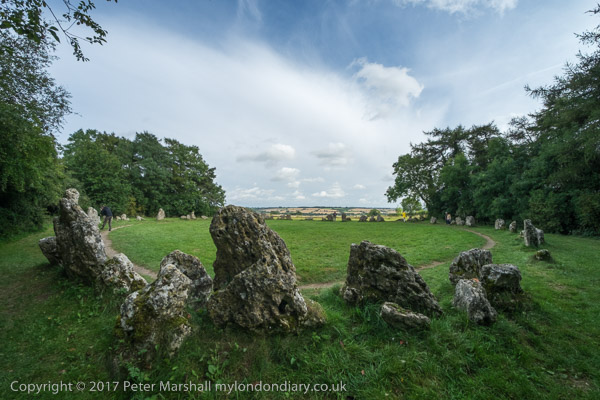
I didn’t really warm to the Cotswolds, although I did get to visit a few places I’d long wanted to go to, notably William Morris’s house at Kelmscott and the Rollright Stones. But the countryside is pretty but not exciting, and the towns and villages seem chocolate box and suffocatingly twee. Somehow I just couldn’t feel I fitted in. It wasn’t that it was rural – had it still been Cider With Rosie I might have enjoyed it, but that atmosphere was gone, mown down by wealthy commuters in their Range Rovers and the towns overrun with tea shops. When we went to the Model Village at Bourton-on-the-Water it somehow seemed just as real as the actual place.

August 2017

Cotswold Holiday
Ghouta 4th Anniversary
ASH at the ICA

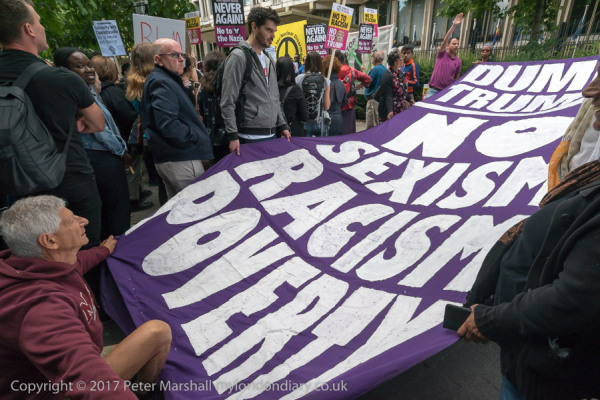
Stand Up to Trump
Travellers evicted in Staines
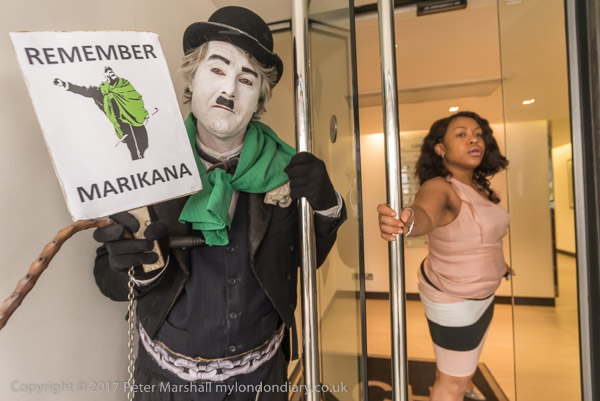
Justice for Marikana vigil
End dependent visa system abuse

Marikana Massacre Protest at Lonmin HQ

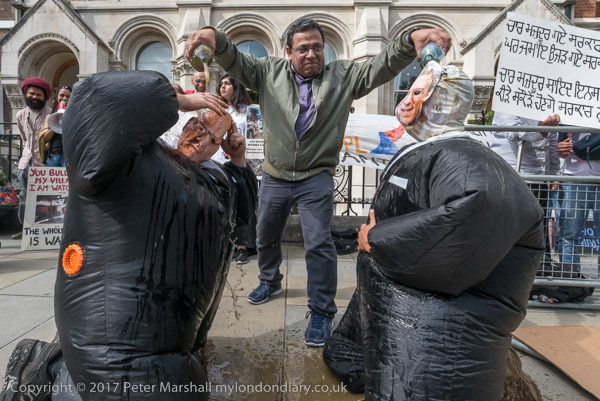
Vedanta accused of global crimes

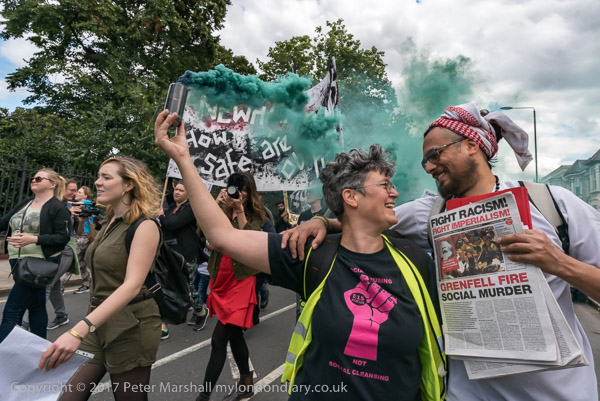
Fire Risk Tower Blocks
Duke’s Lodge for Grenfell
Hiroshima Day 72 Years on

Tottenham remembers Mark Duggan
Broadwater Farm Estate


Stop Killing Londoners road block

London Images

Continue reading August 2017 complete

Bow Creek

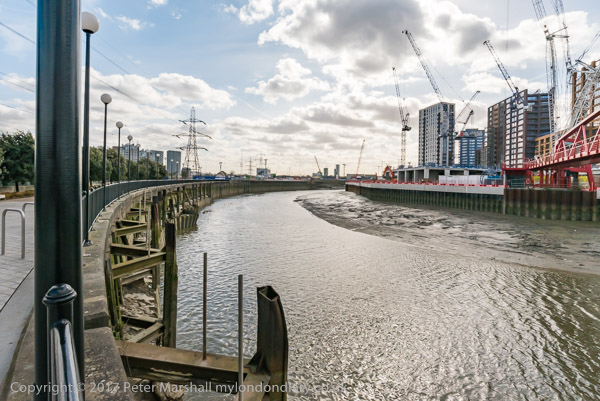
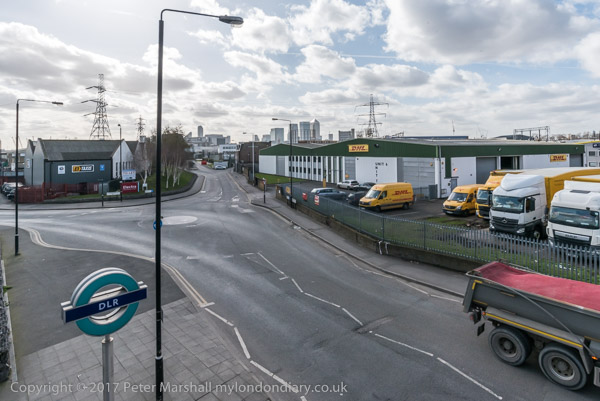
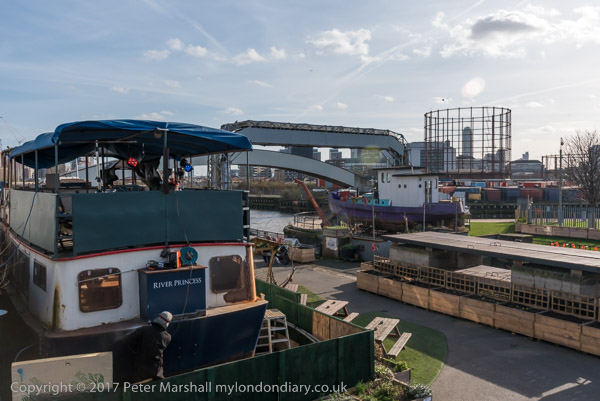
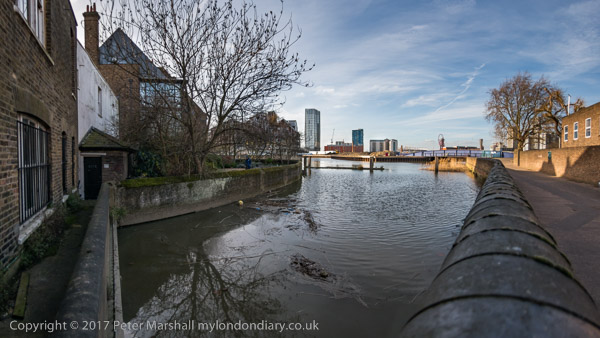
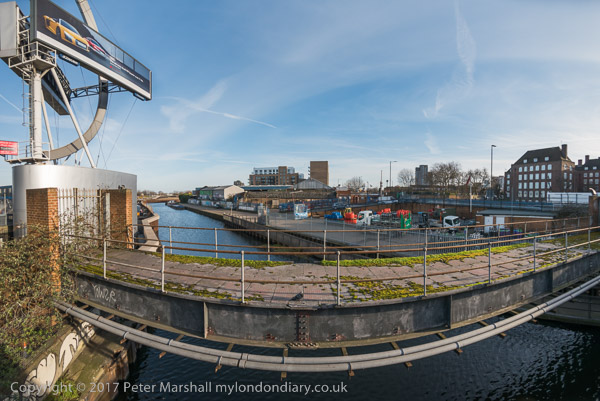
March 2nd I was going to see people at Cody Dock on Bow Creek, but it was such a nice day that I decided to go early and walk there from Canning Town and afterwards to walk to Stratford. Things didn’t turn out quite like that, as the bridge over the DLR I’d hope to walk across was firmly barred and this meant a longish detour.

I’d hope also to be able to walk beside the creek from the East India Dock Rd, where a path exists along much of the way, but again there was no access, and time was getting short, so I had to go back to Canning Town and take the DLR to Star Lane to get to my meeting on time.

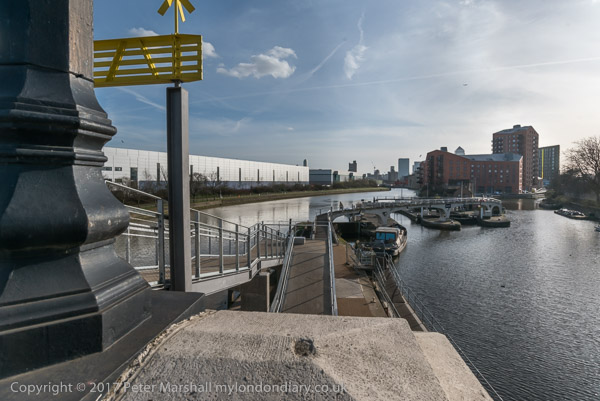
Paths beside Bow Creek seem to pose special problems. There was a path next to Canning Town Station for over 20 years before the access to it from Canning Town was finally opened up, and that closed bridge I wanted to use had been closed for many years too, opening only for a brief period. The walkway from Canning Town still ends a few yards south of the station entrance, but had been planned to take you all the way down to the Thames at Trinity Buoy Wharf, with the aid of a new footbridge. But money ran out, the bridge was never built and Crossrail works still block the path.

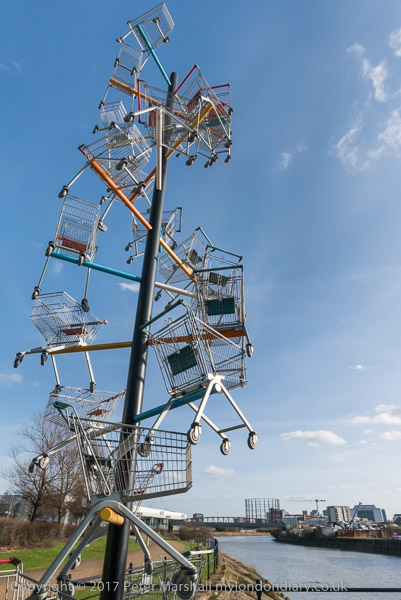
At Cody Dock, the path south is still blocked, though it is already laid out, and it would be possible if rather dangerous to climb around to get onto it. But one of the bonuses of the development of Cody Dock is that it is now possible to walk north from there along what was previously a path that came to a dead end. My route here is a part of East London’s sculpture trail, roughly following the Greenwich Meridian, ‘The Line’, a splendid initiative but which would be a much better walk if it could include a further length of path alongside Bow Creek.

It’s thanks to Cody Dock too, that the path south from there will hopefully soon be open (if it isn’t by the time you read this.) They proposed and helped negotiate this rather more obvious route rather than the much more expensive earlier plans for a new footbridge and a path through the former gasworks site on the opposite bank – which again fell through for lack of cash.

Further north, there was one long awaited improvement now open, with a ramp leading down from the bridge at Twelvetrees Crescent. Previously the route here required a detour alongside the busy approach road to Blackwall Tunnel, where the traffic fumes can be cut with a knife.

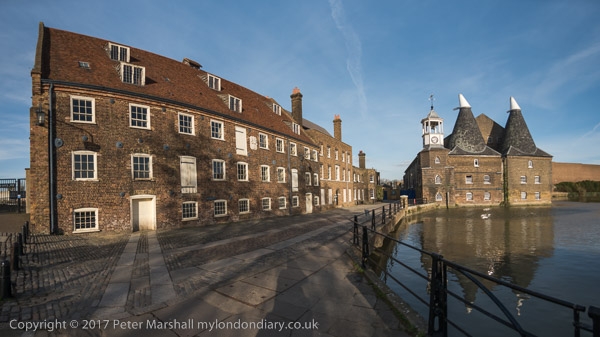
I’m still surprised to come across Londoners who don’t know of London’s most important industrial heritage site at Three Mills. The Grade I listed House mill may only be an eighteenth century building, but a mill here was in operation at the time of the Domesday book and this is not only the earliest recorded example of a tide mill but is thought to be the largest surviving tidal mill in the world. The Three Mills complex is also of some more recent historical import, as it was here in Nicholson’s Distillery that Chaim Weizmann set up a pilot plant for an improved fermentation method to produce acetone, vital for the production of cordite, on an industrial scale.

Weizmann’s contributions to the war effort were important in gaining the support from the UK government for his Zionist proposals, and were almost certainly an important factor behind the Balfour Declaration of 2nd November 1917 – and certainly Lloyd George was clear abou this in his later War Memoirs, though some historians are rather sniffy about it, and there had been lengthy series of meetings and talks before. The final draft of the declaration stated:

“His Majesty’s Government view with favour the establishment in Palestine of a national home for the Jewish people, and will use their best endeavours to facilitate the achievement of this object, it being clearly understood that nothing shall be done which may prejudice the civil and religious rights of existing non-Jewish communities in Palestine, or the rights and political status enjoyed by Jews in any other country.”

Weizmann, who had been a leading Zionist since the era of the first Zionist conference in 1897, became the first President of Israel in 1949, having previously been Chairman of the Provisional State Council of Israel since the previous year, and continued in office until his death in 1952.

The water was high behind the mill and their were warnings of floods, but fortunately I was able to make my way to Stratford High St without getting my feet wet. I walked down to the Lea Navigation, where I took my first pictures of the Lea many years ago.

After walking around the area a little, I made my way back along the High St to the DLR station, returning to the East India Dock Road to take some pictures here I had not had time for in the morning. By now the sun was very low in the sky, and this made working difficult.

You can see more pictures from my walks on My London Diary

Bow Creek & Canning Town
Cody Dock
Leawalk to Bow Locks
Three Mills & Stratford

Continue reading Bow Creek

Cable St & Bermondsey

I meant to write yesterday about it being the 80th anniversary of the Battle of Bermondsey, probably an even greater street fight against the fascists that took place a day before the first anniversary of the Battle of Cable St, and perhaps more decisive.

Although we celebrate Cable St as a pivotal moment in the fight against Fascism, as historian Daniel Tilles points out it was actually followed by an increase in membership and support for the fascists in the East End, an an increase in anti-semitic propaganda and physical attacks on Jews.

You can read a newspaper report of the battle in an Australian newspaper online, as well as a blog post The Battle of Bermondsey by Lydia Syson, and it is also mentioned in a more general article with the lengthy title British Union of Fascists and the East End battles that ensued, a history worth revisiting.

I think many might question the conclusion that Tilles draws from the events, suggesting that the kind of street activism represented by both Cable St and Bermondsey is counter-productive. We can after all only speculate on what the consequences might have been had the two marches by Mosley been unopposed or met by entirely peaceful protest rather than stopped. Fascism at the time was clearly on the rise and backed by many in the British establishment and perhaps needed to be fought both on the streets and by more moderate methods which he suggests were more effective.

But it was international events which were eventually decisive both in making clear the true nature of the fascist threat and a war far more violent than street resistance that brought a more decisive end to fascism, though it lingered on after the war it was clearly a sad and broken movement.

Of course it never entirely went away, with various lunatic fringe organisations over the years, more recently in groups such as Britain First and the EDL that I’ve photographed. And it would I think be hard to argue that the kind of active on-street opposition to these groups by Unite Against Fascism and Antifa generally has acted as a recruiting sergeant for them.

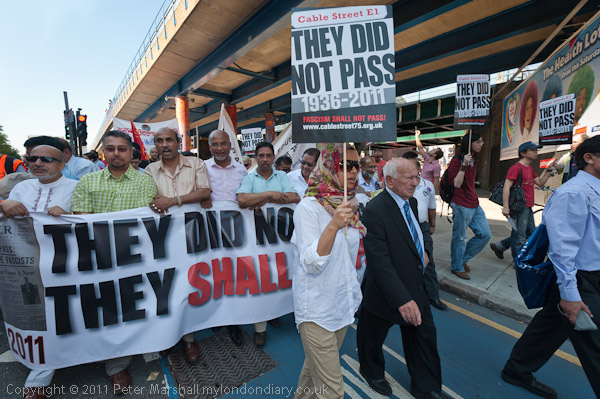
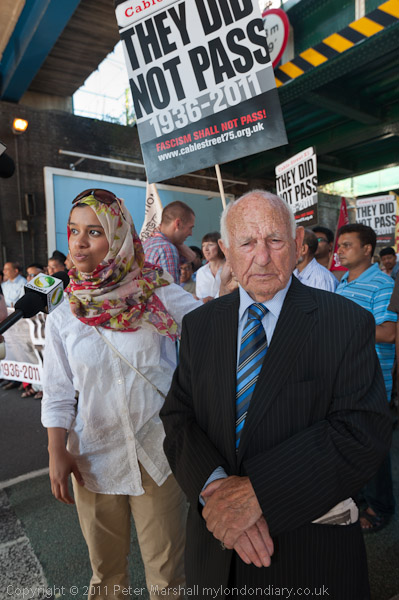
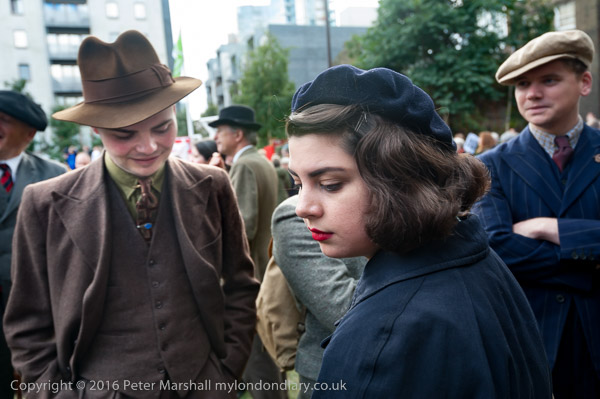
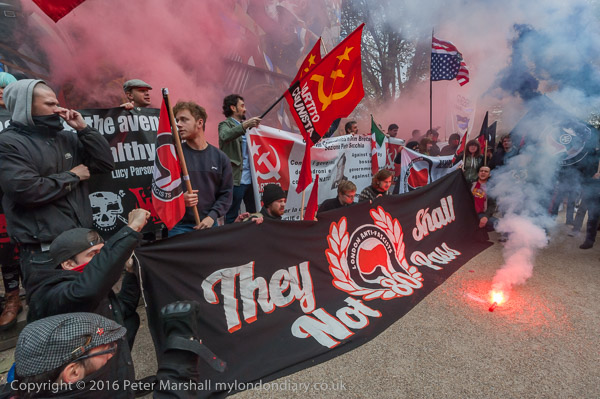
My pictures are of the Cable St anniversary events in 2006, 2011 and 2016 and you can see more on My London Diary:

Cable St 70th anniversary -2006
Cable St 75th anniversary – 2011
Battle of Cable Street 80 Rally
Battle of Cable Street 80 March
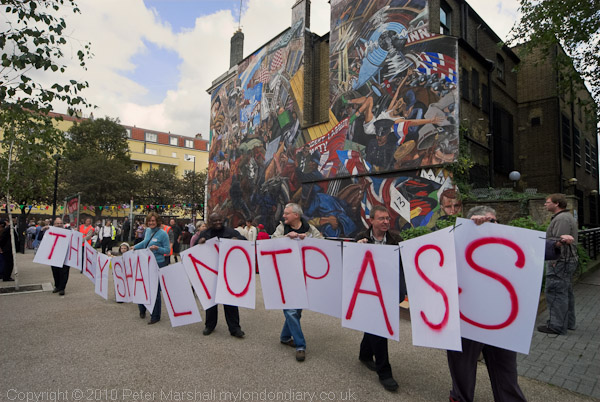
Black bloc rally at the Cable St Mural

Continue reading Cable St & Bermondsey

Business as Usual

One of the reasons I post here about my work on My London Diary earlier in the year is to check up on that web site. In some ways its a rather primitive site, a throw-back to the early days of the web, entirely hand-coded, though usually with the aid of an ancient version of the best WYSIWYG software, though now that outdated description ‘What You See Is What You Get’ no longer really applies, and what I see when I’m writing the pages is very different to the web view.

I first designed the site back in 2001, and even then it was somewhat archaic, reflecting my views on simple web design at at time when flash bang and wallop was infecting the web, largely running on our relatively slow connections that weren’t ready for it. Designing image-loaded sites like this that were reasonably responsive was something of a challenge, and needed relatively small images carefully optimised for size, with just a small number on each page.

Although the site still has the same basic logical structure, times and the site have changed a little to reflect the much higher bandwidth most of us now enjoy, with several re-designs and many more images per page, as well as slightly larger and less compressed images. Size is now more a problem of controlling use (or abuse) of images than download time, and new images are now always watermarked, if fairly discretely. The latest small changes in design have been to make the pages ‘mobile friendly’ without essentially changing their look.

I suspect that My London Diary is one of the largest hand-coded sites on the web – with over 150,000 images on over 10,000 web pages. But the simple site design means the great majority of the time involved in putting new work online isn’t actually the web stuff, but editing the images and writing the text and captions, so there is little incentive for me to move away from hand-coding.

But I’m not really a writer of web sites (though I have quite a few as well as My London Diary) or this blog but a photographer and though My London Diary is important in spreading my work and ideas, it has to fit in with that. Often the web site gets written late at night or when I have a little time to spare before rushing to catch a train, and often I have to stop in the middle of things to run to the station – or fall asleep at the keyboard. So while in theory I check everything, correct my spelling and typos, make sure all the links are correct and so on, there are always mistakes. And just occasionally my ISP has something of a hiccough and puts back an earlier version of a page or loses or corrupts an image (though they deny it.)
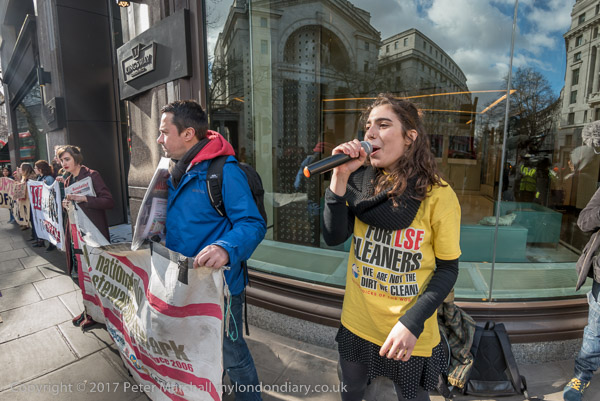
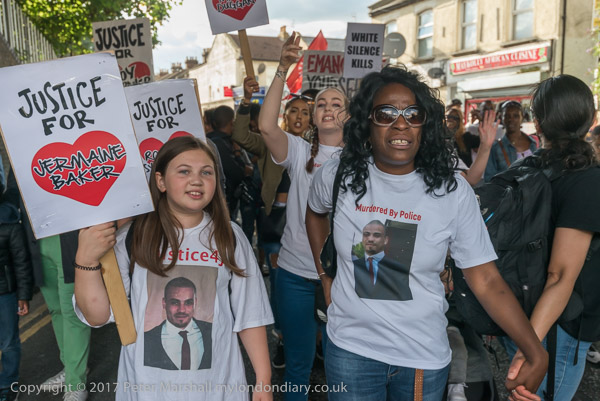
This morning I opened the pages on End homophobic bullying at LSE , the first protest I covered after returning from Hull, only to find I’d not put any captions on them, not even adding the spaces between pictures for them to go in. So before I started to write about them I had work to do.

Otherwise I might have had more to say about the pictures. Yet again how useful the fisheye can sometimes be, or about reflections in pictures or to fulminate against homophobia, the failure of LSE management to live up to the pricinciples the instituion espouses, the inherently evil nature of out-sourcing and the need to treat everyone with dignity and respect and to pay a proper living wage. But today you can relax and take that as read.

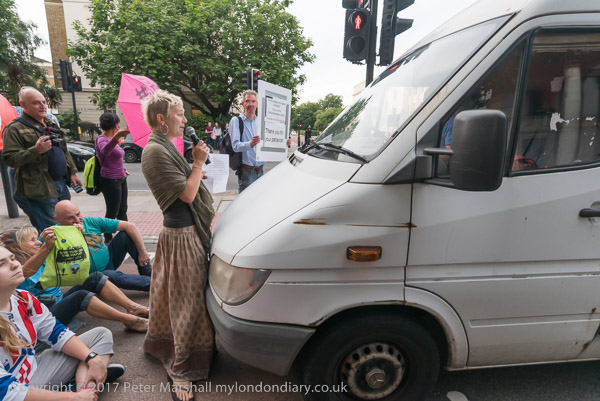
The pictures are workmanlike, they serve a purpose, do the job, but it wasn’t one of my better days. Dull weather perhaps didn’t help, but sometimes the magic just doesn’t happen. The following day was perhaps a little better (I’ll let you decide) and certainly much busier, with pictures from five events.
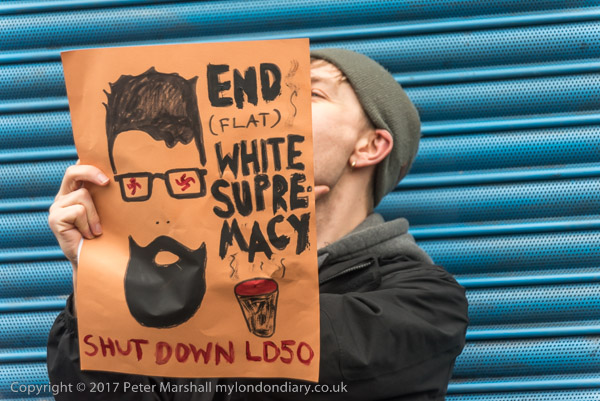
I started with Shut race-hate LD50 gallery, a crowd outside the place which they say “has been responsible for one of the most extensive neo-Nazi cultural programmes to appear in London in the last decade” ,  but didn’t really offer a great deal to photograph. The gallery itself was on the first floor above  a shuttered shopfront, and had clearly had a brick through a window, and there were a couple of arguments outside, but mainly it was scattered people standing in small groups on the street.
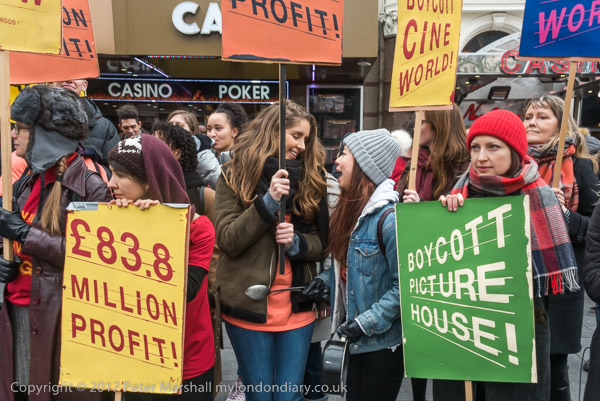
Trying to do too much, I arrived late and left early for the Picturehouse recognition & living wage protest in front of the Leicester Square Empire.  There’s a pleasant symmetry in the picture above, but I missed the scrum later when Jeremy Corbyn arrived to give his support.

It’s always difficult to know when to leave (or arrive) at events, and photographers spend many hours standing around waiting. But I’m impatient by nature and sometimes miss things. Other times I find a place to sit and read a book, and if its a decent book have been known to miss the action.
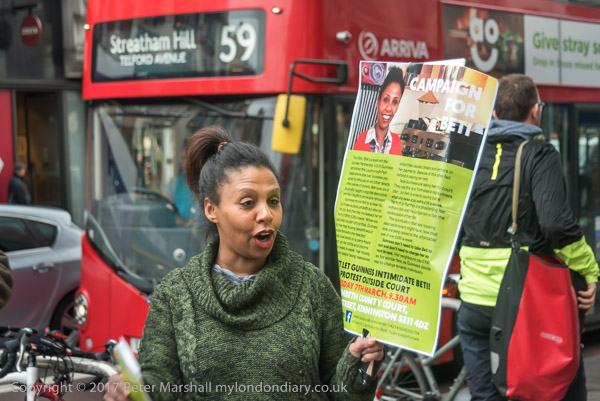
But I was in Brixton, meeting Beti, a victim of gentrification and social cleansing, not in her case by one of the mainly Labour London councils but the Guiness Trust, formed by a great-grandson of the brewery founder in 1890 to provide affordable housing and care for the homeless of London and Dublin and now as The Guinness Partnership owning 65,000 homes in England.

Betiel Mahari lived in one of these with her family on the Loughborough Park Estate in Brixton for ten years, paying a ‘social ‘ rent but was never given a secure tenancy. Guiness demolished her flat in 2015, giving her a new flat a few miles away in Kennington – but at a hugely increased ‘affordable’ rent, going up from £109 per week to £265.  The move meant too she was unable to keep her full-time job as a restaurant manager, and is now on a zero-hours contract as a waitress and facing eviction as she cannot pay the increased rent.  DWP incompetence meant that her benefits were suspended completely for three months (and on zero hours contracts the benefits have to be re-assessed every three months in any case) and Guiness were taking her to court over rent arrears.

The case was heard around 10 days later and as thrown out by the judge who ordered the Guiness Partnership to pay Beti’s court costs, but the struggle to get this rapacious ‘social’ Landlord to treat her and others in similar straits continues. I was pleased to be able to support her, though not entirely happy with the pictures at Stop Unfair Eviction by Guinness, which also include some of Brixton Arches.

I arrived back in Westminster just in time to meet the Khojaly marchers coming down Whitehall to end their protest in front of Parliament.  Few of us will remember the massacre on the night of 25-26 February 1992 when Armenian forces brutally killed 613 civilians in the town of Khojaly, including 106 women and 83 children, but the name Nagorno-Karabakh  may prompt some memories. In 25th anniversary of Khojaly Massacre I try to give a little background to the still unresolved situation.
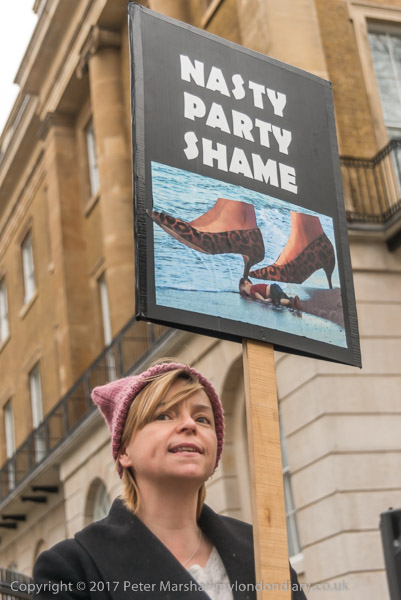
But I was on my way to an event marking the shameful failure of Theresa May and her government to take the action demanded by Parliament to bring the great majority of the refugee children stranded at Calais and similar camps into this country. By passing the Dubs Amendment, Parliament made its view clear and it reflects a failure of our constitution that there seems to be no legal mechanism to force the Tory government to carry this out. This is truly a stain on our country’s history and May and her cabinet deserve to be behind bars for this crime against humanity.

Dubs Now – let the children in

Continue reading Business as Usual
More Hull

There really is so much to see and do in Hull, though the city is not so huge as to feel unapproachable, as can sometimes be the case with London. Most of what is more interesting is within walking distance of the city centre, and what isn’t is largely a short bus ride away.

Though there are parts of Hull that are rather cut off, particularly by the A63, a busy major trunk route that was pushed through south of the city centre with little or no regards for the movement of local people. It was of course necessary, but while other cities might have got a by-pass, Hull got a through-pass.

It went partly through former dock areas but split the old town in two, cutting off its southern tip, with its marina, wholesale vegetable trade and the redundant pier, none of which were greatly valued by the authorities responsible. There were plans for a wide pedestrian overbridge in time for Hull2017 to give easy access to Hull’s new leisure area but this never happened. Getting across on foot requires a lengthy wait at one of a couple of pedestrian crossings, or a longer walk around to the one road that goes under the A63 where it rises to cross the River Hull.

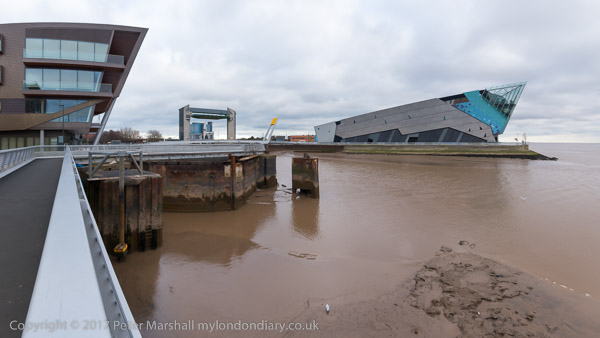
But it does mean that it is much easier for visitors to get to Hull’s most popular tourist attraction, The Deep. Worth a visit if only to go to the cafe, where you can climb the stairs to the upper level viewing area. You don’t have to pay and can walk past the queues, and though I can’t recommend the food, at least it isn’t silly expensive like at many tourist attractions.

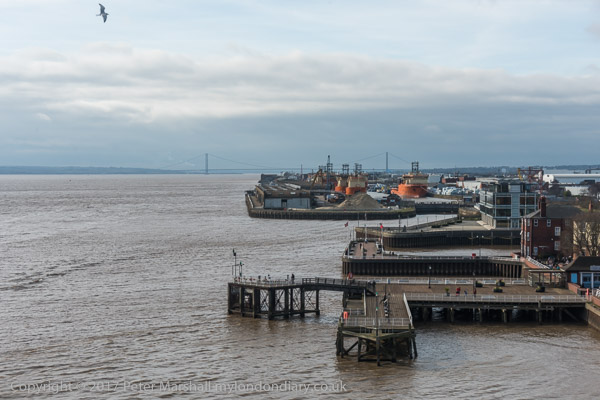
Mostly you will be looking through glass, and it can’t be easy to clean so your vision will be slightly impaired, but you will be spared the wind and rain. It was quite blustery on the small outside area, and the view is a little limited, but does give a splendid view of the Western Docks.

The Deep

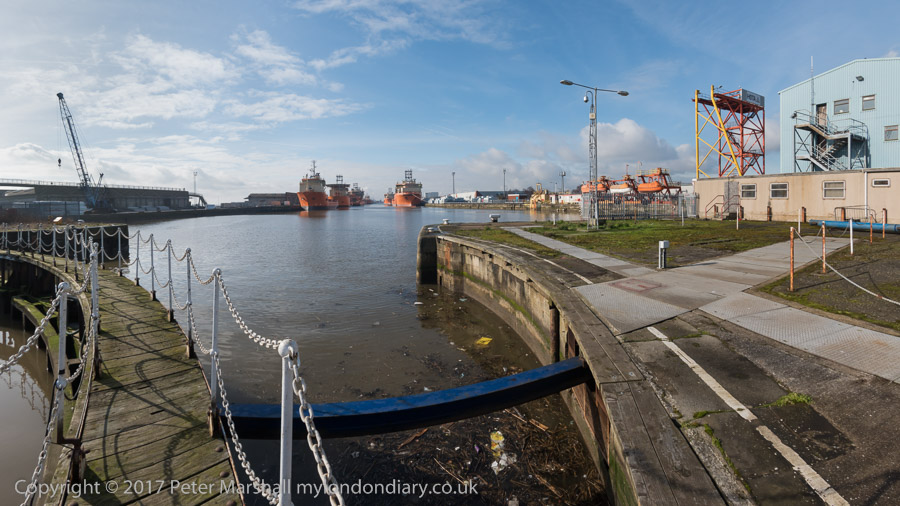
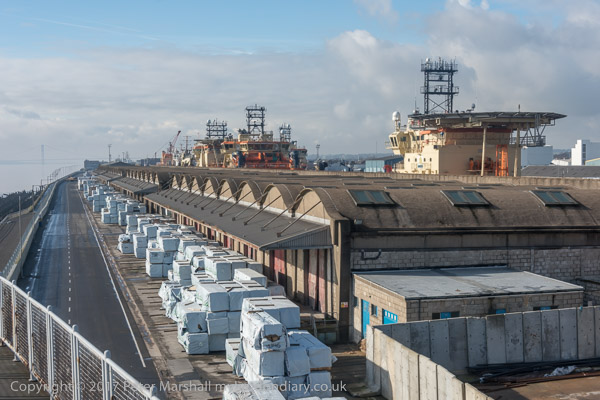
But better still you can visit these on foot, taking a few steps along the Trans-Pennine Trail, my favourite Hull footpath. If that rather flimsly looking lock gate puts you off, there is a much more solid structure as an alternative at the East end of the lock, and from either you go up onto the rooftops of the Riverside Quay.

Albert Dock

Walking along there, or taking the bus out along Hessle Rd to West Dock Ave and then finding the rather well camouflaged path under the railway and Clive Sullivan Way (that A63 again) will take you to the remains of the former fish dock, St Andrews Dock.

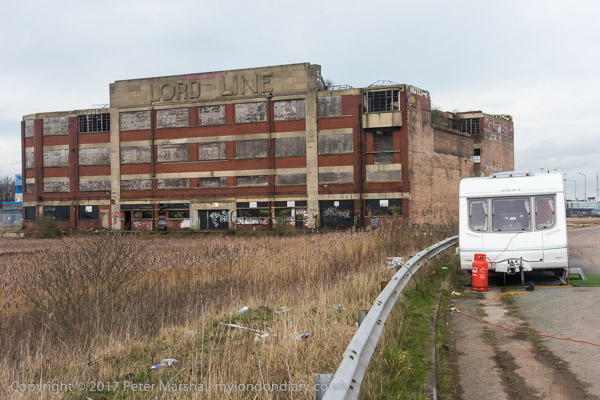
This is another site of failed plans, and you many need to hurry as there are applications for the demolition of the unlisted Lord Line building, and probably designs on getting rid of the two listed buildings close by.

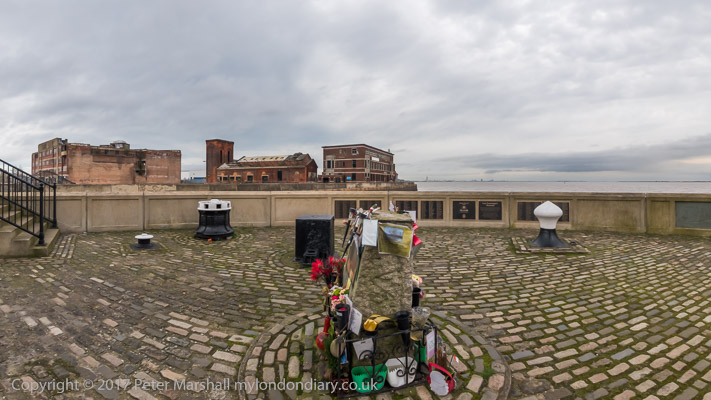
On the ‘bullnose’ at the former dock entrance is one of several memorials around Hull to fishermen, many of whom sailed away and never returned. Even in recent times deep sea fishing was a dangerous occupation, though made a little safer by the protests of one of Hull’s heroes recently commemorated in a Hull mural, Big Lil, who led a fight to get radio operators on every voyage. A short walk further west there is now another memorial.

St Andrew’s Dock

You can see more of the pictures I took on this trip in the ‘Hull Supplement‘ on My London Diary.
Continue reading More Hull

Robert Delpire (1926-2017)

Photography owes much to the work of Robert Delpire, who died on 26 September, aged 91, but probably few of us realise the huge contribution he made in other areas of his publishing. Back in 2012 in New York, the Cultural Services of the French Embassy in collaboration with Aperture Gallery, The Gallery at Hermès, and La Maison Française of New York University presented Delpire & Co., an exhibition featuring a half century of achievement in the life and career of Robert Delpire, and the short video on their web site has his wife Sarah Moon talking about his career.

Probably most photographers know him best as first publisher in 1958 of Robert Frank’s legendary ‘The Americans‘, which was only later published in the USA and much later became a book that every serious photographer had to own. But possibly an ever greater legacy to photography was the whole series of those small black covered ‘Photo Poche‘, carefully selected and well-printed collections of photography at a price that students and struggling photographers could afford – and most of us will have a few on our shelves.

But so much has been written about him that it would be superfluous to add more, but here are some of the more interesting links I’ve come across so far that go beyond the Wikipedia article – but there are and will be many more:

The great publisher Robert Delpire passed away: The Eye of Photography
Obituary: Robert Delpire, Publisher of Robert Frank, Josef Koudelka, Cartier-Bresson: Photo District News
Remembering the legendary Robert Delpire: British Journal of Photography
In Memoriam: Robert Delpire (1926-2017): Magnum
Remembering Robert Delpire, Publisher of the Greats: Aperture

Blade Revisited

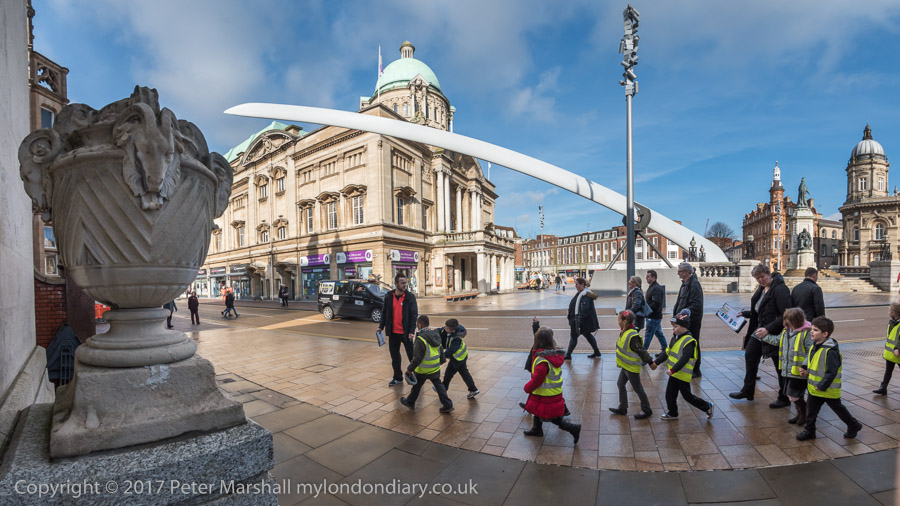
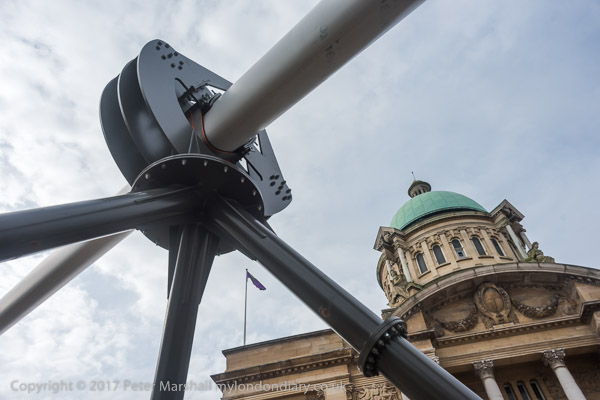
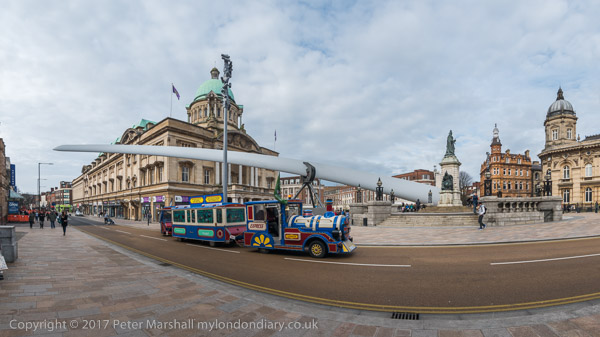
Almost certainly the single thing that brought most attention to Hull’s year as UK City of Culture – at least so far – was the appearance in the city’s main square of a giant wind-turbine blade, made at the Siemens blade factory now occupying the former Alexandra Dock in East Hull.

Seeing them as we do on the horizon as we do from Hornsea  and elsewhere along the East Yorkshire coast they look small and rather delicate, but close up the 250 foot long blade seemed pretty solid – and, dare I say it – rather boring.  Though it was hard to imagine it having the strength to stand up to North Sea gales.

I’d previously seen – but failed to photograph (thanks to Fuji’s short battery life and my lack of preparedness) – wind turbine blades in a yard beside the Kiel Canal, but those blades in my memory were rather shorter and stubbier and seemed more likely to provide large amounts of power than this slender object.

But is it art?’ some asked, and certainly it lacked the shock and re-purposing of an upside-down urinal.  It reminded me more of those odd lumps of machine parts we used to come across visiting various railway preservation sites of which one of my son’s young friends, desperately trying to lift something several times his own weight asked ‘Is it spare?’

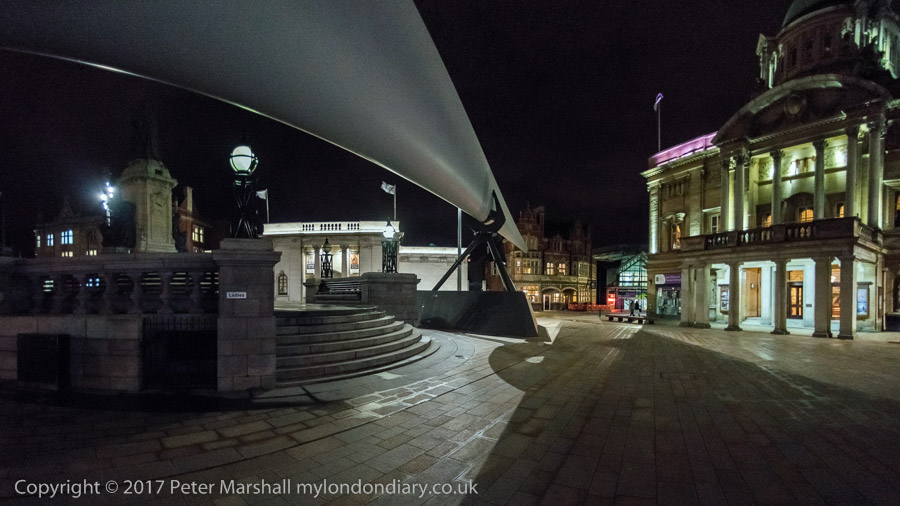
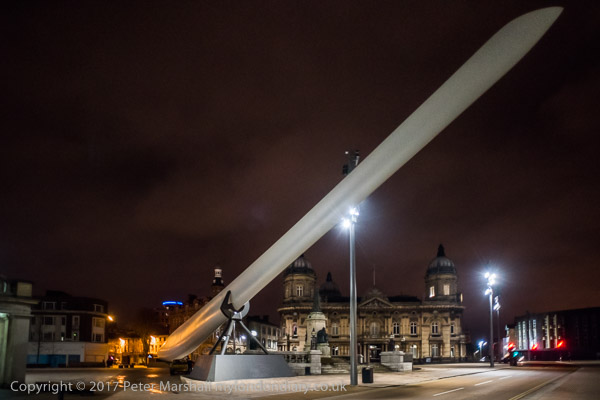
Late at night – not very late, but as usual the centre of Hull was deserted when we arrived back on the bus from Beverley – it became a sword reaching up into the sky, perhaps looking rather more like an art-work than a rather large bit of junk.
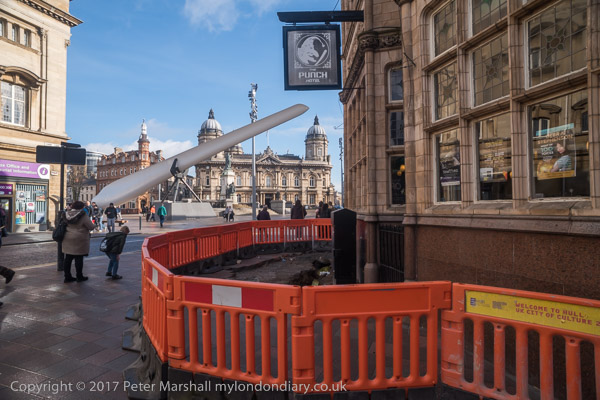
But I couldn’t help thinking that Hull at the time had a considerably larger and perhaps even more impressive work of art, one that snaked its way across the whole of the city with those thousands of orange barriers turning the centre into a maze, making some areas difficult to penetrate.

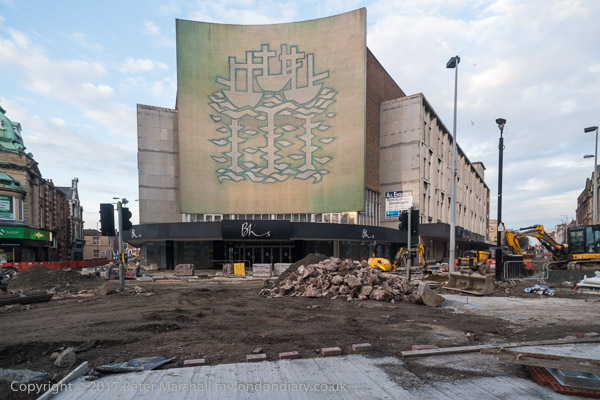
I’m not sure what has happened to the blade, now long gone from Queen Victoria Square, though there were plans to exhibit it permanently at the Siemens factory. But I am worried too about the future of a rather more significant publicly sited art-work, the ‘Three ships’ mural designed by Alan Boyson for the Co-operative Society shop in Jameson Street in 1963, commemorating the Hull fishing fleet (and you can read HULL at the top.) And at the time I took this picture it was totally surrounded by those orange barriers over one of which I was leaning.

The mural is a monumental mosaic of Italian glass, with 4224 foot square slabs, each made up of 225 small glass cubes, fixed on  a 66ft x 64ft concrete screen – a total of over 950,000 cubes.  Co-op became BHS and BHS went down, failed by Sir Philip Green who suck out the cash and gave away its husk. Leaving the future of the mural in doubt.

One of the major disappointments of Hull’s year as UK City of Culture came when Historic England announced ten new Listed Buildings to celebrate the year, but failed to include this mural – which they had also previously turned down for listing the previous November.  Like a number of other recent listing decisions they have turned down – including those of the Robin Hood Gardens and Central Hill estates in London – there are suspicions that their decision many have been influenced more by commercial interests than made on artistic grounds.


You can see many more pictures from my visit to Hull in February on My London Diary.

I photographed Hull extensively in the 1980s, and there are many pictures from that era on my Hull Photos site, with a new image being added every day during #Hull2017 to celebrate the city’s year as UK City of Culture. I also post these every day on Facebook, along with a comment on the image.

Continue reading Blade Revisited

Down River

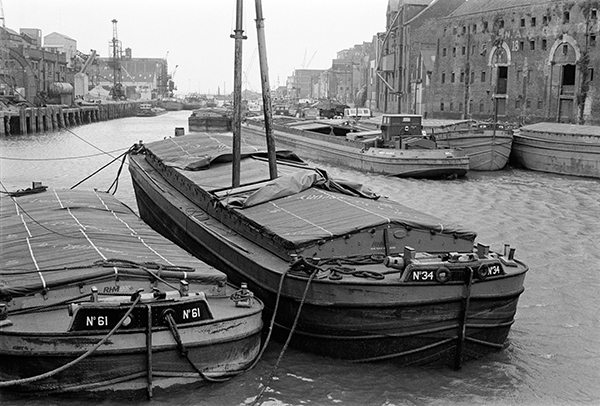
This was the River Hull from Drypool Bridge back in 1977, in what was known as the Old Harbour, in use from before Hull had docks, and still in use in 1977. Those barges in the foreground were moored in front of Rank’s Clarence Mill, one of Hull’s great landmarks,  rebuilt after being almost completely destroyed in the war.

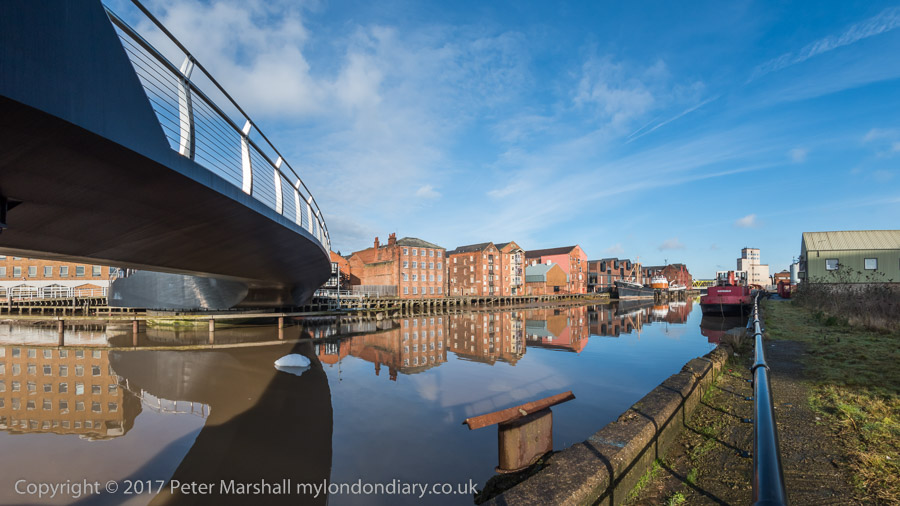
That same waterfront, seen looking upriver towards where I took the earlier picture in February this year is rather different. There are only two vessels moored and one of those is the museum ship Artic Corsair, Hull’s last surviving sidewinder trawler, bought by the council in 1993 and now occasionally opened to the public. The other at right is the Dovedale, built as an inland tanker in 1962 that has clearly seen better days.

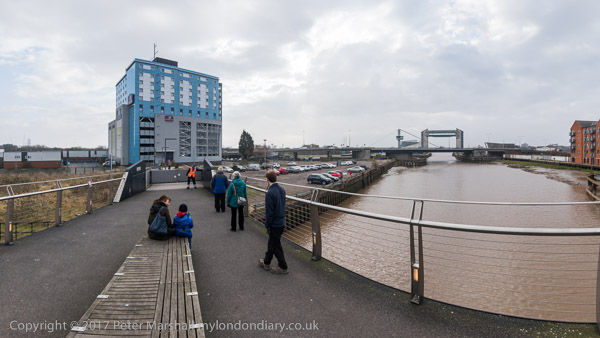
There are three new bridges across the Hull, two of them footbridges and the other carrying the heavy traffic of the A63, including much going to and from Hull’s King George V dock, as well as a tidal barrier.

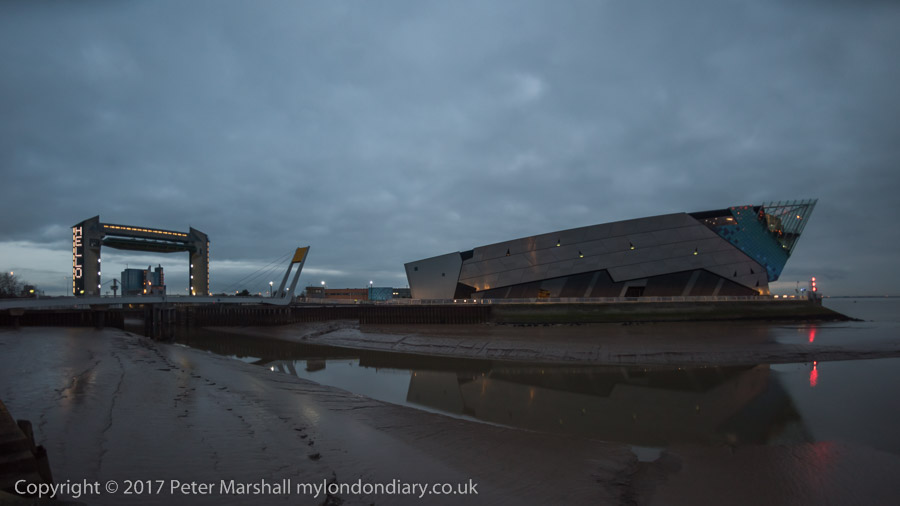
And past the tidal barrier at the mouth of the river is of course now The Deep, a major visitor attraction.  The message on the side of the Tidal Barrier was an art installation which enabled people to put up their slowly scrolling messages on it. Hull has always suffered from flooding, with much of the area being very close to sea level and reclaimed from marshland. The tidal barrier keeps out tidal flooding, but the dramatic floods in the summer of 2007 in which almost 8,000 homes were flooded and 1300 businesses effected came from heavy inland rainfall converging on the area and swamping the rivers and drains.

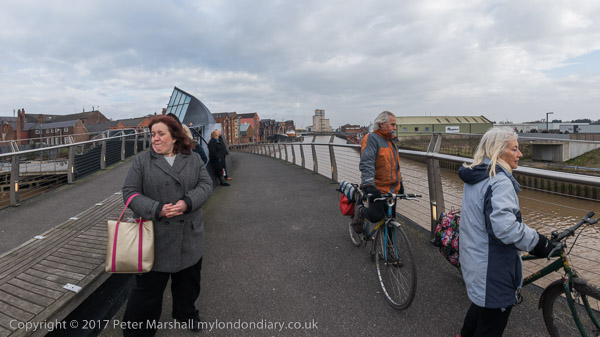
A day later I joined around twenty other  people for a ride on the most recent bridge, the footbridge at Scale Lane, which was designed to allow people to be on it while it swings around through about 90 degrees to leave the river clear.

Of course with little or no river traffic, there is seldom a real need for the bridge to open,  but it still has to be able to open – along with the other bridges across the River Hull – if a vessel requests passage.  Last week in an art event as part of Hull2017, all 13 bridges between East and West Hull were opened together for a minute at the Autumn Equinox (or technically around 45 minutes before it), splitting the city in two. There is considerable rivalry between the two halves and some Hull residents would like the opening to be permanent – and one listed bridge has been open permanently since 1994.

The bridge rotates around an axis close to the west bank of the river, where a curved walkway remains in contact with the land, but the other end swings out across the river, with gates on the approach and on the bridge itself being closed seconds before the bridge begins to open. It then moves slowly and steadily, fully opening in a minute or so before moving back and into position again. It isn’t exactly a thrilling ride, but interesting and free  and once or twice a week (times on the Hull corporation web site) makes sure that the bridge will still work.

More pictures
River Hull
A Ride on Scale Lane Bridge

Continue reading Down River

Finsbury Park Again

I walked past the New River on what seemed a long march on Saturday, against the London Borough of Haringey’s intention to give away a couple of billion pounds of public property to a rather doubtful Australian property developer. It’s a course of action that should be criminal, but unfortunately our laws are seldom written to protect the rights of ordinary people, many of whom will lose their homes as a result.

Haringey’s plan, being pushed through by a small group of Labour councillors and officials is unusual only in its scale; one poster being carried on the march listed over a hundred council estates in London that Labour councils either have or intend to hand over to private developers (who now include housing associations) with an almost complete loss of truly affordable social housing, a process they call ‘regeneration’ but which is more accurately described as social cleansing. It’s really long past time the Labour party put it’s house and its housing policies in order.
Of course local government in the UK has always been rife with corruption, a curious mixture of public service and private gain, with the private interests of councillors and their relatives often profiting from public decisions. It was doubtless so in the Victorian era, though at least then it was tempered by a great deal of municipal pride which provided some fine public buildings – and more recently at least in some areas by the building of flagship council estates, like the Heygate in Southwark and Central Hill in Lambeth which I’ve written about here in the past.

And back then there was perhaps some satisfaction for those people thrown out of their homes with nowhere to go in the feeling that those responsible might eventually get their just reward in the fires of Hell, whereas nowadays they are more likely to end up on hefty expenses in the House of Lords.

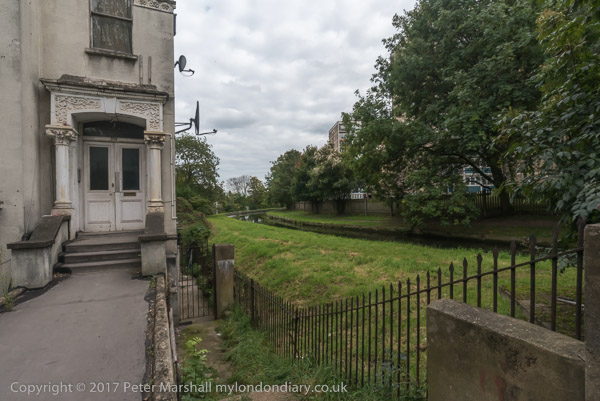
But more of that in a later post, after I’ve put the picture from the march onto My London Diary, currently stuck somewhere in early August.  But walking along the street I suddenly remembered I’d been here before.

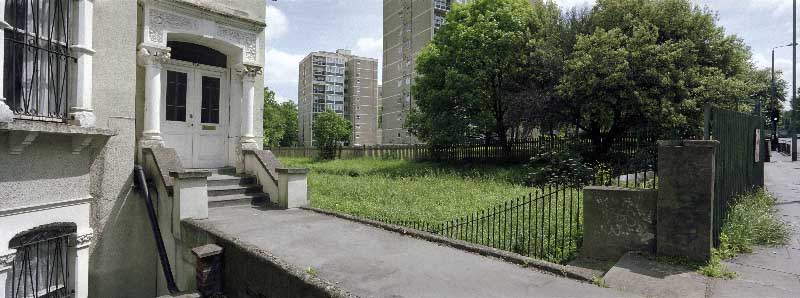
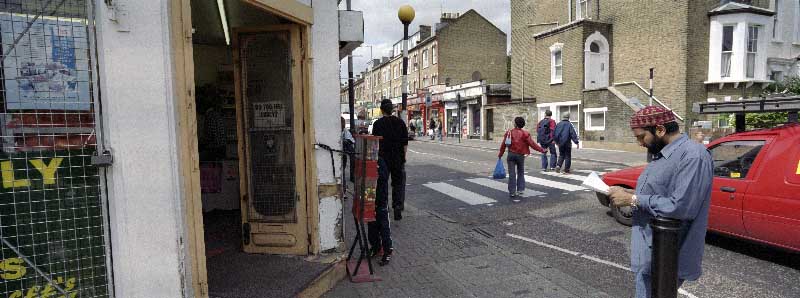
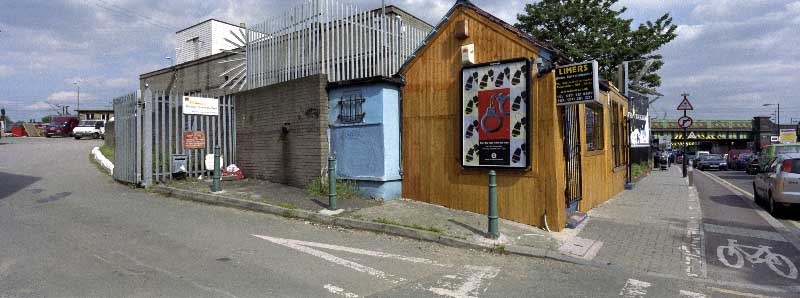
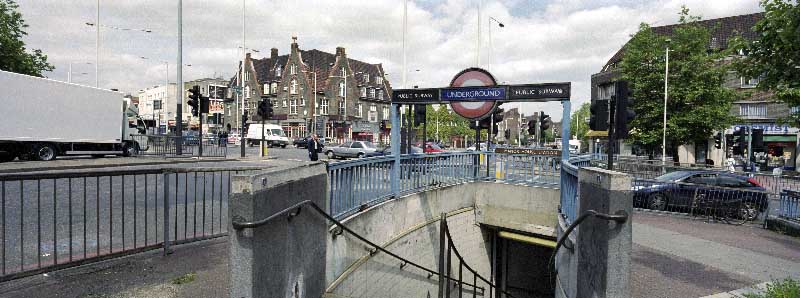
Back in 2002, I was busy with my Hasselblad X-Pan in and around FInsbury Park, having recently acquired the 30mm lens which changed it from a panoramic format camera into a true panoramic camera. There seemed to me to be little point in using the camera with the standard lens, although the larger negative (24mm high and 65 mm wide) did produce medium format quality on 35mm film. The 30mm f5.6 gives a horizontal angle of view of 94 degrees, about the maximum that makes sense with a rectilinear perspective, with any larger angle of view the elongation of subjects at the image edges becomes unbearable.

If you are wondering, the 45mm is roughly equivalent ot a 25mm lens on a 35mm full-frame camera, while the 30mm equates to 16.7mm. And while I’ve used wider full-frame lenses, including the remarkable Sigma 12-24mm zoom, anything less than 16mm is almost always better done with a fisheye.

Most of the 36 images on the Finsbury Park mini-site were taken using the 30mm lens, which came with its own viewfinder, and a filter to even out exposure across the frame. Although the centre of the film when focused at infinity (as all these pictures probably were) was only 30mm from the film, the extreme edges are almost 44mm away, and receive slightly over a stop less light, though lens design probably makes the difference even greater. With colour negative film the centre spot filter was essential, though you could use the camera for black and white without and compensate in the darkroom.

One of the images from this set, of the New River, won a small competition and now hangs on my bedroom wall, though it wasn’t my personal favourite of the set. On Saturday I didn’t quite make the march as far as Finsbury Park. Photographing a march is considerably more physically tiring than simply walking, involving a lot of hurrying to and fro, a little climbing on walls and too much walking backwards, and I also find it mentally tiring, and buy the time we reached Manor Park I needed to rest.

More panoramas from Finsbury Park though the print prices are rather out of date.

Continue reading Finsbury Park Again