Save the Elephant


Protesters outside the council meeting

London’s Elephant, or Elephant & Castle is south London’s major road junction, funnelling traffic from Westminster, Blackfriars and the city to where both the A2 and the A3 head off, one to Dover and the other towards Portsmouth and the south-west.

It gets its name from a coaching inn, probably older than Shakespeare, replaced several times over the years, most recently around 1960. That name and the elephant symbol on the 1965 shopping centre probably came from the Worshipful Company of Cutlers, who used ivory on the handles of their knives and whose coat of arms is supported by two elephants and, since 1622 has had a crest with an elephant carrying a castle on its back.
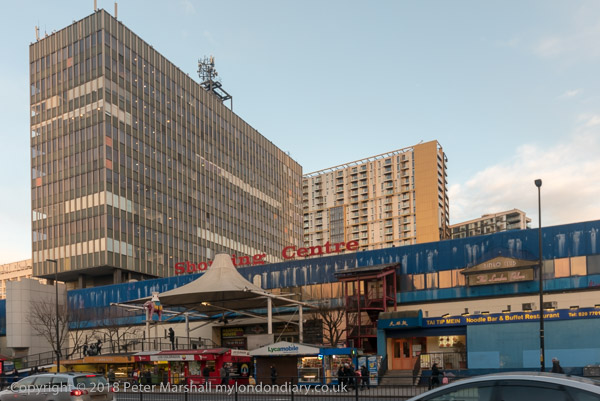

The Elephant & Castle shopping centre

Although the post-war reconstruction of the area included some of the better buildings of the era – including the now demolished Heygate Estate* and the 1959 Alexander Fleming House (1959) now converted into flats – the shopping centre, planned with great aspirations to revolutionise retailing in the UK was sadly reduced in scope by budget restrictions and never really took off. Increasingly it was isolated by the ever heavier traffic flows and the often unpopular subways many had to use to reach it.
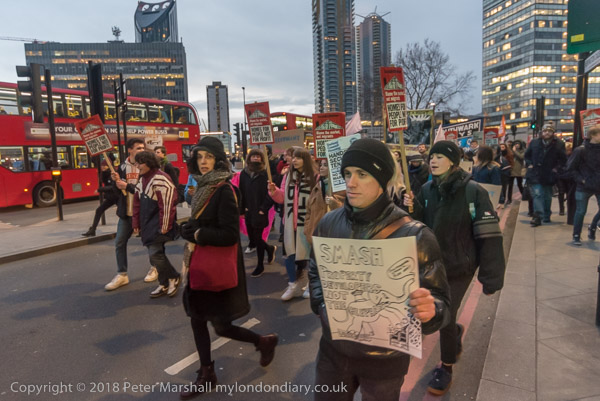

The march sets off from the Elephant

New road layouts, including the removal of the subways have improved the area, but the shopping centre is still less than inspiring, though a thriving and lively market has grown up there, largely due to the Latin American community. But that doesn’t make enough money for Southwark Council and the private developers the council has largely been taken over by, and there has been a huge programme to replace low cost social housing by high rise private towers and estates, forcing many of the former residents out of the area, often to the cheaper fringes of London or further.

As well as towers like the ugly Strata with its purely decorative green-washing wind turbines on its top (they caused highly unpleasant vibrations for the residents when used) there are larger schemes such as Elephant Park, which replaced the Heygate, as well as ongoing demolitions on the large Aylesbury Estate and plans to remove all or most of the borough’s council housing by the Labour council dominated by the right-wing ‘Thatcher-Lite’ New Labour Progress group. Much of the new properties are destined to be sold off-plan to foreign investors and never occupied and very few will provide the new homes that so many Londoners desperately need at rents they can afford.
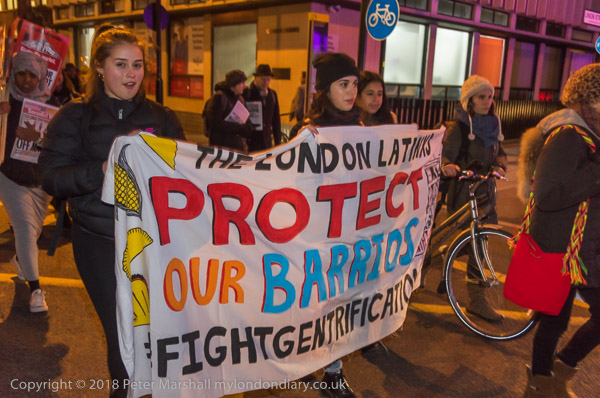

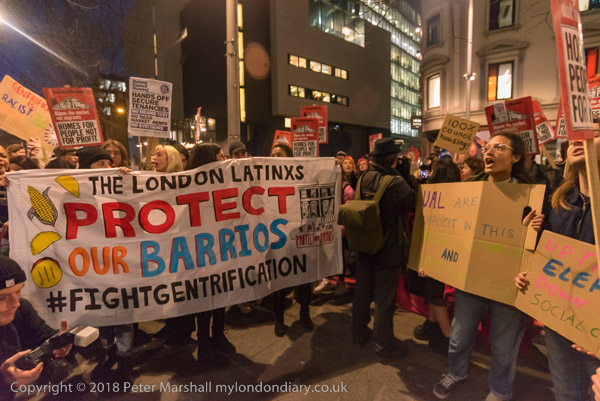
London Latin American banner on the march ‘Protect our Barrios – Fight Gentrification’

So it came as no surprise when the council and the new owners of the shopping centre Delancey announced plans in 2015 to demolish it and redevelop the area. Nor, given what has already happened in the area that the needs of the growing Latin American population, which in 2009 the chair of the London Assembly had made clear were important and should be taken into account in the regeneration of the area were almost completely ignored. Though they weren’t being singled out – the needs of the rest of the community were also marginalised in a redevelopment by Delancey together with the London College of Communication who would get a new campus.
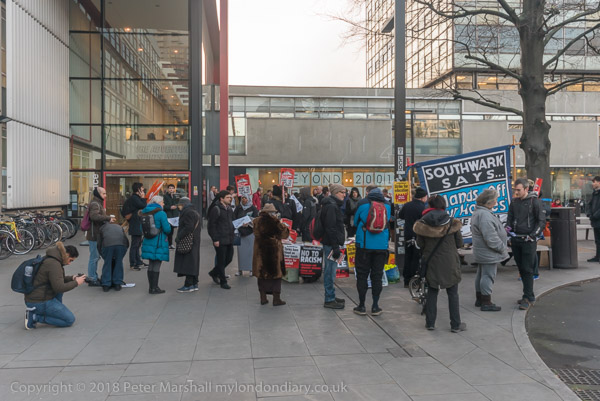

The protesters meet for a rally before the march at the LCC, where a student occupation is taking place against the plans

As well as local residents and traders, the protest also included students from the LCC, who incensed by the proposals and their management’s collusion with Delancey have occupied part of their building. Trade unionists from the LCC and also working for Southwark Council were also taking part in the protest, and a number of councillors had also come out against the proposals which the council officers had recommended and the cabinet were hoping to push through. I left well before the end of the long meeting, where the full council turned the current proposals down (14 had earlier signed an open letter against the scheme, citing “unacceptable” social housing provision and inadequate protection for traders), but after several more hours in private session agreed to hold another meeting at the end of the month, where Delancey were expected to come up with an improved proposal.
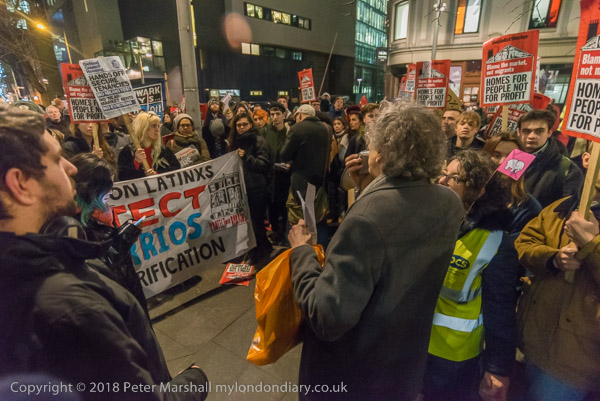

Piers Corbyn, Jeremy’s older brother and a Southwark resident speaks to to the crowd

The protests so far have obviously led to some improvements in the scheme, but the gulf between development for profit and development for public good is still huge and it seems unlikely that it can be bridged. Until the Labour party membership in Southwark – and other London Labour councils – takes back control from Progress though the democratic mechanisms of the party, social cleansing will continue.

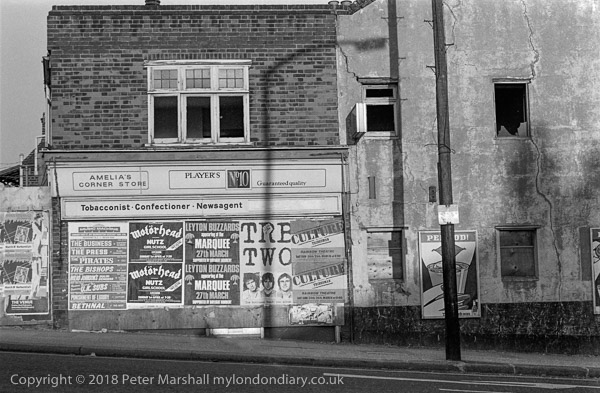
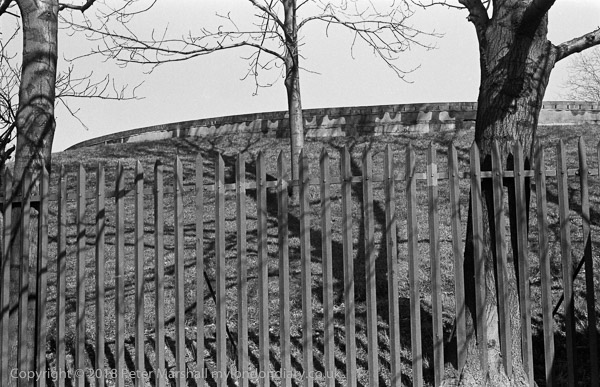
As well as pictures from the protest I arrived a little early and took a few pictures in the immediate area Around the Elephant.

Images and text of the protest are at Don’t destroy Elephant & Castle
______________________________________________________
*
Walking the Rip-Off – Heygate & Aylesbury
Heygate Estate Scandal
Heygate Panoramas

______________________________________________________

There are no adverts on this site and it receives no sponsorship, and I like to keep it that way. But it does take a considerable amount of my time and thought, and if you enjoy reading it, a small donation – perhaps the cost of a beer – would be appreciated.

My London Diary : London Photos : Hull : River Lea/Lee Valley : London’s Industrial Heritage

All photographs on this and my other sites, unless otherwise stated, are taken by and copyright of Peter Marshall, and are available for reproduction or can be bought as prints.

To order prints or reproduce images

________________________________________________________
Guantanamo – 16 years

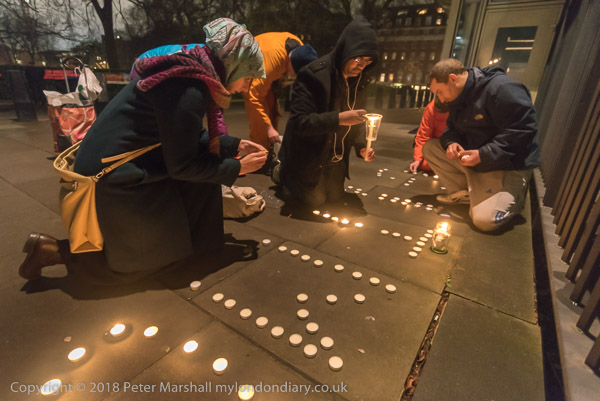
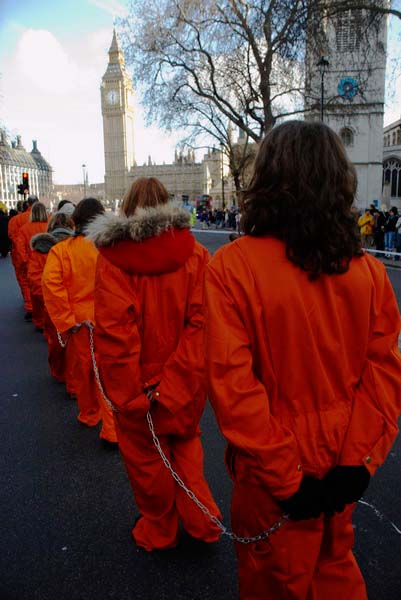
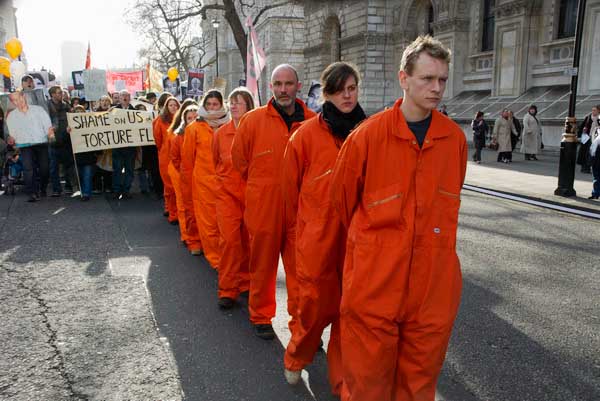
It came as something of a shock to realise that the prison camp at Guantanamo was set up 16 years ago, on 11th January 2002, and that there are still over 40 people held indefinitely there. As I wrote on My London Diary, almost all:

“were sold to the US by Afghan militias and the Pakistani military for cash bounties with no real evidence of terrorist involvement, but whose torture in CIA secret prisons across the world before arrival at Guantanamo as while as throughout their detention there makes their release too embarrassing to US authorities.”

I photographed two events in London to mark the anniversary, a lunchtime vigil in Trafalgar Square and a candlelit vigil in the evening outside the US Embassy, still then in Grosvenor Square. You can read more and see more pictures in the posts on My London Diary:

Guantanamo Vigil Marks 16 years
Close Guantanamo – 16years

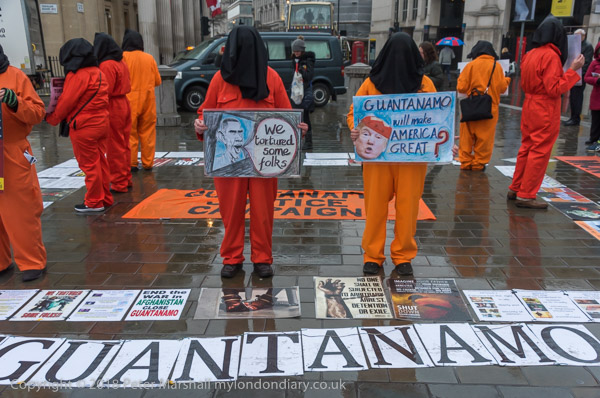
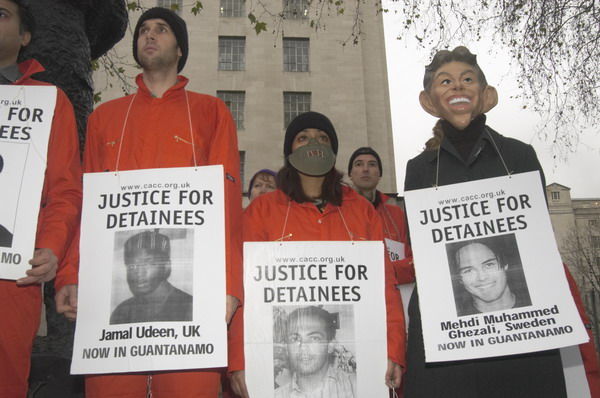
I think the first protest against Guantanmo I attended was possibly in December 2003, though it may just have been the first where I used a digital camera, as relatively few of my pictures on film are on My London Diary, which I set up largely to post my digital work, putting on just a few earlier film images.

Back in those days, the camera I was using was a Nikon D100, and I had only one Nikon lens, a 24-85mm, and would also be using a camera with wider lenses (and longer) loaded with film for most of my work. The rather odd colour of the digital images from those years partly reflects the software used to process the raw files which was at the time limited compared to Lightroom and other current programs, but also my relative inexperience in using digital, though I had been using the camera for around a year.

By January 2006, cameras, software and myself had improved somewhat – and the D200 was perhaps the first digital camera I was really happy with, and many of the pictures were quite respectable. I had also bought several more lenses and had given up using film, working only digitally.

Looking at some of the images full-size, it is apparent how much image processing software has moved on, and I think I could re-process the raw images to produce technically rather superior results – if I had the time. It is one of the advantages of taking pictures in raw format that you can go back and rework them differently, whereas jpegs allow rather less without unacceptable degredation, though Lightroom can often perform a surprisingly good makeover.

Until relatively recently, those bright orange jump suits presented something of a challenge, with some being highly fluorescent which tended to eliminate all detail, but improvements in Lightroom have changed this. Even this year, improvements in the ‘Auto’ setting on the exposure basics have considerably cut down the fiddling involved in this and other challenging situations.

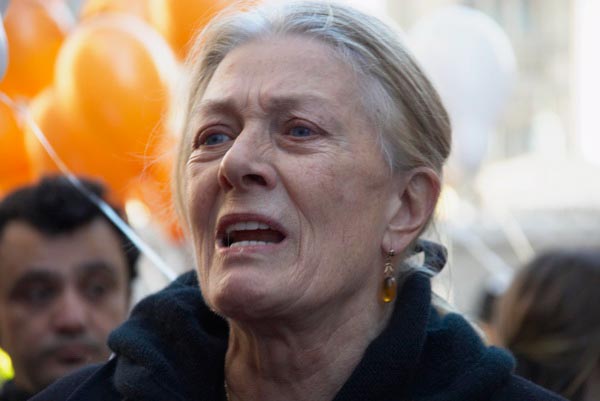
I think this may too have been the first occasion on which I photographed Vanessa Redgrave, and others who spoke included Moazzam Begg, released by that time, and Amani Deghayes whose brother Omar was still being held there.

Later I was pleased to photograph the last British resident held there, Shaker Aamer, after his release, but regular protests continue for the 41 others still held. A site search on ‘My London Diary’ on ‘Guantanamo’ gives over 150 results, and though there may be several links to each protest, there are still reports on a considerable number on the site. Below are links to the four I’ve mentioned here:

December 2003: Guantanamo Bay protest, Whitehall
January 2006: Free British Residents from Guantanamo Bay
January 2018: Close Guantanamo – 16years
January 2018: Guantanamo Vigil Marks 16 years
______________________________________________________

There are no adverts on this site and it receives no sponsorship, and I like to keep it that way. But it does take a considerable amount of my time and thought, and if you enjoy reading it, a small donation – perhaps the cost of a beer – would be appreciated.

My London Diary : London Photos : Hull : River Lea/Lee Valley : London’s Industrial Heritage

All photographs on this and my other sites, unless otherwise stated, are taken by and copyright of Peter Marshall, and are available for reproduction or can be bought as prints.

To order prints or reproduce images

________________________________________________________
Free Ahed Tamimi

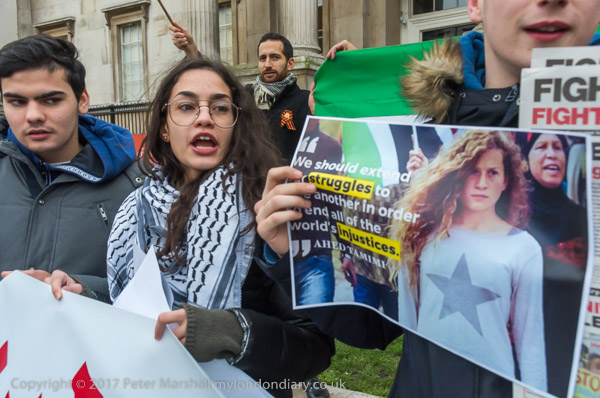
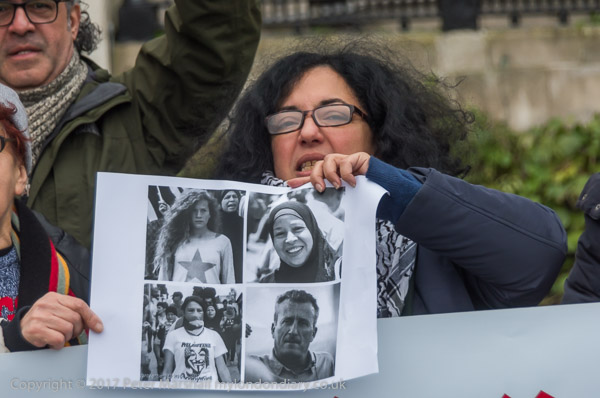
Until I went to the protests over the arrest of 16-year-old Ahed Tamimi, beaten up and arrested by Israeli soldiers at her home in the village of Nabi Saleh in the occupied West Bank at 4am on Tuesday 19 December I wasn’t aware of the personal connections I had with her and her family.

Someone I’d known for some years turned out to be a cousin of hers, something she had only found out a few years ago when she started to research her family history, as her mother who had come to live in this country had never talked about it. Another friend, a photographer, told me while we were watching one of the protests how he had visited Nabi Saleh, staying with some of the family and playing football and other games with the children, as well as photographing the protests while he was there.

Of course I know other Palestinians and have talked with them, and have read the history of Palestine, from biblical times and more recently, listened to people, Palestinians and Israelis speaking about the situation there, read books, watched films and TV and listened to the BBC’s correspondents as well as many interviews with Palestinians and Israelis, getting views from all sides.

One man I know married a Palestinian and spent some years living in Palestine. As well as meeting the couple on visits here, he gave regular long e-mail reports on the problems that he faced from both settlers and the Israeli security forces. In the past I have worked with people who had lived and worked in Israel and talked with them about the situation there. In my first teaching post I was declared an honorary Jew by my Jewish head of department so we could hold departmental meetings while school assemblies took place. Back in those days, like almost all on the left, I was of course a supporter of Israel.

So although I’ve not lived there, or been there, its an area I have a considerable interest in, and have tried hard to cover protests about Palestine and Israel, mainly by pro-Palestinian groups because those are the people who protest, but also the counter-protests by pro-Israel groups. And I try to photograph them without bias, showing them as they present themselves to the world, and to caption them objectively, though on my web site I often make my opinions clear.

I have long hoped for a just settlement in Palestine, one that in the words of Balfour does not “prejudice the civil and religious rights of existing non-Jewish communities in Palestine, or the rights and political status enjoyed by Jews in any other country.” Unfortunately it now seems further away than ever, though perhaps not beyond the realm of possibility, with and optimistic view by Ami Ayalon, Gilead Sher and Orni Petruschka in the Washington Post recently. Perhaps,as with North Korea, Trump will surprise us all – but at least equally likely his interventions will be disastrous.

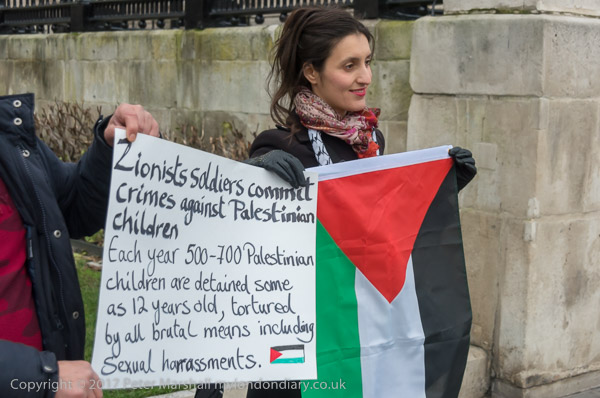
Perhaps the most worrying aspect of the Israeli arrest of Ahed Tamimi who slapped a soldier who entered her home is that she was tried and found guilty by a military court – where the conviction rate is said to be 99.7% – which doesn’t sound like justice. This is a part of what seems rightly to be called an ‘apartheid’ system, with different laws, different roads, fences and checkpoints etc.

Two men came to try and shout down the protest in Trafalgar Square, and there was an argument in which one of them told a protester that he was not British and should “go home”, a clearly racist sentiment against someone settled in this country – and whose family had I think lost their home in Palestine. Later they were joined by a woman whose face screwed up with hate as she tried to shout down the protesters. Activities such as this do the Israeli case no good.

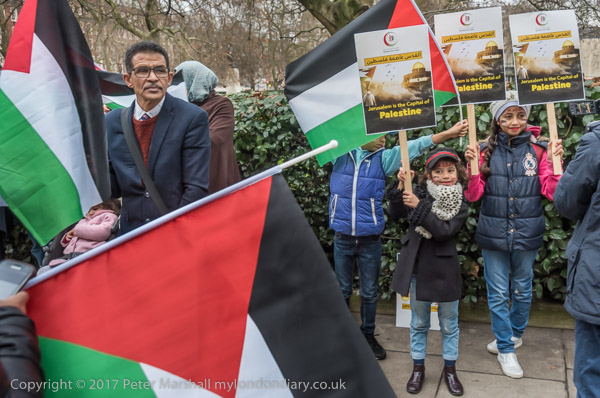
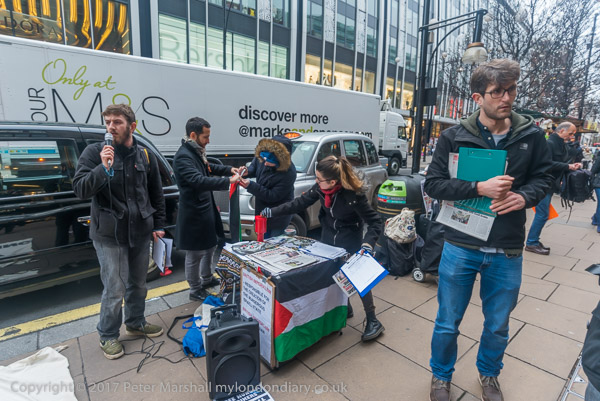
Earlier in the day the Palestinian Forum had held a protest against the US Embassy being moved to Jerusalem and the arrest of Ahed Tamimi. Speakers condemned Trump for his decision to move the embassy and called for peace and freedom for Palestine. And from there I went to a protest outside Marks & Spencer, a major supporter of Israel, where the Revolutionary Communist Group was supporting the very successful BDS movement worldwide calling for a boycott of Israeli goods, divestment from Israel and sanctions, who were also specifically protesting against Tamimi’s arrest.

Free Ahed Tamimi
Free Palestine, Free Ahad Tamimi
Jerusalem, Capital of Palestine

There are no adverts on this site and it receives no sponsorship, and I like to keep it that way. But it does take a considerable amount of my time and thought, and if you enjoy reading it, a small donation – perhaps the cost of a beer – would be appreciated.

My London Diary : London Photos : Hull : River Lea/Lee Valley : London’s Industrial Heritage

All photographs on this and my other sites, unless otherwise stated, are taken by and copyright of Peter Marshall, and are available for reproduction or can be bought as prints.

To order prints or reproduce images

________________________________________________________
Grenfell – 6 months on

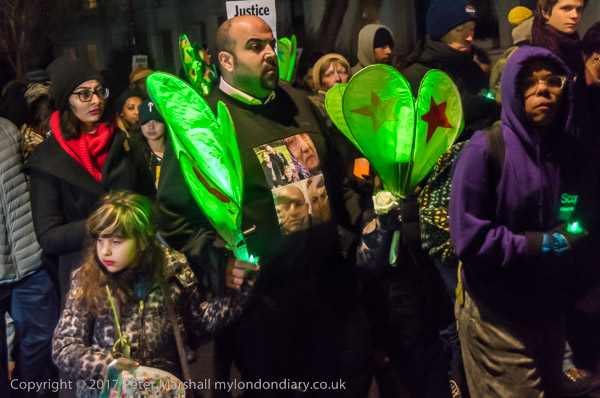
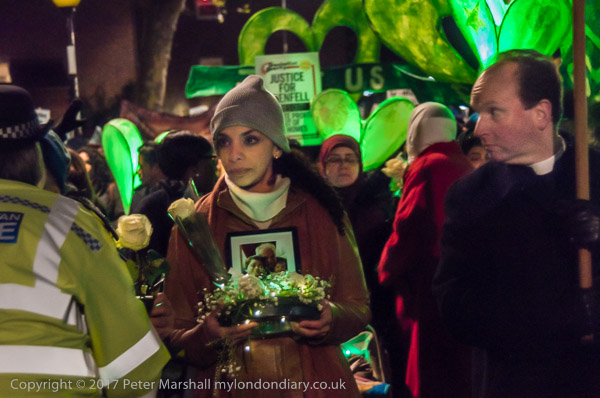
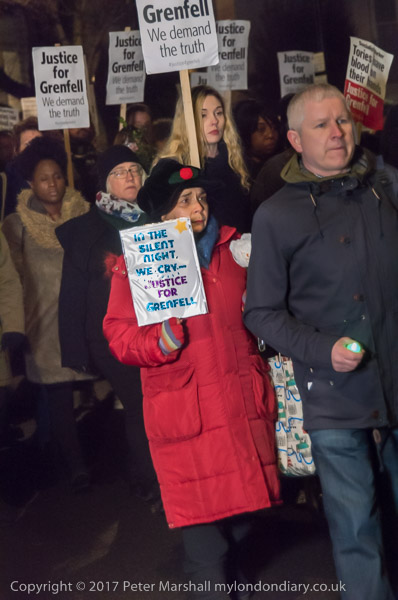
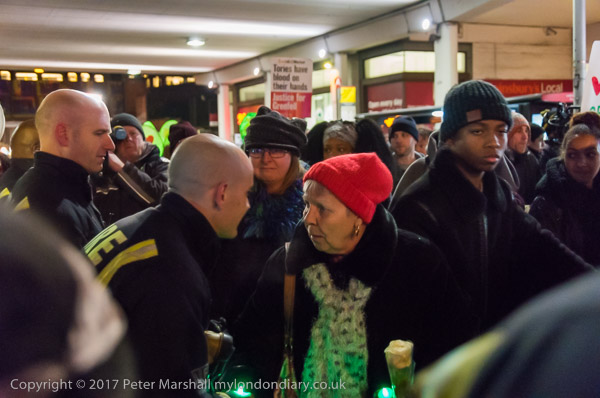
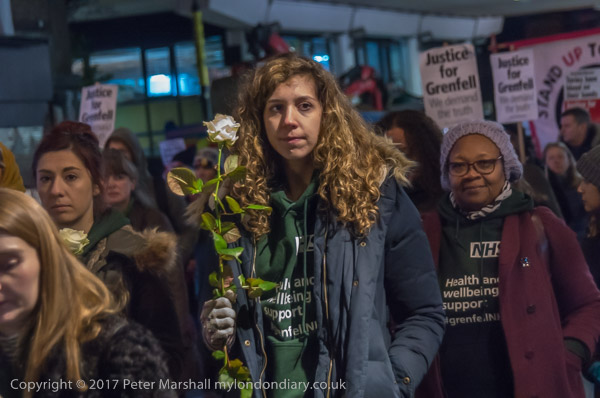
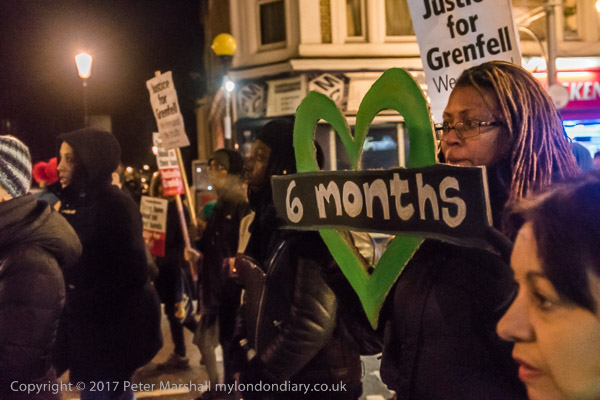
There’s dark and there’s dark, and coming from the bright lights of the city to arrive on Lancaster Rd for the silent march marking six months since the terrible fire at Grenfell Tower, it was very dark indeed.

And Grenfell is dark, not just from the rather dim street lighting, but the shameful and criminal behaviour of the council and others responsible  for creating the conditions that made what should have been a small and easily contained fire into an immense tragedy, and from the failures since then by the council and government to act effectively to ease the situation and the suffering and to search for justice. Dark from the trauma suffered by so many who tasted to smoke and watched as people died, and the failure to provide treatment for so many.

But there is also light and hope, from the response of the community and of the volunteers, many of whom came and gave and who are still giving all they can to help – often at considerable personal cost (and not primarily financial, though there were huge donations – and a huge question mark over what has happened to them.)

Six months on, some things are clearer, but others are still as murky as ever, with the government and local council clearly still hoping to sweep much under the carpet, to ignore issues and hope they will go away. These monthly marches are a way of keeping the memory and keeping the issues live, ensuring they are not allowed to be forgotten.

Many feel that the movement to get justice for Grenfell needs to grow, need to make its protests more public, and to make them more political.

Or else Grenfell may be forgotten – until the next disastrous fire in a social housing tower where safety has been neglected and modifications made that endanger lives. It isn’t just a matter of tightening regulations, going back to proper inspections but a change in culture which takes seriously the safety of our social housing and the lives of those who live in it.

Grenfell Silent Walk – 6 months on

______________________________________________________

There are no adverts on this site and it receives no sponsorship, and I like to keep it that way. But it does take a considerable amount of my time and thought, and if you enjoy reading it, a small donation – perhaps the cost of a beer – would be appreciated.

My London Diary : London Photos : Hull : River Lea/Lee Valley : London’s Industrial Heritage

All photographs on this and my other sites, unless otherwise stated, are taken by and copyright of Peter Marshall, and are available for reproduction or can be bought as prints.

To order prints or reproduce images

________________________________________________________
Wembley 1979

Facebook friends will know already that most days at the moment I am posting a picture or sometimes a couple of them that I took in London in years past, currently from 1979, which are on my growing London Photographs site, along with my comments, sometimes about the pictures but also about other things that come into my mind.  I don’t intend to publish all of them here – as I tried to with the pictures of Hull throughout 2017 – but will try an put some of those that include more general comments about photography on here as well.

Back in March 1979 I took a trip to Wembley, and walked around a bit, stopping off on my way home in Harlesden around Willesden Junction. Part of the reason was to look at the buildings on the British Empire Exhibition site, close to the stadium, some of which were threatened with demolition.  And here are a couple of posts about them:

________________________________________________________


Palaces of Industry, British Empire Exhibition site, Wembley, Brent, 1979
19g-52: building, concrete, reinforced, derelict

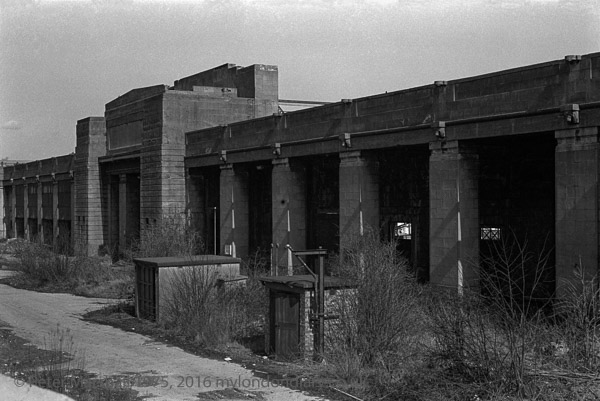
I had come to Wembley to photograph these derelict buildings which were built in 1922 and 1923 for the British Empire Exhibition of 1924 -25, probably because some of them were about to be demolished shortly I’m not quite sure exactly which buildings I photographed, and although some were demolished in 1980, the last only went in 2013.

Although they had been built for the temporary exhibition, their reinforced concrete made them difficult to demolish, and they had only remained there so long because it would have been expensive to get rid of them. I think this is one of the buildings that was still standing and being renovated when I returned three years later and took some more pictures on Engineers Way.

The Empire exhibition was important in accelerating the development of the surrounding areas of north-west London, much of which soon became covered with suburban housing in the years up to the second war.

The area is I think totally unrecognisable now, with about the only remaining building being the 1934 Empire Pool (now Wembley Arena), which I think I photographed a few years later.


Palaces of Industry, British Empire Exhibition site, Wembley, Brent, 1979
19g-64: building, concrete, reinforced, derelict,

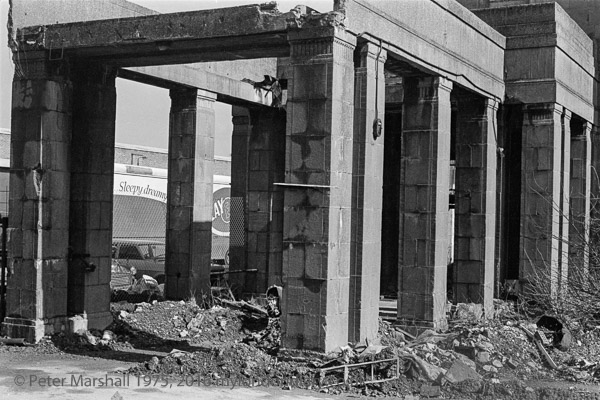
A second picture of the derelict concrete buildings, apparently left standing after the exhibition as it was too expensive to demolish them.

I think I probably took rather more than the handful of pictures in the area during this visit than have survived, and suspect that one of the films that I took may have been ruined by a camera or cassette fault or in processing. Although it is possible to lose digital images though card or hard disk problems – and to delete them by human error, digital is in many ways more reliable than film, not least because you can see some or your mistakes on the back of the camera.

In the 70s and 80s I was always short of cash, and loaded almost all the film I used into cassettes from bulk 100 ft lengths. I used a ‘daylight loader’ which mean that a short length at the end of each film was exposed in attaching it to the cassette spool, though later I learnt to do this part of the procedure in total darkness to avoid this. Re-using cassettes led to occasional problems with light leaks. Sometimes I used plastic bodied cassettes made for reloading – and these had caps which were quite easy to twist off – sometimes too easy. The metal bodies used by Ilford and most other films had ends which popped off when you squeezed the cassettes and could be re-used but could get too easy to remove with repeated use. (Kodak’s were crimped on and needed a can opener to remove and were not re-usable.)

All normal cassettes used felt light-traps on the opening where film emerged and films might be ruined by scratches if grit was caught in these from loading the camera in a dusty place, and we had to try hard to keep them clean when reloading them. Those fabric light traps were not intended for repeated use and this sometimes led to leaks. Leica used to have their own metal re-usable cassette which worked without a light trap, the with a slot opening up inside the camera, but it was hardly practical.

Processing too had its traps. Developers not stored in air-tight containers could react with oxygen in the air and become less active or even entirely useless (though normally they went brown to show this.) Some were meant to be re-used, and careful counting of the number of films developed was necessary to avoid them becoming too weak. As mentioned in a previous post I had to abandon some developers as simply too unpredictable.

One of my late friends, a professional photographer who did a number of jobs for a leading oil company magazine, was flown out by helicopter by them to photograph their North Sea Oil rigs. It was an extremely long and tiring day, and on reaching home she loaded the films into a multiple tank to develop them. After she poured the first chemical into the tank she realised she had poured in the fixer rather than developer. (Fixer is the chemical used to dissolve the undeveloped silver halides from films after development as most photographers will know.) The films were ruined, and she had to go in the next day and confess to her client. Fortunately for her, she had worked for them on many previous assignments and they appreciated her work, and they arranged another helicopter to take her out and make the pictures again. That time she made sure she got the processing right.

________________________________________________________

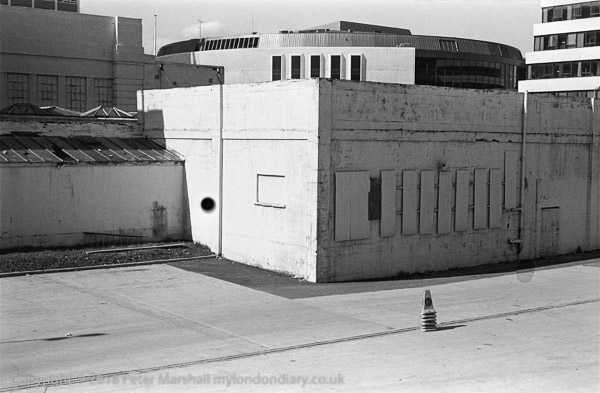
Another picture from that walk around Wembley (though I’m again not sure exactly where it was taken) has I think two clear processing faults, visible even in this small reproduction. I could of course have removed them digitally. Fortunately I think this was the only frame on that roll affected.

You can see thumbnails of my selected images from 1979 here.

______________________________________________________

There are no adverts on this site and it receives no sponsorship, and I like to keep it that way. But it does take a considerable amount of my time and thought, and if you enjoy reading it, a small donation – perhaps the cost of a beer – would be appreciated.

My London Diary : London Photos : Hull : River Lea/Lee Valley : London’s Industrial Heritage

All photographs on this and my other sites, unless otherwise stated, are taken by and copyright of Peter Marshall, and are available for reproduction or can be bought as prints.

To order prints or reproduce images

________________________________________________________
Framework History

One of the many things I talked about with the late Terry King the last time I met him, not long before his untimely death, was the possibility of an exhibition to celebrate the activities of Framework, a West London based photographers group which existed from 1986-92.

I was reminded of this recently by a mention of Framework in the London Independent Photographers magazine by Peter Jennings (not currently on line.) Peter, who took part in a couple of Framework shows, gets most of the details wrong. The group wasn’t run by me, and the only meetings at my house were specifically to plan exhibitions and not the main meetings, which were in the first years at community associations in East Twickenham and Kew, but latterly at the Watermans Arts Centre in Brentford.

Apart from the special meetings to plan particular shows, sometimes in my house, sometimes at Terry King’s in St Margarets, Framework held regular monthly meetings at which the photographers were expected to arrive with their most recent work for criticism – and to take part in criticising work by the others. These were small meetings, usually around half a dozen of us, and with no holds barred, Quite a few people came once but couldn’t stand the criticism, but the central core of those who attended grew from it. Of course not all the criticism made sense, but it was what people thought, and sometimes things did get pretty heated.

The LIP satellite groups were my attempt later to get something similar going inside LIP, though I don’t think any have quite lived up to their predecessor. For a while the Twickenham group which met at Jim Barron’s home came close – and most of those taking part were former Framework members.

Not that Framework had a membership or a constitution. You just came along and did it. We collected a sub from those taking part in exhibitions when we needed money (and it was the cause of some bitterness when one member refused to come up with the cash, leaving me out of pocket, but otherwise worked well.) Terry King did most of the organising of the meetings, inviting a number of photographers to come along and talk to us at various times as well as to take part in our critiques.

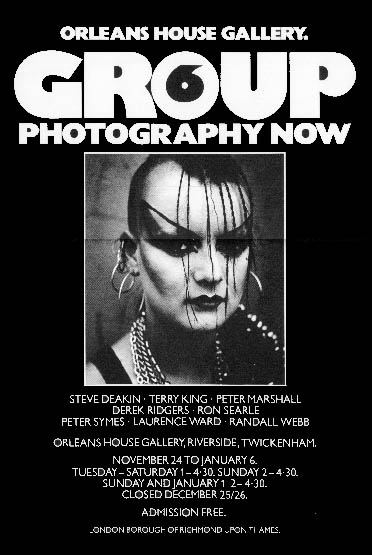
The group had its origins in the Richmond &Twickenham Photographic Society, where I met Terry and others including Randall Webb. The RTPS had regular large meetings with speakers, club competitions and the like, but had also spawned a number of small groups which members could attend. When someone decided to form a group which took a wider view of photography than the club world, I suspect for political reasons they didn’t want to give it a name which reflected this, and as there were at the time already five groups, they gave it the name ‘Group Six‘.


Poster, logo and photograph © 1984, Derek Ridgers

When I first went along, perhaps around 1975, Group Six was run by Vincent Oliver, who was I think the first person to get a photograph accepted in the Royal Academy Summer Show and much later ran the Photo-i web site, but it was soon taken over by Terry King. As well as meeting for a monthly discussion, often with guests (one such was Martin Parr) who would critique our work, we also organised monthly outings to take photographs. These took me to some remote rural creeks in Kent which Terry favoured, and also to Avebury and Southwark and a couple of longer visits to Portland and the Welsh Valleys. I got hauled before the RTPS committee, who had no sense of humour, for articles I wrote about some of these for Amateur Photographer.

We decided to hold shows of work by Group Six members, the first of which was in 1982 at the Orleans House Gallery in Twickenham. We went on to produce further shows at the Quay Arts Centre in Newport on the Isle of Wight and a second show at the Orleans Gallery. We were preparing for a further show at the Orleans Gallery, when the RTPS committee put their foot down and decided that they would take this over for a general RTPS show.

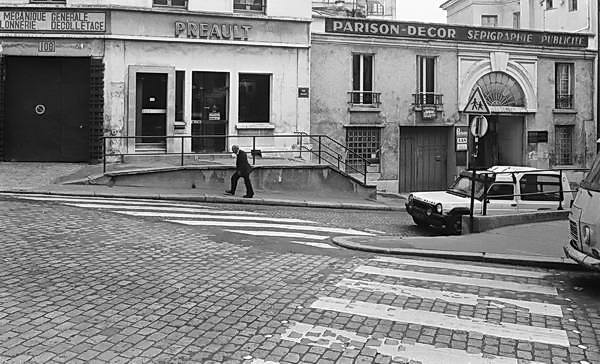
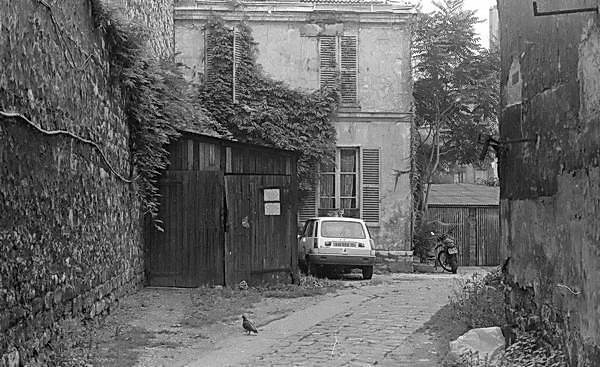
We set up separately from the RTPS as Group Six Photographers, organising our own large show at the Hexagon in Reading – by six photographer; later in 1985 we had another show at the Poole Arts Centre, and at both I showed work from my ‘Homage to Atget‘ (now on-line as part of Paris Revisited and in the Blurb book In Search of Atget.)

Although I had more or less left the RTPS, others in the group, including Terry King were still active members, and were getting hassled by the committee over our continuing use of the name ‘Group Six’. Although I thought we had earned the right to continue to call ourselves by that name, having established a reputation for it quite separate from the RTPS, I came up with the name ‘Framework‘.

Framework organised quite a few shows in the next six years, though I’m not sure I can remember them all. The first was at Parkshot in Richmond (where the RTPS had also moved to hold their meetings) and was followed by another at the Hexagon, where I showed 28 prints from my ‘German Indications‘, along with the half dozen or so texts which accompany them (now online mainly in black and white and also rather better as a Blurb book.) Next was another at the Orleans House Gallery, there were one or two small shows at the college where I was working and then a series of at least five shows at the Watermans Arts Centre.

One of the advantages of leaving the RTPS is that we were able to invite other photographers to join Framework, and those who came and attended the meetings and showed work included Carol Hudson, Peter Jennings, Jim Barron, Townly Cooke, Tony Mayne, Virginia Khuri, Yoke Matze, Robert Claxton, David Malarkey and others whose names will be familiar to at least some LIP members. We also had guests who showed work with us, including several of those who Terry persuaded to come and talk to us, such as Jo Spence. Unfortunately I don’t think a full record of the shows and certainly not of the meetings exists, and though I started to put together a web site with the information I had to hand in 1997, I never completed it – though the unfinished work is still on-line.

Framework basically worked by having a whip-round when we needed money – and I think we had a notional fee for coming to the meetings, though were seldom good at collecting it. But one thing we did buy was a large and expensive portfolio case to take work to galleries. And it was this portfolio, with work from Framework people, that was taken to the Mermaid Theatre to get the venue for LIP’s first exhibition.

LIP never quite replaced Framework, which closed down a few years after LIP was formed. LIP was a larger group but lacked the independence that had been an essential part of Framework – which for example never used external selectors for its shows, but battled it out amongst ourselves. And though LIP enabled the Photographers’ Gallery to stop running its ‘Young Photographers’ group, which I wasn’t the oldest still taking an active part in, which had become something of a trial for its education officer who frankly wasn’t up to the job, LIP never really received the support from the gallery that it had apparently been promised.

But I think also, the key people in Framework had moved on the time we decided to quit. Terry was increasingly involved internationally in the alternative processes world, and into the RPS Historical Group which he ran for some years, Derek Ridgers was enjoying great success working for the NME and other publications who flew him across the world to photograph music icons, and I was involved in London Documentary Photographers and their shows, though I still took part in LIP events and shows for more than 10 years – including around five years as editor of the LIP magazine, then called LIPService, until pressure of work writing about photography and taking pictures made it impossible. Others remained more firmly in LIP, some until the present day.

______________________________________________________

There are no adverts on this site and it receives no sponsorship, and I like to keep it that way. But it does take a considerable amount of my time and thought, and if you enjoy reading it, a small donation – perhaps the cost of a beer – would be appreciated.

My London Diary : London Photos : Hull : River Lea/Lee Valley : London’s Industrial Heritage

All photographs on this and my other sites, unless otherwise stated, are taken by and copyright of Peter Marshall, and are available for reproduction or can be bought as prints.

To order prints or reproduce images

________________________________________________________
Success from City Office protest

Most of the protests by cleaners and other low-paid workers I’ve photographed have eventually led to success, though sometimes it has been a long and difficult struggle. One is now coming to an end after I first photographed them around 8 years ago, and I think it was then in its second year. Fortunately most are resolved rather faster.

Cleaners, like those at the City offices of Lee Hecht Harrison are almost always not employed by the people whose offices they clean or by the owners of the building, but by cleaning contractors who put in bids for the work. And since the lowest bid wins the contract, the company that pays its cleaners least, overworks them most and awards them the worst conditions of service – and sometimes on zero hours contracts – will be the winner. The cleaners of course lose.

I arrived late at the protest outside Lee Hecht Harrison as I’d been photographing another protest, part of the long-drawn out campaign by workers at Picturehouse cinemas to get the London Living Wage. That campaign by the union BECTU which is now a part of the larger union Prospect. Although the Picturehouse strikers have held a number of protests at half a dozen cinemas around London, the support they get from their union seems rather low key – and at Hackney there was a union official who appeared to be dampening down the protest, worried about the trade union laws (and I think confusing a protest with a picket, on which there are strict limitations.) But the UVW (who have supported various Picturehouse protests) are considerably less constrained, which makes their protests rather more effective.

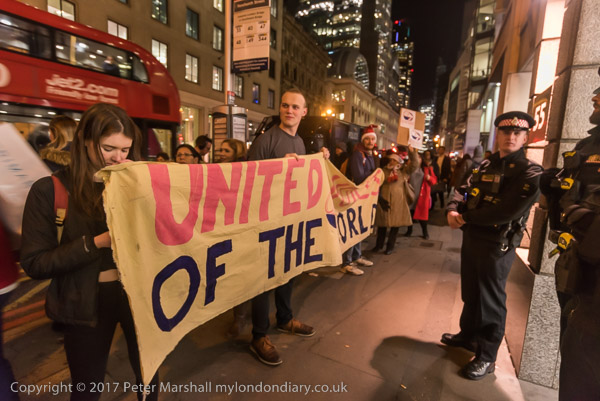
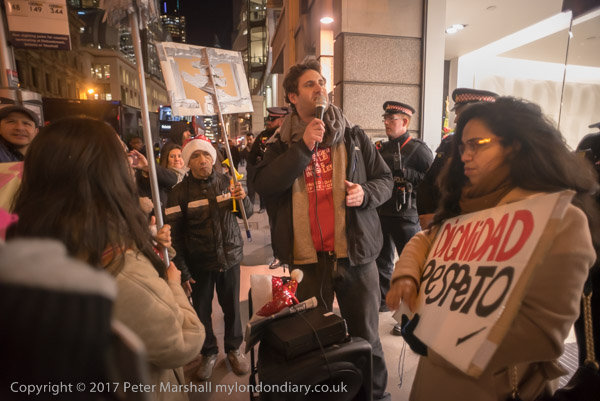
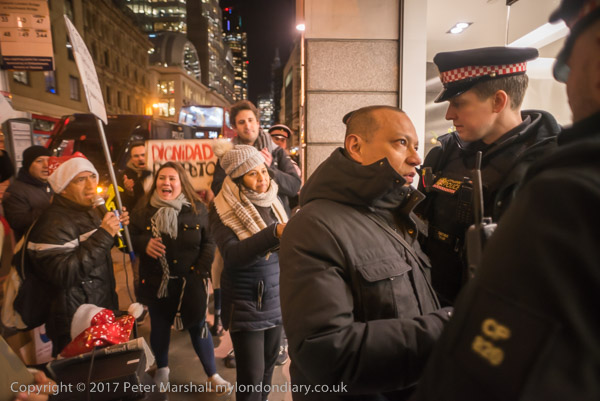
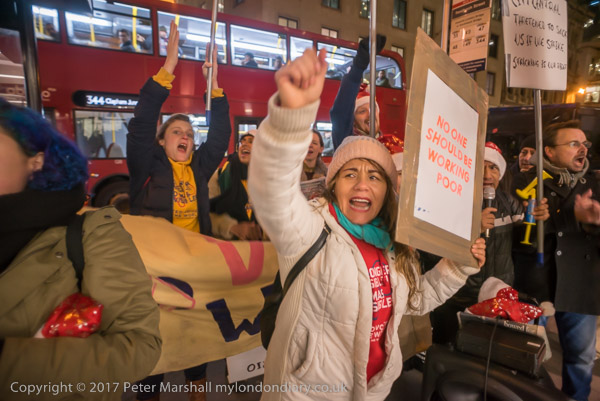
There was a very different atmosphere on the crowded pavement on Gracechurch St, and it was far easier to take good pictures of the protest by the United Voices of the World which the cleaners belong to. The main problem was the crowding, not helped by their being a bus stop and shelter where the protest was taking place, as well as a constant stream of workers on their way home making their way through the protesters.

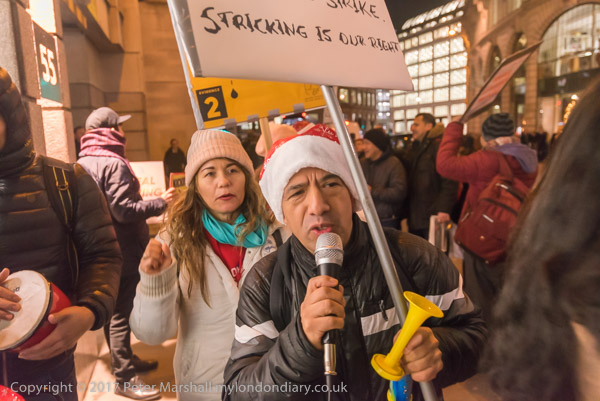
There was quite a lot of light in parts of the area, but mainly coming from the windows of the building in front of which the protest was taking place, with the faces of the protesters often in deep shadow. So while I didn’t use flash, I did quite often need to use the LED light to fill in these shadows.

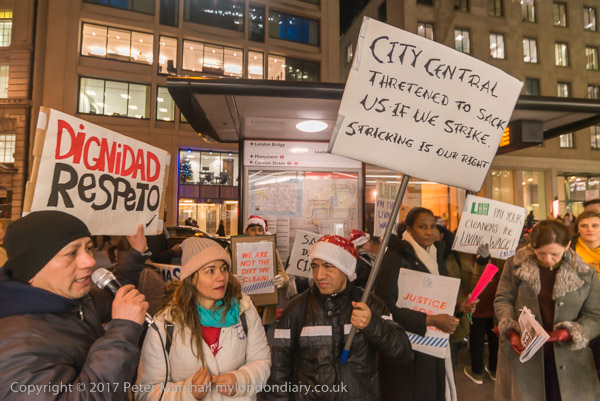
I left the protest as it was coming to an end after an hour when the four cleaners went in to start their shift. As usual they are not employed by Lee Hecht Harrison but by a cleaning contractor, who had refused to talk with the UVW about the claim for a living wage, and had threatened the cleaners with the sack if they took strike action.

The noisy and very public protest obviously made LHH think about the problem, and I suspect they put considerable pressure on the cleaning contractor to come to a settlement with the UVW. The next protest planned outside the offices was cancelled at short notice when a satisfactory settlement was reached.

Companies like LHH – and Picturehouse – are making huge profits. Paying workers a living wage would hardly be noticeable on their balance sheets, and it is hard to know why they don’t do so without having to be pressured into it by union action. Plenty of companies have realised that it is only fair that those who work there get a living wage and some have done so without any prompting. The London Living Wage has been backed by all three London Mayors, though it would be good to see the current mayor, Labour’s Sadiq Khan, being considerably more proactive in the matter.

City cleaners strike at LHH for Living Wage
Star Wars Strike Picket Picturehouse

Lambeth Shame


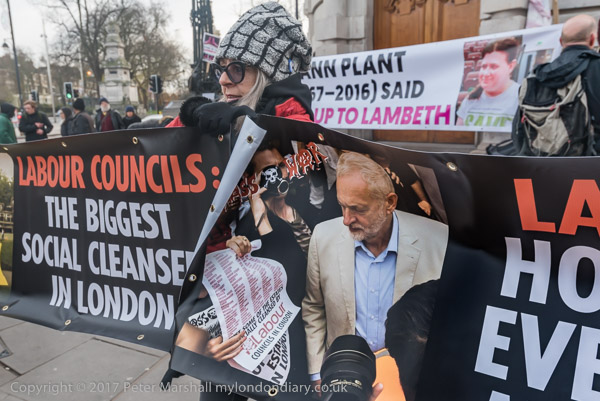
Jeremy Corbyn on the banner really looks three-dimensional in this picture

Last Thursday’s local election results in Lambeth make rather sorry reading for democracy. It seems you can fool most of the people most of the time, and a 55% vote for Labour means that they now have 57 of the 63 councillors. There is a little good news in that 5 of the remaining 6 are Greens, including Green Party co-leader Jonathan Bartley, and it’s heartening that the Conservatives lost 2 of their three seats, though sad that both went to Labour.

One of the new Green councillors, Pete Elliott, elected for Gipsy Hill was pictured at the count in a ‘Save Cressingham Gardens’ t-shirt, and I think Gypsy Hill is the ward which includes another loved and under threat estate, Central Hill. One result that particularly saddened me was for Coldharbour ward – the heart of Brixton – where Rachel Heywood, the only Labour councillor who stood up for the future of the Brixton Arches (and for other things) was kicked out by Labour and stood as an Independent, failed to get elected. It would have been good also to see the Green candidates for this ward who were also active in trying to save these and other community assets elected, but Labour had a convincing victory, apparently helped by a rather doubtful endorsement alleged to have been extracted under threat from a black community leader.

There really is no good argument against electing local councils by a proportional representation which would give councils that far more truly represented the views of the population. Labour would still control Lambeth, but there would be a far more significant opposition on the council, which has for some time effectively been a one-party state.


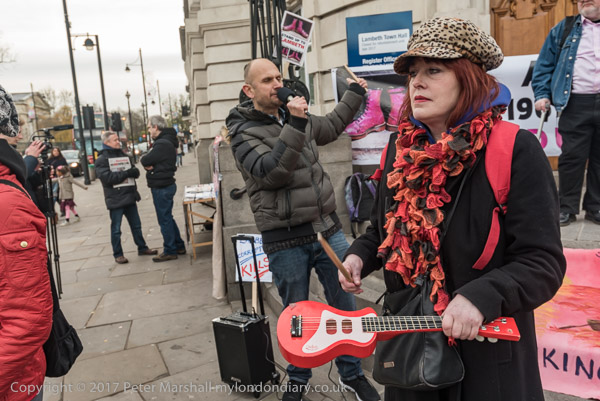
An anarchist approach to playing the ukulele as Andrew Cooper speaks

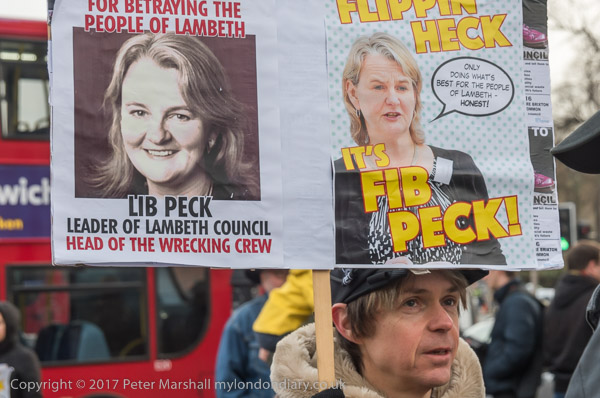
Lambeth hasn’t really been a Labour council, but a Progress council, run by members of the right-wing Labour group. Its policies are not those which were in the Labour Party manifesto at the last election, but closer to those of Tony Blair and Margaret Thatcher. Members of Progress have actively campaigned against the current Labour Leader and are the source of most of the smears against him which have dominated the news since he became leader. Unfortunately the Labour right-wing still hold key positions in the party machinery which have meant that complaints over the behaviour of Progress members have no been investigated, while similar actions sabotaging the party from the left would have led to speedy expulsions.

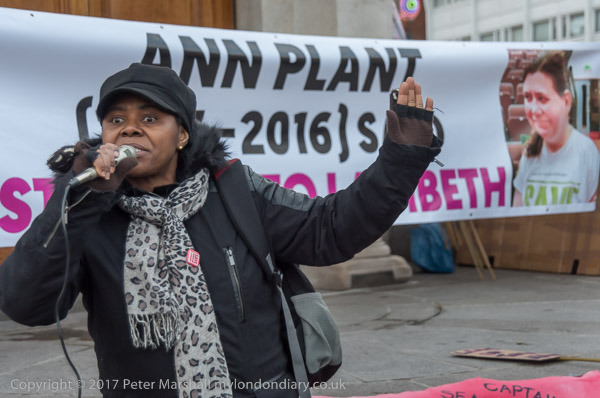
The protest in December pointed out the huge cuts the Labour party have made in services for the disabled, mentally ill, youth and community and social services generally, as well as the closing down of traders in the railway arches at the centre of Brixton and the process of social cleansing in demolishing council estates and rebuilding them with developers largely as private housing at market prices and rents, forcing former tenants and lease-holders out of the area.


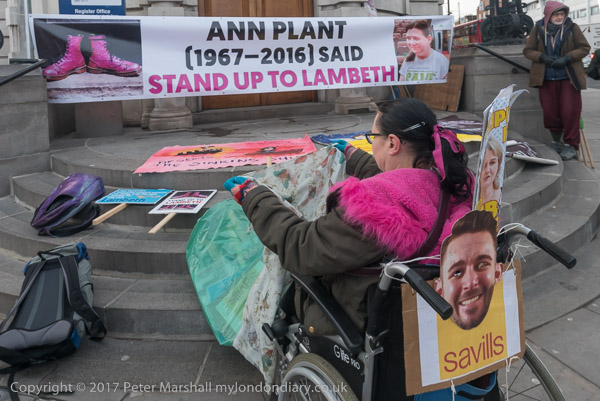
Lambeth work with Savills to turn council estates into private property

The event was also a vigil in memory of Ann Plant, one of the leading campaigners to save Cressingham Gardens, Ann Plant who died of cancer in December 2016, spending her final months still fighting to prevent the demolition of her home and her community by the council.

Photographically I had no problems in recording the event, with some fine banners and placards by Class War, Andrew Cooper and others livening up the images. But this must be one of the coldest street corners in London and there was a truly biting wind. Even with an extra layer of thermal underwear covering me from ankle to neck and a windproof hood over my Thermolactyl beanie I was shivering, and the two layers of gloves – silk underneath and wool on top – were not enough to keep my hands warm. Silk gloves are thin and great for operating cameras, but soon tear but are still useful if it isn’t too cold, and the wool add a little insulation while still allowing normal operation of mechanical camera controls. Thicker gloves would keep my hands warm, and I wear them for some things, but those I have don’t allow me to properly control a camera.

More pictures at Stand Up to Lambeth protest and vigil
______________________________________________________

There are no adverts on this site and it receives no sponsorship, and I like to keep it that way. But it does take a considerable amount of my time and thought, and if you enjoy reading it, a small donation – perhaps the cost of a beer – would be appreciated.

My London Diary : London Photos : Hull : River Lea/Lee Valley : London’s Industrial Heritage

All photographs on this and my other sites, unless otherwise stated, are taken by and copyright of Peter Marshall, and are available for reproduction or can be bought as prints.

To order prints or reproduce images

________________________________________________________
Against Slavery

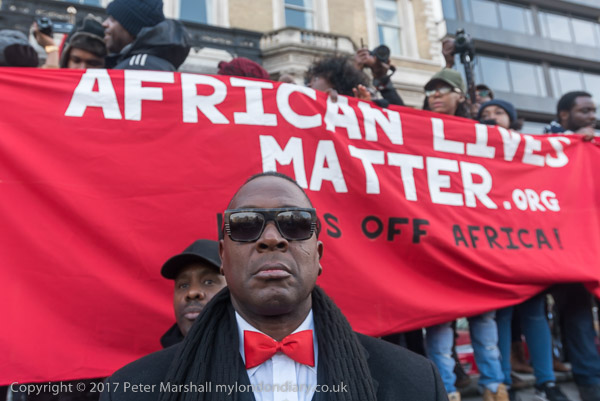
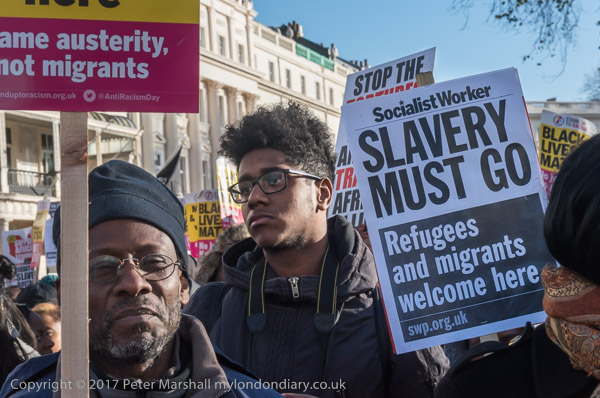
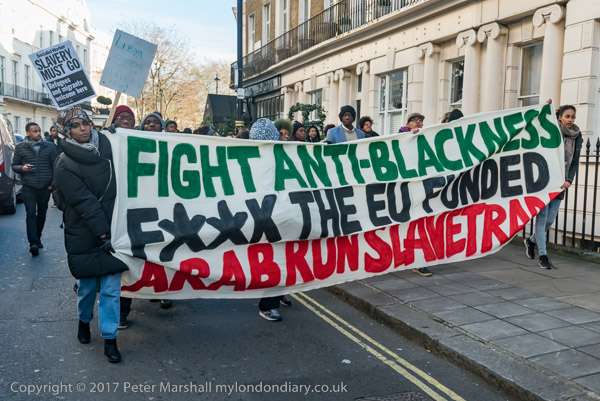
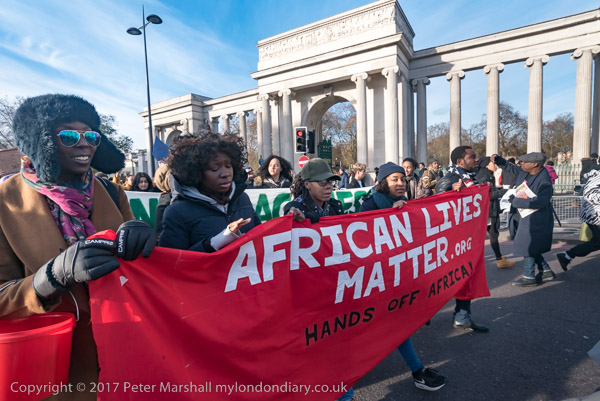
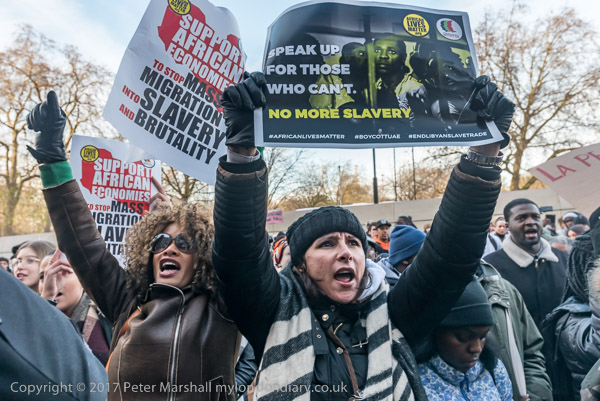
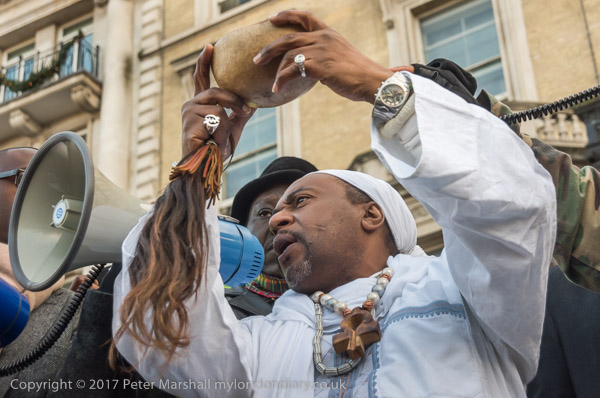
We are of course all against slavery, but the protest following the posting of videos of slave auctions of African migrants in Libya was predominantly by Black British citizens, and although others shared their outrage it was understandably closer to them.  Many are here because slavery took their ancestors out of Africa to work on plantations in the Caribbean and elsewhere.

It was the wealth of slave plantations owned by white Britons, mainly those who owned large areas of their own country too, that enabled the building of squares like Belgrave Square where the protest met. Along of course with the mines they also owned in Africa and elsewhere, and are still exploiting, long after the end of the British Empire. Most of the leading mining companies are still London listed companies.

While we often celebrate – and rightly – the efforts of British people to bring an end to the slave trade its important to remember it was British slave traders and slave plantation owners that they were fighting against to get English law changed. And while the British navy was important in stopping slave traders, it did so to protect the commercial interests of those British-owned plantations which would otherwise have been undercut by foreigners still using slaves.

And while slavery went on the sugar plantations and elsewhere in the British Empire, this was by no means an an end to exploitation.  Nor of course to the continuing preaching of racist attitudes throughout the British population, with an often unstated but pervasive and unquestioned assumption of the superiority of the white race, and above all the English.  It was certainly an attitude that underlay the education I received and still obtains in much of our society with the ideas that we took civilisation to the ‘backward nations’ of Africa, India and even China.  Though my having one year with a Marxist history teacher helped a bit.

In reality, although they were some things we gave these countries, it was often at the expense of destroying civilisations and always of forcing them into subservience to the enrichment of Britain – and the other colonial nations.  And even though many of us in the mass of ‘ordinary people’ were oppressed by the same masters through evicitions from our common lands and the harsh conditions of factory employment that created – again with the aid of slave monies – the industrial revolution and an underclass working class, we too benefited from the exploitation of the empire and our colonies.

It was a large protest and ended in a small space outside the Libyan embassy, and it was difficult to get into a place with a clear view of what was happening during the ceremony in memory of the many Africans who have fought for their people against enslavement and colonialism.  But I’m pleased that I was able to record it – even if there were moments that I missed, limited through working in something of a crowd in a very small space.

Although I’m used to working in crowds, it was an event I found quite stressful, and had to leave not just because I wanted to go to another event, but because I began to feel a danger of fainting. I needed to get out and do something to raise my blood sugar levels, sit down and have something suitable to eat. Although people were friendly it was still something of a struggle to make my way through the densely packed crowd and find somewhere I could sit and rest a little.

Pictures and more about the event: National Anti-Slavery March

______________________________________________________

There are no adverts on this site and it receives no sponsorship, and I like to keep it that way. But it does take a considerable amount of my time and thought, and if you enjoy reading it, a small donation – perhaps the cost of a beer – would be appreciated.

My London Diary : London Photos : Hull : River Lea/Lee Valley : London’s Industrial Heritage

All photographs on this and my other sites, unless otherwise stated, are taken by and copyright of Peter Marshall, and are available for reproduction or can be bought as prints.

To order prints or reproduce images

________________________________________________________
Nobel Prize goes unnoticed

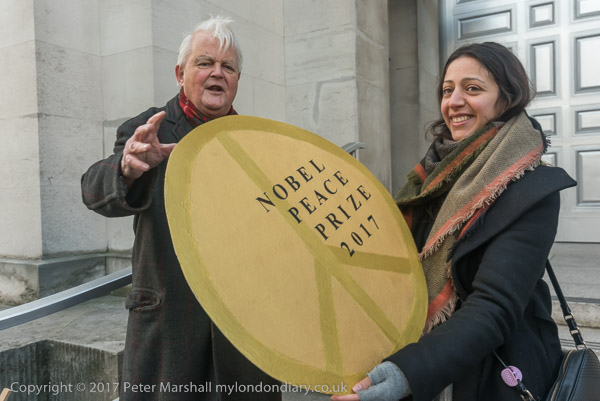
You might think that an organisation which is at least partly British being awarded the Nobel Peace Prize would be news in the UK. If it had been for Chemistry or Medicine or Literature it would certainly have made the headlines on the BBC and at least in the more serious of our newspapers. But I can’t recall hearing anything about the 2017 Nobel Peace Prize. Nor for that matter about the achievement which gained it for ICAN, the United Nations global nuclear ban treaty, already signed by 122 nations.


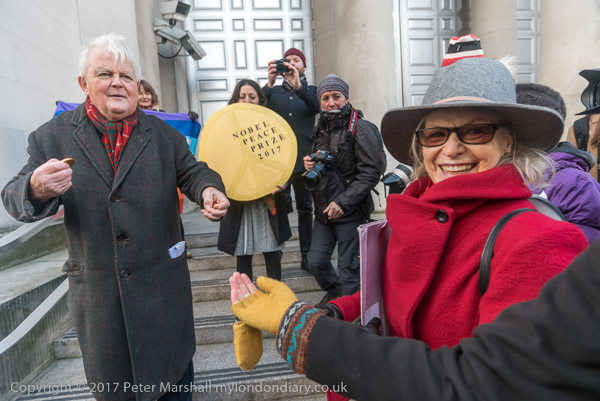
Bruce Kent presents a rather large Nobel Prize to ICAN

ICAN, the International Campaign to Abolish Nuclear Weapons, has been as effectively blanked by UK media as if it was covered by a government ‘D notice’. First introduced in 1912, D-Notices were official requests to news editors not to publish or broadcast items on specified subjects for reasons of national security. They still exist, though in the 1990s they became DA-Notices and are now DSMA-notices (Defence and Security Media Advisory Notices) and come under five headings. It’s just possible that this Nobel Prize might be covered by an advisory note under DSMA-Notice 02: Nuclear and Non-Nuclear Weapon Systems and Equipment but rather more likely that it simply reflects an establishment prejudice against the UK organisations involved. And in any case, D-Notices are only advisory, and when it suits them newspapers and even the BBC have ignored them.

For some of our newspapers and their billionaire owners anyone not entirely gung-ho about nuking Russia even if it might mean the end of the world as we know it is some kind of commie sandal-wearing jesus-loving hippie freak. And probably gay to boot.


And hands out smaller chocolate ones to the rest of those present

Among those UK organisations which are a part of ICA are CND, which has campaigend since the 1950s for the UK to unilaterally give up its nuclear capability, Medact, a UK charity of health professionals working on issues related to economic justice, ecological health, human rights, and peace, and WILPF, the Women’s International League for Peace and Freedom.

Fifty years ago, when CND was something of a mass movement, the UK government attempted to counter its arguments for unilateral nuclear disarmament by saying that of course they were against nuclear weapons too, but that they wanted not a unilateral disarmament that would leave Britain at the mercy of the remaining nuclear powers, but a multilateral treaty involving the world giving up nuclear weapons. But now the UN has come up with this, our government – and the other nuclear powers – will have nothing to do with it. Not only have the UK refused to sign it, they refused to take any part in the negotiations that led to it.

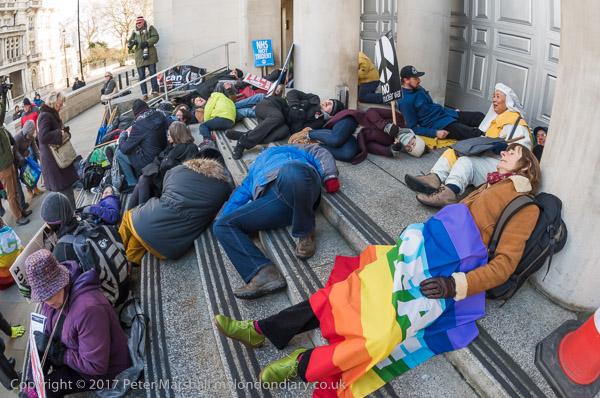
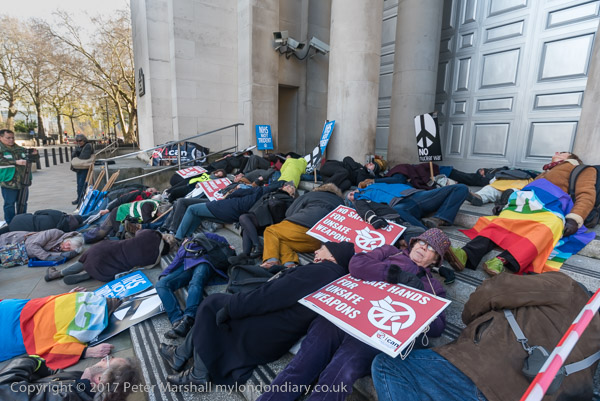
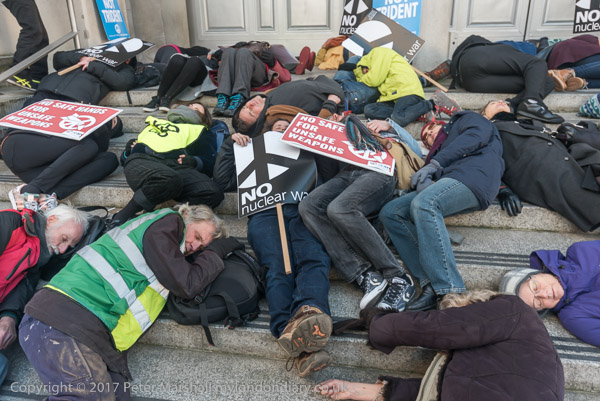
Given the lack of acclaim for the award in the media, CND and the others decided to hold their own mini-awards ceremony on the steps of the Defence Minsitry, along with a die-in, and called on the UK to abandon Trident and sign the nuclear disarmament treaty.

As the die-in approached, I decided to change from the 28-200mm to the 16mm fisheye so that when people started to get down on the ground I had two wide-angle options, with the 18-35mm on the other camera. I didn’t want to actually get in the area with those taking part, because I find it extremely annoying when other photographers do this, standing up in the middle of everyone who is on the floor and getting in everyone else’s pictures, but decided I could run up the side of the steps at the edge of those in the die-in.  Mostly too I would be behind a pillar and largely hidden from those photographers who had stayed at the bottom of the steps.

I was fortunate that one of the protesters there had wrapped herself in a peace flag, as you can see from the picture at the top of this post. Unusually for me this is an uncorrected fisheye image. I think because the steps themselves are not particularly curved the curvature of the elements around the edges of the picture is less disturbing. In any case, when you work with the camera not level, converting to cylindrical perspective gives steeply converging (or diverging) verticals which often is not a good to see. If the effect is only slight then that too can be corrected, but then you start to crop the picture, losing some of its wide impact.

When I’d taken a few pictures there, I came down to get a view across in a diagonal, which helped to give an impression of a fairly large number of people. From the bottom of the steps the numbers looked rather thinner, and I changed back to the longer lens to concentrate on details rather than the whole scene.

ICAN Nobel Peace Prize Die-In

______________________________________________________
There are no adverts on this site and it receives no sponsorship, and I like to keep it that way. But it does take a considerable amount of my time and thought, and if you enjoy reading it, a small donation – perhaps the cost of a beer – would be appreciated.

My London Diary : London Photos : Hull : River Lea/Lee Valley : London’s Industrial Heritage

All photographs on this and my other sites, unless otherwise stated, are taken by and copyright of Peter Marshall, and are available for reproduction or can be bought as prints.

To order prints or reproduce images

________________________________________________________