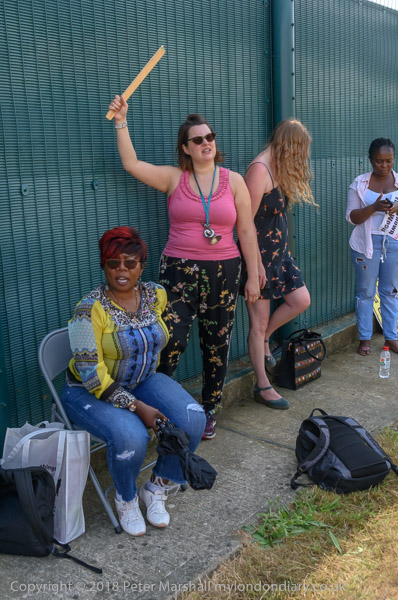
Hull in the Rain

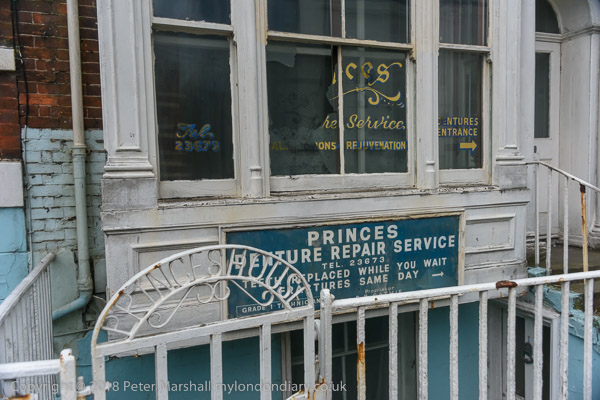
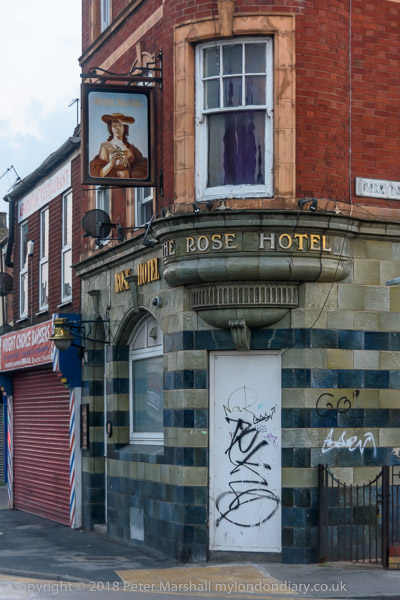
It rained rather a lot when we were in Hull. I generally write these posts without notes, based on the pictures I take and my memories, and for things that were now almost four months ago, unless I took photographs my memories are often a little vague. So writing about Friday night in Friday in Hull I mentioned that we ate in one of Larkin’s haunts, the Royal Station Hotel. We did eat there, but it was on the Sunday night, not on the Friday.

Friday night we had decided to eat somewhere on Princes Avenue, a street with a considerable number of eateries, most of which I would give a miss, and we took a bus there. Usually such vague ideas result in a lot of walking along and looking at menus before we find somewhere we can both agree is possibly suitable, but this time it was different. Almost as soon as we got off the bus, the heavens opened, and torrential rain had us scurrying for a bus shelter. The rain kept on, and after perhaps ten minutes the pavement inside the bus shelter was beginning to flood.

From the shelter we could see the lights of an Italian restuarant, ‘UNO’s Trattoria -Pizzeria’ and we made a dash for it, hoping there was room for us and that the storm and the flood would subside before we had finished our meal (and they had.) It was a place I would probably have walked passed without bothering to examine, but we had one of the best Italian meals there I’ve had for a long time, and certainly the best I’ve found in Hull. Thanks to a thunderstorm.

TripAdviser (not something I’d generally take too seriously) rates it as #21 of 534 Restaurants in Kingston-upon-Hull, and it gets some seriously good reviews – with the usual one or two with a grudge, who sound like very awkward customers who made a real nuisance of themselves.

Sunday started off rainy, and after another breakfast in the Admiral of the Humber (a modern Wetherspoons with their standard menu, decent and cheap) I refilled my coffee and waited there until I could go and worhsip again at the Kollwitz show, having pointed Linda towards Holy Trinity.
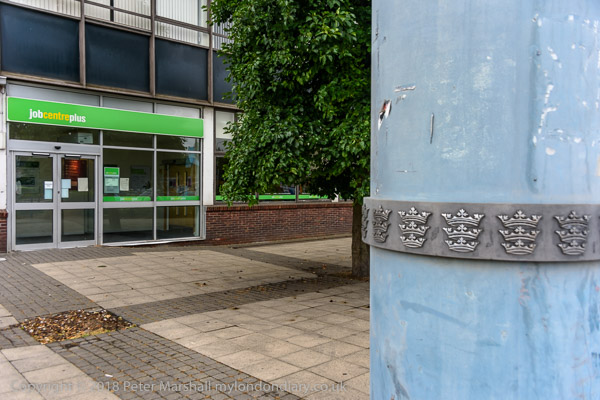
After lunch it wasn’t raining too hard and we set off for a walk down Springbank to Hull General Cemetery, apparently a favourite place for Larkin as well as for Linda an myself, somewhere we often walked while staying with her parents.
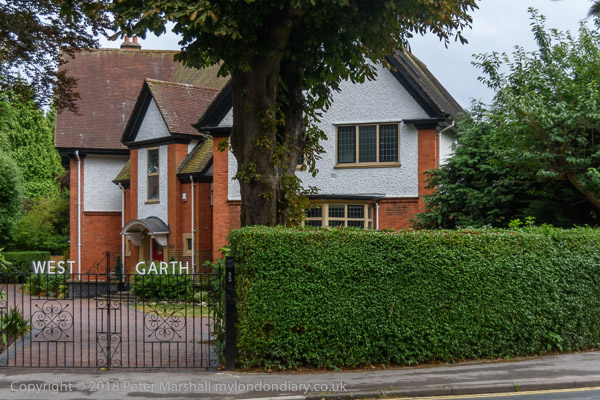
From the cemetery we head down Chants, familiar but different, with most of the shops having changes hands and business. We crossed Bricknell to go down the alley to Loveridge Ave, though the tenfoot there is now behind locked gates we could walk past the front of the house Linda grew up in. In the cemetery further on we visited her parents’ grave, and then walked on to Cottingham Road, turning down Newland Park, to see West Garth where we had often stayed with our friend Ian and then on to Larkin’s house, complete with a large toad.
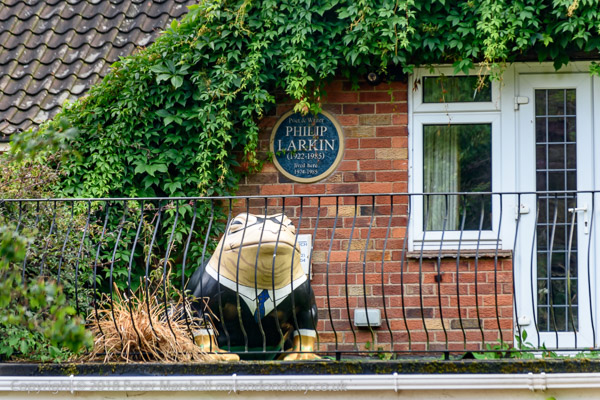
Back to Cottingham Road through the eastern entrace to Newland Park we ran to catch a bus back into town. The services on a Sunday afternoon are few and far between. We spotted another Larkin sign as the bus passed Sharp St, where I’ve often stopped to photograph the street’s war memorial, moved several times as the buildings it was on have been replaced, and recently refurbished again.
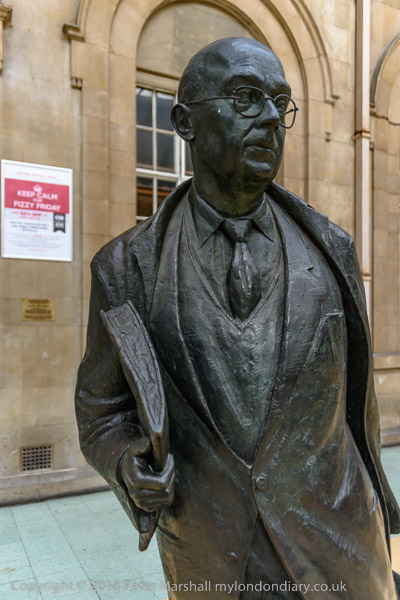
Then it was time for the visit to the Royal Station Hotel (officially now the Mercure Hull Royal Hotel) for dinner as mentioned in a previous post. Good company but the food was nothing special.

We were leaving Hull at lunchtime on Monday, so had a morning still to spend. Despite light rain we went for a walk, taking Anlaby Road out of town as far as the ‘flyover’ where Linda left me as she wanted to revisit the Ferens which opened shortly, and I made my way along some back streets and then Boulevard to Hessle Rd.
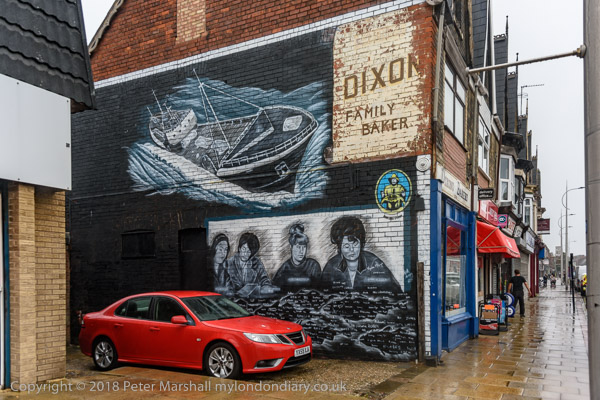
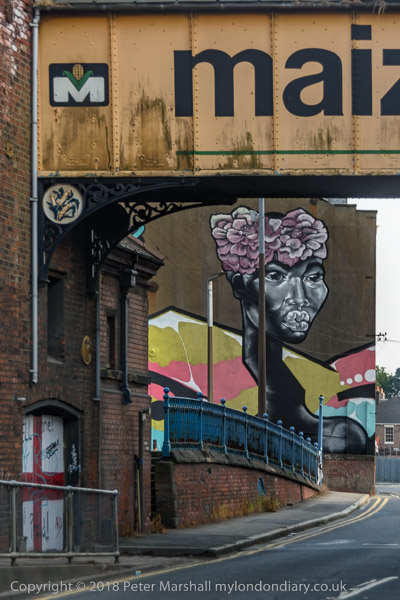
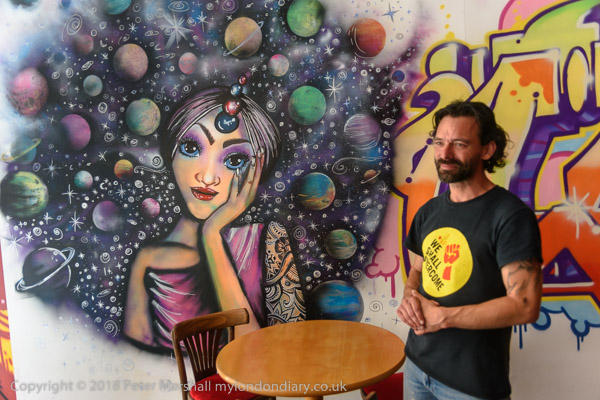
On my way the rain turned from light to rather heavy, but I was determined to find a mural to ‘Big Lil’ that had been painted since I was last in Hull, and put up my umbrella and strode on. Despite the brolly I was pretty wet by the time I reached it, but managed to take a few pictures and then walked back a little way into town before the rain came on even more heavily, and I was glad to find a bus shelter, and, after a few minutes, a bus to take me back to collect my luggage at the hotel.

As we left Hull, the rain stopped and the sun came out.

More text and pictures:
Wet Sunday Morning in Hull
Spring Bank, Chants & Newland Park
Anlaby Rd & Hessle Rd

______________________________________________________

There are no adverts on this site and it receives no sponsorship, and I like to keep it that way. But it does take a considerable amount of my time and thought, and if you enjoy reading it, a small donation – perhaps the cost of a beer – would be appreciated.

My London Diary : London Photos : Hull : River Lea/Lee Valley : London’s Industrial Heritage

All photographs on this and my other sites, unless otherwise stated, are taken by and copyright of Peter Marshall, and are available for reproduction or can be bought as prints.

To order prints or reproduce images

________________________________________________________
Hull Saturday

Saturday was the day of our family celebration, with a dozen family and friends coming from across the country (and France) to lunch with us at one of Hull’s newer eating places in Humber St in the Old Town. Fortunately, being Hull, the food was a little more down to earth than in a similar place in London, rather more filling (and mine at least actually came on a plate), the service was friendly and the cost perhaps half or less than it might have been in London, with the difference probably paying for both our hotel bill and train fares.

Not that we chose Hull for that reason. Hull was where Linda grew up and where we were married back in 1968, one of the less reported events of a rather spectacular year, though my recollections of it are rather hazy.

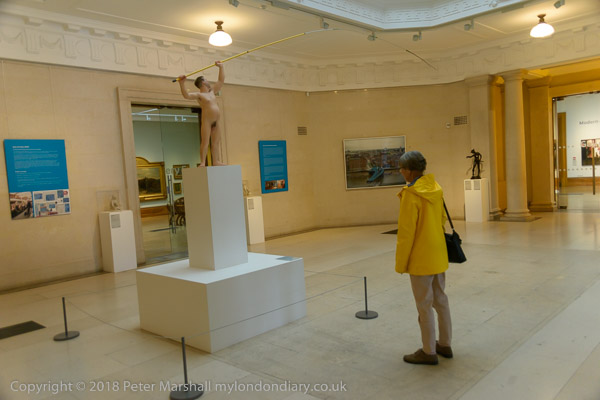
Before the lunch we had time to visit the Ferens where the Kothe Kollwitz show was spectacular and as always there were other things of interest too, thanks to the generosity of one of Hull’s great Methodist philanthropists, Thomas R Ferens, who gave the city its art gallery (and its University) but also had the sense to know the gallery needed a continuing income to buy works to show. One small disappointment was that the gallery space in which I had shown work in 1983 was closed for refubishment. Ferens was truly a remarkable man, both in business where he made Reckitts into one of the leading companies but in other ways. By 1920, when he was earning £50,000 a year (about £2.5m in today’s value) he was giving away £47,000 of it.

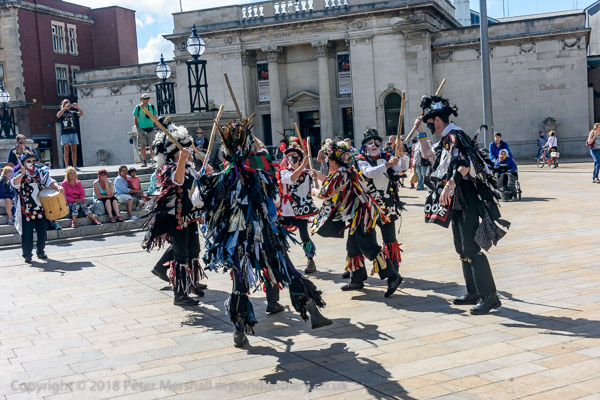
I didn’t quite have enough time to properly view the Kollwitz show, so promised myself I would return the following day before rushing out to go to Scale Lane. I got held up again in the square outside, where Morris Dancers were performing, and had to run most of the length of Whitefriargate to get to the bridge on time.

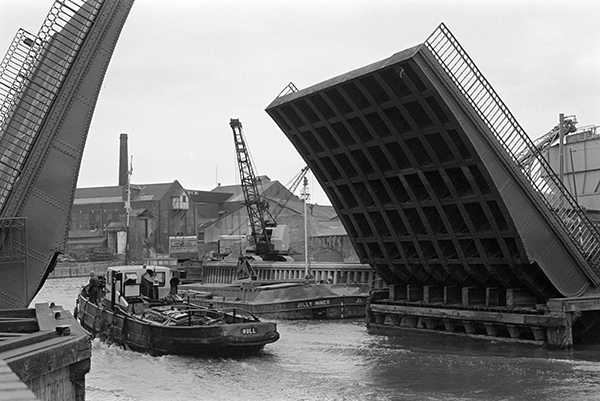
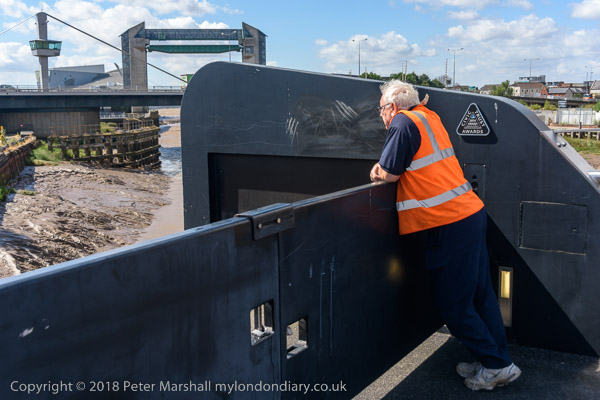
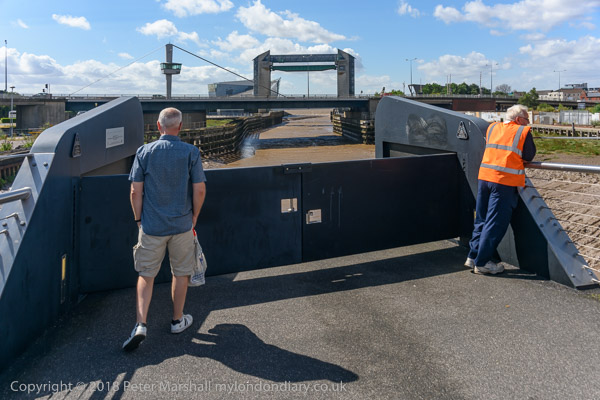
Because the bridge was opening as it does most Saturday mornings, probably mainly to check it still works, but also as an attraction to the city, as it is one of very few swing bridges on which the public are invited to ride as it swings. It’s a rather slow and sedate movement rather than a fairground ride, but is still something of an experience. It pivots around a centre close to the Old Town side, and because the bridge and its matching landside approach are both semicircular you can step on or off safely at any stage of its ninety degree swing.

My wife, slowly pushing a pushchair and baby across the swing bridge at Albert Dock entrance anticipated this attraction many years ago, probably because she was walking slowly and had stopped to appreciate the view. She got her ride despite notices forbidding it, flashing lights, warning sounds and gates. Fortunately she stayed in the middle of the bridge in safety and didn’t try to walk off before the bridge returned to its landward position.

We walked back across the high Myton Bridge, where the wind made it cold and difficult to stand still without holding the rail, then back towards the city centre, stopping to admire the new ‘Bean and Nothingness’ still being got ready to open in Whitefriar gate; we were able to go in and have a chat, but weren’t able to try the coffee.

Soon it was time to meet my son and his wife at Paragon (sorry, Hull) station, arriving after a long journey from the south coast where they had been holidaying, and to walk with them to Butler Whites to lunch with them and our other friends and family.

It was quite a long lunch, and after we had finished some had to rush away, while I led a short conducted tour of the Old Town for those who remained, finally leaving them with directions to station and car parks before finding another eating place in a ccorner of the now renamed Trinity Square. This was a totally different experience. Deafening noise, cramped seating, poor food, terrible service, a place to avoid unless you are totally drunk and want to shout at your friends. The town centre as we walked back to our hotel, an area frined who have visited Hull tell stories about on a Saturday night was civilised by comparison.

More here:
Riding the Bridge
A short Hull tour
______________________________________________________

There are no adverts on this site and it receives no sponsorship, and I like to keep it that way. But it does take a considerable amount of my time and thought, and if you enjoy reading it, a small donation – perhaps the cost of a beer – would be appreciated.

My London Diary : London Photos : Hull : River Lea/Lee Valley : London’s Industrial Heritage

All photographs on this and my other sites, unless otherwise stated, are taken by and copyright of Peter Marshall, and are available for reproduction or can be bought as prints.

To order prints or reproduce images

________________________________________________________
Friday in Hull

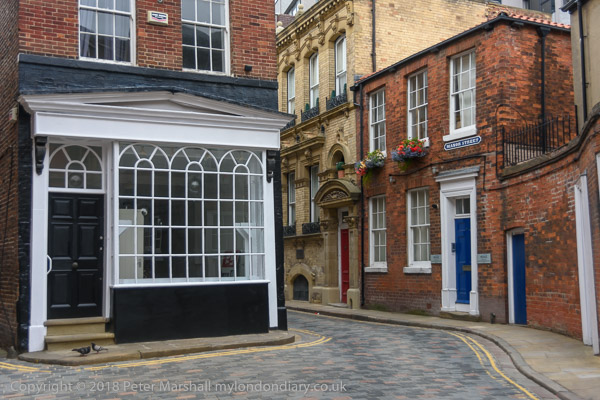
Our Friday in Hull was a day of two halves – and then an evening. We started with a slightly indirect walk to the bus station (or rather the Transport Interchange, rather posher and better organised than the old bus station that Larkin would have known) and caught a bus to Cottingham, a “village” just outside Hull where Larkin briefly lived and often drank and is site No 19 on the Larkin Trail.

We hadn’t gone there in search of Larkin, but to meet old friends, including both the organist and one of the bridesmaids from our wedding long ago. I’d enjoyed a full English breakfast earlier at the Admiral of the Humber but managed to squeeze in some cakes, coffee and a small celebratory drink before we left to walk to Oppy Wood, on the edge of Hull’s Orchard Park Estate.

Unfortunately we found most of the wood, planted in 2004 in memmory of the 200 “Hull Pals” who died at the battle of Oppy Wood in France in 1917, had disappeared, dug up to provide a large hole to help prevent more disatrous flooding in the area – much of Hull was inundated in 2007 and 90% of the city is below high tide level, though the 2007 flooding came from the land as the rivers and drains couldn’t cope with a month’s rain in a few hours. We walked around the field that remained then to the bus stop to go back to the city centre where we picked up a snack for lunch before catching the bus to Stoneferry.

The afternoon was planned by me to make some panoramas in one of the areas I’d not managed to get to in my visit in 2017, and then to go and see the Bankside Gallery, a tremendous outpouring of street art on the walls of the old industrial area beside the River Hull, which sprung up after Banksy’s January visit to create his ‘Draw The Raised Bridge’ on Scott Street bridge.

We ate our lunch snacks in hot sun beside the Hull before beginning a longish afternoon walk, first down beside the river to Stoneferry Road, then continuing on down to the path to cross the river on the former rail bridge at Wilmington. I don’t think Larkin ever appreciated the industrial areas of Hull, though parts have a picturesque gloom that might have appealed if he had he ever gone there. The sky was rather too empty clear blue for my taste and my pictures, particularly the panoramas, though there were more clouds later in the day.

Then we wandered up Bankside to see the many painted walls, before turning back down where the gallery continues on to Scott St, resting for a short time in the Whalebone with a pint of a local brew, before walking back into town for a short rest and a cup of tea.

We spent the evening having dinner with Linda’s brother and his wife in another of Larkin’s haunts, the Royal Station Hotel, where he stands in Martin Jennings’s statue close to the door on the concourse of what he knew as Hull Paragon station. Appropriately it was Friday night, and pretty quiet, though perhaps not as quiet as when he wrote ‘Friday Night in the Royal Station Hotel‘ in 1967, but I took no pictures.
______________________________________________________

There are no adverts on this site and it receives no sponsorship, and I like to keep it that way. But it does take a considerable amount of my time and thought, and if you enjoy reading it, a small donation – perhaps the cost of a beer – would be appreciated.

My London Diary : London Photos : Hull : River Lea/Lee Valley : London’s Industrial Heritage

All photographs on this and my other sites, unless otherwise stated, are taken by and copyright of Peter Marshall, and are available for reproduction or can be bought as prints.

To order prints or reproduce images

________________________________________________________
Larkin about in Hull

We’d booked in at a hotel in the centre of Hull, five minutes walk from the station, but we didn’t intend to spend much time there except while sleeping, and having dropped our luggage in the room, went back down to the foyer, where while waiting for Linda to join me I picked up and opened a leaflet on the Larkin Trail.

I’m not a great fan of the poet who spent much of his life working at Hull University’s Librarian, but there are certainly some memorable lines, some evocative of the city, and  some of the city centre locations were on the route we intended to take for other reasons, so we began to loosely follow its directions, and our rather longer progress around the city centre and outskirts over the next few days I think included all of the places mentioned in the trail, seeing all its signs and reading most of them, though not those in the much wider area outside the city,  most hard to visit without a car.

The trail is a bit of a disappointment in places, its signs some distance from the true Larkin sites, for example some distance away from the flat where he lived in Pearson Park and rather further from his later house in Newland Park. If you download the longer version from the web site you do get much fuller details than the printed leaflet. You will find many of the places mentioned in these pictures and those from later in my visit, and perhaps more authentically as they were when Larkin lived in Hull on my web site, ‘Still Occupied: a view of Hull‘.

I don’t know if he came to see my show of around 148 of these pictures at the Ferens, a couple of years before his death, though it’s fairly likely given the kind of city that Hull is where the art gallery plays an important role in cultural life. He was a keen amateur photographer and I think some of the pictures would have appealed to him, perhaps with a similar ironic stance.  I’m fairly sure wasn’t at the opening, but then he disliked such social occasions, avoiding them when he could.

We didn’t do the full length in the afternoon, having other important business – such as a drink and an ice-cream at the Kardomah – and taking a quick look at the venue where we had booked a table for our family celebration in a couple of day’s time. Then it was time for dinner, after which in the fading light we took a bus to walk through Pearson Park (and past the flat in which he wrote much of his better work) and then walked back along Beverley Road to the city centre as it got dark.

On the later days of our visit we did visit, or at least go past the other places mentioned in the trail as we visited people and places important to our own past in Hull, parts of which were important to Larkin as well.

Hull – City Centre & Old Town
Hull – Pearson Park & Beverley Rd

______________________________________________________

There are no adverts on this site and it receives no sponsorship, and I like to keep it that way. But it does take a considerable amount of my time and thought, and if you enjoy reading it, a small donation – perhaps the cost of a beer – would be appreciated.

My London Diary : London Photos : Hull : River Lea/Lee Valley : London’s Industrial Heritage

All photographs on this and my other sites, unless otherwise stated, are taken by and copyright of Peter Marshall, and are available for reproduction or can be bought as prints.

To order prints or reproduce images

________________________________________________________
On the train

I have mixed feelings about taking pictures thorugh the window on train journeys, though I do it quite often. While I enjoy just sitting and looking as the coutnryside flashes past, and we rush through towns and villages, our Intercity trains now go too fast, often passing through stations at speeds too fast to be able to read their names.

We can of course use our smartphones to tell us our location, though even they have problems keeping up, and its just a little disconcerting to often see on the map that we are in the middle of a field distant from any railway line.

Looking out of the window also seems to be a waste of time, when I could be reading a book or writing a post such as this, or even be reading Facebook or other web sites on my phone or notebook. But I do quite a lot of it, just feeling slightly guilty, and sometimes take a few pictures.

The great majority of them get deleted either on the spot or later,  with line-side posts and bushes having appeared in the fraction of a second between the decision to press the shutter and the actual exposure. Others because my split-second decision was simply wrong – you don’t get long to think at 145mph.  And then there are those spoilt by dirt on the window, though I try to find a clear patch. Or by reflections that are hardly noticeable when you make the exposure but glaringly obvious in the result.

It was much easier back in the old days, when trains went slower had windows you could open, and even lean out of (though there were notices to warn you of the danger of doing so.)

When I took pictures through train windows more seriously, I would travel with a cloth and, having picked my seat would often go outside and give the relevant window a much-needed clean.  Of course it was only really possible if you joined the train at the station it started from and sat on the platform side.

Reflections can be minimised too,  first by holding the front of the lens as close to the window as possible, and then by shielding around the lens. A rubber lens hood was useful for this, as it could be pressed up to the glass without transmitting the vibrations of the window to the camera – and if your cleaning cloth was a dark colour it could also be used to help.

I took hundreds of photographs – if not thousands – in this way through windows,though more often shops than trains, and was pleased to see that someone has come up now with ‘The Ultimate Lens Hood‘, a giant version of the rubber lens hood, though it perhaps looks too geeky for me to use it in public.

The journey from Doncaster to Hull flashed past too fast for me to take pictures,, except for one snatched of Alexandra Palace before we really picket up speed, though rather marred by the power lines across it,  but the service from Doncaster to Hull proceeds at a leisurely pace – and I think like my own local services rather slower than under British Rail as train operators have added a spare minute here and there to cut down the fines for late running – in the same way they now annoying quote the time of the train as anything up to 2 minutes after you can actually board it. The 12.00 is now really the 11.58 so far as passengers are concerned.

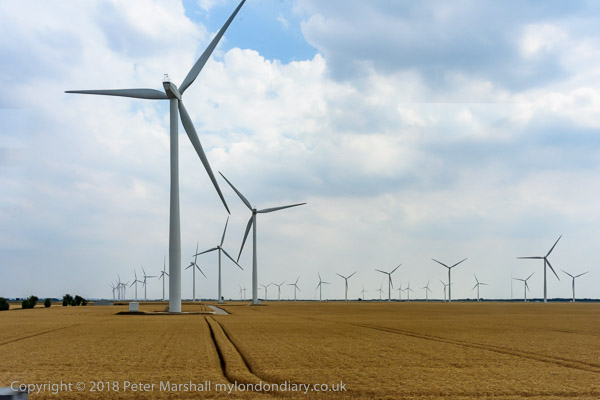
Somewhere in Lincolnshire the line goes along the edge of a large windfarm, and since we were jogging along at perhaps 30 or 40mph I was able to take a whole series of pictures, seven of which I’ve put on-line.  There was even time to think a little about composition, though of course I had no control over the running of the train. But I had time to look at what was coming up and thinking where the train would be, looking out of the window as well as at the camera screen.

Of course I didn’t get everything right. Rather more than I’ve shown were discarded, and even those that are on-line aren’t perfect. They’ve also had some tidying up in Lightroom, including some rotation, perspective correction and cropping, something that would have been tricky to get right in pre-digital days.

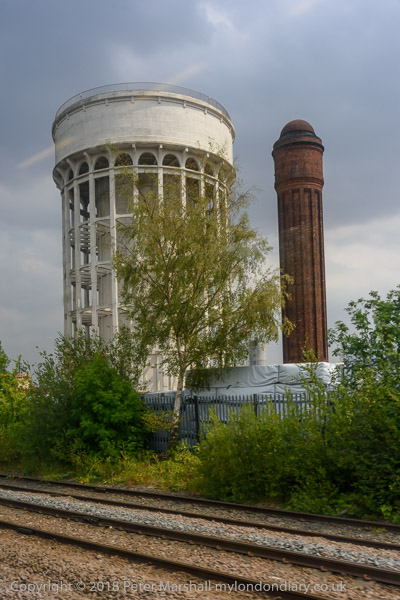
I took a few more at other places on the journey, and also read some of my book. Most of what I took were quickly deleted, but I’ve kept one from Goole and another as we were coming into Hull. I’ve photographed Goole’s famed ‘Salt and Pepper’ water towers before (and better) standing on the ground but the train does give you a different viewpoint.

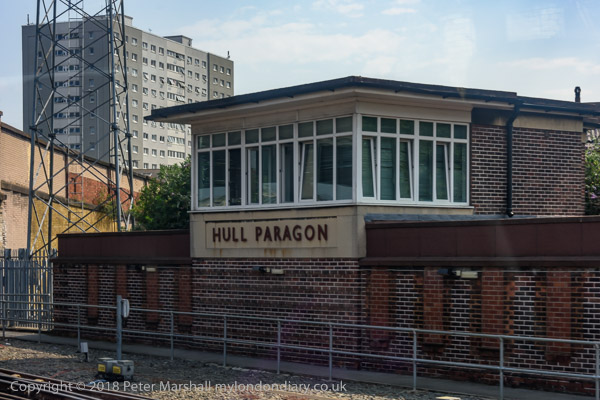
And although the station in Hull is now just Hull, rather than Hull Paragon, the signal box outside carries a reminder of the past, as does the door into what was once the bedroom shared by my two sons next to where I’m typing this, still adorned by its bright orange-red sticker:

HULL

PARAGON


You can see another 6 pictures of the windfarm at On the way to Hull. And should you be sitting on a speeding train frustrated by not being able to read the station names, you can always take a burst of pictures as you go through  – one of the very few uses I’ve ever found for those extremely fast shutter speeds on my mirrorless cameras. When else is 1/4000 (or even faster) useful?

______________________________________________________

There are no adverts on this site and it receives no sponsorship, and I like to keep it that way. But it does take a considerable amount of my time and thought, and if you enjoy reading it, a small donation – perhaps the cost of a beer – would be appreciated.

My London Diary : London Photos : Hull : River Lea/Lee Valley : London’s Industrial Heritage

All photographs on this and my other sites, unless otherwise stated, are taken by and copyright of Peter Marshall, and are available for reproduction or can be bought as prints.

To order prints or reproduce images

________________________________________________________
October 2018 complete

A few recent days without protests to photograph (or that I hadn’t the energy to go and photograph) gave me the time to finish work on my pictures from October and put them on-line in My London Diary. Or so I thought a few days ago, and then I realised that the month had 31 days and I still have October 31st to do.

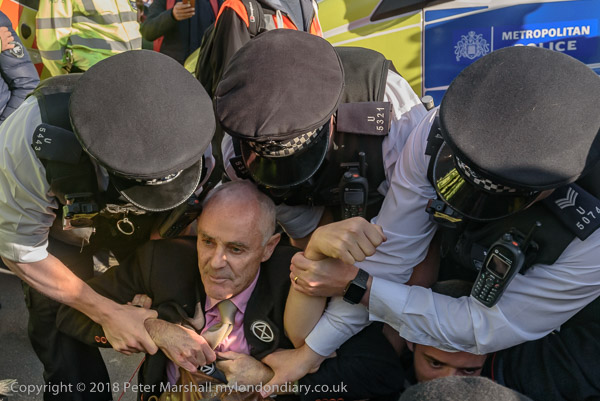
The Extinction Rebellion began on October 31st, arguably the biggest event of the month, and certainly one where I took most pictures. But the protest coming on November 17th, Rebellion Day, is the one which will show how serious this movement will be.

Oct 2018

Extinction Rebellion roadblock
Extinction Rebellion rally
Canada Goose cruelty to animals
20th UFFC remembrance rally


20th UFFC remembrance procession
Fridays for Future – act on climate change
Support self-employed parental leave
Scrap ICP Contract, Keep NHS Public


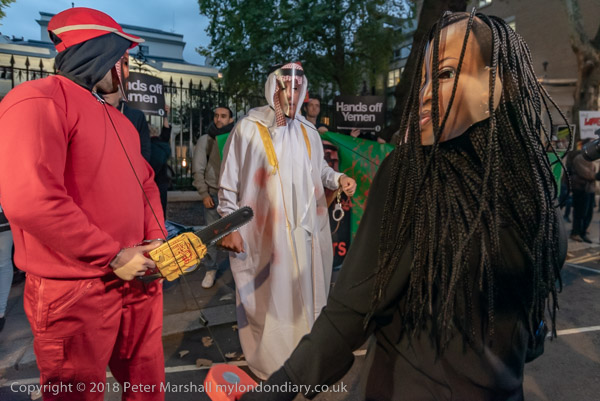
Justice For Jamal Khashoggi & Yemen
Act Up prepare for Bohemian Rhapsody
People’s Vote March – End
Veterans United Against Suicide
People’s Mujahedin of Iran
MfJ at People’s Vote March


People’s Vote March – Start


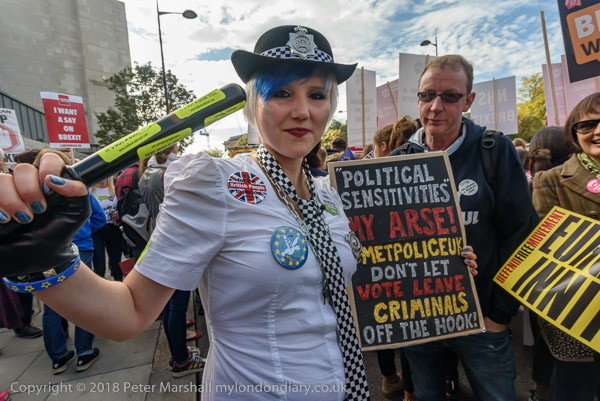
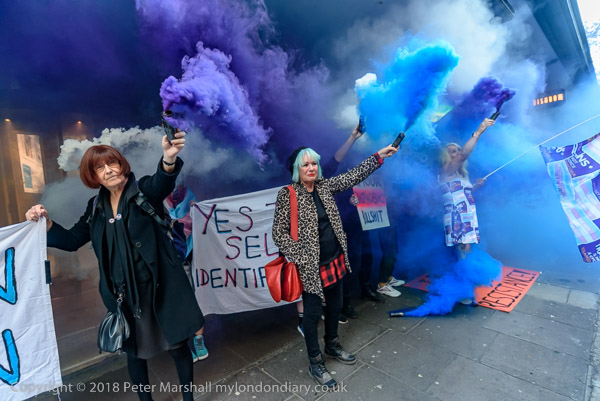
Mail group end your transphobic hate
Olympic Park walk
BEIS refuse International Rescue help
Mike Seaborne Isle of Dogs
Greenwich Walk
No More Grenfells – Make Tower Blocks Safe


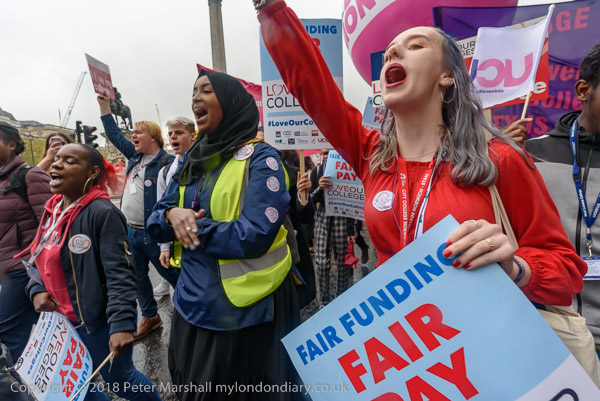
March for Further Education
Ahwazi protest Iranian repression
Rally opposes Islamophobic DFLA
National Funeral for the Unknown Cyclist
Guantanamo Justice October Vigil


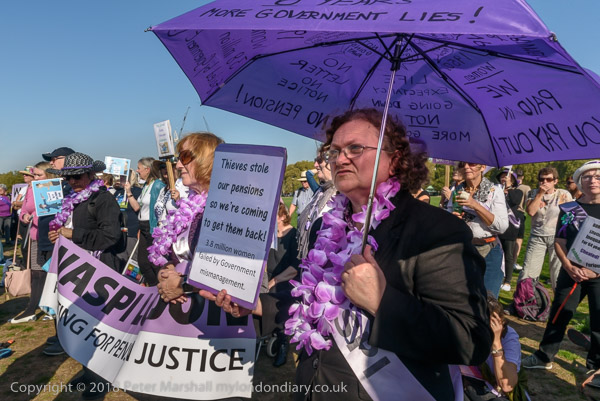
Women against Pension Theft
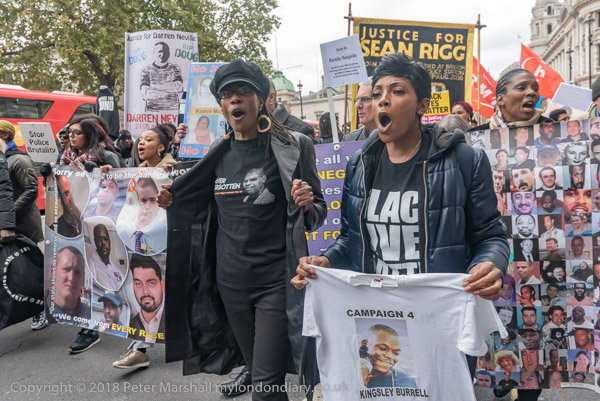
Harlesden Protest Police Brutality
Unstone and Apperknowle
Sheffield
Derek Ridgers Opening & Book Launch


Vedanta’s Final AGM

London Images

______________________________________________________

There are no adverts on this site and it receives no sponsorship, and I like to keep it that way. But it does take a considerable amount of my time and thought, and if you enjoy reading it, a small donation – perhaps the cost of a beer – would be appreciated.

My London Diary : London Photos : Hull : River Lea/Lee Valley : London’s Industrial Heritage

All photographs on this and my other sites, unless otherwise stated, are taken by and copyright of Peter Marshall, and are available for reproduction or can be bought as prints.

To order prints or reproduce images

________________________________________________________
Italy in London

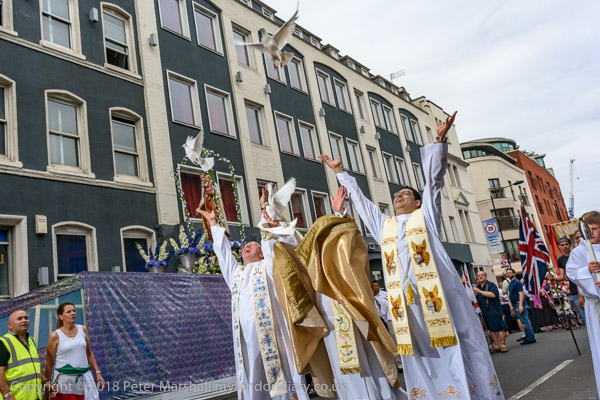
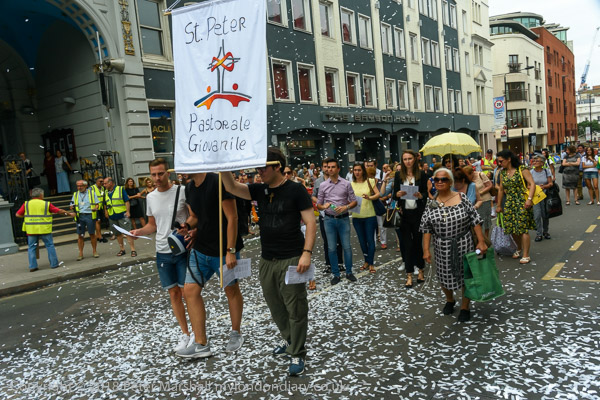
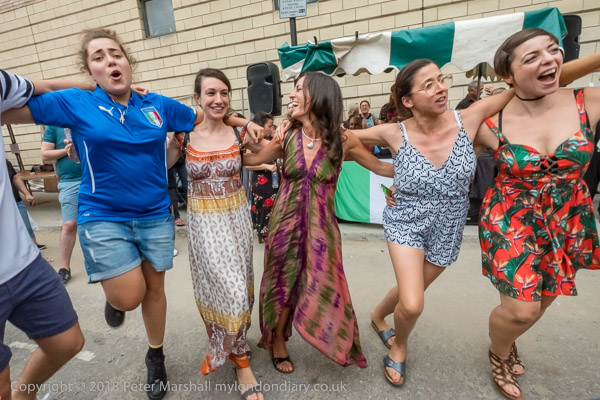
Another July and another Annual Procession in Honour of Our Lady of Mount Carmel from St Peter’s Church in Clerkenwell, an event which has been taking place for around 135 years – every year except during the two world wars.  It’s very much a day out for Italians living in London and further afield, and as well as the procession, which includes Biblical tableaux on lorries, various walking groups, some in costume, others carrying banners or statues etc, and first communicants and clergy, there is also a fair with rows of stalls selling Italian food and drink and other things.

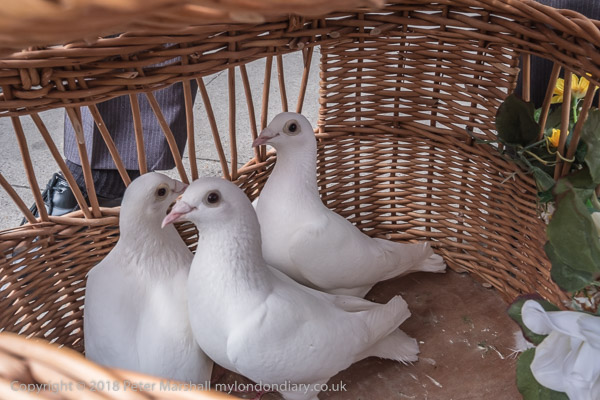
The highlight of the procession – for me at least – is the release of doves by the clergy, and its something I try hard to get a good picture of. But you rely on two unpredictable elements – the clergy and the doves, even when you are in the right place at the right time and ‘f8’ – the correct camera settings.

It isn’t always possible to be exactly in the right place – and in an ideal world I would have preferred a closer and lower viewpoint – and to have the three releasing the doves to have their backs to the church. I had put in a request to the man providing the doves to do his best to get them released together (and I’m sure he tried his best)  the man on the right beat his two colleagues to it, his dove flying high above the other two.

At least this year all three doves were caught in a single frame, though I had to work with a fairly wide angle (28mm) to get them. To freeze motion I was working at 1/500th, and being a bright sunny day this gave me an aperture of f11 for plenty of depth of field at ISO 400.  There are two images with the doves in flight on My London Diary, and they came from a burst of exposures using continous exposure on the Nikon D810, though I’ve cropped the second image.

After a bad experience using two Fuji cameras in an earlier year (one ran out of battery at the critical moment and the other just didn’t want to know when I pressed the shutter – in some Fuji cussedness mode) I’d taken the always reliable Nikon for the event. You don’t get any second chance with this.

As soon as the procession, with the parishoners joining on behind, had moved away from the church I hurried down the hill to the Sagra below where I knew several photographer friends would be waiting for me, with one thrusting a glass of Italian red wine into my hand as I arrived.  One particular stall always has wine cheaper than the rest and we return there every year at the event which has become a social event for us.

By the time we had finished our second glass (or possibly more) the fair was filling up, and I moved through the crowds taking pictures on the rather more discrete Fuji X-E3 and the wider 10-24mm, now my favourite among the Fuji cameras I own, as well as some with the Nikon and 28-200mm. It’s a combination of cameras and lenses I might try to use more, as I sometimes find the 18-35mm Nikon just not quite wide enough – the Fuji lens is a 15-36mm equivalent and extremely sharp.

More pictures and information:
Our Lady of Mount Carmel procession
Sagra – Italian festival

______________________________________________________

There are no adverts on this site and it receives no sponsorship, and I like to keep it that way. But it does take a considerable amount of my time and thought, and if you enjoy reading it, a small donation – perhaps the cost of a beer – would be appreciated.

My London Diary : London Photos : Hull : River Lea/Lee Valley : London’s Industrial Heritage

All photographs on this and my other sites, unless otherwise stated, are taken by and copyright of Peter Marshall, and are available for reproduction or can be bought as prints.

To order prints or reproduce images

________________________________________________________
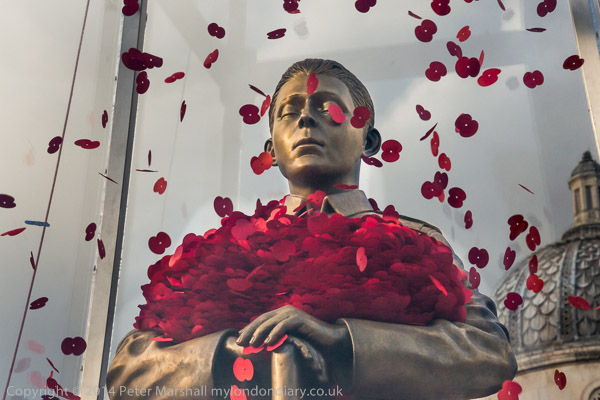
Remembering the Great War

I wonder what my father was thinking a hundred years ago today, somewhere in Northern France as  part of the RAF’s ground crew. He’d been conscripted in January 1918, shortly after his 18th birthday (and after having been laid off at a munitions factory) though he could have avoided service  on health grounds. The doctor at his medical on his 18th birthday was ready to reject him, as he was stone deaf in one ear, and asked him “Do you want to go in the Army?” and he replied “Yes, I would like to“.

He didn’t talk about the war, but my sister did persuade him to write about his life not long  before he died in his eighties. He was assigned to the Royal Flying Corps, possibly because his craft skills were thought to be useful there, but more probably by chance, and after some rather dubious monts of “training” was posted to France in August 1918. At Farnborough he “was given the number 119377 and the rank of 3rd Air Mechanic (called 3rd Ack Emma), and awarded the magnificent wage of one shilling plus one penny a day, seven days a week – the extra penny because I was designated Clerk.”

He writes

“I came into collision with authority very soon. We had a load of petrol in and I was to help unload it. Corporal said “Put it down here”. I pointed out that the pit was on the other side of the lorry, and it was only sensible to put it over there. I was reported and had to go to see the Sergeant -Major. He said that I was on active service and people were often shot at dawn for disobeying orders. I told him I didn’t expect to live very long, and if he liked doing that sort of thing it was OK by me. He told me to clear off and not be so silly. I rather think he had a word with that corporal. I didn’t hear anymore about it.”

Dad was assigned to HQ Flight and they were stationed somewhere in the St Quentin area, though they had to move very frequently, and he spent much of his time loading and unloading lorries with their stores and equipment.

Chinese coolies prepared our sites and probably erected buildings; and of course they dug the petrol holes out. There was every nationality represented amongst the troops and auxiliaries. It was amazing how varied an organisation the armies were. There were lots of horses, mules and bullocks pressed in to do the work. Then there were the Tommies and the Frenchies and all the other fighting men, all colours, marching backwards and forwards – Colonials, Indians, Africans; we had an Empire then!”

We were up near Courtrai when the armistice was announced – was it called Bissingham or something like that? … I think we had an inkling that it was coming, and I was crossing over to the flight sheds which were old “Jerry” ones when I met a civilian who shouted “La guerre fini; tres bon, monsieur”; I replied “tres bon, m’sieur”.

He did come under fire on at least one occasion which he describes, but despite being in the RFC and the RAF I don’t think he ever flew. And while he had a rifle, at least when he was on guard duty, he never used it and said it “just got in the way.” Later Dad went on into Germany after many of those who had served longer were demobbed, ending up in sole charge of the stores he had worked in, only returning to the UK in December 1919 after which he got a month’s leave and £75 in back pay to finish his service, though as he says “of course I was still officially on reserve (perhaps I still am).”

Too old to fight in the Second War, Dad served at home, both as a firewatcher and as a bee-keeper. At the outbreak of the war he was secretary of the Twickenham & Thames Valley Beekeepers Association, who decided to hold a Honey show in “November 1939 to shed a little light on the prevailing gloom.” They called it the ‘Rainbow Show” and it continued annually until the 1945 ‘Victory Show’. Bee-keepers had a vital role in the ‘Dig for Victory’ campaign, with bees both producing honey and fertilising the crops, and though he makes no mention of it in his account I remember him telling me about cycling all around the county as ‘Foul Brood Inspector for Middlesex’, from Staines and Uxbridge to Harrow and beyond, instructing in good practice many of those with no previous experience of  keeping bees.

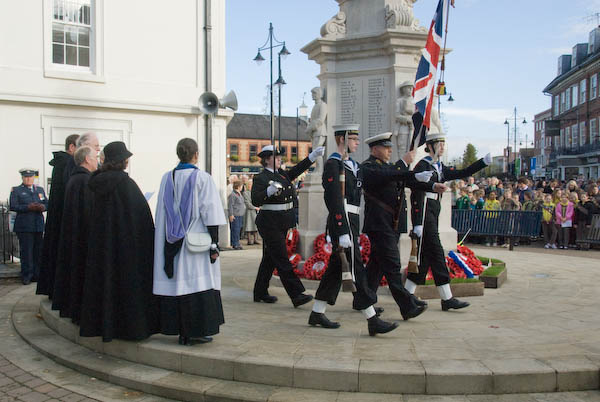
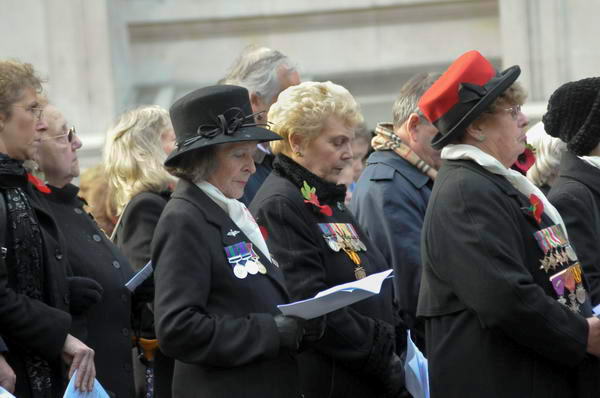
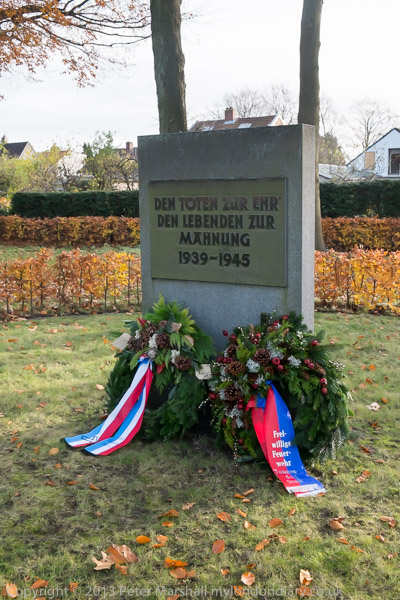
This year I’ve not photographed any of the events to mark 100 years since the end of the “Great War”, the “War to end all Wars” that are taking place today. I’m very much put off by the militaristic nature of so much of the annual celebrations that take part. I was very much more impressed a few years ago when I was in Germany on the 11th of November, when the day seemed to be celebrated not just to remember those who died, but as a festival for peace. It seemed far more respectful of the dead on both sides and what they died for.

______________________________________________________

There are no adverts on this site and it receives no sponsorship, and I like to keep it that way. But it does take a considerable amount of my time and thought, and if you enjoy reading it, a small donation – perhaps the cost of a beer – would be appreciated.

My London Diary : London Photos : Hull : River Lea/Lee Valley : London’s Industrial Heritage

All photographs on this and my other sites, unless otherwise stated, are taken by and copyright of Peter Marshall, and are available for reproduction or can be bought as prints.

To order prints or reproduce images

________________________________________________________

Peter Marshall — The River Hull 1977–85

I’m pleased to announce a second little zine just published with a few of my pictures – ‘Peter Marshall — The River Hull 1977–85‘, now available on Cafe Royal Books.

You can page through and see all the pictures on the web site – and of course buy a copy if you want. Might make a good Christmas present… And unlike my ‘Still Occupied, A View of Hull’ at a reasonable price, though postage adds a a bit to the £6 cover price.

Best to buy several copies and share them with friends, or of course there are many other great volumes in the series worthy of your consideration, including my own Notting Hill Carnival in the 1990s, as well as several by some of my friends, including Bob Watkins‘ The English Way, English Carnival Pictures, Paul Baldesare‘s Down the Tube Travellers on the London Underground and John Benton-Harris‘s The English and many more you can see on the Cafe Royal Books pages.

All these zines are fairly small editions and some sell out pretty quickly.

______________________________________________________

There are no adverts on this site and it receives no sponsorship, and I like to keep it that way. But it does take a considerable amount of my time and thought, and if you enjoy reading it, a small donation – perhaps the cost of a beer – would be appreciated.

My London Diary : London Photos : Hull : River Lea/Lee Valley : London’s Industrial Heritage

All photographs on this and my other sites, unless otherwise stated, are taken by and copyright of Peter Marshall, and are available for reproduction or can be bought as prints.

To order prints or reproduce images

________________________________________________________
Yarl’s Wood 14

I’m getting rather used to the ride from Bedford Station to Yarls Wood, going up through Clapham and then a mile or so on a cycle path beside the A6 befgore turning up the hill from Milton Ernest to the meeting point for protesters in front of the Twinwoods gates. That final hill is long and steep, though it’s something of shock to look at the OS map and find I’ve only climbed around 45 metres (around 150 ft) as it feels much more.

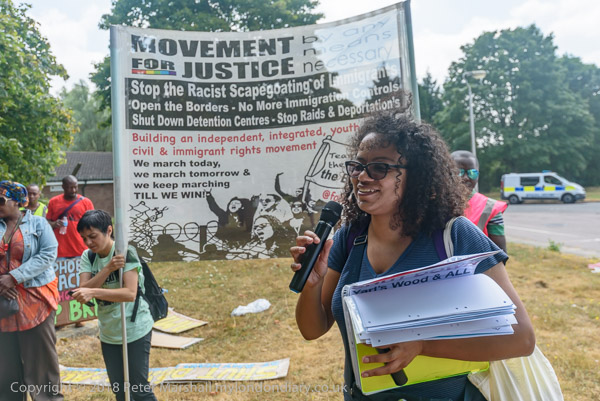
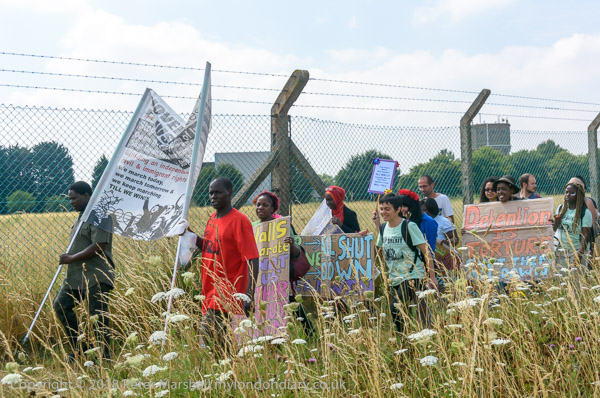
This was the 14th protest that Movement for Justice have organised, bringing many former detainees with them, with coaches from London and elsewhere. I could have joined them in London, but that would add another 3 or 4 hours to what is already a long day for me – and one that leaves me with perhaps another 3 or 4 hours to select, process and caption the pictures I’ve taken. It would be rather quicker if I didn’t keep dozing off at the keyboard while doing it, my finger on a key sending Lightroom into a frenzy of paging through the images which takes minutes to recover. And sometimes the doze is deep enough for my nose to hit the keyboard…

MfJ have come in for considerable criticism following their treatment of one member over a personal issue, which has led to a number of groups refusing to work with them. While some of the criticisms appear to be justified, others suggested a remarkable ignorance about the organisation, which has never hidden its background and organisation. It isn’t something I would join, but I admire and am happy to support the stand they have taken on several issues, and particularly on immigration and immigration detention.

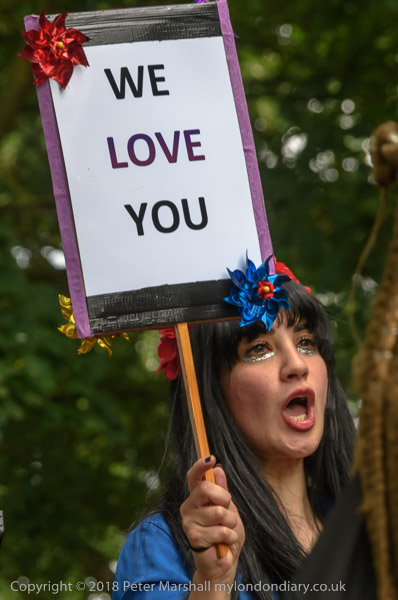
But the controversy has meant smaller protests at Yarls Wood, which is a shame, although there has been a rival protest on another date which perhaps helps to keep up the pressure on the issue. And the absence of some of the other groups has made the evident support that the MfJ gets from former detainees even more obvious. However MfJ decides on and organises the events, it is the former detainees who make the great majority of the speeches and lead most of the chanting and other activities during the protests, and my pictures show this clearly.

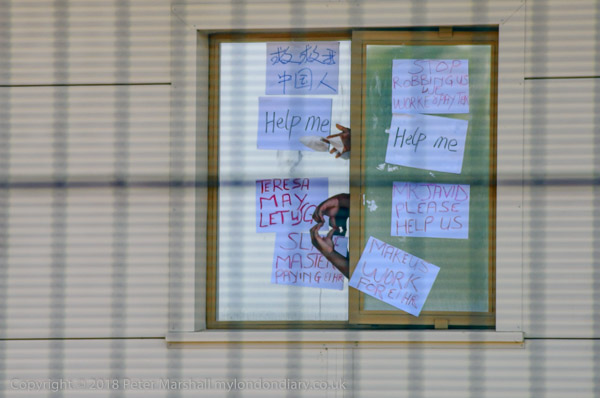
It’s clear too how welcome the protests are to those people, women and families, held inside Yarl’s Wood who are able to get to one of the windows which overlook the protest, or to make contace with the protesters by mobile phone, despite the efforts of the guards inside to keep them away. It’s difficult to photograph the windows through the close grid of the top 10 feet of fence, and the windows have limiters to only allow an inch or two of opening, but one woman has managed to get both hards through the narrow gap and make a heart shape with her fingers, surrounded by messages for help.

It’s something of a trek back from the field where the protest takes place to the road, through several fields and a short stretch of byway, and the fields are heavy going on a bicycle, often easier to get off and walk than to try and ride.  It it’s been wet there is mud which is slippery and soon builds up between wheel and mudguard on the Brompton, stopping the wheels from turning, and when the ground is dry the mud hardens into ridges and furrows which jolt the arms and can even throw you off the bike.

But once back on the road you can relax in the long downhill stretch to the A6,  though it’s annoying to have to brake for a few wiggles as you get near the main road. And when you leave the A6 cycle path to go up to the old road trough Clapham the first quarter mile is a steep climb. I have cycled all the way up, but its taxing, and this time I got off and walked, and even that was exhausting. But then its largely a gentle downhill all the way to the station and I had plenty of time to relax on a slow train to St Pancras.

Shut Down Yarl’s Wood 14

______________________________________________________
There are no adverts on this site and it receives no sponsorship, and I like to keep it that way. But it does take a considerable amount of my time and thought, and if you enjoy reading it, a small donation – perhaps the cost of a beer – would be appreciated.

My London Diary : London Photos : Hull : River Lea/Lee Valley : London’s Industrial Heritage

All photographs on this and my other sites, unless otherwise stated, are taken by and copyright of Peter Marshall, and are available for reproduction or can be bought as prints.

To order prints or reproduce images

________________________________________________________