Insects

I think most of us have a horror of insects, or at least of some insects. Creepy-crawlies give us the creeps, and many react like little Miss Muffett to spiders (which are insects in English if not in Biology.) I have a particular dislike for wasps, though I feel that this is entirely rational after sitting down in the dark too close to a nest on a trip to http://www.buildingsoflondon.co.uk/pm/borders/ Hawick in 2004 left me with multiple stings and a day or two of total delerium.

But of course insects are essential to life on the planet, part of the complex web of ecosystems that in particular allows us to grow food. We rely on them, particularly bees, to pollinate so many crops. And bees have in recent years been subject to huge declines in population, with the increasing use of pesticides and herbicides being a major cause.
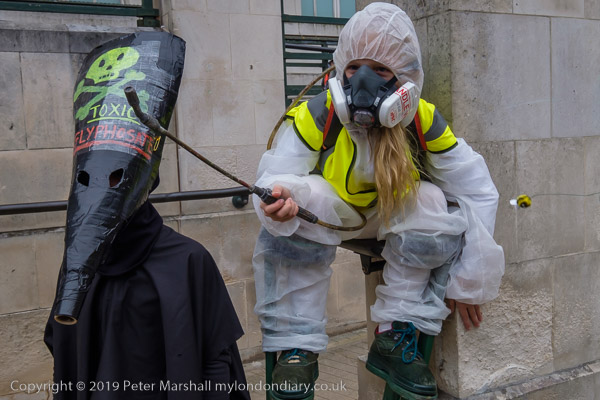
Herbicides – of which the best-known and most widely used is Monsanto’s Roundup, containing glyphosate – are used to stop the growth of plants. It can be used on some growing crops as it is more readily absorbed through the broader leaves of weeds than most crops, and varieties have been developed that are resistant to it, but it is also sprayed on field and road edges to kill weeds there.
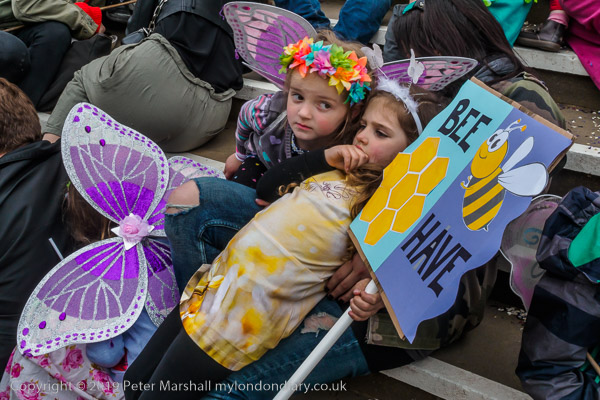
Many insects, including bees, are heavily reliant on these weeds and their flowers as a source of nectar to feed on, and herbicide use means the land can only sustain smaller numbers. Recent research has show a more direct effect on bees, with glyphosate at widely used levels in fields and on verges killing beneficial bacteria in bee guts, rendering them more susceptible to disease and infection.
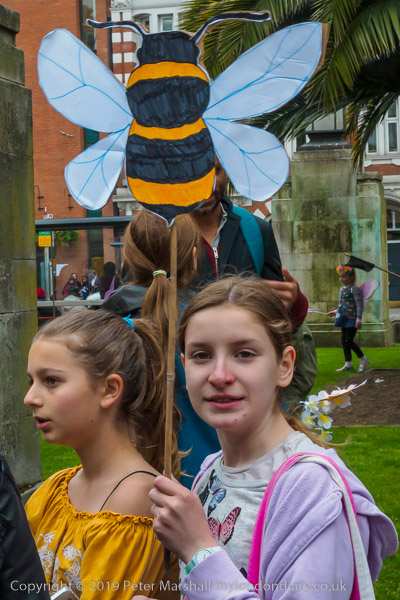
Some studies have also found direct effects on human health and Monsanto who introduced glyphosate as a herbicide (though many other companies now market it) have been accused both of trying to prevent publications of these and of sponsoring research which falsely reports an absence of such effects. Some US courts have come out in favour of huge settlements to workers over claims that using it have caused cancers, but the danger to the general public from exposure seems very low.
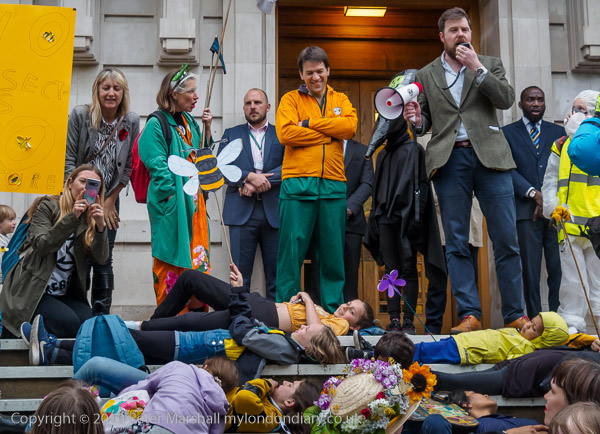
Hackney Council uses glyphosate to control roadside weeds and many Hackney residents also use this and other insect-harming chemicals in their gardens. The protest by Extinction Rebellion parents and children outside the council offices called on the council to completely end its use, and a man from the department concerned came to say they had reduced their use and were hoping to find ways it could be eliminated.
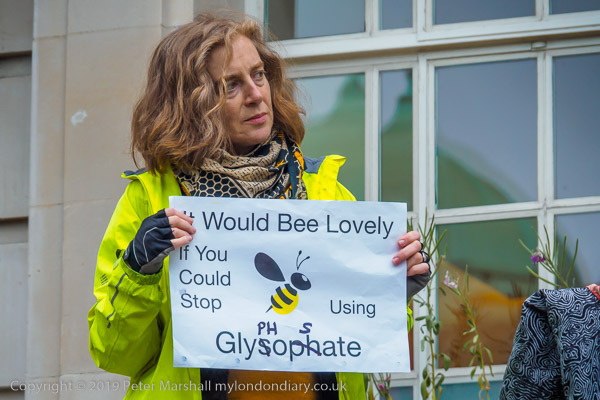
I don’t live in Hackney, but of course we need to stop or at least greatly reduce the use of glyphosate across the world. Years ago we used to have council workers coming regularly even to back streets like the one we live in armed with a spade to remove the weeds growing at the kerb. They were replaced by a machine with brushes that kept some of them down, but couldn’t clean most gutters as there were cars parked along the street. So the weeds grow. Occasionally a resident will go out with a spade and clear the short section in front of their house, but usually they grow until a long dry spell kills them, they die down and reappear after more rain.

More at XR tell Hackney stop killing insects.


All photographs on this and my other sites, unless otherwise stated, are taken by and copyright of Peter Marshall, and are available for reproduction or can be bought as prints.

There are no adverts on this site and it receives no sponsorship, and I like to keep it that way. But it does take a considerable amount of my time and thought, and if you enjoy reading it, please share on social media.
And small donations via Paypal – perhaps the cost of a beer – would be appreciated.
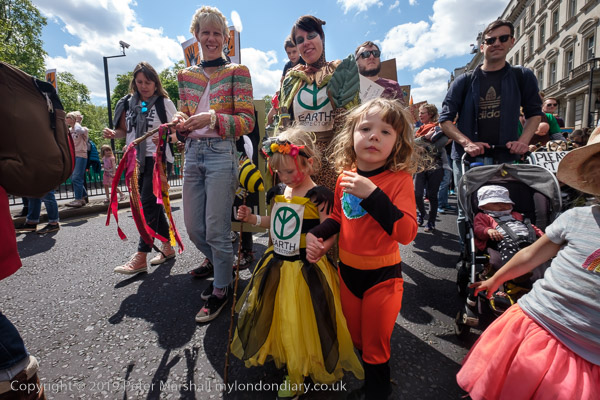
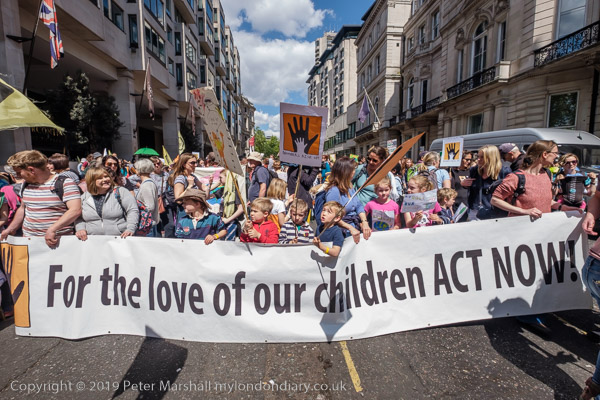
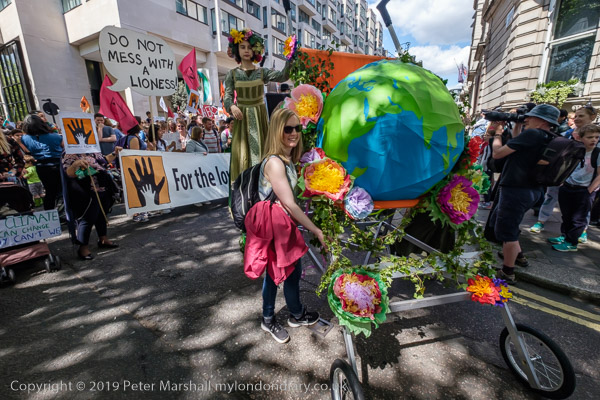
Mothers’ Day March

Apparently according to Mothers Rise Up, 95 countries celebrate Mothers’ Day on 12 May, (although in the UK we traditionally celebrate our mothers on Mothering Sunday in March, on the 4th Sunday in Lent, a rather more low key event.)

Or rather people celebrate Mother’s Day, as Anna Jarvis trademarked the event in 1912 saying it should “be a singular possessive, for each family to honor its own mother, not a plural possessive commemorating all mothers in the world.”

Jarvis had begun campaigning for a day to honour mothers after the death of her own mother in 1905. Ann Maria Reeves Jarvis (1832 1905) had been a community activist and had established Mother’s Day Work Clubs in several West Virginia towns to assist and educate people to improve sanitation and reduce infant mortality and disease. During the US Civil War she had controversially insisted these clubs provide food, clothing and nursing to soldiers in need on both sides.

Mother’s Day in the USA rapidly developed, much against Anna Jarvis’s wishes into a commercial jamboree; she organised boycotts against sending mass-produced cards and gifts, urging people instead to mark the day and honour their mothers by writing them letters expressing their love and gratitude.

According to Wikipedia, Jarvis protested against the commercialisation of the event at a “candy makers’ convention” in Philadelphia in 1923, and at a meeting of the American War Mothers in 1925. The War Mothers were selling white carnations for Mother’s Day to raise funds, and this so enraged Jarvis that she protested and “was pulled away screaming and arrested for disturbing the peace.”

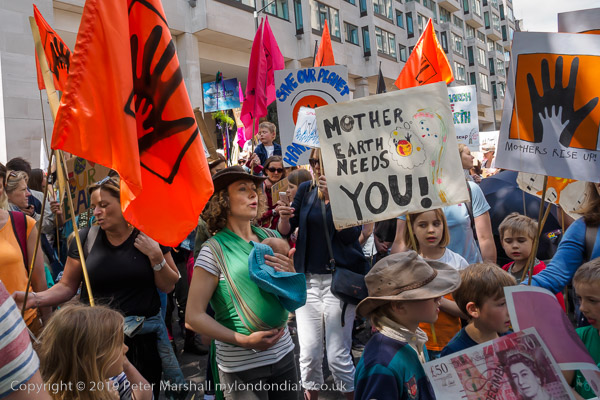
So it was very appropriate that Mothers Rise Up had chosen Mother’s Day to protest and “stand in solidarity with the #youthclimatestrikes” emphasising the urgent action needed to avoid disastrous climate breakdown, with scientists telling us we have only a few years to act. Perhaps as long as 11 years to take really decisive measures, although it may already be to late to prevent global human extinction. Already as they pointed out, people in parts of the Global South “are already suffering and dying as a result of climate chaos.”

Their call out for the protest began:

We will come together and rise as a maternal force to be reckoned with. With pushchairs and song, we will march from Hyde Park Corner to Parliament Square and demand that our government take immediate, drastic action for a just transition to a sustainable way of life.

I hope my pictures capture something of this “maternal force”, though the giant pushchairs did present something of a problem photographically. For once I walked with the protest the whole distance to Parliament Square (stopping off briefly to photograph another protest at Downing St) and stayed for a part of the rally.

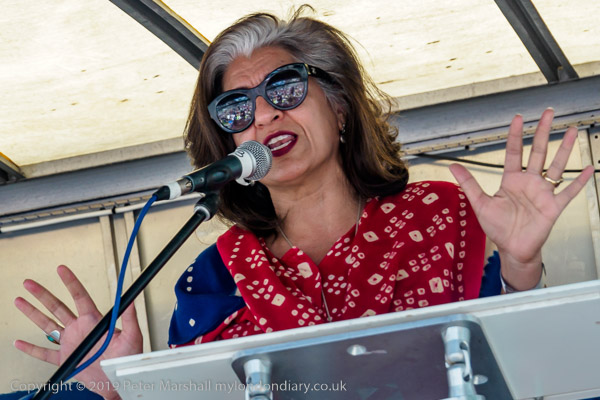
One of the speakers there was the leading international climate lawyer and diplomat Farhana Yamin; I had arrived too late a few weeks earlier to photograph her arrest when protesting with Extinction Rebellion at Shell’s London HQ in April.

More pictures from the march: XR International Mothers’ Day March

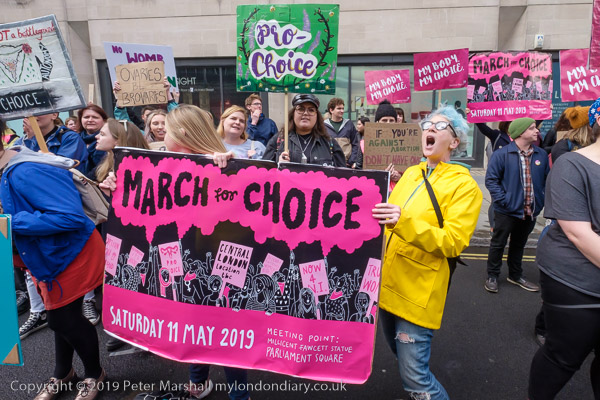
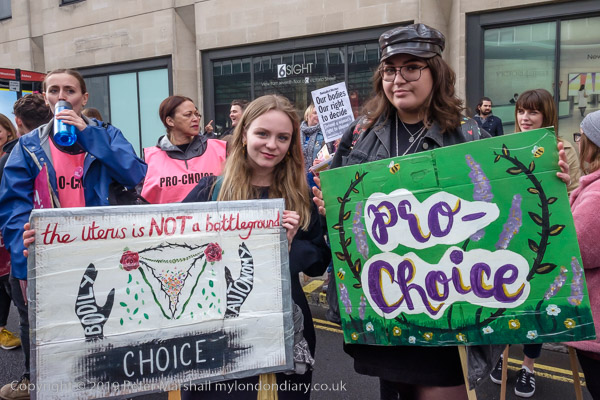
March for Choice

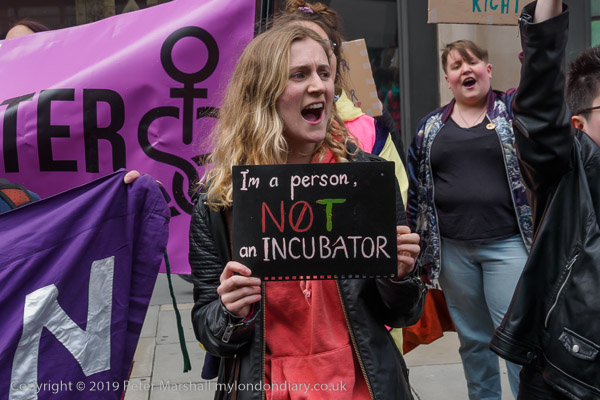
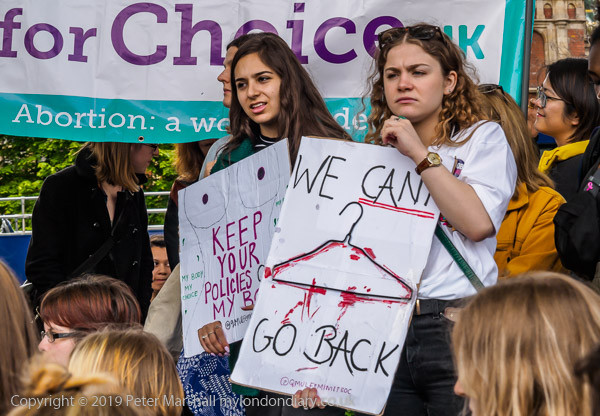
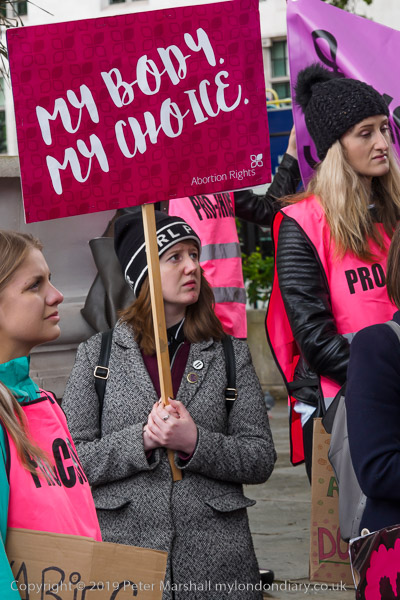
I missed the rally at the end of the demonstration in solidarity with Palestine in order to photograph the feminist rally in Parliament square for reproductive rights and the decriminalisation of abortion.

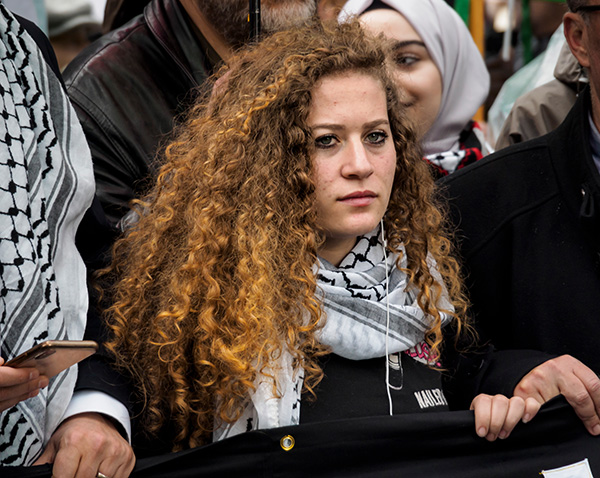
I felt by the time I left the Palestinian march I had enough pictures, particularly because I had managed to get what I thought was a decent picture of Ahed Tamimi who was to speak at the rally. Most of the other speakers were probably people I had photographed previously at other events.

I sometimes criticise news photographers who come to an event, take a few pictures (often setting up rather static group pictures) and then leave. I aim to tell the story of the event, and usually hang on for long enough to do so, while they want to get a single picture and send it (or more often a selection of single pictures) to the agency or newsroom before anyone else. In terms of making a living I’m sure they are right; what gets published is generally not the best picture but the one that arrives first.

And protests are rather like buses; you can wait for ages when nothing happens and then several come along at once. I think the most I’ve covered in a single day is seven, though there have been times when I’ve had double figures for the same date in the diary I make of protests I know about.

Of course they can even be in quite different places, though I very seldom leave London it can still involve a lot of travelling, and often I have to select not just on time but also on location, though my priority is always on the issues which the event is about. Though my definition of newsworthiness is often at odds with that of the mainstream media editors.

Abortion isn’t something to be encouraged or taken lightly, and I don’t believe that many women do, but the right of women to make choices about their bodies is a basic and important one. While at some point the rights of the unborn child also need to be considered, that time is most certainly not at conception but perhaps when that child becomes capable of an independent existence.

The 1967 Abortion Act was a great advance in clarifying law in this country, though unfortunately not in Northern Ireland and remains in force with the normal limit on abortion having been reduced from 28 weeks to 24 in 1990. It was a great advance as before 1967 the major cause of maternal deaths – around 60 -70 per year was unsafe abortions. And many children who might otherwise have been aborted because their mothers took thalidomide were born with severe or even fatal disabilities.

Apparently now 1 in 3 women in this country will at some time have a legal termination. Abortion outside the provisions of the Act (or in Northern Ireland under almost all circumstances) is still a crime – and can carry a sentence for both women and those who carry it out of life imprisonment.

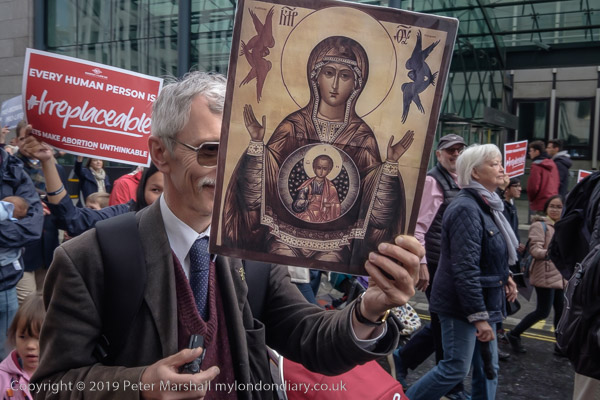
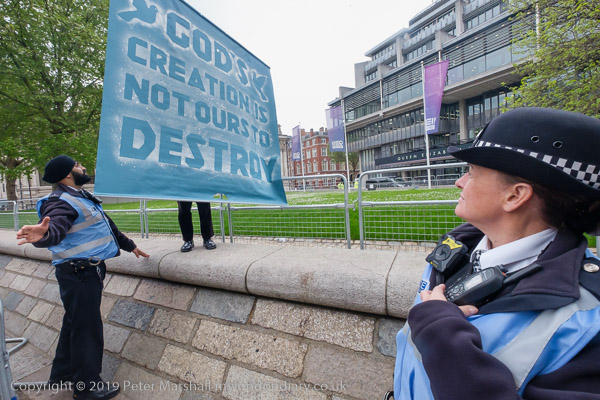
The ‘March for Choice’ was not really a march, but a rally followed by a short walk to a static protest in opposition to the anti-abortion March for Life UK, a largely Catholic event based on extreme right protests in the USA. March for Choice say it is made up of extreme anti-women, anti-choice, evangelical groups which regularly harass women outside abortion clinics, and has links to homophobic, fascist and far-right organisations. As well as abortion, it opposes contraception, sex education and IVF treatment.

More pictures from both groups:

March for Choice defends women’s rights
Anti-Abortion ‘March for Life UK’


All photographs on this and my other sites, unless otherwise stated, are taken by and copyright of Peter Marshall, and are available for reproduction or can be bought as prints.

There are no adverts on this site and it receives no sponsorship, and I like to keep it that way. But it does take a considerable amount of my time and thought, and if you enjoy reading it, please share on social media.
And small donations via Paypal – perhaps the cost of a beer – would be appreciated.

Solidarity with Palestine

As someone born as World War II was finishing it isn’t surprising that I grew up with with a great deal of sympathy and support for the young state of Israel, which had won its freedom from the British mandate by a number of terrorist attacks, most notably the King David Hotel Bombing, a massacre which killed 91 people and left around 50 badly wounded.

I was too young to know anything about it at the time of the attack, but in later years the Zionist underground organization the Irgun  was the first which I heard some call terrorists and others freedom fighters. Around 15 years later when I started a real interest in politics and free cigarettes at the local young socialist meetings in the Co-op Hallit was certainly the latter view that prevailed, not least because many of those in the Labour movement were Jewish.

Then we believed the lies that were told about Israel occupying a largely empty land and making the deserts bloom. Since then we have become aware of the properties and land stolen from the Palestinians, many of whom were forced out as refugees, and of the shrinking map of Palestine and the attacks on Gaza. The Zionist Israeli government has become increasing right-wing, violating the human rights of the Palestinians and international law over the years, setting up an apartheid system in Israel, making it impossible now not to support the Palestinian cause.

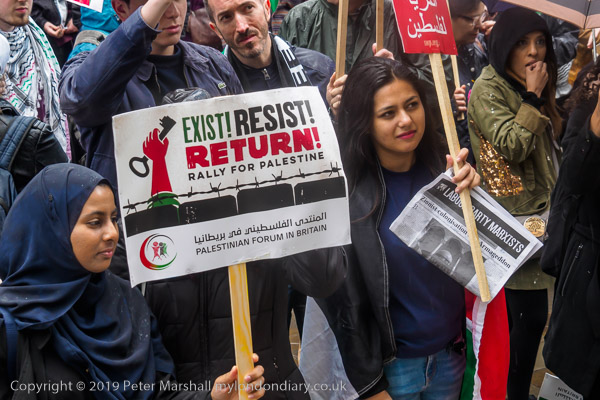
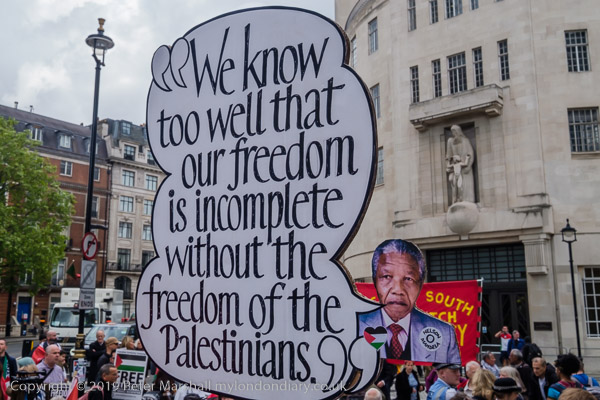
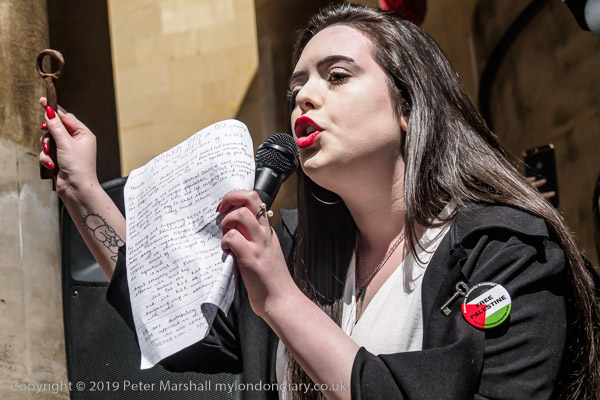
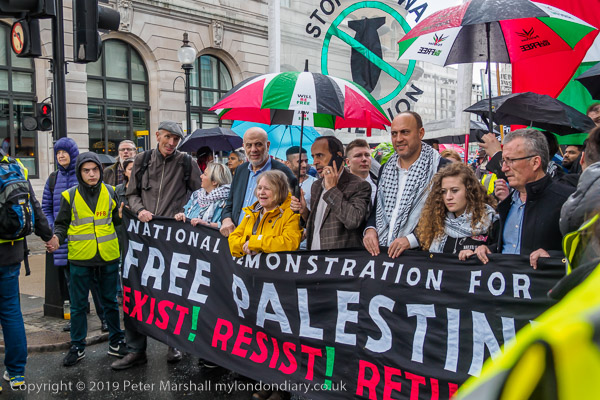
The protest on 11th May came at the start of the week remembering the Nakba and called for an end to Israeli oppression and the siege of Gaza and for a just peace that recognises Palestinian rights including the right of return. It urged everyone to boycott and divest from Israel and donate to medical aid for Palestine. Many of those on the march carried keys, some those of properties they had been forced to leave back in 1948, others simply as a reminder of the dispossession.

Among those marching was Palestinian teenage activist Ahed Tamimi, arrested after slapping an Israeli soldier in December 2017 after soldiers had entered her home and severely injured her 15-year-old cousin Mohammed. It wasn’t easy to photograph her on the march as stewards kept photographers outside the area in front of where she was marching holding the banner at the head of the march.

I wasn’t able to get close to her, but had to photograph with a long lens from a distance. With the 14-150mm lens on the Olympus E-M5 Mk II I managed to get a decent image with her filling much of the frame. The lens is equivalent to a 28-300mm, and for this picture I was using it at its extreme and at f5.6 and 1/250th at ISO 1250.

I think the result is rather better than I would have expected using a Nikon, thanks to the stabilisation of the OM body. And I would probably only have been carrying a lens with a maximum focal length of 200mm, so would have had to crop to get a similar image, thus losing some of the advantage of the larger sensor. I think the autofocus is almost as good as the Nikon, close enough to show no real difference in speed, and face detection is sometimes a help. And as a final point, despite weighing half as much, the Olympus lens is I think a better performer.

As well as the Olympus, my second camera was a Fuji X-T1, with a 10-24mm lens (15-36 equiv) that is also a fine performer. It doesn’t have quite the advantage in size and weight over Nikon that the Olympus has, and the camera somehow feels a little less responsive. I bought it when I was hoping that a Fuji system could replace my Nikons, but now I’m more likely to move to Olympus, keeping a Nikon only for the larger file size when used with bellows and a macro lens for digitising negatives and slides.

As with most events showing solidarity with Palestine it was joined by several Jewish groups, including the ultra-orthodox Neturei Karta  and also opposed by a small group of Zionists. You can see pictures of both on My London Diary, along with coverage of the rally close to the BBC before the march. I left and went home before the rally at the end.

More pictures at National Demonstration for Palestine.

Guardian Lies on Venezuela

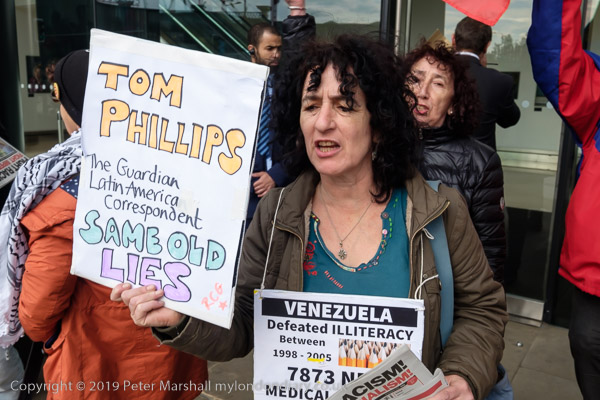
Back to looking back at my own work from a few months ago, and a protest outside the offices of The Guardian, a canal-side block on York Way to the north of Kings Cross, part of King’s Place. It’s a place I’ve visited a few time as in the ground floor entrance they have regular exhibitions of photographs, but on this occasion they were not letting people in to see them, with security staff at the door.

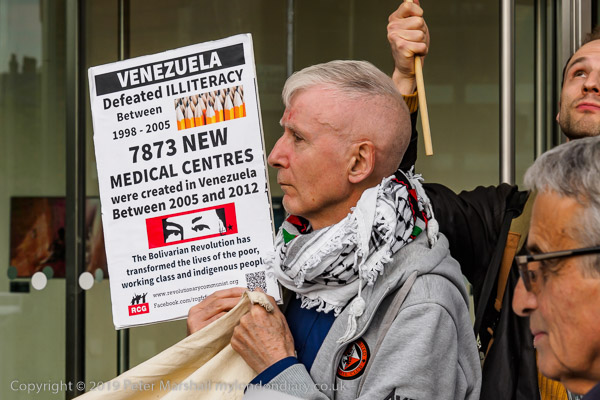
The protest was organised by the Revolutionary Communist Group, a name that might put some people off, but who I think are one of the friendliest and most sensible groups in left politics, and while I may not always agree with their views, they have been very active in campaigning on some of the our pressing social issues – including housing, universal credit and other benefits and disability, working together with other groups without trying to take things over. Often they are the people who bring a PA system to protests and make it available as an ‘open mike’ for others as well as them to speak.

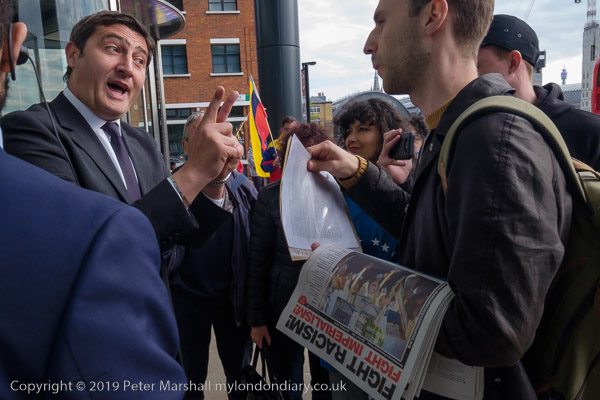
They have a newspaper too, ‘Fight Racism, Fight Imperialism’ and it runs readable and well-researched articles on many subjects, and it includes much coverage of events in South America, informed by people who have lived and worked and have good contacts there.

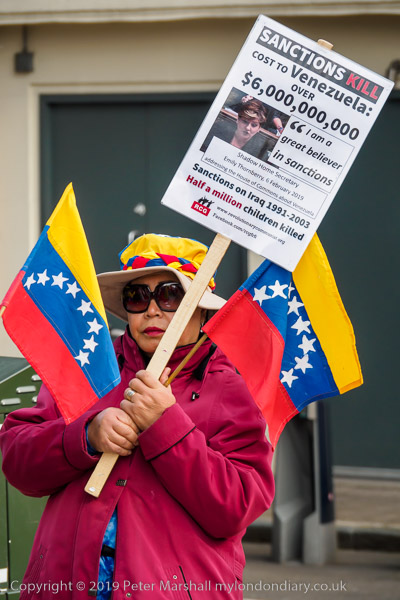
Of course they view the situation from a particular political perspective, supporting the left-wing popular movements in the continent, and in the case of Venezuela, the government under President Nicolas Maduro. Of course not everything is rosy in the country which has suffered greatly from US sanctions, low oil prices and other economic pressures, but they are very aware of these pressures and the problems they have led to.

The stringences in Venezuela have particularly affected the middle-classes, while the Bolivarian revolution begun under Hugo Chavez meant great gains for the peasants and indigenous peoples, even though there has been deterioration in recent years.

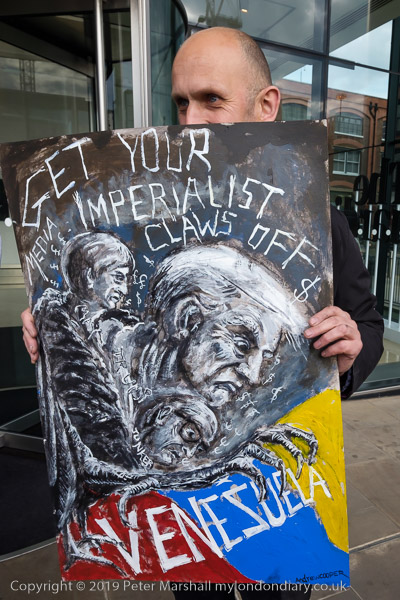
The Guardians coverage of events in Venezuela have been almost entirely from the point of view of the middle classes who their correspendent clearly is at home with, and have largely ignored the popular support still enjoyed by Maduro. While the support of most of our press owned by billionaires as well as the establishment BBC for the US-backed efforts to mount a coup in the country against the democratically elected leadership is hardly surprising, many on the left are surprise that The Guardian should so one-sidedly support it.

The protesters held up posters listing some of the successes of the Venezuelan government under Chavez and Maduro with the Bolivarian revolution building socialism and transforming the lives of the poor which have led to the crippling US sanctions and the US-backed coup and called on The Guardian to stop publising lies and to report the facts and both sides of the argument in Venezuela rather than simply parrot the views of the US-backed opposition.

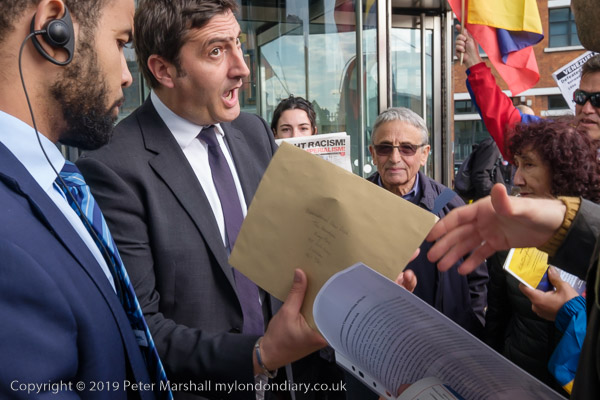
Towards the end of the protest a small deputation attempted to deliver a letter to The Guardian but were not allowed to enter the building. Instead the security man at the door accepted their letter and promised that it would be delivered.

More pictures at Guardian lies about Venezuela.


All photographs on this and my other sites, unless otherwise stated, are taken by and copyright of Peter Marshall, and are available for reproduction or can be bought as prints.

There are no adverts on this site and it receives no sponsorship, and I like to keep it that way. But it does take a considerable amount of my time and thought, and if you enjoy reading it, please share on social media.
And small donations via Paypal – perhaps the cost of a beer – would be appreciated.

Biennial Thoughts

The Whitney Biennial  according to its web site “is an unmissable event for anyone interested in finding out what’s happening in art today. ” That is in art in the USA, and this years show features “seventy-five artists and collectives working in painting, sculpture, installation, film and video, photography, performance, and sound.”

It’s interesting to look through the list of artists and perhaps explore some of their work on-line, but even where I in New York, I think I might find the whole rather too daunting to contemplate.

My attention was drawn to it by a post on The Online Photographer with the site’s longest ever title:
Open Mike: What Danielle Jackson’s Artnet Review Tells Us About What the Whitney Biennial Tells Us About the Future of Photography—and the Reviewers and Curators and Academicians Who Will Shape the Artists Who Will Shape It

Though it was the content of the post rather than its length that caught my attention. It starts with a short reflection on the idea of ‘political correctness’ and then cites Danielle Jackson’s review as an example “written from the perspective of political correctness about a show that appears to be mainly about political correctness.” I felt I had to go and read it.

Jackson writes she was sent by Artnet with “a brief to consider the photography in the exhibition and left thinking about the power of affiliation.” In a long piece she suggests that the artists “come from nearly every conceivable historically marginalized group” and that they form the new mainstream.

It’s perhaps unsafe to make any conclusions from the installation views and example of work which accompany her post, or from the Whitney web site, but if this is the future then there seems relatively little in it that I find of any great interest.

Michael C Johnston looks at her review in somewhat greater length and I certainly have some sympathy with his views, and in particular with his opinion that “The actual photographs in the show seem to be secondary to the positions they take on various political implications” which appears to be at the base of both the curation and the review of the show.

But perhaps both he and I will be accused of thinking and writing from our own positions of age and race and privilege. And of course I am what I am, though I think I am rather more of an outsider than many of the established artists whose work is featured in the Whitney.

Drivers protest at Uber offices

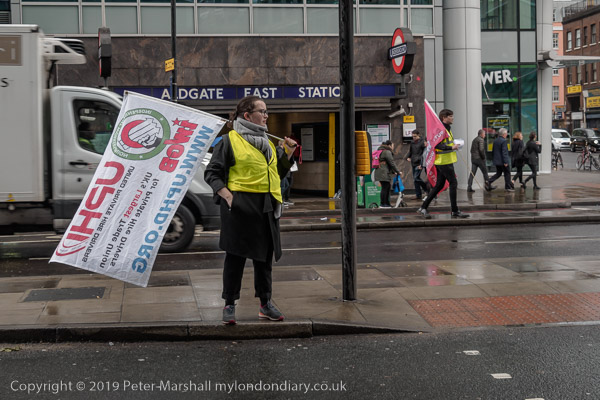
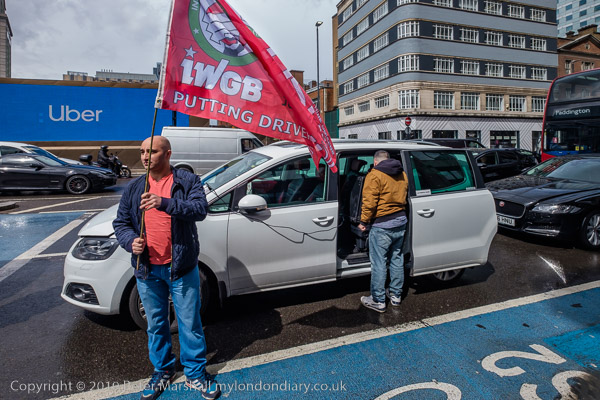
Uber drivers in London claim that on average they earn £5 an hour after taking into account their expenses, well below the national minimum wage and less than half the London Living Wage, the independently assessed minimum needed to live in London.

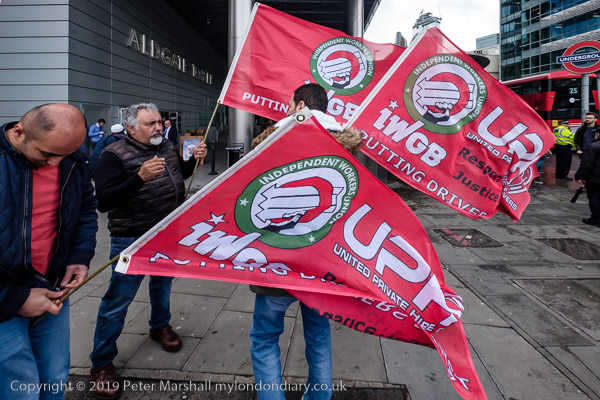
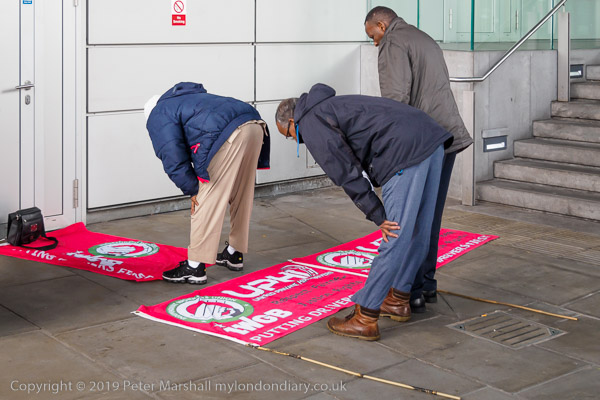
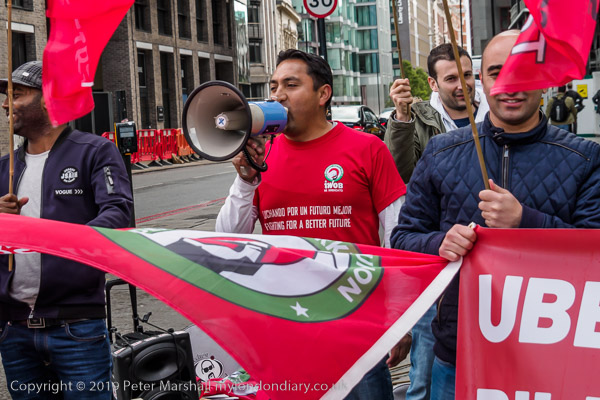
United Private Hire Drivers, a branch of the IWGB – Independent Workers Union of Great Britain – has been recruiting and organising private hire drivers including those working for Uber and organised a protest outside the Uber offices in Aldgate on the day before Uber’s Wall Street share flotation. The flotation at $45 per share meant a bonus of billions for Uber’s founders and for early investors including Amazon’s boss, Jeff Bezos and disgraced cyclist Lance Armstrong but absolutely nothing for the drivers.

Those who bought into the shares at the flotation may also have lost, unless they sold their shares at exactly the right time; the shares had lost around 7% at the end of the first day of trading and have only very briefly peaked above the opening price. In August they slumped down to around $32. Of course they may rise again – particularly if Uber ever manages to make money.

Despite cheating and exploiting its workers, avoiding tax and failing to properly recognise the status of the workers who drive for it, Uber has still never made a profit and may never do so. Of course it has done very nicely for the people at the top of the organisation – and those early investors.

In some respects, Uber certainly does point to the future of private hire, and highlights the antiquated and expensive nature of our London black cab system. And it provides a service many find very useful if not always entirely necessary, but at the expense of both its drivers and tax payers in general, cheated out of tax.

Better and cheaper true public transport services could do much to reduce the need and the desire for the service Uber offers, and there seems to be no inherent reason why a similar public service could not replace both Uber and black cabs and other hire services, although paying drivers decently and providing proer conditions of service as well as paying taxes would inevitably increase the cost to users.

The drivers say that fares need to be increased to £2 per mile and that the commission to Uber, currently 25%, needs to go down to 15%. They want an end to unfair dismissals for for Uber to respect the rights of drivers as workers which were confirmed by an Employment Tribunal ruling in 2016.

The protest involved drivers boycotting the Uber app from 7am to 4pm, and it was impossible to know how successful that had been. But there were rather fewer drivers than I expected outside the offices and blocking one lane of the busy road, though I left before the protest was over.


All photographs on this and my other sites, unless otherwise stated, are taken by and copyright of Peter Marshall, and are available for reproduction or can be bought as prints.

There are no adverts on this site and it receives no sponsorship, and I like to keep it that way. But it does take a considerable amount of my time and thought, and if you enjoy reading it, please share on social media.
And small donations via Paypal – perhaps the cost of a beer – would be appreciated.

British Museum’s Stolen Goods

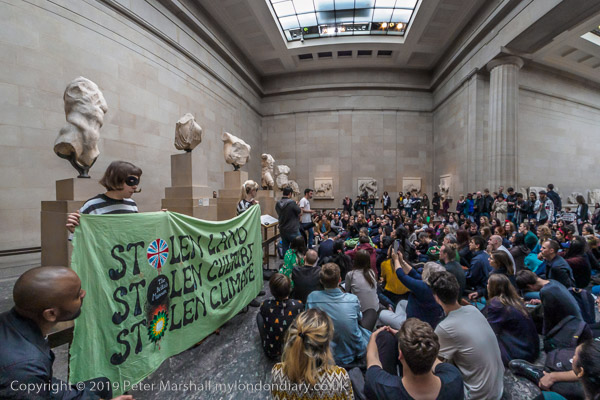
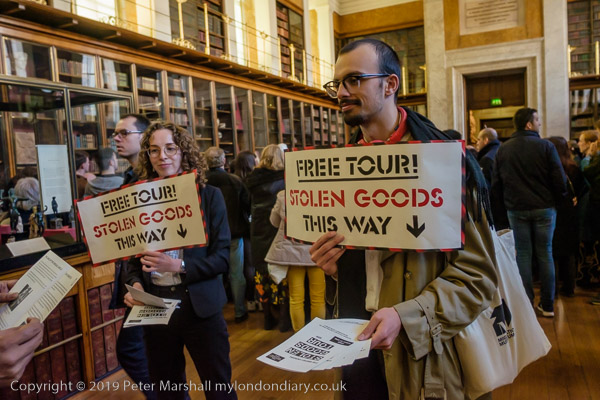
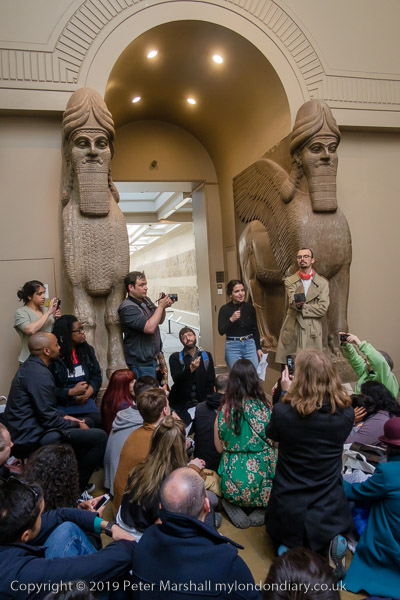
Stolen Land – Stolen Culture – Stolen Climate‘ was the message on the banner carried by two people dressed as cartoon criminals in masks and striped jumpers for the unofficial tour of the British Museum by campaigners ‘BP or Not BP?’ callling for stolen cultural objects to be be returned to their countries of origin.

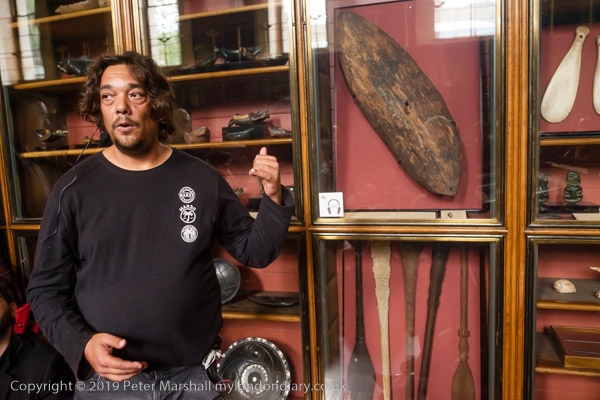
As in a previous tour by the campaigners, the event with indigenous Australian campaigner Rodney Kelly in front of the Gweagal shield, stolen from his ancestor by Captain Cook and his men when they arrived at Botany Bay, along with other shields and spears. His plea with the museum authorities that this shield be returned to its homeland to form the nucleus of a new museum there has so far fallen on deaf ears.

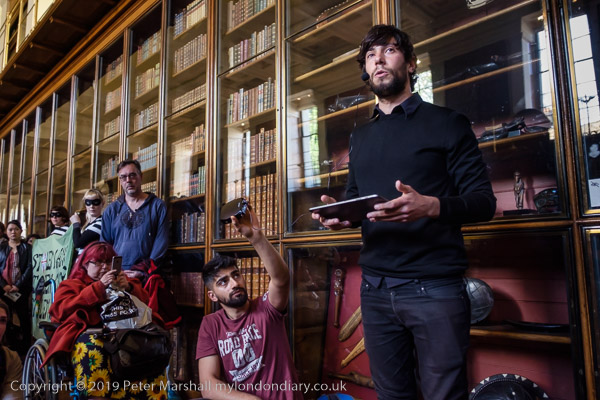
Danny Chivers of BP or Not BP? had introduced the event, explaining their campaign to end sponsorship of the British Museum and other cultural institutions by BP which they use to improve their image, with a great deal of positive publicity at relatively little cost. BP are one of the companies driving climate change and their operations in oil extraction around the world are highly polluting and dangerous to the environment as well as being accompanied by significant human rights abuses. Putting cash into exhibitions, concerts and opera performances helps to cover up their crimes.

After Kelly had spoken about his ancestors and their treatment and the failure of tbe British Museum to contemplate handing back the stolen objects, Samir Eskanda spoke about many objects which have been taken over the years from ‘biblical’ excavations in Palestine, but which are important to understanding the culture and history of Palestine and the Middle East and should be returned to museums there.

The crowd then moved on to the Assyrian galleries, where as well as the removal of cultural objects by excavations in the last century, the 2003 invasion of Iraq was accompanied by a huge amount of looting. Many of these looted objects have now been sold at auctions, particularly in the UK and US and are now in museum and private collections, despite objections from Iraq and Iraqi institutions.

Finally we all moved on to the gallery which contains the Parthenon (or Elgin) Marbles, bought from the Turkish occupiers of Athens by Lord Elgin, essentially looted items.

More pictures at British Museum Stolen Goods Tour.


All photographs on this and my other sites, unless otherwise stated, are taken by and copyright of Peter Marshall, and are available for reproduction or can be bought as prints.

There are no adverts on this site and it receives no sponsorship, and I like to keep it that way. But it does take a considerable amount of my time and thought, and if you enjoy reading it, please share on social media.
And small donations via Paypal – perhaps the cost of a beer – would be appreciated.

Anti-Christ at the Abbey

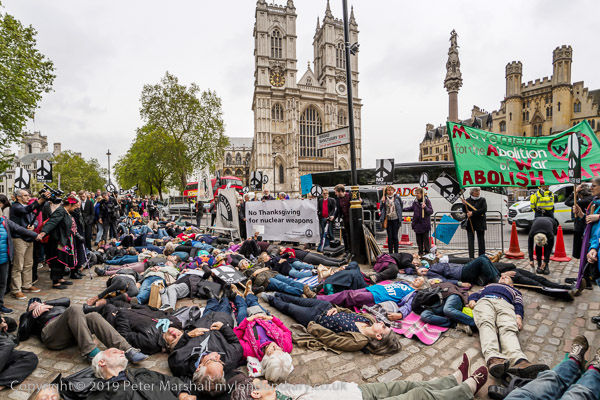
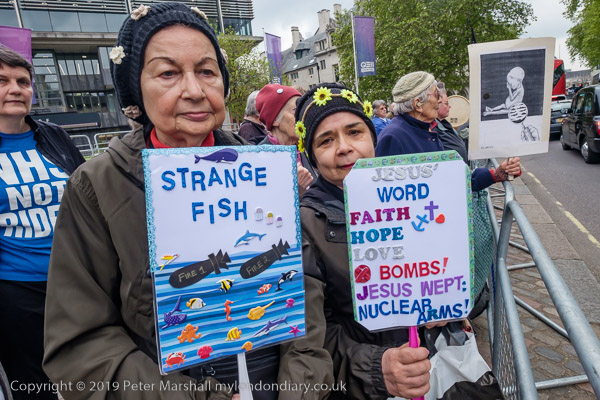
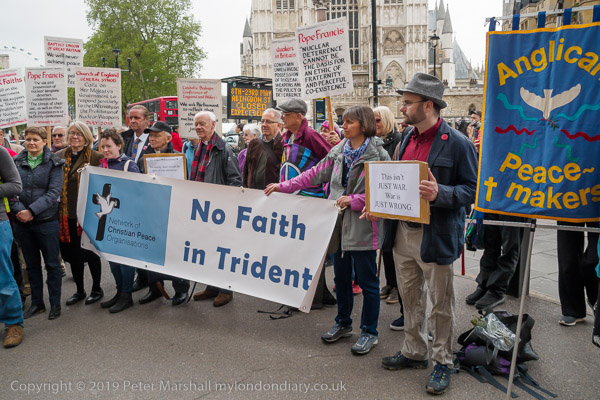
I can’t understand how anyone Christian could condone the service at Westminster Abbey to celebrate 50 years of continuous nuclear threat by British submarines armed with nuclear missiles.  It seemed obscene and blasphemous, a total negation of the teaching of Jesus as recorded in the Gospels.

I’ve never really been a pacifist, believing that sometimes in extreme circumstances it can be the lesser of evils to pick up weapons and fight. I think I would have been prepared to fight the Nazis in World War II, though the question didn’t arise, as Hitler gave up the struggle a week before I was born. And had I been in South Africa under apartheid I would have found it hard not to support the armed struggle, and if I could have been of any use to have taken a part in it. There are times when its vital to fight for justice.

But fortunately I’ve never been faced with difficult decisions like that, though I did turn down the offer of interesting research on explosives when I graduated. Our country has not been under existential threat since the defeat of Germany in 1945, and the wars in which we have engaged have seldom been just or even in any way sensible, fighting to hang on to our colonies or enlarge our commercial sphere of influence. Chasing weapons of mass destruction we knew did not exist.
Nuclear weapons in particular are pointless – and extremely dangerous. Weapons that would only be used when we were about to be anihilated whether or not we used them, unless they were used by accident – and we now know that such an accident was only averted when one Russian officer had the good sense to disobey his orders.

Nuclear weapons are also very expensive – and the vast sums to be spent on replacing Trident could be spent so much more usefully on so many other things – and end the cuts to vital services.

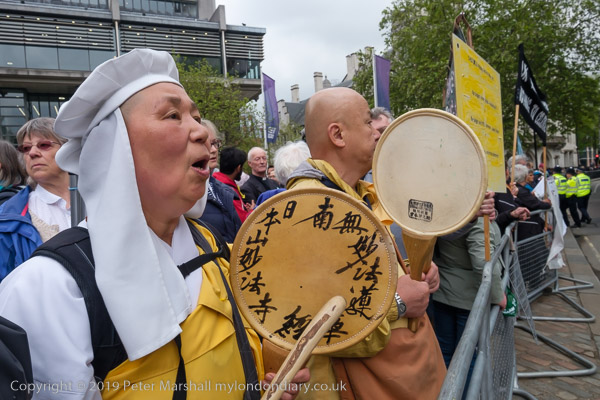
Rather confusingly there were two protest vigils taking place opposite Westminster Abbey while the service was taking place there, one by CND and the other by Christian CND. Both were on the opposite side of the road to the church, but separated by a few yards. Christian CND I think held a short service and vigil, while the main CND protest culminated in a die-in on the wide pavement – and I think some came from the Christian CND vigil to join them.

Police made it a little difficult to photograph this event, with photographers being moved from the road in front of the protest at various times, and both photographers and protesters were made to come down from a wall at the back of the pavement which gave a better view of the people entering the Abbey for the service. There was higher than usual security as a couple of royas were attending the service, though one CND protester did manage to walk inside the Abbey, though was fairly soon removed and brought back across the road.
More pictures: Die-In against Nuclear Weapons celebration.
Shrinking May Day

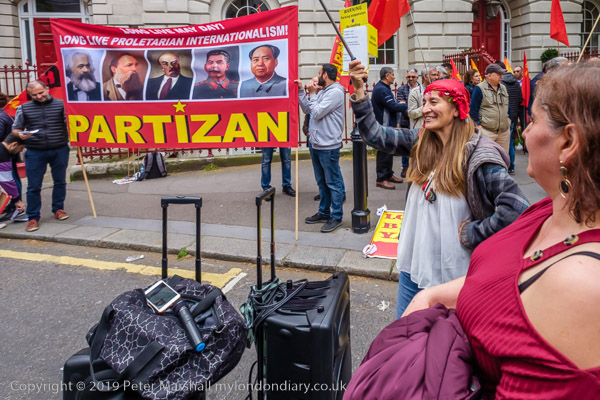
There has been a march in London on May Day, May 1st, for many years now, and since I went freelance I think I’ve attended it most or all years. Before when I was working as a full-time teacher, I was usually working on the actual May Day and unable to celebrate it, though back in the 70s I would turn up to work with a sprig of Lily of the Valley in my lapel, provided by a left-wing colleague, with French connections – there they have a public holiday to celebrate La Fête du Travail which is also know as La Fête du Muguet .

Back in 1978, the then Labour Prime Minister James Callaghan lost his nerve in creating a May bank holiday, and instead of declaring May Day as a holiday we got the rather ridiculous first Monday in May. Despite it not being May Day it remains contentious, with the Tory right Little Englanders wanting to replace it with a nationalistic UK Day ‘Best of Britain’ celebration in Ocotober. Next year it is to be moved to Friday May 8th to celebrate the 75th anniversary of VE Day.

Without London’s ethnic communities, I think the London march would have died years ago, with Kurds and Turkish communist groups really keeping the event alive and many other nationalities taking part. There is a small hard-core of left wing trade unionists and British communists, as well as various issue groups also.

This year Clerkenwell Green seemed very empty when I arrived at the time marchers were supposed to gather from noon, though more came later, knowing it would only start around 1pm.

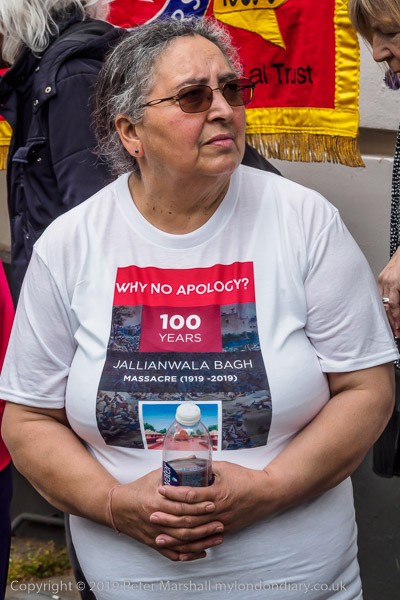
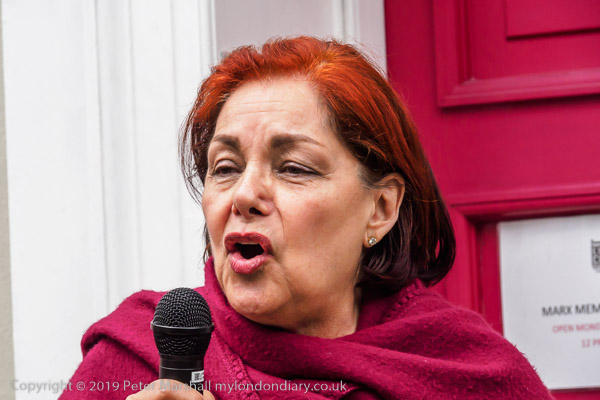
But there were a few speeches in front of the Marx Library, notably from an man from the Indian Workers Association about the 100th anniversary of the Jallianwala Bagh massacre  and their demand for a formal apology from Britain and the Venezuelan ambassador who spoke in support of their government against media lies used to promote the  US-inspired and supported right-wing coup

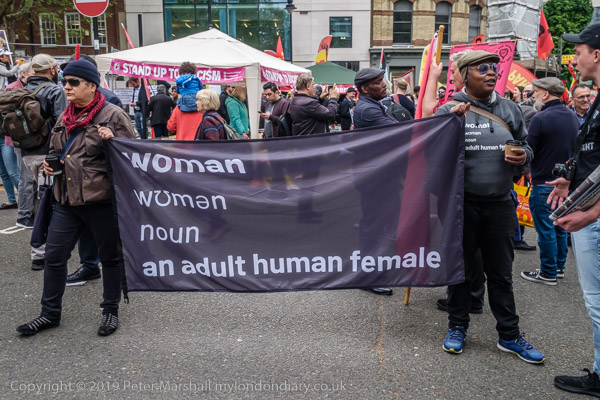
Two unwelcome marchers held a banner with an anti-trans message woman an adult human female. Later following complaints they were challenged by march stewards and forced to leave the march. There is little support for this ‘Terf’ bigotry on the left which almost universally supports LGBTQ+ rights as an important area of human rights.

You can see more pictures at London May Day .

My next post will look at some of the banners on the May Day March


All photographs on this and my other sites, unless otherwise stated, are taken by and copyright of Peter Marshall, and are available for reproduction or can be bought as prints.

There are no adverts on this site and it receives no sponsorship, and I like to keep it that way. But it does take a considerable amount of my time and thought, and if you enjoy reading it, please share on social media.
And small donations via Paypal – perhaps the cost of a beer – would be appreciated.