Arms Fair

Looking back on a busy few days in September when activists protested against the DSEi arms fair held in East London.  When you see reports of wars, atrocities and killing around the world, there is a very good chance that at least some of the weapons involved will have been sold at this event, which is said to be the largest arms fair in the world which takes place here every two years.

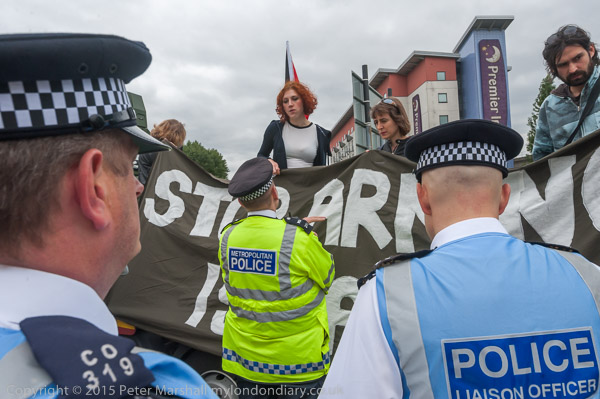
In the week before the arms fair took place, activists held a number of protests and tried to stop lorries bringing exhibits to the arms fair. The first day of protests. DSEi Arms Fair protest Israeli Arms Sales, concentrated on the sale of arms to Israel, and the sale of arms by Israeli companies who trade on the fact that these arms have been ‘battle tested’ in the various attacks on Gaza.  In my picture police talk with protesters who have stopped a lorry carrying a military vehicle and climbed on to it. Eventually police persuaded the protesters to allow the lorry to continue.

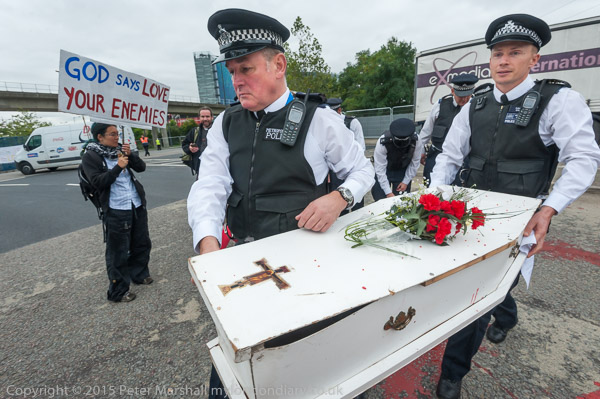
The following day was a day led by faith protesters with a DSEi: Pax Christi Vigil which was followed by a Catholic Workers Funeral

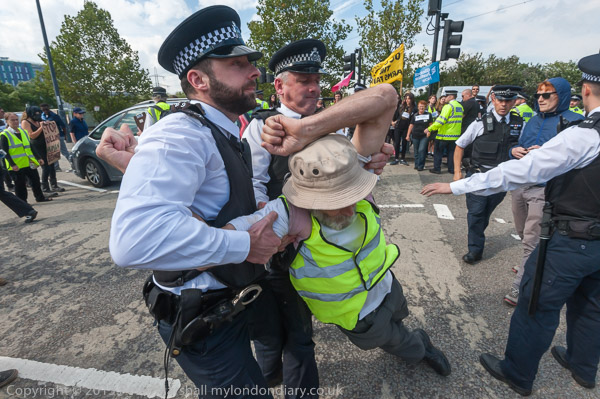
procession and service, which ended with them occupying the road to stop traffic. They continued to block the road for quite a while until police finally forced them to the pavement, with officers picking up and carrying the mock coffin.

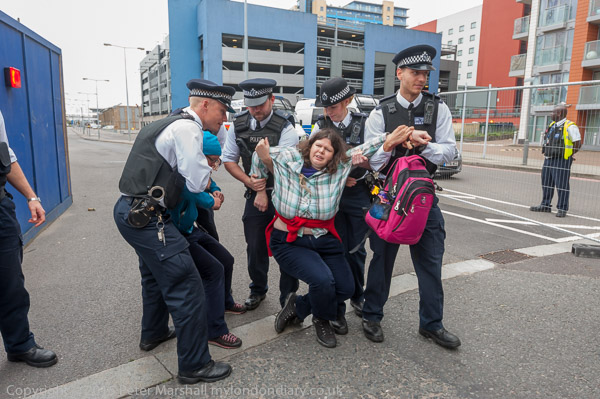
Later that day a small group of Christian campaigners, Put Down the Sword, made their way to the other entrance to the former dock site including the centre where the arms fair was being held and blocked all traffic for around an hour before police finally dragged them away.

I couldn’t attend every day of the protests at DSEi, as other things were also happening that week in London, but three days later returned for Refugees Welcome, Arms Dealers NOT, where protesters dressed as and alternative Border Force again moved onto the road and stopped traffic going into the arms fair, moving back to the road a number of times after police dragged them off.

Of course, these actions didn’t prevent the arms fair, and attracted very little attention in the mass media – arms sales are big business and big businesses fund much of our media through advertising for their less lethal products. But they did make clear the opposition many feel to the arms trade and the way it profits from the conflicts that it fuels around the globe.

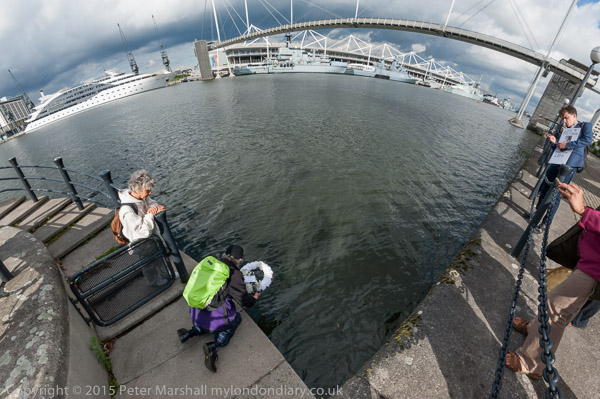
While the arms fair was taking place there were further protests. As on previous occasions local people opposed to it organised a procession to lay a Wreath for Victims of the Arms Trade. There is high security around the actual event, and the bridge across the dock is closed and the group walks in procession around to a point on the opposite side of the Royal Victoria Dock to lay the wreath on the water.

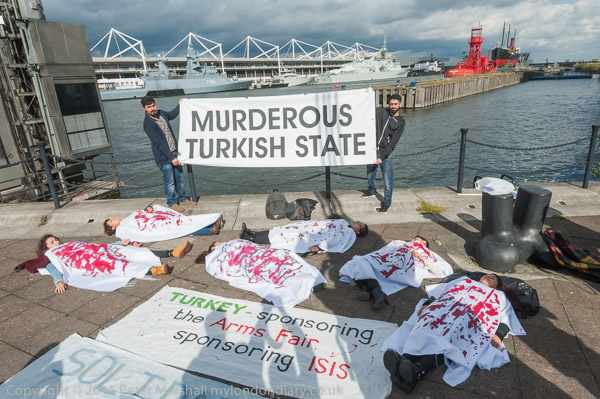
Also on the same afternoon, a group of Kurds came on the same route to say Stop arms sales to Turkey and some dressed in fake blood-stained white shrouds staged a die-in on the dockside opposite the fair, in view of those attending and visiting the naval display in the dock.

The Kurds say that Turkey sponsors ISIS both by turning a blind eye to its military operations against the Kurds and active support in supplying arms and refining and smuggling large exports of oil from ISIS held oil-fields that bring millions in to fund them.

Continue reading Arms Fair

Woolwich to Darent

I’ve been taking something of a rest from photography for a few days, partly on health grounds, with some minor issues meaning I don’t feel up to carrying a heavy camera bag around or standing around for hours, and that’s given me a chance to get a few projects finished.  Included among this are three books, the first of which, German Indications, I posted about  a few days ago.

Also now completed is Woolwich to the Darent, the first of three books on an extensive project which I mainly worked on in 1985-6 in Greater London and North Kent in the industrial areas along the shore of the River Thames and the estuary. You can see a limited preview above which shows around half the book.

As usual I recommend the PDF version, both for its better reproduction and rather more sensible price. You can also download and view it more or less instantly, while print orders take a week or two to be produced and dispatched by Blurb.

When I talked with some of the management of Blurb a few years back, I suggested they should look up more cost-effective delivery for their books, particularly for small orders, but they don’t seem to have done so. I don’t yet have any print copies, but I will be selling them later for those in the UK at £25 plus £2.00 for postage.

Those with long memories may remember some posts here where I shared a few of the pictures from this back in 2014, Around Erith, 1985South of the Thames, North Kent 1985: Rosherville, and Gravesend & Rosherville 1985.

The title has turned out to be a little misleading. There are no pictures actually taken in the town of Woolwich, though there were a couple in the original set, which got eliminated from the final version. Back when I took the pictures a large area of the riverside east of the town centre was still occupied by the Ministry of Defence and not accessible to the public – and I think there were still notices prohibiting photography around it.

But Woolwich – since 1965 a part of the London Borough of Greenwich – used to include the whole of the Royal Arsenal site, the eastern part of which by the time I went there was Thamesmead, already a large estate for London’s overspill. On some of the older maps that I looked at, the whole area was still left blank in a rather pointless attempt at official secrecy as  German maps in WW2 and cold war Russian maps showed considerable detail! But even the modern maps for parts of the area open to the public were not too reliable, with some paths not shown and others on the maps fenced off.

Today things are different, with the Thames Path Extension now going all the way to Crayford Ness. It makes a pleasant walk or cycle in good weather, although there have been quite a few changes, and I’ve been back a few times taking pictures – including some in my Thamesgate Panoramas, which really does start at Woolwich, but goes on rather further east to Gravesend.
Continue reading Woolwich to Darent

Transparency Woes

My trans-hate is directed solely at colour transparencies – such as this one which I took – I think – in 1984. I’ve almost always hated colour reversal film, though my earliest experiences with it, photographing an attractive young lady in a blossom-filled peach tree in my back garden were positive (though I rather hope none of the images survives) but, like that early romance, my romance with Agfachrome and Kodachrome was brief.

I wasn’t then a photographer. I had a camera and could afford to put perhaps one or at most two films a year through it – enough for a few holiday snaps, though sometimes one film would stretch to a couple of years. I didn’t have a projector, but my stepmother did and produced various out of focus and arbitrarily framed images largely of ageing relatives in their back gardens as well as a few or my father in the middle distance in front of a beach or cliffs (and he was handed the camera for a few similar if slightly sharper images of her) which would be projected as ‘entertainment’ at some family events.

The technical quality of the images wasn’t entirely her fault, as the Boot’s camera she used wasn’t the most capable of instruments. My own, a Halina 35X, long admired nose to glass at the local pawnbrokers (it made it there a year or two  before the 1959 given as the date of introduction in the web article),  and which had been bought with several years of saved pennies from my inadequate pocket money, was far more advanced, and did quite well until I dropped it in the lake at Versailles.
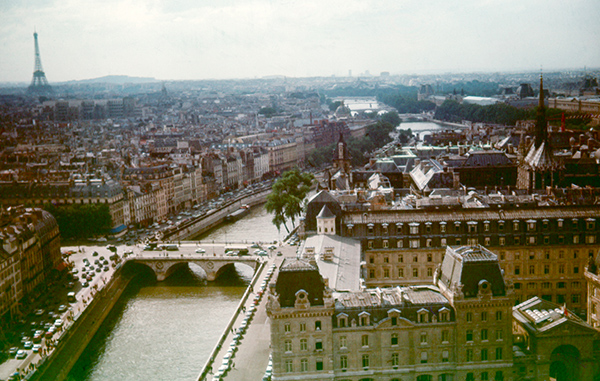

Paris image after pre-soak in the lake at Versailles before processing

Ten years later, when I finally dragged myself away from being an impecunious student and got a full-time job, one of my early purchases was a cheap Russian camera, a Zenith B. The B I think stood for ‘brick’, but while it was crude and chunky, at least (unlike their rangefinder I also tried) it had a reasonably accurate viewfinder, and most of the Russian lenses were decent copies of the German lenses whose designs had been a part of post-war reparations. Along with the camera I also bought a cheap Russian enlarger that folded up into a large box, some black plastic sheeting, plastic seed trays without holes in the bottom and a Paterson developing tank and converted first our spare bedroom and later the kitchen into a makeshift darkroom.

Black and white was then what serious photographers used and I spent much of my non-working time immersed in its chemistry, mainly keeping the colour transparencies for my holiday snaps. Before I set up my own darkroom, black and white had been an expensive option, but with 100 ft rolls of bulk film and box upon box of outdated paper it was now almost free (if not always in perfect condition.)

I’d retained an interest in colour, but now that seemed rather expensive although I fortunately won a decent-size block of Kodachrome in a competition – and that included processing. But otherwise the costs seemed high. I flirted briefly with Orwo – East German colour film based on the 1930s Afga patents at its orginal Wolfen plant, but found its strange purplish shadows and uncontrollable repulsive.

Also rather cheaper than Agfa or Kodak films were those produced in Italy by 3M/Ferrania and sold under various other names as well as the makers. When this also became available in bulk lengths I found that Paterson tank could process it (if not always quite perfectly with the aid of cheap third-party chemicals) and began to take more colour transparencies.

But apart from the vagaries of processing (and cheap commercial processing wasn’t always too reliable either) the limited ability of the transparency film to cope with anything other than flat lighting often disappointed. By then I’d move onto and Olympus OM1 and that had reliable through the lens metering, but it was still too easy to get over or under exposure, and with high contrast subjects empty black shadows were inevitable.

Colour print film was more forgiving in terms of exposure, but the cost of printing was high and it was considered unsuitable for reproduction. Outside of social photography, few serious photographers used it – clients demanded transparencies. It was largely an amateur medium for snaps of family and friends (though too expensive for cats and meals to feature much at that time – they had to wait for digital to take over) and the products available reflected this, not least in their relatively rapid fading and discolouration.

It was Fuji who changed this – at least so far as I was concerned. Their research led to longer-lasting dyes and purer colour in their negative films, which Kodak had rather neglected. Perhaps because they failed to give me a job when I went to Harrow for an interview when I first graduated as a chemist. They told me it was because they didn’t think I was interested enough in photography, but I felt it was more my working class background – photography back in the mid-1960s was still largely a middle-class hobby and Kodak management in the UK certainly reflected that.

Photographers of some note in the 1980s began to produce colour prints that excited me, and I found many were working with colour negative film. So in October 1985 I changed to Fuji colour negative films and paper for my personal colour work. After that date if I took a colour transparency it was because I was paid specifically to do so. Fuji’s lead also prodded Kodak into action, and later I found Kodak negative films I could use, though mainly I stayed with Fuji, and when I set up a colour paper processor in my darkroom it fed exclusively on their paper.

A little over 10 years later came another development that changed things for me, when I bought my first film scanner. With the possibility of supplying digital images from colour neg there seemed to be no reason ever to use transparency film again.

My problems with slides don’t stop there. Good filing systems for slides were expensive to set up, and whereas with negative materials you could label them on the negative filing sheet or contact sheet, slides required individual labelling. For projection they had to be in slide mounts (and at best in behind glass) but the mounts covered the edges of the images and usually they had to be removed for printing.

I never had the space, the money or the time to set up a good filing system for my slides. Only a minority ever got labelled, and over time some of that labelling on the slide mount got lost as slides were unmounted and remounted – sometimes in the wrong mount. Slides removed for projection didn’t always get back into the right filing pages. Although not completely chaotic, my slide filing system is certainly a mess.

In making German Indications I spent several days searching through for one particular image of a German factory building, but without success. I made a low-res black and white scan of it from the print (which is also now missing) in 1997 but that print was made in 1986 and I think the slide has been lost since then.
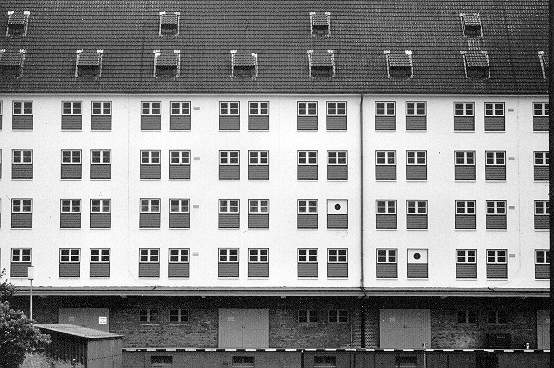

You’ll have to imagine the colour as I only owned a black and white scanner in 1997

Having to send slides – the original image – out to clients or for processing was always a slightly risky business. If they were to be reproduced in print they were often returned with fingerprints across them – print technicians were often rather careless especially I think with 35mm transparencies which they rather looked down on. Sometimes slides did get lost or badly damaged, and although I did get some compensation it was never more than nominal.

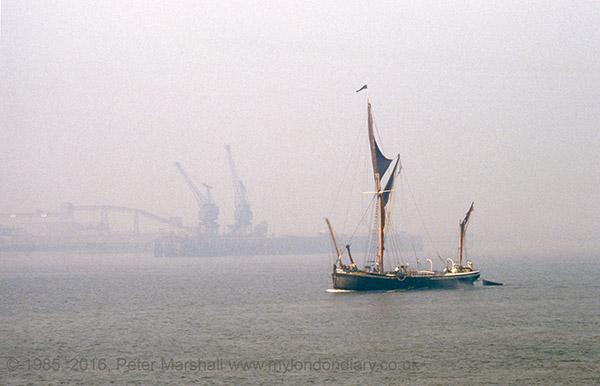
The image at the top of this piece certainly shows a barge in sail on the River Thames, but where or when I can’t now be sure. The folder the slide was in says 1984 and that seems likely, but the background could be a sand and gravel wharf almost anywhere on the lower Thames. I suspect from the width of the river (I think I was probably standing on the riverbank rather than in a boat) it may be at Greenwich, but despite this I’ve used it as the frontispiece – and the only colour image – in my other new book completed this week, Woolwich to the Darent – more about which in another post. It just seemed a picture that seemed to fit with the atmosphere and mood of the river and the book.
German Indications

One of the reasons I’ve not posted here for a few days is that I’ve been busy finishing a couple of books, though there have been other issues. But the preview above shows you about half of one of the new books, best viewed at full screen by clicking the symbol, so that you can actually read the several pages of text.

When I showed this work in 1986 it had around 30 images, 11 in colour, and the same set of nine texts that are now in the finished work. In 1997 I posted a version of it on the web, but as I only had a black and white scanner, the images were all black and white, though some I later replaced with colour versions.

The book now has 29 images in black and white and 39 in colour, and contains all except one of the original set – one transparency has been lost. The images were a similar size to that at which they appear in the printed book, and those in colour were made on an Agfa direct reversal paper which I used to try and match what I saw as the Germanic mood of the original scenes. All have been re-scanned for the current publication and are closer to the original transparencies.

Like much of what I photographed, that paper was past its best-before date and gave the images a rather gloomy and melodramatic character. The black and white images were also printed on a German paper, Agfa Record Rapid, then my favourite black and white paper, though in later years after it was reformulated to remove Cadmium it was never the same.

Now it would be easy to print out the texts in high quality at a suitable size, but back then home computers only knew dot-matrix printers. I typed out the stories using an electric typewriter for clarity, but they were really a little small for the exhibition wall. I found a few typing errors and other minor errors when getting them ready for this version.

As usual, I recommend the PDF version of German Indications, ISBN 978-1-909363-16-8, which you can download from Blurb immediately for £4.99. There is also a print version available from Blurb – and I will shortly have copies available for UK addresses at a little less than the Blurb prices, probably at £27 inc postage.

Take a walk with me

Take a walk with me through a London, much of which has disappeared or changed dramatically” it says in the introduction to my set of pictures in the web site London Dérives, and the walk starts at Cousin Lane in the City of London in 1974 with an L plate and a couple snuggling together on the steps overlooking the Thames, and ends around 190 pictures later in Rectory Gardens, Clapham in 1983.

Some of the images from this set were published in my book, London Dérives – London 1975-83 and still available on Blurb (or direct from me to UK addresses only.)  On Blurb can also download a PDF of the book, which has the advantage of being considerably cheaper at £4.50 and having better quality images and being on your computer within minutes.

The blurb on Blurb states:

London Dérives
ISBN 978-1-909363-08-3

“People well know that there are gloomy quarters and others that are pleasant. But they generally convince themselves that the smart streets give a sense of pleasure and that the poor streets depress, without any nuance. In fact, the the variety of possible combinations of ambiances, like the solution of chemical substances into an infinite number of mixtures leads to feelings as different and as complex as arise from any other form of spectacle. “

Pictures from numerous walks “without goal” through London in the mid 1970s and early 1980s which aimed to capture some of the nuances of that city.

My London Diary update

A new year has also dawned for ‘My London Diary‘ with a slight re-design of the main monthly page. It’s a slightly cleaner look but also fixed a couple of little niggles which had begun to worry me with the earlier design – here’s the top of the  Jan 2015 page to illustrate some of the difference:

The site title, ‘my london diary‘ is now more prominent, and importantly it will remain visible when users scroll down the page as the left panel is fixed – at least in Firefox, the browser I use and design the site for, though it usually works with slight differences in others as well. I should really test it in other browsers, but I’m a photographer not a web designer and life is too short. The site isn’t ‘mobile friendly’ but it does seem to work quite well when I look at it on my smartphone using Chrome.

When I add more stories from January, there should also be a difference in how the scroll bar appears.

I’ve moved the ‘my london diary index’ link down to the bottom of the left panel and also moved the site search slightly to make it stand out a little more. Basically I gave up with the ‘site index’ back in 2007, because there were just too many stories to make a sensible index, and went over to simply copying the story lists onto a page. But that got out of hand too, and unless you know the date of a story, the only sensible thing to do is to use the site search – as I always do.

Perhaps one day I’ll come up with a better idea for an index – which is why I’ve left the link there, but I’m not sure it’s going to happen. It’s quite a task, as of today there are now apparently 128,162 images on the site from around 16 years of work.
Continue reading My London Diary update

December 2015 complete


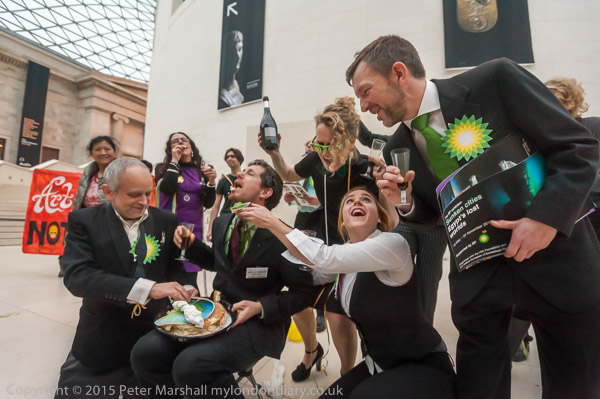
‘BP executives’ ply leaving British Museum director ‘Neil MacGregor’ with food and drink

Christmas and New Year are over and people are getting back to work. Including thank goodness my dentist, and I have an appointment this morning that I hope will put an end to my toothache – Christmas was just too much strain for a couple of my teeth.

I can’t really complain about dentists taking some time off over Christmas. After all I really stopped work on the 20th, and the later posts are really from activities with my family over the holiday season, although they hardly appear in them. I do take pictures of them, particularly of my two grand-daughters, but I don’t like to put them on line. I don’t think they are likely to be of any more interest to those outside the family than anyone else’s family pictures.

Of course I have put family pictures on the web – they were the subject of my very first web site, and I wrote a little about them and the family pictures of some other photographers a few months ago in ‘In the Family Way.’ But most are best kept in the family, along with a few other private events where I share images just with those involved.

One of the highlights of the month was a commission to photograph the unscheduled performance in the Grand Court of the British Museum by the artist protesters of ‘BP or not BP‘ opposed to the climate-wrecking oil giant’s sponsorship of the museum and other arts venues which they do to improve their image at a relatively low cost rather than clean up their act.

This was in some respects a private event, a ‘flash’ performance with no advance publicity and no permission from the museum on whose premises it took place. Another photographer was there to make a video, and one other had been invited to try to sell work to the press. Of course many of the visitors to the museum who saw the event also stopped to take photographs, but it was still rather easier to work than events where a crowd of other photographers is present.

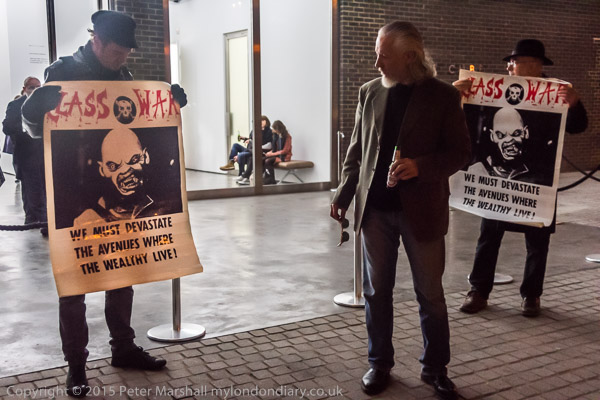
There are other events at which I’m the only photographer present – sometimes like this one because they are kept secret or as least not widely publicised – such the pair of Class War protesters at the White Cube Gallery – and others where photographers and agencies just don’t think they are newsworthy enough to make the effort.

While I can’t get to everything that happens, I started covering protests seriously because so many got no publicity. Things have changed a little since then, with many more photographers now covering protests even though they generally get even less coverage in the media, thanks to the ease of digital and the rise of ‘citizen journalism’, this largely means that ‘popular’ protests attract hordes with cameras while many smaller events are still recorded by only one or two of us.

Dec 2015

Belper – World Heritage Site
Cromford – World Heritage Site
Staines & Wraysbury Walk
Boxing Day Walk
End BP’s British Museum Greenwash
Don’t Buy Tiffany ‘Blood Diamonds’
Solidarity with Sweets Way arrestees
‘One Voice for the Dolphins of Taiji’
Phulbari coal mine protest


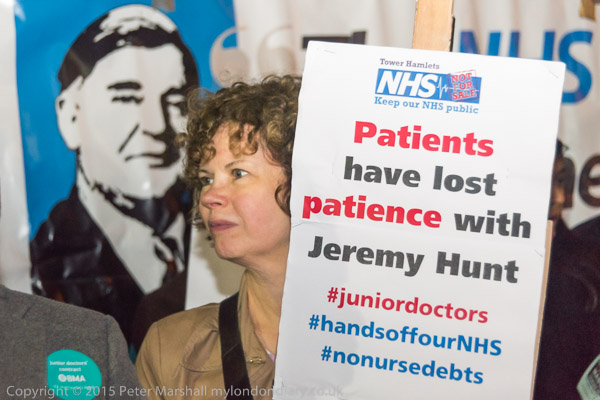
Christmas Rally For The NHS
Santas in London


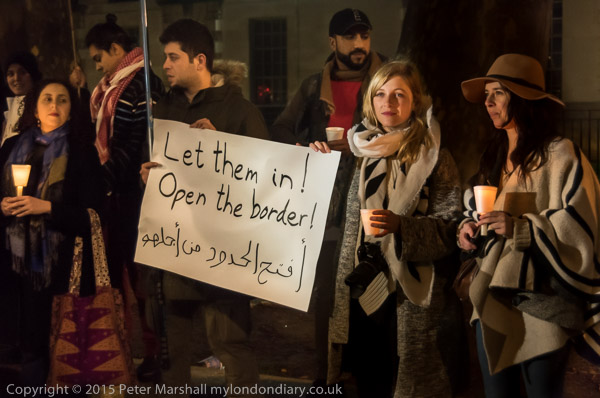
Christmas Solidarity Vigil for Refugees


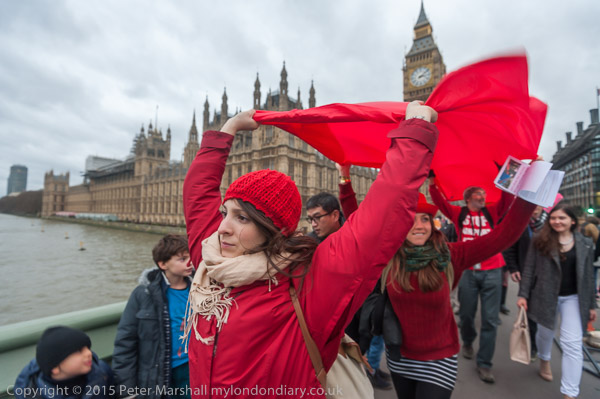
Climate Activists Red Line protest
Free the Focus E15 Table


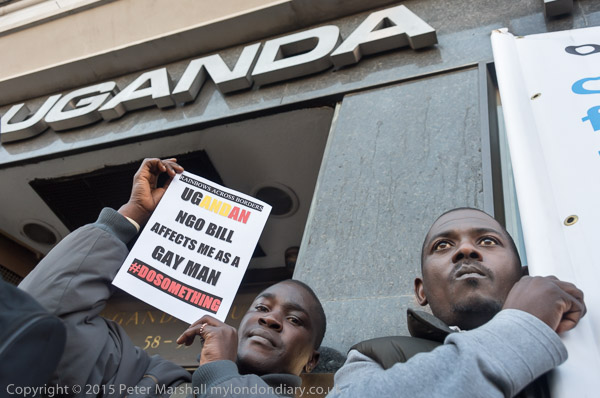
Ugandan President – don’t sign anti-gay bill
No forced medical treatment for unemployed
Class War at Gilbert & George ‘Banners’
Bloody Murder at Ripper ‘museum’
Short Walks in Windsor


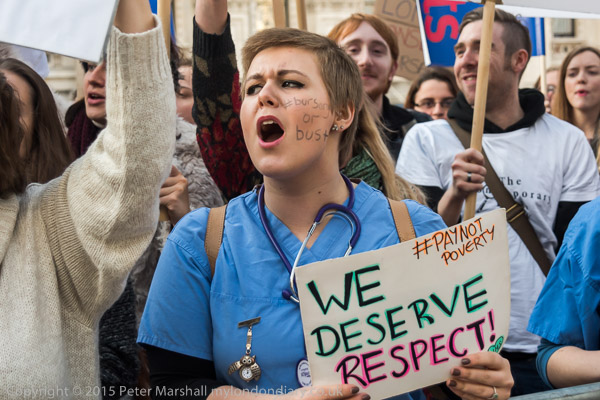
Save NHS Student Bursaries


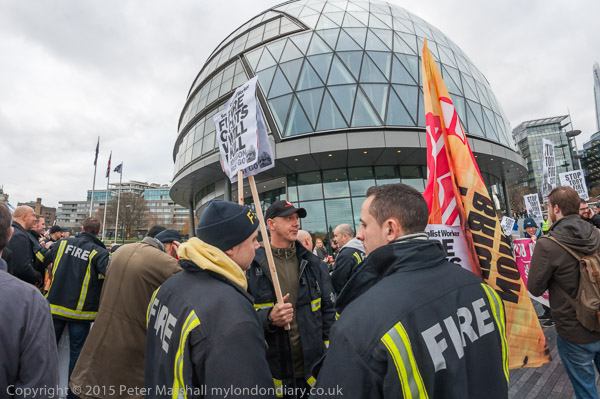
Firefighters say cuts endanger London
Don’t Bomb Syria
London Images

As well as pictures of events etc I’ve also decided to add a monthly section with some of occasional images I take as I travel around London, often from the top deck of a bus or train window.


Some Stats

>RE:PHOTO Dec 2015
Visits: 126,357
Page Views: 361,839
1.12 mins
2.88 pages
Ave Views per day: 11,672
Highest PV per day: 16,264 (Dec 17)

>RE:PHOTO  Year 2015 total
Visits: 1,622,248
Page Views: 3,855,303
1.9 mins
2.39 pages
Ave Views per day: 10,562

All my domains Year 2015 total
Visits: 2,646,880
Page Views: 7,460,850
1.14 mins
2.87 pages
Ave Views per day: 20,440

Continue reading December 2015 complete

Boxing Day Walk

Today, Dec 27th, the day after Boxing Day, seems a kind of non-day. Christmas in the UK traditionally lasted two days, Christmas Day itself and the next day, Boxing Day after which we all – or at least most of us – went back to work. Back in the early days when I was a teacher it was good to get another week or so of rest when most were back working. Now it seems to be almost a national holiday until after New Year’s Day, though today few of us will be celebrating the Feast of St. John, apostle and evangelist or National Fruitcake Day, apparently an unofficial US National Holiday, though we will certainly still be eating up our Christmas Cake.


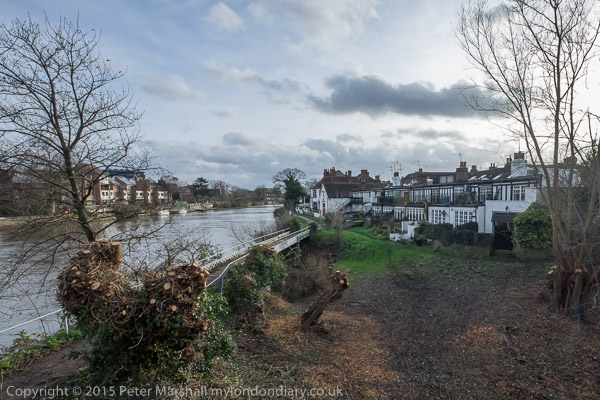
The Hythe next to Staines Bridge

Fortunately I’m in the half of the UK not currently covered by flood water – we had ours in Feb 2014, and the rain here this morning is only half-hearted. But our Christmas has been marked by a little worry about friends up north, who appear to have so far avoided flooding, and concern for the many not so fortunate. Our government appears to have gambled by cancelling or holding up hundreds of flood relief schemes, perhaps in the secure knowledge that they themselves live on higher ground – just as they are on financial heights untroubled by welfare cuts.


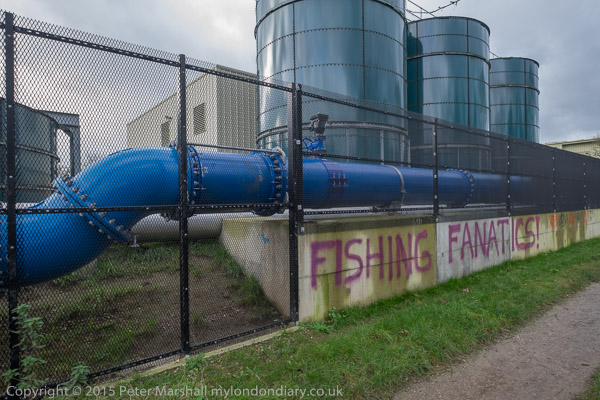
‘Fishing Fanatics!’ on the tow path by the water works, Egham

Yesterday, Boxing Day, we walked to my sister’s home for a second Christmas dinner – we needed a good walk to walk off the previous day’s at our home. She and her husband live around five miles away. Both our homes are a few hundred yards from the River Thames, and we can walk most of the way along what used to be the tow path, though towing would now be impossible with trees having grown up and many riverside residents having laid claim to the riverbank in front of their properties, fencing in what was public space and declaring it private.


Runnymede, Egham

But that route was too short and too simple for my wife and son, and we left the riverbank half-way top climb up and down and up and down the wooded hills overlooking the flood plain at Runnymede. Although I was determined not to add to the plethora of reviews of the year that provide respite for journalists to hold their pre-Christmas parties, it inevitably brought back to my mind the events of June, when the UK celebrated the 800th anniversary of Magna Carta by – among other things – a disgraceful and massive police restriction on the freedom of those living closest to the site where it was signed in the Runnymede Eco-village, which a few weeks later was evicted from its woodland site.


Footpath across the old course of the Thames, Runnymede

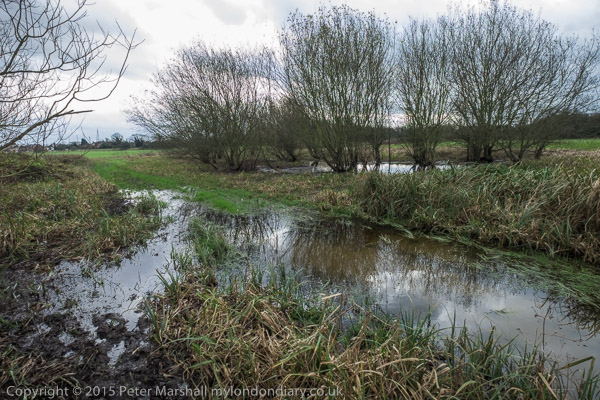
Our path took us through one of the old routes of the Thames, close to the bottom of the hill, a muddy wade through a few inches of water that at least in the wetter months of the year still insist on clinging to the old path, and then up and down by the fence around the former eco-village site.


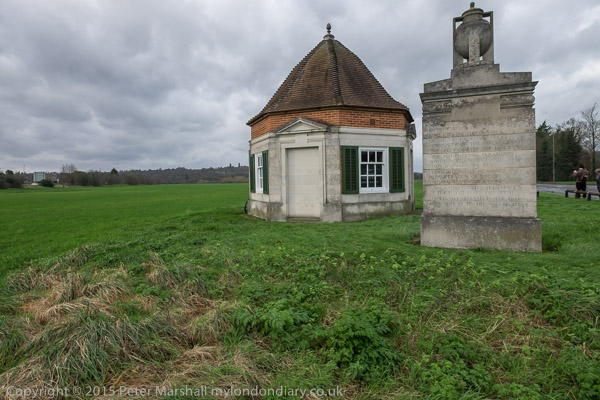
America – Kennedy memorial, Runnymede

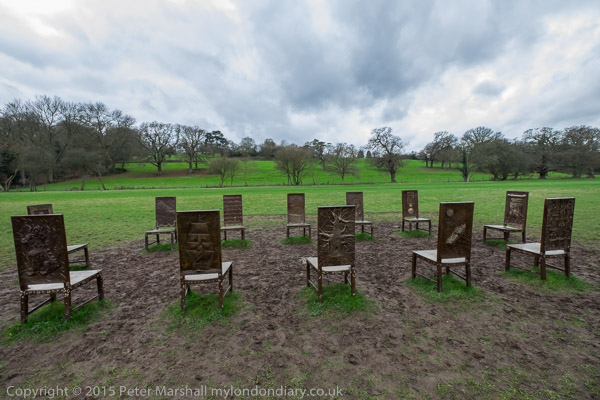
Then came a short visit to America, an acre of which is around the Kennedy memorial, before going down to the plain and the 12 bronze chairs of The Jurors.


The Jurors, Runnymede

From there it was a short walk by the river into Old Windsor, and along the Straight Road, where two red kites circling around took our minds away from the tedium of the traffic as we walked through puddles scraping the worst of the mud from our boots.

All of these pictures were made using the Fuji X-T1 with the 10-24mm lens, a truly excellent lens when there is enough light for its f4 maximum aperture not to be a problem. It isn’t the smallest lens for the camera, but considerably lighter than the full-frame Nikon equivalent.

I still have a problem with the white balance of the X-T1, which seems to be way out on my camera. A typical image from those above is at 5687K and Tint -37, while the ‘As Shot ‘ values were 5000K and Tint -1. The difference in the Kelvin value isn’t huge – and I’ve perhaps preferred a slightly warmer result, but the camera produces noticeably pink images. I’ve checked and double-checked the colour settings, but unless I remember and use a custom white balance setting, it views the world through rose-tinted glasses.

London Views

I’ve been photographing in London since the 1970s, and for the first 35 years or so my main focus was on the built environment in one way or another. I did photograph people as well, but mainly, at least in the early years, they were people that I knew. There were reasons why this was so, in part personal but also because of considerable pressure in some photographic circles at the time which trumpeted the vital need to ask permission of subjects before photographing them.

It was never an argument that entirely convinced me, although there are certainly circumstances in which permission is essential, in particular where people have a real expectation of privacy. But when it comes to behaviour in public, people have chosen to make themselves available to the public gaze, and so long as our photography reflects that public view can have little cause for objection should we photograph them. People don’t have rights to their appearance as such, though I am worried by photographers who wilfully misrepresent the people they photograph, as some have made a career of doing. But my worries in this are more to do with being human than with being a photographer.

While the very first web site that I put on line in 1995 was pictures of people, these were pictures made of my family and friends – a web site that with images rescanned at a larger size in 1996 (but not to now current standards) and some minor more recent updating of the html code remains on line – it was soon followed by another site entitled ‘The Buildings of London‘, also still on-line with some necessary updating of coding. It still works, though it looks very primitive now.

Both sites are now a part of a wider site, London Photos, which acts a front end to most of my work on the web – with links to a number of projects over the years, including a few I’d forgotten about until I started writing this post. I initially wrote this as an example for a simple web design course that I taught for a few years around 2000, to show how with a little thought about Search Engine Optimisation you could – at that time – get your site into the top five on Google on relevant searches; but Google has changed and there are far more web sites and that no longer works, though it still does pretty well. There is also a web site which has been in preparation for a while but is still in a primitive form for the books (and e-books) on London that I’ve self-published – so far the only real part of it on-line is for London Dérives.

The Buildings of London was intended to become an index to my work on London, but the labour of updating it and expanding to more than a very small proportion of the roughly a hundred thousand images in my collection at the time proved impossible and I very quickly abandoned the idea – with less than a hundred images on line. It became just a small sample of my collection.

My elder son (who does web sites and other on-line stuff for a living) provided a possible solution to putting larger collections of images on-line as my birthday present in 1999, as a replacement for a site I had begun to write called ‘London’s Industrial Heritage‘. This used Perl to automate the production of the site from a folder full of images and a simple database file. His design was fast, clean and impressive and allowed searches by area, on keywords and on a simplified hierarchy loosely based on the draft IRIS (Index Record for Industrial Sites) Class list, though it did mystify a few users who couldn’t work out how to enter the site. I’m still surprised by it each time I look, though I’ve never got around to adding more than the 225 images I had put on by 2002, though I think it could handle far more.

In 2002 I began the serious switch to digital and began to put my work on a new site, My London Diary. It began as a site that was very much a personal diary, somewhere to put my pictures and thoughts, and while it still does that, it has become very much more organised over the years. But among the various sets of pictures there was still room for some of those I took of London. And there continues to be the occasional posting over the years on the few occasions where I set out to photograph London rather than London events.

But while I try to continue to take the occasional day or half day to do this, more often the pictures of London I now take are made in the odd half hour between one event ending and another starting, and in particular when I’m travelling between events, quite often from the upper deck of a London bus or the window of a train. Often these images get rather lost in my collection, as there may be only one or two on any particular day, but on August 15 I thought there were enough that I’d taken of some interest to be worth posting as London Views.

Thinking about this before writing this post, I had an idea, and in future months I’ll perhaps put together some of these odd pictures I taken throughout the month in a single post – so ‘London Views‘ will perhaps become a regular monthly feature on My London Diary.

Continue reading London Views

Yarl’s Wood

It was a warm sunny day in August when I set out for my first visit to Yarl’s Wood, though I’ve previously attended protests in London calling for its closure at least since 2008. But despite all its problems and many protesters, it remains, one of a number of similar blots of national shame where we lock up and mistreat people who have come to our country for asylum, often fleeing violence and torture. Yarl’s Wood differs from others such as Harmondsworth and Colnbrook closer to where I live in that the great majority of those imprisoned there are women and children.

The continuing protests, along with court actions which have also been a part of the campaign have had some success, but Yarl’s Wood and the other prisons remain. The Home Office have been forced to make some changes, and certainly have been prevented many from deportation back to persecution and possible death.

As many former inmates attest at the protests outside, they are a great morale booster for those still incarcerated who otherwise often feel that they have been locked away and forgotten, with no one caring. It is worse than prison they say, because at least when you are sentenced you know the length of your sentence. When you are taken to Yarl’s Wood your imprisonment is for an indeterminate time, and sometimes it seems it will never end. You could be forced onto a flight back to the country you have fled at any time without notice, or you could be released, but many seem to spend many months in this evil limbo.

The protests outside embolden those inside to stand up for their rights, to resist the bullying and assaults, to organise with fellow inmates against mistreatment or the failures of Serco and the other private companies running these prisons to provide the facilities that are supposed to be available. Management inside them seems often far more concerned with cutting cost than the welfare of the prisoners.

Yarl’s Wood is pretty well in the middle of nowhere, on a commercial estate in a former airport around 5 miles north of Bedford, where doubtless bombers took off to Germany in WW2. There were coaches organised from various cities including five from central London, but this would have made a very long journey for me. Instead I went by train to Bedford, from where the organisers had said there would be a coach from the station – and I found a small group already waiting for it when I arrived.  Soon the coach came and eventually we got to the road outside the business park, where a hundred or two other protesters had already arrived and more were expected.

The protest started there and it was a good time to take pictures as everyone was on a fairly small area of grass in front of the fence around the estate. Later people were more spread out. It’s often the case that the best time to take photographs is in the few minutes before an event actually starts as people are getting ready and in the first few mintues, and photographers often miss out by standing around talking with colleagues rather than getting down to work.

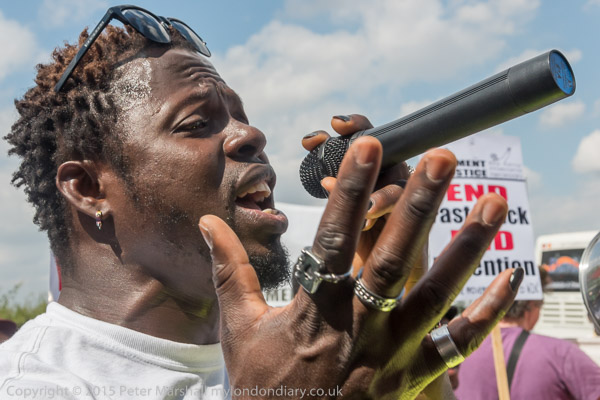
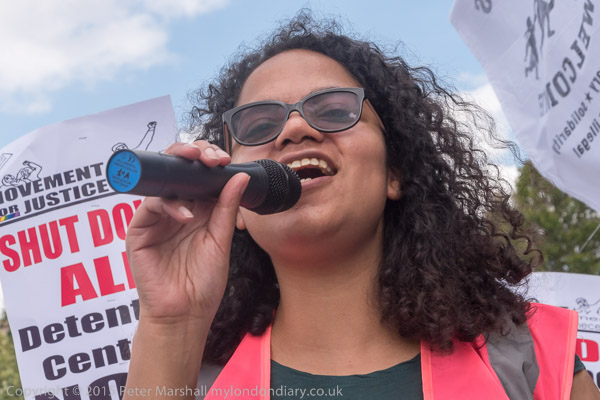
It’s easier too when you know many of  those taking part – or perhaps when they know you and trust you, and having photographed at many Movement for Justice protests both at Harmondsworth and in central London made it easier for me.

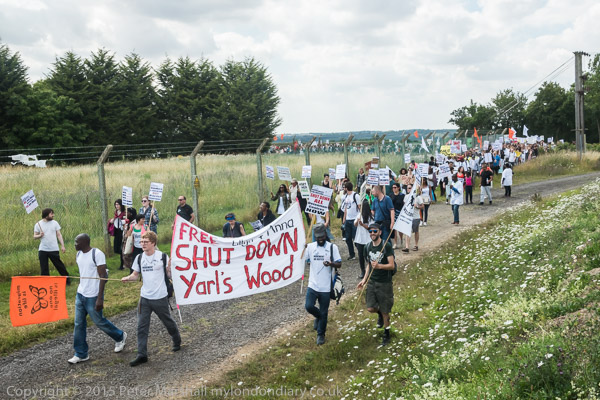
When all the expected coaches had arrived, the protesters – now approaching a thousand – set off to march to the detention centre, around half a mile distant, at first along the road and then on a public bridleway which goes around the boundary of the centre (and then around the actual wood, which I’ve still not visited.) I tried hard to find a way to show the size of the protest , but there was never a position where both ends of the march were visible.

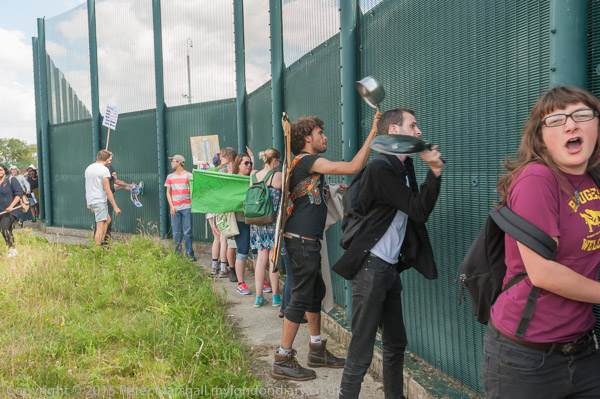
At the previous MfJ protest here a few months earlier which I’d missed, police had attempted to stop the protesters reaching the field beside the prison, but had failed with a length of fencing being pushed down. This time they had agreed to let the protest through and there were relatively few police on duty and we walked unhindered through the gate and up to the tall and substantial fence around the whole site. We could hear they shouts of welcome from the women inside the prison, and they could certainly hear people shouting back to them and making a huge noise beating and kicking the fence.

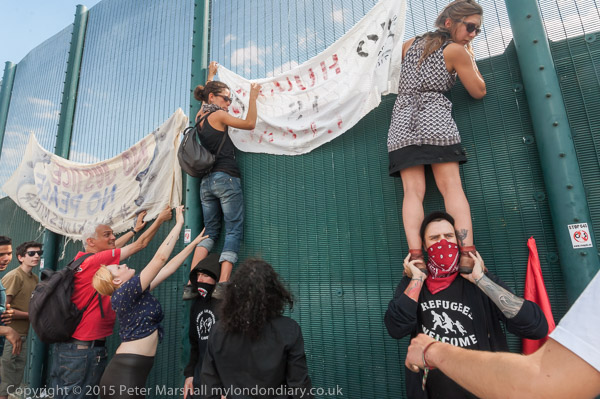
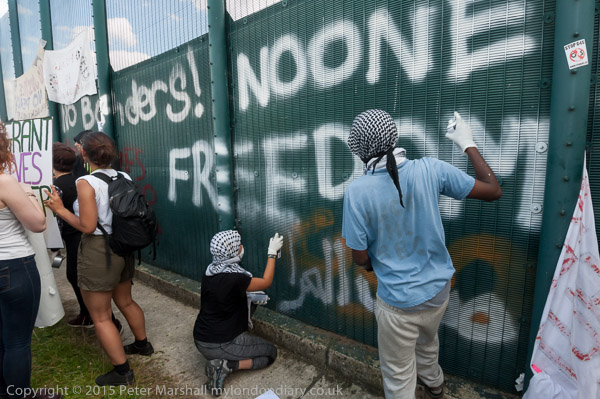
People climbed up on the shoulders of others to show banners and wave flags so that the women inside could see them, and then a group of protesters in masks began to spray paint slogans along the fence.

It’s always a slightly difficult situation when photographing protests like this where there is a possibility – though perhaps small – that people could be arrested and face charges and your pictures could be used as evidence. But people were masked and so less readily identifiable, and I mainly photographed from behind.

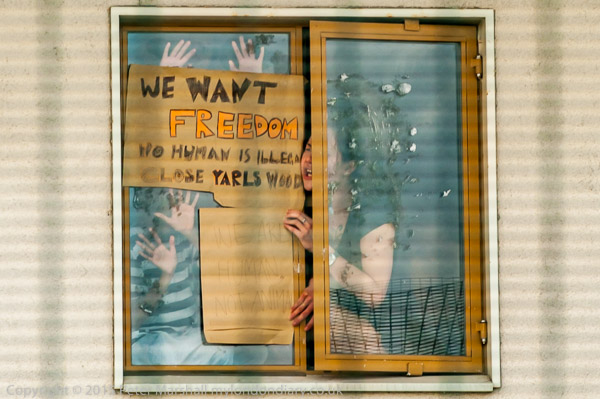
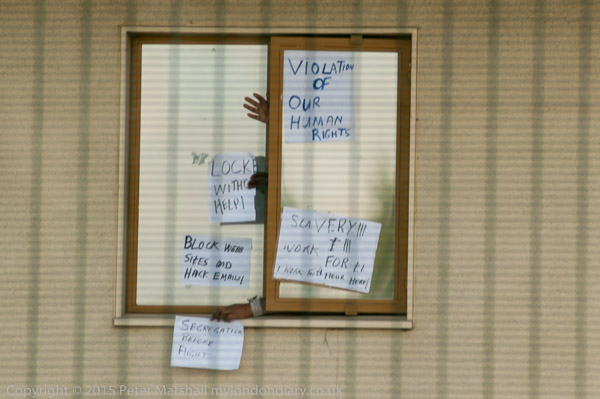
The field slopes up away from the fence, and from some distance back it was possible to see some of the women at the upper floor windows. These have only a very restricted opening, to stop escape or more likely suicide attempts, but the women were able to hold out posters and wave towels and articles of clothing. Others held up notices to the glass so we could read them.

Photographically there were problems. First was the distance, and even with my 70-300mm lens at its most extreme the windows were a little small in the frame. The image above is typical, cropped from 12Mp to 4Mp. I  think I should have taken it with a wider aperture which might have made the grid of the fence through which I had to work less evident, but I didn’t think to do so at the time.

But it was extremely difficult to focus – many of the frames I took were out of focus – and the smaller aperture would have helped here.  Autofocus was pretty useless unless I wanted sharp pictures of the fence and I soon resorted to manual focus. Although the windows were some distance away they were not sharp with the lens at infinity, and working with the 70.0-300.0 mm f/4.0-5.6 with manual focus is not too easy. Old-fashioned long lenses which were made for manual focus along with focussing screens of the day were much easier than with lenses and cameras made for autofocus.

There must also have been a good reason at the time to work with this lens on the D700 rather than the newly acquired Nikon D810, though I can’t now think what it could have been. The 18-105mm stayed on the D810 all day, while on the D700 I made use of the 16-35mm, 16mm fisheye and the 70-300m. On the 810 I could have worked in DX mode, making the 300mm into an effective 450mm and still have had 15Mp to play around with.

But the biggest mistake I made that day wasn’t photographic but was to forget to pack my sandwiches. By around 2.30pm I was feeling hungry and reached into the back of my bag where they should have been to find nothing there.  It was around 5.30pm that I managed to buy a snack at Bedford station raise my blood sugar and keep me going while rushing to catch a train.
Continue reading Yarl’s Wood