Bite!

Bite! magazine is an interesting project that presents one photographer every day with a  slideshow of their work and a brief text. The photographers are selected by guest curators, including some well-known names. And although Bite! is a stage for emerging talent, with a special focus on photographers from Asia, Africa and South America, the photographer whose work drew my attention to it was an American I first wrote about admiringly some years ago.

I can’t remember now how Ami Vitale first came to my attention, but I do remember our meeting each other at a glittering reception in a Polish castle at the first Bielsko-Bialo FotoArt Festival in 2005 where both of us were showing. She was a fan of my web site and I was very much a fan of her work, and I still am. Perhaps one day I’ll get back to some real writing too, but really photography is more fun.

As curator Hannamari Shakya says about her work, “She gets close with people” and it really shows in her pictures and it is very much how she is. The set of Vitale’s pictures at Bite! is the first of her work I saw, from Guinea-Bissau, and it still has the same powerful impact for me.

There are a lot of other sets of images on the site, and most of those I took a brief glance at looked worth exploring further when I have the time, and I’ve added the site to my RSS feeds to remind me to do so.

The London International Documentary Festival

The LIDF starts more or less now, with the premiere of Abel Ferara’s innovative docu-film Napoli, Napoli, Napoli at the Barbican this evening  (I’m sorry I’ll miss that and the party afterwards) and it goes on until 8 May featuring more than 130 films from 36 countries, bringing the world’s stories to the capital.

One of the reasons I’ve not been posting much this week is that I’ve been busy putting together a small presentation for The Invisible City tomorrow. The event starts at 10.30 am and goes on until 4.30pm, though my contribution is mercifully shorter.

I’m actually taking two pieces to the event. One is a rather higher resolution printed version of a kind of psycho-geographic spoof I wrote for a web site that folded soon afterwards (I think co-incidentally.)  I’m told that Hub Kings Cross where the event is being held would like to keep it up on the wall for a while after Saturday, but I don’t know any details. I’m please to be going back to King’s Cross too, as its an area I was involved a little with around the start of the Kings Cross Railway Lands Group, helping in a very small way in the planning exercises they organised to find what residents of the area really wanted.

Apart from a few minor corrections, slightly better image quality and a slightly different layout with each page on the web site being replaced by an A4 sheet, ‘1989‘ remains more or less as it is on the web.

© 1989, 2006, Peter Marshall

From ‘1989

There are some small compromises in design, partly because I had to do it a a hurry, but also because although the images are large enough, I think ideally I would have liked them just a little bigger and with more white space.  What I’m putting on display is more like a print or magazine version of the work (I put it together and printed it using Desk Top Publishing software.)  Years ago I used to occasionally teach a little using Pagemaker and it still does a neat job without fuss.

Printing was very easy after a first ruined sheet when I forgot what I was doing. Using the Epson ABW method they provide on the R2400 (and other printers) it was simply a matter of choosing my own preferences for the colour of the black and white images and reducing the ink by around 10% which I find gives better prints on the Epson Archival Matte paper.  It is normally only a material I use for proof prints, as it can give a rather nasty yellowing with age, but so long as these prints last on a wall for a few weeks they will have done their job.

The other thing I’ve been working on for LIDF is a 20 minute presentation on  30 years of my work in the Lea Valley.  The finished presentation includes work from 1982 to 2010 and concentrates on the Olympic area and south from there, although there are some pictures from further north – including the source.

Many of the pictures I’ll be showing are on my River Lea – Lea Valley web site, but there are quite a few that have yet to make their way there, including some I’d forgotten about myself. If I’d had another month to prepare I would have included more of my colour work, including more panoramics as there are still some parts of my archive which are pretty unexplored.

© 1983, Peter Marshall
Behind these warehouses on the Lea Navigation, in Duck Lees Lane, Ponders End was the works where one of the key inventions of the 20th century was made, the foundation of the whole electronics industry. But I may well forget to mention that tomorrow! Putting the presentation together has been a major effort, first of all finding and scanning images and then hours of swearing at Microsoft Power Point. In the end I ended up finishing it in Open Office’s equivalent, Impress, where I found ways to do things rather faster. It also enabled me to export a high resolution version as a PDF which might be useful.

Other photographers taking part include Tom Hunter with his Swan Songs and Life and Death in Hackney; Ruth Baily with pictures of the Midland Hotel and Alexander Brattell’s exploration of Victoria Park. Mike Seaborne, who runs the Urban Landscape web site with me is also talking there.

Tomasz Gudzowaty

Thanks to Verve Photo for reminding me of the work of Tomasz Gudzowaty, a very fine Polish photojournalist (b 1971)  who has won too many awards over the years to mention.   In the past few years he has concentrated on photographing sports, but bringing to the area the kind of humanistic eye of a great photojournalist.

His interests are away from the big events, the big money and the champions (though he does have a very nice set of portraits of ‘The Olympians‘, sporting champions from the past on his web site) , looking very much at minority sports and people at all levels in them, managing to get published the kind of stories that don’t usually make the sports pages and magazines.

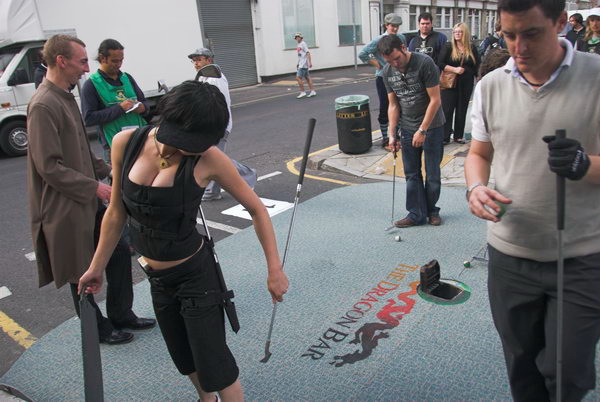
One of his more recent essays that has won awards is on urban golf in India,  a game invented and played by slum kids – and not the kind of event I photographed a few years ago in Shoreditch, though it has some similarities, but unlike me he makes some stunning black and white images from it.

© 2006 Peter Marshall
Urban Golf in Shoreditch was sponsored by a drinks company

VII – The Magazine

If you’ve not yet seen VII – The Magazine, launched a couple of weeks ago, it’s well worth a look. As you might expect from one of the world’s leading photo agencies, there are some fine photo stories from some of its 29 photographers posted already, and obviously many more to follow.

But perhaps the most interesting piece so far is an interview with Ashley Gilbertson who worked largely on assignment for The New York Times in Iraq from 2002 until 2008 and was in 2004 awarded the  Robert Capa Gold Medal for his work in Falluja by  the Overseas Press Club.

If you click on the image of his mobile, a popup window will open  with a warning that the story contains graphic imagery and language. It does. He talks candidly about the death of Billy Miller, the marine assigned to protect him was killed while he was photographing in Falluja and the affect it had on him. Since then he has looked at the emotional impact war has on the soldiers and their families and the problems faced by those who do come back.

I had some problems with the player software on my system using Firefox but it worked fine when I made the player full-screen. I found the series of black and white panoramic images of the rooms at home of soldiers who had been killed particularly moving, along with a couple of the portraits of those who had returned and were obviously very much affected by what they had seen and done.

RED Chalk

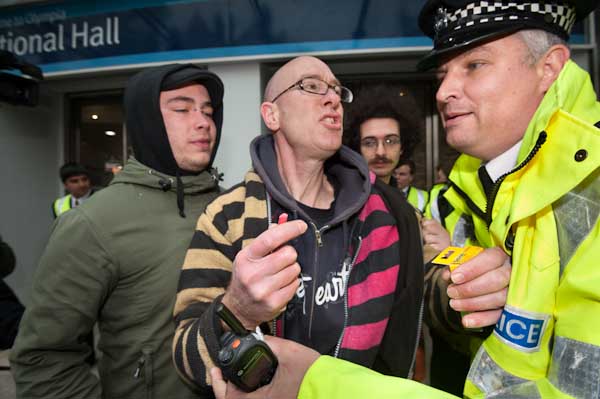
On Wednesday I saw a man arrested by police for chalking on a pavement – the charge was ‘criminal damage.’  I spent years chalking on blackboards in a teaching career without ever being charged with anything more than terminal boredom. Chalk doesn’t damage boards or stone and wipes away without trace.

© 2010, Peter Marshall

I have a small confession to make that might get me banned from some competitions. That stick of chalk he is holding didn’t actually look very red in my photograph. The way that my flash caught it made it a very pale pink, and it took a little bit of Lightroom magic to get it looking red in the picture.

The flash too was a little too bright on the officer’s jacket and especially its reflective strips, and that too took a little taming.

Almost all of my photographs get a certain amount of corrective work, but its aim is always to make the picture seem natural and to reflect how I saw the scene when I took the picture.  I don’t want people to look at one of my pictures and think that I’ve vignetted it or altered it in some way, really I don’t want them to think at all about the techniques, just to see and respond to the image.

Of course with digital images there is a certain amount of technical information embedded in them (unless you deliberately remove it.) So the EXIF data on this frame tells me I was working at ISO 640 (it was quite a dull day) that the exposure was  1/320 f6.3, the focal length 16mm and the subject distance 400mm – about 16 inches if like me you grew up in pre-decimal days. It also tells me that the flash did fire, that I was using an exposure bias of 1/3 stop and a few other things like the exact time according to my camera.

It doesn’t – so far as I can see – tell me I was shooting with the flash set at -1 stop and was probably using it in through the lens balanced flash mode. I think the camera ignores the flash exposure and sets the aperture and shutter speed on the ambient light only, but I don’t think the manual makes this clear.

Several things strike me about this, other than the evident absurdity of the alleged offence. First is that until fairly recently the fastest synchronisation speed on any of the cameras I worked with was around 1/100th second and that using fill-flash would have involved some tricky calculations that would have made it virtually impossible for pictures like this.

The second thing is that distance of 16 inches, I think from me to the hand holding the chalk. I was certainly working fairly close, but still making sure I wasn’t impeding the officer in his duty. I’m surprised it was quite that close, but things do look a little different when you are viewing the world through a 16mm lens. But had I moved back at that point, I would soon have been trying to photograph through the back of another photographer. A few seconds later, there was a ring of police and PCSO’s surrounding the man and I had to work from further back.

You can read more about the event and see the pictures in Olympia Counter Terror Expo Exposed on My London Diary.

Big Gay Flashmob

Last Sunday I was outside the Tory Election HQ on Millbank with a rather large group of people who had a bone to pick with Mr Cameron over the lack of gay-friendly policies in his election manifesto. As was pointed out, it was the Conservative party that put ‘Section 28’ into law, making teachers and others very uncertain about what they could legally say about homosexuality without being accused of “promoting” it.

Proposed by my local MP, it was a peculiarly ineffectual piece of law, working more by creating confusion than in any other way.  And I was rather pleased to see that Mr Wilshire, having been caught out in the expenses scandal, had to give up the seat, although it remains to be seen whether his successor will be any better. Unless we get a pretty large swing to the Liberal Democrats, he will be some kind of banker (at least I think that’s what a ‘financial analyst’ in the City is) with an Eton education, so I have no great hopes.

© 2010, Peter Marshall

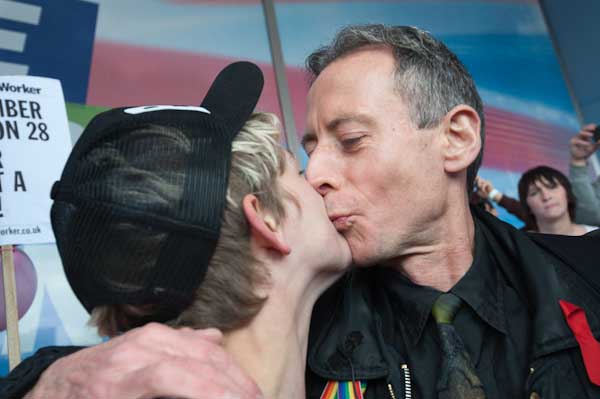
I’ve photographed both Tamsin Omond and Peter Tatchell many times before, but not kissing so in that respect it was a first.

Everybody seemed to be enjoying themselves and it was fun to photograph, although obviously rather a scrum so far as the media were concerned. Several times when I thought I had found a new angle on things I started taking pictures to find photographers to the left, right, above and below me –  and just occasionally in front of me.

At these things there are always a few photographers who spend some time moaning at the others to “go longer” so everyone can get their pictures, but usually it just doesn’t work – and if people are persuaded to go back then nobody gets a decent picture.  At least if everyone just piles in some of us will, and at this event there were plenty of opportunities.

Of course sometimes you want to move back to get a picture, but I think every time I did at this event, someone walked into the gap I’d made.  So the answer is usually to work wide. Most of the time the 16-35mm was very useful, though it was good to have a longer zoom on the D300  – where the 18-200 is equivalent to a 27-300mm.

© 2010, Peter Marshall

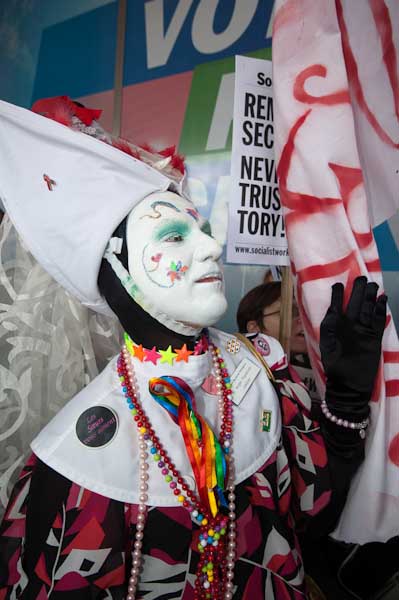
Some people have complained that it was an event that pandered to the stereotypes about LGBT issues, and that the media and photographers in particular choose to photograph people who reinforce these stereotypes.

© 2010, Peter Marshall

I suppose that in general at demonstrations I am likely to photograph people who stand out in some way, perhaps by holding a banner or placard or wearing a mask or costume or by some behaviour – there has to be something to work with to make a picture. Taking ordinary or boring pictures is seldom of much use to anyone (although rather too many of them get published.)

More about the flashmob and many more pictures on My London Diary.

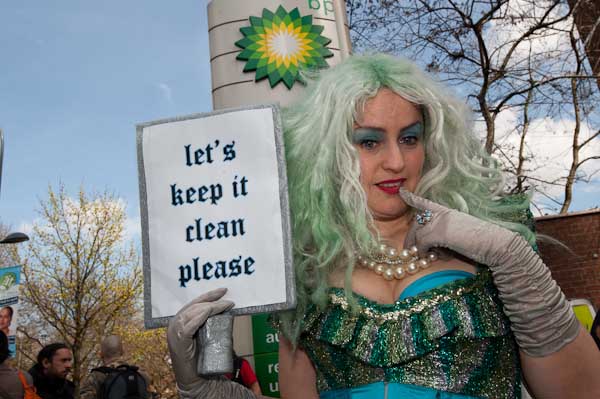
I Can Never Resist a Mermaid

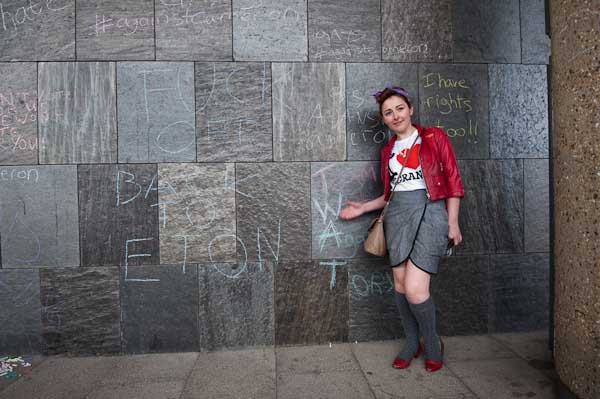
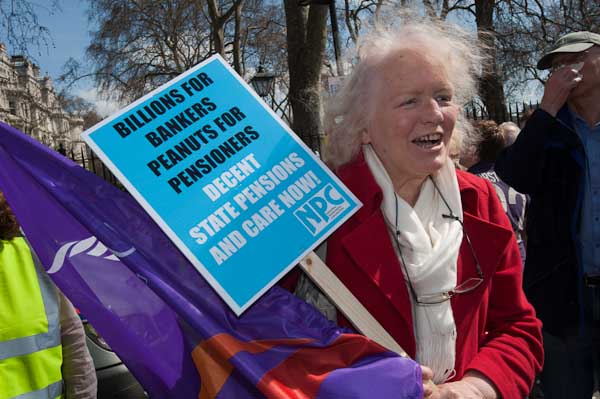
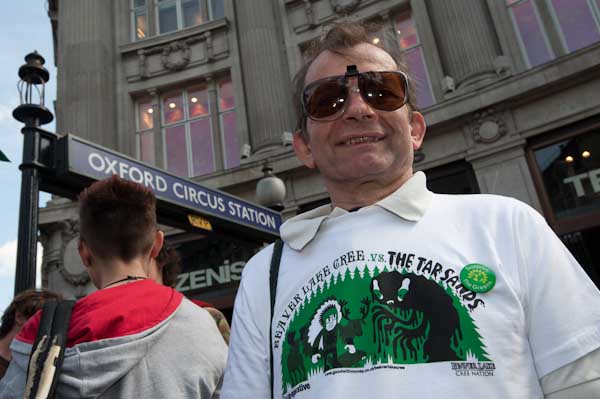
Sometimes you seem to wait an awfully long time for a demonstration and then two come along at once, and it happened again last Saturday. The National Pensioners Convention had organised a march to defend the welfare state, and lots of trade unionists were joining them,  meeting up at noon to start marching at 1pm to Trafalgar Square for a long rally with along list of speakers. And at that same time, 1pm,  the UK Tar Sands Network, Rising Tide and the Camp for Climate Action were meeting up at Oxford Circus to travel to an undisclosed destination for an action as a part of a ‘BP Fortnight of Shame leading up to their AGM on 15 April.

I thought about it and decided to make a quick visit to the Welfare State March and leave around when it was starting, close to Temple Station. A quick trip on the underground would then get me to Oxford Circus for the Tar Sands action, and if that didn’t look promising I could jump back on the tube and meet the pensioners back at Trafalgar Square. For once the two Underground lines I needed were both working at the weekend, something of a miracle in recent weeks, so it was possible.

© 2010, Peter Marshall
More about and pictures from the Defend the Welfare State March

I’d thought there would be a lot of photographers at the Welfare State event, not least because of the union support. Unions often actually commission photographers, but otherwise they may buy pictures from freelances for use in union magazines and they pay union rates. But also it was a large national event and that too might increase the chances of sale. The downside of course is that with more photographers there, the chance that they will use your picture rather than someone else’s decrease, and experience tells me that having a better picture is seldom a great deal of help.

I prefer to photograph events where there are fewer photographers even though this often means they are in some way less “newsworthy” partly because I think my pictures are more important simply because there are few others, and also because I won’t get in the way of other photographers and they won’t get in my way. Those of us who like to get close to the subject and work with wide-angle lenses are not always popular with the guys who like to stand further away with something longer.

© 2010, Peter Marshall

As I expected there were relatively few people around when I got to the Oxford Circus rendezvous, and fairly few photographers among them. Our destination turned out to be Shepherds Bush, just a little further from the centre of London than I’d hoped, and by the time I’d finished taking pictures there it seemed hardly worth going back to Trafalgar Square.

© 2010, Peter Marshall

There weren’t any speakers to photograph at Shepherd’s Bush, but there was an occupied garage, dancing and a mermaid, so I think it was almost certainly more fun.

More pictures and more about BP’s plans to take part in “the dirtiest and most desperate attempt yet to profit from – and prolong – humanity’s crippling addiction to oil” in My London Diary.

Thames Path & Richmond

I had a few days off from real photography at Easter, and went for a couple of walks with some of my family. They’ve been making day trips by public transport to walk the Thames Path, starting from London and working their way upstream, and I’ve managed to join them for most sections.

Of course I can’t bring myself not to take a camera, but usually I manage to cut the gear to a minimum, just one camera with one lens, and with the D300 and the 18-200mm (which is equivalent to 27-300mm) is a pretty powerful combination, though I do sometimes slip in the relatively tiny 10.5mm fisheye in case I really want a wide-angle.

But today the forecast was for rain, and the 18-200 is very much a fair-weather lens, steaming up inside with the slightest touch of moisture in the air. When you zoom from wide to telephoto it more than doubles in length, drawing in large amounts of air, and water vapour often condenses on some of the internal elements.

So instead I took the rather heavier and less versatile 16-35mm on the D700 as both camera and lens are pretty waterproof. The lens doesn’t change in length when you either zoom or focus – just moves a few bits of glass around inside. And just in case I should feel the need for anything longer I also slung in the lightweight 55-200 Sigma – though only 2 or 3 of the roughly 70 pictures from the walk on My London Diary were taken with it

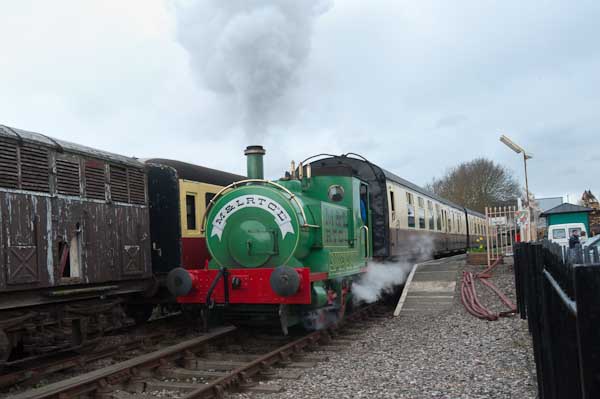
We took a train to Cholsey which until our walk ended there in the New Year I’d never heard of, and I still can’t tell you much more about, because all we saw was the station. When we still had an railway system, this was also the start of a short branch line that used to run the 3 miles or so to Wallingford, but it closed to passenger traffic in 1959 and for goods a little later.

© 2010, Peter Marshall
I got dragged to see Ivor the Engine by my wife

It now is a “preserved railway” which runs rather expensive special services on some days from a primitive station on the outskirts of Wallingford and is of no use to anyone wanting to get anywhere.

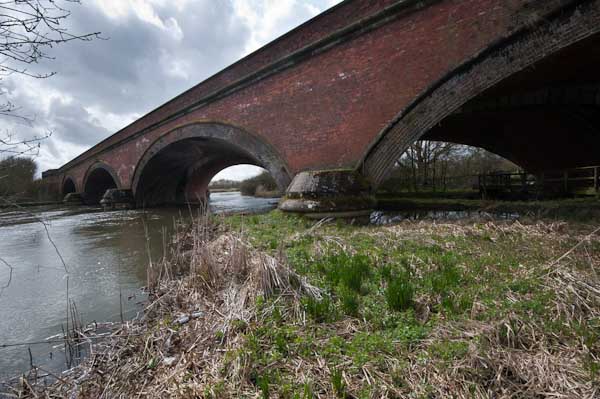
In any case we needed to walk back a mile or so in the direction the main line had brought us to Cholsey to join the Thames path at Moulsford, and go under the rather splendid bridge that Brunel built for the railway over the Thames.

© 2010, Peter Marshall

There was a little bit of fence in the way when I wanted to take this picture. With the old Olympus OM series cameras the lenses were considerably smaller and it was usually possible to poke a lens through the gaps in most fences. With the Nikon this is seldom possible and you have to find other ways.

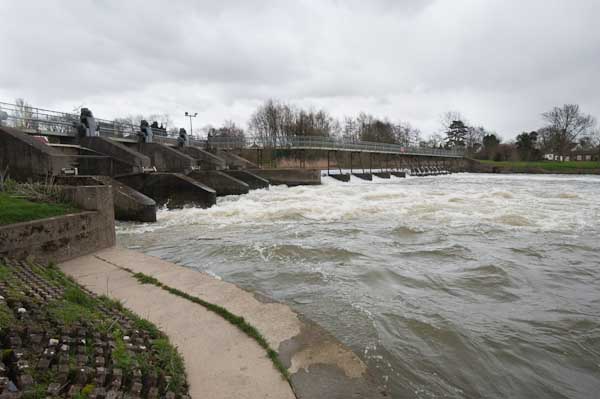
Towards the end of the walk we went over a fairly impressive weir at Benson Lock, and there was a rather inviting triangle of grass from which I photographed it. It was only as I was coming out through the gate – which was wide open – that I happened to notice it said “authorised persons only” on it.

© 2010, Peter Marshall

But by then it was too late, and I’d taken my pictures.  This one is with the lens at 16mm and I think something about the perspective and the way the water seems to me to bend down at the bottom right makes it feel rather more dangerous than it was at the time.

Hostile Reconnaissance

Yesterday I went to a public meeting organised by the London Photographer’s Branch of the NUJ about the systematic harassment of journalists, particularly  photographers, by the police.

Around seven years ago, many of us began to notice the increased us of photography by the police at demonstrations, and were disturbed by the way that it sometimes seemed to be used more as a way to harass protesters than for the stated purpose of gathering intelligence. We became even more disturbed when it became clear that photographers were clearly  being targeted and photographed time after time.

The first time I noticed it was when two officers came up to talk to me as I was photographing a demonstration outside the National Portrait Gallery. As I turned round to face them I met the flash of the photographer from the Met who had clearly been waiting for the moment.  It was the first of many such times. On one occasion in Parliament Square I stood for what seemed like several minutes with my camera in front of my face pointing it directly at a police photographer around 5 yards away who was pointing his camera with a telephoto lens directly at my face, clearly waiting for me to put the camera down so he could take yet more photographs of me, to add to the thousands already taken and doubtless on the database that the police still seem to deny having despite having been forced to admit its existence in court.

This is one area where we have now made some progress through protests and dialogue between the NUJ and others and the police and I haven’t noticed a police photographer taking my picture since we caught one out at the French embassy in July last year – and when challenged he vehemently denied having done so.

But that hasn’t stopped various unacceptable treatment. Not long ago a colleague was stopped and searched by police three times in half an hour covering a single demonstration, and others have also been searched while taking photographs where there was clearly no proper reason for the search. Advice from the Home Office has made it clear to police that they should have some real reason to suspect people are in some way connected to terrorism before using this as a pretext to carry out a search, but so far the police seem determined to ignore this advice.

All of us who photograph protest are I think worried, especially when we turn up and find we are the only journalist present (as in the case of that triple search.)  I don’t know what goes on when there are no journalists present, but having several of us around does seem to inhibit police irregularities. It’s no coincidence that when I was searched I was the only photographer present. We really shouldn’t be needing to rely on safety in numbers.

The government is currently attempting to appeal a European court ruling that the stop and search legislation is illegal, and it was good last night to hear film-maker Pennie Quinton whose appeal, supported by Liberty, achieved this decision.

You can read more about the rally on the London Photographers’ Branch web site, where you can download a full audio file of the evening. But the highlight came at the start where we watched Jason N Parkinson’s film Hostile Reconnaissance with examples of police misbehaviour towards photographers and highlights from the campaign by the NUJ, LPB and I’m a Photographer, Not a Terrorist! which is not available on the site.

Perhaps the most salient contribution to the evening came from Prof Keith Ewing, who suggested we campaign for a Press Freedom Bill on the lines of the Swedish Freedom of the Press Act, listing the twelve points he thought this should contain:

  1.    A right not to reveal sources.
  2.    A right not to be required to surrender images.
  3.    A right to attend public events and to move freely at these events.
  4.    A right to right to take photographs in a public place.
  5.    A right to photograph police officers and public officials exercising their duty.
  6.    A right not to be under surveillance by police or intelligence services.
  7.    A right to not have equipment confiscated.
  8.    A right not to have images erased or equipment deliberately damaged.
  9.    A right not to be subject to Stop & Search.
  10.    A right not to be restrained by injunction.
  11.    A right that police Forward Intelligence Teams only act with prior legal authority.
  12.    A right to meaningful accountability of police Forward Intelligence Teams.

And clearly the most depressing comment of the evening came in a contribution from the floor, when one photographer stated that he sometimes felt sorry for the police, as he had been to one or two demonstrations and felt it was hard for the police to distinguish between “proper” photographers and others who were there with press cards.

Suggesting that in any way the police should be able to decide who is or isn’t a “proper” journalist seems to me to be inviting a police state. We have a system of press cards that has been accepted by the police and is administered by various gatekeeper organisations who control it so only those who need a card and qualify for one should have them. The Association of Chief Police Officers have agreed the scheme and the only job of the police is to honour this agreement and recognise the needs of the press and wherever possible to make it possible for us to do our job.

Of course having a press card does not remove the requirement for citizens to obey the law (any more than wearing a police uniform should not.) I’ve been to more demonstrations than most, and can only recall one occasion where someone wearing a press card has behaved in a clearly unsuitable way. Several other photographers at the event, myself included, clearly told him that he could either be a journalist or a protester but if he wanted to protest he should put the card away.  I’ve not seen him at an event since.

Of course we all have rights, including the right to photograph in public, whether or not we have a press card, but those who are accepted by the industry as members – and increasingly that will also include bloggers and others writing for the web as well as print journalists – have a special responsibility. Most but not all of the points made by Ewing should apply to all, not just journalists.I think journalists might also think rather more about putting their own house in order and pressing for more accurate reporting of protests. I was shocked at the Trafalgar Square rally to find a fellow journalist standing up in front of a BBC TV camera and state there were “three hundred” people present, when if his cameraman had panned around the square he would have found several thousand.

It was the press too, that colluded with the police in building up an atmosphere of terror in the lead up to the G20 demonstrations in the City of London last April Fools Day, inventing lies and deliberately confusing street theatre and metaphor with insurrection. And the papers have already started this kind of nonsense for this May Day in London.
Paris on Sepia Town

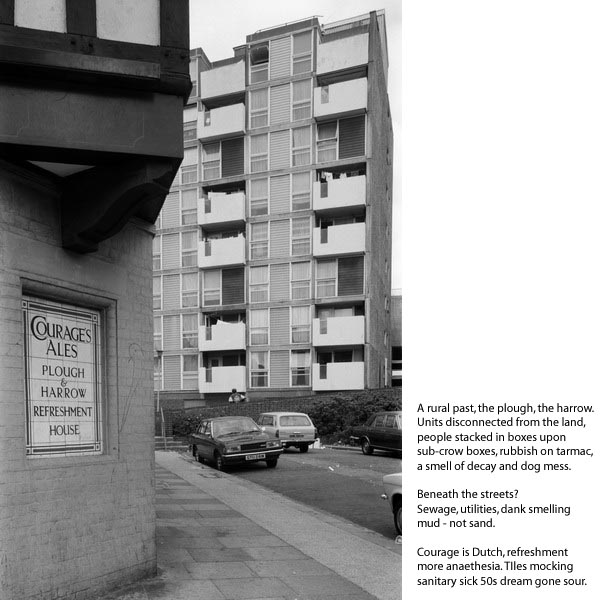
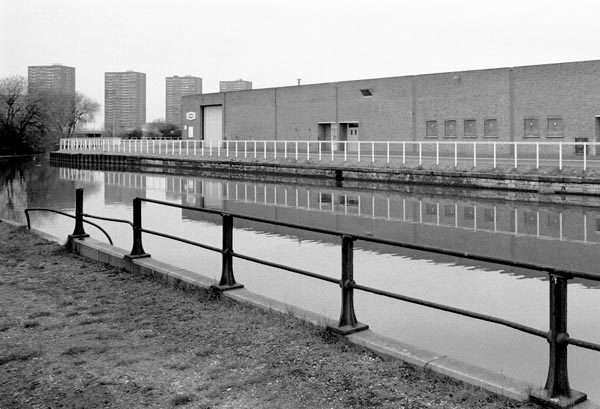
Sepia Town is a great site that I’ve mentioned before that maps historical images, mainly photographs, from cities around the world on to Google maps so you can see from Street View what the places in the pictures look like now.  Hidden away in its view of London are a couple of my pictures, taken before 1980 which I think is Sepia Town’s  definition of a historical image.

The latest news on the Sepia Town blog is that they now have added some of Atget’s images of Paris to the site for us to enjoy.

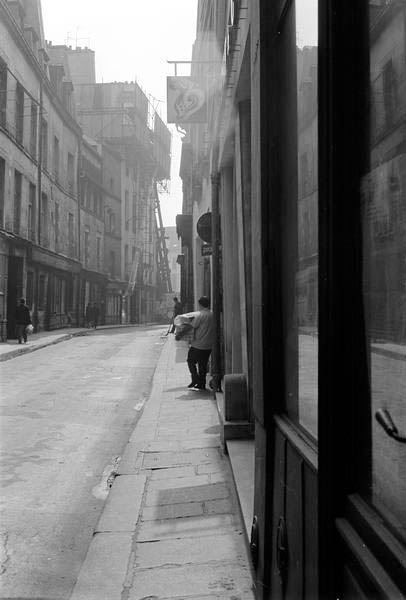
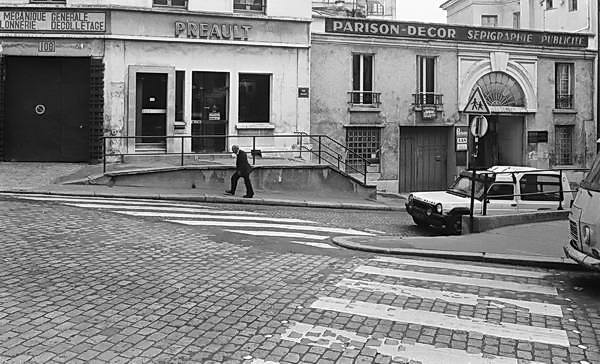
There are a few of my own pictures of that city which I might add, when I have the time, but you can already see a selection of the images that I made there in Paris 1973 ,

© 1973, Peter Marshall

although the work that I took more consciously based on Atget came a few years later, in Paris Revisited, taken in 1984, which I put on line earlier this year.

© 1984, Peter Marshall
Quai de Jemappes / Rue Bichat, 10e, Paris, 1984

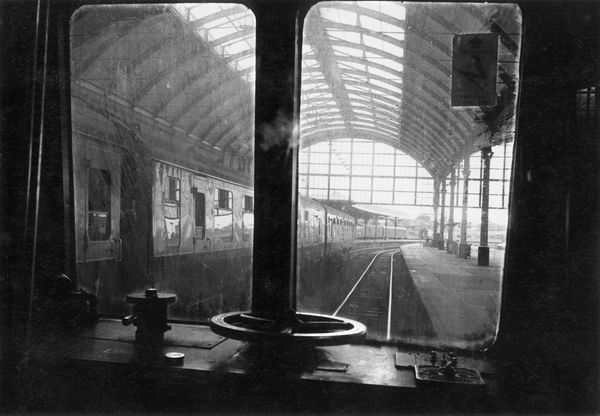
The other work from the 1970s that I intend to put on Sepia Town is from Hull  (sometimes known as Kingston upon Hull) where at the moment there are no pictures at all. A few of mine are on the Urban Landscapes web site.

© 1975-83, Peter Marshall
Hull Paragon Station