William Klein

William Klein is a photographer I’ve written about on several occasions, though not recently. He found his home in Paris, and his work does appear to have had a particular resonance with the French rather more than on this side of the channel. I’ve made brief references to him in some of my pieces on Paris Photo in past years, and in particular the comparison between his work and that of Japanese photographers particularly Daido Moriyama.

Here are a couple of paragraphs from a longish essay about him I polished for publication in 2000:

One man, Henri Cartier-Bresson, with his idea of the ‘decisive moment’, catching that fleeting instant when everything in the frame was dynamically balanced, dominated photography, particularly in Europe, in the early 1950s. Although he appreciated this work, Klein wanted to photograph in his own way; in the spirit of the defiant iconoclasm he had acquired from Leger he determined to turn Cartier-Bresson’s approach on its head. Rules were there only to be broken.

Cartier-Bresson had attempted to melt into the background, to become an ‘invisible man’ or ‘fly on the wall’, unnoticed by his subjects. Klein often talked to the people as he was photographing them, sometimes almost literally pushing the camera in their face to generate a reaction. Cartier-Bresson never cropped, so Klein often or always did. Klein abandoned the idea of careful and considered composition in favour of chance and the grabbed shot, often blurred or out of focus. His printing was harsh and gutsy, at times more graphic than photographic in effect, often extremely grainy as his negatives were often severely over-exposed (few photographers used a meter in those days, relying on experience – and Klein was short on this.) The pictures that resulted were raw, edgy, vibrant and nothing like most people at the time expected of a photograph.

Of course it isn’t quite true that HC-B never cropped – possibly his best-known image is of a man trying to jump a puddle is quite severely cropped. But  it was a part of the legend – just like the ‘fact’ he always used a standard lens.

On The Online Photographer you can read Klein and the Anti-Technicians, the most recent of the two features a year that John Kennerdell contributes to the site, which places Klein in the history of photography, particularly for his influence on the ‘Provoke‘ group of Japanese photographers. It’s well worth reading.

On the Reporters sans frontières web site, William Klein pour la liberté de la presse, one of a series by a number of photographers appears still to be available for €5.79 EUR and the ‘Books on Books’ Errata edition of his William Klein: Life is Good & Good for You in New York can still be found for a reasonable price, although the original sells for over $500.
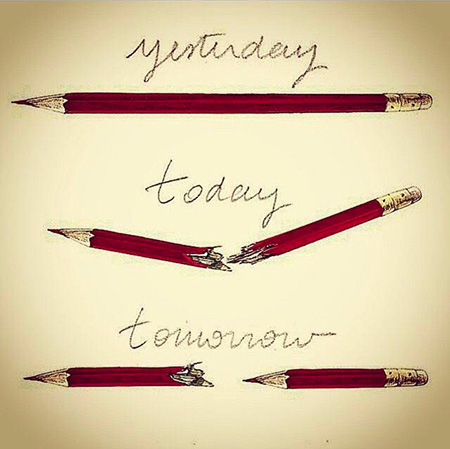
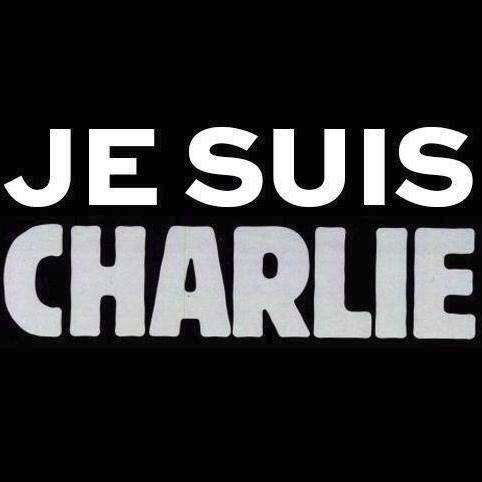
#JeSuisCharlie

charlie-1
Shared from Facebook – image by Lucille Clerc

By the time I heard the details of the protest in Trafalgar Square last night over the shooting at Charlie Hebdo it was a little late for me to drop what I was doing and get there, though this morning I regret my absence. I should have been there, at least with a pen if not with a camera.
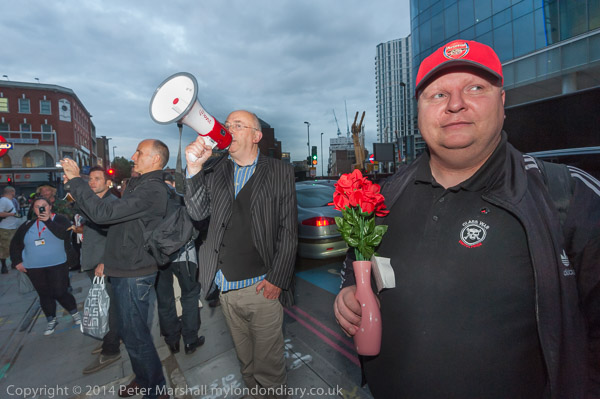
It isn’t a matter of religion, but one of humanity. Something that we can all abhor, whether we read the Quran, the Bible or other religious texts, or are agnostics or atheists.  You, like me will probably have read many of the comments about the attack from people around the world, so I’ll only quote two of them. On the radio this morning I heard a leading Muslim scholar Tariq Ramadan being interviewed, and his comment (also on Democracy Now!) was “This is just a pure betrayal of our religion & our principles”  and my own union statement ends “Supporters of free speech and civil liberties must stand together with governments to condemn this act and defend the right of all journalists to do their job without fear of threats, intimidation and brutal murder.

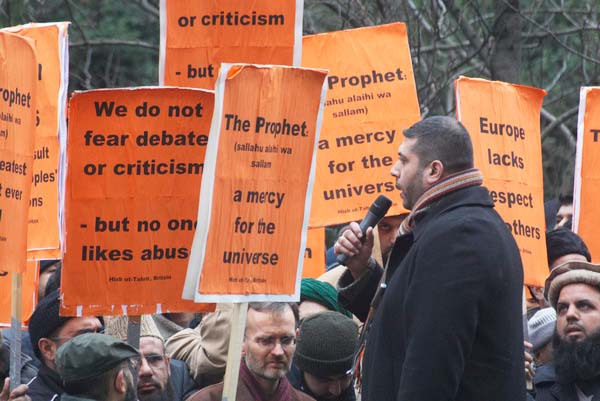
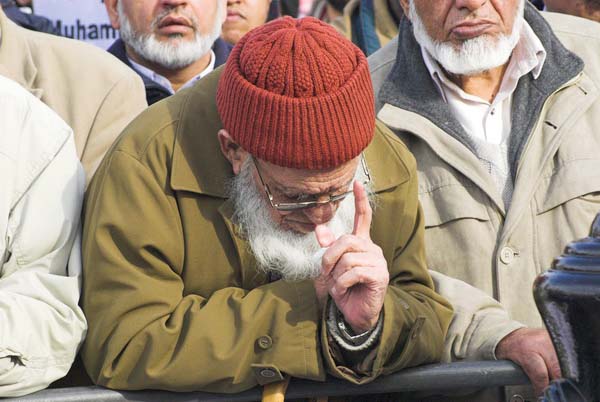
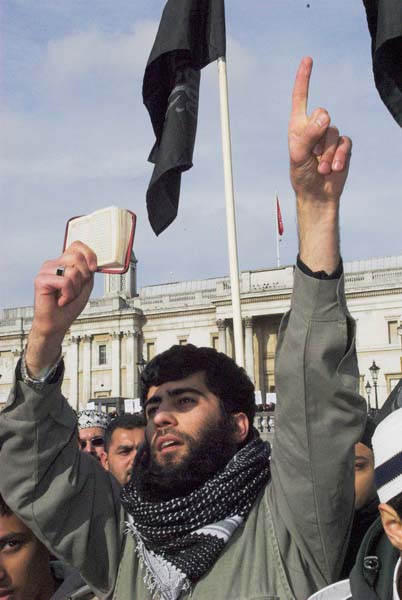
The news of the killing took my mind back to 2006 and the protests then against the publication of cartoons by a Danish magazine.

Of course I respect the right to peaceful demonstration, but the call for ‘global civility’ steps over my right to free speech once there is any suggestion it should be imposed.

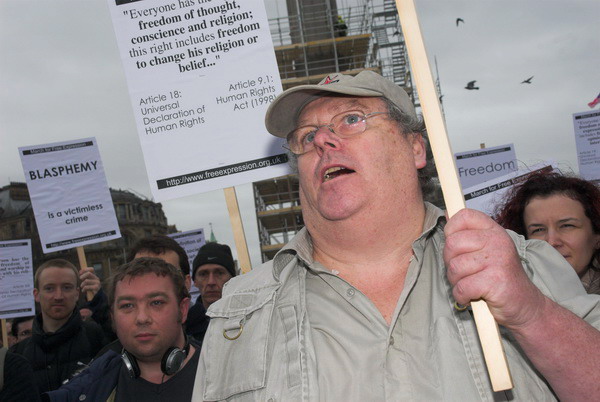
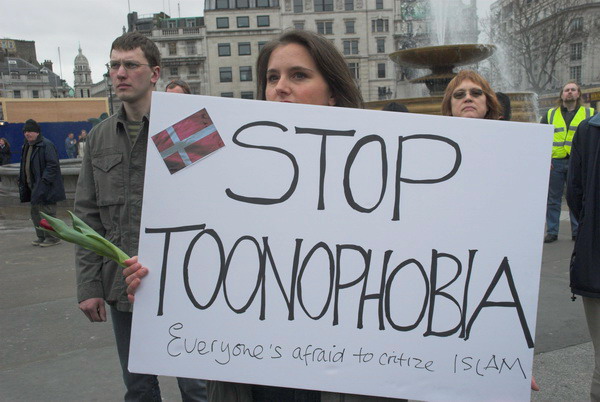
The following month I was back in Trafalgar Square, photographing a protest to ‘protect free expression’ at which some of those present held up placards containing some of the Danish cartoons – which were republished in France by Charlie Hebdo in 2005.

Charlie Hebdo was certainly not afraid to criticize Islam. Or Christianity or any other religion or politicians of all colours or anything else, but I’m sorry to have to admit that I censored some of the images that I took on that day to avoid offending people, blurring the cartoons. I should not have done so and will not do so again.

I hope that all journalists and publications around the world will stand up and be counted on the side of freedom of speech (though I know there are some countries where this is not possible.) Some will be holding a short silence at 11.00 am today (when I’ll join them and post this), and many newspapers have published cartoons about the shooting – including some of those from Charlie Hebdo that offended the killers. Perhaps we should name January 7 ‘Charlie Hebdo Day’ and make it an annual celebration, publishing their work again.

I hope too that Charlie Hebdo will continue, and continue to offend people of all faiths and none. And I certainly have no time at all for those who try to blame the victims rather than the perpetrators.

charlie-2
from Charlie Hebdo

Continue reading #JeSuisCharlie

Decisive Moments

I don’t think I have ever stolen a book from a library, although many do disappear, and I have bought quite a number when libraries have decided to de-accession them. Ex-library books are often found as bargains too in the lists or shelves of second-hand bookshops, and I’ve bought a few this way too, though I’ve found several of them have had pages removed by people who apparently take a razor blade with them when they visit their library – and its often the pages with nude images that disappear. Of course some librarians have felt it their duty to censor such images from the books in their collections too.

But I was severely tempted, back in the 1970s, at the school where I was then working, and setting up an O Level photography course. This 2000+ pupil comprehensive had a large ‘Art’ section to its library, and among the several hundred volumes was I think a single photography book, Cartier-Bresson’s ‘The Decisive Moment‘, with its Matisse cover.

The most senior of the several teachers of Art turned out to be something of a fan of HC-B, and had either got the school to buy a copy back when it was still in print or perhaps had even donated it to the library. I got them to buy a few more photography books to go with it, and took ‘The Decisive Moment’ home with me over the summer holidays. School libraries in those days were not highly protected and staff regularly walked in and out with piles of books for use by their classes, and I could have hung on to it and probably no one would have noticed. But I’m basically an honest guy and I took it back for the start of the Autumn term.

Later, when I moved to a college, as well as the college library we had a shelf or two of books in our photography base, and I’d often leave some of my own books there for use by students. I wish all of them had been honest too – and more careful with books. Much later I found that one of my colleagues was actually encouraging students to cut out pictures from them to put into their scrapbooks and personal studies, and I stopped taking books in, though I still lent many personally to students – and most came back, if some rather dog-eared and a few with broken backs.

What reminded me of this was an article in The Guardian around Christmas by Sean O’Hagan on the republication by Steidl of ‘The Decisive Moment’, which first came out in 1952. He comments – as I and many others have done before – of the difference between the French and English titles and its significance.  ‘Images a la Sauvette‘, often translated as ‘Images on the Run’ has a feeling of illegality, of moments stolen from the flux; there is an edginess about it, something which is appropriate to some of HC-B’s early work. ‘The Decisive Moment‘ is rather more static and monumental (despite HC-B’s definition which O’Hagan quotes), more fitted to what I find the least satisfying of his images, what one well-known American photographer called his ‘waiters’, where the photographer had clearly found a particular location that satisfied his feeling for composition and waited for someone to walk or run into its core.

O’Hagan writes “For me, what is interesting about the republishing of The Decisive Moment is that it has happened too late. The book is now a historical artefact.” For many photographers that became true back in the 1950’s and it was certainly so for those of us who came across it in the 1970s. We might still admire HC-B, but we didn’t take him as a model, and although very flattered I wasn’t entirely happy when someone compared my work to his back in my early years in the medium. The critical watershed was 1958-9, when Robert Frank‘s ‘Les Americains / The Americans‘ was published first in France and then in the UK, calling into question and sometimes deliberately toying with or parodying the work of Cartier-Bresson. By the 1970s we were also looking at the work of photographers like Friedlander, Winogrand, Arbus… Cartier-Bresson was history, if a very illustrious history, and of course still active. Younger French photopgraphers too were redefining photojournalism.

I probably won’t be buying ‘The Decisive Moment’. At € 98.00 it seems a little expensive (currently you can buy it in the UK for around £52, around a third less than the full price) though I think it is likely to be a good investment, as it is already on offer for rather more than this though some on-line photography bookshops.

Photocritic International etc

Another blogger who has been reviewing his year is critic and photo-historian A D Coleman, whose work on-line I’ve often mentioned here, most notably in recent times his epic series dismantling the Capa D-Day legend – and as he reminds us in his 2014: That Was The Year That Was there are still a few loose ends to be cleared up.

There is of course a lot more than this, and he starts the piece – as I also did the other day – by looking at his web site statistics. I can only comment that he deserves a much higher readership, and perhaps the new website on which he is planning to publish more of his work will give him this (and there is some more detail in his December ‘Birthday Musings‘.) He is also asking for support, both financial and “in-kind services from volunteers” and if I wasn’t far too busy I would be tempted to help. There is also a review of the main topics his blog has covered, and it is worth checking if there is anything you have missed.

His previous Year-End Ends and Odds is full of acute observations, some of which may amuse you. I don’t always agree with him (wouldn’t life be dull…), but if you like your thoughts being provoked this is a site worth adding to your favourites. One thing I don’t share is his apparent enthusiasm for the work of William Mortensen (see those ‘Birthday Musings’), though of course he should not be written out of the history of photography. We do need bad examples (a thought I sometimes console myself with.)

Whenever I find myself forgetting how bad a photographer he was I reach down my copy of his ‘The New Projection Control‘ (3rd edition 1945 – a gift, I didn’t buy it) and look at the examples he used there. And it would be hard to find a better guide to how to destroy the integrity of your images. My copy even came with a small print of a kitten between its pages as a bookmark. I doubt it was made by Mortensen but it is bad enough to have been. His “Le Chatte” included in the book is even worse, though it could well be the same animal.

For yet more looking back at the year that was, I’d recommend another site I’ve often mentioned, where you can see The Best of LensCulture in 2014 as selected by the Editors of LensCulture.

Died in 2014

I’ve commented here on several photographers who died in 2014, including Lewis Balz and Rene Burri. Among those I thought about but didn’t get around to writing anything at the time, though I have written about them previously, were Ray MetzkerRebecca Lepkoff and  Arthur Leipzig and you can read a little more about them and a number of others in the Time Lightbox ‘In Memoriam‘ feature.

Lepkoff and Leipzig both studied with the New York Photo League in the 1940s, and were 98 and 96 respectively. The Photo League was arguably the most important organisation in American photography of the last century, the basis of a New York school which led to the US domination of much of photography. As well as the many distinguished photographers who taught or studied there, its influnece on younger photographers was enormous, despite (or perhaps aided by) its ruthless dismemberment  under McCarthy-ism.   I was pleased in the early years of this century to write about it at some length, as well as about many of the photographers associated with it, at a time when it seemed to have been forgotten by many. You can see and hear Leipzig in the trailer to ‘Ordinary Miracles’ a 2012 film about the Photo League, along with other former students in their 80s and 90s.

But among the photographers whose deaths have made headlines in the past year were a number of much younger photojournalists, with 16 photographers among the 60 journalists listed as killed by the Committee to Protect JournalistsReporters Without Borders make the tally a little higher at 66, and they also report that 178 journalists and 178 citizen-journalists were in prison around the world on 8th December 2014. I’m not sure that the distinction between journalists and citizen-journalists is any longer valid, but the figures for deaths and imprisonment put my own complaints about our police here and their treatment of the press into perspective. Though of course even if the risks are lower, fighting for the freedom of the press is still vital.

You can read more about the photographers who were killed at the links above, but I want to highlight one of these, Luke Somers, simply because, although I never met him, he worked for the same agency that I use. An American freelance in Yemen, he was kidnapped in September and  held hostage by Al-Qaeda and was killed during a failed rescue attempt by US special forces on December 6, 2014. You can see his work on Demotix, where he had submitted 98 stories from Yemen since 2011.

Web views

I’m never entirely sure what web statistics mean, but the web host that I use provides them, so here are some of my figures for 2014.

>Re:PHOTO

The total visits to this blog in 2014: 1,603,778

Total page impressions in 2014:  3,418,124

Of course some of these were visits by robots rather than people, and some may have taken a look at the site and immediately gone away (the average time spent here per visit was almost exactly one minute)  but I’m still a little surprised by the figure, which works out at almost 4,400 per day, while the number of page impressions is over 9000 a day. Well, thanks guys.

My London Diary etc


From My London Diary, Nov 2014

It’s hard to give an exact figure for My London Diary, as it can be accessed using several different domain addresses, including mylondondiary.co.uk and mylondondiary.com along with others, some of which are shared with other of my content. My web space also contains some other web sites with my work, as well as a couple of sites hosted for other groups with very low usage – perhaps hundreds or at most a few thousand visits per year. The only significant site which is not entirely my own pictures is the Urban Landscapes site, listed below.

Using the overall figures for the web space less those for >Re:PHOTO and Urban Landscapes gives the following traffic for my own web sites

Total visits in 2014:  1,208,489

Total page impressions in 2014: 2,365,442

Which works out to around 3,300 visitors a day and around 6,480 pages viewed per day. Again figures I find surprising.

Urban Landscapes

A site with work by around a dozen photographers which I curate together with Mike Seaborne.


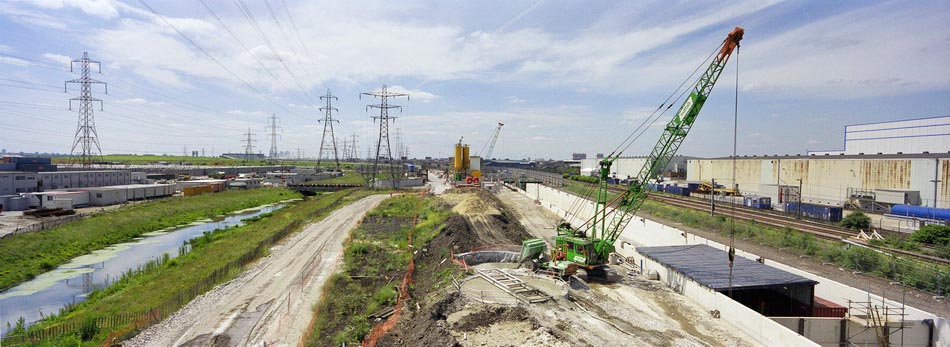
Dagenham #1, 2004 Peter Marshall
Tanya Ahmed  John Davies  Philip A Dente  Lorena Endara  Pablo Fernando  Bee Flowers  Nicola Hulett  Peter Marshall  
Paul Anthony Melhado
  Neal Oshima  Paul Raphaelson  Rabi Rashmi Roy  Herman Schartman  Mike Seaborne  Luca Tommasi

2014 :        71,310 visits
116,564 page impressions

Which works out at around 195 visits a day with 319 page views, a respectable but not high figure.


My favourite image of Brian Haw, with Babs Tucker at his right.  From Taken in London

It’s the figures for some of the less popular sites that I host that make these figures believable. Taken in London is a small site I set up for an exhibition with Paul Baldesare in 2009, and which I’ve left on line with no further publicity since then. I would not expect it to get a great deal of web traffic, and the figures of 10624 visits and 18898 page impressions for the year (29 and 52 per day) are around what I would expect.


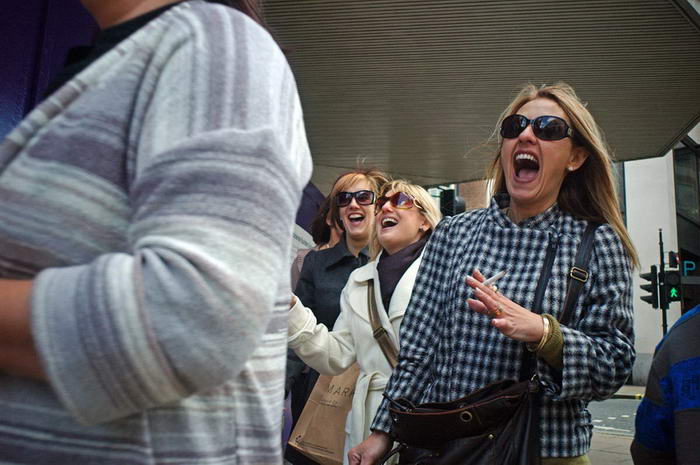
Paul Baldesare Laughing women Oxford St

Taken in London was a nice show with some fine street photography by Paul Baldesare, and some of my protest pictures that still don’t look bad, and the web site is well worth a look. Perhaps this mention will boost its figures for 2015!
Continue reading Web views

Looking Back on 2014 – Part 5

The final instalment of some of personal favourites from the pictures I took in 2014, these are from mid-October to December. As usual the links below the picture will take you to the story on My London Diary


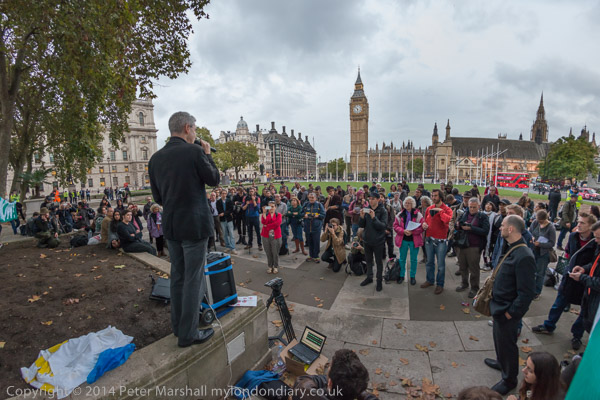
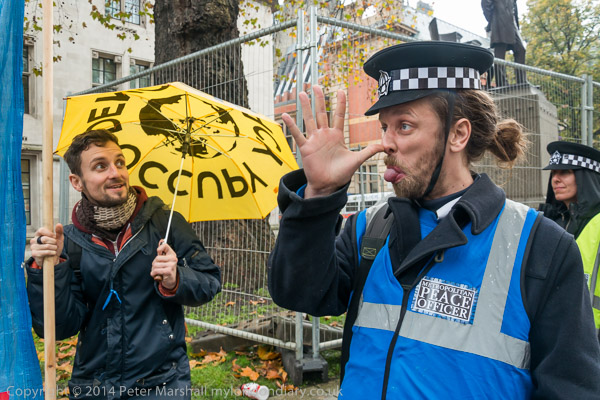
Democracy Camp starts with rally – Parliament Square, London. Fri 17 Oct 2014


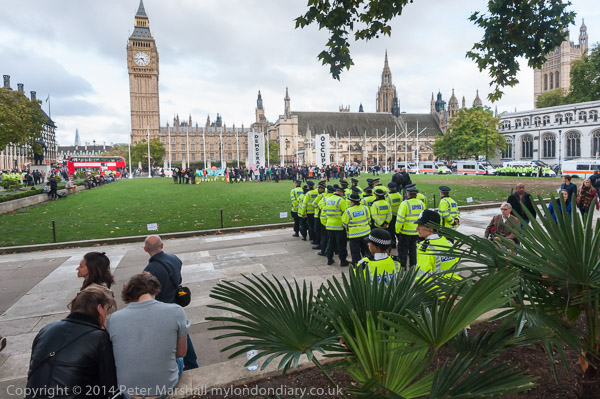
Democracy Camp takes the Square – Parliament Square, London. Sat 18 Oct 2014


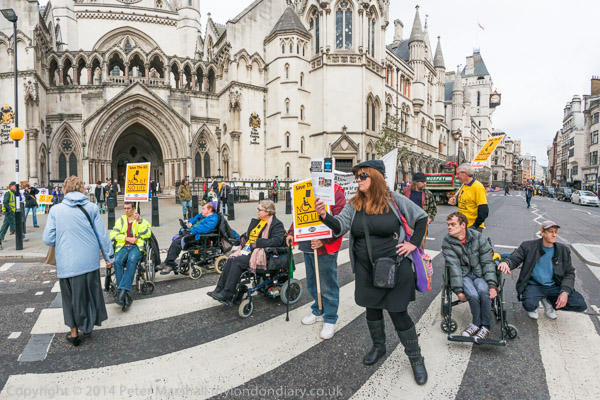
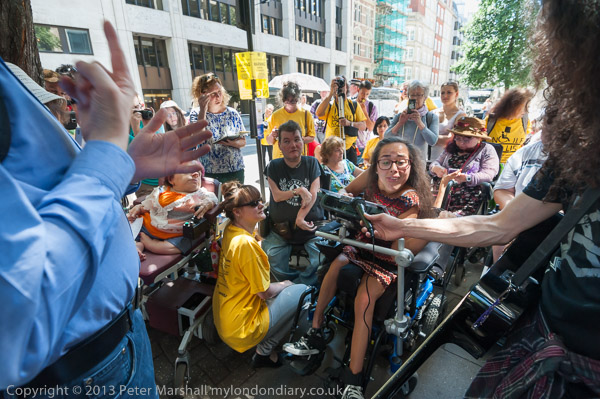
DPAC High Court Vigil for ILF – Royal Courts of Justice, London. Wed 22 Oct 2014


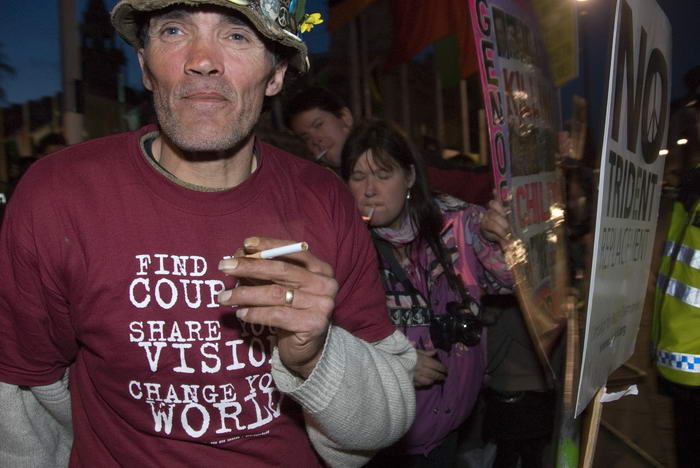
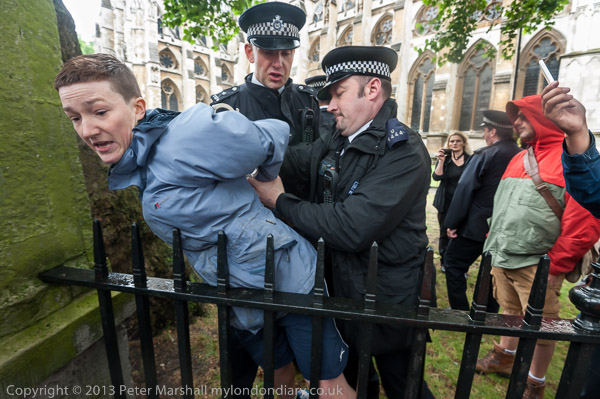
Democracy Camp – A Poet Arrested – Parliament Square, London. Wed 22 Oct 2014


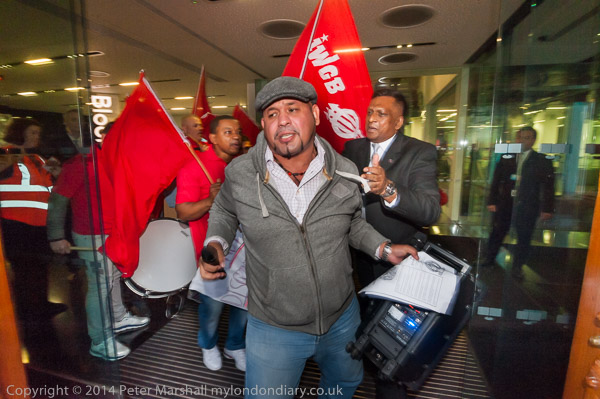
Cleaners protest at Bloomberg – Finsbury Square, London. Fri 24 Oct 2014


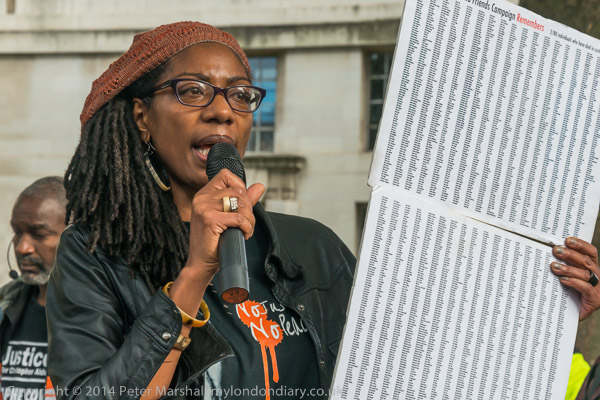
United Friends & Families March – Trafalgar Square to Downing St, London. Sat 25 Oct 2014


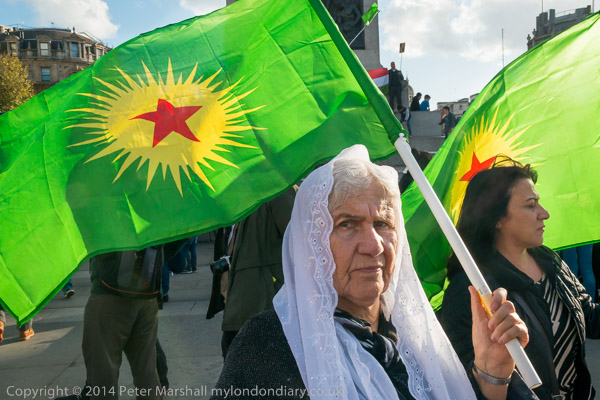
Global Solidarity With Kobane – Trafalgar Square, London. Sat 1 Nov 2014


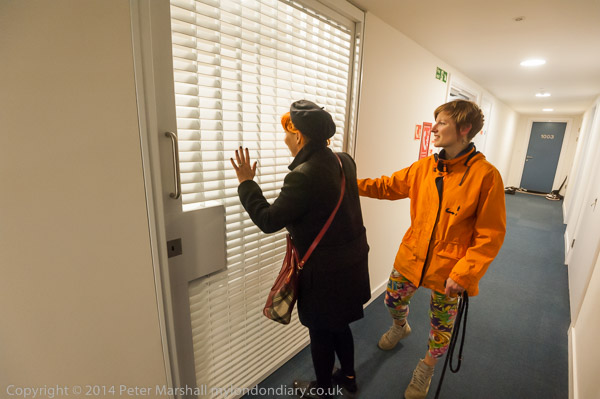
Poor Doors Guy Fawkes burn Boris – One Commercial St, Aldgate, London. Wed 5 Nov 2014


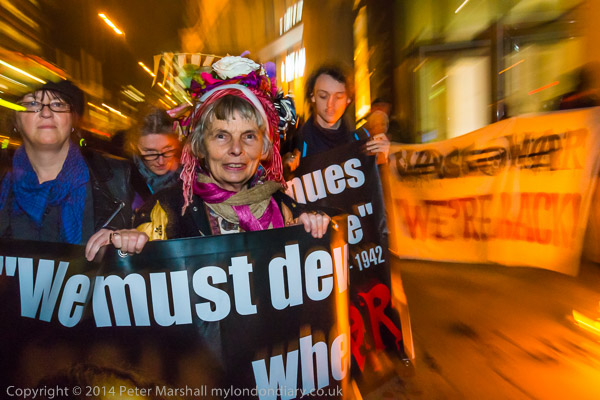
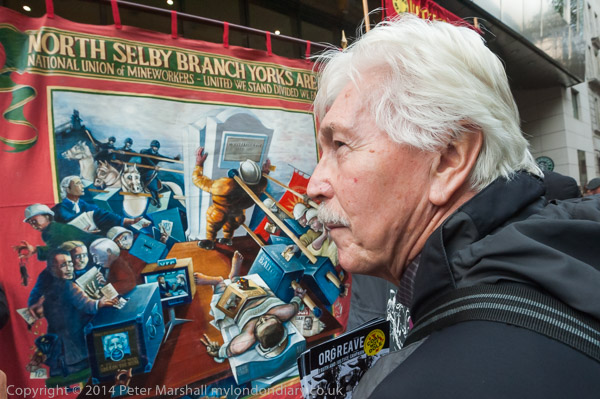
Orgreave Truth and Justice Campaign at the IPCC – Holborn, London. Fri 14 Nov 2014


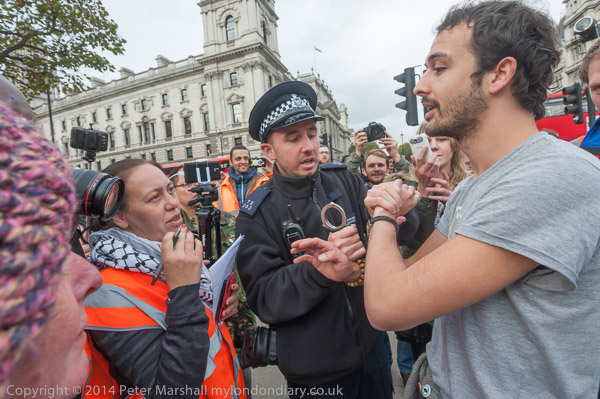
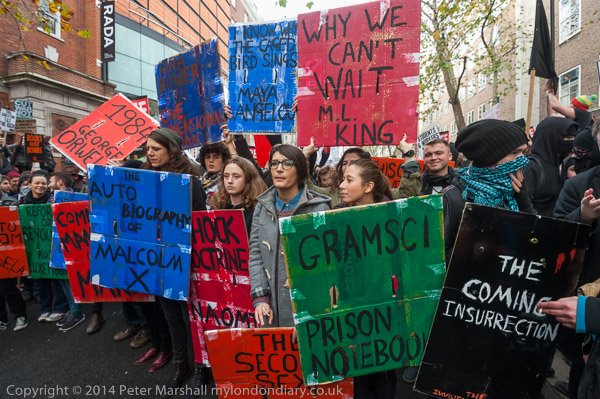
No fees, No cuts, No debt! – Malet St to Westminster, London. Wed 19 Nov 2014


‘Bye Bye Redrow’ Poor Doors Street Party – One Commercial St, Aldgate, London. Wed 19 Nov 2014


Occupy Democracy at Supreme Court – Parliament Square, London. Sat 22 Nov 2014


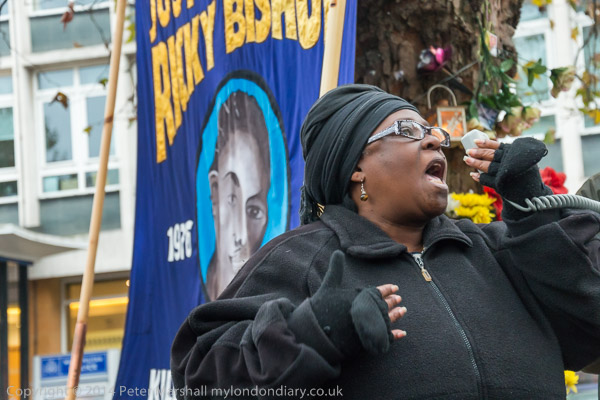
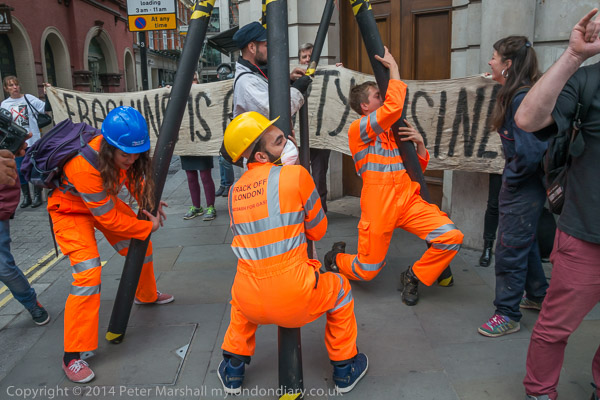
Still No Justice for Ricky Bishop – Brixton, London. Sat 22 Nov 2014


Candlelit Vigil for Michael Brown – US Embassy, Grosvenor Sq, London. Wed 26 Nov 2014


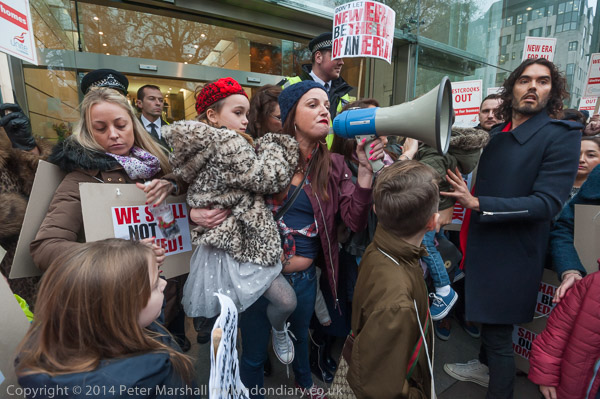
Russell Brand marches with New Era – Mon Dec 1 2014


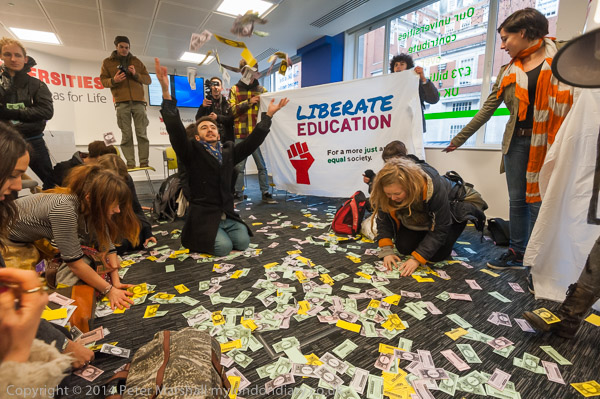
Students Occupy Universities UK – Wed  3 Dec 2014


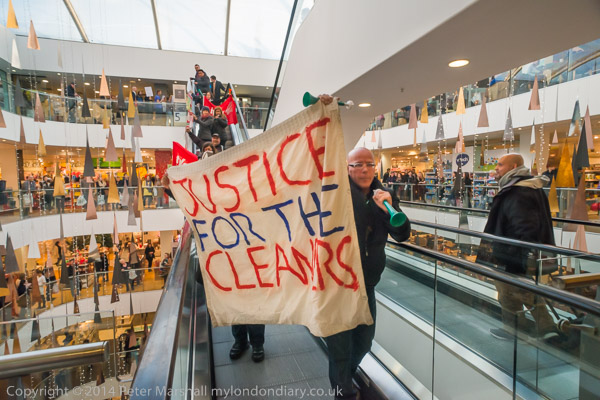
Cleaners Xmas Protest in John Lewis – Sat 13 Dec 2014
It was a busy year for me, too many protests to keep up with. I did a few other things as well, but not as much else as I would have liked.

Looking Back on 2014 – Part 4

Continuing some of personal favourites from the pictures I took in 2014, these are from August to mid-October. As usual the links below the picture will take you to the story on My London Diary.


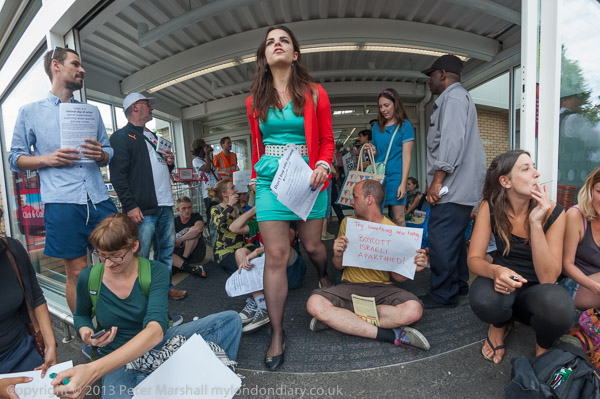
Sainsbury’s protest at illegal Israeli Goods – Brixton, London. Sat 2 Aug 2014


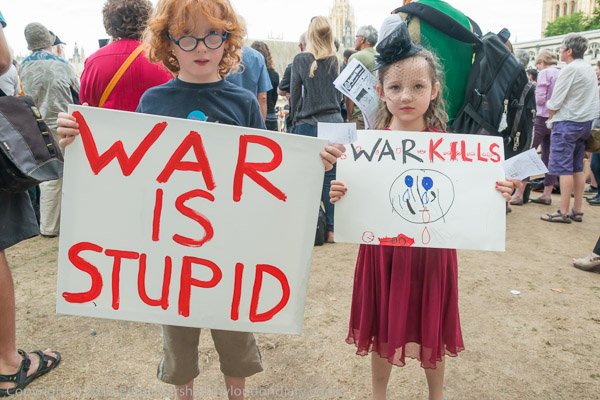
No Glory No More War – Parliament Square, London. Mon 4 Aug 2014


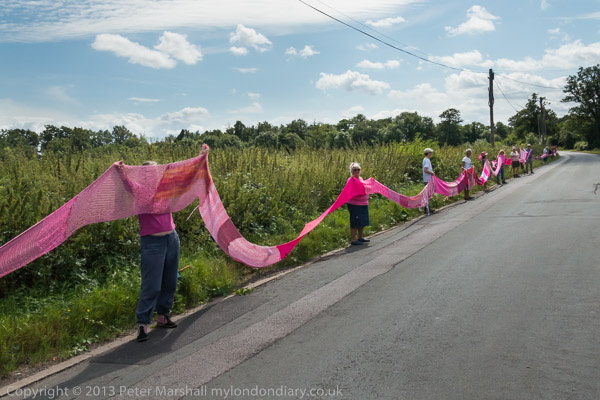
Wool Against Weapons – Burghfield to Aldermaston, Berkshire. Sat 9 Aug 2014


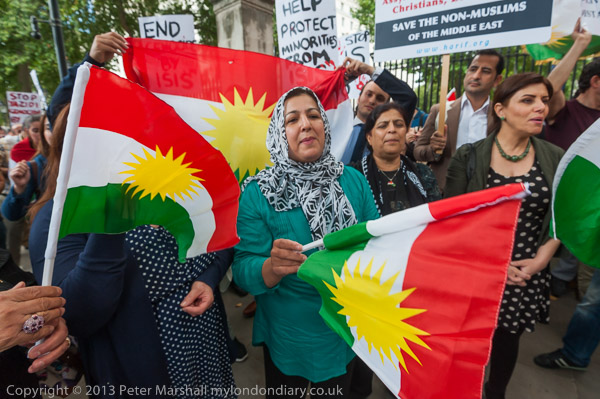
Kurds Protest against ISIS – Downing St, London. Wed 13 Aug 2014


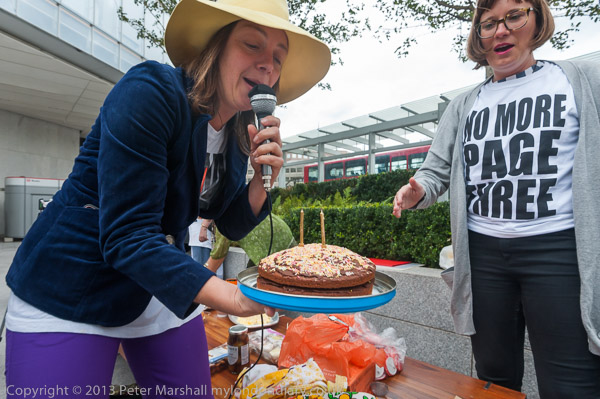
No More Page Three – London Bridge, London. Sun 24 Aug 2014


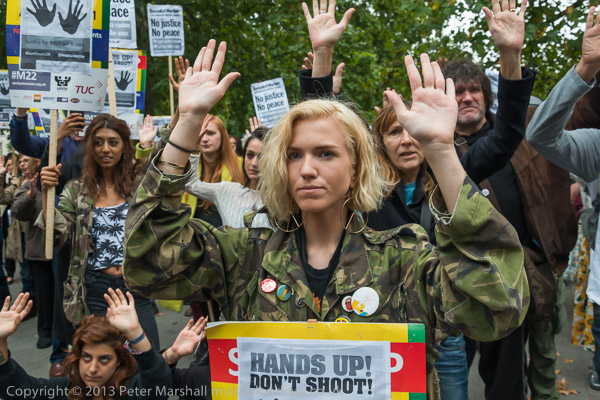
Hands Up! Against racist Police Shootings – US Embassy, London. Wed 27 Aug 2014


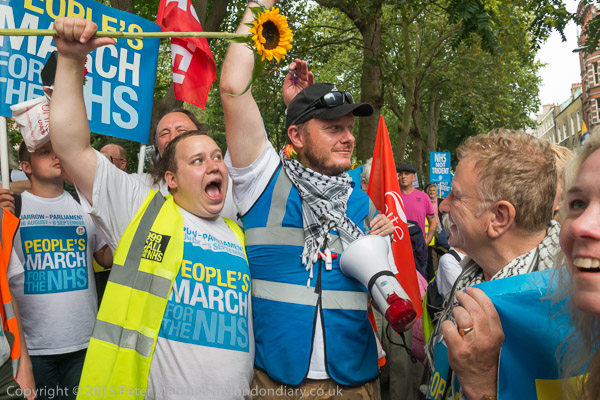
People’s March from Jarrow for NHS – Red Lion Square – Trafalgar Square, London.Sat 6 Sep 2014


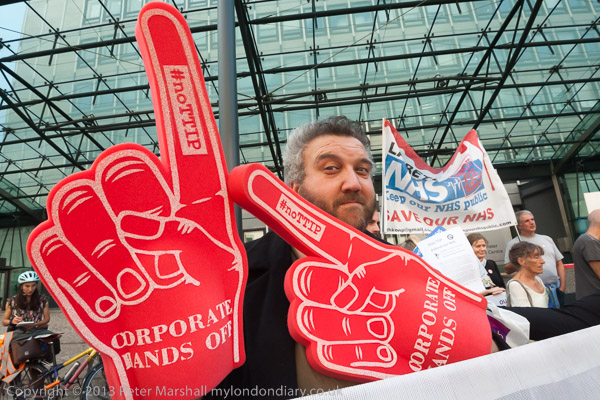
CETA (TTIP) Trade Deal – Dept Business & Skills, London. Fri 12 Sep 2014


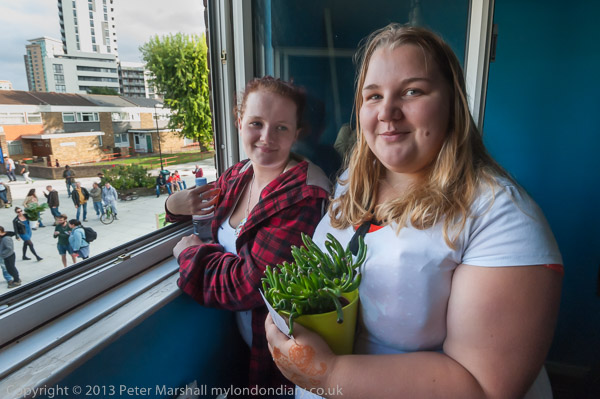
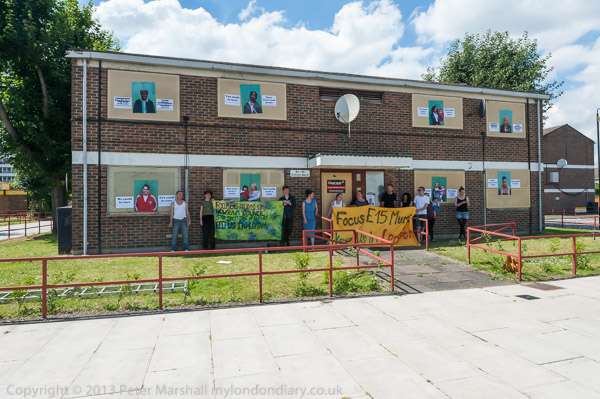
Focus E15 Open House Day – Carpenters Estate, Stratford, London. Sun 21 Sep 2014


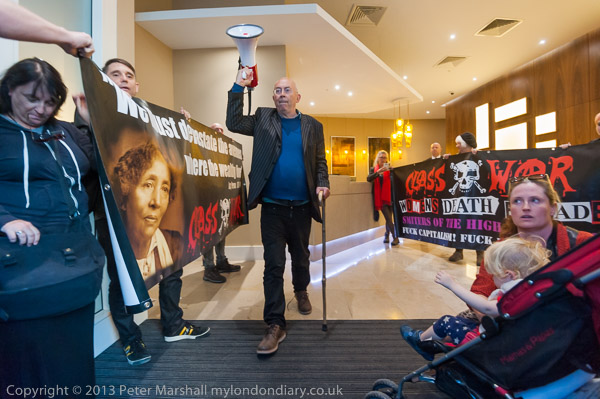
Class War Occupy Rich Door – One Commercial St,Aldgate London. Wed 24 Sep 2014


Class War Poor Doors Week 10 – One Commercial St, Aldgate, London. Wed 1 Oct 2014


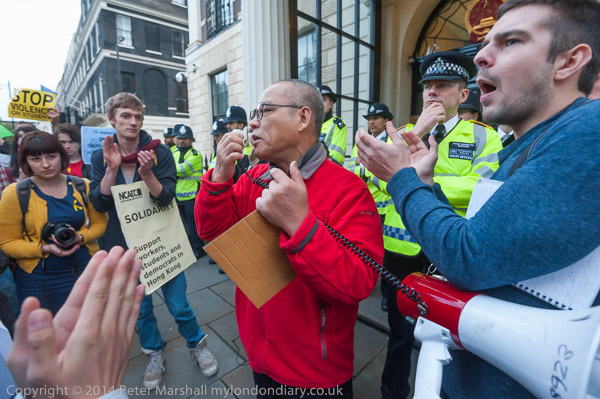
Solidarity with the Umbrella Revolution – Chinese Embassy, London. Fri 10 Oct 2014


Global Frackdown at HSBC – London . Sat 11 Oct 2014


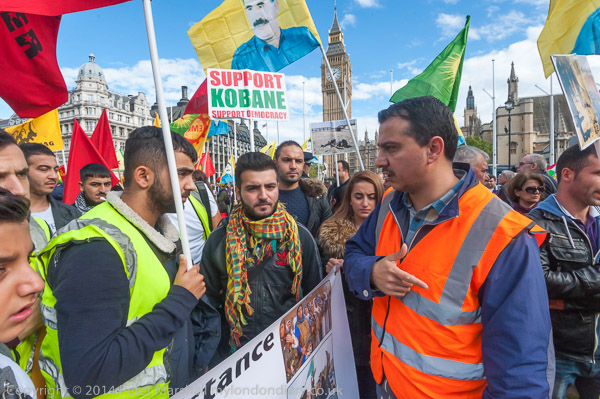
Support the Defenders of Kobane – Parliament Square, London. Sat Oct 11 2014


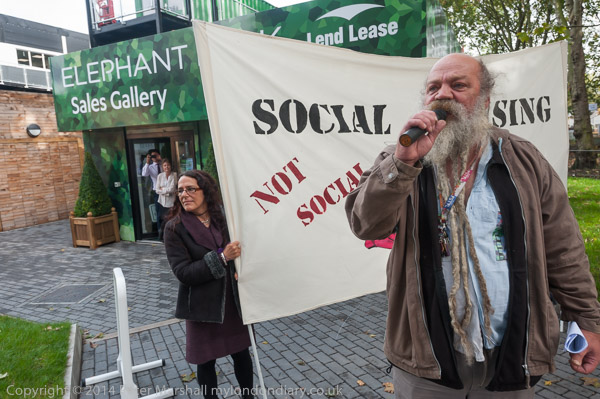
CPOs for Southwark Councillors – Elephant to Southwark Council Offices, London. Thu Oct 16 2014


Just one more set to go….

Looking Back on 2014 – Part 3

Continuing some of personal favourites from the pictures I took in 2014, these are from June to the start of August. As usual the links below the picture will take you to the story on My London Diary.


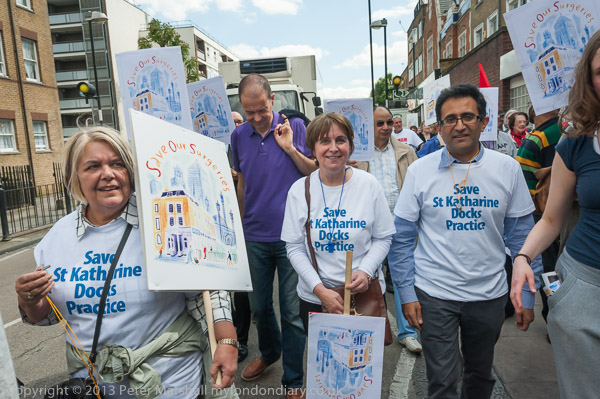
Tower Hamlets – Save our Surgeries – Tower Hamlets, London. Thu 5 Jun 2014


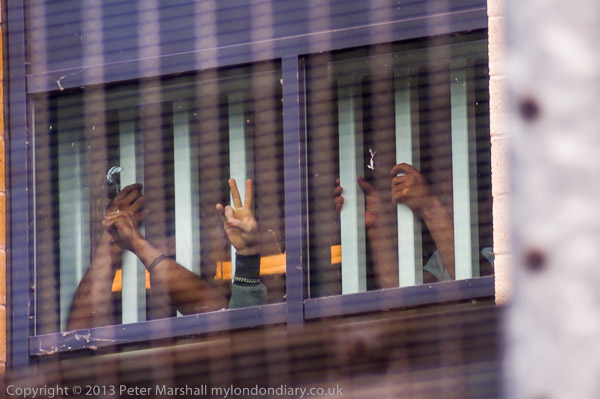
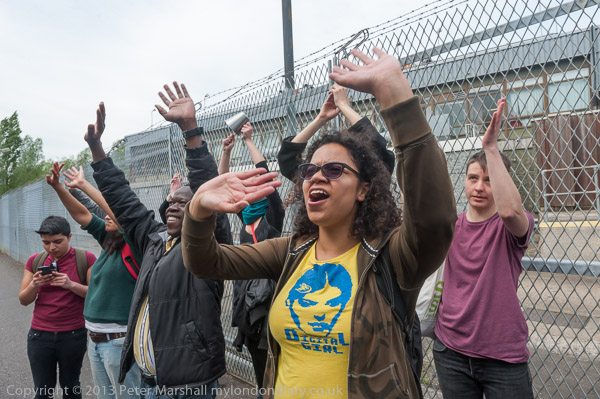
Support Detainees in Harmondsworth – Harmondsworth Detention Centre, London. Sat 7 Jun 2014


Focus E15 Mums Expose Carpenters Estate – Carpenters Estate, Stratford, London. Mon 9 Jun 2014


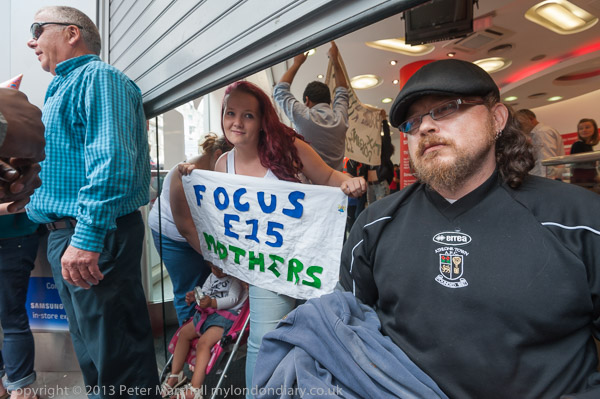
UK Uncut Party at Vodafone – Oxford St, London. Sat 14 Jun 2014


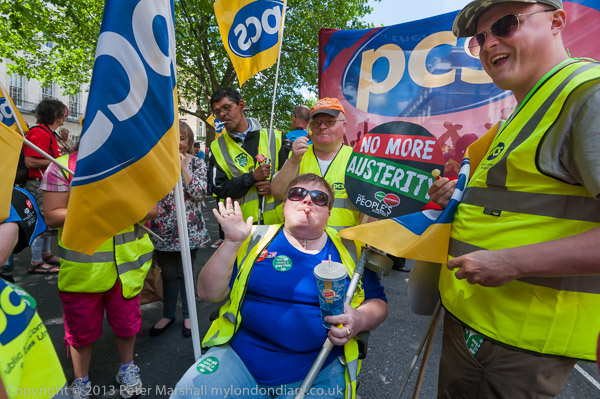
No more Austerity – demand the alternative – London. Sat 21 Jun 2014


Occupy Westminster Abbey – save the ILF – Broad Sanctuary, Westminster Abbey, London. Sat 28 Jun 2014


Independent Living Tea party – DWP, Westminster, London. Fri 4 Jul 2014


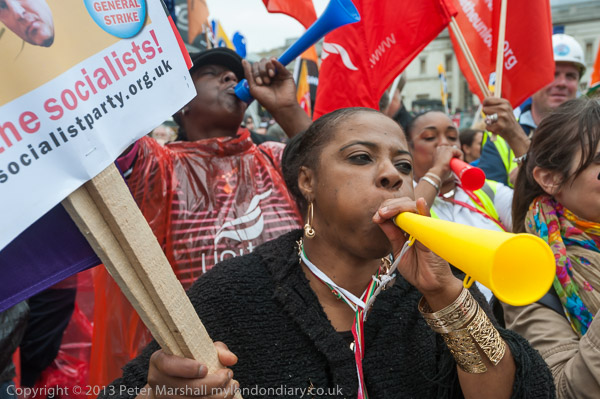
Public Service Workers Strike for Fair Pay – BBC to Trafalgar Square, London. Thu 10 Jul 2014


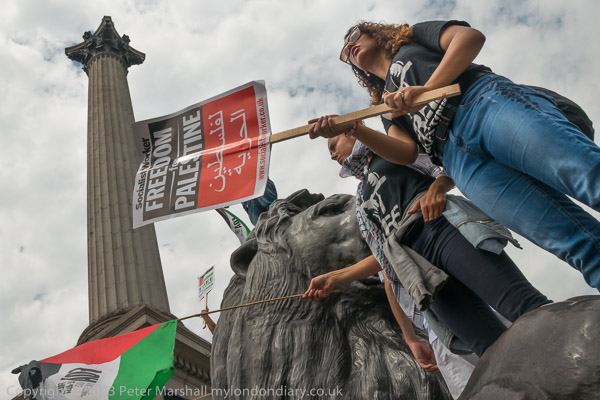
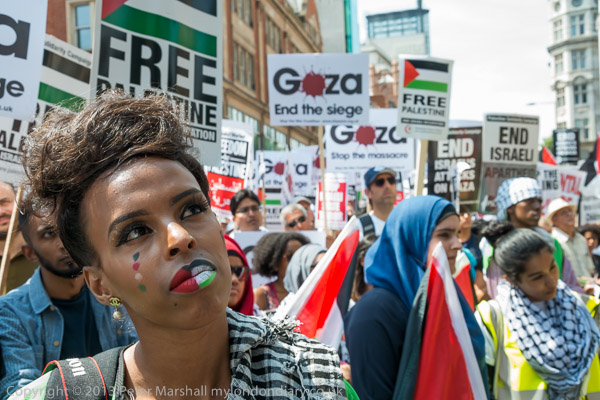
End Gaza Killing Now – Downing St to Israeli Embassy, London. Sat 19 Jul 2014


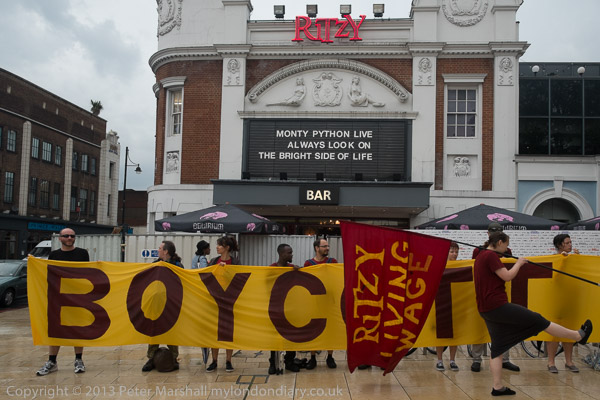
Ritzy workers strike for Living Wage – Windrush Square, Brixton, London. Sun 20 Jul 2014


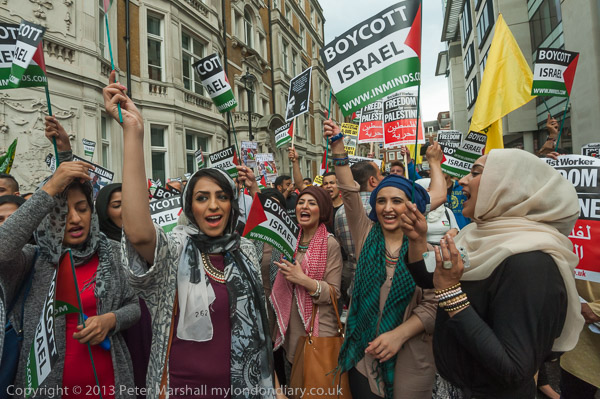
Al Quds Day march for Jerusalem – BBC to US Embassy, London. Fri 25 Jul 2014


Israeli Embassy rally – End Gaza Invasion – Kensington High St, London. Sat 26 Jul 2014


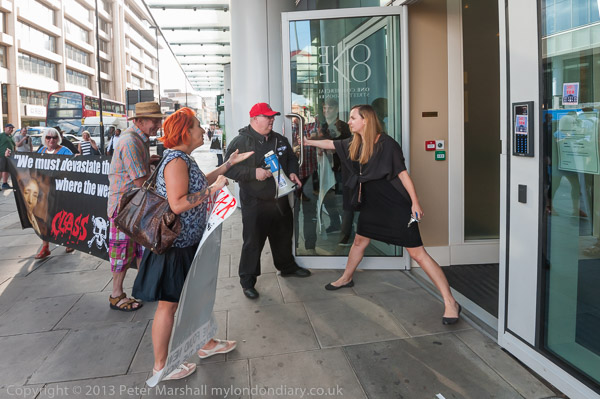
Class War – Rich Door, Poor Door – One Commercial St, Aldgate, London. Wed 30 Jul 2014


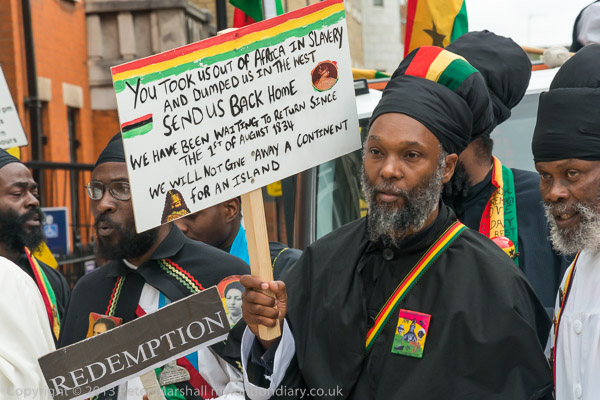
Rastafari demand reparations for slave trade – Windrush Square, Brixton, London. Fri 1 Aug 2014


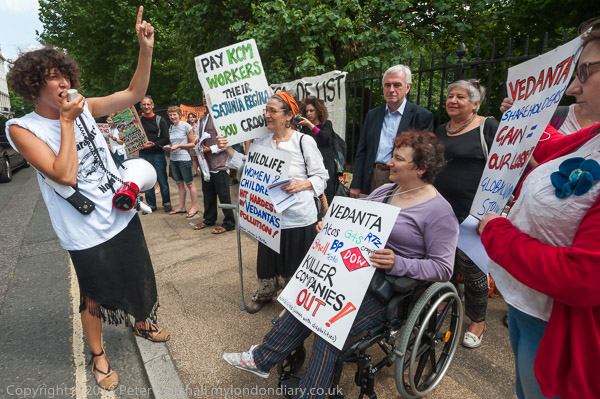
Vedanta told ‘End your killing’ – Lincoln Inn’s Fields, London. Fri 1 Aug 2014

To be continued…

Continue reading Looking Back on 2014 – Part 3

Looking Back on 2014 – Part 2

Continuing my choice of favourite images from 2014.

It’s hard for any photographer to choose his or her best images, and impossible to really view one’s own work objectively. I can’t divorce these images from the people and events and feelings when I made them. There are also some things I photograph out of duty rather than love and which I really don’t want to remember and have avoided selecting.  So these are my personal favourites. Others might make very different choices.

In making my selection – limited to landscape format pictures for the slide show – I also decided against including the portraits of politicians and others well-known to the media, though one or two have crept in. Others who appear here are well-known to those who regularly attend protests that the media usually ignore. I also have not chosen more than a single image from any event.

Today I’m posting the images I’ve chosen from the middle of March to the early in June, in date order:


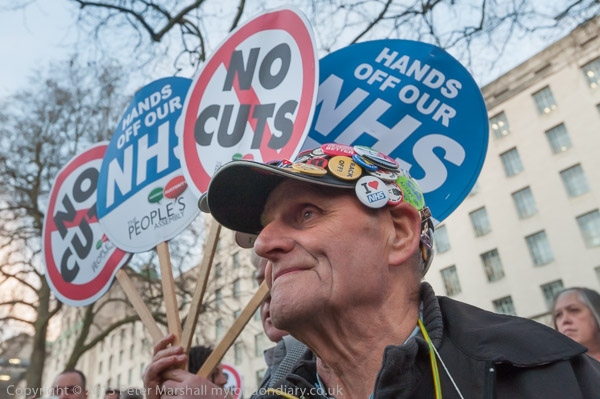
People’s Assembly Budget Day Protest – Downing St, London. Wed 19 Mar 2014


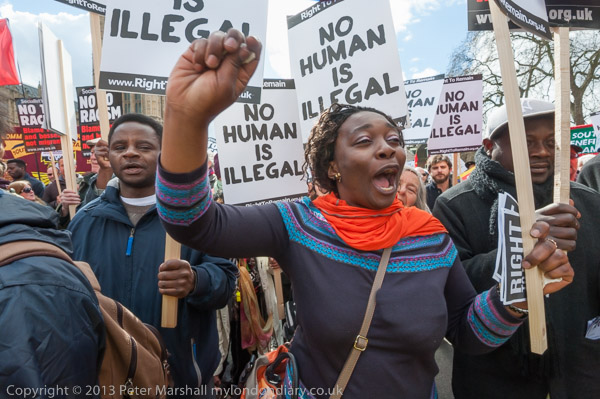
Stand Up to Racism – Westminster, London. Sat 22 Mar 2014


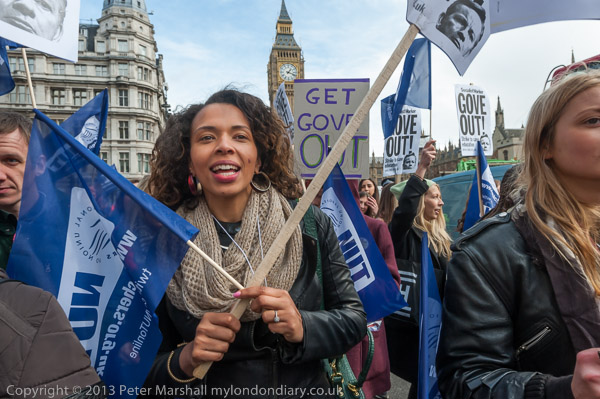
Teachers March on NUT Strike Day– London. Wed 26 Mar 2014


Probation Officers Strike for Justice– Old Palace Yard, Westminster, London. Tue 1 Apr 2014


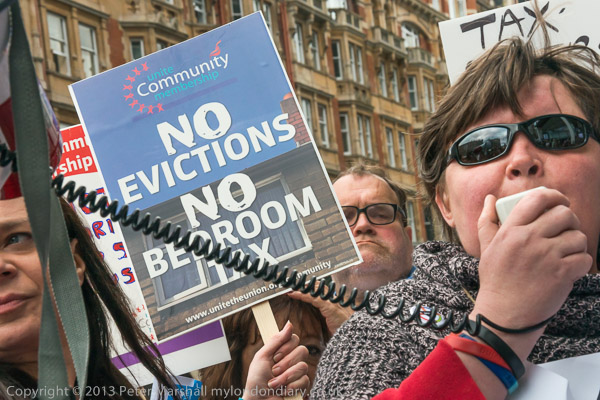
Axe the Bedroom Tax at One Hyde Park– One Hyde Park, London. Sat 5 Apr 2014


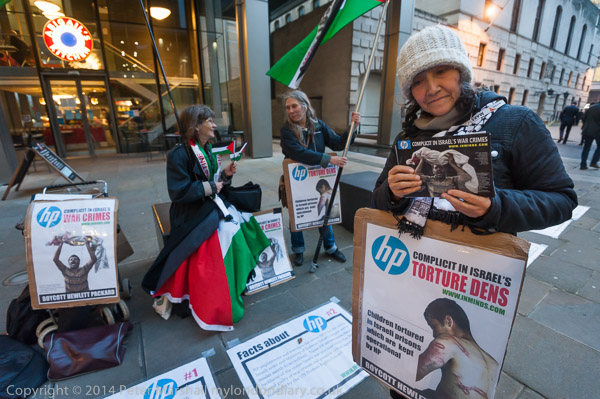
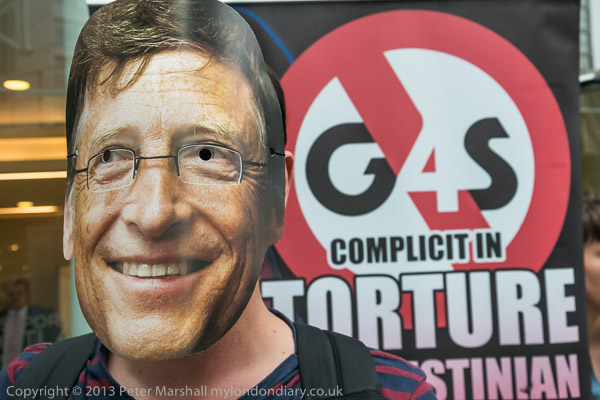
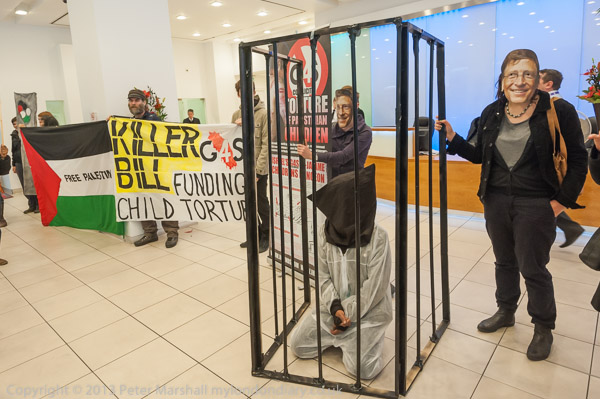
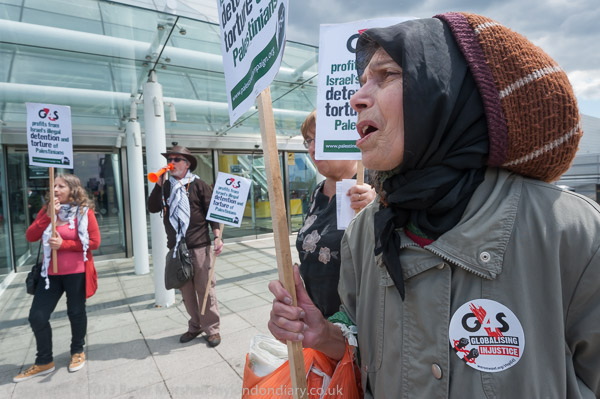
Bill Gates end support of Israeli child torture– Cardinal Place, Victoria, London. Thu 17 Apr 2014


G4S Occupied on Palestinian Prisoners Day– Victoria St, London. Thu 17 Apr 2014


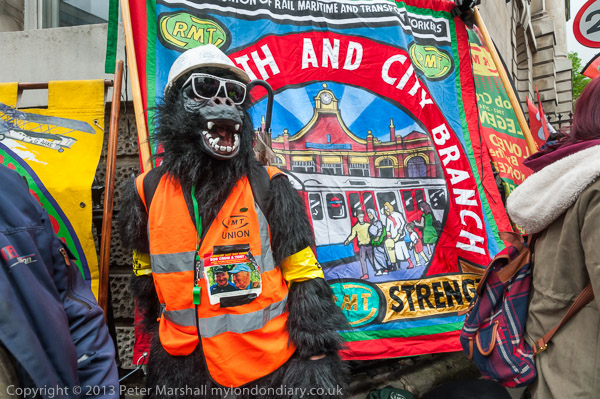
May Day March for Bob Crow & Tony Benn– Clerkenwell, London. Thu 1 May 2014


IWGB Cleaners at Royal Opera– Covent Garden, London. Sat 3 May 2014


Support Harmondsworth Mass Hunger Strike – Harmondsworth, Middx. Mon 5 May 2014


Bin British Gas– QEII Centre, Westminster, London. Mon 12 May 2014


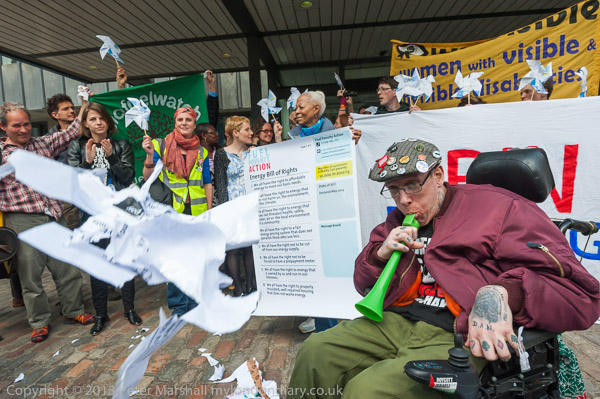
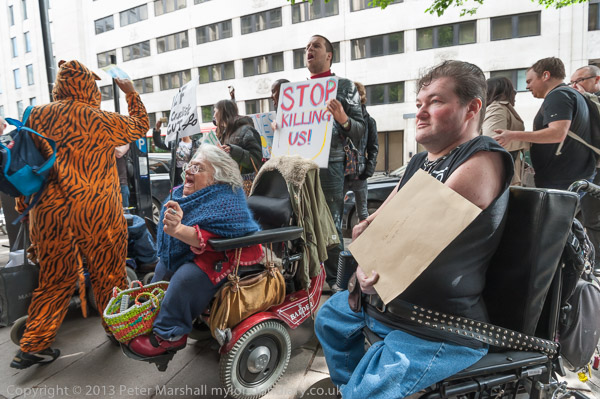
Save Independent Living Fund– Dept of Work & Pensions, London. Mon 12 May 2014


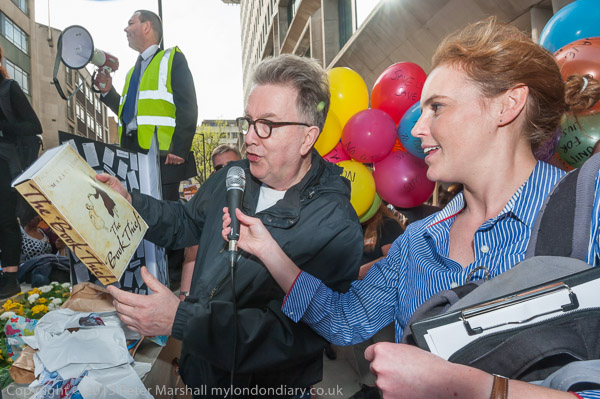
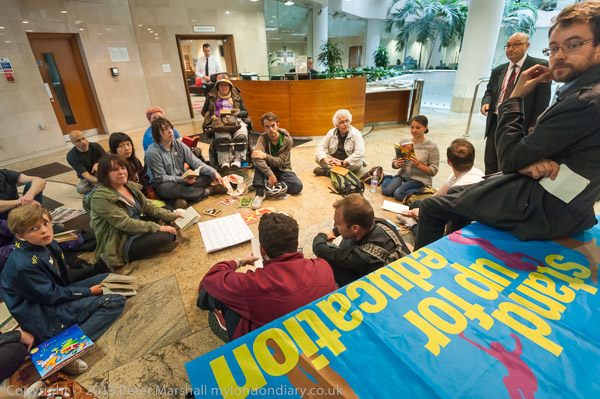
Gove “Read-In” protest in DfE– Department for Education, Westminster. Fri 30 May 2014


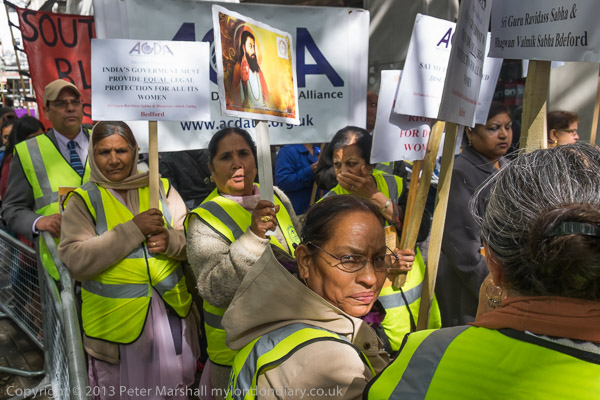
Indian Gender/Caste Violence Victims– Indian High Commission, Aldwych, London. Wed 4 Jun 2014


G4S AGM Protest Against Human Rights Abuses– Excel Centre, Victoria Dock, London. Thu 5 Jun 2014

You can find out more about the events and the people in the pictures by clicking on the links below the pictures.  As almost always on this blog you can also see the pictures a little larger by double-clicking on them when they will open on their own in this window – use the browser back button to return to this page. See below if you want to reproduce or obtain copies of any of the images.

Continue reading Looking Back on 2014 – Part 2