On and Off Photography

Back in the late 1970s when there seemed to many of us that their was a least a glimmer of a photography culture emerging in the UK that might support serious photographers, thanks to the efforts of Creative Camera, the Arts Council  and a few people in education, particularly in the Midlands, including Paul Hill and Ray Moore, we suffered a huge academic land grab which more or less snuffed out that fledgling. Creative Camera degenerated, the Arts Council altered course and many photographers were relegated to obscurity.

Photography was largely sacrificed on the altar of academic respectability, becoming subservient to the word, being relegated to what many saw as its rightful subservience in our logocentric culture. You want a degree you’ve got to read learn a secret language to read deliberately obscured texts and write pretentious essays, never mind the pictures.

The flagship of this enterprise was a curious work, On Photography by Susan Sontag, which came at the top of every degree course reading list. My own copy of this 1977 best-seller soon got into a sorry state from being thrown down at its more ridiculous sentences, its margins annotated with my explosions at her ignorance and misunderstandings, her half-digested regurgitations from earlier sources.

It did make rather a good television programme, which I had recorded and watched several times, and felt to be far superior to the book, not least because in it her thoughts became tied to actual examples, the particular rather than the generalisation.  And perhaps because of the work of a better editor than at her publisher and the more limited canvas available.

It was a book that spawned more books, but never provoked any photography of significance, that led to a whole school of academia that treats photographs as just an abbreviated list of the objects and events they depict, largely dismissing the aspects that make photography an vital and visual medium.

We no longer simply looked at photographs, no longer experienced them, but in that oh so reductive usage, we ‘read’ them. Not that reading photographs can’t give us valuable insights – and it was always a part of looking at them – but it is only a partial exercise, and the visual, expressive, aesthetic aspects were generally dismissed as unworthy of study.

On Photography is a book that should only appear on reading lists for students with a health warning, and one of the best health warnings is provided by an article recently resurrected by A D Coleman, Susan Sontag: Off Photography, originally written by him in 1979 but not published until 1998. In his introduction to this republication, Coleman notes:

Sontag subsequently acknowledged that photography was not her real subject and had simply served her as a convenient whipping boy, and — in Regarding the Pain of Others (2003) — she eventually retracted most of what she’d had to say in her original diatribe.

Regarding the Pain of Others is certainly a far better book about photography, and the photography of war in particular, but I don’t recall ever seeing it on the reading lists for photography students. Perhaps it should be, replacing her ‘On Photography‘.


LSE sprayed with chalk

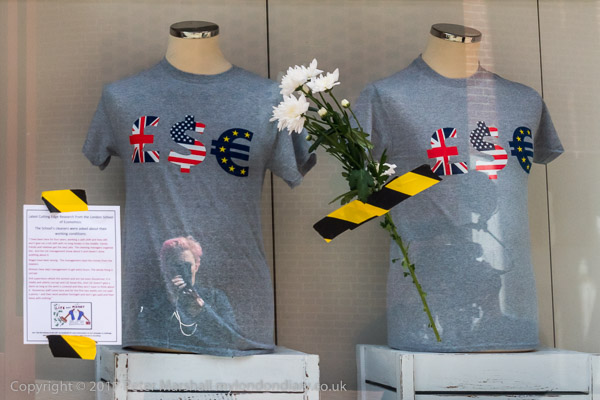
The t-shirt for sale in the university shop at the LSE, pointed out to me by Lisa McKenzie, then an academic working at the LSE and who can be seen photographing the shop window, seemed to be a rather too accurate reflection of the current priorities of the institution, with its message ‘£$€‘ , though perhaps these days it should also somehow include ¥ and .

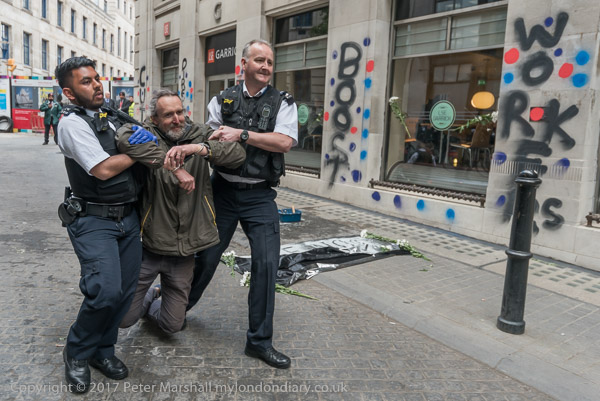
I was at the LSE for a protest by students and workers in the ‘Life Not Money’ campaign  who were calling on the LSE to change from what they say is thirty years of growing neglect, cruelty and outright corporate greed towards workers and staff at the school to something beautiful and life affirming. In particular the contrasted the high salary of the director – said to be around £500,000 a year  – with that of the lowest paid workers such as the cleaners who are paid less than the London Living Wage and have unpaid breaks and are bullied and treated as second-class citizens.

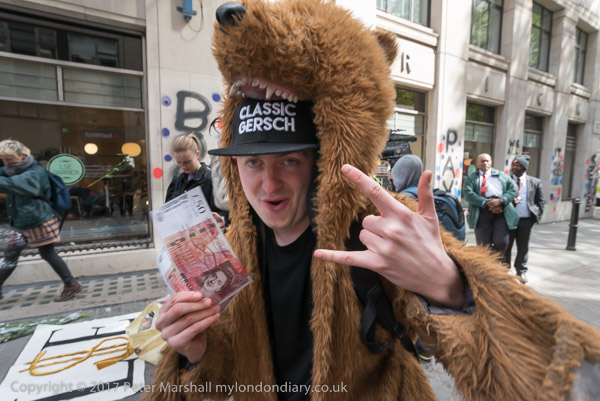
While the cleaners’ trade union, the UVW, has been taking action with a series of demonstrations and strikes, Life Not Money have decided a more effective method is to use more colorful direct action with the deliberate intention to get some of their supporters arrested. It’s an approach that does seem to have worked in other disputes.

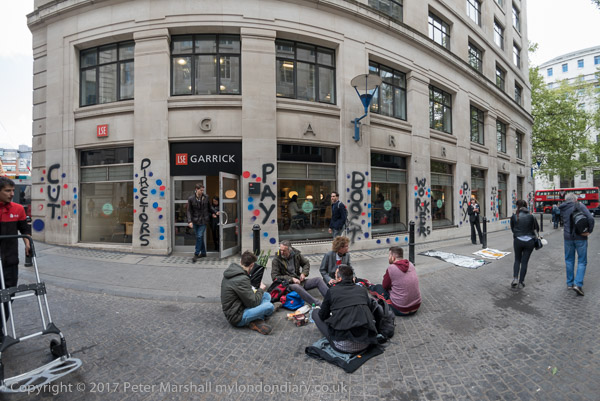
I was a little aggrieved that after having been invited to photograph the event I was left photographing what was an action intended to divert the LSE security while the actual direct action of writing and drawing on the wall of one of the university buildings in nearby Houghton St actually took place. Perhaps this was just an oversight, but by the time I got there, the writing was already on the wall:

‘Cut Directors Pay Boost Workers Pay We All Know it Makes Sense’

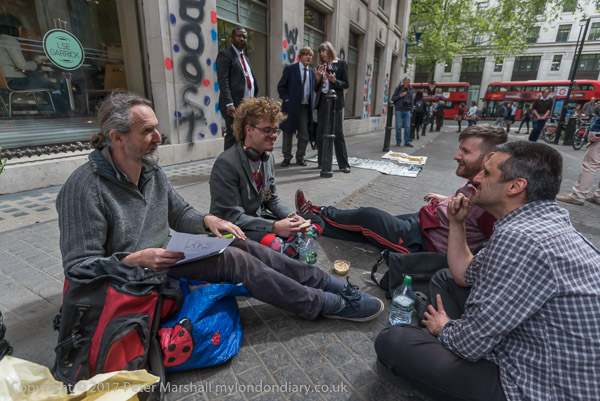
and those who had done it were sitting quietly having a party and waiting patiently to be arrested.

It wasn’t real paint that had been used, but spray chalk, and there was no actual damage to the wall, just to the image of the LSE and the pride of its security team who had failed to stop it.  The protesters had even brought along damp sponges and offered to remove the writing but security and police were not prepared to allow them to do so.  It’s hard to see that writing on a wall with chalk that can easily be removed with a damp cloth could be seen by a court as ‘criminal damage’ – which the LSE alleged and police arrested the writer for.

Increasingly arrest and a period of often up to 18 hours in police custody – they like to release people in the early hours of the morning when little or no public transport is running – is being used as a minor punishment by police for offences where there would be little chance of securing an actual conviction, and where often no charges are made. And in some cases police release people on bail with conditions intended to prevent further protests, such as banning them from the area where they were arrested, often for several months, though this appears to be unenforceable. And property, sometimes including clothing, may be taken as ‘evidence’ for cases that stand little or no chance of coming to court – and is sometimes lost by police.  It seems to be a little procedural bullying which has no basis in law, and for which some have managed to receive compensation.

In this case the police didn’t seem unduly worried about the apparent crime, and they kept the four perpetrators waiting for over an hour before they arrived to arrest them – and I’d almost given up waiting and gone to catch my train home.

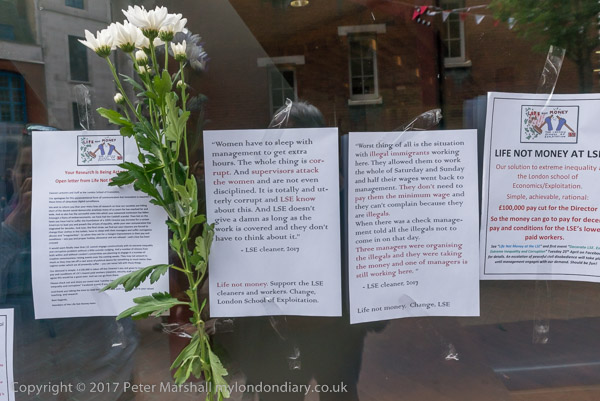
Among the allegations from cleaners employed by Noonan for the LSE on the posters that students posted:

“Women have to sleep with management to get extra hours. The whole thing is corrupt. And supervisors attack the women and are not even disciplined … LSE know about this. And LSE doesn’t give a damn so long as the work is covered and they don’t have to think about it.”

“Worst thing of all is the situation with illegal immigrants working here … half their wages went back to management. They don’t have to pay them the minimum wage and they can’t complain because they are illegals. When there was a check management told all the illegals not to come in on that day.”

These are the crimes that police should be investigating, not protesters chalking on walls.

More at: LSE decorated against inequality & corruption

Continue reading LSE sprayed with chalk

Remember Paris

I’m not exactly sure why I’ve stopped going to Paris Photo. The last time I was there was five years ago in 2012; I’ve not even visited the city since, though I used to go there fairly often outside of Paris Photo. It is only a short journey on the Eurostar, and a comfortable one, so much better than air travel, and although there is still something of a hassle to go through customs and security, there is rather less wasted time.

Though I loved going to Paris, and there was always something interesting to see in Paris Photo, there was also an awful lot of walking around the show, and a great deal of what seemed to me worthless photography, mainly printed huge and with truly stratospheric price tags. Much of it appearing in the same galleries year after year (though sometimes they were different pictures that looked the same.) And even the work that was truly worth seeing was often still on show the following year and again the next time.

Although at first I went three years running, I soon decided every other year was enough, and chose those years when there was also a great deal of photography on offer outside of Paris Photo, with seemingly the whole city given over to le Mois de la Photo and le Mois de la Photo-OFF. But for 2017, the artistic director of le Mois de la photo, François Hébel decided to rename it le Mois de la photo du Grand Paris and to hold it in April rather than November – and the fringe also took place then.

April would have been a better month to go to Paris, likely to have better weather and certain to have more daylight, but I wasn’t organised enough to make it this year. It would be great to go, particularly for the Photo-OFF, which is a far more inclusive event. At Paris Photo if you are not a wealthy collector or a well-known photographer or curator you are something of an outsider and a second-class citizen, and a few of the dealers certainly it too clear. While at the various openings and events of the Photo-OFF, photographers (and others) are welcome, though my largely forgotten schoolboy French does sometimes make communication difficult. At Paris Photo the language is money, ruled by the dollar in American English.

I’ve sometimes made a small effort to brush up my French, but largely rely on the services of Linda to go to events outside of Paris Photo, though one year I did go on my own, and found it just a little difficult at times. And on my last visit in 2012, she came with me to all of the six openings I attended and was also invaluable on the one parcours guidée we managed ot fit in, which took us to eight venues of the Photo-OFF, at most of which there were talks by the photographer or gallery owner about the work. She also came with me to almost half of the other shows I saw that week – I think the total was over 80, but still had some time off to go to other things without me. There would have been a few more but for a nasty stomach upset towards the end of our stay which rather curtailed my activities.

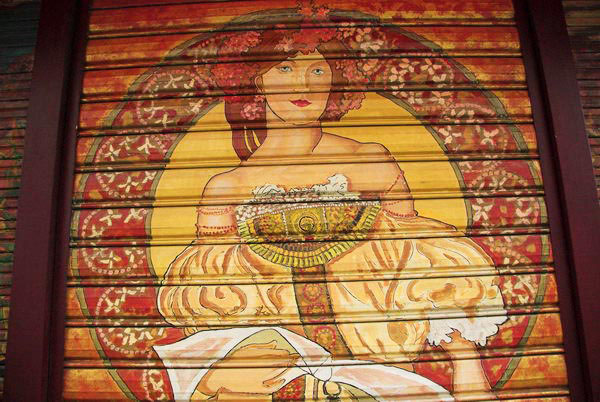
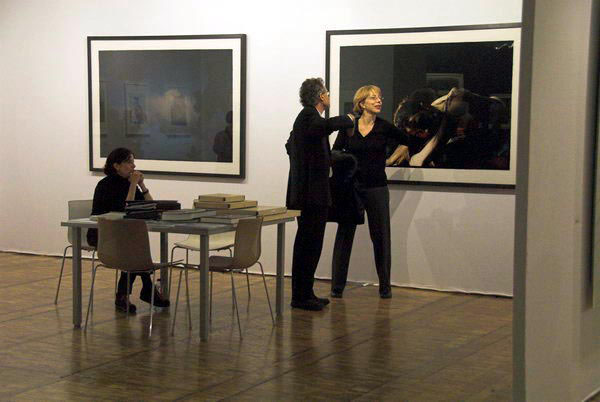
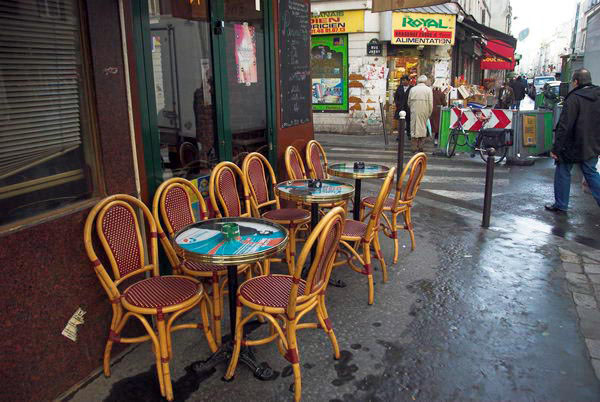
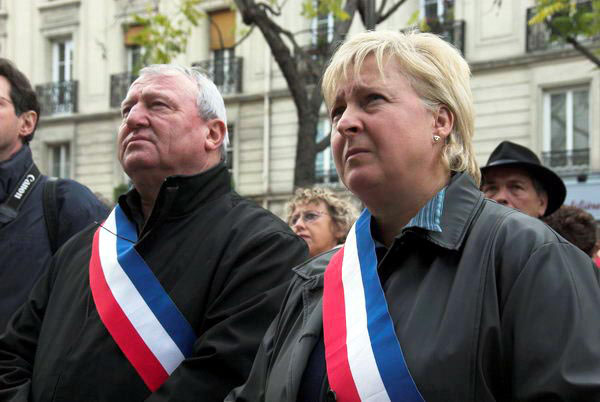
You can read more about that trip – and see some of the pictures I took in our six days there – on My London Diary. The pictures on this post are from my 2006 trip to Paris Photo and you can see more on my Paris Photos site.

But don’t worry if you, like me, don’t make it to Paris Photo this year. You can see the best of it on-line at various sites, including LensCulture, which has Your Guide to Paris Photo and links to more about it.

Continue reading Remember Paris

Hull Photos: 6/10/17 – 12/10/17

Another week of pictures added to my Hull Photos site – one per pay throughout Hull’s year as 2017 UK City of Culture. You can follow these daily on Facebook – and of course on the Hull Photos site, though the comments do not appear there – I hope to get comments and corrections to them before adding them. Your comments are welcome here or on Facebook.

6th October 2017

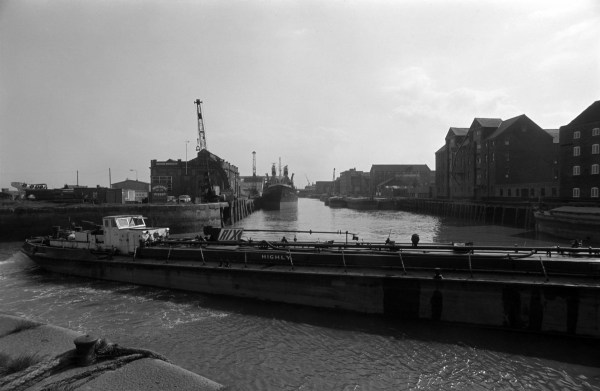
Rix tanker Beldale H, here backing further into the Drypool Basin entrance swinging area. Small tankers such as this transferred oil for large vessels in the King George V dock or other ports along the Humber Estuary or through Goole.

Beldale H, a 300 ton estuary and inland waterway barge was built by Harkers in Knottingley in 1959 and was later renamed Rix Osprey. Rix is a family firm begun by Captain Robert Rix; born on a farm in Norfolk in 1841, he ran away to sea when he was 10, later becoming a captain and setting up a shipbuilding company on the Tees in Newcastle in 1873. Ten years later he moved with his wife and seven children to Hull, where he continued to work for the firm until the day before his death in 1925. The firm developed to have wide interests in trade of lamp oil from Russia and later oil for tractors, heating etc, as well as shipping timber in and caravans out of Hull, agricultural distribution, haulage and more. As well as the Rix Petroleum site with a wharf on the River Hull and storage across Wincolmlee, from 1977 to 2012 they also owned Hepworth Shipyard Ltd at Paull a few miles down the Humber north bank.

The best-known member of the family, Brian Rix (1924-2016) noted for having trouble keeping his trousers up on stage, but also a notable campaigner on learning disability both before and after entering the House of Lords was a grandson of Robert Rix. Knighted for services to charity in 1986 he became a life peer in 1992.


85-5h-35: Beldale H at Drypool entrance swinging area, 1985 – River Hull

5th October 2017

By 1985, this shop had abandoned its earlier Royal Wedding window display I had photographed in 1981 and was back to basics – 4 toilet rolls for 52 p and cans of soft drinks.


85-5h-41: Shop window display, Church St, 1985 – East Hull

7th October 2017

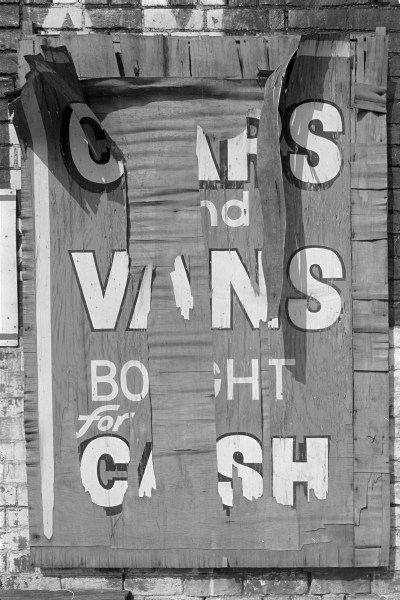
Somewhere on – or just off – the Holderness Rd was a used car dealer with this peeling message on a window.


85-5h-53: Cars and Vans Bought for Cash, Holderness Rd, 1985 – East Hull

8th October 2017

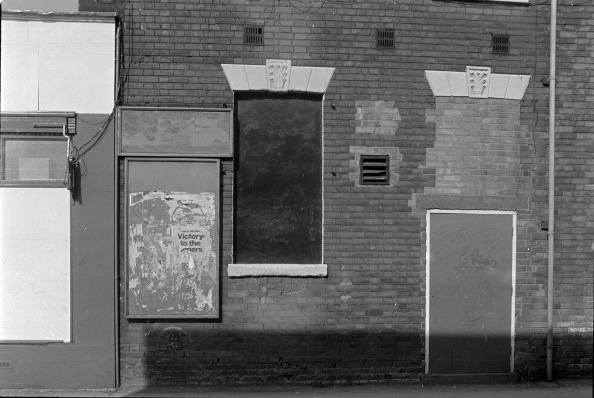
Just a few yards down a street leading off from Holderness Rd was an unusual display of rectangles – empty notices, blocked windows and doors, some bricked up and ventilation. And just one message: “Victory to the miners”. Their strike had ended in defeat two months earlier


85-5h-54: Victory to the miners, Holderness Rd, 1985 – East Hull

9th October 2017

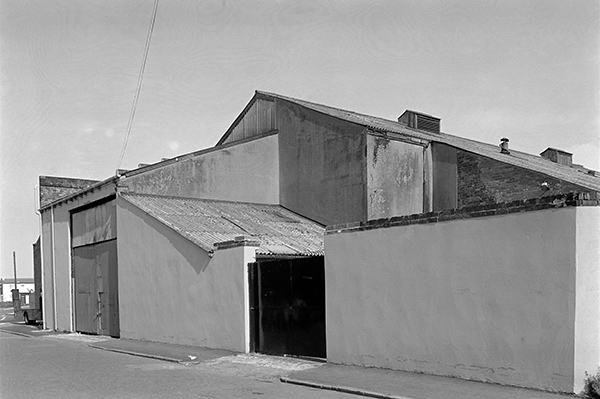
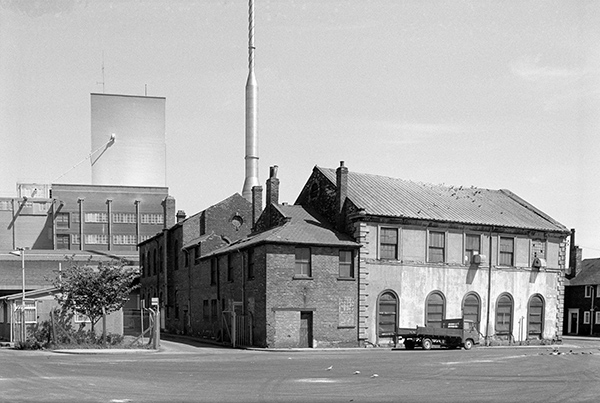
This rather unusual complex of interlocking buildings were on Church St, on the south side of the road just to the west of end of the road at the junction with Naylor’s Row/Marvel St and Strawberry St.

The site is just to the west of Paling Joiners, roughly opposite East St and I think the larger building at the back of the picture is possibly still there, perhaps with some alteration (or replaced by a similar building), though the rest has gone, and a thick hedge obscures the view.

The white building in the distance is the Kingston Arms, though rather closer to me just out of picture is The Blacksmith’s Arms, now closed and put up for auction last year as “a fantastic development opportunity.”


85-5h-55: Industrial site, Holderness Rd area, 1985 – East Hull

10th October 2017

Hull had many windmills in earlier years and around 30 are listed within the city boundary on Wikipedia, though most were demolished before the start of the 20th century. This mill appears twice on the list there and is, so far as I’m aware, the only one that remains in Hull, as The Mill public house on Holderness Rd, opposite East Park. There are of course quite a few in the surrounding area, including one at Skidby, said to be the last working mill in East Yorkshire.

This mill was restored in the late 20th century and is a Grade II listed building, as too is the public house, The Mill, adjoining it. It now has a cap and sails.

The mill had been disused for many years. A 1928 photograph shows it in a similar condition to my picture with a large advert for the Hull Daily Mail painted on it and a board for the business premises of W Lockwood in front of it. It could be the same board as was there when I took my picture but the name had change and now ended in OWEN with telephone number 783516. The remains of several advertising messages are dimly visible, one perhaps for a brand of Stout, and in front of the image are a number of blank headstones in what was presumably the yard of an monumental mason.


85-5h-64: Windmill, Holderness Rd – East Hull

11th October 2017

Carr St, off Scott St, was demolished to provide further parking for the Maizecor mill on Wincolmlee, although a downturn in business probably meant it was never needed. The building at right is the Scott Street Methodist Chapel of 1804, from around 1910 the printing works of Mason & Jackson Ltd, and at the centre of the image, along what had once been Marsh St were the buildings of the Sculcoates Relief Office.

The story of this chapel and the failure of attempts to get it listed in the 1990s are told by Paul Gibson and the buildings were all demolished in 2001. The extended lorry park this provided was always more or less empty when I went past.


85-5i-14: Carr St, 1985 – River Hull

12th October 2017

A young man smiles as I take a picture of him sitting on his horse-drawn cart on Bridlington Avenue in front of the works of Rose Downs and Thompson Ltd.

I’ve written earlier about Rose Downs and Thompson Ltd, iron-founders and manufacturers of oil mill and hydraulic machinery, and their pioneering work in the UK building their listed 1900 factory extension (not in this picture) and the bridge on Cleveland St using the Hennebique ‘ferro-concrete’ system.


85-5i-21: Rag and Bone man, Bridlington Ave, 1985 – Beverley Rd


You can see the new pictures added each day at Hull Photos, and I post them with the short comments above on Facebook.

Comments and corrections to captions are welcome here or on Facebook.
Continue reading Hull Photos: 6/10/17 – 12/10/17

f8 and Be There, plus …

f8 and Be There‘ is a famous quote attributed to ‘Weegee‘, the New York press photographer Arthur Fellig whose brutal flash-lit exposures documented the seedier side of the city’s life and crime in the middle years of the last century, and is often quoted as the maxim for photojournalists and street photographers.

Weegee got to many crime scenes before the police, not because he used a Ouija board as the nickname implied, but at first because he hung around in the Manhattan Police Headquarters and watched the teletype, rushing out to take photographs when a crime report came in. He started without any police permit, but from 1938 because he was the first journalist to get permission to have a police-band short-wave radio, which he kept in the boot of his car along with portable darkroom facilities. He would get to the location, rush in with his 4×5″ Speed Graphic camera and bulb flash, take a picture, develop and print the sheet film, stamp the back with ‘Credit Photo by the Famous Weegee’ and have it at the newspaper or agency hours before other photographers.

Despite the quote, Weegee seldom if ever worked at f8. You needed greater depth of field for his work, and he would generally have his camera set at f16, with the focus at 10 ft and the shutter speed of 1/200th, probably the fastest speed to synch the flash bulbs with the lens he used. It worked, and he didn’t have to think about technique, just get in the right place and press the button.

Of course not everything needed to be done at such a rush, and despite the impression of naked emergency given by the flash and the often slightly dynamic framing, as with other newspaper photographers many of his pictures were posed. He was a photographer who knew what he wanted and made sure he got it.

Photojournalist‘ is an overused term in photography, as too is ‘street photography‘and I don’t think Weegee was either, but essentially a news photographer. His work was certainly effective and his simplified technique worked well.

Much of the time many professional photographers now use the ‘P’ setting on cameras, often derided as for amateurs and newbies (including by me in years long past.) It generally works well and enables you to concentrate on framing and content and let the camera get the exposure more or less right. And should you need a faster shutter speed or greater depth of field a control dial is there under your finger or thumb to give it – and automatically adjust the other exposure parameters (these days we can use shutter, aperture and ISO) to retain correct exposure in P* mode. Though should you be using flash (other than for fill), S seems to be a better choice, at least with Nikons.

‘f8’ simply means the technical side of making an image, not the literal aperture, though I often do work at f8, though in winter more often at f4, or whatever the maximum aperture of my lens is, stopping down one or two stops if light allows – or for greater depth.

‘Be There’ is of course a sine qua non, but it isn’t sufficient. To make good pictures you have to be in the right position – sometimes with almost millimetric precision, with the right lens and the right framing. Often there will be dozens of photographers at an event, but only one will get a great image. Even good photographers take plenty of pictures that are marketable without being of any great merit, and many feel that if they get paid that’s all that matters. It’s one area where I find myself in agreement with Ofstead; when taking pictures, ‘satisfactory‘ isn’t good enough.

But ‘f8 and Be There’ still isn’t enough, though it may make for the financially successful newspaper photographer – so long as they can also get the pictures in before the next photographer. Perhaps the word I’d choose to add is ‘attitude‘. It’s what you need to have to know which is the right place, the right framing and the right moment, even if you may not always be able to catch it (for that you usually need a little luck as well.) Unless you have a point of view how can you know how to express it through your pictures?

Though it may well not help you financially. When Kertesz went to the USA in 1936 attracted by an offer from the Keystone agency, the editors complained his images “speak too much” and they soon parted company. In his pictures Kertesz said he interpreted “what I feel in a given moment, not what I see, but what I feel.”

You can see some of the best of last year’s press photography in London now at the Royal Festival Hall, where the 2017 World Press Photo Exhibition is on show – free to view – until 20th November 2017.

Scientists for Science

It’s hardly a surprise that scientists are in favour of science. What is surprising is that so many people – and those with most power and responsibility including our political establishments here and in the US seem not to be. Our BBC, largely the voice of the establishment, maintains its pretence of impartiality by giving climate denying lunatics like Lord Lawson the same or greater prominence as climate scientists, and Facebook and the web are full of miracle cures for cancer.

Rather than listen to the experts, to those whose ideas are based on science, we distrust them. It seems likely to be our civilisation’s undoing in the not to distant future. I’m fairly sure our planet will outlast my lifetime (at least if people keep Trump away from that red button) but far from convinced for my grandchildren’s future.

Part of the problem is that many things that have little or no scientific basis set themselves out as science – and a prime area is of course economics, which seems to apply mathematics to derive results which are simply reflections of the premises of whichever school is involved.

Science isn’t really like that, though perhaps sometimes in minor details it can be mere speculation. The most basic necessity of any scientific theory is that it could be proved to be wrong and can survive such attempts. It’s good to be able to prove things are right, but necessary to be possible to prove them false.

Our particular culture in Britain has been one based on an education in the Classics and on the primacy of the word. In the beginning was the word, and for the rest of the way too, with numbers and playing with real stuff being relegated to the rude mechanicals. And we’ve shut them away in labs where they have done remarkably well, perhaps at least in part because they are away from the distractions of talking to the rest of us.

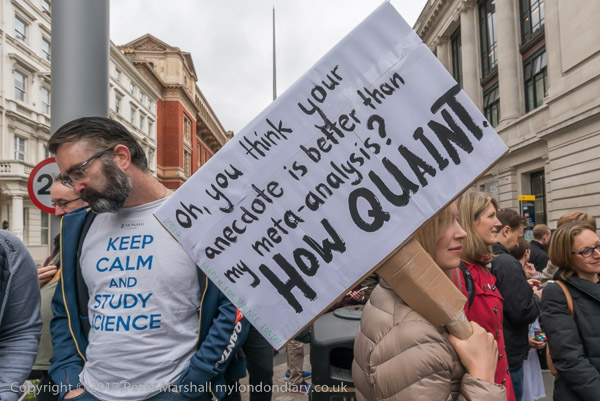
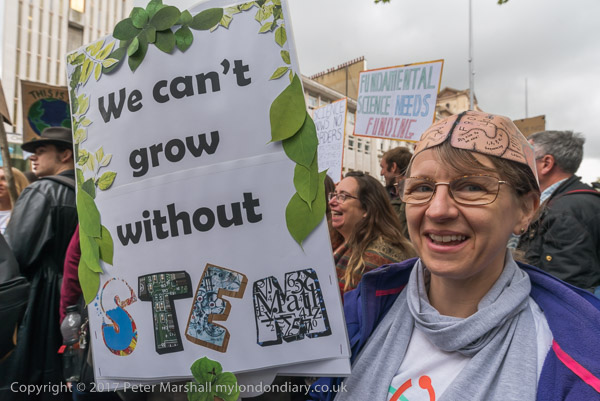
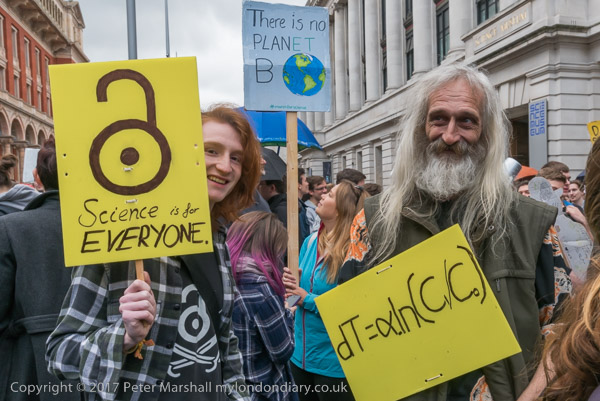
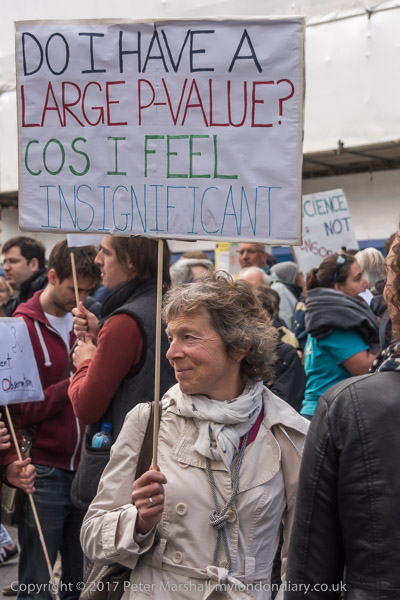
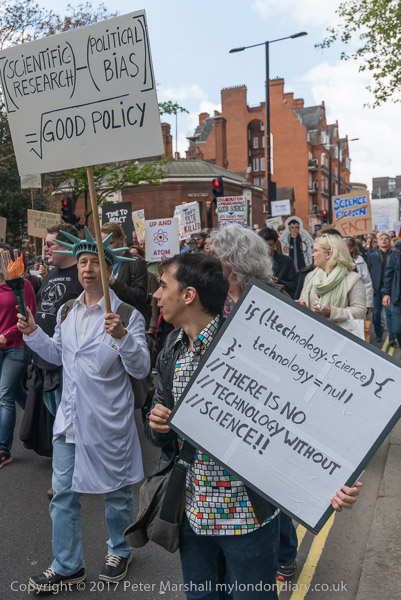
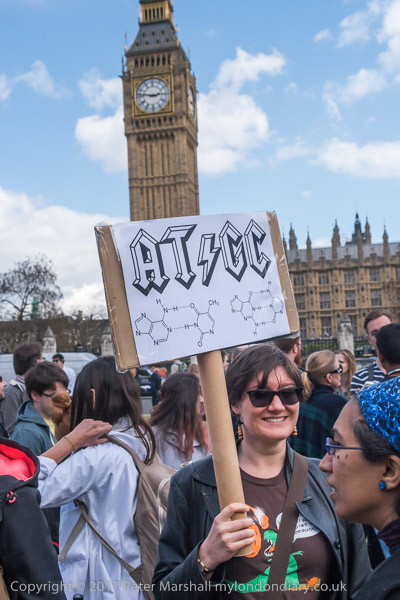
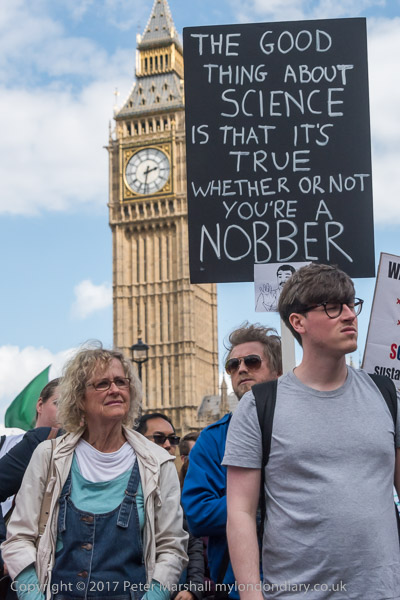
What can one make of a protest in which placards read ‘Do I have large P-value? Cos I feel Insignificant’ or ‘dT=α.ln(C1/C0)’? I have a couple of science degrees and had some idea about the first but had to go and ask about the second.

Scientists march for Science
Scientists Rally for Science
Continue reading Scientists for Science

Save Latin Village

Our system of local authorities is a mess. But worse than that it has largely become dysfunctional, often working against the interests of the population it is meant to serve. We seem to have lost the local pride that led to the great municipal developments of the late Victorian era, and which one still sees across the Channel, and councils seem to have morphed into businesses serving their own ends.

The Latin Village which has grown up around Seven Sisters Indoor Market is a thriving and vibrant community, a community asset that any local council should admire and encourage, and be proud of. But Haringey Council want to destroy it.

The block stands on a prime site on top of Seven Sisters Underground Station and on the area’s major road. So the council want to make property developers rich by replacing it with expensive flats and chain stores, profiting investors at the expense of the community. It’s something that you might expect of some sleazy and corrupt administration in a country with a bent administration, and that is exactly what it is, though the council runs under the Labour label. Italian anti-mafia expert Roberto Saviano recently called the UK ‘the most corrupt place on Earth‘, and we have a legal, political and law enforcement system that has developed over the years to protect ruling class interests and the corrupt financial system that powers the City.

It has been a long fight by the community against the council, and back in 2008 they gained the support of the then London Mayor Boris Johnson, who forced the council to think again. They did and came back with the same answer – knock it down, destroy the community and replace it by a bland block with housing for the wealthy and chain shops just like those on any other high rent high street. And big profits for their friends the property developers.

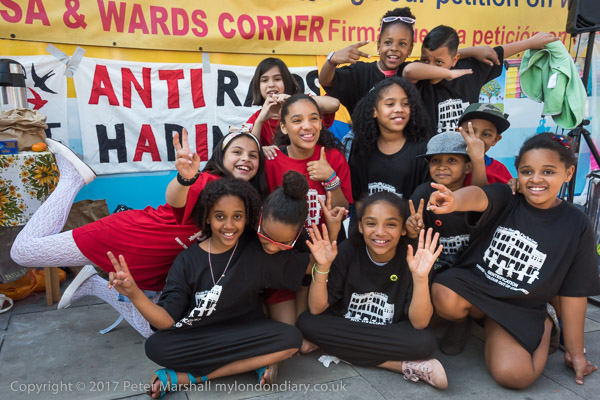
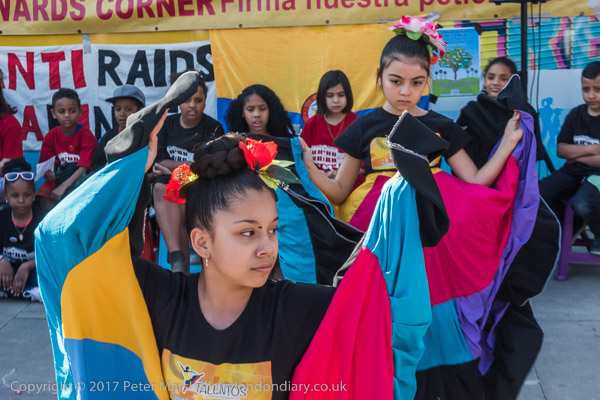
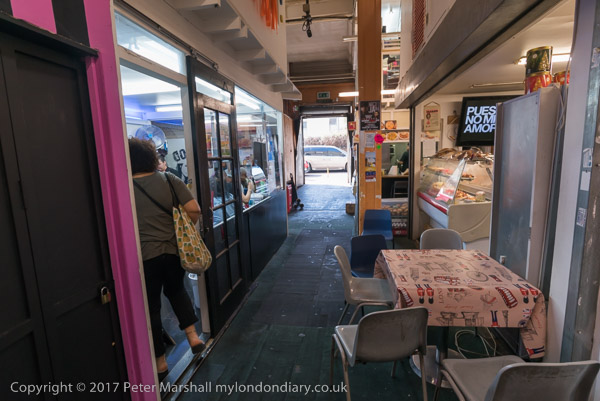
It was a lively afternoon, with speeches and music and dancing. I took a few minutes to go inside the Indoor Market, which I’ve only walked past on the outside before, and was amazed. So many people, so many shops, so much life. But I didn’t want to miss what was happening outside, so I didn’t stop to take pictures, meaning perhaps to go back later, though I’ve not yet done so, though I have since seen some good images and video by others.

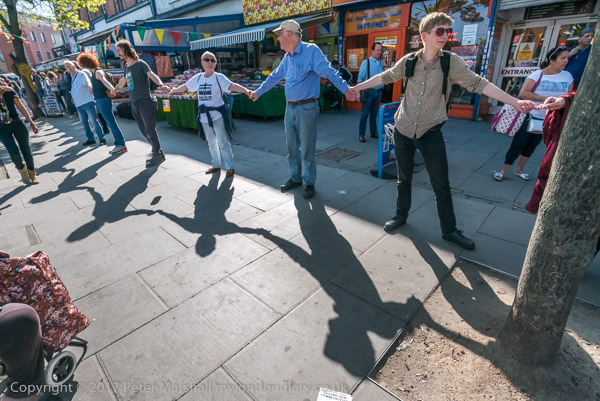
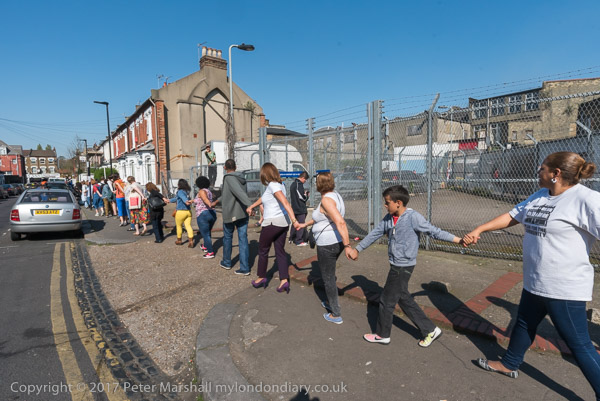
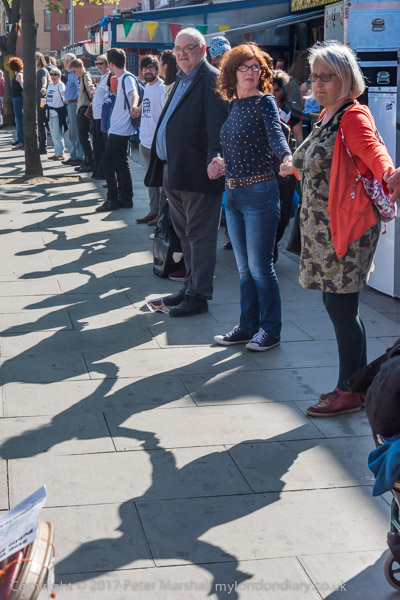
The main event of the afternoon was to form a human chain around the block, and while the chain didn’t quite link up all the way round it did get to be around 300 metres long, and had people really stretched out it would have made it. I followed it around and then walked the missing 80 metres along West Green Road, where the line of shops would have made it a little difficult back to the Tottenham High Rd where the chain had begun.

People were still there, still holding out their hands to the next in line, and the afternoon sun was putting their shadows onto the pavement. These looked like those strings of paper men we used to make by folding paper and cutting out the shapes attached by their arms and hang as chains.

The fiesta was still continuing when I left for home, with more music scheduled into the evening. It’s places like the Latin Market and others also under threat from councils and developers that make London a great place to live in – and which London’s mainly Labour councils seem hell-bent on sterilising.

More pictures: Human Chain at Latin Village

Continue reading Save Latin Village

Exploiting Terror

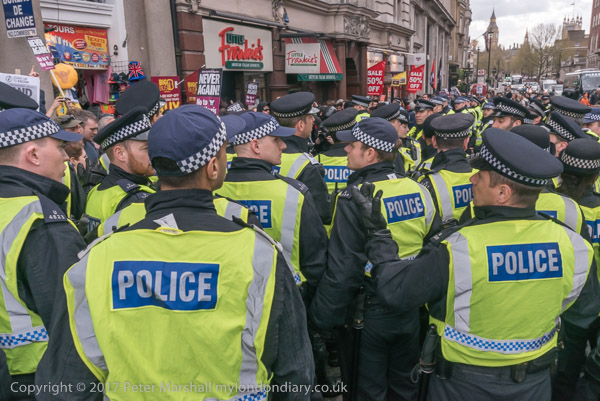
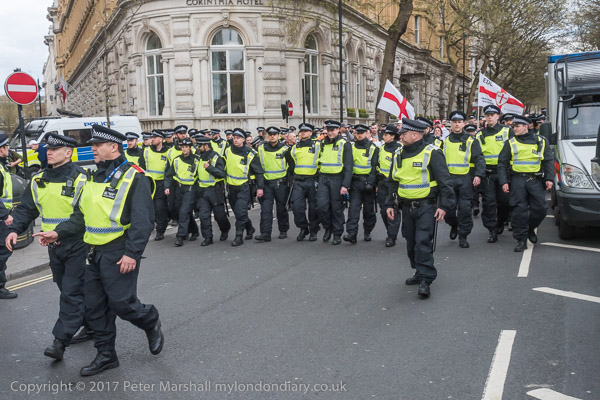
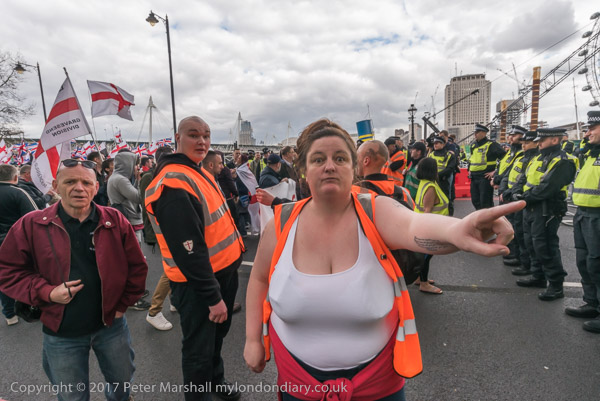
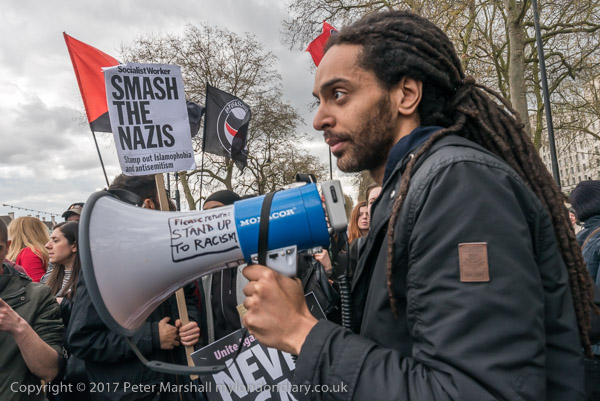
I don’t like photographing the extreme right, though I think it is important to document their activities, as well as those that go out onto the streets to oppose them. But their attempts to exploit the reprehensible attacks by a few deranged terrorists on people on the streets of London for their Islamophobic agenda I find particularly depressing and distasteful.

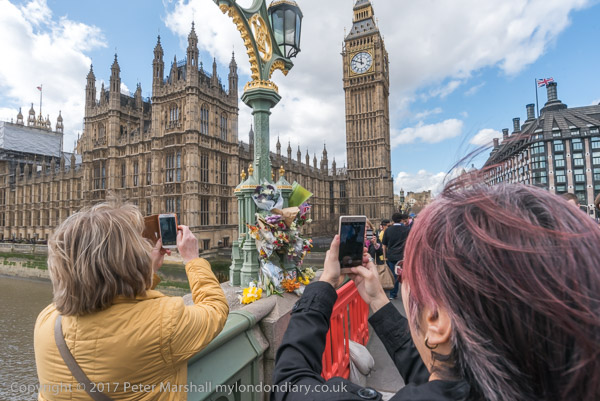
Londoners had made their feelings clear, both in the flowers on Westminster Bridge and in Parliament Square, and in the vigil the day after the Westminster attack in Trafalgar Square in which all communities in our city – including many Muslims – took part.

Britain First have a record of insulting Muslims, of making a nuisance of themselves in mosques and more. Their deputy leader was found guilty of religiously aggravated harassment and fined £2000 for abusing a woman simply because she was wearing a hijab, and their leader jailed for eight weeks for breaching a High Court ban on his entering any mosque in England and Wales.

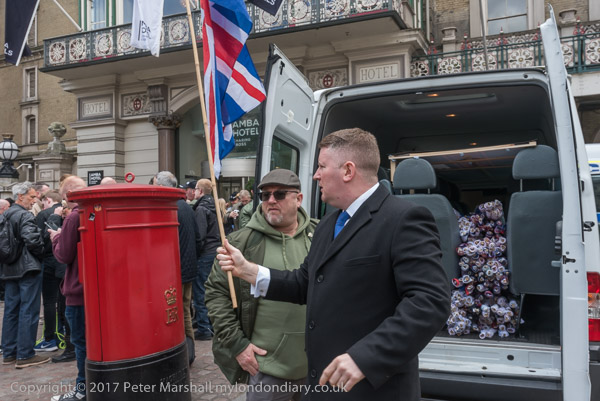
Behind the banner at the front of their march was a man carrying a ‘Knights Templar’ flag, an organisation including a number of former BNP members with strong links to European neo-Nazi and extreme right groups including the self-styled paramilitary Shipka Bulgarian National Movement and a banned Hungarian group.

But it is too easy to take dramatic pictures full of flags of Britain First – and leader Paul Golding arrived with a van full of them, though a few others had brought their own.

I found the rally upsetting, and in particular its misuse of Christianity, which did make me wonder how many of those present would be in church the following day. Certainly there was no Christian charity or message of love on display, and I think there would be vanishing few sermons preached in churches that would have been acceptable here.

Also out on the streets were the EDL, though they met at the Wetherspoons on Whitehall – and I photographed the police actually forcing them back into the pub as the anti-fascists were being rather heavy-handedly escorted away from the area on the opposite side of the road. At one time one group of police was trying to push them down Whitehall while another group of officers attempted to stop them, and a few protesters got rather badly squashed in the middle. It was rather a muddle, and there were a few arrests and at least one photographer assaulted by police. I got just a little pushed around but tried hard to keep out of the way.

Eventually police did manage to escort the few EDL supporters down for a rally close to where Britain First were holding their rally. For some reason they didn’t want to be photographed, and one of their stewards insisted I leave – and made a complaint about me to the police.

I didn’t have any time for the officer who came to speak to me, reminding her of the MPS Guidelines which clearly state “Members of the media have a duty to report on incidents and do not need a permit to film or photograph in public places. Police have no power or moral responsibility to stop them filming or photographing incidents or police personnel” and saying it was none of her job to run around for the EDL.

So I took my pictures and then left, hoping to be able to take some more pictures of the anti-fascist, but because of the police barricades it took rather a long walk to get to them, and many had left by the time I arrived. But it was good to be back again among people who were happy to be photographed.

More at:
UAF protest extreme right marches
Britain First & EDL exploit London attack

Continue reading Exploiting Terror

September 2017


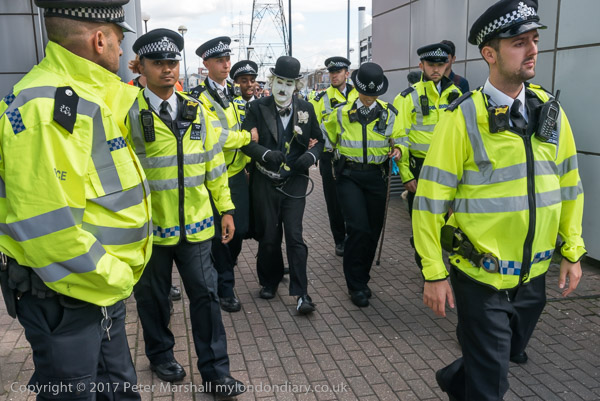
Police arrest Charlie X at the DSEI arms fair

As nights draw in its good to remember those longer days of September, the events I went to, people I met and the pictures I took, and I’ve finally finished putting them on line in My London Diary. September was a busy month, starting with several days with protesters outside the world’s largest arms fair, held every two years in London – at least until the campaign against it manages to get it stopped. So there were quite a few pictures to add and events to write about.

I’m slow to edit pictures and captions, as I like to get both right, though like other people I sometimes get things wrong, particularly as I’m often half asleep as I rush to send images to the agencies. Though my definition of a rush is a rather old-fashioned one, usually a matter of several hours after the event, rather than the minutes photographers are now expected to file by.  And sometimes I find myself falling asleep late at night and decide the following morning will have to do.

But a very busy time in the last couple of weeks have meant that finishing my posts for September has taken a little longer than usual.  Just as it usually does.

Sep 2017


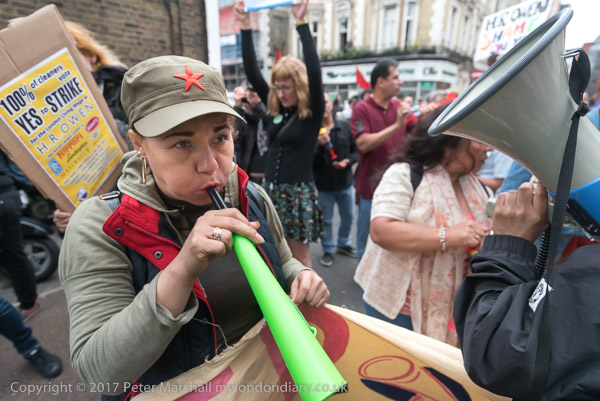
This and a later UVW protest led to re-instatement and a real living wage
Cleaners at luxury car dealers HR Owen
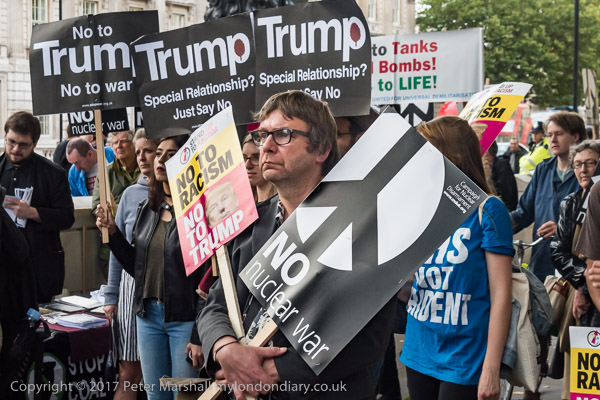
No NHS immigration checks


No Nuclear War over North Korea
End outsourcing at London University


One year of Ritzy strike
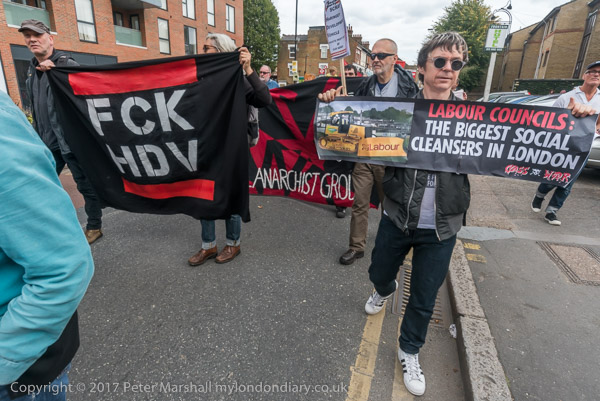
Haringey against council housing sell-off
World Peace Day Walk
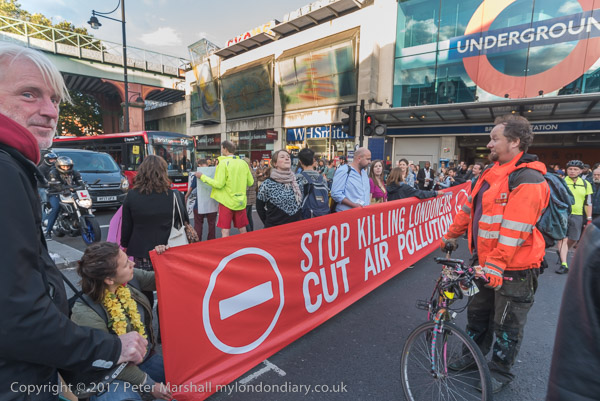
Trafalgar Square blocked over pollution
No More Deaths in immigration detention
Free forgotten jailed Eritrean Journalists
Lord Carson Memorial Parade
Black Day for Sabah & Sarawak
Overthrow the Islamic Regime of Iran
41st monthly Sewol ‘Stay Put!’ vigil
Open House & more – Peckham
Open House – Banqueting House
Cody Dock


Derek’s Book Launch


Air Pollution protest blocks Brixton
Croydon Walk
Wreath for victims of the arms trade
#Arming The World


DSEI East Gate blocked
Festival of Resistance – DSEI West Gate
DSEI Festival Morning at the East Gate
Protest picnic & checkpoint at DSEI
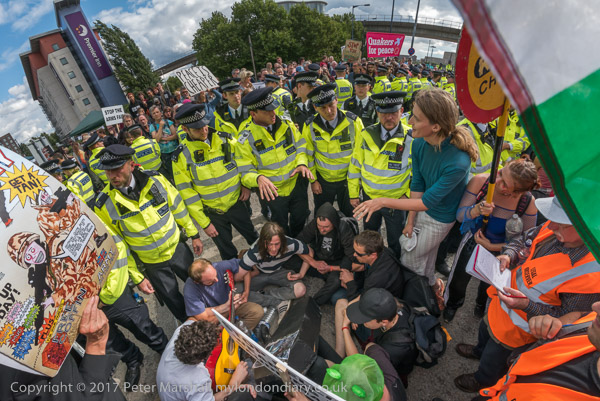
Protesters block DSEI arms fair entrances
No Faith in War DSEI Arms Fair protest


Another cyclist dies – Islington has provided zero safe cycle facilities
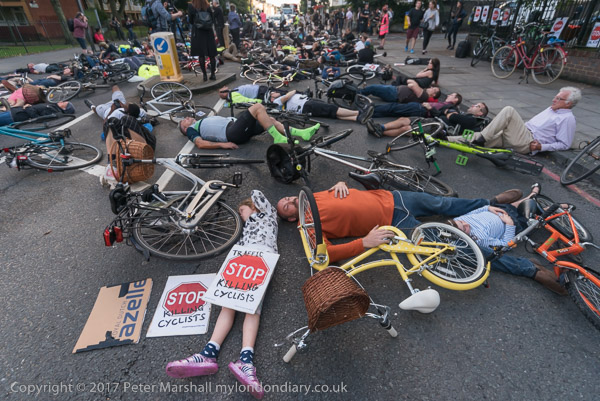
Die-in for cyclist Ardian Zagani
McStrike rally at McDonalds HQ
Vegans call for Animal Rights

London Images

Continue reading September 2017

Hull Photos: 29/9/17 – 5/10/17

Another week of my daily postings to Hull Photos which are continuing through all of Hull’s 2017 year as UK City of Culture. You can follow them daily where each picture appears, but the pictures appear with comments on Facebook – and in the weekly digests here.

Comments and corrections are welcome here or on Facebook.

29th September 2017

Taken from Scott St Bridge, this shows one of the older industrial buildings along the River Hull, Paul’s riverbank Granary building, linked on its other side across Wincolmlee to the rest of the mill complex. At the extreme left you can see the bell used to warn of the bridge lifting, in front of the windows of the Paul’s bilding across Wincolmlee.

The local listing describes it as “Characteristic and increasingly rare historic riverside building. Important for illustrating the history of Hull’s development as a port in the 19th century. Extant in 1853 and pictured in a F. S. Smith drawing of 1888. Distinctive early 20th century iron covered overhead footbridge linking the former granary to the mill across the road has attractive decorative roundels in the wrought iron brackets at either side.”
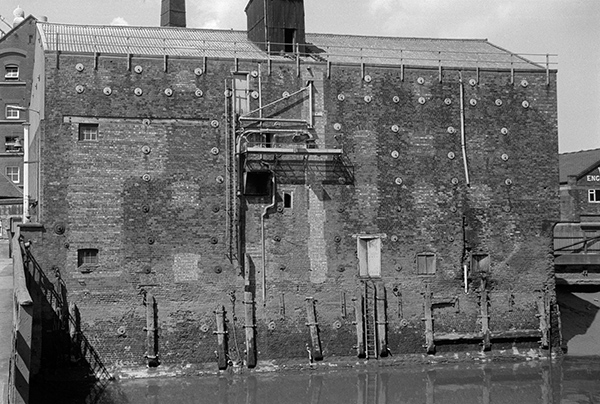

85-5g-66: Granary, R & W Paul, Scott St/River Hull, 1985 – River Hull

30th September 2017

The River Hull is relatively narrow, even at high tide, and larger boats are unable to turn above Drypool Bridge. The swinging area just below Rank’s Clarence Mill was the former entrance to Drypool Basin which led from the River into Victoria Dock.

The Beldale H which I had photographed before going upstream towards Rix’s wharf a short distance below Wilmington Rail Bridge had made its way backwards down the Hull much higher in the water and I took a series of eight images as it swung around to go forwards towards the Humber.

The Northern Divers (ENG) Ltd building is still in Tower St, though the company moved to Sutton Fields in 2011. The 1901 building designed by David Christie, is a Grade II-listed former Trinity House buoy shed. Its distinctive tubular crane can just be seen behind a more conventional one; it predates the building having been originally installed at Princes Dock in 1861 and is possibly the only remaining example of its kind, and is separately listed as follows:

“Tubular Crane. c1865, resited 1901. Cast iron. Curved tubular cast iron jib which turns through 360 degrees. Original gearing and later electric motor at base. Sunk into circular hole in the quayside, with deep straight counter weight secured to base of quayside.”

This type of crane was designed and patented by William Fairburn in 1850 and constructed by various manufacturers.
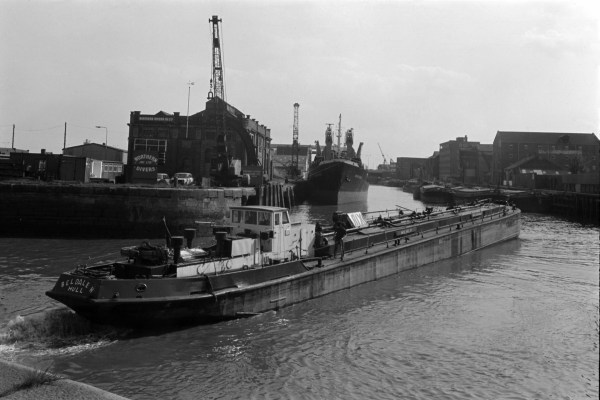

85-5h-22: Beldale H at Drypool entrance swinging area, 1985 – River Hull

1st October 2017

Behind the Beldale H swinging out from the Drypool Basin entrance the large vessel is the 1424 gross ton suction dredger Bowstream, since 1996 known as the Porto Novo surprisingly still apparently in service, currently in Funchal, Madeira. Built in 1971 in the Netherlands as an effluent tanker and named Hudson Stream, she was sold to British Dredging Ltd of Cardiff in 1972 and converted to a suction dredger and renamed Bowstream the following year.
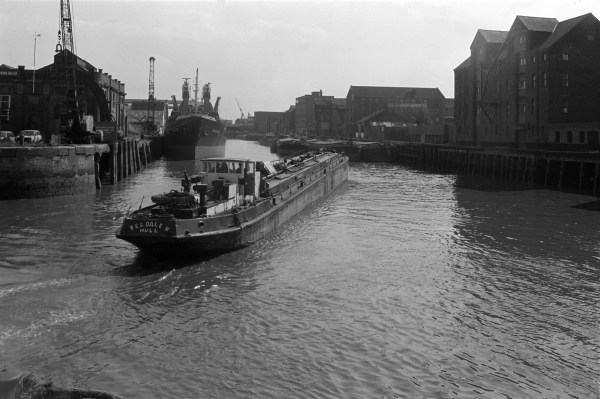

85-5h-23: Beldale H at Drypool entrance swinging area, 1985 – River Hull

2nd October 2017

When the new east dock (renamed Victoria Dock in 1850) was built in 1845-50, the plans included an entrance from both the River Humber and the River Hull. The entrance from the Hull led into Drypool Basin, with a further lock leading to Victoria Dock, and there was a similar arrangement but with twin locks (one larger with a smaller one alongside for barges) into the Half-Tide Basin from the Humber. The entrance from the Old Harbour on the RIver Hull was only completed a couple of years after the dock opened in around 1852.

When Victoria Dock closed in 1973, it was filled in east of Tower St, including the Drypool Basin (though much of the dock area was timber yards rather than water, with the timber ponds having previously been filled) and few traces other than the Half-Tide Basin remain in the Victoria Dock estate. The entrance to the Drypool Basin was retained as far as Tower St, as an essential swinging area allowing longer vessels on the Hull to turn around in the Old Harbour.

Tower St at the left of the picture is roughly where the outer lock gate was (previously a swing bridge had carried it across the centre of the lock), and a vertical stone on the river wall separates the lock entrance from the curved wall of the swinging area. The large board fixed on the building on the right at a slight angle names this as the Swinging Area and prohibits mooring, though the details are too small to read on the full-size image.

The building at the right is still there, though a little hidden, but that at the centre and left has gone. The 1928 large-scale OS map calls it ‘Pumping Station’ and the tower appears to be part of the hydraulic power system that was used in the docks. It’s replacement is considerably less attractive.
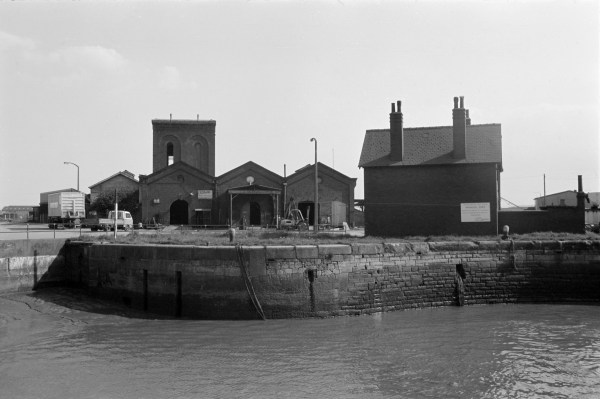

85-5h-24: Erdmann Ltd, Welders & Fabricators, Tower St and Swinging Area, 1985 – River Hull

3rd October 2017

The Drypool Bridge is raised for the small Rix tanker Bledale H to reverse through underneath, though it looks as if there might have been sufficient clearance without it opening, but the water is fairly high close to high tide.

The photograph is taken from the riverside path underneath Joseph Rank’s Clarence Mill, where another small vessel, possibly an oil tanker, is moored with crew on board.

In one of the more senseless acts of recent years in Hull, the Clarence Mill, an iconic local landmark, was recently demolished, and the site has lain empty for several years. It was meant to house a new hotel for Hull2017 Year of Culture, but not a stone on the site was turned and it seems that this was simply used as a pretext to gain permission to demolish one of Hull’s best-known and loved buildings.

It had little claim to architectural merit, having been largely rebuilt after wartime destruction, but was an important monument to one of Hull’s great men who changed the milling industry and was of some interest in terms of industrial archaeology. It appeared to be in sound condition and could almost certainly have been repurposed without losing its character, or at the very least some of the riverside elements should have been incorporated into any new development.

On the other side of the river just above the bridge is a block of warehouses, demolished in the late 1980s, another sad and unnecessary loss to Hull’s heritage. Again the site has since remained empty, used only for car parking.
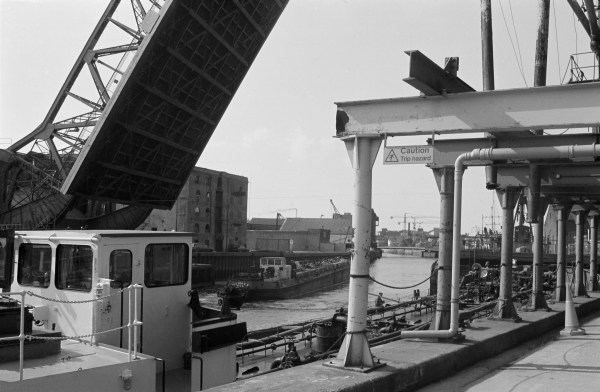

85-5h-31: Drypool Bridge and River Hull, 1985 – River Hull

4th October 2017

Another picture of Rix tanker Beldale H, here moving stern first into the Drypool Basin entrance swinging area. At right is the Grade II listed Pease Warehouse, then recently converted into flats.

Although there are still quite a few barges moored on the west side of the river at the High St wharves, there is now quite a long empty gap.
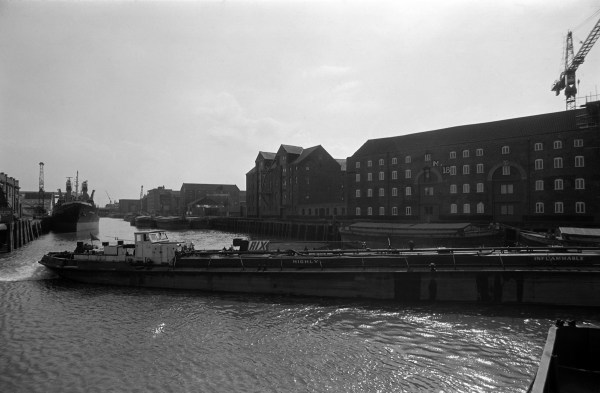

85-5h-34: Beldale H at Drypool entrance swinging area, 1985 – River Hull

5th October 2017

By 1985, this shop had abandoned its earlier Royal Wedding window display I had photographed in 1981 and was back to basics – 4 toilet rolls for 52 p and cans of soft drinks.
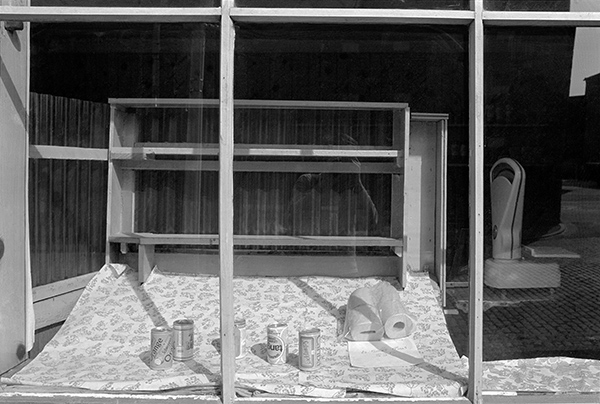

85-5h-41: Shop window display, Church St, 1985 – East Hull


You can see the new pictures added each day at Hull Photos, and I post them with the short comments above on Facebook.
Comments and corrections to captions are welcome here or on Facebook.
Continue reading Hull Photos: 29/9/17 – 5/10/17