More Culture

If you’re in a rush (as I so often seem to be) it’s dangerous to visit Lens Culture, where a new issue is now on line. There is a ten-minute interview with Roger Ballen about his work, nicely done and one of the earliest of a new video series, Lens Culture: Conversations with Photographers, though perhaps the music was just a little overdone.  There is another with Simon Roberts too.

Completely new to me were the black and white portraits of kids at play by which Jim Caspar found in a contest at The Center for Fine Art Photography in Colorado that he was asked to judge.  Some of Donna Pinckley‘s pictures have a quality that reminded me of Diane Arbus‘s kid with a hand grenade, (see the contacts and read more about Colin Wood, interviewed 41 years after the exposure in the San Francisco Chronicle.)

There is also a feature Chaotic Harmony: Contemporary Korean Photography, a review of the book accompanying the show of 40 contemporary Korean photographers at The Museum of Fine Arts in Houston and the Santa Barbara Museum of Art. With 13 images it gives what can only be a very partial idea of the work but may whet your appetite; if so, the book  Chaotic Harmony: Contemporary Korean Photography  (ISBN: 0300157533 / 0-300-15753-3, Tucker, Anne Wilkes; Sinsheimer, Karen; Koo, Bohnchang is available for around £18 including delivery from the cheaper UK suppliers.

Don’t fly out to Houston as Chaotic Harmony closed there earlier this month; but the page is still worth visiting for the audio there. Still showing in Houston is Your Bright Future: 12 Contemporary Artists from Korea continues until Feb 14th – and you can see an interesting presentation on it on their site.  Chaotic Harmony will be on show at Santa Barbara from July 3 – September 19, 2010.

Too much more of interest to mention, and I have to get down to some other work. If you’ve got any time to spare don’t miss Lens Culture.

Darbis Murmury

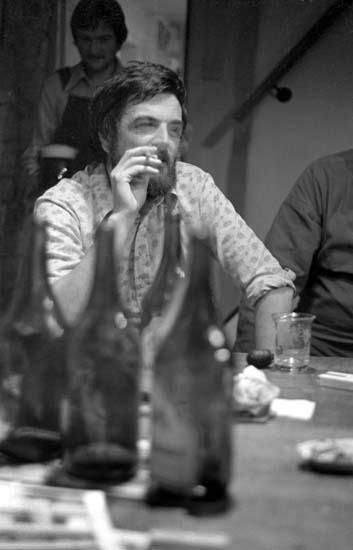
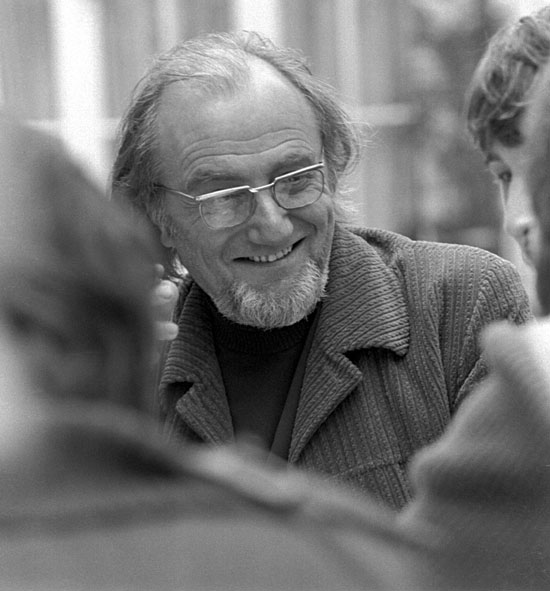
Ten years ago I wrote a short piece on my experience of attending a series of workshops with Raymond Moore and Paul Hill at Hill’s ‘Photographers Place‘ in Bradbourne, Derbyshire for William Bishop’s ‘Inscape‘ magazine, accompanying a few of my pictures of the people concerned – including some of Ray.

© 1976-7, Peter Marshall
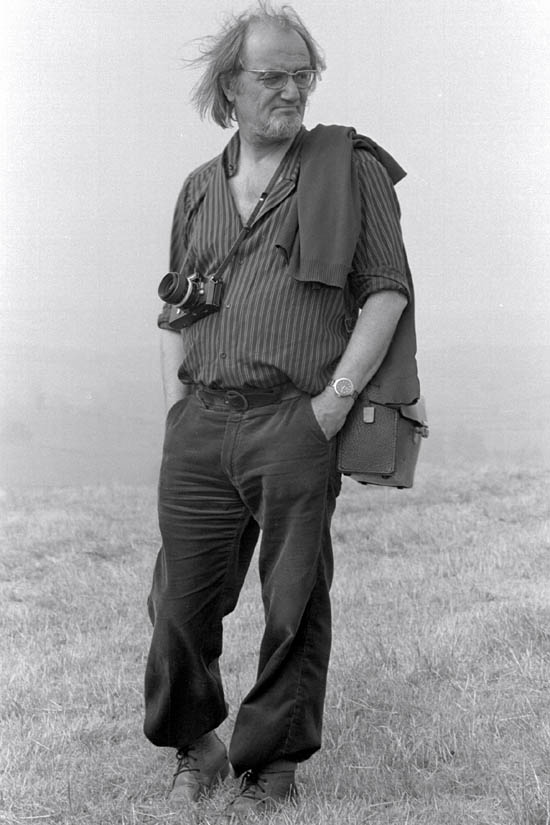
Ray Moore

The title ‘Darbis Murmury‘ came in part from my two-year-old son’s description of where I had gone for these weekends, but was also refers to Ray’s book, Murmurs at Every Turn as well as of course my own memories.

Ray’s comments on my own pictures were both critical and inspirational, and did much to set me off on my own route in photography. Seeing his work and his attitudes towards it and towards photography were also vital.

Today I looked for the article I wrote for Inscape and some of the pictures I had taken of people during the workshops, and found a half-finished web site I had written. Just a single page with the text more or less as it appeared in the magazine surrounded by almost 30 thumbnails linked to the pictures.

© 1976-7, Peter Marshall
Paul Hill

It took me a couple of hours to sort out the site and make a few corrections, but you can now see all the pictures and the text of Darbis Murmury, more or less as I wrote it and the web site ten years ago.

Remember Ray Moore

For several reasons I’ve been thinking about Raymond Moore recently. Just before the New Year I was up in Derbyshire for a few days, and went through some of the places I visited with him in the 1970s while I was at one of several workshops with him, and this brought back a few memories of Ray and the other photographers I met there.

© 1976-7, Peter Marshall

It’s only too likely that many reading this will be scratching their heads and wondering who Raymond Moore was. If there was an award for great photographers who have disappeared most completely off the critical radar he would certainly be in the running for it. Yet Ray was certainly one of the great British photographers of the twentieth century, up there with guys like Bill Brandt, and his work stands comparison with rather better remembered American photographers such as Aaron Siskind and Harry Callahan.

Moore (1920-87) was the first living photographer to have a truly British show at the Art Council’s flagship Hayward Gallery in London; Brandt had beaten him to it by eleven years, but Brandt’s show was from John Szarkowski at MoMA rather than a home-grown enterprise. Earlier, Ray’s work had been shown by the Welsh Arts Council, the first living photographer to be given a show by by any of the UK Arts Councils.

But there are reasons why Ray’s work has drifted out of our sight. He was a painstaking printer, one of the best (like me largely self-taught from the Ansel AdamsBasic Photo‘ books) but made relatively few prints, and sold few during his lifetime, so virtually none appear in the art market, probably now the major driver of photographic visibility.

The largest collection of his work has for years been the subject of legal dispute and thus unavailable for museum shows. And the genre in which he worked was outside the traditional British obsession with social documentation (nothing wrong with that, but it isn’t all of photography) and in an area largely abandoned by academia in the UK in the 1970s in its Gadarene rush to  theory.

British institutions have never had any real faith in photography and the kind of enthusiasm and support systems that exist in some other countries have never really developed here. Ray did have a few shows, but they were relatively few and far between, and few buyers, institutional or collectors, were buying work by contemporary British photographers in the 1970s and 80s.

Ray wasn’t well served by publication either, although his pictures appeared in various magazines, including Creative Camera, who also published a major portfolio of his work as the lead portfolio in their 1977 year book.  Murmurs at Every Turn came at the time of his Hayward show in 1981. But these publications – and the slim Welsh Arts Council catalogue – were printed in the style of their time, with heavy blacks that lose the shadow detail on which Ray was always so insistent. His final publication, Every So Often, represents his work rather better, but all these are now relatively rare and expensive second-hand. However you can see them even if they are not on your shelves, as Weeping Ash has a tribute to Ray that includes virtually every magazine article and photograph published by Ray – and you can page through his books. The site  also includes an essay which was the basis of a talk I gave about Ray in 2005.

By the time I met him around 1976, Ray had simplified and perfected his technical approach. Although in earlier years he had worked with medium format (and occasionally with larger cameras) he now worked with a Nikon camera and a single standard lens (I’m not sure whether it was a 50 or 55mm.) He chose to use a Nikon macro lens not because he wanted to photograph close-up but because he felt it was sharper and had a flatter field of view at normal distances. He mainly worked with Ilford FP4 film, relatively slow and fine-grained and a favourite with many photographers, espeically those doing portraits for its smooth tonality, exposing it around 2/3 stop more than its normal rating and I think preferring to develop to a slightly lower contrast than normal.

He had decided he didn’t need a larger negative to get the print quality he wanted, always printing essentially from the whole negative on an old Leitz enlarger (simple but one of the best ever produced for 35mm), making final prints around 14 inches wide.  Ray liked to print with open shadows, and although he was a master of the craft always aimed to make prints that made people look at the images rather than trying to dazzle them with the print quality.

Although he admired the work of Brandt, he was not an admirer of the prints that he made when he moved to a more graphic approach, using higher contrast and often blank shadows.

Also on-line is a 2002 dissertation on Moore by photographer Neil Shirreff which looks at “his positioning in Britain’s photographic history, the perspective of Moore himself, and the perspective of a viewer engaging with one of his photographs.

A new book on Moore is long overdue, although unlikely to emerge before the legal problems surrounding his work are resolved.  It would also be good to see his work in exhibitions. The V&A does have a number of his pictures which can be viewed on request by visitors to the print room.

Ten years ago I wrote a short piece on my experience of attending the workshops with Ray and Paul Hill at Hill’s ‘Photographers Place‘ in the Derbyshire village of Bradbourne for William Bishop’s ‘Inscape‘ magazine, accompanying a few of my pictures of the people concerned – including some of Ray.  I began to put this on-line at the time, but somehow the pages never got finished – until I found them and did the job this afternoon! Now on-line as Darbis Murmury.

More Walks through Paris 1896 & 2006

2006

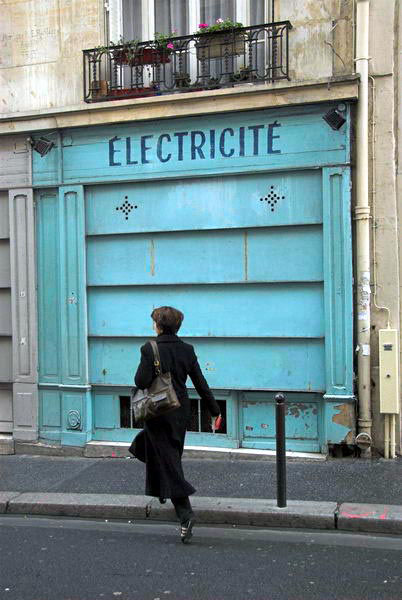
In 2006 I was in Paris in November for the three days of Paris Photo but spent roughly a week there staying at a very pleasant (and cheap) hotel towards the north of the 9e. It was a healthy 25 minutes walk from Paris Photo and a little closer than that to the Gare du Nord, making it handy for those of us who travel on Eurostar (and fortunately that November we didn’t have snow, so the Eurostar was working well.)

Paris

I wrote a few pieces related to the show for the company I was then working for, About.com, which have long disappeared from the web, but  the first real post I wrote for this blog, on Friday, December 1st, 2006 at 11:51 pm was also on Paris Photo. It was only a short note, but it ended with the sentence:

 But fortunately, there was much more in Paris than Paris Photo.

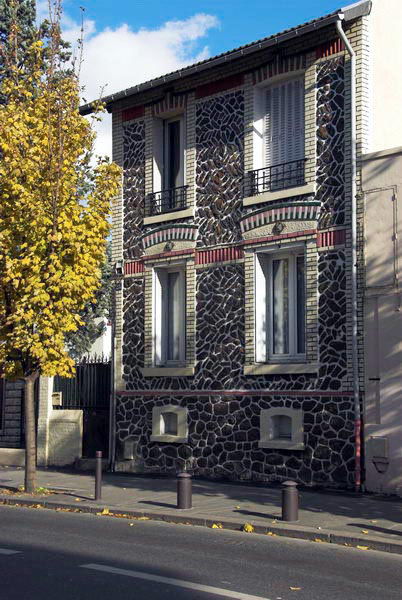
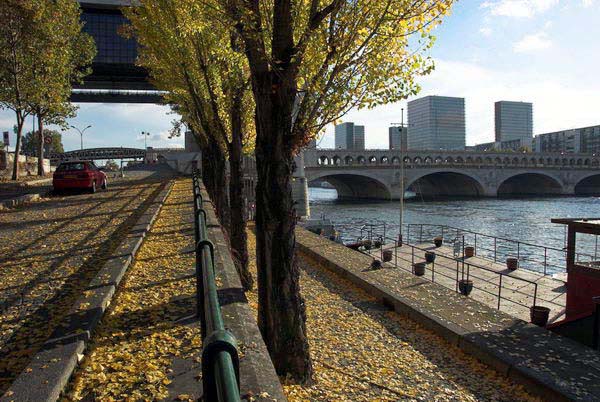
You can get some idea what that more was (though without the food and wine) from a set of pictures I put on the web shortly after, Paris: November which is now linked in from my new Paris site.  These pictures were taken with a Nikon D200 in Paris and Stains, just to the north of the city.
© 2006 Peter Marshall
Stains

On the revised front page of my Paris Photos site you’ll find a rather untidy list of links to most of the sets of Paris pictures that I have on line. There are a few more sets almost ready to add, but rather more waiting until I have time to do more scans.
© 2006 Peter Marshall

An Early Amateur

Luminous Lint, an extensive collection of material assembled on-line by Alan Griffiths, now based in Canada, has an interesting album of photographs from An Unknown Street Photographer in Paris, 1896, curated and introduced by John Toohey who now owns the ‘small, olive green Kodak album with the handwritten inscription on the inside cover, “Paris, 1896“‘. It was thus taken when the Kodak revolution which brought photography to the middle-class masses had just begun.

Although I’ve not studied the work at the length that Toohey has (nor seen the other roughly 60 pictures not included in the generous selection on the site), I find his introduction to the album far-fetched. Looking through it I don’t think we can read in any great intentions by the photographer, although certainly it is produced with someone who at least occasionally had an idea of what they were trying to do. But I remain convinced that the more interesting accidents of the work are simply accidents, not least because the viewfinder on these cameras would hardly allow the kind of control that he suggests. Whenever you photographed anyone close to the camera you were likely to get pictures without heads or with only a part of them in the picture, and while you were concentrating on taking your picture on the street, people were only too likely to walk partly into them as you pressed the button.

Of course such accidental cuttings of the subject by the edge of the photograph were quickly recognised as a part of the machine’s syntax, and it has been suggested that they had some influence on the painters of the day, such as Degas, although similar effects also were to be found in some of the earlier Japanese artworks that more certainly affected artists of the late nineteenth century.

I grew up when family pictures were still taken on cameras not much different to the 1895 Pocket Kodak, larger but essentially similar models making small ‘snapshots’, though by then it was possible to get larger ‘en-prints’, but most of those in the albums were carefully posed, even if intention and result were even then not always close. In those distant days a 12 exposure film usually did families like mine for a couple of annual holidays (in Worthing or Lowestoft rather than Paris) and we relied postcards for the sights rather than photographing them ourselves.

Amateur photography was of course a craze of the 1890s, and by 1898 there were estimated to be around 1.5 million roll film cameras like the Pocket Kodak in use, with clubs springing up to support them. And there is good evidence that this unknown photographer was a part of one of these informal or formal groups that sprang up, as in some pictures we see seriously suited men with cameras.  Most likely he looked rather like one of these, although Kodak from the start marketed their cameras to women also, and this small and lightweight camera would fit readily as into a handbag as into a large jacket pocket. Of course many soon lost interest in photography and took up that other craze of the age, the bicycle, which also features strongly in these images (and even a tandem!)  Some Camera Clubs even voted to become Cycle Clubs, leading Alfred Stieglitz to comment in 1897 “Photography as a fad is well-nigh on its last legs, thanks principally to the bicycle craze.”

It was also obviously the album of someone with a serious interest in photography, as well as the income to be able to afford to indulge it. There are 92 pictures in the ‘Paris 1896’ album, showing the use of at least 9 rolls of the size 102 film which gave 12 exposures (it was one of the first models to have a red window to read markings on the back of the paper film backing.)  Probably he (or, less likely, she) took more, but not many more, as even these small 1.5×2″ pictures were relatively expensive and few other than outright technical failures were discarded.

The Pocket Kodak at around 51 x 76 x 102mm was reasonably compact cameras even by today’s standards, with a weight of around 170 grams, could as the name suggests be carried in a pocket. But it’s real selling point was ease of use –  as the Kodak slogan said, “You press the button and we do the rest”.

There was nothing to set – focus was fixed, the single shutter speed was “instantaneous” (usually around 1/100s)  and so long as you kept to the instruction only to work on sunny days and held the camera steady it would work.  The hardest thing was to remember to wind on the film after each exposure and so avoid double exposures.

Of course other things could go wrong and very often did.  The viewfinder was a small window on the top of the box which you looked into as you held the camera steady against your stomach, seeing a clear and bright but tiny image – which was usually rather less than would appear in the picture. Accurate framing was impossible (and a concept that hardly existed before the invention of the ‘miniature’ camera using 35mm film.)  If you took pictures from a sitting position, unless you thought instead to rest the camera on your knee, it would probably also appear in your picture.

There is no doubt that this is an interesting album, but I think it is best to see it for what it is, rather than to drag in the names of Walker Evans, J H Lartigue or Andre Kertesz. And if you are going to do so, why stop there; surely the wishful mind could glimpse the harbinger of Cartier-Bresson and Friedlander here too?
African Photography

One of the aspects of my work over around 8 years for ‘About Photography‘ of which I’m most proud was the series of articles that made up the ‘World Photography‘ section. It was of course work that drew on previously published research by various scholars – one of whom, despite being clearly acknowledged for his work obviously felt I was trespassing on his private patch.  But it also involved considerable research by me, both on the Internet and in published sources and brought photography in various countries around the world to the attention of a wider public.

There were some aspects that were particularly hard to find out much about, and African photography was one of these, though I did write a little about photography in Egypt and the Arab world in North Africa, about Drum magazine in South Africa and some South African photographers including David Goldblatt and Roger Ballen.  And of course Seydou Keïta (see also) and Malick Sidibé from Mali, but there simply wasn’t the wealth of material that is now available – for example at sites like African Imagery – on line.

On the ‘A Photo Student‘ blog you can see that students on some MFA courses now get taught about Africa  (and of course many other things – it’s a blog worth exploring, if it makes me feel that some UK courses are, from what I hear, not quite in the same league) along with some good illustrations and great links. James Pomerantz is a New York-based photographer who had gone back to school and is documenting the experience on the blog, where he has the freedom to do many things that I couldn’t do when working for a large company, particularly in terms of copyright, where I was unable to claim “fair use”.

One particular link that worries me is to a document I would have loved to have found a few years ago, An Outline History of Photography in Africa to ca. 1940 by David Killingray and Andrew Roberts, published in the journal History in Africa, Vol. 16, (1989), pp. 197-208, from the African Studies Association.

If you belong to an institution that subscribes to JSTOR you can access this free and legally, but otherwise you can only see the first page, which contains very little of interest unless you pay a $12 access fee.    Unfortunately I think few public libraries subscribe to this service, although universities and a few schools and other institutions do.  There is a link on ‘A Photo Student‘ to a full copy of the article, downloaded from JSTOR which I won’t repost here. Having written Writing for Free a while ago my thoughts over copyright are quite clear, although it is unreasonable  that should you pay your $12 (or your institution a subscription) none of it will get to the authors of the article.

Charis Wilson

Thanks to James Danziger on his ‘The Year in Pictures’ blog I learnt recently of the death of Charis* Wilson, and he gave a link to her obituary in the New York Times which gives a good idea of her life and the support she gave to Edward Weston, as muse, driver, writer and companion during their eleven years together.

These were Weston’s most productive years  and the book which she wrote – with Wendy Madar – ‘Through Another Lens – My Years with Edward Weston‘ , published in 1998, I think gives a real insight into his creative processes – definitely something to be read alongside his sometimes rather pompous but often fascinating Daybooks.

Her writing is a vital part of ‘California and the West‘ “with 64 photographs by Edward Weston” and as well as the text of the book based on the detailed logs she kept on their journeys, she wrote the Guggenheim application that made it possible.

Although biography can sometimes be a distraction from actually seeing and evaluating the work of photographers (and others)  – and the intense fascination of many with Weston’s love life is perhaps a good example of this – it can also give insights into the work.  ‘Through Another Lens‘ I think does that for the partnership between Weston and Wilson that led to some of his best work.

Of course Charis Wilson had a long and interesting life away from Weston – she was only 19 when they met, 30 when they separated and lived to 95.  You can read a little more about that too in the NYT obit.

* from the Greek  meaning ‘grace’ and pronounced ‘Karis’

Papageorge on Foto 8

A very thick copy of Foto 8 magazine came through my door the other day, but I haven’t had time to read it properly yet. But it does include a number of interesting features, including two by photographers I’ve previously written about,  Michael Grieve and Edmund Clark. You can take a look at this twice a year publication online, but really you need to see the real thing – and the best way is to take out a subscription – and there is a special 50% offer on new and gift 2 Year Subscriptions until 16 December. It’s probably the best magazine in the world covering photojournalism.

Foto 8 also has a lot of content on-line in its blog, including an interesting interview in which Tod Papageorge talks to Mark Durden, in particular about Garry Winogrand and Susan Sontag. Here’s a quote:

It’s always been puzzling to me that capacious minds like Sontag’s … look at a photograph and see not a picture, but the literal world held in their palm. With that, they’re revealing themselves to be no more sophisticated than the proverbial tribesman who believes that a photograph made of him steals a piece of his soul.

You can see more of Papageorge’s photography at the Pace/McGill Gallery.

Papageorge has always impressed me more as a writer than as a photographer, and in particular for his 1981 book ‘Walker Evans and Robert Frank: An Essay on Influence‘.  The book is long out of print, but the text – without the pictures it refers to – is available on the web as the first of a series, The Missing Criticism on Eric Etheridge‘s ‘Mostly Photos‘ blog.

The second article in this series, also by Papageorge, is his 2002 essay ‘What We Bought‘ on the work published under that title by Robert Adams in 1995. Unfortunately by that date I’d stopped buying every new book by Adams, as this first edition now sells for around £400 (but I do have first editions of  the even more expensive  ‘Denver‘ and ‘The New West‘, though like most of my books my copies are well-thumbed.) But newer editions of these books are available – and you can buy ‘What We Bought’ in and edition published by Yale University Press (Papageorge became Director of Graduate Study in Photography at the Yale School of Art in 1979)  for £30 or less.

Paris 1984


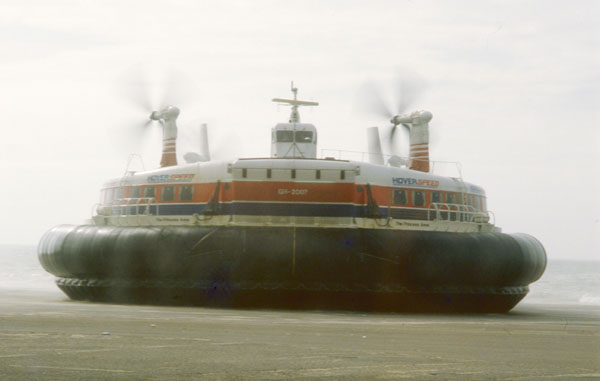
In 1984 we took the Hoverspeed hovercraft and express coach to go for a couple of weeks  – part work, part holiday – in Paris with Linda and our two boys, then 5 and 8. We were staying in a luxury self-catering apartment at the bottom of the hill in Montmartre. The luxury was a bonus, as we had paid a very basic price through the booking agency but had struck lucky – the normal room price was several times what we had paid.

© 2009 Peter Marshall

I was working on a more serious project (more in a later post) in black and white, but as well as having a family holiday I also found time to take some colour. By then I was shooting colour on Fuji film, and the colour quality was a distinct improvement (and they forced Kodak, who for a long while had been squatting on their Kodachrome laurels, to considerably notch up their game also.)

© 2009 Peter Marshall

By this time I’d also upgraded my cameras, and was now working with two Olympus OM bodies; I’d replaced the Russian Zenit with an OM1 in early 1974 shortly after they were introduced, added a OM2 a few years later, followed by an OM4 at about the time of this trip. (My Russian rangefinder had also been replaced over the years by a secondhand Leica M2, which had seen 20 years of rather active service before coming into my possession.)

© 2009 Peter Marshall

These colour images were probably taken with an Olympus OM4. By this time I’d got over a brief early affair with zoom lenses and was back to using primes, in particular a 35mm shift, 28mm, 50mm and 105mm (and at times also 200mm and 20mm.) All except the 105mm Tamron where Olympus lenses.

The OM4 was for me the more or less perfect SLR. Small, light, reliable and with the best metering system ever, particularly for those of us who had learnt to work with the zone system. If it wasn’t for the need to use digital I’d still be working with my pair of OM4 bodies now (and I kept the OM2 – at some point traded up to an OM2n – for backup.)

This morning I climbed the ladder to the loft again and searched through various boxes looking for the transparencies I felt must be there somewhere. Eventually I found a few boxes, though I think there may well be one or two more there.

© 2009 Peter Marshall

Despite a major setback, the black and white work I took on this trip eventually formed a show, and a number of the prints from it are still hanging on my own walls – and that’s something for another few pages of web site. The colour slides just came back from processing, were probably projected a few times and then all but a few went back into their boxes and were put in storage – until now.

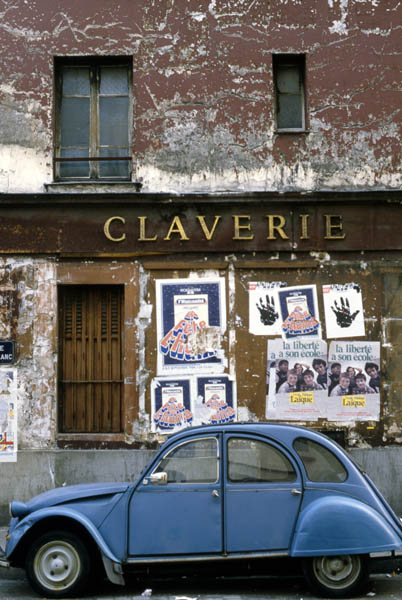
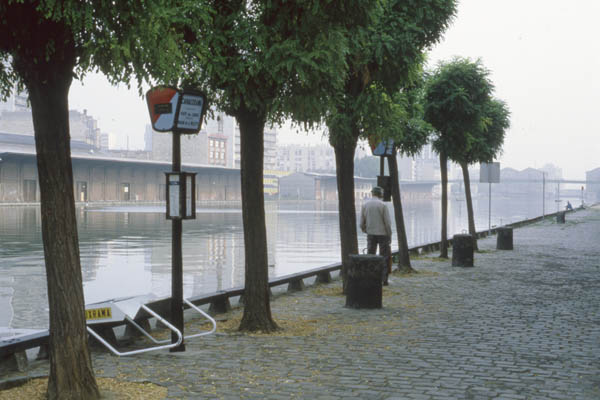
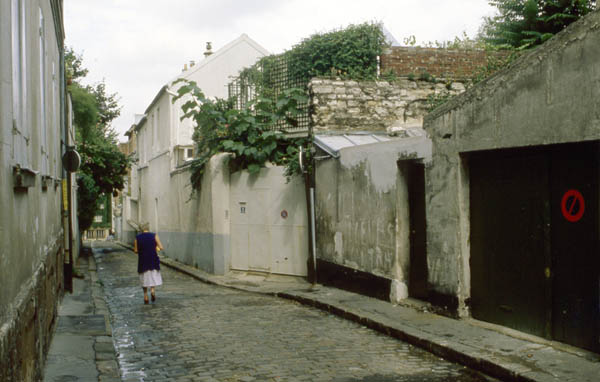
I’ve put forty-five on them on the web now on my ‘new’ Paris site; for the moment the site is basically thrown together very simply in a very simple way, and I’ll add some more content and sort it out a bit later.

The Unseen Bert Hardy

It was a full house at the Photographers’ Gallery last night for Graham Harrison‘s talk on ‘The Unseen Bert Hardy’, and one from which I’m sure every member of the illustrious audience – including quite a few who had known the man – went away with their view of Bert Hardy changed, and wanting to see more of his unknown and unpublished work.

I think we all have  a view of him – that perhaps comes in part from how he used to talk about his work – which sees him metaphorically as a skilled British craftsman in blue dungarees, a wooden folding two foot rule in his top left pocket and a pencil tucked behind his right ear – as well of course as a Contax around his neck, and the kind of attacking attitude you’d expect from a schooling in a gym on the Old Kent Road.  Of course he was born a working class lad south of the river, just off the Blackfriars Road (he got a blue plaque there last year and of course has a seat in St Brides), he was a highly skilled technician – and as many of his published pictures and some of the new work last night attest, had both a great feeling for light and also the technical ability to use it, particularly what in the old days used to be called “contre-jour“. But he was more than that.

Part of his reputation comes from the comparison with Bill Brandt, and the famed Gorbals assignment in particular. It’s perhaps hard to understand why Picture Post (PP) sent Brandt on the job in the first place, because his rather splendid de Chirico-like views or the tenements are perhaps exactly what you would have expected of the man.

When PP panicked on seeing his pictures, they sent Bert to rescue the story. Or rather, as Graham Harrison pointed out, they sent the ‘two Berts‘, photographer Bert Hardy and writer Bert Lloyd.  Lloyd, another south Londoner, had started collecting folk songs while working in Australia in the 1920, joined the Communist party in the 1930s and worked – often with Hardy – on stories for PP from around 1945-50, and was one of the pioneers of the folk revival, presenting folk as a live working class from rather than the effete activity of largely upper-class folk collectors. They worked together, “Lloyd engaged the subjects in conversation and Hardy photographed them” as it says below the poster for a show of Hardy’s work from Tiger Bay there fifty-one years after they were taken in 2001.  The page also raises the question:

For generations, people in “Tiger Bay” have objected to how they have been represented by photographers, writers, journalists, social scientists and others. But they like Bert Hardy’s photographs of themselves and their community. Why is this so? What sort of documentary practice is this that local people find so alluring? 

I’d like to think the answer is that it is one that is made by people like them who get down beside them and work with them, something that has very much to do with both Berts.

Another of the well-known projects on which they worked together was : The Elephant and the Castle, and you can still see 25 pictures from this – including quite a few not published at the time at the James Hyman site.

Back to the Gorbals. Through the party – and perhaps also through folk-song, though the two things were closely linked – Lloyd had a contact in the Gorbals, a Mr Mac-something (I was making notes in the dark and my handwriting is worse than Gordon Brown’s) who made the job considerably easier by taking them to the right places and to meet the right people.

Over his 16 years at the PP as its Chief Photographer, Bert Hardy shot over 800 stories and over 500 were published. 23 of the made the cover. He didn’t waste film and there were very few failures.  When he was able to develop his own films, they were finer grained and I think sharper than those from the lab (and of course after PP, he went on to set up Grove Hardy, and there were several photographers present who had used them to print their work – including David Hoffman and Homer Sykes – as well as one of the printers who used to work there.)

Perhaps what came most clearly from the “unseen” work was a suggestion of a very much more complex photographer. As well as the warmth of vision, the humanity, the empathy with his subjects, there was an appreciation of the surreal – an aeroplane flying across the wallpaper behind a group at airforce training, a long row of people in lice-proof calico suits being sprayed, a half-naked yoga pose in front of so very conventionally dressed ladies and men on a line of sofas and chairs along the wall behind.

The talk was recorded, and I hope will be made available somewhere, either on Harrison’s Photo Histories web site or on the Photographers’ Gallery site. I hope what we have seen is just a first instalment and that Harrison will be able to go on and look at the rest of Hardy’s work in the archive to produce an exhibition and a book.

Although we’ve seen a few shows in recent years from PP photographers, there is still I think a lot to be found in the archive. When I tried to write about some of the other photographers who worked there it was hard to find their work for PP anywhere on the web as examples, and for most there were relatively few – and usually the same few – in publication. The Getty site isn’t that friendly and work is hard to find much by Felix Man for example.  Unfortunately for copyright reasons what I did write on some of the others – Bill Brandt, Bert Hardy, Thurston Hopkins & Kurt Hutton is no longer on-line.

It’s perhaps time for a major show at one of the big London galleries to re-evaluate the  work of all the PP photographers – including the stuff that only made it as far as the archive. It would be a great contribution to London’s increasingly successful photo festival, Photomonth, in a couple of year’s time.  Or perhaps a season of shows at a smaller venue such as the Photographers Gallery? One small thought that comes to me is a tenuous Olympic connection – surely PP will have covered the 1948 games here?

Roy DeCarava 1919-2009

You can read a tribute to Roy DeCarava with a set of images on the Lens blog of the New York Times, and there is longer piece about him in the newspaper. DeCarava was one of the finest photographers of his generation, but somehow failed to quite get the recognition he deserved.

If you don’t already own a copy of his ‘The Sound I Saw‘ which he conceived, wrote and designed in the 1960s but was unable to get published until around 40 years late you should get hold of one now (copies of the softback edition are currently available second-hand at under a tenner – or you can pay about four times as much from other dealers.)  What he subtitled as “improvisations on a jazz theme” became a legend long before it appeared in print. He wrote in it that it “is a book about people, about jazz, and about things…. images for the head and for the heart, and like its subject matter is particular, subjective and individual.

DeCarava was born in Harlem and spent his life there photographing everyday domestic life, producing a unique insider’s view into black experience, although his work also reflects the other ethnic groups in the areas in which he lived. That he also photographed many of the giants of jazz who performed there gives his work an added piquancy for those of us with an interest in the music.

Apart from the retrospective volume by Peter Galassi that accompanied his NoMA show in 1996 (long out of print and very expensive) it was his first book since the famous collaboration with Langston Hughes, ‘The Sweet Flypaper of Life” in 1955, and contains many of his best images.  Three years earlier in 1952 he had become the first black photographer to win a Guggenheim Fellowship.  You can see 10 of his pictures on line at the Smithsonian, and some at Masters of  Photography. But the best resource I’ve found on-line is at  Monoscope, which presents some of his images along with a TV talk with Charlie Rose, who is a sympathetic listener who lets DeCarava talk for most of around 12 minutes, producing a fine interview.