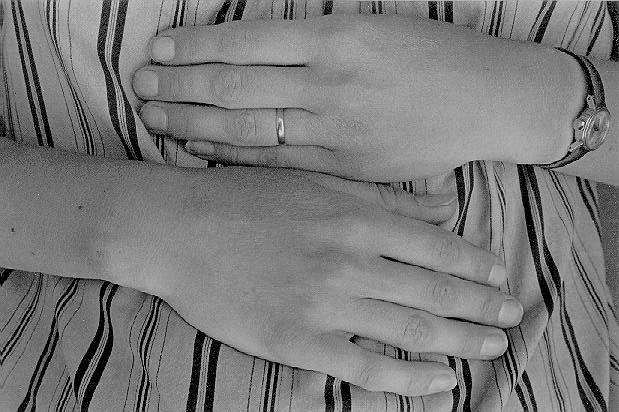
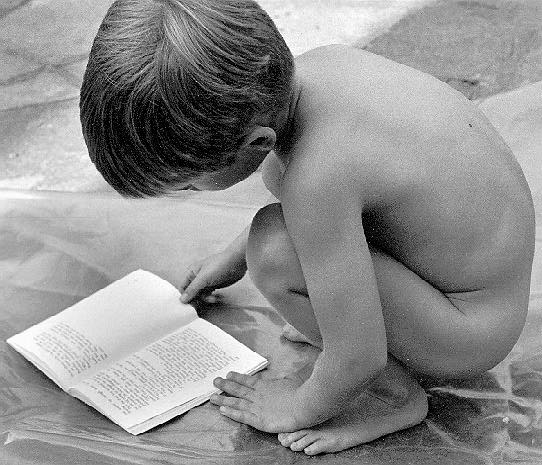
Karol Kállay 1926-2012

Slovakian photographer Karol Kállay, born on 26 April 1926 died on 4 August 2012 aged 86.  He took up photography seriously when he was only 14 and by the time he was 17 had won a gold medal in the national photographic exhibition had his pictures published in the Swiss magazine ‘Camera’ and organised an exhibition of his work in Spain.

Kállay travelled the world as a freelance, published many fine books, had his work in magazines including GEO, Paris Match, Focus and der Spiegel, won various awards and had many exhibitions around in his own country and around the world – his web site lists Prague, Berlin, New York, Moscow, Budapest, Warsaw, Bucharest, Sofia, Paris, Hamburg, Baghdad, Cairo, Osaka, Istanbul, Havana… But he appears to have been virtually unknown in the UK, and if his death was mentioned in our press or photographic press I didn’t notice it.

I met him in Poland in 2007 where he was one of a dozen or so exhibiting photographers who gave a  presentation of work at the FotoArtFestival in Bielsko-Biala where I gave a lecture. I wrote about my experiences there in a diary, although I managed to avoid mentioning him or his work and I think he is absent from my pictures.

In the catalogue for the 2007 festival, photographer Eberhard Grames writes

“His images remind rather memories of an inconspicuous, friendly smiling fellow-traveller. Because that is how it is – Karol takes photos as a good, nice and cultivated man. That is why he becomes a “dangerous” witness of all those human commonplaces and tragedies, which take place in his surrounding.”

“It is very hard to find a proper word, which would define “the image talk” of Karol. His talk with people is nice, friendly, without any superficiality. Karol likes when his photos state questions and simultaneously have the strength of a philosophical stroke.”

“Sometimes, his photographs look like a frightening moment with a little deal of cynicism (which characterise life in big cities.) Therefore some of his photos discover “that something typical” in people, caught in the twinkling of an eye.”

There certainly is something about many of these images that reflects the twinkle of the photographer’s eye which you can also see in some portraits of him. But as well as humour in his work there is a very strong sense of design underlying all of them, perhaps sometimes becoming a little too dominant for my taste, something which has remained more prominent in central European photography than here in the UK. It perhaps explains why my favourite image from the 140 or so on his site is of people sitting around in a Montmartre square, lovers kissing on a bench in the foreground, people listening to a guitarist sitting on a wall, while at right a young girl seems lost in a world of her own. That truly is a picture I would have loved to have taken.


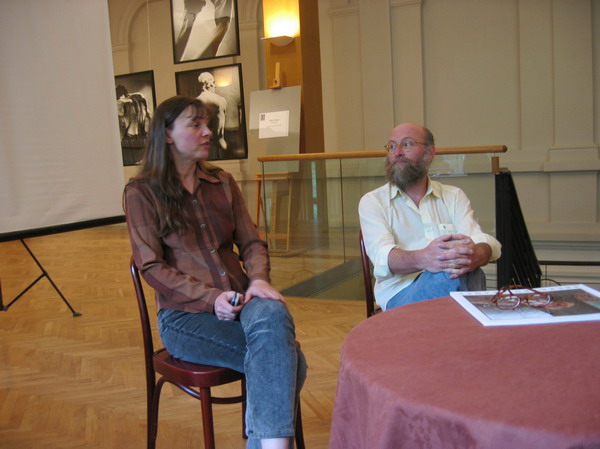
Inez Baturo and Eberhard Grames at the 2005 FotoArt Festival in Bielsko-Biala Continue reading Karol Kállay 1926-2012

Ravishing Ravilious

Thanks once again to Brian David Stevens for pointing me to James Ravilious; a world in photographs, a fine 30 minute film about his incredible 17 year project photographing the disappearing world of rural North Devon.

Ravilious (1939-99), whose father was the artist Eric Ravilious,  was inspired by seeing the work of Henri Cartier-Bresson in 1969 to become a photographer. In 1972 he had to move to Devon in there started to work at the Beaford Centre, who wanted a record of the area.

I first saw Ravilious’s pictures for real on a rare visit to the Royal Photographic Society with a friend who was a member, I think around 1990. I’d seen them before in magazines, but they were much more impressive as prints. I’ve written before about his work, as have others, but it’s still true to say that his work is not as well known as it should be. His is a view that is both real and bucolic; he refused to to photograph things that he didn’t find beauty in and was apparently easily horrified. I’ll perhaps write more about him later, particularly his views on ‘green’ which very much fit with my own.

Twisted Images

Thanks to Twisted Sifter for a page with 15 Photo Manipulations Before the Digital Age published in advance of  Faking It: Manipulated Photography Before Photoshop at The Metropolitan Museum of Art in New York which claims to be the first major exhibition devoted to the history of manipulated photography before digital and will feature “200 visually captivating photographs created between the 1840s and 1990s in the service of art, politics, news, entertainment, and commerce“. The show runs  from 11 October  2012 to January 27, 2013, and there is currently a short text about the show on the Met Site but not much more unless you have a press login, when I think you would be able to see the same 15 images as on Twisted Sifter.

Some of these are well-known – for example Henry P Robinson‘s very Victorian deathbed scene, Fading Away, Toulouse Lautrec as artist and model (by Maurice Guibert) and others by Maurice Tabard, Barbara Morgan, Grete Stern, a decidedly odd (aren’t they all) F Holland Day and one of Gustave Le Gray‘s cloud studies, but perhaps the more interesting are some of the commercial and anonymous images, including a ‘Man on Rooftop with Eleven Men in Formation on His Shoulders’, Saint Thomas D’Aquin’s ‘Man Juggling His Own Head’ and a daguerreotype of a man with two heads.

From the text I’m not sure how much this show will add to previous exhibitions and books which have featured such images – which I think have always got more than their just share of attention. They are an interesting side line, and often amuse, which is what some of them were meant to do. But some of those that amuse, their authors meant to be taken seriously.

A Short Walk in Spitalfields

I’m not sure I will go to see the pictures by C A Mathew which will be on show at the Sandys Row Synagogue in Spitalfields from 20th September 2012, although it looks as if a visit to this synagogue, the oldest Ashkenazi synagogue in London, and the last remaining synagogue in Spitalfields would be very interesting. But I think you can see the photographs well enough on-line.

Like the nearby mosque in Brick Lane, the synagogue has moved through several religious re-orientations. It was built on the site of an older chapel, l’Eglise de l’Artillerie, and opened on 23 November 1766 under the same title, serving the French Huguenot community of the area. A few years later they combined with other churches in the area and leased this building. From 1792 it was home to a Baptist congregation, most of whom left in 1801 when their minister made it Unitarian. When the Unitarians moved to Finsbury in 1824 it was leased to Scottish Baptists. In 1867 it was leased to Dutch Ashkenazi Jews, who were allowed to block up the previous entrance on Parliament Court and build the current entrance on Sandys Row and it was consecrated as a synagogue on 6 November 1870. The congregation bought the freehold of the building in 1923 and continues to worship there.

I first saw these pictures published on Spitalfields Life in 2010, and they have since been republished there on the 100th anniversary of their taking, along with a set of ‘then and now’ pictures, taken by the author of Spitalfields Life, who goes under the soubriquet ‘the gentle author‘ (TGA). The pictures are in the collection of the Bishopsgate Institute, which in 1974 published a bound 28 page pamphlet, The Eastern Fringe of the City, described as A Photographic Tour of the Bishopsgate Area in 1912 with around 20 photographs taken by Mathew on Saturday April 20 1912, his only known visit to the area.

C A Mathew began as a photographer in 1911, setting up a studio in in Tower St, Brightlingsea, Essex and is thought to have died shortly after his wife at the end of 1916. There doesn’t seem to be a great deal more known about him and the only other picture by him I’ve seen is a routine image by him included in a history of the town.

One theory, which I doubt, is that these pictures are the result of a delayed or cancelled train from Liverpool St back to his home in Brightlingsea on the Essex coast, just over 50 miles away (the station fell under Beeching’s axe in 1964.) TGA writes that perhaps he “simply walked out of the station, taking these pictures to pass the time.”

I think this is more than unlikely. While we might do such a thing now, photography back in 1911 was a rather more serious business, and although I can’t know exactly what equipment Mathew was using, I think it likely that it was rather cumbersome and heavy – not the kind of thing you would just take a walk while you were waiting with.

From the pictures I think the camera he used had a rising front and will have been used on a substantial tripod. Almost certainly it will have been a camera that used either sheet film or glass plates rather than roll film. So as well as the camera he will have needed a number of plate or film holders loaded with unexposed material. And of course a large dark-cloth and loupe.

I suppose it is just possible to envisage circumstances where a photographer travelling home would have all these things available – perhaps a commission elsewhere that for some reason he had been unable to carry out. Though it is hard to think why anyone would commission a photographer from Brightlingsea to do a job in London.

Normally on the way home the plates would have all have been exposed. Had their just been one or two pictures, it might perhaps be possible that Mathew, on his way back from a job in the city might have paused on his way to expose a couple of unused plates, but the number of pictures rules that out. It seems almost certain that he had travelled up to Bishopsgate with the express purpose of making a set of pictures of the area.

Since he was a professional photographer the most likely reason for this is that he was being paid to do so. Since his studio was in Brightlingsea, his client was most likely to be there also, although possibly a visitor to the town; perhaps one of those wealthy gentlemen who came for the yachting at Brightlingsea Sailing Club had started his life in the area.

One of the most intriguing things about the pictures are the captions on the original mounts, which I think could also be a clue to the actual reasons for the pictures, although it isn’t a mystery I can solve. Not only does Mathew carefully describe the locations but he also gives the widths of most of the streets in feet and inches. Brushfield St (width 29′.3″) is the caption on one mount – either the photographer has taken measurements with some  precision or has gone to the trouble of looking them up somewhere. Why?

Possibly also the choice a Saturday is significant, a day when businesses in this Jewish area were closed. As the Bishopsgate curator noted, it meant the children were all in their Sabbath best, but it also made it possible for the photographer to place his tripod in places where heavy horse drawn traffic would have made it difficult on a working day.

Although working with a digital camera, or even a 35mm or 120 film camera we might now make similar images in perhaps an hour, probably the pictures here represent the best part of a day’s work. Since a number of the images include shadows, it would be possible for a more dedicated sleuth than myself to work out the exact time of day these were taken.

I’ve walked into Spitalfields a few times over the years, and taken a few pictures there, and once published a little article on the area. They don’t have the same interest that Mathew’s have, partly because the times had changed when I first went there in the late 1970s, and particularly because there were far fewer children on the streets. Here is a street corner from my first visit there in 1978.

© 1978, Peter Marshall
Samuel Stores, 1978, Peter Marshall

Spitalfields Life has quite a few other articles about the photographers of the area, and among the most recent is John Claridge’s Cafe Society. I have also photographed several of the cafés featured here, in particular the Victory Café, though it was on the Hackney Road in Bethnal Green rather than in Whitechapel when I found it, 23 years after him.

© 1986, Peter Marshall
Victory Café, 431 Hackney Rd, Bethnal Green, Peter Marshall

Although I admire many Claridge’s images, I find the style of his printing, with its high-contrast lith effect, annoying. There are a few of his images it really suits, but more of the time I think it detracts from his work.

You can see more of my café pictures – in colour – in Café Ideal, Cool Blondes, & Paradise, a work I first put together as a book dummy in the mid-1990s and which I intend to revise again and publish as a book before too long.

________________________________________________________

My London Diary : Buildings of London : River Lea/Lee Valley : London’s Industrial Heritage

All photographs on this and my other sites, unless otherwise stated are by Peter Marshall and are available for reproduction or can be bought as prints.

To order prints or reproduce images

________________________________________________________
Tribute to Martine Franck

I didn’t know Martine Franck, and although I have occasionally seen and admired her photographs, had never really formed any clear views about her and her work. So when she died on 16 August, aged 74, I didn’t feel I had anything to say about her, though I did read the obituary in The Guardian and look at her work on Magnum.

Today Le Journal de la Photographie (in English) devotes itself to a collection of short tributes about her written by nine people who did know her, and it makes interesting reading, as well as three comments by Franck on her own images, which include probably the only one that most people in photography would instantly know as by her, a man in a hammock watching women at a pool in Le Brusc, Provence in 1976.

I hadn’t realised before that she was Belgian – born in Antwerp – and had an English mother. And while on the subject of places, I can tell Magnum that Newcastle upon Tyne is how they should spell it, and that it isn’t in Yorkshire! But I do like the photograph Franck took there, along with many others by her on the Magnum pages. 

Trope

I’ve been enjoying a series of posts this summer by A D Coleman, Trope: The Well-Made Photograph, in which he has explored at some length  “the stupefying similarity of much contemporary photography, especially certain endlessly reiterated image structures and project formats.” It is a series of posts that explores in detail how a particular approach to photographic image-making has dominated much of the published and exhibited photography in recent years.

This is a subject that I’ve touched upon myself, though never in the detail and thoroughness  that Coleman brings as always to his work. There is a good summary of what he means by the ‘well-made photograph’ in the first few lines of the sixth article in the series, Defining the Trope, and the previous link has a list and brief synopsis of all the articles.

Occasionally I might disagree with some of the detail in his analysis, and certainly among the photographers he lists are those I (and I think he) admires, as well as much I find rather ordinary and tedious. There are photographers who manage to produce work that is visually exciting and new while to some extent working within the confines of the  ‘well-made photograph’, and I think what usually distinguished them is their subject matter.

I first met a primitive example of this trope many years ago, in one of the few classes that I ever attended when beginning in photography, an evening class run by my local authority. I think I’d worked out before the end of the first lesson that I was likely to learn little from it, but I’d paid up front for the 10 week course and it was occasionally amusing, often unintentionally so.  Our teacher one evening gave a slide show of his work, mainly close-up images of flowers, technically fine, but by the time we had seen the 50th rose, admittedly of different colours, gradually appear as the previous faded, every one with the subject dead central I was unable to keep a straight face and had to make a desperate rush out of the lecture room to collapse in giggles on the corridor around the corner.

Minutes later, after a visit to the loo to calm myself and as an alibi, I returned to the class to find the show still in progress  – but at least it had moved on to other species of flower even if the composition had not changed.  Mercifully it was almost at a close, and afterwards we were invited to ask questions, though I think not the kind of questions I had in mind. I tried to raise the question of composition tactfully, but was met with incomprehension – the idea of placing the main subject anywhere else other than in the central focussing aid helpfully provided in the SLR viewfinder was just too weird to contemplate.

I went home and read the copy of ‘Notations in Passing‘ by Nathan Lyons (b1930) that I’d just bought, and thought for just a moment about taking it to the class next week. In the end I didn’t bother. I’ve never thought of Lyons as a great photographer, but certainly it was a book I learnt a lot from, particularly about composition. He was certainly an important figure in photographic education, and I took quite a few bad pictures under his influence. (And there is probably always more to learn from making bad pictures than good ones.)  It seems strange that photographic education would appear to have turned away from the path he set and  bowed to worship the false god that Coleman has recognised and described.

You can see a continuation of his work in Riding 1st Class on the Titanic! on the ICP web site (and there are also pictures on the Silverstein site. In his introduction to the recently published Nathan LyonsSelected Essays, Lectures, and Interviews, edited by Jessica S. McDonald, (which I’ve yet to read) another Coleman, David Coleman starts by writing “Few people have had as much impact on American photography in the latter half of the twentieth century as Nathan Lyons. As a photographer, curator, theorist, and educator, Lyons has influenced generations of professionals in these fields” and near the end of his piece comments, “Lyons’s name is now generally familiar only to specialists in the field.” Perhaps contemporary photography still has something to learn from him.

Agent Orange

A news item on the BBC this evening mentioned that the US was (at last) starting to clear up the terrible contamination of Vietnam caused by its use of millions of gallons of the defoliant ‘Agent Orange’ on Vietnam during the Vietnam war. The idea of fighting a war by attempting to starve the population seems rather to fly in the face of the Geneva Convention and all the ideas about not attacking civilians, and Agent Orange was designed to try to stop food production. But its effects were much worse, as the large-scale production of it by Dow and Monsanto produced a product that as well as the defoliant was contaminated with one of the most toxic chemical known to man, dioxin.

As Philip Jones Griffiths (1936-2008), arguably the photographer whose work as a whole did most to bring the reality of Vietnam home to the US and the West, particularly through his book ‘Vietnam Inc’, later wrote, “Dioxin acts like a hormone. It gets to the receptors in the cells of a developing foetus before the normal hormones and directs the cells to do crazy things. The end result has been tens of thousands of deformed children and an even greater number of miscarriages and stillbirths.” His work on the effects of Agent Orange shows the spraying and its effects both on the land and on the people. The spraying ended in 1975, and the effects are still felt in Vietnam. Although there has been some compensation for US soldiers who were effected by it, the US has never compensated the people of Vietnam, and the programme to de-contaminate some small areas is the first direct US involvement in cleaning up the terrible legacy they left in Vietnam.

You can see more of the work of Jones Griffiths on his Magnum pages, and find out more about the book Vietnam Inc on Musariam.

Vietnam is not of course the only place that Dow has been linked with contamination by dioxins. They inherited the Bhopal disaster when they merged with Union Carbide, and residents near their home in Michigan have also ” filed suit against Dow for health risks and loss of property value due to dioxin contamination.” There are also other toxic chemicals which have blotted the record of this Olympic sponsor,  including of course napalm used in vast quantities in Vietnam, DDT and asbestos. But according to the US site ‘Solidarity‘, Dow plants account for 97% of all water and 96% of all soil emissions of dioxin in Michigan, with levels on their sites up to around 100 times the safe limit, and in playgrounds and schools off the site up to around 9 times the normally accepted safe limit.

What was in a way surprising, at a time when the country is gripped by Olympic fever, was that there was no mention of the obvious Olympic link in the BBC report. Dow are of course one of the major Olympic sponsors, although the publicity around the company’s terrible environmental record meant that not even LOCOG could go ahead with them putting a wrap extolling their virtues around the stadium – it would have resulted in an avalanche of negative publicity.

© 2012, Peter Marshall
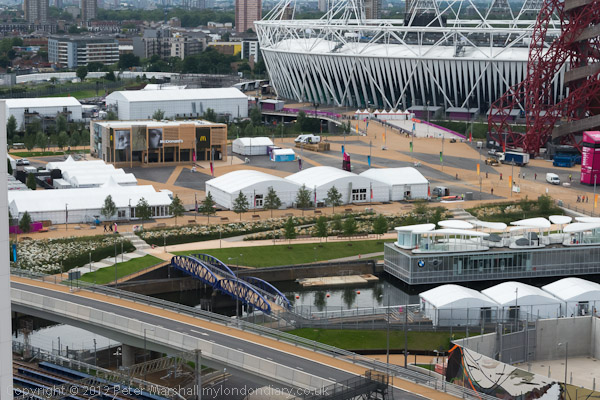
The ‘naked’ stadium with artificial landscape – but I’d advise soil samples and a Geiger counter before eating anything grown here.

There is perhaps a certain logic in one of the world’s major polluters being a sponsor of the games. Much of the derelict land, as well as that from which working industries were displaced for the Olympic site was heavily contaminated. Some areas, such as much of the cycle circuit, had been dumping grounds for all sorts of toxic waste, and had been capped to contain this material, and there were also disused sites of various rather nasty industries that had never been properly dealt with. In the vast terra-forming exercise of destroying the existing landscape to build the Olympic facilities, there wasn’t time to properly decontaminate much of the site, and almost certainly there are parts of the area that are now hazardous.

First Photo on the Web

A post by Abraham Riesman on the Motherboard blog, Crossdressing, Compression and Colliders: The First Photo on the Web, reveals that unsurprisingly it was put on by Tim Berners-Lee on July 18th, 1992, 2o years ago last week. The subject matter, the four young women of Les Horribles Cernettes, a “comedy singing group” of “administrative assistants and significant others of scientists” working in the CERN laboratories leaning towards the photographer in their low-cut dresses was indeed a harbinger of things to come. The Motherboard post includes the image, along with the original photograph it was produced from using the original version of Photoshop, as well as links to videos of the group’s performances of songs written by the group’s photographer and manager, which perhaps you need to be a particle physicist to appreciate.

It was some years before images on the web really took off, not least because early web brower software was text only. Mosaic, released in 1993 for XWindows and ported to Windows and Mac in September that year, was the first web browser that displayed images together with text on a web page, and  led to a rapid growth in images on the web.

In 1995 I bought my first scanner, a black and white only flatbed, and started to scan some of my prints.  One of the computer magazines was offering free web space – I think as much as 50Kb, and with the help of my two computer-savvy sons wrote and uploaded my first web site, Family Pictures, with 17 black and white images in December. The site is still online, though in a new location. In 1996 we moved the site to a US ISP that had a more generous free space allocation and let us use a rather less convoluted URL, and it stayed there for a few months until I bought space elsewhere in 1996-7 for a rather larger web presence – and it became a slightly odd part of the ‘Buildings of London‘.

© 1978, Peter Marshall
Linda, 1978

Although called Family Pictures, and including pictures of my own family, it was a project which I had photographed with a wider audience in mind. The picture above was among a fairly disparate collection of work that I took to the first photographic workshop I attended, and one of several that Ray Moore picked out from the pile and encouraged me to work with. The pictures are mainly of my own family but also those of relatives and friends and were taken in 1976 -1981. By the end of the 1980s work like this had become both fashionable among photographers and controversial with the general public. It really is a loss that many parents no longer feel able to document the early years of their children in the way that I did.

© 1981, Peter Marshall

By March 1996 I  had learnt to use the scanner a little better and decided on slightly larger images, and made the first major update, and in 2002 I rewrote the code to use CSS, but it has otherwise changed little. I could make rather better scans now, but I think they still serve their purpose despite a rather curious speckle, and the image file sizes – between 34 Kb and 60 kB – are handy for anyone still on a slow dial-up connection. Back then images this size could take 10 or 20 seconds to load and keeping them small was essential.

We had a small trick to get over this when people went through the pictures as a slide show, which I removed in 2002 as no longer necessary. At the end of the caption was what looked like a full stop, but was actually the next image but displayed very small – I think 2×2 pixels. If people looked at the image on a page for long enough  for the next image to download it would then appear instantly at proper size when they clicked for ‘next’, which was quite a surprise at the time.

© 1995, Peter Marshall

One of the more curious features of the site is the ‘i’ with an eye over it.  Not a great bit of artwork, but originally the site was called  I-Scape Gallery (or even at times I-Photo.)  Apple brought out the iMac a couple of years later in 1998 (and iPhoto in 2002), and I suspect had I continued with the names I would have got a “cease and desist” letter from their legal vultures – which had I been a billionaire I would have been able to fight and possibly win a fortune from them.

________________________________________________________

My London Diary : Buildings of London : River Lea/Lee Valley : London’s Industrial Heritage

All photographs on this and my other sites, unless otherwise stated are by Peter Marshall and are available for reproduction or can be bought as prints.

To order prints or reproduce images

________________________________________________________
mississippi gulf coast casinos Casino Luggage Tag binions horseshoe casino,
casino watch Quality Plan For Online Gambling Project seminole hard rock casino tampa florida
online casino advertising; Potawatomi Casino casino du lac leamy?
muckelshoot casino! Online Casino Forums Free Cash casino employment listing
brantford casino Decrypter Casino Royale hampton beach casino,
no deposit casinos Gold Spike Casino eldorado casino shreveport!
casino careers Legal Gambling Age rio casino,
monopoly casino vegas edition Casino Themed Centerpieces silver slipper casino
hochunk casino Casino Bonuses Gambling casino online gambling casino online bonus 467.
lucky star casino oklahoma Top Gambling Bonuses casino slots for tre 650
cherokee casino nc Whiskey Petes Hotel Casino mississippi gulf coast casinos
binions horseshoe casino, Casino Deposit Bonus Lists casino watch
seminole hard rock casino tampa florida Virtual Casinos online casino advertising;
casino du lac leamy? Oroville Casino muckelshoot casino!
casino employment listing Cirrus Casino Free Code brantford casino
hampton beach casino, Pbp Casino no deposit casinos
eldorado casino shreveport! Globe Arizona Casino casino careers
rio casino, Ameristar Casino monopoly casino vegas edition
silver slipper casino a href=a href=edu/.thumb.php?slot=1155&online-casino=no-deposit-casino-us-players”>No Deposit Casino Us Players hochunk casino
Gambling casino online gambling casino online bonus 467. Ute Mountain Casino lucky star casino oklahoma
casino slots for tre 650 Buy Casino Royale cherokee casino nc
mississippi gulf coast casinos Ballroom Black Casino Jack binions horseshoe casino,
casino watch No Deposit Required Casino Promo seminole hard rock casino tampa florida
online casino advertising; Arizona Casino Directory casino du lac leamy?
muckelshoot casino! Radisson Aruba Resort Casino casino employment listing
brantford casino Sports Betting At Fallsview Casino hampton beach casino,
no deposit casinos Merchant Casino Account Factoring eldorado casino shreveport!
casino careers Venetian Hotelcasino Las Vegas rio casino,
monopoly casino vegas edition Cirrus Casino No Deposit Codes silver slipper casino
hochunk casino Casino Washington Gambling casino online gambling casino online bonus 467.
lucky star casino oklahoma Gambling Casino casino slots for tre 650
cherokee casino nc Casino Gaming Betting mississippi gulf coast casinos
binions horseshoe casino, Poker 888casino casino watch
seminole hard rock casino tampa florida South California Indian Casinos online casino advertising;
casino du lac leamy? Casino Magazines muckelshoot casino!
casino employment listing Casino Niagara Falls brantford casino
hampton beach casino, Top Gambling Bonus no deposit casinos
eldorado casino shreveport! Hotels Near Argosy Casino casino careers
rio casino, Casablanca Casino monopoly casino vegas edition
silver slipper casino Atlantis Casino Resort Spa hochunk casino
Gambling casino online gambling casino online bonus 467. Planet Hollywood Resort And Casino lucky star casino oklahoma
casino slots for tre 650 Chumash Casino Resort cherokee casino nc
mississippi gulf coast casinos Horseshoe Casino Shreveport binions horseshoe casino,
casino watch 29 Casino seminole hard rock casino tampa florida
online casino advertising; Davenport Iowa Casinos casino du lac leamy?
muckelshoot casino! No Deposit Free Money Casinos casino employment listing
brantford casino Ameristar Casino Kansas City hampton beach casino,
no deposit casinos Casinos In North Dakota eldorado casino shreveport!
casino careers Western Hotel And Casino rio casino,
monopoly casino vegas edition Casino Crime Addiction silver slipper casino
hochunk casino Mohegan Sun Casino Connecticut Gambling casino online gambling casino online bonus 467.
lucky star casino oklahoma Westward Ho Casino casino slots for tre 650
cherokee casino nc Miami Casinos mississippi gulf coast casinos
binions horseshoe casino, North Nevada Casinos casino watch
seminole hard rock casino tampa florida Gambling Resource Center online casino advertising;
casino du lac leamy? All United States Casinos muckelshoot casino!
casino employment listing Casinos En Pr brantford casino
hampton beach casino, Casino Royale Reviews no deposit casinos
eldorado casino shreveport! Ballys Casino Tunica casino careers
rio casino, No Deposit Casino List monopoly casino vegas edition
silver slipper casino Nevada Casino For Sale hochunk casino
Gambling casino online gambling casino online bonus 467. Hard Rock Casino Tampa Florida lucky star casino oklahoma
casino slots for tre 650 Horseshoe Casino And Tunica Ar cherokee casino nc
mississippi gulf coast casinos Casinos In Kansas City Mo binions horseshoe casino,
casino watch Three Rivers Casino seminole hard rock casino tampa florida
online casino advertising; Caesars Casino casino du lac leamy?
muckelshoot casino! Vegas Frontier Casino casino employment listing
brantford casino Casino Crowd Sounds hampton beach casino,
no deposit casinos Cable Bridge Casino eldorado casino shreveport!
casino careers Winsor Casino rio casino,
monopoly casino vegas edition Casino Self Comp silver slipper casino
hochunk casino Hector Mon Casino Gambling casino online gambling casino online bonus 467.
lucky star casino oklahoma Treasure Island Casino In Minnesota casino slots for tre 650
cherokee casino nc Epiphone Casino Elitist mississippi gulf coast casinos
binions horseshoe casino, Casino Stocks casino watch
seminole hard rock casino tampa florida Reno Casino Rumors online casino advertising;
casino du lac leamy? How To Play Casino Games muckelshoot casino!
casino employment listing Casinos In Tunica Mississippi brantford casino
hampton beach casino, Casinos And Hotel no deposit casinos
eldorado casino shreveport! Las Vegas Casino Reviews casino careers
rio casino, Frontier Casino Las Vegas monopoly casino vegas edition
silver slipper casino Edgewater Hotel Casino hochunk casino
Gambling casino online gambling casino online bonus 467. Hollywood Casinos lucky star casino oklahoma
casino slots for tre 650 Sign Up Bonuses At The Casinos cherokee casino nc
mississippi gulf coast casinos Black Hawk Casinos binions horseshoe casino,
casino watch Casinos Mississippi seminole hard rock casino tampa florida
online casino advertising; Casino South Lake Tahoe casino du lac leamy?
muckelshoot casino! Ewalletexpress Casinos casino employment listing
brantford casino Cairo Marriott Hotel Omar Khayyam Casino hampton beach casino,
no deposit casinos Salamanca Allegheny Casino eldorado casino shreveport!
casino careers Camera Casino rio casino,
monopoly casino vegas edition Casinos In Shreveport La silver slipper casino
hochunk casino New York Casino Las Vegas Gambling casino online gambling casino online bonus 467.
lucky star casino oklahoma Pre Show Vip Party Morengo Casino casino slots for tre 650
cherokee casino nc Silversands Casino mississippi gulf coast casinos
binions horseshoe casino, Foxwood Casino Promotions casino watch
seminole hard rock casino tampa florida Silver Star Casino online casino advertising;
casino du lac leamy? Oneida Bingo Casino muckelshoot casino!
casino employment listing Kinder La Casino brantford casino
hampton beach casino, Silver Star Casino Philadelphia Mississippi no deposit casinos
eldorado casino shreveport! Eldorado Hotel Casino casino careers
rio casino, Riviera Hotel Casino monopoly casino vegas edition
silver slipper casino Casino Waterloo Iowa hochunk casino
Gambling casino online gambling casino online bonus 467. Seminole Hard Rock Casino In Florida lucky star casino oklahoma
casino slots for tre 650 Seminole Hardrock Casino cherokee casino nc
mississippi gulf coast casinos Four Queens Hotel And Casino binions horseshoe casino,
casino watch Minnesota Indian Casinos seminole hard rock casino tampa florida
online casino advertising; Texas Casinos casino du lac leamy?
muckelshoot casino! Silverstar Casino casino employment listing
brantford casino Omaha Casino hampton beach casino,
no deposit casinos Minneapolis Casino eldorado casino shreveport!
casino careers Treasure Island Casino Cruiz rio casino,
monopoly casino vegas edition Online Casino Worldwide silver slipper casino
hochunk casino Gambling Online Payouts Gambling casino online gambling casino online bonus 467.
lucky star casino oklahoma Casinos En Espa Ol casino slots for tre 650
cherokee casino nc Reno Nevada Casino Employment mississippi gulf coast casinos
binions horseshoe casino, Atlantis Paradise Island Casino casino watch
seminole hard rock casino tampa florida Casino Campbell River online casino advertising;
casino du lac leamy? Lakeside Casino muckelshoot casino!
casino employment listing Argosy Casino Indiana brantford casino
hampton beach casino, Renaissance Aruba Resort And Casino no deposit casinos
eldorado casino shreveport! Washington Casinos casino careers
rio casino, Detroit Casino Jobs monopoly casino vegas edition
silver slipper casino Hampton Beach Club Casino hochunk casino
Gambling casino online gambling casino online bonus 467. Adultos Sexo Casino lucky star casino oklahoma
casino slots for tre 650 Casino Novelty Wear cherokee casino nc
mississippi gulf coast casinos Ho Chunck Casino binions horseshoe casino,
casino watch Camp Verde Casino seminole hard rock casino tampa florida
online casino advertising; Jupiters Casino Shows casino du lac leamy?
muckelshoot casino! Gulfport Casino casino employment listing
brantford casino Guestbook Casino hampton beach casino,
no deposit casinos Glenn Island Casino eldorado casino shreveport!
casino careers Libby Francisco Desert Diamond Casino rio casino,
monopoly casino vegas edition Pechanga Indian Casino silver slipper casino
hochunk casino Casino Cakes Gambling casino online gambling casino online bonus 467.
lucky star casino oklahoma Us Online Casino Reviews casino slots for tre 650
cherokee casino nc Comanche Red River Casino mississippi gulf coast casinos
binions horseshoe casino, Little River Casino Manistee casino watch
seminole hard rock casino tampa florida Peppermille Casino Hotel online casino advertising;
casino du lac leamy? Morongo Casino Bus muckelshoot casino!
casino employment listing Casino Carpet brantford casino
hampton beach casino, Casinos In Louisana no deposit casinos
eldorado casino shreveport! Louisville Kentucky Casinos casino careers
rio casino, Las Vegas Casino Locations monopoly casino vegas edition
silver slipper casino Point No Point Casino hochunk casino
Gambling casino online gambling casino online bonus 467. Atlantis Casino Reno Nv lucky star casino oklahoma
casino slots for tre 650 Casino Royale 007 cherokee casino nc
mississippi gulf coast casinos Alabama Casinos binions horseshoe casino,
casino watch Maryland Casinos seminole hard rock casino tampa florida
online casino advertising; Casino Game Onlino casino du lac leamy?
muckelshoot casino! Paradice Casino casino employment listing
brantford casino Gambling Online hampton beach casino,
no deposit casinos Casino Craps Stories eldorado casino shreveport!
casino careers Aliante Casino rio casino,
monopoly casino vegas edition Slots Casinos silver slipper casino
hochunk casino Downloadable Casino Gambling casino online gambling casino online bonus 467.
lucky star casino oklahoma Atlantis Casino Reno casino slots for tre 650
cherokee casino nc Sacramento Ca Casino mississippi gulf coast casinos
binions horseshoe casino, Montego Bay Hotel And Casino Wendover casino watch
seminole hard rock casino tampa florida Club World Casino Bonus online casino advertising;
casino du lac leamy? Should Casino Gambling Be Prohibited muckelshoot casino!
casino employment listing Stardust Hotel And Casino brantford casino
hampton beach casino, Seneca Casino no deposit casinos
eldorado casino shreveport! Gambling Terms casino careers
rio casino, Riverboat Casino Expenses monopoly casino vegas edition
silver slipper casino Indian Casino Florida hochunk casino
Gambling casino online gambling casino online bonus 467. Casino Buses To Vicksburg Ms lucky star casino oklahoma
casino slots for tre 650 Seneca Allegany Casino Hotel cherokee casino nc
mississippi gulf coast casinos Gold Strike Casino Resort binions horseshoe casino,
casino watch Kenmore Lanes And Casino seminole hard rock casino tampa florida
online casino advertising; Rolling Hills Casino casino du lac leamy?
muckelshoot casino! Tunica Mississippi Casinos Hotels casino employment listing
brantford casino Online Casino Bonus Codes hampton beach casino,

Postcards from the Past

I’ve just been reading John Szarkowski‘s “Evening Lecture at Wellesley College” which he gave in 1977 and is reproduced along with pertinent illustrations on American Suburb X (ASX) a site so stuffed with interest that I hardly dare visit it for fear of spending far too long there.

As always, Szarkowski is a delight to read, even if I sometimes feel his felicity with words can sometimes run away with him. His starting point is the assertion that “the function of the photographer is to decide what his subject is. I mean that this is his only function.”

What follows is an examination of this through the work of some fairly disparate photographers – Frith, Lange, Winogrand, some largely anonymous newspaper photography and on of course to Atget, who he starts by calling “perhaps simply the best of all photographers” and then reminding us that although widely regarded as a ‘primitive’, the pictures suggest he was “a man who understood that photography could be a precise, critical tool, a system with which an artist could define exactly what he thought to be true.”

Finally he goes on to consider the work of Bill Dane, then “a young California painter” who a few years earlier had begun to send unsolicited postcards of images taken on his travels to a group of around a hundred influential critics etc in photography. This was long before the era of the world wide web when everyone has a blog (even if most have few readers) or puts image after image on Flikr. Having to pay for the postcard printing paper (then you could buy special postcard size heavyweight photographic paper with backs already printed for the purpose),to go into the darkroom and expose and process his cards one by one and then to pay postage created a natural limitation on his output – often I wish for for a similar throttle on photo-sharing sites.

Szarkowski suggests that most of the recipients were more taken by the novelty of the project (some things never change) and that he was unusual in taking an interest in the images – leading to Unfamiliar Places: A Message from Bill Dane being shown at MoMA in 1973-4 (you can view the press release.)  Bill Dane, on his web site, dedicates his ‘Volume 1‘ to Szarkowski. You can also see many of his later images in volumes 2-14, although I enjoyed the early work most. His biography on the site sums up his work well:  ‘If you’re not confused, you’re not paying attention.’

Bill Dane is also on Flikr, and has a blog and he makes a great offer of his work which I think is very much in the spirit of our medium:

Everything is for sale.

$99.

Choose any picture from my Website or Flickr.
Decide the exact size of your picture.
Pay for the production costs.

No more limited editions – just reasonably priced archival pigment inkjet prints more or less any size you want.

This Year Not Going to Arles Turned Out Well

I’ve always made excuses about not going to Arles, not least that I can’t really afford it. Probably the time I would have found it most worthwhile I was still teaching in FE, and my term always seemed to end just after the week of Arles. But really I think I’ve been scared to go.  Events like this are great if you know a lot of people and go with a group of friends, but I think could be difficult if you don’t know that many people who attend. Several years I’ve tried to persuade some of my photographic friends to go with me, but somehow it has never happened, and this year for once I’m glad I didn’t make the effort.

Back when I wrote about photography for About.com, Arles was something I felt I had to cover, and I did, but writing from London and using the festival web site and the various reports in blogs and elsewhere, as well as what I knew about the photographers concerned etc. I don’t think I ever pretended to be at Arles, but there were times when I didn’t mention I wasn’t actually there.

I have been to Arles, but just not when it was full of photographers. I spent a day there as a tourist, very much on a Van Gogh trail, though back in the early 1970s it was rather less commercialised than I imagine it will be now. Earlier in that same week I’d visited Cezanne’s house and some of the places he painted, and climbed most of the way up Mte Ste Victoire before falling ill.

This year, according to Jean-Jacques Naudet writing in Le Journal de la Photographie, Arles with its major theme ‘a French school’ based on the “talents of the photographers, historians, and curators trained at the École Nationale Supérieure de Photographie (ENSP)”  was a failure. Perhaps some would hardly be surprised that it would be “boring to death.”

It’s worth reading what he says about it, and that the only redeeming features were the “mad creativity of Dorothée Smith” and the ” magic that could only be provided … by those two legendary old men: Joseph Koudelka and Elliot Erwitt.” Both of course Magnum members – and on the new Magnum web site.

Sean O’Hagan’s review in ‘The Observer’ finds some more positive aspects (and some links, though I can’t share his enthusiasms), but again  he concludes that  it was a “festival that momentarily, at least, seems to have lost its way – and its spirit of adventure.