Close Down Yarl’s Wood

The last of three events linked to International Women’s Day I attended was a picket close to the offices of SERCO, organised by Feminist Fightback, All African Women’s Group and Black Women’s Rape Action Project. Unlike the Million Women Rise march, but as also the Dignity! Period rally, this involved both women and men.

Few people recognise the name SERCO, though increasingly around the world it is running their lives. Around the world, governments are turning to SERCO to run what used to be public services – hospitals, prisons, schools and even military services. Increasingly what used to be public is being sold off and run for profit. When they think of a way to charge for the air that you breathe, it will be SERCO – or another company like it – collecting the cash.

In the UK, if you go to prison it may be run by SERCO, and you will be taken there in a SERCO van. SERCO also own and run Yarl’s Wood Immigration Removal Centre, where around 400 women and children seeking asylum are imprisoned.

Around 70% of the women at Yarl’s Wood at any time claim they are survivors of rape. Conditions are appalling, with inadequate food, racist and sexist abuse, and profiteering from the sale of essential items. Apparently SERCO were forced to investigate claims that women there weren’t getting the miniscule government allowance of 71p a day passed on to them, and according to the women they have at times been prevented from contacting their lawyers.

Women there have responded with hunger strikes as well as letters and petitions to Gordon Brown and others demanding investigation of their treatment.

SERCO London picket

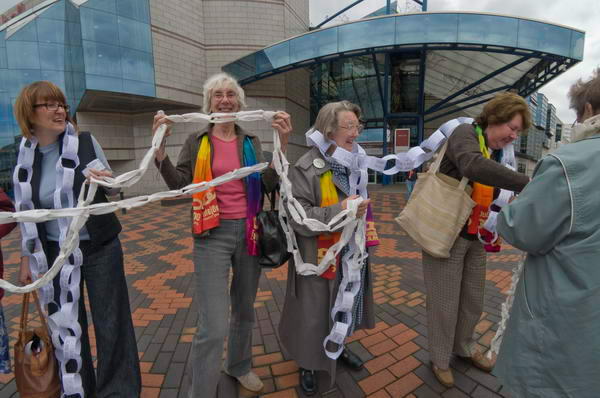
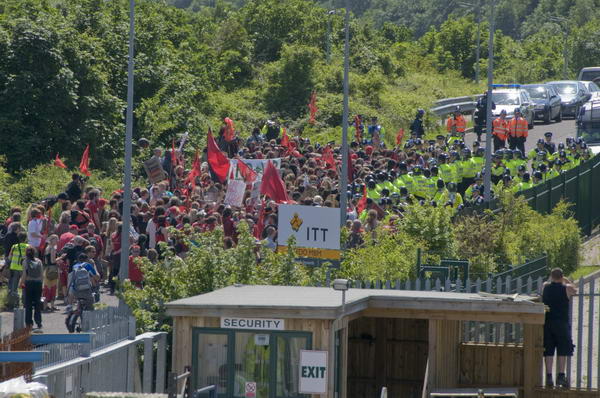
SERCO have a Research Institute in London in a court off High Holborn, and a picket there after the Million Women Rise event on Saturday March 8.

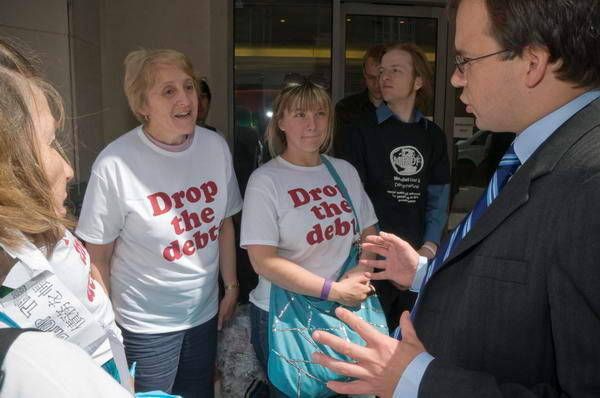
Around 40 people turned up to demand the immediate closure of Yarl’s Wood and an end to the criminalisation of rape and torture survivors. They also called for an end to SERCO and other private companies profiting from the oppression and misery of others.

Detention centres such as Yarl’s Wood are in any case a nasty stain on British justice, going against all our long-held principles of fair trial and the opposition to arbitrary detention dating back at least to the time of Magna Carta, signed a short distance from where I live.

American Bar Memorial to Magna Carta, Runnemede
American Bar Memorial to Magna Carta, Runnemede (more pictures)

That such centres should so badly treat those held inside them for the profit of their shareholders is reminiscent of the worst days of the slave trade – the abolition of which we celebrated last year.

Million Women Rise

Just over a week ago I photographed the London march of the ‘Million Women Rise‘ campaign on International Women’s Day, March 8. The weather was dull but the several thousand women who took part in this all-woman event were generally exultant. The banner at the front of the march proclaimed ‘Million Women Rise – together we can end violence against women …’ and it was aimed at all forms of male violence against women, and supported by women from a very wide range of groups.

Million WOmen Rise - Start of march

Behind it there appeared to be a remarkable solidarity between very disparate groups, with women from all kinds of organisations (and none), including the WI (Womens Institute) and X:Talk (offering free English classes for sex workers) all taking part in an event dedicated to the dignity of women across the world.

Of course there were many placards, banners and T-shirts from all of the organisations, but what moved me most were those women carrying obviously very strongly personally felt statements against male violence.

Man Stop to Beat Woman with Belt

This was an all-women march and to respect this I had to work from the sidelines. Normally I like to photograph from the middle of things as much as possible. I did feel a little of an outsider, though it was good to be waved at and greeted by many of those who knew me from other events I’ve photographed over the years – including at previous International Women’s Day events that have welcomed male support.

I photographed the march as it entered Trafalgar Square, and then decided I needed a rest rather than stay to hear the speeches, and made for a nearby pub, getting there just before it became crowded with marchers. I wasn’t sure if a ‘Shropshire Lass’ was the most appropriate beer for the day, but can report it’s a very decent blonde bitter.

Later I was dismayed to hear that at least one of those expected to speak had been prevented after the organisers had read her draft text. This kind of censorship didn’t seem to be at all in the spirit of the event.

Photographing the World – in London

Last night I dreamed I was presenting a show of my work to my wife and grown-up son in a curiously expanded version of my front room. These were a set of pictures that had been put in the corner and forgotten for a long time, several large prints mounted on polystyrene that was beginning to fall to pieces. But the most curious piece was a large black cloth-bound bible, which, when you opened it, it kind of folded out to give not a book, but a small prospectus of the show, four prints.

The only picture I remember well was a landscape image. From the cathedral tower visible in the distance we worked out that it was taken near Chichester. A metal fence ran across the foreground, but on closer inspection you could see that only part of it was an actual fence, and the rest was a shadow of a fence. The posts (and shadows) divided the space into a number of vertical strips, and if your eye continued up the print, across the fairly flat scrubby landscape, you could see that various features in the distance echoed this division, fitting neatly into the strips across the image. It was a subtle but powerful image, taken in such an ordinary place. Another image was more striking, I don’t remember its details, but it reminded me of Giacomelli or Fontana, some kind of more clearly graphic – and perhaps Italian – landscape. (I showed work in the same festival as Giacomelli in Poland in 2005 – five years after his death; two years later I was back speaking at the same festival and Fontana’s work was showing – but he didn’t come. I’m not a great fan of either man’s landscape work, so why should I dream of having done something like it?)

Several of the pictures had been bent or folded, or otherwise damaged, partly by attempts to push a vacuum cleaner into the (non-existent) corner where they were stored. The overall title of the show, as the ‘bible’ stated was something like ‘Photographs Around the World‘.

I woke up and gradually realised that it was all a dream, and that I hadn’t actually taken these pictures, and I felt distinctly disappointed. I did go to Chichester last year, but the scene didn’t resemble anything I remember as we walked around the area there.

Well, I’ve no idea what this dream meant (if dreams mean anything) but there was perhaps a slight connection with part of the work I’d been doing the previous day, which included preparing some images of rather untidy artists studios for use in the final issue of the magazine ‘Art and Cities‘, due out shortly. But the title of the ‘show’ rather interested me, as I have a well-deserved reputation for seldom photographing anything beyond the reach of a Travelcard.


A corner of David Hepher’s studio in Camberwell

I’ve long felt that living in London you don’t have to travel, because the world comes to you. So, as yesterday’s post here showed, on Saturday I started by photographing a demo about Tibet. I left that as it passed Trafalgar Square to catch the Rally for Dignity and Democracy in Zimbabwe organised by ACTSA as a part of their Dignity! Period campaign to provide sanitary pads for the women and girls of Zimbabwe. Mugabe’s madness has destroyed the economy and caused unbelievable levels of inflation, making such essential supplies unobtainable.

For various reasons the rally, held on International Womens Day, was very badly attended, despite high level trade union support – with the TUC General Secretary coming to speak. Probably many who might otherwise have attended were instead at Hyde Park for the start of the Million Women Rise march in London.


Brendan Barber speaking in Trafalgar Square

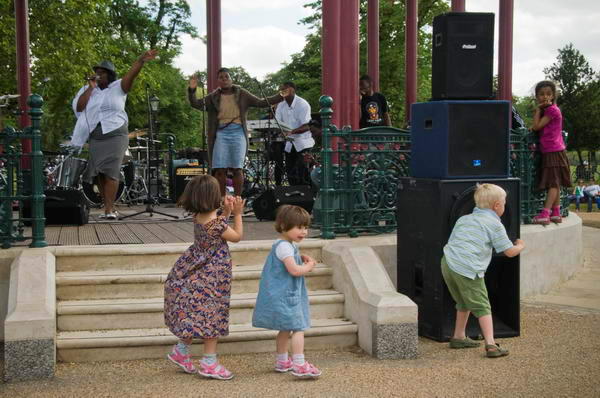
Later that afternoon I also called in at the regular weekly Zimbabwe Vigil, started in 2002 and continuing to protest at human rights violations in Zimbabwe. As usual there was drumming and dancing as well as handing out of leaflets.

Peter Marshall

Trafalgar Square, 20 to 1

The Met obviously thought that the second ‘Freedom to Protest‘ event scheduled for Saturday afternoon posed a great threat to their credibility, although surely even they can’t have felt it was any kind of real threat to public order. But in January they had been caught a little with their pants down – and it wasn’t going to happen again. Police outnumbered the small group of demonstrators who gathered in Trafalgar Square by at least 20 to 1, and there were many more extra on duty in Parliament Square and elsewhere across Westminster.

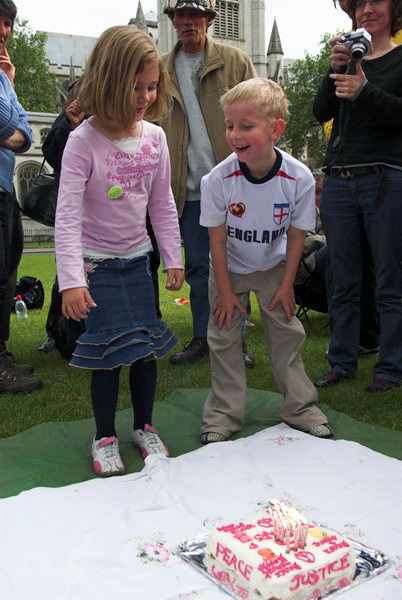
So we had hundreds if not thousands of extra police on duty around Westminster, costing us many thousands of pounds to save a little face for the police. And in the event, a demonstration that was just a little street theatre and would have best been completely ignored by the farces of law and order – a typo on my part that actually became reality when the FIT phtoographer ran scared, chased by a protester with a shopping trolley offering free cakes, taking refuge by running up the stairs of the National Gallery.

The only other real action by police I’m aware of was to stop and search a young protester walking down Whitehall, making him remove his balaclava. They appear to be using law against terrorism to impose their fashion sense.

He was on his way to join the continuing anti-war protest in Parliament Square, where Brian Haw will have been for 2500 days early next month. Eventually a small group of the protesters did walk there without apparently being noticed, although the police did trail them as they walked out of the square all the way to a pub on the Horseferry Road.

More pictures from the day on My London Dairy.

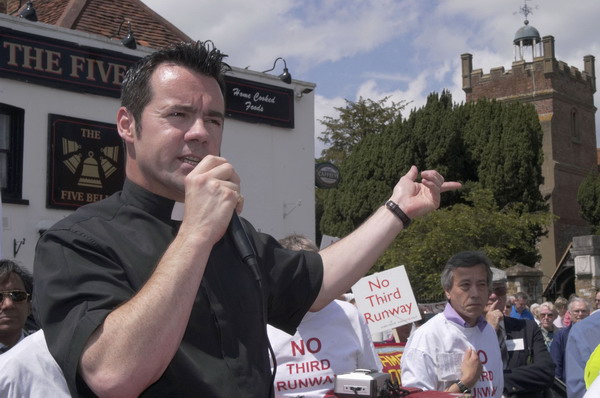
Plane Stupid – Heathrow Expansion

I was too busy sorting through thousands (literally) of pictures for my talk next week to go up to Parliament Square yesterday morning to photograph the lobby and rally about a referendum over the updating of the European union, so I missed getting a picture of Plane Stupid activists who had climbed onto the roof of the Houses of Parliament and hung two large banners down the front of the building, one reading ‘BAA HQ‘ and the other ‘no third runway www.planestupid.com

It was a protest not just at the expansion of Heathrow, but also at the false nature of the consultation process, where large parts of the consultation document were written by BAA and the government has already decided (barring horrific accidents – such as almost happened recently on the approach over Hounslow when a plane lost power and had to glide in, only just making the airport) on not just a 3rd runway but also a 6th terminal.

Apparently as well as hanging the banners, protesters also made paper planes of the secret documents they had obtained showing government duplicity and fixing of the consultation process and flew them down into the MPs car park.

Photographically I don’t regret the missed opportunity, because I think it only too likely that any pictures I had taken of the event would have been at least as boring as those published in all the papers and Internet accounts I’ve seen. Perhaps one of the 3 men and 2 women who carried out the protest took a camera and made some better pictures?

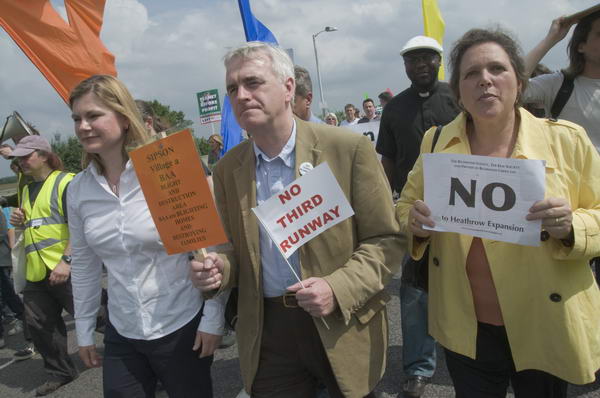
These are protesters on a rooftop at Heathrow in August, and marchers in London last December:

Of course the protest has been going on ever since the plans were first revealed to a stunned public, and I photographed the local protesters in Sipson and Harmondsworth in 2003.

Of course Gordon Brown doesn’t like the demonstrators, deploring their actions, although in fact this and other similar protests have actually been very useful in pointing out gaps in security. Brown doesn’t like it because it reveals the facts about the skewed consultation process and the alliance between the promoters of unbridled airport expansion and the government (an alliance that started in the 1940s, when the public were first duped about the setting up of a civil airport at Heathrow.) He doesn’t like it because it highlights the absurdity of his claims to an environmental policy.

I grew up under the flight path in Hounslow, in my dreams able to reach up from my back garden and touch the planes as they roared over. I live a short bus ride from the airport (though my post code excludes me from the consultation over flight paths – all those planes that come over me must have lost their way!)

Heathrow was always in the wrong place. Continued expansion over the years has made its position more and more untenable. It makes no more sense than Croydon. We should have begun a new airport to replace it thirty or more years ago. There shouldn’t be any debate at all over its expansion, but simply about how fast it can be run down.

Peter Marshall

Another View: Jason Parkinson

I first met Jason Parkinson when he was illegally detained by police while covering a demonstration at the Harmondsworth and Colnbrook detention centres in west London in April 2006. Police were refusing to accept that he was a journalist and denied that his press card, issued by the UK Press Card Authority was a real press card. On the back of the card it says “The Association of Chief Police Officers of England, Wales and Northern Ireland and the Association of Chief Police Officers in Scotland recognise the holder of this card as a bona-fide newsgatherer”, but while this may be so, it often doesn’t seem to be good enough for the officers on the street.


Jason shows his press card to no avail at Harmonsdworth

Jason called out to the three of us standing on an earth bank a few yards away taking pictures, asking us to show our press cards and confirm his was genuine. This left me in a little of a quandary, as when getting things ready for the day I’d noticed that mine had expired at the end of the previous month, which had meant I’d had to hold it with a strategically placed thumb when I waved it at police earlier. Fortunately another colleague jumped forward with a valid card and confirmed that Jason’s was genuine, although even then he was not immediately allowed to exit the police bubble.

It’s typical of Jason that he was in there with the demonstrators covering events, as the strapline from his blog has it, “from an uncompromising angle.” Since then I’ve met him covering many events, and also suffered similar treatment from police who’ve refused to accept my press card as genuine – some officers appear to react rather negatively to the fact that it says ‘NUJ’ prominently on it.

Of course we shouldn’t need a press card. Citizens in a democratic countries enjoy various freedoms, including the right to photograph in public places, freedom of assembly and so on. But no longer so in England in areas designated under SOCPA or indeed most places where a political demonstration is taking place, where our police often assume arbitrary powers and misuse provisions intended by Parliament to prevent terrorism.

But having a press card doesn’t solve problems, nor does the existence of agreed guidelines. In his blog post on the police pay demonstration, Jason writes ‘This officer, CO35, then decided to ignore Metropolitan Police guidelines and halted photojournalists from doing their job. Not just once, but twice. When asked if he knew he was restricting freedom of press CO35 answered by saying, “go away”.’ The only thing that surprises me is the mild language of his response – but of course he knew that Jason was recording every word on video, and that the footage would almost certainly be published.

Its always interesting to me to see how other photographers have covered events that I’ve attended, and on Jason’s blog there are several recent examples of events that you will also find on ‘My London Diary’, including my view of the Anonymous protest against Scientology, Police Pay and Freedom of Protest events. But Jason also gets to places and stories that are harder to reach, and February’s entries include a lengthy report on the ‘Beyond Slavery‘ conference and an interesting feature on Football for Change Iraq.

O I L and the second invasion of Iraq

Three letters O I L were always the key to the otherwise inexplicable invasion of Iraq. Oil, state owned, was Saddam’s greatest – almost his only – asset. The giant multinationals wanted rid of him so they could make a killing – and now they are getting their way through the Iraqi government. The first invasion was military, the second is economic. The first has been a disaster for the Iraqi people, and the second will ensure that disaster continues long-term.


Pirates in New Bond St

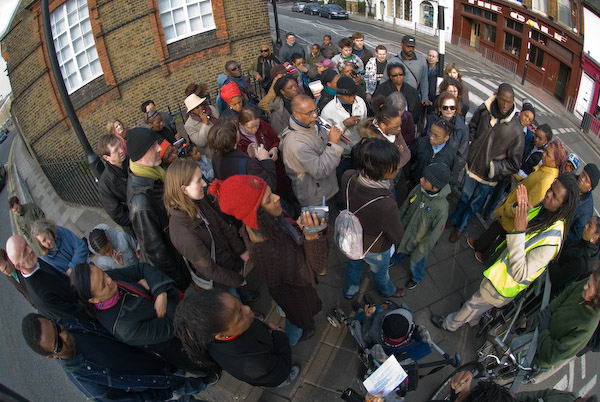
The tour last Saturday was a fun event – about a very serious problem. People enjoyed dressing up and it certainly helped to gain some attention from the West End crowds.

More on My London Diary

Police Apology for Photographer

The good news came today that photographer Marc Vallée, injured by police while photographing the ‘Sack Parliament’ event in Parliament Square, London on 9 October 2006, has accepted an apology and out-of-court settlement from the Metropolitan Police. You can also read some comments about the case on the NUJ site.


Police medics treat Marc after he was assaulted by police

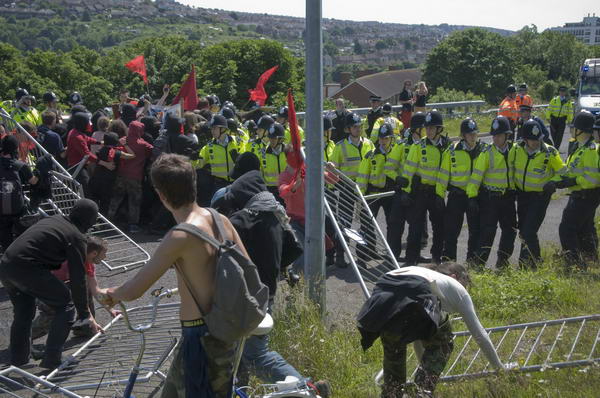
The incident happened after a stand-off between demonstrators and police on the edge of the square facing the Houses of Parliament. This involved around 20 demonstrators who made an attempt to push through a police line, while perhaps a hundred more watched, together with a large number of media. Marc was assaulted despite very obviously being a photographer rather than a demonstrator, holding a camera, carrying a camera bag and with his NUJ press card clearly visible. Like the rest of the press present he had already been asked to show his press card, and is in any case well known to many of the police – as are the others of us who photograph such events. The attack on him was clearly an attack on a member of the press, and could have happened to any of us.

The policing on the day was entirely an over-reaction to a threat of no consequence posed by a small number of anarchists, mainly students, whose actions are largely symbolic and at most threaten minor damage to property. They might well graffiti a wall or even throw an egg or custard pie a politician, but they are in no way a serious threat.

I was stunned on arriving in Westminster that day to find more police than I’ve ever seen before (or since unless you count their plain-clothes demonstration for more pay.) I don’t know the official number, but my estimate was around a thousand.

As well as forming a line along the front of the Houses of Parliament there were more in Parliament Square and in the other streets around, who apparently stopped many of those intending to come to the demonstration, threatening them with detention under an Act brought in to prevent terrorism.

Of course I’m against terrorism. But I am opposed to the use of law to prevent the normal freedom of movement and of political protest. As too are many individual police I’ve talked to at demonstrations.

It was inevitable that a small group of demonstrators would confront the police. Their aim wasn’t to blow up Parliament but simply to block traffic by sitting down in the road in the front of the buildings.


Police line up to face demonstrators

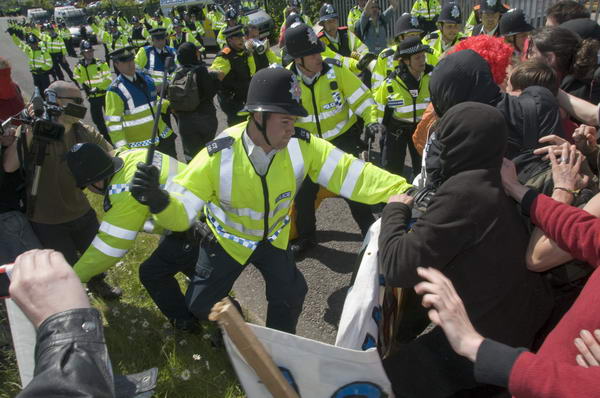
A ritual scrum attempts to push through the police line

But the line holds

A few minutes later, the police charged the demonstrators and surrounded them, along with a large number of people who had done nothing more than stand in the square and watch. I left more or less straight away, but some other press who stayed inside were apparently not allowed to leave, being treated exactly as the demonstrators. The demonstrators were then held for several hours, with the police making occasional violent raids inside their cordon to grab individuals and take them to the waiting police vans, the others were only allowed to leave after giving police their details.

Various others around the square were also set on by police and taken inside the cordon, or in a few cases put directly into police vans. Most protested they were simply bystanders and had taken no part in the demonstration.


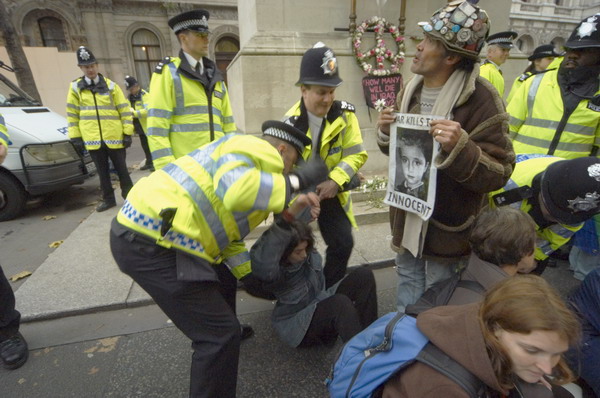
An incident later in the day involving gratuitous violence on a man protesting his innocence but making no attempt to resist his arrest.

Despite my press card, I was also threatened with arrest and issued a warning that I might be committing an offence under SOCPA.


The officer in charge reads the announcement that those present are being detained

Among those bundled into a police van was one man attending the event as a ‘legal observer’ in a high visibility jacket. A woman walking her bicycle across the square against the flow of traffic in the one-way system was also manhandled by police briefly before other officers rescued her.

It was a day the seriously eroded my respect for the police force. They got the intelligence severely wrong, totally misunderstanding the nature of the event. They showed a lack of control, acting with totally uncalled for violence on a number of occasions. They threatened the media – and injured one of them. You can see more of what happened in my account and pictures on My London Diary.

In any other job, those responsible would have been severely reprimanded, but I was later to hear a senior officer defending the actions of the day. It is rare to get an apology from the police, but I think almost all of us who were there deserve one, and I’m very pleased to see that Marc has received not only an apology but also a settlement.

Media Attacks on Muslims

Sometimes it’s hard to make interesting images of important events. Often things just aren’t that interesting. Press photographers, at least in the UK tend to ‘set up’ a picture, but its something I always try to avoid. We don’t seem to have the clear distinction between news and features that is always made in the USA, where the kind of things that many British newspaper photographers do as a matter of course would soon get them fired.

But at least it is rather more difficult for photographers to completely fabricate stories. Or to ask other people to make up stories and phone them in to you. One of the more appalling stories to hit the UK political blogs recently is a leaked email apparently from Diana Appleyard of the Daily Mail offering £100 to anyone who wanted to phone her with “anonymous horror stories of people who have employed Eastern European staff.” I don’t know how many responded to her call, but it seems a golden opportunity for spreading nasty racist slurs – and for the Daily Mail to stoke the prejudices of its readership.

But it was the Daily Express where in 2004 NUJ members objected to the pressure being put on them to write articles denigrating gypsies, who ran the headline: “CHRISTMAS IS BANNED: IT OFFENDS MUSLIMS” (our Muslim relatives send us Christmas Cards – and expect to get them,) and much more designed to stir up and encourage anti-Islamic prejudice. And on Thursday, around 20 people picketed the Express offices on Lower Thames Street with placards asking for an end to media attacks on Muslims.


My framing cropped the placard that said “Stop Media Attacks on Muslims” but otherwise I think it was the best picture I took.

You can read more about it, and see a few of the pictures I took at the event on My London Diary, where I hope you will notice some changes to the site. It took a lot of fiddling to get the new design to work in Internet Explorer 6, which just doesn’t do some things right. It isn’t really possible to get it to work properly, and the site is best viewed in more up-to-date browsers such as Firefox, where the improved navigation really seems to help.

Back to thinking about photographing events that lack the kind of visual interest that photographers would like. I think photographers have got to sometimes admit that a particular event was not that visually interesting, and be prepared to turn in pictures that show it as it was. Setting up pictures is putting a foot on a slippery slope and we owe it to those who see our pictures not to mislead them.

One in Love

One of my photographer friends came up to see what was happening while I was taking pictures of the ‘Reclaim Love‘ party at Piccadilly Circus on Saturday and talked to me briefly before turning around and making for Oxford Street, where he was going to photograph what he called “the real world.

In so far as the world has gone mad, of course he was right. Spending money we don’t have on goods we don’t need is what keeps our economy expanding, generating ever-increasing consumption to fuel global warming. Cheap clothes and consumer goods have proved far more effective than bread and circuses, and the new religion of the masses is a far more potent opiate than Marx’s old foe.

Of course it can’t continue for ever. Exponentially increasing consumption is not in the longer term compatible with a finite planet. As someone who has been talking about such things for 40 years – and in some ways as least living as if it mattered (though I have a fairly comfortable hair shirt) I find it heartening that a few more people now realise this too, although it may be too late to save civilisation – and certainly if it has a future it is not as we know it.

But the good news is that it might be rather better. It could be much more centred around people (though very possibly less of them) and less on profit. Events like ‘Reclaim Love’ are perhaps a small foretaste of one possible future.


(C) 2008, Peter Marshall

Of course as well as things like this, we also need the kind of more obviously political actions – such as those I’ve photographed in London that were the subject of my show for FotoArte in Brasilia. And the kind of practical things that were also included in the example of the Manor Gardens allotments, another place were people mattered.

But there is also bad news. Although those of us in the wealthier countries cause most of the problem, our wealth also insulates us to some extent from the consequences, as too does our geography. Sea level rise and the perturbation of climate through global warming will cause more frequent and harsher catastrophes, in particular the flooding of low lying countries without the protection of expensive sea defences.

On a much more local scale, the Manor Gardens allotment holders are now sadly having great problems with their temporary accommodation on the Leyton Lammas Lands. The soil was taken there from the highly contaminated Olympic site, has been treated – which may have removed contamination, but has also removed the living elements, including worms which are vital to a healthy structure. It also appears to have been put on top of a barrier which prevents proper drainage and is currently waterlogged.