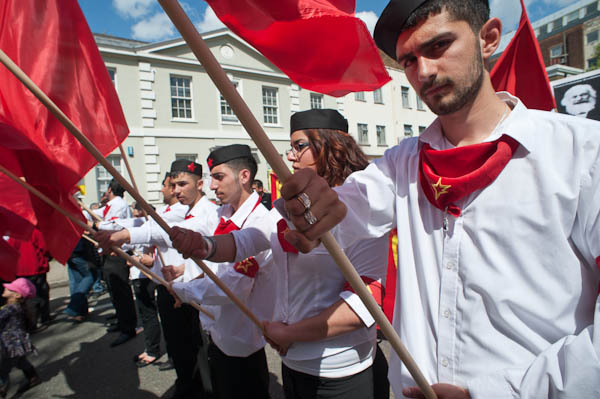
Long Live May Day


1st May 2009

Today I’ll be out photographing May Day in London. There is a march every year to celebrate International Workers’ Day, organised by the London May Day Organising Committee,  and there has apparently been some kind of socialist celebration on May Day in London since the 1880s, although it was apparently only in 1904 that the Sixth Conference of the Second International in Amsterdam called for “all Social Democratic Party organisations and trade unions of all countries to demonstrate energetically on the First of May for the legal establishment of the 8-hour day, for the class demands of the proletariat, and for universal peace.” (thanks to Wikpedia for the quotation.)
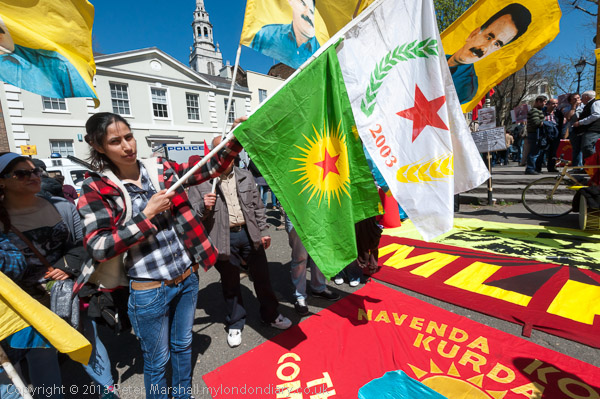

1st May 2013

And while we may generally have the 8-hour day (or something even shorter) there is certainly a long way to go on the demands of the working class and universal peace.  The socialists of course took over May Day from its general celebration as a Spring festival, which had earlier in the 19th century become promoted as a traditional festival with the coronation of May Queens, something else I’ve also photographed.But until I gave up teaching, I was seldom able to celebrate May Day unless it happened to fall at a weekend. May Day this Wednesday is for most workers a normal working day, and we have instead a rather silly Bank Holiday on the first Monday in May.
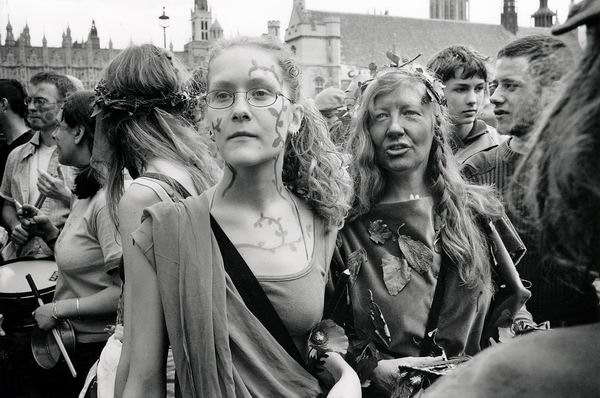

1st May 2000

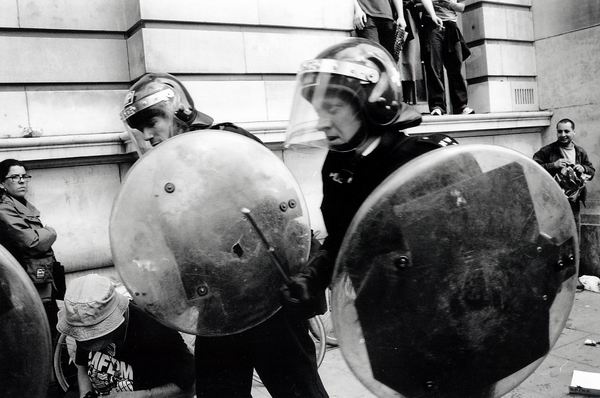
Possibly the first May Day celebrations I photographed (or at least the earliest I’ve shared online) were on May 1st 2000, which was a Monday, and the events in Parliament Square and elsewhere were an anti-capitalist event rather than the rather more staid trade union and socialist march.

1st May 2000

Later in the day things turned rather nasty and police charged the protesters, a small number of whom had broken the windows of a McDonalds on Whitehall.

1st May 2003

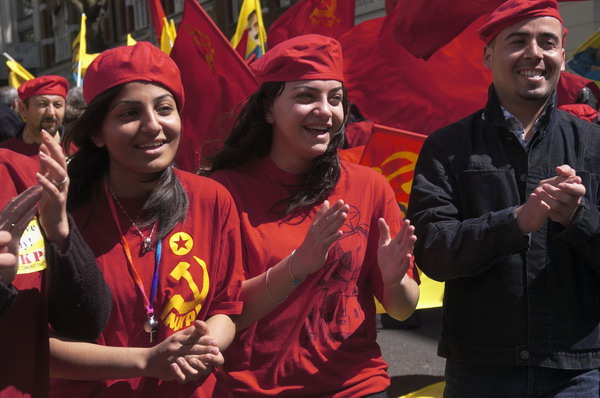
It was not until 2003 that I first posted pictures from the official May Day March in London, though it wasn’t the first time I had been there, rather the first time I’d photographed it digitally. As usual I was very struck by the various socialist groups from London’s ethnic communities that were taking part.  There is a long list of supporting groups on the May Day Committee‘s site which as well as other trade union and community groups includes ” organisations representing Turkish, Kurdish, Chilean, Colombian, Peruvian, Brazilian, Portuguese, West Indian, Sri Lankan, Indian, Pakistani, Bangla Deshi, Kashmiri, Cypriot, Tamil, Iraqi, Iranian, Irish, South African, Nigerian migrant workers & communities”.

But even then, once I’d photographed that march, I went on to photograph anti-capitalists also celebrating May Day in their own way, and this May Day I’ll also be with friends celebrating it rather than listening to the speeches in Trafalgar Square, though I may manage to cover some other protests later in the day.

My London Diary has pictures from May Day for every year since 2003 and I’ll have more to add after today’s events. Long Live May Day!

______________________________________________________

There are no adverts on this site and it receives no sponsorship, and I like to keep it that way. But it does take a considerable amount of my time and thought, and if you enjoy reading it, a small donation – perhaps the cost of a beer – would be appreciated.

My London Diary : London Photos : Hull : River Lea/Lee Valley : London’s Industrial Heritage

All photographs on this and my other sites, unless otherwise stated, are taken by and copyright of Peter Marshall, and are available for reproduction or can be bought as prints.

To order prints or reproduce images

________________________________________________________
Angry Drivers

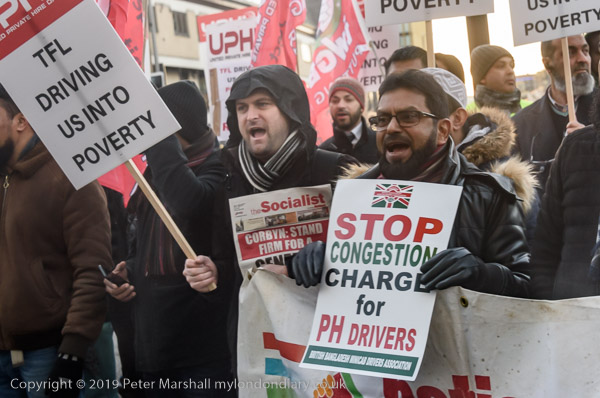
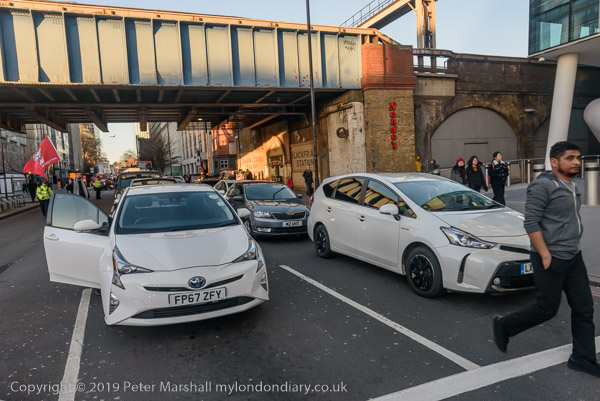
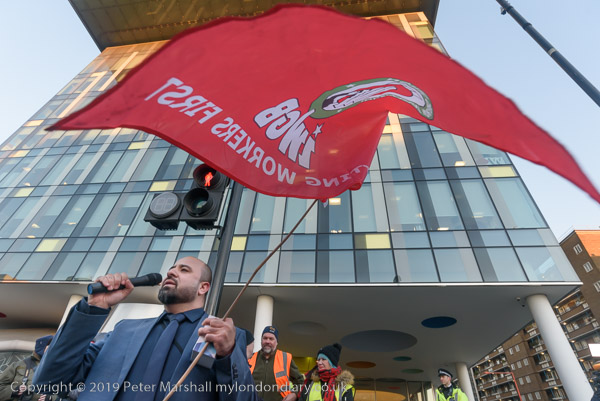
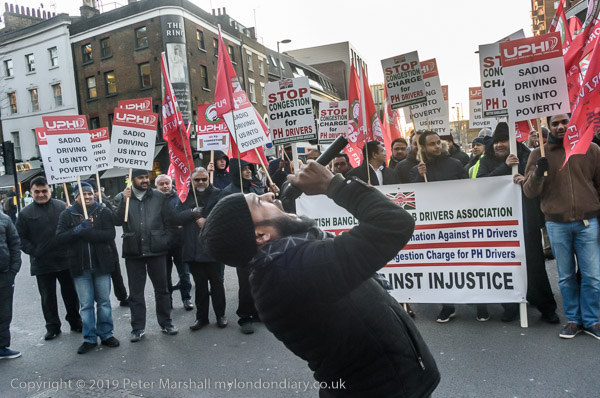
Private hire drivers are angry and I think they have every reason to feel aggreived. Transport for London are going to make them pay the congestion charge in Central London while licencensed taxis will remain exempt.

TfL claim that the reason they are making the drivers pay is to reduce air pollution in the city, which is certainly something that needs doing. But those licenced taxis – black cabs – are actually a much larger source of pollution, both from their own exhausts, tires and brakes, but also because of the huge effect they have on congestion on city streets, resulting in extra pollution from other vehicles.

Minicabs drive to pick up customers at a particular location, then drive to their destination.  Taxis drive around where they think they will be hailed by customers, cruising for trade, and it is this that increases their road mileage, pollution and their share of the almost 10,000 early deaths per year of Londoners from air pollution. Plying for hire made sense in the old days, but hardly does now in the age of the smart phone, and apps which can summon a cab (or minicab) on demand.

Black cab drivers through their trade organisations are a powerful lobby, and it is hard to see this differential treatment as not being a consequence of this. Most Londoners can only afford to use them on rare occasions – I can only recall a handful of taxi journeys I’ve made in London, when escorting aged and frail relatives and a few times when wealthy friends who were paying dragged me into one with them – and at least one of those journeys would have been much quicker by tube and DLR.

Of course there are problems with minicabs too, particularly with cowboy anti-union outfits such as Uber who are trying to evade their responsibilities as employers – and appealing court decisions without success. The UPHD (United Private Hire Drivers), a part of the IWGB International Workers Great Britain trade union which organised this protest is also organising drivers to get them fair treatment from employers like Uber.

I left the protest early to go on to cover another event, and things apparently got rather livelier after I had gone. It’s always difficult to know when to leave lengthy protests, and often things seem to warm up soon after I’ve left.  At times there is a connection, though not I think in this case. Often protests get more intense because of police actions, and the protesters objections to being ordered around, assaulted or arrested, all things which sometimes seem to happen once press reporters and photographers have left. But on this occasion, although I’d left there were plenty of others who stayed on.

End TfL Discrimination against private hire

______________________________________________________

There are no adverts on this site and it receives no sponsorship, and I like to keep it that way. But it does take a considerable amount of my time and thought, and if you enjoy reading it, a small donation – perhaps the cost of a beer – would be appreciated.

My London Diary : London Photos : Hull : River Lea/Lee Valley : London’s Industrial Heritage

All photographs on this and my other sites, unless otherwise stated, are taken by and copyright of Peter Marshall, and are available for reproduction or can be bought as prints.

To order prints or reproduce images

________________________________________________________
Whaling or a woman?

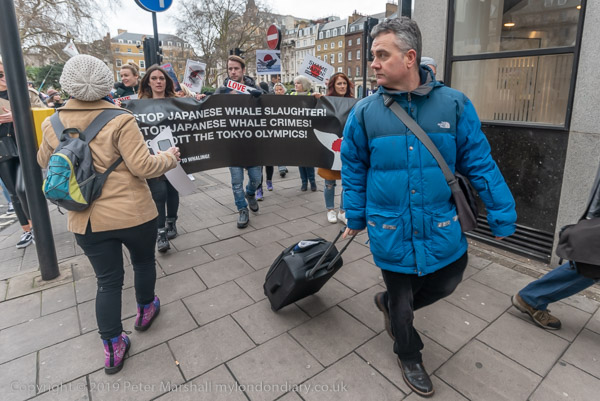
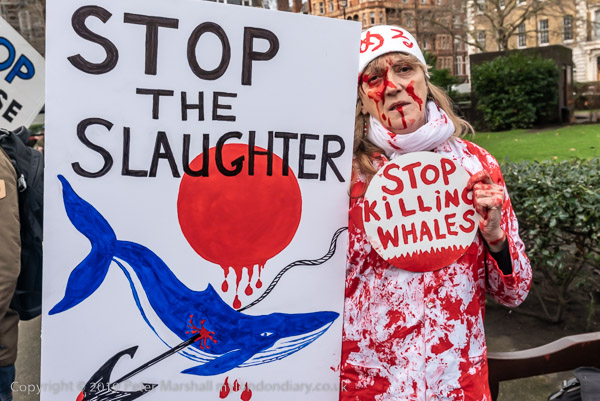
I’m not sure why a protest against Japan’s plans to resume commercial whaling should be such a Conservative occasion as this clearly was, with a strong presence from the Conservative Animal Welfare Foundation as well as Boris’s father Stanley Johnson and Tory MEP for the East of England John Flack as speakers.

Animal rights is an issue that cuts across party divides, but the more radical side of the movement including most of those I’ve photographed at protests against the annual slaughter of dolphins at Taiji cove outside the Japanese Embassy seemed to be missing.

I’m clearly not sufficiently aware of the political nature of conservation and animal welfare, and this does appear to have been organised by Conservatives for Conservative conservationists, with no speakers from Labour, Lib-Dem, Green or other parties in Cavendish Square.

But we did see some disgraceful behaviour by some photographers, pushing protesters and other photographers out of their way as they rushed to photograph conservationist and former Tory spin doctor Carrie Symonds, not for anything she had to say, but because she was Boris Johnson’s girlfriend. I try to avoid occasions where the paparazzi are at work, as on this occasion butressing their reputation as the scum of photography.

And unfortunately their rudeness and assaults were rewarded at least by the popular press, whose accounts of the event hardly mentioned whales and were almost entirely illustrated by pictures (some rather poor) of Symonds and gossip about her and Boris. For the media it was about the woman rather than whaling.

Of course I did photograph her too, and did file four of her in the 44 pictures to the agency from the event, rather more than of the others who spoke, and you can see those pictures along with many others at ‘No Whaling’ rally and march.

______________________________________________________

There are no adverts on this site and it receives no sponsorship, and I like to keep it that way. But it does take a considerable amount of my time and thought, and if you enjoy reading it, a small donation – perhaps the cost of a beer – would be appreciated.

My London Diary : London Photos : Hull : River Lea/Lee Valley : London’s Industrial Heritage

All photographs on this and my other sites, unless otherwise stated, are taken by and copyright of Peter Marshall, and are available for reproduction or can be bought as prints.

To order prints or reproduce images

________________________________________________________
Marzieh Hashemi arrest protest

The USA decided to move its London embassy a few years ago, and probably a major factor in the decision to go to Nine Elms was that Grosvenor Square was such a convenient location for demonstrations. The most notable of these was back on on 17 March 1968, when police horses ran amok in a relatively peaceful crowd that was filling the square. I can’t see myself in the videos but I’m fairly sure (it was the sixties, and if you can remember …) I was there and certainly remember the panic as out of control horses rushed towards me. I don’t think horses were used at the other protests I was at then, though I’ve seen them used at other London protests in recent years.


Not the embassy

It seemed an example of cruelty to animals (which the nation might be expected to violently object to) and also of cruelty to protesters, about which many would care little. Quite clearly those horses were frightened and out of control of their riders, who rode them into peaceful crowds heedless of the injuries that might be caused. The BBC and much of the other media described it as a riot, but the only rioters where the horses were deployed, well away from the embassy, were the police.


A part of the embassy

In recent years at Grosvenor Square there were probably several protests most weeks, mostly small but some sizeable, though virtually none reported in the media, where only protests abroad against regimes we don’t favour or those involving so-called celebrities seem normally to qualify as news.


This is the embassy

Things are certainly much quieter for the us at Nine Elms, which for many Londoners seems almost on the edge of the known universe. though actually it is only a short walk from one of London’s major transport interchanges at Vauxhall. But it isn’t just getting there that is the problem; the embassy is on a relatively minor road and its entrances hidden away some distance from that road. While people and cars move through Grosvenor Square, virtually nothing goes past the new Embassy which is still in the middle of one of the largest building sites in the country.

Back on the main road in front of the embassy, there is nothing to tell you that this is the US Embassy, though the building itself, on the other side of a garden and lake, is made distinctive by some odd wrapping on three sides (but not that actually facing the road.) Unlike in Grosvenor Square, there is no giant eagle on its roof, and the US flag, rather than being on the roof, is hidden away behind the embassy.

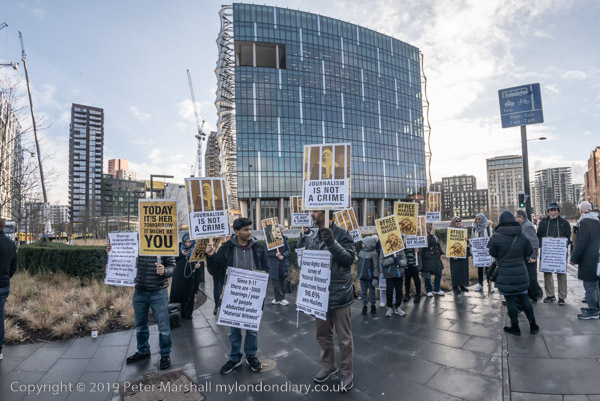
It’s hard from the pavement in front of the pedestrian entrance to the embassy site to get a convincing view of the building, as it is too close for the widest rectilinear lens. Bits of it – as the top two images show – are not that distinctive or convincing, and to get the third image I had to use a fisheye lens. As usual I’ve converted the image using Fisheye-Hemi to make the side walls straight, but the top of the building does retain a curve. The latest version of this utility is now available as a Lightroom export plugin, making it no longer necessary to use Photoshop for the conversion.

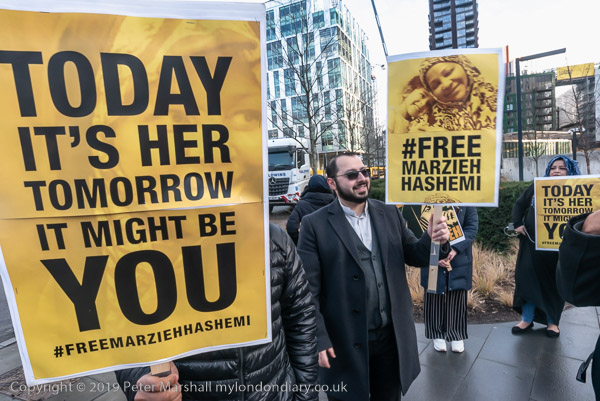
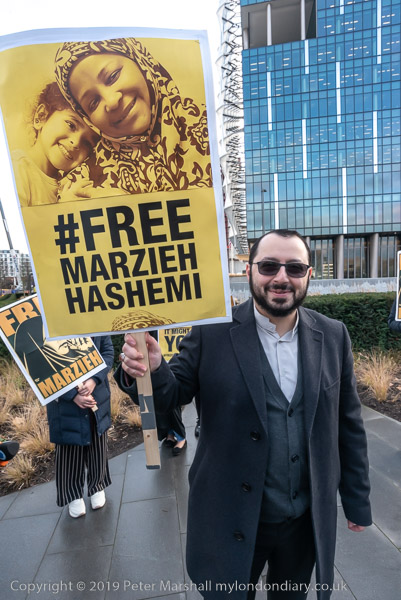
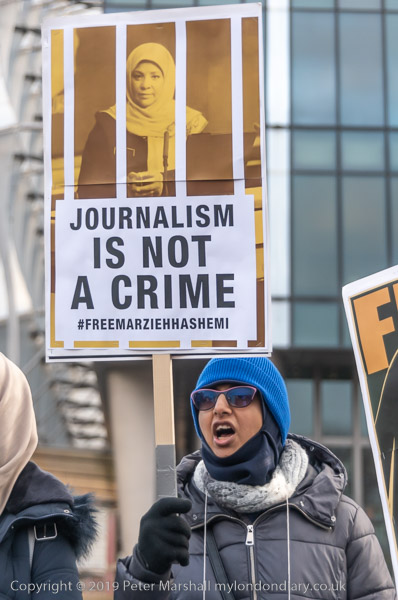
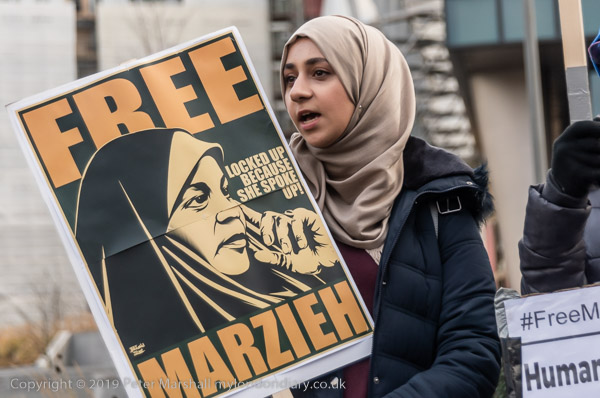
I had two main reasons to attend the protest, first that it was about the mistreatment by the FBI of a fellow journalist, but also because it seemed a clear case of Islamophobia, FBI harassment of the Muslim community.  America never really was the ‘land of the free’ so far as many of its inhabitants were concerned, or for the rest of the world, but things have got even worse since 9/11 and such shameful US activities such as the illegal rendition and detention of detainees in Guantanamo.

More about the event at Marzieh Hashemi arrest protest.

______________________________________________________

There are no adverts on this site and it receives no sponsorship, and I like to keep it that way. But it does take a considerable amount of my time and thought, and if you enjoy reading it, a small donation – perhaps the cost of a beer – would be appreciated.

My London Diary : London Photos : Hull : River Lea/Lee Valley : London’s Industrial Heritage

All photographs on this and my other sites, unless otherwise stated, are taken by and copyright of Peter Marshall, and are available for reproduction or can be bought as prints.

To order prints or reproduce images

________________________________________________________
Arms Dealers feast while Yemen starves

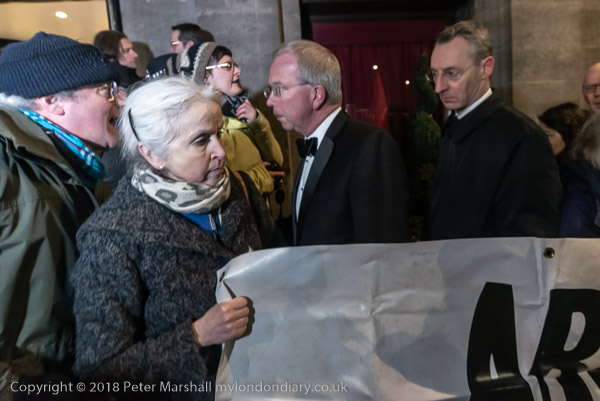
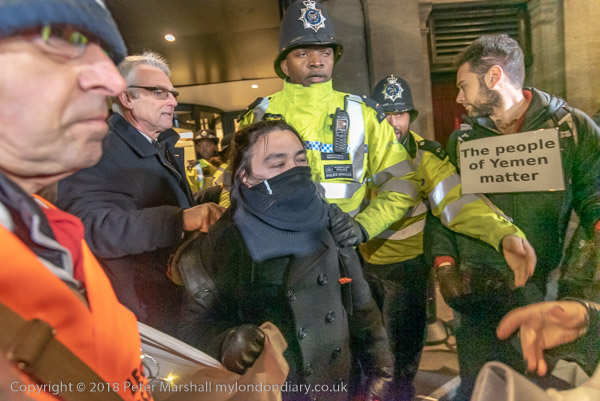
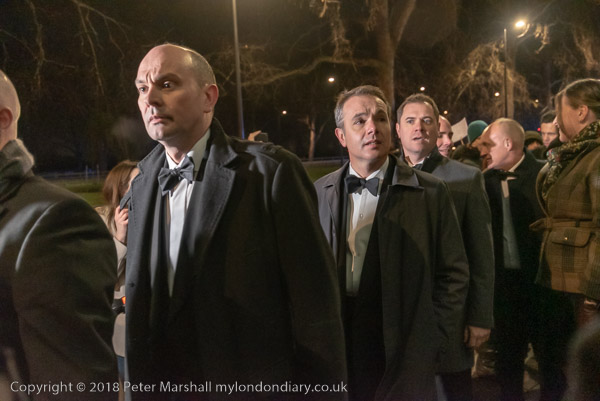
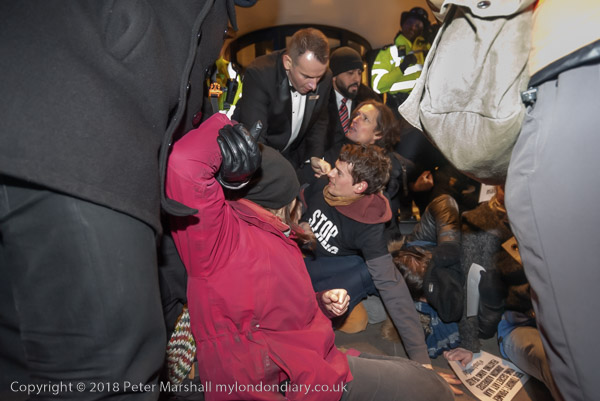
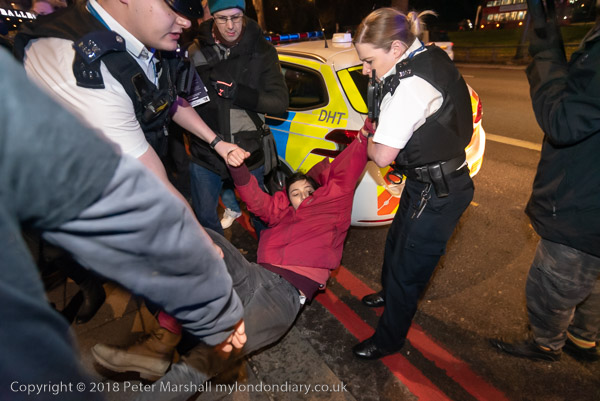
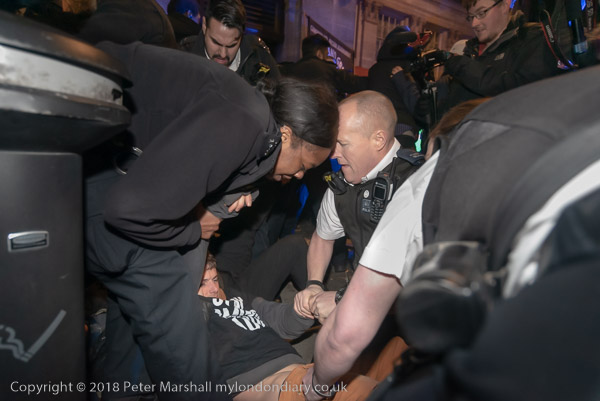
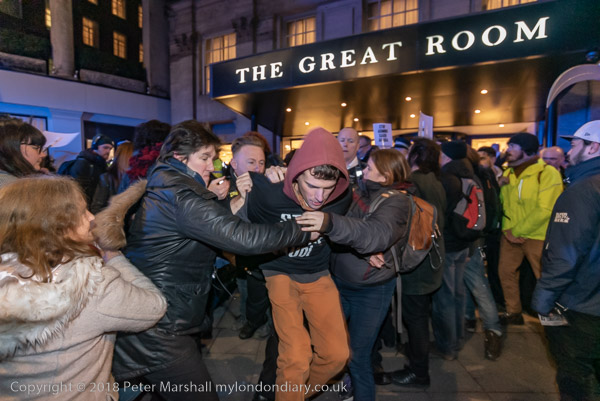
I didn’t much enjoy taking pictures outside the Grosvenor House Hotel on Park Lane in London’s Mayfair on a cold January night. The pavement is fairly narrow and fairly dark, and it was very crowded, with a lot of pushing and shoving, with some police getting rather more physical than the situation demanded.  And police took no notice when some of those attending the dinner assaulted the protesters. At least they hadn’t brought their weapons with them.

Of course we shouldn’t be selling arms to be used in Yemen. I’d be happier if we didn’t have one of the larger arms industries in the world, which despite claims about strong export controls is still happy to sell arms to countries where we have serious human rights concerns. We still sell them to over two thirds of the countries on that list – including Saudi Arabia, which is using them in Yemen.

Although it makes big money, the arms industry employs relatively few people – around 140,000 according to the industry body. There surely must be better ways to employ these workers, many who are highly skilled, than in making arms to kill people.

And it is obscene of the Aerospace, Defence and Security industry to hold a luxury dinner celebrating their activities causing death, starvation and devastation across the world. Since Saudi Arabia began its bombing of Yemen in 2015, the UK have continued to supply weapons costing almost £5 billion putting 14m Yemeni people – mainly uninvolved civilians – at risk of famine and starvation.

I arrived after the protest had started, a little earlier than advertised, and it seems that neither the hotel or the police had really prepared for the inevitable and widely advertised protest. Traffic was still flowing on the lane next to the pavement, putting protesters and passers-by at risk, and the barriers were perhaps poorly placed.

Police began handling demonstrators rather roughly, and at least one or two officers were clearly enjoying themselves doing so, while others were clearly trying to treat people carefully. There does need to be some system for officers to report rogue fellow officers and clean up the police. Policing is a difficult job and needs the support of those being policed and this is clearly eroded by the behaviour of some.

I wasn’t too badly treated by police, though as often one or two deliberately moved in front of me to prevent me getting a clear view of their colleagues and I did at times get pushed a little more roughly than necessary. But at one point I was knocked into the road by a protester who had been bodily thrown in my direction by police, but fortunately there was no traffic in the nearside lane at this point.

For obvious reasons I don’t have a picture of that incident, and others were blurred as I was pushed or people were rather rapidly moved. The pictures I took with flash were as expected rather better with subject movement, but even some of those were blurred.

More at Stop Arming Saudi while Yemen starves
______________________________________________________

There are no adverts on this site and it receives no sponsorship, and I like to keep it that way. But it does take a considerable amount of my time and thought, and if you enjoy reading it, a small donation – perhaps the cost of a beer – would be appreciated.

My London Diary : London Photos : Hull : River Lea/Lee Valley : London’s Industrial Heritage

All photographs on this and my other sites, unless otherwise stated, are taken by and copyright of Peter Marshall, and are available for reproduction or can be bought as prints.

To order prints or reproduce images

________________________________________________________
London solidarity with Russian anti-fascists

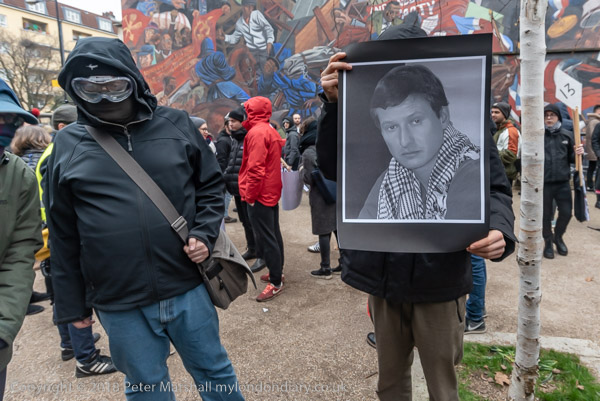
While some of my anarchist friends are always happy to be photographed, others fear being identified in pictures, and have very negative feelings towards photographers. I sometimes am told that I should blur all the faces in pictures that I publish showing anarchists and aniti-fascists, something that in general I am not prepared to do. Generally I reply that if people are in public and wish to hide their faces they should ‘mask up’. It usually makes my pictures more dramatic too.

We do have some control over our appearance in public, and many hide all or part of the time behind masks or other face coverings, make-up or even beards. But if we are in public we will be seen by others, and also photographed, if only by the many security cameras that litter our streets and public  and private buildings.

Many are particularly suspicious of being photographed by the press, feeling that any pictures will  be used in a way that discredits them. Clearly there are photographers working for some publications who have these as an aim, but I’m not one of them, and those who know me generally know they can trust me, although once a picture goes to an agency I will have little or no control over how it is used.   It’s certainly important to think carefully about what you do and don’t file.

Although I don’t believe their fears of being photographed have any real foundation (or sense), unless there seems to me a good public interest  reason to do so I will try to avoid taking pictures of people who clearly do not wish to be photographed.

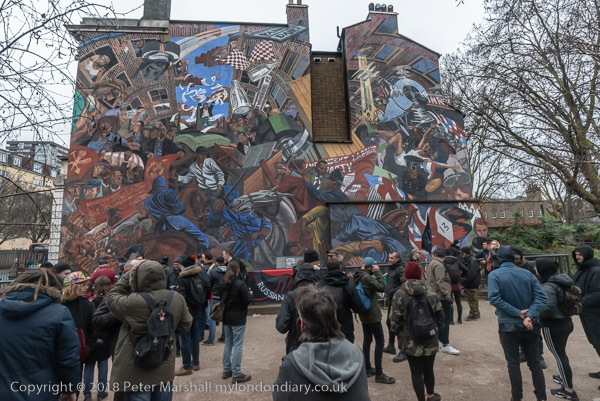
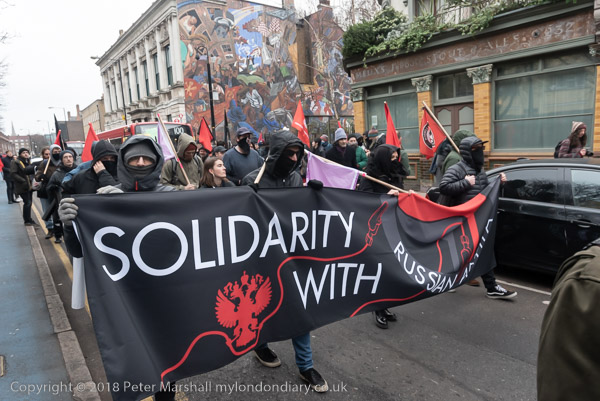
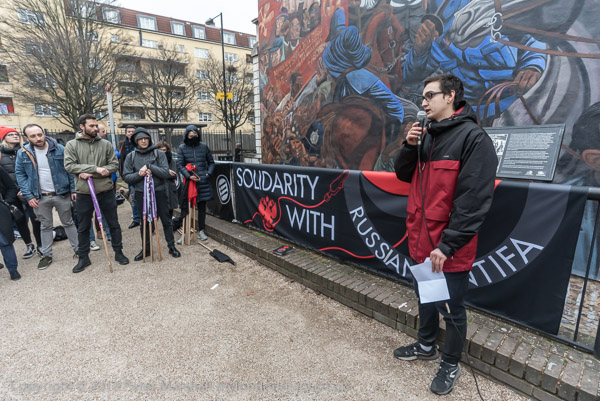
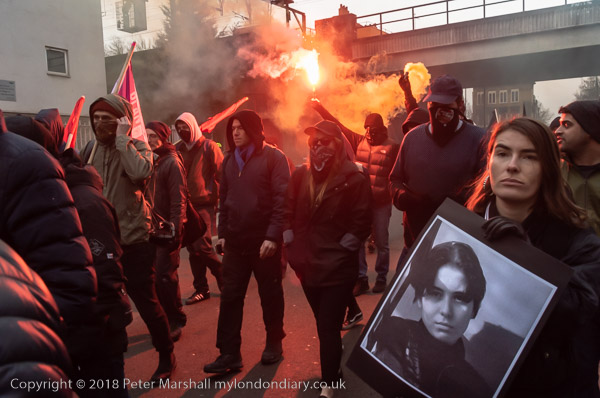
Quite clearly at the rally in front of the Cable St mural to oppose racism, xenophobia, fascism and the upsurge of far-right populism and to show solidarity with Russian anti-fascists there were people who did not want to be photographed,  and both I and the videographer who was recording the event for the organisers were careful to avoid upsetting them. It did make for a slightly edgy situation, and there were a few times I would have liked to take a picture but did not. Except for the images of those speaking at the event, I think for all of the pictures which are dominated by a single person or small group I asked permission before making the picture. There were very few who said no, though one did hold the placard I was interested in up in front of his face.

There were half a dozen other freelance photographers who had come to photograph the event, but I think I was the only one who took pictures during the rally, with others waiting in the street outside the public park until people came out for the march – and all those who were camera-shy were appropriately masked up.It ws during the march, and particularly as it passed under the railway bridge that it became most dramatic. But although I like to make dramatic pictures when I can, the most important thing is to tell the story, and I wanted to include the pictures of the speakers and banners underneath the mural, as well as some of the rather short rally in Altab Ali park at the end of the march.

More pictures, text and captions: Solidarity with Russian anti-fascists

______________________________________________________

There are no adverts on this site and it receives no sponsorship, and I like to keep it that way. But it does take a considerable amount of my time and thought, and if you enjoy reading it, a small donation – perhaps the cost of a beer – would be appreciated.

My London Diary : London Photos : Hull : River Lea/Lee Valley : London’s Industrial Heritage

All photographs on this and my other sites, unless otherwise stated, are taken by and copyright of Peter Marshall, and are available for reproduction or can be bought as prints.

To order prints or reproduce images

________________________________________________________
Bread & Roses

Back in 1910, a Chicago factory inspector Helen Todd, speaking at an event launching a new campaign for votes for women picked up on a comment made to her by a young woman worker that votes for women would mean “everybody would have bread and flowers too”, elaborating it in her speech, quoted in part in Wikipedia:

“… life’s Bread, which is home, shelter and security, and the Roses of life, music, education, nature and books, shall be the heritage of every child that is born in the country …”

Later that year, Todd was involved in the Chicago garment workers’ strike led by The Women’s Trade Union League, making a number of speeches, and “We want bread – and roses, too” was one of the slogans used by the strikers. It was soon picked up by others, including James Oppenheim who published a poem, ‘Bread and ROses’ in 2011, and by a number of leading suffragettes and women trade unionists including the Polish-born American socialist and feminist Rose Schneiderman of the Women’s Trade Union League of New York, with whom the phrase became associated.

It was the 1912  Lawrence textile strike, often known as the Bread and Roses strike, that made the phrase well-known.  Most of the unskilled work in the mills was carried out by immigrant women, and at the start of the year they found without warning that their wages had been cut because of a new Massachusetts labour law which cut the working week for women and children fromf 56 to 54 hours.

The established unions were not concerned with the loss of pay as they mainly represented the skilled white male workers who were unaffected. The IWW came in to organise the immigrant workers, who had come to the USA mainly from countries in southern and eastern Europe and the Middle East – and spoke around a couple of dozen different languages.  They set up relief commitees and organised large and noisy protests where some women carried a banner “We want bread and roses too.”

The employers and the authorities hit back with force and dirty tricks, including arresting the union leaders on clearly false murder charges and getting the firemen to turn their hoses on the marchers in freezing weather, but newspaper coverage of this made the strike a national outrage, eventually forcing the employers to agree to almost all of the strikers demands, including a  a 15% pay raise, double pay for overtime, and an amnesty for strikers.

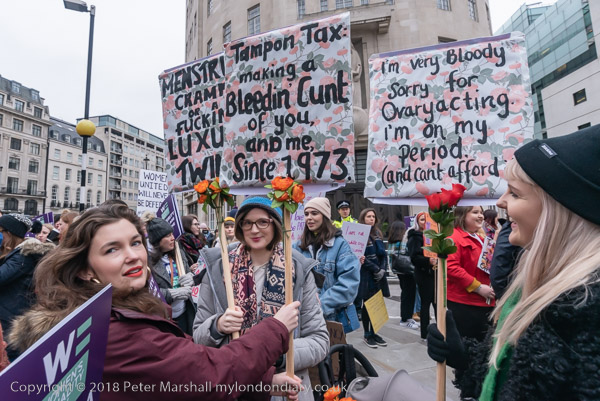
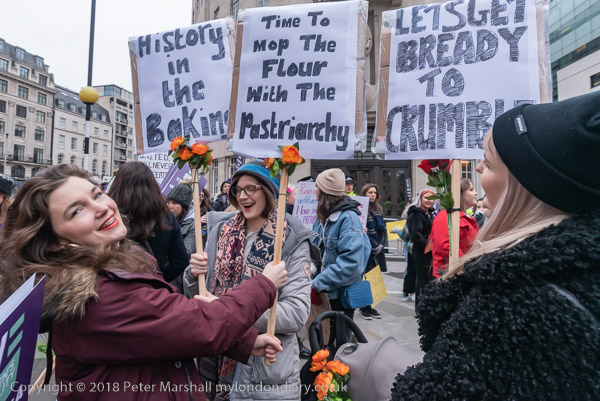
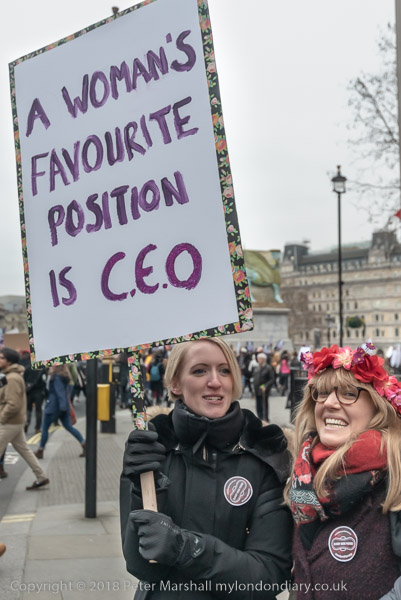
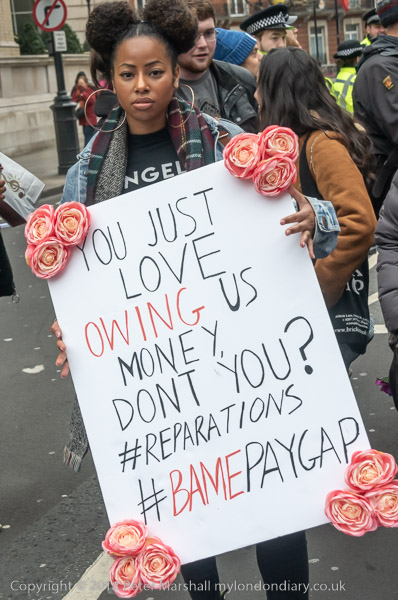
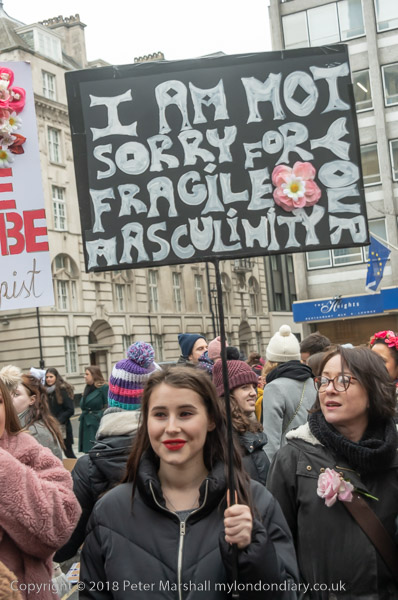
‘Bread & Roses’ was the inspiration for the Women’s March in London (and similar events elsewhere around the world) on January against economic oppression, violence against women, gender pay gap, racism, fascism, institutional sexual harassment and hostile environment in the UK, and called for a government dedicated to equality and working for all of us rather than the few. Many of those organising the event and taking part, like those who struck in 1912, were from our migrant communities, and there are certainly similarities between the IWW’s tactics in the 1912 strike and the activities of some of the smaller independent unions that are now active with low-paid workers.


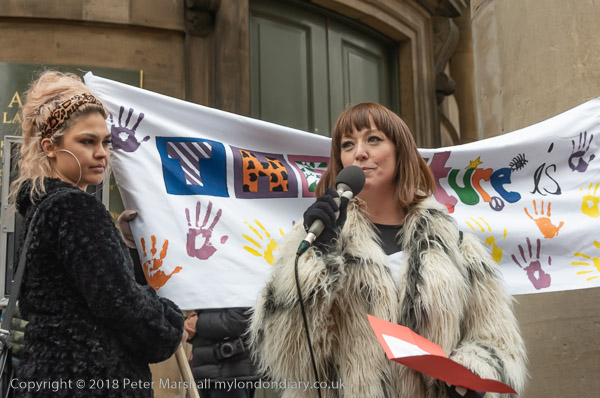
Speakers with scripts in orange folders and directed by a BBC camera crew

The march began outside of the BBC, with a few speeches on the steps of the BBC church, All Souls in Langham Place, in a rather curious short rally that appeared to be both scripted and stage-managed by a small camera team from the BBC, who were directing the women who spoke, and generally barging their way through some of the protesters and photographers. I was told they were making a documentary about a group of the women, but if so they clearly have a very different idea of documentary to me, and it seemed more like a play. Other than that of course the BBC as usual ignored both this march and any other protests taking place in London on the day.

More at Women’s Bread & Roses protest

______________________________________________________

There are no adverts on this site and it receives no sponsorship, and I like to keep it that way. But it does take a considerable amount of my time and thought, and if you enjoy reading it, a small donation – perhaps the cost of a beer – would be appreciated.

My London Diary : London Photos : Hull : River Lea/Lee Valley : London’s Industrial Heritage

All photographs on this and my other sites, unless otherwise stated, are taken by and copyright of Peter Marshall, and are available for reproduction or can be bought as prints.

To order prints or reproduce images

________________________________________________________
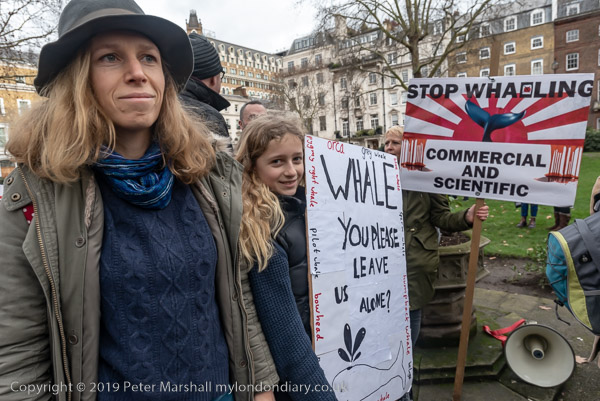
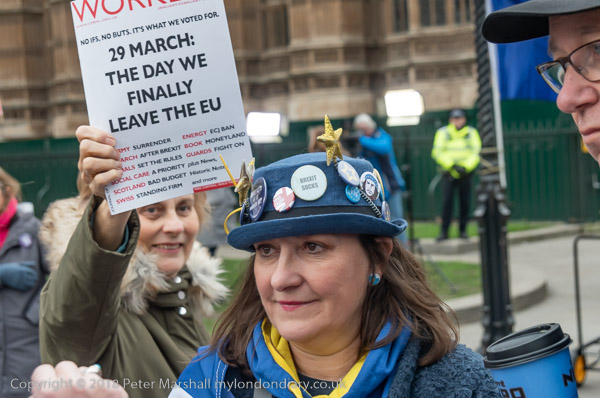
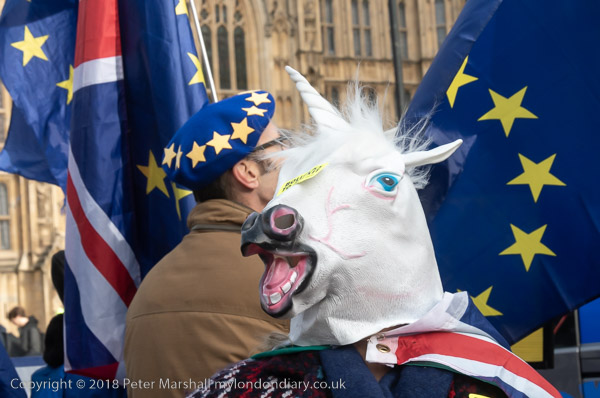
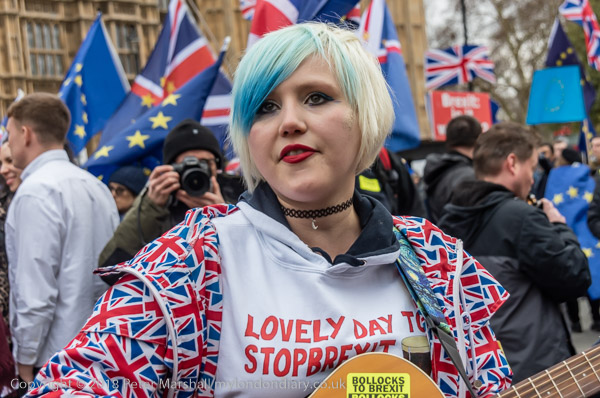
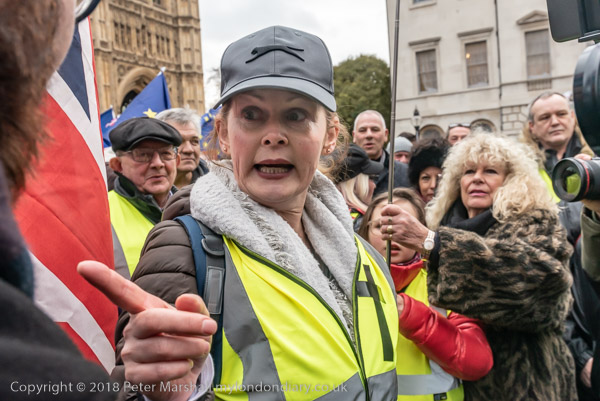
Brexit Warms Up

Although inside Parliament Brexit seemed to be in the same rut as it had been since the ridiculous decision to invoke Article 50 without any real plan or consensus as to what Brexit actually meant – enshrined in Mays mantra ‘Brexit means Brexit’ – things outside seemed to be hotting up. The Tories had the strange notion that entering negotiations was like were playing a poker hand rather than trying serious discussions with our European partners over how the difficult process might be best arranged, and there were so many legal arguments about how the referendum was carried out that should have been played out before the decision was taken. So many things called the result into question that it seems clear that had it actually been a binding referendum it would have been declared null and void.

Obviously I voted to remain largely because I felt the country would have much greater control over its trade negotiations as a part of a much larger entity than as a single smaller body and because I value some of the associations and benefits we have built up in cooperation with our European neighbours. And some of our deprived areas – and we have some of the worst in Europe – have benefitted greatly from money from Europe financing projects in a country where our national governments have so clearly favoured London and the surrounding area.

The referendum did not show a decisive majority in favour of leaving Europe, but a nation roughly split down the middle, and was the kind of result that another vote a few months earlier of later could well have reversed. And had we used other versions of eligibilty to vote it might well have been different. Hugely important constitutional change like leaving Europe should only have been triggered by a much more significant vote than a simple majority.

But we are where we are, even if nobody quite knows where that is at the moment. I went to Parliament to photogrpah on the morning when May’s deal was coming up for a vote – and the only sure thing seemed to be that virtually nobody though it was acceptable – and when the vote came there was a huge majority against it. I’m not sure if Brexit will come to a sensible conclusion, or exactly what that might be. Perhaps to revoke Article 50 and schedule another referendum, perhaps with the stipulation that it would only be binding on the government under similar conditions to those that have been imposed on trade union strike ballots!

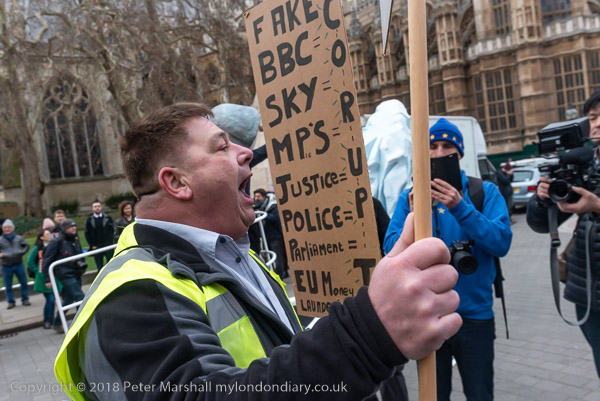
The pavement opposite Parliament and beside College Green was pretty crowded in parts on this morning, and the group one of my colleagues calls the ‘yellow pests’ was out and very vocal along with the more reasonable protesters on both sides, harassing Steven Bray and his SODEM supporters and apparently any MP they could find, though I wasn’t a witness to that today.

More at Brexit protest against May’s Deal.

______________________________________________________

There are no adverts on this site and it receives no sponsorship, and I like to keep it that way. But it does take a considerable amount of my time and thought, and if you enjoy reading it, a small donation – perhaps the cost of a beer – would be appreciated.

My London Diary : London Photos : Hull : River Lea/Lee Valley : London’s Industrial Heritage

All photographs on this and my other sites, unless otherwise stated, are taken by and copyright of Peter Marshall, and are available for reproduction or can be bought as prints.

To order prints or reproduce images

________________________________________________________
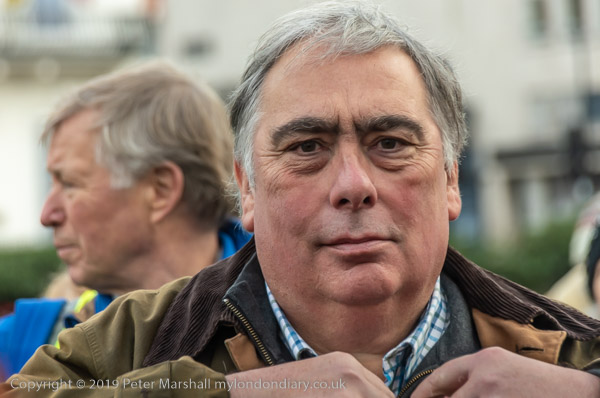
March 2019 complete

It should have been easy to finish getting My London Diary on-line for March, as minor ill-health meant I was unable to take pictures for ten days, so I covered rather fewer events. But it is increasingly a struggle to get it done.

For some years I’ve been wanting to move away from Nikon to smaller, lighter cameras which would be less tiring to carry. I’d hoped that the Fuji X cameras would do the job, but although the lenses are superb, the cameras are just not responsive enough. Over a few years and several models they improved in various ways, but they still (I’ve not tried the latest) don’t provide the confidence that when you press the shutter release they will take a picture. Sometimes the fastest way to wake them is to turn the camera off and on again, and in the second or so it takes for them to respond the picture has gone.

This month, should you care to examine the EXIF data, you can find pictures made with Nikon, Olympus and Fuji cameras. I think the Olympus can probably do almost everything I need, despite its sensor size only half that of the Nikon and the smaller file size, but I’m still evaluating the results. The camera I have is the OMD EM5II, which seems ridiculously cheap for what it offers.

Mar 2019

Freedom, justice & equality for Palestinians
Climate Protest at Barclays Bank


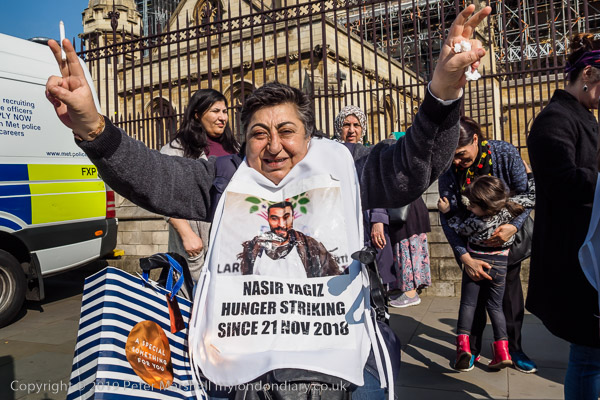
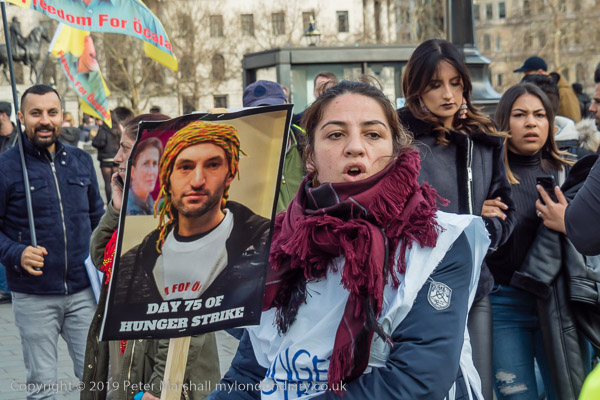
Kurds support hunger strikers
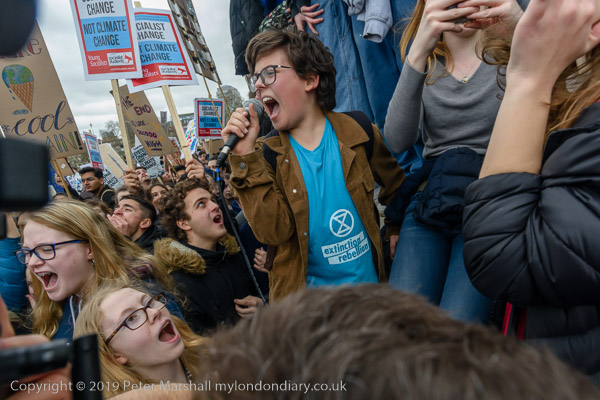
Fridays for Future climate protest
Brexiteers protest Betrayal
Vigil and protest for Christchurch victims


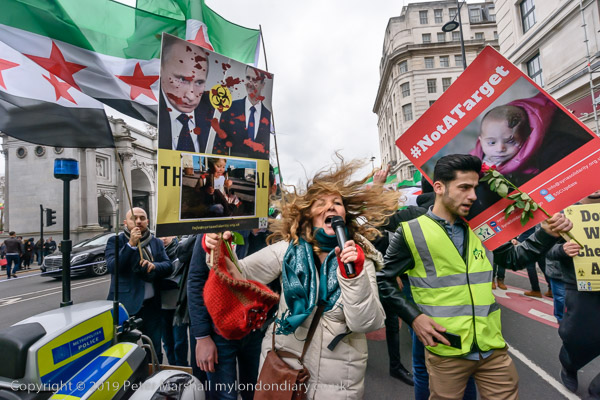
8th Anniversary of the Syrian Revolution
No to Racism, No to Fascism
Remember Fukushima 8 years On
No more deaths on our streets


London Schools Climate Strike
Million Women March against male violence
Blood of Our Children – XR


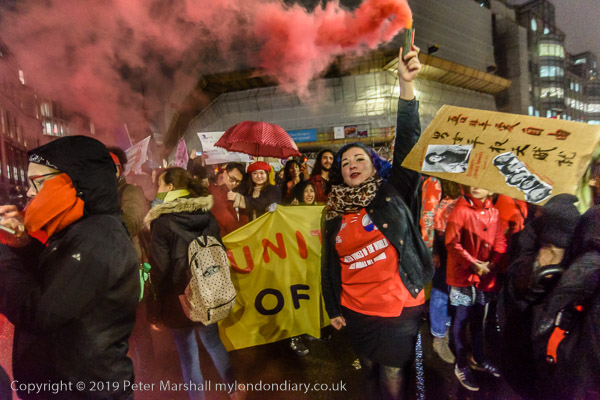
Women’s Strike Red Feminist March
Camden Panoramas
Global Women’s Strike
Graffiti at Leake St
Yellow Vests applaud Kurdish protesters


Rally supports Kurdish hunger strikers
Sudanese support the non-violent uprising


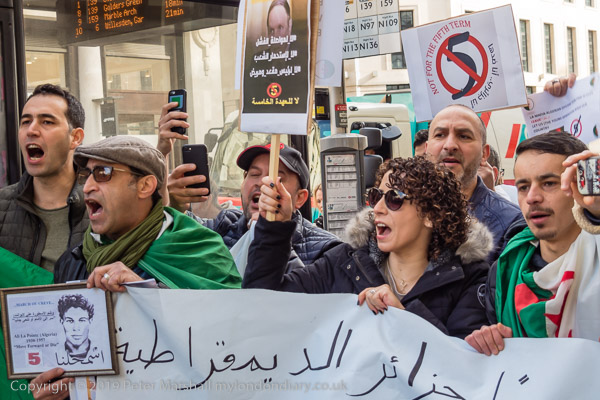
Algerians say no 5th term for Bouteflika
Scrap Universal Credit
End Japanese dolphin slaughter
Black Cab Drivers blockade
Weekly climate protest
Plastics protests in London

London Images

Vedanta loses appeal to prevent prosecution

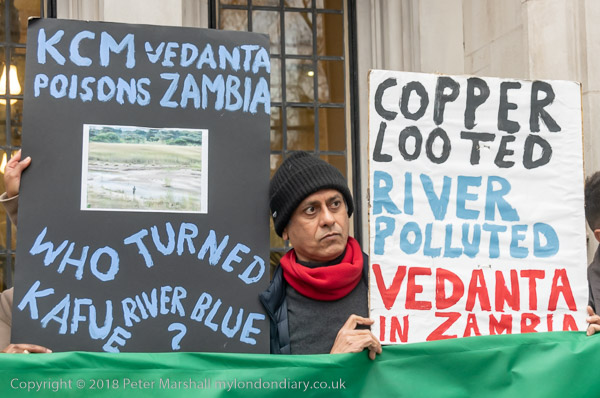
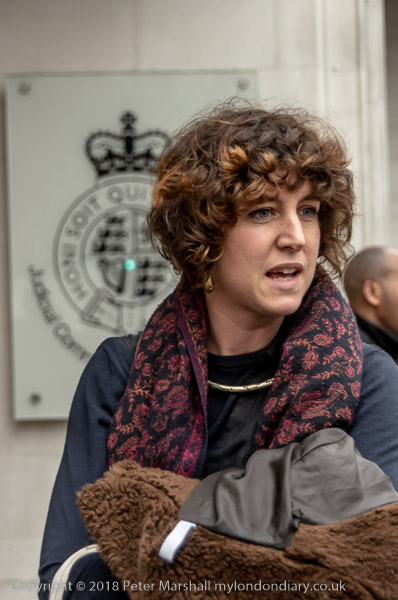
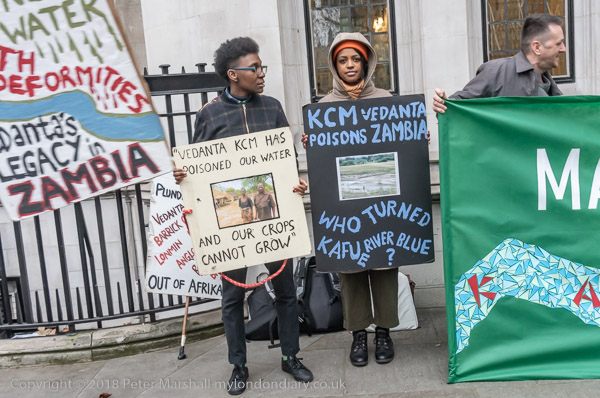
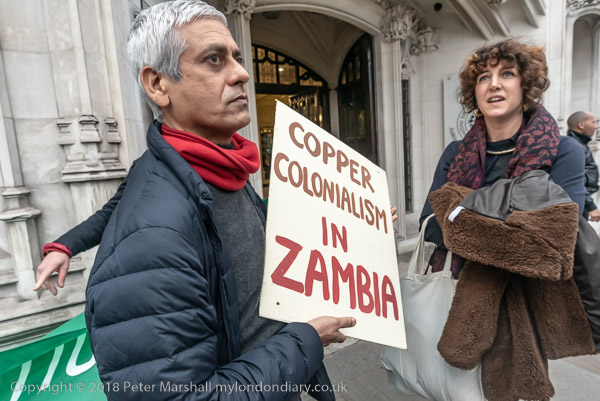
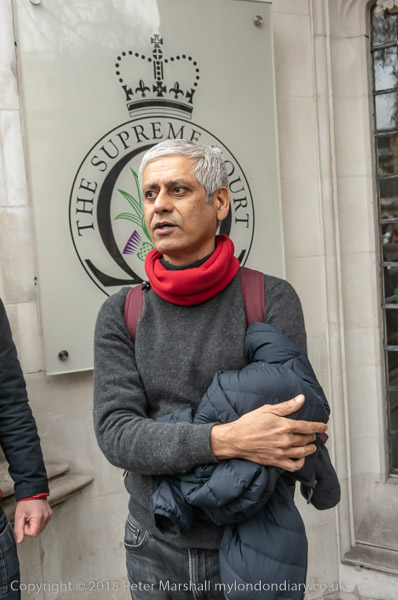
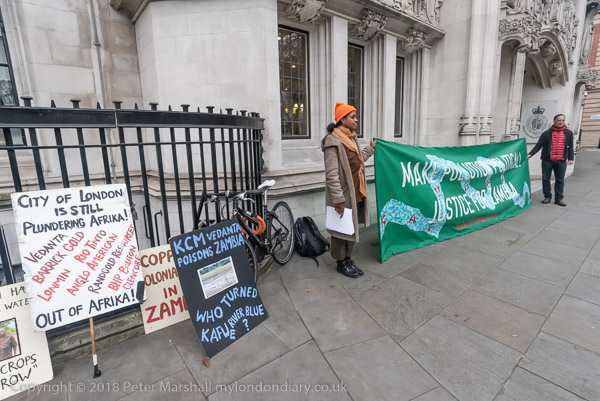
Back in January I photographed Foil Vedanta campaigners outside the Supreme Court in Parliament Square where British mining company Vedanta was appealing High Court and Court of Appeal rulings that 1,826 polluted farmers from Zambia can have their case against the company and its subsidiary Konkola Copper Mines heard in the UK.

Vedanta are a British mining company, and were forced to delist themselves from the London Stock Exchange at the start of October 2018 after pressure from politicians and activists following the Thoothukudi massacre in Tamil Nadu in May 2018, where 13 protesters were killed and dozens injured.

Grassroots activism on a large scale has managed to shut down Vedanta’s operations in Goa, Tuticorin and Niyamgiri and Foil Vedanta last September released a daming report ‘Vedanta’s Billions: Regulatory failure, environment and human rights’ with a comprehensive account of the company’s crimes in all of its operations, and of the City of London’s total failure to regulate Vedanta, or any other criminal mining company and revealing the vast scale of tax evasion and money laundering. Earlier Foil Vedanta had exposed the illegal activities of the company’s subsidiary Konkola Copper Mines in Zambia, where Vedanta actually boasted about their illegal tax avoidance and they have campaigned over the pollution of the Kafue River, supporting the farmers in their legal action against the company.

The Supreme Court appeal concerned the attempt by Zambian farmers against Konkola Copper Mines, which they want to pursue in the UK courts. Vedanta appealed against the case being heard in the UK as KCM is a Zambian company, but the HIgh COurt in May 2016 and Court of Appeal October 2017 both ruled that Vedanta is responsible for the activities of its subsidiary and since Vedanta is a British company can be taken to court here. So Vedanta took the case to the Supreme Court.

Yesterday, 10th April 2019, the Supreme Court gave its judgement, again dismissing Vedanta’s case. This is not only good news for the Zambian farmers, but also sets as precedent as the first reported case in which a parent company will have have been held to owe a duty of care to a person other than an employee of the subsidiary who has been adversely affected by the operation of the subsidiary.

The Zambian farmers who claim KCM have polluted the River Kafue since 2004 with excessive levels of copper, cobalt and manganese, causing sickness and deaths, damage to property and loss of income can now take their case in the UK courts. But this decision is also important for all communities affected by the crimes of UK multinationals who have hitherto been denied justice in British courts.

More pictures: Vedanta Zambian pollution appeal

______________________________________________________
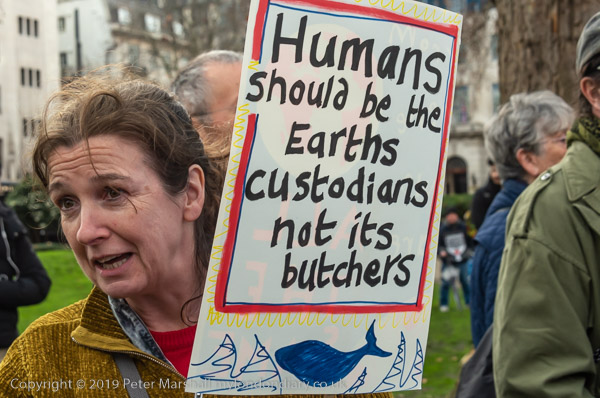
There are no adverts on this site and it receives no sponsorship, and I like to keep it that way. But it does take a considerable amount of my time and thought, and if you enjoy reading it, a small donation – perhaps the cost of a beer – would be appreciated.

My London Diary : London Photos : Hull : River Lea/Lee Valley : London’s Industrial Heritage

All photographs on this and my other sites, unless otherwise stated, are taken by and copyright of Peter Marshall, and are available for reproduction or can be bought as prints.

To order prints or reproduce images

________________________________________________________