Photovintage and Voyage Imaginaire

Were I in Paris at the weekend I would go along to the Hotel Millennium Paris Opera on Boulevard Haussman on Sunday for the Salon de la Photovintage organised by the AnamorFose Gallery from Belgium. AnamorFose was founded by Xavier Debeerst in 1997 as a virtual Photogallery specialising in vintage and historical photography.

The gallery centres around Belgian photography and also pictorialism, but also included the work of modernist photographers such as Willy Kessels as well as contemporary work. Perhaps the best way to get a view of its character is to look at the catalogue, a 32 page PDF file.

Apparently the organisers of Paris Photo didn’t like the orginal name of this event, Paris Photovintage, and asked for it to be changed. But it is really all the events like this around the city that make a trip to Paris worthwhile.

Tonight I’m also missing several gallery openings, including  “Voyage Imaginaire” at the Galerie Claire Corcia, with contemporary photography by Francesco Gattoni, Mathilde Maccario, Louise Narbo and Carolle Benitah. Last year I was impressed by Narbo’s work at the same gallery and wrote briefly on it. And from there, perhaps by another opening or two, I would have made my way to the best of the various parties going on in Paris.

But unfortunately my voyage too is only in my imagination, though I’ve been scanning pictures of Paris all day and editing them.

Lightroom – a New (Un)Twist

Although I use Adobe Lightroom for all my pictures and have on several occasions recommended it as doing 99% of what photographers need, there are some aspects of  it I’ve not found useful as well as pretty essential features I think are missing.

So I was very interested to read a blog post by Thomas Foster, Untwisted Adobe Camera Profiles. Foster is a recent convert to Lightroom from Aperture making the change for its better workflow with “Global presets (presets for just about everything for that matter), better selective editing (more like Capture NX2), better interaction with Photoshop, the ability to use Photoshop droplets in presets, and most of all Adobe Camera Profiles.”

However, like me,  he finds the results of the ‘Recovery’ slider disappointing. I’ve learnt to keep or return it to zero as a first stage in my development of any imag, as it has a flattening effect on the image highlights I find disappointing. Following that I use the selective editing tool to tone down just the out of range highlight areas, either by a simple ‘exposure’  painting – using a value of perhaps -20 and sometimes painting several times, or by using my special “highlight removal” preset  (Exposure -40, Brightness +20 or similar.)

Foster read an article by Chromasoft, Hue Twists in DNG Camera Profiles, which looks at the deliberate “twisting” in Adobe profiles that gives a slight shift in  tint with different intensities. The result of this is normally a more natural look, but it is one of the effects which can make the ‘Recovery’ tool give odd results.

Foster provides a link to a file containing “untwisted” profiles which will avoid this and gives instructions for installing these for the cameras that you use so they will be avaiilable in both Photshop and Lightroom. It’s simple, takes only a few minutes, and leaves the standard Adobe profiles intact. Once you have the untwisted profiles in place and have restarted Lightroom, you can then select the untwisted profiles when working with images by going to ‘Camera Calibration’ in the Develop module and selecting one of the “untwisted’ profiles.

I tired this out with the beta version of Lightroom 3, using some files with fairly challenging highlights, and it did make it much easier to deal with them, and I couldn’t see any problems caused either by the new profiles, though they do have a slightly unwelcome flattening on the lighter tones so  it’s still better where possible to use the standard profiles. These are however a very useful method when you need them.

Paris 1973

This morning I would have been going up to St Pancras to catch the Eurostar to Paris for the photo show, but as I mentioned in my earlier post Paris Photo 2009, I’ve decided not to go.

So instead, I’m standing at my computer with an espresso and a croissant, mentally supplying the smell of stale smoke from Gauloises and the noisy traffic in the street outside and dreaming of the city. In my dream I’m in a very particular cafe, just a few minutes walk from the Rue de Rivoli where Paris Photo is held, and later in the day I’ll stroll through the passage across the street and into the Jardin du Palais Royal and down through there, out by the Theatre and across the square, untidy with traffic to wait at the crossing before descending the escalator into the basement depths of the Carrousel du Louvre and Paris Photo.

As in previous years it will be a fantastic show, and I’m sorry to be missing it, though I do find the venue a little difficult. I don’t think “I didn’t know I was agoraphobic until I went to Paris Photo” would be a good advertising slogan but it happens to be true so far as I’m concerned, and on my first visit I found myself rushing in panic for fresh air after a couple of hours in the depths.

So rather than go to Paris (and I will go again next year for the Mois de la Photo and Paris Photo if not before) I’ve decided to bring a little Paris into my life here and on the web.

© Peter Marshall 1974
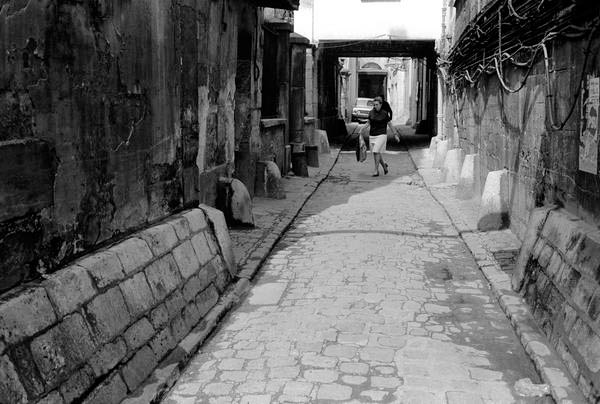
Flea market, Paris, 1973

I don’t think I’ve written before here about my first published portfolio. In fact it only came back to me yesterday evening when I started thinking about this series of posts. Although I’d had an interest in photography from an early age (doubtless aided by the occasional image of scantily dressed young ladies that appeared in the Amateur Photographer which I devoured religiously every week at the local library as a teenager) and actually owned a real camera (a story for another time) since I was around 14, I only took up photography practically at the age of 25.

Paris at the start didn’t actually help in this, as on my first visit there in 1966 I dropped my camera – a Halina 35x – into the lake at Versailles as I was getting into a boat with my girl friend – and it was only recovered after quite a few minutes sitting on the bottom of that murky water. It never quite recovered despite careful cleaning, and the shutter gave random timings regardless of its setting but generally slower than 1/30s thanks to the rust on the shutter blades.

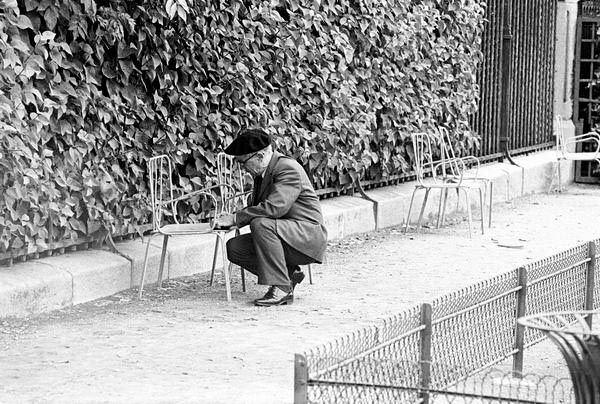
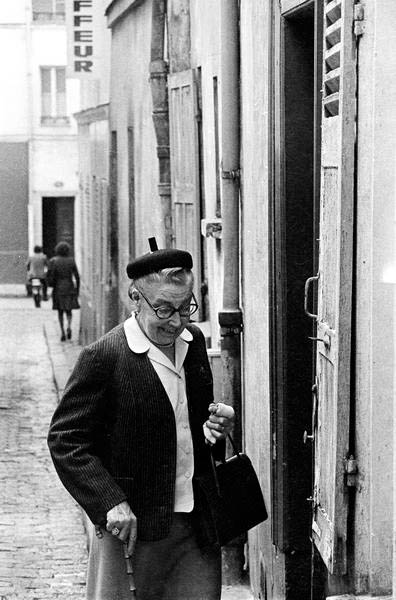
I visited Paris again in the summer of 1973 (by which time that girl friend was my wife) and we stayed an attic room in a huge mansion in the centre of Paris that was now a student hostel. We were broke, and walked the streets all day living on baguettes slit in half with a strip of dark chocolate or cheap cheese in the middle and cheap wine eaten in small squares as we followed the Guide Michelin walks around the grand and not so grand areas of Paris. In those days the walks in the guides were more detailed, and they were at least twice as long and twice as many as in modern editions.

© Peter Marshall 1974

Occasionally we treated ourselves to a plat du jour in the kind of cafe where French workmen eat and on rare occasions to one of the cheap tourist fixed price menus, but mainly we lived on bread, and eating as much as we could of it at the hostel breakfasts with jam and honey.

At night we staggered up four or five flights of the grandest staircase you can imagine (though rather less grand by the time you got to the top where our room was) and collapsed onto a bed lit by the dimmest imaginable of electric bulbs – more a nightlight than anything you could see by.

Memories are dim too, but it was one of our most enjoyable of holidays, and also for me the first time when I really got down to some serious photography; over the two weeks or so we were there I took around 20 films, probably more than I had taken altogether in the previous six months.

Fortunately by then I’d finally given up on the Halina 35x (a solid Hong Kong made viewfinder 35mm camera with a decent 45mm lens which sold for £7 13s. 3d in 1959 – but definitely not waterproof!)

© Peter Marshall 1974

I carried two cameras around Paris, one the tank-like Zenith B, an M42 Russian made screw-mount SLR with a 55mm f2 standard lens and my first telephoto, I think the surprisingly small Russian Jupiter-9 f2 85mm (like most Russian lenses, derived from “liberated” Zeiss designs.) It was a camera where everything was manual, and using it was hard labour. The Zenit had a lousy viewfinder for an SLR, dim and hard to focus, and winding on often required suprising force – and it was easy to accidentally rip a film from the cassette trying to wind on to frame 39.

As a contrast, also hanging around my neck was an Olympus SP, arguably one of the best fixed-lens rangefinders every, with automatic exposure, spot or centre-weighted metering and a fine 42mm f1.7 lens. YOu could also use the metering for manual exposure. Perhaps the only better camera of a similar type I’ve used is the Minolta CLE – one the best of the Leica M range – which is almost the same size.

© Peter Marshall 1974

After coming home I sent a dozen or so prints mainly from Paris to a photographic magazine. A few months later, picking up a copy at W H Smith’s I was delighted to find several of the pictures I sent reproduced with a short text as a portfoliom for which I received £25. This was my first real publication.

I’ve spent today adding around 25 pictures to the set from Paris in 1973 that were already on my smallest web site,  peter-marshall.com. Later, probably tomorrow, I’ll put up some of the colour work I did in the city in the early 1980s.

New Colour on the Lea

For various reasons I’ve been unable to get out and take pictures this month.  First there was the swine flu which put me out for a week, and I’m still not 100% fit – the flu has long gone but I’ve still a bit of a chest infection which gets me coughing whenever I exert myself, and sometimes even if I don’t.

Then there’s been the weather; unless there is something really important – or someone is paying me – I’m not normally going to photograph in the raging gales and pouring rain we had on Saturday. Perhaps I should get a waterproof camera and put up with it.

But the weather didn’t just put me off, it also closed the railway line that I rely on to get to London, the flooding rendering a bridge unsafe.  Three days later it’s still closed to traffic and we’re hoping it will reopen by the weekend. Meanwhile, there’s a bus link and an extra 45 minutes or so on what is normally a 30 minute journey.  Instead of a little over an hour spent travelling in both directions its now more like three.

And of course, being November it now gets dark so early. Unless I pay higher fares to travel early there is really little time to work if I come up and want to photograph by daylight. Of course I should be taking advantage of the fact that I can now take night photographs and still get home in time for a good dinner, and perhaps when I feel a bit better I will. But for the moment I’m mainly staying in and getting on with various things  around the house. Sunday I gave the eucalyptus tree its annual trim and Monday I cut down most of the creeping plant that covers much of the front of the house.

© 2009 Peter Marshall.
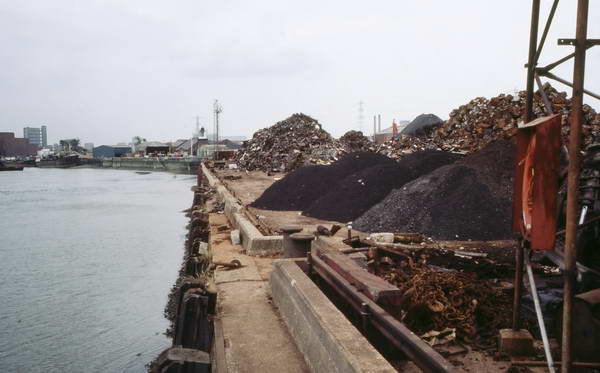
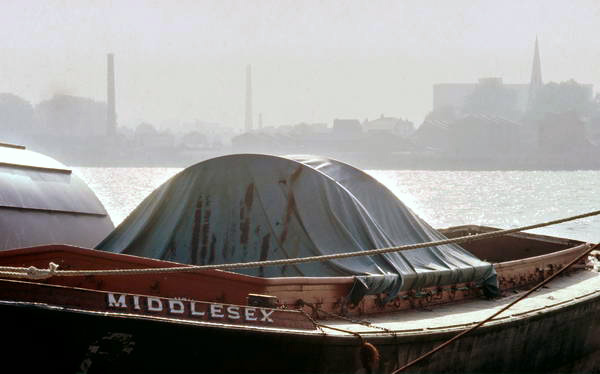
River Thames view towards Bow Creek and Trinity Buoy Wharf

But I’ve also found time to get on with scanning the slides from the River Lea in the 1980s I found the other day. The Epson V750 really does do a very good job of 35mm, hard to tell the results from those with my dedicated film scanner, a Minolta Dimage Scan MultiPro, probably (especially when used with the Scanhancer diffuser) the best non-drum film scanner ever produced.

© 2009 Peter Marshall
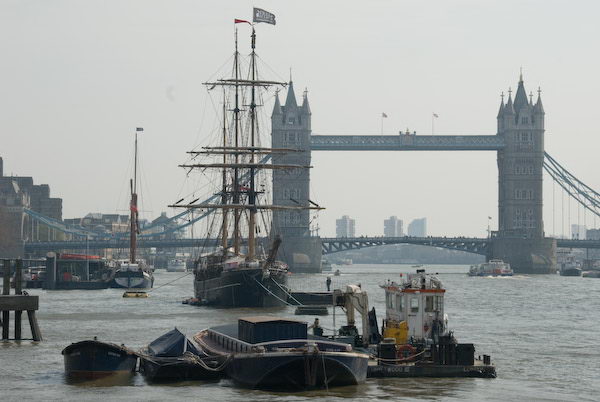
Another from the River Thames and not the Lea

Unlike Minolta (now out of business), Epson are still bringing out software updates for this scanner, and had I downloaded and installed the latest version at the start it would have saved me some time, as it turns out to be more reliable on my system than the older version I had installed.

Epson also supply a set of ICC profiles for use with the scanner (for transparencies, mono transparences and reflective material) and with correctly exposed slides – Agfa, Kodachrome and E6 – this generally gives excellent results. The Epson software also lets you adjust the exposure3 – black, white and mid points precisely, though it is just a little fiddly as it shows you the histogram of the original rather than the result, and you have to make an adjustment then click to see its effect.

Using the scanner with the film holder which holds 12 mounted slides, the software automatically detects and crops the image areas (it is sometimes fooled by some very dense slides), allowing you to set the exposure individually for each of them then click the scan button and forget about it until all 12 have been scanned. Scan times are pretty short, but of course depend on resolution and on whether you choose to use the various software corrections such as Color Restoration, Backlight Correction, Dust Removal and Digital Ice.

I’ve tested most of these things and so now normally leave them all switched off. They must have their uses (other than for marketing) but I’ve failed to find them. I scan 35mm colour transparencies at either 2400dpi or 4800dpi  if I’m feeling serious, and in 48 bit colour, using the scanning software in standalone mode.

At 4800dpi the scans are rather large – around 150Mb – and handle a little slow on my ageing computer.  2400 dpi gives  files at roughly 3000 x 2000 pixels, good enough for prints up to around A4 in size or even a little larger. 4800 dpi gives files around  6000 x4000 pixels, and there is little point in any higher resolution as the files essentially contain all the detail that there is in the slide.It is also the highest actual optical resolution of the scanner.

Using the software in standalone mode means I can continue to work in Photoshop while the scan is taking place.  All slide scans benefit from some dust removal, however careful you are – unless perhaps you actually work in a ‘clean room’, but I’ve only ever found one effective piece of software to do this. Polaroid some years ago made their ‘Dust & Scratches‘ filter for Photoshop – and other apps that use Photoshop plugins – available free of charge (it also runs as a standalone program if you don’t have Photoshop.) At settings similar to those shown below it removes most small dust spots and loses very little if any detail; at higher levels of some sliders you can get some nasty artefacts produced, so it has to be used with a little care.

Since Polaroid had its problems, this software has disappeared from the Polaroid site, but you can still find it on the web, though perhaps you shouldn’t tell too many people, just rush off and download it before it disappears.  Of course it may not work on Windows 7 or recent Mac versions, but its fine on Windows XP.

After applying this, I then take a quick look at the histogram using the Levels dialogue (Ctrl-L) and adjust those if necessary, as well as setting the mid tones to an appropriate value. Most scans need nothing doing at this point. If I’m still not satisfied by the contrast and the colour balance I then go on the the Curves dialogue (Ctrl-M) and use the middle eye-dropper from there to select a suitable neutral in the image, after that making any adjustments needed to the curve to get the contrast and brightness I want.

Large scans I tend to save at this point and write to CD later in case I want to work on them at a later date without the time involved in re-scanning. Then I cut down the image from 16 bit per channel to 8 bit so I can save as a jpeg on my hard disk (usually at quality 11) to give a master file from which I can print, make web size jpegs etc.

Working at 2400 dpi, I can process the scans as above in a couple of minutes, more or less at the same speed as the scanner works. That way I can probably do decent quality scans from around 20-30 slides an hour. Working at 4800 dpi slows things down to perhaps a quarter of this rate, but is still significantly faster than the Minolta slide scanner, where two high res images an hour is a good rate.

Having produced around 150 images, there was then the problem of putting them all on line. Rather than hand-crafting web pages I decided to use a Lightroom HTML web gallery. This produced the structure of the new site pages in a matter of seconds, but I wasn’t happy with the quality of the images. Fortunately it was a simple matter to copy better files to replace them – making sure of course they were the correct size in pixels. Possibly I could have got Lightroom to produce better files by altering some of the parameters, but it was easier to use those I had. I do normally use Lightroom to produce my images for the web after all.


Possibly on Stratford Marsh…?

There are pictures in these sets that I would normally have edited out (and one I left out by mistake) but with historical archive material some of the finer points of photography are perhaps less important than the subject matter.

© 2009 Peter Marshall
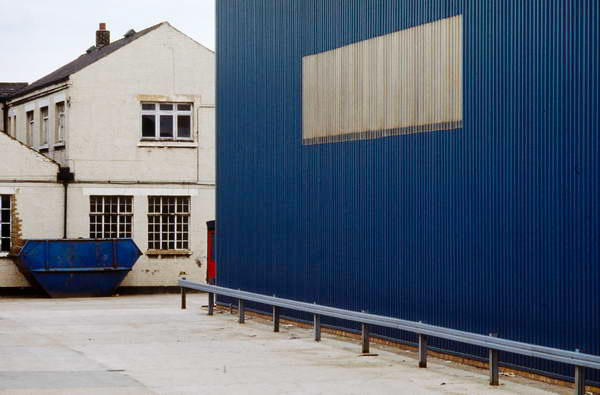
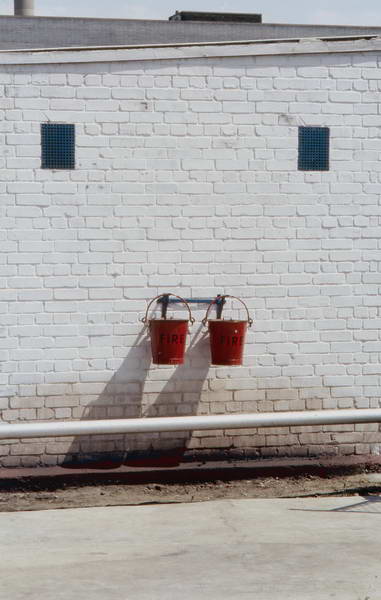
Two blue rectangles, two red buckets – but where?

I haven’t captioned these images either, which at least solved one problem, which is that as well as not having a proper filing system, at the time I was not particularly interested in knowing the exact locations of the colour pictures I was taking.  Of course it is vital to their value as historical record, and while I do know most of the locations there are a few – such as the couple above –  that are annoyingly hard to place.

The two galleries are linked into the rest of my Lea Valley – River Lea site – at the bottom of the page. Clicking on my name on any of the display pages takes you back to the home page for the site.

Hard Times On-Line

One of the oldest and most respected of on-line photography magazines looks likely to halt publication – at least temporarily – following a decision by Canon to end its sponsorship.

I’ve often admired ‘The Digital Journalist‘ for its great features on photojournalism, linking to a number of them over the years.  Its editor, Dirck Halstead, had become Life magazine’s youngest war photographer during the Guatemalan Civil war when he was only 17. After that he went to college and then worked for UPI for 15 years and was in charge of their picture bureau in Saigon during the Vietnam War. From 1972 he covered the White House for Time for 29 years, making 47 Life covers, as well as working on many films. You can see over a thousand of his pictures in his on-line archive.

With this background, Halstead was able to make his site an authoritative one, getting pictures and features by some of the best photojournalists in the 145 issues produced over 12 years to date. He headed up a strong team on the magazine, including Horst Faas as Europe Editor and Marianne Fulton as Dispatches Editor. Contributing editors include many more fine photojournalists, and then there are around a dozen contributing columnists and photographers – you  can read the full and impressive list on the magazine’s credits page.

All this of course needs substantial funding, and this comes through sponsorship and advertising. Canon was the magazine’s principal sponsor and in a letter in the November issue Dirck Halstead writes:

“Unfortunately, our principal sponsor, Canon, whose market has also been impacted by these turbulent times, has decided they can no longer afford to provide their financial backing to The Digital Journalist. We are very grateful for the generous support they have given us over the years. “

Halstead’s letter starts with the grave news “I am afraid that the December issue of The Digital Journalist may be our final issue, at least for a while” and the magazine now has PayPal links asking readers to donate funds for the future of the magazine. It came as a surprise to me that, according to Halstead, the site only has “more than 10,000” loyal readers, though I’m not sure exactly what that number means. I hope they do come up with the money to keep going, as well as to carry out the kind of funding they had been hoping to actually “send photographers out into the world to do their work, documenting the important stories that shape our lives and history.”

>Re:PHOTO of course operates on a very different budget. Like zero, or rather a small negative amount that comes from my pocket to pay for the web hosting. And a great deal of unpaid work by me. It’s a part of what I somewhat laughably call my business (it was only just in profit last year, though earlier years have been better) and it promotes my own photography as well as commenting on issues which I hope are of interest to you guys who are reading this.

Somewhere on >Re:PHOTO  it says I welcome contributions of material to be published here that fit within the general idea of the site. I’ve been very pleased to publish a few pieces – mainly exhibition reviews – by John Benton-Harris, whose work I admire. Contributions are welcome from others too, so if there’s an issue in photography you’re burning to write about do get in touch – but the rate is exactly what I get – zero.

I’m pleased to say that this site too has its loyal readers – and from time to time I meet some of them when I’m out taking pictures. It certainly it gets a pretty healthy number of page views – around 2,800 per day on average at the moment, and rising. But hardly I think in the same league as The Digital Journalist.

I do hope The Digital Journalist manages to keep going, though I think it likely it will need to very much tighten its belt. A tighter financial climate and the shake-up that is causing may even improve it. Although it does deal with the changes and developments in the industry, it often seems very much stuck in an earlier age, and just occasionally strikes me as being written for retired photographers by retired photographers.

Writing for Free

Although I now write ‘for free‘ that hasn’t always been the case, and may not always continue to be so. For eight years I wrote about photography for money (as well as out of obsession), and in a good month it made me enough to live on. Not that the readers paid directly for my content, but that the site I was writing for made quite a lot of money from advertising of various kinds. Often bloody annoying, but it paid my bills.

Almost all print magazines rely on advertising to pay for the content – the cover price is seldom enough to do so. On the web, few publications have managed to make a significant income from any source, but it can be done. There are a few excellent sites that do get money from subscriptions and from advertising, but for someone like me who has chosen (if only after being sacked) to go it alone, it isn’t easy.

This site – and ‘My London Diary‘ on which I present my own photography do very occasionally generate sales of my prints or fees for reproduction, but the return is very small for the hours of work I put in. Essentially I subsidise the writing of these sites by other activities, including sales  through agencies, the occasional commission and so on. I’m always happy to consider suitable work in the London area – and every blue moon the site throws up a job from someone who likes what they see.

But I’d like to spend more time writing, and writing seriously about photography is very time consuming. A considered review of a web site, show or book really requires several days of work, and the longer features I used to write weekly on photographers and aspects of photography took even longer.

A D Coleman is a writer on photography whose work I admire – though of course I don’t always agree with his views.  But where I’m a hundred per cent with him is in the series of features on his Photocritic site, Jeff Ward Wants My Writing — Free – #1 and #2. 

He quotes Ward as saying”the future should be open and accessible [online] repositories.” and that “Monetized knowledge is suspect, for me at least — I don’t buy it.”

Unless someone pays for it, much of it simply won’t be written, or at worst we may be limited to writing by academics and museum curators – although they are usually pretty good at marketing their work for secondary payments – and there is no criticism implied in that. But already doing it for a living they have the choice of goivng it away should they decide to do so.

What we need is some financial model that encourages and rewards good writing – and also of it goes without saying, good photography that is worth writing about, something which is also gettting increasingly hard to market.

The number of readers of this site are an order of magnitude less than the site I was paid to write for but still significant. This blog, >Re:PHOTO,  got over 86,000 page views for in October, and there were roughly the same number for My London Diary.  And neither are the kind of site that people are likely to arrive on by accident, so this represents a significant audience, and I’m very pleased that people think it is worth reading my rambles and viewing the pictures.

At the moment I’ve no plans to introduce adverts, as I like the the site without them, but it’s hard to see how I can keep it that way in the longer term as income from photography seems generally to be declining. And the advantage of getting money from writing is that I would be able to devote more time to writing rather than doing other things to keep bread on the table.

In #3 of the series, written on Sunday, Coleman  talks a little more about “the project I subsidize, organize, edit, and publish online, the Photography Criticism CyberArchive, a deep repository of historical and contemporary texts on photography and related matters by a wide range of authors.”  I suppose I should declare a sort of interest. When he wrote to me about this some years asking if I would be interested in putting any work in there I certainly wanted to do so but the small print of my lengthy contract with About.com, Inc made it impossible for me to do so.

This didn’t mean then that that galleries around the world were free to rip off my stuff, although many did, while others who asked had to fill in forms and pay and send the fees to About.com, though I wasn’t always sure that I got my 50% from them it did sometimes happen.  And of course students etc who asked were always told that so long as it was properly acknowledged they were free to quote me.  I often wondered what proportion did ask, and certainly in the early years before anti-plagiarism software came into wide use could claim – probably with some substance – to have gained degrees at a number of US universities.

But, rather more seriously, the fact that I couldn’t put work into the PCCA in the longer term has meant it is no longer available at all. About.com withdrew it from the web a few months after they terminated my agreement, and neither they nor I can use it without paying the other. In perpetuity. Or possibly until a large group of former employees decide to take out a class action.

I have of course rewritten a few pieces, and posted these, but it is time-consuming, bringing things up to date, correcting errors and simply changing my mind or having new thoughts means it takes at least as long as producing the original, and with several thousand pieces (of which perhaps a few hundred are worth republishing) its a daunting prospect.

Fortunately I was rather more careful with images. Apart from those of a purely instructional nature – such as how to load a film tank – I was careful only to use pictures of my own that I had previously published elsewhere and grant About.com a specific single use licence just the same as those I was required to get from other photographers except for truly public domain imagery.

So when I put up a slide show of my images from Paris – and here’s a fairly random image from it –
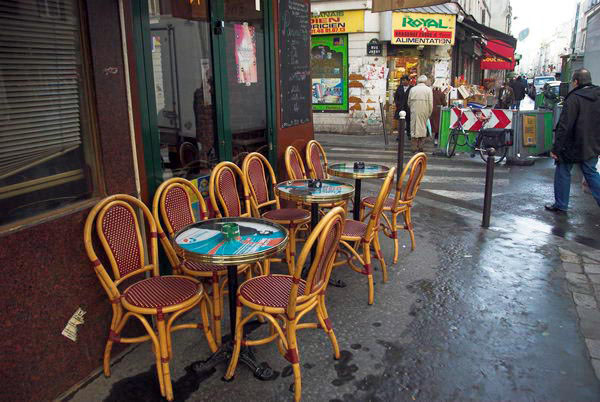
© 2006 Peter Marshall

they were from a set that I’d previously published on my own web site, where you can still see the thumbnails and full 58 images, including a few from Paris Photo where I’d still like to be going in a week or so’s time. But I’ll j ust have to make do with looking at those pictures from previous years, including last year’s PARIS SUPPLEMENT to My London Diary.

Back to the PCCA. It makes content available by annual subscription for personal study etc.  As he makes clear “it’s really designed with institutional subscription in mind — a situation in which one subscription fee would pay for access by a sizable user base.” Students and academics often forget that much of the material on the web they can access without payment they can only do because their institution has paid for a licence to services such as JSTOR .

But PCCA at the moment is subsidised by Coleman, partly because its content base is not large enough and also in a highly specific area, so attracting relatively few subscriptions, but mainly because unlike larger services such as Lexis-Nexis or JSTOR it is set up to look after the interests of the creators, paying them for their materials, rather than those of the publishers.

I’ve contributed a few essays to academic journals over the years that are now available through JSTOR. Of course there was no payment for the material by the journals, and I was never asked permission for them to put it on line or otherwise reuse it. Journals will get something for allowing their material to be used, but not those who actually provided the material.

You can read more about the details of PCCA in the feature and also at it’s web site.  We are promised more features in the series.
Gazopa

We’ve already seen image search engines that claim to be able to find a particular image on the web, and services such as PicScout’s Image Tracker seem to have had considerable success in tracking usage for the big agencies who can afford to use it. Because it relies on a “fingerprint” created from the image rather than a watermark, it claims to be able to spot even images that have been cropped or manipulated.

TinEye is another “reverse image search engine” with the big advantage of currently being free to use (although they intend to add some extra paid-for services at some time. Tineye is very easy to use –  just right click on any web image and select “Search Image on TinEye.” The only problem is that when I’ve tried it with my own and other peoples images that I know are on several places in the web it often hasn’t found them, though it is a lot better now than when I first tried it.

There are some examples of what it can do on the site. At the moment they claim to have scanned 1,143,177,077 images from the web; I don’t know how many there are in all, but the largest figure I’ve found on a single search on Google Images is 1,600,000,000.

Idée also have a PixID service which can identify usage of images in both print and on-line for “editorial, celebrity and entertainment firms, news wire services” and others, and is I imagine relatively expensive, as well as Pixmiliar which looks for similar images.

Similar to this is Gazopa from Hitachi America which is now in a public beta and you can use it on the web or download it for your iPhone should you have one.  It lets you choose an image on your computer on on any web site, upload it and it will then find similar images. Possibly.

As I’m sitting here feeling sorry for myself just starting to recover (I hope) from swine flu – the letter offering me the vaccine came this morning, very much too late – I had time to try it.

The first few pictures – typical things I take  like demonstrations – it could obviously not get it’s head round at all, so I thought hard and tried to give it something easy. How about one of London’s most recognisable buildings, Tower Bridge? And a picture that showed its very distinctive shape clearly:

© 2007 Peter Marshall

and was rewarded with my first (and only) success.  Of the 30 images on the first page of the thousand it selected there were actually 4 of Tower Bridge.  I tried with some other well-known buildings from London,  and other cities with no luck. A night image of the National Theatre did return night images, but not of anything remotely similar.

© 2007 Peter Marshall

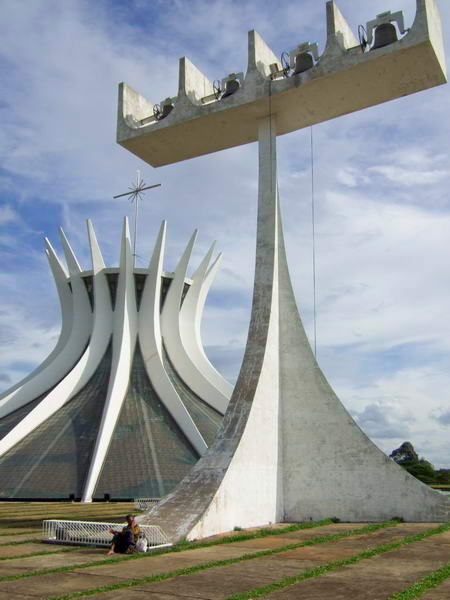
The bell-tower and cathedral in Brasilia doesn’t look to me much like the Japanese woman or the polar bear that GazoPa produced in response and although there was one other church it was in a very different style. The still ife image of two bottles was perhaps a little more understandable.

© 2009 Peter Marshall

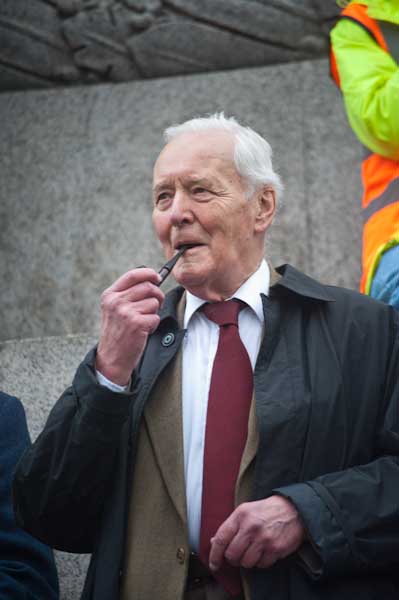
GazoPa also has a face recognition feature, so I thought I’d try that and fed it a picture of Tony Benn, complete with pipe, thinking there must be many thousands of similar images on the web (including hundreds of mine.)  Searching normally perhaps the most interesting match – at third closest was of what looked like an amateur burlesque dancer, though further down the list were three men with pipes but otherwise no resemblance.

Switching to ‘Face’ mode gave a different set of matches, with several of the same kissing wedding couple, several women between five and ninety and a small child in a push-along cart. But perhaps those carved heads of four US Presidents on Mount Rushmore were a nod to his political nature. To be fair there was just one of the first 30 pictures that did bear a very slight resemblance to the man, and who was looking in a similar direction, but I think the matching algorithms still need a little improvement.

© 2009 Peter Marshall

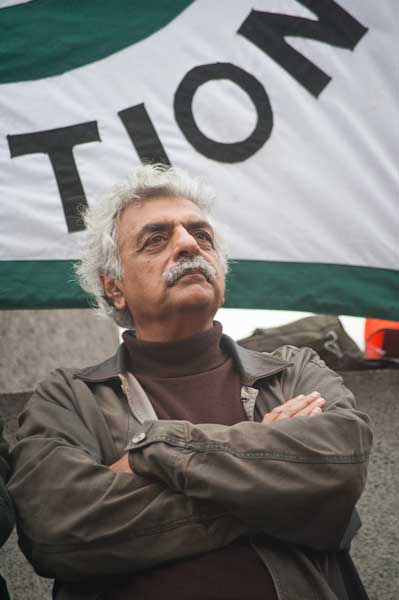
Just to give it a fair chance I thought I’d also try it on Tariq Ali who  had been standing next to him on the plinth in Trafalgar Square, a couple of weeks ago. Perhaps I can see a very vague resemblance to a cat, but the pig just isn’t fair! And ‘Face’ mode doesn’t make anything better.

I’ve not posted any of the results here – as if PicScout picks up any from its clients it could bankrupt me. But you are welcome to try any of the images here – or on My London Diary – on Gazopa. If you find any really good examples perhaps you could post them as a comment – just the URL of my image and any comment you want to make would be fine.

Great Press Photographs?

I’d been looking forward to seeing the first of the Guardian/Observer series of nine booklets on “100 years of great press photographs” today, but have to admit I was just a little disappointed.

Not that most of the 35 or so pictures from the 1910s and twenties aren’t in the main interesting pictures, but that in rather too many cases they aren’t really “press photographs”.  That is, they were not taken for use in the papers or published in newspapers or magazines in the era in which they were taken.

Or probably not, because with very rare exceptions, nothing is revealed about their publication history. But I suspect that those by some of the best-known names here – such as August Sander, Lartigue, Andre Kertesz as well as others didn’t appear in newsprint until considerably later.

Few of the captions do more that simply tell us a little more about the event or situation but there are some exceptions, particularly in the comments by Paul Lowe on a Lewis Hine picture and by cycling journalist William Fotheringham on what must surely be the best picture of all time of the Tour de France, with two of the “convicts of the road” (and in the picture it’s an extremely stony one)  stopping to quench their thirst at a village bar. Like quite a few of the images, the name of the photographer is not known – and as with probably most real press photography of this era – the photographs would have appeared uncredited.

As of course far too many still do today. Even at times in the Guardian, though it does have a slightly better record in this respect than some UK publications. But it’s certainly long past time that we put an end to the myth that Alamy, Getty, Corbis, AP, Reuters etc make photographs.

One of the images was taken by the Guardian’s first staff photographer, Walter Doughty, who was appointed in 1908. In 1922 he was in a Dublin bank in O’Connell Street behind  an Irish Free State Soldier kneeling in a suicidal position in front of a window shattered by bullets from the hotel across the street during the civil war between the newly founded Irish Free State and the republicans. His image was published in the Manchester Evening News. It perhaps says something about the industry attitude to photography that Doughty’s glass plates were then lost until 2000 when a later Guardian photographer, Don McPhee came across them in the abandoned darkrooms and realised their worth. You can see another image by Doughty and learn more about him in the page about the show,  A Long Exposure, of 100 years of Photography at the Guardian which was held at The Lowry last year, and also watch a short slide show with a conversation about the images between photographer and curator Denis Thorpe and Guardian northern editor Martin Wainwright. Doughty, who stayed with the paper until 1949, apparently never got a byline.

Although I wish it had perhaps focussed more on the subject, this is an interesting read, and if – like me – you don’t buy the Observer on Sundays and the Guardian every day it’s probably worth asking your friends who do but have less interest in photography to pass their copies of the series on to you. You can also see a small selection of ten ‘Great Press Photographs‘ online.

Photomonth Looks for Young Photographers

If  you are a photographer aged 11-19 resident in the UK you are invited to enter for the the first photomonth youth award. The theme is Children’s Rights and is related to the 20th anniversary of the UNICEF Convention of the Rights of the Child:

Every child has the right to

  1. a childhood
  2. be educated
  3. be healthy
  4. be treated fairly
  5. be heard

Deadline is 14 December 2009 and each entrant may submit up to 3 images, stating which of the five rights above is the them of each photograph, as well as where and when it was taken.

If you have a son or daughter you might want to encourage them to enter, as the prize is flights and two nights in Cannes in April 2010 at the annual Sony Photography Awards and  World Photography Organisation event for both the photographer AND their parent or guardian.

You can enter online at the photomonth site  and for more details see the site or contact info@alternativearts.co.uk 020 7375 0441

Fotofest – Birmingham Mark II?

I was a little surprised to see a picture by Vee Speers at the top of the press release for the Fotofest International Discoveries II show which opens today in Houston and continues until December 19.  Of course I really love her pictures, but I’d hardly call her a ‘discovery’ given the amount of previous exposure of her work, not just the The Birthday Party, first shown in Australia in 2006 which is now on show in Houston, but also previous work including ‘Bordello‘ which first shown in Italy in 2002.

© 2009 Peter Marshall.

I first met her at Birmingham at Rhubarb Rhubarb in 2007, though she first attended in 2005. In 2007 her pictures were on the wall of the room where I was looking at portfolios, one of several fine photographers selected for the show ‘Otherlands‘, though I’d seen her work previously in magazines. Surprisingly Birmingham doesn’t get a mention in the Fotofest release, although it was most probably there she met the senior curator of Fotofest, Wendy Watriss, who was a fellow reviewer.

© 2008 Peter Marshall

Chinese artist Wei Bi’s re-staging of his 80–day experience in a Chinese prison — a sentence received for making a photograph. His large black and white photographs are minimal, showing a surreal relationship between near expressionless guards and disoriented prisoners. One of his images appears at the top of an earlier press release.

Alejandro Cartagena, born in the Dominican Republic lives and works in  Monterrey, Mexico and at Houston he is showing large-format brilliantly coloured images of the dramatic and ever-expanding suburban development of the area. He has shown work widely in Mexico for around 5 years as well as contributing to international group shows. I particularly like some of the ‘NewWork’ on his site.

Minstrel Kuik Ching Chieh was born and raised in a Malaysian fishing village but she studied photography in southern France. You can see her work, including RRose which is being shown at Houston on her blog.

Christine Laptuta produces work about the mystery of land, “its ambiguity, disruption and rhythm.” She chooses to represent ordinarily vast landscapes in multiple printed miniature platinum/palladium contact prints.

The constructed landscapes of cities are focus for Rizwan Mirza‘s photographs. His shadowy nocturnal images reflect the tension between the mysteries of darkness and the lighting.  Born in Liverpool he studied with John Blakemore in the early 1990s and also came to Rhubarb Rhubarb in 2008, although the previous year he showed at various galleries and festivals including PhotoEspana, Madrid, Spain. His work was also on show – not in FotoFest – in Houston in 2008.

Born Tokyo 1948,  Takeshi Shikama has been showing his black and white photographs of trees since 2004, and “The Silent Respiration of Forests” first appeared in a Tokyo gallery in 2006.

Working between Seoul, London and Paris, Korean-born MiMi Youn was one of the three winners of the Lens Culture – Rhubarb Photo Book Awards in 2008 along with Kurt Tong who divides his time between China and the U.K and has photographed a little-known and officially banned element of ancient Chinese funerary practice; Joss Paper or “Spirit Money.”