Cry for Palestine

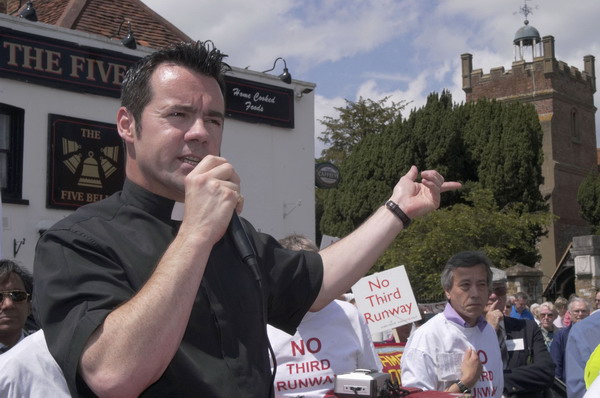
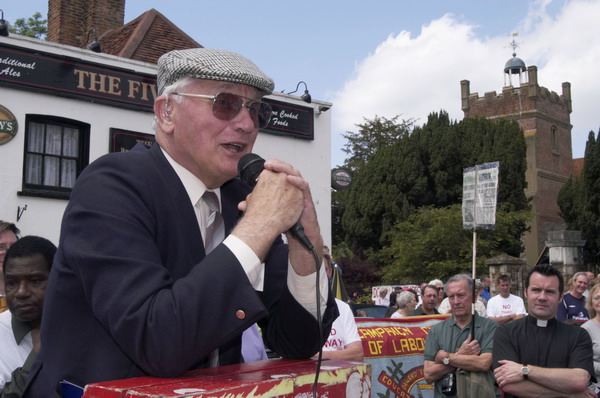
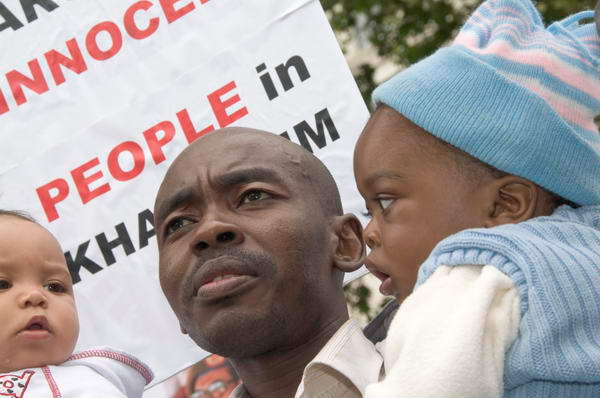
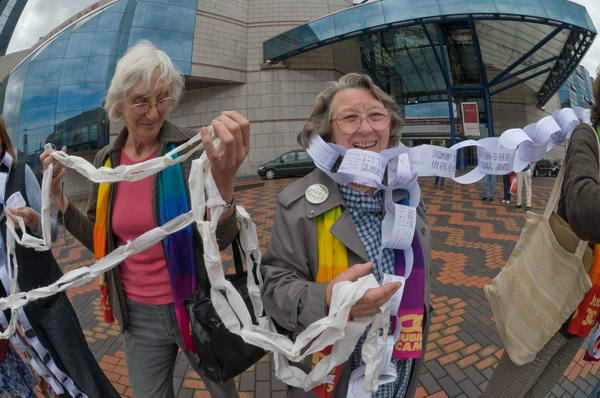
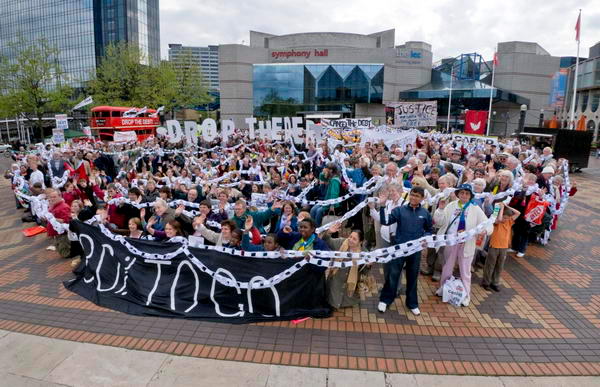
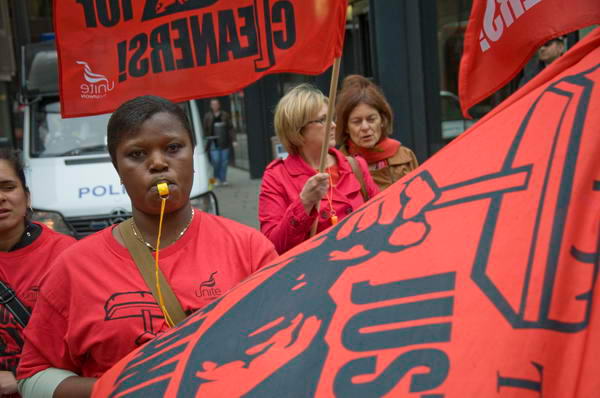
Last Saturday I photographed the start of the march from Lincoln’s Inn Fields to the rally in Trafalgar Square, part of the international day of action to mark the 40th anniversary of the Middle East War (aka 6 Day War) under the slogan: “The World Says No to Israeli Occupation“.

Palestine demo The unfortunate truth is that much of the world has generally failed to say no, or at best has only whispered it, while America keeps shovelling support to Israel. At the very start, during the war, it was Russia that failed the Arabs (and in particular the Palestinians), their failure to respond scuppering any effective UN action.

I’ve considerable sympathy and support for Israel, but not in this respect. As kids we thrilled to the story of David and Goliath, the small boy taking on the powerful giant with his sling and smooth stones and winning. Thousands of years later, many here welcomed the new state of Israel, and certainly we acknowledge its right to a peaceful existence. But now the bulldozers and tanks are driven by Israeli soldiers and the small Palestinian boys throw the stones with generally negligible effect.

Of course there are attacks on Israel, particularly by suicide bombers and the largely random firing of rockets. Israel publicy blames the Palestinian government while knowing that it has destroyed any ability they might have to prevent such things happening, and uses this impotent failure as an excuse for disproportionate retaliation. The current near civil war could not have happened without years of this misguided Israeli policy of undermining successive Palestinian governments in every way they can – when obviously making a peace settlement needed a strong Palestinian leadership.

Recently I’ve been reading the reports of a friend in occupied Palestine as a human rights observer. Deacon Dave is now back here and was on this march. His reports tell of the everyday and almost incessant harassment of Palestinians by the army. Dave himself was attacked, fortunately only receiving relatively minor injuries, and he ducked just in time as he saw a soldier about to open fire. Later, there were apologies from some officers, but it was very much a case of too little, too late.

As well as the army, there were also regular attacks on Palestinians and observers by settlers, but he also told of the efforts by Israeli groups such as ‘Rabbis for Human Rights’ to stop the arbitrary demolitions of houses.

Wars, though sometimes justified, seldom if ever solve problems; usually they simply prolong them. In the end there has to be the difficult process of learning to live together, peace and reconciliation, something that has been put off far too long in the Middle East, perhaps largely because it simply is something that few Americans appear to realise as a possibility let alone a necessity.

Arwa sings

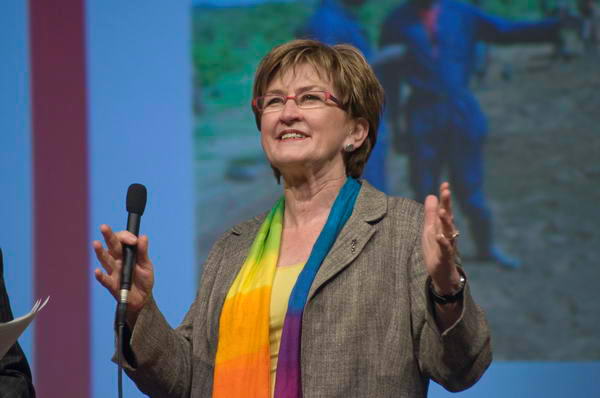
Last month I heard Arwa Abu Haikal, a long unpaid government employee of the Ministry of Youth and Sports in Hebron talk movingly about life under the occupation, and in particular the problems of living near settlers, who though often settling and acting illegally are seldom bothered by the Israeli Army. The picture shows her later that day, singing a lullaby from Palestine.

I was pleased to hear that the NUJ in April had called for support for a consumer boycott of Israeli goods. It didn’t surprise me when some members suggested it called into question the impartiality of our reporting of the issues and others made allegations of anti-semitism, although I don’t beleive either comment is justified. Although it has caused considerable outcry, and there are some problems with the way the issue was handled at the ADM, I hope that it will be confirmed at next year’s meeting. The Palestinian people need and deserve our support – as too do the Israeli people, but not their current government policies. Of course the eventual settlement in the area must enable the two peoples to live together.

More of my pictures from the Palestine march at http://mylondondiary.co.uk/2007/06/jun.htm#palestine
My London Diary

Peter Marshall

June comes in late

June has finally dawned at My London Diary, with work online at http://mylondondiary.co.uk/2007/06/jun.htm.

Apologies to those people who I know were waiting to see themselves online, but its been a busy month so far, especially as I’ve had to be away for several days in Hull for family reasons. Here is a list of the main events (all in London) covered so far this month. You’ll find links to them at the top left of the main June page.

  • bonkersfest, camberwell
  • the world can’t wait (g8)
  • brian haw – six years of protest
  • sikh federation march
  • end occupation in palestine
  • 200 years of orange marches
  • 2007 world naked bike ride
  • stokefest, stoke newington
  • blockorama, dalston

Comments here welcomed.

Peter Marshall

Kash, Afghanistan and the Threat to Journalists

11 Carlton House Terrace is an impressive Nash building from around 1830, designed as a scenic backdrop to St James Park and grand enough to have been home for two prime ministers, Lord Stanley and William Gladstone as well as William Crockford and the Guiness family. Inside it has an impressive double staircase and some formidable public rooms. The Foreign Press Association has been here since 1946, and in 2006 Gabriele ‘Kash’ Torsello was awarded the FPA’s Premier Award, the ‘Dialogue of Cultures’. After his release (see below), Kash was at a low ebb, and this recognition of his work was important in giving him the will to continue with his Afghan project. The interior of the building is hung with large banner prints of some of his powerfully empathetic images, in the first of a series of exhibitions to be announced shortly at the venue. Kash’s show is the launch of a larger exhibition in southern Italy, where as ‘Staramasce’ 30 huge photographs will be hung throughout the summer, one in each of 30 public squares in Lecce province, together with an exhibition of all 30 in the Lamarque Museum.


The balconies of Carlton House terrace overlook The Mall

It was a beautiful evening, an unforgettable venue and there was good Italian wine and very likeable Afghan-style food, and I met and talked with many interesting people – including most of those in the panel of speakers, half of which is shown below.

I first met Kash at an NUJ party last year, unmissable with his beard, dark clothing, warm and intense manner and a battered film Nikon, and talked to him about his work in Kashmir. A few days later, the book he promised to send me, his ‘The Heart of Kashmir’ (2003) arrived; I was impressed and published a short note on him and his work on About.com in July 2006. Heart seemed a very appropriate word, for this was work full of passion by a man whose heart was very much into his photography and his closeness to the people he lived with and photographed. As well as the pictures, its short texts gave a very real insight into the problems of working in such situations.

It came as a shock to read last October of his kidnap in Afghanistan. More so because he was someone who lived among and worked for the people, and worshipped with them as a fellow Muslim. I was pleased to be a small part of the worldwide campaign for his release, both through About Photography and also with links to the note I’d written previously from other sites, including the NUJ.

And of course we were delighted with the news of his release after being held for 23 days. But it’s important to remember that he was only one of many journalists and photographers who has suffered, and many die recording events around the world. According to Reporters Without Borders, one of several organisations that keeps such grim records, 84 journalists were killed in 2006, and halfway through 2007 over 50 journalists and media assistants have been killed, and 130 imprisoned.

Half the panel
From Left: Farid Popal (Afghan Embassy), Leila Blacking (ICRC) Gabrlele Torsello, Nazenin Ansari (FPA President), Abdullah Annas (ex Arab Mujahidden)

The panel of speakers included Leila Blacking of the ICRC, which had the same day released its press release, ‘Afghanistan: Insecurity spreads amid escalating conflict’ giving a bleak view of the situation there. The Red Cross’s view was largely dismissed by Farid Popal of the Afghan Embassy, and an equally complacent view came from the US Embassy representative.

Reporting here from Afghanistan is limited – despite the determined and hazardous efforts of many of our colleagues, including Kash and a number of his friends also at the opening. The ICRC views are based on their 20 years continuous working in the country and note the deteriorating military situation and the problems this creates for development work and the increased need for emergency assistance. Almost two and a half thousand people were detained by Afghan authorities last year in connection with the armed conflict over the past year, and there is a general lack of security in the south of the country leading thousands to abandon their homes in both rural and urban areas.

Blacking spoke impressively and responded openly to questions from the floor as well as in private conversations later. Listening to the diplomats, both very likable men, it was impossible not to remember Sir Henry Wooton’s comment (made in Latin almost 400 years ago) that “an ambassador was an honest man, sent to lie abroad for the good of his country.” Unlike English, Latin allows no ambiguity about the meaning of the phrase.

I also thought about events of the nineteenth century, and the great images brought back by Baker and Burke as they travelled with the British Army, whose opinion of the campagn there is encapsulated in rhyming slang. To Kipling the Khyber Pass might have been “a sword cut through the mountains“, but the troops saw it differently. Perhaps after some 200 years, ‘The Great Game’ is now coming towards its end game.

Journalists are coming under increasing pressure, and both Afghan and US responses where chilling, with the clear implication that those who went into certain areas were just asking for trouble – and deserved what they got. Why, asked the guy from the US, only slightly more circumspectly, won’t journalists go and write nice success stories from the places in Afghanistan where we would like them to go?

From the ICA
We were joined on the neighbouring balcony by people from the ICA.

1989

Like 1984, but 5 years later. George Orwell wrote his famous book when the date was some 40 years in the future, but I photographed 1989 at the time and wrote about it badly around 17 years later.

(C) 1989, Peter Marshall

Of course there is no real connection with Orwell (though I do have friends who live in his former house in the North-East.) 1989 is just a kind of account of my wanderings in north-east London on a few days in that year, both in straightforward images and rather convoluted text. What is on line is merely chapter one of this fictional work, which has amused some. It does have certain literary influences, but I can blame nothing on Orwell.

(C) 1989, Peter Marshall

It’s perhaps best just to see it as 20 images of the city and not try to read the rather small text. I put this selection of images and the texts together for another web site, which seems to have folded shortly after these went live, though doubtless just by coincidence. On that site the images appeared in reverse order, but I’m not sure it made a great deal of difference.

In some cases the text does reflect at least some of the thoughts that went through the photographer’s mind as he stood in front of the scene and took the picture. Other parts came long after the event.

Peter Marshall

Water, Water Everywhere.

From the beginning, photographers have always had a thing about water. Of course it’s inherited from painting, as a quick walk around almost any art gallery, at least of work before the twentieth century, will soon confirm. Walking around art galleries is always useful exercise for photographers, and in London we are peculiarly blessed with both the National Gallery and the National Portrait Gallery adjoining Trafalgar Square where I’m often photographing events, and Tate Britain a short and pleasant walk from Parliament Square, where I’ll drop in and say hello to Brian Haw even if there is no other demo taking place. These galleries are also handy places to dry out when you’ve got soaked photographing in the rain.

In the first decade or two of photography, exposures were long, and one of the great challenges was to photograph waves. I wrote recently on ways to photograph water, and mentioned the success of John Dillwyn Llewelyn in an image of waves breaking on the Welsh coast in the early 1850s.

Water was essential to the wet-plate process that he used, where the photographic plate had to be coated and made sensitive to light on the spot, then exposed and developed before it dried to form a hard, impermeable skin. Of course water remained essential to photographic processing until the advent of digital, but we didn’t need to do the business on the spot. Even now, large quantities of water are needed for the manufacture of digital cameras, computers and the other equipment we need. Truly water is essential for life!

Few photographers, even the most cynical of us, are not occasionally seduced by the reflections of our subject in a smooth pool or broken by ripples, even though we know such things have already been done to death (and there is much evidence of this demise on Flickr and elsewhere.)

I’m trying hard to remember which the photographer was when asked for his definition of photography replied “never anything shot on a beach” or words to similar effect. I don’t think it was me, though I have a certain sympathy with the sentiment. As in the same way I used to call for a moratorium on the sale of colour film in the “Fall”, so aptly named by Americans. O Kodachrome, O tempora, o mores!

So when I agreed to take a walk with Linda and Samuel along some of London’s canal system last Saturday, did I stick to my principles and leave the camera at home? Of course not. From Mile End, we walked not to Paradise, but Willesden Junction by way of Kensal Green.


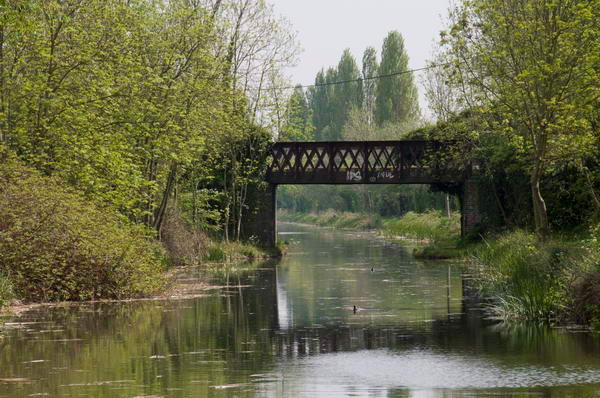
Grand Union Canal (Paddington Branch) at Kensal Green, steady rain.
(C) 2007, Peter Marshall

Water, at least towards the end of our journey was certainly everywhere, with an intense fine rain falling constantly as we walked the last few miles, although for once I managed to keep most of it out of my Nikon. Perhaps the canal looks at its best in rain?

More pictures from the walk in My London Diary, May 2007

Peter Marshall

Photographing with a Bicycle

The bicycle and photography were products of the same era and have many synergies. A few years ago, being interviewed by an amateur photographic magazine, I was surprised by the question “What is your favourite photo accessory?” but needed no time to think. Number one was my Brompton, with a good pair of comfortable walking shoes coming a close second. I can’t remember if either response made it to print, certainly they were not the kind of answers the reporter was looking for.

At the end of the nineteenth century, both bicycle and camera (thanks to the recently introduced dry plates and Mr Eastman’s Kodak film, and the introduction of the new ‘safety’ bicycle as an alternative to the ‘penny-farthing’) were popular crazes for the young and wealthy middle-class city-dwellers. In New York, as Alfred Steiglitz struggled to get his photographic crusade into top gear through the New York Camera Club, he took a tumble as its members put forward a motion to transform it into a bicycle club. (The motion was narrowly lost, but he took the hint.)

Both photography and cycling were relatively new and exciting and in keeping with the spirit of the times, offering new freedoms and an increasing ability to investigate a wider world. Some thirty years later, industrial workers, benefitting from shorter working hours, also took to their bikes and cycled out into the surrounding countryside, some of them with cameras. Bert Hardy was one, and began his career photographing cycle races. And many years later still, in my first conscious photographic project, I too got on my bicycle and cycled out to photograph a grove of ancient oaks.

Forty-five years later, the bicycle is still my favourite photographic transport, though I favour a folding model that can easily be taken on trains or even buses for longer distances. Unlike a car, you can stop and jump off when and where you like, and carry it up steps, over footbridges and ride or push it along footpaths.

Chafford Hundred (C) 2007, Peter Marshall
Chafford Hundred. 1/250 f8 70mm ISO 200 Nikon/Brompton!

This picture was taken in Essex, one of many last Thursday made possible by Brompton. The bike got me there and many other places, and it also, by standing on the crossbar, gave me the height necessary to shoot over the fence which stopped me falling to my death over the edge of a cliff. Its a part of a long-term study of the Thames Gateway area, one of the largest developments anywhere.

I’ve always envied the tall guys who can see (and photograph) over walls. Although taking thought can add nothing to my stature, taking the Brompton gives me an extra 20 inches or so (or, more precariously, with one foot on handlebars and the other on the saddle a full three feet.) Think of it as a stepladder with wheels.

Peter Marshall

The 3 ‘P’s

Let me introduce you to the 3 ‘P’s. They are what I feel makes any artistic project worthwhile, whether curating a photography show, making a body of work (including My London Dairy) or indeed, writing a column such as >Re:PHOTO.

Firstly and paramount, is that it should be personal. Something you feel strongly about, rather than perhaps something produced simply to meet a market or curry favour with a patron. Although of course many great works have also done those things.

Passion (C) 1997, Peter Marshall
Passion: Paris 1988 ©Peter Marshall 1988

Related, but not the same, is that it has to reflect a passion.

The final P, also related, is for point of view. It has to be there and it has to be non-trivial.

The 3 ‘P’s is of course a preciously contrived device to catch the attention. Earlier this year I wrote a rather more serious piece on the 3 ‘I’s of photojournalism (which, if memory serves, were integrity, inteligence and intention) and doubtless at some future date you will be treated to the 3 ‘W’s of Landscape photography. But the ‘P’s did reflect some of my thoughts on the current Tate Britain show.

In ‘How We Are: Photographing Britain’ curators Val Williams and Susan Bright certainly started off firing on all three ‘P’s but at some point appear to have been stymied. The Tate, perhaps wanting a rather different show, apparently brought in a review by the photographic great, good and celebs who covered the green with a great deal of balls, many of which had to be taken on board. “You can’t have a show without Bill Brandt” said some, fairly sensibly, but there were other rather wackier suggestions that also made the walls.

Quite a few reviews of the show have already appeared, of widely varying competence, though mostly favourable, although some writers do appear to have the mistaken impression that the show is come kind of history of photography in Britain. If you are reading this, you, like me, will probably have read all or most of them, and I’ve decided not to write at great length directly about the show.

Probably the best of those I’ve seen published was online at the Telegraph (may require free registration), by Richard Dorment, who puts the show exactly in its institutional context and then goes on to say: “this is not primarily a show about photography as an art form, or even about the history of British photography.”

Rather, as he goes on to say, it uses photographs to illustrate a social history by making use of them – and using them largely in contexts and ways that were not those of their authors. Reading the small booklet that accompanies the show you are certainly made aware of one aspect of this recontextualisation, when in the short section dealing with the period 1840-1900 they state “As the century progressed, women photographers were among the most skilled professionals in the UK” and in the following section, Into the Twentieth Century, “Women also continued to be a major force: making portraits, documentary photography and – as the Suffragette movement gathered pace – propaganda.” Personally I found material on the suffragettes (including images not taken by women) one of the more interesting aspects of the show, although perhaps evidence for the rest of these statements remains at best flimsy. But that women acheived as much as they did despite the social attitudes prevailing at the time is certainly worthy of celebration.

Dorment, like me, obviously found the show full of fascinations and he mentions some of them (I didn’t particularly share his enthusiasm fof the work of George Garland.) If you’ve not read this review (and who reads the Telegraph arts pages?) then do.

What I do intend to do, over the next week or two, is to make some posts on some of those missing from the Tate show, without whom any history of British photography is gapingly incomplete. ‘Missing Persons’ will hopefully do a little to fill that chasm.

Peter Marshall

Sorry Caron

Tonight I missed the opening in ‘the underpass’ near Edgware Road tube station, despite a personal invitation from Caron Geary, who I met in the pub after the private view of ‘How We Are’ at Tate Britain.

In the pub, Pimlico (C) 2007, Peter Marshall

Caron (on the right in the picture) is a fast up and coming photographer, and one to watch. I first came across her name at the time of the graduate shows last year, and you can see some stuff on the Saatchi site. She’s even in the Daily Telegraph, though somewhat curiously for the Independent Photographers Award. (A gallery in Sussex, not the paper.) Clicking there on the previous button brings you to a picture by Richard Chivers, whose large landscapes impressed me at last year’s Free Range graduate show.

The Leica M8 did a reasonable job considering the terribly mixed up (but dim, dim…) lighting colour in the pub (that’s a pink or purple light on her shoulder), even without the IR cut filter which I keep meaning to get. Without it, Leica’s auto white balance is nothing like as good as Nikon’s, and I’m told the filter doesn’t help greatly. Of course, shooting raw this isn’t a great problem. The 35mm Summilux makes a pretty decent standard lens, and shooting wide open isn’t at all bad. More on the Leica later, also more on ‘How We Are: Photographing Britain’, after which I needed a drink.

I do suggest you go. Just repeat the mantra “this is not a history of photography in Britain” over and over as you walk round and enjoy what is on display for what it is.

Peter Marshall

May Merry

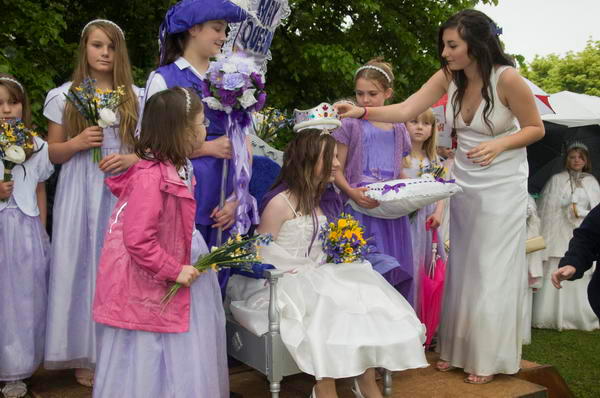
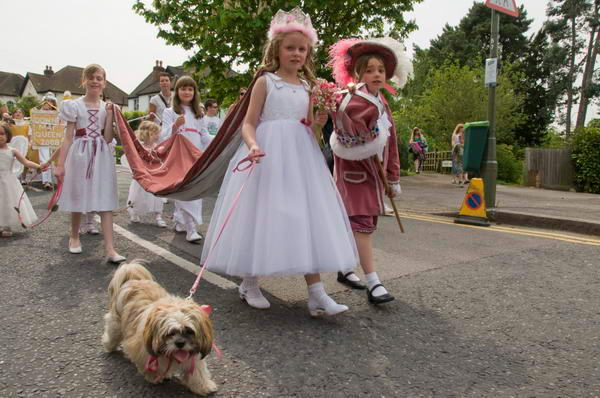
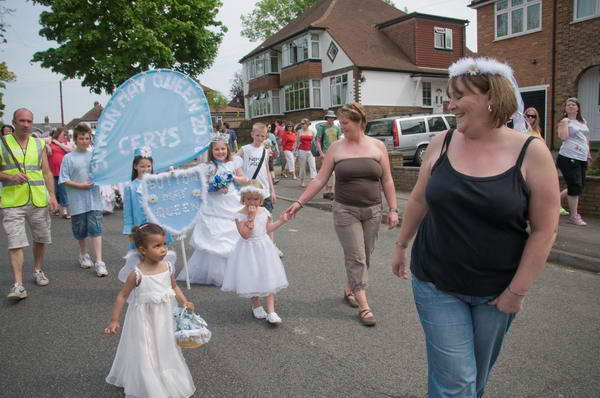
It was hard to believe I’d got there on a Travel Card. London, Zone 6. From the station I walked through the woods to the village green opposite the Blue Ball pub and into a different world. The May Pageant was headed by ponies with riders in fancy dress, followed by the May Queen in a very smart horse-drawn carriage and the church choir sitting in a trailer on hay bales pulled by Billy O’Hallorans tractor. The new May Queen and her entourage followed in Young’s Brewery horse-drawn dray, followed by brownies, beavers, schools, residents associations and more, including the Santa Fe Stagecoach and the Harley Davidson Club, and ending with the Surrey Police.

Walton-on-the-Hill May Pageant (C)2007, Peter Marshall

By the end of the afternoon things were getting edgy and the choirboys had a shootout. You can read more about the May Pageant on My London Diary

Peter Marshall

Wrenovated

Linda was on a sponsored walk for Christian Aid around City of London churches on Sunday, most of which told the same story. Burnt in the great fire, rebuilt by Wren, bombed by the Luftwaffe and rebuilt more or less as Wren had intended. Only one church had instead been rebuilt in a modern style, and the results were not encouraging. I’ve long felt we should have planning laws that insisted that old buildings should only be replaced if the architects can convince a suitably qualified panel of planners that the new building is in every way better, but Wren would certainly be a hard act to follow.

I went along to keep her company and took the Nikon. Here are two pictures of a favourite corner of London, taken within a few seconds of each other. This one used my 12-24mm at its widest setting:

It’s ok, but somehow didn’t get the feeling of an enclosed garden that I wanted. So out came my favourite lens, the 10.5 fisheye, and well, you know what that does. To the rescue came Image Trends Inc, and the Hemi-Fisheye filter I reviewed not long ago. I think it does the job better.

City Garden (C) 2007, Peter Marshall

Peter Marshall