Walking the Lea

Almost certainly the worst thing about ‘diamond geezer‘ is his totally embarrassing name. You know he can’t be a Londoner, though he does seem to love London town, and certainly has one of the most visited blogs on the city. I pop in from time to time, though I’m not entirely a fan (too many pointless lists and twaddle for my taste.)

But, like me, he has visited most of London’s boroughs and taken photographs in a series featuring one at a time – and though he’s not always the greatest of photographers some of them at least do a decent job of showing you what things and places look like.

This August was one of his  better months, as he took time off to walk the length of the River Lea, from it’s sources near Luton down to the Thames at Trinity Buoy Wharf, and giving some useful information about the route and some of the things you see on it. If you want to follow in his footsteps you’d also be wise to consult Lee Hatts who has both a great web site and a very useful book on the Lea Valley Walk with useful directions. The book is handier if you are actually going to make the journey yourself.  Diamond Geezer’s (I’ll call him DG from now on, which sounds rather better) account is even more up to date, and certainly worth reading – and it’s good of him to give my own work in the area, London’s second river,  a very nice mention.
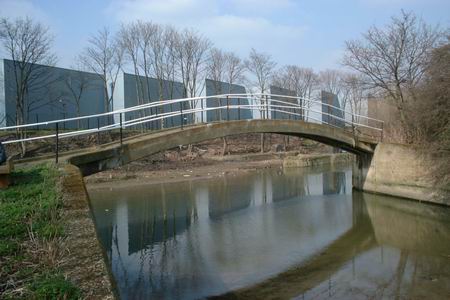
Bow Back Rivers (C) 2001 Peter Marshall
Pudding Mill River and River Lea, 2001

If you want to walk the whole thing, its fairly easy to divide into sensible chunks between railway stations at Leagrave, Harpenden, Hatfield and Hertford, south of which there are handy stations every few miles to Canning Town. Its also pretty easy on a bike, but any of you welded to an automobile will have a slightly more difficult time.

I first walked most of the route in the early 1980s, putting together an unsuccessful grant application to photograph the river and its surroundings. Although I did go back and do some more work even after I’d had my project rejected, I think it was a great shame I didn’t manage to get backing for more extensive work in the area. There are some pictures from those visits on my distinctly unfinished The Lea Valley site, and I’ve shown work from this on a few occasions.

It was an interesting time for the lower Lea Valley in particular, with the traditional industries fast disappearing. I started taking pictures just a little too late, in the last month or so of commercial barge traffic on the river – and it had all but disappeared.
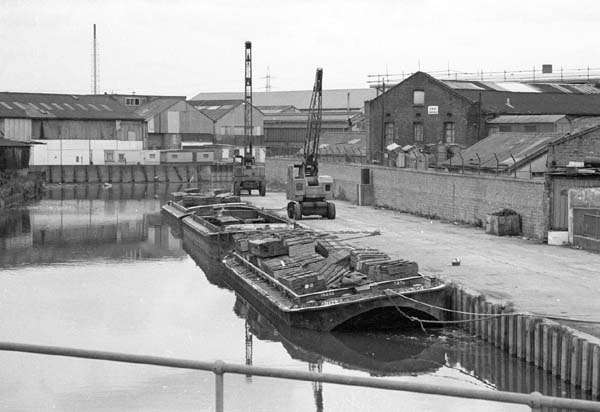
(C) 1983 Peter Marshall

In the 1990s I returned to parts of the area, in particular Stratford Marsh and the Bow Back Rivers, a truly fascinating area and at times it seemed almost remote enough from London to be another continent. Conservation work, mainly by volunteers, cleared waterways and footpaths and made it far more accessible in the later years of the decade. Most of the work I took then, including a number of panoramas,  is only available in my files.
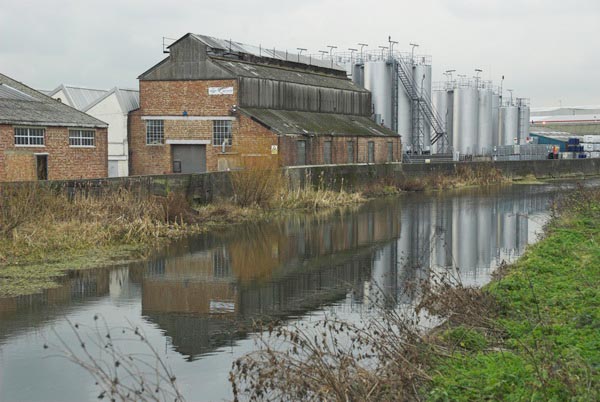
© 2006 Peter Marshall
City Mill River, Stratford Marsh, 2006

I continued to photograph along the Lea Navigation and allied waterways in the early years of this century, and the work was given a new impetus with the announcement of the London 2012 Olympic bid. Unfortunately some clever sleight of hand stole the games from under the nose of Paris (in many ways a far more suitable site) and in the last couple of years much of what I photographed has been obliterated in one of the largest transformations London has ever seen.
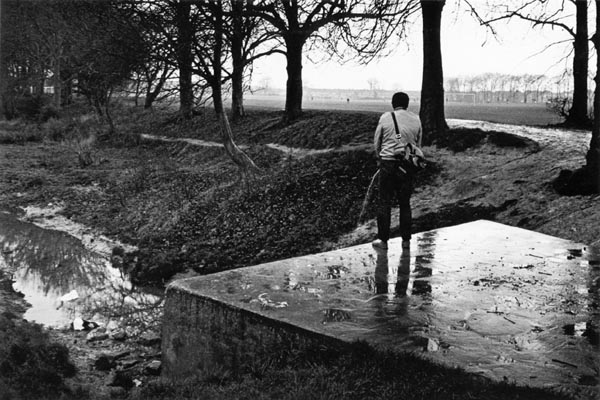
Source of RIver Lea (C) Peter Marshall
The source of the River Lea at Leagrave

As well as the usually quoted source at Leagrave (above), DG also goes the extra mile – or rather two – to Houghton Regis, where the stream emerges from under a sports pavillion. It isn’t clear why Houghton Brook should be regarded as a tributary of the Lea rather than the other way round.
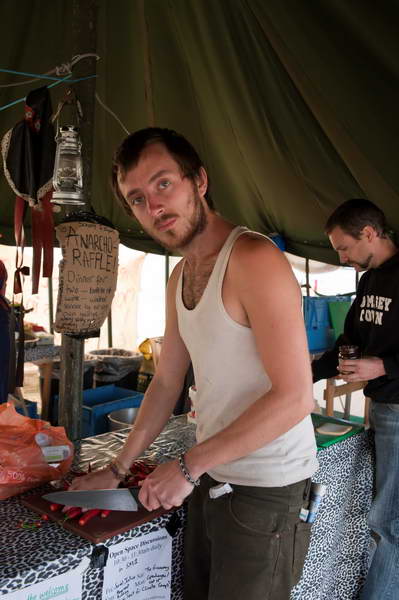
Documenting the Climate Camp

Although the Climate Camp has always had problems with how to deal with photography and with the press – and things were a little better this year than in previous years – it has tried to create some proper documentation of its work through photography and film.

Although for various reasons I’ve not actually become a climate camper, I was invited to come and take part in this, although I was only able to do so for one day of the camp.

Members of the team were identified by wearing blue sashes and the camp handbook asked people both to tell them if they don’t want to be filmed and also if there is anything happening which should be documented. It says “These are highly trusted individuals accountable to the Camp as a whole, and we hope that campers feel cool and relaxed around them.”

Although wearing a sash did make it rather easier to work around the camp I still found a little hostility at times, and I wasn’t able to work as freely as normal. Much of my work relies on capturing a fleeting instant, and if I’m having to think whether I need to ask permission before I take the picture it means that I’ll miss the moment. You can see the pictures I did manage to make on My London Diary.

Of course there were photographers working inside the camp without permission, including several that I know who had simply come in with the rest of the public as visitors. I didn’t see anyone who had accepted the media guidelines and was wearing press badges and accompanied by minders.

© 2009 Peter Marshall.

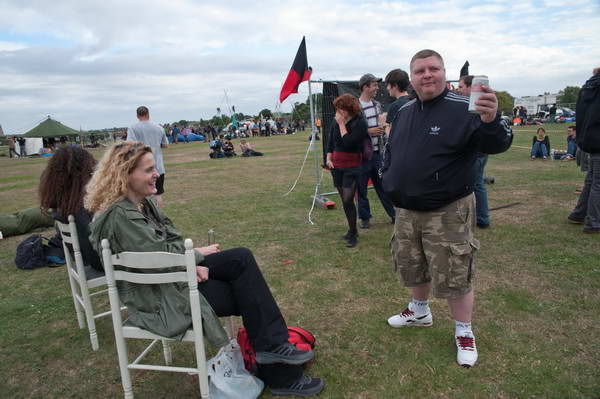
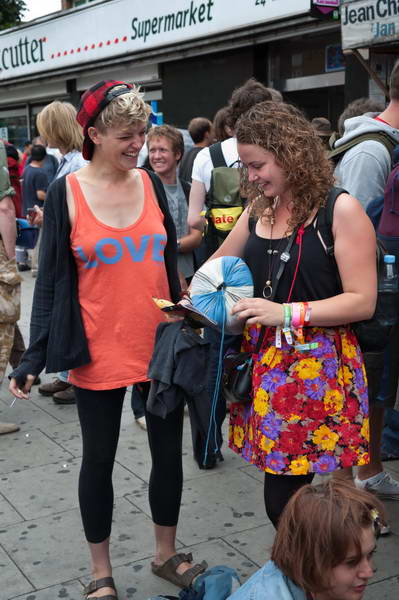
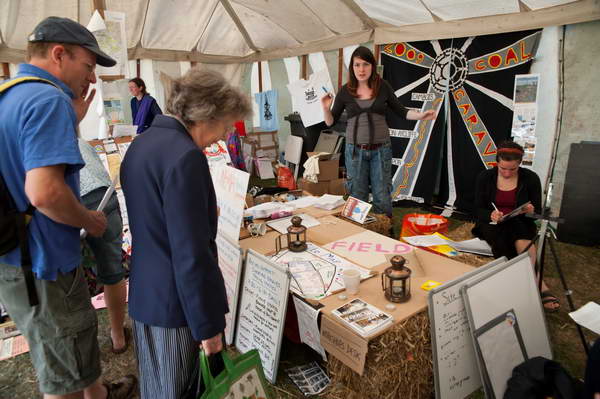
What I was photographing was the normal daily life of the camp, hopefully giving some idea about how it works and what it was like to be there. I also spent a little time following (with her permission) one woman who had heard about the camp and had made a short trip across South London to come and see for herself.

© 2009 Peter Marshall

I think she was both confused and impressed by her first impressions of the camp, and so perhaps was I.

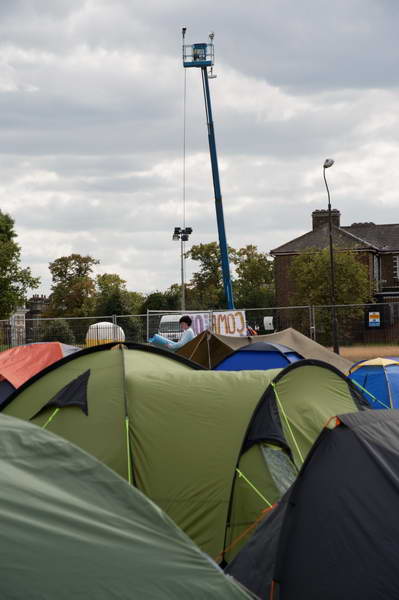
As I walked out of the camp and across the heath I noticed a small group of Climate Campers gathered at the fence below the police cherry picker with its video cameras trained on the camp day and night.  A small group of police was talking to them and they all dispersed as I drew near. I stopped and took a few pictures of the cameras, still rather distant on their high platform, then turned around and walked on a few yards to photograph the banners on the Climate Camp fence.

© 2009 Peter Marshall.
The cherry-picker and cameras from inside the Climate Camp

I became aware of a black man in his mid-twenties around twenty yards away from me. I turned down a path and he too turned down it, and again at the next meeting of paths.  I stopped to put my camera away in my camera bag. He stopped too. I took out a sandwich and stopped to eat it.  I’m a slow eater, but when I’d finished I turned my head and the guy was still there, writing in a notebook. I made my way down the hill and he continued to follow me.

Of course I was behaving suspiciously. After all, I’d been taking photographs.

Climate Camp – Why Blackheath?

You can see a few pictures from Wednesday afternoon as the Climate Camp was being set up, as well as the reasons for choosing Blackheath-  in terribly gory detail – on My London Diary.

© 2009 Peter Marshall.
Most of the people at the Climate Camp meeting

I won’t repeat all the details – I’ve already posted them on Indymedia and Demotix as well as some on My London Diary.

© 2009 Peter Marshall.

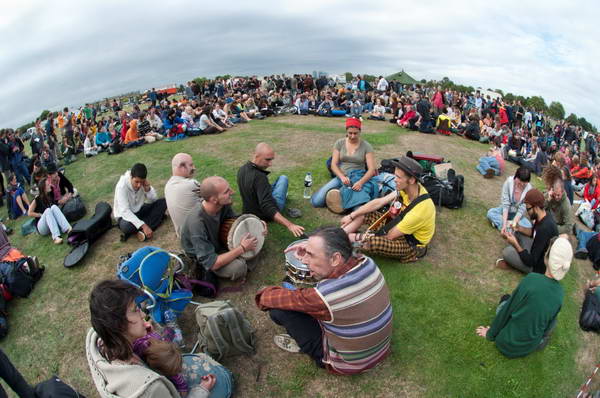
Some of the pictures I found most interesting were of the Whitechapel Anarchist Group who were making themselves comfortable and getting down to a little partying in the centre of the site.

As I left the site, a police van drove up. An hour or so later two officers, including the Met’s ‘silver commander’ for the protest, Julia Pendry, came on the site, and after a short while were taken into a tent to have tea with the Camp’s legal team. Their presence sent some campers wild, particularly those from the Whitechapel Anarchist Group who had already come into some conflict with the Camp organisers, and the two officers soon had to leave. The action by the WAG and other sympathisers apparently caused considerable argument, and most of the WAG left the Climate Camp.

More recent reports mention further problems with the police who are trying to insist on having an actual physical presence on the site. It is already under surveillance, with a cherry-picker apparently supplementing the helicopter and vans and cars on the ground.

Blue Swoop

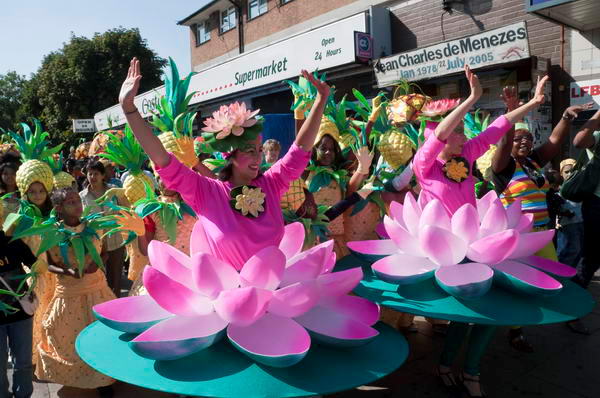
The Climate Camp Swoop ended up as more of a long perch followed by a fairly short couple of rides.  You can read my story about it on Demotix, Indymedia or My London Diary, which is the best version as it has most pictures.  We hung around for a while at Stockwell station (and this time there were no pineapples walking along the streets)

© 2008 Peter Marshall
Pineapple parade at Stockwell Station, Sept 2008

but there were some interesting people waiting for something to happen.

© 2009 Peter Marshall

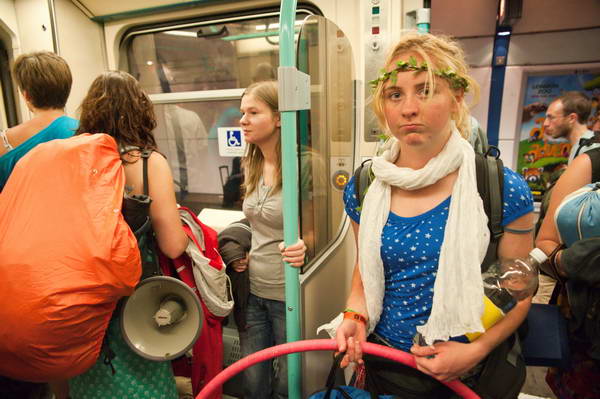
Two hours later we were on a train and going towards the Climate Camp site which turned out to be at Blackheath.

© 2009 Peter Marshall.

And on My London Diary you can read the details and some more pictures from the day, including at least one more of the person the papers describe as an ‘eco-starlet’ who seemed to be travelling with her own media team.

And it was nice to see my version of that report published on London Indymedia made the front page of the Climate Camp web site shortly after I posted it. But My London Diary has more pictures.

SOCPA Again

Britain is still in many ways a free country, but some parts are less free than others. One of those parts is Whitehall and the whole area around the Houses of Parliament, where laws about protests were a last-minute addition to the Serious Organised Crimes and Police Bill when it was going before parliament – and passed as SOCPA.

© 2005 Peter Marshall
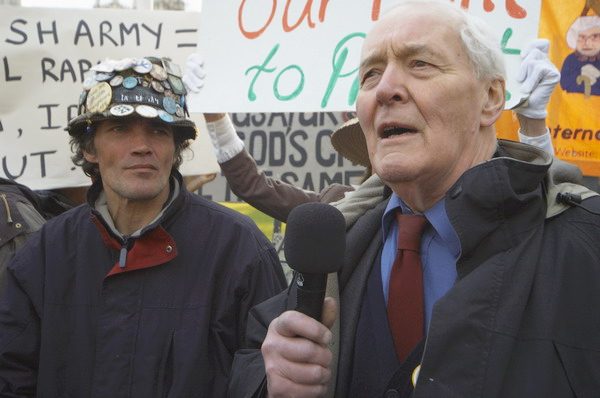
Brian Haw and Tony Been at rally against SOCP Bill, March 2005

Blair and his mates were getting really fed up with Brian Haw’s presence on the grass opposite the Houses of Parliament with a large display reminding them what a mess they had made over Iraq. Caught out misleading the public with a dodgy dossier, and then the incredible mistakes made by our allies in dismantling the country, leading to years of bloodshed, chaos and overspend, with little prospect of a real end in sight.

Hardly surprising they didn’t want a noisy reminder in the neighbourhood, and a few attempts at getting their mates in the police and elsewhere to try a few underhand moves had failed. They couldn’t really come out in the open and draft a Brian Haw Removal Bill, so they tacked it on to what became SOCPA.

But for various reasons they didn’t get it quite right, and Brian Haw remained. Even a rather dodgy judgement in their favour didn’t quite sort the matter out, and he is still there, if in a somewhat reduced format, over 3000 days since his protest started.

SOCPA as it relates to demonstrations does seem more or less discredited now, and we were promised new legislation, but for the moment it’s still a stick the police can wave, if not much more.

One place that many want to demonstrate, other than the Houses of Parliament, is Downing St,  the home and office of our Prime Minister, but of course this is no longer open to the public.  As I mentioned in a piece about Philip Jones Griffiths,  it isn’t so long since anyone could walk down it, and nannies would stop to chat up the police on duty outside its famous door. Now tourists need binoculars to see it through tall gates.

Protesters are not even allowed to stand on the same side of Whitehall as the tourists, but must make their protest from the far side of Whitehall, around 85 yards away from the door to No 10 (according to Google maps, though it actually looks further on the ground.)

© 2009 Peter Marshall.
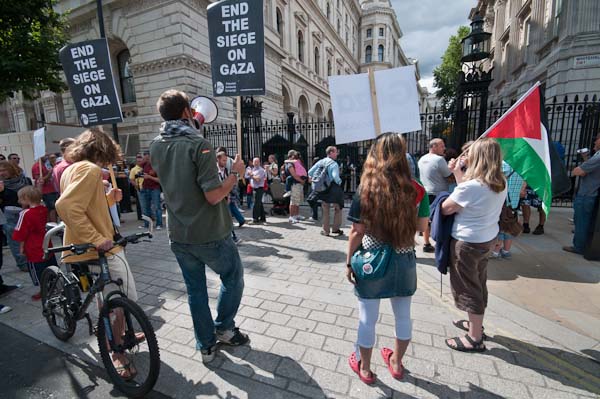
Illegal protest at Downing St

SOCPA also led to a ban on the use of any megaphone or other electrical amplification, so people have to shout, often over the noise of the sometimes heavy traffic along a busy road with several lanes in each direction.

Those in No 10 can’t of course see the demonstrations either. Their windows either look out in completely the wrong direction or into the narrow street banned to the public in front – where all they can see is the press waiting in their pen to take photographs.

Occasionally some of the civil servants do come out into the road and walk down and stand near the fence so they can see and hear the protests, but I should imagine that otherwise those in the building remain totally unaware. While I don’t think that protests should be able to completely disrupt the business there, I think we need a balance where protests can be noticed, and that seems to no longer be the case.

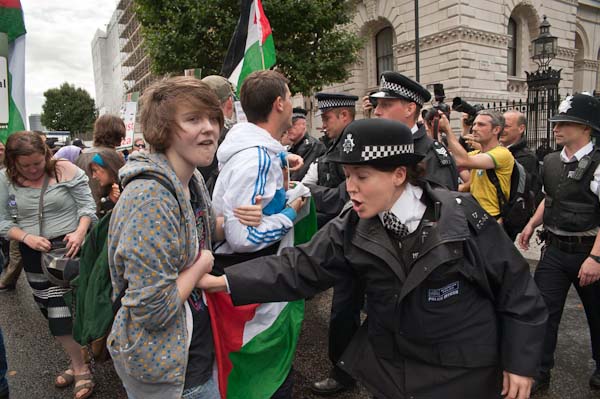
On Tuesday, protesters against the talkes between Gordon Brown and Benjamin Netanyahu decided to cross the road and carry out an illegal protest on the pavement immediately in front of the gates. They moved obediently to one side for a couple of vehicles to come in and out of the gates; given the group of armed police hanging around behind them they obviously made no attempt to enter Downing St itself.

Also they decided to make illegal use a megaphone. After around  20 minutes the police decided to come and warn them that what they were doing  was illegal and that they would be arrested if they continued. More protesters came across from the ‘legal’ side of the road and joined them. Police formed a loose line to clear a token few yards of pavement in front of the gates and the demonstration continued.

© 2009 Peter Marshall

An hour later, reinforcements arrived and the demonstration organisers (who were not those who had decided to come across the road) were I think told that people would be moved by force if necessary. Someone from ‘Stop The War‘ made a short speech about the demonstration including a plea for people to move (again I think he was probably told by police he could use a megaphone to do so.)  I think he was about the only person that took his advice, but police (we were told they were TSG but they were wearing normal police uniforms rather than their rioting kit) pushed the demonstrators back. Mostly this was done with reasonable force, though I did see (but was unable to photograph) one momentary loss of temper.

In the confusion while this was being done, three people who had been warned earlier were taken into custody. After I left, close to the scheduled end of the event, two further arrests were made.

Police appear to be making use of their powers to hold people as a kind of minor punishment system. The five were kept at Belgravia police station until some time after 11pm before being released. I was told that it’s unlikely they will be taken to court.

More about the protest and more pictures on My London Diary.

Knives & Guns

Last Saturday and Sunday I photographed two very different events, both marches concerned largely with gun and knife crimes on the streets. I didn’t get to Manchester, where Mothers Against Violence were celebrating 10 years of success in reducing the street killings there, but there were very different marches in London on Saturday and Sunday around the issue.

I’ve photographed several related events over the years around London,  Not Another Drop in Brent in September 2007, Communities Against Gun and Knife Crime in Clapton in October 2007, the Seventh Day Adventist Youth March against Knives, Guns & Violence in June 2008 and  ‘The Peoples March’ against gun and knife crime in September 2008.

© 2008 Peter Marshall
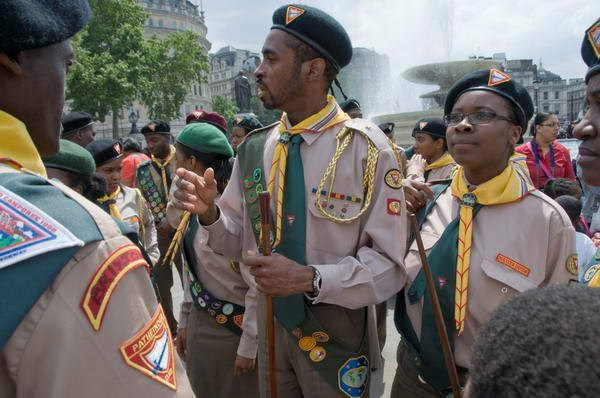
Pathfinders gathered for the 2008 Adventist Youth march

As Saturday’s march was again organised by the Seventh Day Adventists, I expected it to be similar to the previous Adventist event, but it turned out to have a very different atmosphere. Last year’s was considerably larger and dominated by the presence of the Pathfinders, the Adventist uniformed youth movement similar in appearance to the Scouts and Guides though seeming rather more disciplined and military; this year there were few if any uniforms on display, apart from the leaders in dark suits.

© 2009 Peter Marshall.
LIVE marchers waiting on the steps of the DECC, Aug 2009

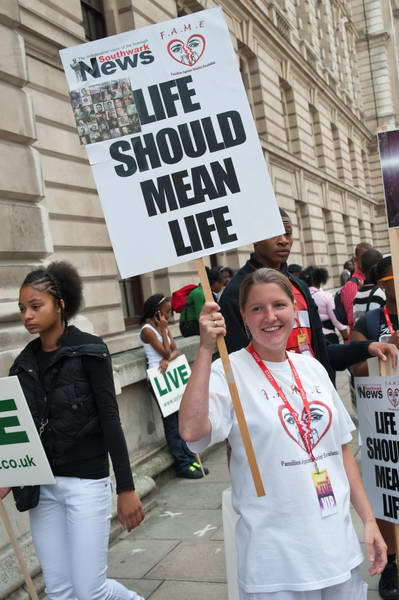
Their ‘LIVE’ (Living Intentionally Versus just (merely) Existing) youth movement had joined forces with South London based ‘FAME’ (Families Against Murders Escalating) who marched with placards ‘Life Should Mean Life‘.

© 2009 Peter Marshall.
A relative holds a FAME placard with 36 pictures of victims, Aug 2009

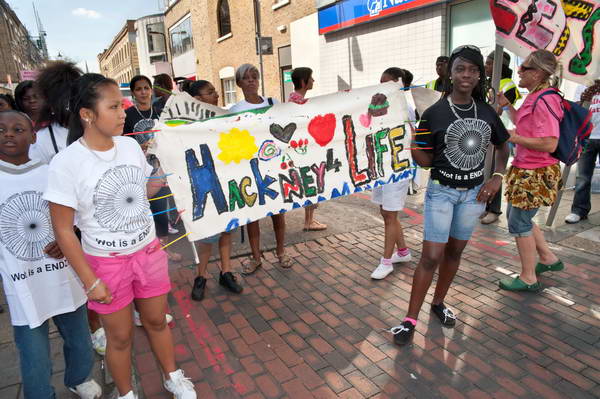
Hackney’s rather smaller Million Mothers March event on Sunday had a very different feel and emphasis, and one I felt rather more comfortable with.

© 2009 Peter Marshall

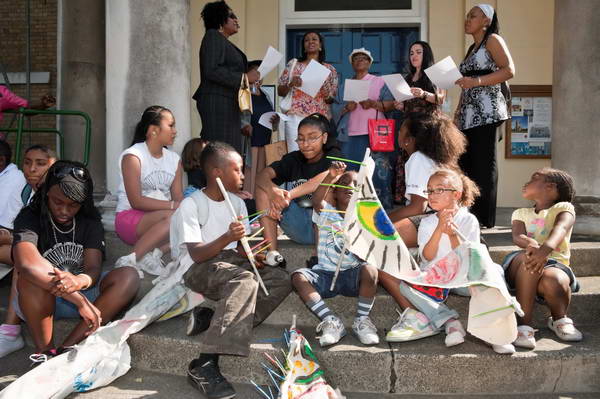
Here the main banner read ‘Peace On Our Streets‘ and there were other colourful banners and t-shirts printed in a local workshop, as well as people from a lively local youth project, and the event ended with some fine gospel singing that had me wanting to join in.

© 2009 Peter Marshall

As its title implies, this community-based event was in support of the wider movement and the marches in Manchester and elsewhere on the same day.

More pictures from both events and more about them and my thoughts on My London Diary. FAME in Saturday’s march highlighted some serious issues around justice some of which I mention there, but Hackney’s Million Mothers seemed to me to have a much more positive message about tackling the problem.

East Ham Chariot Festival

Like many of our inner city areas, East Ham is a strongly religious area and I’ve walked around its streets in both Sikh and Hindu processions. There are plenty of Muslims too, but I’ve yet to find any major public events by them in that area, or by the other religions.

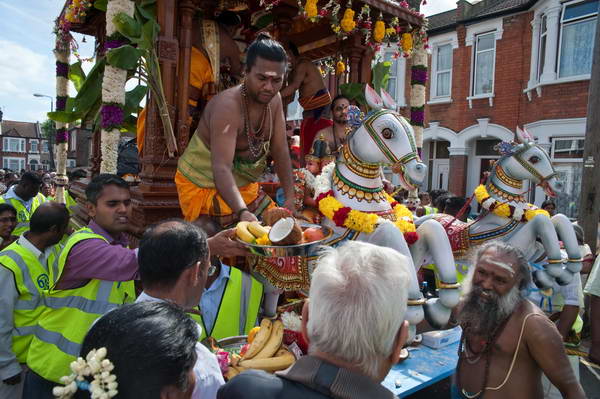
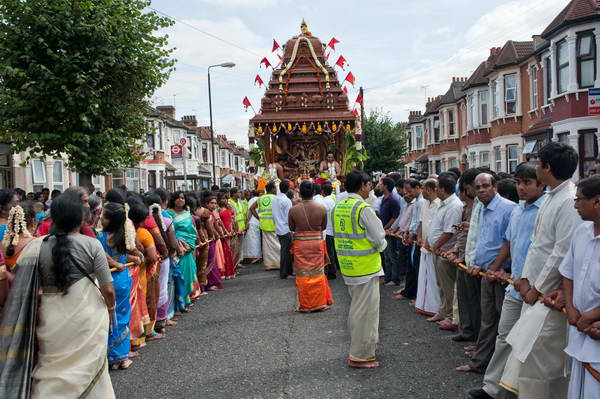
The  Sri Murugan Temple in Manor Park is impressive, but I arrived there to find that the chariot procession had left around an hour earlier than the time I’d been given. Stewards I asked were rather vague about its route, but I set off in roughly the right direction and it wasn’t too difficult tohunt down given that it had a rather large chariot and a few thousand people following it.

© 2009 Peter Marshall

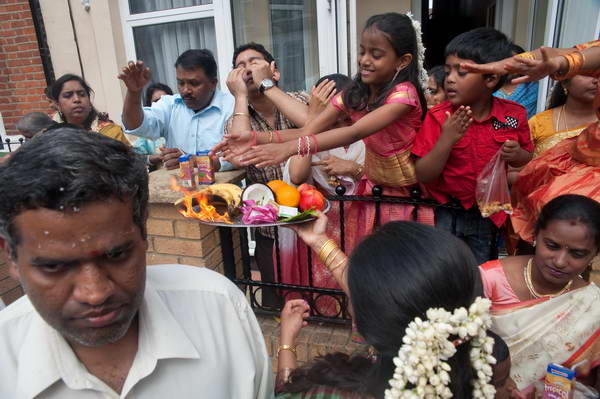
Although it was a very good-natured crowd, mainly of Tamils, getting through the spaces between cars parked on both sides of the narrow side streets was a little tricky, and I found myself getting pushed and stumbled, just catching myself.  But a woman told me “you’ve dropped your glasses“, she had seen them come out of my pocket and fall, but by the time I looked there was no trace of them.  They weren’t a very expensive pair, but they were a new pair that I’d only got the previous day, and it was a bad start to the event.

© 2009 Peter Marshall

I’d expected it to get pretty hot, and had decided to cut down on the kit I was carrying, so I took only one camera body (Nikon D700) though with several lenses. In fact almost everything I took on the Sigma 24-70mm HSM f2.8 which really does cover almost everything you need for such an event.

But there were one or two times when I needed something wider, but there just wasn’t time to make a lens change, or, at one point where too much coconut juice was flying around to make it possible.  And when later  in the procession I forced myself to switch to the 55-200 for a while to pick out  a few faces from the crowd and details I kept seeing things I needed the 24-70 for.  Really for fast-changing and crowded events such as this two bodies are considerably better than one.

And perhaps I need to start using a back pack to carry the stuff. It’s something I’ve resisted, largely because I find other photographer’s backpacks keep getting in my way when I’m working – and it happend a few times during this event.

There weren’t that many photographers, but  much of the action takes place in fairly limited areas and it was so crowded there was in any case very little space to stand.

© 2009 Peter Marshall.

Quite a few pictures on My London Diary.

Southwark Youth

On Saturday I went to photograph the Southwark Youth Carnival Procession which was one of the attractions of ‘The Mix‘, a festival for Southwark Youth in Burgess Park.

Burgess park – one of London’s newer parks, part of the planning for a new London during the second World War and still unfinished –  is about a mile long and follows the course of the Camberwell branch of the Surrey Canal which I photographed along in the 1980s, around ten years after its closure. Rather more recently one of my sons shared a flat close to it, just off the Old Kent Road (and like many London photographers I’ve spent time photographing along there)  so it’s familiar ground to me.

The procession gathered on a public road that is a part of the park close to its south-east corner,  and was to march the along the roads to the east and north of the park to enter the festival from the west side, a little over a mile and a half.

It was a colourful and noisy procession, though most of the noise was musical, with the samba band ‘Uniao da Mocidade’ (Union of Youth)  and a marching band and dancers from Kinetika Bloco who had also run carnival workshops for groups to produce their costumes.

© 2009 Peter Marshall.

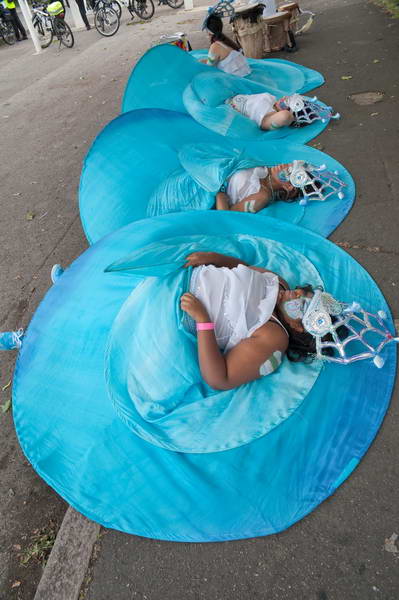
My favourite pictures came before the event, when some of the dancers were resting in the shade before the long walk – or rather dance – around the park. You can of course see more on My London Diary.

Although it was lively enough, I would have liked to see a procession that more strongly reflected the diversity of the borough and in particular the borough’s youth and was also more diverse in terms of ideas. And also something that was more local – this seemed like a generic event that could have happened almost anywhere.

Traditionally carnivals in this country have been supported by all kinds of groups and individuals contributing their own often eccentric contributions to the theme, and it was that amateur eclecticism that I found missing. It would have been good to see many more youth organisations and schools taking part.

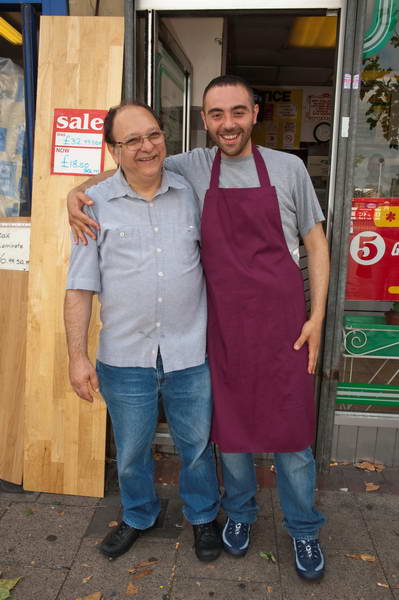
I left the carnival as it turned off for the long stretch down Albany Road and hurried to catch a bus along Old Kent Road to the Elephant and on to visit friends. As I rushed along, still clutching camera and flash, a man sitting outside a shop called to me to take his picture – so I did – only to be stopped again by a couple of men a few doors down who also wanted to be photographed.

© 2009 Peter Marshall

Of course I did so, and I still just managed to catch the bus.

Broken Promises

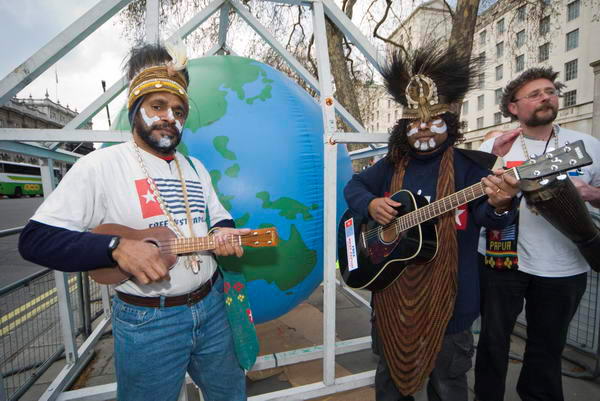
Probably many people don’t even know where West Papua is, and the first time I photographed West Papuan independence leader Benny Wenda in April 2008 I turned a handy globe around to show it:

© 2008 Peter Marshall
Papua is the island just above Australia – and West Papua its left half

Benny escaped from jail in West Papua by crawling along a ventilation shaft and gained asylum in the UK. He had been arrested for raising the West Papua flag, a crime in his country which has  occupied by Indonesia since 1963.

West Papua was a Dutch colony, and as the Dutch were preparing to grant it independence, Indonesia cleverly played the cold war game and got the US to pressure the Netherlands into giving it to Indonesia to look after. The 1962 ‘New York Agreement‘ did provide for a one person one vote  referendum at a later date for the West Papuans to decide whether to become a part of Indonesia or become independent. but Indonesia reneged on this agreement, instead detaining a thousand ‘tribal chiefs’ for a month and forcing them to vote under threat of death for themselves and their families for union.

The country – at the time renamed ‘West Irian’ had few friends in the outside world, and the US in particular were happy to forget democracy because of their political and financial interests- Indonesia had given a US mining company a very profitable deal on the largest copper and gold mines in the world in West Papua. Despite overwhelming evidence that the vote did not reflect the will of the West Papuan people, it was approved by the UN General Assembly.

Now, Papuan interests are also being sacrificed for agrofuels. Its extensive tropical forests – where many of the tribes live – are  at risk. The West Papuans are calling for a free and fair election as promised.

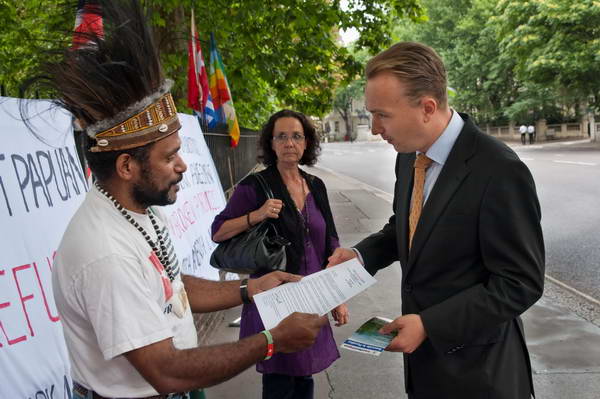
© 2009 Peter Marshall
Benny Wenda hands a Dutch diplomat a letter calling for a free election

The demonstration marking the anniversary of the New York Agreement, known to West Papuans as the Day of the Broken promises was tuneful but I couldn’t really find a great deal to photograph. There aren’t many West Papuans living in the UK (I was told most of them were there) and only one or two others turned up in support.

Friday lunchtime perhaps isn’t the most popular time for a demonstration, but even so it’s hard to understand the complete lack of support from the left for this event, which had been given some publicity. Britain does have an involvement in the issue, with  UK based Rio Tinto group having a share in those mines, and we were involved together with the USA in putting pressure on the Netherlands to betray the Papuans. We did a rather better job on “our half” of the island, with Australia looking after both British and German New Guinea after the First World War, and the united country being granted independence (though it was not entirely plain sailing) as Papua New Guinea in 1975.

More about West Papua and more pictures from the demonstration on My London Diary.

To Flash or Not to Flash…

That is often the question for photographers.  And last Thursday evening I wasn’t sure whether to shoot with flash or without. But in the end I turned on the SB800, set it to my usual-2/3 stop and got on with it.

It was pretty dim light, but the D700 can cope with that, giving fine results even at ISO 3200 if you get the exposure right. It was also raining, and  and that can certainly be a problem with flash in several ways. More equipment to keep wiping dry, but you can get also odd effects from the flash illuminating rain drops. There were half a dozen other photographers taking pictures and none were using flash – I seemed to be the odd one out. It didn’t worry me – I’m rather used to that, but I was a little surprised.

I’ve just checked up on the EXIF data in the files – always a better bet than my memory – and find I was shooting at ISO 1250 most of the time. The pictures with flash were at 1/60 f8, while a few without were at 1/160 f4.5, which are more or less equivalent apertures. Both were made with a -1 stop exposure adjustment as otherwise the sky was excessively burnt out when it was in frame.

I was using iTTL balanced fill-flash which automatically adjusts the flash to give a balance with the ambient lighting. The 1/60 speed with flash appears to be a result of using P mode and setting the custom setting e2 for the slowest flash sync speed to the default value (1/60.)  With flash, I like the effect of a little shake on the ambient part of the exposure – which at 1/60 you certainly get if the subject makes a gesture.

For the non-flash exposures I’d chosen a minimum shutter speed of 1/160 as I was working with a 24-70mm lens, and although I could work at 1/125 or even 1/60, the faster speed more or less eliminates the chance of camera shake. With the high ISO and a fast f2.8 lens there is seldom a need to use slow shutter speeds in any case. The lens, a fairly new Sigma HSM f2.8 24-70mm, is sharp enough wide open for most purposes, but stopping down to around f4 does sharpen it a little. You only need to stop down further if you need the depth of field.

Of course I didn’t spend a long time working things out, just took a test frame with and without flash and then decided I’d use flash. Later, while I was photographing Michael Meacher MP  more or less head on, his glasses were giving some annoying reflections, so I turned the flash off for a few frames.

© 2009 Peter Marshall
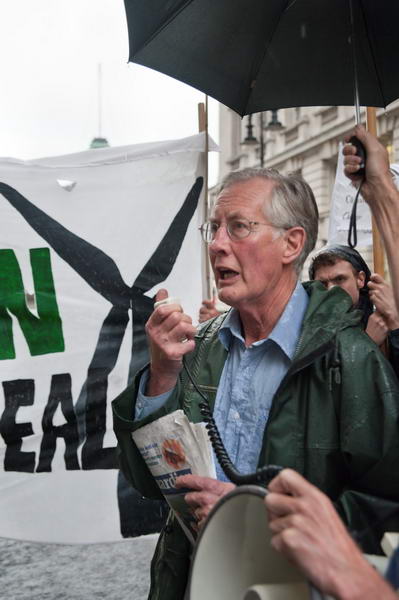
Michael Meacher MP calls for action to save Vestas jobs – No flash

But then I moved around to one side and took a frame without flash before remembering to turn it back on. The result isn’t bad – though it took quite a lot of work in Lightroom to get it like this.

Below is an picture taken using the flash, which was rather easier to sort out in Lightroom, although I’ve perhaps dramatised it a little too much.

© 2009 Peter Marshall.
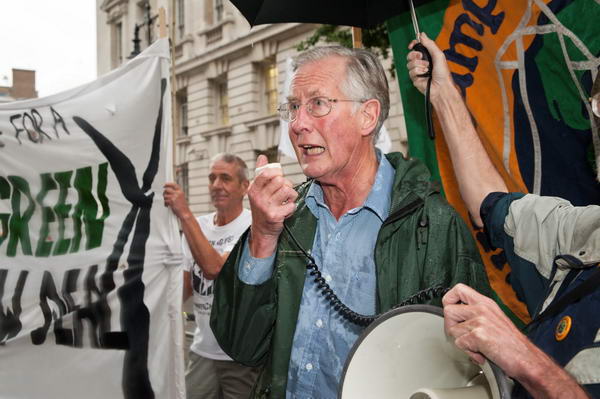
Michael Meacher MP calls for action to save Vestas jobs – With flash

As well as added flash, this image also has added water, a drop on the very large filter on the front of this lens which gives a slight smearing to the letters on the banner. You can also see the greater depth of field in the foreground hand – Phil Thornhill of the Campaign Against Climate Change holding the  megaphone – both were taken with focal length of 40mm. It’s perhaps a matter of taste which is better, though I prefer the flash version.

Of course what is important is what Meacher and the other speakers were talking about – supporting the Vestas workers in their fight for jobs. You can see more pictures – almost all taken using flash  – and read more about the event on My London Diary.