Truce Over – It’s War!

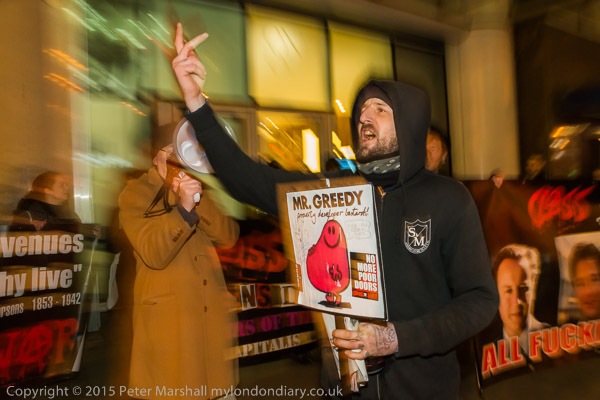
Last year I photographed around 20 protests by Class War outside a prestige block just to the east of the City of London, called One Commercial St. The recently built block contains a supermarket, a betting shop, a hotel, an entrance to Aldgate East Underground station and more, including car parking and both expensive private flats and some managed as social housing by a housing association.

Class War started their protests at the end of last July, and kept them up weekly – with the occasional extra special event until almost the end of November. Like many others they were appalled by finding out that while the residents in the privately owned flats had a posh entrance on the main street – Whitechapel High Street – into a comfortable lounge area with a 24 hour staffed reception desk, those in the social housing had to go down a dirty and dimly lit alley at one side of the block to a door with a card entry system into a long blank corridor with just a block of mail boxes. When I first went down it, the alley was strewn with rubbish and smelt strongly of urine. Because the entry system was broken, the door to the block was not locked and anyone could walk in off the street. Apparently too, there had been problems with getting repairs to the lift, and the flats are up on the 10th floor and above.

Increasingly this kind of social segregation is being built into new blocks where the developers are forced to include some element of social housing, and the protests by Class War are just one of several that have served to bring this to public attention and fairly wholesale public condemnation. It reeks of the separate entrances for servants and workmen that have now largely disappeared from houses and workplaces. Most feel there is no place for separate doors for rich and poor in our country today.
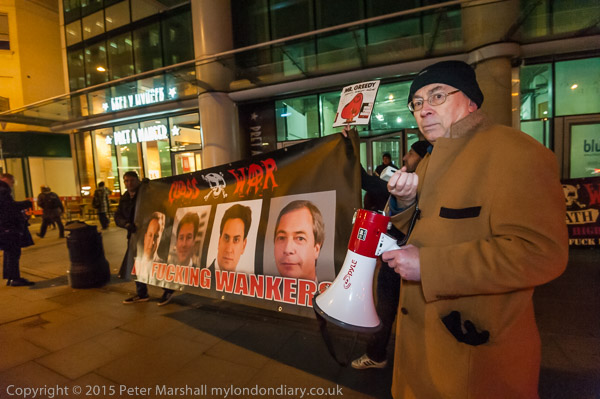
Its also a part of a larger movement over housing, particularly in London, where former working-class estates and areas are increasingly are subject to a so-called ‘regeneration’, which involves evicting the working class tenants and lease-holders, and either demolishing and rebuilding or refurbishing the properties for sale or letting at ‘market rents’. Many of those buying these properties are overseas investors who may not even live in them, instead seeing a good return on their investment as London house prices continue to rise – particularly in places such as One Commercial St, close to the Crossrail development. Investors are told they can expect a 35% price increase by the time Crossrail opens in around three years.
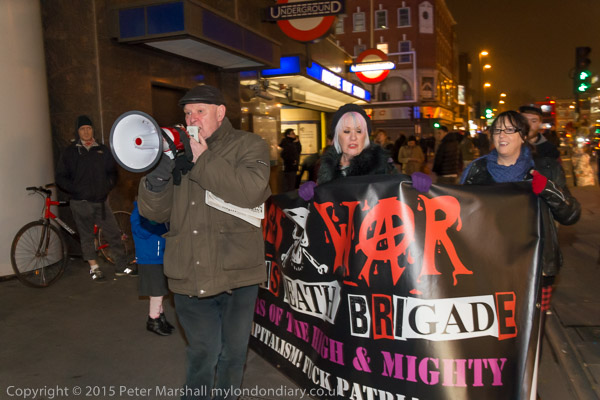
Local residents – both those whose families have lived in the area for generations and more recent migrants to the area – cannot afford either the market rents or the so-called ‘affordable rents’ which are often around 80% of the market rate.

The process of regeneration was started, perhaps with good intentions, by the Labour government in the 1990s, but was poorly thought out – and the developers have managed to run rings around even the best intentioned councils. But most London councils have colluded with the developers – and often led the process of getting rid of their less well-off residents.

In November, the flats were sold by developers Redrow to Taylor McWilliams, and the new owner contacted Class War and offered talks to try an solve the problem. It seemed to me that relatively minor interior building works could have allowed all tenants to use the front entrance. I’d walked inside the block between the two sides myself, between separate lifts on the ground floor of the building when I was given a tour by one of the owners of a flat on the rich side. Class War were hopeful of a satisfactory settlement.

The meeting, when it came, was a shock. McWilliams told Class War he wasn’t prepared to make a single entrance so that everyone could enter from the front street. Complete intransigence. Class War told him what they thought and announced the protests would re-commence. They started with a short detour from the March for Homes at the end of January as it was going past the building, but the protests began again properly on 12th February, and are continuing every Thursday evening, from 6-7pm.
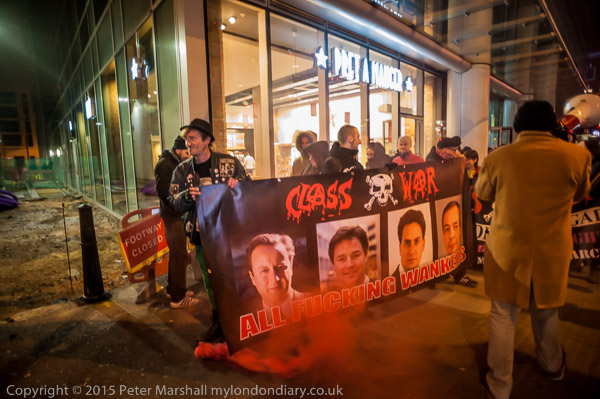
Like Class War, I was very disappointed by the response, and also as a photographer,  covering a regular protest like this presents problems. How do you keep going back to the same place  – and largely the same people – and making pictures that remain fresh?

There have been some minor changes. As you can see when the protesters returned there was building work taking place in the alley, and it is now rather more pleasant, and what was stygian is now well lit.
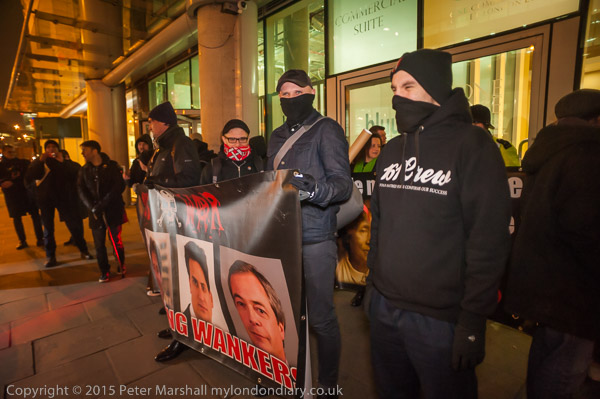
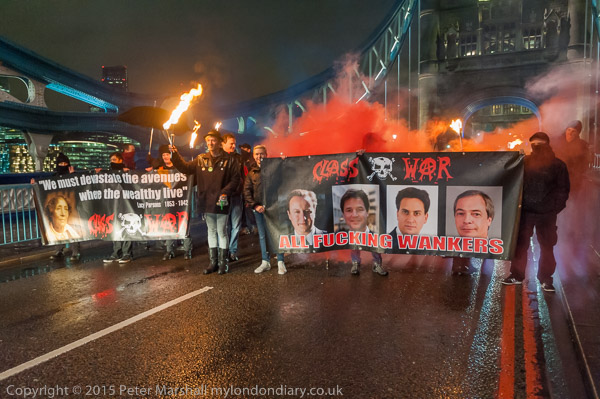
There are also some new protesters – with various groups including the 161 crew of Polish anti-fascists shown here holding what I euphemistically call Class War’s ‘Political Leaders‘ banner.  More about this banner in a later post, but while it is certainly in bad taste, most people seem to have a very positive reaction to it, often pointing and laughing. It’s certainly meant be and is provocative.

Class War does inject a certain amount of fun into politics, dealing with serious issues, but doing so in a theatrical way. But although I quite enjoy going to their protests, trying to cover them every week is sometimes difficult. I don’t really like working in the dark either, having to use flash or other artificial lighting much of the time. Even on a reasonably well-lit street parts of the pavement are pretty dark.  I’ve started using a LED light with the D700 (not least because it is now totally unpredictable with flash, suffering from old age) but that certainly has its limitations, and even at ISO3200 many images are blurred by subject movement. Again this is something I’m still not quite sure what I think about, but I will try and write more about later. Sometimes I seem to get some good results.

This is a project I’ve committed a great deal of time to and I hope to see it out.

More at Poor Doors Truce Over – It’s War! and of course in the following weeks.
Continue reading Truce Over – It’s War!

Not In The Book


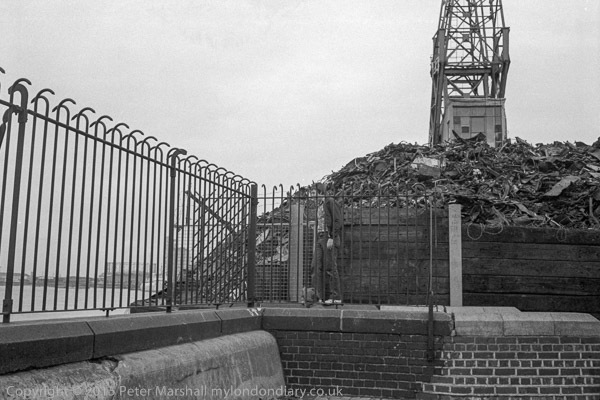
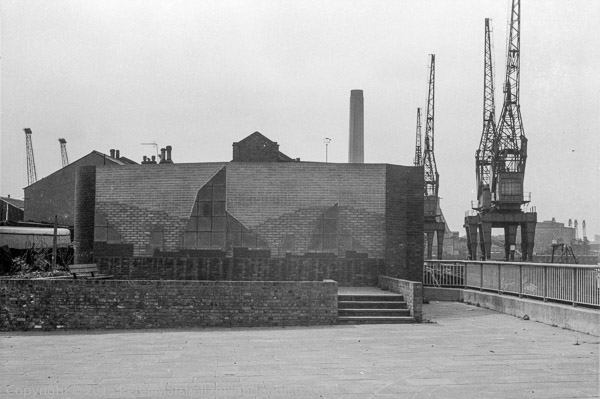
Granite Wharf, Greenwich. 1980

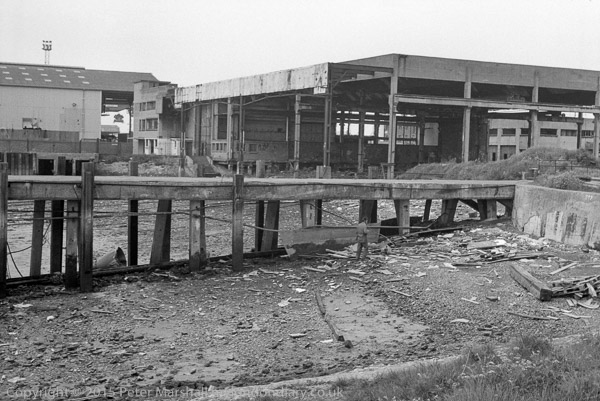
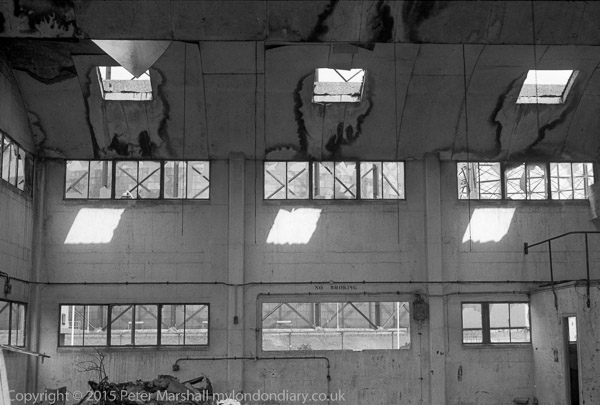
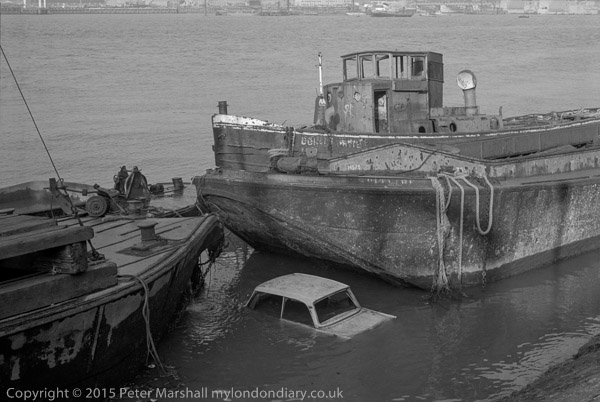
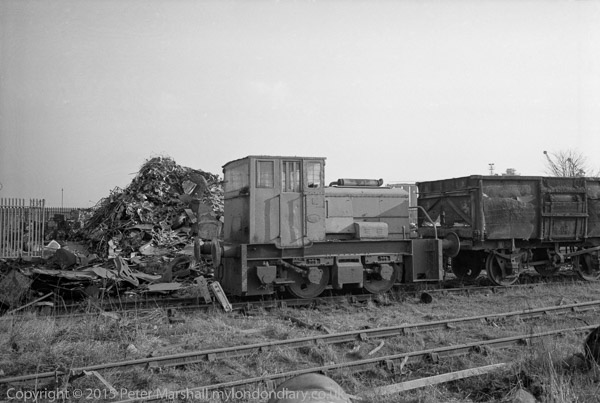
One of the hardest things about putting a book like Deptford to Greenwich together is the pictures you have to leave out. Back in the 1970s and 1980s I didn’t take many pictures, not least because even buying film in bulk still worked out too expensive for me to be profligate, but there were still quite a few that didn’t made the final edit of around 80 images.


Greenwich. 1979

My first decision was not to use any of the small amount of colour work. Although at the time I mainly worked in colour, almost always I would have with me a second body loaded with colour film. Before 1985, for me that meant colour transparency, usually one of the E4/E6 films that could be bought in bulk rolls and then loaded in into casettes in the same way as the black and white film. And as with black and white, I processed the films at home.


Horseshoe Breach, Greenwich. 1980

At first I used a bulk film loader, a plastic box with a light-trapped chamber for the bulk film, which led into a smaller lightproof area which accomodated the cassette. The film coming out through the light trap was taped to the spool of the cassette, which was then assembled around it, pushed into place and the lid closed. A hold leading to the centre of the spool allowed you to fit a handle, which was then turned to roll the film from the main box around the spool. Some had a ‘frame counter’ but otherwise you just counted the correct number of turns before opening the lid and cutting the film, the end of which was then trimmed to give the right shape for loading into the camera.

Buying film in bulk cut the cost to less than half that of pre-loaded casettes, but there were downsides. Using the loader conventionally meant that the last frame or two of each loaded film was exposed to light. I would load perhaps 38-40 frames of film, and try to remember to stop taking pictures at frame 36, but it was hard to stop before the end of the film, and many end frames were all or partly lost. There was also the danger of dirt in the felt light-trap of the cassette, often resulting in scratches as the film was loaded and again when taking pictures and rewinding in camera.


Horseshoe Breach, Greenwich. 1980

It was tedious, but necessary to very carefully clean the cassettes before reloading, and I seldom suffered from scratches. To avoid exposing the final frames, I moved on to using the bulk loader in total darkness (tricky but possible) or loading the film without a bulk loader again in totally dark conditions. A nail on the wall to hang the end of the film on, another the correct distance below to find and cut against, then taping the film to the spool, winding it around and fitting on the cassette shell in total blackness was possible, and I got to prefer it to using the bulk loader. Though it got rather tedious loading the 19 cassettes which I got from a tin of film. You could at least then turn on the light to cut the leaders.


Granite Wharf, Greenwich. 1980

So often I’d spend a day taking pictures, and only make perhaps 70 or 100 exposures, sometimes even less. Some days much less, though still rather more than those few occasions when I worked with 4×5 film, when I had only half a dozen dark slides and a Grafmatic magazine with me.


Wood Wharf. Greenwich. 1980

Because for me film was still expensive I seldom took more than one frame of any particular subject, and often that wasn’t quite right. Now, at least with static subject matter, I’ll take several frames until I’ve convinced myself that I have got the picture I want – and of course I can look at the image to see, though usually I know and don’t look. But there were still quite a few images that got edited out because they were just too similar to others.

Some of the pictures were now of less interest to me. Those where I was concentrating on things that really seem now to have little real connection with the area, perhaps some scrawls on a wall or a pattern of light, often the ‘artier’ side of my image-making. Perhaps where I was concentrating on pictures rather than on the subject.


New Charlton. 1982

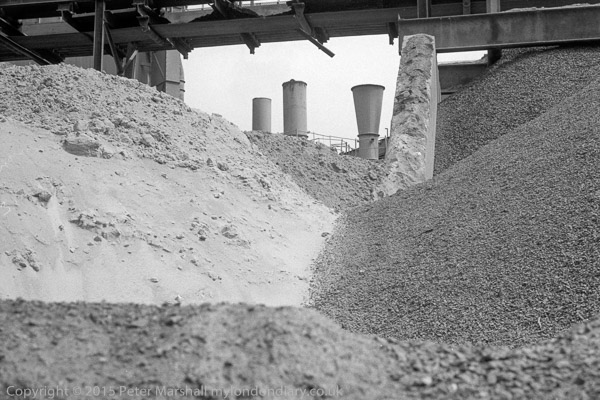
Others where where I’d taken different pictures of more or less the same subject, perhaps from a different angle or in different light. In the book there are some examples I’ve included – for example three quite different images of the giant concrete silos, but often I’ve decided one image was enough and have left out others. It hurts when some of those that I’ve left out were pictures I like.


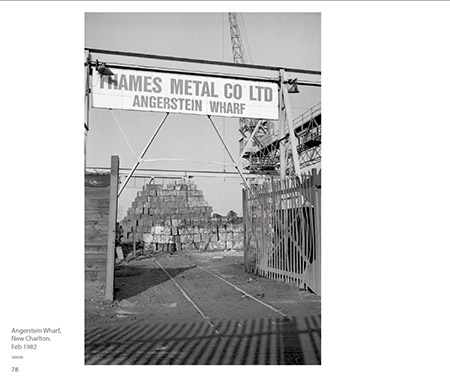
Angerstein Wharf, New Charlton. 1982

Anyway, the images above are the first of perhaps several batches of those that got left out. These are some of the earlier images, taken in 1979 to 1982.

Continue reading Not In The Book

Definitely Not Cricket

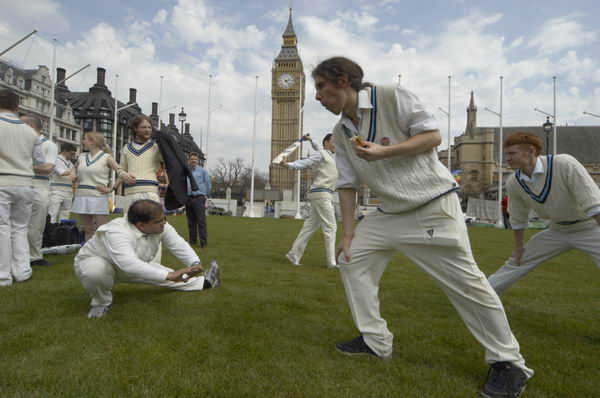
To my surprise I find this is not the first post I’ve written about cricket.  I’ve never really been a cricketer, and when we had the choice at school in the summer term I always opted for athletics, though we did get a little compulsory  cricket training.  I learnt the forward defensive and backward defensive strokes, but for attacking was left using the playground wallop. I don’t think I ever really got into the swing of overarm bowling either, somehow my shoulder didn’t quite let my arm follow the necessary trajectory, and my deliveries ended as slow and guileless, occasionally getting a wicket when the batsman lost patience waiting for the ball to arrive and swung too early.

Of course being English I had to play the odd game, getting roped in for various school and college sides, and even for Air India when they were desperately short of players. They were a class side, but so much class that anyone below five in the batting order (and I was well below five) seldom got a knock, and it took only a fairly short wander around by the boundary untroubled by the proximity of that nasty hard ball watching the other side coming out and going back to the pavillion before we were all back in and at the bar too.

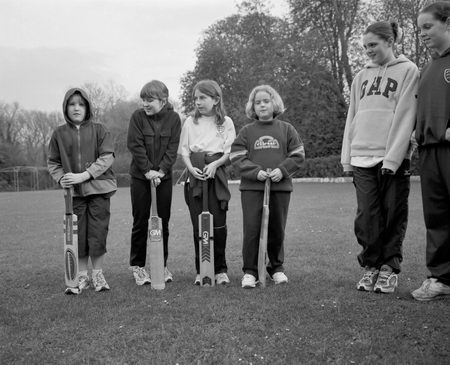
I find I’ve even written before about my cricket photography. Back in 2001 I got a commision from the local council under an Arts Council scheme to photograph Shepperton Ladies Cricket Club, and particularly the work they were doing with young girls.  It was an interesting assignment, and one I enjoyed doing, spending far more time on it than was sensible for the money.

I wasn’t really a sports photographer, and certainly didn’t then have the kind of equipment that proper cricket photographers would have, being seriously underpowered in the telephoto area.  The longest lens I owned was a 200mm, which hardly gets you into the league, as the boundary is a serious distance from the wicket at most grounds.  I had a 2x converter, but adding that made the 200mm f5 into a 400mm f10, which even on sunny days was a lttile slow for action especially as ISO 400 film was the fastest I could sensibly use. Even in bright sun I needed to work wide open to get a suitably fast shutter speed of 1/500th, and wide open with a 2x converter was never too sharp.

Without the converter, things were rather better, but few of the pictures I made were absolutely sharp, and even fewer managed to be from the right position at the right time. This didn’t worry me, because this wasn’t really what I was trying to do, and the real work I was making was in black and white, with a 65mm wideangle on 6×7, both of the ladies team but more importantly of the work they were doing with girls from a very young age.

Cricket wasn’t seen by those training the girls as just a game. It was about developing the character, encouraging independence and self-reliance.

I’ve written a little more about this project in a 2012 piece about my rather limited sports photography, Sports and Me, so I won’t repeat myself even more. I also wrote another post five years ago, Not Cricket.


Space Hijackers -an international band of anarchitects who battle to save our streets…

What got me thinking and writing about this again was a message from Suzy Gillett, who I met when she was making the short film Epiphany (and also, rather embarrasingly another post titled Epiphany, which should have been Epiphany 2.) She is now the producer for another film in the making, This is Not Cricket, on which director Jacopo de Bertoldi has been working on since meeting the Piazza Vittorio Cricket team in 2012. This is anarchist cricket of a very different stamp to that I photographed back in 2005. They hope to complete the 90 minute feature-length documentary by the end of 2015 and urgently need cash, and are seeking it from crowdfunding.

Here are the first two paragraphs of the Synopsis:

Immigrants in Italy are under siege from increasingly violent xenophobic demonstrations and punishing laws. European austerity measures hit society, fanning the fire of intolerance.

Two adolescents in Rome, Shince from India and Fernando from Italy set out to rebuild their cricket team with a singular political vision to combat fascism, to integrate young people, and to play cricket. Their team was the strongest under 18s club in Italy, until it was forced to disband by the same problems they are determined to overcome: religious and social discrimination.

The trailer, on the same page is also worth viewing. I’ve just made a small gesture of support at the ‘Daisy Cutter’ level which seemed appropriate for my level of cricketing prowess; so far the appeal for $15,000 for the next stage of the product has had just over a third pledged, and you can also follow the project on Facebook. Some of the ‘rewards’ offered for higher levels of contribution appeal rather less. What would I do with a cricket bat!


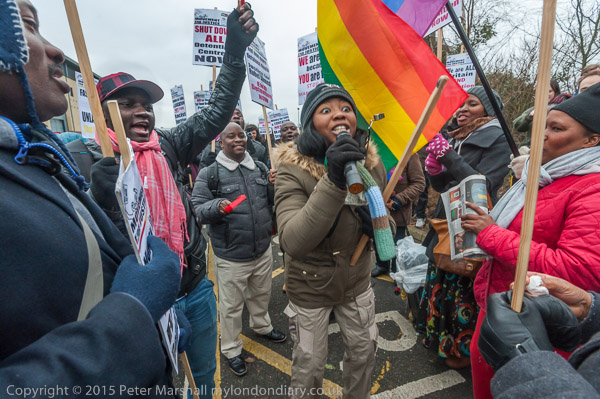
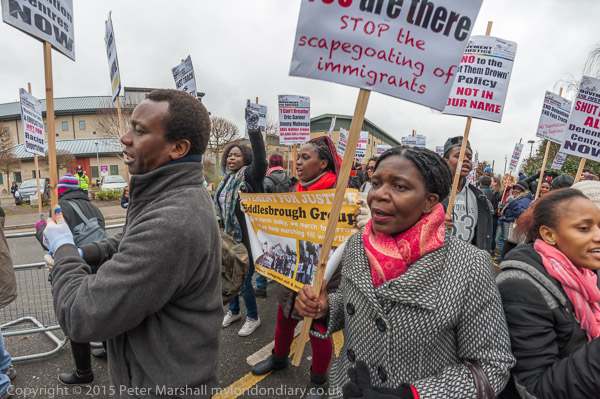
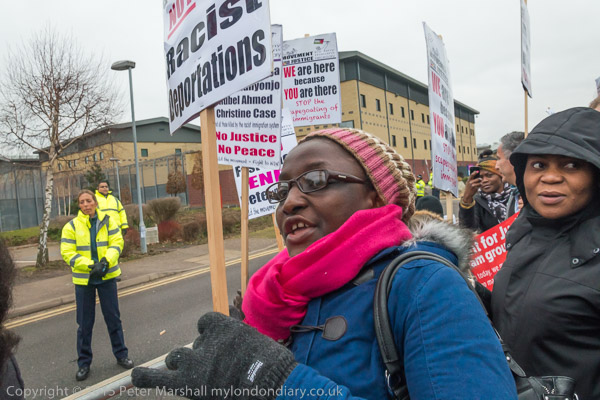
Surround Harmondsworth 6

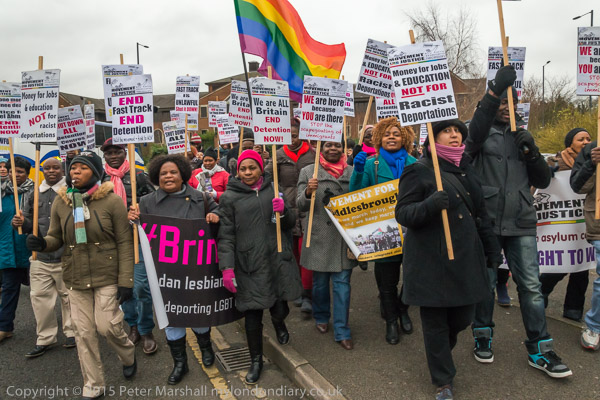
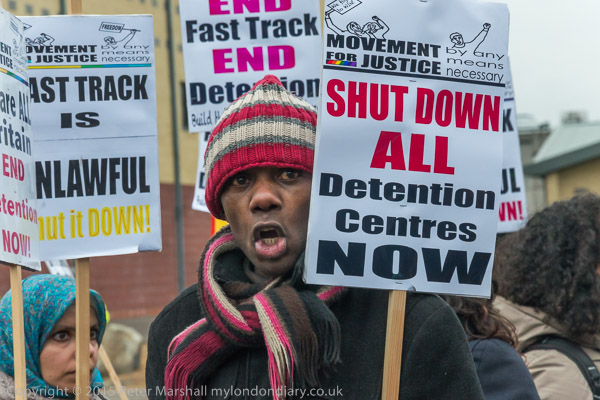
It was back in 2006 that I first went to photograph a protest outside the Harmondsworth and Colnbrook immigration detention centres, just to the north of London’s Heathrow airport.  It’s an occasion I remember for several reasons. Perhaps most strongly the intense shame that I felt listening to some of those held inside speaking about how badly they were being treated – they were able to speak from inside on mobile phones, with their voices then amplified by holding a microphone to a phone at the protest outside the prisons.  I was ashamed that my country, which often prides itself on democracy, freedom and the rule of law was clearly behaving in such a clearly racist and unlawful manner – and then it was under a government of a party I had voted for, the party I had until then supported all of my life.

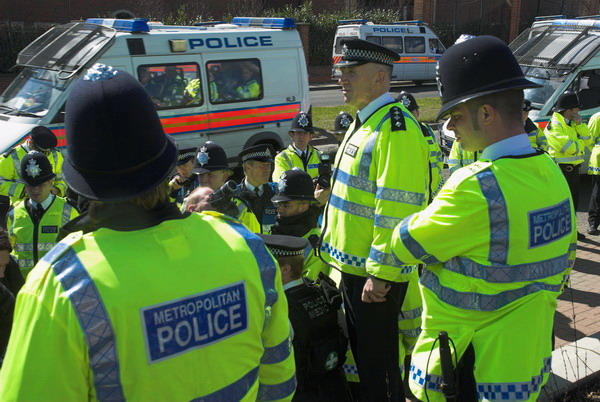
It was a protest with a strong police presence, with lots of barriers, and at one point a number of protesters who had walked down a public footpath to protest at one side of the site were surrounded by police and brought back to the main road outside. I stood on an earth bank with a couple of other photographers and photographed them, looking down.

One videographer was being held by the police inside the kettle (just visible between the uniforms above), and was showing his press card asking to be let out. But the police told him that it wasn’t a proper press card. Despite the statement on the back “The Association of Chief Police Officers of England, Wales and Northern Ireland and the Association of Chief Police Officers in Scotland recognise the holder of this card as a bona fide newsgatherer” and a verification phone number, the police simply refused to acknowledge it. This was not at the time unusual, and it still happens now despite a long campaign.

The videographer appealed to the three of us for help, asking us to show them what a press card looked like to verify that his was genuine. It left me in a slightly awkward position, as when I arrived at the protest I’d noticed that my own press card had expired at the end of the previous month, and had got through the police line to take pictures with my thumb holding it by the corner so it covered the expiry date. Fortunately one of those next to me went and showed his card, and eventually after some further persuasion the officers released the man from the kettle.  The protesters were less fortunate, and were held until the end of the protest before being forced to give their names and addresses or be arrested, and were then escorted to their coach.

UK Press cards are issued by a number of bodies, including my union, the NUJ, acting for the UK Press Card Authority and there are continuing arguments about exactly who should qualify for them. I seldom take mine out of my pocket when working, but there are a few occasions when I need it access press areas or leave events through police lines without one. That doesn’t always work, though usually when one officer refuses to let me through I’ve simply walked a few yards down the line and tried again with success, only occasionally having to appeal to a more senior officer. I also wear it visibily on a few occasions where I think it will reassure the people I’m photographing – particularly at events involving children. But for the great majority of events it stays in my pocket, tied in a holder with a cord around my belt for security.


Protesters march up the drive towards the detention centre

I had a little argument with the security guards at the start of the protest Surround Harmondsworth 6 the latest in a new series of protests at Harmondsworth & Colnbrook (this year brought together under new private management and renamed Heathrow) when they tried to push me inside the barriers with the protesters.  Eventually we came to an arrangement that suited me, but I wanted to make the point for myself and the other photographer and TV crew that enabled us to work as we wanted.  I did mainly want to photograph inside with the protesters, but I don’t like being pushed around and wanted to take some pictures of the banners draped in front of them on the barriers.

There were really few photographic problems, though some of the stories from protesters who had previously been held in Harmondsworth or other detention centres of their treatment were shameful, and at one point I was working through tears steaming up my glasses making using the viewfinder difficult. Fortunately autofocus works even if you can’t see the image clearly.  But this was an emotional protest for those taking part and for me. I hope it shows in some of the pictures.

As usual at these protests there was a great deal of noise, and also a lot of dancing and movement. Although security and police kept the protesters to the front of the site, well away from the detention blocks, those inside were able to hear us, letting people know by phone, and thanking the protesters for coming.


16-35mm, 16mm
Working in the middle of the protesters, wide-angle lenses were often needed, and many of the pictures were taken at the wider end of the 16-35mm, and some too with the 16mm fisheye. As usual these were later processed with the Fisheye-Hemi plugin to give the less distracting cylindrical perspective. For images of people it produces a more normal result than an extreme wide rectilinear lens, where the elongation at edges and corners can seem very odd. It often gets noticeable at 16mm, but really gets objectionable in many images if I use the even wider 12-24mm Sigma – which although it covers the full frame is better used as a DX lens. The Nikon 16-35mm, with a similar range of focal lengths on FX to the Sigma on DX is also a  sharper lens, so there is really little point in my ever using the Sigma.


16mm, Fisheye-Hemi

I prefer to use the 16mm fisheye on the D700, usually keeping the 18-105mm DX on the D800E. The reason is file size, as using the Fisheye-Hemi plug in generates a 16 bit ProPhoto RGB Tiff file with 6 bytes per pixel from the Nikon NEF file.  With the 12Mp D700 (typically giving NEF files compressed to around 12Mb) this ends up at around 70Mb.


16-35mm, 18mm
As I write this, a month after Surround Harmondsworth 6, protests are taking place inside this and other detention centres, and there are a number of more spontaneous protests with groups arriving unannounced to protest outside. A number of aspects of the treatment of asylum seekers have been found to be illegal, and a parliamentary has called for changes. Inside the centres, the legal niceties and human rights continue to be abused, but there is certainly now some hope of real change, thanks largely to the publicity generated by protests inside and outside these immigration prisons.
Continue reading Surround Harmondsworth 6

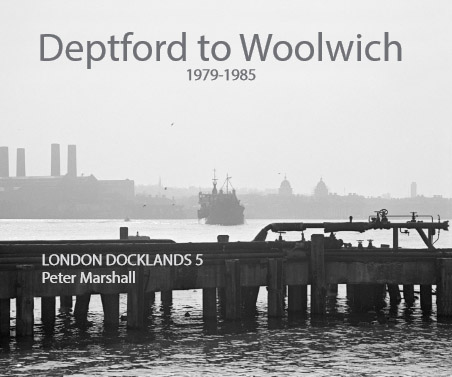
Deptford to Woolwich


Available soon

I’ve been busy the last few days, not just with taking pictures as usual, but getting my latest Blurb book ready for publication. You can see the cover of it above, and I’lll post more when its available on-line.

It’s taken me four or five months to select the images from the scans I made a year or two ago, and retouch them. There are around 80 images in the final selection, with around ten of those that I initially selected omitted for various reasons. On average each of those 80 images will have had about an hour’s work done on it.

The scans are large TIF files, typically 7250 x 4850 pixels and around 68Mb, large enough to make good prints (so long as the negatives are sharp) up to around 24″ wide, though I seldom print that big. Working on the full-size files takes longer but makes retouching less visible, though some have considerable damage, mainly from insect infestation, that needs repair.

Tiny bugs live on gelatin, making tracks, excreting and also leaving body parts embedded in the negatives. They are a variety of booklice or ‘psocids’ of which more than 5,500 species have been identified, though these are smaller than most – and could even be a previously unknown type.

I first encountered them years ago in my darkroom, when looking through the focussing microscope I found a small creature wandering around my image and looking back at me. At first I thought I was hallucinating, but was soon able to convince myself it was real. But it was some years before I realised the significance of what I had seen, and by the time I got around belatedly to treating the infestation it was far too late. The little bugs had wrought havoc and almost certainly left.

Rather annoyingly I also found some of the scans suffered from Newton’s Rings. It’s hard to get rid of these entirely, but I did work a little to reduce their impact.

Once the big files are ready and adjusted for contrast and brightness etc, a couple of Photoshop actions then produce files with the correct specifications for book production. The TIF files are 16 bit with Gray Gamma 2.2 profile, and I have a RIP which prints from these. For Blurb I want smaller files and I generate these as 8 bit CMYK jpegs with the Blurb ICC profile, adding a little slight warming on the way.

Absolutely neutral files printed through Blurb can sometimes end up with just a hint of green or blue in the blacks, just enough to annoy me, though most viewers would probably not notice. Adding just a little warmth should keep the prints neutral or slightly warm, which is far more to my taste. In the darkroom my favourite papers – in the old days Agfa Record Rapid – had slightly warm blacks.
With all the material – titles, text, captions, images – to hand, the actual putting the book together generally isn’t a very long process. Book design can take a while, and some photo books – particularly those that win prestigious prizes – are now more about the designer’s art than the photographers work.
My books aren’t like this. I aim for a simple basic design that shows the pictures and presents essential information. In this book I wanted one image per page, along with the caption (place, date) and also my file reference and a page number. I dislike having to turn to a list at the back of the book to find out the basic details, but don’t want them to compete too much with the image. And I want to show the pictures as large as possible while still maintaining a decent border.

There is also the problem of using both landscape and portrait images. I’d like both to be the same size, but this is a problem with a 10×8″ book. Since most of the pictures are landscape format I’ve chosen to make a landscape format book. The landscape images are around 22x15cm and the portrait images 20x14cm, which gives them a similar weight.

This latest book is the fifth and last in my ‘London Docklands‘ series from the 1970s to the mid 80s and I’ve gradually evolved a format which I think works, and so most of the design is already there, with type styles and layouts that can be re-used. The next one with different material may need more design thinking. But I’ll probably still keep it simple.

Blurb actually have some fairly good software available for free download that I used for my first few books, but it’s a little difficult to get things exactly how you want them. So I decided to use Adobe InDesign, which I’d actually used the first version of years ago when I taught a little (very little) DTP, as I could get a fairly cheap upgrade to InDesign CS5.5, which would also enable me to edit my old Pagemaker files. Blurb supply a plugin which makes it easy to use for making their books. InDesign does also enable me to produce my own PDFs, though though the published one is made by Blurb and available on their web site.

As with other recent books, it will officially be published as a PDF (with an ISBN), but I will also make a printed version of this available, both through Blurb and also directly from me. It won’t become available on Blurb until I’ve seen the printed copy in around 10 days time – when I’ll post again. Proof-reading on screen is difficult – and I’ve spent around four hours making various minor corrections, but it wouldn’t surprise me to find more errors.
Continue reading Deptford to Woolwich

February Finished


Class War block Tower Bridge – and the banner than police threatened arrest over the following week

I had  late night last night and finished uploading images and text to My London Diary for February 2015.

I’m still catching up after several weeks of computer problems, and my heart sank yesterday morning when my desktop seemed to be refusing to start up. The initial checks before Windows start to load normally only take a few seconds, but yesterday it was over 5 minutes. I went away, did something else and came back to find that eventually it loaded.

So I took a little look at the Windows log files etc, ran the troubleshooters and there wasn’t anything that told me I had a particular problem (or at least not anything I didn’t know about and have been living with for ages.)  Later I found from Skype that my microphone wasn’t working and that told me I had no sound card. Well I knew that – its on the motherboard! But other than that everything seemed to be working OK.  But I decided that while I had the computer on and working I’d get February completed in case it wouldn’t start up again – and around 15 hours later I had, although perhaps given more time I would have written more about some of the events.

I also did something I’ve been meaning to do for some time, and blew the dust out of the computer. My previous machine died after it had collected so much dust inside that one of the fans stopped working, and it overheated. I’ve been meaning to open the box and give this machine a spring clean ever since, and today’s problem prompted me to do so. It was pretty dusty.

Today, to my relief, the computer started up more or less normally. The microphone still wasn’t working, so I removed and replaced the USB wireless link for my microphone, then pressed the ID button to link it up, and that’s now fine too. But much as I like the advantages of digital photography and computer processing and the web, I still feel uneasy about having to rely so profoundly on sometimes temperamental systems that none of us truly understands.

Anyway, here is February:

My London Diary

Feb 2015


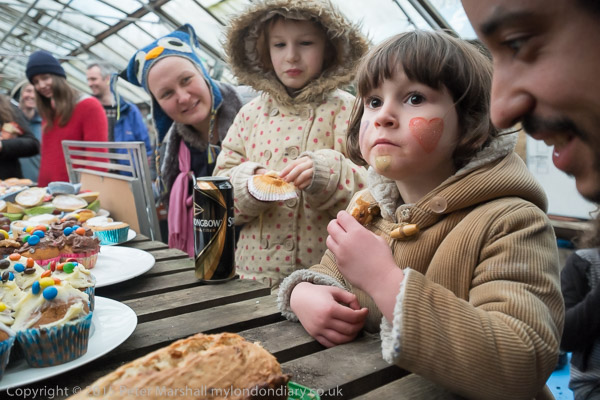
Judging the cake competition
Grow Heathrow’s 5th Birthday
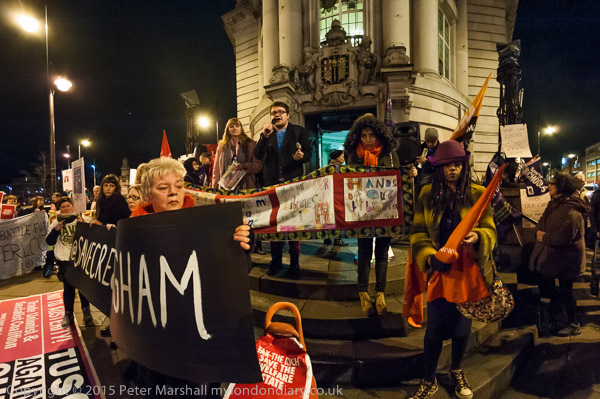
People’s Republic Of Aldgate Free Speech Fight


Lambeth against £90m cuts
RMT protest Underground Job Cuts
Welfare Advocacy not a Crime


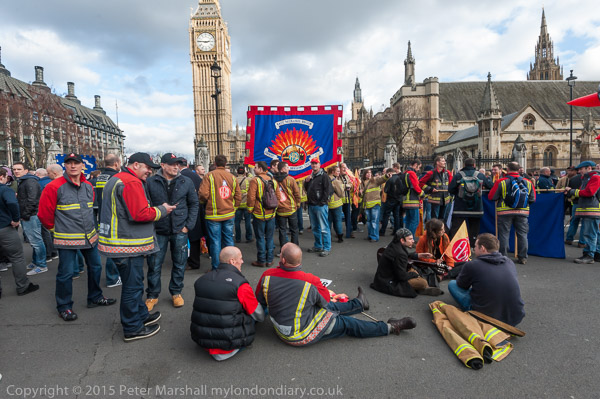
Striking Firefighters block traffic
Free Shaker Aamer at Parliament
Bracknell Forest
Take Back Our World – Global Justice Now
Shoreditch & Brick Lane
Poor Doors to Rich Gardens
End Isolation Torture for Kevan
Deport Altaf Hussain


Let Greece Breathe!
Occupy Democracy return


Venus CuMara Reclaim Love 13 at Eros
Valentine Day – 13 years for Shaker Aamer
‘BadBoy Borises’ in Global Divestment Day


Poor Doors Truce Over – It’s War!
Muslim Lives Matter – BBC protest
Aylesbury rubble to Southwark Council


Surround Harmondsworth 6
Burberry Cleaners Strike
Sanctions protest at Croydon Job Centre
Getting By – Lisa’s Book Launch
Aylesbury Estate Occupation
Around the Elephant
No Privatisation At National Gallery
Close Guantanamo – 8 Years of protest
Continue reading February Finished

Dirty Weather

At lunchtime on Jan 28th I was with the cleaners, but it was certainly very dirty weather. Bouts of driving rain and gusts that blew umbrellas inside out if not out of your hands. I was in Lincoln’s Inn Fields, a large open area now a public park, in the centre of London.  Not as well known as some others, but it is the largest public square in central London, and was first laid out around 1630, and many of the buildings around date from the seventeenth and eighteenth centuries.

Dickins based his ‘Bleak House‘ on one of them, and the east side is formed by Lincoln’s Inn itself. For a long time filled with lawyers, the square is now being increasingly colonised by the London School of Economics, better known as the LSE. In the Thatcher era, when we first saw large numbers of people living on the streets in England, Lincoln’s Inn Fields became home to many of them, until in 1992 a tall fence was put around the grassed area of the square with gates that are locked at night to keep out the rough sleepers.

The Royal College of Surgeons of England moved here (as The Company of Surgeons) in 1797, though they built a new building in 1833 with a splendid portico, which still faces onto the square; most of the rest of the building was rebuilt after it was destroyed by a German incendiary bomb in 1941.

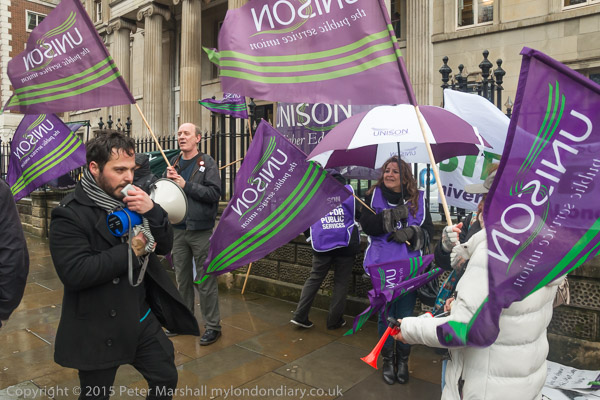
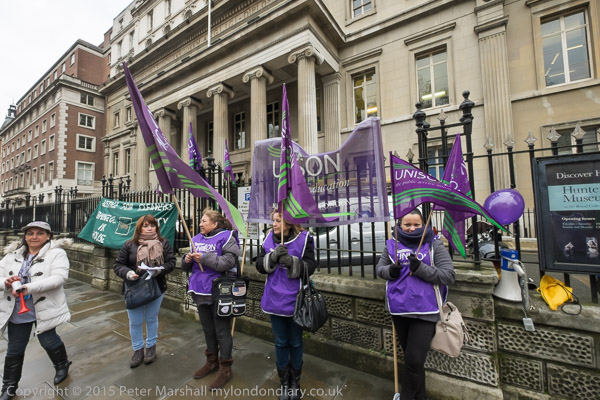
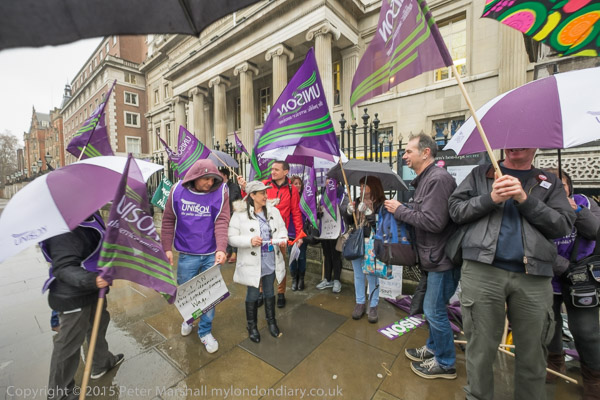
I was here because although the RCSE is “committed to enabling surgeons to achieve and maintain the highest standards of surgical practice and patient care” (according to its mission statement) it isn’t yet committed to paying its cleaners enough to live on.  Unison was here to protest for the London Living Wage, contractual sick pay and holidays for the people who clean the building, as well as for them to be treated with dignity and respect by their managers. Like many companies and organisations, the RCSE would almost certainly be ashamed of treating any of its own employees so shabbily, so they pay another company, Ocean, to do their dirty work for them.

Cleaners at the RCSE belong to Unison, and the protest was mainly by cleaners and supporters from other Unison branches, particularly in the University of London, including a number I’ve met and photographed before in Living Wage and  ‘3 Cosas’ campaigns.

Although I always carry a small folding umbrella in my camera bag (weather in the UK is often changeable) I hate to use it while actually taking pictures. But soon after the protest started the rain came down so hard there was no real choice.

It’s hard to hold both an umbrella and a camera to photograph in a high wind, and it was tiring on my left wrist. I had to stop quite a few times to turn the umbrella around after it had blown inside out to get the wind to blow it back again, and I didn’t stay very dry underneath it, but without it I would have got soaked, and there was nowhere nearby to shelter. A few images were ruined by drops of rain on the lens filter, though yet another thing in my left had was my microfibre cloth to keep wiping the lens clear with.

At times too, the gusts pushed the umbrella down and into my field of view. But I kept on taking pictures, and there were some compensations. The union flags held by some of the protesters blew well in the strong wind, and otherwise rather dreary areas of pavement look much better when wet, and sometimes have good reflections. And the rain also brought out the umbrellas in Unison (and other) colours.

But I was pleased when I had to leave, shortly before the scheduled end of the protest, as I was cold and wet, and it was good to get to some more sheltered places away from that large fairly open square. And as I did so the sun came out.

I met some of the same cleaners (and Unison reps and organiser) the following lunchtime at SOAS, where campaigns over the years supported by students and SOAS staff have resulted in some successes, but the cleaners still want parity of treatment with staff directly employed by the University.  They say ‘One Workplace, One Workforce’. Outsourcing adds complexity and extra layers of management and can only cut costs by cutting the pay and conditions of workers. Time to get rid of it.

SOAS Cleaners demand Dignity & Respect
Cleaners protest at Royal College of Surgeons
Continue reading Dirty Weather

Stuck in the right place


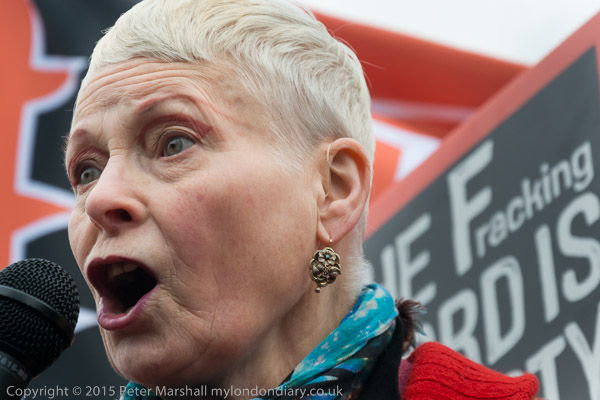
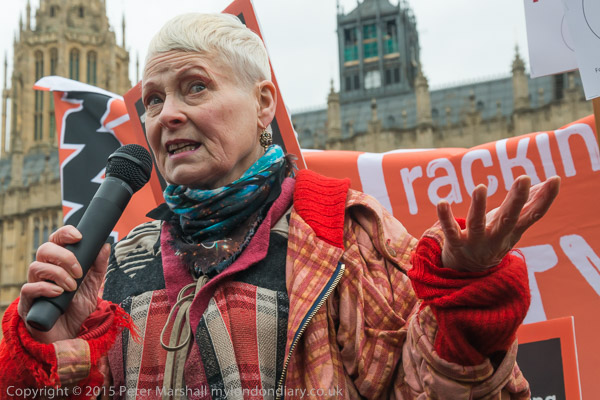
Dame Vivienne Westwood: 18-105mm DX, 105mm (157mmmm)

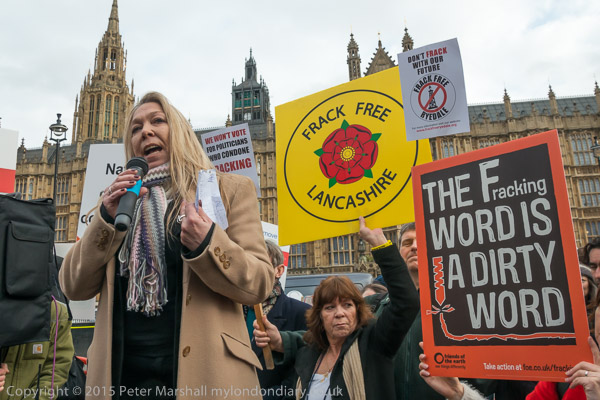
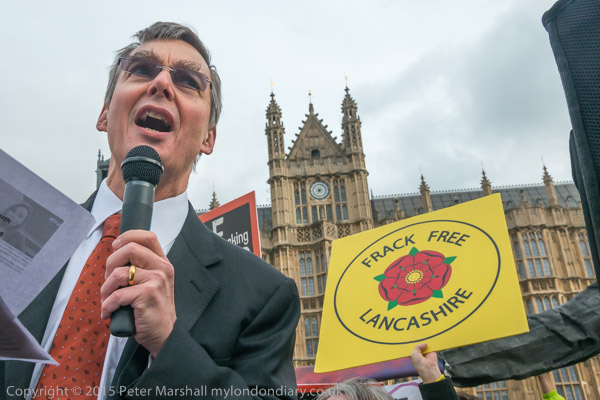
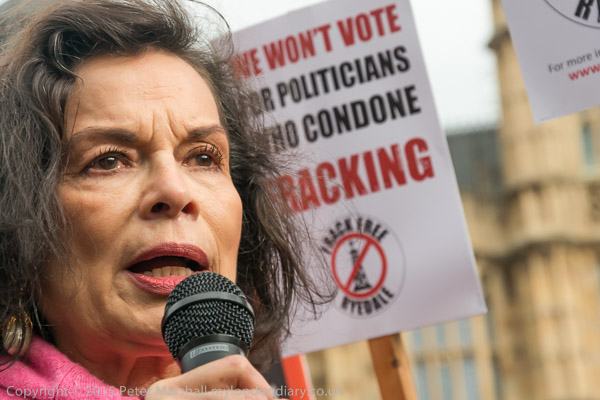
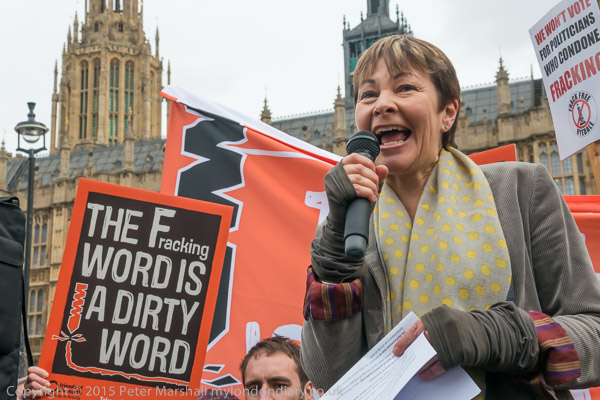
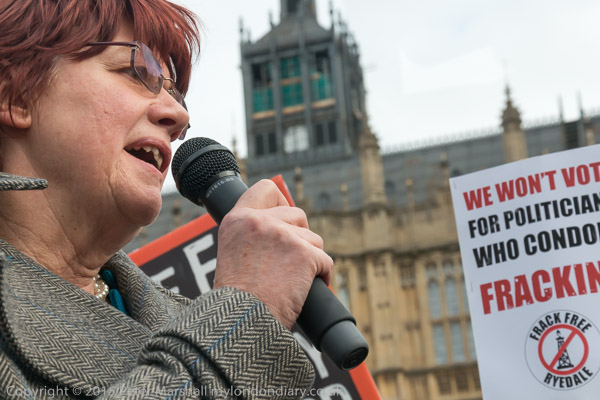
I think I made some good images of the speakers at No Fracking Anywhere! in Old Palace Yard in front of Parliament on Jan 26, but despite this and my support for the issues, it wasn’t an event I really enjoyed covering. And although I’m on good terms with many of the photographers present and like to meet them while covering events, this was one of those times when there were just far, far too many of us.


Bianca Jagger: 18-105mm DX, 90mm (135mm)

The reason for the huge interest was undoubtedly the fact that two ‘celebrities’ were among the speakers, Bianca Jagger and Dame Vivienne Westwood, and once they had both spoken the ranks thinned out considerably, making life rather easier.


Caroline Lucas MP: 18-105mm DX, 38mm (57mm)

Fortunately when I saw that the speakers were to be using a relatively small trolley as a makeshift stage, along with a few other photographers I realised things were going to be very tight. Two rather large and tall press photographers had stationed themselves rather close to it and bang in the centre in front of the microphone, establishing where the front line of photographers would be, and I went and stood at their side. Ideally I would have liked to be a metre or so further back, but knew that if I moved back others would simply come in front of me.  I  was also glad they had chosen to stand in the middle, as I seldom if ever like to work from dead centre, not least because the microphone is then always in the way.

Soon there was a vidographer pressing on my right shoulder, and several rows of photographers behind. At one guy’s request I put my camera bag on the floor in front of me so he could work through the narrow gap between my thighs and those of the man on my left, whose shoulder I was being pushed into. Other photographers were poking lenses over both my shoulders, and there were others further back trying to take pictures over our heads,  easier over mine than the two six-footers to my left, though at least one photograph was up on his step ladder.


Joan Walley MP: 18-105mm DX, 66mm (99mm)

I don’t find it easy to stand in one place, hardly able to move an inch, difficult at times even to swivel my upper body around, for over an hour. Much of that time there was little or nothing taking place to be photographed, but having got a good position I didn’t want to move and lose it until things were over. But by the end of that time it was getting quite painful, suffering in both legs and my back.


Tina-Louise Rothery: D800e, 18-105mm DX, 18mm (27mm)

There were other photographers to the left of the ‘stage’, some actually sitting on it, though I think they will have had little opportunity to take photographs of the speakers, and would probably have been better off drifting away to photograph the rest of the protesters. But unless I wanted them in my pictures (and generally I didn’t) I couldn’t work with a very wide lens. Most if not all of the pictures I took in that hour and a quarter were with the 18-105mm lens, enabling me to show speakers from the waist up at the wider end to tightly framed heads at the long.

D800e, 18-105mm DX, 42mm (63mm)
There were fortunately a number of people with placards and banners, as the area of the Houses of Parliament behind the speakers from my position wasn’t really too exciting.


John Ashton, Former UK Government Special Representative for Climate Change: D800e, 18-105mm DX, 28mm (42mm)
There are quite a few more portraits of these and the other speakers, as well as other pictures from  the event at No Fracking Anywhere!


The only picture in this post with the D700 and 16-35mm – at 21mm
Many of the press photographers sped away to file their images of Dame Vivienne as soon as she ended her speech, making it a little easier to photograph the rest of the event – and I could even use my favourite 16-35mm wideangle.  I rather liked this group around the Greenpeace House, with Julian Huppert MP, Norman Baker MP, Bianca Jagger, Caroline Lucas MP and John Ashton, though the hand at the right of the image is perhaps a little annoying.
Continue reading Stuck in the right place

Parliament Square Saga Continues

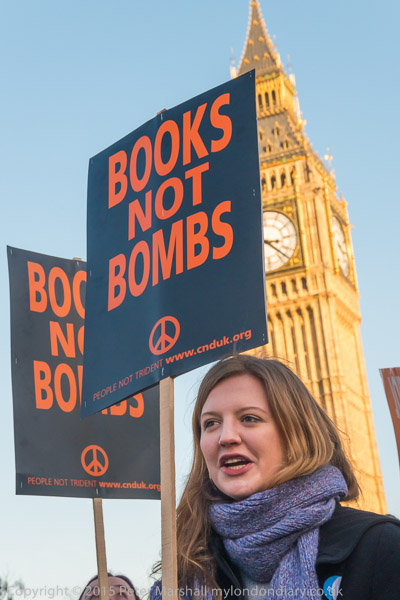
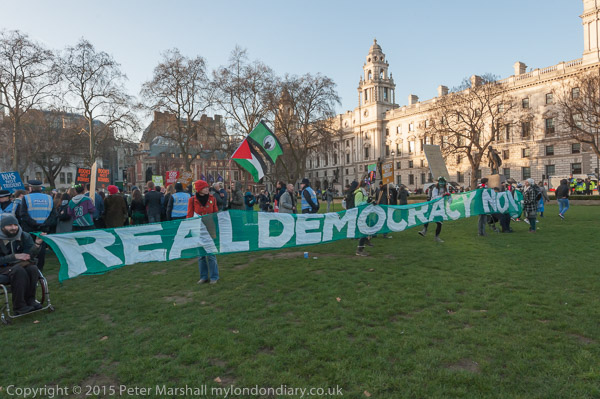
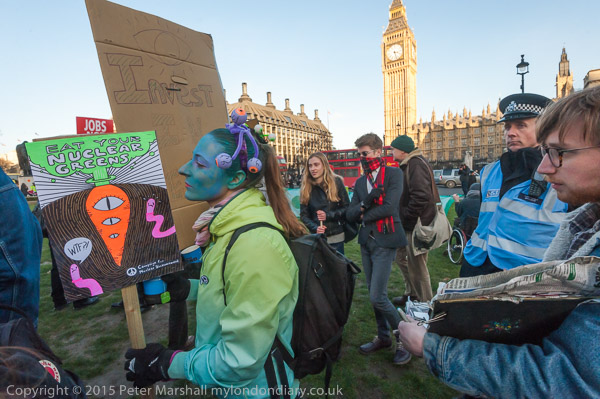
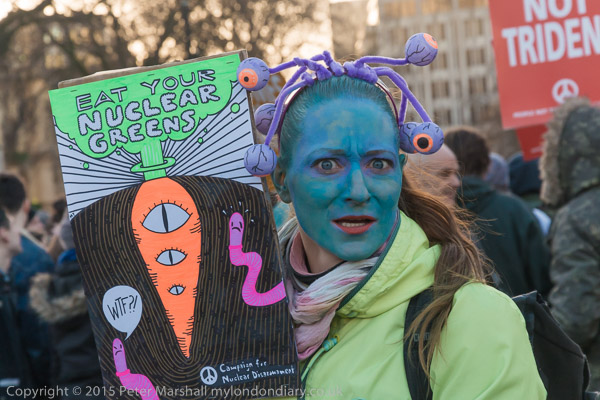
After the CND rally against Trident replacement, several hundred of those taking part walked the short distance to Parliament Square and stepped over the low wire with warnings against trespass to protest with Occupy Democracy on the sacred grass.

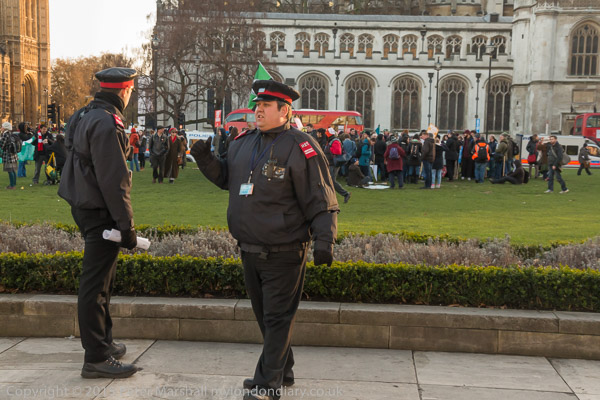
It was the latest in a series of protests by Occupy, part of their attempt to introduce real democracy to the UK which has certainly resulted in some strangely extreme responses from parts of our establishment, particularly London’s Mayor and his private security force. Though there have been times when I would not have been surprised if they had called in the troops.

There are relatively few of Boris’s Heritage Wardens, but they seem to have been able to call on the Metropolitan Police to make some very doubtful interventions in the square. Its something that has been going on for some years; long before ‘Occupy’ it was the peace protest by Brian Haw and his associates, and later the Democracy camp that attracted their attention.

It has never quite seemed rational to me, perhaps because I’ve always considered Parliament Square to be a missed opportunity in London. Until fairly recently it was an almost impossible to reach square of grass, surrounded by traffic with no way to reach it except putting your life at risk and hoping not to be run down as you dashed across in the gaps. Now at least there are several light-controlled crossings to the central area, though still not one at the most used and most needed crossing point at the corner leading to Parliament St.

As grass goes, for a country which invented the lawn mower and prides itself on the quality of its lawns, from the striped close-trimmed gardens of suburbia to the sacred turf of Lords, Parliament Square, at least as long as I’ve known it, has always been a disgrace. It starts by being badly drained, but has never had the kind of care it requires and probably suffers from the wrong kind of grass.

But for an area at the centre of a World Heritage Site, the whole area is wrong. Closing the roads along the south and west sides might be a good start, but it also needs some sensible landscaping, which could also replace or cover the ugly defences around Parliament, while providing equally effective protection. We should long ago have had a competition to redesign the square, probably including smaller areas of grass with larger paved areas where protests and celebrations could occur. Although given the official lack of any care for the grass the current fanatical attempts to prevent protests on it are nonsensical, if the area was improved it would be sensible to try and make it more robust.

On this occasion at least the police behaved sensibly and did nothing but keep an eye on things, despite what appeared to be a certain amount of jumping up and down from the ‘heritage wardens’.

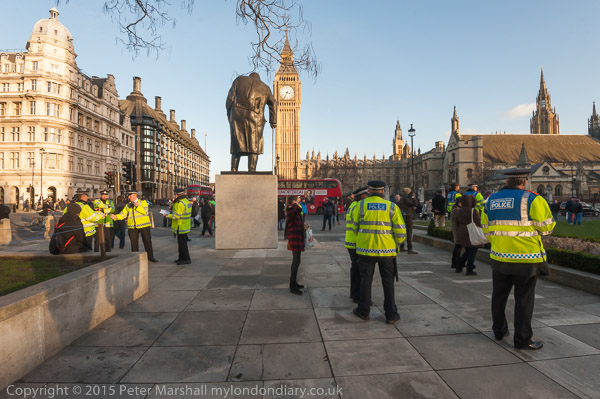
I listened briefly to the wardens complaining to the police, thenspent some time talking with an officer at the corner of the square where a crossing is needed, near the statue of Churchill. It seemed the police had no worries about a few hundred people having a peaceful meeting on the grass, but did fear that there might be some who wanted to show their hatred for Churchill by desecrating his statue on the 50th anniversary of his death on 24 January 1965. Although many revere him for his inspirational leadership in the Second World War, there are others who cannot forgive his hostility to socialism and the 1926 General Strike, support for the Black and Tans in Ireland, anti-semitism and opposition to Indian independence and other policies.

The protest caused no trouble and dispersed peacefully, though by that time I was home and eating dinner. There are a few more pictures at Occupy defy GLA ban on Democracy.

Continue reading Parliament Square Saga Continues