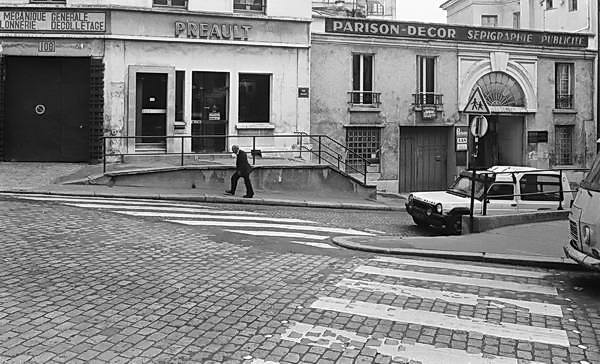
Christmas Cards

Like many other photographers, most years I pick one of my pictures to use on a Christmas Card, though these days given the cost of postage, more people get it in the In Tray than in their letter box. Some photographers simply pick their favourite image from the year’s ouput, perhaps interesting to receive, but it seems somehow to me more about self-publicity than any outpouring of Christmas spirit – and could be sent on any day of the year. Others send complex image montages, amusing and clever, which are fun to get, but are often not the kind of thing you want to show to some of your visiting relatives. I’ve settled for images that have at least some seasonal relevance.

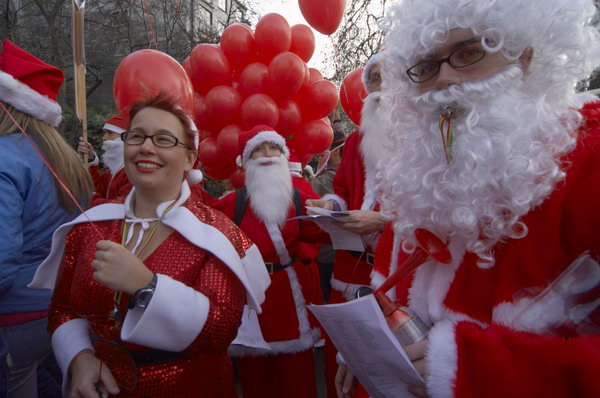
I can’t actually remember which pictures I chose some years – but here are some of those that either I did or might well have sent from the past.


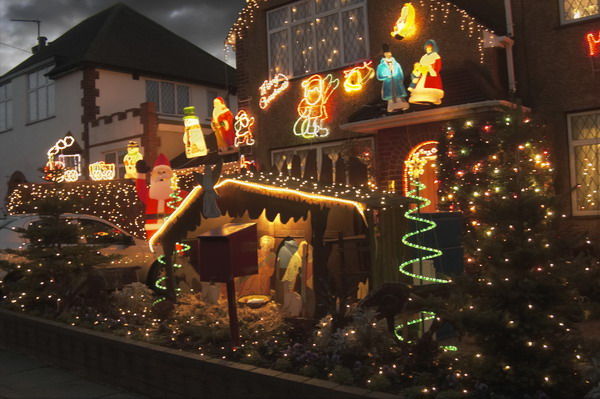
Ruislip, 2003


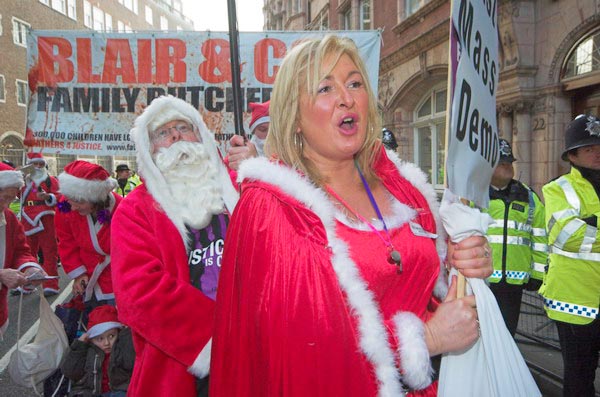
Fathers 4 Justice, 2004


Fathers 4 Justice, 2005

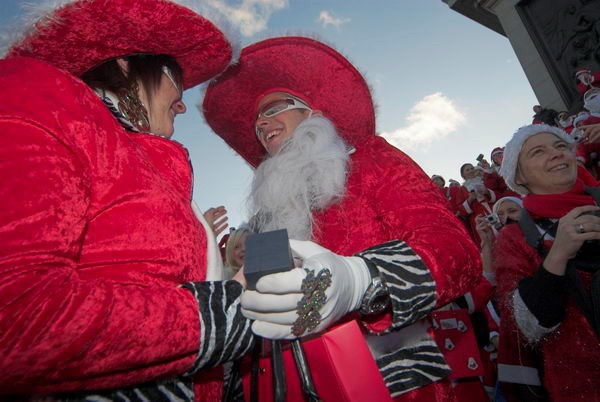
Santas get engaged at Santacon, 2006


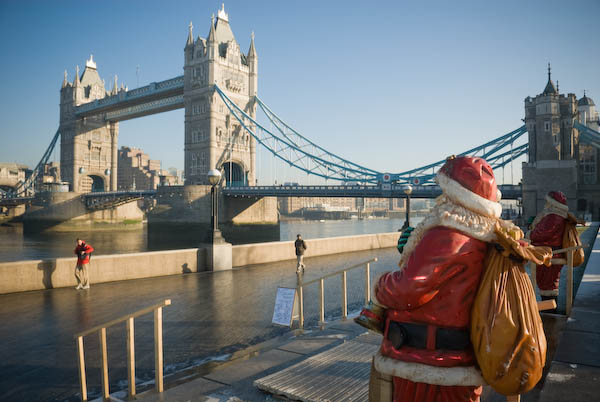
Christmas Fair next to Tower Bridge, 2007


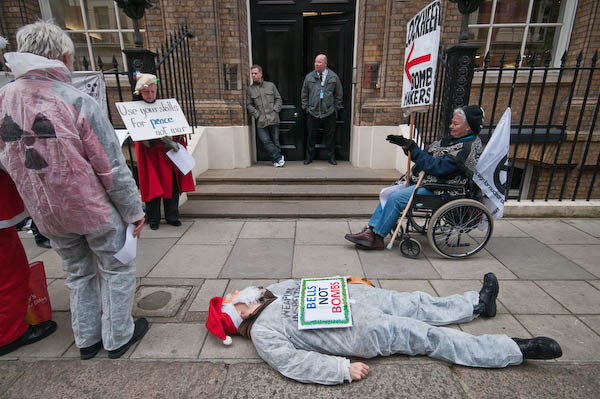
Muriel Lesters’ Serenade Bomb Makers, 2008

to be continued…
Continue reading Christmas Cards

The Marshall Clan

Back in the bed the other morning I also reflected on my own name as well as domain names – and of course there are some links with peter-marshall.com and petermarshallphotos.co.uk both of which point to web sites containing my work. But I know of at least two other photographers in the UK who are also called Peter Marshall and I’m sure there are more.


Silverprint used to be just a few yards from the Elephant. 2015

I became aware of these two in rather odd circumstances, the first when buying photographic materials in one of my favourite shops, Silverprint, now moved from London to Dorset and concentrating on on-line sales. I’d been a customer since the company began (and of Goldfinger which was its precursor) and knew the boss slightly, and usually would have a chat with Martin when I called in at the shop when it was in Valentine Place, but one day I got a very frosty welcome. Eventually things resumed their normal friendliness when it became clear that it was another Peter Marshall whose cheque had bounced.


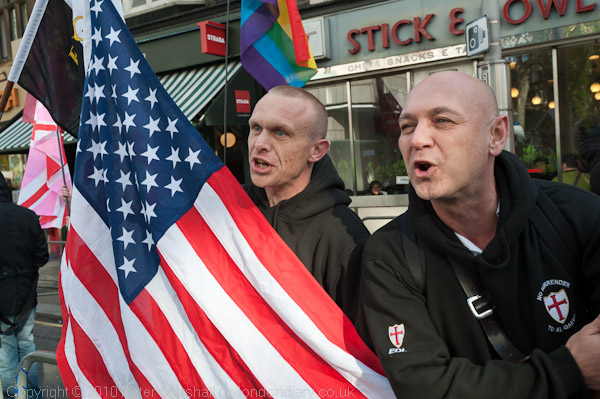
EDL protesters barrack another photographer, 2010

My second rather disconcerting encounter with another Peter Marshall came when I got an emailed death threat from an ultra-right nutter and couldn’t understand what it was about at all – but was later contacted by another Peter Marshall and things became clear – they didn’t like the pictures he had taken. I’ve had my own threats and hostile comments from the extreme right both on-line and in person – and often because I’ve been mistaken for another photographer, though one with a different name – and been protected at times by both police and saner right-wing elements, so I wasn’t too worried.


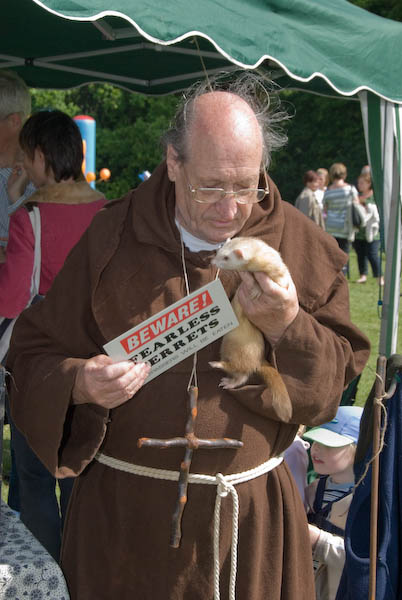
A man with fearless ferret – but not me! 2007

Over the years we’ve also had a number of phone calls at home – ours is one of the few numbers still listed in the printed phone book, which gets slimmer each year – clearly intended for other Peter Marshalls. My favourite is still the guy who asked my wife “Is he the Peter Marshall who keeps ferrets?”


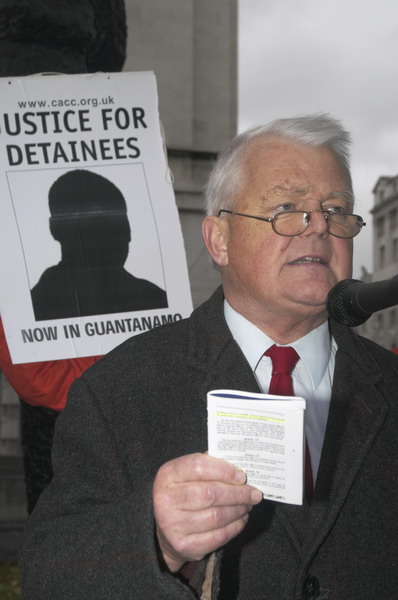
Bruce Kent speaks at a rally against Guntanamo in 2003. I turned down the invitation to speak there which was almost certainly intended for another Peter Marshall. 2003

I’m often also confused with the Peter Marshall who has written a number of fine books including ‘Demanding the Impossible: A History of Anarchism’, and I only wish I had, but my works are fairly strictly photographic. We do have a slight connection in that he wrote ‘Into Cuba’ with photographer Barry Lewis, who was a fellow student with me back in Leicester in 1970-71, both of us learning to teach chemistry, but where I also managed to study media, film and photography.

Another person I’ve been confused with is a TV journalist and reporter who I sometimes hear on Radio 4 and there are many more. You can find a few of us by putting the name ‘Peter Marshall’ into Google. When I tried this while writing this post I came up at number 11, and also this site at 14 and more again at 18, 27, 28 and a couple of times lower down in the first page (which for serious searching I have set to 100 entries.) But I gave up looking then, as Google tells me ‘About 64,300,000 results’!


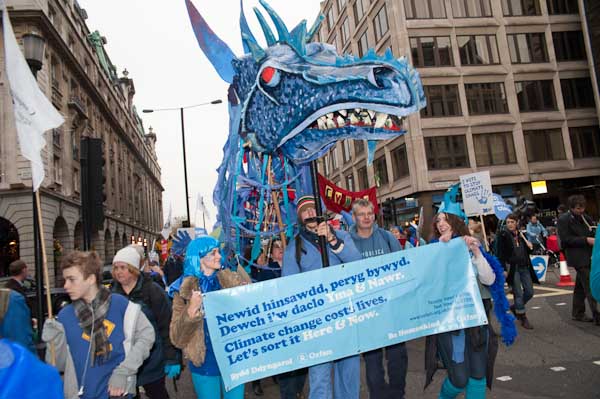
One of my grandmothers was Welsh, but not quite a dragon. 2009

There are apparently at least 400 of us in the UK alone. I sometimes wonder if I would have done better had I chosen a less common name (though why Ralph Pierre LaCock, decided Peter Marshall would be a better stage name remains a mystery.) I do actually have a middle name that I never use, Gwyn, and might have gone down better in Wales as Peter Gwyn Marshall, or Gwyn Marshall or just Peter Gwyn – or I could have chosen something completely different (though it wouldn’t have been LaCock, or even Lacock, where the inventor of photography William Henry Fox Talbot lived.) And though I am Welsh enough to play for Wales, though I don’t have the accent.


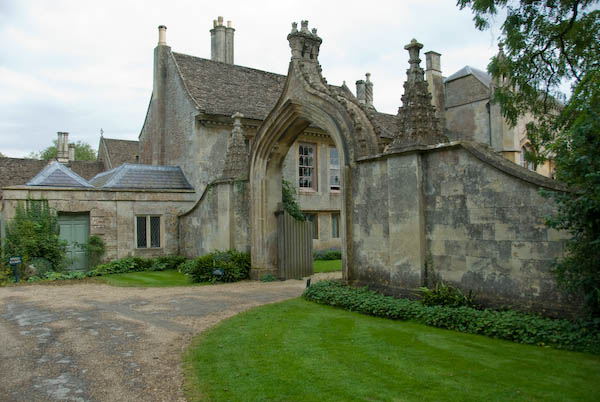
Lacock Abbey, now owned by the National Trust and housing the Fox Talbot Museum. 2007

Seriously, a good name can be a great advantage, something that sticks in peoples’ minds will greatly improve your chances of becoming well-known. Sticking out from the crowd is very useful in building a reputation – and why some photographers make a silly hat their trademark. I’ve always tried to be inconspicuous when taking pictures, avoiding bright or unusual clothing, wanting to blend in, but while that may help in taking good pictures, it does nothing for your publicity.

Continue reading The Marshall Clan

by any other Name…

I woke up early this morning (or rather a couple of mornings ago by the time I publish this) thinking about names. In particular about domain names, though I drifted on to more personal thoughts. I find myself in the rather ridiculous position of having 25 domain names, which is a little more than I really need.

It isn’t really quite so bad as that, as four are ones I hold for other people or groups rather than myself. Six of the others too are for sites I wrote for group shows I organised with other photographers, and one a group site I curate with another photographer. But that still leaves 14 that are all mine. Which seems slightly excessive.

The latest acquisition is of course Hull Photos at http://hullphotos.co.uk which I set up around a month ago. I was staggered to fine that that particular domain name was still available – as too were several others I considered. I chose it as being short, easy to remember and exactly describing what I intended to use it for. The ‘co.uk’ is I think entirely appropriate for a site dedicated to a UK city, and has the advantage of being one of the cheapest of domain registrations to maintain.

When I first registered a domain, I think back in 1996, almost any name you could think of was available. I chose buildingsoflondon.co.uk because I had already written a small site featuring London’s buildings (it’s still on-line but at a different address in that domain – and looks very dated, having only had the kind of essential changes needed to keep it working with modern browsers.) Later, largely because it was going cheap, I also registered buildingsoflondon.uk, and both this and buildingsoflondon.co.uk now point to the same page, a kind of front end to my work on London that I wrote around 15 years ago – with minor updates since.

At the time I intended ‘Buildings of London‘ to be a much more extended site, showing a good selection of the roughly 100,000 pictures I had taken of buildings of all types across the city, but somehow that has yet to happen – though it will probably come soon. Long ago I registered yet another domain for that purpose.


The 2012 London Olympic site in 1980

Another site with a specific purpose is river-lea.co.uk, which displays some of my work along the Lea Valley, which I’d photographed since the 1980s. I set up the web site in 2005; I’d been thinking about it for several years but went full steam ahead once London had been awarded the 2012 Olympic Games – and later many of the pictures went in to my book ‘Before the Olympics’.

An obvious choice for my work would be domains using my own name, and I registered two of these, petermarshallphotos.co.uk which is my London’s Industrial History site, written for me by my elder son as a present back in 1999 and still looking good, though some of the scans reflect an age of lower standards.

Then there is also peter-marshall.com, where I had to have the – in the middle because the site without it was already taken for a US preacher. Peter-marshall.com could be used for any of my sites, but I needed a domain for my Paris Pictures, and that’s it.

And of course there are two domains you are all aware of, My London Diary, at mylondondiary.co.uk (and mylondondiary.com and a couple of others) and >Re:PHOTO, this site, which is a name I find some people don’t understand but which is explained here. That had to be just re-photo.co.uk, partly because only a limited range of letters etc are allowed in domain names, but also because many people can’t easily find the ‘>’ or ‘:’ on the keyboard or phone.

Continue reading by any other Name…

Naked Greed

Long ago I turned down the chance of working in the pharmaceutical industry. I was then a graduate chemist and one of the reasons I had been attracted to chemistry was the potential for developing new drugs that would benefit humanity. But what I saw and heard when I went for an interview with one of the leading drug companies made me walk out of the door.

Drug companies justify the high prices they charge for drugs by talking about their huge expenditure on research to develop new drugs and testing them, and the sums involved are indeed large. But still less than the amounts that they spend on marketing and trying to get their drugs prescribed – even in some cases if they are not particulary effective or appropriate.

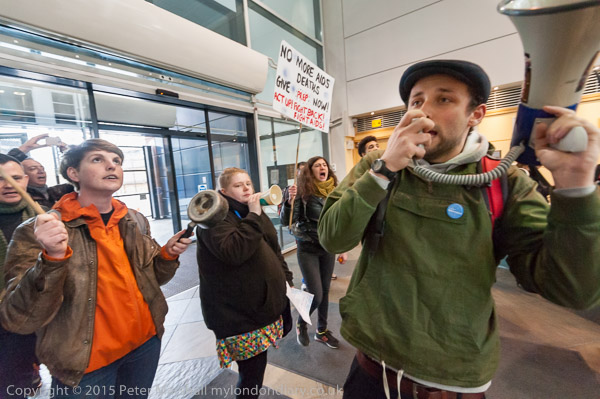
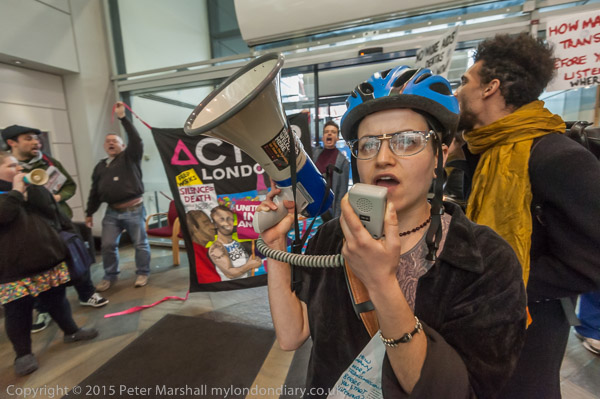
At the end of March and the start of April this year I photographed two protests by Act Up London involving medical drugs. The first was largely directed at NHS England who were refusing to accept that they should pay for PrEP, a pre-emptive treatment against AIDS, and trying to get local authorities to pick up the tab. They also announced a two-year pilot study into the use of the drug Truvada®, marketed by Gilead.

Truvada contains two drugs, Emtricitabine which was discovered in 1996 at Emory University in Atlanta and Tenovir, first made at the Academy of Sciences of the Czech Republic and patented in 1984, though it needed research by Gilead and others to produce a derivative that was readily abosorbed – and this was approved for use in the USA in 2001.

Gilead has had a long period to recoup the costs of their research, but they are still charging premium prices for both PrEP (Truvada) and for other drugs such as Harvoni, an effective treatment for Hepatis C. A month’s supply of Truvada costs the NHS £355, while a generic alternative – effectively the same – would cost a fiver. A 12 week course of Harvoni costs the NHS around £39,000, while there are various ways to obtain a generic alternative (made in Bangladesh, India or Australia) for less than £2,500 for the same course – around a sixteenth of the cost.

The protest at NHS England – next to the Bakerloo line Elephant & Castle terminus – was pretty conventional, with a short rally outside after which protesters rushed in past security and made a noisy protest inside until police arrived and they left to continue their rally outside.

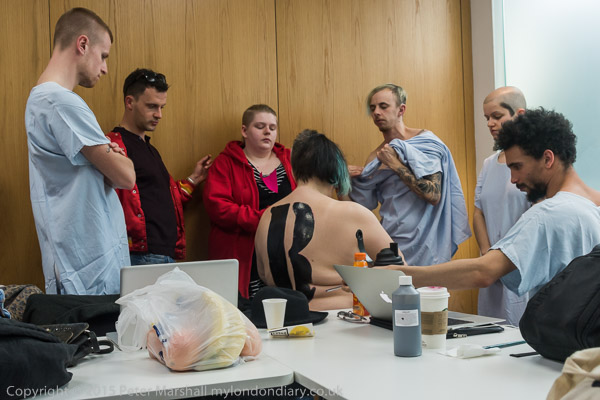
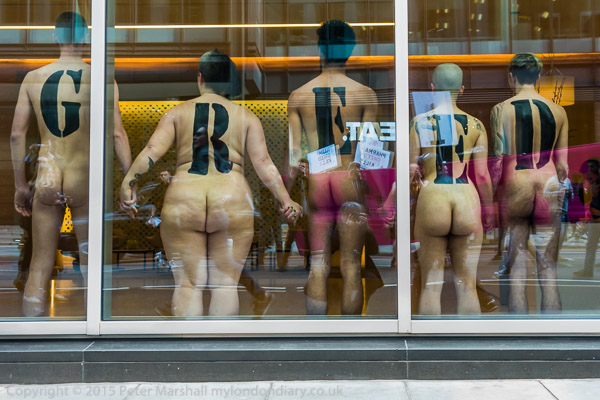
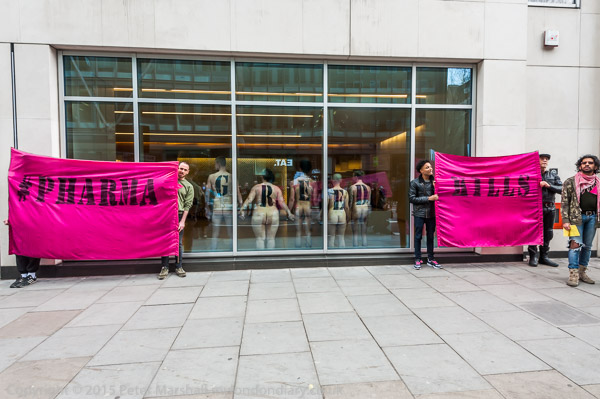
At Gilead’s offices on High Holborn it was a different story, with the protest being kept secret and preparations being made a short distance away before walking to the location, where a group of five protesters walked inside and stood in the window, dropping the gowns they had worn on the way there to stand naked with large painted letters G R E E D on their backs.

Photographically it was rather tricky, as the glass reflected too much light. I hadn’t known in advance what form the protest would take. I don’t think a polarising filter which is often used to cut reflections would have helped as it really needed to be photographed ‘head on’ when they make no difference. Although I don’t usually direct people I’m photographing I did go inside the office and ask the five to move right back as close as they could to the glass, which did make them a little more visible, but the image owes rather a lot to Lightroom and work on the bodies to bring them out.

The full image that the protesters wanted – the five naked bodies spelling out ‘GREED’ with the two banners, one each side reading ‘#PHARMA’ and ‘KILLS’ presented another insurmountable problem, that of aspect ratio. As you can see there were large areas of fairly empty space both above and below that line reading #Pharma Greed Kills. It would have made a picture with an aspect ratio of 4 or 5:1 rather than the 1.5:1 I was using.

Act Up invade NHS to demand PrEP
Act Up protests Gilead’s naked greed
Continue reading Naked Greed

Panoramas and Cigars

In my extreme youth I was a Brentford fan. Not that I ever went to a match at Griffin Park, though I think three of the under-11 team I played for went on to start professional careers there – and one of them stayed there until he retired a few years ago. I wasn’t a star player, and I think was sometimes the only player who didn’t manage to score when we thrashed some other teams 30, 40 or 50-nil (I think sometimes the ref lost count.) Even the goal-keeper sometimes put one in the opposite net, though at left or right back I could claim some credit for the nil on the other team-sheet, by fair means or foul.

But my attraction to Brentford was not just the football, but the romance, perhaps a strange word, but there was and still is something special about the place. It was always a thrill in my young days to take a trip on the bus along Brentford High St, though it was often too high, with the ammonia and tar of the gaswords sometimes almost overpowering, but visually too there was sometimes if you were fortunate the sight of a huge wall of re-hot coke as a furnace was opened and it cascaded down to ground level. I don’t know how many times I saw this, but it engraved itself indelibly on my memory.

I think too my father may have taken us on days out, perhaps even bank holidays, not just to Kew on the bus through Brentford, but to walk along the Grand Union Canal, which enters the Thames here. Even now, many years later and long after the end of commercial traffic on the canals and the turning of Brentford Dock into a private housing estate, much still remains of the backwaters and streams of the River Brent between the high street and the river, hidden away from the casual visitor, but much more open to the public than when there was far more riverine commerce and only a few footpaths open.

The opening up of the riverside hasn’t been altogether positive, with large blocks of offices and flats destroying some of the unique atmosphere, replacing it with an identikit blandness, but a little of the charm remains, as I hope you can feel from these images.

I’ve written a little previously about the later stages of the walk that took use from Kew Bridge through Brentford to Isleworth and Mogden during last Easter’s holiday. This was a photographers’ walk rather than the normal family route-march where I keep finding myself having to run to catch up the others striding 50 or more yards ahead after I’ve stopped to make a picture. We wandered back and forth, explored dead ends and different views, took our time and our pictures.

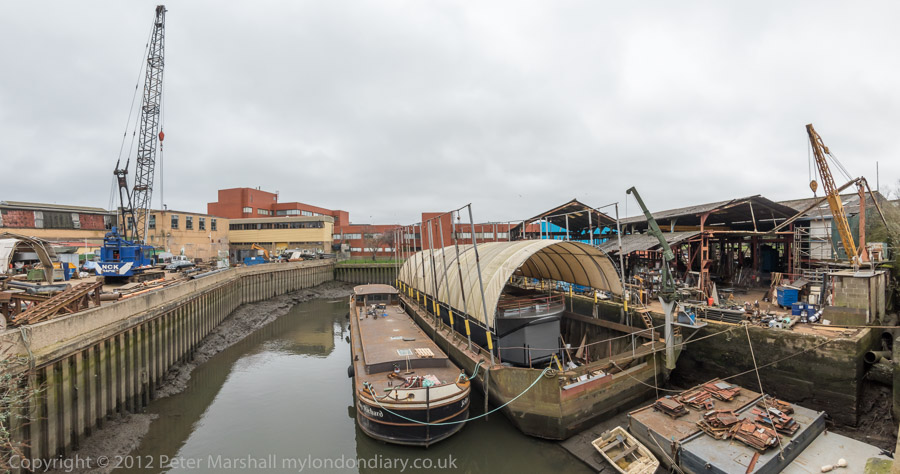
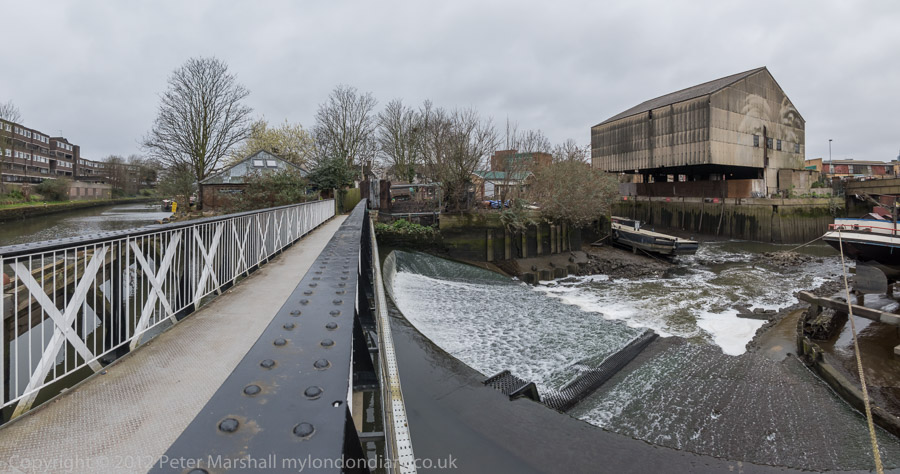
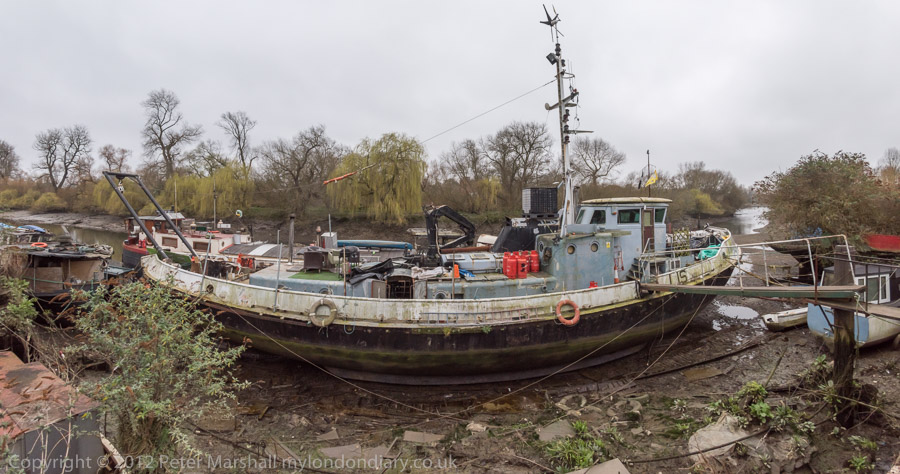
I’d come this way a dozen years earlier, working with the Russian swing-lens Horizon panoramic camera as well as the Hasselblad X-Pan fitted with the 30mm lens, on a slightly misty New Year’s Eve in 2003, and I was interested to see both how things had changed and how different things looked using digital rather than film. Of course I don’t have a swing-lens digital camera – which would need a curved sensor, but was using software to produce a similar result from full-frame 16mm fisheye images.

One big difference is that I haven’t yet got around to either printing or scanning more than one or two of those colour negatives that I took in 2003, while the digital files were very quickly processed. At least I have developed the film, though I still have a few rolls waiting to be done from around 10 years ago that somehow I’ve never got round to. I did send a couple of batches off to be processed a year or so ago, but haven’t yet got around to finishing the job.

So far as I can see from the negatives, the results from digital are very similar, except that they have a significantly greater field of view. One big advantage fro digital is the wider vertical field, which if you want a panoramic format such as the 1.9:1 I’ve used here, gives you considerable freedom as to where to place the horizon. With the two film cameras I was using the horizon was always central as the cameras have to be kept level to avoid a curved horizon.

The camera used for these pictures was the D810, and the images are 7360×4912 pixels – 36Mp – before cropping to panoramic format. While the orginal RAW files are a reasonable 35-40 Mb (Nikon compression does a great job) changing the perspective results in a 16bit Tiff file of over 210Mb which rather eats up disk space. But that 7360 pixel width means high quality prints at up to 25 inches wide, similar to what is possible from film with images 56x24mm or similar.

Since the images use the same ‘cylindrical’ perspective the compositional problems are much the same, and the main problem is with ‘cigarring’. Images taken face on of any large rectangular subject show this typical shape because the ends of the block are further from the camera than the middle. A couple of the images in Riverside Brentford Panoramas including the boat above show this too strongly for my taste. There are several different types of perspective that can be used other than the straightforward cylindrical which can reduce this effect – such as the Vedutismo applied here by PtGui.

There is a marked improvement, but it does over-emphasize objects at each end of the frame and isn’t always the best choice.

Continue reading Panoramas and Cigars

Education Issues

Back in what now seems like another life I was a teacher.  I worked for almost 10 years at what was then one of the largest (and certainly one of the least well-organised) secondary schools in the country, then went on to the rather more civilised atmosphere of sixth-form education, at what became a community college and than part of a larger FE college. When I left teaching to work in photography I continued to teach part-time for a few years, and I’m still a member of the NUT, albeit a retired member, as well as a full member of the NUJ.

It was an interesting career and had its enjoyable and rewarding moments, but if you’ve never tried it you can never appreciate how demanding and stressful it can be, and I glad to be able to leave the profession and make a living writing and taking pictures. And I was able to do so partly because of the experience I’d gained in teaching in one of the finest art departments in the country, with an A level photography course which I’d set up and helped to make almost certainly the best in the country, with colleagues whose skills and experience complemented mine.


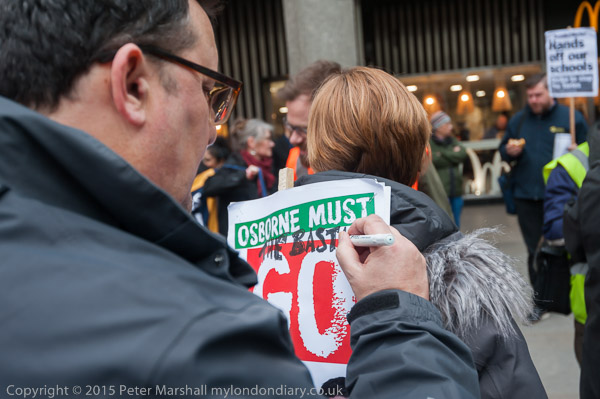
Osborne Must Go – The Bast…

I would probably have stayed in teaching longer but for the policies of successive governments and their various reforms and innovations which have made such a mess of our education system. Of course we needed changes, but changes that were made on educational grounds, not because of ignorance and dogma.

There seem to be several major underlying assumptions behind most of the reforms we have seen: that you can’t trust teachers or local authorities, that education experts know nothing about education and that the private sector will always make a better job of it.


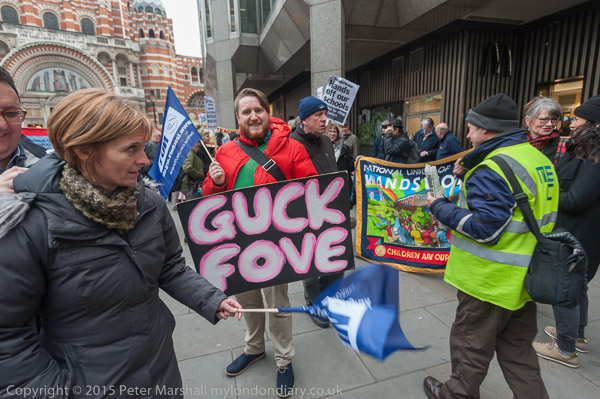
Guck Fove

Teachers were hoping for better things when when Michael Gove was replaced as Education Secretary, but instead got the threat to make all schools into academies – a hare-brained Labour scheme from the depths of New Labour, almost as unforgiveable as going to war in Iraq.

There is no evidence that academies improve the educational results of children and the plans remove all democratic controls from education as well as side-lining parents. They (along with so-called ‘free schools’, whose freedom seems to be mainly a freedom for some individuals to grab community assets) make sensible planning of educational provision impossible, and remove many of the safeguards on teacher employment that the unions have struggled for years to establish – perhaps their main attraction for the political right.

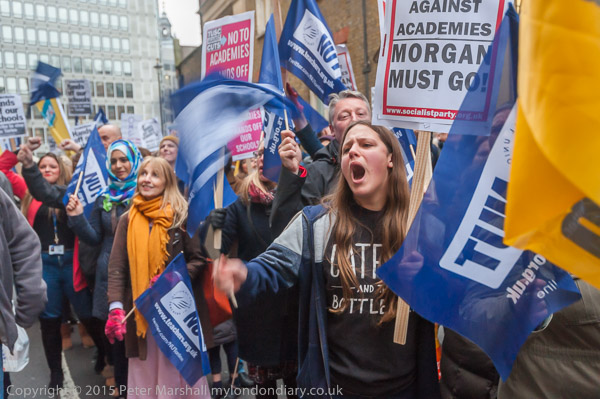
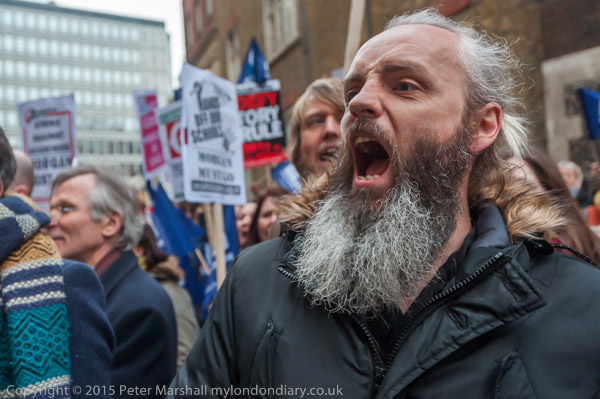
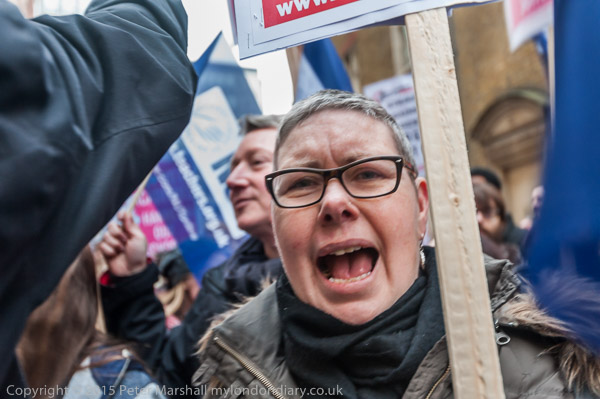
As someone who was a union rep for around 15 of my teaching years I can assure you that teachers by and large are a pretty conservative group and it isn’t easy to get them as a  body to show any militancy. But on 23rd March there seemed to be plenty of angry teachers marching to say Hands Off Our Schools, including those from the ATL, a union that many joined because they felt the NUT was too radical.

The unions say government should be addressing the real issues of teacher shortage, lack of pupil places and chaos in the curriculum rather than creating more organisational chaos. And clearly they are right.

By the time the march was going past the Dept for Education, the light was falling, and the narrow street with fairly tall buildings was getting pretty dim. I’d increased the ISO I was working at to ISO2000, but with the teachers getting rather agitated it perhaps wasn’t quite high enough, and many images were too blurred to use.

It’s always a bit difficult to know how high an ISO to use, and the image quality with both the D700 and the D810 does noticeably drop off at higher ISO, but ISO3200 is certainly normally usable and the extra 2/3 stop would have resulted in a few more sharp pictures – or a little extra depth of field.

All of the pictures at that point were taken with the D700 and the 16-35mm,  and even at 16mm depth of field isn’t huge when working close to the subjects as I like to do. And when close people’s movements become more important and more likely to blur. Of course blur in the right places – such as the hand and the NUT flag in the top picture – can improve images, but in the wrong places will ruin.

The 16-35mm does have image stabilisation, but that is really no help in stopping subject movement, though perhaps might cancel out some of the more erratic photographer movements. But somehow in those cases where it would be useful I almost always manage to have turned it off, though seldom intentionally.
Continue reading Education Issues

November 2016


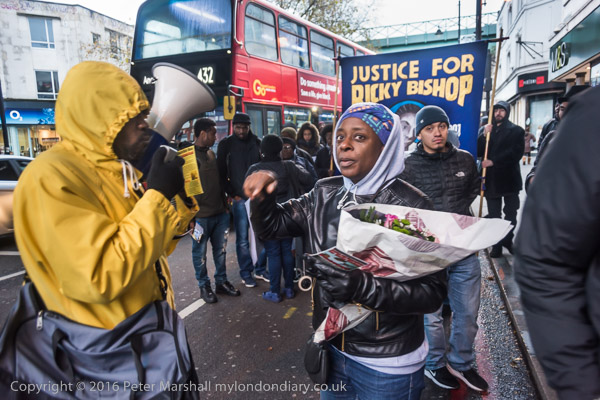
Justice & Reparations for Ricky Bishop – march through Brixton

November is now complete on My London Diary. It’s a month I remember for being dark, cold and wet, certainly not my favourite time of year. I hate it when we change the clocks at the end of October, plunging into darkness around 4pm – by the end of the month sunset was at 3.55pm. London did get more rain than in the average November and most of it seemed to fall on me and my cameras.

It was also the month when my Nikon D700 more or less gave up the ghost. I can’t complain as it has made well over 500,000 exposures, but repair costs are so high now that it is almost certainly beyond economic repair. It is still actually working – at least at times. I took my last image with the D700 at a protest a few minutes after the image above, taken on a D810. That last D700 image has the shutter count information:

<aux:ImageNumber>532697</aux:ImageNumber>

embedded into its EXIF information  (you can, with difficulty find this Photoshop.) According to Nikon the carbon fiber composite shutter in the D700 should at least last 150,000 exposures.

It isn’t actually the shutter but the mirror that is the problem – it sticks in the up position, blanking out the viewfinder. It happened first around half an hour or so earlier but I managed to free it by using the menu to ‘Lock mirror up for cleaning’, then switching the camera off and back on again, but after a few exposures stuck again and I had to repeat the process. I missed a few opportunites to make pictures doing this, particularly annoying when the police came to interfere with the protest.

Back home, and testing the shutter it has been working perfectly, but a camera you can’t rely on isn’t worth carrying. And I am fairly sure the cost of repairs (and there are a number of other minor faults) would be prohibitive. So since then I’ve been working with the D810 and a D750, which I’d tried out a few days earlier. The D750 is a noticeably lighter, which is good, gives larger files – sometimes a bonus, but normally unnecessary – and has a tilting read screen, which is great for some things, though the ‘Live View’ you need to use is still clunky. And it somehow feels a bit cheap and has a nasty shutter sound compared to the D700.

Nov 2016

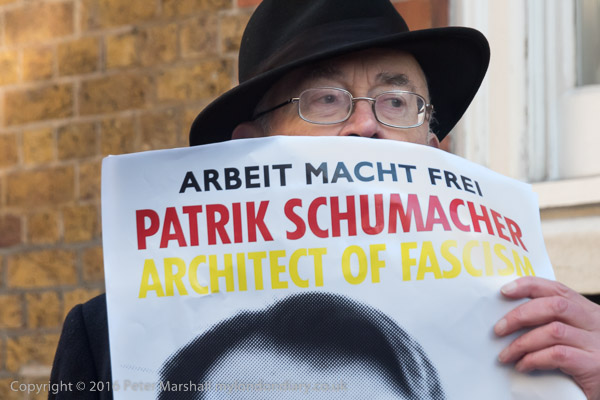
Class War protest ‘Fascist Architect’
Axe the Housing Act Autumn Statement
Brexiteers say ‘People Have Spoken’
Class War Croydon ‘Snouts in the trough’
Justice & Reparations for Ricky Bishop


Climate Crisis rally against Airport Expansion
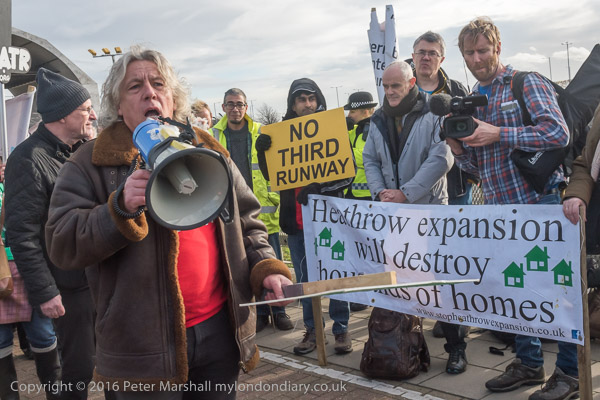
Rally against Heathrow Expansion
Release British father from Israeli Jail
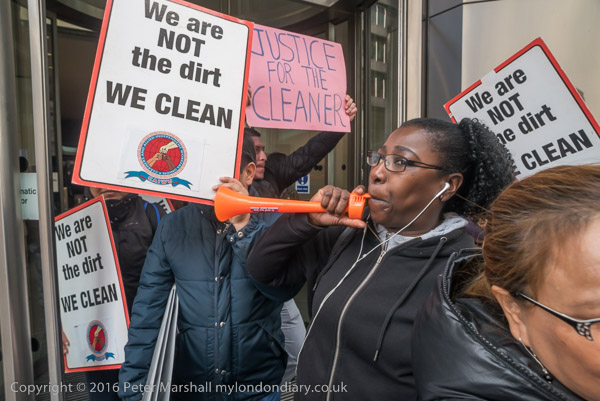
Cleaners at Claranet for Living Wage


Cleaners at Mace protest Dall nepotism
Cleaners in Lloyds against racist sacking
End Discriminatory Welfare Reforms
Custody Summit at the Tower
No Garden in the Sky
Kurds march through London
Hope Trumps Hate rally and kiss-in
US Election Day Guantanamo protest
Vigil for Fazel Chegeni

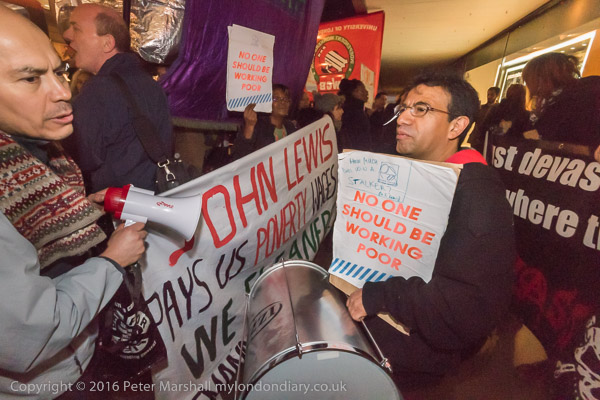
Make John Lewis cleaners Partners


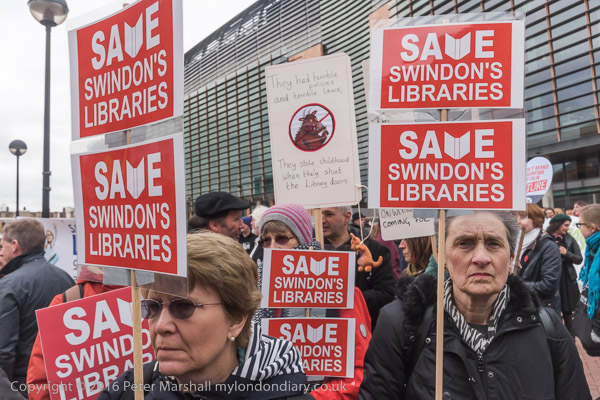
Save Libraries, Museums & Galleries
Kurds march for Peace & Democracy
Bill to reverse NHS Privatisation
End mass deportations
Standing Rock Sioux – emergency protest

London Images

Continue reading November 2016

Refugees Welcome


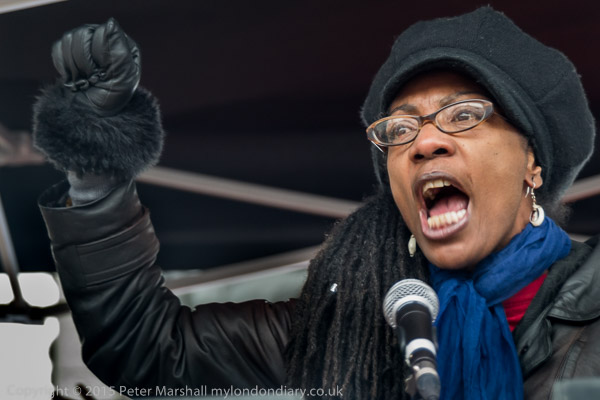
Lee Jasper and Zita Holbourne lead the Black Lives Matter bloc

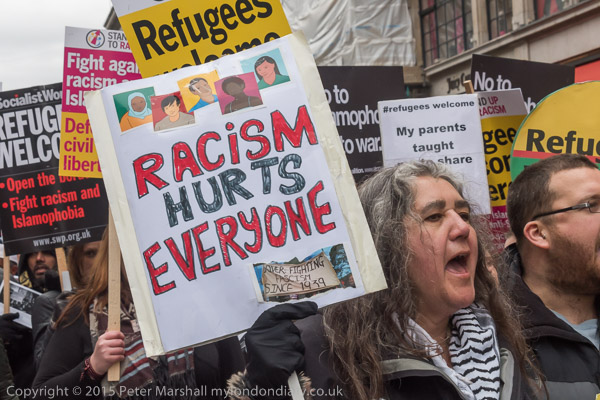
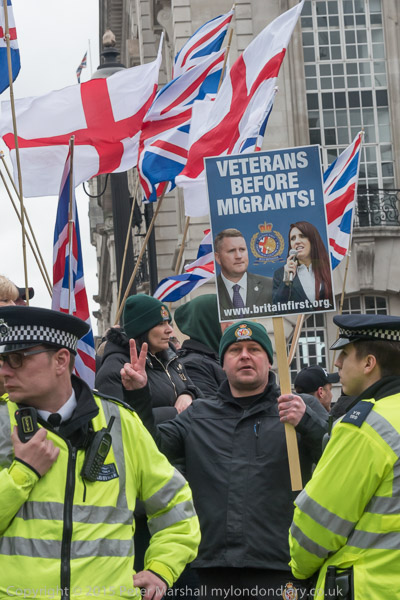
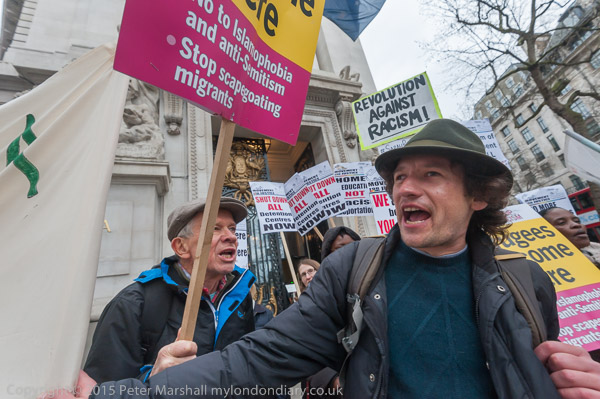
Every time we press the shutter release we are making choices, expressing a point of view. What we chose to photograph and how we decide to represent it. And later, which images we select from those we have taken and how we put them together to make a report, and the captions and other text we present with them. Covering events like the large march and rally against racism, Islamophobia, anti-Semitism and fascism organised by Stand Up to Racism on March 19th perhaps makes those choices more evident than many other events.


Marcia Rigg fighting for justice over the killing of her brother Sean by Brixton police

Of course the great majority of the British people have an immense sympathy for the plight of families fleeing from the wars in Syria and elsewhere, or indeed from famine and extreme poverty elsewhere – even despite the efforts of our billionaire-owned press and Tory politicians to demonise them, and a government that has almost totally failed to step up to the challenge.

But this was an event which brought together a huge range of issues and although I tried hard to cover them all, of course my view is a personal bias. There were many people on the protest that I knew and had photographed at other protests, and there were also those who would be known to a wider public. Although I try not to concentrate on celebrities, pictures of them, particularly of those who spoke at the rally, are important both in terms of gaining publicity for the causes and also paying my bills, though I try no to be over-influenced by the latter thought, and as much as possible avoid the media scrums around well-known figures.

There is also the question of visual appeal. Some people are certainly more interesting visually than others, and as photographers we have to make pictures that people will want to look at. We dramatise events, picking those who stand out in some way to photograph, and doing so in a way that will engage others. Dramatic gestures, unusual placards are to photographers like a flaming candle to moths.

A very small group of protesters against the march who stood around the statue of Eros and shouted abuse, protected by several rows of police certainly attracted far more attention than they deserved – and I took a few photographs. They were a part of the story, but only a very small part.

One of the reasons for ‘My London Diary’ and this site is to enable me to present a much wider view of events such as this than is possible through the mainstream media. I think I posted far too many pictures from this event, but they do allow you to see that wider view, if very much from my perspective.

But though it’s obviously from my point of view, for me it’s vital to maintain a certain objectivity and distance from what I’m photographing. It’s important to me to be fair and not to misrepresent what I’m photographing, whether I agree or disagree , approve or hate. I often see pictures by some other photographers and think that had I taken that particular view – perhaps catching a picture of someone caught in a way that makes them look stupid – I would simply have deleted it, even if I don’t like them. If you ever see a picture by me that looks as if someone is making a Nazi salute it will be because I sure they were doing so and not just waving. Without integrity documentary is without value.

Refugees Welcome Rally
Stand Up to Racism – Refugees Welcome march


Australians protest against their country’s racist immigration policy

I left shortly before the rally in Trafalgar Square came to an end to go to a much smaller event also taking place on UN Anti-racism Day. Another reason for My London Diary is that I knew this would get no coverage at all in the UK’s mainstream media – though the other photographer present was covering it for an Australian newspaper.

Australians protest on UN Anti-Racism day

Continue reading Refugees Welcome

Another Hull picture

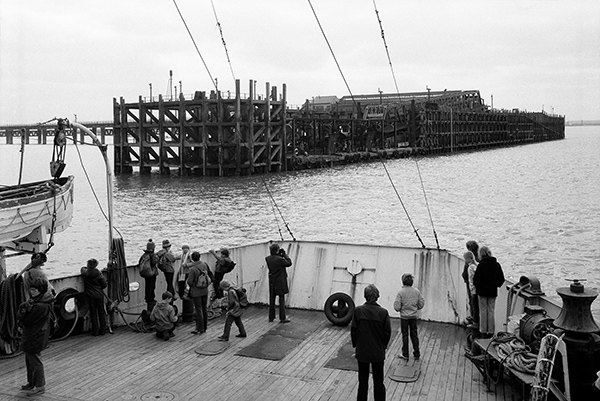
Humber ferry approaches New Holland, April 1981

When I first went to Hull the route to Lincolnshire (should anyone wish to go to Scunthorpe, Immingham, Cleethorpees or Grimsby) was either the long drive to the Boothferry Bridge near Goole – and then back east or the Humber Ferry between Victoria Pier (aka Corporation Pier) and New Holland. There had been plans for a bridge or tunnel, but it was only the 1966 Hull North by-election that led to a Labour government actually approving plans for the Humber Bridge. And by the time it actually opened, 15 years later it was, as I wrote at the time, ‘a bridge too far’ and too late, being largely rendered redundant by the new motorways, with the M62 providing a new crossing and links to the then growing motorway system. Who after all really wanted to go to Scunthorpe or Grimsby – and if you were heading further south the M62 was your friend.

The ferry which has first run in 1315 ended its service when the bridge opened in June 1981, which was something of a shame as it was a nice trip out from Hull in the right weather, though there was precious little to do when you got to the other side – except get on a train for Grimsby etc or simply walk a little along the rather desolate shore before catching the ferry back to Hull.

My first trip on the ferry was on the PS Lincoln Castle, a coal-fired paddle steamer retired from service in 1978 but in April 1981 when I made this trip this was beached near the Humber bridge and open as a restaurant – and a day or two after I took this picture we went and had tea and cakes there. The diesel engined screw-driven replacement was more practical but less impressive.

In my book, ‘Still Occupied‘ this picture is wrongly captioned as approaching Hull, but it actually shows the view as we approached New Holland Pier on the other side of the estuary. There were only a handful of cars on the ferry, and many of the foot passengers like us were taking a ride before the service was coming to an end a couple of months later.

This picture was Monday’s addition to my new web site, also called ‘Still Occupied’ though the address is the perhaps clearer http://hullphotos.co.uk. So far the site contains my pictures from 1977 to my trip on the ferry in April 1981, and my intention is to add at least one more every day throughout the year 2017 when Hull is the UK City of Culture. If you want to see the latest new picture they will each appear in turn on the Introduction page of the site – so Bookmark that and make a daily visit.

I’ve also taken the opportunity of correcting a few mistakes in the book, though unfortunately not the one mentioned above, which I’ve only just spotted. The images and layout are unchanged and so this is not a new edition, and still has the same ISBN. The preview above shows quite a few of the 120 pages.

Special Offer
Until 11:59 pm on 13th December you can get a 20% discount on the cost of this and any others of my books at Blurb with the code GIFTWORTHY20 – in upper case as shown. Of course it still doesn’t make the books cheap. But you can download a high quality PDF version for only £4.50

Extra Special Offer

I have a limited number of copies avaialable of all my books at below Blurb prices for UK orders only – see prices and contact details here. And now a very limited number of copies of ‘Still Occupied’ for only £25 +£2 p/p to UK addresses only. When these few are sold the price from me will go back to the £30 listed on my web page.

Housing problems


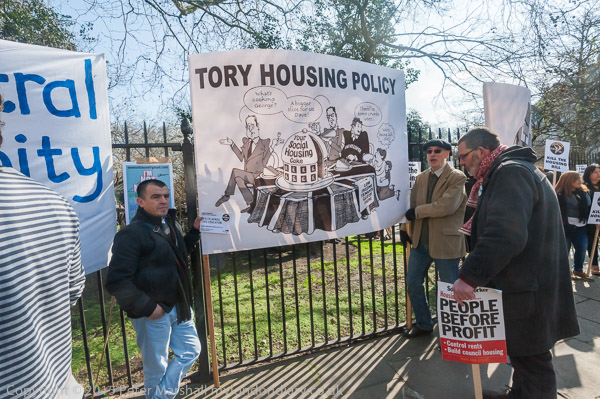
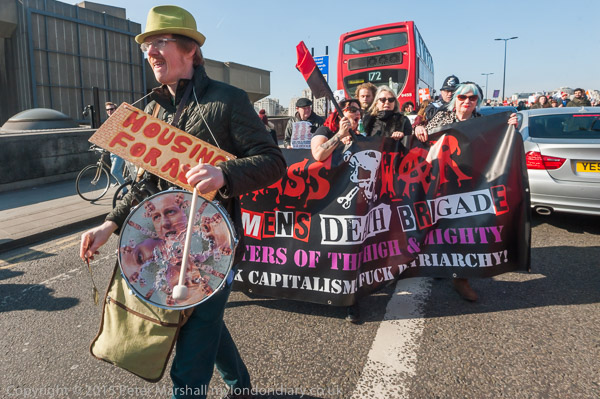
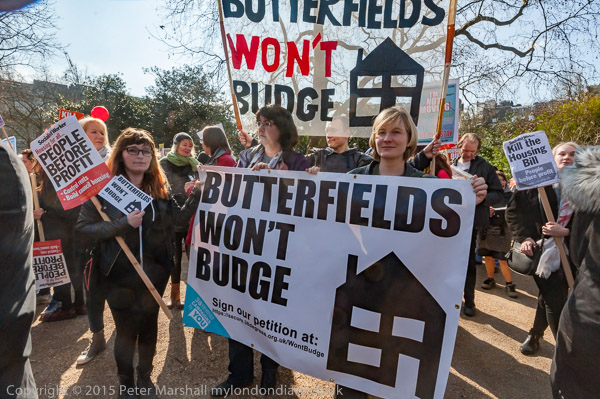
Housing campaigners meet to march against the Tory Housing Bill, March 2016

Linda and I are fortunate to own our own house, even if it isn’t a huge house and nothing special, a smallish semi-detached Victorian cottage almost certainly built for farm labourers around 1880 (much like the few houses my own grandfather built for his workers) and condemned in the 1950s. The landlord decided to make some minor improvements, converting the outhouse into a just indoor bathroom and toilet and after a few years sold it to the sitting tenants. Rent controls then made private letting hardly worthwhile and certainly needed sensible reform, but were instead scrapped.

Ten years or so later when we managed to scrape together a deposit and get an 80% mortgage after both of us had just got half-decent pay rises, we left our new town housing corporation flat and moved in – paying ten times the landlord’s sale price. We are still there 42 years later, having made a few minor improvements – double glazing, some insulation, gas fires etc – and essential maintenance but basically living in a house which is now something of a museum piece, and estate agents would almost certainly descibe as ‘in need of major imporvements’ while still happily trying to sell it for their fat share of over 30 times the amount we paid for it.
For us a house was a place to live, and to bring up our sons, handily placed for the railway station 5 minutes away that now takes me to London in 35 minutes. We never wanted to join the others we knew playing the housing market – who are now sitting in houses that sell for several times the relatively modest (for anywhere around London) amount ours would command.

When we bought was almost certainly the only time we could have afforded to do so, unless we moved away from the southeast, and it was thanks to my union whose campaigns and actions had managed to produce the only decent pay rise of my working career. It was a short window that soon closed as inflation eroded incomes and house prices rocketed. But we didn’t particularly want to become a home owners and only did so because it was clear that rents were rising fast and that buying was financially a much better long-term option. It was only a few years before the mortgage repayments were lower than the rent we would have been paying had we stayed as tenants – and to rent a house like ours in the private sector would now be costing more or less my entire income.

Tough as things were back then, the situation is far worse now, and the reasons are pretty clear to all but blinkered politicians. It isn’t basically that there are not enough homes, but more simply, people who need homes can’t afford them. There are enough homes in London, but many are owned as ‘investments’ by the wealthy, and often stay empty all or most of the year.

Building more homes will only help if people can afford them, and that must mean more council housing – as much or most soccial housing, even if so-called ‘affordable’ is too expensive for most. When market rents are more than many people earn, the 80% of those rents that can be classifed as ‘affordable’ clearly isn’t.

Thatcher’s ‘Right to Buy’ though advantageous for some who bought their properties was disastrous because those properties sold were not allowed to be replaced by new council housing. Like the current government, her aim was to get rid of council housing. Many of the properties sold under ‘right to buy’ are now privately rented, bought from the former tenants as ‘buy to let’ properties.
Buy to let is just another part of the problem. Borrow to buy a house, take the interest and repayment costs, add on an agents fee and ten or 15% profit and get someone else to live in the house and pay it all for you. It is trading on the ability of the wealthy to borrow to enable them to profit from the poor who the banks won’t lend to, and getting the poor to buy property for the wealthy.

We need proper rent controls and to increase security of tenure in all areas of housing – including protection for owner occupiers who fall behind in their repayments. We need more control over the type of property that is built in our cities, and in particular more council and other social housing.

But we also need changes in attitudes towards communities, particularly those living in the remnants of council housing on estates such as the Aylesbury or former Heygate in Southwark. Councils need to threat them as people and as communities rather than just looking at balance sheets, particularly when – as with the Heygate – they get the sums spectacularly wrong.
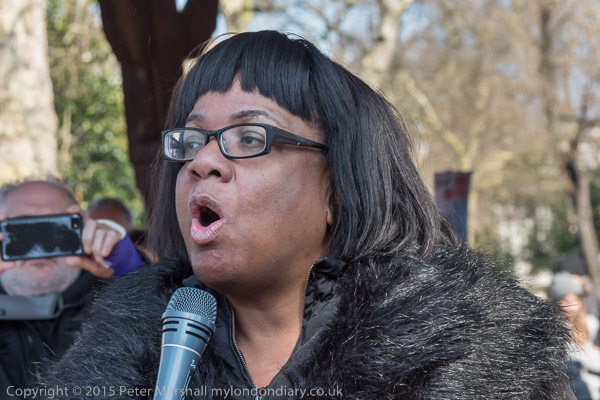
Most if not all of these estates need real regeneration rather than demolition and wholesale scattering of communities that is currently taking place – to the profit of private companies but with a great loss of places where the people our city relies on can live. It’s to the Labour party’s great shame that many of the councils with the worst records – Southwark, Newham, Lambeth etc – are Labour strongholds, and the party needs a serious change of direction on housing.
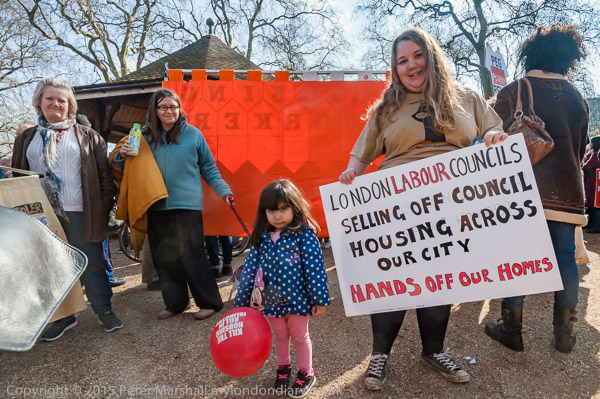
It isn’t surprising that people whose home are threatened are angry, and many came to the march to show that – against both the government and a housing policy dictated by estate agents and the Labour councils who essentially sing the same tune, though often also protesting against the Housing and Planning Bill. It’s hard not to think about motes and beams.
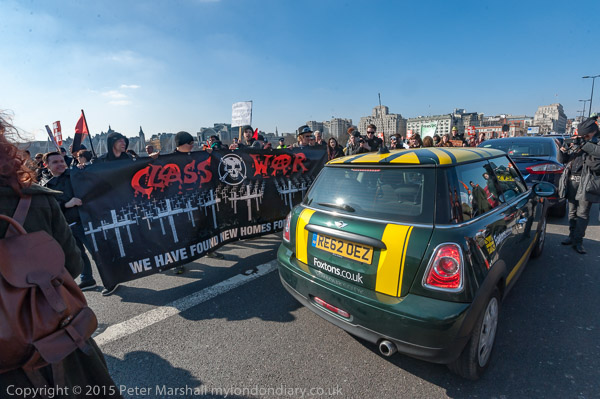
And hard too not to rant about housing as you can see. Unless that is you are ignorant about what is happening or too busy stuffing the loot into your offshore bank accounts. It’s an area which is class war at its most naked – and where the poor have been losing badly. And one which Class War, who appear in rather a lot of my pictures, have been one of the more active groups in protesting about and bringing on to the public agenda.
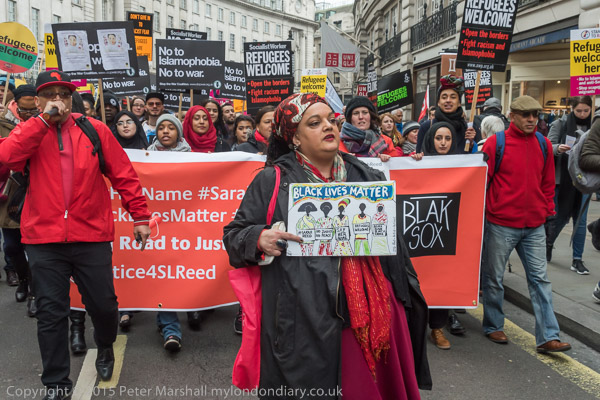
Kill the Housing & Planning Bill
Continue reading Housing problems