Stopping London Traffic Pollution

Every Saturday evening in my youth the BBC Home Service broadcast the radio programme ‘In Town Tonight’, introduced by the music of the Knightsbridge March by Eric Coates and traffic noise, halted by a loud shout ‘Stop!’ and the radio announcer’s voice “Once more we stop the mighty roar of London’s traffic …” It carried on, even becoming a TV show for a few years, an early chat show with celebrities and the odd and occasionally interesting rather random outside broadcast segment, most famously on a night spent in the waxworks Chamber of Horrors by Brian Johnston.

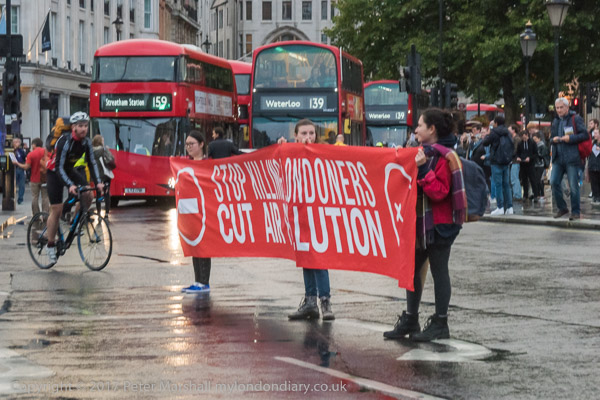
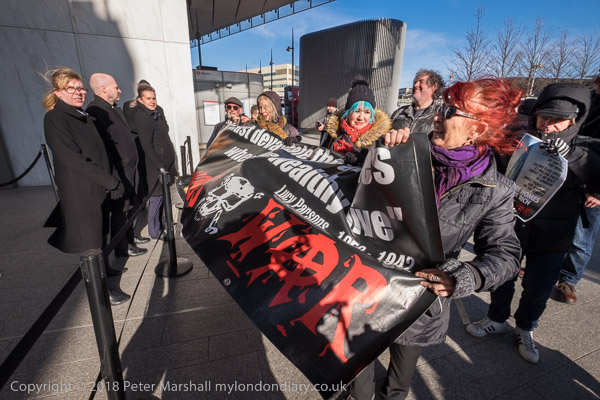
Memories of this and the comfortable fug as our family sat around the radio and a coal fire in our cramped living room came back to me as ‘Stop Killing Londoners‘ again stopped that mighty roar, if a little less dramatically, first at Oxford Circus, by stepping out with banners when the traffic was halted at the lights, in the sixth of their brief protests to highlight the thousands of premature deaths each year caused by air pollution in the city, largely by oxides of nitrogen and minute particulates from traffic. Official figures put the number of such deaths at very close to 10,000 deaths a year, and of course many more suffer greatly from illnesses caused or exacerbated by the polluted air, well above the legal limits for most pollutants.

Actions such as this are intended to force action from London’s Mayor and from TfL, who the protesters see as moving far too slowly and failing to confront those with vested interests, including London’s black cab drivers who are responsible for a surprisingly large amount both of the pollution and also the opposition to measures that tackle it, including the cycle superhighways. And until there is much greater public awareness of the problem, it is hard for the politicians to take more decisive action.

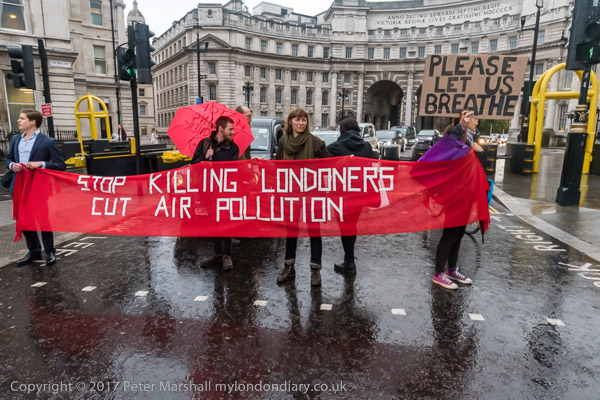
I’d met with the group on Oxford St around 6 pm, and as a photographer it was frustrating to see the light fading rapidly as we approached sunset and we were still waiting for more to arrive and the action to begin. It really was quite dark, and I wasn’t too well prepared for it. I’m always very surprised by the low light levels in parts of busy streets even in the very centre of London.
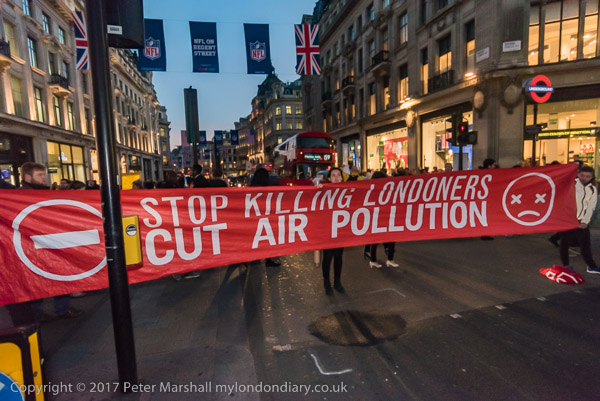
Flash generally isn’t a good option in wide open spaces for overall lighting, as it falls off with the square of the distance, but it does enable you to pick out people and banners closest to the camera, as in the picture above. But I didn’t want it to remove the shadows from the main lighting which was coming from the headlights of the vehicles stopped well behind those holding the banner.  In some of the other pictures this is a little more obvious.
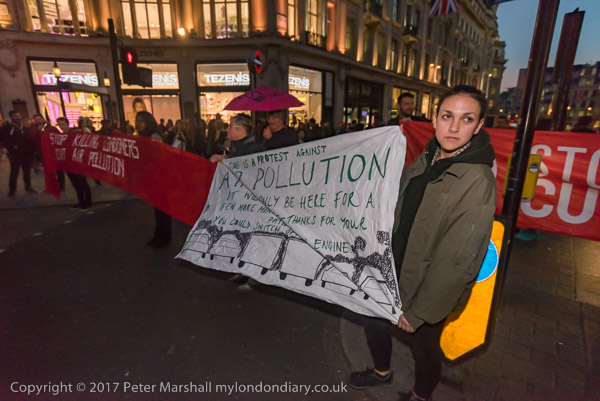
The effect of the light fall-off with distance from the flash becomes more of a problem when the main  subject is at an angle so that some parts of it are much closer to the camera and flash than others. I often try to lessen the problem by twisting the flash head to the side. The flash doesn’t  really cover the very wide angle of the 18mm used for the above picture, and by angling it away from the centre, in this case towards the left of the picture, puts the closer figure into the area where the light is falling off.  But still considerable burning of the closer part of the image and dodging of the further areas is called for in Lightroom.

It isn’t easy to remember to shift the flash head in the heat of the moment – and with these short protests I’m always very much aware that I do only have a very short time, and often – as on this occasion, rush around taking pictures and getting things wrong.  It’s easy to turn the flash head to the left for one picture and then forget to put it back when it really should be head on.
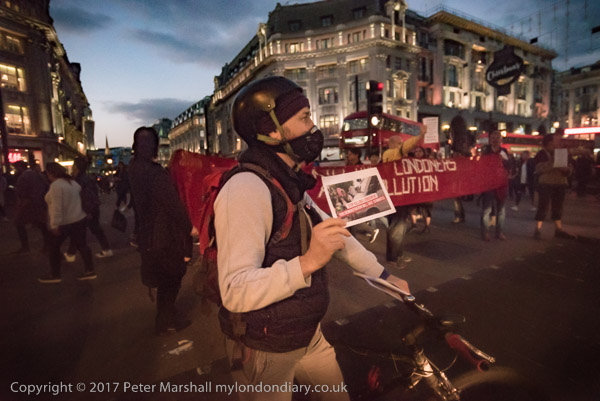
But my main problem in the heat of the moment was, as usual, my straying fingers.  Quite how I managed to turn the control dial and change the shutter speed from the 1/250th selected to stop motion as the protesters moved into position through 1/500th, 1/1000th, 1/2000th and even to 1/4000th before I finally noticed I had a problem is hard to fathom.  Though the problem was far less noticeable on the camera back then when I was later looking at them larger on the computer.  The above image was made on the D750 at 1/2500s, f/3.5, ISO 6,400 and is at least 4 stops under-exposed, probably rather more.

The grainy image and odd, low saturation colour actually result in a certain gritty attraction, though not one that I was aiming for – and certainly one that required rather more processing in Lightroom than I like or usually allow. At extreme underexposure the darker areas of images acquire an odd purplish colour which needs careful tinting to eliminate. Quite a few images were impossible to salvage from the gloom, and I only had time to take a few pictures as by the time I realised my error the protest was drawing to an end.
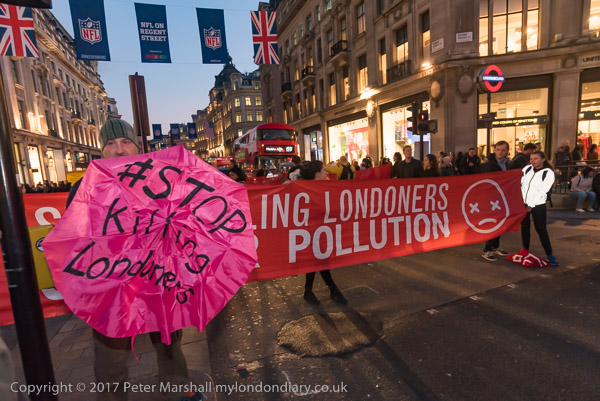
The difference in image quality is pretty dramatic, even viewed in these small web images, and I tried to retake a few of the earlier pictures, but time was very short. I did have plenty of time to reflect on my mistakes as I walked down Regent Street with the protesters to Piccadilly Circus, and here I managed to keep my errant fingers a little better under control, at least for the first part of the protest.
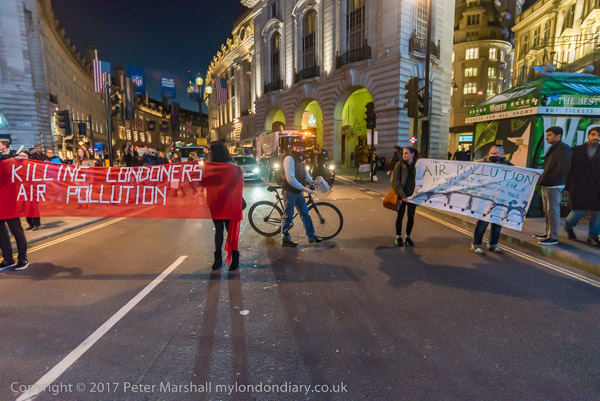
Although it was later, it helped too that Piccadilly Circus is generally rather better lit – here the bright lights of London are generally something of a reality. But, as you will see if you look at the images, by the end of the protest there, my fingers had wandered yet again, making me wonder if amputation is the only answer…
Stop Killing Londoners with traffic fumes

Continue reading Stopping London Traffic Pollution

Luxury Cars, Cheap Labour

I think I last owned a car in 1966 or 1967. It was both my first and last car and frankly something of a liability and it was a relief to get a few quid from the scrapyard when I drove it there. I had a driving licence for the next 48 years and did occasionally hire a car when necessary, though I stopped doing so after a minor accident when I drove off the road into a ploughed field. I wasn’t sure at the time if it had been caused by a mechanical failure or a momentary blackout. A few years later, after being diagnosed as diabetic, the second seemed most likely.

I’ve never been a car person. Except perhaps in my extreme youth where I carried my copy of I-Spy Cars onto our local streets, which were rather disappointingly short of Rolls Royce, Bentley, Ferrari, Maserati et al and rather stronger on Morris, Austin, Vauxhall and Ford, largely early post-war clapped out models. That Ford Popular was popular, as was the Morris Minor. My family never owned a car – my father rode an ancient bicycle and used a hand cart when he needed to shift anything heavy or bulky like building materials or furniture. His father had been killed in a traffic accident a few years before I was born, when his horse-drawn cart was hit by a car unable to stop as he turned right across its path into their entrance across the main road. But by the time I was born they could no longer afford a horse.

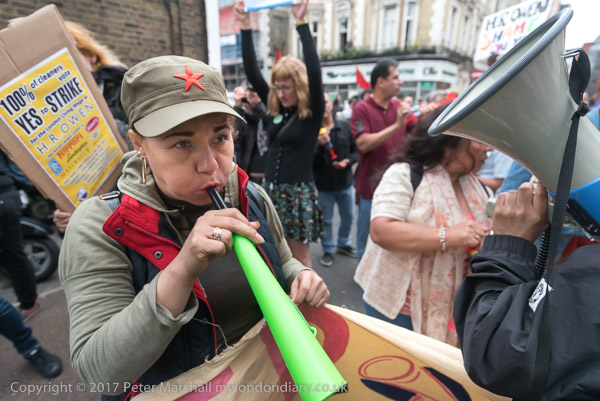
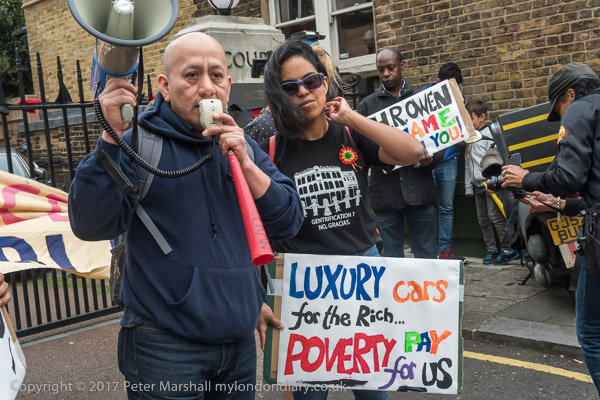
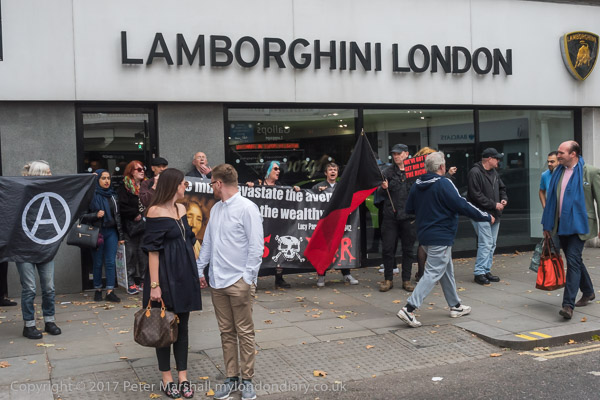
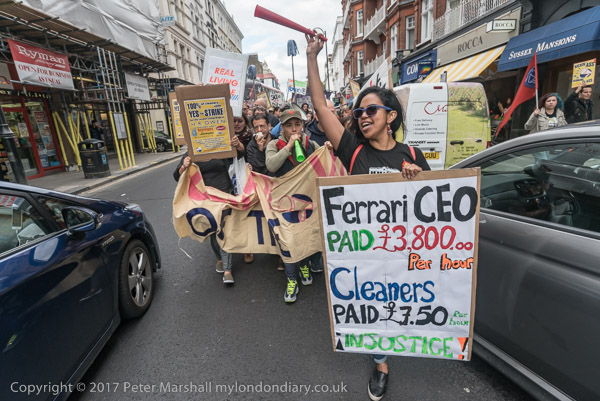
All of which has really nothing to do with the United Voices of the World (UVW) trade union protest against Kensington luxury car dealers H R Owen, except to point out that they live in a very different world to mine. A new Lamborghini apparently costs around £160,000 or more, which would take one of the showroom cleaners over 21,000 hours to earn, well over 10 years of full-time work. Small change of course for those with bankers bonuses.

Angelica Valencia and Freddy Lopez keep the Maserati and Ferrari showroom further down the road spotless, for which they are paid £7.50 an hour. It’s a miserly rate, well below the London Living Wage which is calculated as the minimum needed to live on in London – and when this protest took place was £9.75 (in 2018 it went up to £10.20.) The Living Wage is 30% more than employers Templewood (backed up by the luxury car dealers who contract them) pay their cleaners. Things were even worse than that. Not only were they on poverty pay, but they were being required to work longer hours than they were paid to do and Templewood was making unlawful deductions from those minimal wages.

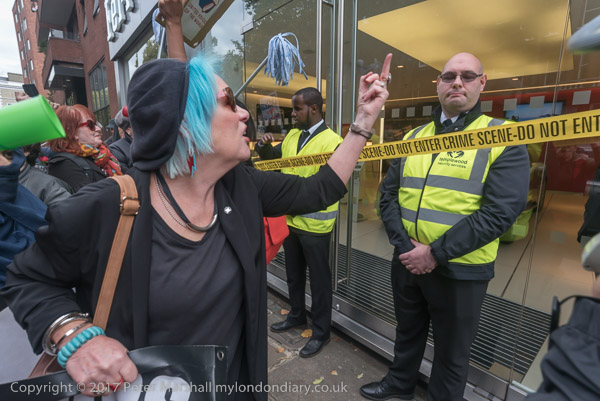
Angelica and Freddy joined the union and asked to be paid a living wage, but the employers response was to suspend the two of them without pay. So the UVW decided to take the employers to the courts and protest outside the showrooms. The protest was supported by other UVW members and friends from other groups, including Class War and the Revolutionary Communist group who have long supported various campaigns to get a living wage for London’s low paid workers. Whether or not you agree with some of their political views, they are prepared to get out and protest effectively on behalf of those treated badly by society.

And this protest helped, though it took another a month or so later to finally get the employers to see how ridiculous they were being, recognise their obligations and reach a satisfactory settlement, which led to a third planned protest being called off.

Of course I was pleased for Angelica and Freddy, but I had rather enjoyed photographing the two protests and was just a little disappointed not to be able to cover a third. But there were plenty of other protests, too many other companies large and small that still pay staff the least they possibly can and treat them badly.

Cleaners at luxury car dealers HR Owen
Continue reading Luxury Cars, Cheap Labour

NHS not Border Police

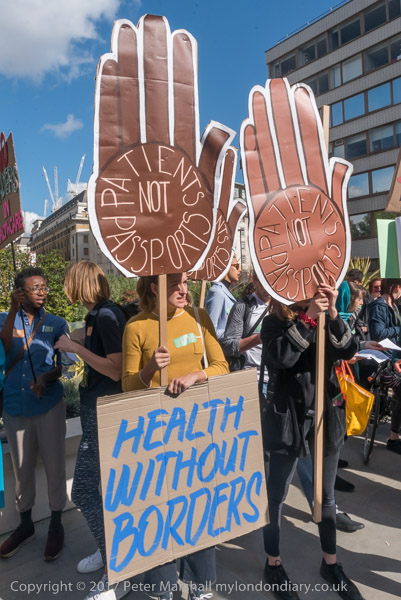
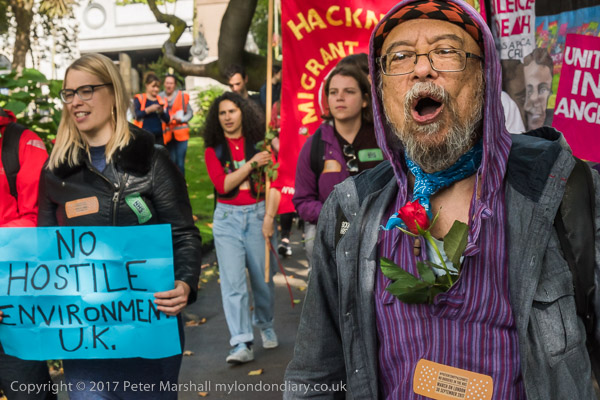
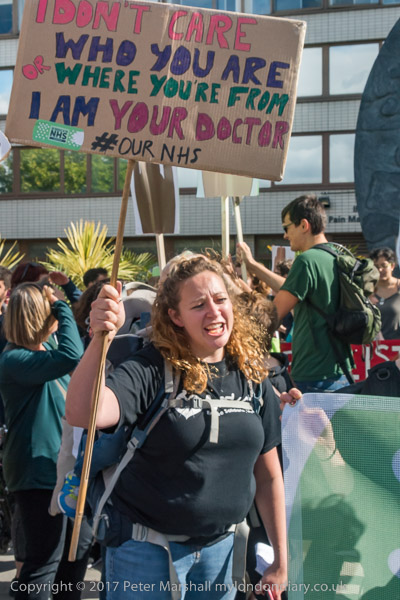
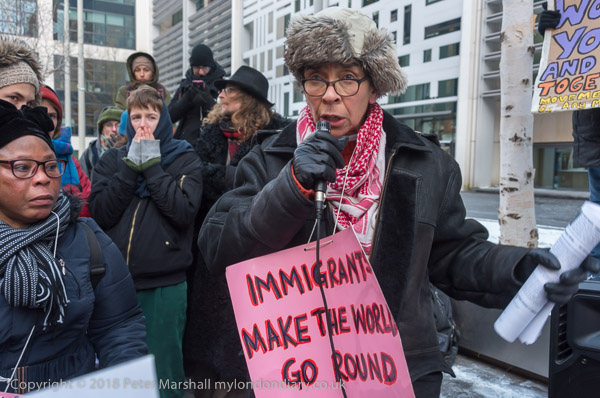
Being foreign isn’t a disease or an injury and to those of us brought up under a universal health system like the NHS, free at the point of use, it just seems wrong that doctors and hospitals should have an obligation to check someone’s immigration status when they come needing assistance. Yet since last October, a few weeks after this protest by medical staff and supporters they have been required to do so for anyone seeking non-emergency care will be required to prove they are entitled to free health service under the NHS and will be asked to pay for their treatment up front if they are not.

The change is all part of the government’s intention to ensure a ‘hostile environment‘ for anyone not entitled to be in the country, though it won’t of course affect the rich who pay for their private treatment – and they will in any case be welcomed here if they have sufficient funds to invest in the UK. There does seem to me something truly obscene about a system which welcomes the rich but hounds the poor.

The UK too is a country that believes in free trade and promotes it through various organisations. Again there seems to me a contradiction in promoting the free movement of goods but sets up great hurdles to prevent the free movement of people – except for tourism.

Roughly 10% of registered doctors and 4% of registered nurses in the UK are EU immigrants with slightly large proportions from outside the EU. Many who have migrated to work here are now British citizens, and a fairly large proportion of those born in the UK have parents who were migrants. As a frequent patient of the NHS I’m very aware of how dependent it is on migration to the UK, with so many of the staff I meet being from abroad. It seems rather inappropriate to ask these people effectively to police our borders.

The Patients Not Passports – No Borders in the NHS! protest was a slightly complicated one to photograph, as it had three separate blocs with different starting points, so I had to chose one of them. I met with the Migrants Welcome bloc, partly because I thought it might be more interesting and I knew some of those who would be there, and so was unable to photograph either the Maternity Care bloc or the Sisters bloc (I think Sisters as in Sisters Uncut rather than in the nursing sense) until the three groups came together in an undisclosed location.

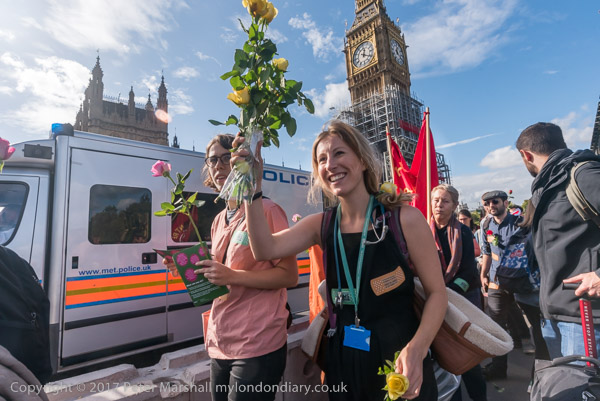
Looking at where the three blocs were starting it was relatively straightforward to guess that our common destination might well be somewhere in the area of St Thomas’ Hospital, and we met with them just on the other side of the road, then walking into the garden area above the hospital car park for the joint rally. There were just one or two security staff who attempted to stop the protesters, but clearly stood no chance of doing so; either the hospital authorities (and police) had failed to notice the very public advertisements on social media for the protest or had decided only to offer a very token resistance. I suspect the latter as they will have appreciated the mood of their staff.

The protesters had decided that a very large banner would make a great photo opportunity to get press coverage, but unfortunately it was almost impossible to get the kind of result they had in mind – and at that point there were a number of security officers anxious to prevent us taking it. But the giant ‘Migrants Welcome Here‘ banner is really a difficult format to handle, being over ten times as long as it is high. I did manage to make a usable image, though the banner rather hides the rally behind it, and was rather pleased to catch a pigeon at almost exactly the right place before I was chased off the grass I needed to be on to take it with the 18-35 mm at its widest.

I had one other problem. Apparently there were some people on the protest who because of immigration issues requested that they were not photographed, and some wore small symbols to identify them. It isn’t practicable or even a sensible approach, and there is a very simple alternative if such people wish to take part in public protests (as they have every right to.) Which is to wear a mask or face-paint as a disguise. Police may sometimes ask protesters to remove masks, though not usually if they are clearly decorative, but photographers certainly won’t.

Apparently one such person appeared as a bystander in a couple of my pictures that are on the web site. I don’t know if he was wearing the ‘no photography’ symbol but from where I took the picture there was nothing to indicate he didn’t want to be photographed. It just isn’t possible for photographers to keep track of everyone taking part in a protest in this way.

By the time I had been told of the problem, one of those images had already been distributed around the world and it was too late to take any effective action. Other photographers who were at the event, including some from the major agencies, will also have taken pictures with him in the frame, and their pictures too will have gone out uncensored. But on my web site I have altered his image into a rather blurred generic figure. Like most journalists and photographers I’m opposed to such censorship, but this was a request from a friend and the presence of that person was not important to the picture. I felt unhappy to do so, but angry that I had been put into a position where it was necessary.

No NHS immigration checks

Continue reading NHS not Border Police

Senate House In House

When security officers at London University were taken off the university payroll and instead employed by independent companies who tendered for a contract to provide their services to the university they were made a number of promises, none of which have been kept. One was that the pay differential between them and other workers would be maintained.  The workers and their union, the IWGB Independent Workers union say that since 2011 these differentials have been considerably eroded.

Although there is some theoretical protection when workers are transferred from one employer to another – the Transfer of Undertakings (Protection of Employment) Regulations, usually called TUPE, in practice these are often ineffectual and tougher laws and an easier process of enforcement is desperately needed.

Out-sourcing of services is a cost-cutting measure, but costs are only cut by reducing the overall benefits the workers receive and by increasing their workload. And worse, since out-sourcing usually brings in new layers of management and in profits being taken for the company contracted and its shareholders, this too has to be paid for by the workers.

Out-sourced workers get bullied, often by managers who, to cut costs, are also not particularly well paid and often lack the proper training, qualifications and skills needed to be good managers. Usually too there is skimping on equipment and materials, often endangering the health and safety of the employees.

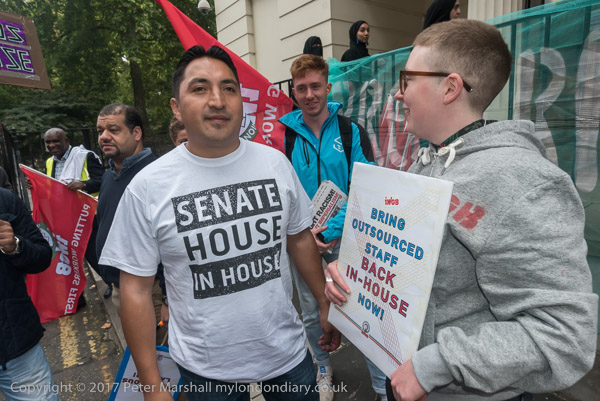
Workers employed at the University of London, both those in the separate universities such as SOAS and Birkbeck and those in the central administration at Senate House have been involved in a long campaign to be taken back ‘in -house’ as University employees, and also for comparable employment conditions – pensions, holiday entitlement and sick pay – with those of similar directly employed staff.

They also want proper contracts, as many are now either on zero hours contracts or on similar arrangements which guarantee only a small number of annual hours, equivalent to around six or seven hours a week.

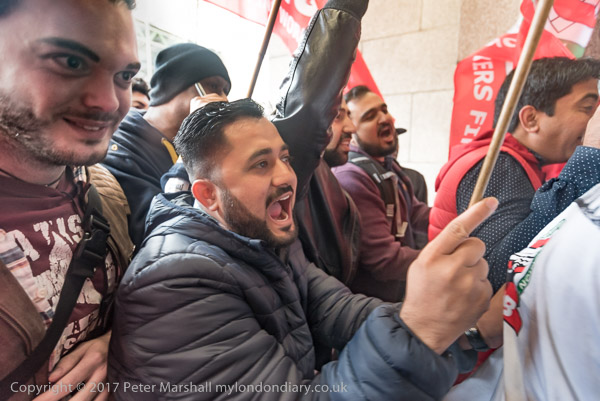
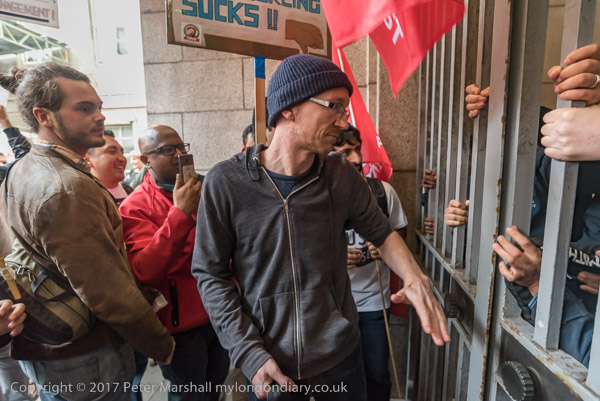
After protesting outside Stewart House, the protesters moved on to Senate House, where they were barred from entering by other security guards employed by the same company as many of the protesting security officers. There was perhaps a little element of a game about it.

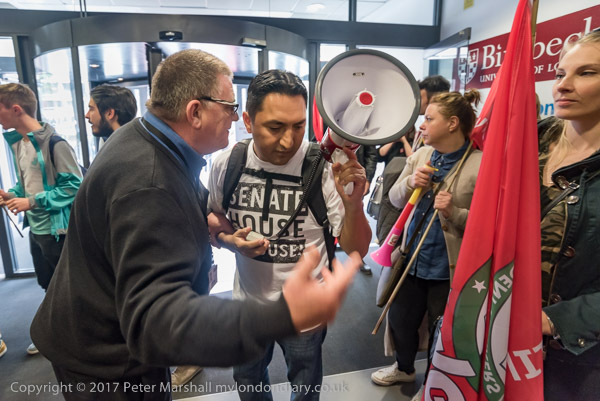
The protest then moved on and walked into the foyer of nearby Birkbeck College which had not been expecting trouble, walking past the one security office on duty there who argued with them but was in no position to stop them. They left after around ten minutes of noisy protest and returned for a final rally outside Stewart House.

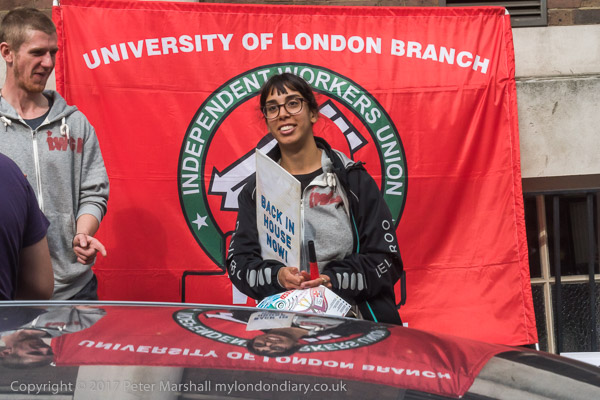
There was a car parked rather in the way of where the rally was taking place, and I saw the possibility of using a reflection in its roof in a picture after the IWGB banner had been placed behind.   It would have been easy to set one up, but that would have been unethical – I’m there to record events not to direct them – though many photographers would do so without a second thought.  But for me it was a matter of waiting and hoping that someone would step into just the right place and then rushing to take the picture. Fortunately they did.

End outsourcing at London University
Continue reading Senate House In House

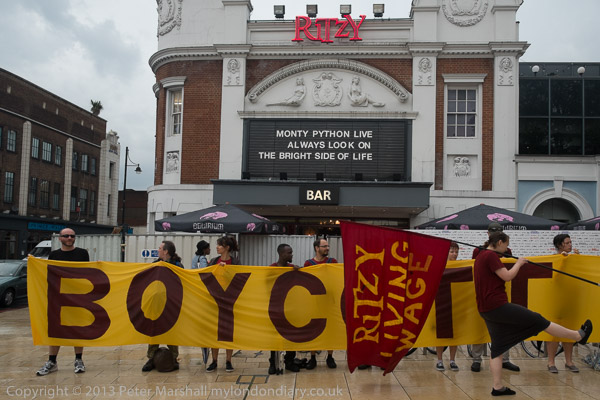
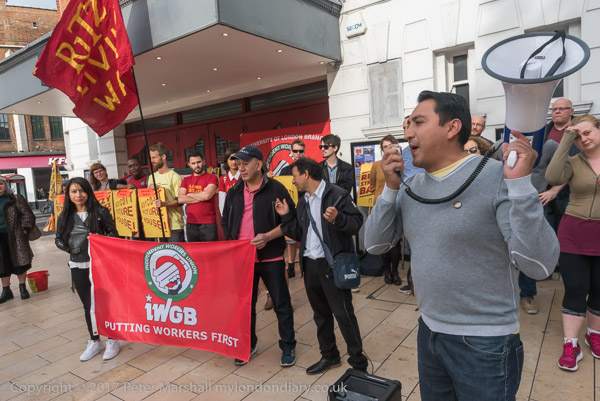
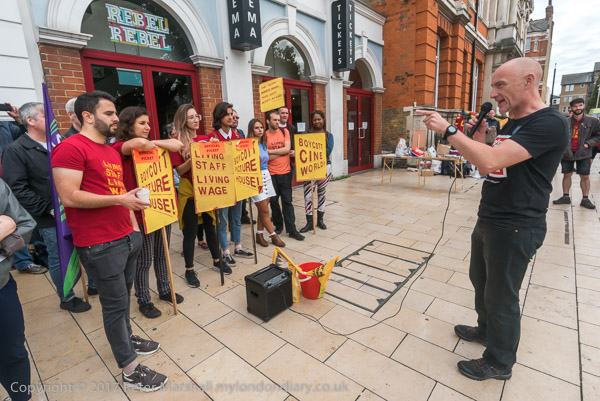
A Year of the Ritzy strike

I’d rushed from the march to Finsbury Park to join the Ritzy strikers in Brixton, who were celebrating a year of striking for a living wage, though their campaign had began several years earlier, and I first photographed them outside the cinema in 2014.


Outside the Brixton Ritzy in July 2014

As I commented back then, “The Ritzy is the busiest and most successful art-house cinema in the the UK and can afford to treat its workers decently, but perhaps fear it will set a precedent for other workers in the Cineworld empire“. It is a large and highly profitable business, with a net income in 2016 of £82.0 million, but according to The Guardian (quoted by Wikipedia) 80% of its 4,300 staff are on zero hour contracts.

These workers are the victims not just of a greedy anti-union management who could easily afford employ their workers on proper contracts and to pay them a living wage, but of our anti-union governments, which have legislated to reduce the power of the unions and largely failed to make the laws we have about trade union rights enforceable and have not dealt with the zero hours loophole in contract law. And although we do have employment tribunals, too many employers still get away with the victimisation of workers for their trade union activities.

The strikers are members of BECTU, the leading union for the media and entertainment industries, which became a sector of Prospect at the start of 2017. It isn’t a union that has a reputation for militancy, and seems a little embarrassed by the activities of the Picturehouse workers and some of the groups that have supported them, including grass roots trade unions such as the United Voices of the World and the IWGB who were both at the Brixton rally and march.

I’d arrived as Poets on the Picket Line were performing, always interesting to listen too, but perhaps rather difficult to make particularly interesting still images. I took a few pictures while wondering if I knew how to use the video features of my cameras. I have made videos (and even in the long distant past ‘worked’ as an unpaid cameraman on a film, as well as making video recordings and real-time video editing on a campus TV network) but gave all that up after I stopped being a student and took up still photography.

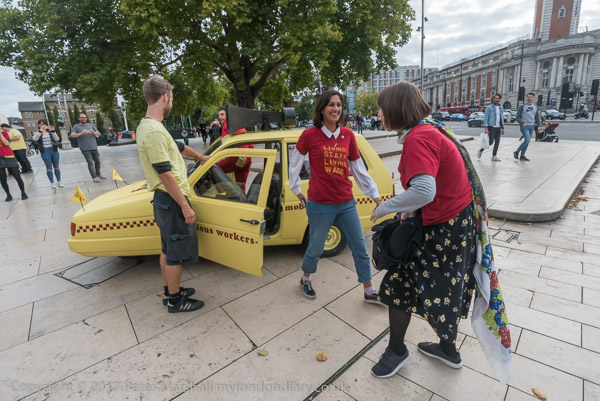
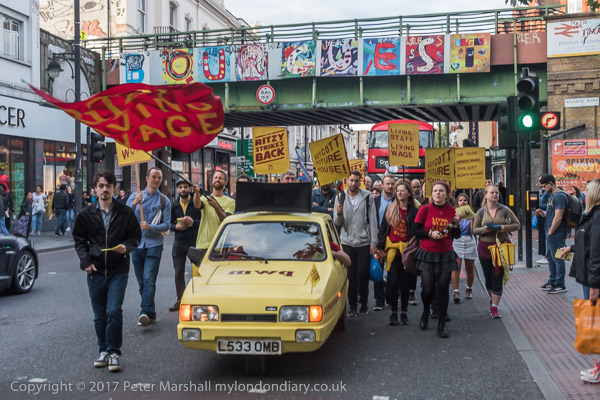
I was told there would be a big surprise coming, and it arrived in the form of the newly acquired ‘Precarious Workers Mobile’ bright yellow Reliant Robin. There were also a number of speeches from supporters to photograph as well as a presentation to mark the anniversary, including some from the UVW involved in a dispute with the London Ferrari dealers.

I’d taken quite a few pictures and succumbed to the wiles of a few friends who were going to a nearby pub, where I had an enjoyable pint of a locally brewed beer (it’s become impossible to keep up with the number of breweries in London – in 2010 there were only 14, but the latest figure is 74) before saying goodbye and leaving. My timing was immaculate, and as I reached the steps into Brixton Underground I heard the noise of a protest in the distance and rushed to the junction with Atlantic Rd to see the Ritzy strikers and supporters coming along the road led by the Precarious Worker’s Robin, and photographed them as they made their way back to the Ritzy along the Brixton Rd, before returning to the station to make my way home.
One year of Ritzy strike
Continue reading A Year of the Ritzy strike

More Hull photos

Just because Hull’s year in the limelight at UK City of Culture has ended does not mean I have stopped adding pictures to my Hull web site, Still Occupied – A View of Hull. Although I’m no longer posting an image every day (and to my surprise I managed to keep that up through 2017) I have been occasionally posting images, along with some Facebook posts about them. But those posts recede in hours into Facebook history, hard to find again even if you know they are there, so I intend to post occasional digests here, where they will have a more permanent presence and can be easily found.

So here is the first set of some of those from 1985 I’ve posted this year. Clicking on the images will take you to the image on the Hull Photos web site where they appear slightly larger than on this blog.

Hull Photos – from 1985

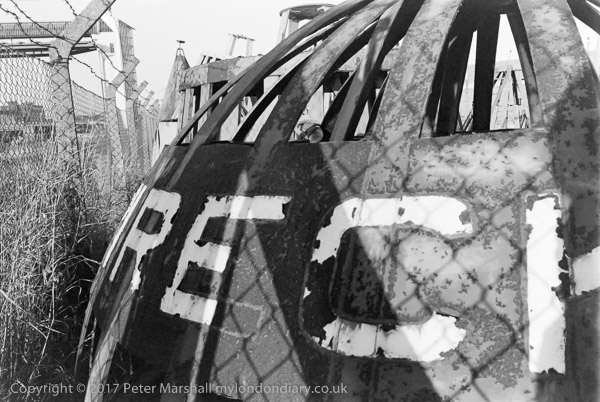
The Humber Conservancy Board built a slipway at Sammy’s Point in 1961 with a yard and shed for the storage of buoys. Trinity House had been made responsible for safe navigation in the Humber estuary around 1512, but the responsibility for buoys etc passed to the Humber Conservancy Board in 1907. Following the nationalisation of the British Transport Docks Board in 1981 this work is now carried out by ABP Humber Estuary Services.

The buoy close to camera in this picture taken with the camera lens poking through the fence has ‘WRECK’ in large letters, if in need of a little de-rusting and repainting. Through and above the fence at left is the tidal barrier and some of the buildings along the west bank of the River Hull.

This site is now occupied by The Deep, Hull’s popular visitor attraction.

Wreck Buoy, Sammy's Point
85-10m-52: Wreck Buoy, Sammy’s Point, 1985 – River Hull


Another view of the buoy storage yard of ABP Humber Estuary Services at Sammy’s Point on the site now occupied by The Deep.

Buoy storage yard, Sammy's Point
85-10m-53: Buoy storage yard, Sammy’s Point, 1985 – – River Hull


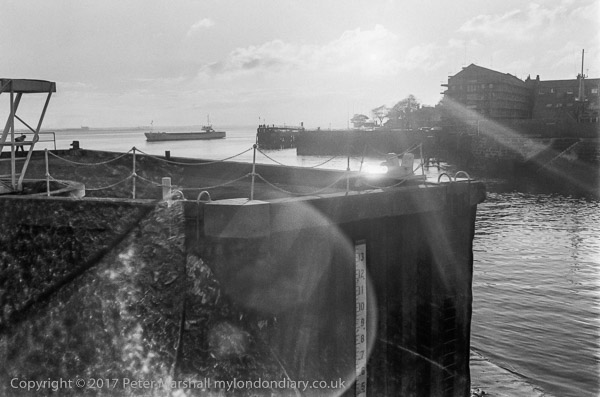
A curious affect of sunlight shining directly into the camera lens, something which every photographer was taught to avoid, the effects of which in the days of film were impossible to predict but almost always thought to ruin the image.

Knowing this, I still took the picture, and rather like its many faults, though it is an image that really remained unprintable without the use of digital scanning and processing, over thirty years later.

The kind of marbling effect in the lower left quarter reminds me of the scales of some fish, which seems appropriate, and there is a subtle gradation in the greys of the distant view with the ship passing the mouth of the River Hull on its way down the Humber, with the pier and the trees. The full-size image has a sharp and prominent grain exaggerated by the over-exposure and has something of the feeling of a mezzoprint.

The mouth of the River Hull
85-10m-54: The mouth of the River Hull, 1985 – River Hull


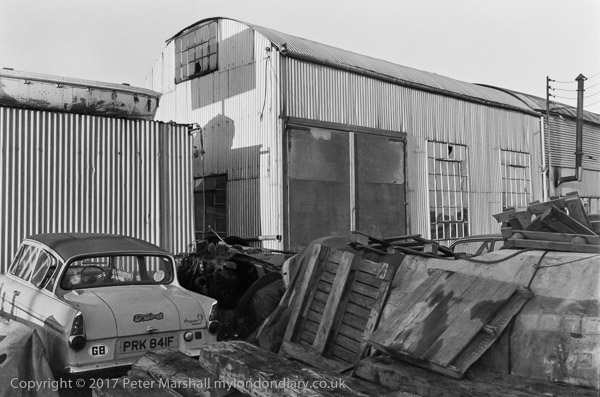
A Ford Anglia, a ship’s boat on a roof and a large shed at the premises of Allen R Worfolk, Ship Repairers & Marine Engineers on the bank of the River Hull at Tower St.
Allen R Worfolk, Ship Repairers & Marine Engineers, Tower St
85-10m-55: Allen R Worfolk, Ship Repairers & Marine Engineers, Tower St, 1985


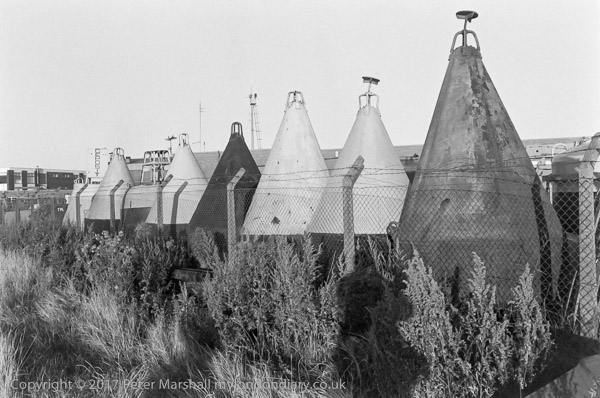
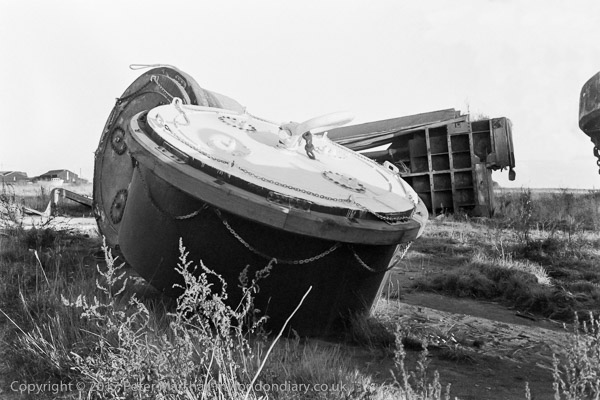
Mooring buoys (I’m told by Iain Ralph in a FB post they are Admiralty 3 point mooring buoys) on the derelict land that was once a part of the Victoria dock estate close to Sammy’s Point near South Bridge Road. This area, like much of the land around the dock was formerly a timber yard.

I can’t positively identify the structure behind the two buoys at right of centre, perhaps a former dock gate on its side, nor the buildings in the distance at left which have a boat on the ground in front of them, though I think these are close to the Humber entrance to Victoria Dock.

The area where this was taken is probably now a part of the car park for The Deep.

Mooring buoys etc on land, Victoria Dock
85-10m-56: Mooring buoys etc on land, Victoria Dock, 1985 – Docks


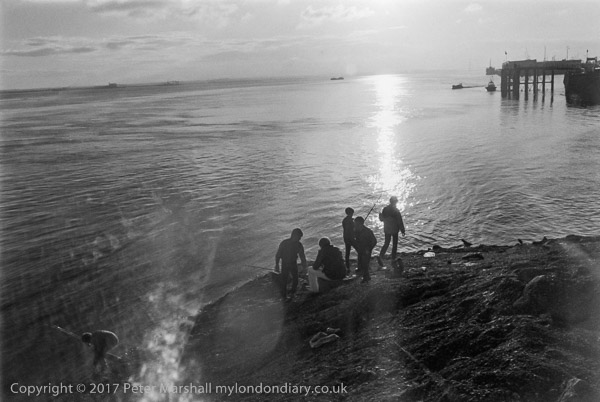
Another picture taken deliberately into the sun, but with less drastic light effects. The pier is in the background, and behind it the buildings of Albert Dock, with a ship moored at the riverside quay. There are a could of small vessels by the pier (one possibly the pilot boat) and a larger one on the other side of the Humber.

Boys fishing at Sammy's Point
85-10m-61: Boys fishing at Sammy’s Point, 1985 – Humber


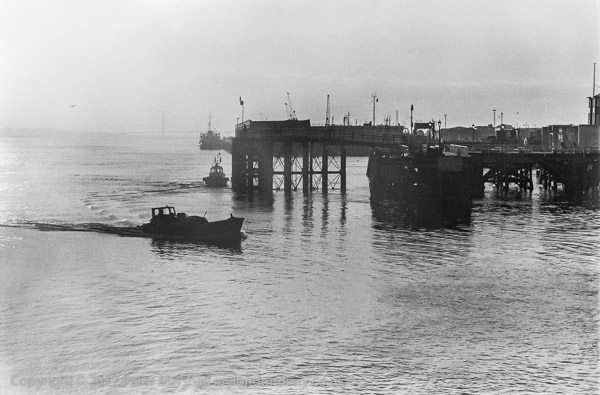
A short telephoto lens gives a closer view of the pier and just avoids much flare from the direct sun (which lightens the left edge) though this has resulted in over-exposure. One of the boats in the previous picture is now heading up the River Hull.

Victoria Pier from Sammy's Point
85-10m-64: Victoria Pier from Sammy’s Point, 1985 – Humber


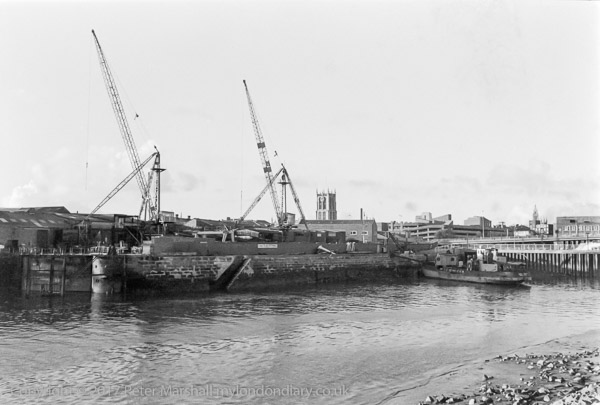
Hull Central Dry Dock is still there, though now underneath a new event venue. When I took this picture there was a ship inside it being worked on. Holy Trinity Church is still much the same, though now renamed Hull Minster. At the right of the picture is a small dredger, with the river then being regularly dredged, while now the mud has been allowed to build up considerably.

River Hull, Dry Dock and Holy Trinity from Sammy's Point
85-10m-66: River Hull, Dry Dock and Holy Trinity from Sammy’s Point, 1985 – River Hull

Continue reading More Hull photos

Haringey march against HDV

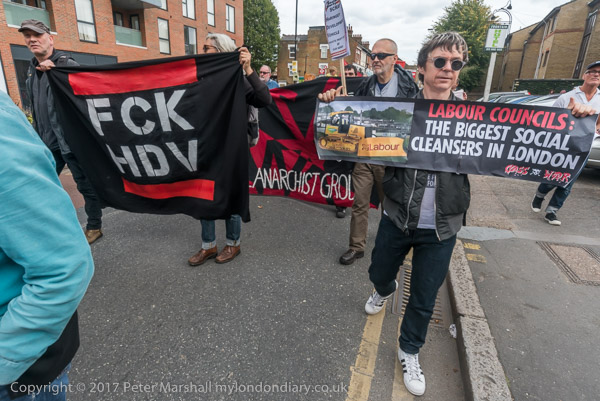
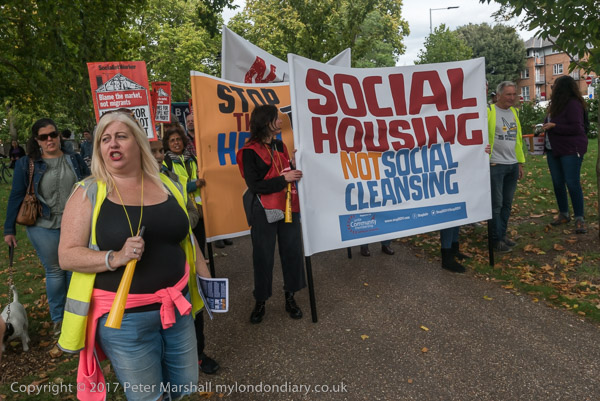
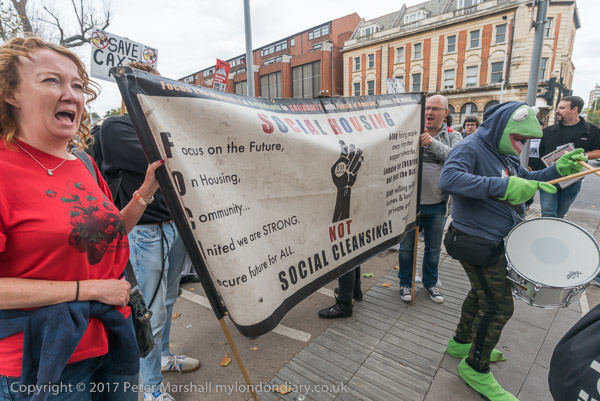
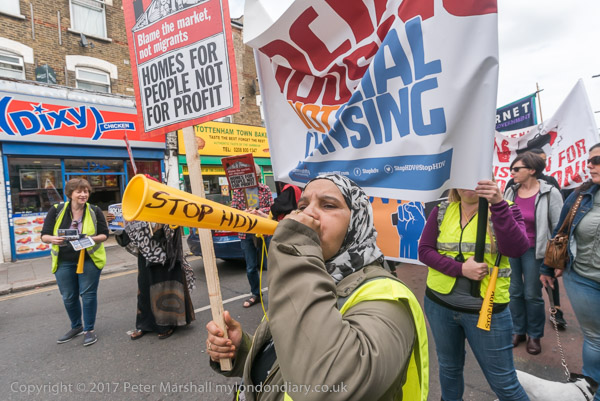
People from Haringey, including many who would lose there homes under the council’s plans for a £2 billion give-away of estates for private development, which might include some affordable housing, were joined by housing campaigners from across London for a march against the plans, the so-called Haringey Developmnet Vehicle, or HDV.

It now seems hopeful that with a change in Labour party housing policies and the likely results of this May’s council elections the plan will be stopped, though officers and councillors who perhaps stand to benefit from it appear still to be attempting to push it through. Their argument that the private development would somehow be good for the people of the area has been thoroughly discredited, and the tightening of some of the loopholes that the developer would certainly have intended to exploit announced this week by the government might also give Lendlease some second thoughts about the desirability of the project.

It was a rather long march and went slowly, starting by Tottenham Town Hall and walking a slightly long way round to Finsbury Park. I found it a little tiring, carrying a fairly heavy camera bag and of course adding to the length by walking up and down to take pictures rather than simply going straight along the road. Often I was walking backwards, which is also more tiring, though at least I managed not to walk into street furniture or trip down kerbs.

I’d intended to go the whole distance to Finsbury Park, where there was supposed to be another rally, but in the end had to give up a little before the end as I had run out of time. There had been a rather longer rally before the march moved off than expected and it had started late, and I was due at another protest.

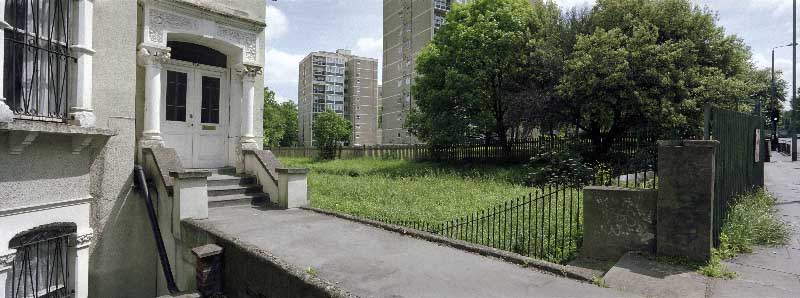
I almost got to Finsbury Park, and abandoned the slow march at Manor House, when we had already passed at least a couple of places that I’d photographed in my work on Finsbury Park in 2002, taken with the Hassleblad X-Pan, mainly using the 30mm lens. Another picture taken just a few yards off the road to the left was the winning image in a competition about the area, though I think others that I took are more representative of the area.

Haringey against council housing sell-off

Continue reading Haringey march against HDV

Trafalgar Square Road Block

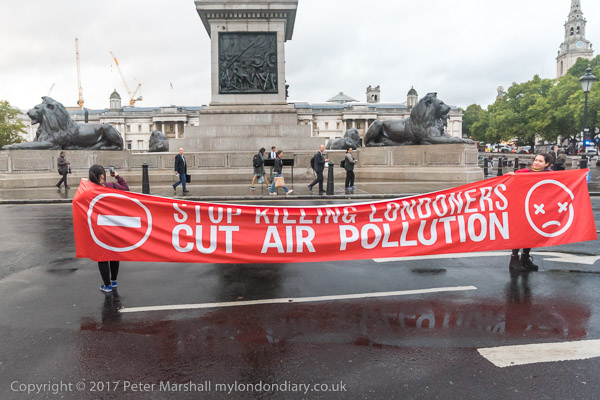
I have to say that I thought taking on Trafalgar Square for a protest by Stop Killing Londoners was perhaps over-ambitious. But the operation had been carefully planned and there was a rather larger group gathering when I arrived at the meeting point for the protesters. It had been a dull day and was raining a little, and half an hour before ‘sunset’ and I was getting just a little fed-up waiting for anything to happen as the the light was beginning to fade.

The organiser also had a very clear idea about the photograph they wanted to get, and as often it didn’t sound too good to me. Their banner in an traffic-free Trafalgar Square with Nelson on his column might sound a good idea, but that column is 52 metres tall, and even their large banner would seem pretty insignificant if I moved back far enough to include him where they were planning to stand.

I’d set both cameras to ISO 2,500 by the time the groups began to move into place to stop traffic on all the roads feeding onto the roundabout at the south end of the square around the Charles II statue – St Martin’s Place, The Strand, Northumberland Ave, Whitehall, The Mall and Cockspur St.

I wanted to photograph all the groups blocking the road – I think there must have been six of them – but only managed five despite running around dementedly during the short period the roads were blocked for, as well as taking as best I could the banner in front of Nelson. I settled in the end for including the two lions at the base, but cutting out all of the column above its bas-reliefs. Of course I wasn’t the only photographer present, and getting a clear view without people in the way took some patience, difficult as the whole total block was only for around 5 minutes.

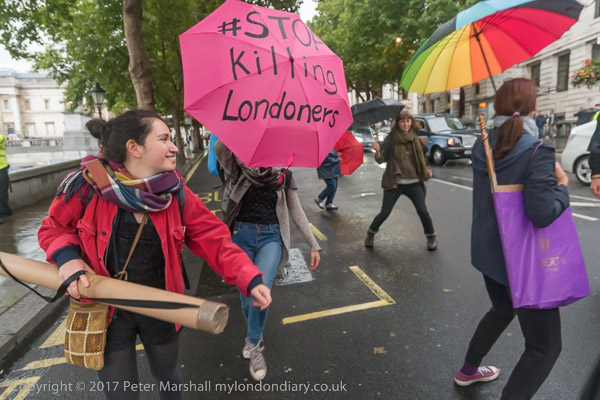
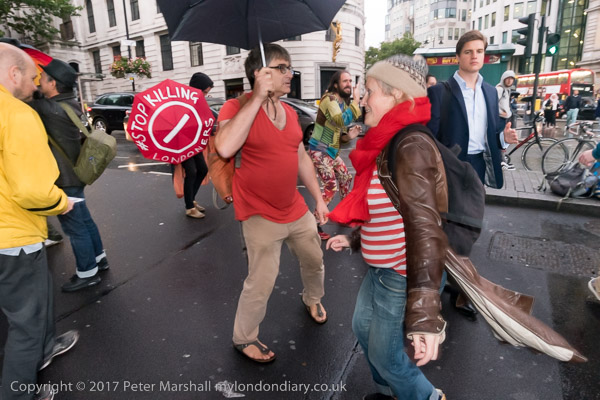
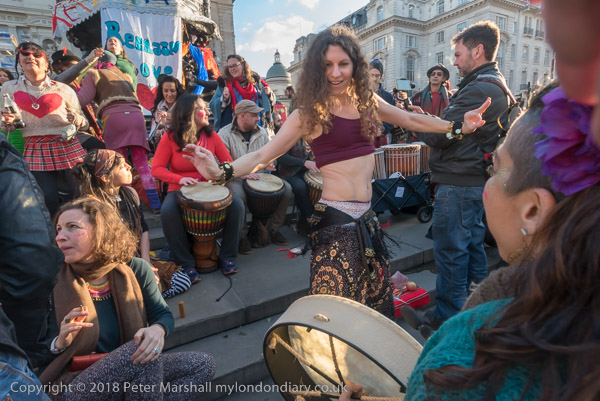
The group then moved into the centre of Trafalgar Square, pleased with its success, and after another five minutes moved together to block St Martin’s Place, this time accompanied by music and dancing, until after almost ten minutes the police, who had stood back and watched during the earlier protest, made a more determined attempt and persuaded them to finish and they moved off without much argument. This part of the square is very much shaded by trees, and the light was pretty low. Because of this and the movement, most of the pictures I took were at higher ISOs and for some I also added some flash, taking care not to completely overpower the ambient lighting.

As with their previous road blocks, this was intended to gain publicity for the almost 10,000 premature deaths and many more people suffering from the excessive air pollution in London, mainly caused by traffic. But although it got some publicity, neither the Mayor of London or Transport for London, although aware of the problem and making some minor improvements, have taken the kind of drastic action that this serious problem requires, and Stop Killing London are keeping up their campaign.

Trafalgar Square blocked over pollution

Continue reading Trafalgar Square Road Block

My London Diary Feb 2018

A little snow in Staines

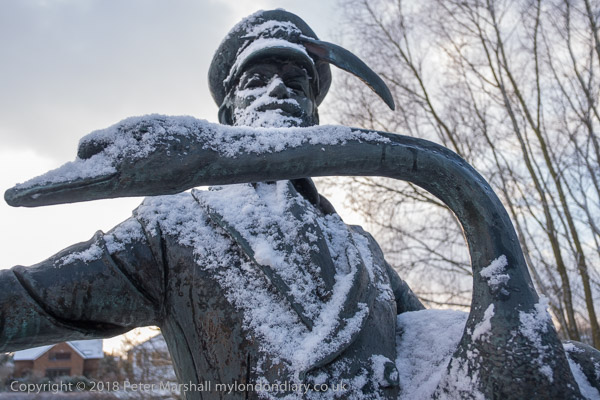
It has been relatively easy to finish my ‘My London Diary’ entries for last month – and I finally did so around 11pm on March 2nd. It was helped by having almost a week off after a minor dental operation, as well as some reduced activity because of the cold weather and snow, both as I was reluctant to go out and as a number of events I would otherwise have photographed were called off.  We didn’t have a great deal of snow where I live, but of course I did take a few pictures of it, though I’ve no great interest in weather images.

Feb 2018

Solidarity with Yarl's Wood hunger strikers

Solidarity with Yarl’s Wood hunger strikers
HE & FE rally for pensions and jobs
HE and FE march for pensions and jobs
London Snow
A little snow in Staines

Class War's Lambeth Walk
Class War’s Lambeth Walk for housing
More London

15th Reclaim Love Valentine Party
Against US war plans for Ukraine
‘Stay Put’ monthly Sewol silent protest
Protect Venezuelan democracy
Bolivians protest against President Morales

Lambeth Council opens fake Carnegie library
Grenfell Remembered – 8 Months On
Russia Stop the Killing, Leave Syria

Ladbroke Grove Pret-a-Manger land theft
Class War protest at Shard
Class War victory against Qatari Royals
Plasticus the Whale at Parliament
Sling the Mesh say campaigners
Fair Votes Hunger Strike for Democracy

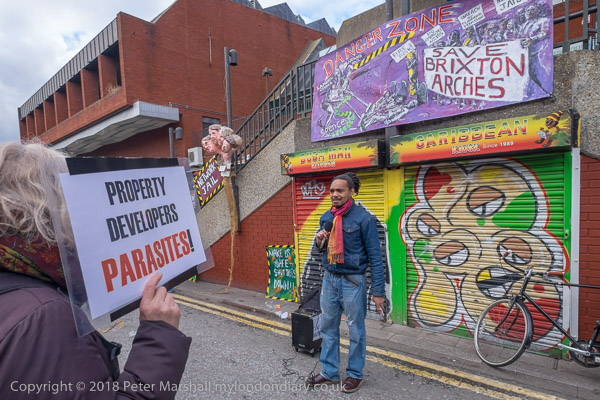
Save Brixton Arches
Save Brixton Arches: 3rd Anniversary Action
Fix the NHS Crisis Now
TINAG Living Archive & Sylvia McAdam

London Images

Human Rights – UK and Eritrea

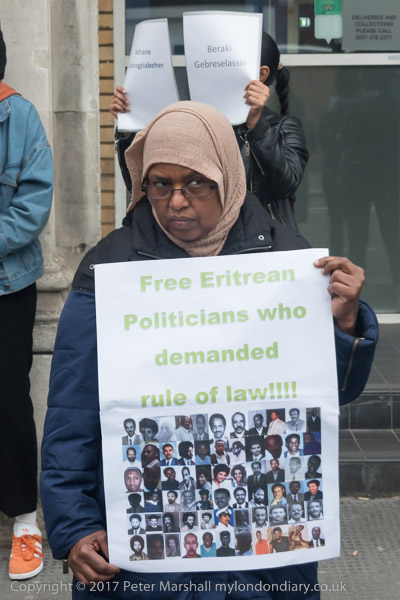
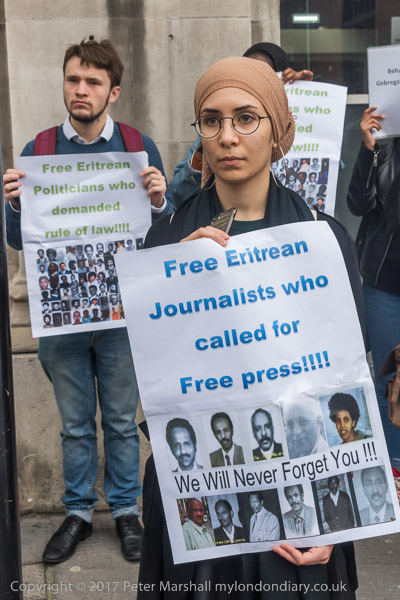
In 2001, Eritrean dictator Isayas Afewerk closed down the free press and imprisoned leading opposition politicians and journalists. Since then ten leading journalists have been kept in isolation without charge, without trial and without contact with the outside world. Nobody knows their whereabouts and only four are now thought to be still alive.

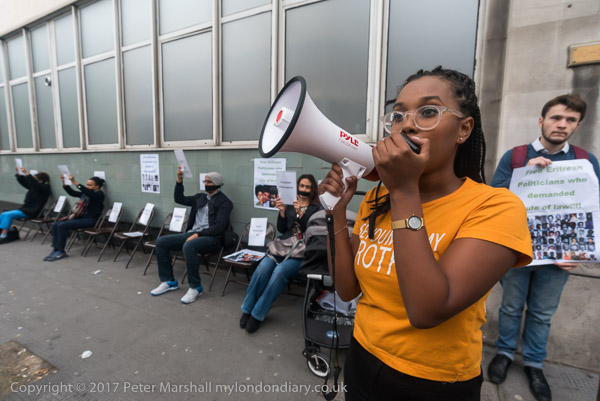
The journalists were represented at the protest by a row of ten chairs opposite the Eritrean embassy in north London. Most were empty, with four people sitting with black gags holding up the names of those thought still be living, while to the side there were speakers and others holding posters about the disappeared journalists and politicians. The protest was organised by One Day Seyoum, a human rights movement working for the release of journalist Seyoum Tsehaye, one of the four thought still alive.

Lonely Planet‘s web site describes Eritrea thus:

“Historically intriguing, culturally compelling and scenically inspiring, Eritrea is one of the most secretive countries in Africa. For those with a hankering for off-the-beaten-track places, it offers challenges and excitement alike, with a unique blend of natural and cultural highlights.”

although the page does have a warning across the top about the Foreign office advice to UK citizens which should probably put anyone off visiting there, and certainly against going outside the capital, Asmara, which is apparently a fascinating place. The UK offers no consular services  elsewhere as it takes diplomats a week to get a permit required to travel outside, and tourists are subject to some pretty draconian restrictions.

A better description of the country comes from Human Rights Watch:

“Despite occasional vague promises of improvement, Eritrea’s respect for human rights obligations remains abysmal. In 2016, a United Nations Commission of Inquiry established by the Human Rights Council found the government’s “totalitarian practices” and disrespect for the rule of law manifested “wholesale disregard for the liberty” of its citizens. Thousands of Eritreans flee the country monthly to avoid “national service,” conscription that lasts indefinitely. Eritreans are subject to arbitrary arrest and harsh treatment in detention. Eritrea has had no national elections, no legislature, no independent media, and no independent nongovernmental organizations since 2001. Religious freedom remains severely curtailed.”

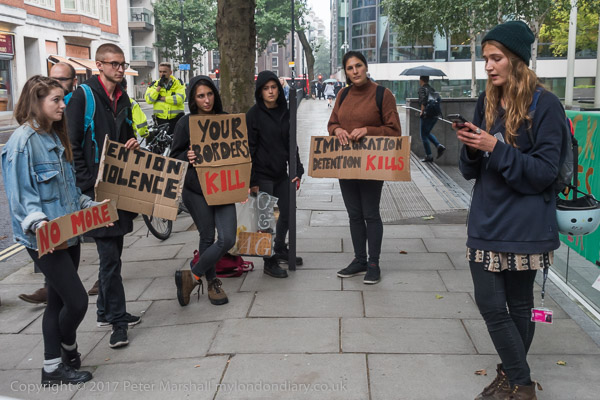
From Islington a couple of buses took me to the Home Office, where SOAS Detainee Support had called an emergency demonstration after another death in an immigration detention centre. The death of a Chinese man in Dungavel immigration detention centre followed the death earlier this month of a Polish man who took his own life in Harmondsworth (now called Heathrow Immigration Removal Centre) after the Home Office refused to release him despite the courts having granted him bail.

There are now too many cases since 2010 in which the government refuses to accept the decisions of the courts, often taking them through needless appeals and failing to take appropriate action even when they finally lose. I don’t think this has ever happened before and shows the current government’s contempt for the law and human rights. Parliament  this week voted against including the European Charter of Fundamental Rights in UK law after Brexit.

People are sent to immigration detention centres without any trial, and are held for indefinite lengths of time, which can be for extended periods – Mabel Gawanas was sent to Yarl’s Wood on May 12th 2014 and only released on bail on May 10th 2017, a few days short of 3 years later. Conditions in a Yarls Wood led to it being described as a ‘place of national concern’ by HM Inspectorate of Prisons in 2015, though perhaps national shame would be a more accurate term.

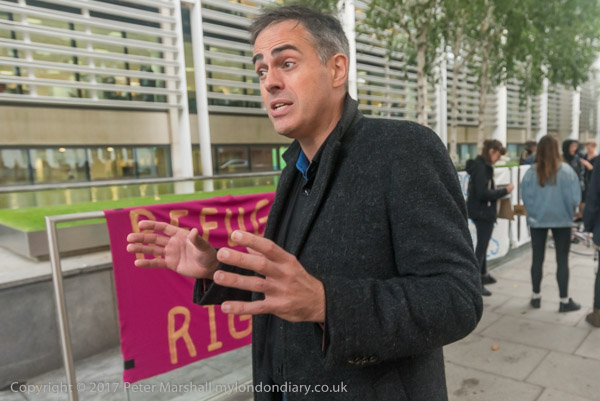
Green Party co-leader Jonathan Bartley was among the speakers at the protest, called at short notice after the news of the death broke.

Free forgotten jailed Eritrean Journalists
No More Deaths in immigration detention
Continue reading Human Rights – UK and Eritrea