#NoDAPL

I felt rather privileged three weeks ago to be able to be present at a protest outside the US Embassy ‘London Stands with Standing Rock’ and to both photograph and take part in the ceremony there, and listen to those present as well as to one of the activists from Standing Rock on a video link on Elliot Staircase’s mobile. In time, when the pictures are on My London Diary I’ll perhaps write more about this, but for the moment you can see some of them in a Facebook album (even if you don’t use Facebook.)

The protest against the Dakota Access Pipeline being routed under the Missouri River close to the land of the Standing Rock Sioux continues to grow, although still not getting the publicity it deserves in our news media.

A few days ago, the New York Times Lens blog published a story Opposing a Pipeline Near Sacred Sioux Sites, with a slide show of 19 images by 24-year-old freelance photographer from Minneapolis Annabelle Marcovici, who went to the protest site first in June, and has been back a number of times since, spending most of her time not taking pictures – as the Lens article quotes her:

“I talk to people. I help sort supplies. I’m another person in the community that’s formed at these camps, not just a passing observer.”

Along with the article on Lens by Evelyn Nieves there is also a slide show of 19 images by Marcovici which provide an intimate view of the protest camp.

But even better than the Lens article, which sets the scene well and gives some insight into the issues, is to read and see the images in the posts on Marcovici’s blog.


Magnum Exposed?

Much of what we know, or think we know, about Magnum and its photographers comes from the often fictional and sometimes contradictory accounts of its photographers, notably Robert Capa, one of the great story-tellers through his photography, in writing and apparently in person. Much of the rest is from ‘Magnum: 50 Years at the Front Line of History’ by Russell Miller, published in 1997, to which I’ve often turned, sometimes in vain, when writing. As A D Coleman calls it in the introduction to Guest Post 23: Robert Dannin on Magnum Photos (1), it is an ‘ “unauthorized” but highly sanitized account.’ But of course to get any detailed history of Magnum written was a major acheivement perhaps akin to walking through a minefield.

Coleman promises us that  “The Dannin Papers”, a series of articles by Dannin which begins with six instalments on his experiences at Magnum, will pull no punches and I’m sure will make interesting reading for those of us with an interest in photographic history. Dannin was head-hunted to be editorial director of Magnum in 1985 and resigned in late 1989, though continuing  freelance work with them for the following decade.

Dannin first made a guest post on Photocritic International in June this year with an article on the controversy over Steve McCurry’s use of Photoshop. Coleman commented at the time:

‘Dannin’s commentary raises more questions than it answers — about Magnum Photos and its members, about National Geographic, and about the picture-agency business and its relationship to periodicals, book publishers, and other licensees. So I invited him to fill in the blanks and expand further on these issues (basically taking him up on his “don’t ever get me started” dare). Dannin agreed, on condition that he first had to fulfill an outstanding editorial obligation. So we will begin that open-ended series in the fall.’

And this is the first of that series. So far it is more setting the scene than dishing the dirt, but it certainly whets my appetite for more.

August 2016 finished

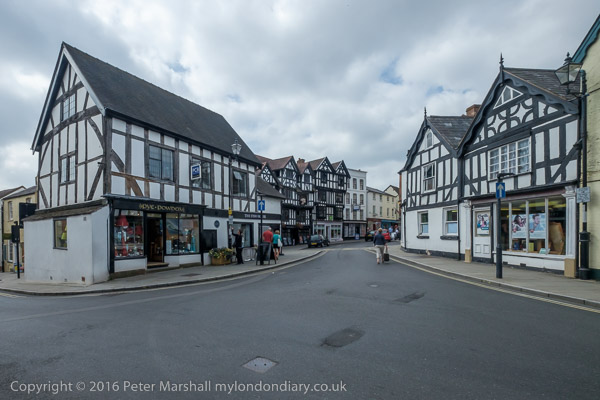
It’s been something of a long haul to complete the My London Diary entries for August 2016 and put them on line. Partly because it includes the pictures, not from London, from my holiday in Shropshire – quite a lot of pictures, though they only merit one entry on the list below, Craven Arms. Which is misleading because most of them are not pictures of Craven Arms, but we were staying in a holiday let with friends a short walk outside this rather small town.

I’ve never been a fan of A. E. Housman and his ‘A Shropshire Lad‘ , which for me has always epitomised the worst in late Victorian and Edwardian taste, and I find ‘rose-lipt maidens‘ and ‘lightfoot lads‘ hard to swallow, too much of the Milton I hated when dragged through Lycidas and L’Allegro at school. And hard to forget also  the echo of him in Enoch Powell.

It was difficult to forget that this was Housman country, not least because some members of our group read out chunks of his work as we were sitting down to dinner each night. And it did at times seem that we were staying in a very different country to the one in which I normally live, one that in various ways was still locked in a mythical past.

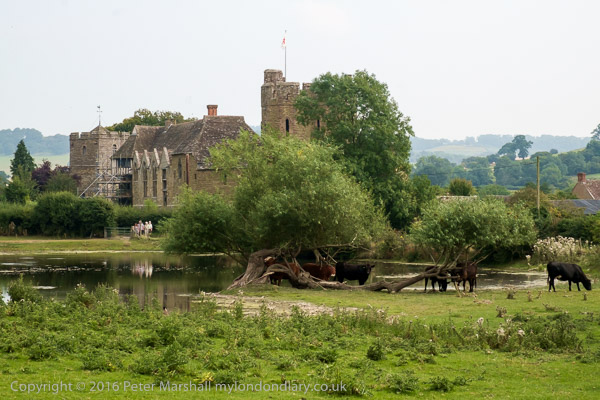
There are two large groups of pictures, one from a remarkable survivor of that past, now part of English Heritage, the fortified manor house of Stokesay Castle. Pictures from inside the site are included simply for personal interest, and to encourage you to visit and are not available for any commercial use. Those from the outside are not the best available as the scaffolding around part of the site don’t improve its appearance.

The largest group is from a day spent walking around Ludlow, a town which Sir Nikolaus Pevsner described as “by any standard, one of the best loved, best preserved and most aesthetically pleasing towns in Britain”, though he described its Market Hall as ‘Ludlow’s bad luck’ with ‘nothing that could be said in favour of its fiery brick or useless Elizabethan detail’. Since it was demolished in 1986 I can’t really comment, though I couldn’t help feeling when looking at old photographs that it looked rather better than the market stalls that have replaced it.

Ludlow certainly has its interests and some charm, and aspects of it show us that medieval town planners did a better job than their modern counterparts, but at times I couldn’t stop myself thinking it was more pickled than preserved.  Though there are some fine examples, I did feel that quite a few buildings would have looked better not stripped back to their timber framing. And I came away thinking that it was a better place to visit than to live in.


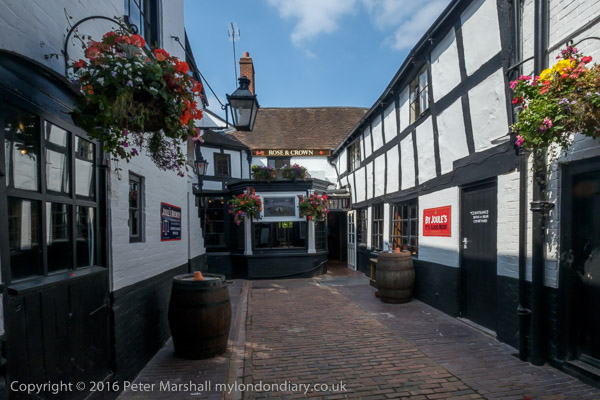
An old pub with new Shropshire beer

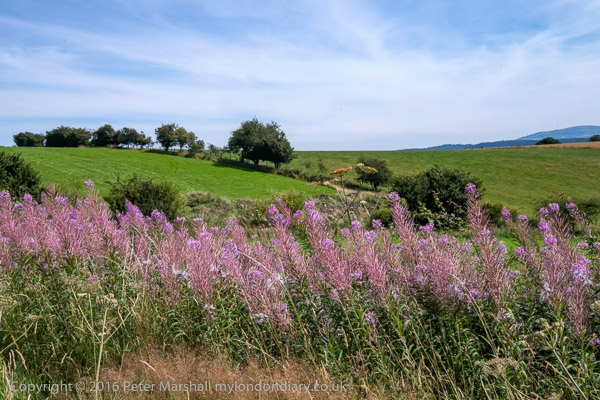
Away from Ludlow we spent most time walking on the rolling hills (and lost in the woods) as well as visiting quite a few old churches, of which Shropshire has far more than its share, some of them impressive in their age and simplicity.

But my mind has often been on other things in the past month, and as usual I’ve been kept quite busy taking pictures – though it may be some time before these emerge in My London Diary.  You can see some of them more quickly – usually on the day they are taken or the morning after – on Facebook, and they are also available for commercial use on Alamy or Images Live too.

Aug 2016

Thames Path – Bermondsey
Human Rights for Refugees
End inhumane dog & cat meat trade
Falun Dafa protest Chinese Oppression
UberEats couriers strike for Living Wage
Close Australian Refugee Detention Camps
10 Years of Resistance to Phulbari
Unethical London Hotels Slammed
Craven Arms
Class War Stickers Croydon
South Hill Park


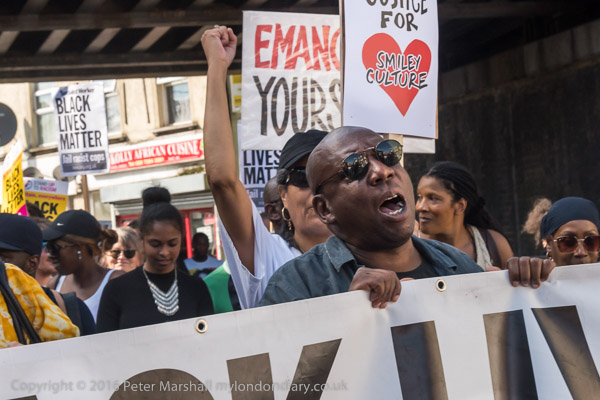
Tottenham remembers Mark Duggan


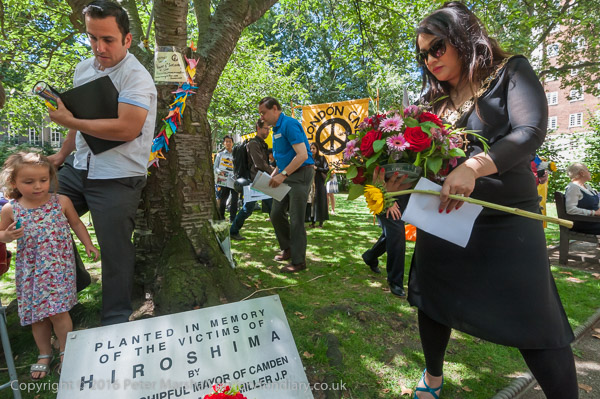
Hiroshima Day 71st Anniversary
Black Lives Matter London
Foil Vedanta at mining giant’s AGM


Vigil for murdered care home victims
Guantanamo solidarity with Chelsea Manning
Richmond Walk

London Images

Continue reading August 2016 finished

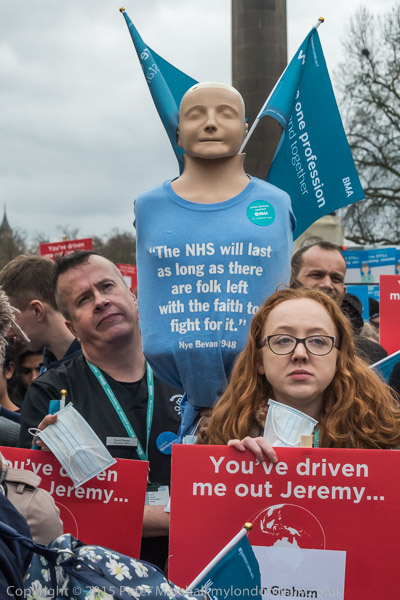
Doctors and I mask up

There are some times where I perhaps err over the necessary boundary between being a protester and being a journalist covering a protest. You need to keep a certain distance so that you retain a certain objectivity, though of course your photographs are always subjective, from a particular personal point of view.

Perhaps by choosing to wear a surgical mask like the protesters while I was taking most of these pictures did overstep that line; certainly at many events I decline the badges and stickers that I’m offered which would show my support for the cause.

But of course I do support the junior doctors, and I support the NHS and am against its ongoing privatisation, of which the attempt by Jeremy Hunt to impose a new contract on them is part. I was born just before the NHS, grew up with its free orange and cod-liver oil, with regular visits to the clinic in pram and push-chair for health checkups, contributed to it through my National Insurance since I started work and, in the past thirteen years it has kept me going through treatment free at the point of need. Like most people in Britain I value it highly, even if we sometimes have our complaints.

But when you are surrounded by people in surgical masks, many with slogans written on them it would perhaps simply be polite to wear one yourself. Like putting on a rumal when covering Vaisakhi, or removing one’s shoes when entering a temple.

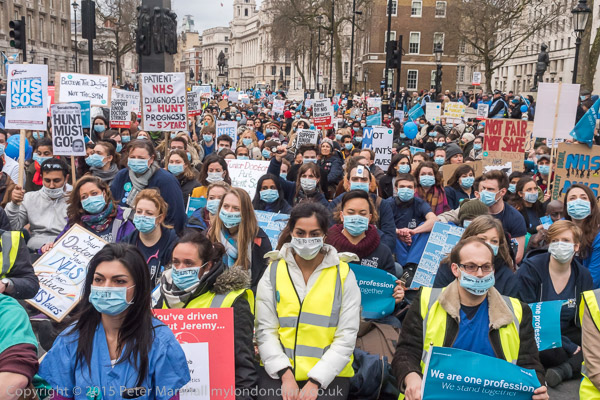
Of course I needed to take a picture showing Whitehall jam-packed with people wearing masks, but it was hard to do so and also make a satisfying composition.  Obviously a high viewpoint was needed for the overall picture, and I took a number of frames holding the camera up above my head. It would be a lot easier with cameras such as the Fuji X-T1 where you can fold out the rear screen and see what you are actually taking, than with the Nikon D700 that I used.

You can use ‘Live View’ to put an image on the rear screen, but it becomes invisible when the camera is at full reach above your head – all you can do is try hard to keep the camera level and pointing slightly down to avoid an excessive amount of sky.

I think I didn’t do too badly, centering the image around the woman in a fluoresecent yellow tabard, though I would have preferred not to have cut the inch or two from her hands at the bottom of the frame

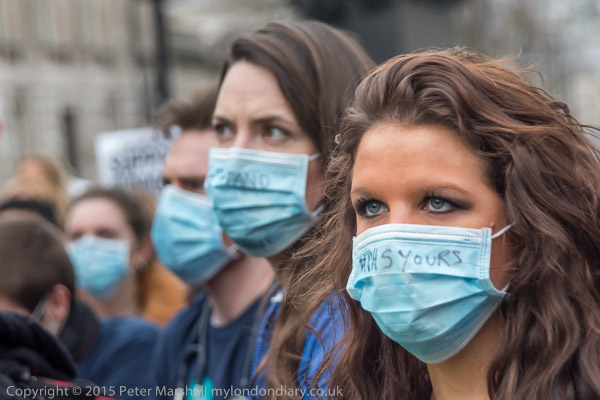
And of course I took quite a few more moving in closer – some of which you can see at Junior Doctors Rally & March; I like the one above with its row of heads and the intense gaze of the woman in the foreground whose mask bears the message ‘#NHS YOURS’.

The light was fairly dim, and even at EI 1600, the exposure was only 1/250 f6.3. With the 28-200mm in DX mode on the D810, the equivalent focal length was 188mm – so I needed the 1/250s – and focussing on the woman’s eye closer to the middle of the picture her other eye is just about sharp, but her hair at right is slightly soft.

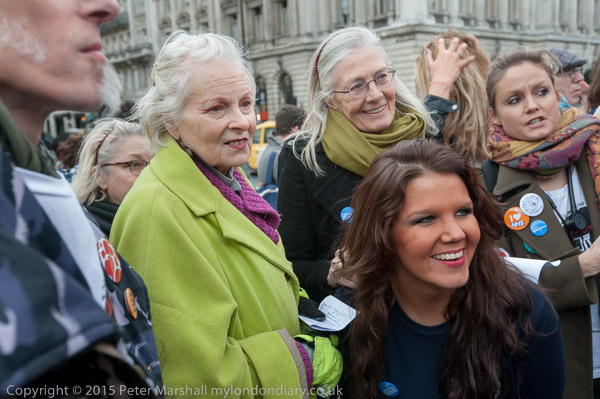
Though I try to avoid the cult of celebrity, I had to photograph Vivienne Westwood and Vanessa Redgrave who came to speak in support of the junior doctors. The photographs of them speaking were of course those most likely to be used by newspapers. Though the same papers seldom report what they say. The two are also in the background in my top picture of some of the real stars at the event, the National Health Singers.

Continue reading Doctors and I mask up

Vibrant Images

I often find something of interest on the New York Times Lens blog, but the articles often leave me wanting more, with just a few images. But there are 19 pictures in the slide show which accompanies A Vibrant Life Amid the Ruins of Rio, and they help tell an interesting story about a community photographer Peter Bauza went to live with so he could photograph ‘them with dignity and show the reality of their daily lives. Not only the “pain, misery and needs but also joy and happiness and dreams”’.

And Lens does also link to the photographers own web site, where you can see more of ‘Copacabana Palace’ and several other projects, and read his own text about the project, which I found considerably more illumating than the Lens piece.

This project won Bauza the Visa d’or Feature award in perpignan last month, and it reminds us that there are rather more interesting things about Brazil than a few highly subsidised people playing games – and often rather silly ones at that – for the sake of national pride. Not that I’m against sport – I’m happy for anyone who enjoys it to play as I once did for the joy of it.

QE2 Conference

I wasn’t of course invited to the conference hosted by David Cameron on aid for Syria at the QE2 Cconference centre just a few yards from Parliament Square, but a number of world leaders were, and security around the area was high, with metal fences guarded by police hiding the lower part of the building from view. But I hadn’t come to photograph the world leaders, but those who had come to protest.

It wasn’t of course the British left who were protesting rather a long way away outside the no-go area, on the opposite side of Victoria St, which had been closed to traffic. There has been a virtually complete failure among organised left groups to articulate any sensible policy on Syria or to give any real support to the people of Syria.

The government’s record has too been one of abject failure, supporting the US in encouraging rebellion but doing virtually nothing to actually help the rebels, and dragging its feet in supporting refugees fleeing the war zone.

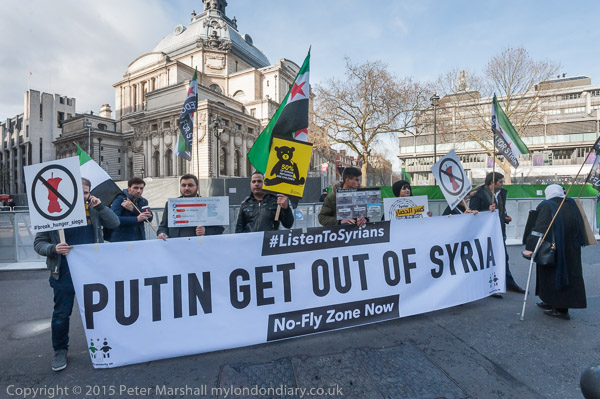
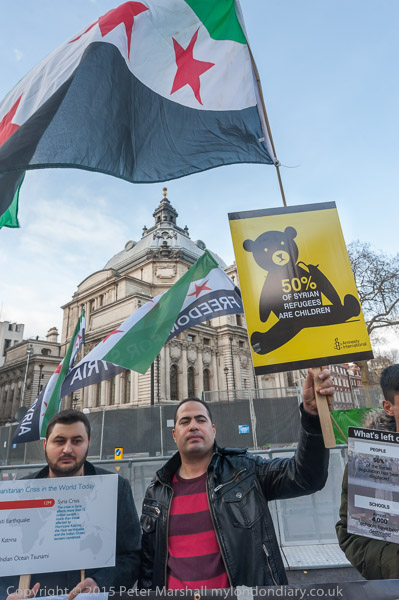
There were two groups protesting while I was there, both from our miggrant communities, Syrians calling for the conflict to be recognised as the worst humanitarian crisis in the world, displacing 50% of the Syrian population, half of them children, with 5 countries – Turkey, Lebanon, Jordan, Iraq and Egypt – taking 95% of the refugees and calling for an end to hunger sieges and the Russian bombing of Syria. They want a ‘no-fly zone’ to stop the bombing of civilians in Syrian cities by the Assad regime.

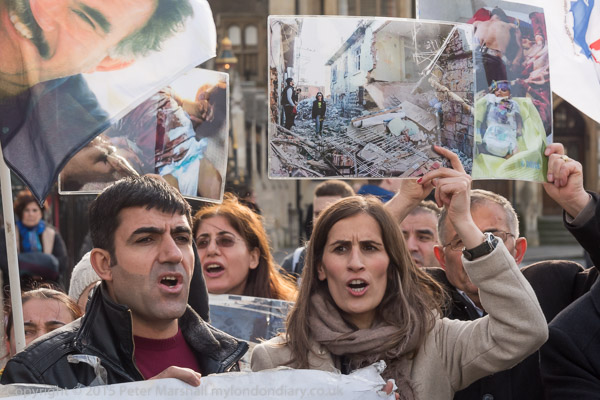
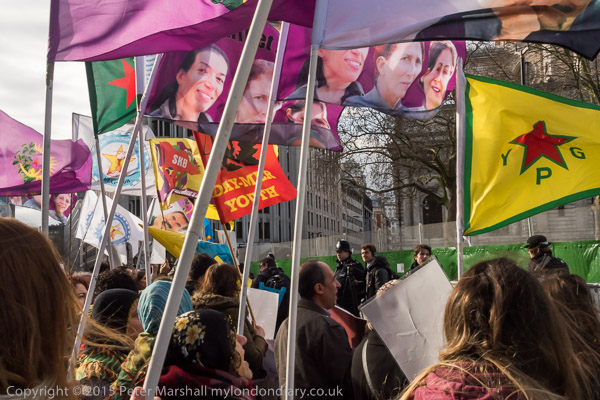
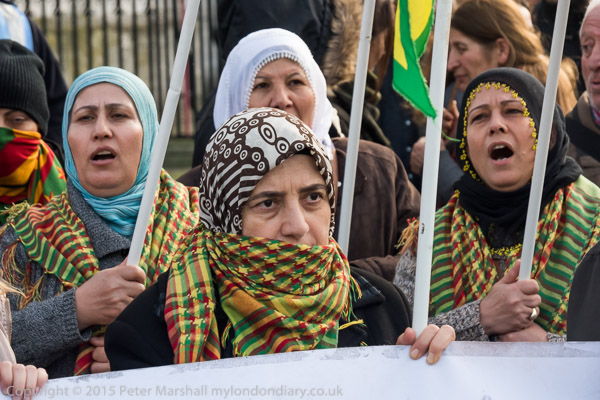
The larger protest was by Kurds, as Turkish PM Ahmet Davutoglu was attending the conference. They accuse the Turks of genocide against Kurdish civilians in Turkey and of supporting ISIS by exporting ISIS oil so they can attack Kurds in Syria and Turkey.

Several of my fellow-photographers had some problems with separating out the two protest as the situation was just a little confusing, and there were some misleading captions on some images sent to the agencies. One of the reasons I don’t send images direct from the scene is that captions sometimes need rather more thought – and often a little internet research – than photographers can give in the instant-news set-up. Though my carefully crafted captions are usually ignored when the pictures are used.

Along with captions, images are also key-worded. While it seems obvious to me that a properly written caption should convey the most relevant information, most image databases used by agencies I’ve contributed work to seem to give far greater priority to keywords – and some have not used the captions at all for finding images. Presumably this is simply because it’s easier and faster for software searches.

The other small problem in taking pictures was a little harassment by police, who kept telling photographers – who need a little distance between them and those they are photographing – to get back on the pavement. Since the road was closed to traffic there seemed no justification for this, and photographers, myself included, kept wandering back into the road after having followed the police direction. Fortunately I like working close to the people I’m photographing, but when I’d been threatened with arrest the third or fourth time I decided I’d taken enough pictures and left.

Kurds protest against Turkish PM
Syrians protest at donor aid conference

Continue reading QE2 Conference

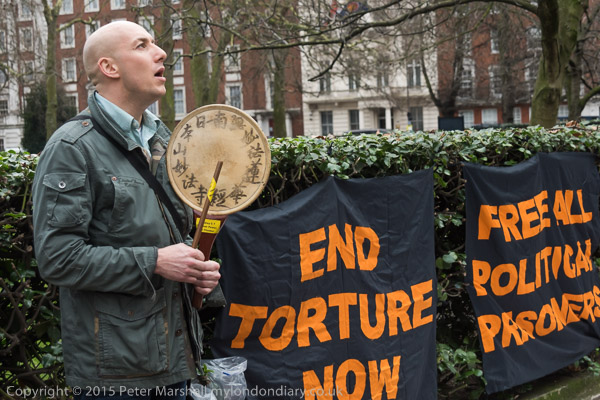
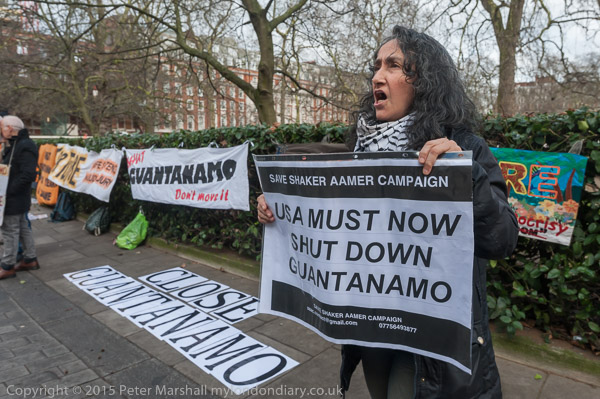
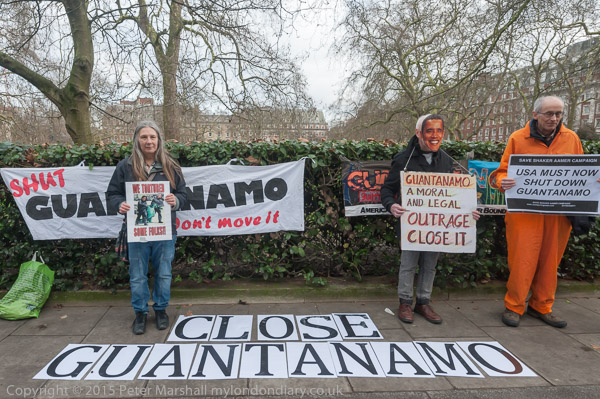
Guantanamo yet again…

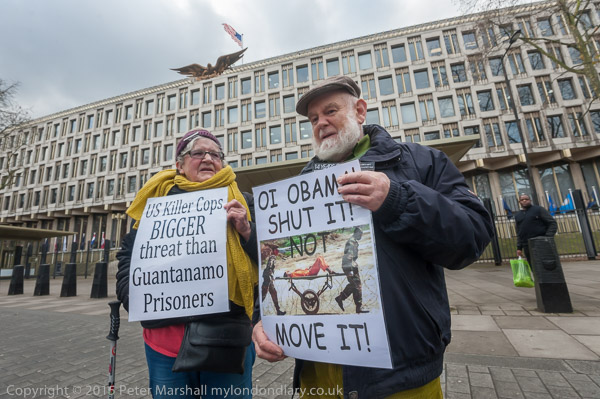
It’s hard to keep on protesting month after month at the US embassy about the continuing shame of illegal detention at Guantanamo, and I admire the London Guantanamo Campaing for doing so for nine years. A dedicated group are there every month, normally going on to protest at Marble Arch afterwards where they are seen by a much greater number of people.

It’s also hard to keep trying to take photographs to keep these protests and the issues underlying them in the public eye. Few news stories keep on being news for more than a day or two, and my work, submitted a few hours after the events when I’ve had time to properly edit, is often dismissed as being too late, yesterday’s news – even when it usually gets sent the same day. But Guantanamo is still happening, 24/7, 365 days a year (and 366 in leap years) and doesn’t stop because editors get bored; for me it remains news.

It’s a little easier on special occasions than just the normal month by month protests that are actually I think in many ways more important. And for this anniversary there were a few more present than some months. But in general there were the same elements present, the same orange suits, black hoods, posters, banners and mainly the same people as on many previous occasions I’ve photographed these protests. The same brutally forceful architecture with its eagle and flag, with a high fence which is perhaps an appropriate metaphor.

As long as it’s necessary to protest about Guantanamo – which means until it closes down completely – these people will keep up their protests. And while I’m still able I’ll go along when I can and photograph them, trying to make the pictures at least a little different and fresh. I’ll leave others to look at the pictures and decide how successful I’ve been.

Close Guantanamo 9th Anniversary

Continue reading Guantanamo yet again…

Central Hill

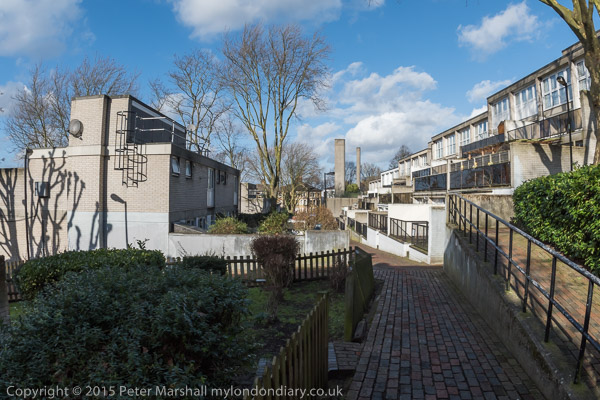
One of the best post-war estates in London, but surprisingly unlisted, Central Hill is on a slope from the road of that name going down towards the north with extensive views of Central London. Architect Rosemary Stjernstedt (1912–1998) working for Lambeth Council made great use of the site, with large areas of open space, play areas, community buildings and a district heating system. and it was well-built by John Laing, the 374 homes being completed in 1974. Like most council estates it suffered over the years from neglect, though it has been freshed up considerably since I first photographed there in the 1996.
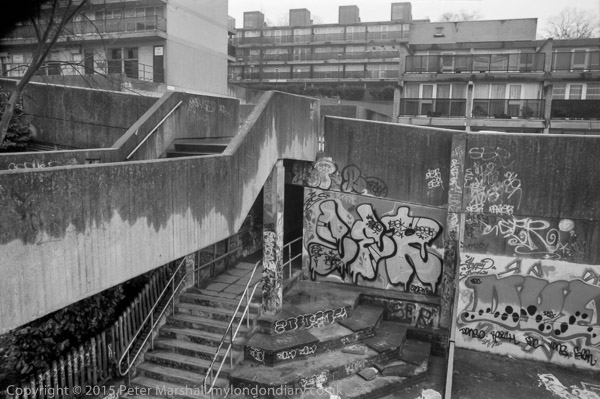

1996: The graffiti and this car park area and subway were removed when the estate was renovated

It is now threatened with demolition – though still a very popular estate with residents. You might ask why Lambeth council want to knock all or most of it down, and the reason is really that it is a well-planned estate – and thus at what is now considered a low density. I think there is also a feeling – not just in Lambeth – that council tenants shouldn’t be allowed to live in nice houses.
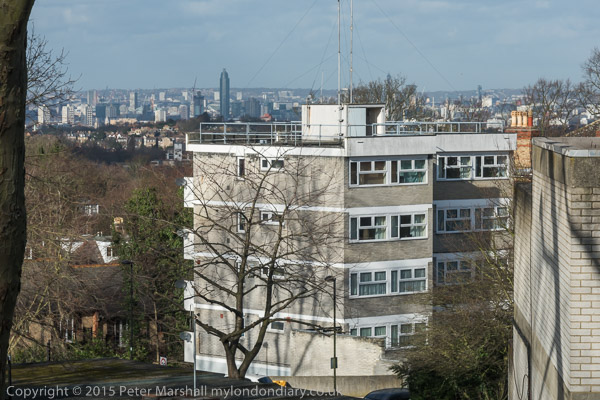
This site is certainly one that makes developers and estate agents salivate; those views across London will gaurantee high prices for private properties here, along with decent local shops and transport links. Its a short walk (or ride) to Gipsy Hill and Crystal Palace stations, and to one of London’s nicest parks, Crystal Palace Park.
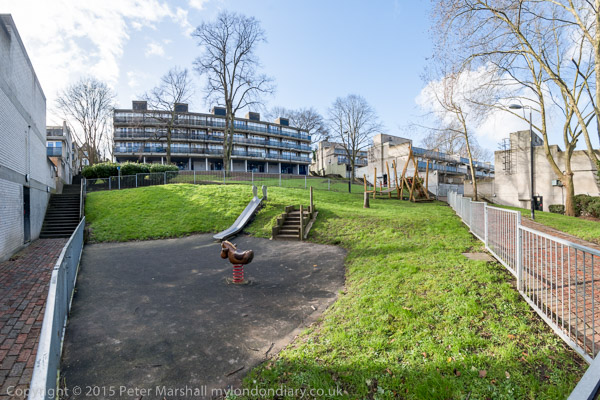
I’d heard about the plans to demolish the estate from friends, and at the end of January The Guardian published a piece about it by Rowan Moore, and I thought about going to look at it again for myself. And on Feb 2nd the weather forecast was good and I had nothing else pressing, so I took the train to Gipsy Hill and walked up. All of the colour pictures here come from that visit, and there are many more at Central Hill Estate on My London Diary.
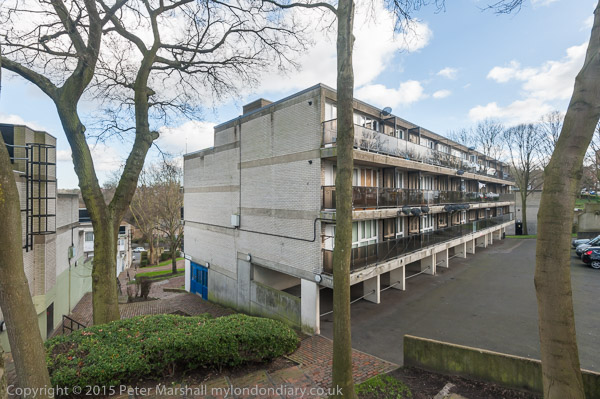
Many of the pictures I took were with the 16mm Nikon fisheye – and then converted to a cylindrical view with the Fisheye-Hemi plugin to make the verticals more or less vertical. This gives a horizontal angle of view of around 147 degrees. Except in the centre of the view, non-vertical lines remain curved, and this may sometimes look disturbing. It’s usually best to avoid photographing buildings ‘square on’.

But on this occasion I took rather a lot before realising that I was using the lens only on the 16Mp DX format, which isn’t really a great idea.  I usually use D810 as a DX camera with the 18-200mm, which gives me the equivalent of a 27-300mm zoom but at around a quarter of the wieght. For this I have to set the camera into DX mode manually, and I’d left the camera on that setting when I changed to the fisheye. The difference in the viewfinder is of course obvious, but I’m so used to seeing a masked area around the image it just didn’t occur to me anything was wrong.

I walked around the estate taking pictures at the DX setting with the 16mm fisheye before I realised and set it back to FX. You can still use the plugin to straighten the verticals, by putting an appropriately sized ‘canvas’ around the image, using the plugin and then cropping the blank area off, but it’s something of a pain, and not normally worth doing, as you can get a wider view more easily with the 16-35mm. The curvature isn’t always very noticeable – and is visible in the uncorrected image at the top of the post.

Once I realised I switched to the 32Mp FX mode, and went to retake some of the earlier pictures with a much wider view.  Fortunately I had taken quite a few pictures with the  16-35mm, usually at the 16mm end. But I did have to rush around a little to be sure to catch my train home while my ‘Super Off-Peak’ ticket was still valid.

When photographing events I usually don’t bother to correct the geometric distortion on these images in Lightroom – my default has distortion correct at zero. At 16mm, where most of these pictures at Central Hill were taken, there is considerable pincushion distortion visible unless I’ve remembered to change the distortion correction to 100%.

More of my pictures from 2016 at Central Hill Estate.  You can read about to save the estate from demoition at Save The Central Hill Estate, and sign their petition. There are also alternative plands for increasing the density of the estate while retaining the original from Architects of Social Housing.
Continue reading Central Hill
Guilty Court

I’ve never been a morning person. Never liked getting out of bed early. Never at my best until  after breakfast and perhaps another mug of coffee mid-morning.  Hated early mornings when I had to start work for a short while at 8am, and later leaving home to go to work shortly afterwards found it something of a strain. Changed jobs so I could leave a little later and go to work on a bike to avoid travel. Now there is an added incentive against early morning starts, with travel costs to London excessive if I want to arrive before 10am.

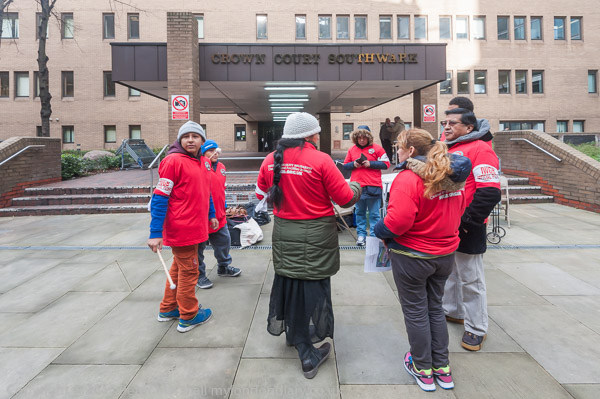
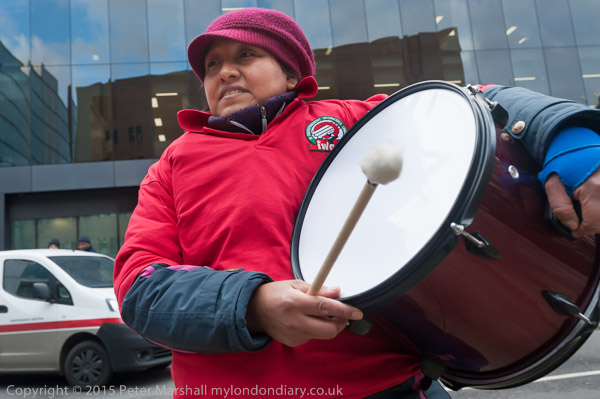
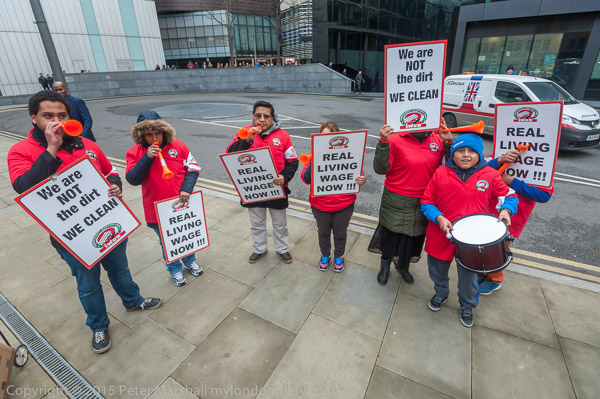
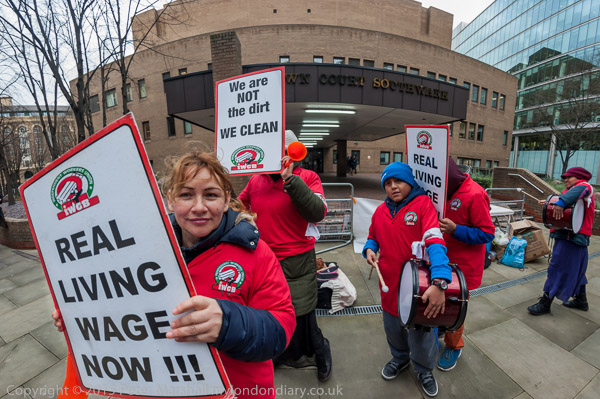
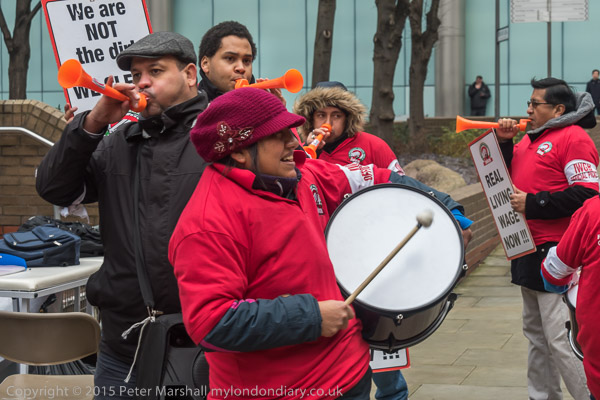
Cleaners don’t normally have the option. Some can’t afford to live anywhere close to where they work in the centre of London, and working at or close to the minimum wage often means they can’t afford tube or rail, but face long bus journeys while most of us are still snoring peacefully. When they go on strike, pickets sometimes start at 6am, though the one outside Southwark Crown Court was a little more civilised 9am.  I’d had a few things to do beforehand and only arrived around 1pm, just in time to be handed a box of lunch, which I didn’t really deserve, but ate with thanks before getting down to taking pictures.

Getting the London Living Wage – then £9.10 rather than the minimum £6.70 per hour that they were being paid to clean the court would make a real difference to these workers. The London Living Wage is an official figure which the GLA thinks is needed to live in London – and currently they were only getting paid less than three-quarters of that.  Most cleaners need to do several jobs to keep going, often working 60 hours or more a week.

When I was in employment rather than a freelance, I often worked many more hours than I was contracted for, but at least I got a decent wage, if not a very large one.  Many people now work a 37.5 hour week; on minimum wage that comes to around £250 a week, £13,000 a year.  In June 2015 the average rent in London was £1500 per month, which comes to £18,000 a year.

The cleaners felt let down by the traditional unions who seemed sometimes more concerned with maintaining pay differentials than with improving the lot of those at the bottom of the pile. So they formed their own grass roots unions like the IWGB, grass roots organisations with no paid officials but which have acheived official status as trade unions and have made gains for their members by noisy and assertive actions like this one.

But even where these unions are successful, the successes are sometimes short-lived. Cleaners seldom work for the companies and organisations whose premises they keep clean, but are employed by cleaning contractors. And when contracts come up for renewal, they often go to the lowest bidder – who puts in the lowest bid by cutting wages and increasing workload. And even large companies in the cleaning business seem to be cowboy employers who don’t much care how badly their managers treat staff. These disputes are as much about dignity and respect as they are about wages, vital though these are. ‘We are NOT the dirt we clean’ insist the IWGB posters.

Photographically there was one little problem. The protest was taking place in a rather restricted area, the pavement in front of the court. Photography isn’t permittted inside the grounds of the court, so I couldn’t move back in that direction, and the court is on land owned by a private company, More London, whose secuirity insisted that what looks like a public road in front of the building is private and harassed me when I stepped on it to take pictures, insisting it was not allowed and standing in front of me until I got back on the pavement. There are now many such areas of ‘private’ public space in London and they are growing.

IWGB Picket Southwark Court

Continue reading Guilty Court

Provoke at Le Bal

If you are going to Paris in the near future – perhaps a trip before we start having to pay for a visa after Brexit – a visit to Le Bal should be on your agenda. The show Provoke, Entre contestation et performance: La photographie au japon 1960-1975 continues until  December 11, 2016 at the gallery at 6 Impasse de la Défense.

You can read more about the show on L’Oeil de la photographie as I did – and there are links on that page to several posts about this and related events such as Daido Moriyama’s installation Scandalous at Gare de l’-Est (aka Paris Est), just a few yards from where – if you are coming from London – the Eurostar will deposit you at Gare du Nord. Le Bal is a short walk from Métro Place de Clichy, and entrance costs 6€ with various concessions – you might get in free as a journalist if you have a UK press card. But be warned that like many things in Paris it’s closed on Mondays and Tuesdays.

I’ve written a couple of things here about Provoke and the other photographers included in the show earlier this year at at Fotomuseum Winterthur in Switzerland  and also about the brick of a book of the same name in the post . I’ve also been expanding my views a little for a lecture later this year, which will doubtless feature here at some time, though I’ve still around a month to finish it.  My presentation will start with a selective overview of the history of photographing protest from the daguerreotype era to the 1960s and then look at some of my own contributions to the genre.

The latter is proving harder to write, not least because of the wide range and large number of events I’ve covered, both those in My London Diary and in the years BD – before digital. It’s so much easier to go through digital images than to look through those many files of negatives and contact sheets and boxes of old 10x8s.

Apart from a few exhibition prints, over which I will have laboured long, with many test strips and reprints to get the dodging and burning and other darkroom tricks right, prints to send off to the library or agency were largely routine. The enlarger I used had a meter which generally got the exposure about right, and experience of working in the darkroom meant one was able to spot when negatives really needed some waving of the hands to dodge or a little extra through a gap between them.

Normally you could get it right first time,  perhaps giving some prints a little longer in the developer than others. In theory I made a print for myself too, but when time or cash was short I often didn’t, so only have the few where things were far enough out to force a reprint but not so pathetic as to end up in the bin.

Probably I should have put more of those I’ve kept in the bin too – and certainly other better-known photographers would have been advised to do so in the past. Too often going around the large events like Photo Paris you see prints which are clearly second-rate being sold at high prices as ‘vintage prints’, and sometimes you feel that dealers have been raiding the photographer’s rubbish bin. One day I mean to go through all those old boxes of prints and have a clear-out, just in the unlikely chance I should find some fame after my own final career move.