Foil Vedanta expose mining giant

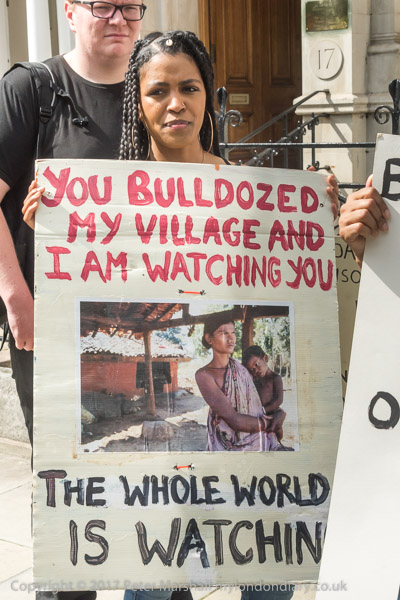
Foil Vedanta holds a protest every year outside the AGM of Vedanta, a FTSE 250 listed British mining company controlled and 69.6% owned by Anil Agarwal and his family through a series of tax havens and holding companies.

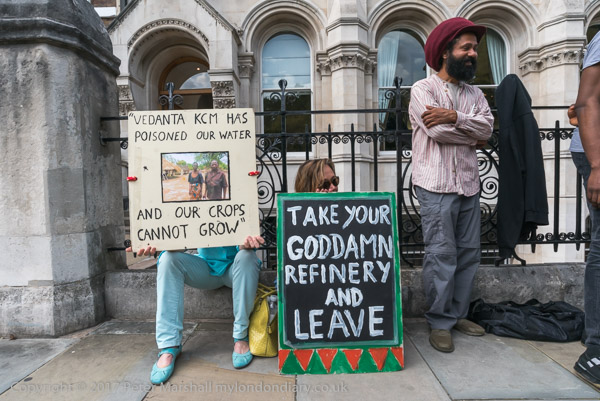
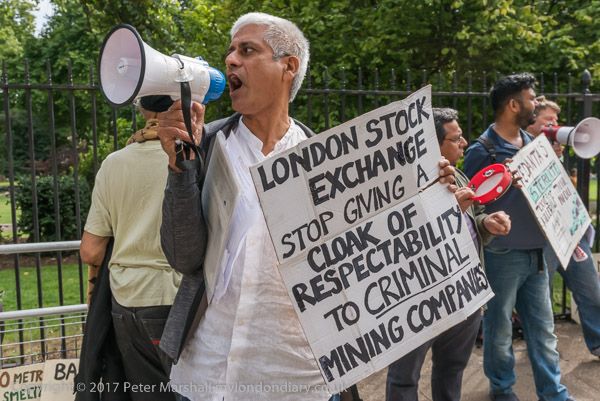
They accuse Vedanta of illegal mining in Goa, increasing harassment, torture and false accusations against tribal activists in Nyamgiri, Odisha and eleven years of ruinous and continuing pollution by Konkola Copper Mines (KCM) in Zambia.

As well as holding protests, Foil Vedanta have also exposed illegal activities by the company and its assocaited companies around the world, with a detailed report on their activities in Zambia which showed the company had fraudulently avoided taxes and failed to publish mandatory accounts leading the Zambian government to take action against KCM.

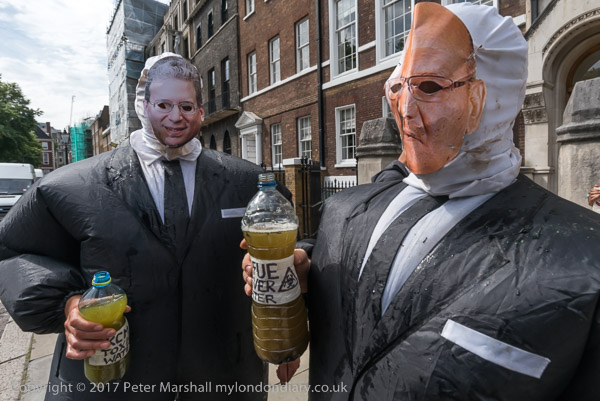
Their protests have usually involved some highly visual stunts, including in the past a giant inflatable Vedanta Monster, a banner drop from a neighbouring roof and a large pool of fake blood. This year there were two men in giant inflatable suits  (reminding me of  Sumo wrestlers), one with the mask of Argawal, and the second with that of CEO Tom Albanese who was stepping down to  “spend more time with his family“, a decision perhaps not entirely unconnected with a charge by the US Securities and Exchange Commission that in his former job as chief executive of Anglo-Australian mining giant Rio Tinto he allegedly inflated the value of a Mozambique coal mine the company bought in 2011 for $US3.7 billion; they say Albanese continued to mislead investors as to its true value for some years after the company realised it was worth much less. By the time Rio Tinto sold it for a measly $50 million – around 1/75th of what they paid, Albanese had gone and was CEO of Vedanta.

Albanese was not the only senior executive to leave Vedanta last year.  They also lost former CEO of Anglo American Cynthia Carroll who had joined them to advise them on their aluminium business and decided for reasons unknown not to renew her contract in February.

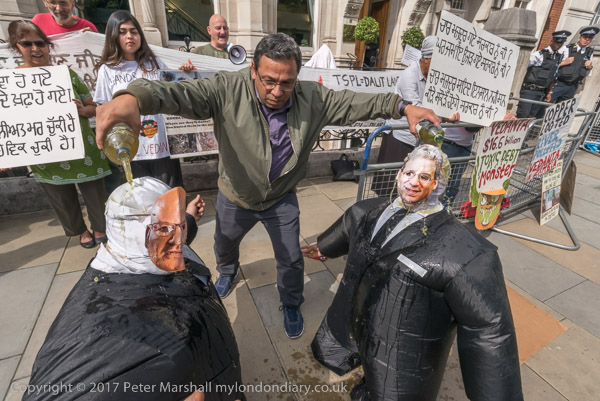
The two inflated figures came holding bottles of dirty water allegedly from the Kafue River in Zambia which they showed to investors going in to the AGM. Several of the Foil Vedanta supporters have single shares in the company, which entitles them to go in to the annual meeting where they are able to question the company about its activities. After they had gone in and the meeting had begun, one of the other protesters poured the dirty water over the two figures representing Agarwal and Albanese.

The protest continued outside the AGM, and the posters were graphic reminders of the activities of Vedanta, and of the protests which were taking place not just in London but in India today, and of previous protests around the world where they operate, many of which have been very much larger than this, with thousands taking part. Some have been brutally repressed by police, and protesters have been injured and killed. Today’s in London was noisy but peaceful, and police who had earlier tried unsuccessfully to keep the protesters on the opposite side of the road restricted themselves to making sure the pavement and the entrance were kept clear.

Vedanta accused of global crimes

Continue reading Foil Vedanta expose mining giant

Grenfell ripples

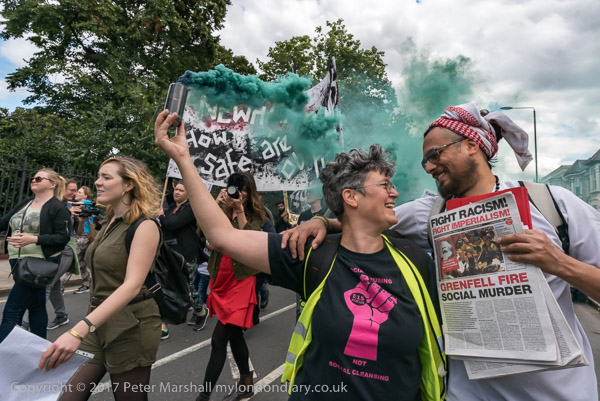
It’s shameful to know that almost 8 months after the Grenfell Fire, so few of the survivors have been rehoused. Back in August many felt that the council whose deliberate actions were responsible for what would have been a small, contained fire instead rapidly engulfing the whole block with terrible loss of life were failing to take appropriate action either to care for the survivors or to find them new homes, that they were dragging their feet and failing to cope. But that they still have done so little seems quite unforgivable.

Many local people felt that there should have been some urgent temporary action – such as taking over a number of the large empty properties as a temporary solution to finding decent accommodation. The Royal Borough of Kensington & Chelsea is a wealthy borough with huge reserves. There appears to be no possible excuse for them having families still living in cramped hotel rooms almost 9 months after the disaster.

One empty block of flats was Duke’s Lodge in Holland Park, on of Britain’s wealthiest streets, just 15 minutes walk away. The residents of the 27 private flats there lost a battle to stay after the owners, the Candy brothers decided they could make a killing by knocking it down and putting a few luxury homes in its place. But the council refused them planning permission and the block and its grounds were on sale for £70 million.

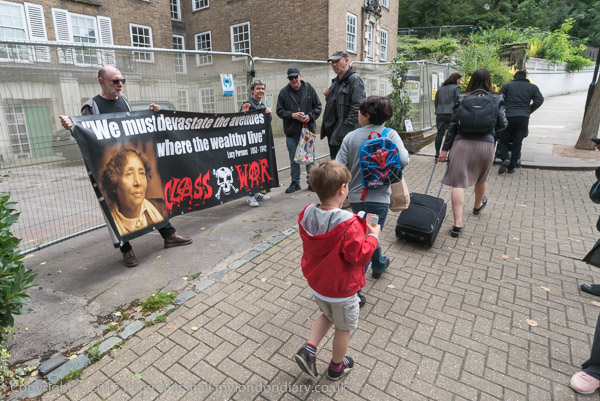
It’s difficult to tell how feasible it would have been for the council to refurbish the block and put in people from Grenfell, but it did seem the kind of response that might have been appropriate. The small protest outside by the Peoples Republic Of North Kensington, including former Grenfell Tower resident Ian Bone of Class War along with others from Class War and local residents, was more about raising issues than providing solutions.

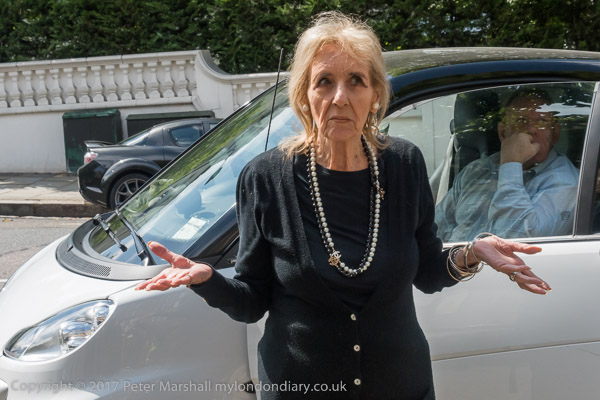
The protest became more interesting when a car pulled up in front and a woman got out to talk with the protesters. She was one of the displaced residents, and told them about their fight to stay in Duke’s Lodge, and of the £40,000 she had spent on interior decoration of her flat.

It isn’t just the local council, the RBKC, that have failed in their response. Prime Minister Theresa May was quick to come up with promises, including help for other councils with tall blocks with the same dangerously flammable cladding, never intended for use on high buildings. So far, none of the promises has been kept.

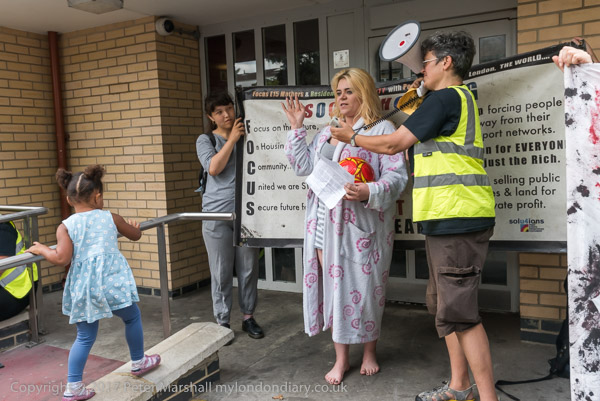
On the following Saturday, Focus E15 Mothers led a march from Ferrier Point in Canning Town to a rally at Tanner Point in Plaistow, two Newham Council tower blocks with the same cladding. Without a proper expert inspection it is hard to know whether they face the same risk as Grenfell, where the failure to have proper gaps, unsafe gas installion and other defects in the work carried out on a previously essentially safe building as well as lack of proper maintenance and limiting the emergency access made Grenfell a death trap.

Obviously the residents of these towers are worried about their safety, and Newham Council also seems to be dragging their feet over the issue. Newham has for years been run by Mayor Robin Wales, and is essentially a one-party state, which has often seemed to care little about the housing needs of its local residents, while encouraging many new blocks of high cost housing to attract a wealthier population.

One of several great scandals of Newham Council over the period of Wales as Mayor has been the Carpenter’s estate, a popular council estate close to Stratford Station. Newham saw its potential for development and around 2004 began forcing tenants to move out. It met with rather more resistance than it had bargained for with many people not wanting to lose their homes or to be relocated in the distant reaches of the borough or further still out of London.

Various schemes fell through, with protests at University College London helping to persuade UCL to drop its plans for a campus there. In September 2015 Focus E15 Mums celebrated the first anniversary of their fight against LB Newham’s failure to provide local housing for local people and opened and occupied one of many shamefully long empty council properties on the Carpenters Estate in Stratford. It gained national publicity, stimulating a great deal of discussion about the housing crisis, putting the issue firmly on the national agenda. Under pressure the council made a number of promises about using some of the empty housing stock on the estate, which they have largely failed to keep.

Focus E15 – who hold a weekly protest on Stratford Broadway and also support people in their fight to get rehoused by Newham Council and fight evictions – have since visited the Carpenters estate a number of times, and it was there the march ended there with a picnic with other housing campaigners.

There is now some hope that Wales’s feudal reign in Newham may come to an end. Last year he managed to engineer a vote that would have seen him as the unopposed Labour candidate by using the votes of a number of affiliate organisations (some of which have almost no membership in the borough) to outvote the various membership branches who wanted an election, but things have moved on and with greater opposition from members there is a real chance that a new candidate will be selected, and council policies will change to better serve the people of Newham.

Fire Risk Tower Blocks
Duke’s Lodge for Grenfell
Continue reading Grenfell ripples

Remember Hiroshima


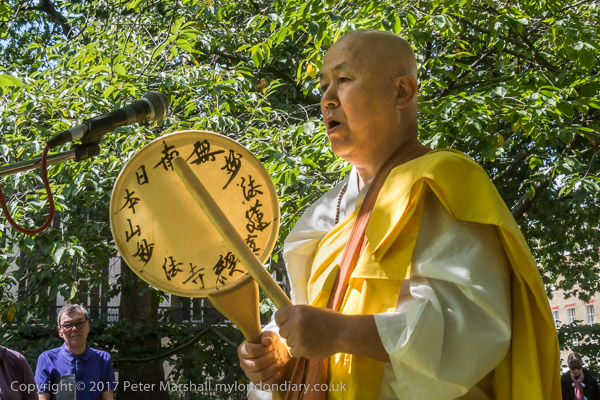
Rev Nagase from the Battersea pagoda

I was only a few weeks old when the nuclear bombs were dropped on Hiroshima and Nagasaki, but was one of a generation that grew up very much in their shadow.  Both my brothers marched to Aldermaston in 1958, and my eldest brother sat down at the Ministry of Defence  in Whitehall in 1961 with the Committee of 100, though he wasn’t one of the original signatories. We all held our breath during the 13 days of the Cuban missile crisis in 1962, but fortunately both Khrushchev and Kennedy came to their senses and came to a secret agreement. Both men realised that actually using nuclear weapons would be catastrophic not just for their nations but for the world; the US agreed secretly to withdraw missiles from Turkey and Southern Italy if Kruschev would publicly withdraw his from Cuba.

So the USA remains the only country ever to have used nuclear weapons in war, and it was able to do so only because it knew it could not face nuclear retaliation. By the time of Cuba the use of them had become unthinkable; only a crazed lunatic would press the button.

More recently our worries have begun to rise again. Could a man who so carelessly vents on Twitter decide early one morning that it would be a good thing to nuke those bad guys in Russia? We can only hope that there are people in the USA who have decided for safety reasons to undo one of the wires.

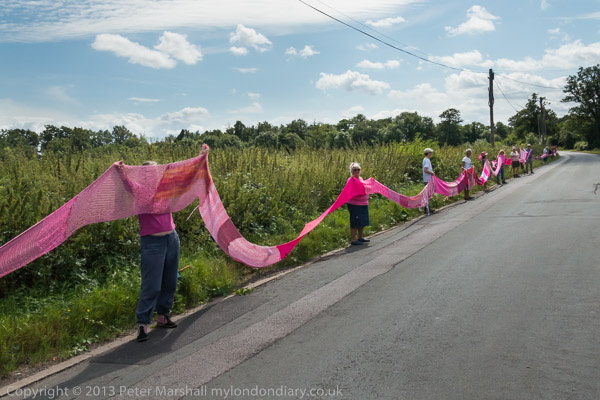
More recently I’ve taken part in protests and been to Aldermaston myself, walking much of the way there in 2004, and cycling to photograph to photograph the ‘Wool Against Weapons‘ 7 mile scarf from the atomic weapons factory at Burghfield to Aldermaston in 2014, as well as many other CND events. After Cuba, after the end of the Cold War it has simply become impossible to produce any military argument for the retention of a UK nuclear capability – as even many in the military now agree.


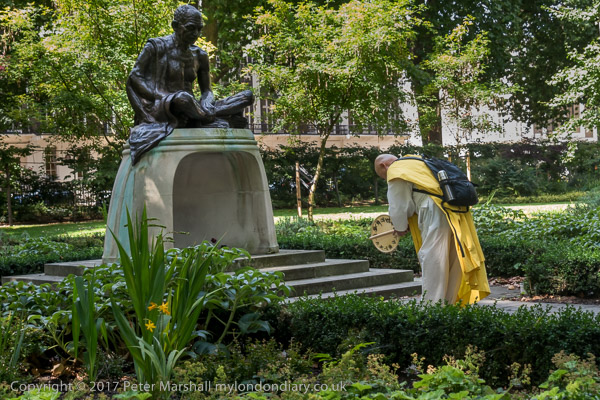
Rev Nagase pays his respects to Gandhi

Nuclear arms are useless, their use totally immoral and maintaining them a terrible waste of money that could be spent far better on health, on education and other social benefits. Their use against Hiroshima and Nagasaki was a war crime – as was our firestorm bombing of Dresden together with the USAF which killed around 25,000 civilians including some refugees. But the effects of radiation made the linger on for much longer.


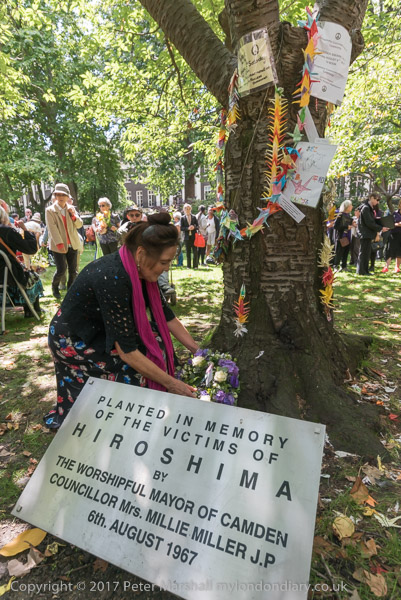
Cllr Jenny Headlam-Wells, Camden Deputy Mayor lays a wreath

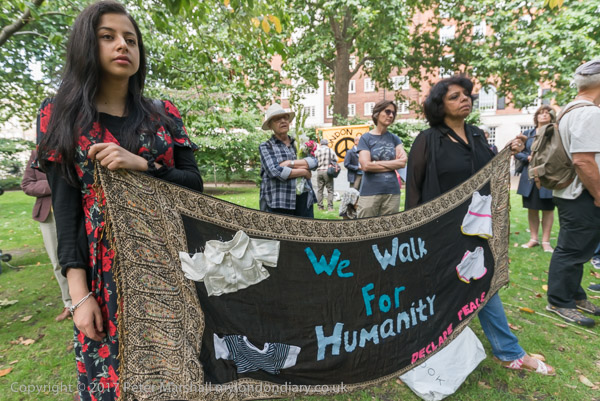
The ceremony in Tavistock Square takes place every year on the anniversary of the Hiroshima bombing, August 6th, and if I’m in London I go, and I take photographs. In 2017 there was perhaps a slightly smaller crowd than in previous years, and certainly rather fewer photographers than in 2015 when Jeremy Corbyn who had often chaired the event in the past was the main speaker.

Hiroshima Day 72 Years on

Continue reading Remember Hiroshima

Old and New Brentford


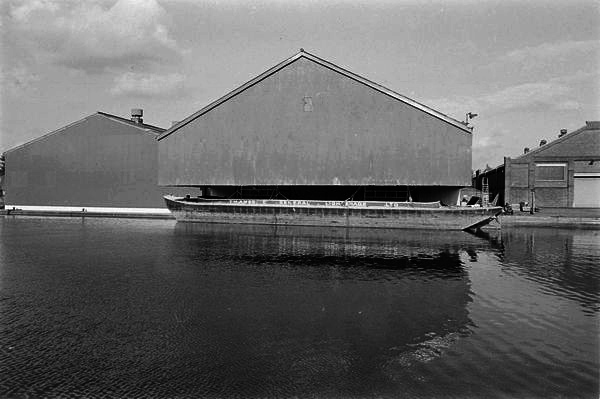
Canal warehouses at Brentford Lock, 1977

When I was young one of our family treats on Bank Holidays and the like was a trip to Kew Gardens. My father was a keen gardener and always had a pair of scissors in his pocket to take the odd cutting, and even we could afford the entrance fee of one old penny. But the highlight for me was never the plants or the picnic on the grass, but the bus journey there from Hounslow, crawling through the busy High St, then through Isleworth to the highlight of Brentford.

We always sat on the top deck, glued to the windows, and chose the right hand side which gave us glimpses of the Thames, but most importantly the gas works. You could smell it long before you reached it, pervading the long and narrow Brentford High St which began at the canal bridge. Then you were in the middle of an industrial landscape, full of odd structures and workers, always stuck in a slow moving traffic jam to give you plenty of time to admire. And if you were fortunate to be in the right place at the right time there was the spectacle of a glowing wall of coke falling to the ground as an oven door was opened. Getting off the bus at Kew Bridge to walk across was always something of an anti-climax.

The gas works was demolished while at I was up north at university, and it was a shock to return a few years later and see the gap where it had been. When I went back in 1977 to photograph, Old Brentford (the eastern parish of the town) was just a different place. Since then Brentford has changed even more, its canal and riverside location which once was industrial becoming a prime location for gentrification, flats with a waterside view attracting a significant premium, though enough remains to make it an interesting area to explore, and a little of the new also has some attraction.

The latest chapter in gentrification is Watermans Park, which I got to know well back in the 1980s and 1990s for the Watermans Arts Centre at its western end, where I helped organise and took part in a number of exhibitions with the photographic group Framework that Terry King and I ran, as well as going to several other shows there.  The Arts centre is to be demolished and together with an adjacent office block replaced by expensive riverside flats, while the arts are relocated to a site in the middle of the town where a new 13 storey police station was built in 1966 but vacated  by them in 2013, at the Half Acre, where the trolley buses from Hounslow used to turn around and go back.
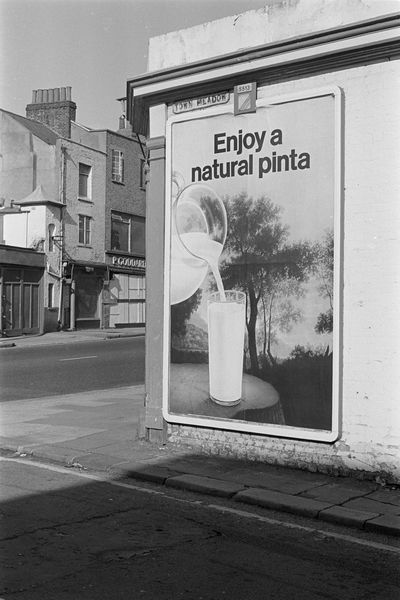

Town Meadow and Brentford High St, 1977

The police station was Brentford’s third. The first was on the corner of Town Meadow in a building already around a 100 years old and still standing, but a new police station was built in 1869 a little further east on the High St. This rather imposing building was knocked down to build an office block in 1969 , threeyears after the police left for their new site.
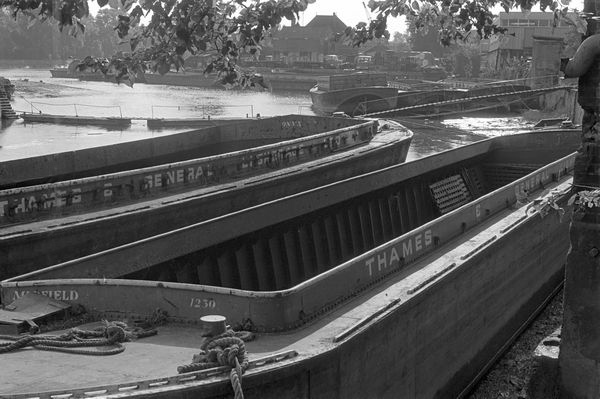

Lighters moored alongside the former gas works site on Brentford High St

The gas works was demolished around 1964 and the area became public open space, Watermans Park. Hounslow Council had for some years been attempting to evict the 25 boats moored there – some since the 1960s – to build a £5.4 million marina to gentrify the area and won their legal case last November, with the eight remaining boat owners having to pay over £300,000 in legal costs and given 21 days to move.

The Thames Steam Tug and Lighterage Company was taken established in 1856 it set up a yard on Lots Ait a few yards upstream from here in 1904 which repaired and built barges and tugs for use on the Thames. At that time the company owned 340 barges and five tugs. At its peak the Lots Ait yard employed around 150 men and 2 women.

In 1961 although business was beginning to fall the company still employed over 400 lightermen when it was taken over by the Transport Development Group, and later amalgamated with he General Lighterage Company in the 1960s to form the Thames and General Lighterage Company. Around 1979 this was bought by William Cory Ltd, who moved away from coal and oil transport to waste disposal.

Lighters like this were made from 10mm thick steel, and slowly rust both from the outside and often from the inside, eventually becoming unusable as the steel remaining gets too thin. But there are still quite a few around as this may take a couple of hundred years – and small areas that get too thin can be repaired.
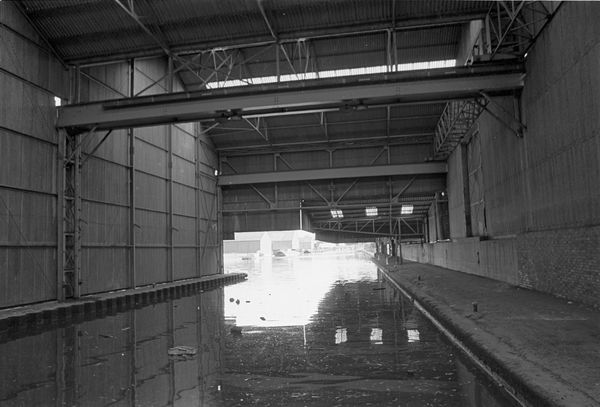

Grand Union Canal, Brentford, 1977

Brentford was where traffic on the canals met the river Thames, with goods being transhipped between large barges like these and narrow boats. The company operated Brentford Dock together with the Great Western Railway, with a line from the main line at Southall which brought Welsh coal, and for some time also had a passenger service with a station on the London Road in New Brentford where you can still see the remains of the bridge which took the line across, and a part of the line further south is now Augustus Close, leading to the private Brentford Dock housing estate with its notices ‘Private Property Residents Only No Public Right of Way’.

As with the railways, it was Dr Beeching, a man deeply in thrall to the road lobby, that did for the river traffic and canals, and in 1963 he recommended that waterborne traffic be moved to the roads; the the Lots Ait yard closed in 1980.

In 2005 the Ait was sold to investors and a retired solicitor, John Watson, decided he could open a new yard there. A new footbridge to the island was built and John’s Boat Works opened there in 2012. Occasionally the island is opened for conducted tours, though I’ve never managed to go on one.

The new Marina will provide moorings for roughly the same number of boats as were alongside the former park, and will be something of an eyesore, with decreased access to the riverside and obscuring the views to Brentford Ait. But while the former moorings paid no fees, the new development will attract a rather wealthier class of boat owners though with significantly less interesting vessels, and will make money for whoever is managing it. A rather better solution, but forward by the boat owners, would have been for Hounslow Council to legalise the moorings, make some improvements and collect sensible fees.

Brentford was another place we sometimes took photography students, and if the tide was right many of them would wade onto the mud bank opposite Lots Ait and sometimes most of the way across. I don’t recall seeing any great pictures that they took, but they seemed to enjoy getting covered in mud.

You can see the pictures here and a few more of Brentford as well as other places in the 1977 section of my London Photographs site, which so far contains pictures from 1974-80.

For a more recent view of Brentford see Riverside Brentford Panoramas and Riverside Brentford, taken in March 2016.
Continue reading Old and New Brentford
Tottenham remembers Mark Duggan


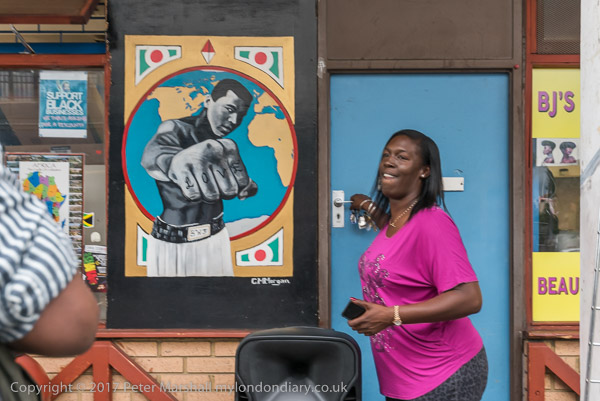
Shops including this one were built at ground level after the riots and demolition of the decks

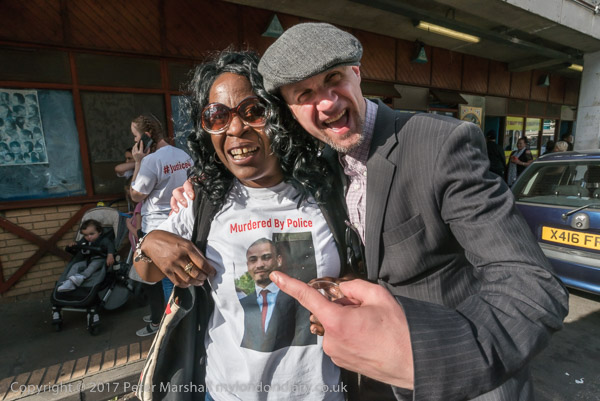
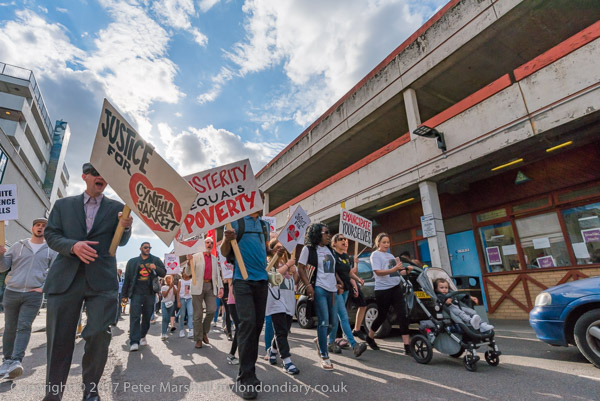
People met at Broadwater Farm for the march and rally to remember Mark Duggan and others, nearly all young Black men, killed by police in London. There was a slightly uneasy atmosphere, not because we were at Broadwater Farm, but because the media haven’t generally given Black communities fair treatment over contentious issues – such as the killing of Mark Duggan, though the bias that there clearly is often comes from those who sit in offices and studios rather than people who actually report in person.  It’s something I probably feel less than most, as there were quite a few people there that know me from other places and protests, such as the annual march by the United Families and Friends Campaign calling for justice for  deaths in police, prison and psychiatric custody.


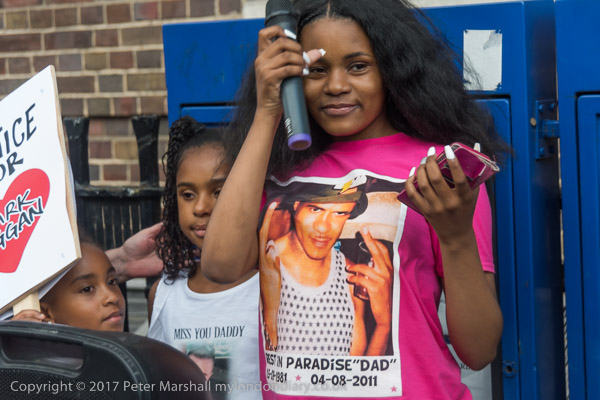
Mark Duggan’s daughter speaks at the police station, wearing a t-shirt ‘REST IN PARADISE “DAD”‘

Mark Duggan grew up on ‘The Farm’ and was known by many there, and many regard his shooting by police in 2011 as an extra-judicial killing, a state-condoned execution, a belief that was for them confirmed by the inquest  verdict that he was lawfully killed. The only civilian witness stated he was unarmed and surrendering when killed.


Jermaine Baker’s mother – he was shot, allegedly sleeping in a car, in Wood Green in 2015

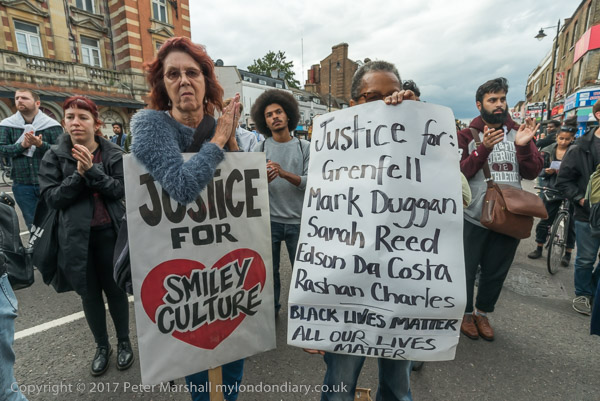
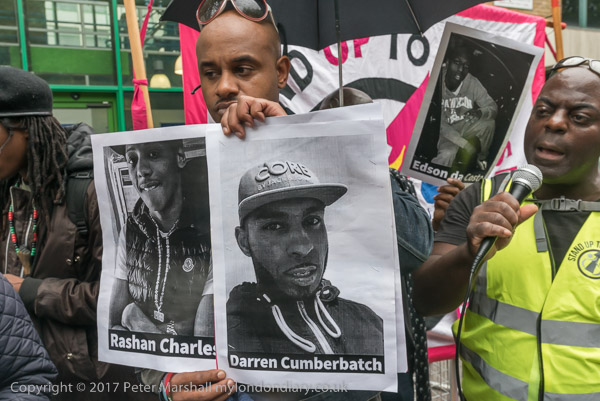
But Duggan was only one of those who have died at the hands of the police in Tottenham, which includes  Cynthia Jarrett, Joy Gardner, Roger Sylvester and Jermaine Baker as well as many more in London and across the country and the recent murders of Rashan Charles, Darren Cumberbatch and Edson Da Costa.  There have been literally thousands of deaths in custody since the last even partly successful prosecution of police officers over a black death in custody in 1971 when two were acquitted on charges of manslaughter and perjury but convicted of assault after David Oluwale was found drowned in the River Aire in Leeds.


The march sets off from Broadwater Farm on its way to Tottenham Police Station

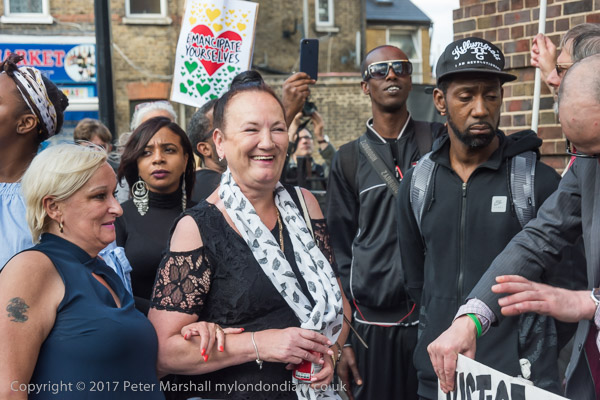
The march left rather later than expected, and there were perhaps rather fewer than last year taking part, but more joined them at Tottenham Police Station, which had been locked up for the day. Family members of those killed gathered on the steps and around, with a crowd in front spilling onto the pavement. And on the other side of the wide road another crowd assembled, mostly of young black men.


Mark Duggan’s mother Pamela Duggan (centre) with family and friends

There was poetry and a silence and speeches by some relatives of those killed and local activists as well as a few invited visitors including Becky Shah from the Hillsborough campaign and a speaker from the Justice for Grenfell campaign. Leading the rally was the prominent anti-racist campaigner Stafford Scott, who had been co-founder of the Broadwater Farm Defence Campaign in 1985, and had known Mark Duggan well.
More pictures: Tottenham remembers Mark Duggan
Continue reading Tottenham remembers Mark Duggan

Broadwater Farm

One common question about London on the web site Quora, largely frequented by citizens of the USA, concerns the safety of London streets, particularly after comments by people on right-wing American media about ‘no-go’ areas in London. According to some of them (and doubtless their President) there are large areas of London where it is unsafe to walk, parts which the police fear to go, areas that are under Sharia law.


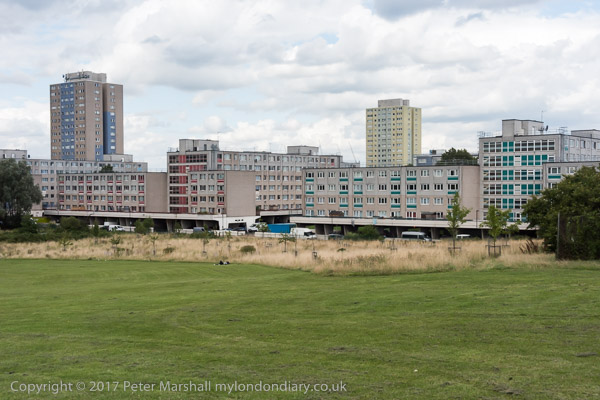
Broadwater Farm seen from the large park to its north

It is of course total nonsense. London remains one of the safest cities in the world. There is not a single ‘no-go’ area in the whole of the city.  Sharia law hardly exists and is simply used to resolve some disputes between Muslims who opt to use it, mostly over marital issues – and similar tribunals exist in the Jewish community and possibly some others.


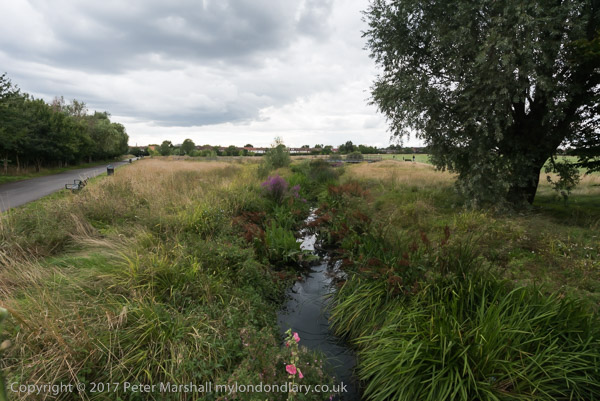
The River Moselle runs through the park and under the estate

Not that London is crime-free. Gigantic frauds and illegal money laundering are common in the City of London, probably the world centre for both, as well as being a base for some of the least principled companies that despoil resources around the world. And we do have pick-pockets, muggings and handbag thieves who operate in even some of the most popular areas, and tourists are often rather careless and may carry large amounts of cash as well as expensive cameras, phones, i-pads etc. Cycle rickshaws are a total rip-off, as are some other tourist attractions including sleazy clubs and bars. And if you are a teenage gang member you stand quite a chance of getting stabbed.


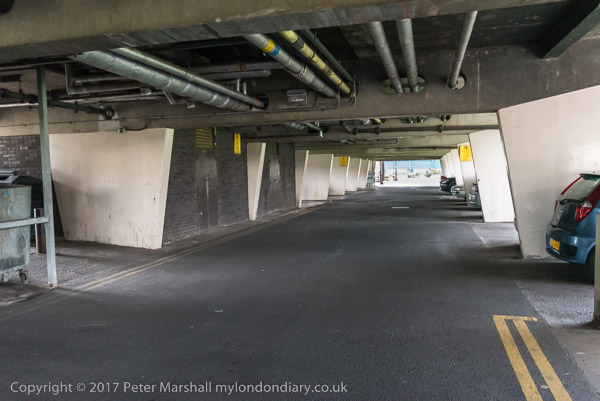
Because of the danger of flooding from the Moselle, the ground level is car parking

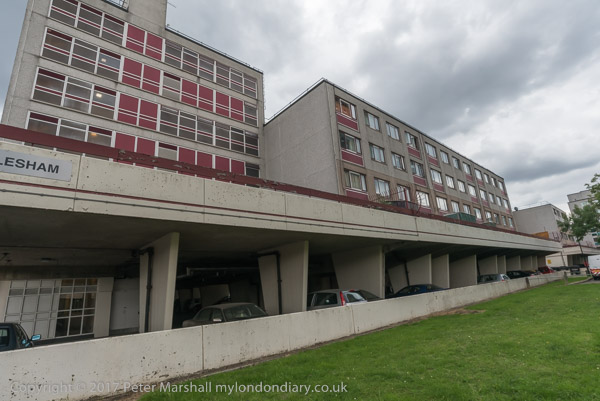
And we have had occasional riots, mostly provoked by police behaviour.  Broadwater Farm in Tottenham was a modern estate built in the late 60s, with blocks connected by walkways above ground level. Shops and other facilities for the roughly 4,000 inhabitants were also at ‘deck level’.  But it soon became apparent that these decks had many isolated areas and there were many minor crimes. The buildings also deteriorated rapidly, partly due to poor construction and a lack of proper maintenance by the local council, and many of the original tenants quickly moved out, with the council replacing them with people with various social and mental health problems, and it rapidly became a ‘sink estate.’


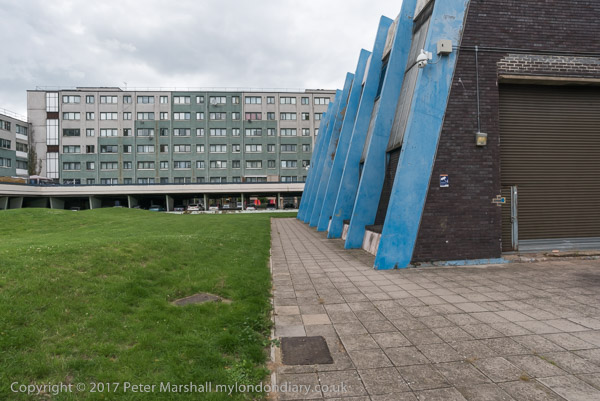
You can still see the remaining walkways, though many parts were demolished

Police adopted a robust ‘saturation’ approach to policing, with frequent stop and searches particularly for the young Black residents on the estate. And in 1985, after arresting a young man for driving with a false tax disk four officers visited his mother’s home on Broadwater Farm for a search – during which his mother, Cynthia Jarrett, died. Her daughter said at the inquest that she died after a police officer pushed her and she fell. News of her killing spread through the area; there were protests outside the local police station the following day when very unusually a gun was used with two officers and three journalists being wounded. Later in the day a police van going in to Broadwater Farm was attacked; police reinforcements went in, residents set up barricades and a shop was set on fire. Firefighters who arrived were attacked and more police came in, but left due to overwhelming opposition. Two officers became separated from the rest and were attacked; one was killed and the other seriously injured. But as the rioters realised a man had been killed the riot came to an end.


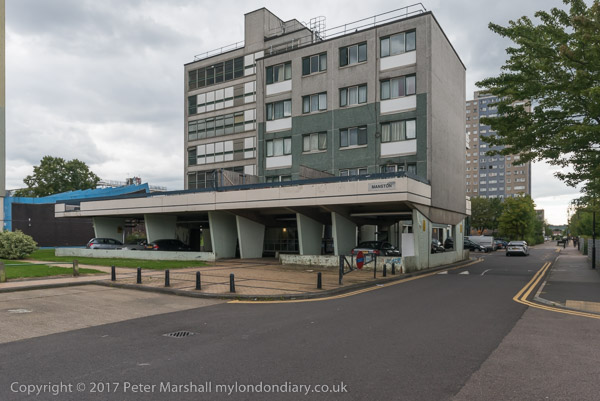
All the blocks were named after wartime airfields – this is Marston

Police investigating the murder picked on three men, who were convicted of the murder but the conviction was quashed a few years later when scientific evidence showed that the police had fabricated the three men’s statements. One, Winston Silcott, had been convicted for another murder where he had been attacked by his victim in what seemed to be a clear case of self-defence – and where  police had withheld evidence which would have proved this.  He was out on remand  before the trial when the Broadwater Farm killing occured, and it seems clear that this other case was the reason police picked on him and framed him.

The riot changed things for Broadwater Farm, bringing in a  £33 million regeneration programme which dealt with many community issues and demolished the decks which had caused many problems. By 2005 Broadwater Farm had become a popular estate with a long waiting list, and one of the lowest crime rates of any urban area in the world, with the police actually disbanding its unit there as there was nothing for it to do.

Despite this, the old prejudices linger on, and if you ask Londoners who don’t live in the area if there are any no-go areas, this is probably one of the more likely estates they will mention. And it has come back into the news again, in part because of another killing – the shooting of Mark Duggan who grew up there by police in  August 2011 elsewhere in Tottenham that led, after police failed to respond to local questioning, to the 2011 riots, and more recently because of the London Borough of Haringey’s controversial proposals, The HDV (Haringey Development Vehicle)  which would handed it and other council estates to private developer Lendlease for demolition and replacement by high-price private  housing.

More pictures at Broadwater Farm Estate

Continue reading Broadwater Farm

Lunatic photographers

It’s almost a week since I last wrote a post here, and I’m rather scratching my head to say why. I have perhaps been a little busier than usual, starting with the funeral of the father of one of my friends, where I was appointed official photographer. This isn’t something I’ve done before, and although I did a decent job at the wake, I didn’t feel I really did a job of the actual funeral, too many inhibitions showing themselves.  It would have been easier had it been a burial rather than a cremation, and I found myself very much a mourner rather than a photographer.  The pictures I did take I’ve given to the family, and have decided not to share in public.

Since then I’ve photographed several protests, one very large and some quite small, but all taking time, both to attend and to edit and file work, and I’ve made a resolution to try and keep My London Diary up-to-date – so you can already see the pictures I took yesterday there. Today I’m having some time off because of a minor health problem, though tooth-ache never feels minor. I had to rush to my dentist for an emergency patch-up yesterday, though it will require rather more painful work at a later date, and have time to write now because I’ve had to cancel a couple of things in my diary. Though being still tanked up on pain-killers and feeling a little unsteady probably isn’t the best state to be in charge of a keyboard, it does take my mind off my symptoms, and I started my day looking back at some of the things online I’ve missed over the past few days.

Judging from the pictures I’ve seen on Facebook and elsewhere, one of the biggest photographic events I’ve missed in the past few days was the “super blue blood moon” of January 31st, described by the Telegraph newspaper as a  “a once-in-a-lifetime event“. Except it wasn’t. I saw the moon rising through my window and there was really nothing special about it, and I didn’t bother to pick up my camera. It was the same old moon, a little brighter than sometimes, thanks largely to a clearer than usual atmosphere here, and exactly the same colour as usual.

Of course, London wasn’t the right place to photograph it, as the eclipse which did give it that blood-red colour was over well before the moonrise here. Which didn’t stop a number of photographers from producing (and the papers and web publishing) nice orange or red sunrise pictures, which of course owed more to our atmospheric pollution and perhaps a little Photoshop than the moon.

You can read a long account and watch a video on Peta Pixel of how Michael Tomas  took a series of these pictures showing a moon rising through the skyline of central London 10 miles away from a hill in Richmond Park with a 1000 mm lens, though I have to tell him he didn’t shoot a super blue blood moon, as he was several thousand miles away from a blood moon, with the total eclipse starting at 12.52 and ending at 14.08 and moonrise in London being at 16.55, almost three hours later, and three quarters of an hour after the end of even the penumbral eclipse (which is almost impossible to see.)  It’s still an interesting image and got a remarkable amount of exposure. Though I feel rather sorry for him for thinking this makes it the best photo of his life.

It wasn’t even a true ‘blue moon’, as Diamond Geezer points out in his daily blog for 31st January, the blue moon a name given to the third moon in a single season which had four moons rather than the normal three. On this definition there are no blue moons in 2018, but we do get one on May 18th 2009. But a journalist in 1946 got it wrong, and journalists have been getting it wrong ever since, calling the second moon in any month a blue moon. We get our next one by this definition on March 31st this year.

And it was hardly a ‘supermoon’ either, though it was a little larger than usual (5.9% according to the Hermit Eclipse web site).  The actual perigree (closest approach) was a day earlier. Visually these differences are hardly visible.

Lunar eclipses happen quite frequently – there is a good one due on 20th July 2018, where the total eclipse should be visible at moonrise in London at around 9pm.

But it is instructive to compare Tomas’s real image with the many Photoshopped ones that appear, notably that by Peter Lik, which has been the subject of much discussion, including on FStoppers, but also posted on Peta Pixel. Clearly this is a composite image and the fact that an identical image of the moon appears in another of his pictures makes this beyond doubt.  Perhaps the most mystifying aspect is that only 75% of those who voted in the accompanying poll were sure it was made in Photoshop, though I suspect the other 25% hadn’t watched the video or read the article in any detail.

Lik’s work is obviously very commercially successful, though few believe that his claim to have sold a single copy of a print for $6.5 million in 2014 to be anything more than a publicity stunt, he certainly makes a small fortune providing expensive decor, enough to employ a small team of people working on his images in Photoshop; two of those taking part in the FStoppers discussion revealed that a former employee had hold them he had spent an entire seven days working on one particular image. People could paint these things from scratch in less time than that.

But in the end I don’t have much interests in how Lik’s images are produced; they are simply not worth bothering with. I fail to see anything of interest in them, bad paintings produced with a little aid from a camera and rather more from software, clichés that lack any sense of reality and any meaning.

Another Stop Killing Londoners

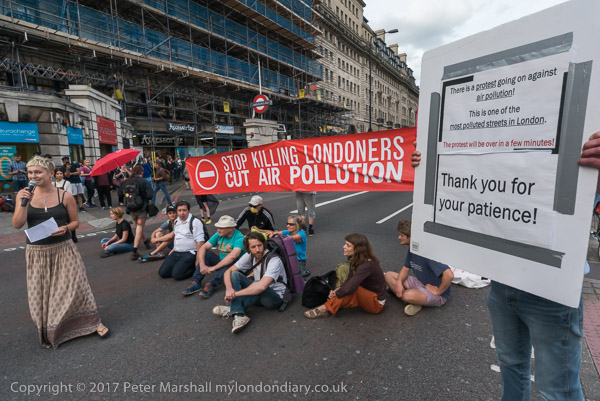
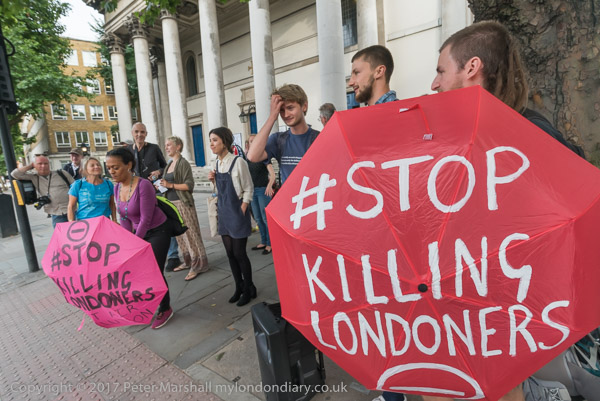
Rising Up’s Stop Killing Londoners group (SKL) continued its series of protests against the dangerous level of air pollution in London by a couple of brief road-blocks on one of inner London’s busiest roads the Marylebone Rd, beginning with one at the Baker St junction as many workers were making their way into the station on a Friday evening.

SKL protests are designed to get as much publicity as possible while causing only minimal inconvenience to the public – who like them are at great risk of lung conditions and early deaths because of excessive pollution levels in London air, especially around busy roads such as this. Those taking part include people who had campaigned for years to try and get some action over air pollution, but with very little effect, and they feel that protests such as this will embarrass London’s mayor into taking action – both through coverage in press, radio and TV and in particular if they get arrested and taken to court.

Actions were timed for the early evening partly because there is more traffic on the roads at the rush hour, but also for the very practical reason that most of those taking part are at work during the day time. Later SKL also organised a number of early morning protests before going to work, and I was unable to cover these because of the problems of getting up and travelling in to London in the early morning.

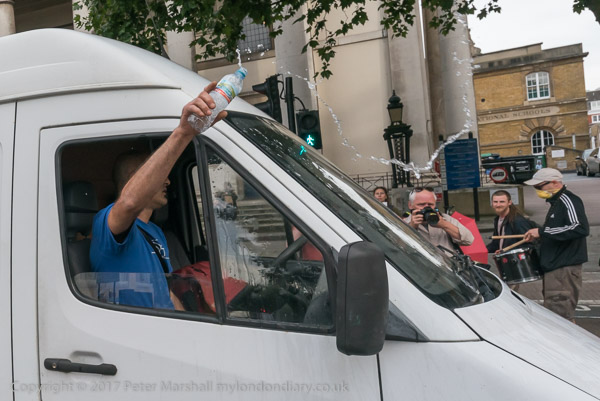
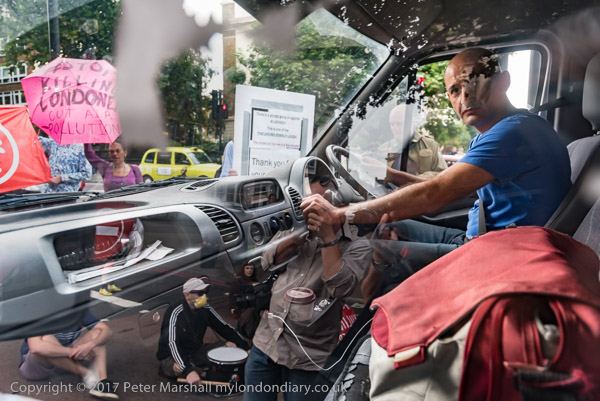
The kind of short hold-ups that SKL protests involve are not unusual on London streets. Any minor accident will cause longer stoppages and road works or building work often lead to much longer queues.  Both through posters and over the PA system they try to let motorists know that they will not be held up for more than a few minutes, but despite this a few drivers get very irate. One on this occasion even tried to use his white van to push the protesters out of the way, and when it became clear this was not going to work threw water from a bottle over them  – and over me as I took his picture.

I usually try not to involve bystanders in my pictures and to concentrate on those taking part in the protest, but once this guy had tried to drive through the protesters (and me) I decided he was fair game. I rather liked the image with reflections through the van window, though perhaps it is too fussy and too arty for editorial use. It did take a lot of work in Lightroom to bring out the different areas of the picture and even out the lighting, and some have thought this was a multiple exposure. It is a single exposure with my camera close to the van window, using the view inside the cab, the reflection in the window and the view through the cab and the front and opposite side window.

As often when unexpected things happen I was a little caught out when he started throwing water at the protesters, with a shutter speed that was more suited to the relatively static protest than action, and quite a few pictures were rather too blurred. And it isn’t easy to keep your camera steady when things start to get thrown at you.  So I only got the picture of him point the bottle at me and instinctively ducked out of the way.

Stop Killing Londoners road block
Continue reading Another Stop Killing Londoners

American History of American Photography

Only Part 1 of Marc Falzon‘s short survey of the history of American photography is currently available (and featured in PDN Pulse), but it’s 8 minutes offers an interesting introduction to the subject, dealing with it through 3 key curatorial figures, Alfred Stieglitz, Minor White and John Szarkowski (part one only deals with Stieglitz) and a few key photographers.

Among those photographers, so far only Timothy O’Sullivan and Walker Evans have been the only to have been looked at in any depth, with a passing mention of a few others.

It’s an introduction that tries to demonstrate what is peculiarly American about American photography and makes some interesting points, while of course minimising or neglecting much European work of the era.

Where it descends to the ridiculous is in suggesting that photographers such as Atget and Henri Cartier-Bresson were somehow the product of American advances in the medium and the influence of Stieglitz. What influence there was clearly flowed the other way.

It wasn’t the school around Stieglitz that motivated Walker Evans – except in a reaction which dismissed it as well as the newer modernism of photographers such as Paul Strand, but the vernacular photography of the many unknown American photographers – and the work of Atget which was brought to New York by Berenice Abbott and Julien Levy.

What I find most annoying about this video is however the way that the photographs are shown, generally starting zoomed into a detail and wandering around the image, with only at best a fleeting glimpse of the image as a whole. Framing is so intrinsic to our medium and we need to see and study pictures in their entirety – perhaps occasionally zooming in to view significant details.

Rashan Charles


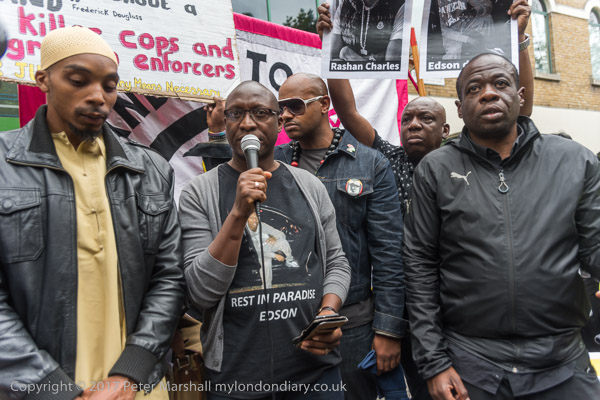
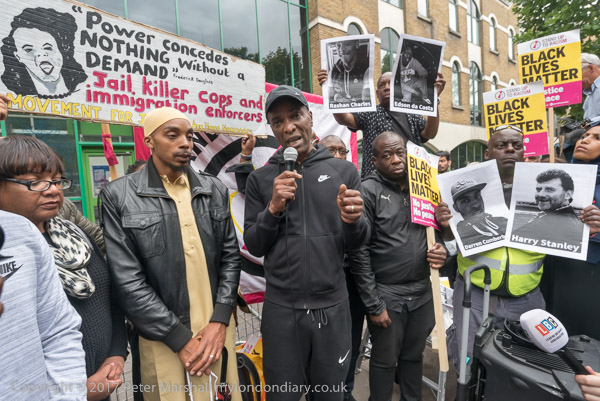
Rashan Charles’ father (left) stands beside Edson da Costa’s father as he speaks

Like many I watched in horror as a video on social media showed a young black man being held down on the floor of a shop in Dalston by a police officer, with help from another man not wearing uniform (though some reports said he was also a police officer but others describe him as a ‘member of the public’.) According to the police, Rashan Charles became “ill” and was taken to hospital where he died shortly after, though others say he died on that shop floor.


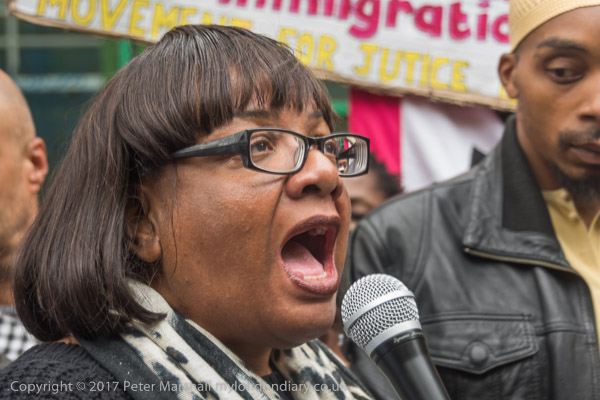
Dianne Abbott MP

There will be an inquest later this year which will perhaps clarify some of the details, though the two men responsible for his death have already been granted anonymity (though I think their names are known to many.) The Independent Police Complaints Commission advised the Met to suspend the officer involved but they refused. The IPPC (now the Independent Office for Police Conduct – IOPC but otherwise much the same) sent a file to the Crown Prosecution Service (CPS) for the police officer to be charged with common assault, but they decided that “the evidential test for a prosecution for common assault is not met. We will therefore not be taking any further action regarding this offence.” Presumably they haven’t seen the video.


Tottenham anti-racist campaigner Stafford Scott speaks for the Charles family
Rashan Charles’ great-uncle Rod Charles, a retired police sergeant with 30 years service with the force and former representative of the Police Federation, has commented that the the force used appears to contravene the official police guidance and described it as “unreasonable, disproportionate, unnecessary and excessive” and that the police failure to explain the purpose for the arrest also appears to be in contravention of the law.

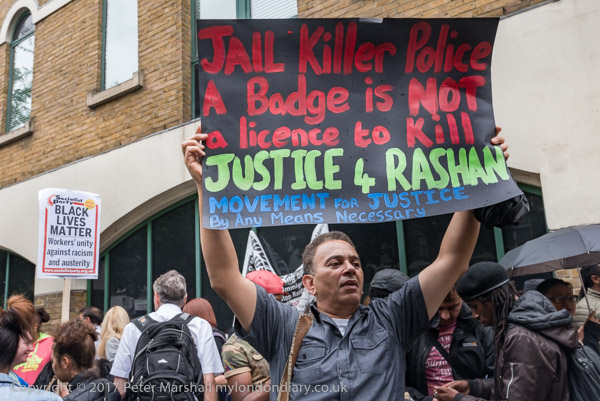
Rashan Charles was one of three young black men who died at the hands of police in the past few weeks, the others being Edson da Costa, who died after arrest in East Ham and Darren Cumberbatch, who died earlier this month after arrest in Nuneaton. People held up pictures of all three men at the protest.

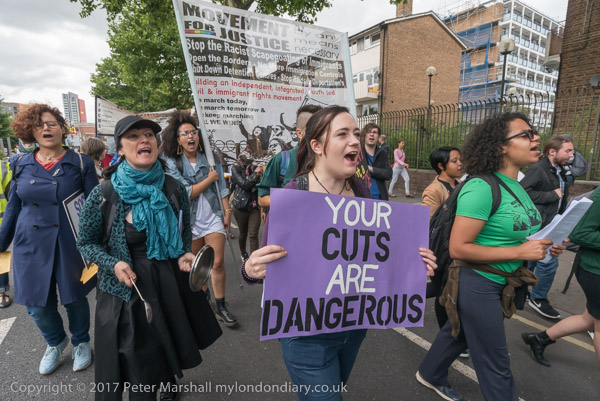
The protest outside Stoke Newington Police Station was organised by Stand Up To Racism, and I was disappointed that no-one from the Movement for Justice who had come in support was allowed to speak, though you can see their large posters in some of my pictures. Also missing was a speaker from the United Families and Friends Campaign (UFFC) which has led the fight for the families or those killed by police and in prisons etc over the last 20 years or so. It seemed a shame that the event represented a sectarian approach rather than uniting the different groups concerned and active in the area. It’s an approach that has also weakened the campaign to get justice for Grenfell Tower.

More at Justice for Rashan Charles.

Continue reading Rashan Charles