Lensculture 26

Lensculture issue 26 is now on line and as always there is much to look at, not least a preview pick of 40 pictures from the 2010 Rencontres d’Arles so that I can see what I will be missing from July 3-13 th (the exhibition programme continues until September 19th>.

I’ve thought about going there for years, but have never quite got around to it. Until around ten years ago there was a good reason, since it was always a very busy time for me at work, and it would have been difficult if not impossible to get the time off, but since then it’s largely been a matter of sloth and failing to persuade any of my photographic friends to accompany me.

Another feature I was very pleased to see was a selection of 16 images by Tony Ray Jones, a highlight of the recent Month of Photography in Krakow, Poland.  I did a very good PR job on his behalf with a lecture at the 2005 FotoArt Festival at Beilsko-Biala (just  a short trip down the road from Krakow) on the ‘Two Rays’ of British photography – Ray Moore and Tony Ray Jones, and again when I spoke in the same lecture hall two years later in a presentation of the history of British ‘street photography.’

You can see my pictures from Bielsko-Biala and a dairy of the 2005 festival there on line, though for copyright reasons I was unable to post my full lecture.  I also kept an online diary in 2007, in which I promise to make a version of my lecture available – but as yet I’ve not managed to do so. There are some copyright issues that I’ve not found a sensible way to resolve.

Sally Mann at the PG

I was disappointed in various ways at the Photographer’s Gallery opening of a show of Sally Mann‘s work yesterday evening, the last to take place in their current premises before they close for extensive rebuilding. But the show, The Family and the Land, which continues until 19 September 2010, is certainly worth at least a brief visit.

I was a greatly impressed by Mann’s At Twelve: Portraits of Young Women which brought her to the attention of the photographic world when published by Aperture in 1988, although the quality of the reproductions failed to do justice to her work.  (It was her second monograph, following Second Sight: The Photographs of Sally Mann which had been published in 1983.) At the time my students included many young women just a few years older than her subjects and a number of them were inspired by her work in their own projects. But it also disturbed some, as you can read in a thoughtful review by portrait photographer Elsa Dorfmann who felt uneasy about what she calls Mann’s manipulative approach.

Although none of the pictures from At Twelve are included in the current show (the programme notes state that she “first came to prominence for Immediate Family” which was exhibited and published four years later) I think it is more than arguable that ‘At Twelve‘ has had a much greater direct influence on other photographers, with an avalanche of projects dealing with girls in this age group since then.

Immediate Family‘  also published by Aperture four years later in 1992, but this time with seriously good duotone reproduction, also had a powerful effect both on me and my students. One smallish area of the gallery has a dozen or so images from this project, although I would have liked to see many more. Of the sixty plates in the book, only a handful are inclued in the show (The Last Time Emmett Modeled Nude, 1987, The Perfect Tomato, 1990, Vinland, 1992, Candy Cigarette and Emmet, Jessie and Virgina, 1989.) There are over 30 images on the Houk Gallery site (the last of those listed is titled EML there, which includes one or two others on the gallery wall.

Immediate Family caused a stir that went well outside the world of photography, with accusations from the right that it was child pornography and promoting pedophilia. There is a long essay by Valerie Osbourn which makes some of the controversy clear and also has some good descriptions of some of the images concerned. Before leaving for the opening I heard a rumour being spread by one a well-known photography critic that this show would be raided by the police who would demand the removal of some of the works. Given the choice of images it was perhaps just an illustration of that particular man’s warped sense of humour. But it was something that occasionally worried me when I was using Immediate Family in my teaching, and a few of my students obviously were rather disturbed by her images.

Having photographed my own children and others in my family in the previous twenty years it was something that neither surprised or disturbed me – and I had indeed been shocked at the powerfully negative response to a few of my own pictures when I had shown them in public in the 1970s.

There are people who have a problem with showing children and family life as it really is rather than in some idealised way, although Mann’s work goes beyond just doing this, with some carefully constructed tableaux. As she writes in her introduction to the book, “Many of these pictures are intimate, some are fictions and some are fantastic, but most are of ordinary things every mother has seen.” And at least some fathers and uncles too.

Later, Mann turned to wet collodion, learning the process from two of the modern masters (now fairly numerous), though perhaps deliberately avoiding becoming too competent at it. It’s much ‘artier’ if you don’t quite get it right (or perhaps more accurately in her case in every sense get it spectacularly wrong.) One or two of her pictures in the series Faces, giant close-ups of the faces of her now rather older children from 2004, have a real touch of the Julia Margaret Camerons, though others to me lacked any presence.

Applying this technique to the kind of American landscapes of the Civil War in rural Georgia and Virginia certainly had a powerful resonance, and the best of this work is impressive, and the accidents and degradation of the process powerfully evocative while on other prints it seems merely an irritating affection. Size too is an issue in her work (and of course the art market) and there are images in this show that I think would actually be more powerful at 8″x10 ” than at 40×48″ or whatever. (Her latest show, Proud Flesh, returns to a more sensible size.)

What Remains is in some ways a disturbing set of images, its subject matter the decomposing bodies at what seems like a rather ghoulish research project in Tennessee. There is a warning notice in the gallery that some may find the work disturbing, though I think I found it annoying. One of the photographers I met at the gallery would have liked to have seen these pictures made with high definition using modern film, camera and lenses. In a way I think she was right, and they would have been more effective, but I’m not sure I would have wanted to view them. I was reminded of many years ago when one of my students photographed in the local hospital mortuary, and I was very relieved to find that the low light conditions there meant that all her pictures were blurred by camera shake.

Immediate Family remains by far the most important series of Mann’s career, and it has never been shown in any depth in this country – and to this extent the current show (an edited version of a touring exhibition from the Museum of Modern Art, Sweden) was a disappointment. It was amazingly her first solo show in the UK, and tried to do too much but ended up doing too little. A second disappointment was that the photographer was delayed and not present at the opening. The third came at the bar. Fortunately there are some decent pubs within a short walk of the gallery, but it may account for what seemed a rather thin attendance for the opening of one of the rare shows of genuine photographic interest at the venue.

You can read an interview feature with Sally Mann by Blake Morrison on the Guardian site, and see more of her pictures, including images from Faces and Proud Flesh on the Gagosian Gallery site. She is also featured in the episode ‘Place‘ made in 2001 on the Art:21 site which also has clips and interviews about the wet collodion process and other aspects of her work.

Robert Bergman

My copy of ‘Aperture 199′ arrived a while back, and while I glanced through it, the review by Andy Grundberg of the work of Robert Bergman didn’t greatly attract my attention, largely because I thought the photographs printed with it were not of any great interest. But a piece by Joerg Colberg in Conscientious has (as so often) attracted my attention, and he links to a feature on Aperture’s Exposures blog, Right on Time by David Levi Strauss in which he attacks Grundberg – and gets a reply – now with a link to the review.

It’s a spat that perhaps doesn’t interest me too greatly, but has led me to think more about Bergman. Perhaps the best place to start is with this piece on Real Clear Arts by Judith H. Dobrzynski which links to her piece in Wall St Journal with 11 photographs. There are also a few different images on Dazed. You can also see these pictures possibly a little larger at the US National Gallery of Art, which also has a 15 minute conversation between senior curator Sarah Greenough and Bergman, as well as a singularly uninformative list of pictures in their collection which are not available on line!

I’d actually love it if I thought that someone who had photographed for almost 60 of his 65 years before being ‘discovered’ was a great unsung genius – hope for the rest of us ageing photographers – but unfortunately I don’t think so on the evidence I’ve seen.

And do take a look at Aperture magazine. I can assure you there are more interesting things in it than this review.

Lightroom 3

Lightroom 3 is now officially out, although I’ve not yet bought it but I certainly will. The upgrade price (from version 1.x or 2.x)  in the UK is around £75 (the cheapest I’ve yet seen is £72.99 on Amazon with free delivery) and if you are a teacher or student you can get the full version for around the same price. It seems to cost a couple of pounds more to download, which seems odd to me.

You can watch some Adobe videos about it which as well as showing off the product do also give some useful advice. As yet there don’t seem to be any reviews of the final product that go further than the press release.

As well as the much improved noise reduction that we’ve seen in the beta versions, it now also has several new features I’ve long been asking for, though of course I’m still waiting to see how well they work. Chief among them is lens correction, allowing you to set up single-click profiles for automatically reducing geometric distortion, chromatic aberration, and vignetting. It should ship with profiles for some common Nikon, Canon and Sigma lenses, but Adobe will also offer a free tool for creating your own profiles for any camera/lens combination. You can also manually alter the corrections.

Also very useful is perspective correction, one of the few other remaining reasons why I sometimes need to export images to Photoshop. I can also see myself making use of the new image watermarking tool, though other features such as the film grain simulation and Flickr integration I’ll probably give a miss – unless it’s so easy I change my mind on Flickr (and watermarking might well help there.)

I was less than convinced by the ‘easy image importing’ in the beta – frankly it seemed rather more fuss than the present simple dialogue, and images didn’t always quite end up where I wanted, but I’m sure I’ll get used to it.

Something that isn’t made a great deal of, but I think many will find useful is the ability to use the tone curve just like the one in Photoshop. But perhaps even more important than all the little improvements it promises an overall performance increase.

Black & White?

I still can’t make up my mind what to do about my Leica M8. There are occasions when using a rangefinder camera like this just feels right, and you find yourself moving around and taking pictures in a way that feels so fluid and natural, the camera becoming integrated into your seeing and being in a way that just doesn’t happen with an SLR.  It’s hard to put into words but I think photographers who have worked for any length of time with a Leica M or similar camera will recognise what I’m trying to say.

But of course there are so many things a rangefinder simply can’t do, or can’t do well – such as using longer focal lengths or fisheyes or working very close to the subject.

The Leica M8 was such a disappointment to me because although it had a similar feel to film Leicas somehow I didn’t get the same results. I don’t understand some of the problems that I had, while others were only too obvious.

Firstly, many of the results were not as sharp as I’d expected. I think that the digital sensor is rather more demanding on lenses that film, and some of the rather well-used  wide-angle Voigtlander lenses I have are perhaps a little past their best. The 35mm f1.4 Leica lens (one supposedly not compatible with the camera) does rather better, but the smaller sensor makes it into a standard rather than a wideangle lens, and both Konica and Leica 50mm f2 lenses I own are fine as short telephotos.

But to really use the camera the way I want would I think need some new ultra wide-angle lenses, and the Leica lenses are not cheap.  They are also relatively large compared to my existing lenses, presumably meaning that the light path from the rear lens element to the sensor is nearer to the perpendicular, reducing some of the imaging problems.

The big problem with the M8 is of course colour. Although using an IR filter on the front of the lens reduces the problem it is still an issue with wide angle lenses.  Using Leica coded lenses again would help. I tried adding black dots on the lens mounts to code my existing lenses, and it was a partial solution, but with lens changes the dots soon wore off.  Some lenses I never managed to get the dots to work either.

Even with longer lenses where correction is rather easier, the colour produced lacks the quality that comes more or less out of the box with Nikon cameras and lenses.

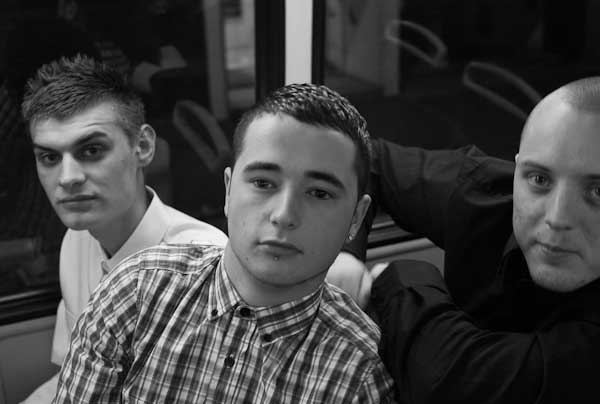
When I climbed up rather unsteadily up the stairs of a bus on my way home after a little celebration a couple of weeks ago, it was clearly no ordinary bus but full of young people and party spirit. Being full of party spirit myself I joined in with the M8 and I think almost all of us were rather amused by the whole thing.

© 2010, Peter Marshall

Fluorescent lighting is always something of a problem, and that on buses seems to be peculiarly deficient, so shooting for black and white seemed a good idea. Buses are not a steady platform and everyone including me was moving quite a bit, and the movement actually made precise focussing tricky. A higher ISO would have helped, but the M8 is rather noisy at high ISO. I was working with the 35mm f1.4, but stopped down to f5.6; probably f4 would have been a better choice.

The M8 is much better as a black and white camera than for colour, but much as I like black and white pictures I can’t see myself going back to taking them as a regular thing. For me I think it’s in the past.

A few more of the pictures on My London Diary.

November in Paris & Lensculture fotofest

I’m already looking forward to November in Paris, which really is the month of the photo, as well as a great time to enjoy walking around one of my favourite cities.

In 2008 I spent the best part of a week there and apart from Paris Photo, visited more than 40 other photo shows, writing about quite a few of them for >Re:PHOTO, as well as my reflections on the Maison Europeene de la Photographie (MEP) compared to our Photographers’ Gallery and attending the Cérémonies du 11 novembre. I think there are about 32 posts from that visit on the site in November 2008 and December 2008 (it took me a month to finish writing about the best of the exhibitions I saw) and also on My London Diary, a special Paris Supplement with my own pictures from the visit.

© 2008 Peter Marshall
A walk in the footsteps of Willy Ronis, 2008 Peter Marshall

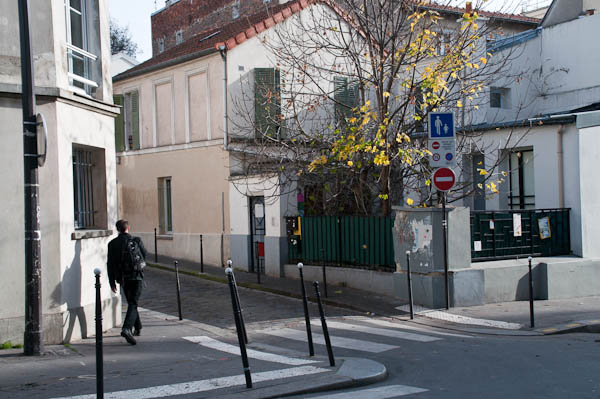
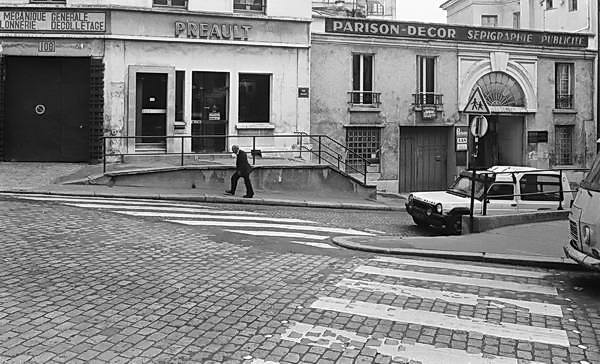
Two things reminded me about Paris in the last week. One was a request to supply a picture I took in 1984 which is on the front page of a part of my Paris site.

© 1984, Peter Marshall
Quai de Jemappes / Rue Bichat, 10e, Paris, 1984

And the second was the latest news from Lensculture, based in Paris, which as well as announcing the latest issue of this great online magazine, also gives details of the Lensculture fotofest Paris 2010, with international portfolio reviews and a meeting place for photographers to be held at Spéos Paris Photographic Institute in the 11th arrondissement from November 15-17 2010. This is the first large-scale event of the type – pioneered by FotoFest in Houston 20 years ago – to take place in Paris.  Birmingham of course got there some time ago with Rhubarb Rhubarb.

© 2007 Peter Marshall
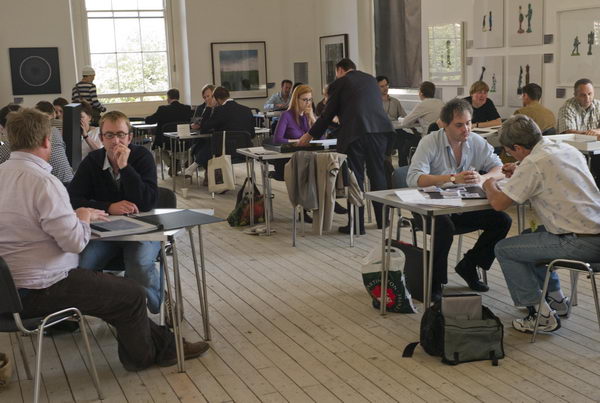
Reviews in progress at Rhubarb Rhubarb in Birmingham in 2007, where I was one of the reviewers

Lensculture has also joined up with VII Photo and now has features and recorded interviews with their photographers in an ‘Inside Photojournalism‘ series.

Something completely new to me in this issue of Lensculture is the work of Lithuanian photographer Mindaugas Kavaliauskas whose book on life in Kraziai, an historic village in north-western Lithuania, is reviewed by Zoë Fargher and you can see a set of of his 16 images from it on the site.

Visura 9

Issue 9 of Visura magazine is, as its predecessors, full of delights, and doubtless you will find your own and different highlights from mine. Cheryl Karaliks‘s five deaf boys raising their hands in the air in Bobo Dioulasso, Burkina Faso in 1991 certainly lifted my heart and there are many other fine images in her ‘Notes from Africa.’ Alex and Rebecca Webb’s ‘Violet Isle‘ includes many amazing colour images by both, and it was a joy to view the work again.

The work in this issue is extremely varied, and living up to the magazine’s policy which is to feature “personal projects chosen by the contributing artists themselves” with “texts that accompany projects … edited through a collaborative process with the artists” with the goal “to be true to their voice“. Although it is an ‘invitation only’ publication, photographers are invited to include a link to a series of their personal work on the ‘Your View’ page.

I still have some problems with the web design – or perhaps with my connection to the site. I don’t know if I saw all the pictures in some of the essays, as on the final image I reached there was still a button for the next image – but clicking it failed to load more. The initial image for each feature also came equipped with a ‘previous’ button that did nothing on my browser. For some features – including my two favourites mentioned above – I could find no accompanying text other than the image captions, and where the text was on the other features there was a large area of empty space.  I was left wondering whether the photographers had wanted their images shown without text, or whether the text had for some reason failed to load.  It remains the kind of site where I sometimes am left wondering whether I’d using the right browser or have the right plugins loaded.

For some time I’ve been convinced that the future of photography magazines is on the web, and Visura I think is in most ways a good example of how that future will be. Visura has great content and it looks good on my screen (and after all photographers need to have good screens, accurately calibrated to process their own work – so what could be better to view the work of others?)

Previous issues are still available in the archive section of the site and there are many fine features there to discover if you haven’t been a regular reader.

Invisible Lenses

Its nice to know, thanks to the review article on ultra wide-angles in the April issue of British Journal of Photography, that “Nikon’s newly announced 16-35mm f4 VR (will be) available later in the year” when I’ve been using it for well over a month. The first shipment to the UK arrived shortly before the end of February, and mine was on my camera the following working day.

© 2010, Peter Marshall
One of thousands I’ve taken with the Nikon 16-35mm f4 VR: 16mm f5.6

It was the lens I’d been waiting for since I bought a Nikon FX body. I’d tried the Nikon 14-24 f2.8 (described in the BJP as setting a new standard for the class) but had not been impressed; the few test shots I took with one were fine, but convinced me that this was an impractical lens to work with, largely because of its bulging and unprotectable front element, but in any case it just did not feel right on the camera.  In any case I already had a Sigma 12-24 that covered full frame, and although it wasn’t as fast or quite as sharp as the Nikon, did a reasonable job, but too often I was finding that I had to switch lenses as 24mm wasn’t quite long enough.  Looking at the various focal lengths that I took pictures at when using this lens I could also see that there were relatively few good images made at wider than 16mm – and usually images that I tried just looked too wide.

I’d looked long and hard at the older 16-35mm but wasn’t too happy with the performance, particularly at the price, of a lens that was really designed for film. So when the new 16-35mm was announced I wanted one. Unlike a loud chorus on the web I wasn’t worried by a maximum aperture of “only” f4 – with the kind of high ISO performance available on the D700 (or D3) the loss of one stop over f2.8 seemed a minor detail. And although I’d have preferred a smaller, lighter lens it was within the limits I was prepared to go to for improved performance. My only sticking point was the price, but in the end I decided it was worth the £999 which was the cheapest I could find it at at UK dealer, a decent saving on the recommended price.

I don’t review lenses, I use them. I’ve been using the 16-35mm for 5 weeks, quite a few thousand exposures, and haven’t been able to fault it. Focus is fast (so fast and quiet I’ve sometimes been reluctant to believe it has focussed.) VR would not be high on my list of priorities for any wide-angle, and I’m frankly unsure whether or not it has helped at all in any of my images, though I’ve left it switched on all the time.  When I’ve made unsharp images, its either because I’ve focussed in the wrong place or someone has moved too fast for the shutter speed I’ve been using, neither the fault of the lens.

I’ve had a lot of chances to use it in the rain. It’s coped without problems and seems well protected at least if you don’t leave it out in the rain too long and keep wiping it. The lens hood is as you might expect not a lot of use for anything, other than a little protection. I do wish Nikon would make lens hoods rather stronger and with a better bayonet fitting – like all the other Nikon ones I’ve used this one falls off occasionally. I’m tempted to glue it in place, but it is occasionally handy to reverse it for storage.

Unlike many lenses it is truly an f4 lens, usable wide open. f4 is wide enough to give a reasonably bright viewfinder image too. I’m sure lens tests would show it improves on stopping down, but I don’t think it is noticeable in the pictures.

As for the image quality, generally I’ve been impressed. Relatively low distortion for the focal length – I don’t think I’ve felt moved to correct anything I’ve taken with it.  It would be a problem with architectural subjects at around 20mm and less. In a standard “brick wall” image at 16mm focal length I have 23 courses visible in the centre of the image and between 24.5 and 25 at the edges.  At 20mm I think there is probably very slight barrel still, but it really is hard to decide, and it seems distortion free at longer focal lengths.

Here are my comments on sharpness in some simple photographic tests photographing the house across the road:

16mm  At f4 sharp centre, slightly soft at corners, small amount CA largely removed by R/C-18 B/Y+13  in Lightroom. At f5.6 corners were sharp too. Viewed at normal size (300 dpi)  results at f4 were acceptable across the frame

24mm At f4 corners more or less as sharp as centre, very slight CA red green and blue yellow, largely removed by R/C-13 B/Y+8 in Lightroom.

35mm At f4 sharp across entire frame, very slight CA largely removed by R/C-13 B/Y-10 in Lightroom.

Another point I like about this lens is that it doesn’t change at all in size as you zoom or focus – all movement is internal. I’m not sure why this seems such a good thing – though of course it makes the weather-sealing much more practicable, and it somehow seems less fuss. It gives the lens quite a different feel from say the DX Nikon 18-200mm which of course has a much larger zoom range, but does sometimes make me feel more like I’m playing a trombone that taking photographs.

So I can recommend the Nikon 16-35 without hesitation if you are shooting on FX format. I’ve not tried it on the D300, but imagine it would be fine, giving the equivalent of a 24-52mm zoom, a high quality general purpose lens. I’m hoping soon to be able to pair the 16-35 on FX with the 24-70mm Sigma f2.8 on the DX D300, where it would be the equivalent of a 36-105mm, the two together covering most of my needs.  Add the lightweight Sigma 55-200mm I have for when I need something really long and it would be a pretty comprehensive outfit.

Unfortunately I don’t yet have the 24-70 back from Sigma where I sent it for repair almost 2 months ago. When I first got it I thought it was another great lens (at least when stopped down to f4; wide open at f2.8 it could look a little soft) but after a few months it started to give problems and something inside was obviously loose, so I sent it back to Sigma for service under warranty.  They stopped it making the nasty grinding sounds but optically something was still very wrong so it quickly went back to them. Today I phoned them again to hear that they had to send it back to Japan as they couldn’t get it working properly (and apparently I should have been sent a letter to tell me this.) The good news is that as Japan can’t repair it either they are sending me a replacement lens – which should arrive in a week or so.  I hope that this will be a happy ending to a rather long story.

© 2009 Peter Marshall
Nikon D700& Sigma 24-70mm f2.8, 24mm

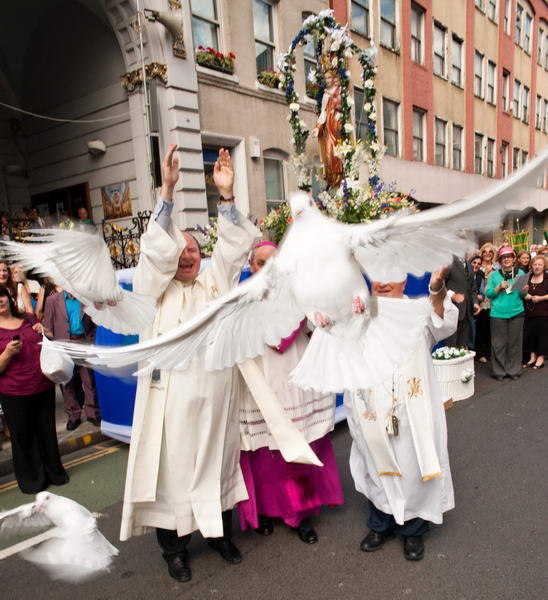
Here’s a picture I took with the Sigma when it was working properly last July.  The pigeon was released by the priest at the right and flew directly at me and much to my surprise the camera and lens had kept it in focus, although it was extremely close to me and the flash, which gave a sharp image as well as the slight blur of the ambient exposure.

LIDF 2010

Yesterday I went to the Press Preview of the London International Documentary Festival (LIDF) held at the London Review of Books bookshop in Holborn – the festival is in association with the LRB, with Ecover as its main sponsor and supported by the European Parliament – and as usual could not resist taking a few pictures.

Fortunately most of the area had a fairly low white ceiling, so bounce flash from the SB800 and the Nikon 16-35mm on the D700 made the technical stuff simple. So I’ll include a few pictures here and a few more in My London Diary shortly.

© 2010, Peter Marshall

The LIDF is the UK’s premier independent documentary film festival, screening over 130 films from 36 countries, “groundbreaking output from around the globe” in London from 23 April – 8 May. This year is the fourth for the festival, which has grown rapidly and now runs for 16 days and has branched out from film to include documentary in other media: radio and photography.

© 2010, Peter Marshall

As a part of LIDF 2010 there are two 5-day Magnum Documentary Photography workshops, one for women only run by Olivia Arthur and the other by Donovan Wylie. The workshop fee of £550 plus VAT does not include travel, accommodation or other expenses, and those taking part will be selected by an on-line application including a portfolio of 6 pictures before 6.00pm GMT on Sunday 4th April.

© 2010, Peter Marshall

The LIDF is a London wide festival, with screenings, exhibitions and events across the capital including The Barbican, The British Museum and Ciné Lumière as well as more local venues.

© 2010, Peter Marshall

Of particular interest to me is The Invisible City, a multimedia event at The Hub, a work and meetings space on York Road, Kings Cross on Saturday 24 April. Talks, discussion, films, audio and photographs about Hackney, Kings Cross and north-east London and the changing urban environment and how it affects those who live and work there.

© 2010, Peter Marshall

The films include John Roger‘s London Perambulator in which Will Self , Iain Sinclair and Russell Brand explore the importance of the edge lands on the fringe of the city, films from the London Refugee Stories Project, audio from Nick Hamilton‘s series Foot and Mouth and photography from Alex Bratall and myself, Peter Marshall.

I’ll be projecting some of my pictures of the Lea Valley over 30 years, and also showing the rather tongue in cheek psychogeographic work, 1989, which purports to be the first chapter of an uncompleted book about a series of rambling walks I made with a now-deceased author.

© 2006 Peter Marshall

St Patrick’s Day

It’s taken me a week to get round to writing about St Patrick’s Day, mainly because I’ve been busy working taking other pictures and getting them on line since. If you want to keep up with what I’m doing then much of it appears on Demotix, and I post updates  on my work on Twitter and Facebook. Here I try to reflect on things a bit more rather than simply cover events, and that takes time and sometimes there isn’t a great deal to reflect on.

St Patrick’s Day was a little different for me this year because I went to it with a photographer who has made covering these parades one of his specialities, although mostly in the USA where they take these things rather more seriously. And who comes from an American-Irish family and grew up in the the Bronx. I first saw John Benton-Harris’s pictures in ‘Creative Camera‘ many years ago and he had a fine portfolio in one of their year books, but little of his work is currently available, which is a great loss. I can only find 3 images on the web, none well reproduced, one from Derby Day and two (click on the thumbnails to see them) from St Patrick’s parades.

Before the parade John and I went to a couple of exhibitions, one the ‘History of Photography‘ on fairly permanent display at the V&A which seemed very much not to be a history of photography but some rather random items from their large collection (and perhaps mainly chosen for their size.)   There are a few interesting images but it’s hard to see any particular justification for the particular selection. A couple seemed to be rather poor prints – the Robert Frank is damaged and the Don McCullin seemed rather too dark, and there were a few that the only justification for their presence was that they represented the fact that many photographs are bad. It did cheer me up a little to find that several of the better pictures were by photographers I know or have met. The one image that stood out for both John and I was probably the smallest in the show, Dorothea Lange’s ‘White Angel Bread Line.’

Also in the gallery is an exhibition about the first ever museum exhibition of photographs, held at the V&A in 1858.  Consisting of work from the Photographic Society of London and the Société française de photographie  there were the huge number of 1009 photographs on show, and you would have had to get down on your hands and knees to see some and stand on a chair to see others as they were hung 5 or 6 prints high from about six inches to what at a guess is around 7 foot. The photograph of some of them by the museum’s photographer is the earliest known photograph of a photographic exhibition.

We also dropped in to the Michael Hoppen gallery in Chelsea on our way to the V&A, but neither of us was impressed by the pictures of fashion photographer Fernand Fonssagrives (1910-2003), most of which were of his first wife, Lisa with her elegant torso covered with shadow patterns.  It was something that Man Ray had played with earlier (and I suspect others too) but I couldn’t see any great interest in the work though some of the other pictures were of more interest. Lisa Fonssagrives became rather more famous as a model and after their marriage ended in 1950 she married Irving Penn, while Fernand went to Spain and became a sculptor.

And yes, I did take some pictures in Kilburn. Perhaps the one I like best is this:

© 2010, Peter Marshall

though there are others, particularly some of the kids and the old ladies that have a charm (and sometimes an Irish charm.)

© 2010, Peter Marshall

And I quite like this one of the English saint whose day it is.  (The Irish of course came and kidnapped him from Somerset.)  More pictures on My London Diary.