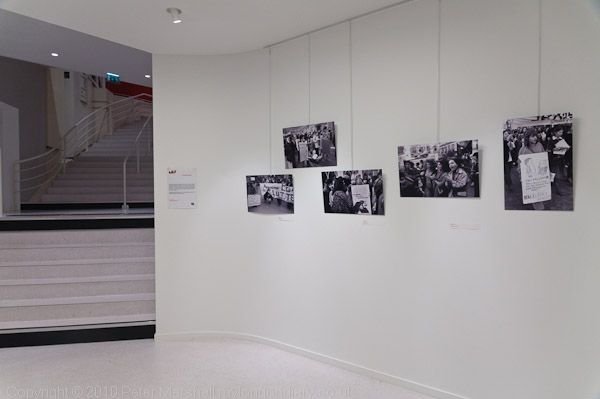
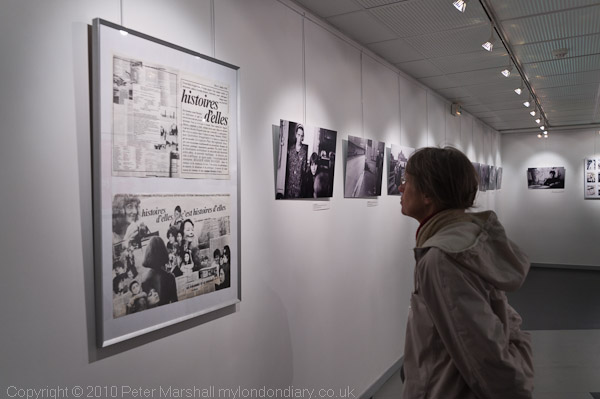
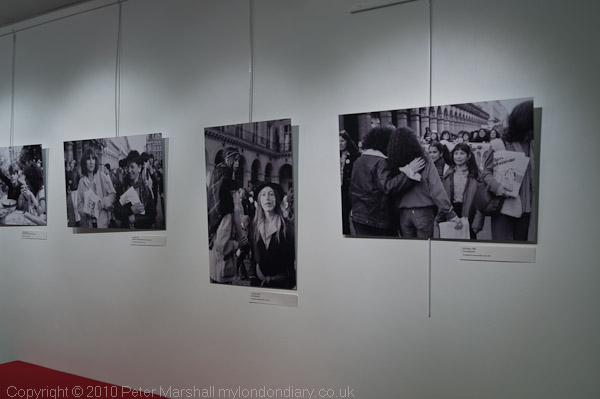
Photo-Off – A Guided Tour – 2

© 2010, Peter Marshall

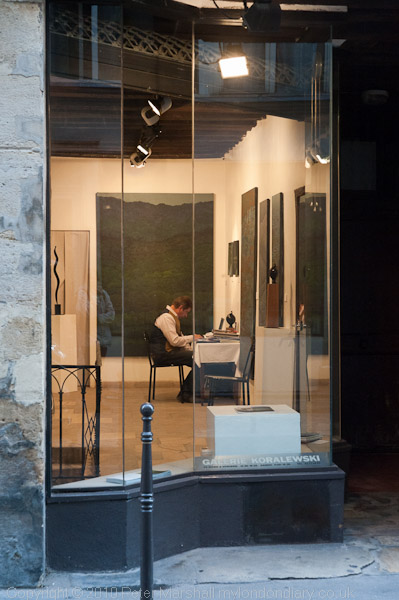
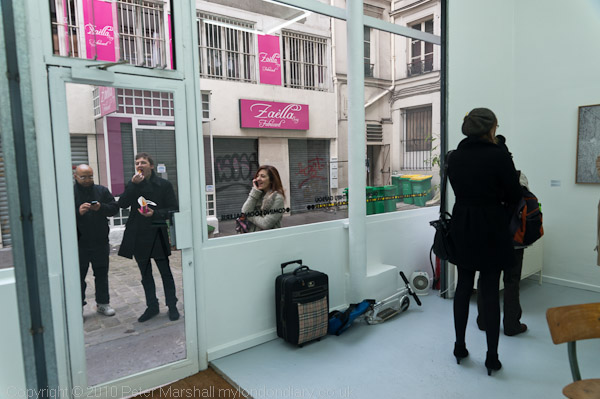
When I first walked down the rue Quincampoix some years ago it was lined with young (and some not so young) ladies who pouted invitingly at me as I went by, but now their place has been taken by art galleries, and the area has lost a little of it’s decadent charm.

© 2010, Peter Marshall

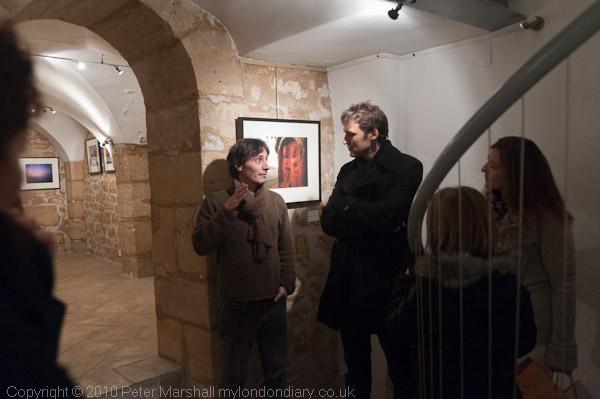
In the basement of Galerie Impressions, below the bookshop, we were met by photographer Loïc Trujillo. The gallery is dedicated to work by Asian artists or those who have worked in Asia, and for the Photo-Off was showing his work ‘instants de vie‘, pictures from the holiest of Hindu cities, Vârânasi (Benares) on the Ganges.

Wealthy Hindus from all over the world bring there dead to be cremated on the slopes (ghats) by the river. Bodies are wrapped in cloth and bathed in the river before being burnt with wood on a funeral pyre. The morning after, the ashes are raked through to find any objects of value and then cerimonially scattered on the river with flower petas and other offerings. The sacred water of the Ganges is said to have the power to erase the sins of the deceased, liberating them from Samsara, the eternal cycle of reincarnation and allowing them to rest in peace for eternity.

Although I’ve seen other photographs and film of the events there, Trujillo’s work still impressed.

© 2010, Peter Marshall

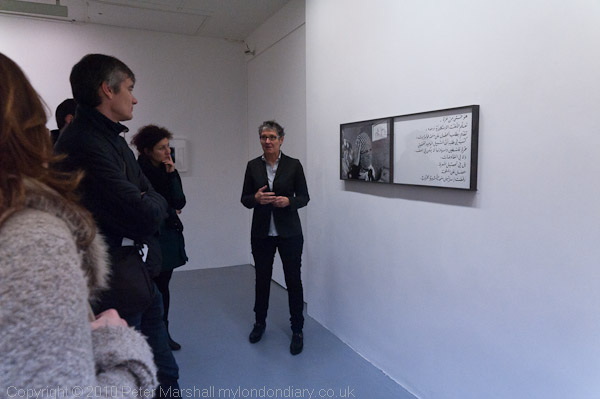
A little further down the street we came to ‘Someday we’ll all be free‘ at Gilles Peyroulet & Cie, a show of varied work around the theme of conflict and war, with images from more or less the whole of the twentieth century, where the curator took us through the whole show at some length. Although some of the work on display was of interest (and parts somewhat horrific, with one series of pictures showing a man undergoing barbaric torture, and also included were some official photographs of the Nazi concentration camps) I didn’t feel the show really produced anything coherent other than an easy condemnation of inhumanity.

© 2010, Peter Marshall

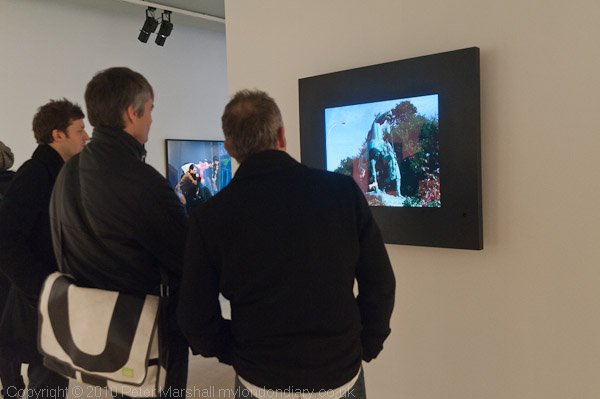
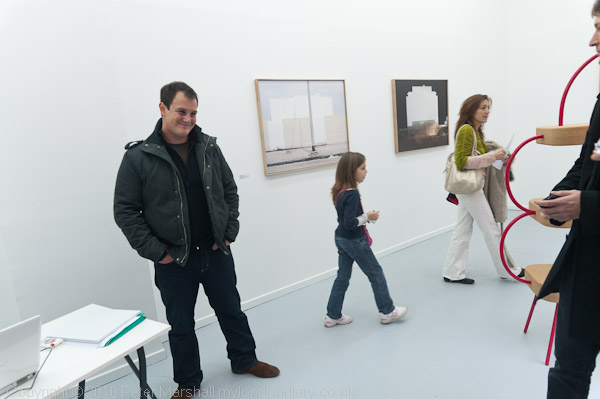
Next we made our way to the Centre Wallonie-Bruxelles in the rue St Martin, opposite Beauborg itself, which was showing, Les (in)contrôlés, a group exhibition of work previously shown in the 2010 Liege Biennial on the theme (out of) control. This was the only one of the galleries that had made no arrangement for our visit, perhaps because it was a basically a show from elsewhere, but also possibly because none of the staff concerned with the exhibitions works on a Saturday. This is not a commercial gallery but some kind of official venue to promote the interests of French-speaking Belgium.

This wasn’t a show I particularly warmed to, and some of the work – such as the well over life-size female body-builders by Martin Schoeller (a German photographer who was an assistant to Annie Leibovitz in the 1990s before taking portraits for Rolling Stone, Vogue, the New Yorker and other magazines) I found repulsive, although in part that was because of the contrast – which fascinated the photographer – between their bodies and their faces.

Joyce Vlaming‘s series ‘Cellblock’ addressed the theme very directly, and her pictures, though in some senses very effective were just too cold and clinical to have much attraction for me. Perhaps too the chilling image by Nicolas Clément of a security guard and his guard do at night, ‘security Partagee‘ was just too direct an interpretation of the theme. I was certainly happier looking at the ‘autoportraits‘ by Melissa Desmet and the portraits of Patrick Van Roy.
Les Boules‘ by Nathalie Noël, pictures of glass domes encasing icons of traditional family values provided a little amusement, as too did the impossible situations of Tilman Peschel‘s ‘Revolution.’

© 2010, Peter Marshall

Then it was back to the rue Quincampoix, or rather a courtyard off from it, for the Galerie Orel Art, a large space with a group show of Russian portrait photography from 1970-2010, with work by Nicolai Bakharev, Valery Schekoldin, Lialya Kuznetszova, Sergei Tchilikov, Oleg Kulik, Igor Mukhin, Sergey Leontiev, Igor Savchenko, Arsen Savadov, Sergey Maximishin, Olga Kisseleva, Evgeny Mokhorev, Vlad Mamyshev-Monroe, Valery Nistratov & Jason Eskenazi, Alla Esipovitch, Oleg Dou, Dasha Yastrebova, Irina Popova, Margo Ovcharenko and Tanya Leshkina. You can see the work of some of them on the Russian Tea Room site, as well as on the Orel Art site, which seems very slow to load. I was particularly impressed by the black and white work of Mukhin and Schekoldin from the 1970s and 80s, but much of the work was of interest.

© 2010, Peter Marshall

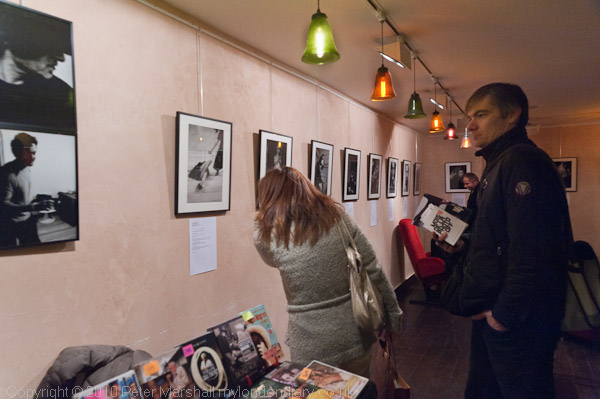
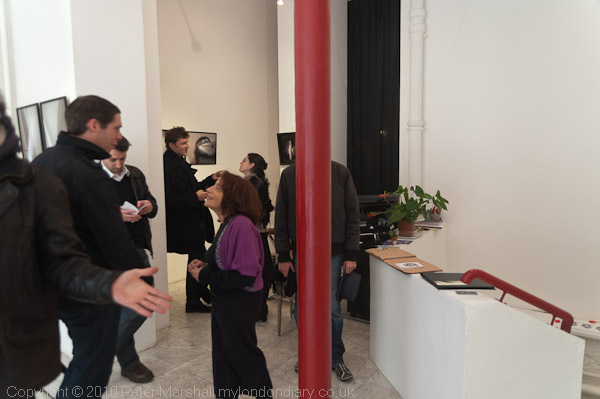
Finally we made it to Le Nouveau Latina and an exhibition in the upstairs cafe lounge at this cinema in rue du Temple, where we were met by Dom Garcia who introduced us to ‘Black Lights’ his black and white portraits of his friends around the wall, accompanied by Olivier BKZ’s texts. You can get a good idea of Garcia’s work from a page on SDH. It was another show I enjoyed that unless I had gone on the guided walk I would probably have missed.

© 2010, Peter Marshall

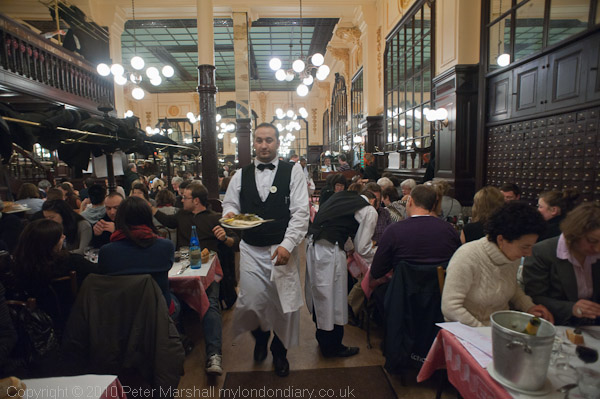
The Noveau Latina looked like a good place to have tea, but unfortunately we were short of time as we needed to go back to the hotel and change before going out to meet Linda’s brother and his wife for a meal. We had decided to pay another visit together to Chartier and had arranged to get there early to miss the large queues that build up later. Chartier has certainly gone down a bit since we first ate there years ago, but it’s still a part of Paris past not to be missed, even if our waiter did this year use a calculator. We walked straight in but by the time we had finished our meal and left to go elsewhere for a drink the queue stretched all the way down the street to the boulevard.

Photo-Off – A Guided Tour – 1

The Photo-OFF booklet, available at the roughly 100 spaces with shows in it, is a handy pocket size, but fairly thick, with well over 100 pages, and it divides the 100 shows into ten geographic areas. Unusually for Paris, these don’t correspond exactly with the arrondissements, but instead break up the shows into sensible groups mainly within walking distance – though in the outer areas you would probably want to jump on a bus or metro at times.

Except for the six shows in the ‘banlieue’ on the east and west fringe of the city, each area has a date specified as the ‘nuit parcours’, when most if not all are open specially from 6-9pm, often with the photographers present. Most of these were outside the time I was in Paris, and I had other things on for the two that were taking place while I was there to attend these.

This year for the first time there were also a guided walks for most of the areas (no booking required, just turn up), and two of these  were taking place on the Saturday afternoon I was in Paris. These were not in the printed program but on the web site and the web version of the programme.   Neil Atherton, an English phtoographer and curator who has lived in Paris for around ten years and founded Paris Photographique in 2004 was on the tour I took. He is the Commissaire General of the Mois de la Photo-OFF, and told me that this was an experiment, and the arrangements were made too late for the printed brochure.

© 2010, Peter Marshall

About a dozen of us met at the ‘Coming Soon Gallery‘, a newly opened space in passage Lemoine between the rue St Denis and the Boulevard de Sebastapol at the top end of the 2e.

© 2010, Peter Marshall

There we were able to look at the work of Swiss photographer Matthieu Gafsou, (b 1981), whose images of largely empty urban spaces appealed to me, and to hear him talk about his work – and although it was in French, I could make some sense of it, enough to ask a few questions in English, which he fortunately answered in the same language. You can watch a video interview in French with Frédéric de Gouville from the gallery and a with Matthieu Gafsou, which ends with the photograph which was my favourite from the show

Gafsou’s pictures combine reality – photographed on film – with elements constructed and added in Photoshop, and occasionally contain deliberate clues to remind the viewer of this intervention. His subject matter, largely architectural views of bland spaces around the industrial edges of towns, appealed to me, and some of the images were truly beautiful in a very cool and classical way, but I did find myself wishing that they had  been straightforward photographs. It was a reflection of my conviction that photography is essentially a means of examining and exploring reality, while this was work at a more philosophical level, questioning the nature of reality. For me it came at the expense of jettisoning the essential power of the photographic medium, reducing it to simply a way of making pictures.

Our route took us to 8 of the 9 shows in the ‘Beaubourg‘ area (crossing the borders of the 2e, 3e and 4e) and in all but one we were met and introduced to the show by the gallery owner, photographer or, as in this first gallery both. It was truly an excellent way to see the work and to get rather more from the experience than would be likely on an individual visit, and it would certainly be good to include tours of this kind as a part of the East London photomonth.

Our next gallery was one I had particularly intended to visit, having been impressed two years ago by the work of Louise Narbo on show at Galerie Claire Corcia. She was again showing there, along with two other photographers,  Sabria Biancuzzi and Vincent Descotils.  Descotils was present to answer our questions, along with both Claire Corcia who spoke about the gallery and the work and Daniele Neumann Lumbroso who told me more about Descotils work in English.

© 2010, Peter Marshall

Narbo’s work, pairs of colour images which resonated together, again impressed me, although I found it less interesting than her black and white work on my previous visit. You can see more about her on actuphoto.

© 2010, Peter Marshall

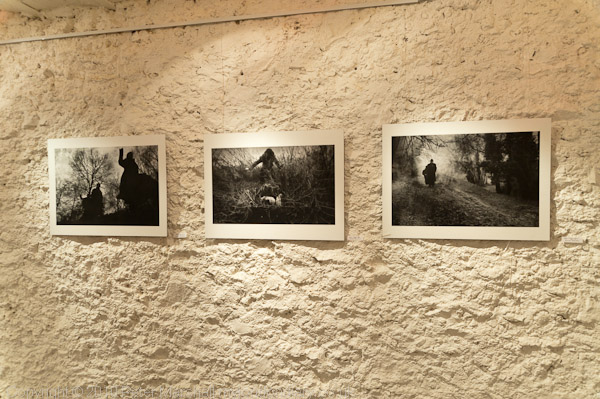
Descotils was showing two sets of work, and ‘Migre‘, a very filmic series on migration – atmospheric black and white images, with a couple of people fleeing through a forest – had a tangible sense of urgency and fright and stood out for me. These photographs are also the inspiration for a performance at the gallery by ‘La Planquette des Animaux Humides‘ on 11 Dec which sounds exciting, though would certainly over-tax my French.

© 2010, Peter Marshall

Our third visit was to the Galerie Riff in rue Chapon (a branch of the main gallery in Strasbourg), where the work of German photographer Andrej Pirrwitz (b 1963) was on display. These large colour prints were taken inside abandoned buildings, which also included a figure either in bright clothing or naked. Although I found a couple of these worked well, in others I simply found the person – sometimes blurred by movement – simply an annoying irrelevance. But then I’m always attracted to the kind of old abandoned interiors that were used in some of these pictures, perhaps former hospitals, factories or institutional buildings.

I spent some time while we were there – our schedule allowed 15-20 minutes for each gallery – looking through a book of Pirrwitz’s work, and as so often found it more suited to this format than the gallery wall.

(The guided walk is continued in the next post.)

UPDATE:

PARIS PHOTO SUPPLEMENT is now on MY LONDON DIARY

Brian Griffin – The Black Country

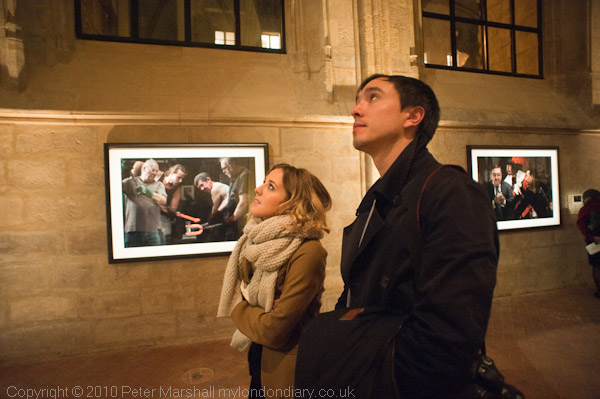
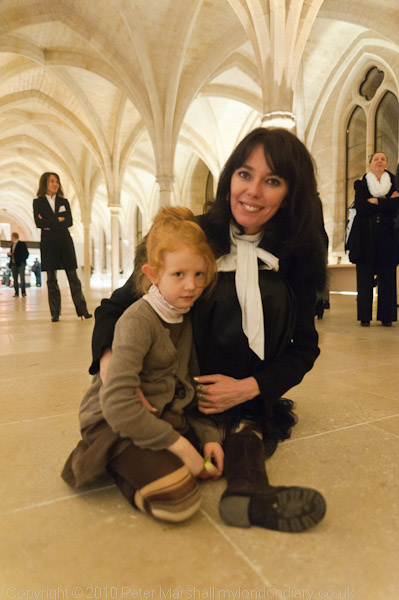
One of the more exciting events of the month – but outside Paris Photo, the Mois de la Photo and the Photo-Off as it was apparently planned too late to be included – was the latest show of work by Brian Griffin, The Black Country, in the superb setting of the recently renovated 13th century College des Bernadins on the Left Bank of Paris in the 5e.  The building is a splendid old religious building and Brian’s show was in its former sacristy, the place where the vestments, sacred vessels, and other treasures were kept. It was a building of impressive size and height and a fine setting for his work.

© 2010, Peter Marshall
The Sacristy at the College des Bernardins

The Black Country is a work that goes back to Brian’s roots, and to the town were he grew up, Lye, in the Black Country around the north and west of Birmingham. The area got its name from the coal seams close to the surface, and together with iron ore, limestone and clay this made it one of the powerhouses of our first Industrial Revolution. The particular specialities of the region were the making of nails and chains, and Lye itself was “the bucket capital of the world” and there were also brickworks and galvanising plants. The work was heavy and dirty. Many like his father worked in filthy jobs, inhaling dust and other pollutants, absorbing toxic materials through their lungs and their skins. Brian’s father retired in 1983 and died within 18 months, worn out and poisoned by a lifetime of poorly paid factory labour.

Brian’s mother Edith too had a hard life. Her mother had died giving birth when she was only seven and she had been left to care for her younger sister. She worked at a factory a short walk from where they lived, packing nails in boxes and making tea. They lived in a two-up two-down terraced house in a short cul-de-sac, in an area surrounded by factories. Although they had no running hot water, their house was unusual in having an inside toilet, rather than having to go out into the yard at the back. But bath night meant boiling kettle after kettle to fill a small galvanised iron bath with perhaps three inches of water, before each member of the family got in and washed themselves in turn. Brian was lucky as he got first turn. The landlord of their rented home refused to make any improvements or even do repairs to the property.

© 2010, Peter Marshall
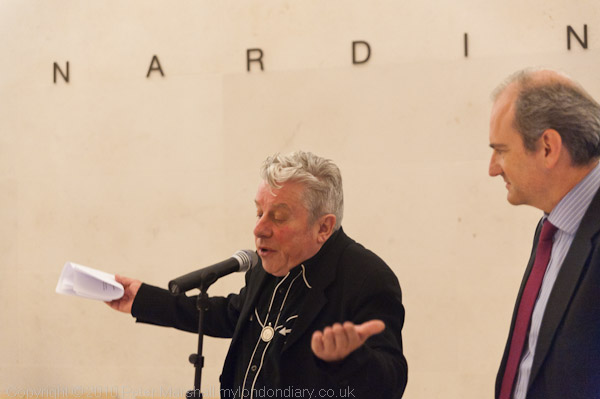
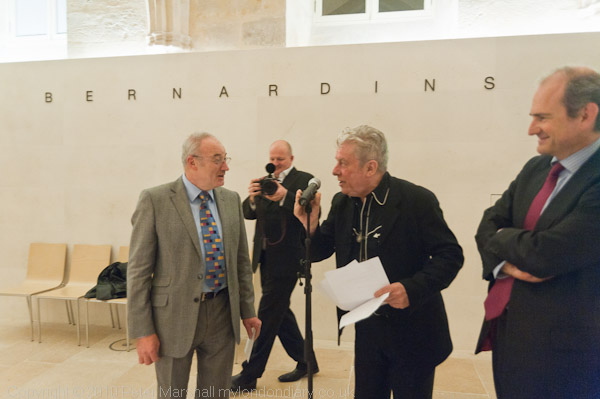
Brian speaking at the opening in Paris

Brian was the only kid in the area who passed his eleven plus; while everyone else went to the local Secondary Mod he went to Halesowen Technical School. But he had to leave and go out to work as soon as he was old enough. He was working in a factory in Lye when the foreman suggested he join the local camera club, and although he didn’t have any real interest in photography he did so. Three years later, after a girlfriend had left him, he wanted to escape from everything he knew and applied to photographic colleges as a full time student just to get away from Lye and everything he had known. Despite the fact that his pictures then were – as he says – “dreadful and displayed little talent” he was accepted.

The Black Country is an intensely personal project, inspired by the people that he knew in those early years and the experiences of life in Lye. Among those present at the opening was one of his oldest friends, a man from there, and during Brian’s speech they had a short exchange in the Black County dialect that would have defied most of the English speakers present, let alone the French.

© 2010, Peter Marshall
Brian’s assistant (right) at the Paris opening

Some of the people in the images, most of which were made on location, are from the Black Country, while a few others were carefully cast for studio portraits based on people he knew who are now dead. Brian works as a part of a team, and liberally acknowledged the contributions made to the project by his assistant, his stylist, printers and others.

© 2010, Peter Marshall

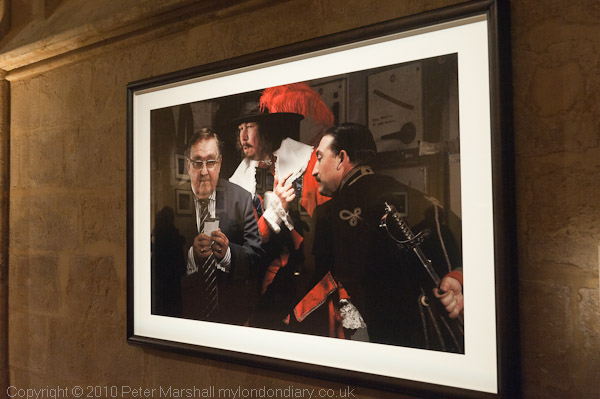
For me the strongest image was based on the Gunpowder Plot which fascinated the young Brian as the conspirators met just a few miles away and it’s mastermind, Robert Catesby was arrested not far away. The image was made in the Boro foundry where his father had his final job before retirement and the man on the left is Dennis Norton, the son of the man who employed him and who has now taken over as chairman and managing director of the firm. It’s a powerful and classic group image, based on a painting ‘Cardsharps’ by Caravaggio, with Catesby played by Steve Goldby, who has blogged about it, and the figure at the right is actor Callum Coates as the Earl Of Dudley, the landowner of much of the Black Country.

© 2010, Peter Marshall

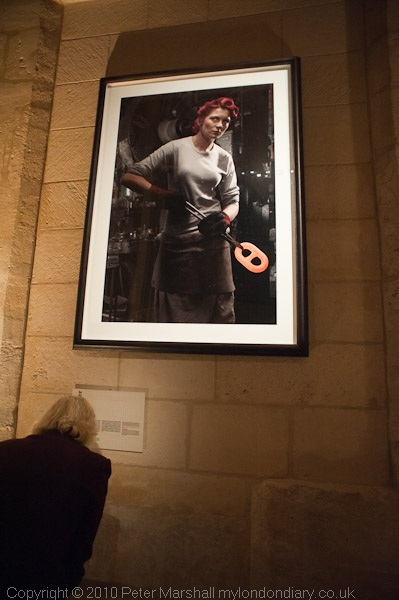
Another striking image shows a young woman as a foundry worker, holding a red hot chain link in tongs. The glowing link on her chain is echoed by a similar shape in her red hair, a small touch which really makes the image far more striking, and suggested by the stylist. The young woman was actually a worker in the factory, although not I think normally doing this particular job, and apparently before the shoot had always kept her hair combed straight down, but was rather taken by the effect.

© 2010, Peter Marshall

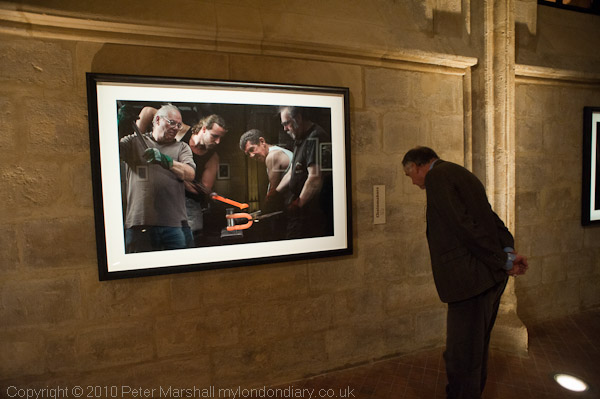
Another strong group image from the foundry shows a group of men making the chain. For me this show had a personal involvement by Brian that made it stronger than some of his other projects, but it also illuminated some of his earlier work. Included in the show were some of the portraits he made of workers at Broadgate shortly after the death of his father – and as he writes, “I photographed the men like knights lying in a cathedral with their swords.” His background (which in some respects is similar to my own) goes a long way to explain the empathy that he showed to the workers in his work on projects such as the Channel Tunnel rail link, and perhaps also a certain ruthlessness in some of his images of management.

You can see more pictures of the show and the opening on Facebook, and I’ll put more up on My London Diary shortly. In the meantime here are a couple more of my favourites from the opening. There were a couple of speeches in French, but as I expected Brian gave his usual fine performance, though parts of it proved tricky for his interpreter, and it was a more distinguished audience than most UK openings. I think this is his first major show in France (and he is one of those photographers who I think was entirely missing from Paris Photo) and it should do much to increase his reputation here.

I did find it slightly difficult to take photos holding a glass of champagne, though after several it seemed to get easier. The light level wasn’t too high in the sacristy, and I was glad I was using f2.8 lenses – the 20mm and Sigma 24-70 on the D700. Faster lenses wouldn’t have helped a great deal as most of the time I needed the depth of field, but it was good being able to work at ISO 3200 and know the results after processing would be fine. I did take a couple with flash as insurance, but the available light was so much better and of course less intrusive.

© 2010, Peter Marshall

© 2010, Peter Marshall
A little Black Country exchange

It was a very nice event, and a great show, and I was sorry to rather rush off when the official business was over (particularly as I could have had dinner) but Paris in November is a busy place and I had a party to attend!

More pictures on My London Diary.

Yangtze and More From Photomonth 2010

Nadav Kander’s Yangtze – The Long River is the outstanding show of Photomonth 2010 both in its scale and its concept. The exhibition continues until 13 Nov 2010 at Flowers East and comes from several voyages that Kander made cover the river from its estuary to the source during a three year period. His journey along the river, shrouded always in the light orange brown haze of pollution gives us an insight into the rapid growth of China, with image after image showing people dwarfed but remaining significant by the giant structures erupting around them.
He says in the gallery notes, “The photographs are an emotional response to what I saw. I gave them simple titles so that viewers are encouraged to respond subjectively before seeking the facts.

I’m not sure how well that latter idea works in the gallery, and I’d recommend that anyone visiting the show go first to watch the video being presented where he talks about the pictures and his ideas, which to me was vital in really appreciating his work. In it he also says that one single picture – a line of washing hanging sturng between rough wooden posts leaning against a wall under the huge girders of some giant bridge in Shanghai- for him sums up the whole process he was observing, and it was certainly one of my favourite images.

I took only a very quick look at the book published to accompany the show which includes “ca. 77 color ills” (couldn’t they count?) and although the work on display covered the two main areas of the ground floor gallery with three or so more tucked away (one of my favourites hidden in an office) there were rather fewer pictures on show than that. But even so there was a certain repetitive aspect which after a while I found slightly disturbing. The prints were very big and I often found myself moving in close to look at the people in them, and felt that perhaps occasionally the photographer might have done the same rather than always keeping a distance. The closest he comes is to a group of five, picnicing under a multicoloured umbrella on the riverside with a large bridge behind them, and I think it no co-incidence that this picture is featured as the largest of four images on the gallery handout.

The weakness – and I think it is one – is not in the photographer’s project, but in the selection of images for the gallery show. On Kander’s own web site (its the first item under ‘Work‘ on the menu) there is a more varied selection of 49 images. Also on the web you can watch the video being shown in the gallery on YouTube.

Upstairs Flowers was showing another very fine show, which again I mentioned briefly in an earlier post on its opening night, Edmund Clark‘s work ‘Guantanamo: If the Light Goes Out’ which combines some startling images from Guantanamo (though many of the images I found most telling were absent from this particular showing) with images in the homes of former detainees now trying to rebuild their lives. All of the pictures are without people, but Clark builds up a very strong atmosphere in these very carefully framed images. Also on show are some of the letters and cards sent to Omar Deghayes, a Brighton resident who was held for 5 years in Guantanmo.

You can see a few of Clark’s photographs on his web site, but rather more on Lensculture. I wasn’t convinced that the ‘Letters to Omar’ actually added anything to the show and would have preferred to see more photographs. As well as this show at Flowers until 14 Nov, there is another show of this work across London at Photofusion in Brixton until 26 Nov 2010.

A couple of doors down the Kingsland Road is the printspace, where there were a series of large portraits of dogs looking out of closed car windows,  ‘Mute‘ or ‘Dogs in Cars’ by Martin Usborne. Superb control of lighting and every hair apparently manicured into place, these seemed to me to be great examples of advertising photography – and taken on a Canon DSLR seemed to blow away the arguments for ‘medium format’ digital. But somehow the very gloss of the finish seemed to take something away from the impact of the work, and looking at them I couldn’t feel they had been deserted but felt they were being watched over not just by the photographer, but a whole team of assistants, stylists, art director and proud owners.

Another short walk takes you to the Red Lion in Hoxton St, where an exhibition by the Shoreditch Group of London Independent Photography (LIP) continues until 20 Nov 2010  – go up the stairs to the right of the bar. The show, which includes personal work by members and a group project ‘Parallels’, is as you would expect from such a group uneven, is worth a look. But having tried the beer, I’d advise going the short distance to one of my favourite London pubs, the tiny Prince Arthur in Brunswick Place with a well-deserved reputation for serving a good pint – and sandwiches (nothing fancy) at sensible prices – though unfortunately rather uncertain opening hours.

Talking of pubs and shows, another LIP member Anne Clements, has a show ‘Don’t Pass Me By‘ in Photomonth 2010 at the Jerusalem Tavern in Britton St, Clerkenwell which opened a few days ago and continues to 26 Nov 2010.

One venue that I was surprised not to see taking any part in Photomonth was the basement at Shoreditch Town Hall. It’s a large and curious labyrinth, great for a  group show as it needs to be manned while open, and really worth a visit just to see the place. I couldn’t resist going in to see the show ‘to be or not to be: a false dichotomy‘ by a group of thirteen artists based around Forest Hill in South London, curated by Dunio Mauro and advertised by a rather large pig. Unfortunately the show was only on for five days  – I imagine the space is fairly expensive to hire despite the dilapidated condition – and ended on October 27. Although I didn’t find anything of photographic interest, I did enjoy much of the show, and thankfully they had provided a numbered map to find my way around the more than 20 spaces (not all in use.)

Photolounge/Photo-Open/Flowers East

If you are in London this weekend, it worth a trip along to the Old Truman Brewery in Hanbury St, just off Brick Lane, where in spaces T3 and T4 of F Block you can see both the Photolounge and the Photo-Open, both parts of Photomonth 10, this year’s East London Photography Festival. Both are open from 11am to 6pm Fri, Sat and Sun.

© 2010, Peter Marshall
The large space of the Photolounge – and more behind me

Photolounge is a three day event which gives a large number of photographers the chance to put up their own small show. The overall standard of work seemed very high, although some of the better photographers had relatively little on show. Far too many for me to comment in detail, but among the work that particularly interested me was Graeme Vaughans ‘Prague: a notebook‘ and work by Jon CardwellAndrew Meredith and Steve Schofield. But there was really a pretty overwhelming array of talent on show, with very little that held no interest for me, a considerably higher standard than some other open events, and it reflects the enormous amount of talent in and around the capital.

Given that there are another 92 galleries and exhibition spaces on the Photomonth 10 map, this with over 200 exhibitions and events is by some way the largest annual photographic event in the UK, and has a very good claim to be the most important of them all.

© 2010, Peter Marshall
A corner of the Photo-Open

The Photo-Open attracts a high standard of entries and they remain on display every day until 25 October. Also in the same building is one of those 92 galleries mentioned, the Cynthia Corbett Gallery as well as a display by Photobox of the Worlds Biggest Photobook (yes it was big, but…) to mark ten profitable years of their on-line digital printing service.

Many other shows in Photomonth 10 are an easy walk from the Old Truman Brewery, including my own ‘Paris-New York- London‘ around 15 minutes walk away (though quicker if you hop on a bus – and don’t forget you’re invited to our mid-show party on the 20th Oct.) There are over 50 venues within a similar distance, and the map, although not perfect (and our show has been put on Hoxton Square rather than Hoxton Market) is generally rather better than the Brighton one I criticised a few days ago.

But yesterday night, though I could have walked the whole way, I went instead to the bus stop at Primrose St (get off here rather than Liverpool St for the Old Truman Brewery)  and took another bus the three stops to Flowers East on the Kingsland Road for one of the truly outstanding shows of the festival (incidentally they recently opened a new London Overground station, Hoxton, very handy for it.)

Upstairs was ‘Guantanamo: If the Light Goes Out’, a part of Edmund Clarks very impressive project on the lives of the men who were held in Guantanamo Bay (and that shameful camp is still going, despite Obama’s pledge.) The show at Flowers ends on 14 Nov, but you can also see more of this work at Photofusion in Brixton until November 26 2010.   Andy Worthington, author of The Guantánamo Files, who almost certainly knows more about Guantanamo than any other single person, has written about this work, and hist site includes an interview from ‘Spoonfed‘ between Clark and Loredano, as well as a selection of pictures. At present the best way to see this work online is at Lensculture, where there are 30 pictures along with text by Clark – and I think gives a better impression of the project than the limited space at Flowers allows; I understand a new web site featuring the project and book is under preparation for next month.

Nadav Kander‘s Yangtze, The Long River fills the ground floor at Flowers (until Nov 13), its large prints impressive on the walls, although the opening was a little too crowded for me fully to appreciate this internationally acclaimed work. I hope to go back and take a longer and calmer look. Instead I went outside for some fresh air and to chat with some of the photographers who had come to the opening.  It’s a particularly handy place as there is a bus stop right outside the gallery and so I could make my goodbyes as the 243 came along to take me back to Waterloo.

© 2010, Peter Marshall
From the bus – Holborn

© 2010, Peter Marshall
From the bus – Waterloo Bridge

Travelling by bus in London at night is usually a visually interesting experience, although one that is difficult to capture. But I sometimes try.

Degeneration

Although I wasn’t able to see the show ‘Degeneration‘ by the collective  Human Endeavour which is upstairs at the Bellis Gallery, 8-9 Kings Road, South Lanes, Brighton until Friday 14th Nov (Wed-Sat 10-30-18.30, Sun 11.30-16.30) I did meet briefly with one of the photographers, Alex Currie, who has kindly sent me four of his images:

© Alex Currie
Edinburgh, Alex Currie

© Alex Currie
Glasgow, Alex Currie

© Alex Currie
Salford Garages, Alex Currie

© Alex Currie
Salford, Alex Currie

These are pictures taken with great deal of respect for the subject and with care using the movements of a 4×5″ camera. Together with the other work I’ve seen on this project they well reflect the objective of the project, stated to be

to take a critical look at the state of housing and regeneration in the 21st century, and the implications and complex nuances this may have on some of the poorest in society,reliant upon social housing.

As they make clear, much of what they are recording has not occurred by chance and cannot be blamed on the architects and builders, but is the result of deliberate policies.

After several decades of neglect, consecutive governments have overseen the gradual disappearance of social housing, due to ‘Right To Buy’ and a lack of new housing stock built, arguably fuelling the necessity to own rather than let that has instigated the artificial inflation of the housing market. This opens up many questions as to why this was allowed to happen, has fuelled the rise in homelessness and poverty and left the majority of people living in social housing trapped in so called ‘sink estates’.

There are indeed examples where blocks similar to many of those shown in this project have been sold to private companies and refurbished to become luxury flats. But for councils and social housing associations the alternative of demolition (sometimes also creating a little local spectacle through the use of explosives) attracts, perhaps because of the financial incentives available, or simply because over the past 40 or 50 years we have become increasingly a throwaway society. Or perhaps sometimes because of the profits that others can make.

The house I live in was built around 1880, condemned in the 1950s and still (with minor alterations and occasional maintenance) performing its original function reasonably adequately. It wasn’t well built, didn’t use the best of materials, but the design was basically sound. The prefabs I photographed a few days ago, made in 1945 were only meant to last 5-10 years, but some are still in reasonable condition, and their owners and tenants happy to remain living in them. So it is a very good question why so much of the building around the 1960s are now considered only fit for demolition (although some of those I knew erected in Hulme in the mid 60s were in a terrible state within months of completion.)

The answers lie not among the planners and the architects but in the politics of the era (and perhaps things have not changed much.) I’m currently reading a book by a friend of mine, Franklin Medhurst, ‘A Quiet Catastrophe: The Teeside Job‘ (ISBN: 978-0-9566550-0-40 in which he tells the story behind his dismisal as Director of the Teeside Survey and Plan in 1967, largely because of his insistence that pollution be taken into account in the location of housing in the plan. The two men who fired him were Hugh Wilson, responsible for Cumbernauld, recently voted by its residents the “second crappiest town in Britain” and Lewis Womersley, responsible for the Park Hill terraces in Sheffield that feature on Currie’s site as the first picture in his project, Redundant Ideals. Its also worth looking at the other two projects on his site, which include one ‘Nonscape‘ which turns out to be black and white images of central Croydon.

This is a very different view of the place than on my own website where I have a set taken a few years earlier in 1991 along the then recently opened tram line. Looking at the two I think his work looks to be older, and not just because it was taken in black and white rather than in colour. Unusually my Croydon Tramlink was taken on medium format (and I also took some panoramas that have have yet, 9 years later, to be added to the site) but after that I reverted to using 35mm with a shift lens.

Finally, one thought that I left Brighton with, from the theatre opposite the station:

© 2010, Peter Marshall

Brighton Photo Fringe

There are an impressive number of shows in the Brighton Photo Fringe Open this year, and some are of a very high standard, others of course rather less so. Organising events such as this must be extremely tricky and I suspect those responsible will be a little frustrated at some of my nit-picking after all their hard work. But I hope they will be taken (and are meant) as constructive suggestions to improve the festival in future years, especially for visitors coming from outside Brighton.
© 2010, Peter Marshall

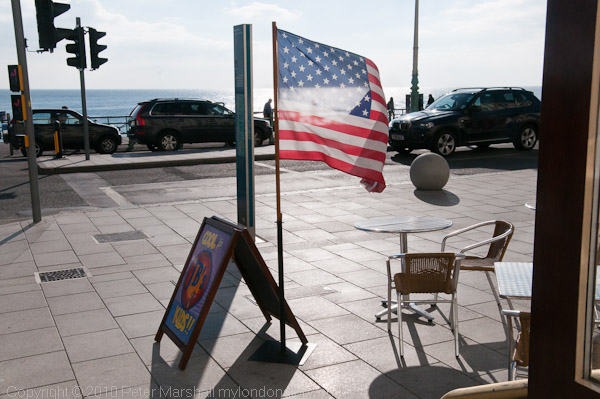
As with the Biennal, several of the venues – including the major ‘Fringe Focus‘ – were closed on a Tuesday. Some other shows listed either did not exist or I was unable to find them. It would be considerably more helpful to divide the shows in Brighton into areas each with its own local map and fuller key rather than the large area map provided. This would enable precise locations to be shown – numbers which are seldom actually present on the streets are of little use.  Finding the work – for a visitor to Brighton – was something of a logistical nightmare and there were a number of shows that I looked for but could not find at all, and some I did eventually find were invisible from the street – not even a small ‘Brighton Photo Fringe notice in the window – and so could easily be overlooked. Then there was the gallery I walked past three times, and twice the door was locked with a notice saying ‘Back Soon.’  Nothing the organisers can do about that of course.

Although the map gave opening and closing dates for shows, to find which days and at what times they were actually open meant consulting a separate booklet, arranged  in a different order to the map list and not making use of the numbers on the map. Again with so many shows – and doubtless more in 2012 – it would also help if this were broken down into geographical areas. It was actually hard to find a copy of the booklet, so many who visit this year will only have the map, so it is unfortunate that these details were not on it.

The show I was most sorry to miss was ‘degeneration‘, a project by the collective ‘Human Endeavour‘ which “is a study of key areas across Britain” –  Glasgow, Edinburgh, Leeds, Liverpool, Salford, Sheffield, Birmingham, Cardiff, London and Portsmouth – “of 20th century housing that has slowly fallen into decline and is now due for regeneration.”  It’s a project that fits very well with my own interest in urban landscape – for example in my work on Hull – that arose out of an active grass-roots involvement in the redevelopment of Hulme and Moss Side, Manchester when I lived there in the 1960s.

So far all I’ve seen is a nicely printed folding card with one image by each of the photographers, Alex Currie, Richard Chivers, Simon Carruthers and Oliver Perrott and a well-illustrated web site. This is the third show by this collective and the second to receive Arts Council support. Looking at the work on the web, I was particularly impressed by the pictures from Glasgow by Alex Currie and Richard Chilvers.

It was interesting to be reminded again of the work of Michael Ormerod, (1947-91) a British photographer who took to America very much in the footsteps of Robert Frank and Stephen Shore. Ormerod died in a motorbike accident at the age of 44 in Arizona in 1991, and shortly afterwards there was a show of his work at the Zelda Cheatle Gallery as well as a book to accompany this, ‘States of America‘.

While I quite like some of his large colour images, I can’t help looking at them and thinking that other photographers – such as Shore – have done it rather better. I get a similar feeling too about his black and white, which perhaps also leans too heavily on  American precedent without really establishing a voice of his own. Ormerod was a pretty good photographer and I quite like his work, but… You can see for yourself at the Crane Kalman Gallery.

Was he one of the UK’s leading photographic talents at the time of his death in 1991 as the exhibition text suggests? It’s something you could say (if you were an art dealer) about any of several hundred photographers of the time – many of whom might well have taken rather similar pictures on a trip across the USA, and some did.
© 2010, Peter Marshall
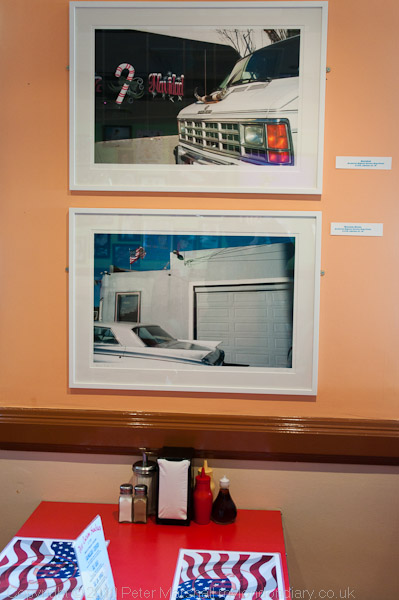
Bascom Avenue by Kit Fordham, on show in JB’s American Diner

The USA was also the source of another show on the fringe, shown in JB’s American Diner on Kings Road. I found this a more interesting view of America than Ormerod’s, partly because it played a little further from some of the stereotypes but I think largely because it’s subject was so much more clearly defined, with Kit Fordham focussing his attention on ‘Bascom Avenue: The Unloved Hear of San Jose, California.’ The show starts here on Fordham’s web site, although I think the colour was better on some of the prints than in some of these on the web.
© 2010, Peter Marshall
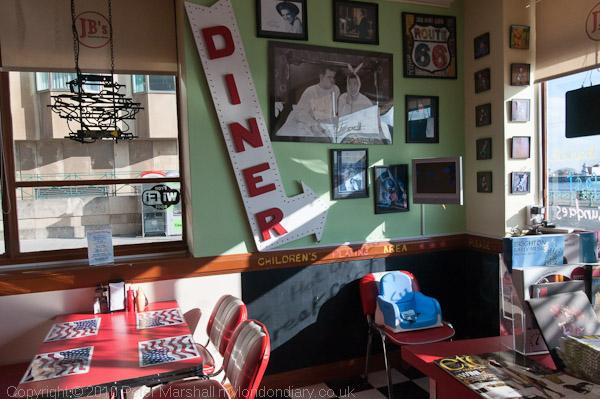
JB’s Diner, Brighton. Peter Marshall, 2010

There was a synergy between the show and the surroundings that worked well and it was the only venue where I really felt I had to take some pictures myself. It can be hard showing work in cafés and shops and this was a great example of how it can really work well.
© 2010, Peter Marshall
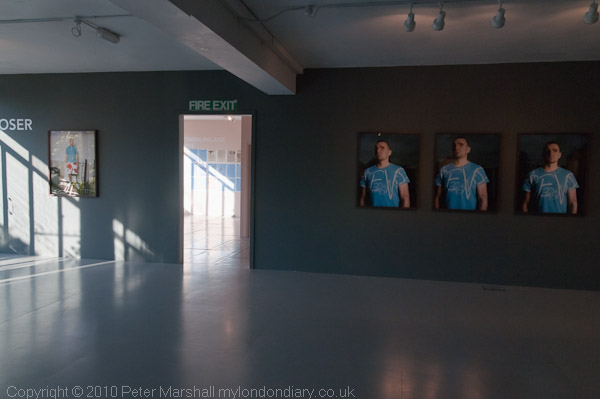
Installation View of ‘Closer’ by Stuart Griffiths

But the outstanding show of those I saw was ‘Closer‘ by Stuart Griffiths, even though looking at his web site I see very clearly how much stronger a show this could have been. I find it hard not to see the presentation at the Phoenix as an example of a kind of curatorial vandalism, pushing his work into a rather different aesthetic. Of course I’m not a great fan of the cult of the curator, which I think has been a curse on photography, particularly in the UK, for the last forty or so years. The show still worth seeing for the rawness of some of the images, but afterwards look at the web site and see how much more it could have been. It’s a pity that they didn’t get around to adding labels to the works (obviously actually a deliberate decision but equally obviously an poor one) but you may be lucky and be given a list of them if you view the show.

I’m not sure how much the smaller room given over to small pictures and letters from Griffiths’s time in the Parachute Regiment from 1988-93 where he became a unit photographer with the Intelligence Section in Northern Ireland actually adds to this as a show. What is perhaps much more relevant is the film about his life, Isolation, was shown as part of the Photo Fringe at the Electric Palace, Hastings on 10 October, and will also be projected at the venue for this show, the Phoenix, Brighton,  on 30 October. You can read about it in The Guardian which also has a  gallery of his pictures. Isolation had its World Premiere at the 2009 Edinburgh Film Festival and from there you can watch a short trailer which includes some of his still images.

I could see no point for the use of three very similar portraits shown in the installation picture above – and it suggests a kind of indecision that although doubtless a decision by the curator seemed to suggest that the photographer was unable to arrive at the image he wanted.  Griffiths actually chose a different image  from the session for his web site in the series ‘Back From the War’, where you can also see some of the other powerful images that were not selected for the Brighton show.

It was, despite the weather forecast, a pleasantly sunny day for a walk around Brighton, although at times a little frustrating. As well as those I’ve written about I saw quite a few other shows which for various reasons – largely that they didn’t particularly excite or interest me – I’ve not mentioned. I’m very aware of having missed much of both the Biennial and the Photo Fringe, partly because some things were not open, but also because this is a very widespread festival – as well as the more outlying areas of Brighton & Hove there are also Fringe shows in Chichester, Lewes, Peacehaven and Portslade and the Biennial also has related photography shows in Portsmouth, Bexhill, Chichester and Eastbourne. There are of course all kinds of events too taking place in Brighton and elsewhere, making this a considerably more exciting event for photographers based in the area.

For some years Brighton has been establishing itself as a major photographic centre in the UK, and in many ways I think more important and certainly more vital than London, which has largely failed to develop a photographic culture, largely due to the stultifying effects of some of our major institutions, but also because of its sheer size. This year’s festival marks another step along that road.

See also: Brighton Photo Biennial
Brighton Photo Biennial
Unfortunately I was only able to visit the Brighton Photo Biennial (which continues until the 14th November 2010) on a Tuesday, when some of the possibly more interesting venues were closed. Perhaps I’ll manage to get back to see them but it isn’t easy for me to find another day to visit Brighton and see more work in both in the Biennial and the Photo Fringe. But if you are thinking of going, this is a festival that – if you want to be able to see almost everything – is only fully open on Fridays and Saturdays.
© 2010, Peter Marshall

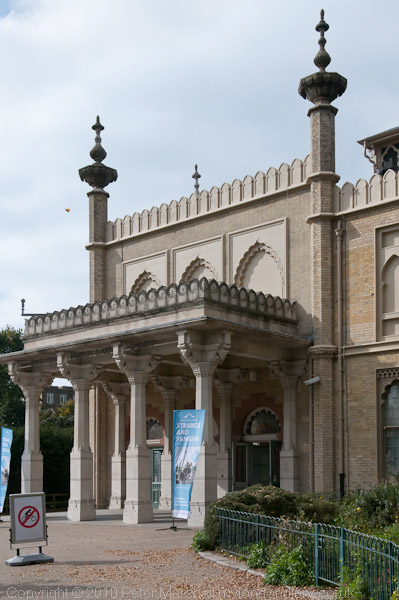
The Brighton Museum where the headline show ‘Strange & Familiar‘ was taking place is well worth a visit, although perhaps more for the building and the permanent collection than the photography on show. Commissioning new work is always a gamble, and here I think the dice have rolled to give Brighton an near minimum score. Of course, having given commissions, the commissioning body is more or less obliged not only to show the work but to praise it inordinately whatever. But I found it hard to believe in emperor Parr’s new clothes.

© 2010, Peter Marshall

I’ve already written about Alec Soth‘s problem on entering the country (in UK Customs) and my thoughts on that; the images on show have some interest as the work of a seven year old with a certain fairly large amount of parental direction, but frankly not very a great deal. I think her drawings are better than her photography. For those of us who on first hearing about the commission had been looking forward to seeing Soth’s take on the city I think this is – to view it generously – a rather poor third-best.

If you like rather wacky ideas you may like Stephen Gill’s ‘Outside In‘ but I found seeing more than one or two images made with rubbish picked from the streets of Brighton in the camera (including cut up bits of transparencies he took for the purpose) tedious. Actually I do tend to appreciate the weirdly unusual, but my first impression that it was an amusing idea was soon undermined by asking the question “But does it work?” and finding myself giving a fairly negative answer at various levels, and found myself wondering if that old computing acronym, GIGO, might have been a better title.

I think it is partly a matter of scale and it does for me work considerably better in some of the smaller prints on display than on any of the rather large ones, perhaps because the collected detritus in the camera (and in a large display case) is closer to actual size. And in the Blurb book which I’ve just seen rather small on line, I really begin to warm to them considerably more. His video chat with Martin Parr did have me laughing at times, though for all the wrong reasons. In the interview Gill talks about feeling restricted by straight photography; perhaps why I don’t appreciate his work here is that I’ve always and still feel empowered by it.

But there was I think a second problem that lay behind this and to some extent all three of these shows; the pursuit of novelty for its own sake and a determination to avoid the stereotypes of Brighton at any and all costs. Gill’s work seemed curiously dislocated from the city despite being based around objects from it, and I think would have been considerably stronger had this not been so.

© 2010, Peter Marshall
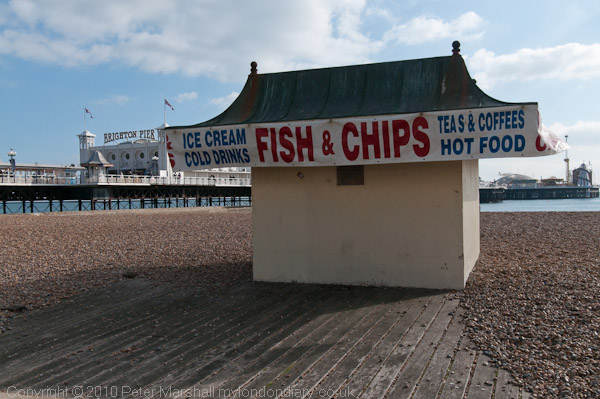
A Brighton stereoype

Of these three major commissions I felt only half of one of them, the ‘Murmuration‘ of starlings around Brighton Pier in the winter dusk by Rinko Kawauchi was really at all successful. It’s perhaps a pity that she returned in Spring to do more work, which I think largely fails. Her pictures (like the others) were shown as large unframed inkjet prints pinned to the walls, and they had become somewhat buckled. This was a shame as I found it detracted particularly from those large images of the flocks of birds in flight.

I think I would probably have found both New Ways of Looking and Queer Brighton considerably more to my taste but unfortunately both galleries were closed. Should you want to see all four shows in a single day you need to go either on a Friday or a Saturday between 11 am and 5pm.

The only other major show in the Biennial I could see was ‘A Night in Argentina‘ with work by Alejandro Chaskielberg and Esteban Pastorino Diaz, in the University of Brighton Building on Grand Parade.

© 2010, Peter Marshall

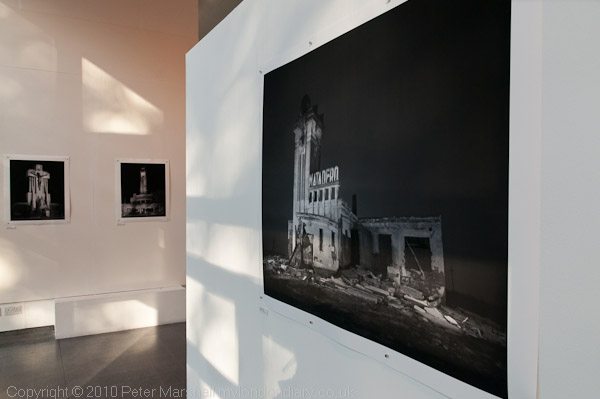
Both sets of pictures were impressive, though in quite different ways. With Diaz, my main interest was in the incredible architecture of Francisco Salamone, which was however splendidly brought out by the photographer. I couldn’t understand why the programme leaflet labelled this an experimental strategy – how does it differ from the many other photographs of buildings using long exposures at night, certainly since the early years of the dry plate process, if not before? Or was there something I missed? But they were fine images. Perhaps the ‘experimental’ label referred to the fact that he usually prints by the gum bichromate process (which dates from the same era around 1900) but of course there are many other photographers using that – including my old friend Terry King who started using the process around 1980 (with a tiny bit of help from me) and has since taught it to hundreds if not thousands of mainly British photographers – part of a worldwide awakening of interest in ‘alternative processes’ over the past 30 years. But the large prints on show were fairly ordinary inkjet prints, perhaps just a little lacking in the delicacy that the best of these can now achieve.

Chaskielberg‘s work (see the BJP video) is without doubt experimental although others have previously worked with lengthy exposures and the full moon to give results with a distorted colour palette. I find his pictures ugly and brash but also fascinating. He adds light while taking them by using a flash, and using a 4×5 camera appears in some cases to being doing some interesting things with lens tilt, though honestly I could be sure about little. But whether it “open up new ways of representing the world” or “effectively refreshes our photographic vocabulary” I have grave doubts. For me this work was not representing the world, but about creating fictions about it.

More about Brighton in Brighton Photo Fringe

Inscape No 80

 © 1979, Peter Marshall
Street Games, Argyle St area, Hull, 1979. Peter Marshall

More years ago than I care to remember I enrolled on an evening class in the History of Photography being offered at the Camden Working Men’s College just down the road from Mornington Crescent (and doubtlessly coincidentally around the time the famous game of that name made its first appearance.)

It was partly a matter of curiosity – I’d never seen such a course offered as an evening class before, but perhaps more importantly, as I was teaching photography it could be counted as “in-service training”, both cutting down the pressure to go on far more boring courses and also meaning I could claim back both course fees and travel expenses from my employer. An added bonus was that the student card for this short course enabled me to claim a 10% discount from my favourite supplier of photographic materials for the next few years.

From the first session the lecturer, William Bishop, made it clear that although he had all the right art history tools he saw the course as an opportunity for him to learn about the history of photography rather than having a great deal of knowledge about it to impart.  It became very much a dialogue between him and those of the students – myself included – who knew rather more about photography and photographers, and one that proved constructive for us all.

A few years later,  Bishop, who had by this time been reduced by me to Bill in the interests of alliteration, decided to set up a ‘small magazine’ covering photography, producing the first issue of ‘Inscape‘ in Autumn 1992. Immediately I saw it, I contacted him and suggested he might come and make use of my equipment and desk-top publishing skills to improve the production quality, and we produced a few issues this way until he was successful in getting a grant to buy his own computer and scanner.

I had a few pictures in some of the earlier issues and the occasional one since, but I’ve not been a regular contributor to Inscape. My interests have perhaps moved rather in a different direction since those early days, and while the magazine has occasionally published work that interests me, there has also been much that has left me cold or worse.

Inscape is a word coined by Gerard Manley Hopkins, and there is a good short exposition of it on The Victorian Web by Glenn Everett. Inscape for him was essentially a both a Romantic and a religious idea, a revelation of the essence of a thing and an insight into the reason for its creation.  It is one of several attempts to describe the feeling that a particular moment or vision has a special significance.
© 1979, Peter Marshall
Betty’s Corner Store, Selby St, Hull, 1979. Peter Marshall

When we take personal photographs we are perhaps selecting selecting points of view on the real world that seem for us have some particular resonance – an “inscape” and hence the title of the magazine which

is about sharing our personal work, our personal photographic visions, with others. It is about appreciation rather than confrontation and argument, but it is not intended as a cosy corner to slumber in because it believes that the tradition of picture making that has personal meaning is alive and still developing.

It is something of a surprise (although I’ve kept up my subscription over the years) that Inscape is still going 18 years later. I think it started with five issues a year and is now quarterly, and the quality of the reproduction has improved significantly. The three pictures here are from a set of nine printed in Inscape No 80, at least some of which have a connection with its “An Architectural Theme“.

© 1979, Peter Marshall
Albert Dock, Hull, 1981. Peter Marshall

Others might be better suited to the theme of the forthcoming issue number 81, The Urban Scene, for which the copy date is 21 Dec 2010.  Like most small magazines (and unfortunately some very large ones), Inscape does not pay for contributions – the whole thing is very much a labour of love on a minuscule budget by Mr Bishop.

My set of pictures is only one of the contributions to the issue, with photographs by I think ten other photographers and written contributions by the Editor and the mysterious “mjp”.

© 1979, Peter Marshall
Fishers, Spring Bank, Hull, 1979. Peter Marshall

The magazine is now I think on sale in some very selected outlets and costs £3.60 or you can try through the web site, where back numbers are £2.50 post free in the UK. A subscription for 4 issues in the UK is £15.

There are a few more of my pictures from Hull on the Urban Landscapes web site, and I’m currently working through several years of photographs preparing a Blurb book on Hull which should appear later this year, under the title of my 1983 show there, ‘Still Occupied; A View of Hull‘, although the selection of images will be different to the 144 or so I showed then.

On Show in London

One of the things that I really miss with the revamped monthly British Journal of Photography is the ‘On Show’ listings. Although they were never comprehensive, they gave a pretty good selection of the photography shows in London and around the country, particularly those whose details were not covered by other listings.

There were some gaps, and in particular a number of commercial art galleries never bothered to tell BJP about their shows (and just occasionally some of the more important public galleries too.)  But often I’d rip out the page when I was catching the train up to London and thought I might have a little spare time to take in a show, and I’d spend a few minutes on my journey deciding which exhibitions to try and get to.

For a while you could also access ‘On Show’ on line, I think even for a month or two after the magazine went monthly, but it no longer appears either in the printed monthly or on the web site, and I’ve not yet found a decent alternative. The monthly BJP does have an exhibitions page, but it’s hopeless, listing just a few exhibitions that have already appeared in the Sunday papers, or are on elsewhere in Europe or the US.

Of course there are listings sites, but most of them seem defective so far as photography is concerned. Photography-now is an international site and its UK pages do include the major shows and quite a few of the commercial galleries, but not many of the other venues. Probably the best site that I’ve so far found is Spoonfed, where you can search for photography in London but the format makes it near to impossible to use sensibly – if you click on the link to see all of September’s shows you will find that a show that is open 20 days in the month gets 20 listings.

Despite the problems, I managed to find a couple of photographic shows to visit yesterday afternoon and both are certainly worth a few minutes of your time.

Chris Beetles, in Ryder St (a short walk from Green Park tube) is showing a good selection of Edward Weston pictures printed by his son Cole Weston, and you can see all 37 of them on the gallery web site.  The show is on until 25 Sept 2010.  Cole, who died in 2003, was the youngest of Weston’s four sons, and although he was a photographer himself was better known for printing his father’s work.

Prices for the prints on show range from £4000-10500, and personally I would rather spend a considerably smaller sum on one of the finely printed books of his work (and I actually have several.)  Cole’s prints were considerably cleaner than some of his father’s – those in this show seemed without blemish – but somehow they seem to lack a little of the intensity of those his father printed (and even of some of the fine reproductions in books.)

At the Michael Hoppen Gallery in Jubilee Place, off the Kings Road (the buses stop a few yards away at Markham St) are two shows that certainly offered a greater challenge, by two of Japan’s best-known post-war photographers, Daido Moriyama, (b1938) and Shomei Tomatsu (b1930.) The Tomatsu show is due to end 9 Oct 2010 and Moriyama 10 Oct 2010.

Moriyama is the more challenging of the two, a self-consciously avant-garde photographer impressed by the work of William Klein, Weegee and other American photographers and artists, who early in his photographic studies worked for three years as an assistant to Eikoh Hosoe.  On Japan Exposures you can see an interesting presentation of his early magazine work, looking at two Japanese books of his work from 1965-1970 and 1971-4.

© 2005 Peter Marshall.
Eikoh Hosoe looks at his camera phone in a pizza place called Alcatraz
© 2005 Peter Marshall.
and takes a picture of me!

Moriyama worked on the city streets, often at night, with a 35mm camera, often taking pictures without the benefit of the viewfinder, and pushing Tri-X far beyond its design criteria. Printed high contrast and on a large scale his work is often reminiscent of Pop Art’s use of dot screens (and the Moriyama foundation’s web site presents them as coarse halftones.) His work epitomises the aesthetic behind the influential Japanese magazine Provoke, “are-bure-bokeh*” or “rough, blurred, out of focus.” Started in 1968 in Tokyo by photographer and writer Takuma Nakahira and others, the magazine, which published Moriyama’s work in it’s second issue, had a short publication history (three issues) but started a movement under it’s title including many young Japanese photographers of the era.

Although the Provoke photographers (including Yutaka Takanashi, Koji Taki and Takahiko Okada as well as Nakahira and Moriyama) very much saw themselves in revolt against the photography of the past – and that very much included  Shomei Tomatsu – looking at the older photographer’s work now the similarities are rather more marked than the differences, and he is now seen very much as a precursor of ‘Provoke’.

It’s a show that is very much worth going to see, particularly for the presentation of Moriyama’s work on a scale impossible in print. There does now seem to be a considerable publishing industry devoted to his work in Japan, though rather fewer seem to be available in this country.  A new monograph, Daido Moriyama: The World through My Eyes (ISBN-10: 8857200612)  is to be published by Skira on 12 Oct 2010, and Daido Moriyama: Shinjuku 19XX-20XX, (ISBN-10: 3775717293), pictures from a Tokyo district he became obsessed with, is still available at a reasonable price.

While in the gallery I also looked through the fine  book ‘The Skin of the Nation‘, produced for Tomatsu’s first retrospective outside of Japan which was shown in New York, Washington, San Francisco and Winterthur,Switzerland in 2004/6.  And no, I’m not surprised that it didn’t make the UK. It’s perhaps unfortunate that one image by Tomatsu – a beer bottle melted by the heat of the nuclear holocaust at Nagasaki – has been so successful that it has obscured his other work. Before I started to write about the show I went on line and ordered myself a second-hand copy.

*Bokeh here does not mean the excessive pre-occupation with the rendering of out of focus areas which bedevils some areas of the Internet, but simply that things are not rendered sharply because they are not in focus.